
Crypto World
T. Rowe Price Files for Multi-Crypto ETF Including Dogecoin and Shiba Inu


TLDR
- T. Rowe Price submitted an amended S-1 filing to the SEC for its upcoming actively managed cryptocurrency ETF
- The investment vehicle will maintain between 5 and 15 digital currencies simultaneously, selected through quantitative analysis
- Anchorage Digital Bank has been designated as the custodian for cryptocurrency assets in the revised documentation
- The eligible token roster expanded to 15 assets with the addition of Sui, alongside Bitcoin, Ether, Dogecoin, and Shiba Inu
- The investment product seeks to exceed the performance of the FTSE US Listed Crypto Index and may incorporate staking operations
T. Rowe Price, a major asset management company overseeing $1.8 trillion in assets, has submitted a revised registration document to the US Securities and Exchange Commission for its planned Price Active Crypto ETF.
The updated S-1 filing was delivered on Monday, expanding upon the initial documentation submitted in October 2025. The investment vehicle is structured to provide investors with professional management of digital currency exposure through conventional brokerage platforms.
The submission identifies 15 digital currencies eligible for inclusion, featuring Bitcoin, Ether, Solana, XRP, Dogecoin, Shiba Inu, Chainlink, and Sui. The latter represents a fresh addition absent from the October proposal.
The investment fund will not simultaneously hold all 15 cryptocurrency assets. During typical market conditions, the portfolio will contain between five and fifteen digital tokens.
Investment selections will be determined through quantitative algorithms analyzing fundamental metrics, asset valuation, and market trends. The objective is to surpass the benchmark performance of the FTSE US Listed Crypto Index.
The revised documentation designates Anchorage Digital Bank as the custodial institution for the fund’s digital assets. This financial institution will handle security and storage of the cryptocurrencies within the ETF.
How the Fund Would Work
Initially, participants would establish or liquidate positions using fiat currency rather than direct cryptocurrency transfers. The documentation indicates this framework may evolve to accommodate in-kind exchanges.
The submission also mentions the potential for staking activities, wherein tokens are committed to support blockchain network operations in exchange for yield generation. T. Rowe Price indicated staking decisions would depend on tax implications and regulatory clarity.
T. Rowe Price has provided investment management services for approximately 87 years and ranks among the top 25 global asset management firms. The organization is primarily recognized for its mutual fund offerings and retirement planning services rather than cryptocurrency investments.
The initial October submission caught many market analysts off guard. Nate Geraci, president of NovaDius Wealth Management, commented that the filing appeared out of “left field” considering T. Rowe Price’s conventional investment approach.
Major Asset Managers Moving Into Crypto
T. Rowe Price is among several established financial institutions entering the cryptocurrency ETF marketplace. BlackRock, Fidelity, Franklin Templeton, VanEck, and Invesco have previously introduced digital asset investment vehicles.
The initial submission occurred near what was then considered a market peak, following Bitcoin’s surge past $120,000. The filing coincided with a significant liquidation episode affecting leveraged cryptocurrency derivatives.
Subsequently, digital asset valuations declined and crypto ETFs experienced sustained capital withdrawals spanning multiple months. However, cryptocurrency ETF flows have recently shifted back to positive territory, based on CoinGlass tracking data.
The revised filing incorporates current information regarding the FTSE Crypto US Listed Index, including component weightings updated through January 2026.
Additional risk disclosures have been incorporated addressing portfolio turnover rates and the fund’s active management approach.
The SEC has not yet announced a timeline for potential approval.




There’s a specific type of crypto participant who doesn’t chase price charts. They look for infrastructure. They look for systems that generate Bitcoin — not promises of Bitcoin, not tokens that might convert to Bitcoin someday — but actual BTC, flowing from real network activity.
That participant is exactly who Bitcoin Everlight was built for.
And right now, during an open presale window, those participants are beginning to activate shards.
The question worth asking isn’t whether Bitcoin validation infrastructure is interesting. It clearly is. The question is whether this particular platform has built something worth getting into early — and what “early” actually looks like in practice.

A Network That Pays You in the Only Coin That Matters
Strip away the terminology for a moment and Bitcoin Everlight is doing something genuinely simple: it runs a distributed Transaction Validation Node network, and it shares the fees that network generates with the people who participate in it.
Those fees are paid in BTC.
Not in a governance token. Not in a project-native coin whose value depends entirely on whether the project succeeds. In Bitcoin — the asset that has been the benchmark for the entire crypto industry for over a decade.
The platform introduced Everlight Shards as its participation layer: a simplified activation model sitting on top of the validation node framework. Everlight users don’t need a technical background or a rack of mining equipment. They acquire BTCL tokens, hit a tier threshold, and the shard activates — pulling them into the network automatically.
The project completed dual smart contract audits through Spywolf and Solidproof, alongside dual KYC verifications through Spywolf and Vital Block — all completed before the presale opened.

From First Token to First Reward — The Actual Process
The path from zero to active shard is four steps long, and none of them require anything technical.
You acquire BTCL tokens. The presale is live right now at $0.0008 per token, with entry points beginning at $50 — meaning the barrier to getting a position in this network is quite low.
Once your holdings reach a tier threshold, your shard activates automatically based on the USD value committed at the time of purchase. There’s no manual trigger, no application, no waiting for approval.
From that point, your activated shard participates in validation through the distributed infrastructure — passively, continuously, without any ongoing management on your end.
Rewards begin flowing immediately upon activation. During the presale phase, those rewards are paid in BTCL at a fixed rate tied to your tier. After mainnet launches, the model transitions to performance-based BTC distribution — meaning what you earn scales with how much real transaction activity moves through the network.
How the Shard Tiers Are Structured
The shard tier structure is built around three activation levels, each one carrying a different reward rate and a different level of network participation:
Azure Shard activates at $500 and earns up to 12% APY in BTCL during the presale phase, transitioning to BTC earnings at mainnet.
Violet Shard activates at $1,500 and earns up to 20% APY during presale — the mid-tier entry point for participants looking to deepen their position in the network.
Radiant Shard activates at $3,000 with up to 28% APY during presale, representing the highest participation tier currently available.
Users who hold tokens below any threshold aren’t locked out — they hold a dormant shard position that activates the moment their balance crosses the next tier. The system is designed to reward genuine alignment with the network instead of short-term speculation.

The Thing Most Crypto Reward Systems Get Wrong
The vast majority of passive reward models in crypto share one structural flaw: the reward is the same token you already own. Your earnings are denominated in the project’s own asset, which means their real-world value is completely circular — it depends on whether other people keep buying the same thing you bought.
Bitcoin Everlight breaks that loop. Post-mainnet rewards come from BTC-denominated transaction routing fees generated by actual network usage. Participation isn’t rewarded with inflation. It’s rewarded with a share of real economic activity, paid in an asset that doesn’t depend on the platform’s own price performance to have value.
That’s the structural difference. And for participants thinking beyond the presale phase — thinking about what they’re holding a year from now — it’s the part worth paying attention to.

Six Days. Phase 1 Pricing. Then It Changes.
Bitcoin Everlight’s Phase 1 presale has 472,500,000 tokens remaining at $0.0008 per token. The window is approximately six days from today.
When Phase 1 closes, the pricing available right now closes with it. Shards activated during this phase lock in at the earliest available entry point — and the BTCL rewards begin accumulating from the moment of activation, not from some future launch date.
As Bitcoin Everlight continues expanding its validation infrastructure, early participants are beginning to explore what the shard activation model means for their own BTC exposure strategy.
Users interested in understanding how Everlight Shards work — and what the activation process looks like — can explore the platform directly here.
Disclaimer: The above article is sponsored content; it’s written by a third party. CryptoPotato doesn’t endorse or assume responsibility for the content, advertising, products, quality, accuracy, or other materials on this page. Nothing in it should be construed as financial advice. Readers are strongly advised to verify the information independently and carefully before engaging with any company or project mentioned and to do their own research. Investing in cryptocurrencies carries a risk of capital loss, and readers are also advised to consult a professional before making any decisions that may or may not be based on the above-sponsored content.
Readers are also advised to read CryptoPotato’s full disclaimer.
Binance Free $600 (CryptoPotato Exclusive): Use this link to register a new account and receive $600 exclusive welcome offer on Binance (full details).
LIMITED OFFER for CryptoPotato readers at Bybit: Use this link to register and open a $500 FREE position on any coin!

South Korea’s National Police Agency is moving to standardize how seized cryptocurrencies are stored and managed, drafting guidelines that cover privacy-focused assets as authorities seek more robust asset handling. The initiative comes as investigations increasingly involve digital assets, and past incidents exposed gaps in custody processes. The KNPA’s draft directive outlines compliance requirements at each stage of crypto seizure, including the management of software wallets and private keys. The move mirrors a broader push among regulators to tighten control over the lifecycle of digital assets once they land in government custody, and it places a spotlight on the risks tied to custody for privacy-focused tokens and mainstream coins alike.
Key takeaways
- The KNPA’s draft directive aims to standardize seizure handling, with explicit procedures for wallet addresses, private keys, and custody workflows across cases involving digital assets.
- Plans to select a private custody provider are scheduled for the first half of 2026 after three bidding attempts in 2025 failed to yield a suitable partner.
- Budget constraints are a recurring challenge, with a reported allocation of 83 million won (about $55,600) to manage seized crypto assets, underscoring risk despite limited funding.
- A phishing-related custody incident intensified scrutiny earlier this year when government-held Bitcoin disappeared from prosecutors’ custody, prompting a rapid push to strengthen controls.
- Historically, authorities have disclosed that a substantial share of seized crypto comes from the Bitcoin (CRYPTO: BTC) and Ether (CRYPTO: ETH) ecosystems, with multi-year totals used for public treasuries and ongoing cases.
- The policy also contemplates privacy-focused tokens, such as Zcash (CRYPTO: ZEC), signaling a broader risk-management approach that extends beyond the most liquid assets.
Market context: The move to codify seizure custody aligns with a broader trend of tightening regulatory oversight around digital assets, as authorities increasingly require auditable chains of custody and documented controls. In a market where liquidity and risk sentiment can shift quickly, formal custody arrangements may reduce the potential for asset loss and improve transparency during investigations.
Why it matters
What to watch next
- The KNPA will finalize the bid process for a custody provider in the first half of 2026, clarifying who will manage seized assets going forward.
- A formal, published directive detailing custody procedures, wallet management, and asset tracking is expected to accompany the provider selection, offering a concrete playbook for investigators.
- Regulatory and policy scrutiny around privacy-enhanced assets such as Zcash (CRYPTO: ZEC) will likely shape custody guidelines, especially in relation to privacy-preserving features and auditability.
- Precedents from high-profile custody cases—where assets were temporarily lost or mishandled—will inform risk controls and internal training programs for Korean law enforcement and prosecutors.
Sources & verification
- Asiae article detailing KNPA’s draft directive and custody considerations: https://www.asiae.co.kr/article/2026031702455599002
- Cointelegraph report on privacy-focused tokens and custody implications: https://cointelegraph.com/news/zcash-leads-privacy-coin-rally-market-cap-passes-10b
- Cointelegraph coverage of the January phishing incident and missing BTC: https://cointelegraph.com/news/south-korea-seized-bitcoin-stolen-phishing-scam-report
- Cointelegraph follow-up on recovery of the missing BTC: https://cointelegraph.com/news/south-korea-prosecutors-recover-320-bitcoin-returned-phishing
- Cointelegraph update on the subsequent sale of recovered assets and transfer to the treasury: https://cointelegraph.com/news/south-korea-sells-21-5m-in-recovered-bitcoin-after-custody-breach
South Korea tightens crypto custody protocols amid seizure challenges
The National Police Agency’s forthcoming custody framework is poised to redefine how authorities handle digital assets from the moment of seizure through eventual disposition. By mandating systematic governance of wallet addresses, wallet access controls, and the private keys that unlock asset movement, the draft directive seeks to prevent the kind of misplacement or mishandling that has plagued past cases. In a jurisdiction where public authorities have seized substantial sums in crypto over the years, the ability to demonstrate a clear chain of custody is not merely an administrative concern—it is a matter of due process and public accountability.
In aggregated terms, seizures over the past five years have been substantial, with estimates indicating the value of seized crypto totaling around 54.5 billion won (roughly $36.5 million). The lion’s share of that amount has come from Bitcoin (CRYPTO: BTC) and Ether (CRYPTO: ETH), with about 50.7 billion won in Bitcoin and 1.8 billion won attributed to Ether. This composition underscores the importance of asset-specific storage protocols, as the differing liquidity profiles, transaction speeds, and security considerations of each asset class demand tailored custody solutions. The emphasis on privacy-focused tokens, such as Zcash (CRYPTO: ZEC), further complicates custody, given the additional considerations for privacy-preserving transactions while maintaining verifiable audit trails.
The phishing episode that catalyzed renewed attention to custody didn’t just expose a technical vulnerability; it highlighted the human and procedural gaps that persist in asset handling. Authorities confirmed that around 320 Bitcoin disappeared from prosecutors’ custody during an August 2025 investigation. Although the unknown actor returned the coins in February of the following year, the episode culminated in a March decision to tranfer proceeds totaling roughly 21.5 million USD to the national treasury, illustrating how seized assets transition into public coffers when custody is breached. The incident has underscored the need for formalized, auditable procedures that can withstand the scrutiny of investigations and public reporting.
As the KNPA moves forward, the planned engagement with a private custody provider could help institutionalize best practices across the asset lifecycle—from secure key management to robust access controls and transparent reporting. The procurement effort in 2026, following unsuccessful bids in 2025, signals a shift toward professional asset stewardship, even as budget constraints loom. The combination of regulatory intent, practical risk considerations, and the evolving landscape of digital-asset custody will shape how Korean authorities respond to future investigations and how market participants perceive the reliability of government custody in high-stakes cases.
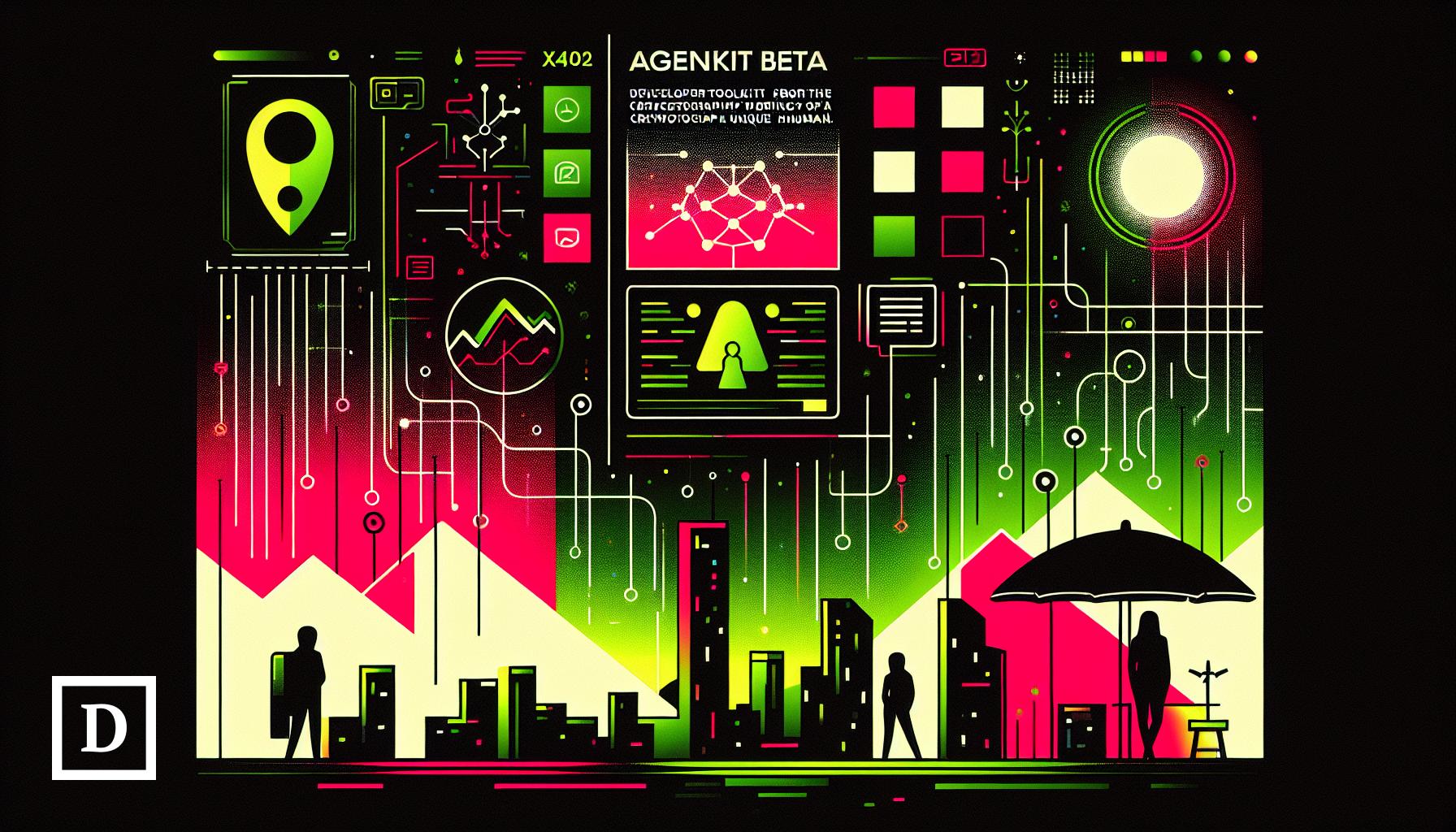
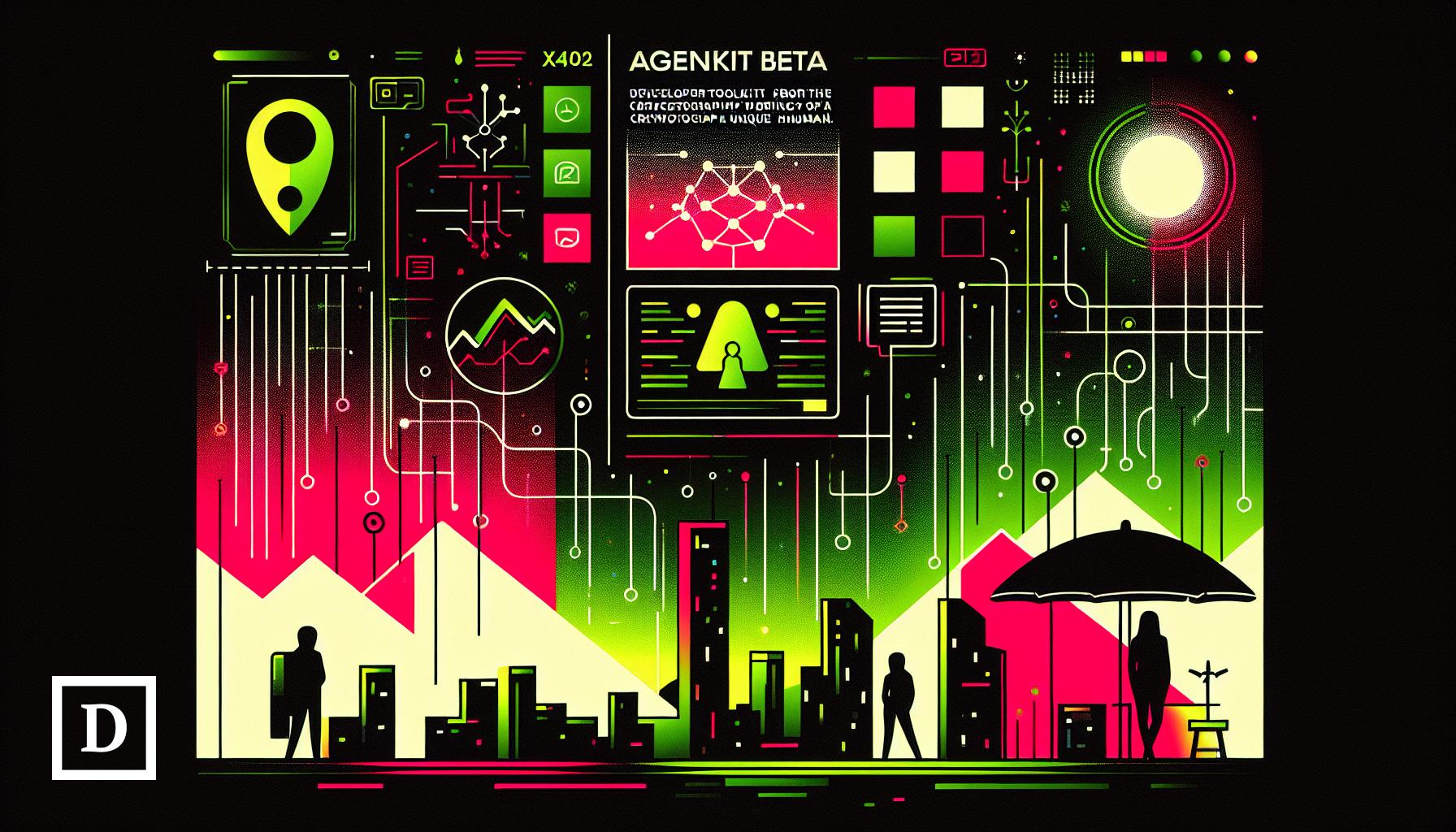
The toolkit integrates with Coinbase’s x402 protocol, giving platforms a way to verify a real person stands behind an automated agent — without revealing who that person is.
World — the crypto project co-founded by Sam Altman — announced today that it has launched AgentKit beta, a developer toolkit that extends its World ID proof-of-human system to AI agents, according to a press release shared with The Defiant.
AgentKit integrates with x402 — an payments protocol for AI agents developed by Coinbase and Cloudflare — and enables verified humans to cryptographically delegate their World ID to AI agents. The result is what World calls a “human-backed agent”: an automated actor that can prove a unique real person stands behind it, without revealing who that person is.
“Payments are the ‘how’ of agentic commerce, but identity is the ‘who,’” said Erik Reppel, Head of Engineering at Coinbase Developer Platform and Founder of x402. “By integrating World ID with the x402 protocol, developers now have a complete trust stack.”
Back in early 2023, when World ID launched alongside GPT-4, the project was already positioning itself as a counterweight to the coming wave of AI-generated accounts and automated activity online. The core pitch has barely changed — what has changed is the urgency. AI agents are now a reality, not a forecast.
The project has repeatedly attracted regulatory intervention globally over its biometric data collection practices, with suspensions and investigations in Kenya, Spain, Portugal, Hong Kong, and South Korea. As recently as last year, the High Court of Kenya ruled that Worldcoin’s collection of biometric data from Kenyan citizens in 2023 was illegal and violated the country’s data protection laws. Spain also mandated deletion of all iris scan data collected there, citing inadequate data handling practices.
Those concerns don’t disappear with AgentKit. While World frames its zero-knowledge architecture as privacy-preserving — users prove uniqueness without sharing personal information — critics have long argued that building a global identity layer on top of biometric iris scans introduces systemic risks that clever cryptography alone cannot resolve. The prospect of that same biometric infrastructure being extended to a sprawling ecosystem of autonomous AI agents is likely to sharpen that debate further.
World reports that its network now includes nearly 18 million verified humans across more than 160 countries. AgentKit beta is available now to developers who hold a verified World ID. The current release is built on existing World ID architecture, with a more advanced version planned as the next generation of the protocol rolls out.
The Rise of the Agent Economy
The announcement arrives at a pivotal moment for on-chain agentic activity. Since the start of 2026, the number of agents using the ERC-8004 standard across blockchain networks has grown from 337 to nearly 130,000 — an increase of over 39,000%, as The Defiant reported this week. As that explosion in agent activity has accelerated, so have questions about trust, accountability, and how platforms can distinguish between legitimate users and coordinated bot swarms.
The broader agentic economy continues to accelerate. Circle recently launched Nanopayments on testnet, offering gas-free USDC transactions designed specifically for AI agents making rapid, sub-cent payments for services like pay-per-call APIs and machine-to-machine marketplaces.
CoinFello last week released an open-source skill allowing agents to execute on-chain transactions via MetaMask without ever accessing a user’s private keys —addressing a core security vulnerability in how most agent wallets currently operate.
World’s AgentKit adds a third pillar to this emerging stack: alongside payments and secure key management, agents can now carry verifiable proof that a real human is behind them.
This article was written with the assistance of AI workflows. All our stories are curated, edited and fact-checked by a human.
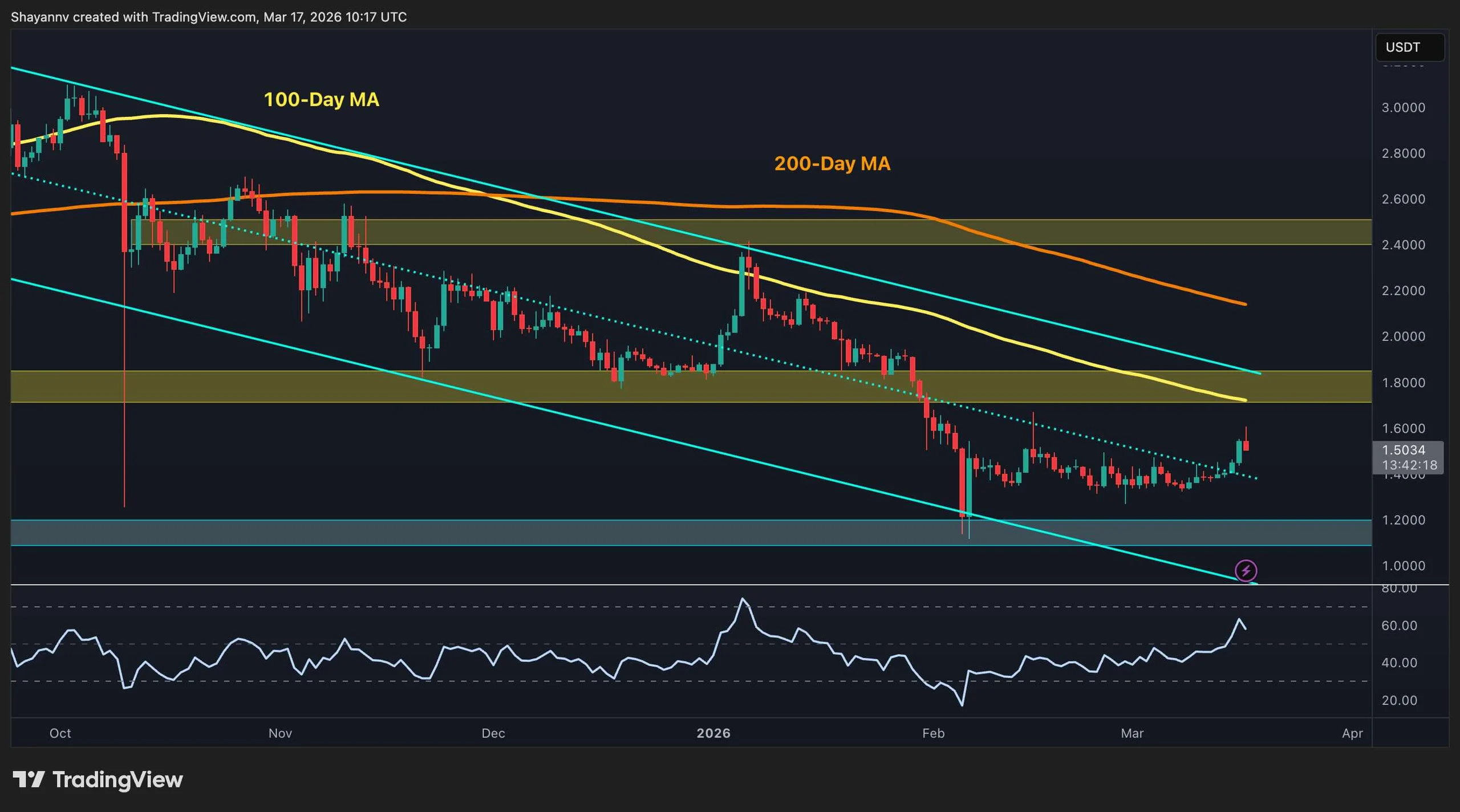
XRP is showing a modest recovery attempt, but the bigger picture still looks cautious on both the USDT and BTC pairs. The price has bounced from recent lows, and short-term momentum has improved, yet XRP is still trading below major moving averages and within broader bearish structures. That means buyers are improving the short-term picture, but they have not fully changed the trend yet.
Ripple Price Analysis: The USDT Pair
On the XRP/USDT chart, the cross-border token has pushed up toward the $1.50 psychological level after spending several sessions consolidating above the $1.10 to $1.20 support zone. This bounce is constructive, especially with RSI pushing higher, but XRP still sits below the descending trendline, 100-day and 200-day moving averages, and the heavy $1.75 to $1.80 resistance area. That zone remains the first major test for buyers.
If the asset can reclaim that region, the next upside target would be the broader $2.40 to $2.50 supply zone. But the price must also break above the 200-day moving average, located around $2.10, before reaching this zone. Until then, the current move looks more like a relief bounce inside a larger downtrend than a confirmed reversal. But as long as the price holds above the $1.10 to $1.20 base, buyers still have a platform to build on.
The BTC Pair
Against Bitcoin, XRP is also trying to stabilize after holding the key 2,000 sats support area. The pair has bounced back above 2,000 sats and is now attempting to regain some short-term momentum, but it remains below both the 100-day and 200-day moving averages, which continue to cap the structure from above.
The first important resistance on the XRP/BTC chart sits around 2,200 sats, where the two major moving averages are located. The next key horizontal level will be the 2,400 to 2,500 sats area. A clean move above those levels would improve the outlook and suggest that relative weakness versus Bitcoin is starting to fade. If the pair gets rejected again, though, the 2,000 sats zone remains the key support to watch, with a break below it reopening the path toward the lower boundary of the channel around 1,700 sats.

Binance Free $600 (CryptoPotato Exclusive): Use this link to register a new account and receive $600 exclusive welcome offer on Binance (full details).
LIMITED OFFER for CryptoPotato readers at Bybit: Use this link to register and open a $500 FREE position on any coin!
Disclaimer: Information found on CryptoPotato is those of writers quoted. It does not represent the opinions of CryptoPotato on whether to buy, sell, or hold any investments. You are advised to conduct your own research before making any investment decisions. Use provided information at your own risk. See Disclaimer for more information.
A view of the Mastercard company logo on its stand during the Mobile World Congress in Barcelona on March 1, 2017.
Joan Cros Garcia – Corbis | Corbis News | Getty Images
Mastercard on Tuesday said it agreed to acquire BVNK, a London-based stablecoin infrastructure firm, for up to $1.8 billion. It’s the payment network’s biggest bet yet on the mainstreaming of digital currencies.
The deal includes $300 million in payments that are contingent on BVNK hitting certain performance metrics and is expected to close this year, Mastercard said in a statement.
The acquisition gives Mastercard, the world’s second-largest payment network after Visa, the ability to connect traditional payment rails with emerging blockchain-based systems. That will allow Mastercard to enmesh itself in payments systems involving stablecoins and tokenized deposits as they gain adoption in coming years.
“We expect that most financial institutions and fintechs will in time provide digital currency services,” Mastercard Chief Product Officer Jorn Lambert said in his firm’s release.
BVNK, which was founded in 2021 and told CNBC last year that its valuation was above $750 million, says its platform currently supports transactions on all major blockchain networks in more than 130 countries.
Stablecoin startups have been a hot commodity since the reelection of President Donald Trump in late 2024 ushered in a new era of crypto-friendly regulation.
BVNK reportedly entertained takeover interest from Coinbase as well as Mastercard, and Mastercard had been interested in acquiring a different crypto company, Zerohash, earlier this year.
Crypto World
Phantom wins CFTC no-action relief, clearing path for crypto wallet access to regulated derivatives markets


Phantom, a developer of self-custodial crypto wallets particularly popular in the Solana ecosystem, secured a no-action letter from the U.S. Commodity Futures Trading Commission (CFTC), allowing it to offer users access to certain regulated derivatives markets without registering as a broker.
In a statement Tuesday, the CFTC’s Market Participants Division said it would not recommend enforcement action against Phantom for failing to register as an introducing broker, provided the firm meets a set of conditions. The relief applies to Phantom’s software acting as a non-custodial interface that connects users directly with CFTC-registered entities, such as futures commission merchants and designated contract markets.
Phantom said in a blog post that the letter enables it to integrate access to regulated derivatives and event contracts directly in its app through registered partners, while ensuring users submit orders straight to exchanges. The company emphasized it does not custody customer funds or intermediate trades.
Phantom described the outcome as “first-of-its-kind” for this model and the result of proactive engagement with regulators. “Rather than building first and seeking forgiveness later, we took a different approach,” the team wrote in the blog post, adding that early dialogue with the CFTC helped clarify how non-custodial interfaces can operate within existing rules.
“A critical part of making crypto safe and easy to use is building financial products that are governed by clear, common-sense regulations. When warranted, engaging regulators early to find compliant pathways for these new products produces better outcomes for our users, for the industry, and for regulators themselves. This letter is proof of that,” said Phantom CEO Brandon Millman in a blog post.
“We’re grateful to the CFTC for working through a genuinely novel question with us, and we look forward to bringing more innovative products to consumers in a way that gives them confidence and sets the right precedent,” he added.
Read: Prediction Markets Are Coming to Phantom’s 20M User Via Kalshi
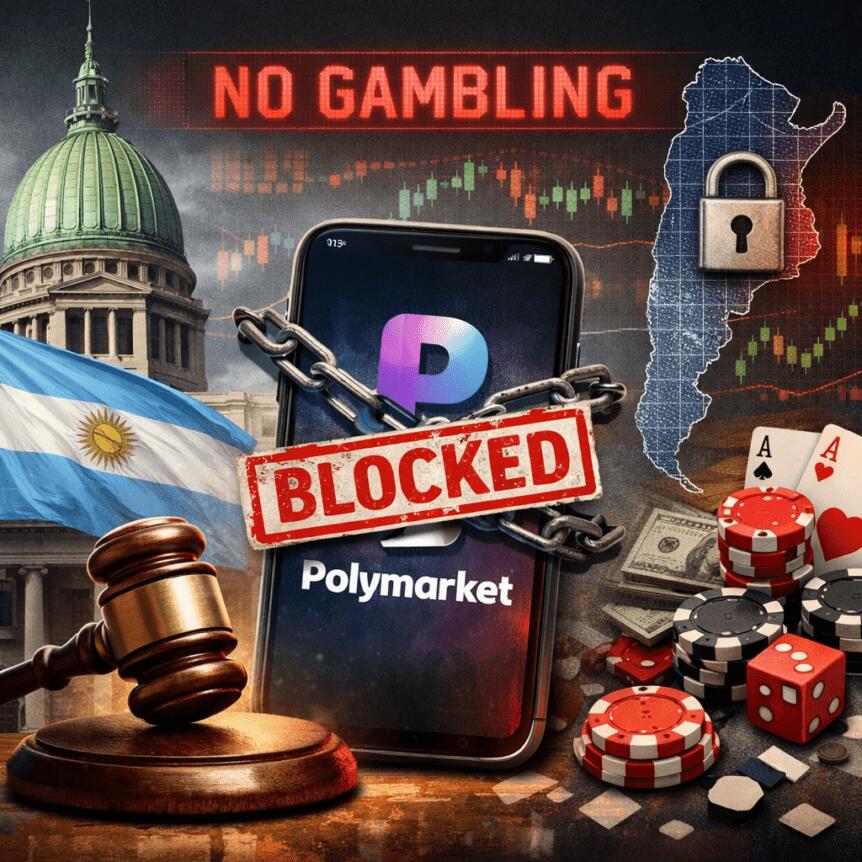
A court in Argentina has ordered a nationwide block of the major crypto-based prediction market platform Polymarket over unauthorized gambling.
Argentina’s national regulator for communications and media, ENACOM, received a court directive to block access to Polymarket and its variants across the country, according to a ruling dated March 11. The measure was issued by the Buenos Aires Court of First Instance in Criminal, Contravention and Minor Offenses No. 31, which is examining Polymarket under the Criminal Code for allegedly offering gambling services without proper authorization. The judge instructed ENACOM to implement the block either directly or through internet service providers and to report any technical obstacles that could hinder full compliance.
Key takeaways
- The Buenos Aires court issued a nationwide access block to Polymarket, expanding enforcement against unlicensed online gambling platforms in Argentina.
- The case centers on potential violations of gambling regulations, with prosecutors alleging Polymarket allowed bets without sufficient identity or age verification.
- The order also targets mobile apps, directing Google and Apple to remove Polymarket from Android and iOS stores for Argentina-based users.
- Local reporting indicates the case was launched after a complaint from LOTBA, the city’s gambling regulator, triggering an investigation by FEJA, the specialized gaming prosecutor’s office.
- Observers note that the decision comes in the context of global scrutiny of crypto-related prediction markets and further underscores regulatory risk for platforms operating across borders.
Sentiment: Neutral
Price impact: Neutral. The regulatory action does not provide a clear, immediate signal for asset prices or trading activity.
Market context: The case sits within a broader pattern of regulators tightening oversight of so-called prediction markets and enforcing KYC/AML requirements. Across Europe and Latin America, authorities have taken steps to curb unregistered gambling platforms and to ensure consumer protections are in place, often prompting platform operators to adjust or suspend services in affected regions.
Why it matters
The Buenos Aires ruling highlights the friction between innovative, crypto-enabled betting markets and traditional regulatory frameworks. Polymarket built its value proposition on offering prediction markets that cover a wide range of topics, including inflation and geopolitical events. When a municipal or national regulator steps in to block access, it underscores the importance of compliant user verification processes and license regimes for platforms that facilitate real-money wagering or wagering-like activities.
From a regulatory perspective, the case draws attention to the ongoing debate over whether and how crypto-relates prediction services should be regulated. Critics have pointed to concerns about consumer protection and the potential for underage participation when platforms operate with limited KYC checks. Proponents, meanwhile, argue that well-structured prediction markets can improve information discovery and provide hedging tools, provided that operators adhere to robust verification standards and clear licensing terms.
For users and developers in the broader crypto ecosystem, the episode serves as a reminder that cross-border services face a patchwork of rules that can shift quickly. Even as some jurisdictions pursue innovation in digital markets, others lean toward strict licensing, content restrictions, or outright bans. In Latin America, regulators have already warned or acted against several crypto-related activities perceived as unregistered or insufficiently regulated, reinforcing the need for clear compliance pathways if platforms intend to serve local audiences.
Colombia, for example, has previously voiced cautions about Polymarket’s operations in the region, while countries such as the Netherlands, Hungary, Portugal, and Ukraine have likewise moved to curb or block similar services. These developments collectively shape the risk landscape for prediction-market platforms and for users who rely on them for hedging or informational purposes. At the same time, observers note that the enforcement environment can influence where and how such services operate, potentially shifting user activity toward jurisdictions with clearer regulatory guidance or licensing regimes.
Polymarket has not provided immediate public comment on the Argentine case. The evolving situation underscores the degree to which regulatory actions, rather than technical performance or user demand alone, can determine the feasibility and reach of prediction-market platforms within a given country.
Related: CFTC chair backs blockchain-based prediction markets as ‘truth machines’
The Argentine action aligns with broader global scrutiny of prediction markets and the need for clear compliance frameworks as the space grows. In Latin America, authorities have signaled a willingness to police unregistered gambling activities online, even as the same platforms aim to attract users seeking information and hedging opportunities through data-driven markets. The enforcement trajectory in Buenos Aires may influence how Polymarket and similar platforms structure their offerings, licensing, and geographic reach going forward.
In the past, the platform’s inflation-linked markets drew notable attention for their alignment with official statistics, sparking debates about insider information and data integrity. While those questions predate the present enforcement action, they color the ongoing discussion about how prediction markets should be governed and who bears responsibility when data sources or verification standards fall short of regulatory expectations.
As the regulatory environment evolves, Polymarket’s trajectory will likely hinge on whether it secures required licenses or restructures its service to comply with local rules. Researchers and practitioners are watching closely to see whether the company seeks clarifications from regulators, pivots its product design, or withdraws from particular markets in jurisdictions deemed high-risk or under regulatory watch. In any case, the case in Buenos Aires adds a notable data point to the global conversation about how to balance innovation with safeguarding consumers in a rapidly evolving digital economy.
Source: ENACOM
What to watch next
- Whether ENACOM will complete the block nationwide and if providers can regain access through exemptions or technical workarounds.
- Any formal statements from Polymarket regarding licensing, compliance steps, or potential adaptations to operating in Argentina.
- Follow-up actions by LOTBA and FEJA, including any further court filings or appeals related to the case.
- Potential responses from Google and Apple on app removals and any subsequent reinstatement or new compliance requirements for the platform.
Sources & verification
- ENACOM court filing and the March 11 ruling (PDF): https://www.enacom.gob.ar/multimedia/noticias/archivos/202603/archivo_20260313091955_8827.pdf
- Lanación coverage on the case and the LOTBA complaint: https://www.lanacion.com.ar/economia/mercado-de-predicciones-la-justicia-portena-bloqueo-el-acceso-a-polymarket-en-todo-el-territorio-nid16032026/
- Local reporting on the FEJA investigation and the LOTBA filing: referenced in the article
- Public social posts noting the actions and the court’s scope: Reddit discussion and X/Twitter mentions cited in reporting
Argentina blocks Polymarket nationwide over unlicensed gambling
The Buenos Aires court’s decision to instruct ENACOM to block Polymarket across Argentina marks a significant enforcement milestone for a platform that has drawn regulatory attention in multiple jurisdictions. The core concern cited by authorities revolves around the lack of robust identity and age verification, which raises questions about whether minors or unverified users could participate in bets on the platform. The order also extends to mobile apps, directing the major app stores to remove Polymarket from Android and iOS within the country, a move that could substantially reduce the platform’s on-device reach for Argentine users.
The regulatory sequence began with a complaint from LOTBA, the city’s gambling regulator, prompting FEJA to open an investigation that culminated in the court action. The case underscores the tension between innovative digital markets and the traditional oversight expected of gambling services. While Polymarket has sought to position itself as a data-centric, information-driven platform, regulators emphasize consumer protection and licensing compliance as prerequisites for operation in their jurisdictions.
Observers note that the court’s jurisdictional reach, combined with the request to block access via ISPs and major app stores, suggests a comprehensive attempt to curb cross-border traffic tied to Argentine users. This approach aligns with a broader pattern in which nations reassess the legality of online prediction markets and the channels through which residents can access them. While some markets have argued that such platforms can enhance information flows, others view them as risky financial services requiring stringent licensing and governance standards.
As the situation unfolds, policymakers and market participants will watch for defined licensing pathways, potential amendments to local gambling regulations, and any appellate decisions that could shape how prediction markets operate in Argentina and similar markets in the region. The case also serves as a touchstone for ongoing global debates about how best to regulate crypto-enabled prediction tools without stifling legitimate innovation or compromising user safety.
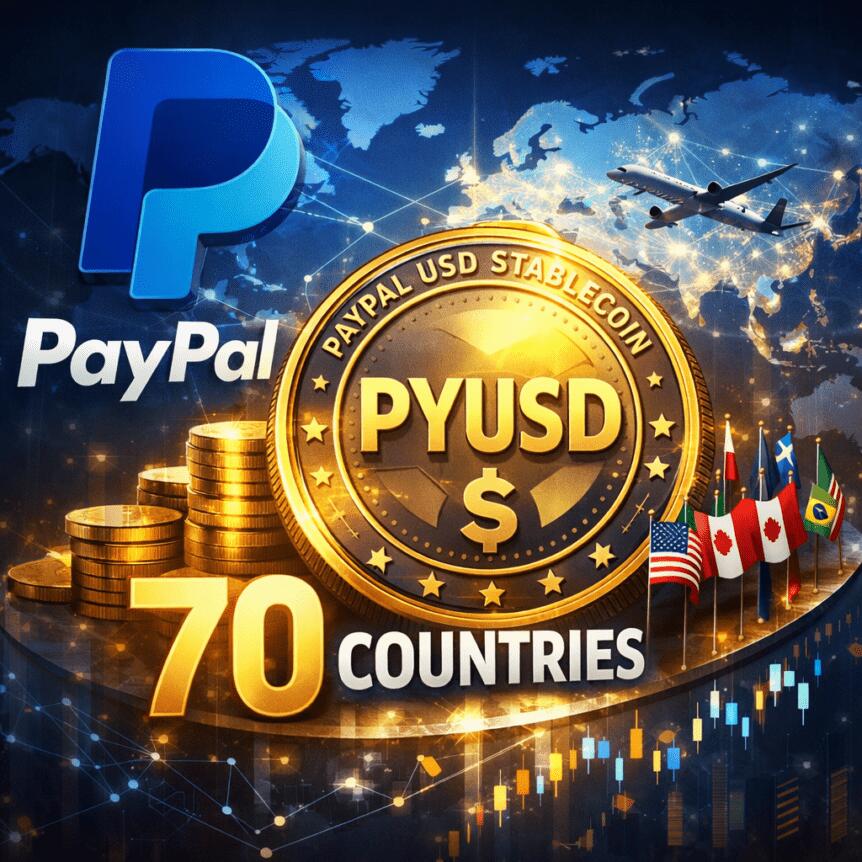
PayPal is widening access to its USD-pegged stablecoin, enabling users in more regions to hold, receive, and send funds with greater ease. The company announced that PayPal USD will be available in 70 countries this March, expanding far beyond its initial U.S. and U.K. footprint. The move accelerates PayPal’s broader push into crypto-enabled payments and sits alongside a growing trend of fiat-pegged digital currencies expanding onto consumer wallets and cross-border rails. The stablecoin’s expansion comes roughly three years after its August 2023 launch in cooperation with Paxos Trust, and it comes as the broader market for USD-backed stablecoins continues to scale in both user adoption and on-chain utility.
Key takeaways
- PayPal USD will be accessible to PayPal account holders in 70 markets worldwide in March, up from a U.S.- and U.K.-only rollout.
- The expansion covers regions across Asia-Pacific, Europe, Latin America and North America, enabling faster access to funds and lower cross-border transfer costs.
- New markets will unlock a balance-type experience, allowing users to hold funds in US dollars and earn rewards on their stablecoin holdings, with transfers to third-party digital wallets supported.
- In places where wallets previously didn’t support holding PYUSD, users can now keep stablecoin balances within PayPal accounts, potentially reducing friction and fees for cross-border payments.
- PYUSD is issued by Paxos and distributed by PayPal; it has grown meaningfully in 2025, reflecting broader demand for USD-backed digital currencies on both consumer and merchant fronts.
Tickers mentioned: $PYUSD
Sentiment: Neutral
Market context: The broad expansion of PYUSD fits a larger pattern of USD-stablecoins building everyday payment rails and wallet-based experiences. As non-cash cross-border flows rise and digital wallets become more mainstream, issuers and platforms are increasingly prioritizing easy access, lower fees and interoperable on-ramps for consumers and small businesses alike.
Why it matters
The expansion marks a notable milestone for PayPal’s crypto strategy, moving beyond a US-centric footprint toward a truly global crypto-enabled payments environment. By placing PYUSD in 70 markets, PayPal signals confidence in stablecoins as practical tools for everyday money movement, not merely as speculative assets. For users in newly supported countries, the ability to receive, hold and send US dollar-denominated stablecoins within PayPal wallets could streamline remittances, e-commerce purchases and microtransactions that previously carried higher friction or currency conversion costs.
The “balance-type” concept highlighted by PayPal’s crypto leadership suggests a shift in how users will interact with digital currencies. Previously, in some markets, users could withdraw to local currencies or were limited by wallet capabilities; with PYUSD access, PayPal positions stablecoins as part of a native wallet experience. This approach may encourage users to keep more funds in digital form rather than converting at each transaction, potentially driving greater throughput for stablecoin usage in everyday payments. The company argues that this can translate into faster settlement, lower costs and a more direct route into the global economy for people who were previously constrained by currency fintech frictions.
The backdrop to this expansion includes a booming USD-stablecoin segment. Data from CoinGecko places PYUSD among the leading USD-pegged options, with a market capitalization that has grown alongside user adoption and merchant acceptance. The project’s growth trajectory has been pronounced; for instance, PYUSD’s reported market cap surged in 2025 from roughly $500 million to about $3.6 billion by year-end, underscoring how stablecoins backed by traditional fiat have moved from niche tools to mainstream rails for payments and transfers. In context, PYUSD’s rollout in 70 markets could amplify both consumer familiarity and merchant integration, creating more visible on/off ramps for a digital-dollar ecosystem.
PayPal’s leadership has framed the expansion as part of a broader mission to bring crypto-enabled financial tooling into mainstream commerce. May Zabaneh, PayPal’s head of crypto, has emphasized that broader access should translate into quicker access to funds and lower-cost cross-border transfers. The company’s approach aims to lower the barriers to participation in the global economy, particularly for users in regions where transferring value across borders typically incurs higher fees or delays. In regions where wallet capabilities or currency controls previously limited stablecoin use—such as certain markets where funds could not be retained in a PayPal wallet—the updated policy opens new pathways for holding and moving value.
The upgrade also aligns with a wider industry narrative: USD-backed stablecoins are increasingly viewed as practical digital instruments for everyday transactions, not just speculative instruments in crypto markets. The expansion to dozens of new markets could drive deeper liquidity, improve user experiences and give PayPal a more visible role in the digital payments ecosystem as traditional financial rails continue to converge with blockchain-enabled tools.
Beyond PayPal’s own ecosystem, the development echoes the broader interest from regulators, merchants and fintechs in stablecoins as bridges to faster settlements and cheaper transfers. While questions about stablecoin regulation and consumer protections persist in various jurisdictions, the real-world utility of a widely accessible USD-pegged token continues to drive adoption. The new markets will also test how well existing on/off-ramp infrastructure can accommodate increased stablecoin activity, including third-party wallet integrations that the announcement says will be supported going forward.
In line with PayPal’s multi-region deployment, the company has indicated a willingness to integrate with external wallets and partners in the near term, which could broaden PYUSD’s reach beyond the PayPal app itself. The expansion thus represents not only a geographic growth story but also a test case for how a major payments platform can mainstream stablecoins within consumer financial behavior. The evolving landscape of stablecoins, cross-border payments and wallet-based money management will be watched closely by regulators, users and industry observers as PyUSD usage expands into new markets.
For readers seeking context on the stablecoin’s origins, the stablecoin was launched in August 2023 in collaboration with Paxos Trust as the issuer. The initial rollout set the stage for a longer-term strategy to deliver fiat-denominated digital currency tools to PayPal’s broad user base. The underpinning infrastructure and governance have been designed to support broad wallet functionality and cross-border payments, raising expectations about how such coins can fit into mainstream financial workflows. The public data and historical rollout provide a frame for evaluating the significance of this March expansion. To see how the broader market has positioned PYUSD among USD-backed stablecoins, industry trackers like CoinGecko have published data on the relative size and category placement of USD-pegged stablecoins, illustrating that PYUSD sits among the largest by market cap in this space. A prior piece detailing the initial launch can be found in reports about the August 2023 introduction, which highlighted the Paxos partnership and PayPal’s ambition to turn stablecoins into everyday payment rails. For readers who want to cross-check the latest market data, CoinGecko’s USD-stablecoins category is a useful reference point.
What to watch next
- March rollout in 70 markets: monitor PayPal’s official communications for regional availability updates and any region-specific requirements.
- Wallet integrations and rewards: watch for details on how rewards on PYUSD holdings will be earned and redeemed across supported markets.
- Third-party wallet support: track announcements about enabling transfers to external wallets and cross-wallet interoperability.
- Regulatory updates: observe how different jurisdictions approach stablecoin usage in consumer wallets and cross-border transfers.
Sources & verification
- PayPal newsroom release confirming PYUSD expansion to 70 markets in March: https://newsroom.paypal-corp.com/2026-03-17-PAYPAL-BRINGS-PAYPAL-USD-TO-USERS-ACROSS-70-MARKETS
- Initial PYUSD launch in August 2023 with Paxos: https://cointelegraph.com/news/paypal-launches-stablecoin-for-payment
- PYUSD market data and USD-stablecoin category on CoinGecko: https://www.coingecko.com/en/categories/usd-stablecoin
- Fortune interview with May Zabaneh on PYUSD expansion: https://fortune.com/2026/03/17/paypal-expands-pyusd-stablecoin-access-to-68-more-countries/
Global rollout of PYUSD expands PayPal’s reach in cross-border payments
PayPal USD (CRYPTO: PYUSD) is moving into a broader global phase as the payments giant confirms plans to bring the stablecoin to 70 markets in March. The expansion widens access to a USD-pegged token designed to complement traditional fiat with a digital settlement layer, and it is framed by PayPal as a means to shorten settlement times and reduce cross-border fees for users who previously faced higher costs when moving money internationally. The expansion builds on a multi-year trajectory that began with the August 2023 launch of PYUSD in partnership with Paxos, and it comes as the stablecoin market has shown resilience and growth in 2025, with PYUSD contributing to the range of USD-denominated options available to consumers and merchants alike.
In practical terms, the rollout means PayPal account holders in the new markets will be able to receive, hold and send PYUSD, with support extending to transactions with third-party digital wallets. This marks a shift from a US- and UK-centric rollout to a broader, cross-border capability, where a user in a country like Peru could benefit from a wallet where funds are retained in US dollars rather than immediately converted to a local currency. PayPal executives describe the update as enabling a more direct path to global participation in the digital economy, reducing the friction that previously accompanied cross-border transfers and currency conversions.
The size and scope of the new markets underscore the role that stablecoins are increasingly playing in consumer payments. Market data suggests PYUSD is among the more prominent USD-pegged options, a status that aligns with PayPal’s strategy to embed cryptocurrency functionality into mainstream financial services. The expansion also provides a lens into how major platforms manage risk, liquidity and regulatory expectations as they scale stablecoins for a wider audience. While the exact regulatory treatment of stablecoins varies by jurisdiction, the real-world utility—the ability to send, receive and hold stable value across borders—appears to be a major driver of momentum for PayPal’s crypto initiative. Investors and users alike will be watching how these new market additions influence adoption rates, as well as any updates to the program that enhance wallet usability and cross-wallet interoperability.
The broader context is one of ongoing experimentation with digital currencies that sit between traditional fiat and blockchain-based assets. PayPal’s expansion mirrors a broader industry push to normalize stablecoins as everyday payment tools, and it could influence how other fintechs approach wallet design, cross-border payments and consumer rewards. For users in markets where previous limitations constrained stablecoin use, the new availability may unlock a more seamless, lower-cost option for everyday expenditures and international transfers, ultimately contributing to a more connected and flexible financial landscape.


U.S. spot crypto exchanges have nearly doubled market share to 15% as ETF-driven flows and institutional venue consolidation pull liquidity back onshore.
Summary
- U.S. spot exchanges’ global market share has jumped from about 8% to 15% over the past year, signaling a sharp onshoring of liquidity.
- Spot Bitcoin ETFs and institutional best-execution standards are concentrating large orders on regulated U.S. venues, tightening spreads and deepening BTC books.
- Despite the rebound, regulatory uncertainty still pushes some liquidity offshore, leaving further U.S. spot dominance contingent on clearer rules.
U.S. crypto exchanges have almost doubled their share of the global spot market in the past year, underscoring how the ETF trade and institutions are pulling liquidity back onshore.
According to new data from crypto analytics firm Kaiko, U.S. exchanges’ spot market share has climbed from around 8% to 15% over the past twelve months, nearly a twofold increase. Over the same period, liquidity in U.S.-listed Bitcoin pairs has strengthened to the point that domestic venues now surpass some leading offshore exchanges across multiple BTC trading pairs.
Kaiko’s analysis attributes the shift to three core drivers: surging demand around spot Bitcoin ETFs, consolidation of institutional trading flows, and improvements in compliance and transparency at U.S. platforms. Since the approval of spot ETFs, a growing share of large orders has migrated to regulated U.S. rails, tightening spreads and deepening books, particularly in BTC pairs most closely tied to ETF hedging and arbitrage.
Institutional desks appear to be rationalizing venue selection as regulatory pressure and best-execution standards rise. Rather than routing size across dozens of offshore platforms, market participants are clustering flow into a smaller set of compliant exchanges that can support ETF-related activity, custody integrations, and reporting requirements. That process concentrates liquidity and helps explain why U.S. books are now overtaking some historically dominant offshore competitors on key BTC pairs.
The growing domestic share also reflects a broader normalization of crypto market structure. For years, the deepest order books and tightest spreads were overwhelmingly offshore, creating an execution gap for U.S.-based institutions. Kaiko’s latest data suggests that gap is closing, with onshore venues now competitive on both depth and quality for the flagship BTC market.
Regulatory risk, however, remains the main overhang. While improved transparency has supported the U.S. comeback in spot, policy uncertainty still drives parts of the industry to maintain parallel liquidity hubs offshore. If U.S. rulemaking stabilizes and ETF volumes continue to scale, the current 15% share could prove to be a staging point rather than a ceiling for domestic spot dominance.


Ethereum’s derivatives market is trapped between billion‑dollar long and short liquidation clusters, leaving ETH just one sharp move away from a forced‑flow volatility spike.
Summary
- Coinglass data show a dense ETH long liquidation band just below spot, with roughly 1.389 billion dollars in leveraged longs at risk if price breaks under 2,210 dollars.
- Above 2,441 dollars, shorts face around 1.061 billion dollars in potential liquidations, creating a two‑sided “pain trade” corridor for Ethereum derivatives.
- With leverage stacked on both sides, even modest spot moves can trigger cascading forced flows, reducing the odds of quiet sideways trading in the near term.
Ethereum’s (ETH) derivatives market is sitting on a razor’s edge as leveraged positioning piles up on both sides of the book around current prices. Fresh data from analytics platform Coinglass shows a dense liquidation band forming just below spot, with a matching short squeeze pocket overhead that could amplify any sharp move.
If ETH breaks below the 2,210 dollar level, cumulative long liquidations across major centralized exchanges would reach roughly 1.389 billion dollars, according to Coinglass. That figure captures forced unwinds of overleveraged long positions and highlights how crowded the upside trade has become after Ethereum’s latest bounce. In practice, a clean sweep through that level could trigger a cascading sell-off, as forced selling from liquidations pushes prices lower and knocks out additional margin traders.
On the flip side, if ETH pushes above 2,441 dollars, the derivative stack flips direction, with cumulative short liquidations on major exchanges climbing to about 1.061 billion dollars. That setup creates a classic “pain trade” corridor: bulls risk a billion-dollar flush if support fails, while bears are exposed to a billion-dollar short squeeze if resistance breaks.
For spot traders, these liquidation clusters act like hidden liquidity magnets in the order book, shaping intraday flows even when spot volumes look muted. Market makers and larger funds can and do trade around these levels, probing for liquidation pockets where they can source liquidity at a discount or force competing participants out of position.
From a risk perspective, the current derivatives structure means ETH is less likely to drift sideways for long. As open interest concentrates around tight liquidation bands, volatility tends to reprice abruptly rather than gradually, with one side of the market forced to capitulate. Until that imbalance clears, both bulls and bears are effectively trading inside a leverage minefield, where a few hundred dollars of spot movement could unlock over 1 billion dollars in forced flows either way.

Vapers issued urgent meningitis warning as expert reveals one habit putting them at risk
Goldman Sachs reiterates Zillow stock rating on new listing product
“Summer House” midseason trailer shows Ciara and West's relationship implode, Kyle’s epic meltdown (exclusive)


-
 Tech6 days ago
A 1,300-Pound NASA Spacecraft To Re-Enter Earth’s Atmosphere
-
Crypto World3 days ago
HYPE Token Enters Net Deflation as HyperCore Buybacks Outpace Staking Rewards
-

 Business7 days ago
ExxonMobil seeks to move corporate registration from New Jersey to Texas
-

 Fashion4 days ago
Weekend Open Thread: Addict Lip Glow
-

 Tech7 days ago
ChatGPT will now generate interactive visuals to help you with math and science concepts
-
Sports3 days ago
Why Duke and Michigan Are Dead Even Entering Selection Sunday
-

 NewsBeat6 days ago
Residents reaction as Shildon murder probe enters second day
-

 Business2 days ago
Search for Savannah Guthrie’s Mother Enters Seventh Week with No Arrests
-

 Business6 days ago
Search Enters Sixth Week With New Leads in Tucson Abduction Case
-

 Business3 days ago
US Airports Launch Donation Drives for Unpaid TSA Workers as Partial Government Shutdown Enters Fifth Week
-

 Sports6 days ago
PWHL, Senators discussing plan to keep Charge in Ottawa
-
Crypto World3 days ago
Coinbase and Bybit in Investment Talks: Could Bybit Finally Enter the US Crypto Market?
-

 NewsBeat6 days ago
I Entered The Manosphere. Nothing Could Prepare Me For What I Found.
-

 Business3 days ago
Country star Brantley Gilbert enters growing non-alcoholic beer market
-

 Business1 day ago
Australian shares drop as Iran war enters third week
-

 Sports4 days ago
College Basketball Best Bets: Conference Tournament Semifinal Picks
-

 Crypto World1 day ago
Crypto Lender BlockFills Enters Chapter 11 with Up to $500M in Liabilities
-

 Tech7 days ago
Clarity as strategy
-

 Politics6 days ago
Trump Says Middle East Is ‘Very Lucky’ That He’s President
-
 Crypto World6 days ago
Three Binance Charts May Be Hinting at Bitcoin’s Next Move


You must be logged in to post a comment Login