
Crypto World
Should You Buy Micron (MU) Stock Ahead of Wednesday’s Earnings Report?


Key Takeaways
- Micron’s Q2 FY26 earnings announcement scheduled for Wednesday, March 18, post-market
- Analyst consensus projects EPS between $8.74–$8.77, representing approximately 460% YoY growth
- Projected revenue of $19.03 billion reflects 136% year-over-year expansion
- MU shares have climbed roughly 55% since the start of the year
- Recent analyst upgrades include Wedbush’s $500 target and Wells Fargo’s $470 Buy rating
Micron Technology is preparing to unveil its second-quarter fiscal 2026 financial results this Wednesday, March 18, following the market’s close. The semiconductor company enters the earnings event with shares already showing impressive gains of approximately 55% year-to-date.
Analyst expectations center around earnings per share between $8.74 and $8.77 for the quarter. This projection indicates an extraordinary leap of approximately 460% when compared to the corresponding quarter from the previous year.
The revenue projection stands at approximately $19.03 billion. This figure demonstrates a substantial 136% year-over-year surge, primarily fueled by robust demand for high-bandwidth memory solutions and DRAM chips used in data center applications.
The memory chip sector has experienced significant momentum. Constrained supply combined with upward pricing pressure has created favorable conditions for Micron throughout the year.
Market expectations reflected in options pricing suggest a potential stock movement of approximately 10.61% in either direction post-earnings. This substantial range underscores the considerable anticipation and volatility surrounding the upcoming announcement.
Wall Street Raises Price Targets
In the lead-up to earnings, several analysts have increased their bullish stance. Matthew Bryson from Wedbush Securities elevated his price objective to $500 from $320, maintaining an Outperform rating. Bryson highlighted that Micron’s earnings trajectory continues strengthening while the stock remains below historical peak valuations typical of memory sector companies.
Aaron Rakers at Wells Fargo maintained his optimistic view, reaffirming a Buy rating while increasing his target from $410 to $470. Rakers anticipates peak earnings capability between $50 and $60 per share, with sustained long-term earnings power estimated at $30 to $40 per share.
Currently, 27 Wall Street analysts provide coverage on Micron, resulting in a consensus Strong Buy rating. This rating comprises 26 Buy recommendations alongside one Hold rating issued within the past three months. The mean price target stands at $448.07, suggesting approximately 5.15% potential appreciation from present levels.
The full spectrum of analyst price objectives ranges from a low of $86.28 to a high of $650.00, with the one-year average landing at $407.89.
HBM4 Launch and Taiwan Expansion
Micron has recently commenced volume production of its next-generation HBM4 memory, specifically engineered for Nvidia’s forthcoming Vera Rubin platform. This advanced product achieves bandwidth exceeding 2.8 TB/s — representing more than double the performance of its predecessor — while delivering over 20% improved power efficiency.
This positions Micron as a critical supplier in the accelerating AI infrastructure expansion.
Additionally, Micron has finalized its acquisition of the P5 fabrication facility from Powerchip Semiconductor Manufacturing located in Tongluo, Taiwan. The transaction, initially disclosed in January 2026, incorporates approximately 300,000 square feet of cleanroom manufacturing space.
The semiconductor manufacturer intends to modernize the facility for DRAM and HBM manufacturing, with initial production shipments anticipated to commence in fiscal year 2028.
Rakers noted that market participants will be closely monitoring how Micron addresses competitive dynamics surrounding HBM4 within the context of Nvidia’s Rubin product cycle.
The consensus analyst price target of $407.89 currently trades below MU’s present price of $426.13, suggesting a modest downside of 4.28% based on the one-year consensus outlook.
Remember: Preserve all tokens like [[EMBED_0]], [[IMG_0]], [[LINK_START_0]], [[LINK_END_0]], [[SCRIPT_0]], [[FIGURE_0]] etc. exactly as they appear. These are placeholders for embeds, images, and links that must not be changed.




Wall Street investment bank Citigroup lowered its 12-month price targets for bitcoin and ether (ETH), citing slower legislative momentum in the U.S., softer network activity, and reduced expectations for ETF inflows.
Citi now sees bitcoin reaching $112,000 and ether $3,175 over the next year, down sharply from prior forecasts of $143,000 and $4,304.
The revised targets still suggest substantial upside. Bitcoin was trading around $74,000 at the time of publication. Ether was at $2,330.
The bank said inflows remain the key upside driver, though it lowered its 12-month demand assumptions, even as recent ETF demand has picked up modestly despite geopolitical uncertainty.
“ETF demand where we reduce the assumption to $10 billion and $2.5 billion (ETH) is still the most important positive factor,” analyst Alex Saunders said in the Monday report.
Crypto markets have struggled to regain momentum after bitcoin’s run to record highs in October, with prices drifting lower amid weak risk appetite and fading post-halving enthusiasm. BTC has traded below key technical levels, while ether has lagged further, weighed by soft onchain activity. Despite the subdued price action, ETF inflows have remained resilient, helping to stabilize the market even as broader macro uncertainty and geopolitical tensions continue to cap upside.
According to Saunders, the outlook hinges heavily on U.S. regulation. The analyst said the window to pass digital asset legislation this year is narrowing, with market-implied odds falling to around 60%. While broader global policy remains supportive, he argued that headline U.S. legislation would be a stronger catalyst for institutional flows than incremental rulemaking.
The CLARITY Act, a sweeping U.S. crypto market-structure bill, has cleared the House but remains stalled in the Senate as lawmakers negotiate competing proposals, leaving its path forward uncertain.
The legislation is seen as critical because it would establish clear rules for how digital assets are classified and which agencies oversee them, resolving a long-running turf battle between the Securities and Exchange Commission (SEC) and The Commodity Futures Trading Commission (CFTC) that has created legal ambiguity for investors and firms.
By defining categories of tokens and setting registration frameworks for exchanges, the bill aims to reduce regulatory risk and provide the certainty many institutional investors need before allocating more capital to crypto markets.
The analyst also flagged weakening momentum in the crypto market since bitcoin’s October peak, citing futures liquidations, positioning fatigue, and prices sitting below key technical levels. Bitcoin may continue to range trade, with around $70,000 seen as an important psychological level tied to pre-election pricing.
In the bank’s framework, the bull case depends on stronger end-investor adoption, particularly via ETFs, with a target of $165,000 for bitcoin and $4,488 for ether. The bear case reflects recessionary macro conditions, with targets of $58,000 for BTC and $1,198 for ETH.
Ether’s outlook is more uncertain, the report said, given its sensitivity to onchain activity, which has recently been weak. Still, there is potential upside from stablecoin growth, tokenization trends and possible regulatory focus on DeFi, which could lift usage and demand.
Read more: Bitcoin outperforms gold and stocks in global turmoil as ETFs and Strategy accumulate
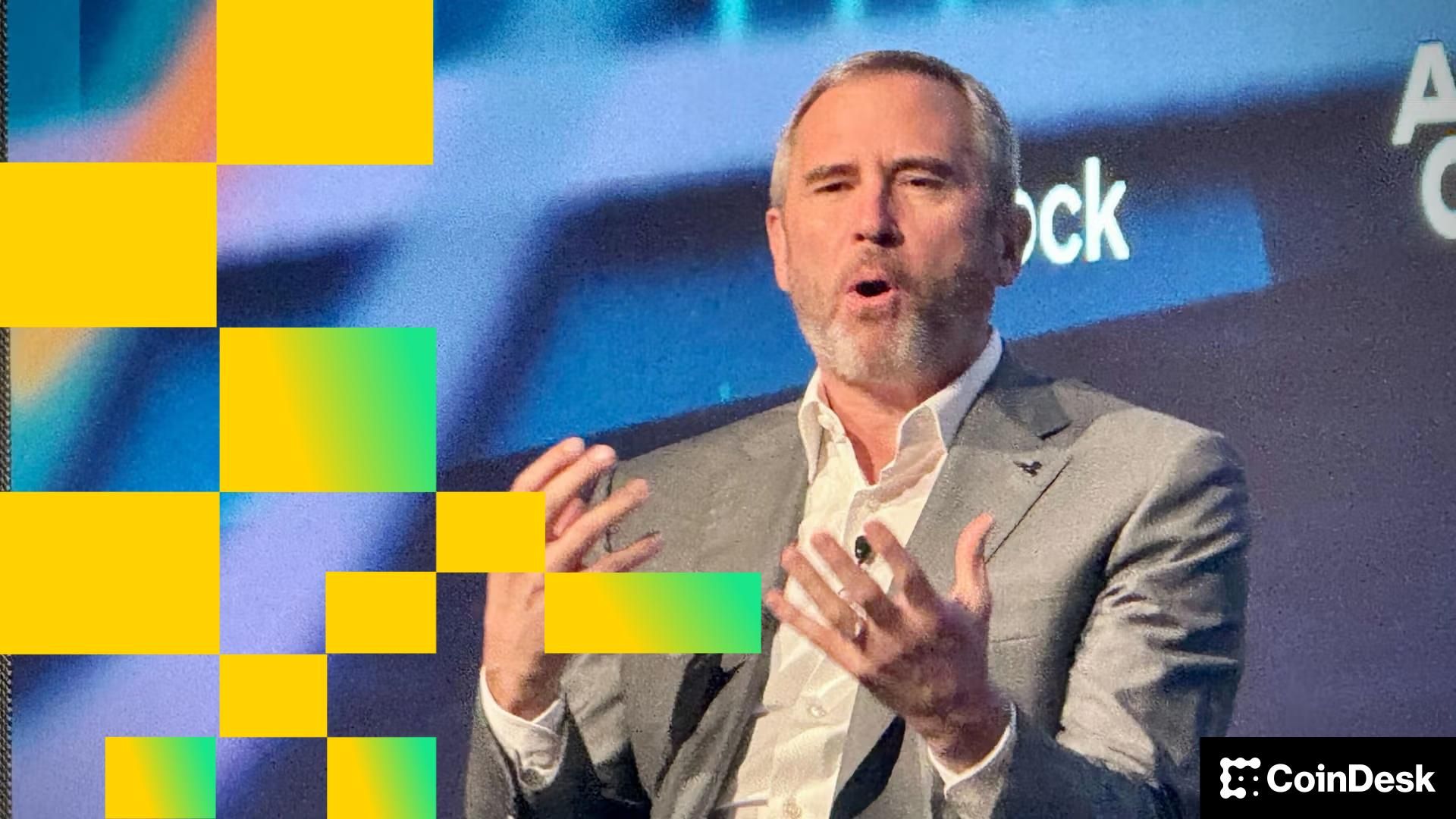
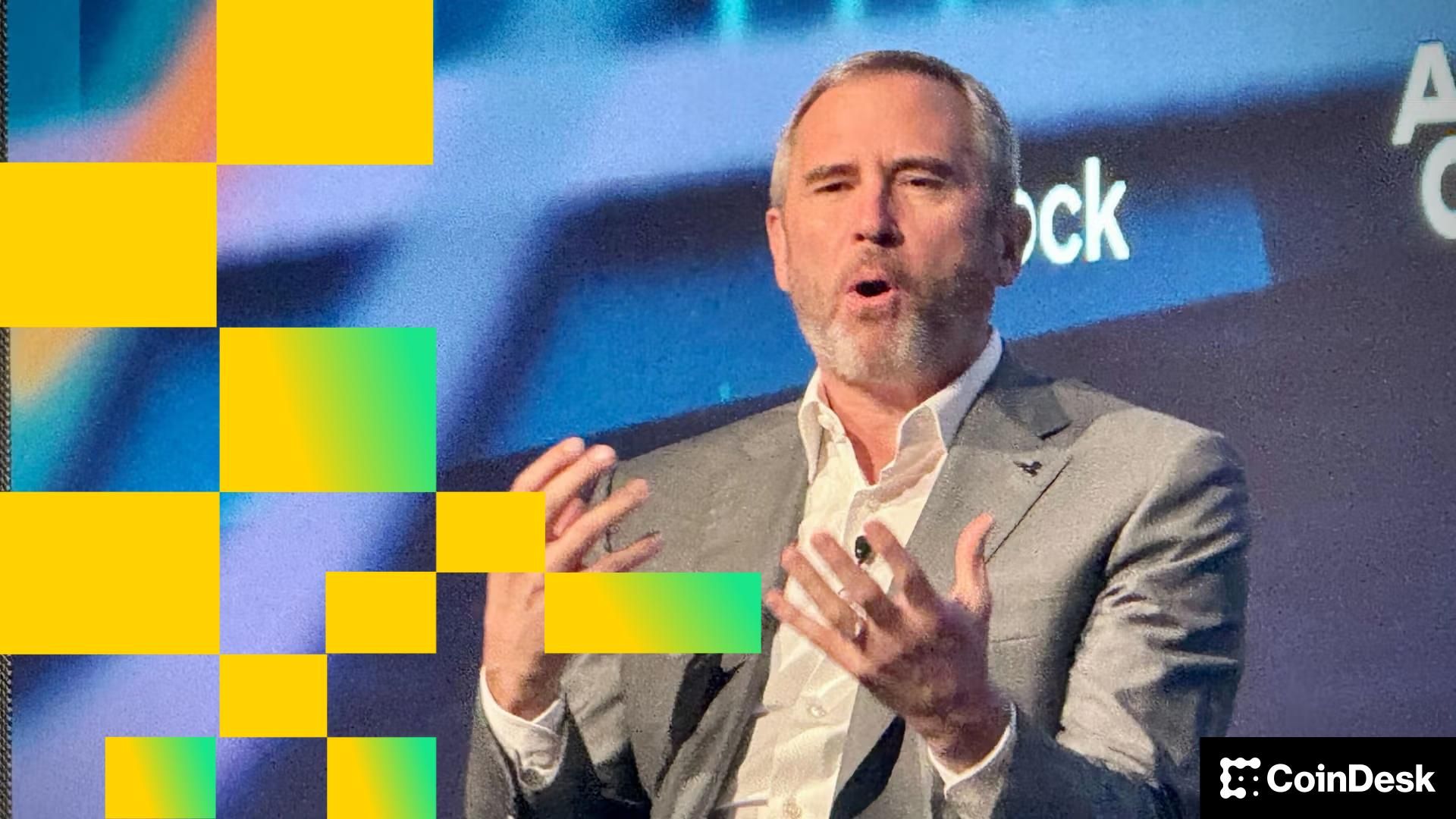
Ripple, the payments-focused blockchain company closely associated with the XRP Ledger (XRP) network, is expanding its digital asset services in Brazil while preparing to apply for a license with the country’s central bank, a move that would place it under the nation’s new crypto framework.
The company said Tuesday it is rolling out a broader set of services that bundle cross-border payments, digital asset custody, brokerage and treasury tools. It said the combined offering targets banks and fintechs that want to move money across borders, hold crypto and manage liquidity in one system.
It said it also plans to apply for a Virtual Asset Service Provider (VASP) license with the Central Bank of Brazil (BCB), in line with the country’s crypto regulation.
“Latin America has always been a priority market for Ripple — not just because of the scale of the opportunity, but because Brazil has built one of the most advanced and forward-thinking financial ecosystems in the world,” Monica Long, president at Ripple, said in a statement.”
The firm said that several Brazilian firms already use Ripple’s payments network and crypto services. Banco Genial, for example, handles same-day U.S. dollar transfers, while Braza Bank uses the system for foreign exchange flows and issued a real-backed stablecoin on the XRP Ledger. Fintech Nomad and others use the network to shift funds between Brazil and the U.S. and settling in stablecoins.
Ripple is also pushing its custody product in the country, aimed at institutions that need secure storage tied to trading and tokenization. The firm said partners such as CRX and Justoken are using the setup to issue tokenized assets, including real-world assets like commodities.
The Brazil push comes as Ripple has been quickly expanding through acquisitions, building services around trading and digital asset infrastructure. That included the $1.25 billion purchase of prime brokerage Hidden Road and buying corporate treasury business GTreasury for $1 billion. The firm also issues a U.S. dollar stablecoin, the $1.5 billion , via its custody arm.
The firm said it has processed over 100 billion in transactions across its payments ecosystem. Recently, Ripple started a share buyback program that valued the the firm at $50 billion.
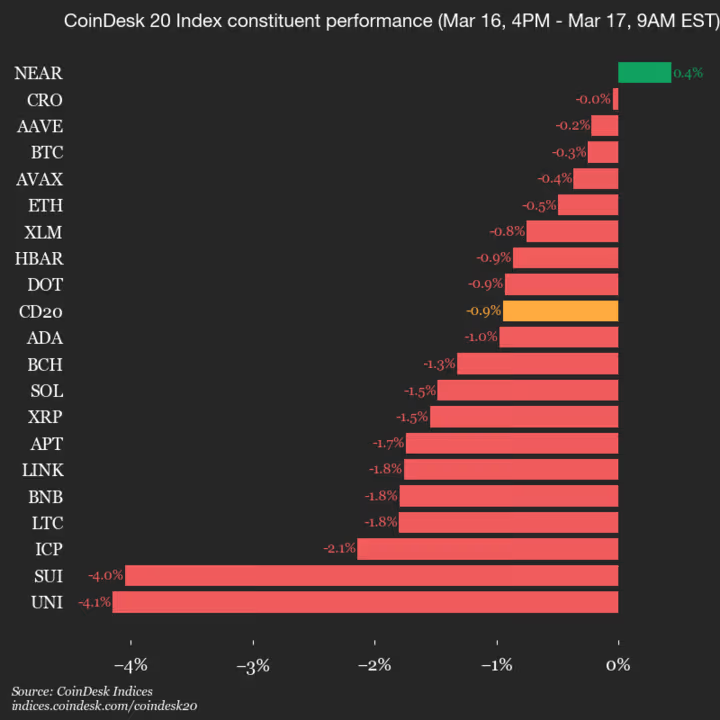
CoinDesk Indices presents its daily market update, highlighting the performance of leaders and laggards in the CoinDesk 20 Index.
The CoinDesk 20 is currently trading at 2148.63, down 0.9% (-20.59) since 4 p.m. ET on Monday.
One of 20 assets are trading higher.

Leaders: NEAR (+0.4%) and CRO (+0.0%).
Laggards: UNI (-4.1%) and SUI (-4.0%).
The CoinDesk 20 is a broad-based index traded on multiple platforms in several regions globally.

Key Takeaways
- Atomic Alchemy, Oklo’s fully-owned subsidiary, obtained its inaugural NRC materials license for isotope handling, processing, and distribution at its Idaho facility.
- This approval creates Oklo’s first commercial revenue opportunity through isotope sales from the Idaho Radiochemistry Laboratory.
- This license is separate from Oklo’s primary advanced reactor projects, which remain pending NRC authorization before power generation can commence.
- A concurrent announcement revealed Oklo’s new partnership agreement with the U.S. Department of Energy for its inaugural reactor deployment at Idaho National Laboratory.
- Shares climbed 4.6% during premarket hours on Tuesday, with quarterly earnings scheduled for release after market close.
On Tuesday, Oklo achieved a significant regulatory victory, albeit with an important distinction. The Nuclear Regulatory Commission awarded its first materials license—though notably, the approval went to Atomic Alchemy, a wholly-owned subsidiary that Oklo acquired in 2025, rather than to the parent company directly.
This authorization permits Atomic Alchemy to accept, store, handle, and sell isotopes through its Idaho Radiochemistry Laboratory located in Idaho Falls. The license specifically covers up to 2 Curies of Radium-226, plus Cobalt-60 and Americium-241 for calibration applications.
These isotopes serve critical functions in medical applications, scientific research, industrial manufacturing, and national defense sectors. Oklo’s CEO Jacob DeWitte addressed the market gap directly: “Demand for critical isotopes is rising, but U.S. supply remains limited.”
The business implications are tangible and immediate. With this licensing approval, Atomic Alchemy can launch commercial isotope sales from its Idaho laboratory—representing the first revenue-generating capability within Oklo’s portfolio. Currently, the parent company has yet to record any revenue.
Crucially, investors should understand that this license differs entirely from the reactor authorization that markets have been anticipating. Oklo’s advanced fast reactor technology continues navigating the NRC approval pathway. Until that separate clearance arrives, the company cannot commercialize electricity generation—which represents its primary long-term business model.
Scope and Implications of the New License
The regulatory approval followed comprehensive review procedures and an on-location inspection of the Idaho operations. Atomic Alchemy’s strategy involves recovering and reprocessing retired radium sources—materials historically classified as waste—converting them into valuable feedstock for medical isotope manufacturing, particularly for targeted alpha therapy applications.
Beyond immediate operations, this laboratory serves as groundwork for larger ambitions. Atomic Alchemy is engineering a multi-reactor isotope production facility featuring up to four Versatile Isotope Production Reactor (VIPR) units, each designed for approximately 15 MWth output capacity.
Tuesday’s announcements included a second development. Oklo formalized an agreement with the U.S. Department of Energy covering design, construction, and operational support for its debut reactor at Idaho National Laboratory through the DOE’s Reactor Pilot Program initiative.
The Meta Partnership and Earnings Expectations
Oklo’s nuclear energy vision has attracted substantial corporate interest. A notable partnership with Meta Platforms involves developing a nuclear energy campus in Ohio’s southeastern region. BofA Securities characterized this arrangement as “one of a few firm, binding partnerships today” within the emerging nuclear sector.
Shares appreciated 4.6% in premarket activity Tuesday as market participants evaluated the regulatory milestone. The company’s quarterly financial results are scheduled for release after the closing bell on the same day.
Oklo maintains its target timeline for commercial nuclear power delivery between late 2027 and 2028.
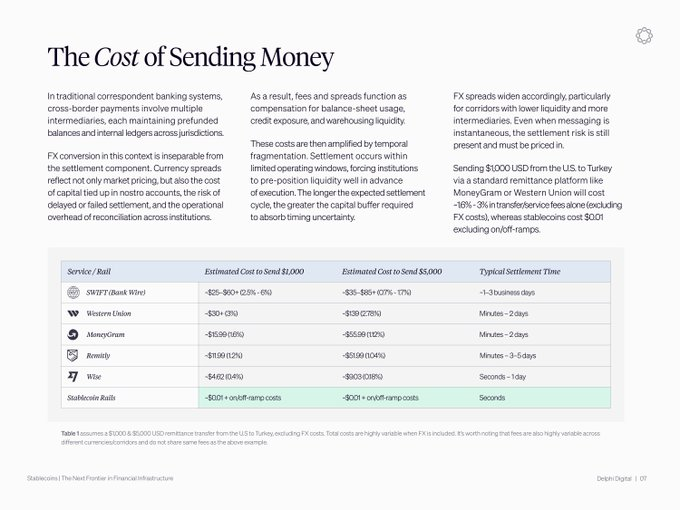
Stablecoins are gaining traction in high-cost cross-border payment corridors in emerging markets as they reduce some of the inefficiencies of legacy foreign exchange (FX) infrastructure, according to research firm Delphi Digital.
Stablecoins are emerging as the cheapest alternative to move US dollars in emerging economies due to the high costs of legacy FX corridors, which can reach up to 8% in combined fees when sending money to Argentina or Nigeria.
Delphi said in a Monday article on X that 81% of the cost in those corridors comes from servicing the underlying banking infrastructure, which it argues gives stablecoin rails a structural advantage.
“Stablecoin rails eliminate most of what makes these corridors expensive to operate.”
“Settlement is atomic, so pre-funded liquidity sitting idle in local currencies is no longer necessary,” Delphi said, adding that volume thresholds and intermediary chains also become obsolete as stablecoins settle directly against the US dollar.
Related: Yield-bearing stablecoins surge as Washington fights over yield
Delphi’s prediction highlights the real-world impact of stablecoins in emerging markets, where locals use them to cut remittance costs to pennies or send instant transactions, bypassing legacy banking infrastructure.

Off-ramps remain a chokepoint for stablecoin adoption
Off-ramps, such as access to bank accounts or interbank rails, remain a significant chokepoint when value needs to move between onchain and legacy environments, according to the company.

Most of the “friction” lies outside the blockchain, they said. While stablecoin minting and burning settle in seconds, bank wires feeding into these systems add significant delays due to batch processing schedules.
“Closing the gap is as much a regulatory problem as a technical one.”
The company added that stablecoins won’t replace the major FX corridors overnight, but the ones in emerging markets where “infrastructure costs dwarf currency risk and banks have largely given up on competing.”
Related: Stablecoin payments startup Kast raises $80M at $600M valuation: Report
Stablecoin supply on the rise despite falling crypto prices
Despite falling cryptocurrency valuations, the stablecoin supply rose 2.5% during the past month, from $308 billion on Feb. 17 to $316 billion as of Tuesday, according to DeFiLlama.
Delphi said emerging markets remain one of the clearest sources of stablecoin demand, particularly where users need cheaper access to dollar liquidity and cross-border transfers.

Investment companies continue pouring capital into stablecoin payment providers. On Tuesday, Singapore-based digital payment company Dtcpay raised $10 million in a Series A funding round led by investment firm Vertex Ventures Southeast Asia & India to fuel the expansion of its compliant stablecoin-based payment network.
Magazine: Crypto wanted to overthrow banks, now it’s becoming them in stablecoin fight
The deal will include $300 million in contingent payments.
Payments giant Mastercard continues with its pro-crypto endeavors, announcing a major acquisition of the stablecoin infrastructure provider BVNK for $1.8 billion.
The move followed another major expansion from last week, when Mastercard tapped Ripple, Binance, PayPal, Circle, and other crypto companies in an attempt to bridge the gap between traditional finance and blockchain.
Mastercard’s Big Acquisition
The definitive agreement for $1.8 billion, including $300 million in contingent payments, will expand Mastercard’s end-to-end support of digital assets and value movement across currencies, rails, and regions, reads the statement.
According to the payments behemoth, the focus of the acquisition will be on real-world use cases such as cross-border remittances, business-to-business transactions, and global payouts, where stablecoins are increasingly seen as faster and more efficient alternatives.
The company emphasized that the key challenge remains integrating crypto-native systems into existing financial infrastructures, despite their evident growth over the past several years. It plans to use its global payment network, which spans over 200 countries, with BVNK’s blockchain capabilities, to deliver “secure, compliant, and scalable payment solutions.”
“We expect that most financial institutions and fintechs will, in time, provide digital currency services, be it with stablecoins or tokenized deposits. We want to support them and their customers with a best-in-class, highly compliant, interoperable offering that brings the benefits of tokenized money to the real world,” commented Jorn Lambert, Chief Product Officer, Mastercard.
He added that this acquisition reinforces what the company has been striving for – using innovation and technology to power economies and empower people. The network’s speed and programmability for every type of transaction are expected to increase with the addition of on-chain rails.
BVNK CEO Jesse Hemson-Struthers described the deal as a major milestone for the entire industry as it would help “define and deliver the future of money” by combining complementary technologies and expertise.
You may also like:
Crypto Adoption on the Rise
Mastercard’s statement explained that the new acquisition aligns with its broader push into the digital asset space, following last week’s announcement about the creation of the Crypto Partner Program. As reported, the company tapped industry giants such as Binance, Gemini, Paxos, Circle, and Ripple, alongside crypto-native and fintech behemoth PayPal, to connect blockchain with its vast global payments infrastructure.
The combined project is expected to offer a “chain-agnostic and asset-agnostic infrastructure” that will allow clients to operate across different blockchain networks without being locked into a single ecosystem.
Binance Free $600 (CryptoPotato Exclusive): Use this link to register a new account and receive $600 exclusive welcome offer on Binance (full details).
LIMITED OFFER for CryptoPotato readers at Bybit: Use this link to register and open a $500 FREE position on any coin!


Argentina has ordered a nationwide block on prediction market Polymarket after a Buenos Aires court found the platform was operating without local approval and exposed users to gambling-related risks.
The ruling directs internet providers across the country to block access to the site and its related domains, according to local media.
It also ordered Apple and Google to remove or restrict Polymarket’s mobile apps for users in the country. The measure is being carried out through ENACOM, Argentina’s communications regulator.
The case was pushed by the City of Buenos Aires Lottery, or LOTBA, and backed by casino industry group Câmara Argentina de Salas de Casinos, Bindos y Anexos (CASCBA). Prosecutors said Polymarket presents itself as a prediction market but works in practice like a betting platform, where users stake money on yes-or-no outcomes tied to politics, inflation, wars and other headline events.
The probe gained attention after Polymarket appeared to point to Argentina’s February inflation figure shortly before the official INDEC release. That market saw a major swing ahead of the data’s official release, suggesting some acted on privileged information.
Still, authorities said they centered their case on the platform’s legal status and consumer safeguards.
Officials said the site allowed funding through crypto and credit cards, did not apply strong identity or age checks and let users open accounts within minutes. Prosecutors argued that the setup made it easier for minors and other vulnerable users to access gambling products.
The move follows a plethora of other countries treating Polymarket as an unlicensed gambling platform. The prediction market already restricts or blocks access to users in more than 30 countries, including France, Germany, Italy, Australia, and Poland.
In some markets, regulators have gone further. Ukraine ordered internet providers to block the site earlier this year, as part of a wider crackdown on online betting. There’s currently no legal way for Polymarket to operate in that country, according to Dmitry Nikolaievskyi, chief legal officer at the Project Office for the Development of Ukraine’s Digital Economy at the Ministry of Digital Transformation.
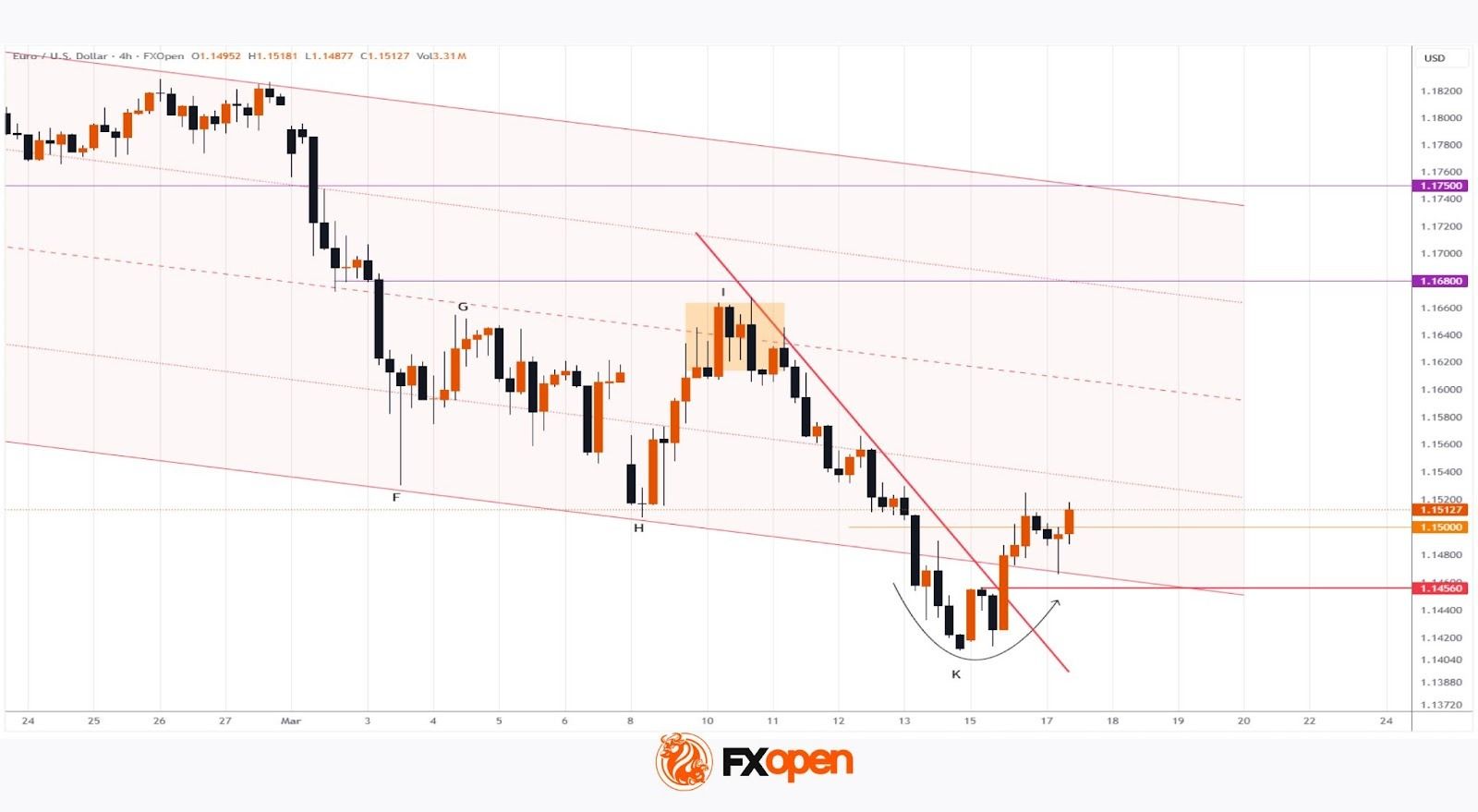
On 10 March, analysing the EUR/USD chart, we:
→ considered the long-term descending channel, which remains relevant;
→ noted that the sequence of lower lows A–H was broken with the appearance of a higher peak I, with 1.1680 potentially acting as resistance.
At peak I, bulls exhausted their strength: after forming a consolidation zone near the channel’s median, bears regained control and pushed the price to a new yearly low, driven by a bearish fundamental backdrop.
Tomorrow, the Fed is expected to release its interest rate decision, while the ECB will issue comments the day after. These events could significantly shift market sentiment regarding EUR/USD, and current price behaviour suggests that bulls may attempt a comeback.
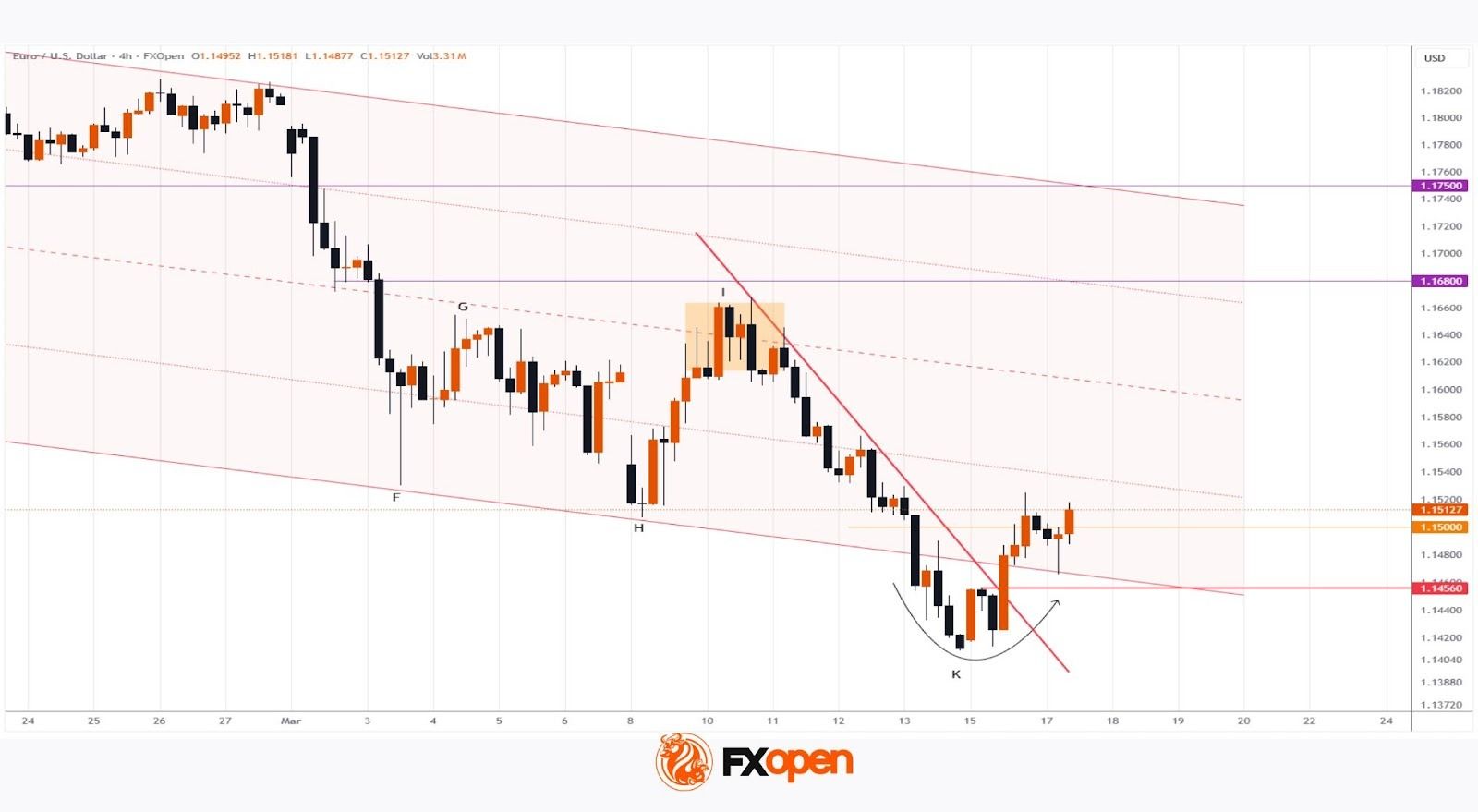
Technical Analysis of EUR/USD
Note the following:
→ The descending trendline from last week has been breached; the market is holding above the breakout level around 1.14560.
→ The pair is recovering from oversold territory just below the lower boundary of the channel. The psychological level 1.1500 may provide support.
Thus, traders should consider the scenario in which EUR/USD’s strong movement on Monday–Tuesday is confirmed by upcoming central bank news.
Trade over 50 forex markets 24 hours a day with FXOpen. Take advantage of low commissions, deep liquidity, and spreads from 0.0 pips (additional fees may apply). Open your FXOpen account now or learn more about trading forex with FXOpen.
This article represents the opinion of the Companies operating under the FXOpen brand only. It is not to be construed as an offer, solicitation, or recommendation with respect to products and services provided by the Companies operating under the FXOpen brand, nor is it to be considered financial advice.
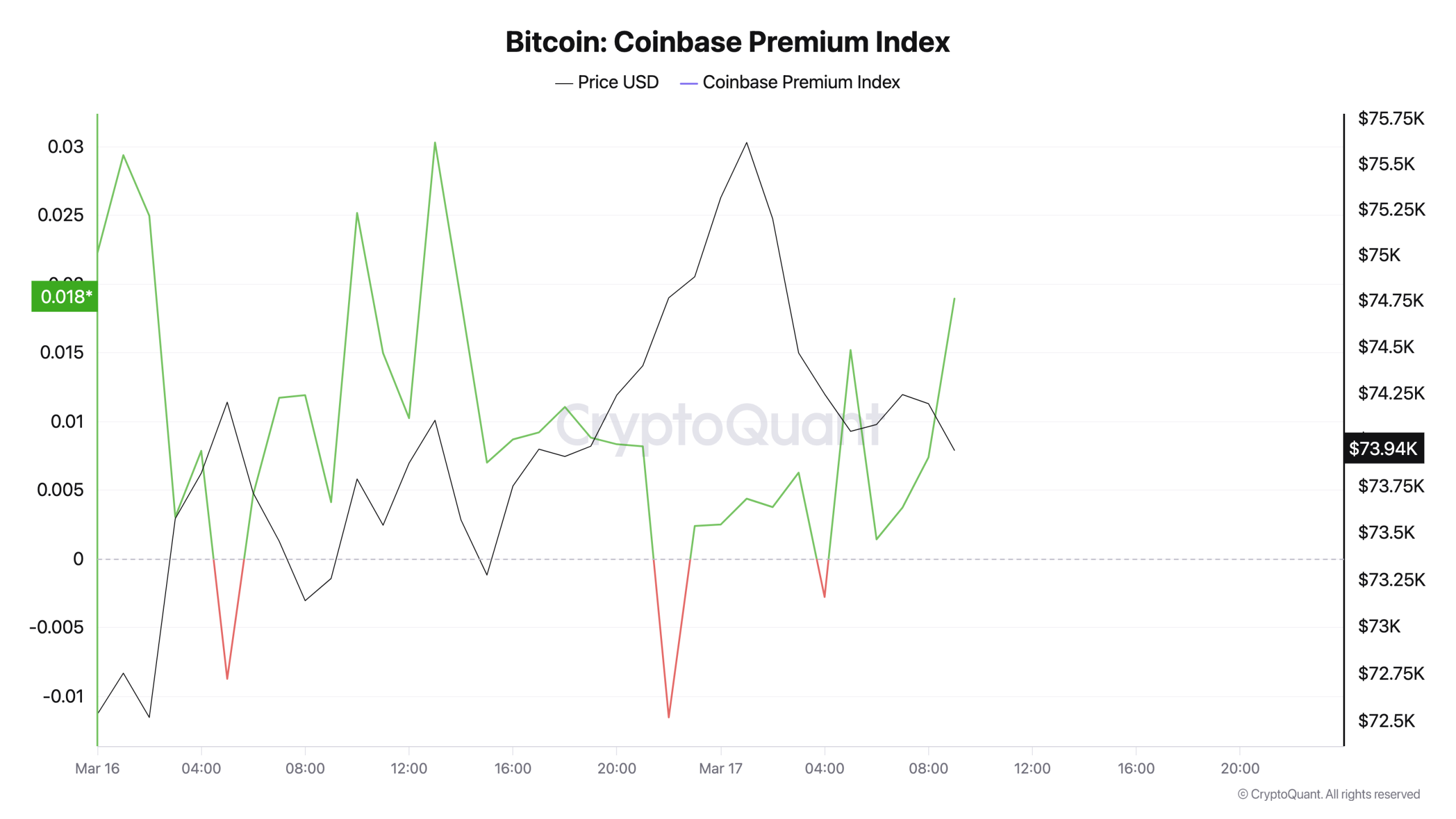
Bitcoin (BTC) risks turning its rebound into a classic “bull trap” as the price rejects at strong resistance.
Key points:
-
Bitcoin faces flat Coinbase spot demand and an open interest divergence as prices rise above $75,000.
-
This risks ending the rebound due to structural weakness, analysis warns.
-
Any push higher toward $80,000 will be “challenging.”
BTC market lacks “spot buying support”
New research from onchain analytics platform CryptoQuant released on Tuesday warns that the recent BTC price rebound may collapse.
“The Bitcoin market is currently exposing a critical structural vulnerability as it transitions from a healthy spot-led regime to an overheated rally driven primarily by derivatives,” contributor Easy On Chain wrote in a QuickTake blog post.
Several factors support the theory, including the Coinbase Premium Index — the difference in price between Coinbase’s BTC/USD and Binance’s BTC/USDT pairs.
Despite BTC/USD hitting six-week highs, the index continues to dip into negative territory, pointing to a lack of US spot demand.
“In this absence of spot-buying support, we are witnessing an extreme decoupling between investor cohorts where smart money is tactically distributing its supply,” Easy On Chain continued.

Fellow CryptoQuant contributor MAC_D agreed, drawing a clear distinction between old and new investors.
“Recent on-chain data shows that OG investors are distributing, while new investors are entering the market, indicating a clear transfer of ownership,” they wrote in a separate Quicktake post.
The core issue, however, is with open interest (OI), which shows the market in a precarious situation.
“On the 1-hour timeframe, a divergence between price and open interest is emerging. While the spot market shows strength, futures traders appear reluctant to take on additional risk,” MAC_D continued.
“If this lack of bullish positioning in the futures market continues, the current move could turn into a bull trap.”

Bitcoin price upside will be “challenging”
As Cointelegraph reported, Bitcoin faces a wall of selling pressure in the mid-$70,000 zone, which coincides with old local lows from April 2025.
Related: $58K BTC price still in play? Five things to know in Bitcoin this week
Data from CoinGlass shows price stalling midway through that ask-liquidity at $76,000 before reversing.

Market participants thus remain level-headed when it comes to a broader market recovery.
In his latest X analysis, Keith Alan, cofounder of trading resource Material Indicators, referenced various moving average (MA) trend lines and proprietary trading tools to put the odds of a full bull-market comeback in context.
“Bulls are currently attempting to flip resistance at the Q2 2024 Timescape Level, and now psychological resistance at $75k is coming into focus. If bulls can push higher the next targets are at the Q2 2025 Timescape Levels at $78.3k and $82.5k,” he explained.
“The confluence between the moving averages, Timescapes Levels and the structure add strength to those levels, and there is a lot of ask liquidity laddered between here and there that will make that move challenging.”

Trader Mister Crypto, meanwhile, drew comparisons between current price action and that from earlier in 2026, where BTC/USD offered a relief bounce before breaking below support.
$BTC is forming a textbook bear flag here…
Don’t say I didn’t warn you. pic.twitter.com/0FnHj0BVrP
— Mister Crypto (@misterrcrypto) March 17, 2026
This article does not contain investment advice or recommendations. Every investment and trading move involves risk, and readers should conduct their own research when making a decision. While we strive to provide accurate and timely information, Cointelegraph does not guarantee the accuracy, completeness, or reliability of any information in this article. This article may contain forward-looking statements that are subject to risks and uncertainties. Cointelegraph will not be liable for any loss or damage arising from your reliance on this information.
Crypto World
YZi Labs Backs RoboForce With $52M to Close the Industrial Labor Gap Through Physical AI

TLDR:
- YZi Labs led a $52M funding round in RoboForce, with Ella Zhang joining the company’s board as director.
- RoboForce’s TITAN robot delivers 1mm precision for harsh industrial jobs in solar, mining, and logistics.
- NVIDIA CEO Jensen Huang spotlighted TITAN at GTC 2025, validating RoboForce’s Physical AI field work.
- RoboForce holds letters of intent for 11,000+ robots and is now scaling toward full production rollout.
YZi Labs has led a $52 million funding round in RoboForce, a Silicon Valley-based robotics company. The firm builds Physical AI-powered robotic labor systems for demanding industrial settings.
RoboForce’s flagship TITAN robot targets critical workforce shortages in solar, mining, logistics, and data centers. Ella Zhang, Managing Partner and Head of YZi Labs, joined the company’s board following the raise. NVIDIA CEO Jensen Huang also spotlighted the company at GTC 2025.
RoboForce Builds TITAN to Address Growing Industrial Workforce Shortages
RoboForce was founded in 2023 to tackle what co-founder Leo Ma calls the gap between industrial growth and human availability.
In 2024, approximately 53 gigawatts of U.S. solar projects were delayed due to labor shortages. That number alone reflects how deep the workforce problem runs across key industries.
Ma spent years visiting hundreds of factories, from chip fabrication plants to underground drilling sites. Each visit reinforced the same conclusion.
As Ma put it, “These are the jobs that we shouldn’t need people to do anymore.” That conviction directly shaped what RoboForce set out to build.
The TITAN robot is designed for environments too harsh for sustained human labor. It operates with millimeter-level accuracy and the endurance needed for high-output industrial workflows.
The team behind it comes from Carnegie Mellon, Amazon Robotics, Google, Waymo, Tesla Robotics, and Apple.
RoboForce runs on a Physical AI data flywheel. Every deployed robot generates field data that feeds back into the company’s foundation model.
Ma stated, “The more you use it, the smarter it gets, and spinning that data flywheel requires patient, generational capital.” That compounding loop improves the entire fleet over time.
Ma further noted that YZi Labs was a deliberate choice as a partner. “We deliberately chose YZi Labs as a partner who understands infrastructure timelines and is willing to bet on a long-term business,” he said.
YZi Labs confirmed its position publicly via the following post:
NVIDIA Partnership and $52M Capital Set the Stage for Production-Scale Growth
RoboForce operates in close collaboration with NVIDIA across its full technology stack. The company uses NVIDIA Jetson Thor at the edge for real-time processing.
Isaac Sim and Isaac Lab handle simulation and robot learning, while NVIDIA Cosmos generates synthetic training data.
Jensen Huang featured TITAN at GTC Washington, D.C. in October 2025. He stated, “AI is transforming the world’s factories into intelligent thinking machines — the engines of a new industrial revolution.” That recognition followed real field validation already underway by the time of the keynote.
YZi Labs’ Jing Xiong described the team’s reaction after seeing the first demo. “When we met the team and saw the demo, it clicked,” Xiong said. “These robots are doing the work humans were never meant to endure.” RoboForce has since received letters of intent covering demand for over 11,000 robots.
The $52 million will fund foundation model advancement, manufacturing expansion, and commercialization efforts. Ella Zhang, who joined the board after the round closed, described the broader vision.
“This is beyond a financial investment; it’s a partnership built on the shared belief that the next frontier of AI will be defined by its impact on the physical plane,” she said. YZi Labs sees this round as the start of a broader commitment to Physical AI.

Woman brutally raped by man who asked her for ‘no strings fun’

JFK Airport TSA Wait Times Vary by Terminal Amid Spring Break Travel and Ongoing Government Shutdown Effects

BTC price target cut to $112,000 at Citigroup; ETH trimmed to $3,175


-
 Tech6 days ago
A 1,300-Pound NASA Spacecraft To Re-Enter Earth’s Atmosphere
-
Crypto World3 days ago
HYPE Token Enters Net Deflation as HyperCore Buybacks Outpace Staking Rewards
-

 Business7 days ago
ExxonMobil seeks to move corporate registration from New Jersey to Texas
-

 Fashion4 days ago
Weekend Open Thread: Addict Lip Glow
-

 Tech7 days ago
ChatGPT will now generate interactive visuals to help you with math and science concepts
-
Sports3 days ago
Why Duke and Michigan Are Dead Even Entering Selection Sunday
-

 NewsBeat6 days ago
Residents reaction as Shildon murder probe enters second day
-

 Business2 days ago
Search for Savannah Guthrie’s Mother Enters Seventh Week with No Arrests
-

 Business6 days ago
Search Enters Sixth Week With New Leads in Tucson Abduction Case
-

 Business3 days ago
US Airports Launch Donation Drives for Unpaid TSA Workers as Partial Government Shutdown Enters Fifth Week
-

 Sports6 days ago
PWHL, Senators discussing plan to keep Charge in Ottawa
-
Crypto World3 days ago
Coinbase and Bybit in Investment Talks: Could Bybit Finally Enter the US Crypto Market?
-

 NewsBeat6 days ago
I Entered The Manosphere. Nothing Could Prepare Me For What I Found.
-

 Business3 days ago
Country star Brantley Gilbert enters growing non-alcoholic beer market
-

 Business1 day ago
Australian shares drop as Iran war enters third week
-

 Sports4 days ago
College Basketball Best Bets: Conference Tournament Semifinal Picks
-

 Crypto World1 day ago
Crypto Lender BlockFills Enters Chapter 11 with Up to $500M in Liabilities
-
 Crypto World7 days ago
Will Chainlink price reclaim $10 amid volatility squeeze?
-

 Tech7 days ago
Clarity as strategy
-

 Politics6 days ago
Trump Says Middle East Is ‘Very Lucky’ That He’s President


You must be logged in to post a comment Login