The Oppo Find N6 is a book-style foldable that really nails the experience, combining a near-creaseless inner display, refined hardware, improved cameras and genuinely usable all-day battery life in a package that finally feels ready for more than just early adopters – making the fact it’s not getting a wide release all the more frustrating.
Slimline design
The foldable crease is almost imperceptible
Much better camera hardware
Strong battery life and rapid charging
Camera sensors still trail behind bar phones
Snapdragon chipset is underclocked
Very limited availability
Squirrel Widget
Advertisement
Key Features
Near crease-less foldable screen
The inner 8.13-inch screen has the least visible crease of any foldable yet, making for a truly premium experience.
Advertisement
All-day battery and fast charging
The combination of a 6000mAh battery and 80W wired charging offers great battery life and a full charge in under an hour.
Advertisement
Boosted camera hardware
With a 200MP main and dual 50MP zoom and ultrawide lenses, the Find N6 is capable of great shots.
Advertisement
Introduction
The biggest problem with book-style foldables has always been right there in the middle of the screen – but with the Find N6, Oppo has all but erased it.
Thanks to a new hinge and “Auto-Smoothing” glass, the inner display is almost perfectly flat, finally delivering a tablet-like canvas that doesn’t constantly remind you it folds in half.
Oppo hasn’t stopped there, either; the N6 backs that near-creaseless panel with a larger battery, faster charging, a genuinely competitive camera system and one of the most polished big-screen Android experiences around, complete with powerful multitasking tools and thoughtful productivity tweaks.
Advertisement
Advertisement
The catch? Despite feeling like a proper 2026 flagship that just happens to fold, Oppo is only releasing it in a handful of markets – China, Japan, Malaysia, Thailand, Australia and New Zealand – with no plans for a launch in the EU, UK or US, making this more of an import‑only glimpse at the foldable future than a phone most people can realistically pick up.
Design
Just as thin as last year, but lighter
Shallow camera bump
Improved dust and water resistance
Take a quick look at the Oppo Find N6 and you might struggle to find any real differences between it and its predecessor, but honestly, that’s not a problem at all.
The Oppo Find N5 led the charge on the super-thin foldable trend that the likes of Samsung and Honor have since jumped on, and even if the N6 isn’t any thinner, at 8.9mm folded and 4.2mm unfolded, it’s still slimmer than some regular bar phones.
Image Credit (Trusted Reviews)
Advertisement
I’m not disappointed it’s not any thinner; the Honor Magic V6 is technically slimmer, though only by 0.1mm – something you won’t notice. They can’t really go much thinner anyway, as the USB-C port simply won’t fit.
Much like the N5, the N6 is super thin when unfolded, nice to hold and, with newly chamfered edges, it doesn’t feel quite as sharp as its predecessor despite having the same flat edges. The rounded corners don’t feel quite as premium as Samsung’s sharp-cornered Galaxy Z Fold 7, but that’s largely a matter of personal preference.
Advertisement
Image Credit (Trusted Reviews)
The Find N5 might’ve been thin, but compared to the Fold 7 and Magic V5, it wasn’t light. At 229g, it was noticeably heavier than Samsung’s 215g and Honor’s 217g. The Find N6 shaves off 4g, but it’s still pretty hefty. It’s not as heavy as the 258g Google Pixel 10 Pro Fold, but it’s not quite as lightweight as Samsung’s alternative either.
Flip the phone around and you’ll find a familiar ‘cosmos ring’ camera housing, once again front and centre, but much shallower than before. It’s now among the thinnest camera housings you’ll find on a foldable, allowing for less of a table wobble while still offering impressive camera hardware – but more on that later.
Image Credit (Trusted Reviews)
Advertisement
Other tweaks include a slight repositioning of the power and volume controls to accommodate Oppo’s new customisable SnapKey, and improved dust and water resistance – though its combination of IP54, IP58 and IP59 isn’t quite as robust as the IP68 Pixel 10 Pro Fold.
Colour options remain attractive, with the phone available in Blossom Orange, a softer orange than Apple’s iPhone 17 Pro alternative with rose gold detailing, along with Stellar Titanium, a more toned-down grey with matching silver accents.
Screens
8.12-inch foldable AMOLED screen
No visible crease on foldable screen – a first
Great cover screen, though still a bit narrow
If there’s one reason to import the Find N6, it’d be the screens – and the foldable inner panel in particular. At 8.12 inches, it’s huge and offers all the premium gubbins you’d expect, including an LTPO-enabled 120Hz refresh rate, 2160Hz PWM dimming and a top brightness of 2500nits in HBM.
Image Credit (Trusted Reviews)
The real magic, though, is the crease – or lack of it. The crease has been the bane of foldables since their inception and, while we’ve come a long way from the cavernous creases of early models, you can still see and feel them on the latest Z Fold 7 and Magic V5.
Advertisement
Advertisement
Not with the Find N6. Even powered off, it’s very hard to spot the crease. That’s down to an industry-first hinge manufacturing process that uses 3D printing to smooth out parts of the hinge and keep it flat. Oppo claims other manufacturers usually have a variation of around 0.2mm, but the N6 is just 0.05mm – less than the thickness of a human hair, and only really visible when shining a light directly at it.
Image Credit (Trusted Reviews)
Run your finger across it and there’s only the slightest dip if you really feel for it. In everyday use, you won’t notice it – I certainly haven’t over the past month or so.
The result is a much more premium, clean-looking foldable experience that finally doesn’t feel compromised in any real way. It’s a genuine step forward in foldable screen tech and helps Oppo stand out from the foldable crowd.
Image Credit (Trusted Reviews)
Paired with a bright, smooth AMOLED panel, it’s an absolute joy to use for everyday tasks like scrolling through TikTok, watching YouTube or editing videos in CapCut with its foldable-friendly UI. It’s still a little reflective, with plastic instead of glass, but that’s par for the course if you want a folding screen.
Advertisement
Crucially, Oppo claims the new hinge – and its new Auto-Smoothing Flex Glass – shouldn’t degrade over time either, with no noticeable difference even after 200,000 folds. If Oppo’s numbers are to be believed, it could last for over 1 million folds – but only time will tell.
Advertisement
Image Credit (Trusted Reviews)
The cover screen seems almost dull in comparison, but it’s also a well-specced panel, sharing most key specs with the internal screen while actually getting brighter at 3500nits. The bezels have slimmed down to 1.4mm thick, giving it a cleaner look than last year’s N5, though the surrounding frame means it’s still not quite as bezel-less as a bar-phone alternative.
Still, it performs admirably at its primary task of providing a more traditional smartphone experience when it’s not convenient to unfurl the inner screen. At 6.6 inches, it’s the perfect size for scrolling through social media, replying to WhatsApp messages and anything else you want to do one-handed, with a similarly vibrant, colourful panel that lends itself well to video.
Image Credit (Trusted Reviews)
I do wish it were a little wider though, with a 20.7:9 aspect ratio that’s still a little tall and narrow compared to regular phones. It’s not something I noticed much during active use, but switching between it and phones like the Galaxy S26 Ultra, the extra width is appreciated.
Advertisement
Cameras
200MP main, 50MP 3x periscope and 50MP ultrawide lenses
Boosted camera performance across the board
Secondary lenses aren’t perfect for low-light situations
With the N5, Oppo sacrificed camera performance to achieve its super-thin build – but the N6 looks to rectify this. It’s headed up by a 200MP main shooter, along with a 50MP 3x periscope lens and a 50MP ultrawide complete with autofocus, with underlying hardware that’s much more capable of competing with premium bar phones.
The 200MP sensor, up from 50MP last year, is the star of the show, with a wide f/1.7 aperture and a 1/1.56-inch sensor drinking in as much light as possible. It’s a competent snapper in both well-lit and low-light environments, with the high-res sensor providing plenty of detail with pixel-binning tech at play.
Image Credit (Trusted Reviews)
There are plenty of shooting modes to play with too, both Hasselblad-branded and Oppo-branded, all focused on specific scenarios or lighting conditions. You’ve got modes for tricky situations like concerts, fireworks and silhouette shots, along with options that improve the look in bright outdoor conditions, providing plenty of tools to experiment with and get great shots.
Colours are also much truer to life than you’ll get from Samsung’s alternative, mainly thanks to the dedicated True Colour camera from the flagship Find X9 Pro, whose sole job is to measure colour. That setup means that, unlike most other foldables, the colour science is the same across all three rear lenses, with each using that dedicated colour sensor.
Advertisement
Advertisement
The 50MP 3x periscope remains unchanged from last year’s foldable, but it’s still a competent zoom lens, especially compared to Samsung’s 10MP 3x telephoto alternative. The 3x zoom is ideal for portrait photography, especially when paired with the dedicated Portrait mode for advanced control over lighting and background blur, and it’ll do a decent job up to around the 10x mark before those telltale signs of artificial enhancement start to become apparent.
The 50MP ultrawide, with a big boost in resolution and now able to offer pixel-binning tech to boost light capture and detail, feels much more at home in a high-end smartphone. Like the other lenses, it delivers great shots, particularly during the day, with little edge distortion, and the autofocus makes it great for group shots.
When light levels drop, the limitations of Oppo’s camera tech start to appear – not necessarily with the super-high-res main sensor, but with the secondary lenses, the ultrawide in particular. It’ll do well enough in dim bars, clubs and streetlamp-lit streets, but the aperture just isn’t quite wide enough for proper low-light photography.
Advertisement
The Find N6 likely won’t be winning any awards for smartphone photography – the ultra-slim dimensions mean there are still compromises to be had, particularly in terms of sensor sizes compared to regular camera-focused phones – but it’s a great showing for a foldable, and I think very few people will be disappointed with what the N6 offers.
Advertisement
Performance
Snapdragon 8 Elite Gen 5 – but with fewer cores
Still delivers a top-notch everyday experience
Can handle gaming sessions with ease
The Oppo Find N6 has Snapdragon 8 Elite Gen 5 power at its heart – but there’s a catch. This is a new, slightly underpowered, seven-core CPU version of the chipset, which usually comes with an eight-core configuration. Oppo claims that the NPU and GPU are identical, though that doesn’t quite align with my test results.
Even when paired with 16GB of RAM and 512GB of storage, it’s not quite at the same level of performance as Snapdragon-powered bar flagships like the Samsung Galaxy S26 Ultra and OnePlus 15 in benchmark testing.
Test Data
Oppo Find N6
Samsung Galaxy Z Fold 7
Samsung Galaxy S26 Ultra
OnePlus 15
Geekbench 6 single core
3571
2318
3519
3553
Geekbench 6 multi core
9677
8828
10713
10642
Geekbench 6 GPU
23961
–
24611
–
3DMark Solar Bay
46.9
–
46.9
–
3D Mark – Wild Life
6398
5574
7281
6166
3D Mark – Wild Life Stress Test
53.6 %
–
67.6 %
–
While single-core CPU performance is comparable, the N6 falls slightly behind ‘true’ 2026 flagship alternatives in multi-core CPU tests – unsurprising given the missing core – and more interestingly in GPU tests, with scores consistently lower than the top-end competition.
Advertisement
Advertisement
It also isn’t the greatest phone I’ve seen in terms of sustained performance, scoring just 53.6% stability during a high-intensity 20-minute stress test – though that is fairly common among super-thin foldables where there isn’t a lot of space for heat to be effectively dissipated.
That might paint a picture of a foldable that can’t quite keep up with bar-style competition, but the day-to-day performance of the Find N6 is absolutely fine.
Image Credit (Trusted Reviews)
The phone feels about as rapid as any other flagship you could pick up in 2026, foldable or otherwise, with Oppo’s focus on speedy animations across the OS making it feel even more responsive. Apps open with a sense of urgency, multi-app splitscreening is a delight on the big internal panel, and it can handle gaming sessions with ease.
I could happily run my go-to games, like Call of Duty Mobile and Crashlands 2, with high-fidelity graphics and high frame rates on the higher-res internal panel without any noticeable lag or stuttering. The phone does get warm after longer 30-minute+ sessions, but even then, it’s not hot, just warm under the fingers.
Advertisement
As you’d expect from a high-end phone, that’s paired with top-end connectivity including Wi-Fi 7 and Bluetooth 6, along with NFC for those all-important contactless payments.
Advertisement
Software
ColorOS 16 based on Android 16
New floating window multitasking mode
Suite of productivity and AI features
Of all the heavily customised Android skins I encounter switching between brands like Samsung, Honor and Xiaomi, Oppo’s ColorOS has to be one of my favourites. It’s well-designed and polished without the bloatware and ballooning feature set you get with some rivals, with a focus on speed, customisation and genuinely handy productivity tools.
Image Credit (Trusted Reviews)
The latest version, ColorOS 16 based on Android 16, further improves this with better UI animations that make everything feel a little slicker and more responsive, along with new lock screen themes, a sprinkling of Apple-inspired transparency and a completely new way to multitask on big-screen foldables.
Like some of the best Android tablets, the Find N6 has a fully featured windowed app mode – dubbed Free Flow Window – that allows for a desktop-like experience with up to four resizable windows on-screen at once. You can either let the phone arrange them automatically or drag them around yourself.
Image Credit (Trusted Reviews)
Advertisement
It’s particularly handy when switching between apps to retrieve information, allowing you to keep apps running in mini windows while you work in another app full-screen, or run them side by side for simultaneous use. And if that’s not your cup of tea, the traditional full-screen multitasking experience – which remains excellent – is still available.
Advertisement
That alone makes the Find N6’s software experience among the strongest available right now, but other new features like the ability to view messages and notifications from a connected iPhone and the option to remotely access PC and Mac desktops also enhance the experience.
Image Credit (Trusted Reviews)
There’s also the usual smattering of AI features, including a suite of AI photo-editing tools, image-generation tech, translation tech, and audio-recording transcription. The latter still needs a bit of work however, with a 100-minute-per-month limit and a buggy summary experience.
On the whole, though, ColorOS 16 remains a good-looking, feature-packed and easy-to-use spin on Android.
Battery life
6000mAh silicon carbon battery
Can get you through most days with ease
Rapid 80W charging
Advertisement
Oppo has made big gains in the battery life department with this year’s foldable, sporting a decent-sized 6000mAh battery that makes it bigger than the Z Fold 7, Magic V5 and Pixel 10 Pro Fold – though it is bested by the newer Magic V6, revealed at MWC and due out later this year.
Still, among foldables you can actually buy right now, the Find N6 has one of the largest batteries around – and that translates to strong everyday performance.
Advertisement
Image Credit (Trusted Reviews)
It’s the first foldable I’ve used where I don’t feel constrained by the battery, and that meant I was actively using the larger, more power-hungry inner screen more than I would on the likes of the Z Fold 7. It got me through demanding days with a mix of photography, music playback, messaging, browsing and gaming, with some charge left in the tank.
We’re talking remaining battery in the range of 10–20%, which is a little close for comfort – especially compared to bar phones like Oppo’s own Find X9 Pro and its 7500mAh cell that can get well into a second day of use – but it’s still a big step forward for foldables.
Of course, your mileage may vary depending on what you’re up to and the features you’ve enabled, but for most people, the Find N6 will be an all-day device.
Advertisement
Image Credit (Trusted Reviews)
If it does need a top-up on particularly busy days, the Find N6 charges very quickly with rapid 80W wired charging support. Despite having a bigger battery than much of the competition, it still goes from near-empty to a meaningful charge in around 15 minutes and to full in well under an hour.
You’ll need a SuperVOOC-branded charger to hit those speeds, and you’ll need an adapter if you import one to the UK (or simply source a UK charger separately), but that’s a small price to pay. If you decide against it, it also supports 55W USB-C PD charging and 50W AirVOOC wireless charging – though, again, the latter requires a specific charger to reach top speeds.
Advertisement
Squirrel Widget
Should you buy it?
You want an almost crease-free foldable experience
The Find N6 has pretty much eliminated the crease, with only a slight 0.05mm-deep bump running down the screen – the shallowest of any foldable yet.
Advertisement
You don’t want to import it
Advertisement
With such limited availability, you’ll likely need to import the Find N6 – and that comes with additional fees and taxes.
Final Thoughts
The Oppo Find N6 is an ultra-thin book-style foldable that doesn’t come with an obvious, daily compromise.
Advertisement
The near-creaseless inner display is a genuine first for foldables, finally delivering a tablet-like experience that doesn’t constantly remind you of the underlying hardware trickery. Paired with refined hardware, a much-improved camera system and the kind of battery life that lets you actually use that big inner screen without anxiety, it feels like Oppo is tackling the pain points that have made foldables feel like early-adopter tech for years.
That said, the Find N6 still isn’t the perfect all-rounder, and for many people it simply won’t be an option at all.
The seven-core Snapdragon 8 Elite Gen 5 doesn’t quite match the best bar-style flagships in raw benchmarks, the secondary cameras and low-light performance still trail traditional camera phones, and, most importantly, it’s not getting a wider release beyond China, Japan, Malaysia, Thailand, Australia and New Zealand, making it a non-starter for most.
If you’re willing to import, the Find N6 is one of the most complete foldable options around – it’s just a shame that, for most people, it’ll remain more aspirational than attainable. For options that are more easily available, take a look at our hand-picked selection of the best foldable phones.
Advertisement
Advertisement
How We Test
We test every mobile phone we review thoroughly. We use industry-standard tests to compare features properly and we use the phone as our main device over the review period. We’ll always tell you what we find and we never, ever, accept money to review a product.
Used as a main phone for a month
Thorough camera testing in a variety of conditions
Tested and benchmarked using respected industry tests and real-world data
FAQs
Is the Oppo Find N6 available in the UK, US or Europe?
No, unfortunately not. The Find N6 is limited to regions including China, Japan, Malaysia, Thailand, Australia and New Zealand.
Advertisement
Does the Oppo Find N6 come with a charger in the box?
It depends on the region you’re in, but generally speaking, you’ll get an 80W SuperVOOC charger in the box.
Brendan Carr is once again doing Brendan Carr stuff.
Carr has threatened to revoke the broadcast licenses of broadcasters that tell the truth about Trump’s disastrous war in Iran. In a post over at Elon Musk’s right wing propaganda website, Carr insists that news outlets that are “running hoaxes and news distortions” (read: telling the truth) about the war will face potential headaches when their licenses come up for renewal:
If you can’t read that, it says:
Broadcasters that are running hoaxes and news distortions – also known as the fake news – have a chance now to correct course before their license renewals come up.
The law is clear. Broadcasters must operate in the public interest, and they will lose their licenses if they do not.
And frankly, changing course is in their own business interests since trust in legacy media has now fallen to an all time low of just 9% and are ratings disasters.
Advertisement
The American people have subsidized broadcasters to the tune of billions of dollars by providing free access to the nation’s airwaves.
It is very important to bring trust back into media, which has earned itself the label of fake news.
When a political candidate is able to win a landslide election victory after in the face of hoaxes and distortions, there is something very wrong. It means the public has lost faith and confidence in the media. And we can’t allow that to happen.
Time for change!
Advertisement
That’s certainly a lot of tough-talking bullshit.
Carr’s only authority comes over broadcast affiliates (not national media companies or cable TV outlets), most of which are already owned by Republicans and already kiss Trump’s ass (because they want to merge). The FCC hasn’t denied a license renewal in decades, and any attempt to do so would result in a massive, protracted First Amendment legal mess that the FCC would be extremely likely to lose.
Carr’s actual goal for this kind of stuff is three fold.
One, he’s putting on a show for our mad, idiot king that Carr is being a good boy. Two, he’s trolling the press so they’ll hyperventilate about his behaviors; those stories then advertise to the MAGA base the false impression that Carr is doing useful and bold culture war stuff (so he can potentially run for higher office). They’ll assume it all must be useful and important because he’s upsetting people of intellect, importance, and conscience, which they enjoy.
Advertisement
But most importantly it sends a message to media companies that they should get in line with the Trump administration or face costly and expensive (no matter how pointless) legal annoyances. Of course those threats haven’t really been needed, because most U.S. media companies (and big corporations) have been happy to bribe the president or kiss his ass anyway.
That sort of feckless journalistic failure in the face of power is why so much of the public has lost faith in U.S. news, not because they’ve historically been too critical of war or too tough on wealth and power.
While these sorts of threats certainly are dangerous, Carr is a monumental clown who is putting on a big show to try and pretend he’s a person of substance and power doing important things.
Meanwhile Trump is upset that some news outlets have been making it clear he was too stupid to understand the evolving nature of low cost, modern drone warfare (despite all the evidence in Ukraine). In his own post at his own right wing propaganda website, Trump went off on a local rambling tirade about Iran somehow misleading the entirety of U.S. media:
Advertisement
That one says:
Iran has long been known as a Master of Media Manipulation and Public Relations. They are Militarily ineffective and weak, but are really good at “feeding” the very appreciative Fake News Media false information. Now, A.I. has become another Disinformation weapon that Iran uses, quite well, considering they are being annihilated by the day. They showed phony “Kamikaze Boats,” shooting at various Ships at Sea, which looks wonderful, powerful, and vicious, but these Boats don’t exist — It’s all false information to show how “tough” their already defeated Military is! The five U.S. Refueling Planes that were supposedly struck down and badly damaged, according to The Wall Street Journal’s false reporting, and others, are all in service, with the exception of one, which will soon be flying the skies. Buildings and Ships that are shown to be on fire are not — It’s FAKE NEWS, generated by A.I. For instance, Iran, working in close coordination with the Fake News Media, shows our great USS Abraham Lincoln Aircraft Carrier, one of the largest and most prestigious Ships in the World, burning uncontrollably in the Ocean. Not only was it not burning, it was not even shot at — Iran knows better than to do that! The story was knowingly FAKE and, in a certain way, you can say that those Media Outlets that generated it should be brought up on Charges for TREASON for the dissemination of false information! The fact is, Iran is being decimated, and the only battles they “win” are those that they create through AI, and are distributed by Corrupt Media Outlets. The Radical Leftwing Press knows this full well, but continues to go forward with false stories and LIES. That’s why their Approval Rating is so low, and I can win a Presidential Election, IN A LANDSLIDE, getting only 5% positive Press — They have no credibility! I am so thrilled to see Brendan Carr, the Chairman of the Federal Communications Commission (FCC), looking at the licenses of some of these Corrupt and Highly Unpatriotic “News” Organizations. They get Billions of Dollars of FREE American Airwaves, and use it to perpetuate LIES, both in News and almost all of their Shows, including the Late Night Morons, who get gigantic Salaries for horrible Ratings, and never get, as I used to say in The Apprentice, “FIRED.” Thank you for your attention to this matter! President DONALD J. TRUMP
These are not the behaviors of competent, confidence people who believe things are going well. They’re the sad gyrations of pathetic men who know Trump is on historic trajectory to be the worst and least popular President in U.S. history (with ample room to fall). No amount of posturing can hide it.
By Itamar Apelblat, Co-Founder and CEO, Token Security
Agentic AI represents a once-in-a-generation shift in how organizations operate. AI agents are not copilots. They are not better chatbots.
They are autonomous actors that plan, decide, and act. Increasingly, they will write code, move data, execute transactions, provision infrastructure, and interact with customers often without a human in the loop. They will also operate continuously, across systems, at machine speed.
This transformation is already unlocking enormous business value. But, it will only succeed if it is secured properly. And today, most organizations are not prepared.
Advertisement
The prevailing approach to AI security focuses on guardrails such as prompt filtering, output controls, and behavior monitoring. That thinking is flawed. Guardrails attempt to constrain behavior after access has already been granted. But once an AI agent has credentials and connectivity, a single misstep can cause data exfiltration, destructive actions, or cascading failures across interconnected systems.
If you want to secure AI agents without slowing innovation, they need to rethink the control plane. Identity, not prompts, not networks, not vendor assurances, is the only scalable foundation for securing and governing autonomous systems.
Here are the five most important actions CISOs should take today to ensure AI agent security:
Advertisement
1. Treat AI Agents as First-Class Identities
The moment an AI agent connects to production systems, APIs, cloud roles, SaaS platforms, or infrastructure, it stops being an experiment and becomes an identity.
Every AI agent uses identities, often many of them: API tokens, OAuth grants, service accounts, cloud roles, secrets, and access keys. Yet in most organizations, these identities are invisible, unmanaged, and poorly governed.
You must mandate that every AI agent is treated as a first-class digital identity:
Advertisement
It must have a clear owner
It must be authenticated
Its permissions must be explicitly defined
Its activity must be logged and monitored
If you don’t know which identities your agents are using, you don’t control them.
2. Shift from Guardrails to Access Control
Guardrails assume that AI can be safely constrained by rules. But AI agents are non-deterministic and adaptive. With an unlimited number of possible prompts and interactions, bypass is not a question of if it will happen, but when.
Even if prompt controls worked 99% of the time, 1% of infinity is still infinity.
Security must move down the stack to where real control exists: access. You need to ask these questions:
Advertisement
What systems can this agent reach?
What data can it read?
What actions can it execute?
Under what conditions?
For how long?
Once access is tightly scoped, behavior becomes far less dangerous. Identity-based access control is the containment layer for autonomous software. Network controls are too coarse. Prompt filters are too weak. AI platform assurances are not enough.
Identity is the only control plane that spans every system an agent touches.
AI agents create, use, and rotate identities at machine speed, outpacing traditional IAM controls.
Token Security helps teams manage the full lifecycle of AI agent identities, reduce risk, and maintain governance and audit readiness without sacrificing speed.
3. Eliminate Shadow AI by Gaining Identity Visibility
Advertisement
Shadow AI is not primarily a tooling problem. It is an identity problem. Developers, IT admins, and business users are already creating AI agents that connect to business-critical systems, leverage APIs, retrieve data, and trigger workflows.
These agents don’t announce themselves. They simply start acting. When security teams lack visibility into these identities, Zero Trust collapses. Unknown agents become trusted by default because their credentials are valid.
You must prioritize:
Continuous discovery of machine and non-human identities.
Identification of agent-related tokens, service accounts, and OAuth grants.
Mapping which agents have access to which systems.
If you can’t see it, you can’t secure it. And in the AI era, what you can’t see is often autonomous.
4. Secure Based on Intent, Not Just Static Permissions
Advertisement
AI agents are goal-oriented. Two identical agents with identical permissions can behave very differently depending on their objective. This introduces a missing dimension in traditional access models: intent.
To secure AI agents effectively, organizations must answer:
What is this agent meant to accomplish?
What actions are required to achieve that goal?
Which actions are outside its purpose?
An agent created to summarize support tickets should not be able to export the full customer database. An infrastructure optimization agent should not be able to modify IAM policies. Intent defines acceptable behavior.
This breaks the dangerous assumption that agents can simply inherit human permissions. An agent acting “on behalf of” a highly privileged engineer should not automatically gain every permission that engineer has.
Security for AI agents is not about predicting behavior. It is about enforcing intent through tightly scoped identity and access controls.
Advertisement
5. Implement Full AI Agent Lifecycle Governance
Security failures rarely happen at the moment of creation. They happen over time. Access accumulates. Ownership becomes unclear. Credentials persist. Agents are modified, repurposed, and eventually abandoned, often silently. AI agents compress this lifecycle dramatically. What used to unfold over months can now happen in hours or even more rapidly.
You must ensure lifecycle governance for every agent:
Who owns it today?
What access does it currently have?
Is that access still aligned to its intent?
When should secrets be rotated, access reviewed, or the agent decommissioned?
Without continuous lifecycle control, risk compounds invisibly. If you cannot answer these questions at any given moment, you do not control your AI agents.
Agentic AI is inevitable and it is overwhelmingly positive for business. The value lies in autonomous access that allows agents to act across systems at scale and machine speed. But, autonomy without identity control is chaos.
Organizations that bolt AI onto legacy, human-centric identity models will either overprivilege agents or slow innovation to a halt. Organizations that ignore identity will eventually lose control. The path forward is not to slow down AI. It is to secure it properly.
Identity is the only scalable control plane for agentic AI. Lifecycle governance is non-negotiable. And security must enable, not obstruct, innovation.
The companies that win in the coming decade will be those that leverage AI to transform their business while remaining secure. The key to doing that is identity.
Sony is rolling out a firmware update for its PlayStation Portal handheld that introduces a new quality option for both Remote Play and Cloud Streaming. Choosing the 1080p High Quality mode means that you’ll be able to stream games at a higher bitrate compared with the 1080p Standard option.
You can switch to this mode by going to Quick Menu > Max Resolution and picking 1080p High Quality while you’re playing a game. You’ll need to restart your game session for the change to take effect. Naturally, 1080p High Quality will use more data than the other resolution options.
Sony says that more than half of all Portal users are now PlayStation Plus Premium subscribers, meaning they can use the Cloud Streaming option on the device. With that in mind, the company is making some Cloud Streaming changes as part of this firmware update.
The company says it has refined the search screen — from now on, whenever you open this up, the on screen keyboard will pop up immediately. That’s a nice little quality-of-life update that streamlines things a bit. When you pick the “stream” option on pages for game bundles (i.e. for any title that includes multiple games), you’ll be able to select a specific game to jump into.
Advertisement
Sony Interactive Entertainment
There are notification changes too. If you receive a game invite while playing a supported title, you’ll now see a clear notification on your screen. Trophy notifications should now display properly too, with the trophy name and image showing up. Unlocking a platinum trophy will cause an animated notification to appear.
There’s one more tweak to the system with this Portal update as Sony attempts to make the onboarding experience a bit smoother. Those who pick up a Portal but don’t already have a PlayStation account will be able to create one and then sign in on the handheld by scanning a QR code on their mobile device. Such folks will still need to have access to a PS5 or sign up for PS Plus Premium to actually get any use out of the Portal, of course.
China is escalating pressure on Apple’s App Store just days after a fee cut, signaling the fight is shifting from commissions to the rules that govern payments and app distribution.
China is escalating pressure on Apple
China’s ruling party newspaper, the People’s Daily, said on March 17 that Apple should ease what it called “monopolistic” policies. The editorial followed Apple’s move to cut its App Store commission in mainland China from 30% to 25%. Chinese officials framed the move as a result of regulatory pressure, with the change following communication with regulators. The timing shows regulators are pushing beyond pricing and into how Apple controls iOS. Continue Reading on AppleInsider | Discuss on our Forums
Handala hackers hit Stryker via compromised Intune admin
Tens of thousands of devices wiped, but no data theft confirmed
Medical products remain safe; order systems offline and manual only
When cybercriminals struck Stryker last week and wiped tens of thousands of electronic devices, they did so without using any malware. Instead, they used Intune, Microsoft’s cloud-based endpoint management service, sources are saying.
Last week, a hacking collective calling itself Handala (AKA HAtef, Hamsa) said they broke into Stryker, a Fortune 500 healthcare company with tens of billions in annual sales. They claimed to have stolen 50 terabytes of data and wiped “tens of thousands of systems and servers across the company’s network.”
“In this operation, over 200,000 systems, servers, and mobile devices have been wiped, and 50 terabytes of critical data have been extracted,” the attackers allegedly said at the time. “Stryker’s offices in 79 countries have been forced to shut down.”
Article continues below
Advertisement
Abusing Intune
Stryker soon confirmed the reports with an 8-K filing. Multiple employees also confirmed their electronic devices were wiped overnight.
Then, a “source familiar with the attack” told BleepingComputer that Handala managed to compromise an Intune admin account and used it to create a new Global Administrator account. With the master account, they initiated the wipe command, erasing data from almost 80,000 devices in a matter of hours. The investigators have also disputed Handala’s claims of data exfiltration, saying they found no evidence that any data was removed whatsoever.
Advertisement
In a subsequent update, Stryker said its medical devices are safe to use, but electronic order systems are offline, meaning customers can only place orders manually, through sales representatives.
“All Stryker products across our global portfolio, including connected, digital, and life-saving technologies, remain safe to use,” the company said. “This event was contained to Stryker’s internal Microsoft environment, and as a result it did not affect any of our products—connected or otherwise.”
Sign up to the TechRadar Pro newsletter to get all the top news, opinion, features and guidance your business needs to succeed!
Although unconfirmed, reports are saying Handala are “hacktivists linked to Iran’s Ministry of Intelligence and Security”, targeting mostly Israeli organizations around the world.
We spend hours testing every product or service we review, so you can be sure you’re buying the best. Find out more about how we test.
Marshall Bromley 450: two-minute review
The Marshall Bromley 450 is the second party speaker that the audio specialist has released. It’s a smaller variant of its older sibling, but aims to condense everything we like about that model into a less costly, more mobile unit. But just how well can it do that?
Well, at first glance, the similarities between the Marshall Bromley 450 and its sibling are striking. It has a very similar amp-inspired build, it’s got those classic tactical knobs for controlling volume, bass, and treble levels, and it’s adorned with the golden Marshall logo. But the similarities don’t stop there.
Advertisement
Its older sibling sits in our guide to the best Bluetooth speakers around, so unsurprisingly, the sound signature here is actually quite similar. You get agile and punchy, yet warm bass, which really feels like the star of the show. But you also get controller, expressive highs, paired with decently-detailed mids. Like the Marshall Bromley 750 before it, this is a great-sounding speaker, and has the raw power required to offer awesome audio outdoors as well as indoors.
My criticisms of the Bromley 450’s sound are very few and far between. It doesn’t offer the most rippling sub-bass, and I needed to adjust EQ now and then to get vocals to sound their best in particular tracks. But these are pretty minor qualms, and this is still an impressive performer — especially when you account for this model’s excellent soundstage, stereo sound capabilities, and ‘true’ 360-degree stereophonic sound tech.
Something else I highly rate is the Bromley 450’s design. Its premium construction — with faux-leather casing, a metal grille, and golden details — is as stunning as it was before. Meanwhile, the included handle makes it relatively easy to transport, even if this is a hefty model overall. The Bromley 750’s wheels and suitcase-esque handle are gone here though, which makes this a little tougher to carry over longer distances.
Advertisement
Still, you get better protection against the elements compared to the Bromley 750, with this smaller alternative packing an IP55 rating. This means that the speaker is dust-protected, and can withstand multi-directional water jets, making it a good fit for outdoor use.
You will make a few sacrifices when choosing the Bromley 450 over Marshall’s larger party speaker, though. You get less power, and thus slightly less omnipresence through the deep bass registers — understandable given that the Bromley 450 covers a little less of the frequency range. But you also lose the sound character control feature, which enables you to find the right balance between ‘dynamic’ or ‘loud’ audio output.
Sign up for breaking news, reviews, opinion, top tech deals, and more.
But still, you do get quite strong functionality from the Bromley 450, all things considered. It has a whole host of connectivity options, including XLR/6.35mm slots for karaoke and instruments. It supports Auracast for multi-speaker pairing with another Bromley unit or other Marshall speakers — like the Marshall Middleton II or Marshall Kilburn III. And it has a replaceable battery which packs an incredible 40 hours of playtime, and can be used as a portable charger.
Advertisement
And if all of this wasn’t enough, you also get classy stage-inspired lighting, with three dynamic options for different vibes. You can also turn these off if you want to conserve more battery life.
If there’s one flaw that sticks out to me, it’s the Marshall app. It feels underbaked, lacking EQ controls or the ability to adjust effects like delay and reverb. I wish you had more ways to remotely control this unit, especially if you’re further away from it and want to make a quick adjustment to the bass, for instance.
But overall, there’s a whole lot to love about the Marshall Bromley 450. It does a great job at shrinking the 750’s talents down and replicating them, and it’s a luxurious party speaker in just about every way imaginable.
Yes, it comes at quite the cost, and those on a tighter budget may favor a rival from the JBL PartyBox line. But the Marshall Bromley 450 is almost a different proposition entirely — it’s masterfully constructed, built to be a true centerpiece, and brings an air of retro-style classiness that its RGB-laden contemporaries fail to deliver.
Advertisement
(Image credit: Future)
Marshall Bromley 450 review: price and release date
List price of $799.99 / £549.99 / AU$1,079
Available now via the Marshall website
And available from other select retailers from March 31, 2026
The Marshall Bromley 450 launched in March 2026 for $799.99 / £549.99 / AU$1,079. It’s available now via Marshall’s digital store, but select retailers will also begin to sell the speaker from March 31, 2026. It’s available in a single colorway — Black & Brass.
The Bromley 450 is the younger sibling of the Marshall Bromley 750 — Marshall’s first party speaker which is larger, more powerful, and in turn, a lot pricier. The Bromley 750 comes in at $1,299 / £899 / AU$1,799, placing it in competition with speakers such as the JBL PartyBox 720.
Marshall Bromley 450 review: specs
Swipe to scroll horizontally
Weight
Advertisement
26.9lbs / 12.2kg
Dimensions
19.4 x 14.2 x 10.3 inches / 492 x 359.9 x 260.9mm
Connectivity
Advertisement
Bluetooth 5.3, 3.5mm, USB-C, RCA, 2x XLR/6.35mm combo jacks
Battery life
40 hours
Speaker drivers
Advertisement
2x 6.5-inch 40W woofers, 4x 2-inch 6W full-ranges
Waterproofing
IP55
(Image credit: Future)
Advertisement
Marshall Bromley 450 review: features
Excellent connectivity options, including XLR/6.35mm slots for karaoke / instruments
Phenomenal 40-hour battery life
Sound character control left out, app is underwhelming
The Marshall Bromley 450 follows in its larger sibling’s footsteps with an incredibly similar feature suite. So that means you’re getting the basics, like multi-point connectivity, fast-pairing, and companion app support, although there’s a decent amount more to uncover.
First of all, this thing has a whole host of connectivity options. You’ve got Bluetooth 5.3, 3.5mm wired, USB-C, and even RCA inputs. If you’d like to use this unit as a karaoke machine, then no problem either. There are two XLR / 6.35mm combo jacks on the top side of the speaker, which you can use. Again, there are effects you can add, including reverb and delay if you wanna spice things up a bit.
Another thing I love about the Marshall Bromley 450 is its battery life. 40 hours of playtime is absolutely fantastic for a speaker of this size, blowing most of the competition out of the water. But there’s more. This is actually the same battery used on the Marshall Bromley 750, meaning you can interchange them if you own both units. This also highlights Marshall’s heightened efforts in the sustainability field again — it’s issuing components that can be used across multiple units, and are fully replaceable.
One more feature I appreciated on the Marshall Bromley 450 was its Auracast capabilities. Although more traditional multi-speaker pairing is not available, you can connect a bunch of compatible Marshall devices together using Auracast for even more powerful and immersive sound. I tried linking the Bromley 450 up with the Marshall Kilburn III and it worked without a hitch. I also tried linking it with a second Bromley 450 unit — something I’ll discuss at length in the ‘Sound quality’ section.
Advertisement
This is all great stuff so far, but I do have a few qualms with the Bromley 450’s feature-set. First of all, I have to say that the Marshall companion app feels a bit bare. Although there are some neat physical EQ options on the speaker itself — which let you adjust bass and treble levels — there’s no way of altering this remotely. The same goes for the reverb and delay effects.
Yes, the app provides a way to tap into Auracast broadcasts, and some simple customization options for the ‘M’ button, but that’s about it. Given that Marshall has rolled out a more complete app for its home theater tech — like the Marshall Heston 120 and Heston 60 — I’d expect a few more controls for the Bromley 450.
On top of this, it was a bit of a shame to see the sound character controls from the Bromley 750 get dropped on this new model. This worked really well on that model, and enabled listeners to tailor audio towards a ‘dynamic’ or ‘loud’ style. I get it, this is a smaller, cheaper model, but it would’ve been nice to see again here.
But I want to be clear: the Marshall Bromley 450 still has a very capable set of features. I haven’t even mentioned my favorite yet, the integrated stage lights. There are three presets: the first is ambient, suited to an occasion like a dinner party or solo listening session; the second is representative of actual stage lights, with bold and dynamic patterns that sync to your music; and the final preset is high-energy and flashy, intended to create more of a party atmosphere.
Advertisement
All of the presets work well, and the white lighting is tasteful and classy — something that I can’t say about the swathe of party speakers with loud RGB lighting. The second is my favorite, simply for its authenticity and dynamism, but I was glad to see an option to disable lights for the moments where you want to conserve battery life.
(Image credit: Future)
Marshall Bromley 450 review: sound quality
Energetic sound that rocks indoor and outdoor spaces
Excellent soundstage and no real sweet spot
Powerful bass overall, although the darkest depths could hit harder
I was a big fan of how the Marshall Bromley 750 sounded, so I had pretty high hopes for its lil’ bro. But did it deliver? Yes, yes it did.
Let me begin by stating the obvious: this is a seriously powerful model. The Bromley 450 harnesses the power of two 6.5-inch 40W woofers, four 2-inch 6W full-ranges, and a couple of passive radiators to make that bass feel even heftier. The result is powerful, regimented sound that travels brilliantly, no matter whether you’re listening indoors or outdoors.
When tuning into Timeless by Shinchiro Yokota, I was wowed by the impact of mid-bass, as well as the snappiness of higher-pitched percussion. The speaker’s sense of rhythm and handling of dynamics also remained impressive, whether I was listening at low volumes or cranking things up towards max loudness.
Advertisement
In Morning Wonders – Leo Pol Remix by Kolter, a track with pretty aggressive drums in the treble range, the Bromley 450 replicated highs with confidence. There was a snappy responsiveness and satisfying tone to percussion, even while the tune’s intent-filled bass consumed our music testing space.
As the Bromley 750’s smaller sibling, you are of course going to make a few sacrifices in terms of sound. Most noticeably, the Bromley 450 is less powerful — but it’s also less adept at handling the darkest sounds in the frequency range. For instance, tracks with rippling low bass, like Max Dean’s Fascinator, didn’t quite have that full-sounding rumble that mightier models can muster. Sub-bass is audible in tracks, don’t get me wrong, and the Bromley 450 can still reach down to a solid 42Hz, just don’t expect the most palpable deep bass ever.
One minor thing I noticed is that there’s also a bit of compression at absolute peak volumes. This is pretty common for Bluetooth speakers, but the Bromley 750 barely showed any hints of compression — in part thanks to its sound character control function, which helped the speaker sound ultra-clean in ‘Dynamic’ mode.
My complaints run out there though. Sure, vocals could sound a little subdued at times when I listened to voice-led tunes indoors. But two things: the onboard EQ options totally solved this issue — I just had to turn the bass down two notches; and this speaker is designed for parties rather than the most detailed, high-fidelity listening.
Advertisement
Overall, the Marshall Bromley 450 is a very strong performer in the audio department. Its punchy bass, direct-sound, and vibrant treble are great of course. But the inclusion of Marshall’s 360-degree ‘true stereophonic’ audio tech also helps this unit to stand out among the crowd.
This thing genuinely sounds awesome from every angle. It doesn’t matter if you’re in front, behind, near, or far away from the speaker, it doesn’t have any real acoustic sweet spot. This tech impressed me on smaller speakers like the Marshall Kilburn III, but it was even more striking on a hulking model like the Bromley 450.
In a product briefing, Marshall also explained how the speaker’s full-range drivers are mounted on the four sides of the speaker (two on the left, two on the right) which keeps stereo channels well separated for a more immersive listening experience.
One more note on sound: this thing can reach new heights if you pair it with a second unit via Auracast. I was lucky enough to be testing the Bromley 450 at the same time as my Future colleague, Nikita, and we decided to combine our two units outside, via an Auracast broadcast from my phone. And the results were exceptional.
Advertisement
In Felini by Venerus and Marco Castello, I was astonished by how absorbing the trickle of flowing waters and strumming of natural acoustic guitars sounded. It really felt as if I was standing front and center at a gig. And with deeper tracks like Chris Stussy’s Breather, I was enveloped in pumping, euphoric bass. Of course, you’ll get awesome power with multiple units as well — when positioning the speaker on the far side of a parking lot, I could still hear that rich bass from the other side. Impressive stuff.
Sound quality score: 4.5/5
(Image credit: Future)
Marshall Bromley 450 review: design
Classy Marshall aesthetic is as satisfying as ever
Tasteful lights and premium physical controls
Very hefty, and the wheels are no more
Every time that I review a Marshall product, I feel like I’m repeating myself. But that’s simply because I’m always full of praise for the captivating retro-style design that the company brings to each and every product. And the Marshall Bromley 450 is no different.
Everything from the faux-leather casing, through to its metal grille and golden details is a joy to behold — just as it was on the Bromley 750. This is a pricey model, but you do feel like the luxurious looks, high quality materials, and tasteful stage lights help to make your investment feel worthwhile.
The golden control panel on top of the speaker is also laid out beautifully, and is incredibly easy to use. Red LEDs symbolize which connectivity option you’re using, and tactical knobs are available to alter volume, bass and treble levels, and more. The mic and instrument ports are also located on top of the speaker this time, making it even easier to get a guitar performance or karaoke session underway.
Advertisement
Something that Marshall Bromley 450 actually improves on compared to its pricier sibling is its protection against the elements. You’re getting an IP55 rating here, which means that the speaker is dust-protected, and can withstand multi-directional water jets. In practice, this essentially means that the Bromley 450 is perfect for taking into outdoor spaces, and will be able to handle a spot of rain without issue. As the Bromley 450 is smaller than its older sibling, and easier to take outdoors, this feels like a very smart design decision indeed.
But what else is different from the Bromley 750? Well, the most noticeable difference is the removal of wheels. Yep, this is a wheelless Party Speaker, and you’ll have to lug it around using the handle on the side of the unit. Now don’t get me wrong: the handle is well-made, but if you’re transporting this thing over long distances, a word of warning.
This speaker is honestly pretty hefty, coming in at 26.9lbs / 12.2kg. Sure, the 750 was essentially double the weight, but its suitcase-style handle and wheels made it fairly painless to lug about. If you’re keeping your speaker in one place, or only moving it over short distances, the handle will certainly suffice, but its weight is worth keeping in mind.
(Image credit: Future)
Advertisement
Marshall Bromley 450 review: value
It’s by no means cheap
But quality is undeniably high, even compared to rivals
Repairability makes the speaker feel like a worthwhile investment
Let’s not beat around the bush here. The Marshall Bromley 450 is an expensive model, even when you consider its output power and sonic talents. But a high price doesn’t mean a speaker can’t be good value for money.
And I do think you get bang for your buck overall with this model. At $799.99 / £549.99 / AU$1,079, the Bromley 450 is costlier than similarly powered rivals, like the JBL PartyBox Stage 320, for instance. But, in turn, you’re getting considerably better battery life, improved dust and waterproofing, a more luxurious build, and a larger array of speaker drivers.
Is that going to be worth it? It depends. For some, the lower price and specs of the JBL speaker will be plenty good enough. But if you’re looking for a premium quality, long-lasting option, then the Marshall may be more attractive.
On top of this, the Bromley 450 is repairable, with Marshall offering maintenance and parts via its website. That helps the speaker to feel like a worthwhile investment for years to come rather than a short-term audio solution.
(Image credit: Future)
Advertisement
Should I buy the Marshall Bromley 450?
Swipe to scroll horizontally
Attributes
Notes
Rating
Features
Advertisement
Brilliant battery life, connectivity options, and stage lights – but the companion app is underequipped.
4/5
Sound quality
Powerful, spacious sound, with no real drop off in listening angles, deep bass could be a little more full sounding.
Advertisement
4.5/5
Design
Stellar, luxurious looks with IP55 dust and waterproofing, but pretty hefty and no wheels this time.
4.5/5
Advertisement
Value
It’s pricey, but you get a luxury build and great sound, with top-tier battery life.
Spent hours listening to music both indoors and outdoors
Used alone and while paired with a second unit via Auracast
Predominantly tested using Tidal
I spent hours listening to music on the Marshall Bromley 450, during which time I exhausted its various features and tried it both indoors and outdoors.
When listening to tunes, I made sure to try out a wide variety of genres, and run through tracks in the TechRadar testing playlist. For the most part, I used Tidal to blast my tunes, but I also dipped into Spotify now and then. I used the Bromley 450 on its own to begin with, but I also had the opportunity to pair it with a second unit, and connected the two together via Auracast.
More generally, I’m an experienced audio gear reviewer, and have spent the last two years testing everything from premium headphones — like the Sony WH-1000XM6 — through to some of the best Dolby Atmos soundbars, including the LG Sound Suite Immersive Suite 7 Pro. I also reviewed the Marshall Bromley 750 myself, so I’m intimately familiar with Marshall’s quality in the party speaker domain.
Meal kits are a convenience product, full stop. While the price gap between meal kits and grocery store prices has shrunk since they first launched, what you’re paying for is premeasured ingredients curated into a single box and delivered to your door ready to be spun into dinner.
CNET
We’ve calculated how meal kit delivery services stack up against grocery prices, and the findings aren’t surprising, even amid rising food costs nationwide. It’s almost always cheaper to buy groceries at the store, and you prepare meals, especially when you shop in person rather than have them delivered.
Meal kit prices are easy to compare. What’s harder to answer is whether any of them actually deliver value relative to what the same groceries would cost at a supermarket — and whether some services are giving you meaningfully more than others for your money.
So I did the math. Considering seven of the most popular traditional-format meal kit delivery services, many of which appear on our Best Meal Kits of 2026 list, here’s how they stacked up, from highest to lowest, based on the value they offer for the price. (The lower the savings in the right-hand column in order to make the same meals yourself, the closer in price between the meal kit and the actual cost of groceries.)
Blue Apron’s subscription-free* meal kits placed 3rd.
Blue Apron
Blue Apron
Advertisement
Blue Apron cost (2 servings)
DIY cost
DIY savings
Brown Butter Steaks and Fried Rosemary ($13.29/serving)
$26.58
$15.24
43%
Chicken Caesar Wraps ($8/serving)
$16.00
$10.88
32%
Note that Blue Apron recently changed its pricing structure and has moved away from a subscription model. Each dish now has a specific price per serving, and you can buy meal kits whenever you want without having to keep track of a recurring weekly delivery.
EveryPlate’s recipe cards guide you carefully through each meal kit.
David Watsky/CNET
EveryPlate
Advertisement
EveryPlate cost (2 servings)
DIY cost
DIY savings
Banh Mi Style Chicken Tacos
$13.98
$8.40
40%
Herbed White Bean Tomato Stew with Feta and Garlic Toasts
$13.98
$8.25
41%
Cost: $6.99 per serving plus upcharges for premium items
Aggregate savings on this EveryPlate box to make it yourself: 40%
Our top pick for best meal kit, Marley Spoon, was in the middle of the pack in terms of value.
Corin Cesaric-Epple/Zooey Liao/CNET
Marley Spoon
Marley Spoon cost (2 servings)
DIY cost
DIY savings
Steak with Truffle Butter and Fondant Potatoes
$25.98
$15.58
40%
Lemon & Herb Pan Seared Shrimp with Broccoli & Pasta
$25.98
$14.63
44%
Green Chef is one of our favorite healthy meal kit services but didn’t prove as good of a value in our evaluation.
Advertisement
David Watsky/CNET
Green Chef
Green Chef cost (2 servings)
DIY cost
DIY savings
Blackened Shrimp and Grits with Bacon
$29.98
$15.45
48%
Butter-Basted Sirloin Steak with Potatoes
$29.98
$17.33
42%
Sunbasket fared the worst in our value analysis.
Anna Gragert/CNET
Sunbasket
Advertisement
Sunbasket cost (2 servings)
DIY cost
DIY savings
New Orleans Style Shrimp Creole
$22.98
$12.10
47%
Sheet Pan Chicken Sausage with Potatoes, Broccoli and Chimichurri
$22.98
$11.58
50%
How I did the math
A vegan potsticker meal kit ready for action.
David Watsky/CNET
Using weekly menus available online for each of the seven meal kit services, I selected two standard offerings from each, making sure to mix up the protein type: a steak or premium red meat dish, a shrimp dish or a chicken or poultry option. (Sometimes the sandwich took the form of a burrito, wrap or tacos.)
Armed with in-store grocery prices from a Kroger in suburban Michigan (pretty much the median for current grocery prices in the US), I added up the prorated amounts for the specified quantities of each ingredient, then calculated the savings between the meal kit price and what you’d pay to make the same recipe by sourcing the ingredients yourself.
Advertisement
To show my algebra, here’s an example from one of the kits:
Home Chef Crispy Chicken Sandwich
Ingredient
In-store price
Prorated cost
2 sweet potatoes
$1.49/lb
$1.11
1 cucumber
$1.50/ea
$1.50
10 oz boneless, skinless chicken cutlet
$5.99/lb
$3.74
2 brioche buns
$5/4 buns
$2.50
1.76 oz mayonnaise
$4.29/15 oz
$0.50
1 oz roasted, salted peanuts
$1.99/12 oz
$0.17
¼ C panko breadcrumbs
$2.59/8 oz
$0.65
½ fl oz seasoned rice vinegar
$4.49/12 oz
$0.19
2 tsp sriracha
$5.79/12 oz
$0.16
¼ oz cilantro
$2.49/.5 oz
$1.25
2 tsp umami seasoning
$7.49/6.75 oz
$0.37
Meal kit cost: $11.99 per serving for two servings: $23.99
Cost to make two servings via groceries: $12.14
Savings to make this recipe yourself: 49%
Note that the only cost I was calculating here was food cost for a traditional meal kit model. I didn’t factor in delivery cost or promotional offers (which many meal kits offer on start-up, or for lapsed customers who return to the service)
I had to make some estimates for certain ingredients (e.g., approximately 6 teaspoons per fluid ounce or the weight of an average-sized potato), but those estimates were kept consistent across all meal kits. I chose the least expensive available brand for the ingredient, except when a particular brand or standard (such as organic) was specified.
I indicated the percentage savings per item to do it yourself, but to come up with the aggregate savings per box, I added up the total value of all the ingredients in the box and divided it by the total price of the box, rather than taking the average of each of the three savings percentages.
Advertisement
Some observations on value
Green Chef meal kits are easy to love but don’t offer the best value, pound for pound.
David Watsky/CNET
“Value” can be difficult to quantify because your personal values shape how you perceive cost. Organic produce, more responsible packaging or a wider variety of recipes to choose from may play a greater role in your decision-making than the actual food costs calculated here.
That said, the biggest disparity in value among the meals I calculated was indeed in the organic options: Green Chef and Sunbasket, because organic produce and the highest-quality proteins bought in-store were closer in price to their conventional items than the higher prices in those meal kit brands would have you believe. Sunbasket, curiously, has a pretty low cost per serving, but my calculations showed that you’re getting less in those boxes than in those with conventional ingredients.
Advertisement
I also calculated the cost of each ingredient, but your perception of cost may depend on whether you already have certain items in stock. For example, if you already have garlic powder on hand, you might not really count that as a cost, as you didn’t have to shell out for it in this week’s grocery purchase. (Those 11 cents’ worth of garlic powder aren’t probably making a huge difference in the bottom line anyway.)
Curiously, Sunbasket has a low cost per serving, but my calculations showed that you’re getting less in those boxes than in those with conventional ingredients.
Sunbasket
On the other hand, a specialty ingredient that isn’t a staple — truffle dust, for example — will feel more expensive because you have to buy it outright to use only a portion of it, even though more remains for use in other recipes. (That particular specialty ingredient is going to hit you especially hard at the point of purchase, because it’s truffles.)
Advertisement
Another consideration worth noting is that every recipe here calls for 10 ounces of shrimp. If your supermarket doesn’t have a seafood counter that allows you to buy in bulk, you might find that packaged frozen shrimp is only available in 12 ounces. I calculated the price for only the 10 ounces called for, but the actual outlay is higher, and chances are you’ll use all 12 ounces and not save 2 for the future.
Getting the most for your money with any meal kit
Given these calculations, I found that the best value, no matter which service you choose, is for premium-ish items that don’t come with a premium markup. Meat and seafood-based dishes will pretty much always incur higher DIY costs than vegetarian or pasta-based meals, which are cheaper for you to put together yourself, such that the difference between making those meals yourself versus getting them through a meal kit is far greater.
Many of EveryPlate’s cheap meal kit recipes are simple and fuss-free.
Advertisement
David Watsky/CNET
The value really comes down to the availability of inexpensive proteins in your area. Shrimp availability in suburban Michigan in January inflated those DIY costs, which may not be the case on the coasts or in other seasons. To make the most of your meal kit money, no matter which brand’s menu you prefer, check local protein prices and choose your meals accordingly.
The Austrian fan manufacturer shared a photo of what appears to be the exterior of a PC chassis, showing the Noctua logo next to several I/O ports. The company also shared a few details about its upcoming product in its replies to commentators. Read Entire Article Source link
We’ve been covering the growing parade of lawyers submitting AI-hallucinated case citations to courts for a while now. It keeps happening, and courts keep having to deal with it. But the pattern is usually the same: a careless attorney uses ChatGPT to draft a brief, the fake citations get spotted by the opposing side or the judge, and sanctions follow. Embarrassing, but contained.
What happened in a California state appellate case decided this month is something far more insane (found via Bluesky). A hallucinated citation traveled through an entire legal proceeding — from a Reddit blog post to a client’s declaration to an attorney’s letter to the opposing attorney’s draft of the court order to the judge’s signature to appellate filings — and at no point along the way did anyone bother to check whether the case actually existed.
Oh, and the whole thing was about custody of a dog named Kyra.
We publish this opinion to emphasize that courts and attorneys alike have a responsibility to protect the legal system against distortion by fabricated law, particularly in this new era of hallucinated citations generated by artificial intelligence (AI) tools. In a system of precedents that is designed to achieve consistency, predictability, and adherence to the rule of law, the judiciary cannot function properly unless judges and lawyers confirm the authenticity of cited authorities and review them to evaluate their holdings and reasoning. When the participants fail to perform this basic function, it compromises these institutional values and diminishes faith in the judicial process.
Here’s how the case got there: Joan Pablo Torres Campos (Torres) and Leslie Ann Munoz dissolved their domestic partnership in 2022. Two years later, Torres wanted shared custody and visitation of Kyra (the dog). Munoz, represented pro bono by her cousin — attorney Roxanne Chung Bonar — opposed. In her opposition, Bonar cited two cases: Marriage of Twigg and Marriage of Teegarden.
Neither case exists. Or rather, the actual citations Bonar gave correspond to completely unrelated cases — one is a criminal case, and the other is a spousal support case from a different year with a different citation. But as cited by Bonar, with the holdings she described, these cases were pure fiction.
And where did the fake citations come from? Apparently a Reddit blog post. By someone named… Sassafras Patterdale. I am not joking:
Bonar did not submit any declaration of her own, but she submitted one from her client Munoz. Munoz explained that the Twigg case was discussed in a Reddit article a paralegal friend had sent her, and Munoz did not realize the case was fictitious. The Reddit article was attached as an exhibit to Munoz’s declaration. It was authored by “Sassafras Patterdale,” who was identified as “a blogger, podcaster, and animal rescuer, who writes about divorce, custody, and the messy, beautiful lives we weave.” The article was about pet custody battles. It cited “Marriage of Twigg (1984) 34 Cal.3d 926” as a “watershed” California Supreme Court case holding “that custody determinations must consider the emotional well, being [sic] and stability of the parties.”
The Reddit article did not include the parallel reporter citations and date of decision for Twigg that were included in Bonar’s opposition to the second motion to reinstate the appeal. Neither Bonar’s response to our order nor Munoz’s declaration explained where this additional fictitious information came from.
Advertisement
And then Torres’s own lawyer — a reminder: he’s the one who filed the lawsuit to get visitation with the dog — drafted the proposed court order and included the same fake citations the opposing party had used, without verifying them either.
And the court signed it. Because of course it did.
Torres’s counsel submitted a proposed Findings and Order After Hearing, which the court approved as conforming to its oral ruling. The order cited the fictional Twigg and Teegarden cases as follows:
“The Court notes the follow[ing] cases: Marriage of Twigg (1984) 34 Cal.3d 926 and Marriage of Teegarden (1995) 33 Cal.App.4th 1572 [(Teegarden)], in which the Court has to take the well-being and stability of the parties involved when deciding pet visitation and custody….”
So to recap: the fake citation originated on Reddit, traveled into the defendant client’s declaration, was used by the defendant client’s attorney, was then included by the opposing attorney in the draft order, and was signed by the judge. Nobody — not either attorney, not the judge — looked up the cases.
But that’s just the warm-up.
Advertisement
Torres appealed. His appeal was dismissed for failure to file an opening brief. He moved to reinstate it. In her opposition to that motion, Bonar — still representing Munoz — cited the fake cases again, this time telling the appellate court: “This isn’t new, courts decide these based on what’s best for everyone involved (Marriage of Twigg (1984) 34 Cal.3d 926; In re Marriage of Teegarden (1995) 33 Cal.App.4th 1572).”
Torres filed a second motion to reinstate, and this time finally pointed out that these were “invented case law.”
Now, a reasonable response to being told your citations are fabricated might be to quietly check, discover the problem, and apologize to the court — ideally with some groveling, in hopes of limited sanctions.
Bonar, however, chose a different path. She doubled down. Hard.
Advertisement
Bonar filed another opposition on behalf of Munoz. The opposition stated: “Appellant’s Claim of Fabricated Case Law is Baseless.” It asserted: “This is a grave accusation, but it is entirely unfounded and reflects Appellant’s own failure to conduct basic legal research. Both cases are valid, published precedents, and Appellant’s inability to locate them underscores the incompetence that led to his appeal’s dismissal.”
And then she went further, providing additional citation details for the fake Twigg case — parallel reporter citations, a specific date of decision — none of which appeared in the original Reddit article and all of which were also completely fabricated:
“Marriage of Twigg (1984) 34 Cal.3d 926: This is a legitimate California Supreme Court case, reported at 34 Cal.3d 926, 195 Cal.Rptr. 718, 670 P.2d 340, decided on July 5, 1984. The ruling addresses custody determinations in dissolution proceedings, emphasizing the importance of the emotional well-being and stability of the parties involved.”
None of those parallel citations correspond to a Twigg case. No California case by that name was decided on July 5, 1984. The additional details were just as fake as the original citation — almost certainly generated by an AI tool when Bonar went looking for backup. During oral arguments (i.e., well after the judge had already issued an order to show cause about the fictional citations) she finally admitted maybe she had used AI:
At oral argument, Bonar claimed she could not remember where this additional fictitious citation information came from. She acknowledged she did not have a paid subscription to a legal research service at the time, and she was using other online resources including AI for this purpose. She also conceded she may have obtained fictitious information about Twigg and Teegarden using AI tools.
But the cherry on top — the part where you have to put the ruling down and go for a walk just to remind yourself that some other part of the world is good — is that in this same filing where she doubled down on fabricated case law with additional fabricated details, Bonar accused opposing counsel of being the incompetent one and mocks them for being unable to search and find the non-existent cases.
Appellant’s assertion that no such case or parties exist is incorrect; a simple search for ‘Teegarden marriage California’ reveals the 1986 decision involving Anne and Byron Teegarden. This misrepresentation not only fails to prove misconduct but exposes Appellant’s counsel’s deficient preparation, which mirrors the neglect that caused the default.
Again: she called the lawyer who (eventually) correctly identified her fake citations incompetent for failing to find cases that don’t exist.
Advertisement
The court was not amused. It hit Bonar with $5,000 in sanctions — significantly more than the $1,500 that the same court imposed in a recent similar case — specifically because she “persisted in and aggravated the misconduct by providing additional fictitious citation information” and “still has not been completely forthcoming with this court.” The opinion is also being forwarded to the State Bar of California.
As for Torres, the appellant who did finally correctly identify the fake citations? He lost anyway. The court found that because his own lawyer drafted and submitted the order containing the fake citations without objecting or verifying them, he forfeited his right to challenge those citations on appeal. In other words: his lawyer helped propagate the hallucinated citations by including them in the draft order, and he can’t now complain about the very thing his lawyer failed to catch.
Torres forfeited his claim of error both by his affirmative conduct and his inaction. Although Munoz and Bonar were responsible for improperly citing these fictitious authorities in the first place, Torres’s own counsel affirmatively drafted and submitted the proposed order with these citations that was ultimately signed by the family court. And even though his own counsel drafted the order, Torres failed to object to the court’s reliance on these citations or call the court’s attention to the issue.
There’s a lesson here that goes well beyond “lawyers should verify their citations” — though they really, desperately should. This case shows how hallucinated AI output achieves a kind of credibility laundering as it passes through the system. The fake citation looked more legitimate in the client’s declaration because it had been in a blog post. More legitimate in the court order because it had been in the declaration. More legitimate in the appellate filing because it had been in the court order. At each step, someone assumed that someone earlier in the chain had already done the checking. Nobody had.
In a legal system built entirely on the idea that citations to precedent mean something — that every case cited in an order actually happened and actually stands for the proposition claimed — this kind of cascading failure is really, really bad. And as AI tools get better at generating plausible-sounding legal citations — complete with reporter volumes, page numbers, and dates — the obligation on every participant in the system to actually verify what they’re citing becomes that much more important.
Advertisement
The court itself apparently recognized that its “please just check your citations” message might need some institutional reinforcement. Its footnote at the end of the sanctions section quietly recommends that the Judicial Council consider adopting formal guidelines or rules requiring verification of citations — particularly in party-drafted orders submitted for a judge’s signature. Which is, in hindsight, an obvious hole in the system. But it took Sassafras Patterdale, a Reddit post, and a dog named Kyra to expose it.
EURO-3C’s backers – Spanish telecoms giant Telefónica, dozens of other European companies, and the European Commission (EC) – aim to fill a gap. U.S.-based cloud giants dominate in the EU, and European policymakers want their growing portfolio of digital government services on a “sovereign cloud” under full EU control.
But the EU lacks a real equivalent to the likes of AWS or MicrosoftAzure. Indeed, any effort to build one will inevitably run up against the same U.S. cloud giants.
But those hypothetical risks to digital services have become more real as transatlantic relations have soured under the second Trump administration. The U.S. has openly threatened to invade an EU member state and sanctioned a European Commissioner for passing legislation the White House dislikes.
After the White House sanctioned the Netherlands-based International Criminal Court in February 2025, Court staffers claimed Microsoft locked the Court’s chief prosecutor out of his email (Microsoft has denied this). Around the same time, the U.S. reportedly threatened to sever EU ally Ukraine’s access to crucial Starlinksatellite internet as leverage during trade negotiations.
“The geopolitical risk isn’t just the most extreme form of a doomsday ‘kill switch’ where Washington turns off Europe’s internet,” Stéfane Fermigier of EuroStack, an industry group that supports European digital independence. “It is the selective degradation of services and a total lack of retaliatory leverage.”
What, then, is the EU to do? France offers an example. Even before 2025, France implemented harsh restrictions on non-EU cloud providers in public services – providers must locate data in the EU, rely on EU-based staff, and may not have majority-non-EU shareholders. Now, EU policymakers are following France’s lead.
Advertisement
In October 2025, the EC issued a two-part framework for judging cloud providers bidding for public sector contracts. In the first part, the framework lays out a sort of sovereignty ladder. The more that a provider is subject to EU law, the higher its sovereignty level on this ladder. Any prospective bidder must first meet a certain level, depending on the tender.
Qualifying bidders then move to the second part, where their “sovereignty” is scored in more detail. Using too much proprietary software; over-relying on supply chains from outside the EU; having non-EU support staff; liability to non-EU laws like the CLOUD Act: all hurt a bidder’s score.
The framework was created for one tender, but observers say it sets a major precedent. Cloud providers bidding for state contracts across Europe may need to follow it, and it may influence legislation on both national and EU-wide levels.
Who, then, will receive high marks? At the moment, the answer is not simple. The EU cloud scene is quite fragmented. Numerous modest EU providers offer “sovereign cloud” services – such as Scaleway, OVHcloud, and Deutsche Telekom’s T-Systems – but none are on the scale of AWS or Google Cloud.
Advertisement
Inertia is on the side of the U.S. cloud giants, who can invest in their infrastructure and services on a far grander scale than their European counterparts. Some U.S. providers now offer cloud services they say comply with the Commission’s “cloud sovereignty” demands.
Some European observers, like EuroStack, say such promises are hollow so long as a provider’s parent company is subject to the likes of the CLOUD Act, and loopholes in the Commission’s process remain open. An AWS spokesperson told Spectrum it had not disclosed any non-US enterprise or government data to the U.S. government under the CLOUD Act; a Google spokesperson said that its most sensitive EU offerings “are subject to local laws, not US law”.
Even if a project like EURO-3C can offer a large-scale alternative, the US cloud giants have another sort of inertia. Many developers – and many public purchasers of their services – will need convincing to leave behind a familiar environment.
“If you look at AWS, you look at Google, they’ve created some super technology. It’s very convenient, it’s easy to use,” says Arnold Juffer, CEO of the Netherlands-based cloud provider Nebul. “Once you’re in that platform, in that ecosystem, it’s very hard to get out.”
Advertisement
Martyna Chmura, an analyst at the Bloomsbury Intelligence and Security Institute, a London-based think tank, sees some EU developers taking a mixed approach. “Many organizations are already moving toward multi-cloud setups, using European or sovereign providers for sensitive workloads while still relying on hyperscalers for certain services,” she says.
In that case, the EU’s top-down demands may encourage developers to use EU providers for sensitive applications – like government services, transport, autonomous vehicles, and some industrial automation – even if it’s inconvenient in the short term, or if it causes even more fragmentation of the EU cloud scene. “Running systems across different platforms can increase integration costs and make security and data governance more complicated. In some cases, organisations could lose some of the efficiency and cost advantages that come from using large hyperscale platforms,” Chmura says.
“Overall, the EU appears willing to accept some of these trade-offs,” Chmura says.


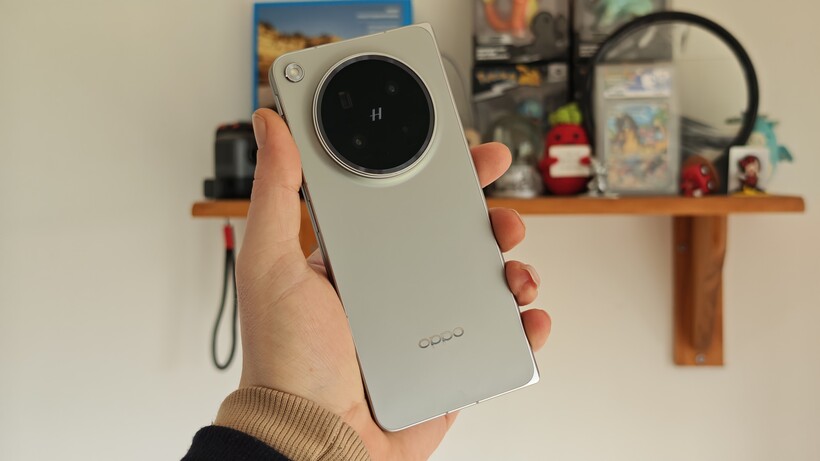








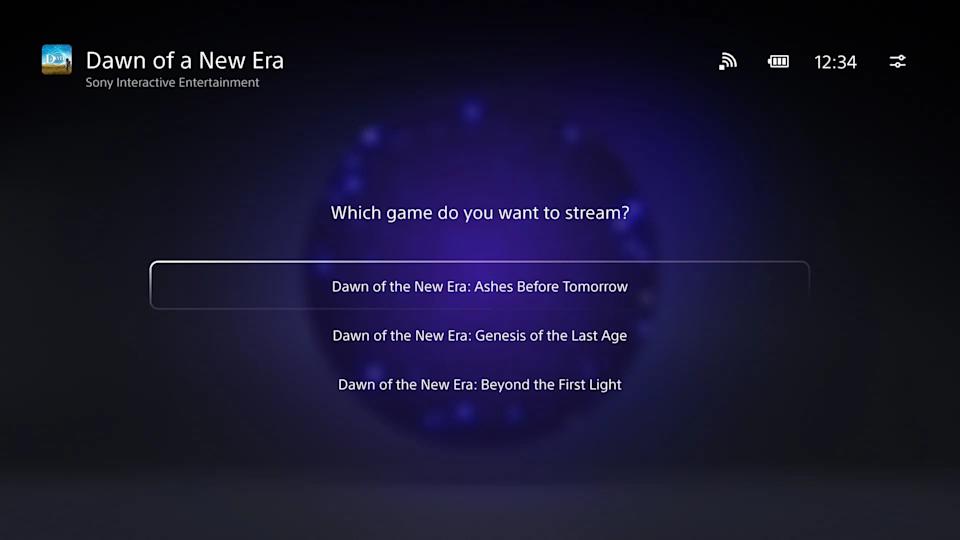



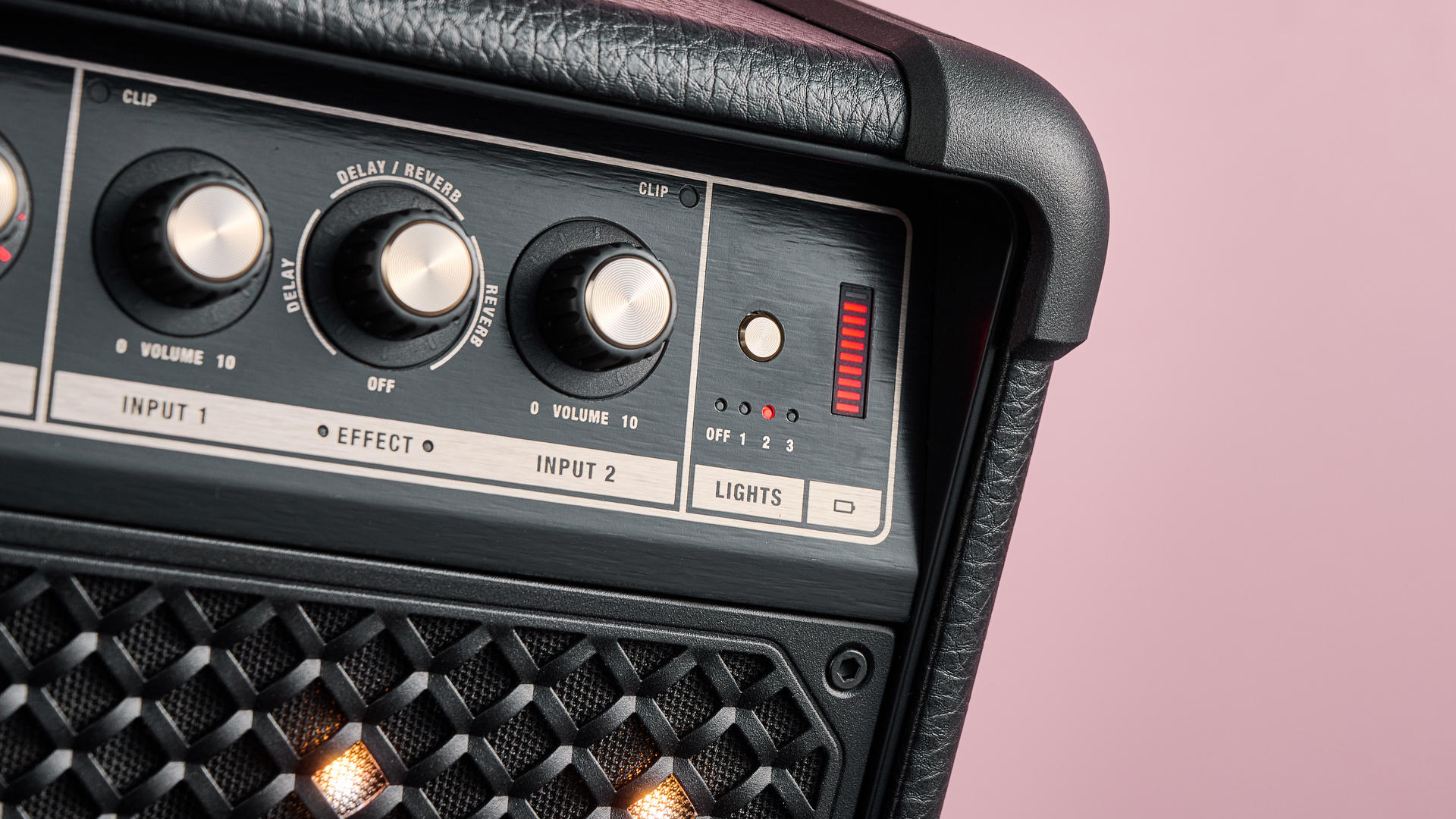




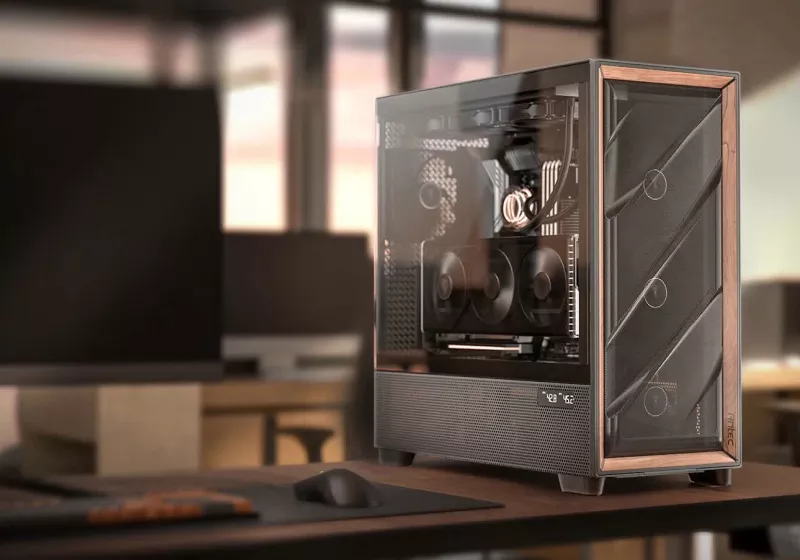





































You must be logged in to post a comment Login