Andrew Lawrenson, head of Latin at Dame Allan’s Schools, is an accomplished player and maker of the Northumbrian smallpipes – England’s only native bagpipes with an unbroken playing tradition.
Originally from Scotland, Mr Lawrenson began learning the instrument after discovering a set of pipes belonging to his father.
Mr Lawrenson said: “It’s about immersion.
Advertisement
“Taking the time to understand a different system – whether that’s an ancient language or a traditional instrument -and learning to think with care and precision.”
Unlike the better-known Highland bagpipes, the Northumbrian smallpipes are bellows-blown rather than mouth-blown, producing a quieter, sweeter sound suited to indoor performance.
In addition to playing, Mr Lawrenson has taught himself the complex craft of making the pipes—a process involving woodwork, metalwork, and reed-making.
He now plays a set he built himself.
Advertisement
He said: “It’s intimidating, but I like understanding how things work.”
Mr Lawrenson is active within the Northumbrian piping community, serving as a committee member of the Northumbrian Pipers’ Society and is listed as a repairer and reed-maker.
He has also been invited to serve as deputy piper to the Duke of Northumberland, a ceremonial role with more than 200 years of history.
As deputy piper, he performs at Alnwick Castle and other official events.
Advertisement
At Dame Allan’s, Mr Lawrenson runs a co-curricular piping club where around six pupils are learning the instrument.
He describes Latin and piping as being more closely linked than they might appear.
Mr Lawrenson said: “You step into a society with very different values, one where slavery and capital punishment were the norm.”
That distance encourages pupils to reflect critically on their own world while developing sophisticated language skills, analytical thinking and close reading—qualities that translate well beyond the classroom.
Advertisement
He studied English Literature and Latin at Newcastle University, later training as a teacher in Glasgow.
His career has taken him to teaching positions in Aberdeen, St Andrews, and Hexham before he joined Dame Allan’s, where he is now in his third year as head of Latin.
Mr Lawrenson first became interested in Northumbrian piping during a resurgence, with a new generation of players – including Kathryn Tickell -recording and performing.
He began learning seriously under the guidance of experienced musicians, including Patricia Jennings, later Chair of the Northumbrian Pipers’ Society, and developed his skills through a mix of learning by ear, mentoring, and competition.
Advertisement
One pupil, Savile, has shown strong musical instincts and quick progress.
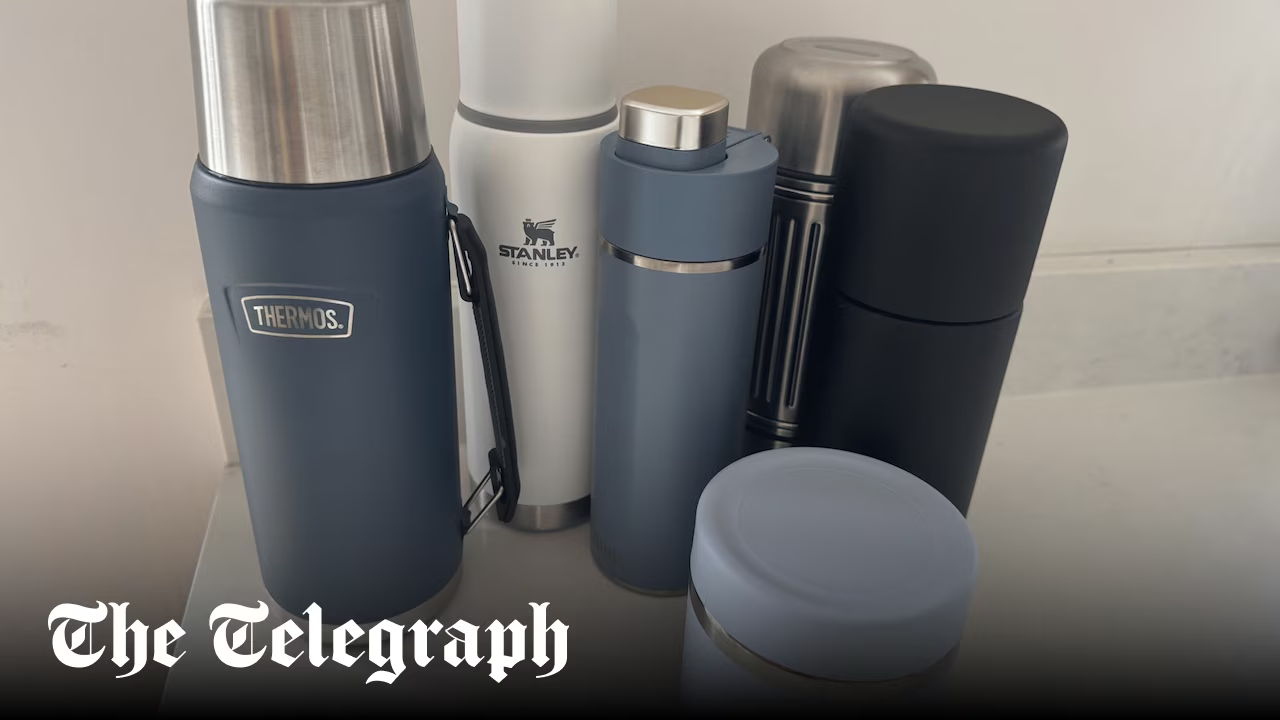
Whether you’re a seasoned hiker, daily commuter, or just someone who loathes lukewarm coffee, a reliable thermos makes all the difference. The best thermal flasks combine vacuum insulation with leak-proof lids, durable exteriors and smart features such as one-handed push buttons or built-in cups.
Testing uncovered a large variation in heat retention, build quality and usability. Some high-performing models kept drinks hot for over 12 hours in wet and windy conditions, while others barely saw us through back-to-back Zooms while working from home.
We tested a wide range, from slim urban styles to rugged designs built for adventure, and assessed each one for thermal performance, ease of use, leak resistance and durability through a series of drop tests, temperature checks and backpack trials. You can read my full reviews below, followed by the answers to some frequently asked questions.
Advertisement
The best flasks: At a glance
How to choose the best flask
Leak-proofing is essential. Look for flasks marketed as fully leakproof, not just spill-resistant, with a secure screw lid and silicone gasket. Ease of cleaning is another deal-breaker. Wide-neck flasks are far easier to rinse, dry and keep hygienic, especially for those who fill their flask with soup, smoothies or milkier brews. An easily hand-washed or dishwasher-safe model is best for daily use.
Weight and grip are important considerations, too. Lightweight flasks are ideal for commutes or day bags, but they mustn’t feel flimsy. Look for powder-coated finishes or textured sleeves for added grip, especially in cold or wet conditions. Finally, it’s worth checking out the brand’s sustainability credentials. Will they offer replacement lids or, better yet, a lifetime guarantee? These are indicators of quality, longevity and less waste in the long run.
How I test flasks
To bring you the best thermos flasks of 2026, I rigorously tested models from best-selling brands like Stanley, Thermos and Hydro. Only the very best made this guide. Each flask was put through a week-long trial in real-life conditions, from cross-country train journeys to all-day hikes in the Lake District, where they were stuffed in rucksacks, left in hot cars and dropped (intentionally) on kitchen floors.
Insulation performance: I filled each flask with boiling water, recorded the starting temperature and then measured again six hours later. I compared my results with the manufacturers’ claims.
Capacity: I measured how much liquid each flask actually held. Some couldn’t be filled to the brim due to the lid design or risk of spillage.
Material and durability: I assessed the flasks’ toughness by performing a one-metre drop test onto hard wooden flooring.
Lid design and leak-proofing: I examined how easy each lid was to open, drink from and safely reseal. I then shook and inverted full flasks to check for leaks and spills.
Portability: Weight (both full and empty), grip comfort, handle design and fit in cup holders or backpacks were all considered.
All top-scoring flasks are stored for longer-term testing and comparison. This guide is regularly updated, with new flasks tested upon release. Visit our Who We Are page to learn more about the testing process.
Konica Minolta Business Solutions (UK) Ltd has successfully completed the installation of two AccurioPress C12010 digital production presses for The Mailing People. The new investment by the full-service direct mail experts extends its production line to four presses from Konica Minolta, at its print room in Portsmouth.
Kobi Hassonah is angry. He lives next door to a storage container which was destroyed in a blaze when debris fell from an intercepted missile.
When we speak to him, the acrid smell of smoke is still in the air.
“Do they [the Iranians] even know what they’re aiming at?” he says. “They just fire. It landed right next to my house. Of all the places.”
But that notion – that nobody wants to be the unlucky one – is largely still driving people to shelters. Safe spaces underneath their homes or beneath the ground. Not everyone has a safe room in their home.
Advertisement
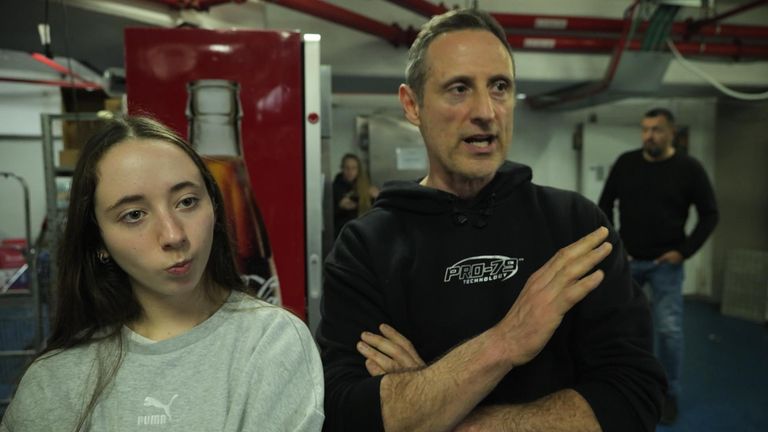
In an underground car park, we meet 46-year-old Alex Proskurov from the city of Rishon LeZion, just south of Tel Aviv.
“We don’t really care about sitting in a bomb shelter for months,” he says defiantly. “As long as we finish the job once and for all.”
Image: Alex Proskurov in an underground car park. Pic: Sky News
His advice: “Don’t be a hero and it’s going to be fine.”
Advertisement
Iran isn’t causing large-scale casualties in Israel – unlike Israel’s bombs launched on Iran and Lebanon.
But it is successfully engaging in psychological warfare.
Laurence Kemball-Cook founded Pavegen with a simple but ambitious aim: to create affordable off-grid electricity in cities.
“I was looking at new forms of street lighting powered by solar and wind,” he says. “But in dense urban environments neither of those technologies work well. Wind needs to be in the sea or high up, and solar struggles when you’re surrounded by tall buildings.”
Cities, though, have something else in abundance: moving people. As an industrial designer with a fascination with sustainability, he spent five years building prototypes in his bedroom of a system that would harness the kinetic energy of footfall and turn into power.
Advertisement
As with all good inventors, people told him he was crazy; but his breakthrough moment came when he realised a flywheel technology would work. “One step can spin the flywheel for up to 10 seconds, which is good for batteries because it gives continuous power.”
Multiply that by thousands of footsteps, and the output becomes something significant. After a trial at the London 2012 Olympics, where a temporary walkway was fitted with its tiles to power lighting, Pavegen now has installations in 250 sites in 5 countries.
Jamie Laing has joked that his gift to celebrate his wife Sophie Habboo’s first Mother’s Day backfired as he videod her breaking down in tears.
The couple are best known for starring together in E4 reality show Made In Chelsea, and they tied the knot in 2023 in a civil ceremony in London before a larger, more extravagant celebration in Seville, Spain.
It was then in June last year that they announced they were expecting their first child together, and in early in December, the they announced their baby’s arrival, as Jamie showed the first photos of him and Sophie with their newborn son, revealing his unique name. He wrote at the time: “Ziggy, you have our whole heart”.
Jamie and Sophie have since given glimpses into their lives as new parents, while keeping their son out of the spotlight as much as possible. But following Mother’s Day in the UK on Sunday (March 15), podcast host Jamie took to social media with a video of his wife in tears.
Advertisement
In the short clip, Sophie, 31, is seen sobbing as Jamie, 37, asks: “Wait, why are you upset?” As she holds her head in her hands, she emotionally responds: “He’s never going to be that small.”
A message across the video read: “POV: When your Mother’s Day present backfires,” while Jamie also captioned the post: “Reminder… Don’t make your wife a photo album of your newborn baby for Mother’s Day.”
Advertisement
It comes after Sophie marked her first Mother’s Day by posting a snap of herself pushing her pram around London, dressed in a black leather jacket and white trousers. She also gave a glimpse at the two-month-old, posting a photo of his feet as they sat at a restaurant table.
Alongside the post, she penned: “15 weeks of being a mama and wow… what a ride it’s been. I didn’t realise it was possible to feel so many emotions all at once. I totally get now what people mean when they say they wish they could freeze time. One minute I’m dreaming about the day I can sleep through a full night again, and the next I’m tearing up at the thought of you not needing me in the night or falling asleep in my arms anymore.
“The emotional rollercoaster is wild, it has changed me in ways I never expected, and I’m so grateful for that. The hardest, most rewarding and most magical little bundle of joy all in one. Being your mama is, and will always be, my greatest achievement and joy and the thing I am most proud of. You really are the missing piece to my puzzle.”
She added: “To all the mamas who have been by my side through these early weeks, I love you. And to all the mamas around the world, you truly are all heroes.”
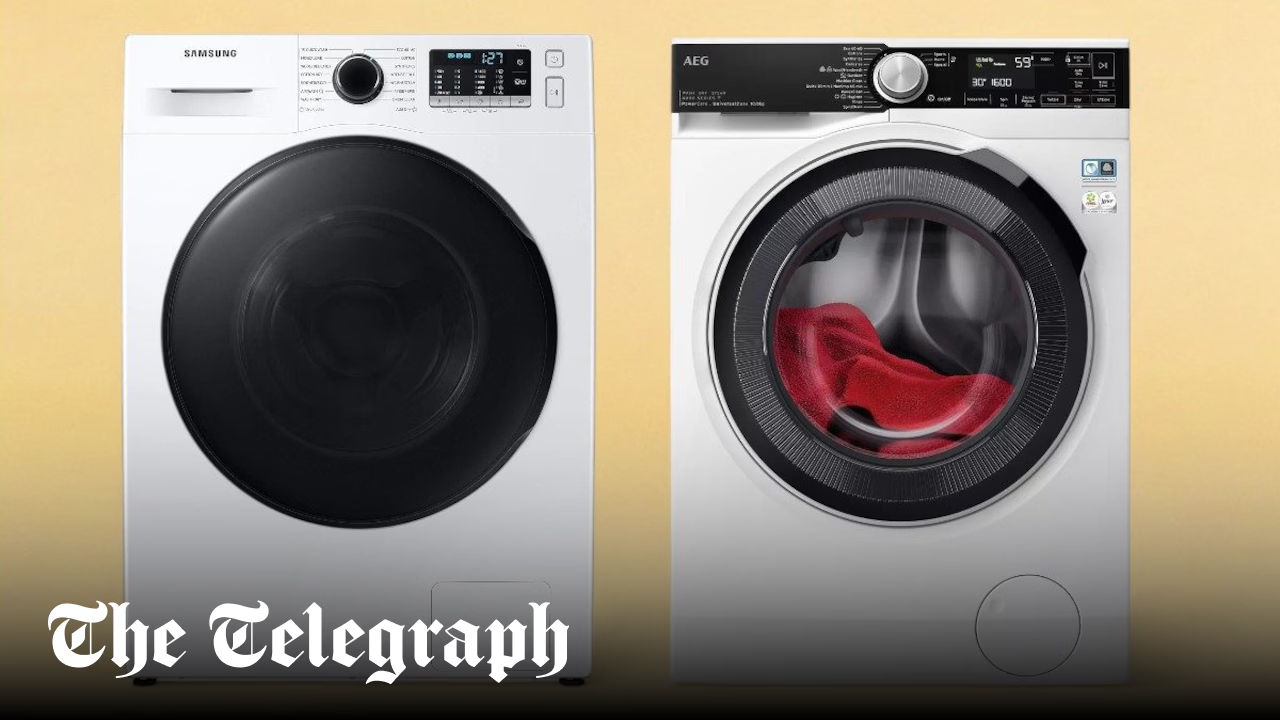
A washer-dryer seems the perfect space-saving alternative to buying separate washing machines and tumble dryers, and is usually more affordable. Still, you don’t want to get stuck with a subpar combo, which could run up high electricity costs and leave clothes damp after the drying cycle. If this is the case, you may want to buy a cheap-to-run heated clothes airer.
Washer-dryers can cost anywhere from £350 to more than £2,000 but for most people, you’ll still be making a saving compared to buying separate machines. The two main types of washer-dryers are freestanding and integrated, which are fairly self-explanatory, but you can read more about what to look for in a washer-dryer in the FAQs section below.
Freestanding washer-dryers tend to be more popular, which is why I’ve focused on them for this guide. I’ve also asked experts for advice and their own recommendations of specific washer-dryers.
Advertisement
The best washer-dryers: At a glance
How to choose a washer-dryer
Choosing the best size and capacity for your home are key when buying a washer-dryer. “It’s important to check the dimensions to ensure it will fit in your space,” says Gwil Snook, buyer at AO. “Think about the drum size you’ll need. Washer-dryers with up to 7kg capacity are suitable for six trousers and t-shirts or one single duvet. 8-9kg is ideal for eight trousers and T-shirts or a double duvet and 10-11kg suits 10 trousers and T-shirts or one king-size duvet.”
“Remember that the machine’s drying capacity is often 50-70 per cent of the washing load, so factor this into your decision making,” Carly Pearson, buyer at Argos adds. Secondly, consider energy rating. “More efficient models use less water and electricity, so could save money in the long run,” says Pearson. “Some models also offer eco-friendly wash and dry cycles that further reduce energy and water consumption.”
The final thing to consider, says Pearson, is noise level. “If your washer-dryer will live in a part of your home that can’t be shut away to keep quiet, make sure you go for the quieter option.”
How we chose the best washer-dryers
To help you decide which washer-dryer to purchase, I sought the input of experienced buyers Carly Pearson of Argos and Gwil Snook of AO, asking how they choose the washer-dryers to sell at their retailers. They advised me on the best washer-dryers based on factors like energy efficiency, drum size, washing and drying capacity, ease of the control panel, spin speeds and how well they expel water.
Advertisement
As many of the machines below have been recommended by experts rather than tested by us at home, we haven’t scored them. For those that were tested at home, the testing was done by home and appliance writer Emily Peck, who used each machine on a variety of loads including bedding, towels and sports clothes to see how they fare against each other.
Visit our Who We Are page to learn more about the testing process.
Weight-loss injections that have become famous for helping people shed pounds may also help some patients with advanced cancer live longer when the disease has spread to the brain, according to a new study.
These medicines belong to a group of drugs called GLP-1 receptor agonists, and they include Wegovy and Ozempic. They were first developed to treat type 2 diabetes, but over the past few years they have drawn global attention because many people taking them experience significant weight loss.
The new study does not show that these injections directly treat cancer. Instead, it suggests something more subtle but potentially important: they might help some very ill patients live longer.
The study focuses on brain metastases. This happens when cancer cells travel from somewhere else in the body – such as the lung, breast or skin – to form tumours in the brain. Unfortunately, brain metastases are relatively common and usually indicate that cancer has reached a late and dangerous stage.
Advertisement
Many patients in this situation also have type 2 diabetes. This matters because the condition can make serious illness harder to manage. High blood sugar can cause chronic inflammation, damage blood vessels and weaken the body’s ability to cope.
In my own clinical practice, I often prescribe steroids to help patients with brain metastases manage symptoms such as swelling in the brain. Steroids can be very effective, but they also tend to raise blood sugar levels and can make diabetes harder to control. This has led researchers to ask whether GLP-1 drugs might have additional benefits.
When diabetes drugs meet cancer care
Laboratory studies suggest they may protect brain cells, reduce inflammation and help preserve the brain’s blood supply. Until now, however, there has been very little evidence from everyday clinical practice showing how patients with both diabetes and brain metastases fare when they take these medicines.
The new study, published in Jama Network Open, set out to explore that question. Researchers used a medical database of anonymised health records from 151 hospitals and healthcare systems around the world.
Advertisement
They searched for adults who had three conditions: cancer, type 2 diabetes and brain metastases. The records covered patients seen between 2018 and 2024. The researchers were particularly interested in whether these patients had been prescribed a GLP-1 drug – such as semaglutide, dulaglutide, liraglutide or tirzepatide – around the time their diabetes and brain metastases were first diagnosed.
GLP-1 drugs may have many benefits besides weight loss, but clinical trials need to confirm these benefits. Rebel Red Runner/Shutterstock.com
To make a fair comparison, the team matched people who received one of these injections with similar patients who did not. They took into account factors such as age, sex, type of cancer, other medical conditions and treatments including chemotherapy, radiotherapy and steroid use. Statistical matching cannot eliminate every difference between groups, but it helps reduce the risk that the results simply reflect one group being healthier at the start.
In total, the researchers identified more than 19,000 patients with cancer, brain metastases and type 2 diabetes. Among them, 866 had been treated with a GLP-1 drug, while over 11,000 had not. After careful matching, the analysis compared two balanced groups of 850 patients each who were similar in terms of their cancers, body mass index, diabetes control and other health issues.
The researchers then followed these patients for up to three years after their brain metastases were first recorded. Their main question was straightforward but important: how many people in each group died during that period?
Advertisement
The researchers found that patients who were taking GLP-1 drugs were significantly less likely to die during the follow-up period than those who were not. Overall, people taking GLP-1 drugs were about 37% less likely to die over the three years.
The pattern was fairly consistent across several major cancer types, including lung cancer, breast cancer and melanoma. It also appeared across different drugs within the GLP-1 class.
When researchers compared GLP-1 medicines with other modern diabetes treatments – including drugs called SGLT2 inhibitors and DPP-4 inhibitors – the GLP-1 group still seemed to fare better. That hints that something about GLP-1 signalling itself might be beneficial, rather than the effect simply coming from better blood sugar control.
Important limitation
Even so, the researchers emphasise an important limitation. This study looked back at medical records rather than testing treatments in a controlled trial. To do that, researchers would need randomised clinical trials in which patients are deliberately assigned to receive a GLP-1 drug or another treatment and then followed over time.
Advertisement
So how might these so-called weight-loss jabs help people whose cancer has spread to the brain?
One possibility is that they help indirectly by improving diabetes itself. Better blood sugar control, reduced body weight and improved heart health could help patients cope better with surgery, radiotherapy or chemotherapy.
But there may also be more direct effects on the brain. Scientists have discovered that GLP-1 receptors are in brain tissue and play a role in controllinginflammation, protecting nerve cells and helping maintain the blood–brain barrier – a protective layer that keeps harmful substances out of the brain.
Animal studies suggest that activating these receptors can reduce damage in brain cells and help them function properly. In theory, that might help the brain tolerate metastatic tumours better or make it a less favourable environment for cancer cells to grow. The new clinical findings are consistent with these ideas, although they do not yet tell us which mechanisms matter most in people.
Advertisement
For patients and families reading about this research, it is important to understand what the results do – and do not – mean. The study does not suggest that people with brain metastases should rush to start GLP-1 drugs, nor that these medicines can replace standard cancer treatments such as radiotherapy, surgery, targeted therapies or immunotherapy.
The potential benefits were seen specifically in people who already had type 2 diabetes. Like any medication, these injections can cause side-effects such as nausea and vomiting, and there are ongoing discussions about rare but serious risks.
Anyone considering them would need careful guidance from both their oncology and diabetes teams rather than making decisions based on a single study.
Still, the findings open up an intriguing new line of research linking cancer, metabolism and brain health. If future trials confirm that GLP-1 drugs genuinely improve survival in patients with brain metastases and diabetes, they could eventually become part of supportive care for people facing this difficult complication.
Kayden Walker, 12, drowned after getting into difficulty in the River Tay while on a day trip with a community group in July 2019.
14:24, 17 Mar 2026Updated 14:29, 17 Mar 2026
A risk assessment for a river boarding trip which led to a 12-year-old boy’s death was not “suitable and sufficient”, an inquiry has heard. Kayden Walker, who could not swim, died after becoming trapped on the upstream side of a weir while on a day trip with the Church House community group in July 2019.
A Fatal Accident Inquiry (FAI) heard from Katrina Pearson, an environmental health officer with Perth and Kinross Council, who was involved in the investigation following his death. Asked by procurator fiscal depute Catherine Fraser whether she would consider the weir to be a “high risk location”, she replied “absolutely” and said the main hazard would be body entrapment.
However, she said a number of reasonable precautions could have been taken to prevent the incident. She told the inquiry on Tuesday: “In the first instance I would expect that the risk assessment for the activity would have been suitable and sufficient, which it was not in this case.
Advertisement
“And if it was they would have known about the hazard of the weir and the potential for body entrapment and also the risk to non swimmers and to swimmers. And I would expect that sufficient controls would be put in place to mitigate this – avoidance of the weir or not taking non-swimmers to such a high risk location, or additional supervision or robust safety briefing.”
Kayden, from Glasgow, was separated from his board during a river boarding session on the River Tay, near the village of Stanley, Perthshire, on July 28 2019. After being pulled from the water, he was airlifted to Ninewells Hospital in Dundee and was then transferred to the Royal Hospital for Children in Glasgow where he died on July 29.
The FAI, taking place at Falkirk Sheriff Court, follows the prosecution of Outdoor Pursuits Scotland Ltd in October 2024 for a contravention of health and safety legislation which led to Kayden’s death. The company was fined £10,000. Aimee Doran, representing Outdoor Pursuits, put it to Mrs Pearson that she was commenting on reasonable precautions from a health and safety point of view and without having any particular expertise in water-based activities.
Mrs Pearson replied: “Yes, from the health and safety point of view, not technical aspects.”
Advertisement
The joint FAI is also considering the death of Ruaridh Stevenson, 39, from Cupar, Fife, who drowned after trying to help a client who experienced difficulties in the waters flowing through Dollar Glen, Stirlingshire on April 13, 2024. Mr Stevenson was a director of a company which offered “canyoning” experiences on Scottish rivers.
The inquiry heard from Peter Carroll, a volunteer assistant ranger with the National Trust for Scotland (NTS) which cares for the area where the incident happened. He helped give CPR to Mr Stevenson after a member of the public came to tell them what was happening as he worked with NTS countryside ranger Laura Livingstone.
Mr Carroll went to the scene which was in an area called the Devil’s Cauldron which Ms Livingstone had described to the FAI as a “water feature hollowed out which forms a bowl that goes down about seven or eight feet.”
Advertisement
He told the inquiry: “When I looked down into the cauldron I could see Mr Stevenson on a ledge lying on his back and a chap was doing CPR.”
Mr Carroll then went to guide emergency services to the scene, which could not be reached by vehicles, before getting into the water himself to help with CPR. He said: “I was in the water until Mr Stevenson was pronounced dead and the recovery process started.”
Ms Livingstone, who has been an NTS ranger for 10 years, said the water level looked “high” on the day of the incident and she thought it was “borderline” as to whether canyoners should be in it. She told the inquiry that the area around the Devil’s Cauldron is fenced off after an incident around a decade ago where someone jumped in and died after hitting their head.
Ms Fraser asked: “Despite the fence do canyoners move the fence to access it?” to which Ms Livingstone replied, “yes.”
Advertisement
The inquiry also heard that there is a section nearby not managed by NTS that is not fenced off. Karen Railton, representing NTS asked: “Do you think if a sign was put up saying it was dangerous that would stop canyoners?”
Ms Livingstone said, “no.”
The FAI continues before Sheriff Keith O’Mahony.
Get more Daily Record exclusives by signing up for free to Google’s preferred sources. Click HERE.
Donald Trump has warned the US could take action in Cuba after his Iran war, days after a rare riot on the island.
The US president said on Sunday that they could reach a deal with Cuba or “do whatever we have to do”.
But Mr Trump suggested no action would be taken in Cuba until his war in Iran was over.
It also comes after a rare riot in Cuba on Saturday, during which protesters attacked the Communist Party office over blackouts, according to local media.
Image: Donald Trump spoke to reporters on Air Force One on Sunday. Pic: Reuters
Speaking to reporters on Air Force One, Trump said: “Cuba also wants to make a deal, and I think we will pretty soon either make a deal or do whatever we have to do.
“We’re talking to Cuba, but we’re going to do Iran before Cuba.”
Advertisement
He also suggested on Monday that Cuba may be the target of a “friendly takeover” before adding it “may not be a friendly takeover”.
His comments follow years of tensions between Washington and Havana, with sanctions and disputes over migration and security among issues.
Cuba’s President, Miguel Diaz-Canel, said on Friday his country had opened talks with the US as it continues to face one of its worst economic crises in decades.
‘Away from confrontation’
Advertisement
Advertisement
Iran war: Trump demands help from allies
He said: “These talks have been aimed at finding solutions through dialogue to the bilateral differences we have between the two nations.”
Mr Diaz-Canel added that he hoped negotiations would move the long-term rivals “away from confrontation”.
Cuba’s economic turmoil has been exacerbated by disruptions in imported oil, which it relies on to run power plants and transportation networks.
Advertisement
Fuel shortages have also forced authorities to impose rolling electricity outages and to limit some public services.
During Saturday’s riot, the anti-government protesters began rallying peacefully before turning violent, a state-run newspaper said.
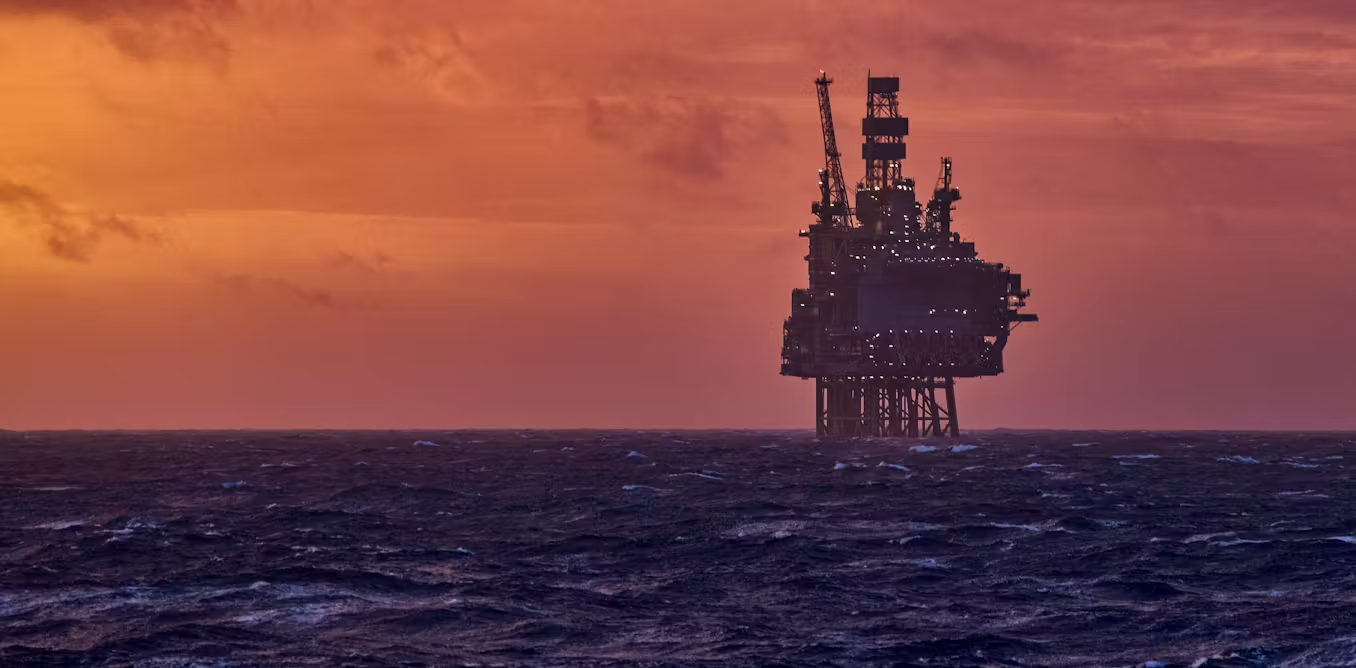
As the Middle East conflict intensifies and oil and gas prices swing wildly, the UK has seen renewed calls to drill more in the North Sea. The argument is straightforward: if Britain produces more of its own oil and gas, household energy bills should fall.
But our analysis suggests the effect would be minimal. Even if the UK maximised North Sea extraction and returned revenues directly to households, the reduction in energy bills would be at most a modest £82 per year – far smaller than the savings expected from accelerating the shift to renewable energy.
In fact, a faster transition away from gas-powered electricity could cut household energy bills by three times as much as maximising North Sea oil and gas.
Why UK energy bills are so high
A typical UK household has a single “dual fuel” bill covering both electricity and gas. This can be divided into several different components.
Advertisement
The largest share is the wholesale cost – the price suppliers (the company named on your bill) pay for electricity and gas – which accounts for about 41% of the bill. The rest covers the costs of running and maintaining energy networks (23%), operating costs and debts (15%), policy costs such as environmental and social levies (12%) and VAT.
At the wholesale level, the UK does not consistently pay more than other European countries. At various points since 2022, countries such as Italy and Germany have faced similar or higher wholesale costs.
Yet UK households still pay some of the highest retail electricity prices in Europe. That’s because of how the electricity market works.
Last year, about 27% of UK electricity was generated by gas power plants like this one in North Wales. Phil Silverman / shutterstock
In Britain, the wholesale electricity price is usually set by the most expensive generator needed to meet demand. That generator is often a gas-fired power station. As a result, electricity prices tend to rise and fall with gas prices – even when much of the electricity is produced by cheaper sources such as wind or solar.
Gas also dominates home heating – 85% of UK households still rely on gas boilers, far more than in most comparable countries
This makes UK households highly exposed to swings in global fossil fuel prices. Gas prices are set on international markets, which are heavily exposed to geopolitical shocks, as seen both in 2022 after Russia’s invasion of Ukraine and again today.
Britain’s poorly insulated homes – among the least energy efficient in northern Europe – compounds the problem. This means households consume more gas to achieve the same level of warmth.
Advertisement
Why more North Sea drilling wouldn’t cut bills
Producing more oil and gas in the North Sea would not create the UK’s “own special supply”, nor could its price be set specifically for UK citizens.
That’s because any new production would be sold on international markets at international prices. The UK simply doesn’t have the ability to extract, refine and use oil all by itself even if it wanted to – some international trading will always be necessary.
The only way North Sea extraction could reduce household bills is through government revenues. Taxes and levies on oil and gas profits – the so-called fiscal “take” – could in principle be redistributed to households.
To explore this possibility, we modelled a scenario in which the UK maximised North Sea oil and gas and used all revenues collected to subsidise lower energy bills.
Advertisement
Even under those assumptions, the effect would be limited. Household bills would fall by between £16 and £82 per year. That’s roughly 1% to 4.6% of the current average household energy bill of £1,776, according to UK regulator Ofgem.
Bigger savings from renewables
A different policy direction – one that reduces the role of gas in electricity production – produces much larger savings.
If the price of electricity was set by cheaper renewable energy rather than by gas, our analysis suggests households could save £105 to £331 per year through lower wholesale energy costs.
That is roughly three times more than the “maximise oil and gas” scenario.
Advertisement
The North Sea’s other future. Nuttawut Uttamaharad / shutterstock
Importantly, these savings would also be recurring. Once electricity prices are less tied to volatile gas markets, and instead are set by cheaper and infinitely available resources – wind and sun – households benefit every year.
Savings could be still higher if the structure of electricity bills were rebalanced. At present, many policy costs – including support for renewables – are added to electricity bills rather than funded through general taxation.
If those policy costs were moved into general taxation, as announced in the government’s autumn 2025 spending review, the average household could save up another £110 or so annually. In our renewables scenario, that would bring the total savings to about £441 per year.
Moving policy and system costs from bills onto general taxation is one way to make energy costs fairer and more egalitarian. That’s because energy bills take a larger share of income from lower income households while taxes better reflect ability to pay.
Advertisement
Our analysis used oil and gas prices in January 2026, prior to the breakout of the US-Israel war on Iran. In other words, ours is a conservative scenario that assumes relatively favourable conditions for fossil fuels. If global prices rise further, the advantages of renewable energy would become even greater.
Reducing exposure to fossil fuel shocks
Recent history illustrates how costly dependence on fossil fuels can be.
Research by our colleagues at Oxford Smith School found that if the UK had moved away from importing Russian oil and gas after its 2014 invasion of Crimea, it would have saved about £22 billion in energy costs during the price spike after the invasion of Ukraine in 2022.
Similarly, had the UK adopted the “balanced net zero” pathway proposed by its official advisory Climate Change Committee, it could avoid spending around £70 billion on crude oil and natural gas between 2022 and 2030.
Advertisement
Today’s energy crisis simply reiterates this argument: if the UK was less reliant on oil and gas today, it would be in a much better economic position.
The best way to keep energy bills low in the long run is to reduce dependence on gas altogether. That means expanding renewable generation, investing in energy storage and grid infrastructure, improving home insulation and electrifying heating through technologies such as heat pumps. Support for vulnerable households will also be crucial during the transition to a lower-carbon energy system.
Our findings refute speculation that draining the North Sea of all oil and gas would significantly lower bills and make the UK energy secure. Even if further fossil fuel extraction went ahead and all tax revenues were returned directly to consumers, the savings for consumers would be modest. Meanwhile the UK would remain exposed to geopolitical shocks and be economically worse off.
Staying the course on clean energy would not only save households three times as much money but render the UK truly energy secure for generations to come.
















































You must be logged in to post a comment Login