“I was never a member of the IRA or its Army Council, and I never held any role or rank within the IRA.”
Callum Parke and Danny Halpin
14:00, 17 Mar 2026
Gerry Adams has told the High Court that he had “no involvement whatsoever” in Provisional IRA bombings in England and that he was never a part of the organisation.
The former Sinn Féin president entered the witness box on Tuesday in defence of a legal claim against him brought by three victims of bombings in England in the 1970s and 1990s.
Advertisement
John Clark, a victim of the 1973 Old Bailey bombing in London; Jonathan Ganesh, a 1996 London Docklands bombing victim; and Barry Laycock, a victim of the 1996 Arndale shopping centre bombing in Manchester, all allege that Mr Adams was a leading member of the Provisional IRA on those dates, including of its Army Council, and are seeking £1 in damages.
Mr Adams is defending the claim, claiming in a witness statement that membership of Sinn Féin “does not equate to membership of the IRA”.
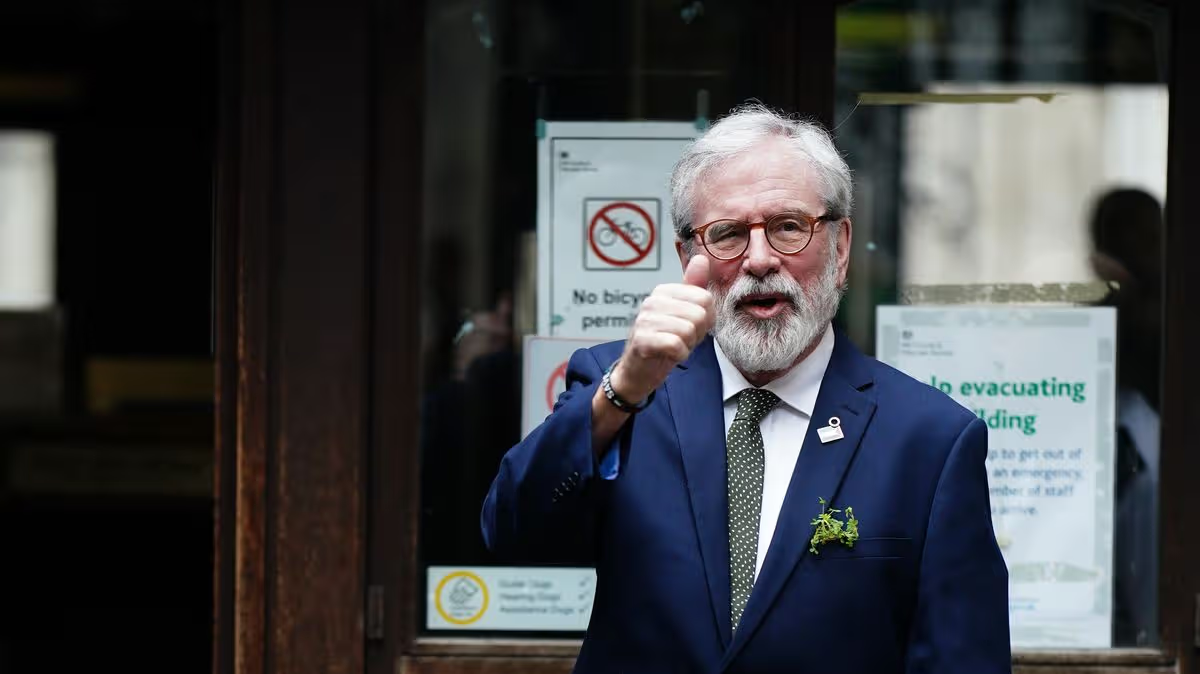
Wearing a dark suit and tie, a shamrock and a badge of the Palestinian flag, Mr Adams began his evidence by wishing the judge, Mr Justice Swift, “a very happy St Patrick’s Day”.
Advertisement
In his 20-page witness statement, Mr Adams said he “was not involved in any way in the planning, preparation or conduct of” any of the bombings, and “have never been a senior, let alone most senior figure, in the IRA”.
He continued: “I had no involvement in or advance knowledge of the Old Bailey bombing (1973), the Canary Wharf bombing (1996) or the Manchester bombing (1996).
“I have never been charged, prosecuted or convicted of any offence in connection with any of the bombing incidents in which the claimants were injured.”
He also said: “I was never a member of the IRA or its Army Council, and I never held any role or rank within the IRA.
Advertisement
“I repeat that I had no involvement whatsoever in the authorisation, planning or conduct of the bombings in which the claimants were sadly injured.”
Mr Adams also said that opponents of Sinn Féin, of which he was president from 1983 to 2018, “have repeatedly sought to conflate” the party with the Provisional IRA.
“As I have always stated, Sinn Féin and the IRA are separate organisations,” Mr Adams said.
He continued: “I have no knowledge, beyond what has been widely reported in the public domain, as to the structure or decision-making processes of the IRA.”
Advertisement
Mr Adams told the court that he was “very conscious” that the three bomb victims had “suffered significantly”, and that his statement should not be taken “as criticism of the claimants, or as any attempt to deny or diminish their awful experiences”.
During cross-examination by barrister Sir Max Hill KC, Mr Adams agreed that 1,178 deaths were caused by the Provisional IRA, the business of which was “to resist armed British occupation and aggression in the part of Ireland that I lived in”.
He had earlier said that the ignorance of Irish history among British people is “shocking”.
Anne Studd KC, for the three bomb victims, previously told the trial that Mr Adams was “directly responsible for and complicit in those decisions made by that organisation to detonate bombs on the British mainland in 1973 and 1996”.
The barrister also said that the difference between being in “the Army” and being a member of Sinn Féin was not a “clear either/or choice”.
She added: “The claimants’ case is that none of these bombings in the United Kingdom mainland took place without the knowledge and agreement of the defendant in his role in the Provisional IRA and latterly as a member of the seven-man Army Council.”
She concluded: “There is no doubt that the defendant contributed to the peace in Northern Ireland, but the claimants say that on the evidence he also contributed to the war.”
Advertisement
Ms Studd also told the court that Mr Adams had “a foot in each camp” of the military and political sides of the Irish Republican movement, and that was likely “as involved as the people who planted and detonated those bombs”.
The recent killing of Nemesio Oseguera Cervantes, the leader of the Cártel de Jalisco Nueva Generación (CJNG) who was commonly referred to by his alias “El Mencho”, has once again brought global attention to drug-related violence in Mexico. His death at the hands of the Mexican security forces triggered a wave of retaliatory violence that affected several states.
This situation will undoubtedly occur again. Under Donald Trump, the US government has been ramping up pressure on the Mexican authorities to take stronger action against the cartels that traffic drugs across the border. So now is a good moment to reflect on the main cartels operating in Mexico and the underlying factors that sustain their operations.
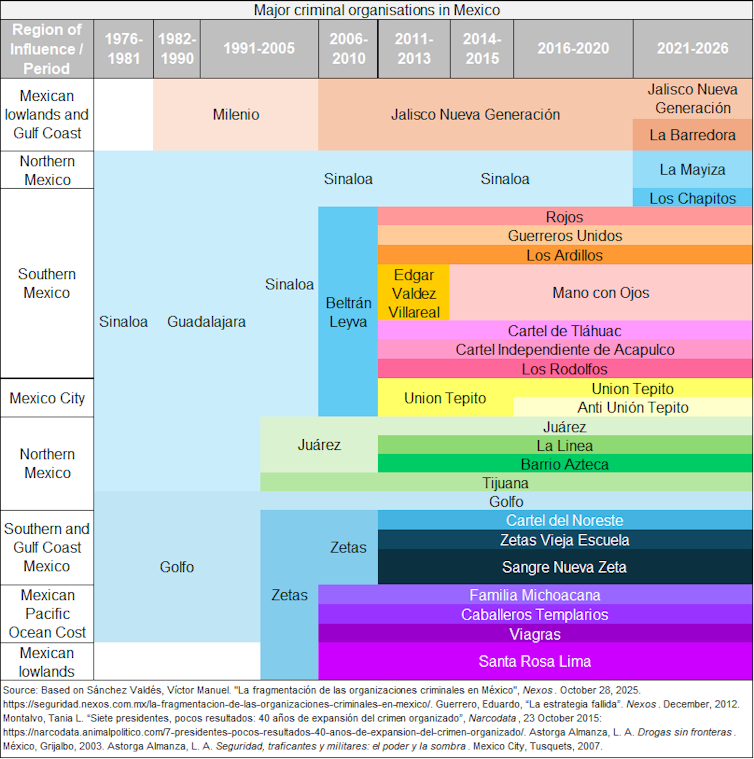
For decades, Mexico had three major drug trafficking groups: the Milenio cartel, the Sinaloa cartel and the Golfo cartel. These organisations dominated drug trafficking until the 1980s when the Mexican government, under pressure from the US, intensified its operations against them. This pressure followed the 1985 killing of American Drug Enforcement Administration agent Enrique Camarena by organised crime figures.
But it wasn’t until 2006 that Mexico’s cartel landscape really began to change. That year saw the then-Mexican president, Felipe Calderón, deploy the Mexican army against the cartels in a militarised “war on drugs”. The government’s strategy of targeting senior cartel figures caused these organisations to fragment into smaller groups.
Advertisement
For example, a group of former Mexican special forces commandos who had previously acted as the enforcement arm for the Golfo cartel broke away to form Los Zetas in 2010. Various other factions elsewhere in Mexico also set up their own organisations. These included Beltrán Leyva, La Familia Michoacana, Knights Templar (Caballeros Templarios), CJNG and Guerreros Unidos.
In 2014, following the abduction of 43 student teachers in the Pacific state of Guerrero by Guerreros Unidos, President Enrique Peña Nieto escalated the offensive against Mexico’s cartels. This led to further fragmentation, with some newer organisations such as Santa Rosa de Lima focusing on oil theft. Andrés Manuel López Obrador came to power in 2018 and pressed hard against the Sinaloa cartel.
The detention of senior figures such as Joaquín “El Chapo” Guzmán and Ismael “El Mayo” Zambada caused the Sinaloa cartel to break into two factions: Los Chapitos which is led by El Chapo’s sons and Los Mayos which is headed by El Mayo’s lieutenants. CJNG took advantage of this moment to expand, positioning itself at the centre of Mexican drug trafficking.
The militarised war on drugs has not just caused the number of Mexican drug trafficking organisations to expand, it has also led to a surge in violence. Throughout the 1990s and early 2000s, violence in Mexico was actually declining. But since 2006, when Calderón first deployed the Mexican army against the cartels, homicides have increased from around 10,000 per year to over 30,000.
Advertisement
The rise in violence is also largely a consequence of the deliberate targeting of cartel leaders. Removing leadership produces a sudden succession struggle in an affected organisation, with violence often subsequently employed to prevent or respond to rivals testing the new leadership.
Mexico’s cartel violence is usually highly concentrated, with northern Mexico and the Pacific states experiencing the highest homicide levels. This pattern reflects trafficking routes. Mexico’s northern states are a key corridor for smuggling drugs into the US, while the Pacific coast serves as a major entry point from Asia for the chemicals used to produce fentanyl.
Sustaining cartel operations
The violence perpetrated by the cartels is enabled largely by weapons that are smuggled into Mexico. According to figures published by the US Bureau of Alcohol, Tobacco, Firearms and Explosives, more than half of the weapons seized from criminal groups in Mexico come from the US.
Advertisement
Research shows how close the relationship between US firearms and Mexican cartel violence is. One study from 2019 found that any increase in firearm production in the US increases violence in Mexico. And another, published several years earlier, discovered there was a spike in homicides in Mexico’s northern states when the US government lifted restrictions on the sale of certain assault weapons in 2004.
The Mexican government filed a lawsuit in 2021 that sought to hold American gun makers accountable for their contribution to the rising violence in Mexico. While the lawsuit was rejected unanimously by the US supreme court in 2025, the Mexican authorities have continued to press their US counterparts to take firmer action against arms smuggling from north of the border.
Mexico’s president, Claudia Sheinbaum, made a speech days after El Mencho’s killing in which she asserted that if the US government wants Mexico to prevent drug trafficking, they “have to do their part” and eradicate the flow of weapons.
Advertisement
And, finally, it’s important to recognise that the operations of the Mexican cartels are sustained in large part by drug consumption in the US. Data published by the UN Office on Drugs and Crime suggests that drug seizures, particularly of fentanyl, have increased substantially since 2019.
Until the US takes steps to more effectively reduce demand for drugs among its own citizens, Mexico’s battle against cartel violence will continue.
This latest setback comes amid a string of problems for the former TV star, who has been hit with allegations about his controversial behaviour
Cancelled comedian David Walliams has suffered another blow in the wake of being dropped by his publisher – the remainder of his live theatre show tour has been axed. The star promised fans ‘an unforgettable evening of laughter, storytelling, and surprises’ with his one-man show, An Audience with David Walliams, and was booked to appear next week at The University of Exeter on March 24 and Cadogan Hall in London on March 25.
Advertisement
But both events have now been quietly cancelled, which is the latest in a long line of career setbacks for the former TV favourite and best-selling children’s author. The Little Britain star, 54, lost his TV job as a judge on Britain’s Got Talent after ‘disrespectful comments’ made about some of the contestants were leaked.
He was also removed as the narrator on the comedy clip show It’ll Be Alright On The Night and replaced by Tom Allen. Then last December Walliams was dropped by his publisher HarperCollins over allegations of “inappropriate behaviour” towards female staff. He has since been axed from Waterstones’ huge Children’s Book Festival 2026.
Advertisement
His previous tour dates took place in Hull, York and Derby in November 2025 – a month before the HarperCollins accusations came to light. Ticket prices ranged from £45 to £65 and there were also VIP meet and greet tickets on offer, but both the remaining shows were dropped with less than two weeks to go.
It is believed that poor ticket sales were behind the decision. In February, just 340 tickets had been sold for the Exeter venue which can seat 1,000 people. Fans trying to buy tickets on-line are now greeted with the message: “Tickets are currently not on sale’” Those who call Cadogan Hall box office to ask for tickets have been told: “It has been cancelled by the promoter.”
Walliams – whose comedy series Little Britain with Matt Lucas earned him Baftas, Emmys and the prestigious Rose D’Or – has been fighting hard to clear his name over the scandals which have hit him.
He has denied HarperCollins’ allegations that he behaved “inappropriately” towards female staff there. His spokesperson said at the time: “He has never been informed of any allegations raised against him.
Advertisement
“He was not party to any investigation or given any opportunity to answer questions. David strongly denies that he has behaved inappropriately and is taking legal advice.”When he left BGT in 2023 after ten years on the panel alongside Simon Cowell, Amanda Holden and Alesha Dixon, he launched a legal battle with Fremantle, the production company behind the show. He accused them of data protection breaches which had caused him financial and mental harm following the leaking of private, derogatory comments about contestants. They ended up reaching an “amicable resolution” and settlement.
The comedian had also enjoyed huge success as a children’s author selling more than 60 million copies worldwide of his tales such as Gangsta Granny, The Boy In The Dress and Mr Stink. The Mirror has approached his representatives for comment.
Russell Mason, 49, lured the protected goshawk into a baited trap before battering it several times with a cosh to cause its agonising death.
17:02, 17 Mar 2026Updated 17:04, 17 Mar 2026
A gamekeeper who trapped a rare bird of prey in a cage before beating it to death was caught out by a covert surveillance operation.
Russell Mason, 49, lured the protected goshawk into a baited trap before battering it several times with a cosh to cause its agonising death.
He was also found to have left nearly 200 rounds of live ammunition lying around in his bedroom and unsecured within his Polaris Ranger vehicle.
Advertisement
Fiscal depute Karon Rollo told Perth Sheriff Court: “Goshawks are rare birds of prey. They hunt birds and small animals. They have a wingspan of up to four feet and weigh between two and three pounds.
“They were persecuted to extinction in Scotland in the last century, but have been reintroduced, with now around 100 breeding pairs in existence.
“A crow cage trap was visited by RSPB staff on 9 January 2024. At the time this trap was set, it had a meat bait, and the door was chained and padlocked shut.
“It had a sign on the trap stating that the Scottish Government pays the estate to catch carrion crows from 1 March to 30 June to increase the chick survival rates for conservation-listed bird species.
Advertisement
“To continue observations and continue with this research, it was decided to install a continuous recording static camera covering this crow cage trap.”
She said RSPB staff visited the camera several times to review the captured footage and became aware of a male visiting the trap on 12 February 2024.
“At this time there was a goshawk and a crow in the trap,” Ms Rollo said. “The male opened and entered the trap. After entering he used a hand-held net to capture the goshawk and put it to the ground.
“He then struck the bird six times with a cosh. He placed the bird into a carrier bag, rolled it up and put the package under his arm.
Advertisement
“He left the trap, placed the net in the back of the vehicle and the bag in the cab. He locked the trap and drove off.”
The prosecutor said: “The male was identified from the footage by police officers, who knew him as being gamekeeper Russell Mason. The crow cage trap number related to the accused.
“Footage on other dates, including him putting a decoy bird in the trap, confirmed his identity. An avian vet specialising in raptors was shown the footage.
“He opined that the goshawk looked healthy and was exhibiting the normal behaviour of a captured raptor. Goshawks, in his experience, as ‘particularly flighty and stressy birds’ and this one was no exception.
Advertisement
“He describes it as showing a man beating a goshawk to death with a cudgel with the bird having been first netted within a crow cage trap.
“He states there were six blows to the body, which may have caused broken wings or rib fractures during the trauma, and that it was quite obviously not killed outright with one blow.
“He is of the view that it is extremely unlikely that it would have been lying passively in the net and therefore there is a high possibility that it would have sustained painful fractures and injuries before dying.”
A search of Mason’s cottage found unsecured ammunition, along with clothes matching those seen on the CCTV footage. A bag and cosh were found in his vehicle.
Advertisement
The bag was analysed and found to have goshawk DNA on it. The search team recovered 195 illegally stored rounds of ammunition.
Mason admitted intentionally or recklessly killing a goshawk on 12 February 2024 by seizing it with a net before repeatedly striking it with a cosh on Cochrage Moor, Bridge of Cally, Perthshire.
He also admitted breaching the terms of his firearms certificate by failing to store ammunition securely.
Sentence on Mason was deferred for the preparation of social work reports until next month by Sheriff Alison McKay and he was granted bail.
Advertisement
Mason was previously placed on the sex offenders register after being spotted carrying out a solo sex act in his car by a resident of a sheltered housing complex.
He was spotted by an elderly woman with his trousers down as he sat in the car beside a path used by children to walk to and from school.
When officers told Mason they were at the scene to investigate reports of someone masturbating in a car, he said: “That was me.”
Mason admitted carrying out an act of public indecency outside the sheltered housing complex in Harriet Court, Blairgowrie, and was placed on the register for a year.
Dobbies Community Gardens will support local communities by providing essential tools, plants and expert knowledge.
Dobbies’ Sandyholm store is inviting local schools, charities and community groups to apply for this year’s Dobbies Community Gardens, giving successful groups the opportunity to receive support to help bring green spaces to life.
Advertisement
In 2025, each of Dobbies 53 stores selected a winner from over 600 entries to receive support, supplies and advice through the community initiative.
Dobbies’ Sandyholm is committed to giving back to the community and is passionate about encouraging people to discover and share a love for gardens.
And Dobbies Community Gardens will support local communities by providing essential tools, plants and expert knowledge from colleagues to groups, to bring their green spaces to life. Store colleagues will also provide dedicated time to each project through volunteer hours.
The community gardens initiative nurtures wellbeing, connections and inclusion to help inspire local residents to spend more time in nature.
Advertisement
Dobbies’ Sandyholm store is looking to hear from local groups hoping to start, restore or upgrade their indoor or outdoor green spaces, and learn more about what they would do with the support.
And Dobbies’ plant buyer, Nigel Lawton, is encouraging groups across the country to apply. He said: “Every year we look forward to hearing from the variety of inspiring groups about what they are looking to their garden spaces, with our support.
“We encourage local communities and groups within 20 miles of their local Dobbies store to apply to help create their perfect shared garden spaces that will bring joy to the community all year long. Whether they are a charity looking to upgrade their green space, a local group looking to bring the community together with a new project, or a school with plans to restore a vegetable patch, we want to hear from anyone who has a garden project that we could support.”
Applications are now open and close at 5pm on March 31. Those entering must be within 20 miles of Dobbies’ Sandyholm store. Successful projects will be invited along to their local store for a consultation before getting recommendations from Dobbies’ colleagues about what products and tools will help bring the space to life.
The disgraced former Prince looks set to move into Marsh Farm following his exile to Norfolk- but he’s holding on to some of the grand trappings of his former life
Andrew Mountbatten Windsor appears to be on the move. The disgraced younger brother of the King seems to be preparing to finally settle into his new home, Marsh Farm.
Advertisement
Andrew has been living in Wood Farm on the Sandringham estate ever since his eviction from Royal Lodge. He has been waiting for renovations to be carried out at his future property, including the installation of a tall security fence, landscaping, new carpets and a Sky TV dish. And on Tuesday, three large removal vans were pictured pulling up outside Marsh Farm.
The vehicles were all from Gander & White, which specialises in transporting fine art and has a royal warrant. The company offers a specialist service that includes packing, transporting and installing fine art pieces for their clients – from art dealers and auction houses to private collectors and museums.
It’s not absolutely clear what the vans were transporting – but several valuable pieces from the Royal Collection Trust were known to previously be on display in Andrew’s former 30-room home in Windsor. Some were part of the Royal Family’s private collection and there were also pieces bought by the former prince’s grandmother, the Queen Mother, who lived at Royal Lodge before him.
However, other pieces were held by the Royal Collection Trust, which manages the Royal Collection – a selection of artefacts and paintings curated by monarchs throughout the centuries. Pieces from the Royal Collection Trust are spread across royal exhibitions, as well as being used to furnish royal residences.
According to the Times, these pieces in Royal Lodge were to be returned to the Trust after Andrew was stripped of his titles. Pieces understood to have adorned the walls of his previous home included a 19th century oil painting called Eugenie, Empress of the French and wife of Napoleon III, by Charles Édouard Boutibonne.
Nevertheless, it seems Andrew made the decision to transport plenty of artwork to Marsh Farm with him. It won’t come as a huge surprise to those who know Andrew, who has been described as having an extraordinary level of entitlement.
Advertisement
Over the years there have been countless stories about the disgraced royal’s behaviour behind closed doors, with anecdotes about his alleged rudeness and his acute lack of self awareness. Much of his reported churlishness has been apparent in recent months.
Andrew is said to have been appalled that ‘poky’ Marsh Farm only has five bedrooms; in contrast, Royal Lodge has seven bedrooms within the main 30-room mansion. “He really didn’t want Marsh Farm,” an insider told the Mail. “He won’t have lived anywhere that small since he left his apartment at Buckingham Palace.”
As a result, packing up Royal Lodge – a task left largely to his staff after his emergency eviction – would have been a momentous task. Andrew, along with his ex-wife Sarah Ferguson, lived there for two decades, and had accumulated a great deal of possessions. Furthermore, Sarah’s love of spending meant that in the weeks prior to their eviction, a huge number of often unopened Amazon deliveries had been left to pile up, adding to the complexities of downsizing.
Andrew’s most prized possessions had already been packed up ahead of the move – his famously extensive teddy bear collection. According to Charlotte Briggs, a former staff member, the disgraced royal had 72 in total, which had to be lined up in size order, and arranged precisely on his bed.
She told the Sun: “As soon as I got the job, I was told about the teddies, and it was drilled into me how he wanted them. I even had a day’s training. Everything had to be just right. It was so peculiar.”
The stuffed animals have now been safely stowed away – bar one. Andrew is said to have retained a cuddly monkey. The remainder are believed to have been stored in a south London warehouse, where the majority of his possessions are being housed, protected by 24 hour guards.
Andrew is also said to be unhappy about his lack of staff – despite the fact he won’t have the space, nor presumably, the means to afford them. It’s been said that his brother the King has offered him a Sandringham cleaner, groundsman and cook on an ad hoc basis – but that “hasn’t gone down well”.
Advertisement
In reality, Andrew might have struggled to recruit staff anyway given reports that he frequently flies off the handle and has made bizarre requests of royal employees.
As the second – and apparent favourite – son of the late Queen, Andrew developed a penchant for the finer things in life, and has clearly enjoyed the very many privileges and status afforded to him by his birth. Indeed, he is said to be in denial about his new non-royal reality.
He reportedly continued to require staff at his Royal Lodge home to address him as “Your Royal Highness” (HRH) and demanded bows or curtsies – despite having lost his royal titles. Rob Shuter’s #ShuterScoop reported at the time that actually “nothing has changed inside Royal Lodge.” A household insider said: “The butler still says Your Royal Highness, and the staff still bow. Andrew’s made it clear — palace rules don’t apply inside his walls. He insists it’s his birthright — not something the King can erase.”
Advertisement
It echoes comments in Andrew Lownie’s book, Entitled: The Rise and Fall of the House of York, in which he revealed that royal staff were instructed to bow for Andrew anytime he entered a room. When anyone forgot, he would allegedly say, “Let’s try that again,” before leaving the room only to walk back in.
According to Lownie, Andrew’s attitude was that his staff were “there to serve and not to question his actions”. He is alleged to have made bizarre requests of royal employees, and would reportedly ‘scream and shout’ if they were not followed through.
Lownie also spoke to one of the Queen Mother‘s former equerries, Colin Burgess, who recalled, “I saw Andrew about once a month, when he came to visit Clarence House, and he would talk to the staff, including me, as an officer talks to his subordinates. He would say things such as: ‘I want this done and I want it done now,’ or ‘Have that done by such and such a time.’ I remember him always saying ‘Do it!’ which was his catchphrase of sorts.”
This was in stark contrast to how the equerry was treated by the Queen Mother or King Charles, who saw staff as “human beings”, he said. Lowrie further alleged that Andrew insisted maids in his home climb four floors of stairs just to open his curtains for him in the morning – whilst he lay right beside them.
Advertisement
A source claimed: “His bedtime habits as a single man left a lot to be desired, and a collection of scrunched-up, soiled tissues usually lay scattered around the bed each morning for staff to collect after they had made his bed.” On one further occasion, Andrew is said to have brought a television technical worker to his royal home in the middle of the night, insisting the technician explain how the remote worked.
Andrew also allegedly once banished a staffer because he “couldn’t bear” to look at a mole in his face, and also arranged to remove a member of his staff because he was wearing a nylon tie, according to royal expert Tom Quinn.
Yes Ma’am: The Secret Life of Royal Servants details accounts from royal servants over the years.Several former staffers recounted that Andrew had insisted on removing the member of staff due to disliking a mole on the man’s face, as they described the royal as “bossy” who and tended to “act like a classic school bully”.
One of his servants recalled: “Andrew always behaved as if he was frustrated about not being the first-born and therefore destined to become king. This frustration made him a bit of a bully in private, I think. If he liked a member of his staff, he could be very loyal and supportive, but he couldn’t resist being imperious and bossy and bad-tempered if anything went wrong or wasn’t done exactly to his liking.”
“I woke up in the morning and I literally thought I had a cold. I booked a doctor’s appointment because my throat was hurting and I thought ‘is it a cold? Is it tonsillitis?’”
Ian Craig Social Newsdesk Content Editor
14:00, 17 Mar 2026
A woman from Kent who was diagnosed with potentially fatal bacterial meningitis last year has shared her experience after two people died in an outbreak. Juliette, 18, and a 21-year-old student from the University of Kent passed away following the outbreak, leading to thousands of students being tested and offered antibiotics.
A Kent woman who battled the life-threatening infection last year has opened up about her own encounter with the disease. The woman, known as Paigeey on social media, had bacterial meningitis – a less common but typically more severe form of the disease, and the same type involved in the current outbreak.
Advertisement
“I woke up in the morning and I literally thought I had a cold,” she explained. “I booked a doctor’s appointment because my throat was hurting and I thought ‘is it a cold? Is it tonsillitis?’
“I’ve never had tonsillitis before, but that’s the kind of feeling that I got in my throat. I went to work, I went to my doctor’s appointment. I booked it before 9am, by the time it was about one o’clock in the afternoon I couldn’t swallow and my voice was going all like husky.”
She added that the doctor couldn’t find anything wrong with her throat, but her glands were swollen, and when a light was shone into her eyes she began to feel ‘unbearable’ pressure in her head. After conducting blood tests, she said the doctor advised her to go to hospital and have a CT scan, reports the Mirror.
“I had to call my mum, she had to get my son from school,” she said. “I went straight to the hospital with all the notes that she gave me. Instantly they took my bloods. A couple of hours later I see a specialist and he put a camera in my nose, down my throat and they said to me ‘we think it’s meningitis’. They put me on steroids, IV, IV steroids, drip, fluids because I couldn’t drink, I could not swallow, my glands were that swollen I literally could not swallow my own spit.
Advertisement
“It got to the point where I could not look at my phone, I could not bear being in the room, the hospital room, I had to have sunglasses, I had to have a jumper over my head. I was crying in pain because of the pressure, and this was all in 24 hours, like less than 24 hours.
“It wasn’t a headache, it was pressure, and I’m literally talking to the point where I wanted to headbutt a wall. The pressure in my head was unbelievable.”
She ended up spending five days in hospital and underwent a lumbar puncture – a procedure, also known as a spinal tap, where a needle is inserted into the lower back to extract fluid – before being discharged with antibiotics. “I was still throwing up constantly,” she said. “I had to go back to hospital about a week later because I was just still being sick. I couldn’t drive, I couldn’t stand up.”
She added: “It was horrific. I’ve never, ever, ever been so poorly in my life, and this was just from a sore throat, that is it.” She described the symptoms as worsening, with a rash over her stomach, chest and back, as well as fever, “non-stop” vomiting, pressure, neck pain, and light sensitivity. “When I went back to the hospital a week later I was on the floor crying,” she said.
Advertisement
“I was in A&E on the floor crying because the light was that bad in my face, so yeah, it’s no joke. Keep safe out there, get checked out, stay safe. I could go on, and on, and on, but those are just the symptoms, and I thought it was tonsillitis.”
She said: “My heart goes out to those affected. Stay safe, be careful, and just look out for the signs and symptoms.”
What is meningitis?
The NHS describes meningitis as “an infection of the protective membranes that surround the brain and spinal cord”. It says it can affect anyone, but is most common in babies, young children, teenagers and young adults.
The organisation warns meningitis can be very serious if not treated quickly, and can cause sepsis, which can be fatal. It can also result in permanent damage to the brain or nerves.
Advertisement
It is usually caused by a bacterial or viral infection – bacterial meningitis is rarer, but more serious, and it is this type of the disease which the two people in Kent died from. Infections can be spread by sneezing, coughing, or kissing, and is usually transmitted by people carrying the virus or bacteria in their nose or throat, but who are not ill themselves.
What are the symptoms of meningitis?
The NHS states that symptoms of meningitis can develop quickly and in any order. Someone with meningitis may not develop all these symptoms.
They can include:
a high temperature (fever)
being sick
a headache
a rash that does not fade when a glass is rolled over it
Work is taking place to get the barrier working again
A city centre car park has closed after a car crashed into its barriers. The Car Haven car park on Bishops Road in Peterborough City Centre closed on Tuesday (March 17).
Advertisement
A car crashed into one of the car park’s barriers on Tuesday morning. Work is taking place to get the barrier operational again.
A Peterborough City Council spokesperson said: “A car drove into the barrier this morning – no one was harmed and we are working on getting the barrier operational. We expect that it will be functional again this afternoon but will keep residents updated if this turns out not to be the case.”
People who try to block the sale may be forced to sell up anyway
Landowners could be forced to sell their land as part of the Oxford to Cambridge corridor project, according to the Treasury. The Government announced today (Tuesday, March 17) that Chancellor of the Exchequer Rachel Reeves is expected to double funding for the project.
Advertisement
Up to £800 million is now available for buying new land and building infrastructure to kickstart the development. As part of this, landowners blocking or insisting on unreasonable demands may have this land acquired with compulsory powers.
This is to ensure the project can move and progress at pace. Chancellor Reeves said: “We’re building corridors of growth and flinging open the doors of opportunity for every part of Britain.
“From the great northern cities to the cutting edge labs of Oxford and Cambridge, we are betting on Britain’s regions to power the next wave of innovation and growth. We are not repeating mistakes of the past. This is the right economic plan in an age of uncertainty.”
The Chancellor is also expected to share plans for a new Development Corporation for Greater Oxford to get rid of red tape stopping regeneration in the area, and therefore boost jobs and growth.
Advertisement
This follows the launch of the Greater Cambridge Development Corporation earlier this year. Dan Thorpe, CEO of Cambridge Ahead said: “Cambridge, the UK’s most innovative city, can deliver the breakthroughs, companies, and jobs that drive UK growth and productivity.
“Our members, the city’s leading employers, tell us that Government backing and investment are vital tailwinds that support this ambition – and today’s announcement of further funding is very good news.
“The focus now must be on turning ambition into action, investing wisely and at pace, and ensuring Cambridge remains one of the world’s best places to do business, live and work.
“Whether it’s OxCam or the Northern Growth Corridor, clusters in different regions are connected by innovation, and it is welcome that Government sees this so clearly. The Government’s backing will create a ripple-effect of innovation, jobs, and growth across the UK.”
Advertisement
Paul Bristow, mayor of Cambridgeshire and Peterborough said there is the “real opportunity to unlock the full potential of the Oxford to Cambridge growth corridor”.
He added: “Our Local Growth Plan sets out how Cambridgeshire and Peterborough will play its full part — backing innovation, improving infrastructure, and making sure growth delivers for residents. My priority is simple: to make our area healthier, wealthier, and happier, and this investment helps us get there faster.”
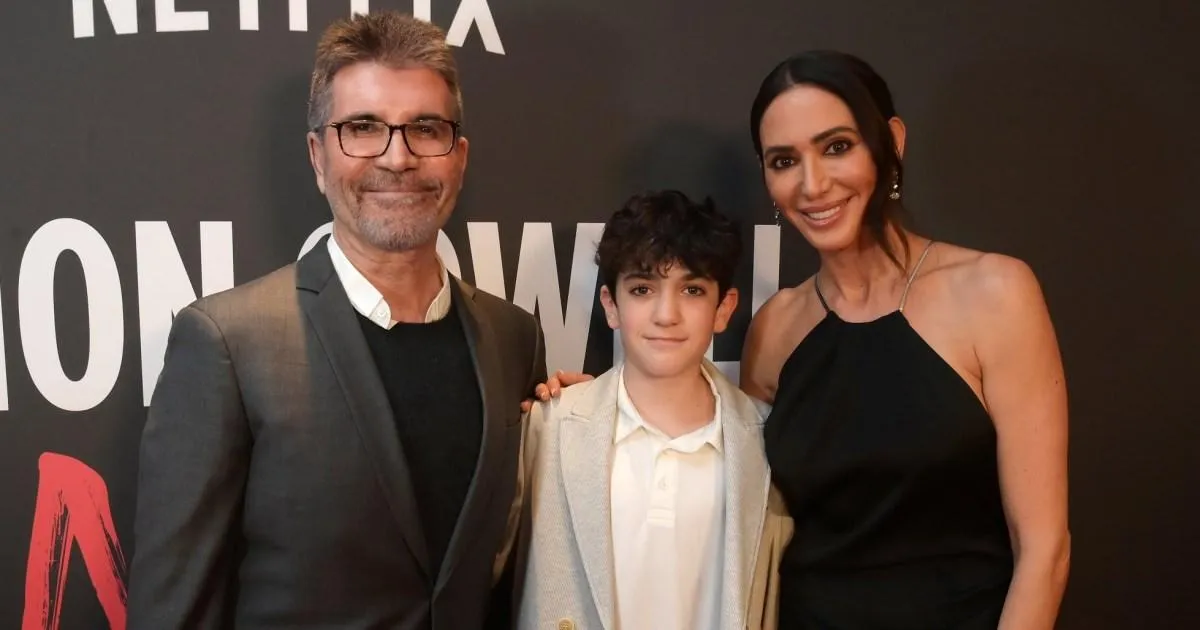
Simon Cowell and his wife, Lauren, have decided to let their son have a phone (Picture: Dave Benett/Getty Images for Simon Cowell: The Next Act)
Simon Cowell and his wife, Lauren Silverman, have made a big decision in raising their son, Eric.
The Britain’s Got Talent judge, 66, and his 48-year-old entrepreneur partner welcomed Eric in 2012, naming him after Simon’s father.
While he’s no stranger to the public eye, having appeared on TV alongside his lookalike dad numerous times, Simon and Lauren have now decided that he can have his own phone – but under strict conditions.
The media mogul and his wife have backtracked on their smartphone ban for their boy after an ‘honest conversation’ that made them reevaluate their rules.
Advertisement
Taking to Instagram, Lauren explained: ‘For a long time Simon and I were very firm about one thing, no phone for Eric. (Simon himself hasn’t had a phone for nearly 8 years!)
‘But recently Eric had a very honest conversation with us about it that made us rethink our position slightly.’
Eric, 12, had been secretly messaging his pals using his mum’s phone (Picture: Lauren Cowell/Instagram)
While he’s now got a smartphone of his own, though, he’s still not allowed to use social media (Picture: Lauren Cowell/Instagram)
‘He now has a phone with some very clear boundaries,’ she added, explaining the rules he must adhere to. ‘The main one being, no social media. Just texting and calling friends and family.’
‘Parenting in the current world we are living in can sometimes feel overwhelming but swipe through to see the approach we are trying in our house for now,’ Lauren added in her carousel of pictures, going on to reveal that she ‘changed [her] mind’ since texting is very different to using socials platforms.
‘Whether we like it or not, texting has become a part of childhood,’ she stated. ‘Plans are made there. Jokes are shared there. Friendships often happen there and at some point kids start feeling like they are the only one not in the conversation.’
Advertisement
For a ‘long time’, she was ‘very clear’ that her son was not to have a phone, but discovered that their son had been secretly messaging friends on Snapchat using hers, leading to them reaching an understanding.
‘That moment really made me stop and think about what the right approach should be,’ Lauren reflected.
‘Instead of turning it into a battle, we talked. What he told me was actually very simple. He didn’t care about social media. He just wanted to be able to text and call his friends.’
Simon became a dad in 2014, naming Eric after his own father (Picture: Lauren Cowell/Instagram)
The music mogul hasn’t had a phone himself for eight years (Picture: Mike Marsland/WireImage)
Lauren – who noted phones aren’t allowed in Eric’s bedroom, at the dinner table, or during family time – explained the logic behind the ‘boundary’, writing that the ‘pressure, comparison, [and] toxicity’ of social media are things she’s more than happy to ‘wait for’.
As Lauren mentioned, Simon hasn’t had a phone of his own for eight years, despite being one of the most in-demand figures in British showbiz.
Advertisement
The former X Factor judge previously revealed how his decision was made for his own ‘mental health’.
Where do you stand on giving a 12-year-old a phone?
It’s fair – loads of kids have them now
I still think it’s too young
He told the Mail on Sunday newspaper: ‘The difference it made was that I became more aware of the people around me and way more focused.
Advertisement
‘The thing I get irritated with is when you have a meeting, everyone’s on their phone – and I was probably in that place too. You can’t concentrate.
‘It has been so good for my mental health. It’s a very strange experience, but it really is good for you, and it has absolutely made me happier.’
Simon and Lauren sparked rumours they had secretly wed when she launched an Instagram account using his surname (Picture: MediaPunch/Shutterstock)
Simon, whose dating history is well documented, his exes including Sinitta and Terri Seymour, began dating Lauren in 2013.
At the time, Lauren and her now-ex husband, Simon’s friend, Andrew Silverman, were going through a divorce, which turned messy when he accused her of cheating with Simon.
Proceedings were ultimately settled outside of court, avoiding Simon being called as a witness and protecting the well-being of Lauren and Andrew’s son.
Advertisement
Simon subsequently confirmed Lauren’s pregnancy, and Eric arrived on Valentine’s Day in 2014.
He and Lauren got engaged in Barbados in 2021, despite his long vocal reluctance about getting married.
If you’ve got a celebrity story, video or pictures get in touch with the Metro.co.uk entertainment team by emailing us celebtips@metro.co.uk, calling 020 3615 2145 or by visiting our Submit Stuff page – we’d love to hear from you.
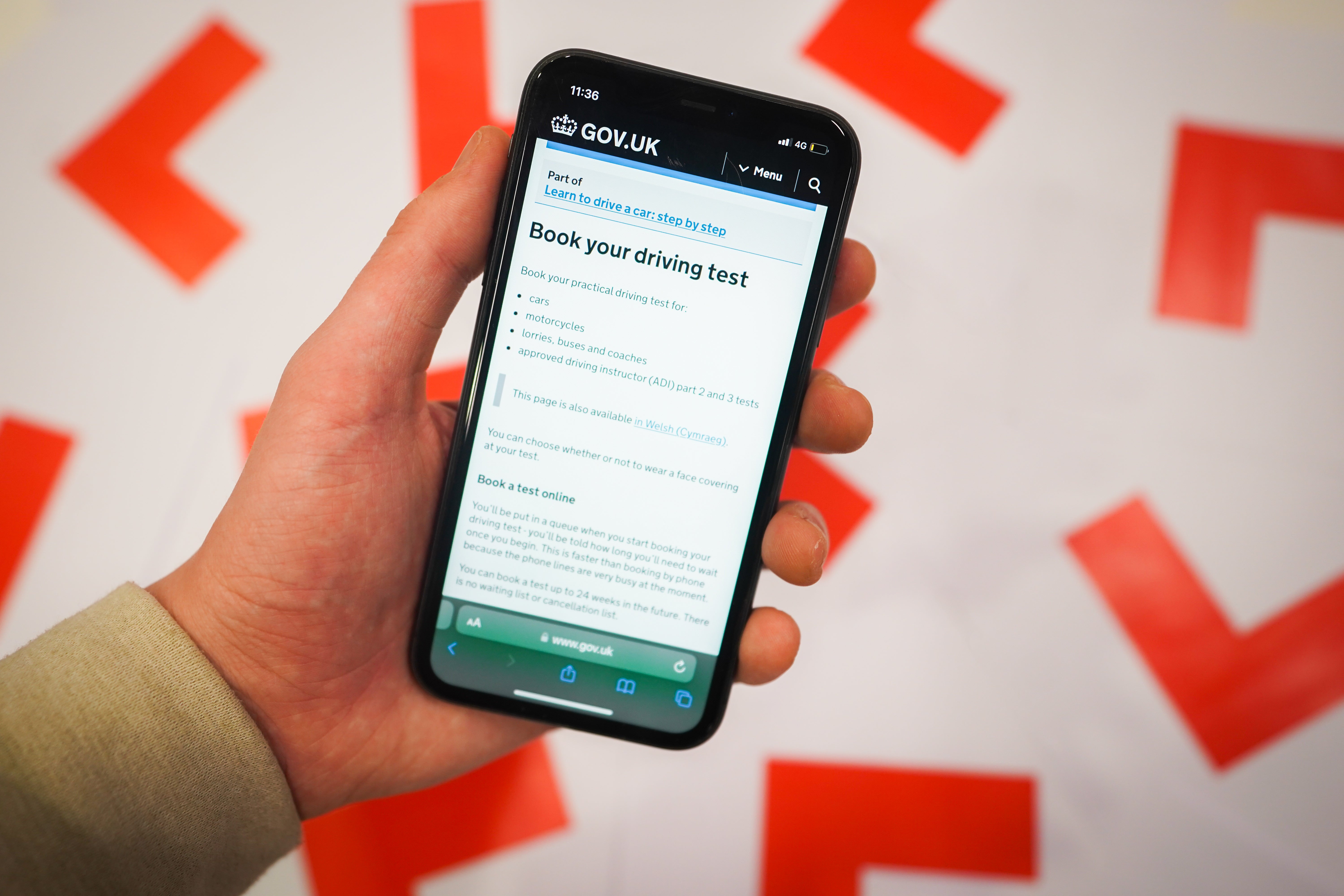
While the official test fee stands at £62, a National Audit Office (NAO) report from December revealed learners are being forced to pay up to £500 for black market bookings.
As of 12 May, only the learner themselves will be permitted to book or modify a car driving test, removing the current ability for instructors to do so (James Manning/PA Wire)
Roads minister Simon Lightwood said: “Learning to drive is hard enough without an unfair booking system.
Advertisement
“Learners deserve clear, honest access to tests – not being ripped off by third-party sites.
“These changes put learners back in control, stop the system being gamed, and help make sure tests go to those who really need them.”
Beverley Warmington, the DVSA’s new chief executive, said: “Our priority is to stop learners being exploited by third parties and put them in control of booking their driving test.
“The changes announced today will help us achieve that goal and build on the more than 149,000 additional tests delivered between April 2025 and February 2026.”
Advertisement
The changes follow a public consultation which ran from May to July last year.
The average waiting time for a test in Britain was 22 weeks in September 2025, compared with about five weeks in February 2020 before the coronavirus pandemic (PA Archive)
Learners in Britain have faced a huge backlog to book driving tests.
The average waiting time for a test in Britain was 22 weeks in September 2025, compared with about five weeks in February 2020 before the coronavirus pandemic.
Advertisement
The NAO report said the DVSA failed to appoint sufficient new examiners to enable it to increase test slots despite several recruitment drives.
Mr Lightwood said the Government is “seeing progress” on its pledge to increase the number of tests.
Some 88,672 people passed their test last month, which was the highest February figure since records began in 2008.















![Oil Price Just COLLAPSED [Here’s What Happens To Bitcoin Next]](https://wordupnews.com/wp-content/uploads/2026/03/1773765190_hqdefault-80x80.jpg)




































You must be logged in to post a comment Login