Jamie Laing has joked that his gift to celebrate his wife Sophie Habboo’s first Mother’s Day backfired as he videod her breaking down in tears.
The couple are best known for starring together in E4 reality show Made In Chelsea, and they tied the knot in 2023 in a civil ceremony in London before a larger, more extravagant celebration in Seville, Spain.
It was then in June last year that they announced they were expecting their first child together, and in early in December, the they announced their baby’s arrival, as Jamie showed the first photos of him and Sophie with their newborn son, revealing his unique name. He wrote at the time: “Ziggy, you have our whole heart”.
Jamie and Sophie have since given glimpses into their lives as new parents, while keeping their son out of the spotlight as much as possible. But following Mother’s Day in the UK on Sunday (March 15), podcast host Jamie took to social media with a video of his wife in tears.
Advertisement
In the short clip, Sophie, 31, is seen sobbing as Jamie, 37, asks: “Wait, why are you upset?” As she holds her head in her hands, she emotionally responds: “He’s never going to be that small.”
A message across the video read: “POV: When your Mother’s Day present backfires,” while Jamie also captioned the post: “Reminder… Don’t make your wife a photo album of your newborn baby for Mother’s Day.”
Advertisement
It comes after Sophie marked her first Mother’s Day by posting a snap of herself pushing her pram around London, dressed in a black leather jacket and white trousers. She also gave a glimpse at the two-month-old, posting a photo of his feet as they sat at a restaurant table.
Alongside the post, she penned: “15 weeks of being a mama and wow… what a ride it’s been. I didn’t realise it was possible to feel so many emotions all at once. I totally get now what people mean when they say they wish they could freeze time. One minute I’m dreaming about the day I can sleep through a full night again, and the next I’m tearing up at the thought of you not needing me in the night or falling asleep in my arms anymore.
“The emotional rollercoaster is wild, it has changed me in ways I never expected, and I’m so grateful for that. The hardest, most rewarding and most magical little bundle of joy all in one. Being your mama is, and will always be, my greatest achievement and joy and the thing I am most proud of. You really are the missing piece to my puzzle.”
She added: “To all the mamas who have been by my side through these early weeks, I love you. And to all the mamas around the world, you truly are all heroes.”
WASHINGTON (AP) — The Iran war has scrambled the Federal Reserve’s outlook on inflation and unemployment and will likely further delay interest rate cuts this year, putting off any relief for consumers struggling with high borrowing costs for home and car purchases.
The spike in oil and gas prices presents already-divided Fed officials with a worst-case scenario as they conclude a key meeting Wednesday: Costlier gas will raise inflation in the short run, which typically causes the central bank to raise borrowing costs — or at least leave them unchanged — to combat higher prices. Yet if the spike is high enough or lasts long enough, it could hammer the economy and push up unemployment, which the Fed would typically respond to by moving in the opposite direction, and cutting its key rate.
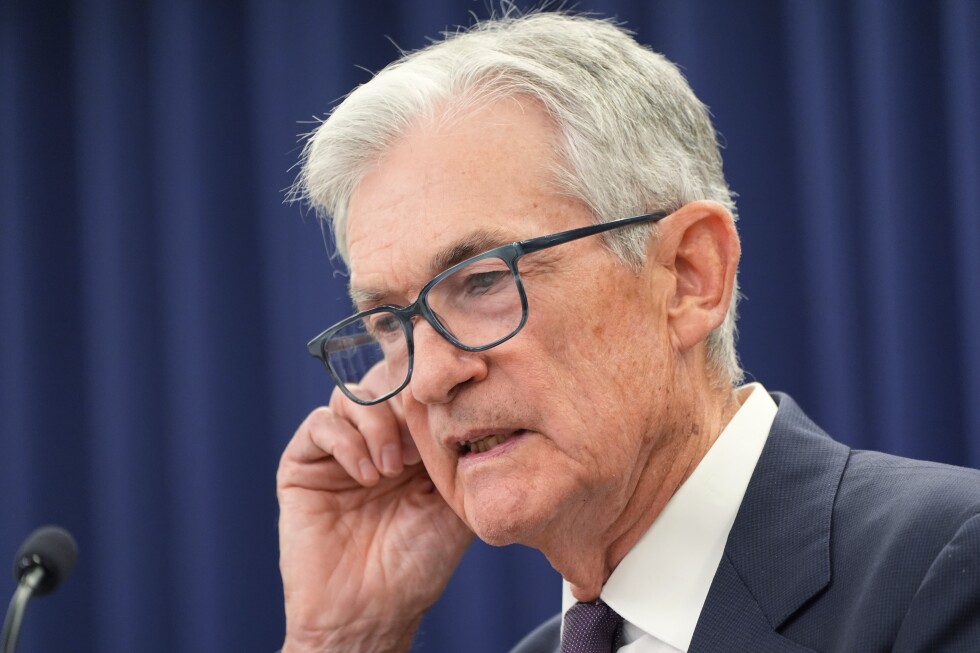
For now, the clearest way forward for the 12-member rate-setting committee, led by Chair Jerome Powell, is to stand pat and wait to see which way the economy goes. The Fed is expected to keep rates unchanged Wednesday, and may remain on pause at their meetings in late April and June. Many economists now see the first rate cut this year not taking place until September or later.
“With Iran and the oil shock, I think the committee’s room for maneuver here is pretty limited,” said Nathan Sheets, chief global economist at Citi and a former senior economist at the Fed. “I think they’ve got to wait and see how this plays through.”
Advertisement
Yet the Fed also has to release a set of quarterly economic projections that will create its own set of pitfalls. In December, the committee forecast that inflation would cool to 2.6% by the end of this year, with core inflation excluding food and energy falling to 2.5%. But those figures were already rising before the Iran war, with core prices rising 3.1% in January from a year earlier, the biggest increase in more than two years.
The Fed had also forecast in December that it would cut rates once this year, but that will be harder to maintain if the committee also raises its inflation outlook. The Fed cut three times last year before pausing in January.
Tim Duy, chief economist at SGH Macro, argues that the Fed should raise its forecast for core inflation, using the metric it prefers, to at least 2.8% by the end of this year. An increase of that amount would argue against any cuts this year.
“Any reasonable forecast for inflation now should not have a cut” in the Fed’s projections, Duy said. “And it’s almost ludicrous that it might.”
Advertisement
Whether the Fed will continue to forecast a single rate cut this year, or pull back and project no cuts, is seen as a close call by most economists. Many leading members of the Fed — including governors Chris Waller, Stephen Miran, Michelle Bowman, and possibly Powell — are reluctant to give up on the idea of reducing rates. Waller, for example, has said in a television interview that inflation is heading back to the Fed’s 2% target, with the Iran war likely only a temporary disruption.
Yet another group of Fed officials — including Beth Hammack, president of the Federal Reserve Bank of Cleveland, and Austan Goolsbee, president of the Chicago Fed — were already worried about the stubborn persistence of inflation even before the Iran war. The prospect of higher gas prices will likely only intensify their concerns.
Mortgage rates have already risen in the wake of the conflict, likely because markets expect higher inflation will prevent the Fed from cutting anytime soon. The average 30-year mortgage rate jumped to 6.1% last week from 6%, though it is still down from nearly 6.7% a year ago.
On top of all the economic disruptions, the Fed is nearing a major leadership transition. Powell’s term as chair ends May 15 and President Donald Trump has nominated a former top Fed official, Kevin Warsh, to replace him. Yet Warsh’s nomination has been delayed in the Senate because key Republican senators have objected to a Justice Department investigation of Powell over his testimony about a building renovation.
Advertisement
Last Friday, a judge threw out a pair of subpoenas that the Justice Department had issued to the Fed, dealing a blow to the investigation, but U.S. Attorney Jeannine Pirro has said she will appeal the ruling.
Also hanging over the Fed is the inflation spike from the pandemic. Typically, the Fed would essentially look past a supply shock like the disruption in oil supplies from the Middle East. Once it ends, any inflation it produces will likely fall back, without the Fed having to raise rates. As a result, it could leave rates unchanged — or even cut them to boost weak hiring.
Yet as the economy emerged from the pandemic in 2021, inflation jumped as Americans sharply raised their spending, aided by stimulus checks and pandemic-era savings. Powell initially said that inflation would be “transitory” and would fade as the economy returned to normal. Instead it spiked to a four-decade high in June 2022.
With inflation still elevated, many Fed officials are wary of repeating the mistake, making any cuts less likely as long as inflation is elevated.
Advertisement
“I think they are a little scarred from the blowback they got from the word ‘transitory,’” said Derek Tang, an economist at Macro Policy Analytics, a consulting firm.
The BBC has obtained footage and interviews from the Iranian capital Tehran which evoke a city of strained nerves, of constant waiting for the next air strike and relentless fear of the state security apparatus. The identities of the people in this report have been protected.
Within Iran, state television broadcasts footage of demonstrations and funerals, as well as interviews with pro-regime officials and protestors that repeat denunciations of America and Israel.
While independent journalists still try to gather testimony that offers a credible alternative view, they run the risk of arrest, torture and possibly worse.
First up, decide how much coverage you’d like and what kind of swimming or water sports you want to use your new swimwear for. For wild or cold water swimming, look for something that fits well, is flexible and offers some warmth. It should also be easy to get off post-swim when you’re changing outdoors with chilly hands.
If you’re planning on surfing, paddleboarding or diving, a high-neck swimming costume or bikini top will stay put as you move, and high-cut legs will give you room to kick through the water. Pick a suit with decent coverage for a bit more sun protection, and avoid suits with random cutouts if you don’t want a diamond-shaped sunburn.
If you’re looking for eco-friendly materials, consider Finisterre and Zone3, which both use Yulex, a plant-based rubber material which is a more environmentally friendly alternative to neoprene. I also rate M&S’s affordable Good Move range and Hunza G, whose one-size-fits-all crinkle suits will fit most body shapes and are good for pregnancy.
Advertisement
How I test swimsuits
I tried out each of these swimsuits and bikini sets during swimming sessions at my local lido in the Cotswolds and in the Cornish sea. I also took them all on holiday to the French Alps for dips in glacial rivers (my baggage allowance was not happy).
When in the water, I tested each suit for limited drag and an unimpeded range of movement. I looked for decent stay-put coverage even when I was moving, a lack of tight straps or digging in, and rated each style for comfort even when worn all day – you should barely notice you’re wearing the best swimsuits.
I made sure that every suit and bikini preserved my modesty during water sports, as nobody wants a wardrobe malfunction mid-beach day. I swam regularly in each model across three weeks. Where possible, I checked they washed well, were chlorine resistant, quick drying and easy to look after.
You can visit our Who We Are page to learn more about our testing process.
An inquest into his death later heard how the boy – described as “loving, kind and full of mischief” – suffered the injury while on a rabbit shooting expedition.
Cumbria Police has confirmed that Allan Thursby, 64, has today (Tuesday, March 17) been charged with gross negligence manslaughter.
Advertisement
Thursby, of Dent Place, Cleator Moor, was arrested on September 28, 2024 and has been on police bail since.
He was bailed to appear at Carlisle Magistrates’ Court on March 26, 2026.
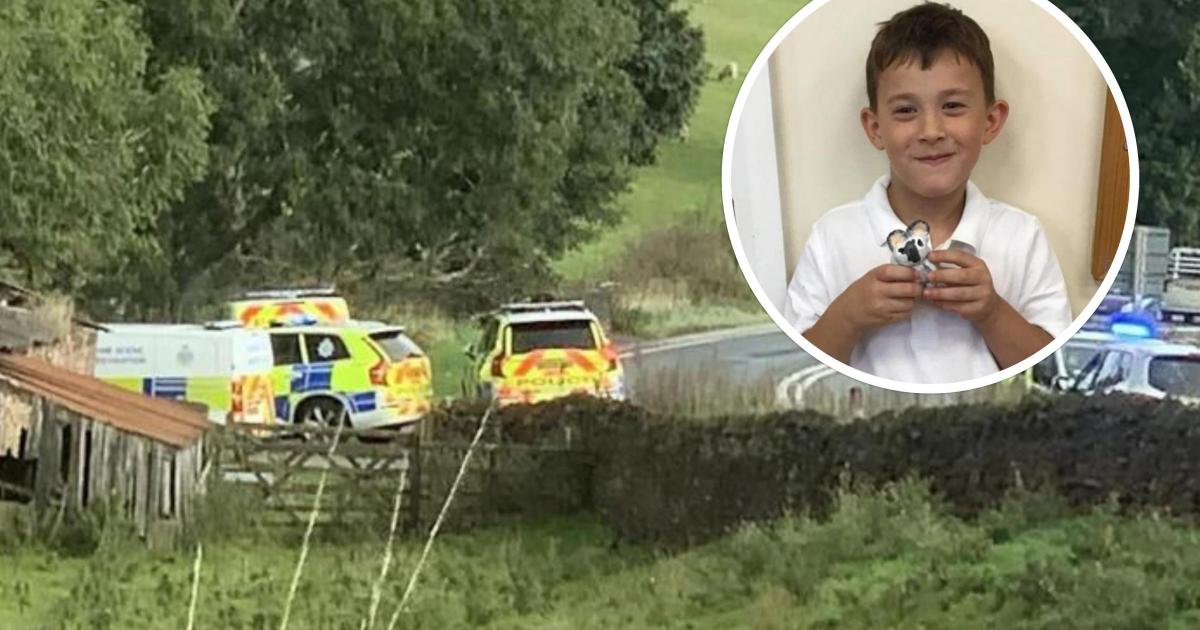
Pictures from the scene (Image: Frank Chalmers)
Emergency services rushed to the farm in Warcop following the incident in 2024, with pictures showing several police vans and a crime scene investigation vehicle parked beside a road.
Jay’s parent’s, Leigha and James Cartmell, later released a statement paying tribute to “the best boy that anyone could wish for and the third corner of our beautiful family ‘triangle’.”
Advertisement
They said: “We will miss him every day, but his love surrounds us and his memory will never fade.”
Jay Cartmell (Image: Supplied)
Malcolm McHaffie, head of the Crown Prosecution Service’s special crime division, said: “Our prosecutors have worked to establish that there is sufficient evidence to bring the case to court and that it is in the public interest to pursue criminal proceedings.
“We have worked closely with Cumbria Police as they have carried out their investigation into the circumstances of this death. Our thoughts are with the family of Jay Cartmell at this time.
“We remind all concerned that proceedings against this defendant are active and that he has the right to a fair trial.
Advertisement
“It is vital that there should be no reporting, commentary or sharing of information online which could in any way prejudice these proceedings.”
Exclusive: Patients have been put at risk of infection with viruses such as HIV, Hepatitis B and Hepatitis C. The hospital says the risk is ‘extremely low’
Twenty-one patients underwent operations at a Welsh hospital in which unsterilised surgical tools were used, in a huge blunder.
Advertisement
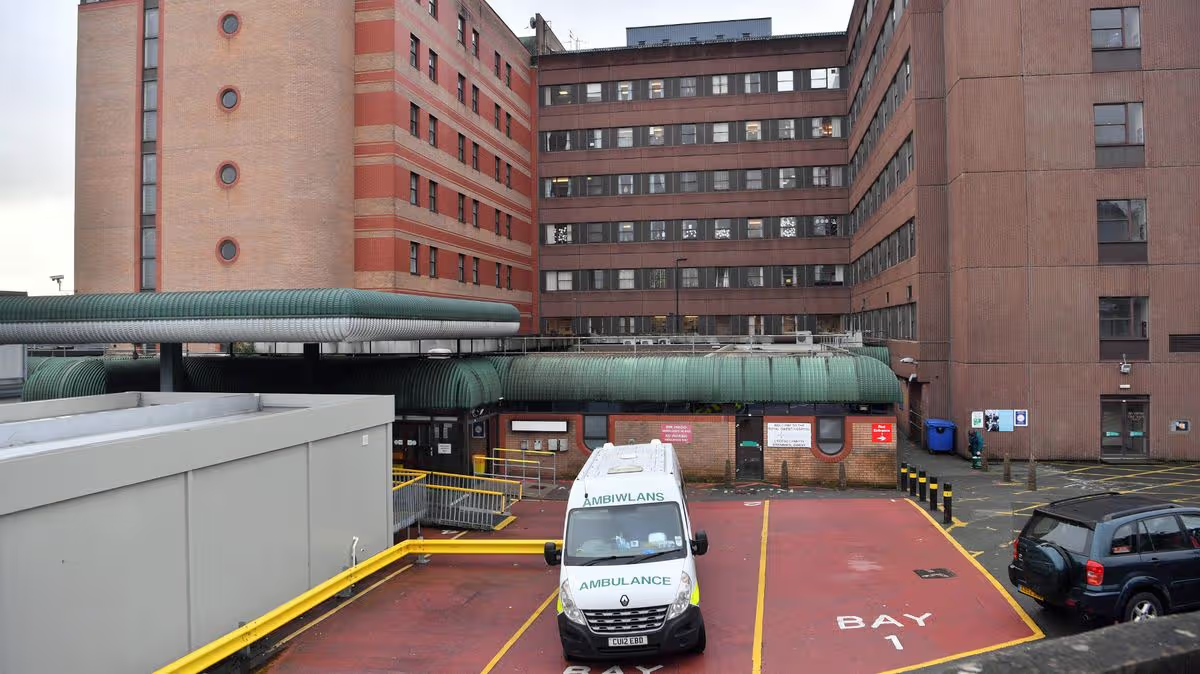
WalesOnline can reveal the repeated use of unsterilised instruments in procedures at Newport’s Royal Gwent Hospital across two days – February 25 and 26 this year – before the mistake was discovered on the 27th.
Last week a whistleblower told us they were concerned that the affected patients had still not been informed despite a risk of serious infection from the instruments, which we understand had previously been used in other operations. The whistleblower also claimed management had warned staff not to speak to the press about what happened.
After we approached the hospital for comment last Friday, it asked us to hold off on publishing until today (Tuesday) so that patients could be informed. The hospital has now contacted all affected patients and insists the delay in doing so was purely a case of ensuring the correct information was given to the correct patients.
Aneurin Bevan university health board, which runs the hospital, told us there was an incident on February 24 in which surgical instruments were disinfected but not put through a key sterilisation procedure. Those tools were then used in operations, leading to a risk of blood-borne viruses such as HIV, Hepatitis B and Hepatitis C being transmitted. Patients are now anxiously awaiting tests.
Advertisement
“There is a potential but extremely low risk,” the health board’s medical director Dr Seema Srivastava told WalesOnline in an exclusive interview.
“We are very sorry this has occurred and for the distress caused to those affected and their families. We fully recognise the impact this has had on those people.
“The instruments were fully disinfected, and that in itself reduces lots of microorganisms. They are then meant to be put into a final stage machine called an autoclave, and that helps do the sterilisation process to ensure the instruments are free of specific viruses.”
The autoclave, which sterilises using heat and steam, was not used on this occasion – an unprecedented error for the hospital. A whistleblower expressed incredulity at the mistake, telling us: “The trays of instruments have been picked up from the sterile supplies department without the proper checking process.”
Advertisement
When exposed to the heat of the autoclave, the tape on a set of instruments is designed to change colour. Staff are meant to check the colour change and the date of sterilisation before approving a tray for use.
“For 21 procedures to happen with unsterilised trays, that’s a serious concern,” said our source. “It needs to be seriously investigated.”
Asked how the failing happened, Dr Srivastava said: “Although we have strong processes in place, human error can occur, and I know that has happened in this situation.”
The error was discovered through a “routine check” on February 27, she said, adding: “We immediately took steps to remove those instruments from circulation, and stood up a specialist team to investigate this matter.
Advertisement
“A number of medical instruments are reusable in healthcare treatment, and every hospital has a sterilisation and decontamination unit. We’re talking about a limited number of instruments affected by this issue.”
The hospital has not identified any harm to a patient from the incident. “We have been working very closely with an expert virologist, and that is why we are confident in saying the risk is extremely low,” said Dr Srivastava.
“Throughout the day [Monday], patients have been contacted and supported by our team of nurses. They have had answers to any questions they have, and we are arranging for any tests they might need.
“We have started an active investigation into what happened. It will take time to ensure we have a thorough review. I visited the sterilisation and decontamination unit earlier today, and I can see how deeply committed the staff are in ensuring patient safety, and the number of checks that were already in place. But we have now added further to ensure this doesn’t happen again.”
Advertisement
A whistleblower voiced concern that the error appeared to be “kept quiet” in the fortnight after it was discovered. Asked why patients were not informed earlier, Dr Srivastava said: “We really needed to be sure we had an accurate list of patients and that we were only contacting those impacted… We needed to be clear about what steps were taken to ensure their health needs are responded to.”
She said she was not aware of staff being told not to contact the press, but added: “We would not want patients to hear about this from anyone other than our specialist team.”
Asked if disciplinary action was being taken, she replied: “We are conducting a full review. There’s nothing else I want to say about that at this stage.
“It’s important to come back to how very sorry I am that the incident occurred and that distress has been caused to those affected. And it’s really important to know that if patients have not been contacted, they will not have been impacted by this issue.”
Advertisement
Dr Srivastava said she could not give any detail as to the types of operations affected for patient confidentiality reasons.
A health board spokeswoman added: “While the clinical risk of blood‑borne virus exposure is extremely low, we have arranged precautionary testing and support to give full reassurance. We fully recognise the concern and distress this may cause, and we are truly sorry. The wellbeing of our patients is our highest priority, and we are taking all necessary actions to understand how this happened and to prevent it from occurring again.
“We also understand that others may feel concerned on hearing about this. We want to reassure all patients that this was a very limited incident, those affected have been contacted directly, and there is no wider cause for concern.”
Earlier this month we revealed an alarming failing at another Welsh hospital. A surgical swab was accidentally left at the back of a patient’s throat for more than 24 hours after an operation at Cardiff’s University Hospital of Wales, which you can read more about here.
Advertisement
If you would like to let us know about a story we should be investigating, email us at conor.gogarty@walesonline.co.uk
Get daily breaking news updates on your phone by joining our WhatsApp community here. We occasionally treat members to special offers, promotions and ads from us and our partners. See our Privacy Notice.
Arsenal and German club Bayer Leverkusen meet in the Champions League last-16 tie at the Emirates
Arsenal welcome German club Bayer Leverkusen to the Emirates tonight in the second leg of their Champions League last-16 tie.
Advertisement
The two clubs played out a 1-1 draw in Germany last time out, with Kai Havertz scoring a late penalty against his boyhood club to keep Mikel Arteta’s outfit in the contest.
The Gunners are still in on for the quadruple, with the Premier League, FA Cup and Carabao Cup up for grabs.
Most supporters would probably prioritise the league at this stage but with the tie finely balanced, the north Londoners have a great chance of progressing to the quarter-finals.
All eyes will be on Arsenal youngster Max Dowman after his brilliant cameo against Everton at the weekend, setting up one and scoring the second to keep the ball rolling for the Gunners.
Advertisement
Will he get another chance to impress tonight?
Here is everything you need to know about the European clash in the English capital.
What time is Arsenal v Bayer Leverkusen kick-off?
The clash kicks off at 8pm on Tuesday, March 17, at the Emirates Stadium, London.
Watch Arsenal vs Bayer Leverkusen on TNT Sports
Advertisement
This article contains affiliate links, we will receive a commission on any sales we generate from it. Learn more
Arsenal have reached the UEFA Champions League round of 16 where they face Bayer Leverkusen on March 17. Fans can watch the game on Prime Video’s TNT Sports channel.
Is the game on TV?
Yes, the match is being broadcast on TNT Sports 1 and TNT Sports Ultimate.
What about streaming?
TNT Sports customers can stream the match via the discovery+ app.
Advertisement
Team news
Arsenal are sweating on the fitness of Jurrien Timber, who limped off early in the 2-0 win over the Toffees on Saturday night.
Skipper Martin Ødegaard (knee), Leandro Trossard (knock) and Mikel Merino (foot) are also unavailable for Arteta.
The German club, meanwhile, welcome back Alex Grimaldo from suspension but Martin Terrier is a doubt after coming off with a bad injury against Bayern Munich at the weekend.
Mark Flekken, Loic Bade (hamstring), Arthur (ligament), Lucas Vazquez (calf) and Eliesse Ben Seghir (ankle) are out of contention.
The recent killing of Nemesio Oseguera Cervantes, the leader of the Cártel de Jalisco Nueva Generación (CJNG) who was commonly referred to by his alias “El Mencho”, has once again brought global attention to drug-related violence in Mexico. His death at the hands of the Mexican security forces triggered a wave of retaliatory violence that affected several states.
This situation will undoubtedly occur again. Under Donald Trump, the US government has been ramping up pressure on the Mexican authorities to take stronger action against the cartels that traffic drugs across the border. So now is a good moment to reflect on the main cartels operating in Mexico and the underlying factors that sustain their operations.
For decades, Mexico had three major drug trafficking groups: the Milenio cartel, the Sinaloa cartel and the Golfo cartel. These organisations dominated drug trafficking until the 1980s when the Mexican government, under pressure from the US, intensified its operations against them. This pressure followed the 1985 killing of American Drug Enforcement Administration agent Enrique Camarena by organised crime figures.
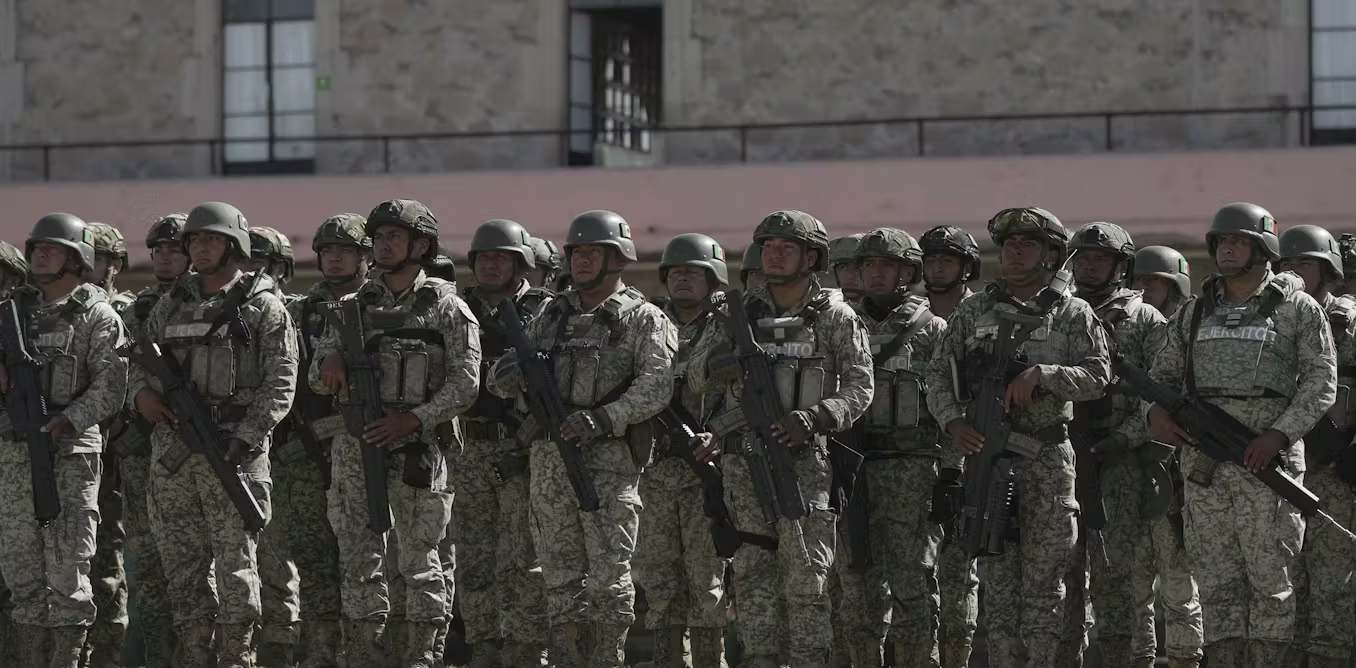
But it wasn’t until 2006 that Mexico’s cartel landscape really began to change. That year saw the then-Mexican president, Felipe Calderón, deploy the Mexican army against the cartels in a militarised “war on drugs”. The government’s strategy of targeting senior cartel figures caused these organisations to fragment into smaller groups.
Advertisement
For example, a group of former Mexican special forces commandos who had previously acted as the enforcement arm for the Golfo cartel broke away to form Los Zetas in 2010. Various other factions elsewhere in Mexico also set up their own organisations. These included Beltrán Leyva, La Familia Michoacana, Knights Templar (Caballeros Templarios), CJNG and Guerreros Unidos.
In 2014, following the abduction of 43 student teachers in the Pacific state of Guerrero by Guerreros Unidos, President Enrique Peña Nieto escalated the offensive against Mexico’s cartels. This led to further fragmentation, with some newer organisations such as Santa Rosa de Lima focusing on oil theft. Andrés Manuel López Obrador came to power in 2018 and pressed hard against the Sinaloa cartel.
The detention of senior figures such as Joaquín “El Chapo” Guzmán and Ismael “El Mayo” Zambada caused the Sinaloa cartel to break into two factions: Los Chapitos which is led by El Chapo’s sons and Los Mayos which is headed by El Mayo’s lieutenants. CJNG took advantage of this moment to expand, positioning itself at the centre of Mexican drug trafficking.
Advertisement
The militarised war on drugs has not just caused the number of Mexican drug trafficking organisations to expand, it has also led to a surge in violence. Throughout the 1990s and early 2000s, violence in Mexico was actually declining. But since 2006, when Calderón first deployed the Mexican army against the cartels, homicides have increased from around 10,000 per year to over 30,000.
The rise in violence is also largely a consequence of the deliberate targeting of cartel leaders. Removing leadership produces a sudden succession struggle in an affected organisation, with violence often subsequently employed to prevent or respond to rivals testing the new leadership.
Mexico’s cartel violence is usually highly concentrated, with northern Mexico and the Pacific states experiencing the highest homicide levels. This pattern reflects trafficking routes. Mexico’s northern states are a key corridor for smuggling drugs into the US, while the Pacific coast serves as a major entry point from Asia for the chemicals used to produce fentanyl.
Advertisement
Sustaining cartel operations
The violence perpetrated by the cartels is enabled largely by weapons that are smuggled into Mexico. According to figures published by the US Bureau of Alcohol, Tobacco, Firearms and Explosives, more than half of the weapons seized from criminal groups in Mexico come from the US.
Research shows how close the relationship between US firearms and Mexican cartel violence is. One study from 2019 found that any increase in firearm production in the US increases violence in Mexico. And another, published several years earlier, discovered there was a spike in homicides in Mexico’s northern states when the US government lifted restrictions on the sale of certain assault weapons in 2004.
The Mexican government filed a lawsuit in 2021 that sought to hold American gun makers accountable for their contribution to the rising violence in Mexico. While the lawsuit was rejected unanimously by the US supreme court in 2025, the Mexican authorities have continued to press their US counterparts to take firmer action against arms smuggling from north of the border.
Advertisement
Mexico’s president, Claudia Sheinbaum, made a speech days after El Mencho’s killing in which she asserted that if the US government wants Mexico to prevent drug trafficking, they “have to do their part” and eradicate the flow of weapons.
And, finally, it’s important to recognise that the operations of the Mexican cartels are sustained in large part by drug consumption in the US. Data published by the UN Office on Drugs and Crime suggests that drug seizures, particularly of fentanyl, have increased substantially since 2019.
Until the US takes steps to more effectively reduce demand for drugs among its own citizens, Mexico’s battle against cartel violence will continue.
This latest setback comes amid a string of problems for the former TV star, who has been hit with allegations about his controversial behaviour
Cancelled comedian David Walliams has suffered another blow in the wake of being dropped by his publisher – the remainder of his live theatre show tour has been axed. The star promised fans ‘an unforgettable evening of laughter, storytelling, and surprises’ with his one-man show, An Audience with David Walliams, and was booked to appear next week at The University of Exeter on March 24 and Cadogan Hall in London on March 25.
Advertisement
But both events have now been quietly cancelled, which is the latest in a long line of career setbacks for the former TV favourite and best-selling children’s author. The Little Britain star, 54, lost his TV job as a judge on Britain’s Got Talent after ‘disrespectful comments’ made about some of the contestants were leaked.
He was also removed as the narrator on the comedy clip show It’ll Be Alright On The Night and replaced by Tom Allen. Then last December Walliams was dropped by his publisher HarperCollins over allegations of “inappropriate behaviour” towards female staff. He has since been axed from Waterstones’ huge Children’s Book Festival 2026.
Advertisement
His previous tour dates took place in Hull, York and Derby in November 2025 – a month before the HarperCollins accusations came to light. Ticket prices ranged from £45 to £65 and there were also VIP meet and greet tickets on offer, but both the remaining shows were dropped with less than two weeks to go.
It is believed that poor ticket sales were behind the decision. In February, just 340 tickets had been sold for the Exeter venue which can seat 1,000 people. Fans trying to buy tickets on-line are now greeted with the message: “Tickets are currently not on sale’” Those who call Cadogan Hall box office to ask for tickets have been told: “It has been cancelled by the promoter.”
Walliams – whose comedy series Little Britain with Matt Lucas earned him Baftas, Emmys and the prestigious Rose D’Or – has been fighting hard to clear his name over the scandals which have hit him.
He has denied HarperCollins’ allegations that he behaved “inappropriately” towards female staff there. His spokesperson said at the time: “He has never been informed of any allegations raised against him.
Advertisement
“He was not party to any investigation or given any opportunity to answer questions. David strongly denies that he has behaved inappropriately and is taking legal advice.”When he left BGT in 2023 after ten years on the panel alongside Simon Cowell, Amanda Holden and Alesha Dixon, he launched a legal battle with Fremantle, the production company behind the show. He accused them of data protection breaches which had caused him financial and mental harm following the leaking of private, derogatory comments about contestants. They ended up reaching an “amicable resolution” and settlement.
The comedian had also enjoyed huge success as a children’s author selling more than 60 million copies worldwide of his tales such as Gangsta Granny, The Boy In The Dress and Mr Stink. The Mirror has approached his representatives for comment.
Russell Mason, 49, lured the protected goshawk into a baited trap before battering it several times with a cosh to cause its agonising death.
17:02, 17 Mar 2026Updated 17:04, 17 Mar 2026
A gamekeeper who trapped a rare bird of prey in a cage before beating it to death was caught out by a covert surveillance operation.
Russell Mason, 49, lured the protected goshawk into a baited trap before battering it several times with a cosh to cause its agonising death.
He was also found to have left nearly 200 rounds of live ammunition lying around in his bedroom and unsecured within his Polaris Ranger vehicle.
Advertisement
Fiscal depute Karon Rollo told Perth Sheriff Court: “Goshawks are rare birds of prey. They hunt birds and small animals. They have a wingspan of up to four feet and weigh between two and three pounds.
“They were persecuted to extinction in Scotland in the last century, but have been reintroduced, with now around 100 breeding pairs in existence.
“A crow cage trap was visited by RSPB staff on 9 January 2024. At the time this trap was set, it had a meat bait, and the door was chained and padlocked shut.
“It had a sign on the trap stating that the Scottish Government pays the estate to catch carrion crows from 1 March to 30 June to increase the chick survival rates for conservation-listed bird species.
Advertisement
“To continue observations and continue with this research, it was decided to install a continuous recording static camera covering this crow cage trap.”
She said RSPB staff visited the camera several times to review the captured footage and became aware of a male visiting the trap on 12 February 2024.
“At this time there was a goshawk and a crow in the trap,” Ms Rollo said. “The male opened and entered the trap. After entering he used a hand-held net to capture the goshawk and put it to the ground.
“He then struck the bird six times with a cosh. He placed the bird into a carrier bag, rolled it up and put the package under his arm.
Advertisement
“He left the trap, placed the net in the back of the vehicle and the bag in the cab. He locked the trap and drove off.”
The prosecutor said: “The male was identified from the footage by police officers, who knew him as being gamekeeper Russell Mason. The crow cage trap number related to the accused.
“Footage on other dates, including him putting a decoy bird in the trap, confirmed his identity. An avian vet specialising in raptors was shown the footage.
“He opined that the goshawk looked healthy and was exhibiting the normal behaviour of a captured raptor. Goshawks, in his experience, as ‘particularly flighty and stressy birds’ and this one was no exception.
Advertisement
“He describes it as showing a man beating a goshawk to death with a cudgel with the bird having been first netted within a crow cage trap.
“He states there were six blows to the body, which may have caused broken wings or rib fractures during the trauma, and that it was quite obviously not killed outright with one blow.
“He is of the view that it is extremely unlikely that it would have been lying passively in the net and therefore there is a high possibility that it would have sustained painful fractures and injuries before dying.”
A search of Mason’s cottage found unsecured ammunition, along with clothes matching those seen on the CCTV footage. A bag and cosh were found in his vehicle.
Advertisement
The bag was analysed and found to have goshawk DNA on it. The search team recovered 195 illegally stored rounds of ammunition.
Mason admitted intentionally or recklessly killing a goshawk on 12 February 2024 by seizing it with a net before repeatedly striking it with a cosh on Cochrage Moor, Bridge of Cally, Perthshire.
He also admitted breaching the terms of his firearms certificate by failing to store ammunition securely.
Sentence on Mason was deferred for the preparation of social work reports until next month by Sheriff Alison McKay and he was granted bail.
Advertisement
Mason was previously placed on the sex offenders register after being spotted carrying out a solo sex act in his car by a resident of a sheltered housing complex.
He was spotted by an elderly woman with his trousers down as he sat in the car beside a path used by children to walk to and from school.
When officers told Mason they were at the scene to investigate reports of someone masturbating in a car, he said: “That was me.”
Mason admitted carrying out an act of public indecency outside the sheltered housing complex in Harriet Court, Blairgowrie, and was placed on the register for a year.
Dobbies Community Gardens will support local communities by providing essential tools, plants and expert knowledge.
Dobbies’ Sandyholm store is inviting local schools, charities and community groups to apply for this year’s Dobbies Community Gardens, giving successful groups the opportunity to receive support to help bring green spaces to life.
Advertisement
In 2025, each of Dobbies 53 stores selected a winner from over 600 entries to receive support, supplies and advice through the community initiative.
Dobbies’ Sandyholm is committed to giving back to the community and is passionate about encouraging people to discover and share a love for gardens.
And Dobbies Community Gardens will support local communities by providing essential tools, plants and expert knowledge from colleagues to groups, to bring their green spaces to life. Store colleagues will also provide dedicated time to each project through volunteer hours.
The community gardens initiative nurtures wellbeing, connections and inclusion to help inspire local residents to spend more time in nature.
Advertisement
Dobbies’ Sandyholm store is looking to hear from local groups hoping to start, restore or upgrade their indoor or outdoor green spaces, and learn more about what they would do with the support.
And Dobbies’ plant buyer, Nigel Lawton, is encouraging groups across the country to apply. He said: “Every year we look forward to hearing from the variety of inspiring groups about what they are looking to their garden spaces, with our support.
“We encourage local communities and groups within 20 miles of their local Dobbies store to apply to help create their perfect shared garden spaces that will bring joy to the community all year long. Whether they are a charity looking to upgrade their green space, a local group looking to bring the community together with a new project, or a school with plans to restore a vegetable patch, we want to hear from anyone who has a garden project that we could support.”
Applications are now open and close at 5pm on March 31. Those entering must be within 20 miles of Dobbies’ Sandyholm store. Successful projects will be invited along to their local store for a consultation before getting recommendations from Dobbies’ colleagues about what products and tools will help bring the space to life.




















































You must be logged in to post a comment Login