
Crypto World
Circle (CRCL) Stock Surges as USDC Launches on Injective Network


Key Takeaways
- Circle (CRCL) stock climbs 2.83% following USDC’s launch on Injective
- Native issuance eliminates reliance on vulnerable bridged token solutions
- Cross-Chain Transfer Protocol facilitates frictionless multi-blockchain movement
- Injective’s infrastructure delivers rapid finality and minimal transaction costs
- Integration advances compliant stablecoin adoption in decentralized finance
Shares of Circle Internet Group (CRCL) increased 2.83% to reach $129.39, signaling market enthusiasm for expanded blockchain infrastructure. The stablecoin issuer is deploying USDC across the Injective blockchain platform. This strategic expansion targets improved crosschain connectivity and decentralized financial infrastructure.
Circle Internet Group, CRCL
Through USDC deployment, CRCL delivers a fully compliant stablecoin option for trading activities, yield generation, and treasury operations. Injective’s incorporation benefits institutional participants and application builders requiring reliable dollar-backed digital assets. Additionally, the platform facilitates efficient onchain settlement spanning diverse blockchain environments.
Circle’s initiative improves cross-platform financial compatibility, allowing participants to move USDC without synthetic wrapped alternatives. The Cross-Chain Transfer Protocol (CCTP) destroys tokens on the origin chain while simultaneously creating them on the destination network. This architecture minimizes bridge vulnerability exposure and enhances capital deployment efficiency.
Native USDC Deployment: Foundation for Digital Asset Markets
Injective’s native USDC implementation functions as reliable collateral throughout spot and derivatives trading venues. The stablecoin provides continuous liquidity access for credit markets, yield products, and exchange platforms. It enables automated trading execution and dynamic portfolio management.
The digital dollar facilitates frictionless incorporation into Injective-based applications, supporting rapid settlement cycles and consistent capital movement patterns. Qualified participants access institutional-grade onboarding and redemption services through Circle Mint infrastructure. Market participants obtain a secure, reserve-backed instrument for blockchain-based financial operations.
Native token issuance on Injective removes dependency on external bridge infrastructure and intermediary protocols. Application developers can construct advanced decentralized finance solutions directly within the protocol architecture. This approach increases operational transparency and diminishes complexity throughout decentralized marketplace ecosystems.
Cross-Chain Transfer Protocol: Enhancing Multi-Blockchain Liquidity
CCTP technology allows USDC to transfer directly between Injective and compatible blockchain networks. Market participants can deposit funds, execute trades, and oversee liquidity positions without synthetic token alternatives. This capability reinforces crosschain coordination and elevates aggregate market performance.
The mechanism supports native USDC creation on Injective, simplifying capital distribution across diverse blockchain environments. Through connections with Ethereum, Solana, and Cosmos ecosystems, the infrastructure enhances compatibility for builders and market makers. Liquidity dispersion decreases while capital utilization improves substantially.
Injective’s technical foundation delivers sub-second transaction finality combined with minimal fee structures, accelerating crosschain asset movement while reducing costs. Developers access MultiVM capabilities supporting both EVM and WASM smart contract frameworks. Blockchain applications can expand capacity while preserving speed and dependability.
USDC maintains worldwide expansion momentum, with outstanding tokens nearing the $80 billion threshold. The stablecoin currently represents 64% of volume-adjusted transfer activity, exceeding Tether in transaction metrics. Its integration with Injective may accelerate utilization throughout decentralized exchange and financial protocol environments.
This deployment establishes CRCL as a leader in regulated stablecoin implementation across Layer 1 blockchain platforms. Injective participants obtain protected, efficient, and compatible USDC access. This advancement should strengthen the network’s trading infrastructure and capital market functionality.
The post Circle (CRCL) Stock Surges as USDC Launches on Injective Network appeared first on Blockonomi.

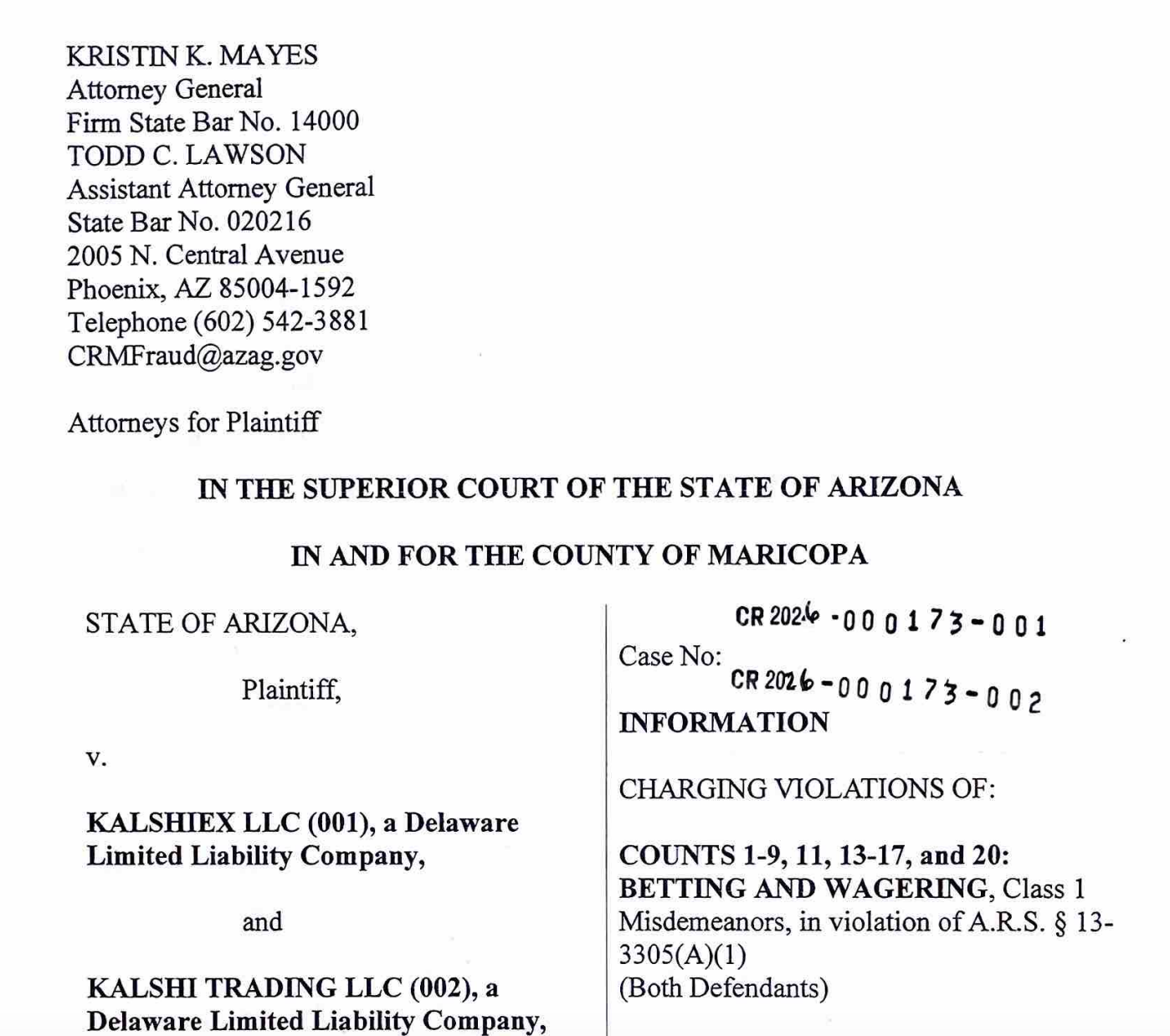
Arizona Attorney General Kris Mayes announced that her office filed gambling and related criminal charges against the companies behind prediction markets platform Kalshi.
In a Tuesday notice, Mayes said that the charges alleged that Kalshi operated an “illegal gambling business in Arizona without a license” and offered election wagering, in violation of state laws. Arizona authorities alleged that Kalshi’s prediction markets platform allowed state residents to bet on event contracts related to sports and state and federal elections.
“Kalshi may brand itself as a ‘prediction market,’ but what it’s actually doing is running an illegal gambling operation and taking bets on Arizona elections, both of which violate Arizona law,” said Mayes. “No company gets to decide for itself which laws to follow.”

According to the AG’s office, the charges followed Kalshi filing its own lawsuit against Arizona “preemptively in an attempt to avoid accountability under Arizona law.” State authorities have filed similar lawsuits against the companies of prediction market platforms like Polymarket and Kalshi.
Related: Kalshi suffers court loss in Ohio over sports betting lawsuit
“Sadly, a state can file criminal charges on paper-thin arguments,” a Kalshi spokesperson told Cointelegraph. “States like Arizona want to individually regulate a nationwide financial exchange, and are trying every trick in the book to do it. As other courts have recognized and the CFTC affirms, Kalshi is subject to federal jurisdiction. It’s different from what sportsbooks and casinos offer their customers, and it should not be overseen by a patchwork of inconsistent state laws.”
Last week, an Ohio judge denied Kalshi’s request for a preliminary injunction in a similar case against state authorities, saying that the company had failed to show that the sports event contracts available on the platform were subject to the “exclusive jurisdiction” of the Commodity Futures Trading Commission (CFTC). However, in February, a federal judge in Tennessee blocked state authorities from enforcing gambling laws against Kalshi.
CFTC chair backs “exclusive authority” over prediction markets
Now the sole commissioner on the CFTC since acting chair Caroline Pham stepped down in December, Chair Michael Selig has publicly said that the federal regulator would defend prediction market platforms from state-level lawsuits.
Last week, Selig opened a proposed rule up to public comment on how the Commodity Exchange Act would apply to prediction markets, potentially changing how the agency approaches regulation and enforcement in the future.
Magazine: Spot Bitcoin ETFs first green week, crypto ATM losses surge 33%: Hodler’s Digest, Mar. 8 – 14


Tether, issuer of the world’s largest stablecoin by market cap, USDT, has released a new AI training framework that it says allows large language models to be fine-tuned on consumer hardware, including smartphones and non-Nvidia GPUs.
According to Tuesday’s announcement, the system, part of its QVAC platform, uses Microsoft’s BitNet architecture and LoRA techniques to reduce memory and compute requirements, potentially lowering the cost and hardware barriers to developing AI models.
The framework supports cross-platform training and inference across a range of chips, including AMD, Intel and Apple Silicon, as well as mobile GPUs from Qualcomm and Apple.
Tether said its engineers were able to fine-tune models with up to 1 billion parameters on smartphones in under two hours, and smaller models in minutes, with support extending to models as large as 13 billion parameters on mobile devices.
Built on BitNet, a 1-bit model architecture, the framework can cut VRAM requirements by up to 77.8% compared with similar 16-bit models, according to the company, allowing larger models to run on limited hardware. It also enables LoRA fine-tuning on non-Nvidia hardware for 1-bit models, expanding support beyond the GPUs typically used for AI training.
The company said the performance gains extend to inference, with mobile GPUs running BitNet models several times faster than CPUs. It also pointed to use cases such as on-device training and federated learning, where models can be updated across distributed devices without sending data to centralized servers, potentially reducing reliance on cloud infrastructure.
Related: Messari’s new CEO is doubling down on AI as firm cuts staff
Crypto companies expand into AI, from mining infrastructure to autonomous agents
Tether’s move into AI infrastructure comes as crypto companies have been expanding into compute and machine learning, with activity accelerating across Bitcoin mining and the rise of AI agents.
In September, Google took a 5.4% stake in Cipher Mining as part of a $3 billion, 10-year deal tied to AI data center capacity. In December, Bitcoin miner IREN said it planned to raise about $3.6 billion to fund AI infrastructure.
The trend has continued into 2026. In February, HIVE Digital Technologies reported record revenue of $93.1 million, fueled by growth in its AI and high-performance computing (HPC) operations, while Core Scientific secured a $500 million loan facility from Morgan Stanley in March, with the option to expand it to $1 billion.
The mining sector’s pivot to AI and HPC comes as AI agents, autonomous programs that can transact, interact with services and execute tasks, are gaining momentum across the crypto sector.
In October, Coinbase introduced wallet infrastructure enabling AI agents to conduct onchain transactions. Last month, Alchemy launched a system allowing agents to access blockchain data services using USDC on Base. Also in February, Pantera and Franklin Templeton joined Arena, a platform from Sentient for testing enterprise AI agents.
On Tuesday, World, the identity network co-founded by OpenAI’s Sam Altman, launched AgentKit, a toolkit that allows AI agents to verify they are linked to a unique human using World ID capabilities while making payments via the x402 micropayments protocol.
Magazine: All 21 million Bitcoin is at risk from quantum computers


GSR is buying its way into the underwriting layer of crypto, spending 57 million dollars to turn itself from a market maker into a full‑stack capital markets and treasury platform for token issuers.
Summary
- GSR is acquiring Autonomous and Architech for a combined 57 million dollars, aiming to control the full lifecycle of digital asset projects from token design and launch to governance, liquidity and secondary‑market trading under one coordinated umbrella.
- Autonomous will keep operating independently to help teams launch and run tokenized organizations, while Architech is being folded into GSR’s advisory arm to anchor its institutional consulting, filling long‑standing gaps between issuance, governance models, listings and treasury design.
- A core focus of the new platform is treasury management, with GSR pitching liquidity planning, risk management and derivatives‑based hedging so projects behave more like mid‑market corporates or funds and less like 2021‑era DAOs that hoarded volatile treasuries and blew up in drawdowns.
Crypto market maker GSR is moving aggressively up the value chain, spending $57 million to acquire Autonomous and Architech in a bid to become a full‑lifecycle capital markets and fund management platform for digital assets. The deal is designed to give GSR direct exposure to everything from token design and launch to liquidity, governance, financing and secondary‑market trading under a single, coordinated umbrella.
According to the announcement cited by ChainCatcher, Autonomous will continue to operate independently, focused on helping teams launch and operate tokenized organizations. Architech, by contrast, will be folded into GSR’s digital asset advisory arm and positioned as a core component of its institutional consulting business. Together, the two acquisitions are meant to plug long‑standing gaps in crypto’s deal infrastructure, where token issuance, governance models, listing strategy and treasury design are often handled by different providers with misaligned incentives.
GSR’s pitch is blunt: crypto projects have grown in size and complexity, but the service stack around them is still fragmented and reactive. By pulling issuance support, advisory, market making, derivatives and asset management into a single framework, the firm wants to offer what it calls a “one‑stop capital market service” for digital assets. That includes help on structuring tokenomics, planning exchange liquidity, sequencing listings, and building governance that institutional allocators can live with over a full cycle.
A key focus of the combined platform will be treasury management for crypto projects. GSR says it intends to offer tools for liquidity planning, cash‑flow forecasting, risk management and asset allocation, pushing projects away from passive token hoarding and toward more diversified, yield‑aware portfolios. In practice, that means using GSR’s existing trading and derivatives capabilities to hedge volatility, manage stablecoin buckets, and smooth runway across market regimes.
Strategically, the move is a bet that the next wave of serious crypto issuers will look and behave more like mid‑market corporates or funds than like 2021‑era degen DAOs. Those issuers want integrated counterparties that can handle launch, liquidity and ongoing risk management without forcing them to stitch together five different vendors. If GSR can execute, it will not just be making markets for tokens; it will be designing, launching and effectively underwriting them across their entire lifecycle. For a space still plagued by ad‑hoc token launches and treasury blow‑ups, that kind of vertical integration is both an obvious opportunity—and a concentration of power that regulators and rival service providers will watch closely.


The Federal Reserve has little choice but to stay on the sidelines this week as it navigates a mix of complicated and conflicting forces playing out in the U.S. economy.
Markets are pricing in a near-zero chance that the rate-setting Federal Open Market Committee will be cutting at this meeting — or any other in the near future. In fact, futures pricing suggests policymakers won’t consider easing until at least September, more likely October, and even then just a single cut this year.
For Wednesday’s decision, Chair Jerome Powell and his colleagues have to wrestle with the Iran war, fears of an inflation spike and mixed signals from the labor market. The combination of factors all but assures the Fed will stand pat, keeping its key interest rate targeted between 3.5%-3.75%. Updates to economic and rate projections also aren’t expected to show major changes.
“The decision itself is almost guaranteed – a rate hold at the March meeting. But any hints Chair Powell might drop about the path of future interest rates will be key,” said BeiChen Lin, senior investment strategist at Russell Investments. “Broadly speaking, the U.S. economy is still on solid footing. This means however that the bar for further rate cuts in the U.S. may be quite elevated.”
Even before the war, traders weren’t expecting a cut at this week’s meeting. Instead, they expected the FOMC would wait until June, then cut at least once more before the end of the year, according to the CME Group’s FedWatch pricing.
However, the attacks — and their impact on oil and inflation — have changed the market’s calculus, even though Fed officials generally look through the types of oil shocks that have accompanied the fighting.
As such, all eyes will be on Powell’s messaging. If things go as planned, this will be Powell’s next-to-last meeting as chair, so even then markets might be wary of reading too much into the chair’s statements.
Forging the future
“With an April cut almost entirely priced out, Powell’s ability to guide markets depends on the extent to which they perceive his comments as representing the committee’s consensus rather than his own views,” Bank of America Fed-watchers said in a note. “Even setting this constraint aside, Powell will have his work cut out for him.”
Former Fed Vice Chair Roger Ferguson told CNBC he expects the committee to be “circumspect” in its post-meeting statement as it characterizes inflation, unemployment, economic growth and the expected path of policy.

“The question in front of everyone’s minds is, what do they say, if anything, about the future and how they think about changing the balance of risks,” he said.
In weighing the labor market against inflation, Ferguson said he’d prefer the Fed focus on prices.
“I’m more worried about higher inflation. You know, the Fed has a 2% target. They’ve been away from that target for multiple years now, actually,” he said. “At some point, it’s going to start to come into question whether or not the 2% target is really what the Fed’s aiming at, and so I am much more worried about that.”
Watching the dot plot
Investors will get a deeper look into the committee’s thinking when it releases updates to the Summary of Economic Projections. Within that release is the Fed’s closely watched “dot plot” grid of individual officials’ expectations for interest rates.
However, most observers expect few changes in the SEP or the dot plot: The Fed could nudge up economic growth and inflation a bit from the last update in December, but the rate outlook is expected to remain largely intact. Officials in December that they see just one cut this year, and the consensus is figured to hold even with the dissents that have accompanied recent Fed decisions.
“Looking at their communications, they will likely emphasize that the conflict in the Middle East has added further uncertainty to the outlook for both inflation and employment. However, their forecasts could look remarkably similar to three months ago,” wrote David Kelly, chief global strategist at JPMorgan Wealth Management.
On top of everything else, there’s also a lingering political air over the Fed.
President Donald Trump for years has been pressing the central bank, and Powell in particular, to cut rates. In an appearance before media members Monday, Trump again lashed out at the chair, saying that Powell should have called a special meeting.
“What’s a better time to cut interest rates than now? A third-grade student would know that,” Trump said.
However, Trump’s own Justice Department is holding up replacing Powell.
His nomination of Kevin Warsh to succeed Powell in May is being held up by a case the U.S. Attorney Jeanine Pirro is pursuing against Powell over the Fed’s headquarters renovation. Until that is resolved, Sen. Thom Tillis, R-N.C., has said he will block the Warsh nomination in the Senate Banking Committee.
This is a “scam coin” that “rugged people,” one analyst claimed.
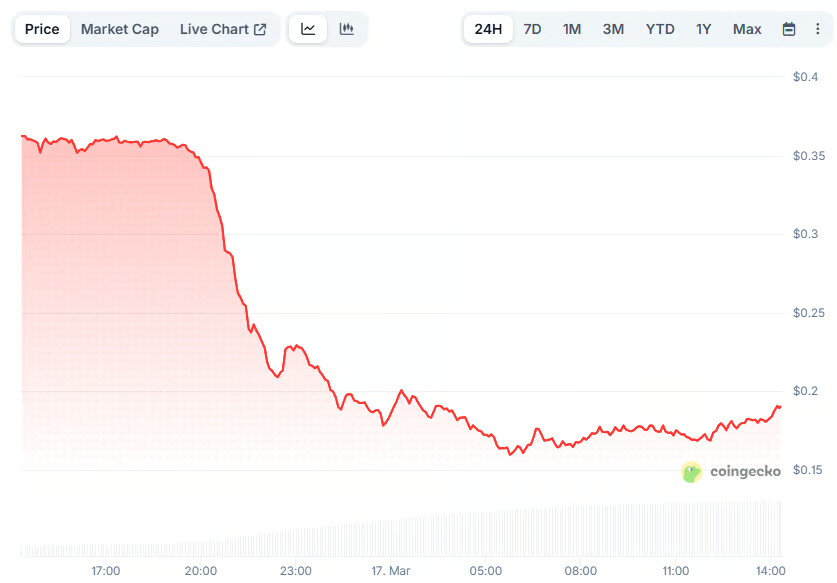
The meme coin PIPPIN, which was among crypto’s rock stars not long ago due to its staggering price increase, has crashed by approximately 50% over the past day alone.
The big question now is whether a rebound is on the horizon or if this was a textbook rug pull, signaling that things may only get worse from here.
The Scam Revealed Its Real Face?
While the broader crypto market struggled throughout February, the lesser-known meme coin PIPPIN defied the negative conditions, registering a triple-digit price explosion. At one point, the valuation surged to $0.76, whereas towards the end of last month it climbed to an all-time high of almost $0.90.
PIPPIN’s market capitalization briefly reached nearly $900 million, thus entering the elite club of the 100 biggest cryptocurrencies, but that success was short-lived. The beginning of March saw a substantial correction, which intensified after a 52% decline over the last 24 hours. In a matter of a single day, nearly $200 million of the asset’s market cap was vaporized, and it now ranks as the 188th-largest digital asset.

The most evident reason for the crash appears to be the selling spree initiated by certain investors. Some X users reported that the same wallets that accumulated PIPPIN last week recently dumped their holdings en masse.
The meme coin has been the subject of criticism from many market observers, even during its bull run. Last month, X user Dippy.eth described it as “the largest scam of the past year,” while others think the whole project is “a cabal play,” in which a coordinated group of insiders is believed to manipulate the price through their actions. Most recently, Crypto Analyst joined the club of critics, classifying PIPPIN as a “scam coin” that “rugged people.”
How About a Revival?
Despite the overwhelming opinion among industry participants that PIPPIN is a red flag for traders and investors, some remain bullish on the asset. X user Nehal, for instance, envisioned heightened volatility ahead and eventual price increase to a new ATH of $1.
You may also like:
The asset’s Relative Strength Index (RSI) supports the rebound theory. The indicator measures the speed and magnitude of recent price movements, helping traders identify potential reversal points. It runs from 0 to 100, and ratios below 30 are considered bullish territory that could precede a resurgence. On the contrary, readings beyond 70 signal that a pullback might be on the way. Currently, PIPPIN’s RSI stands at around 24.
Binance Free $600 (CryptoPotato Exclusive): Use this link to register a new account and receive $600 exclusive welcome offer on Binance (full details).
LIMITED OFFER for CryptoPotato readers at Bybit: Use this link to register and open a $500 FREE position on any coin!
Crypto World
Mastercard’s (MA) $1.8 billion deal ‘a clear answer’ to stablecoin’s unstoppable dominance
Mastercard’s planned $1.8 billion acquisition of stablecoin infrastructure firm BVNK is reinforcing a growing view on Wall Street that stablecoins are moving from a niche crypto tool to a core layer of global payments.
Analysts say the deal signals a shift in how traditional financial networks see blockchain-based money movement. “Stablecoins are integral to the future of payments,” said Mizuho analyst Dan Dolev, framing the acquisition as validation that digital dollars are becoming embedded in mainstream financial infrastructure.
Mastercard said Tuesday that it would acquire BVNK, a London-based firm that enables businesses to send, receive, store and convert stablecoins across more than 130 countries, for $1.8 billion. The company processed over $30 billion in stablecoin payments in 2025, according to analyst estimates.
For investors, the move helps answer lingering questions about Mastercard’s crypto strategy.
“BVNK is a clear answer,” TD Cowen analysts, who rate the company a Buy with a $671 price target, wrote, adding that the deal connects onchain payment rails with Mastercard’s existing network. The firm said the acquisition demonstrates that stablecoins can serve as a complementary infrastructure layer rather than a direct competitor to card networks.
That distinction has become central to the investment case. Earlier concerns that stablecoins could bypass traditional payment companies have given way to a different view: that they may instead improve how money moves behind the scenes.
Cantor Fitzgerald, which has an Overweight rating and a $650 price target on the stock, said the acquisition positions Mastercard for a coming “stablecoin adoption wave,” particularly as demand grows among financial institutions and fintech firms for faster and cheaper cross-border payments.
In recent months, this “wave” of demand has become clear as many traditional financial giants scramble to adopt stablecoin as their settlement rails. Even bitcoin purists, such as Jack Dorsey, who would have dreamt of a world where payments are done via Bitcoin blockchain, are reluctantly giving in to customers’ demand for stablecoin.
Those use cases are already taking shape.
Stablecoins are increasingly used for business-to-business payments, global payroll and remittances, where traditional systems can take days to settle. By contrast, blockchain-based transfers can move funds in minutes and operate around the clock.
BVNK’s platform adds that capability directly into Mastercard’s ecosystem, enabling 24/7 settlement and reducing reliance on intermediaries in cross-border transactions.
A long-term bet
While the financial gains for Mastercard from this acquisition may be small, the credit card giant has its eye on the bigger prize.
Financially, the acquisition is not expected to have a significant near-term impact. BVNK generated about $40 million in revenue as of late 2024, meaning the contribution to Mastercard’s earnings will likely be modest.
Instead, the deal will enable Mastercard to make a longer-term bet to become a front runner on a rapidly evolving industry poised to revolutionize how money moves.
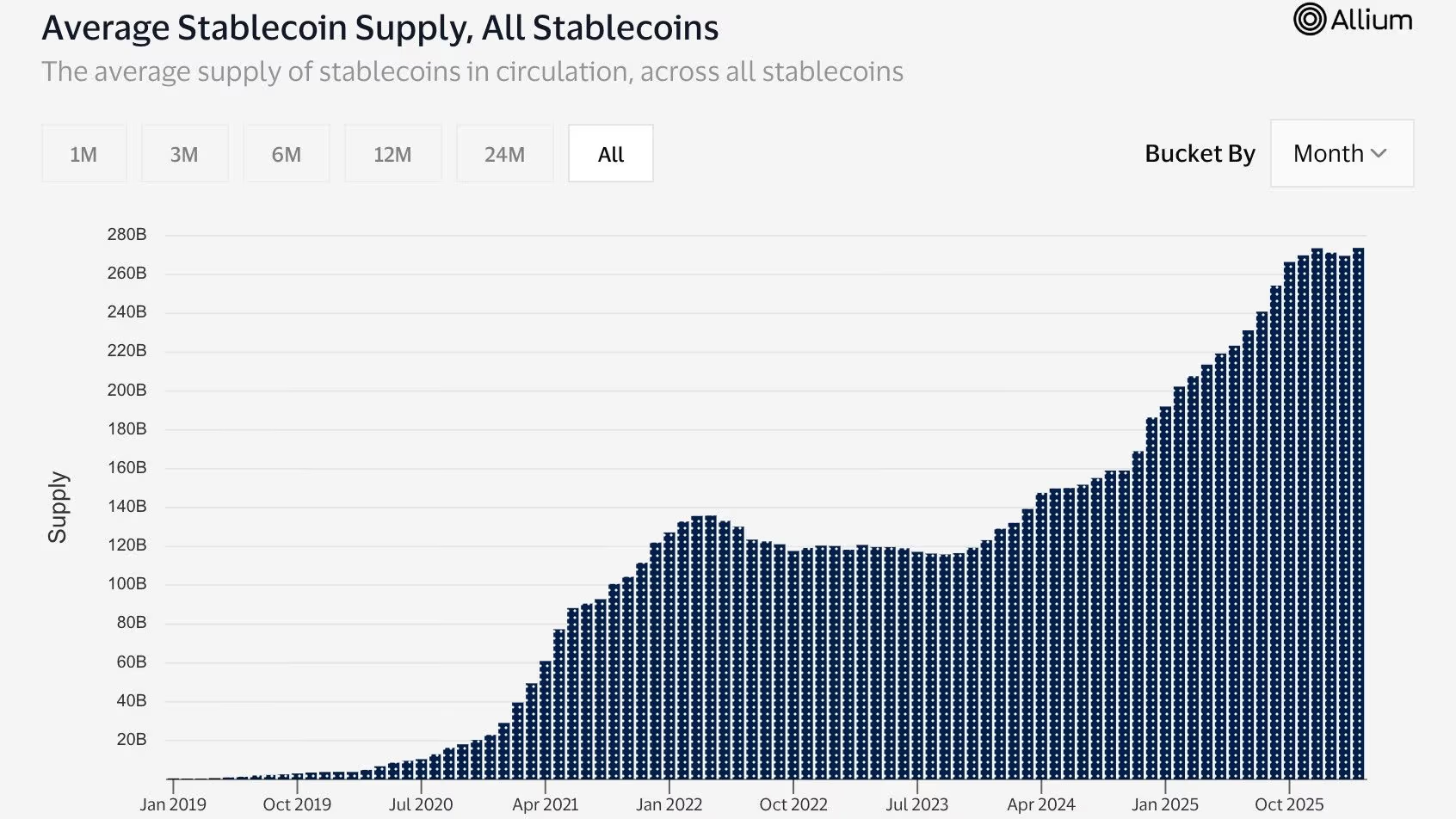
Stablecoin transaction volumes have already reached an estimated $350 billion annually, and are expected to grow as regulatory clarity improves and more institutions enter the market.

For payments giants like Mastercard, the push into stablecoin infrastructure is about protecting core business lines, not just experimenting with crypto rails, according to Harvey Li, founder of Tokenization Insight.
“Card networks are the most exposed payment rail to stablecoin disruption,” he wrote in a Tuesday note.
Meanwhile, Oppenheimer analysts, who have an Outperform rating and $683 price target, said the deal expands Mastercard’s ability to support end-to-end digital asset flows, including converting between fiat currencies and stablecoins. It also aligns with the company’s broader push toward interoperability between traditional finance and blockchain networks.
William Blair analysts led by Andrew Jeffrey said: “We see Mastercard’s BVNK acquisition as further affirmation of the stablecoin market for cross-border commerce, rather than B2C payments, which are well served by card.” The bank has an outperform rating on the stock.
More deals to come?
As stablecoins enable faster, cheaper and always-on transfers, they threaten to bypass traditional card-based settlement systems. That pressure is pushing incumbents to adapt quickly – often through acquisitions rather than in-house development.
Before Mastercard’s BVNK deal, payments giant Stripe acquired stablecoin infrastructure and issuer startup Bridge last year for $1.1 billion. Global Morgan Stanley was one of the lead investors in crypto infrastructure provider Zerohash’s $104 million fundraising round last year.
The ultimate goal behind those deals is to embed stablecoins into existing payment flows, enable large-scale conversion between fiat and digital dollars, and extend card products into 24/7 programmable payment systems.
“It’s about rewiring how money moves across their network,” Tokenization Insight’s Li said.
BVNK sits at a key junction in that transition. It handles the movement of stablecoins across blockchains, wallets and traditional accounts, making them critical to bridging crypto and fiat systems. In fact, the deal shows that BVNK is a crucial player in the upcoming stablecoin growth, as both Mastercard and Coinbase were in talks last year to acquire the firm at a valuation of up to $2.5 billion. Coinbase dropped out of the deal talks last year, leaving Mastercard to make the move at the $1.8 billion valuation.
If the stablecoin growth momentum and this deal are anything to go by, it’s a testament to how quickly stablecoins have moved from the margins to the center of financial infrastructure and may open the gate for further deals in the sector.
Mastercard and its peer Visa’s shares were trading roughly flat on Tuesday.
Read more: Stablecoin market hits $312 billion as banks, card networks embrace onchain dollars

While some analysts think ADA could climb as high as $0.50 in the near term, certain indicators also point to the possibility of a pullback.
The cryptocurrency market has posted an evident upswing over the past several days, with Cardano’s ADA following the green wave.
Its price surged 8% on a weekly basis, while some analysts believe a more substantial pump may be in the making.
The Necessary Condition
According to the popular market observer Ali Martinez, ADA “is setting up for a bullish breakout.” He argued that the prolonged sideways movement is nearing an end, outlining $0.304 as the upper boundary of this channel.
Martinez predicted that a breakout above this level could open the door to an increase to $0.338 and even $0.376. As of press time, Cardano’s native token trades at around $0.28 and is quite close to the depicted mark.
X user ZAYK Charts also presented an optimistic forecast. The analyst claimed that ADA has broken out of a falling wedge pattern on the daily timeframe, suggesting this could be a precursor to a “massive bullish wave” above $0.50.
For their part, Celal Kucuker expects the cryptocurrency to experience heightened volatility and eventually skyrocket to a new all-time high of $5.67 sometime next year.
Meanwhile, ADA remains oversold on a weekly scale with its Relative Strength Index (RSI) hovering around 30. Such ratios are considered bullish and indicate that a rally could be on the horizon. On the contrary, readings above 70 signal overbought conditions and hint that a correction might be imminent.
You may also like:

Dead Cat Bounce?
Other on-chain indicators, though, suggest that ADA could head south in the short term. Over the past few days, exchange inflows have exceeded outflows, meaning that some investors have abandoned self-custody and transferred their holdings to centralized platforms. This is typically seen as a pre-sale step.

The recent whale behavior should also be taken into consideration. Earlier this month, large investors sold or redistributed 130 million ADA over a seven-day period, bringing their total holdings down to roughly 13.5 billion coins. A similar pattern was observed at the beginning of March, when whales moved about 230 million tokens.
When this cohort of investors unloads a substantial amount of ADA, it increases the available supply on the market, which can put downward pressure on the price. Big players often move before the crowd, so their selling spree can signal that they expect weaker conditions ahead. This kind of activity could scare smaller investors and might trigger panic selling on their part.
Binance Free $600 (CryptoPotato Exclusive): Use this link to register a new account and receive $600 exclusive welcome offer on Binance (full details).
LIMITED OFFER for CryptoPotato readers at Bybit: Use this link to register and open a $500 FREE position on any coin!
Crypto World
DeepSnitch AI Price Prediction: Community Eyes 100x-300x $DSNT Pump; ETH, and HYPE Setups Optimistic
Institutional Ethereum is back with Bitmine, adding 61K ETH in a single week. Now controlling 3.81% of the entire token supply, Bitmine’s latest moves demonstrate that the accumulation era has started, and with it, a possible shift toward altcoins.
While ETH and HYPE may be lucrative if their bullish setups play out, they may not provide the same level of oomph as DeepSnitch AI’s March 31 launch, which is landing at the right moment to capture the momentum.
What makes it even more exciting as an opportunity is that the latest DeepSnitch AI price prediction confirms that the 100x.300x narrative is incredibly robust.

Bitmine ETH accumulation shifts into higher gears
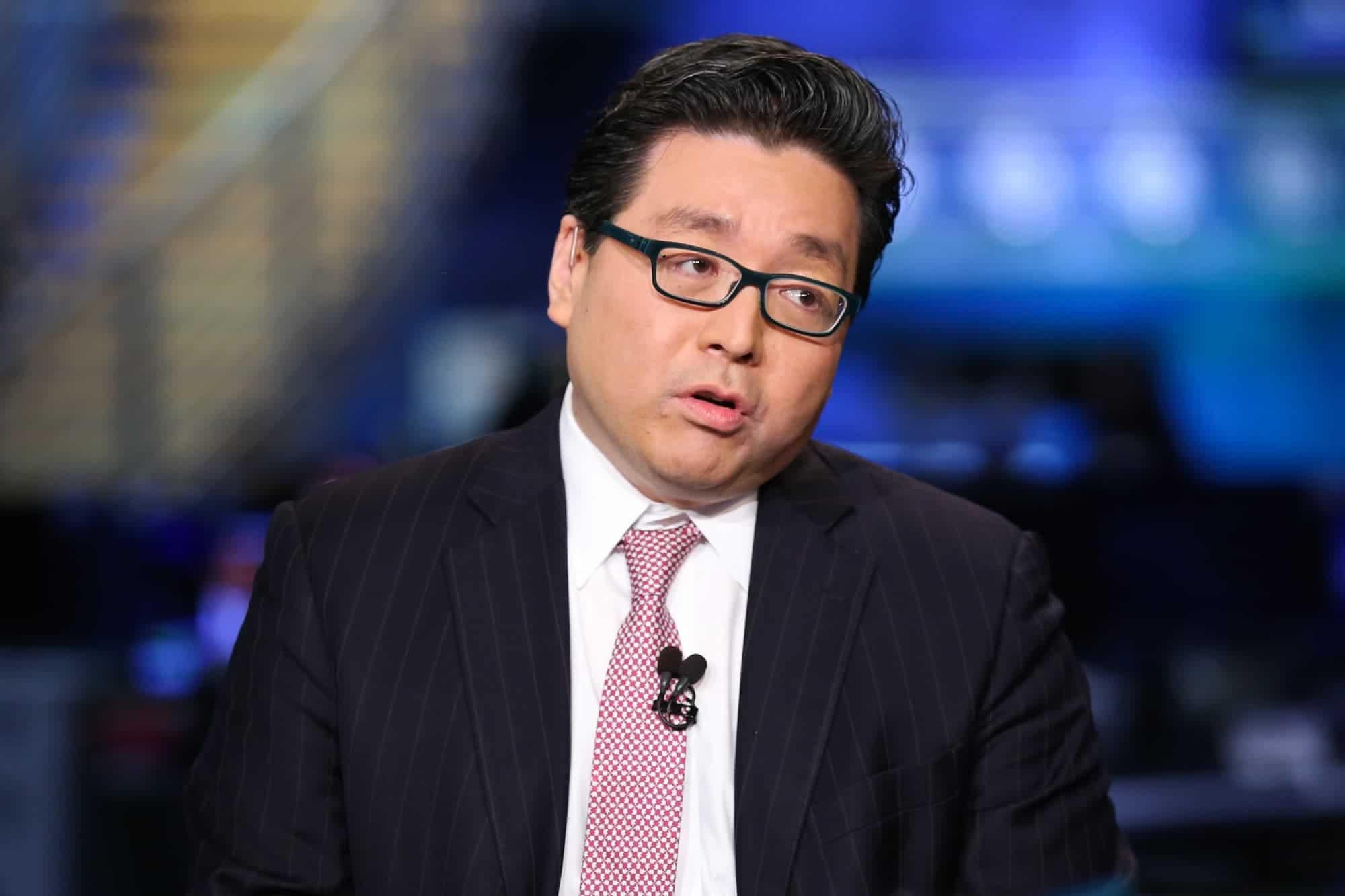
Bitmine Immersion Technologies added nearly $61K ETH last week, according to chairman Tom Lee.
The part of these assets was acquired directly from the Ethereum Foundation, and the total holdings are now sitting north of 4.5M ETH, meaning that Bitmine controls approximately 3.8% of the entire token supply.
Bitmine plans to scale that further through its Made in America Validator Network, expected to launch in the coming months. Shares of BMNR closed Monday up nearly 14% to $23.39. The announcement landed on the same day Strategy disclosed its 22K BTC purchase.
Since the two largest institutional crypto treasury operations on the planet both made major moves on the same day. The macro signal is hard to ignore, which makes DeepSnitch AI’s March 31 launch well-positioned to fully capture the wider recovery wave, which could boost the odds of the latest DeepSnitch AI price prediction coming true.
Alts you should keep on your radar in March 2026
1. DeepSnitch AI price prediction: Why is the community confident that the DeepSnitch AI token outlook is bullish?
DeepSnitch AI seems to be resilient to choppy markets. Case in point: the presale has raised $2.2M at $0.04487. The trajectory remained consistent, but so did the DeepSnitch AI prediction 2026: 100x minimum and 300x if the cycle turns bullish.
At $0.04487, a 100x minimum puts DeepSnitch AI’s future price at $4.49. Considering that the institutional money is back in crypto, and DeepSnitch AI’s Uniswap listing is exactly at an inflection point.
The ultra bullish DeepSnitch AI price prediction sees the token reaching $13.4, a 300x move, which could represent a longer-term target once the adoption picks up.
With five live AI agents, a central intelligence layer that’s already operational, and a Q2 2026 roadmap adding SnitchGPT and SnitchCast on top of what’s running now, this lends credence to the massive 300x move.
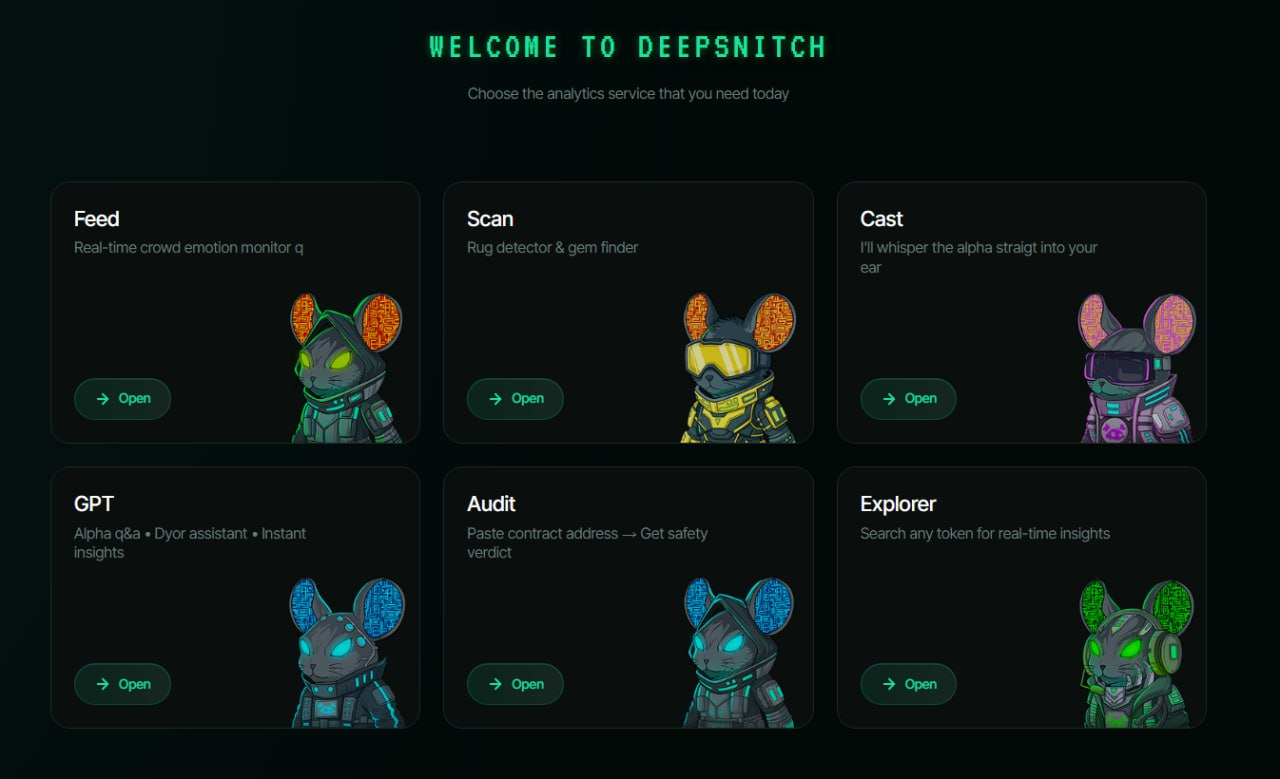
The retention argument is what makes the DeepSnitch AI price prediction much more credible: the solution utilizes five AI agents operating in a central intelligence layer. The tools range from a hidden gem finder to a sentiment tracker and a robust rug scanner.
These projections aren’t empty, though the 41.7M DSNT already staked in presale proves the interest is high, and that is unlikely to be the community open to dumping tokens after launch.
March 31 is reserved for launch, so if you’re eyeing a 100x pump, DeepSnitch AI is likely your best bet.
2. Ethereum price prediction: Will ETH continue its recovery?
According to CoinMarketCap, ETH climbed back up to $2.35K on March 16.
While the DeepSnitch AI price prediction kept spreading around the community, Ethereum experienced multiple weeks of chop in a row. Now, though, things seem to be looking up. With ETH regaining momentum and closing above $2.35K, the path to $2.6K remains open, with the final target seeing a pump to $3.45K.
The 20-day EMA at $2K is the key support to watch on any pullback.
3. Hyperliquid price prediction: Will HYPE reach $50 soon?
HYPE gained over 7% in value in 24 hours, reaching $40 on March 16, according to CoinMarketCap.
With $36.77 flipping to support, the arduous path to $43 followed by $50 remains in play.
For the time being, sellers are unlikely to make erratic moves, but if they somehow tank HYPE below $31.5, the bullish setup will be invalidated, and the coin could drop to $29.
Final words: Don’t miss the window
Large institutional players are once again pouring assets into the crypto market as bears take a small nap.
Since the chop could return unprompted, the DeepSnitch AI price prediction strengthens the project’s robust nature and gives weight to its potential to yield massive returns for holders.
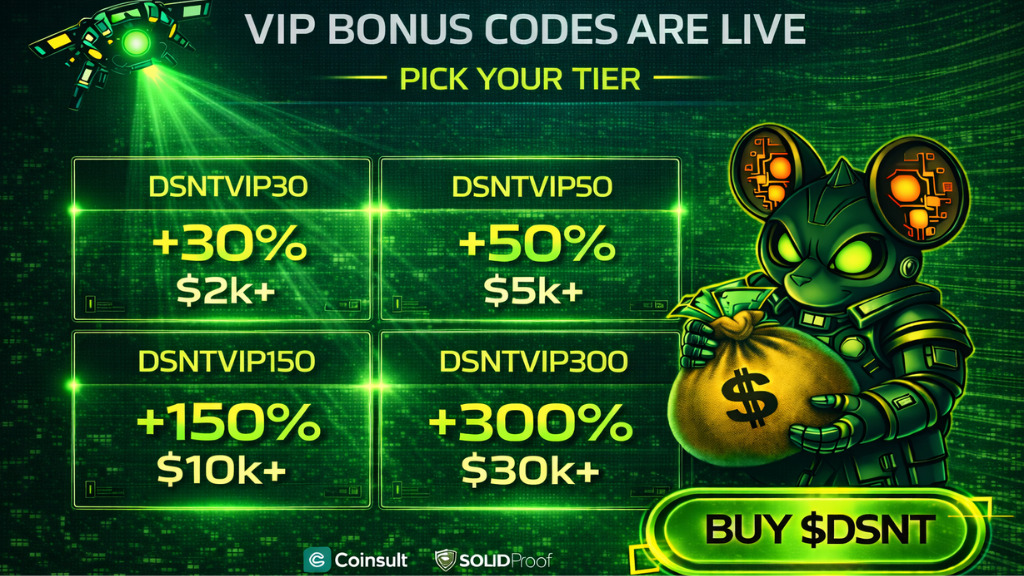
DeepSnitch AI lists on March 31, so the entry at $0.04487 will be gone when the TGE opens. Use DSNTVIP50 for 50% extra tokens on $5K and up. On $30K and above, DSNTVIP300 unlocks 300% on your allocation, which is quite impressive considering this coupon translates into nearly $90K
Don’t miss the window to join the DeepSnitch AI presale. For quick community updates, join the community on X or Telegram.
FAQs
1. What is the DeepSnitch AI price prediction for after the March 31 TGE?
The community projects 100x to 300x from the $0.04487 presale price, putting post-launch targets at $4.49 and $13.46, respectively. The 100x case is built on macro timing and a live product at launch. The 300x target requires sustained adoption growth post-TGE.
2. Why is Bitmine’s ETH accumulation relevant to the degens?
Bitmine adding 61.1K, H in a single week signals accelerating institutional conviction in the broader altcoin market. Historically, sustained institutional inflows into ETH precede retail rotation into early-stage projects.
3. What gives the DeepSnitch AI price prediction credibility beyond the launch pump?
All AI agents are already live, 41.7M DSNT is staked in presale, and traders and investors are betting on a moonshot rally after launch.
The post DeepSnitch AI Price Prediction: Community Eyes 100x-300x $DSNT Pump; ETH, and HYPE Setups Optimistic appeared first on Blockonomi.


Reform UK hasn’t shared its crypto donation addresses with the UK’s Electoral Commission despite the official body’s apparent requests.
The Nigel Farage-led party announced it was accepting crypto donations last year, a situation that’s caused concern about the potential for foreign political interference and dubious funding.
A representative for the electoral commission told Byline Times, “Reform has not shared any crypto wallet address with us.”
They said, “We routinely request a variety of information from parties to ensure they are fulfilling their legal responsibilities,” adding that they “cannot comment any further on the nature of these requests as it may impact our enquiries.”
The commission is also seeking new powers to regulate political crypto donations and told Byline Times that existing laws need to be “strengthened to prevent impermissible foreign funds entering the UK system.”
Read more: Nigel Farage aide George Cottrell bets US war will last four more months
It warned that crypto donations “present particular challenges and risks in meeting electoral law requirements in identifying donors and ensuring they are permissible.”
Byline Times says no crypto donations have been reported to the commission as of yet. However, it said that donations below £500 aren’t subject to reporting rules, and warned that this loophole could allow large donations to be split up into numerous smaller ones.
Reform UK’s crypto processor exempt from UK scrutiny
Reform UK’s crypto donations are processed by a firm called Radom, which gets its virtual asset service provider license through its Poland-based arm.
Crypto donations handled by the Polish entity avoid scrutiny from the UK’s Financial Conduct Authority.
It’s not entirely covered by Europe’s Markets in Crypto-Assets Regulation (MiCA) either, as Polish President Karol Nawrocki has reportedly vetoed implementing MiCA regulations twice.
As of 2026, Poland reportedly has 1,800 virtual asset service providers listed in the country. If it doesn’t implement the MiCA regulation by July 1, 2026, Radom and these firms will have to find regulatory approval from another country within the European Union.
Read more: Huione Group head ‘Boss Xi’ reportedly arrested then released
Byline Times reports that Poland’s current regulatory regime is far from perfect, and claims that obtaining a Polish license only requires a small fee and little to no scrutiny.
Top Polish lawyer Robert Nogacki told Byline Times that the country’s crypto regulations are just “an automated registration roll — low-friction by design, high-risk by consequence — that turned a $150 formality into an exportable badge of EU credibility.”
Byline Times notes that the Huine Group, which allegedly helped launder billions of dollars worth of funds linked to South Asian scam empires, and North Korea’s hacking collective, was also licensed under Poland’s system.
Got a tip? Send us an email securely via Protos Leaks. For more informed news and investigations, follow us on X, Bluesky, and Google News, or subscribe to our YouTube channel.


A falling CDD Multiple means older Bitcoin isn’t moving much, showing long-term holders aren’t selling, and overall selling pressure is low.
Bitcoin briefly neared $76,000 on Tuesday, a level seen for the first time in six weeks, in spite of the global uncertainty as the conflict in the Middle East entered its third week.
Data from Alphractal shows that Bitcoin’s Coin Days Destroyed (CDD) Multiple has fallen to its lowest level since 2022. This indicates minimal movement of older units.
Veteran Holders Stay Put
Alphractal explained that the metric, which measures the intensity of Coin Days Destroyed relative to its historical average, normalizes current activity against a long-term baseline to assess whether long-term holders are spending at elevated or reduced rates.
Current readings suggest that older BTC remains largely dormant, which points to steady holding behavior among long-term investors.
According to the analysis, many of these holders previously distributed coins at higher price levels, leaving the present market dominated by relatively younger supply in circulation. The low CDD Multiple also implies limited selling pressure from mature holdings.
In previous cases, similar low levels in the metric have coincided with consolidation phases, where reduced activity from long-term holders precedes significant directional moves in the market.
Meanwhile, data from Santiment shows that Bitcoin’s recent move has been accompanied by a sharp rise in market optimism. The uptick has pushed FOMO to its highest level since January 2, as social media data from this week indicates a bullish-to-bearish comment ratio of 1.67 across platforms such as X, Reddit, and Telegram. The positive sentiment has outweighed the negative views.
You may also like:
Further data reveal Bitcoin is showing early signs of recovery in buyer activity after heavy selling in February. Despite rising geopolitical tensions and expectations that the Federal Reserve will not cut interest rates at the upcoming FOMC meeting, CryptoQuant found that BTC has remained relatively “resilient” compared to traditional assets like equities and commodities.
Buyer Dominance
Data from Binance and Coinbase indicate that trading volumes are gradually changing in favor of buyers. On February 16, the 30-day average volume delta was strongly negative, at -$145 million on Binance and -$88 million on Coinbase, reflecting broad selling by both retail and institutional investors. This has now turned positive, and reached about +$21 million and +$14 million, respectively.
While this is a clear improvement, analysts say that liquidity remains low, and the trend will need further confirmation to support upward price movement.
Binance Free $600 (CryptoPotato Exclusive): Use this link to register a new account and receive $600 exclusive welcome offer on Binance (full details).
LIMITED OFFER for CryptoPotato readers at Bybit: Use this link to register and open a $500 FREE position on any coin!

Chelsea vs PSG LIVE: Latest team news and updates ahead of Estevao Willian call

Apple's latest Background Security Improvement targets a WebKit flaw

Approval for plan to end ‘blight’ of vacant Scarborough premises


-
 Tech7 days ago
A 1,300-Pound NASA Spacecraft To Re-Enter Earth’s Atmosphere
-
 Crypto World4 days ago
HYPE Token Enters Net Deflation as HyperCore Buybacks Outpace Staking Rewards
-

 Fashion4 days ago
Weekend Open Thread: Addict Lip Glow
-

 Tech2 days ago
Your Legally Registered ‘Motorcycle’ Might Not Count Under Proposed US Law
-
Sports3 days ago
Why Duke and Michigan Are Dead Even Entering Selection Sunday
-

 NewsBeat6 days ago
Residents reaction as Shildon murder probe enters second day
-

 Business2 days ago
Search for Savannah Guthrie’s Mother Enters Seventh Week with No Arrests
-

 Business7 days ago
Search Enters Sixth Week With New Leads in Tucson Abduction Case
-

 Sports6 days ago
PWHL, Senators discussing plan to keep Charge in Ottawa
-

 Business3 days ago
US Airports Launch Donation Drives for Unpaid TSA Workers as Partial Government Shutdown Enters Fifth Week
-
Crypto World3 days ago
Coinbase and Bybit in Investment Talks: Could Bybit Finally Enter the US Crypto Market?
-
 Tech3 hours ago
Are Split Spacebars the Next Big Gaming Keyboard Trend?
-

 NewsBeat6 days ago
I Entered The Manosphere. Nothing Could Prepare Me For What I Found.
-

 Business3 days ago
Country star Brantley Gilbert enters growing non-alcoholic beer market
-

 Business1 day ago
Australian shares drop as Iran war enters third week
-

 Crypto World1 day ago
Crypto Lender BlockFills Enters Chapter 11 with Up to $500M in Liabilities
-

 Sports4 days ago
College Basketball Best Bets: Conference Tournament Semifinal Picks
-

 Tech7 days ago
Clarity as strategy
-

 Politics7 days ago
Trump Says Middle East Is ‘Very Lucky’ That He’s President
-
 Crypto World6 days ago
Three Binance Charts May Be Hinting at Bitcoin’s Next Move


You must be logged in to post a comment Login