
Business
software: US Stocks: Debt investors offloading exposure to software stocks is latest sign of pain


In recent weeks, several managers of collateralized loan obligations (CLOs) have started exploring ways to reduce their exposure to software, as they grapple with the prospect of a wave of rating downgrades on junk bonds and potential defaults down the line, according to three CLO managers and several credit industry analysts.
The push to reduce exposure shows how the pain in private credit and software is still working through the system after the software rout in January and February that was largely triggered by the release of Anthropic’s latest AI tools, which raised fears of widespread disruption across the technology and professional services industries.
“Software is a sector where there is more selling coming from CLO managers than there is buying right now,” said Jim Egan, co-head of securitized products research at Morgan Stanley, adding that there was elevated exposure to software within broadly syndicated loans (BSLs), which are corporate loans that are arranged by investment banks and sold to a wide group of credit investors like CLOs. Egan added CLOs currently have lower exposure to riskier companies, which are “CCC” rated, compared to a year ago.
CLOs, which buy up small chunks of numerous individual leveraged loans, in recent years capitalized on the credit boom and bought up loans that backed hundreds of software buyouts in the height of a dealmaking boom during and after the pandemic. During the same period, CLOs also hoovered up their holdings in other non-software sectors that are now faced with the existential threat emerging from AI. According to initial estimates from JPMorgan analysts, around $40 billion to $150 billion of U.S. CLO holdings fall within sectors that are most associated with AI risk.

The software and services sector accounts for about 15% of the collateral in currently outstanding syndicated CLO deals in the U.S., according to a Feb. 20 estimate from Morgan Stanley, which added that software alone makes up roughly 12% of CLO holdings, making it the single-largest subsector by concentration. Software exposure in direct lending is estimated to be about 19% based on private-credit focused CLOs, Morgan Stanley said in a March 17 note.
WIDENING SPREADSSpreads on CLOs, which are the risk premium that companies pay on the bonds over Treasuries, have widened over the past few weeks as fears of a meltdown in the $1.8 trillion private credit industry have spooked investors.
“We’re seeing some CLO managers reduce exposure to software – particularly where positions were overweight or ahead of refinancing activity,” said Al Remeza, associate managing director at Moody’s Ratings. “At the same time, many view the current environment as a buying opportunity, especially for companies they believe are least vulnerable to AI disruption.”
A mix of investment-grade notes – which are senior unsecured corporate bonds – and high-yield leveraged loans of some software makers, including Intuit, Dayforce, and Citrix, were sold between a range of 89 cents and 98 cents on the dollar in late February and earlier in March, according to data compiled by the Trade Reporting and Compliance Engine (TRACE), which was developed by the Financial Industry Regulatory Authority to track over-the-counter fixed-income transactions.
A few months ago, those same bonds and loans were trading at a premium, the data shows. Reuters could not determine which specific software companies CLOs sold. Dayforce and Citrix did not respond to requests for comment.
To be sure, while spreads across the software industry have widened, the spread on Intuit’s investment-grade bond that matures in 2033 is largely in line with the level at which it was issued in 2023, while its credit rating was upgraded to ‘A’ from ‘A-‘ by S&P Global in October last year. Intuit’s shares are down about 32% so far this year, as AI disruption fears have weighed broadly on the enterprise software industry.
“We bet the entire company on data and AI nearly ten years ago, when we declared our strategy to be an AI-driven expert platform to deliver done-for-you experiences. Our strategy is working; in the first half of our fiscal year 2026, we delivered 18 percent revenue growth while expanding margins,” an Intuit spokeswoman said in an email to Reuters.
ASSESSING AI RISK
While the current bout of selling could present a unique buying opportunity for distressed debt investors, several credit industry analysts cautioned that the buyer base for large swathes of these loans is thin, adding that most large private credit firms and direct lenders are unlikely to participate in large software loan deals in the near term as they grapple with investor scrutiny amid rising redemption requests at their flagship funds.
“The majority of the CLO community is really taking its time to think about how to come up with a framework to assess AI risk, more on the single-name level, to really scrub their book to identify which are the names that are more prone to AI risk,” said Joyce Jiang, head of U.S. CLO Research at Morgan Stanley. “They’re still in the middle of doing that, so in the near term we think it’s not likely that there’s going to be dip buying from the CLO community at a full scale.”
This is likely to be exacerbated by the fact that CLO managers, who have relatively less exposure to software, are not yet seeing a strong enough reason to buy up loans that are coming to market, said Gavin Zhu, head of U.S. CLO Research at Barclays.
“It’s a bit more difficult to suddenly and opportunistically rotate back into software without a true catalyst. And I think that might be contributing to some of the continued weakness that we see on the loan side,” said Zhu.
Global CLO loan supply is expected to fall to about $150 billion this year, which would mark a 25% decline from last year, according to estimates from JPMorgan. This is because of a sharp decline in investor demand, as widening spreads, question marks over loan quality, and fears of deepening cracks in the multi-trillion-dollar credit market weigh on sentiment, experts said.
However, not all CLO managers are rushing to dump software loans at steep discounts. Credit fund managers and analysts said the recent selling activity, so far, has been selective and concentrated around relatively better-performing loans that have changed hands at a modest discount.
Rishad Ahluwalia, head of CLO Research at JPMorgan, said investor sentiment has turned more bearish in recent weeks as spreads have widened and CLO transaction volumes have dipped.
“For CLO managers, the appetite for stressed loans in orphan sectors, like software and services, is weaker,” said Ahluwalia.


Stocks opened higher on Monday because oil prices are still the market’s main driver.
The Dow Jones Industrial Average rose 612 points, or 1.3%. The S&P 500 was up 1.4%. The Nasdaq Composite was up 1.5%.
West Texas Intermediate crude oil futures dropped 5.2% to $93.57 a barrel after the U.S. benchmark briefly crossed $100 overnight. Brent crude futures were down 2.4% to $100.65.

Casella Waste at JPMorgan Conference: Strategic Focus on Growth and Efficiency

Crown Prince Reza Pahlavi Chief of Staff Cameron Khansarinia joins ‘Mornings with Maria’ to discuss the killing of a top Iranian power broker, the regime’s weakening grip and growing signs of a potential uprising led by the Iranian people.
As pressure builds on Iran’s ruling regime, exiled Crown Prince Reza Pahlavi remains in contact with figures inside the country who could help ensure a “stable transition,” according to his chief of staff.
“He’s in touch with forces within the country, including within the state bureaucracy, who, at the right moment, are ready to pull away from this regime and to ensure a stable transition,” Cameron Khansarinia said.
EXPERT SAYS IRAN DRONE ATTACK ON CALIFORNIA COAST WOULD BE ‘VERY EASY’ TO STOP
Khansarinia, Crown Prince Reza Pahlavi’s chief of staff, joined FOX Business’ Maria Bartiromo on “Mornings with Maria” to discuss the latest developments inside Iran and the growing movement among Iranians who oppose the current leadership.

Iranian Exiled Prince Reza Pahlavi speaking during a meeting. (JACK GUEZ / AFP / Getty Images)
Khansarinia said the recent elimination of a key Iranian security figure, Ali Larijani, marked a significant moment for the country, arguing that the official had played a major role in maintaining the regime’s grip on power and overseeing violent crackdowns against protesters.
“Larijani played a critical role in holding up this criminal regime,” Khansarinia said.
Fox News senior strategic analyst Gen. Jack Keane (ret.) joins ‘Mornings with Maria’ to break down Israel’s strikes on Iran’s leadership and assess whether the regime is nearing a breaking point.
He added that the official had been closely tied to the suppression of demonstrations following calls by Pahlavi for Iranians to take to the streets.
“According to President Trump, more than 32,000 innocent and peaceful protesters were slaughtered,” he said.
CRUISE LINES FACE FUEL COST SURGE AS OIL PRICES JUMP ON IRAN TENSIONS
Khansarinia said many Iranians are preparing for the right moment to mobilize again, noting that supporters are waiting for a signal from Pahlavi before launching another nationwide wave of protests.
“The prince has told them that he will issue the final call to take to the street, to take down this regime when the time is right,” he said.
Khansarinia also pointed to what he described as widespread public support for the exiled crown prince as the country looks toward a potential post-regime future.
Rep. Pat Fallon, R-Texas, joins ‘Mornings with Maria’ to discuss the escalating Iran conflict, a potential $50 billion defense package and the urgent need to reopen the Department of Homeland Security.
“The crown prince absolutely has the majority support of the Iranian people,” Khansarinia said. “That’s been proven time and time again on the streets, when at his call millions of Iranians took to the streets… chanting his name… calling for his leadership of the transition to the ballot box, to his true secular democratic system, which has always been his mission in life.”
IRAN REGIME ‘ABOUT TO COLLAPSE,’ PRINCE REZA PAHLAVI SAYS AS ECONOMIC CRISIS DEEPENS
He added that Pahlavi has been working to prepare for a stable transition should the regime collapse.
“The prince is really the one person who can unite Iranian society from the armed forces… and ensure stability going forward,” Khansarinia said.

Form 4 Sunrun Inc For: 17 March
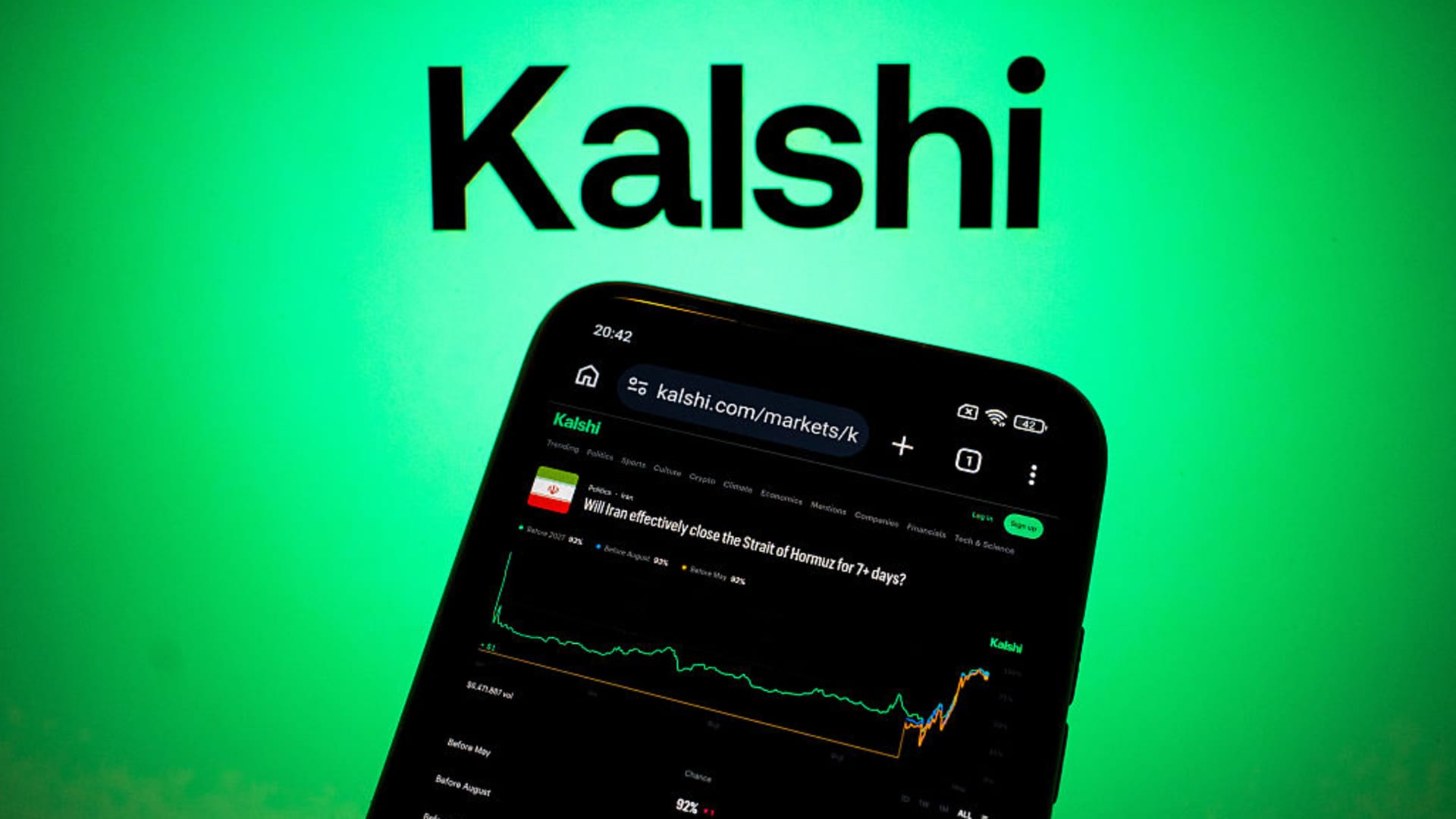
The Kalshi market “Will Iran effectively close the Strait of Hormuz for 7+ days?” appears on a smartphone screen, with the Kalshi logo displayed on a laptop computer screen in the background, in this photo illustration taken in Chania, Greece, March 9, 2026.
Nikolas Kokovlis | Nurphoto | Getty Images
Arizona’s attorney general has filed misdemeanor criminal charges against Kalshi, accusing the predictions platform of running an illegal gambling and election wagering operation in the state.
These are the first criminal charges to have been filed against Kalshi, though the company is embroiled in multiple lawsuits and investigations and has received dozens of cease-and-desist letters across the nation.
Prediction platforms like Kalshi have drawn comparisons to online sports gambling as they allow users to wager on the outcomes of events in pop culture, politics, sports and more.
Multiple states have argued that legalizing and regulating sports betting is under the jurisdiction of local regulators and outside the authority of the Commodity Futures Trading Commission, which regulates event contracts and the prediction markets.
States including Michigan and Massachusetts have filed civil lawsuits aimed at stopping operations or compelling Kalshi to meet gambling license requirements.
In the Arizona filing, Attorney General Kris Mayes charged Kalshi with 20 counts of accepting various bets in Arizona without a license, including wagers on state elections, which is separately and explicitly forbidden under Arizona law.
“No company gets to decide for itself which laws to follow,” Mayes said in a statement.
Kalshi draws distinctions between the event contracts it offers and what sportsbooks and casinos offer.
“Sadly, a state can file criminal charges on paper thin arguments,” the company said in a statement to CNBC. “States like Arizona want to individually regulate a nationwide financial exchange, and are trying every trick in the book to do it. As other courts have recognized and the CFTC affirms, Kalshi is subject to federal jurisdiction.”
Last week, Kalshi filed for a preliminary injunction to try and keep Arizona from enforcing its state laws.
On Tuesday, federal judge Michael Liburdi denied Kalshi’s request for a temporary restraining order and ordered Kalshi to demonstrate why the case should be in federal court given the state charges against Kalshi.
Kalshi has preemptively sued to stop other states from taking punitive action, a strategy Mayes described as bullying states, “running to federal court to try and avoid accountability.”
Gaming attorney Daniel Wallach meticulously tracks suits and countersuits against the predictions platforms. He described the preemptive lawsuits as Kalshi’s modus operandi.
“That ‘win the race to the courthouse’ strategy has proven to be an effective tactic thus far,” Wallach said, pointing to Kalshi’s legal victories in getting preliminary injunctions in New Jersey and Tennessee.
Wallach is not involved in any of Kalshi’s legal disputes.
Still, the Arizona attorney general’s office highlighted Kalshi’s recent loss for a preliminary injunction against Ohio, in which federal judge Sarah Morrison said Kalshi’s concerns were “dwarfed by Ohio’s interest in exercising its police power, enforcing its duly-enacted laws, and regulating sports gambling to promote the public welfare.”
CFTC Chair Michael Selig recently told CNBC the agency would require the prediction platforms, which currently self-certify, to do a better job of restricting event contracts that encourage manipulation, like, for instance, questions of whether an athlete would suffer an injury.

A bipartisan bill has been introduced in the House of Representatives that would prohibit event contracts on sports, unless a state were to specifically permit it. The bill would also ban entirely prediction markets on elections and government actions.
As lawmakers, regulators and courts grapple with defining what gambling is, 61% of Americans report they view event contracts on prediction markets more like gambling than investing, according to a poll released Tuesday by Ipsos and the American Institute for Boys and Men.
Disclosure: CNBC and Kalshi have a commercial relationship that includes a CNBC minority investment.

Lululemon offered a weak 2026 outlook on Tuesday as tariffs, higher expenses and a dramatic proxy battle with its founder weigh on its bottom line.
The athleisure company’s guidance for both the current quarter and the fiscal year came in lower than expected on the top and bottom lines.
Lululemon is expecting first quarter sales to be between $2.40 billion and $2.43 billion, weaker than estimates of $2.47 billion, according to LSEG. It anticipates earnings per share will range between $1.63 and $1.68, also weaker than estimates of $2.07.
For the full year, Lululemon is expecting sales to be between $11.35 billion and $11.50 billion, below expectations of $11.52 billion. Earnings guidance of $12.10 to $12.30 per share was also far weaker than estimates of $12.58.
“The work is really underway in terms of our action plan, and we’re really focused on the importance of course correcting on a number of fronts,” interim co-CEO Meghan Frank told CNBC in an interview. “We’ve got a new creative director, his first line is hitting in Q1, we are seeing some green shoots, I would say, from the product in Q1 so we’re excited about some of the momentum we have on that line item. We have had some great response from some of our recent product activations, and then we’re also reducing our speed to market timeline.”
During Lululemon’s holiday quarter, the company beat estimates on both the top and bottom lines, though Wall Street had lowered its expectations for the period in recent months.
Here’s how the Vancouver-based retailer performed during its fiscal fourth quarter compared with what Wall Street was anticipating, based on a survey of analysts by LSEG:
- Earnings per share: $5.01 vs. $4.78 expected
- Revenue: $3.64 billion vs. $3.58 billion expected
The company’s net income for the three-month period that ended Feb. 1 was $586.9 million, or $5.01 per share, compared with $748.4 million, or $6.14 per share, a year earlier.
Sales rose slightly to $3.64 billion, up about 1% from $3.61 billion a year earlier.
Lululemon raised its fiscal fourth-quarter guidance during the ICR conference in Orlando earlier this year, so all eyes were on the company’s 2026 guidance following more than a year of underperformance.
The retailer, always considered a premium brand that rarely offered promotions, had been leaning on discounts to drive sales and move inventory. The company is now working to pull back that strategy this year, Frank said. Lululemon expects the move will weigh on sales in the near term, but it will bring the company back to a full-price business over time, she said.
Meanwhile, it’s seeing a number of pressures on its bottom line. Higher tariffs and the end of the de minimis exemption continue to be a major cost for the company.
This year, Lululemon expects tariffs to cost the company $380 million, up from $275 million last year, on a gross basis. Once mitigation efforts are taken into account, the net impact is expected to be $220 million in 2026, up from $213 million in 2025.
Lululemon has been negotiating with suppliers and taking other actions to reduce its exposure to tariffs, but it isn’t increasing prices to offset the added costs, especially as it looked to promotions to drive sales in recent months. The brand was already priced toward the high end of the market prior to President Donald Trump’s tariff hikes last year, leaving it with fewer tools in its arsenal to offset the duties, especially as it faces intense competition and a slowdown in the athleisure market.
Last year, the company raised prices on a select number of items. Shoppers are still responding favorably so far, but there are no plans to build on those increases for now, said Frank.
Beyond tariffs, the company is also seeing higher expenses from marketing, labor, incentives and costs related to its proxy contest with founder Chip Wilson. Wilson, Lululemon’s largest independent shareholder, has been pressuring the company to make changes to its board of directors and has criticized it for losing sight of its creative vision.
Just before releasing earnings, Lululemon announced it was adding former Levi Strauss CEO Chip Bergh to its board of directors. Bergh was not among the candidates Wilson put forward for consideration, but he does have considerable public company experience and spent around 13 years as Levi’s CEO. During his tenure with the company, Levi began pursuing a more profitable direct selling strategy and sales rose by around 30%.
As part of the announcement, Lululemon said board member David Mussafer, managing partner and chairman of private equity firm Advent, will not stand for re-election during the company’s upcoming 2026 shareholder meeting at the conclusion of his current three-year term. The announcement marks a win for Wilson, who has criticized Mussafer publicly. In a letter to shareholders last month, Wilson pointed out that Mussafer was overseeing the board’s interview process for prospective nominees at a time when he was up for election, creating a potential conflict of interest.
A source familiar with the matter said Wilson had called on Mussafer to step down from the board because he lacks independent leadership, among other issues.
Mussafer didn’t immediately respond to a request for comment.
Prior to the earnings announcement, Wilson issued a statement saying shareholders will be “critically evaluating” any claims of success or improvement from Lululemon when it released results.
“The core issue at lululemon is one the Company has struggled with for years: there is a disconnect between the Company’s creative engine and the Board’s understanding for how brand power and product excellence fuel cultural strength, margin durability and long-term shareholder value,” he said.
Lululemon declined to comment.
While parts of Lululemon’s business are still growing, it has primarily seen that expansion in China and in other international regions, which make up a fraction of overall revenue. Same-store sales in its largest region, the Americas, haven’t grown in around two years, and Lululemon is expecting another year of declines in 2026.
The company said it expects sales in the Americas to decline between 1% and 3% in 2026.
Meanwhile, sales in China are expected to grow around 20%, and the rest of the world by a mid-teens percentage.

Tomohiko Sano
JPMorgan Chase & Co, Research Division
All right. Good afternoon, everyone. Thank you for joining Valmont Industries sessions. This is Tomohiko Sano, SMID cap industrials analyst at JPMorgan. With me, we have Avner Applbaum, President and CEO; Thomas Liguori, Executive Vice President and CFO, Renee Campbell, SVP, Capital Markets and Risk. So thank you, Avner, Tom and Renee for joining today.
So before we begin, I want to highlight why Valmont Industries is such a key participant of this conference. As a global leader in infrastructure and agriculture solutions, Valmont sits at the intersection of the powerful megatrends, electrification, grid modernization and food security, with a record backlog and disciplined capital allocations driving sustainable growth and margin expansions.
So Renee, to kick things off, I think it would be great to start with introductions to Valmont, like who they are — who you are and then like what you do with the stories, please?
Renee Campbell
Senior VP of Capital Markets & Risk and Treasurer
Perfect. Thank you, Tomo. And thanks very much again for having us here today. Good afternoon, everybody. Before we begin, I just want to briefly note that today’s discussion will include forward-looking statements, which are subject to risks and uncertainties that could cause actual results to differ materially from those projected, and please refer to our SEC filings on our website for a discussion of those risk factors.
So with that, for those of you who may be less familiar

The New York Times Mini Crossword for Tuesday, March 17, 2026, offered a brisk yet clever challenge with a mix of pop culture, everyday phrases and tech references that kept solvers engaged in the daily brain teaser.

Released at midnight Eastern Time, the bite-sized puzzle — featuring a compact 5×5 grid with just 10 clues — drew praise for its balanced difficulty and timely themes. Players across time zones, including those in Seoul where the puzzle became available around 1 p.m. local time on March 17, raced to complete it and maintain streaks on the NYT Games app or website.
The Mini, edited by Joel Fagliano, has grown in popularity since its 2014 launch as a faster alternative to the full daily crossword. Tuesday’s edition rewarded quick thinking with straightforward wordplay and a few gentle misdirections.
Here are the complete clues, hints and answers for the March 17, 2026, NYT Mini Crossword:
**Across Clues and Answers**
– 1A: One drawing X’s and O’s — **COACH** (Hint: Think sports sideline role plotting plays with diagrams.)
– 5A: Company whose market cap (~$4 trillion) exceeds the G.D.P. of most countries — **APPLE** (Hint: Tech giant known for iPhones, with massive valuation.)
– 6A: Green gemstone — **JADE** (Hint: Prized mineral often carved into ornaments.)
– 7A: “The Phantom of the ____” — **OPERA** (Hint: Classic Andrew Lloyd Webber musical title completion.)
– 8A: What’s the deal? — **CARDS** (Hint: Slang for “What’s going on?” or literal poker reference.)
**Down Clues and Answers**
– 1D: Like some chicken dishes (spicy hint) — **SPICY** (Hint: Describes jerk chicken or vindaloo heat level; note: some sources cross-referenced similar clues from nearby dates.)
– 2D: Capital of Vietnam — **HANOI** (Hint: Northern Vietnamese city known for Old Quarter.)
– 3D: Waiter’s handout — **MENU** (Hint: List of dishes presented at restaurants.)
– 4D: “___, queen!” — **YAS** (Hint: Enthusiastic slang affirmation popularized in drag culture and social media.)
The puzzle intersected neatly, with intersecting letters confirming solutions quickly for most players. Average completion times hovered around 30-60 seconds for experts, while newcomers appreciated the hints available in the app.
Wordplay highlights included the tech-economic nod to **APPLE**’s valuation, reflecting real-world headlines about Big Tech dominance. The **COACH** clue delivered a light sports touch, and **YAS** added modern slang flair that resonated with younger solvers.
The NYT Games platform reported high engagement for the March 17 puzzle, with thousands sharing completion screenshots on social media. No major controversies or unusually tricky clues emerged, unlike some recent Minis that stumped players with obscure references.
For those who finished early, the app offered stats tracking, including personal bests and global leaderboards. The Mini remains free to play with limited daily access, while subscribers unlock unlimited puzzles, including archives.
The puzzle’s release coincided with St. Patrick’s Day celebrations in many regions, though no overt Irish themes appeared — a contrast to some holiday-timed editions featuring shamrocks or leprechauns.
Solvers praised the grid’s symmetry and flow. Interlocking words like **JADE** crossing **OPERA** and **APPLE** provided satisfying “aha” moments without excessive frustration.
As part of the broader NYT Games ecosystem — including Wordle, Connections, Spelling Bee and the full crossword — the Mini serves as an accessible entry point. Its brevity appeals to commuters, coffee-break enthusiasts and those building crossword confidence.
Tuesday’s edition exemplified why the Mini endures: quick satisfaction, clever construction and broad appeal. With no rebus squares or advanced wordplay, it prioritized fun over fiendishness.
Players who missed it can access archives via subscription, while tomorrow’s puzzle promises fresh challenges. The NYT encourages feedback through the app to refine future editions.
The March 17, 2026, Mini reinforced the format’s status as a daily ritual for millions, blending mental exercise with entertainment in under a minute.


US judge questions ’shifting’ defense of Trump ballroom project


Brian Schiegg no longer with frozen food company.
Stocks Are Gaining. The Market Is Still Following Moves in Oil.

Ripple expands Brazil push as it seeks virtual asset license from central bank

Morocco Awarded 2025 AFCON Title After CAF Overturns Final Result

Smart energy pays enters the US market, targeting scalable financial infrastructure

Why Israel is blocking foreign journalists from entering

Bitcoin: We’re Entering The Most Dangerous Phase

Master of Finance: Wang Xiufen’s Multi-Role Journey in Financial Education

XRP IS NEVER GOING TO $0 – PRIVATE PAYMENTS ON XRPL – EXCHANGES COULD SOON FREEZE YOUR CRYPTO!

Silver will set you free #money #platinum #gold #silver #preciousmetals
-
 Tech7 days ago
A 1,300-Pound NASA Spacecraft To Re-Enter Earth’s Atmosphere
-
 Crypto World4 days ago
HYPE Token Enters Net Deflation as HyperCore Buybacks Outpace Staking Rewards
-

 Fashion4 days ago
Weekend Open Thread: Addict Lip Glow
-

 Tech2 days ago
Your Legally Registered ‘Motorcycle’ Might Not Count Under Proposed US Law
-
Sports3 days ago
Why Duke and Michigan Are Dead Even Entering Selection Sunday
-

 NewsBeat6 days ago
Residents reaction as Shildon murder probe enters second day
-

 Business2 days ago
Search for Savannah Guthrie’s Mother Enters Seventh Week with No Arrests
-

 Business7 days ago
Search Enters Sixth Week With New Leads in Tucson Abduction Case
-

 Sports6 days ago
PWHL, Senators discussing plan to keep Charge in Ottawa
-

 Business3 days ago
US Airports Launch Donation Drives for Unpaid TSA Workers as Partial Government Shutdown Enters Fifth Week
-
 Tech5 hours ago
Are Split Spacebars the Next Big Gaming Keyboard Trend?
-
Crypto World3 days ago
Coinbase and Bybit in Investment Talks: Could Bybit Finally Enter the US Crypto Market?
-

 NewsBeat6 days ago
I Entered The Manosphere. Nothing Could Prepare Me For What I Found.
-

 Business3 days ago
Country star Brantley Gilbert enters growing non-alcoholic beer market
-

 Business1 day ago
Australian shares drop as Iran war enters third week
-

 Tech7 days ago
Clarity as strategy
-

 Sports4 days ago
College Basketball Best Bets: Conference Tournament Semifinal Picks
-

 Crypto World1 day ago
Crypto Lender BlockFills Enters Chapter 11 with Up to $500M in Liabilities
-

 Politics7 days ago
Trump Says Middle East Is ‘Very Lucky’ That He’s President
-

 Crypto World6 days ago
Three Binance Charts May Be Hinting at Bitcoin’s Next Move


You must be logged in to post a comment Login