
Crypto World
US lawmakers push bill to crack down on war-bet prediction markets


Two Democratic lawmakers in the United States have formally introduced a bill aimed at curbing what they describe as government-insider trading risk tied to prediction markets. The BETS OFF Act, unveiled in a joint effort by Representative Greg Casar of Texas and Senator Chris Murphy of Connecticut, targets platforms whose markets place bets on sensitive government actions. The move follows a spate of high-profile bets linked to potential U.S. action in the Middle East, prompting questions about the role of real-time markets in shaping or amplifying political decisions.
Key takeaways
- The BETS OFF Act was introduced by Rep. Greg Casar and Sen. Chris Murphy in response to suspicious bets on international conflict scenarios, including a possible war involving the U.S., Israel, and Iran.
- The bill seeks to prohibit event contracts tied to sensitive government decisions and federal functions, effectively narrowing the scope of markets like Polymarket and Kalshi.
- The push comes amid continued regulatory scrutiny of prediction markets, following earlier proposals such as Sen. Adam Schiff’s DEATH BETS Act targeting war, terrorism, assassination, and deaths.
- Public discourse around insider information is central: lawmakers argue decisions in the Situation Room should not be swayed by financial positions on open markets.
- Industry声音 remains mixed—Polymarket defends the value of crowd wisdom, while Kalshi limits certain military action forecasts, reflecting divergent approaches to risk and governance in prediction markets.
Market context: The debate over prediction markets sits at the intersection of financial innovation, governance, and national security. As lawmakers push for tighter controls, market operators face clarifications on what kinds of forecasts can be legally listed, while observers watch whether broader crypto-asset and derivatives markets will influence or respond to policy changes.
Why it matters
At the heart of the BETS OFF Act is a concern that insider information—or access to non-public policy deliberations—could be translated into lucrative bets on the outcomes of military or other sensitive actions. Rep. Casar framed the issue around the possibility that “someone sitting in the situation room” could be empowered by market positions in decisions of life and death. The proposed legislation would restrict event contracts tied to government operations and major federal actions, which would notably limit the kinds of bets that platforms like Polymarket and Kalshi can offer on foreign policy and national security events.
The controversy is not purely theoretical. Earlier in the year, Sen. Schiff introduced the DEATH BETS Act, which emphasizes prohibition of markets listing events connected to war, terrorism, assassination, and deaths. The parallel push from multiple offices signals a growing concern among U.S. lawmakers about how prediction markets intersect with public policy and accountability. As markets, regulators, and political actors continue to navigate these questions, the debate intensifies around whether such platforms should be allowed to operate with the same latitude as other forms of speculative markets—and what safeguards are necessary to prevent misuse.
On the platforms themselves, Polymarket has positioned its operations as a way to harness collective intelligence for better forecasting, emphasizing the value of crowd-sourced signals during volatile periods. Kalshi, by contrast, has taken a more constrained stance for certain high-stakes scenarios, choosing not to list contracts on specific military actions or other sensitive geopolitical outcomes. The tension underscores a broader governance question: can prediction markets deliver genuine societal value without creating incentives that could distort policy or provoke manipulation?
Concerns about safety and legitimacy have also resonated beyond the markets’ floors. A Times of Israel military correspondent reported receiving death threats related to coverage of the Iranian missile strike date, underscoring the real-world stakes involved when financial markets entwine with geopolitics. Such incidents amplify the call for clearer boundaries around which events can be bet on and under what conditions, particularly when coverage intersects with ongoing conflict and public safety considerations.
Why it matters
Prediction markets have long claimed to distill “wisdom of the crowd” into probabilistic forecasts on a range of topics, from elections to sporting events. The current controversy places a sharp spotlight on how such frameworks function when sensitive geopolitical actions are on the line. If lawmakers succeed in restricting certain classes of contracts, the markets’ ability to reflect near-term probabilities on foreign policy may be curtailed. That could alter how information flows in high-stakes environments and potentially shift shifts in risk pricing across related derivative markets.
For policymakers, the BETS OFF Act represents a legislative attempt to recalibrate the balance between innovation and guardrails. The bill’s proponents argue that ensuring decisions about war and peace are not influenced by betting markets is essential to preserving the integrity of national security processes. Critics, however, may contend that market-based signals can illuminate risk and improve transparency—if properly designed with safeguards. The unfolding policy discussion will likely test the resilience and adaptability of prediction-market platforms, as well as the broader ecosystem of crypto- and mainstream financial markets intertwined with these services.
What to watch next
- Prospective committee hearings and floor votes on the BETS OFF Act, including potential amendments clarifying the scope of prohibited contracts.
- Regulatory clarifications from U.S. agencies overseeing prediction markets and related financial instruments, potentially addressing enforcement mechanisms and permissible product design.
- Updates on Kalshi’s and Polymarket’s product offerings in response to any new regulatory guidance or legislative actions.
- Ongoing reporting on insider-information concerns connected to policy decisions and how such concerns may influence market design and investor protection measures.
Sources & verification
- Official statements from Representative Greg Casar and Senator Chris Murphy announcing the BETS OFF Act, and the legislative text when released.
- Public statements and policy positions from Polymarket on the role and limits of prediction markets in current events.
- Kalshi’s publicly stated market scope and its approach to sensitive geopolitical contracts, including any restrictions on military action forecasts.
- Past congressional actions and debates around prediction markets, such as the DEATH BETS Act introduced by Senator Adam Schiff.
Key figures and next steps
Market participants and policy observers will be watching how lawmakers articulate the balance between innovation and safeguards in prediction markets. The BETS OFF Act joins a broader set of questions about the accountability of platforms that monetize forecasts on sensitive events. If enacted, the legislation could reorient product design, risk controls, and the permissible scope of bets offered to the public. Until then, Polymarket and Kalshi—along with other platforms—continue to operate within the existing regulatory framework while navigating the evolving political discourse surrounding insider information, elections, and foreign policy risk.
What to watch next (summary)
- Legislative votes or committee actions on the BETS OFF Act and its potential amendments.
- Regulatory clarifications issued by relevant U.S. agencies about prediction-market operations.
- Platform policy adjustments by Polymarket and Kalshi in response to new rules or enforcement actions.
- Ongoing media reporting on insider-information concerns and related safety incidents tied to market-driven forecasts.

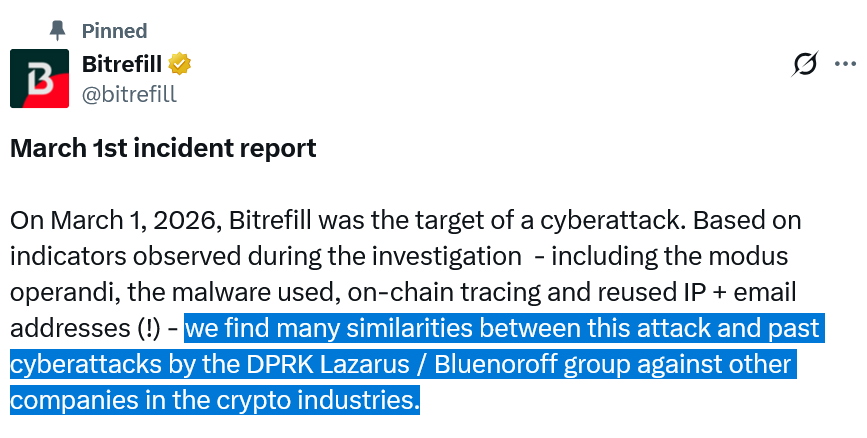
Crypto e-commerce store Bitrefill has revealed it was the victim of a cybersecurity attack on March 1, with the methods used closely resembling those of Lazarus Group, North Korea’s notorious hacking organization.
In a post to X on Tuesday, Bitrefill said the hackers used malware, on-chain tracing, and reused IP and email infrastructure to compromise an employee’s laptop, enabling them to drain funds from the company’s hot wallets while also accessing 18,500 purchase records, potentially revealing “limited customer information.”
Bitrefill said BlueNoroff Group, another North Korean hacking organization with close ties to the Lazarus Group, may have also been involved or been the sole attacker.

Source: Bitrefill
Bitrefill, which enables customers to spend crypto on real-world products and gift cards, said there was no evidence that the hackers extracted its database, suggesting the motive was financial.
“There is no evidence that they extracted our entire database, only that the attackers ran a limited number of queries consistent with probing to understand what there was to steal, including cryptocurrency and Bitrefill gift card inventory.”
While Bitrefill didn’t disclose how much funds were stolen, the company said it “will absorb” those losses from its operational capital.
“Almost everything is back to normal: payments, stock, accounts,” Bitrefill said, adding: “Sales volumes are also back to normal, and we are eternally thankful to our customers for your continued confidence in us.”
Despite many crypto platforms strengthening security measures in recent years, sophisticated hackers have continued to find ways to breach their defenses.
Related: Bonk.fun warns hackers hijacked domain in wallet-drainer attack
Lazarus Group remains the crypto industry’s most formidable threat and was behind the largest hack in crypto history, when it stole $1.4 billion from crypto exchange Bybit in February 2025.
Bitrefill has upped its security measures
Bitrefill said it contacted law enforcement and worked with crypto security firms Security Alliance, FearsOff Security, Recoveris.io and zeroShadow to navigate the cybersecurity incident. Part of its initial response was to turn its systems offline to contain the attack.
Bitrefill said it has already “significantly improved” its cybersecurity practices since the incident.
Those measures include cybersecurity reviews with security researchers and implementing their recommendations, tightening internal access controls and improving monitoring strategies for faster detection and response.
Magazine: China’s ‘50x’ blockchain boost, Alibaba-linked AI mines Bitcoin: Asia Express
Crypto World
SEC and CFTC Issue Joint Crypto Interpretation, Ending Over a Decade of Regulatory Uncertainty

TLDR:
- The SEC introduced a token taxonomy covering digital commodities, collectibles, tools, stablecoins, and securities.
- The CFTC will administer the Commodity Exchange Act in line with the SEC’s new crypto asset interpretation.
- The guidance clarifies how non-security crypto assets can enter or exit the scope of an investment contract.
- Activities like airdrops, protocol staking, and asset wrapping now have clearer treatment under federal securities law.
Crypto assets have taken center stage as the U.S. Securities and Exchange Commission issued a landmark interpretation.
Released on March 17, 2026, the guidance clarifies how federal securities laws apply to crypto assets and related transactions.
The Commodity Futures Trading Commission joined the effort, signaling a unified regulatory approach. Market participants, including investors and innovators, now have clearer guidance on where SEC and CFTC jurisdiction begins and ends.
SEC Establishes a Token Taxonomy for Crypto Assets
The interpretation introduces a coherent token taxonomy covering several categories of crypto assets. These categories include digital commodities, digital collectibles, digital tools, stablecoins, and digital securities.
Each category carries distinct treatment under federal law, providing structure where ambiguity once existed.
Moreover, the guidance addresses how a non-security crypto asset can become subject to an investment contract. It also explains how that same asset can cease to be subject to one. This distinction matters greatly for builders and issuers navigating compliance requirements.
TODAY
: The Commission issued an interpretation that clarifies the application of federal securities laws to crypto assets.
This is a major step to provide greater clarity regarding the Commission’s treatment of crypto assets.
Read the release here: https://t.co/DDykVLHZQI pic.twitter.com/zbLFS2JH6g
— U.S. Securities and Exchange Commission (@SECGov) March 17, 2026
SEC Chairman Paul Atkins stated, “After more than a decade of uncertainty, this interpretation will provide market participants with a clear understanding.”
He added that most crypto assets are not themselves securities, which the former administration declined to acknowledge. The guidance further affirms that investment contracts can come to an end.
Additionally, the interpretation covers activities such as airdrops, protocol mining, protocol staking, and the wrapping of non-security crypto assets.
These are common functions in decentralized networks that previously lacked clear regulatory treatment. The clarity on these activities reduces legal risk for developers and participants alike.
CFTC Aligns With SEC on Harmonized Rules for Crypto Assets
The CFTC’s involvement in the joint interpretation marks a notable step toward harmonized oversight of crypto assets. CFTC Chairman Michael Selig confirmed the agency will administer the Commodity Exchange Act in line with the SEC’s interpretation. This alignment removes a layer of regulatory conflict that has long burdened the industry.
Selig further noted that American builders and innovators had long awaited guidance on the status of crypto assets. He stated, “With today’s interpretation, the wait is over.”
Both chairmen expressed commitment to fostering a regulatory environment where the crypto industry can operate with rational rules.
Furthermore, the joint action is seen as a bridge measure while Congress advances bipartisan market structure legislation.
Chairman Atkins indicated he looks forward to implementing that legislation alongside Chairman Selig. The interpretation complements, rather than replaces, the expected Congressional framework.
The SEC’s interpretation will be published on SEC.gov and in the Federal Register. Market participants are encouraged to review the document to understand regulatory boundaries.
As the legislative process continues, this guidance offers the clearest foundation yet for the U.S. crypto market.
The post SEC and CFTC Issue Joint Crypto Interpretation, Ending Over a Decade of Regulatory Uncertainty appeared first on Blockonomi.
Crypto World
GSR Acquires Autonomous and Architech to Launch Integrated Capital Markets and Treasury Platform for Crypto

[PRESS RELEASE – New York, United States, March 17th, 2026]
GSR, crypto’s capital markets partner, today announced the $57 million acquisition of Autonomous and Architech. The transaction significantly expands the firm’s ability to support tokenized organizations from formation through scale. Autonomous will continue to operate under its existing brand within the GSR group, providing launch operations, operational support, and financial infrastructure for tokenized organizations, while Architech will form the foundation of GSR Digital Asset Advisory, working alongside GSR’s institutional trading, liquidity, and asset management capabilities.
Launching a tokenized network today often requires engaging multiple structuring advisors, token economists, market makers, and listing consultants, typically operating under fragmented mandates and misaligned incentives. GSR’s integrated model replaces that patchwork with a coordinated approach, aligning foundation structuring, governance design, token economics, fundraising and exchange strategy, and long-term capital planning. Clients can also access GSR’s institutional trading, derivatives, and asset management capabilities through its existing, regulated entities.
“The crypto industry has matured, but its capital markets infrastructure remains fragmented,” said Xin Song, CEO of GSR. “Entrepreneurs should not have to allocate significant portions of their token supply to disconnected service providers. By aligning advisory expertise alongside GSR’s institutional trading and asset management capabilities, we provide coordinated support from pre-launch through scale.”
Beyond launch, the platform addresses a structural challenge in crypto: foundations frequently begin life managing substantial digital asset treasuries without the financial infrastructure required to oversee them. GSR is able to provide strategic treasury and capital markets guidance, including:
- Cash and Liquidity Planning – optimizing working capital and banking relationships.
- Cash Flow Forecasting – runway modeling and capital planning.
- Risk Management – structured approaches to manage token volatility and exposures, with execution available through GSR’s trading and derivatives businesses.
- Capital Allocation Strategy – disciplined diversification and portfolio construction, supported by GSR’s asset management and trading capabilities.
Today, many crypto treasuries function primarily as passive holdings of their own tokens. Introducing structured diversification and income strategies can transform those balance sheets into sustainable funding engines without diluting long-term token alignment. Professionalizing treasury management not only strengthens individual networks but supports the long-term stability of the broader ecosystem.
“Crypto foundations are effectively managing large, complex balance sheets from day one,” said James Hutchings, Managing Director, Autonomous. “Integrating with GSR allows us to pair deep advisory expertise with institutional trading infrastructure.”
“Successful tokenization doesn’t end at launch,” added Matt Solomon, CEO, Architech. “It requires coordination across design, liquidity, and long-term financial management. This platform unifies those elements within a first-of-its-kind, integrated offering.”
With this acquisition, GSR advances its strategy to become crypto’s one-stop capital markets partner, delivering institutional standards, aligned incentives, and full-lifecycle support for the next generation of on-chain businesses.
About GSR
GSR is crypto’s capital markets partner, delivering market-making services, institutional-grade OTC trading, and venture backing to founders and institutions. With more than a decade of experience, we provide strategic guidance, market intelligence, and access to a global network to help teams scale. Users can visit www.gsr.io for more information, including the General Terms Business, relevant disclosures, and GSR’s trading terms.
About Autonomous
Autonomous is an end-to-end launch, finance, and operations partner for digital asset projects. With comprehensive white-glove services including fractional CFO/COO services, finance management, treasury operations, payment processing, partner coordination (i.e., exchanges, custodians, market makers, OTC desks), multi-sig and treasury architecture, token minting, liquidity planning, lock/vest administration, grants management, governance support, and banking setup. Autonomous support projects through their full lifecycle, spanning pre-launch preparation, TGE, and go-to-market execution, and post-launch steady-state operations.
About Architech
Architech is the premier advisory firm specializing in fungible token launches and bespoke liquidity strategies. Since its inception in October 2024, Architech has supported token launches totaling over $10 billion in peak fully diluted value. Its core services span mechanism design, market maker facilitation, centralized exchange coordination, GTM strategy, and fundraising.
Binance Free $600 (CryptoPotato Exclusive): Use this link to register a new account and receive $600 exclusive welcome offer on Binance (full details).
LIMITED OFFER for CryptoPotato readers at Bybit: Use this link to register and open a $500 FREE position on any coin!
Crypto World
Crypto.com integrates with South Korea’s largest payment processor to enable tourist crypto payments: Crypto.com and KG Inicis
Crypto.com has partnered with KG Inicis to let foreign travelers pay for goods and services in South Korea using digital assets through the exchange’s merchant network.
Crypto.com has partnered with KG Inicis, South Korea’s largest payment gateway and value-added network provider, to enable cryptocurrency payments for foreign tourists visiting the country. The integration will allow travelers to use digital assets through Crypto.com Pay to purchase goods and services from South Korean merchants connected to KG Inicis’s network.
The partnership represents a real-world expansion of Crypto.com’s merchant payment infrastructure in Asia, one of the exchange’s key growth markets. Merchants using the service will have options for how they settle transactions, addressing a key adoption barrier for crypto payments in traditional retail environments.
Sources: Phemex News | Crypto.com LinkedIn
This article was generated automatically by The Defiant’s AI news system from publicly available sources.
Crypto World
Cardano Price Prediction 2026: Messari Just Went All-In on AI and DeepSnitch AI Deployed 5 AI Crypto Security Tools In Presale
Messari replaced its CEO and pivoted to an AI-first company serving institutions through research and AI products, opening its entire data layer to autonomous agents. This confirms the 2026 AI boom is incoming.
The Cardano price prediction for 2026 points to $2.75 to $3.25 with Voltaire governance live, and a pending spot ETF, and HYPE is targeting $150 by August, according to Arthur Hayes.
But the position that makes both of those look like the conservative trade is DeepSnitch AI, the only presale in this market with five live AI surveillance tools running for traders today, over $2 million raised, 197% gains already on the board, and a $0.04487 entry closing March 31 permanently.

Messari went AI-first and opened its blockchain data layer to autonomous agents
Messari, the blockchain data and research company that institutional investors have relied on since 2018, announced on Monday that founder-era CEO Eric Turner stepped down to make way for incoming CEO Diran Li, who immediately confirmed that Messari is “doubling down as an AI-first company serving institutions through research and AI products.”
Li also announced that Messari is opening its entire data layer to autonomous agents using the x402 protocol, allowing AI agents and developers to autonomously source and pay for institutional-grade blockchain intelligence using crypto wallets.
When the companies that serve institutional crypto capital all converge on the same narrative simultaneously, the tokens providing the security, intelligence, and surveillance layer for that AI-native future are the ones that get repriced first and hardest.
DeepSnitch AI ($DSNT) deployed 5 AI crypto surveillance tools in presale
Every company Messari is now competing with, every AI agent that needs blockchain data, and every institution relying on AI research all push demand toward $DSNT at $0.04487.
DeepSnitch AI is the only presale in this market where five AI surveillance tools are already live and running for traders every single day before a single exchange listing has happened.
AuditSnitch stops you from signing bad contracts before it’s too late. SnitchGPT helps you understand what’s actually happening on-chain so you trade with confidence.
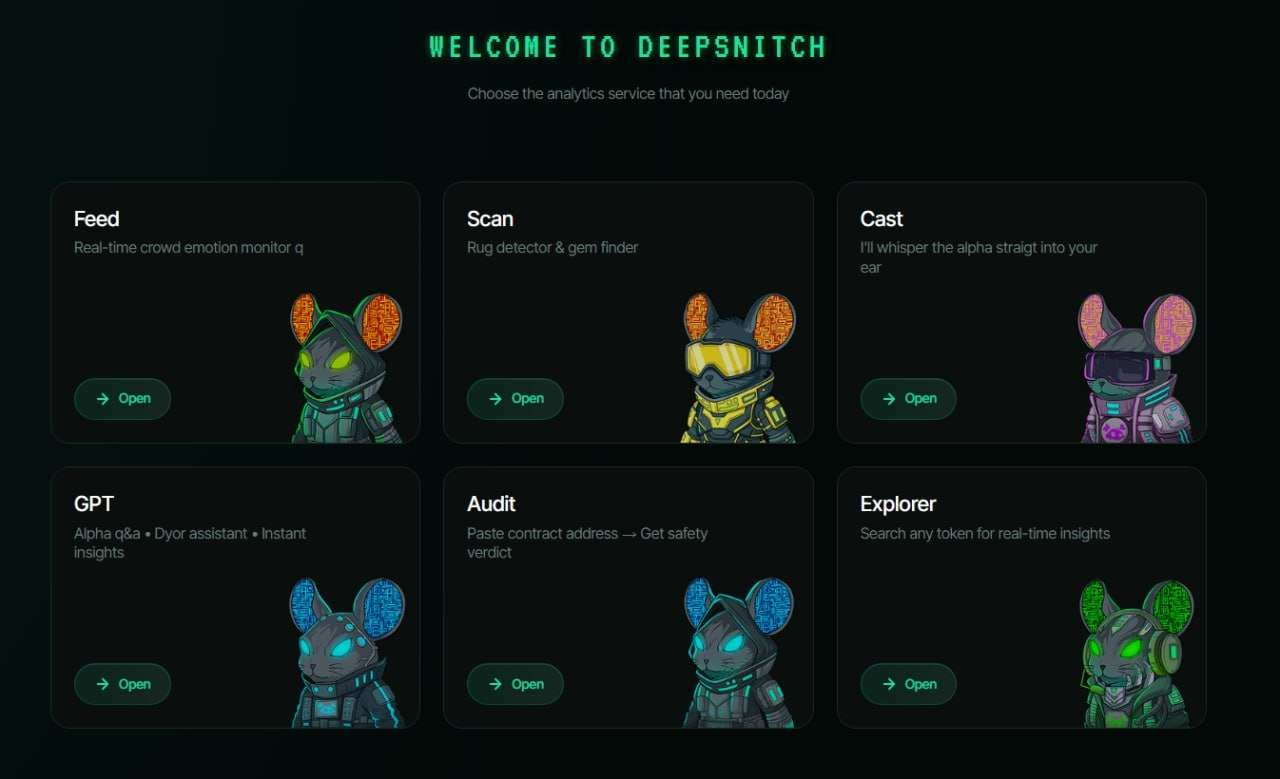
SnitchFeed shows whale moves in real time, so you’re early, not exit liquidity. Token Explorer breaks down risk, holders, and liquidity in seconds. SnitchCast keeps the market insights flowing so you’re never guessing.
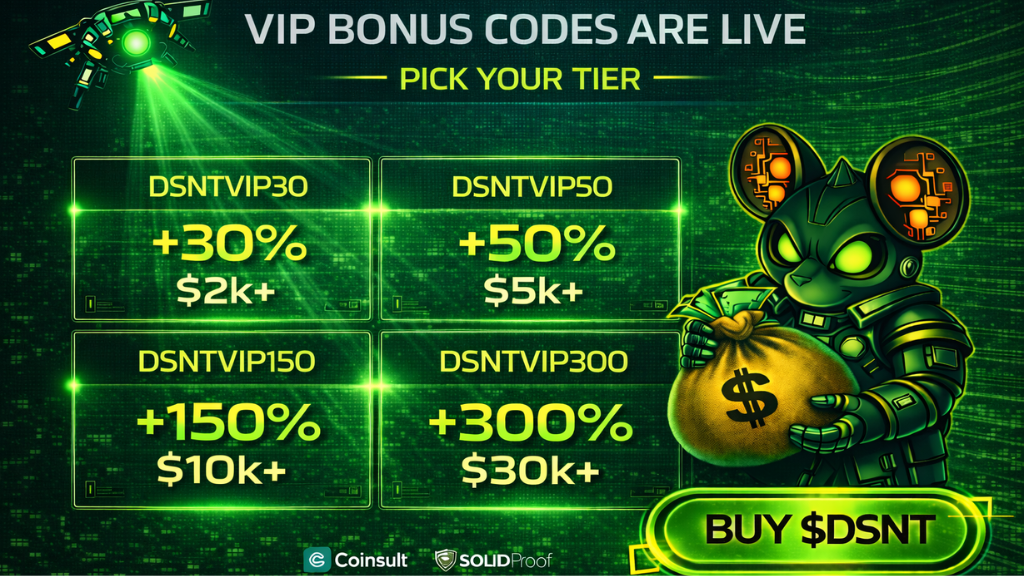
The contract has been audited by both Coinsult and SolidProof and passed with flying colors, showing it is solid and trustworthy. More than $2 million has already been raised, and early investors are sitting on 197% gains before Uniswap even opens.
If you invest $10,000 today, you will get 568,000 $DSNT with the 150% bonus. Investing $30,000 or more gives you the 300% bonus, which could turn your position into over $80 million if DSNT reaches $30. This is a huge opportunity for anyone who gets in early.
Cardano price prediction for 2026
The Cardano price prediction narrative for 2026 is finally aligned with the technology that has been shipping quietly for three years, and the Cardano market outlook is the most constructive it has been since the 2021 cycle.
ADA is currently trading around $0.28 on March 17, sitting 91% below its September 2021 all-time high of $3.10.
The Voltaire era is fully live, meaning Cardano is no longer a foundation-led project. Governance now runs through a Constitutional Committee, delegated representatives, and stake pool operators, with over $1 billion in ADA sitting under direct community treasury control, ready to deploy for ecosystem development.
Cardano forecast 2026 range sits between $2.75 and $3.25 for the year-end with a long-term 2030 target of $10.25. From $0.28 to $2.75 is nearly a 10x in the base case for the cycle, and the ada price target gets significantly more interesting if the spot ETF clears.
Hyperliquid (HYPE) update for 2026
HYPE is the Cardano alternative for traders who want a token that generates real revenue in every market condition, and Arthur Hayes just told the world it is his largest liquid altcoin position.
HYPE is currently trading around $41 on March 17, up 25% year-to-date and recovering strongly from its $20 low in February, with a market cap approaching $11 billion as Hyperliquid generates over $54 million in fees from mid-February to mid-March alone, making it the top-earning protocol in all of crypto, excluding stablecoins.
Hayes’ $150 August 2026 target requires Hyperliquid to grow annualized revenue to $1.4 billion, a figure it previously hit in August 2025.
From $40 to $150 is a near 4x in the Hayes bull case, and the revenue mechanics behind that move are already running in real time.
Final thoughts
Messari going AI-first and opening its data layer to autonomous agents is the Cardano price prediction macro signal that confirms 2026 is the year AI and crypto infrastructure merge permanently.
But DeepSnitch is the only presale in the market where five AI surveillance tools are already live, giving traders real-time insights every day, even before a single exchange listing.
Go to the official DeepSnitch AI website, get your $DSNT at $0.04487, and join X and Telegram for the listing announcement.
FAQs
What is the Cardano price prediction for 2026, and what catalysts make ADA a strong cycle play right now?
The Cardano price prediction for 2026 ranges from $2.75 to $3.25, driven by Voltaire governance live, $1B treasury under community control, CME futures, and a pending spot ETF. Load ADA for the 10x and load $DSNT before March 31 for the 300x.
What is the Cardano forecast 2026 compared to HYPE and $DSNT for traders who want maximum upside this cycle?
The Cardano forecast 2026 tops out at around $3.25 from $0.28, which is a solid 10x. HYPE targets $150 from $40 for a 4x per Hayes. $DSNT at $0.04487 carries 300x to 500x analyst projections and closes March 31, making it the sharpest Cardano forecast 2026 alternative for parabolic upside.
Does the ADA price target for 2026 and Messari’s AI pivot make this the best time to load ADA and $DSNT together before the AI boom fully lands?
Yes. The ADA price target of $2.75 to $3.25 in 2026, with CME futures and a pending ETF behind it, is one of the cleanest cycle entries available. Stack ADA for the blue chip move and $DSNT at $0.04487 for the generational wealth builder before March 31 closes the ground floor on both simultaneously.
The post Cardano Price Prediction 2026: Messari Just Went All-In on AI and DeepSnitch AI Deployed 5 AI Crypto Security Tools In Presale appeared first on Blockonomi.
Crypto World
XRP Price Prediction: Pepeto Surges Past $8 Million While Ripple and Hyperliquid Ride the Market Recovery Higher
Every token on your watchlist is green today. XRP jumped 9%. Bitcoin broke $75,000. But the biggest returns this cycle will not come from the coins that already moved overnight. They will come from the presale that reprices when the Binance listing opens.
While traders chase momentum in large caps that already moved, the sharpest money in the market is positioning in the projects that capture long term volume, not just today’s recovery bounce.
That is where Pepeto enters the conversation. The project built zero fee exchange infrastructure for the meme coin economy with cross chain bridging and AI token screening that verifies every listed token. The presale crossed $8 million according to CoinDesk, and the Binance listing is locked in. That early infrastructure is one reason Pepeto trends alongside popular topics like the XRP price prediction according to Bloomberg.
The market turns green as Bitcoin breaks $75,000 and altcoins surge
Bitcoin surged above $75,000 on March 17, breaking a six week range as spot ETFs recorded $1.3 billion in March inflows. XRP jumped 9% to $1.57. Ethereum surged 8.5% past $2,360. The Fear and Greed Index improved from extreme fear at 15 to 28. Capital is rushing back into every corner of the market.
Three tokens leading the conversation in this recovery
Pepeto
Most presale launches follow the same tired script. Investors fund a roadmap and hope the product eventually shows up months later. Pepeto flipped that entirely. The team built the exchange infrastructure first and then opened the presale, which is exactly why capital kept flowing in even when the market was at its lowest.
PepetoSwap handles zero fee trades across Ethereum, BNB Chain, and Solana. The cross chain bridge transfers assets at zero cost with AI contract verification scanning every transfer. The full exchange screens every listed token for contract risks, holder concentration, and liquidity depth. All three products route through the $PEPETO token at the protocol level, creating demand from real trading volume.
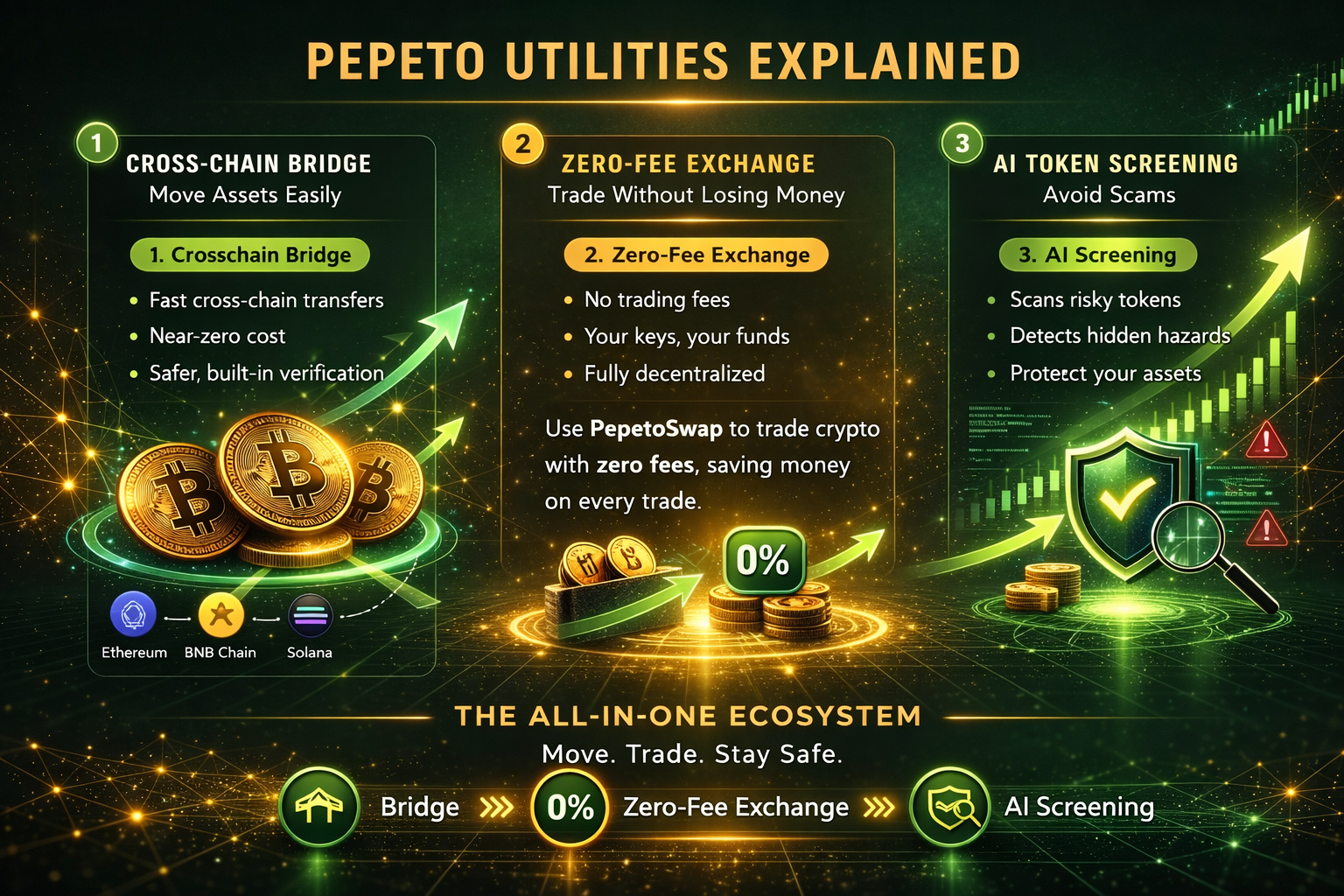
Exchange infrastructure like this is becoming more relevant by the day as the meme coin economy grows more complex and more fragmented. The need for a single zero fee exchange layer that verifies everything before it reaches traders has never been greater.
SolidProof and Coinsult completed independent audits with zero critical findings. The cofounder built Pepe to $11 billion. A former Binance executive advises the listing. At $0.000000186, a $10,000 entry becomes $1,000,000 if Pepeto reaches just 1% of what Pepe achieved with nothing. Staking at196% APY compounds daily while the listing approaches.
XRP price prediction: Can Ripple push past $1.67 as momentum builds?
XRP surged to $1.57, up nearly 9% in 24 hours as institutional access expands through regulated platforms like Coinbase Derivatives, which now offers futures for Bitcoin, Ethereum, Solana, and XRP. Retail activity has cooled however, with futures open interest falling to $2.33 billion, down sharply from the $10.94 billion peak in July.
The token faces resistance near $1.67. According to current XRP price predictions, a break above opens the path toward $2.00, but even that best case is roughly 27% from here. Not the 100x sitting at six zeros.
Hyperliquid rides the recovery as derivatives volume surges
HYPE trades near $40,47 according to CoinMarketCap as the broader market recovery lifts sentiment across the derivatives sector. Perpetual volume surged past $11 billion. Resistance at $39, with $43 and $50 as targets if it breaks.
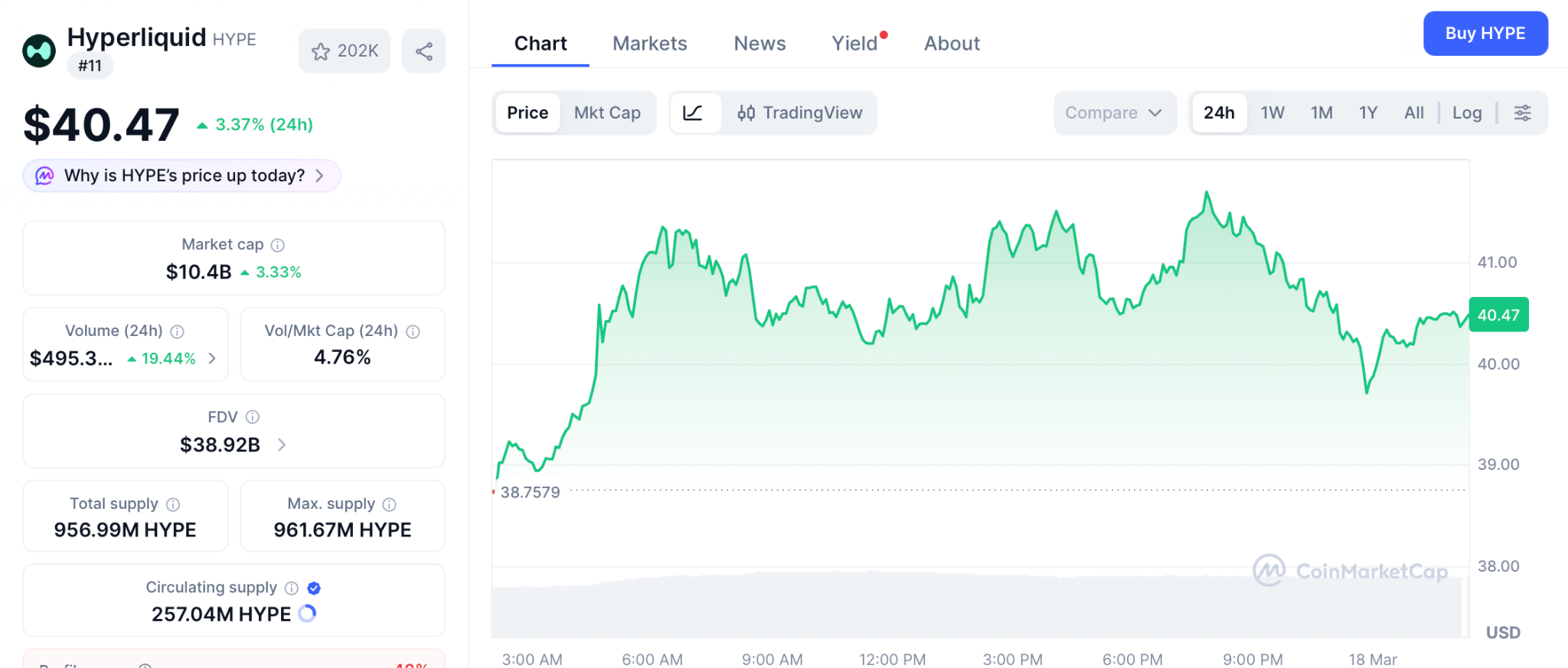
A solid position, but the upside is measured in percentage points, not the 100x that sits at six zeros with three exchange products and a Binance listing.
The recovery is here and the listing window is closing
You can chase the XRP price prediction and hope for 27% if everything breaks right. Or you can position at $0.000000186 in an exchange ecosystem built by the team that created an $11 billion token and backed by dual audits from SolidProof and Coinsult. Over $8 million in presale conviction says the smart money already made its choice.
The Binance listing will close this entry permanently. Staking at 196% APY compounds daily. People are already in. This is the kind of entry that changes everything, but only for those who actually take it.
Click To Visit Pepeto Website To Enter The Presale

FAQs
What factors could influence XRP’s price movement in the near term?
XRP price predictions depend on holding $1.40 support and breaking $1.67 resistance to confirm stronger upward momentum on charts.
How does institutional activity impact XRP’s long term outlook for 2026?
Growing access through regulated platforms may support the XRP forecast as institutional participation increases liquidity and long term confidence.
What signals do analysts watch when estimating XRP’s next big move?
Sentiment, futures open interest, and resistance zones shape XRP price targets, especially combined with broader crypto and macro trends.
The post XRP Price Prediction: Pepeto Surges Past $8 Million While Ripple and Hyperliquid Ride the Market Recovery Higher appeared first on Blockonomi.

Strategy paused its Bitcoin accumulation via STRC preferred stock after failing to raise fresh capital since Friday, signaling a notable shift after two weeks of aggressive buying. The pause comes as STRC traded below its $100 par value, a critical threshold that governs the company’s ATM issuance model. In a two-week window, Strategy added more than 40,000 BTC, funded by roughly $1.18 billion in STRC-linked sales, illustrating how the financing structure can drive large crypto exposure even for yield-focused vehicles. The current pause raises questions about the durability of the funding channel and the susceptibility of BTC exposure to shifts in liquidity conditions and capital markets dynamics.
Key takeaways
- STRC traded below its $100 par value, triggering a pause in its at-the-market BTC purchase program.
- Over a two-week period, Strategy accumulated more than 40,000 BTC, financed by about $1.18 billion in STRC-linked share sales.
- In the week ending March 15, 22,337 BTC were purchased, following 17,994 BTC bought the prior week, underscoring a highly active push into BTC before the halt.
- Historical episodes of STRC dipping below par have coincided with meaningful BTC price declines, suggesting potential near-term downside risk if the par-value threshold remains breached.
- Analysts flag a bear-flag setup that could pull BTC toward the 66,000–68,000 area or, if the pattern fails, threaten a steeper drop toward the 51,000 level.
Tickers mentioned: $BTC, $STRC
Sentiment: Neutral
Price impact: Negative. The halt in STRC-driven BTC buying and the par-value constraint may weigh on near-term BTC price if funding remains constrained.
Trading idea (Not Financial Advice): Hold. Monitor STRC trading dynamics and BTC price levels for signs of a renewed funding window or renewed selling pressure.
Market context: The episode underscores how exchange-traded funding vehicles for crypto can tighten liquidity and shift risk sentiment at times of capital-market stress, set against a backdrop of macro liquidity trends and ongoing volatility in Bitcoin price action.
Why it matters
The STRC program has been a visible mechanism for injecting fresh capital into Bitcoin markets. By design, STRC is a yield-focused preferred stock whose issuance hinges on trading above or at par. When STRC trades below the $100 mark, the economics of issuing new shares become less favorable, dampening the flow of fresh funds that previously supported aggressive BTC accumulation. The recent pause, therefore, is not merely a corporate funding decision but a signal of how sensitive crypto-market exposure can be to financing terms and capital structure constraints.
From a market perspective, the two-week surge—more than 40,000 BTC added in a short span—represented a substantial fraction of weekly mining output, underscoring the scale at which external financing can influence price discovery in a relatively short window. The $1.18 billion in STRC-linked proceeds that underwrote those purchases highlight how a few instrumented channels can temporarily tilt risk positioning and liquidity in the Bitcoin market. As the par threshold reasserts itself, traders will be watching whether STRC can sustain new issuances at or above par or whether the funding dynamics tilt toward a more tepid approach, tempering BTC demand for the time being.
Historical patterns add a cautionary note. When STRC traded below its par value in January, Bitcoin experienced a pronounced pullback in the ensuing weeks, roughly a 40% drop over about three weeks. A similar sequence unfolded in November 2025, with BTC sliding by around a quarter. While past performance is not a guarantee of future results, the recurring relationship between STRC’s par-value status and BTC price moves suggests that the current pause could precede a period of heightened volatility for BTC if par-value constraints persist. The interplay between a yield-focused funding vehicle and the sovereign price of Bitcoin remains a focal point for traders who track the macro-financial plumbing feeding crypto markets.
Recent technical signals add another layer of complexity. Bitcoin has faced resistance near the $76,000 level as it tests the upper boundary of a bear-flag pattern observed in intraday charts. A sustained move below the lower boundary could confirm a bearish continuation, with potential downside targets calling for a move toward the mid-to-low 60,000s and, on a sharper breakdown, toward the $51,000 region. The bear-flag framework, while not determinative on its own, has historically framed risk in the context of large-scale funding dislocations and speculative positioning tied to speculative financing instruments tied to crypto assets. For reference, market discussions and price analysis have linked BTC price behavior to these dynamics in related coverage and chart analyses.
The story also reflects broader market dynamics where large, yield-oriented buyers can dominate short-term price action if their funding pipelines run hot or cold. The juxtaposition of STRC’s par-value constraint with BTC’s price volatility illustrates how liquidity conditions—supercharged by financing structures—can materially influence risk premia, placement, and price resilience in a market that remains highly sensitive to macro signals and risk appetite. While the long-run trajectory of Bitcoin remains a function of network fundamentals and broader macro factors, the current pause underscores the importance of funding liquidity as a near-term driver of price activity.
The narrative around STRC’s activity is reinforced by the public data and ongoing coverage that track the relationship between STRC ATM issuance,BTC purchases, and the evolving price backdrop. For readers seeking more context, prior discussions and data points on STRC-driven purchases and related BTC exposure can be explored through related material that documents the scale of the program, its funding mechanics, and the historical linkages between par-value actions and BTC price moves.
The implications for investors hinge on monitoring both STRC’s ability to resume attractive issuance terms and Bitcoin’s response to any renewed influx of capital. If STRC can maintain or reestablish its par-value-driven issuance cadence, BTC demand could reemerge, potentially stabilizing prices near critical support and resistance zones. Conversely, a protracted pause could amplify near-term volatility as traders adjust to a tighter funding environment and reassess risk premia across crypto markets.
The Bearish scenario remains contingent on market conditions and structural funding flows, but the current data points—par-value dynamics, the scale of recent BTC purchases, and the observed price patterns—provide a framework for evaluating risk over the near term. In this context, the interplay between STRC’s capital formation mechanics and BTC’s price trajectory will be a critical determinant of crypto-market liquidity and sentiment in the weeks ahead.
What to watch next
- Monitor STRC’s trading near the $100 par value and any change in ATM issuance terms that could reopen the funding channel.
- Track weekly BTC purchases in relation to STRC-linked sales to assess whether the funding wind-down is temporary or signals a broader shift in exposure.
- Observe BTC price action around the 66,000–68,000 range for potential support and watch for any breach that could confirm or disprove bear-flag expectations.
- Look for official statements, filings, or disclosures from STRC that shed light on capital-raising plans and the structure of ongoing ATM transactions.
Sources & verification
- STRC.LIVE dashboard for at-the-market share issuance data and stock activity.
- BTC price data and BTC price-related analyses linked in coverage of Bitcoin price movements.
- Article detailing STRC’s role in two-week Bitcoin purchases and the total BTC accumulated, including the $1.18 billion in STRC-linked proceeds.
- Historical references to BTC price declines following STRC par-value breaches in January and November 2025.
- Charts and analyses showing BTC price behavior around $76,000 and the bear flag pattern, including references to TradingView and related price commentary.
Key figures and next steps
Bitcoin (CRYPTO: BTC) exposure linked to STRC’s financing model remains a focal point for traders watching liquidity cycles and risk appetite. The current pause in STRC-driven purchases underscores how capital structure dynamics can drive or dampen crypto-market participation, with potential knock-on effects on BTC price and volatility in the near term. Investors will be watching whether STRC can resume issuance at or above par, whether BTC demand stabilizes around technical support levels, and how broader market liquidity conditions evolve as macro narratives shift in the coming weeks.
What to watch next
- Any update from STRC on par-value thresholds and ATM issuance terms within the next few trading sessions.
- New BTC purchase activity tied to STRC-linked capital if the par-value hurdle is overcome.
- BTC price behavior once markets digest the potential for continued selling pressure or fresh liquidity injections.
Explore all the latest and most important advancements across the Pi Network ecosystem.
The team behind the controversial crypto project Pi Network unveiled several important updates lately, while the community celebrated its symbolic Pi Day.
PI’s price had its glory moments, briefly climbing to a five-month peak, but then experienced a massive correction.
The Latest Developments
March has been quite eventful for Pi Network. At the start of the month, the Core Team announced that the protocol v19.9 migration was successfully completed, while version 20.2 was scheduled for release around March 12. The official confirmation about the migration arrived with the Pi Day celebratory announcement.
Another major development was Kraken’s decision to allow trading services with Pi Network’s native cryptocurrency. This happened just a day before Pi Day – the community’s special date, celebrated because it matches the mathematical constant π (3.14), and which is logically held annually on March 14.
This year, the team marked the occasion by rolling out several ecosystem upgrades designed to boost utility, attract more developers, and strengthen the network’s overall infrastructure. Some of the improvements include new Mainnet capabilities for Pi App Studio, advancements that enable future smart contract functionality, KYC validator rewards, and more.
Most recently, Pi Network’s team disclosed that second migrations have started and “will continue with a gradual rollout, opening the door for Pioneers to bring additional PI to Mainnet and further participate in the ecosystem.” The post on X received mixed reactions: some users praised the move, whereas others questioned why the team had launched a second migration when the first one hadn’t been properly completed.
PI Remains Trending
The numerous developments surrounding Pi Network led to significant volatility in PI. The protocol updates, the listing on Kraken, and the anticipation of Pi Day boosted the price to a five-month peak of almost $0.30. At one point, the asset’s market capitalization neared $3 billion, making PI the 36th-largest cryptocurrency.
You may also like:
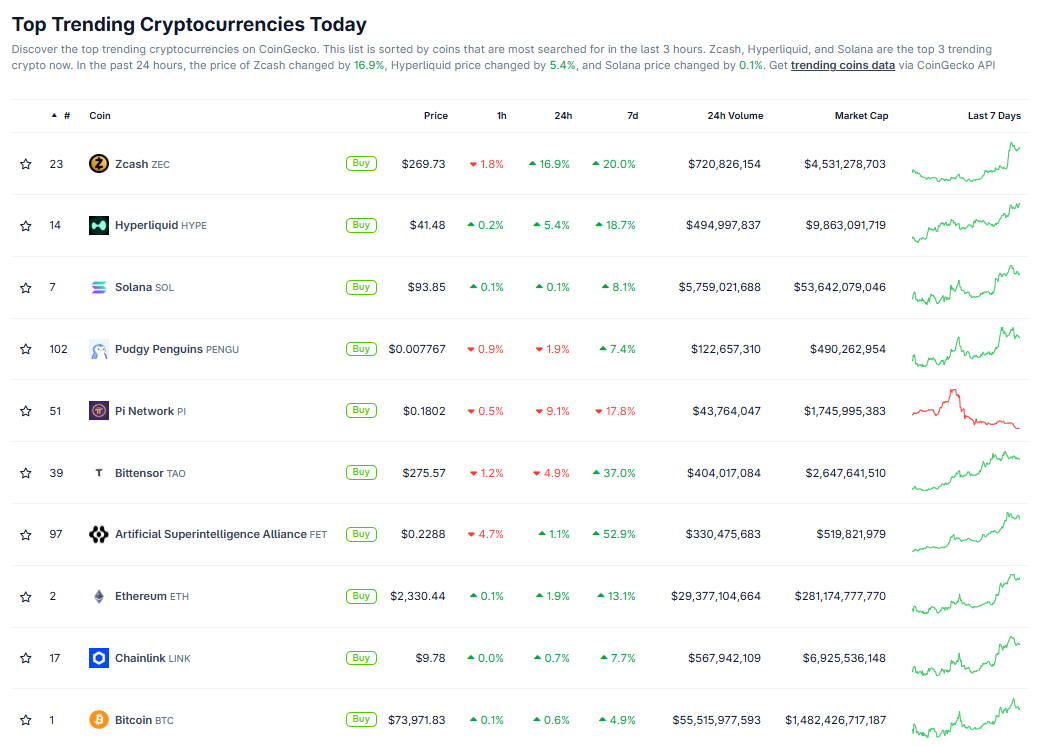
However, over the past few days, the price headed south just as rapidly in what appeared to be a classic “sell-the-news” moment. As of this writing, PI trades at around $0.18 (per CoinGecko’s data), representing a 9% daily decline and a 19% collapse over the week.
Despite the downtrend, the asset remains one of the most-searched digital assets. It is the fifth-most trending cryptocurrency on CoinGecko today, surpassing well-known names such as Bittensor (TAO), Ethereum (ETH), and Bitcoin (BTC).

What Lies Ahead?
In the following days, the daily token unlocks will exceed 15 million on a couple of occasions. Nonetheless, the end of March and the beginning of April are expected to be much calmer on that front, which could stabilize the price and slow down the recent pullback.

Moreover, PI’s Relative Strength Index (RSI) has fallen to 10, signaling oversold conditions that can sometimes precede a resurgence. The technical analysis tool ranges from 0 to 100, and conversely, anything above 70 is considered bearish territory and indicates that a short-term correction could be on the way.

Binance Free $600 (CryptoPotato Exclusive): Use this link to register a new account and receive $600 exclusive welcome offer on Binance (full details).
LIMITED OFFER for CryptoPotato readers at Bybit: Use this link to register and open a $500 FREE position on any coin!
Disclaimer: Information found on CryptoPotato is those of writers quoted. It does not represent the opinions of CryptoPotato on whether to buy, sell, or hold any investments. You are advised to conduct your own research before making any investment decisions. Use provided information at your own risk. See Disclaimer for more information.
VersaBank, a federally chartered Canadian digital bank focused on institutional lending, is adding foreign exchange functionality to its tokenized deposit platform, allowing users to convert between US and Canadian dollars within a blockchain-based system.
Announced Tuesday, the upgrade enables real-time, 24/7 currency conversion using Real Bank Tokenized Deposits (RBTDs), that is, digital representations of fiat deposits issued and backed by the Ontario-based institution.
The feature is designed to improve cross-border transactions by reducing reliance on traditional foreign exchange rails, which are often slower and limited by banking hours.
The update marks an incremental step toward commercialization rather than a full product launch. VersaBank has been piloting its tokenized deposit system since last year, and the addition of US dollar and Canadian dollar conversion expands its functionality for cross-border payments, particularly between the two countries.
RBTDs are tokenized versions of bank deposits that can be transferred on blockchain infrastructure while remaining liabilities of the issuing bank and backed 1:1 by customer deposits, according to the American Bankers Association. Unlike stablecoins, which are typically issued by nonbank entities, they operate within the traditional banking system.
Related: Columbia Business professor casts doubt on tokenized bank deposits
Financial institutions explore tokenized deposits
Banks are increasingly exploring tokenized deposits as a way to combine blockchain-based speed and programmability with the safety of traditional deposits, particularly for use cases like cross-border payments and financial settlement, as outlined by KPMG.
One notable example is BNY’s launch of tokenized deposits for institutional clients, aimed at supporting collateral and margin requirements. BNY said the move comes as institutions seek “faster and more efficient ways to move assets.”
Globally, Singapore’s Project Guardian is exploring asset tokenization in financial markets, including pilot programs involving tokenized deposits and other digital assets.
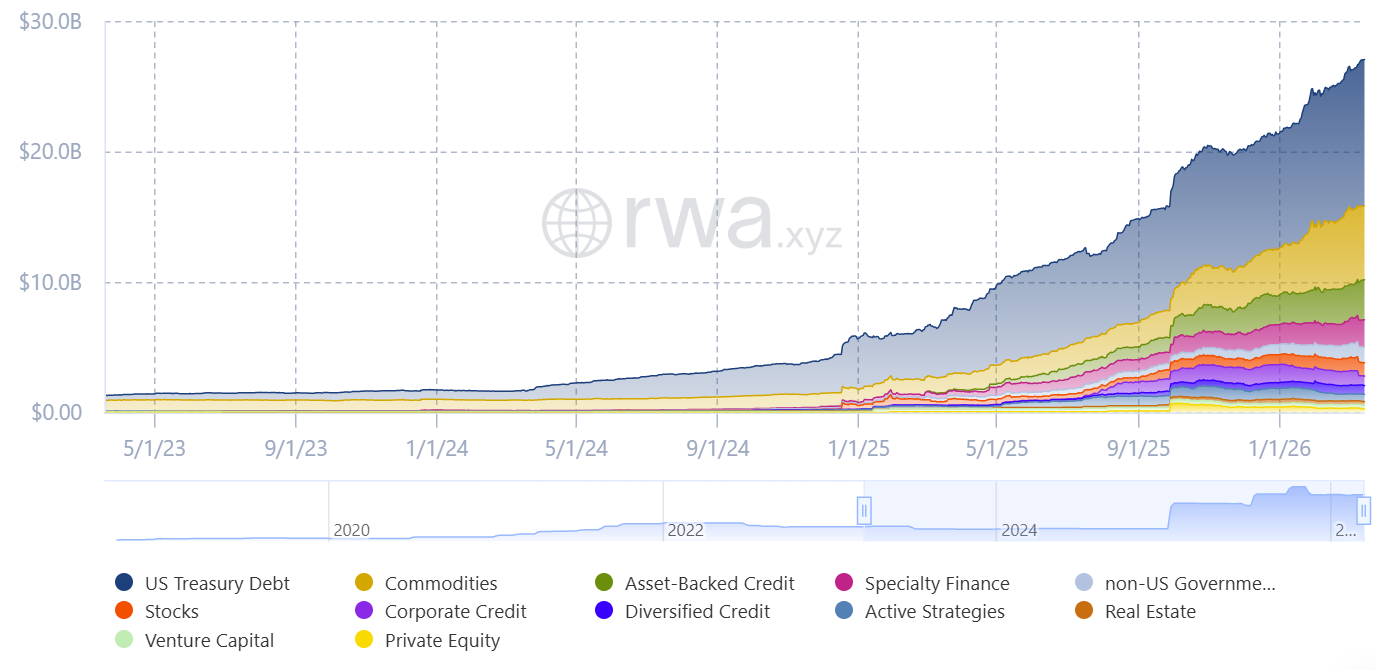
The push comes as tokenization emerges as one of blockchain’s fastest-growing use cases. Industry data shows more than $27 billion in tokenized assets across products ranging from private credit to US Treasury bonds and equities.

Related: Crypto’s 2026 investment playbook: Bitcoin, stablecoin infrastructure, tokenized assets
Crypto World
Ethereum Derivatives and Technicals Align as Bullish Signals Stack Up Across the Market
TLDR:
- Ethereum’s derivatives market saw Bybit record a rise of around 2.51 million ETH, pointing to active liquidity redistribution across platforms.
- Ethereum’s SuperTrend indicator flipped from Sell to Buy for the first time since September, previously triggering gains of 52% and 174%.
- ETFs accumulated roughly 83,000 ETH worth approximately $193 million over three weeks, adding real institutional demand pressure.
- Ethereum reclaimed $2,200 as support after 39 days below it, with traders now watching $2,400 and $2,600 as the next key levels.
Ethereum is drawing renewed attention as derivatives market data points to a structural shift in trader behavior. Open interest figures across major exchanges show clear signs of liquidity redistribution rather than outright capital outflows.
Technical indicators are flipping bullish for the first time in months. ETF demand over recent weeks adds another layer of confidence to the trend currently taking shape.
Open Interest Data Points to Liquidity Redistribution
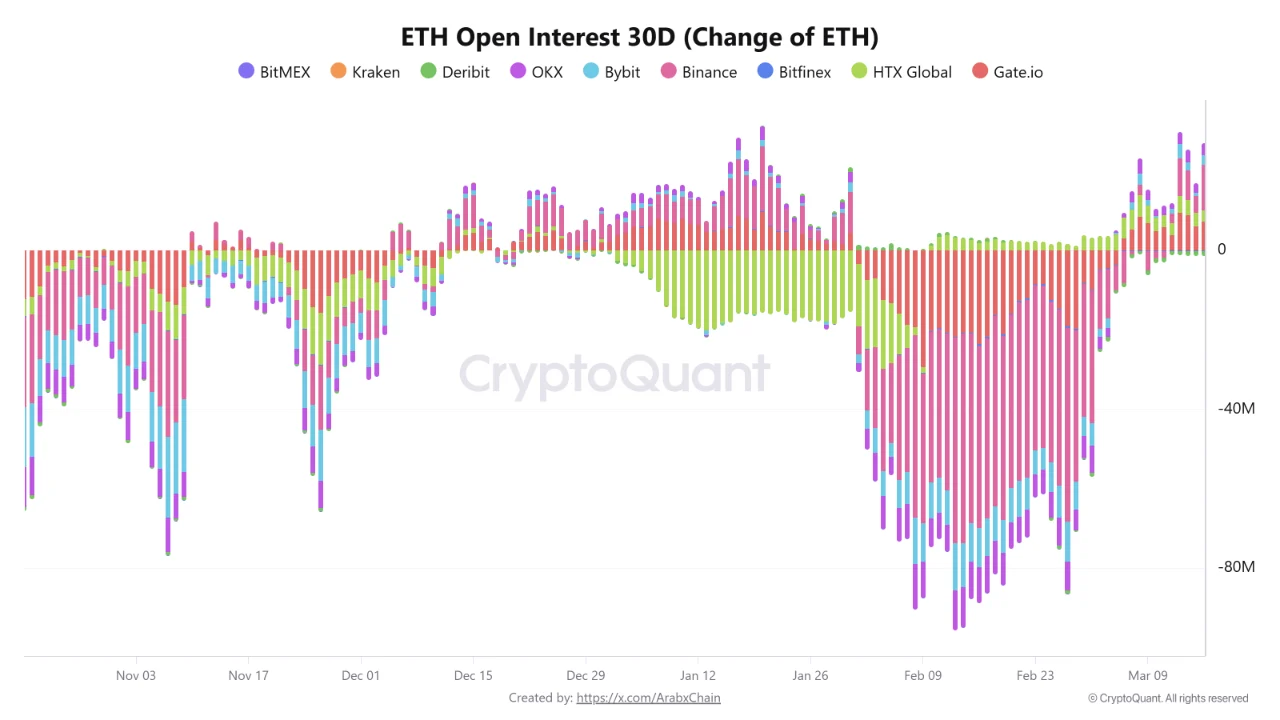
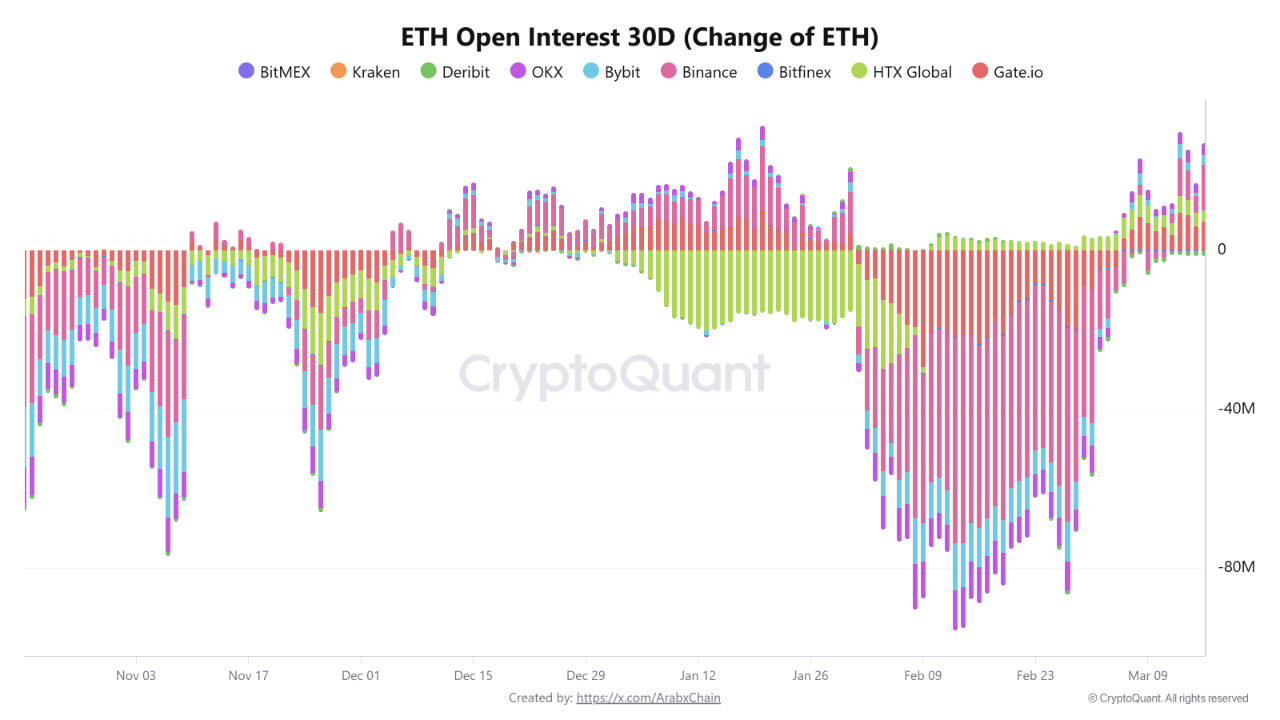
Ethereum’s derivatives market is showing a notable divergence across trading platforms. The ETH Open Interest 30D Change indicator reveals clear shifts in the structure of open positions.
Source: Cryptoquant
Binance recorded an increase of approximately 11,400 ETH, indicating continued liquidity inflows. This points to ongoing activity despite recent market fluctuations.
Bybit also posted a notable rise of around 2.51 million ETH. This further supports the idea of redistribution rather than a wholesale exit from positions.
Bitfinex, however, saw a decrease of roughly 35,700 ETH, while Kraken dropped by around 4,300 ETH. Gate.io also recorded limited movement compared to other major platforms.
These figures reflect weaker activity or reduced risk appetite on certain exchanges. Still, the contrast between platforms does not point to a market breakdown.
Rather, it suggests a state of caution and repositioning ahead of stronger moves. Traders closing positions on some platforms are opening new ones elsewhere.
Sustained liquidity inflows into the derivatives market support the stability of Ethereum’s uptrend. Elevated or rising open interest signals trader confidence and a willingness to hold positions.
This pattern reinforces the persistence of bullish momentum rather than pointing to a temporary move. The data overall leans toward continued upward pressure on price.
Technical Indicators and ETF Demand Reinforce the Uptrend
Ethereum recently triggered a key technical signal that traders have been watching closely. Analyst Ali Charts noted that the SuperTrend indicator flipped from Sell to Buy for the first time since September.
In the previous two instances, price surged by 52% and 174% respectively. This kind of reversal signal tends to attract both technical and momentum-driven traders.
A critical part of the breakout involves reclaiming a key price level. Ethereum managed to hold above $2,200 after spending 39 days trading below it. This reclaim marks a clear structural shift in price action. The next levels to watch are $2,400 and $2,600.
ETF demand has also played a measurable role in reinforcing the current move. Over the past three weeks, ETFs accumulated approximately 83,000 ETH, worth around $193 million.
This level of institutional buying adds real demand pressure to the market. It also reduces the likelihood of a sharp reversal in the near term.
As Ethereum continues building on these technical and structural developments, traders are watching for follow-through.
The combination of rising open interest, a trend reversal signal, and ETF-driven demand creates a layered bullish case.
Whether price can sustain gains above current levels will be key. The coming weeks will test the strength of this recovery.
The post Ethereum Derivatives and Technicals Align as Bullish Signals Stack Up Across the Market appeared first on Blockonomi.

San Francisco sizzles in March as a winter heat wave bakes the US West
Russian forces take control of two more Ukrainian villages, defence ministry says

Bitrefill Claims Lazarus Group Hacked Them, Stealing Funds


-
 Tech7 days ago
A 1,300-Pound NASA Spacecraft To Re-Enter Earth’s Atmosphere
-
 Crypto World4 days ago
HYPE Token Enters Net Deflation as HyperCore Buybacks Outpace Staking Rewards
-

 Fashion4 days ago
Weekend Open Thread: Addict Lip Glow
-

 Tech2 days ago
Your Legally Registered ‘Motorcycle’ Might Not Count Under Proposed US Law
-
Sports3 days ago
Why Duke and Michigan Are Dead Even Entering Selection Sunday
-

 NewsBeat6 days ago
Residents reaction as Shildon murder probe enters second day
-

 Business2 days ago
Search for Savannah Guthrie’s Mother Enters Seventh Week with No Arrests
-

 Business7 days ago
Search Enters Sixth Week With New Leads in Tucson Abduction Case
-

 Sports6 days ago
PWHL, Senators discussing plan to keep Charge in Ottawa
-

 Business4 days ago
US Airports Launch Donation Drives for Unpaid TSA Workers as Partial Government Shutdown Enters Fifth Week
-
 Tech8 hours ago
Are Split Spacebars the Next Big Gaming Keyboard Trend?
-
Crypto World3 days ago
Coinbase and Bybit in Investment Talks: Could Bybit Finally Enter the US Crypto Market?
-

 NewsBeat6 days ago
I Entered The Manosphere. Nothing Could Prepare Me For What I Found.
-

 Business4 days ago
Country star Brantley Gilbert enters growing non-alcoholic beer market
-

 Business2 days ago
Australian shares drop as Iran war enters third week
-

 Crypto World2 days ago
Crypto Lender BlockFills Enters Chapter 11 with Up to $500M in Liabilities
-

 Sports4 days ago
College Basketball Best Bets: Conference Tournament Semifinal Picks
-

 Politics7 days ago
Trump Says Middle East Is ‘Very Lucky’ That He’s President
-
 Crypto World6 days ago
Three Binance Charts May Be Hinting at Bitcoin’s Next Move
-
 Business5 days ago
Trump demands Powell cut rates as Iran conflict raises energy prices


You must be logged in to post a comment Login