Connect with us
DAPA Banner

Business

Dow Jones Industrial Average Rises 388 Points on March 16 Amid Oil Price Pullback; Futures Dip on March 17

Published

on

GameStop shares soared over 400% as small investors took on big hedge funds

The Dow Jones Industrial Average climbed solidly on Monday, March 16, 2026, closing up 387.94 points, or 0.83%, at 46,946.41 — its strongest daily gain in recent weeks amid a brief easing in oil prices that helped alleviate inflation fears tied to the ongoing Middle East conflict. The advance followed a period of volatility driven by escalating U.S.-Iran tensions, which had pushed crude higher and pressured equities earlier in the month.

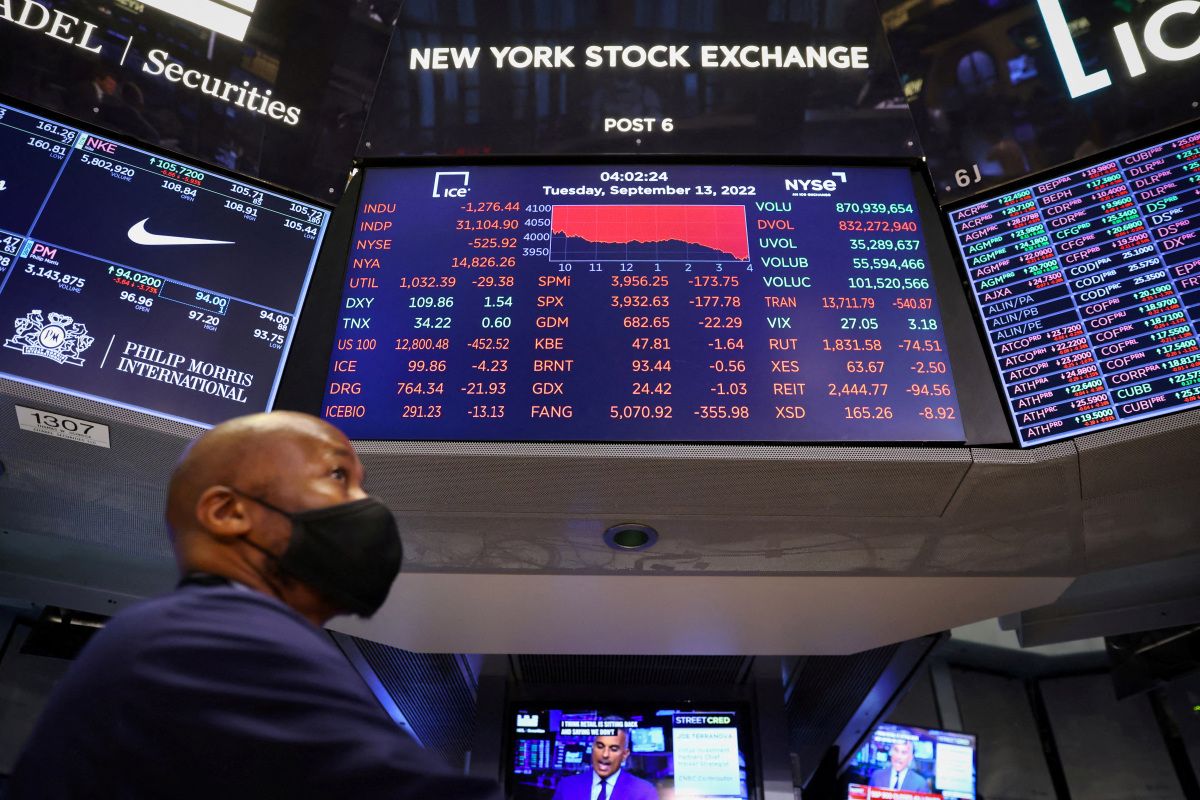
A trader stands beneath a screen on the trading floor displaying the Dow Jones Industrial Average at the New York Stock Exchange (NYSE) in Manhattan, New York City

The benchmark index opened at 46,707.40 and reached an intraday high of 47,176.14 before paring some gains in late trading. Volume totaled around 515 million shares, reflecting broad participation as 25 of the 30 Dow components finished higher. Tech and growth-oriented names led the charge, with Amazon surging 1.96% to 211.74, Salesforce jumping 2.86% to 198.34, and Microsoft advancing 1.11% to 399.95. Industrials also contributed, as Caterpillar rose 0.83% to 699.78, extending its impressive year-to-date performance of more than 21%.

Broader markets echoed the positive tone. The S&P 500 gained 1.01% to close near 6,699.38 — its biggest one-day advance in five weeks — while the Nasdaq Composite jumped 1.22% to 22,374.18, fueled by AI enthusiasm following Nvidia’s recent GTC 2026 keynote highlighting new chip advancements. The rally marked a rebound after three consecutive weeks of losses for major indices, as investors looked past immediate geopolitical risks when oil retreated from recent peaks.

Oil prices played a pivotal role in Monday’s sentiment shift. Brent crude, which had spiked above $100 a barrel amid attacks on energy infrastructure in the Persian Gulf and Strait of Hormuz disruptions, pulled back modestly, providing breathing room for equities sensitive to energy costs. The drop in crude helped all 11 S&P sectors close higher, with energy names showing resilience despite the moderation.

However, the relief proved short-lived. By early Tuesday, March 17, U.S. stock futures turned lower as oil resumed its advance. Dow futures fell around 0.2% to 0.3%, with contracts pointing to a softer open. Brent crude climbed more than 3% in overnight trading, rebounding toward $104 a barrel on renewed concerns about Middle East escalation, including reports of stepped-up Iranian actions and stalled diplomatic efforts. Asian shares were mixed, with early gains fading in Tokyo and Seoul, while European indicators suggested potential declines of 0.5%.

Advertisement

The geopolitical backdrop remains the dominant driver. The ongoing conflict involving U.S., Israel, and Iran has disrupted key shipping lanes and energy facilities, raising fears of sustained inflation and supply chain issues. Oil’s volatility has whipsawed markets: a brief cooldown Monday spurred buying, but Tuesday’s rebound soured the mood ahead of European and U.S. opens. Analysts noted that any further escalation could pressure consumer spending and corporate margins, particularly in transportation and manufacturing sectors.

Economic data this week adds another layer. Pending home sales figures are due March 17, offering insight into housing resilience amid elevated mortgage rates. Upcoming retail sales and inflation reports will further shape Fed expectations, though no immediate policy shift is anticipated. The market’s focus on oil and geopolitics has overshadowed some positive corporate developments, including AI-driven optimism in tech.

Year-to-date, the Dow has shown choppiness, recovering from February highs near 50,000 but remaining below peak levels amid the conflict’s drag. The index’s March performance reflects a correction phase, with rebounds like Monday’s providing hope for stabilization if external pressures ease.

Component-level moves on March 16 highlighted sector rotation. Financials like Goldman Sachs rose 1.61% to 794.77, while Boeing gained 1.71% to 213.47 on industrial strength. Laggards were few, including Verizon (down 0.80% to 50.97) and Disney (down 0.63% to 98.66). The absence of major negative earnings surprises allowed buyers to dominate.

Advertisement

As trading resumes March 17, investors brace for continued volatility. Futures declines suggest caution, with oil above $100 potentially capping upside. Traders monitor any diplomatic breakthroughs or further incidents in the Gulf that could sway sentiment.

The Dow’s recent pattern — sharp swings tied to energy prices — underscores vulnerability to global events in an era of heightened uncertainty. While Monday’s gain offered encouragement, Tuesday’s premarket action signals the rally’s fragility amid persistent Middle East worries.

Continue Reading
Click to comment

You must be logged in to post a comment Login

Leave a Reply

Business

Xfinity Outage Disrupts San Francisco Bay Area Internet Service on March 16, Sparking Customer Frustration

Published

on

Apple's Foldable iPhone

Thousands of Xfinity customers across the San Francisco Bay Area experienced widespread internet disruptions Monday morning, March 16, 2026, as reports of outages surged shortly after 9 a.m. local time. The incident, which peaked with more than 7,000 user complaints on outage tracking sites, affected residential and business users in San Francisco, Oakland, the South Bay, Marin County, Napa and other regions, highlighting recurring connectivity challenges in one of the nation’s most tech-reliant areas.

xfinity
xfinity

Downdetector, a real-time outage monitoring platform, recorded a sharp spike in reports beginning around 9 a.m. PDT, with the peak hitting at 9:14 a.m. The heat map concentrated heavily in the Bay Area, showing clusters in Oakland, San Jose, Napa, Marin and the Peninsula. Users primarily reported issues with internet access, though some mentioned problems with TV services, voice lines and the Xfinity app itself becoming inaccessible during the height of the disruption.

Local media outlets quickly picked up on the complaints. SFGATE reported that the outage cut internet for many at the start of the workweek, describing it as widespread across the region. KRON4 noted that reports spiked after 9 a.m., with no immediate explanation from Comcast, the parent company of Xfinity. The San Francisco Chronicle added that brief outages hit Xfinity customers across San Francisco, the East Bay, North Bay, Peninsula and South Bay, with most issues appearing to resolve by 10 a.m.

A Comcast spokesperson told the Chronicle that the disruption stemmed from a network update being performed by the company. The statement suggested the maintenance, intended to improve service, inadvertently caused the temporary outage. No estimated restoration time was initially provided, though some user reports on social media and forums indicated partial recovery within an hour for many affected areas.

The Xfinity outage map, accessible via the company’s support site, showed scattered spots of ongoing issues across the Bay Area as of mid-morning Monday. By late afternoon and into Tuesday, March 17, user reports on Downdetector had dropped significantly, with the platform indicating no major current problems nationwide as of early Tuesday evening KST (corresponding to morning PDT). However, isolated complaints persisted in pockets of the region, and some Reddit threads in r/bayarea discussed lingering effects or unrelated scheduled maintenance starting overnight into March 17.

Advertisement

Social media platforms lit up with frustrated customers sharing experiences. On Reddit, users in Livermore and other East Bay spots reported the outage rendering even the Xfinity app and status page unusable while on cellular data. Threads on X (formerly Twitter) and Facebook echoed similar sentiments, with some drawing comparisons to a near-anniversary outage from March 2025 that similarly impacted San Francisco.

The incident underscores broader concerns about internet reliability in the Bay Area, where high-speed connectivity is essential for remote work, education and the tech economy. Xfinity, as the dominant cable broadband provider in much of the region, frequently faces scrutiny during such events. Monday’s disruption affected not only individual users but potentially businesses relying on stable connections for operations, video calls and cloud services.

Some reports suggested spillover effects to other providers, including brief mentions of AT&T and AWS-related issues, though Xfinity remained the primary focus. The Chronicle noted complaints from both Xfinity and AT&T customers, but details remained limited on whether the events were linked.

Customers were advised to check the official Xfinity outage map by entering their full service address for personalized status updates. The company also recommends texting “Out” to 266278 for outage information or using the Xfinity app when accessible. Troubleshooting steps include restarting modems and routers, though during widespread events, these often prove ineffective until network restoration.

Advertisement

As of Tuesday, March 17, 2026, the bulk of reports indicate service has returned for most Bay Area users impacted Monday. Downdetector’s 24-hour map shows resolved concentration in the region, and no new surge has emerged. Comcast has not issued a formal follow-up statement detailing the full scope or preventive measures post-update.

The event serves as a reminder of infrastructure vulnerabilities amid increasing dependence on broadband. Bay Area residents, many working hybrid or fully remote schedules, expressed annoyance at the timing — hitting during peak morning productivity hours. Some speculated about underlying causes beyond the admitted network update, including potential equipment failures or external factors, though no evidence supported those theories.

For ongoing monitoring, users can visit downdetector.com/status/xfinity or xfinity.com/support/statusmap. Comcast encourages signing up for text alerts for future incidents.

While brief, Monday’s outage disrupted daily routines for thousands in the tech-forward Bay Area. As service stabilizes, attention turns to Comcast’s network reliability efforts ahead of any future planned maintenance or unexpected events.

Advertisement
Continue Reading

Business

Declining Venture Funding Highlights the Region’s Exit Challenges

Published

on

Southeast Asia Startup Funding Hits $5.4 Billion in 2025

For years, the dominant narrative around Southeast Asia’s private capital markets was one of boundless promise: a region of 700 million consumers, accelerating digitization, and vast pools of untapped enterprise value waiting to be unlocked by bold investors.

Key Takeaways

  • Structural downturn in VC funding
    • Venture capital deal value in Southeast Asia fell by 33.9% in 2025, marking a multiyear contraction.
    • This is described as a “recalibration” rather than a temporary pause.
  • Three forces driving the decline
    • Fundraising pressures: Difficulty raising new funds, especially from international limited partners.
    • Reduced cross-border participation: Retreat of US and Chinese investors due to domestic focus and geopolitical friction.
    • Tighter diligence standards: More scrutiny on profitability and business models, leading to fewer deals.
  • Private equity resilience
    • PE remains active in infrastructure, logistics, and B2B platforms, which offer tangible assets and predictable cash flows.
    • Reflects a global shift toward defensible, cash-generating investments.
  • Liquidity crisis
    • The biggest challenge is exits, not capital deployment.
    • Shallow IPO markets and limited strategic buyers constrain liquidity.
    • Secondary sales and sponsor-to-sponsor deals are common but insufficient substitutes for robust exit mechanisms.

That narrative has not collapsed entirely, but it has been brutally stress-tested. And the stress test, judging by the latest data, has exposed fault lines that optimistic forecasts long papered over.

According to PitchBook’s 2026 Southeast Asia Private Capital Breakdown, venture capital deal value in the region fell by 33.9% in 2025, continuing what is now an undeniable multiyear contraction. 

Let that number settle for a moment. A one-third reduction in deal value, compounded across consecutive years, is not a cyclical dip. It is a structural recalibration. 

The report is careful to use that precise language: this is a “continued recalibration rather than a short-term pause.” That distinction matters enormously, both for how investors interpret the data and for how founders, regulators, and policymakers respond to it. 

Advertisement

The Three Forces Strangling VC

PitchBook identifies three converging forces behind the collapse in VC deal value: fundraising pressures, reduced cross-border participation, and the application of tighter diligence standards. Each deserves scrutiny on its own terms, because together they form a self-reinforcing cycle that makes rapid recovery unlikely.

Fundraising pressure is the upstream problem. When managers cannot raise new funds, they cannot deploy capital, and in a market where international limited partners have grown increasingly skeptical of emerging market exposure, Southeast Asian-focused vehicles have found it harder to close. 

That capital drought cascades downstream into fewer term sheets, smaller check sizes, and a narrowing of the companies that can realistically access institutional venture funding.

Reduced cross-border participation compounds the damage. Southeast Asia’s VC ecosystem was never purely indigenous. It was built, in significant part, on the back of US and Chinese capital that saw the region as a growth frontier. With US investors more domestically focused and Chinese cross-border investment constrained by geopolitical friction, that external demand has retreated. What remains is a thinner, more locally concentrated investor base that simply cannot fill the gap.

Advertisement

And tighter diligence? That is, frankly, long overdue but painful in the short term. The easy-money era inflated valuations and funded business models that struggled to demonstrate a credible path to profitability. Investors are now asking harder questions at the term sheet stage, which is correct and necessary, but which inevitably means fewer deals getting done and more time between capital events. 

Private Equity: The Relative Bright Spot

Not everything is contracting. The PitchBook report draws a clear distinction between the VC malaise and the comparative resilience of private equity, and that distinction is instructive. PE sponsors in Southeast Asia have continued to back opportunities in infrastructure, logistics, and B2B platforms, sectors characterized by tangible assets, recurring revenues, and the kind of cash flow visibility that makes institutional underwriting tractable.

This is not coincidental. It reflects a broader global reallocation away from high-multiple growth bets and toward assets with defensible economics. Infrastructure, in particular, has become a magnet for private capital across Asia, as governments grapple with energy transition, digital connectivity, and supply chain diversification. Southeast Asia, sitting at the intersection of all three trends, offers genuine strategic relevance for patient capital with long investment horizons.

The B2B platform play is also worth noting. As consumer-facing digital businesses, the darlings of the 2015 to 2022 boom, have struggled with unit economics and customer acquisition costs, enterprise-focused models have quietly demonstrated better durability. Investors who pivoted toward B2B have been rewarded with more predictable revenue profiles, and the PE community has taken notice.

Advertisement

But even this relative optimism must be contextualized against the larger structural challenge hanging over the entire market. 

The Real Crisis: Liquidity Has Nowhere to Go

Here is the hard truth that PitchBook’s report surfaces with quiet clarity: the challenge for Southeast Asia’s private markets is no longer deployment. It is liquidity.

For a decade, the dominant conversation was about whether enough capital was flowing into the region. Governments competed for investment, incubators proliferated, and unicorn valuations became a proxy for national ambition. The deployment problem, at least partially, was solved. The liquidity problem never was.

Exits remain the region’s single greatest constraint. Two structural deficiencies define the landscape: shallow IPO markets and a limited pool of strategic buyers. Neither is new, but both have become more acute as the vintage years of 2018 to 2022 investments approach the natural horizon for liquidity events.

Advertisement

Southeast Asia has never developed the deep, liquid public market infrastructure of comparable economic regions. Exchanges in Singapore, Indonesia, Thailand, and Malaysia exist, but they lack the depth, analyst coverage, and institutional investor participation to absorb large-scale VC-backed listings at the valuations that would make exits meaningful for early-stage investors. The result is a structural mismatch: founders and funds have built companies, but the machinery to monetize them remains underdeveloped.

Strategic acquisitions are similarly constrained. The large technology conglomerates, both regional champions and global platforms, that might once have served as natural acquirers have pulled back from aggressive M&A. Budget discipline and regulatory scrutiny have made big-ticket strategic acquisitions rarer, leaving secondary sales and sponsor-to-sponsor transactions as the primary exit mechanisms. These are useful instruments, but they are not the same as genuine market liquidity. 

What Comes Next: A Market That Must Earn Its Recovery

Some will read the PitchBook data and see opportunity in adversity, the classic contrarian argument that the best investments are made when sentiment is at its worst. That argument has merit in principle. The structural fundamentals of Southeast Asia, including demographics, urbanization, and the digitization of commerce and financial services, have not disappeared. They remain compelling on a decade-long view.

But investors tempted by that thesis must grapple honestly with the liquidity constraint. Deploying capital into a market where exit mechanisms are structurally compromised is not contrarian investing. It is a trap. The discipline required right now is not courage but patience, paired with a clear-eyed insistence that any new investment be underwritten against a realistic scenario for how and when that capital will be returned.

Advertisement

For the ecosystem to genuinely reset and recover, several developments must happen in parallel. Local capital markets need to deepen. 

Regional exchanges must become credible venues for technology listings. Sovereign wealth funds and domestic institutional investors must step into the role that foreign capital once played. And the PE-led approach of backing infrastructure and B2B platforms at disciplined valuations must become the template, not the exception.

The region has real assets. It has growing middle classes, improving regulatory environments, and a generation of operators who have learned hard lessons through the contraction. What it lacks, for now, is the exit infrastructure to translate those assets into returns. Until that gap closes, the story of Southeast Asia’s private capital markets will remain, as PitchBook frames it, not a recovery but a recalibration. And recalibrations, by definition, take time. 

Advertisement
Continue Reading

Business

Mitsui OSK shares surge after Elliott discloses ‘significant investment’

Published

on


Mitsui OSK shares surge after Elliott discloses ‘significant investment’

Continue Reading

Business

Gold steady as investors weigh Mideast risks ahead of Fed decision

Published

on

Gold steady as investors weigh Mideast risks ahead of Fed decision
Gold prices held steady on Wednesday as investors kept to the sidelines, evaluating the economic impact of the Middle East conflict ahead of the U.S. Federal Reserve‘s policy decision.

FUNDAMENTALS

* Spot gold was little changed at $5,003.77 per ounce as of 0058 GMT. U.S. gold futures for April delivery held steady at $5,008.70.

* Oil ‌prices stayed ⁠above $100 ⁠a barrel, as renewed Iranian attacks on the United Arab Emirates deepened fears over the global supply outlook.

* Israel’s killing of Ali Larijani, Iran’s security chief and the most senior figure targeted since the first day of the U.S.-Israeli war, further escalated tensions. A senior Iranian official said the country’s new supreme leader had rejected de-escalation proposals passed ⁠on by ‌intermediary nations.

Advertisement

* U.S. President Donald Trump said Washington is not ready to leave its military operation in Iran yet, ⁠but added, “We’ll be leaving in pretty much the very near future.”
* The Strait of Hormuz, a conduit for a fifth of the world’s oil shipments, remains largely shut, with Iran threatening to attack tankers linked to the U.S. and Israel.
* The Strait’s closure kept crude elevated, adding to inflationary pressures by pushing up transport and manufacturing costs. The inflation backdrop typically ‌supports gold as a hedge, but high interest rates dull the metal’s appeal by boosting returns on yield-bearing assets.
* The Fed is widely expected ⁠to hold rates steady for a second straight meeting when it announces its policy decision later in the day.

* Central banks in the UK, euro zone, Japan, Canada, Switzerland and Sweden willalso meet this week in their first sessions since the start of the Iran war.

* Spot silver rose 0.2% to $79.46 per ounce. Spot platinum was steady at $2,124, while palladium lost 0.2% to $1,598.84.

DATA/EVENTS (GMT)

1230 US PPI Machine Manuf’ing Feb

1400 US Factory Orders MM Jan.

Advertisement
Continue Reading

Business

DUG settles US legal action with Shell subsidiary

Published

on

DUG settles US legal action with Shell subsidiary

Shares in Perth-based high-performance computing provider DUG Technology have lifted on news it settled a long-running legal battle with a US subsidiary of Shell.

Continue Reading

Business

Docusign, Inc. (DOCU) Q4 2026 Earnings Call Transcript

Published

on

OneWater Marine Inc. (ONEW) Q1 2026 Earnings Call Transcript

Docusign, Inc. (DOCU) Q4 2026 Earnings Call March 17, 2026 5:00 PM EDT

Company Participants

Matt Sonefeldt – Head of Investor Relations
Allan Thygesen – President, CEO & Director
Blake Grayson – Executive VP & CFO

Conference Call Participants

Advertisement

Robbie Owens – Piper Sandler & Co., Research Division
Tyler Radke – Citigroup Inc., Research Division
Mark Murphy – JPMorgan Chase & Co, Research Division
Patrick Walravens – Citizens JMP Securities, LLC, Research Division
S. Kirk Materne – Evercore ISI Institutional Equities, Research Division
Allan M. Verkhovski – BTIG, LLC, Research Division
Josh Baer – Morgan Stanley, Research Division
Aleksandr Zukin – Wolfe Research, LLC
Rishi Jaluria – RBC Capital Markets, Research Division
Patrick McIlwee – William Blair & Company L.L.C., Research Division

Presentation

Operator

Advertisement

Good afternoon, ladies and gentlemen, and thank you for joining DocuSign’s Fourth Quarter Fiscal 2026 Earnings Call. [Operator Instructions] As a reminder, this conference is being recorded and will be available for replay on the Relations section of the website following the call. [Operator Instructions]

I will now pass the call over to Matthew Sonefeldt, Head of Investor Relations. Thank you. You may begin.

Matt Sonefeldt
Head of Investor Relations

Advertisement

Thank you, operator. Good afternoon, and welcome to DocuSign’s Q4 Fiscal 2026 Earnings Call. Joining me on today’s call are DocuSign’s CEO, Allan Thygesen; and CFO, Blake Grayson. The press release announcing our fourth quarter fiscal 2026 results was issued earlier today and is posted on our Investor Relations website along with a published version of our prepared remarks.

Before we begin, let me remind everyone that some of our statements on today’s call are forward looking, including any statements regarding future performance. We believe our assumptions and expectations related to these forward-looking statements are reasonable, but they are subject to known and unknown risks and uncertainties that may cause our actual results or performance to be materially different. In

Advertisement
Continue Reading

Business

Reddit director Farrell buys $1.38 million in RDDT stock

Published

on


Reddit director Farrell buys $1.38 million in RDDT stock

Continue Reading

Business

Dell cuts workforce by 10% for third straight year

Published

on

Dell cuts workforce by 10% for third straight year

Dell’s workforce has fallen by 10% for a third year in a row, according to annual reports filed Monday. 

As of Jan. 30, the Texas-based tech giant reported a headcount of 97,000 employees, down roughly 11,000 from its previous year of 108,000. 

Advertisement

The reductions were primarily driven by cost-cutting measures, including employee reorganizations, restricted external hiring and facility consolidation to better align investments.

“Throughout Fiscal 2026, we remained committed to disciplined cost management in coordination with our ongoing business modernization initiatives and continued to take certain measures to reduce costs,” the company said. 

ORACLE EXPECTED TO SLASH THOUSANDS OF JOBS AS MASSIVE AI SPENDING CREATES FINANCIAL CASH CRISIS

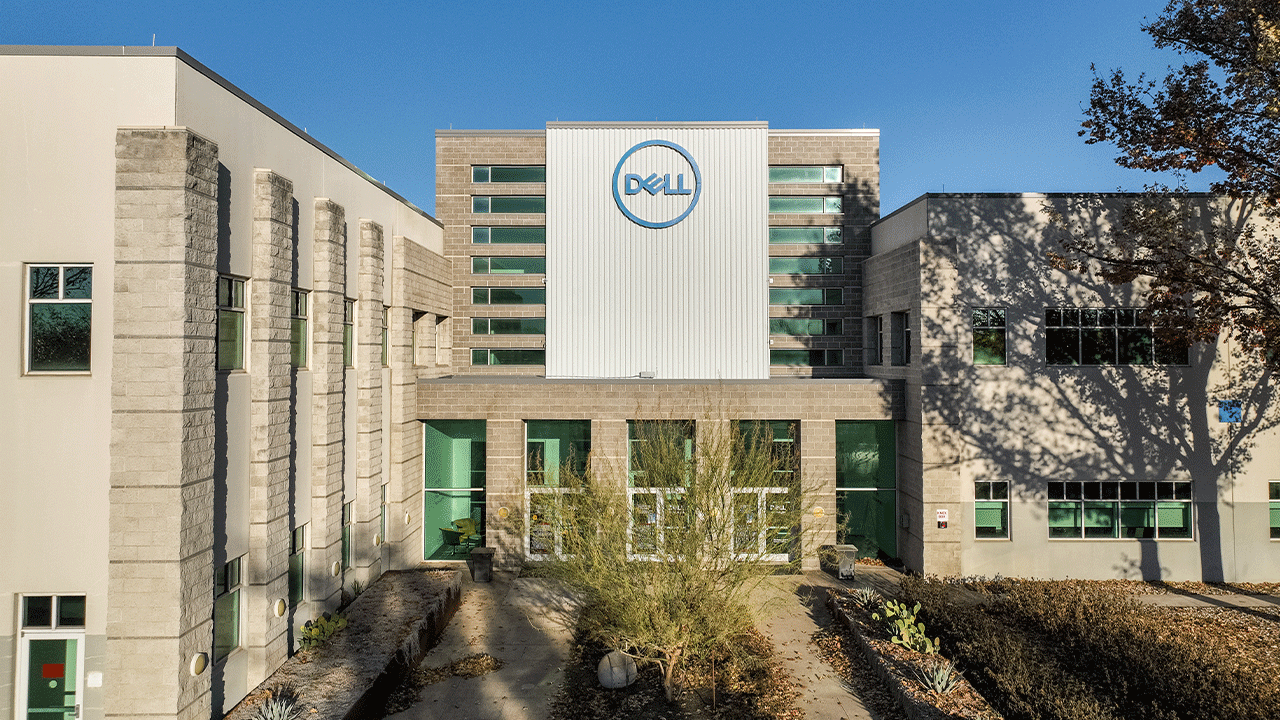
dell office outside

The exterior of a Dell Technologies office building Jan. 4, 2023, in Round Rock, Texas.  (Brandon Bell/Getty Images / Getty Images)

Over the years, Dell has implemented numerous cost-cutting measures, including employee reorganizations, restrictions on external hiring and other steps to better align its investments with strategic and customer priorities.

Advertisement

In its most recent reports, Dell highlighted the extensive integration of AI and machine learning technologies across its operations, including IT management, software solutions and the use of specialized servers.

Dell, whose shares have risen roughly 20% so far this year, said in February the company expects revenue from its AI-optimized server orders to double by 2027.

META EYES MASSIVE 20% WORKFORCE CUT AS AI INFRASTRUCTURE COSTS CONTINUE TO SOAR ACROSS OPERATIONS: REPORT

blue dell technologies sign in building

The Dell Technologies logo is prominently displayed at the company’s pavilion during the Mobile World Congress in Barcelona, Spain, March 5, 2026. (Joan Cros/NurPhoto via Getty Images / Getty Images)

According to its fiscal 2026 report, Dell recorded total severance charges of $569 million, compared with $693 million in 2025 and $648 million in 2024. These payments primarily affected the selling, general and administrative departments, followed by cost of net revenue and research and development each year.

Advertisement

While Dell reported a staff count of 97,000 in 2026, the company had 133,000 employees in 2023. 

Ticker Security Last Change Change %
DELL DELL TECHNOLOGIES INC. 153.01 -3.53 -2.26%

In 2023, Dell announced a workforce reduction of roughly 5% to navigate a challenging global economic environment.

The following year, Dell’s headcount fell by 13,000, a 9.8% decrease in its workforce.

In 2025, Dell again recorded a 10% reduction in staff, representing 12,000 fewer employees. 

Advertisement

Most recently, the company reported a 10.2% decline in 2026.

META CUTS OVER 1,000 JOBS IN MAJOR METAVERSE RETREAT

Dell logo is seen displayed

A Dell logo displayed on a smartphone.  (Mateusz Slodkowski/SOPA Images/LightRocket via Getty Images / Getty Images)

Silicon Valley workers have grown increasingly concerned about AI-driven disruption as tech companies such as Meta and Oracle have reportedly planned mass layoffs.

GET FOX BUSINESS ON THE GO BY CLICKING HERE

Advertisement

Earlier this month, Meta reportedly considered a massive 20% workforce reduction as AI infrastructure spending continues to rise. Oracle has also reportedly weighed cutting tens of thousands of jobs amid soaring AI spending and mounting financial pressures.

Reuters has also linked workforce decline to the demands of competing in the high-growth AI infrastructure sector, pressuring companies to offset expenses.

Reuters contributed to this report.

Advertisement
Continue Reading

Business

Qfin Holdings, Inc. 2025 Q4 – Results – Earnings Call Presentation (NASDAQ:QFIN) 2026-03-17

Published

on

OneWater Marine Inc. (ONEW) Q1 2026 Earnings Call Transcript

This article was written by

Seeking Alpha’s transcripts team is responsible for the development of all of our transcript-related projects. We currently publish thousands of quarterly earnings calls per quarter on our site and are continuing to grow and expand our coverage. The purpose of this profile is to allow us to share with our readers new transcript-related developments. Thanks, SA Transcripts Team

Continue Reading

Business

Steak ‘n Shake adds dark chocolate Statue of Liberty to popular milkshake

Published

on

Steak 'n Shake adds dark chocolate Statue of Liberty to popular milkshake

Steak ‘n Shake is shaking up its “Patriot Milkshake” with a new, chocolate twist.

The milkshake will now be served with a dark chocolate Statue of Liberty, the company announced on Monday.

Advertisement

“Patriot Milkshake now comes with [a] Statue of Liberty. Yes fans, it’s dark chocolate,” the company wrote in a post on X.

The milkshake, which debuted in December, is still priced at $2.50 and will be for the rest of the year, according to the post. The chain previously announced the shake would be available through January.

STEAK ‘N SHAKE PLEDGES $1K CONTRIBUTIONS TO TRUMP ACCOUNTS FOR EMPLOYEES’ CHILDREN

steak-n-shake-exterior

Steak ‘n Shake is Located in the Midwest and Southern U.S. (iStock / iStock)

The company announcement included a photo of the milkshake, which features its classic red, white and blue sprinkles, an American flag on a toothpick and a dark chocolate Lady Liberty atop whipped cream.

Advertisement

The franchise first announced the milkshake in December as an early nod to America’s 250th anniversary, which will be celebrated in July, according to the company.

Ticker Security Last Change Change %
BH BIGLARI HOLDINGS INC. 304.94 +5.17 +1.72%

“Steak n Shake is getting a head start on America’s 250th anniversary of its founding,” the company said in an X post in 2025.

The announcement garnered positive feedback on social media, with one X users writing, “This is what [w]inning looks like.”

STEAK ’N SHAKE TOUTS $2.50 ‘PATRIOT MILKSHAKE’ TO HONOR AMERICA’S SEMIQUINCENTENNIAL

Advertisement
A photo of Steak 'n Shake's Patriot Milkshake

Steak ‘n Shake announced an update to their “Patriot Milkshake” on Monday. The shake will now be served with a dark chocolate Statue of Liberty. (Steak ‘n Shake via X / Unknown)

Alex Bruesewitz, a political consultant and Trump advisor, also reposted the announcement, heralding the addition.

“[Steak ‘n Shake] continues to prove that they are the best fast food chain in America,” Bruesewitz wrote in the post.

FOX Business previously reported that this promotion came as other fast food chains were taking different approaches to dealing with pricing and mounting cost pressures.

FAST FOOD CHAIN SAYS THEY’VE ‘RFK’D’ THEIR FRIES, OPTING FOR HEALTHIER COOKING ALTERNATIVE

Advertisement
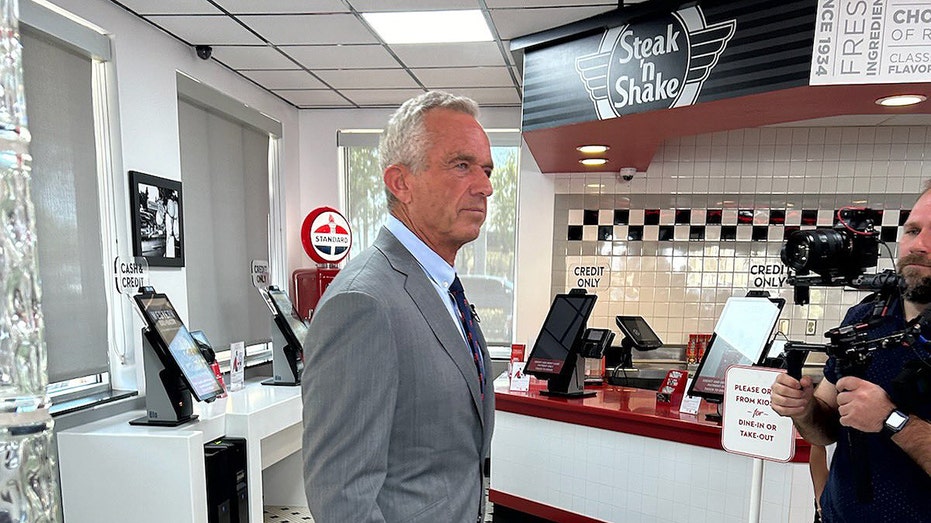
RFK Jr. at a Steak 'n Shake in 2025

Health and Human Services Secretary RFK Jr. visits a Steak ‘n Shake location last year. (Steak ‘n Shake via X / Unknown)

Some chains, such as Jack in the Box, decided to close locations as part of a “broader turnaround plan.” 

Other chains, such as Cava, advised against discounting with their CEO, Brett Schulman, telling FOX Business that “you can’t discount your way to prosperity.”

The company recently made headlines for launching their 100% beef tallow tots, becoming the only restaurant to serve the side dish. 

CLICK HERE TO READ MORE ON FOX BUSINESS

Advertisement

This comes after Health and Human Services Secretary Robert F. Kennedy Jr. continues to hammer the food industry to provide healthier options for consumers as part of the “Make America Healthy Again” (MAHA) movement.

Steak ‘n Shake did not immediately respond to FOX Business’ request for comment.

Continue Reading

Trending

Copyright © 2025