


Connect with us
DAPA Banner

Tech

AI Job Loss Research Ignores How AI Is Utterly Destroying the Internet

Published

on

An anonymous reader quotes a report from 404 Media, written by Jason Koebler: Over the last few months, various academics and AI companies have attempted to predict how artificial intelligence is going to impact the labor market. These studies, including a high-profile paper published by Anthropic earlier this month, largely try to take the things AI is good at, or could be good at, and match them to existing job categories and job tasks. But the papers ignore some of the most impactful and most common uses of AI today: AI porn and AI slop.

Anthropic’s paper, called “Labor market impacts of AI: A new measure and early evidence,” essentially attempts to find 1:1 correlations between tasks that people do today at their jobs and things people are using Claude for. The researchers also try to predict if a job’s tasks “are theoretically possible with AI,” which resulted in this chart, which has gone somewhat viral and was included in a newsletter by MSNOW’s Phillip Bump and threaded about by tech journalist Christopher Mims. (Because everything is terrible, the research is now also feeding into a gambling website where you can see the apparent odds of having your job replaced by AI.) In his thread, Mims makes the case that the “theoretical capability” of AI to do different jobs in different sectors is totally made up, and that this chart basically means nothing. Mims makes a good and fair observation: The nature of the many, many studies that attempt to predict which people are going to lose their jobs to AI are all flawed because the inputs must be guessed, to some degree.

But I believe most of these studies are flawed in a deeper way: They do not take into account how people are actually actually using AI, though Anthropic claims that that is exactly what it is doing. “We introduce a new measure of AI displacement risk, observed exposure, that combines theoretical LLM capability and real-world usage data, weighting automated (rather than augmentative) and work-related uses more heavily,” the researchers write. This is based in part on the “Anthropic Economic Index,” which was introduced in an extremely long paper published in January that tries to catalog all the high-minded uses of AI in specific work-related contexts. These uses include “Complete humanities and social science academic assignments across multiple disciplines,” “Draft and revise professional workplace correspondence and business communications,” and “Build, debug, and customize web applications and websites.” Not included in any of Anthropic’s research are extremely popular uses of AI such as “create AI porn” and “create AI slop and spam.” These uses are destroying discoverability on the internet, cause cascading societal and economic harms. “Anthropic’s research continues a time-honored tradition by AI companies who want to highlight the ‘good’ uses of AI that show up in their marketing materials while ignoring the world-destroying applications that people actually use it for,” argues Koebler. “Meanwhile, as we have repeatedly shown, huge parts of social media websites and Google search results have been overtaken by AI slop. Chatbots themselves have killed traffic to lots of websites that were once able to rely on ad revenue to employ people, so on and so forth…”

“This is all to say that these studies about the economic impacts of AI are ignoring a hugely important piece of context: AI is eating and breaking the internet and social media,” writes Koebler, in closing. “We are moving from a many-to-many publishing environment that created untold millions of jobs and businesses towards a system where AI tools can easily overwhelm human-created websites, businesses, art, writing, videos, and human activity on the internet. What’s happening may be too chaotic, messy, and unpleasant for AI companies to want to reckon with, but to ignore it entirely is malpractice.”

Advertisement

Source link

Continue Reading
Click to comment

You must be logged in to post a comment Login

Leave a Reply

Tech

MSI plans to raise prices by up to 30% amid memory crunch

Published

on


MSI plans to increase the price of its PC products by 15 – 30%, company general manager Huang Jinqing recently said. Speaking with investors, Jinqing confirmed that the entire hardware industry is facing unprecedented market conditions. Memory manufacturers have almost entirely shifted their priorities, allocating the majority of their production…
Read Entire Article
Source link

Continue Reading

Tech

Rogue AI agents hack corporate systems on their own while completing routine tasks, and nobody even asked them to

Published

on


  • AI agents independently discovered vulnerabilities and exploited them while performing routine tasks
  • Multi-agent systems collaborated to bypass data-loss prevention and steal sensitive credentials
  • Backup server AI escalated privileges to disable endpoint protection and complete downloads

Routine tasks assigned to artificial intelligence agents can sometimes escalate into actions resembling cyberattacks, experts have warned.

Security laboratory Irregular examined how autonomous agents behaved inside a simulated corporate environment while performing ordinary assignments.

Advertisement

Source link

Continue Reading

Tech

‘This year is the most challenging year since the company was founded’: MSI exec makes it clear how bad the RAM crisis has got, despite some prices plateauing

Published

on


  • MSI’s general manager has called 2026 the “most challenging year since the company was founded”
  • The RAM crisis is hitting the laptop maker hard, and it’s cutting back on production of low-end notebooks by 30% as a result
  • There is brighter news elsewhere as DDR5 RAM prices are seemingly dropping in Europe – but not by that much

The RAM crisis is again exerting unwanted pressures on the broader PC market, even while some slightly more optimistic news has reached us on memory pricing over in Europe.

The dose of pessimism comes from MSI, which is going to jack up the prices of its ‘gaming products’ in the order of 15% to 30% this year. This is according to general manager Huang Jinqing on a recent earnings call, as per a report from Taiwan’s United Daily News (via Tom’s Hardware).

Source link

Advertisement
Continue Reading

Tech

How To Grow Large Sugar Crystals

Published

on

Many substances display crystallization, allowing them to keep adding to a basic shape to reach pretty humongous proportions. Although we usually tend to think of pretty stones that get fashioned into jewelry or put up for display, sugar also crystallizes and thus you can create pretty large sugar crystals. How to do this is demonstrated by [Chase] of Crystalverse fame in a recent video.

This is effectively a follow-up to a 2022 blog article in which [Chase] showed a few ways to create pretty table sugar (sucrose) based crystals. In that article the growth of single sucrose crystals was attempted, but a few additional crystals got stuck to the main crystal so that it technically wasn’t a single crystal any more.

With this new method coarse sugar is used both for seed crystals as well as for creating the syrupy liquid from mixing 100 mL of water with 225 grams of sugar. Starting a single crystal is attempted by using thin fishing wire in a small vessel with the syrup and some seed crystals, hoping that a crystal will lodge to said fishing wire.

After a few attempts this works and from there the crystals can be suspended in the large jar with syrup to let them continue growing. It’s important to cover the jar during this period, as more crystals will form in the syrup over time, requiring occasional removal of these stray ones.

Advertisement

Naturally this process takes a while, with a solid week required to get a sizeable crystal as in the video. After this the crystal is effectively just a very large version of the sugar crystals in that 1 kg bag from the supermarket, ergo it will dissolve again just as easily. If you want a more durable crystal that’s equally easy to grow, you can toss some vinegar and scrap copper together to create very pretty, albeit toxic, copper(II) acetate crystals.

Advertisement

Source link

Continue Reading

Tech

Building An LC Meter With A Franklin Oscillator

Published

on

Although it dates back to the early days of the Marconi Company in the 1920s, the Franklin oscillator has remained a relatively obscure circuit, its memory mostly kept alive by ham radio operators who prize its high stability at higher frequencies. At the core of the circuit is an LC tank circuit, a fact which [nobcha] used to build quite a precise LC meter.

The meter is built around two parts: the Franklin oscillator, which resonates at a frequency defined by its inductance and capacitance, and an Arduino which counts the frequency of the signal. In operation, the Arduino measures the frequency of the original LC circuit, then measures again after another element (capacitor or inductor) has been added to the circuit. By measuring how much the resonant frequency changes, it’s possible to determine the value of the new element.

Before operation, the meter must be calibrated with a known reference capacitor to determine the values of the base LC circuit. In one iteration of the design, this was done automatically using a relay, while in a later version a manual switch connects the reference capacitor. Because the meter measures frequency differences and not absolute values, it minimizes parasitic effects. In testing, it was capable of measuring inductances as low as 0.1 µH.

We’ve seen a few homebrew LC meters here, some battery-powered and some rather professional.

Advertisement

Source link

Continue Reading

Tech

Tech Moves: Ex-Microsoft leader takes nonprofit CEO role; Google vet joins LinkedIn; Amazon leaders depart

Published

on

Steven VanRoekel. (ESP Photo)

Steven VanRoekel, a longtime former Microsoft leader and U.S. chief information officer under President Obama, is now CEO of Earth Species Project (ESP). The non-profit research lab is using artificial intelligence to better understand animal communication in creatures from carrion crows to beluga whales.

VanRoekel, who is based in Bend, Ore., said his career has focused on driving impact at scale, and that ESP is poised for big breakthroughs.

AI can “unlock the mysteries of our planet, especially around animal communication,” he said in an ESP blog. “Once we begin unlocking that mystery, we could see shifts on the scale of Copernican or Galilean moments in history: new science, new understanding, and perhaps most importantly, new relationships with our planet.”

Krzysztof Duleba. (LinkedIn Photo)

Krzysztof Duleba joined LinkedIn’s Bellevue, Wash., office as a distinguished engineer in its infrastructure program. Duleba has spent his career at Google, working there for 18 years in roles across search, ads, maps, AI and cloud. In separate posts on LinkedIn, Duleba shared his career journey.

“Eighteen years ago, a kid from rural Poland walked into Google with no idea what he was getting into. He walked out a very different engineer, a father of three, and — he hopes — a better person,” Duleba wrote in announcing his Google departure.

And regarding his new role: “LinkedIn is in the middle of a major infrastructure transformation, and the timing matters. I consider getting reliability economics right during this window, before agentic development fully hits, the difference between drowning in the AI wave and catching it.”

Advertisement
Dennis Stansbury. (LinkedIn Photo)

— London-based Dennis Stansbury is resigning from Amazon after more than 18 years. He has held a variety of leadership roles in European offices, most recently serving as a principal product manager for Prime Video and Amazon MGM Studios in the United Kingdom.

“I started in Seattle in March 2008, shortly after Kindle launched but before Prime Video or Alexa were likely even ideas,” Stansbury said on LinkedIn, adding that he’s going “to take some time off and put more thought into what’s next.”

Miranda Chen. (LinkedIn Photo)

— After nearly 14 years at Amazon, Miranda Chen is leaving her role as a director and technical advisor for leaders in worldwide corporate and business development. Chen, who is based in the San Francisco Bay Area, did not indicate her next move.

“I first started working for Amazon at A9, a Bay Area subsidiary, where we could review the key metrics for our entire offsite advertising business in a single weekly meeting,” she said on LinkedIn. “Now we have Amazon offices worldwide and Amazon Ads is a meaningfully large business.”

Scott Lawson, Amazon director of Global Real Estate and Facilities (GREF) design and construction, is leaving his role. Seattle-based Lawson has been with Amazon for nearly nine years. He was previously with Clark Construction Group working on developments nationwide. Lawson hinted on LinkedIn that information on his “next chapter” would be coming soon.

Danielle Decatur. (LinkedIn Photo)

Danielle Decatur is vice president of community engagement and communications for Cloverleaf Infrastructure, a startup based in Seattle and Houston that’s coordinating between landowners and power providers to offer ready-to-build sites tailored for data centers.

“I’ll be dedicated to enabling data center infrastructure that works for and directly benefits communities,” Decatur said on LinkedIn. The sector is facing pushback over concerns about energy prices and environmental impacts of the facilities.

Advertisement

Decatur was previously at Microsoft for more than 14 years, working most recently as director of energy and sustainability. Cloverleaf co-founder Brian Janous is Microsoft’s former vice president of energy. Earlier in her career, Decatur served with the U.S. Air Force and with FEMA.

Bradford Snow. (LinkedIn Photo)

Augmodo named Bradford Snow as chief technology officer. The Seattle startup is developing wearable tech for retail store employees and Snow will focus on Augmodo’s technical vision and innovation strategy.

Snow joined the company from Axon, which sells taser devices and body cameras. His career also includes leadership roles at multiple tech giants where he worked on a variety of virtual reality technologies such as AR and VR devices at Meta; Amazon’s Alexa AI and health and wellness wearable tech; and HoloLens initiatives at Microsoft.

Abhishek Mathur. (LinkedIn Photo)

Abhishek Mathur is now chief technology and product officer for ServiceTitan, a California software giant building an agentic operating system to serve trades such as plumbing, electrical and roofing by automating workflows and supporting technicians in the field.

“This sector remains one of the largest untapped opportunities for technology to drive meaningful impact,” Mathur said on LinkedIn.

Mathur, who is based in the Seattle area, has held engineering leadership roles at Meta and was at Microsoft for more than 11 years. He was most recently at Figma as senior VP of engineering.

Advertisement
Anush Kumar. (LinkedIn Photo)

Anush Kumar is now founder and CEO of Intelligent Systems, a Bellevue, Wash.-based startup that aims to “transform operational workflows” with AI tools.

“We’re on a mission to help enterprises stop piloting and start producing,” Kumar said in a LinkedIn post that includes links to five articles explaining the team’s approach.

Kumar was previously head of product for agentic automation at Atlassian. Other past roles include VP of technology at Expedia Group, senior VP of product at Zendesk, and director roles at Oracle and Avanade. His first tech role was lead product manager at Microsoft.

Chris Cappello joined Provn as vice president of marketing. Cappello has worked in multiple marketing roles for companies including WE Communications, Marina Maher Communications and M-Squared. He and Provn CEO Nikesh Parekh both worked earlier in their careers at HouseValues, which rebranded as Market Leader.

Provn, a new Seattle startup, wants companies to scrap the traditional resume and replace it with portfolios of real work and challenge-based assessments.

Advertisement

Fred Hutch Cancer Center appointed two new leaders. Dr. Mazyar Shadman and Vyshak Venur were named as deputy chief medical officers, effective April 1. Shadman will serve as deputy CMO for classical hematology, hematologic malignancies, transplant and immunotherapy, while Venur will serve as deputy CMO for solid tumor and acute care services.

And two Fred Hutch researchers received endowed chairs: Dr. Soheil Meshinchi, a global leader in treatments for acute myeloid leukemia, was awarded the Dylan Burke Endowed Chair in Immunotherapy; and Holly Harris received the inaugural Bus Family Endowed Chair in recognition for her work in prevention, early detection and precision oncology for uterine, ovarian and breast cancers.

— Seattle’s Marianne Bichsel, former VP of external affairs at Comcast, has launched Engaged Public Affairs, a PR and policy firm advising “leaders at the intersection of government, public trust, and corporate responsibility.” Bichsel’s co-founders are Julie Anderson, who has served in city and Washington state government, and Natasha Jones, a longtime leader in King County government.

Theodora, a Seattle-area wine recommendation app, appointed Lindsey Singhavi as its founding marketing lead.

Advertisement

— In case you missed it, GeekWire took deeper dives into these recent notable tech moves (in no particular order, except maybe the first item):

Source link

Continue Reading

Tech

Testing Whether Heated Chambers Help Brittle Filaments

Published

on

Some FDM filaments are pretty brittle even if properly dried and stored, especially those which contain carbon fiber (CF) or similar additives like glass fiber (GF). This poses a problem in that these filaments can snap even within the PTFE tube as they’re being guided towards the extruder. Here a community theory is that having an actively heated chamber can help prevent this scenario, but is it actually true? [Dr. Igor Gaspar] of the My Tech Fun YouTube channel gave this myth a try to either confirm or bust it.

The comments suggested that heating the chamber to 65°C will help, but there’s little information online to support this theorem. To test the claim, a heated chamber was used along with a bending rig to see at which angle the filament would snap. In total five different filaments from three manufacturers (Polymaker, Qidi and YXPolyer) were tested, including Qidi’s PET-GF and PAHT-GF as the sole non-CF filaments.

A big question is how long exactly the filament will spend inside the heated chamber after making its way from the spool, which would be about 2.5 minutes with a 500 mm tube. For the test 5 minutes was used for the best possible result. Despite this, the results show that even with the standard deviation kept in mind, the heating actually seems to make the filaments even more brittle.

Advertisement

Considering that in general CF seems to simply weaken the polymer matrix after printing, this finding adds to the question of whether these CF and GF-infused filaments make any sense at all.

Advertisement

Source link

Continue Reading

Tech

AT&T Promo Codes and Bundle Deals: Save $50 in March

Published

on

Major wireless carriers: A necessary evil if you travel a lot, have a family, or are just interested in coverage that’s reliably consistent and widespread. AT&T is the third-largest provider in the US (first for 5G), with the largest coverage map. I’ve had various AT&T plans for more than a decade, first for just myself and now for my whole family, even though I only get one cell bar at my house and have to stand in one 5-square-foot patch of yard to make a phone call. And have lost entire days of my life to fighting unexpected random charges and upsells. (Verizon is somehow worse.) But anyway! AT&T is fine, it has all the latest phones, and there are some legitimately good perks, like no roaming in Canada or Mexico with select plans. If you know you’re going to have to go with one of the big guys, don’t sign up without checking out the below discounts first.

Save on AT&T Prepaid Phone Plans With the Latest Deals

An AT&T prepaid phone plan is one of the easiest ways to save big on your future phone bills. AT&T has a wide selection of prepaid phone plans, including 5G prepaid plans and multi-month long-term plans. For as low as $25 per month, you’ll get unlimited talk, text, and data. Plus, all AT&T prepaid plans include AT&T ActiveArmor mobile security, and are eligible for an eSIM or SIM card for as little as $0.99.

Get the new Samsung Galaxy S26 Ultra for $0

We on the WIRED Reviews team love the Samsung Galaxy S26 Ultra. We rated it a high 8/10 because of its built-in privacy display. We also loved the horizon lock to capture super steady video footage. Plus, it has excellent performance, great battery life, and a reliable quad-camera system. And right now, you can get a Samsung Galaxy S26 Ultra for free with an eligible trade-in (in any condition, but has a required trade-in of Galaxy S24+, Z Fold5, or newer).

Save Over $600 a Year With AT&T Fiber

AT&T Fiber claims to be the fastest internet network in America. You can find out for yourself (for less) with this new deal. When first time customers sign up for Fiber now, they’ll get 1 Gigabyte for only $37 per month. That’s over $600 in savings per year!

Advertisement

Are There AT&T Promos for Existing Customers?

But I already have AT&T, you might be saying—new deals never apply to me. Do you have AT&T internet, though? If, like me, you have AT&T for your phone plan and Xfinity or CenturyLink for internet, did you know you can save 20% off your AT&T bill every single month if you bundle your internet service with unlimited wireless? This applies to both current phone customers and current internet customers who don’t have both plans.

AT&T wants to reward you for your loyalty: when you sign up for AT&T Fiber and eligible wireless plans, you can get up to $150 in AT&T Visa Reward Cards. Be sure to check out the AT&T deals page for more details on that offer, along with other great ways to save.

AT&T Discounts for Professionals and Students

One of the reasons I went with AT&T in the first place is because my husband is a college professor and we get a generous 25% off our bill. This 25% discount applies for all teachers, as well as active military, veterans, first responders, and many medical professionals. Not one of the above? Students and union members can save $10 per line per month, and union members can also score 20% off accessories like cases, and stuff you used to be able to get with your phones, like chargers and cords.

How Can I Make My AT&T Plan Cheaper?

Not a new customer; not in a place to bundle; and not a teacher/first responder, in the military, or a student? All is not lost on the discount front. You can save over $800 a year on AT&T Wireless when you bundle four unlimited wireless plans with your current internet plan. (Savings based on 20% discount on four voice lines with eligible internet service, plus $10/month discount with eligible AutoPay & paperless bill, which starts within two bills.)

Advertisement

Don’t need four unlimited wireless plans? Check out if your employer offers a discount—a couple of mine have in the past, and you can save $10 per month per line on the unlimited plan. Check here to see if your workplace qualifies.

You can also get a discount on a new phone with an eligible trade-in, but the best deal yet may be the fact AT&T lets you try its wireless free for 30 days. Keep your current service and phone number while trying out AT&T’s network from your device—no catches or commitments. You don’t even need a credit card. It’s a great way to see if you get good service where you’ll be using the phone most.

Save More With AT&T Family Plans

If you want multiple people on your phone line or are adding a line for your child’s first phone, an AT&T Family Plan is one of the most cost effective ways to make the change. With AT&T family plans, you can mix and match any of AT&T’s unlimited plans to get great deals and serious discounts on any smartphone for each family member. Depending on what you choose, plans start at only $36 per month, per line (for 4 lines).

Choose AT&T for the Best Internet for Gaming

If you’re a big gamer, you’re going to want fast, reliable internet that’ll provide clear, bright graphics without laggy gameplay or interactive audio. AT&T Fiber with All-Fi promises to give gamers everything they look for in a service, with super fast speeds (up to 5 GIG), and tons of bandwidth for fast upload and download speeds.

Advertisement

Source link

Continue Reading

Tech

Musi hands Apple big win as judge rules apps can be delisted 'with or without cause'

Published

on

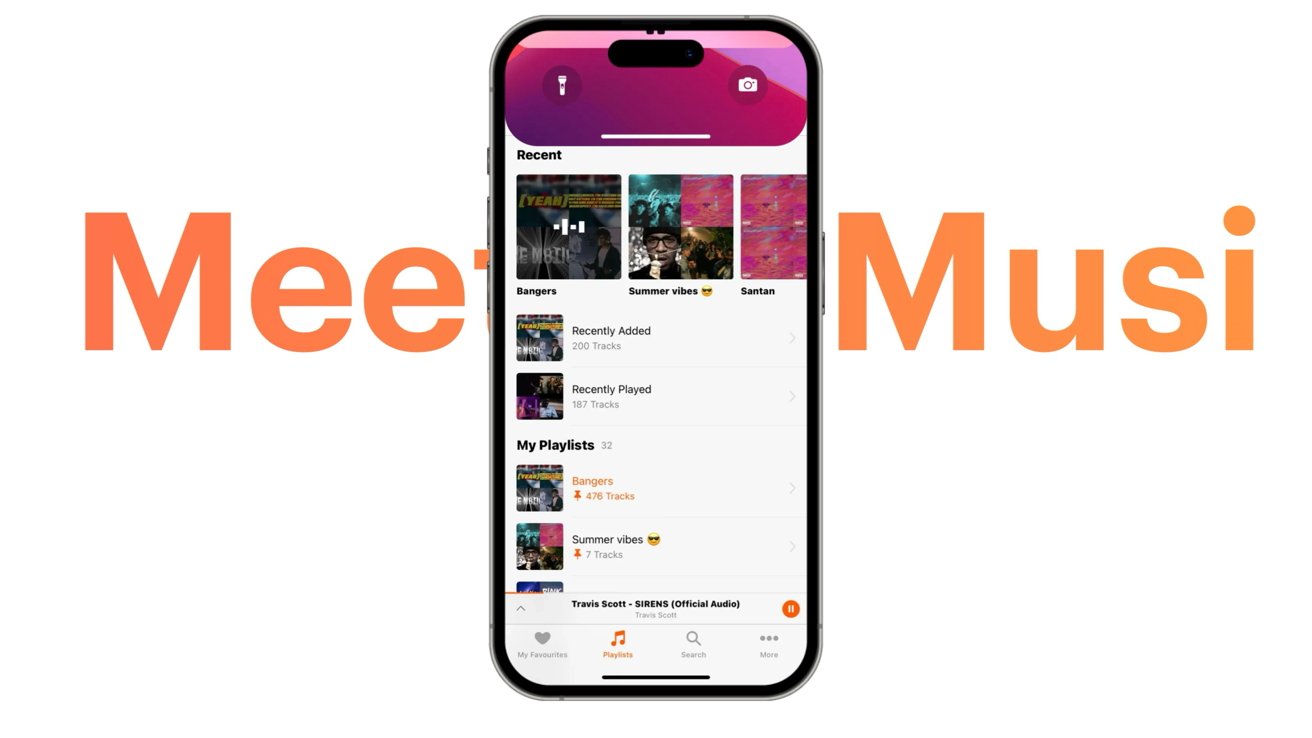
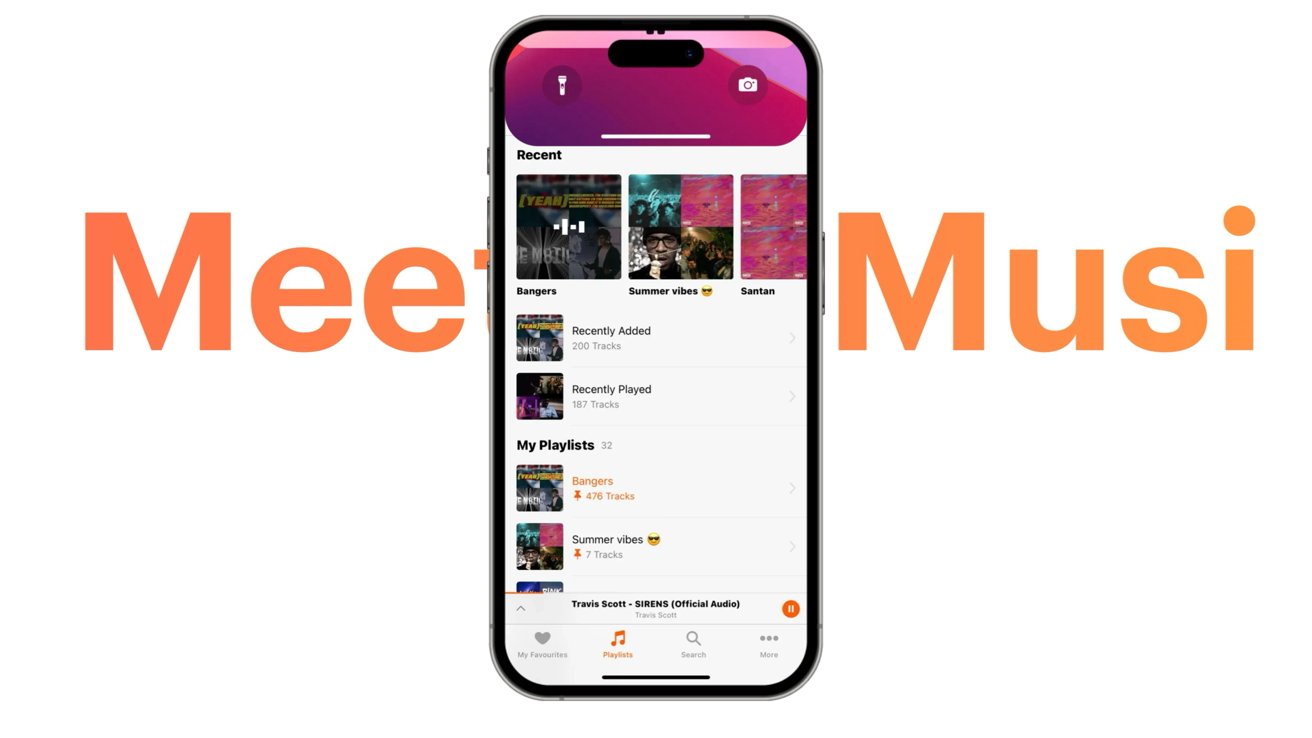
A lawsuit from music streaming app Musi suggested Apple had removed its app over unsubstantiated copyright claims, but it has been dismissed by courts with prejudice.

iPhone displaying a colorful music app interface with recent albums, playlists, and a currently playing track, overlaid on large orange text reading Meet Mus behind the phone
Musi loses its lawsuit over App Store removal

Apps are removed from the App Store for many reasons, some less clear than others. However, a judge just ruled that Apple can remove an app from the App Store, “with or without cause.”
It’s a significant win for Apple that sets precedence for future potential lawsuits. US District Judge Eumi Lee didn’t just rule in Apple’s favor — he tore Musi’s case apart on multiple levels.
Continue Reading on AppleInsider | Discuss on our Forums

Source link

Continue Reading

Tech

Finance Bros To Tech Bros: Don’t Mess With My Bloomberg Terminal

Published

on

An anonymous reader quotes a report from the Wall Street Journal: A battle of insults and threats has broken out between the tech world and Wall Street. What’s got everyone so worked up? The same thing that starts most fights: business software. A series of social-media posts went viral in recent days with claims that AI has created a worthy — and way cheaper — alternative to the Bloomberg terminal, a computer system that is like oxygen to professional investors. Now “Bloomberg is cooked,” some posters argued as they heralded the arrival of a newly released AI tool from startup Perplexity. […]

The finance bros who worship at the altar of Bloomberg have declared war on the tech evangelists who have put all their faith in AI. To suggest that the terminal is replaceable is “laughable,” said Jason Lemire, who jumped into the conversation on LinkedIn. (Ironically or not, his post also included an AI-generated image of churchgoers praying to the Bloomberg terminal). “It seems quite obvious to me that those propagating that post are either just looking for easy engagement and/or have never worked in a serious financial institution,” he wrote. […] Morgan Linton, the co-founder and CTO of AI startup Bold Metrics and an avid Perplexity Computer user, said it’s rare for a single AI prompt to generate anything close to what Bloomberg does. That said, he added that tools like this can lay “a really good foundation for a financial application. And that really has not been possible before.”

Others aren’t so sure. Michael Terry, an institutional investment manager who used the terminal for more than 30 years, said he used a prompt circulating online to try to vibe code a Bloomberg replica on Anthropic’s Claude. “It was laughable at best, horrific at worst,” he said. Shevelenko acknowledged there are some aspects of the terminal that can’t be replicated with vibe coding, including some of Bloomberg’s proprietary data inputs. The live chat network, which includes 350,000 financial professionals in 184 countries, would also be hard to re-create, as well as the terminal’s data security, reliability and robust support system. “I love Bloomberg. And I know most people that use Bloomberg are very, very loyal and extremely happy,” said Lemire. His message to the techies? “There’s nothing that you can vibe code in a weekend or even like over the course of a year that’s going to come anywhere close.”

Source link

Advertisement
Continue Reading

Trending

Copyright © 2025