
Politics
The Best Exercise For Sore Knees And Back


If you’re one of the many people experiencing lower back or knee pain, “Spanish” and “goblet” squats can help you build leg muscle without added stress.
But strengthening your hips can go a long way towards reducing your risk of further pain, too.
It can help to stabilise your spine and even reduce strain on your knees.
And according to a paper published in the Journal of Orthopaedic and Sports Physical Therapy, “clamshell” exercises are one of the best ways to strengthen the area and protect against future injury.
What are ‘clamshell’ exercises?
It involves lying on your side in the foetal position. Your knees should be bent at a 45-degree angle, and the sides of your feet should be touching.
Keep your knees stacked on top of each other, rather than rolling the top one over the bottom one. Rest your head on your lower arm.
From there, lift the knee that isn’t touching the ground into the air.
Keep your hips and core engaged and your spine straight.
Ben Shatto, a physical therapist, shared on his YouTube channel that “it needs to be a painfully slow exercise”.
He recommends lifting the knee for five seconds, holding it there for five further seconds, and then dropping the knee back for (you guessed it) five seconds.
Shatto recommended “at least 10 repetitions” on each side.
If you like, you can add a resistance band to the exercise by placing it around the front and back of your knees.
What are the benefits of ‘clamshell’ exercises?
It helps to strengthen the “deep rotators of the hip,” Shatto said.
Clamshell exercises mostly target the gluteus medius and gluteus minimus. These help to stabilise your body and maintain your posture.
The stronger these are, the more likely our knees are to remain aligned, taking extra pressure off existing sore knees and reducing the risk of harm in the future.
And speaking to Woman & Home, Paola Di Lanzo, a personal trainer, pilates instructor and founder of Paola’s Body Barre, said: “Clamshells support better pelvic alignment by activating deep glute muscles, which can alleviate tension in the lower back and hips.”

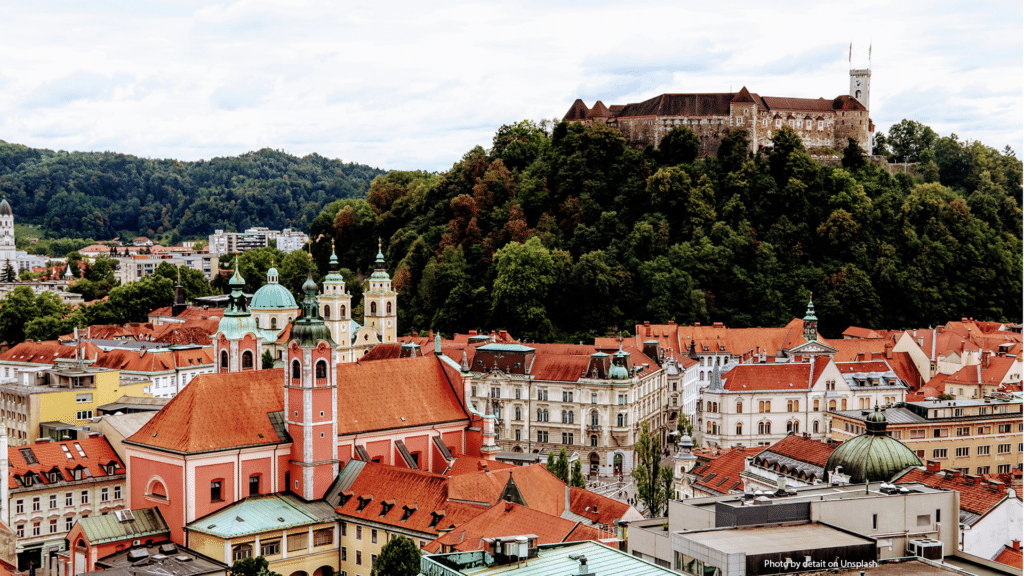
Ahead of the election in Slovenia on Sunday 22 March 2026, Tim Haughton and Alenka Krašovec explain the Slovenian political landscape and where the different parties stand in the polls.
Politics is a mix of the perennial and the new. Slovenians go to the polls on Sunday in parliamentary elections in which the country’s perennial political figure Janez Janša, the former three-time prime minister, is leading the race against the incumbent Robert Golob and his left-liberal coalition.
A prominent figure since Slovenia’s independence in 1991 Janša is Slovenia’s marmite politician. His supporters point to his experience, delivery on promises and leadership qualities that helped navigate the country through rocky waters. But his opponents have highlighted corruption scandals, his close association with politicians such as Hungarian Prime Minister Viktor Orbán and have accused Janša of overseeing democratic backsliding in Slovenia during his last stint in power (from 2020 to 2022).
Janša’s right-wing Slovenian Democratic Party (SDS) looks set to win a quarter of the vote. SDS’s pitch to the electorate blends the personality and record of Janša with promises to cut taxes. There is also a nationalist/identity tint to its campaign with posters imploring voters to back SDS if they want their grandchildren to be able to sing Slovene songs. With the continued presence of the divisive figure of Janša as the party’s leader, such messages do not tend to convert many voters to SDS, but they help mobilise the party’s core.
In 2022, Janša lost power to the Freedom Movement whose leader Robert Golob served as prime minister at the helm of a three-party coalition. At the heart of Freedom Movement’s success was a bandwagon effect: anti-Janša voters saw Golob’s party as the best vehicle to defeat Janša.
Four years on, Freedom Movement is on course to win a fifth of the vote (down from the 35% it won in 2022) and become the second largest party in parliament although the difference between the two parties has been decreasing in the last fortnight. That may seem a normal outcome for a party that has been in government for the past few years, but it marks a distinct change in Slovenia’s politics.
In each of the last four parliamentary elections a large slice of the anti-Janša vote has been swept up by a new party. But by the time of the subsequent election, support for that new party has witnessed steep drops in support with many of those votes captured by a newer party in what we have dubbed a new party subsystem.
Freedom Movement’s ability to hang onto a large slice of its voters is striking in light of the series of challenges faced by Golob’s government linked to energy shocks, war in Ukraine and devastating floods in 2023. But under his watch, whilst the country’s economic performance has not been spectacular, Slovenia has experienced growth, a reduction in inflation and very low levels of unemployment. Golob has called for Slovenia to continue along the path of stability and reforms in key public services like health encapsulated in Freedom Movement’s rallying call to its voters: ‘The work is not done yet: Freedom forward!’
Nonetheless, Slovenia has seen the emergence of new parties and plenty of churn in the past couple of years with several fissions, fusions and new creations. A few disgruntled SDS politicians abandoned Janša to form the Democrats of Anže Logar, and a politician elected on the Greens (Vesna) list for the European Parliament elections in 2024 jumped ship to create his own new party, Rebirth – the Party of Vladimir Prebilič. Both have promised to build bridges to end Slovenia’s polarised politics and suggest there is an alternative to Golob or Janša. Moreover, one of Golob’s coalition partners, the Left Party, formed an electoral alliance with the Greens (Vesna), and Janša’s traditional allies the centre-right New Slovenia forged an electoral alliance with the Peoples Party and a new party FOCUS.
Whilst none of these parties or new alliances has attracted enough support to challenge SDS or Freedom Movement as the likely leader of any government after Sunday’s election, the relative success of these parties and the functioning of the 4% electoral threshold will do much to determine what kind of government is created and how fragile its majority might be in Slovenia’s 90 seat parliament. Many politicians have been unequivocal in their statements about whether they are willing to jump into a coalition bed with Janša or Golob, but the absence or presence of other smaller parties in a potential coalition might be just as decisive.
Current polls indicate seven parties or electoral alliances will cross the threshold including resni.ca established in 2020 as an anti-vaxxer party that continues to pump out populist messages. But given the lack of strong partisan ties among large swathes of the electorate we should not be surprised by the melting away of support or a sudden boost in the last few days of the campaign. Even Freedom Movement’s support may be vulnerable, not least due to videos circulating on social media allegedly exposing political influence, graft and dodgy deals involving several figures seen to be close to the party leader. Moreover, Slovenia is not immune from claims about alleged foreign influence in its elections.
European themes have rarely played a central role in the politics of Slovenia and they are not prominent in the current campaign. Although Janša has had good relations with Orbán and has expressed views close to the Hungarian premier in areas such as migration, media freedom and the rule of law, SDS remains part of the European People’s Party, and Janša rarely rocks the boat in Brussels. Indeed, Slovene politicians of different hues recognise the economic and political benefits of being part of the EU and are rarely awkward partners at the European level.
Unlike in some other Central European states like Hungary, Slovakia and the Czech Republic, the war in Ukraine and relations with Russia are not a major dividing line in domestic politics. All major parties are supportive of Ukraine. On the other hand, Gaza and the new war with Iran are more frequently discussed and have consequences for the politics and economics of Slovenia.
But the most decisive factor for voters looks set to remain the perennial question of whether to entrust Janša with the premiership or not.
By Tim Haughton, Professor of Comparative and European Politics and Deputy Director of the Centre for Elections Democracy Accountability and Representation, University of Birmingham and Alenka Krašovec, Professor of Political Science, University of Ljubljana.


4 min read
An emergency mindset is needed to prevent millions of Gen X from falling into pensions inadequacy.
Jason is 48 and from a town just outside of Birmingham. When I arrived at his suburban house on a rainy afternoon last Autumn, he offered me a cup of tea to warm up and helped me hang my soaking coat on the radiator before sitting down to discuss his pension. “I think we should be saving more, but it’s tricky,” Jason explained. “We watch what we buy day-to-day, week-to-week, with shopping and groceries, and I keep tabs on what I can in terms of utilities or what have you. But there’s not a great deal left to think, ‘Right, I’ll put that away at the moment.”
Jason is not alone. Generation X is now aged between 46 and 61, and although many will soon be retiring, most are unprepared for the transition.
7.5m Gen Xers, equal to 54 per cent of the entire generation, are projected to have a retirement income that falls below standard rates of adequacy, according to new research produced at the Social Market Foundation. We spoke to 50 Gen Xers about their pension, and surveyed over 2,000 of them, to understand what’s held them back from saving for a retirement they are now rapidly approaching. We discussed their pension and projected their likely income. We termed their experience “pension shock” to explain the reaction most have when seeing their projection fall far short of their expectations.
Gen X was born between 1965 and 1980. Most were never offered the strong pensions that their parents had retired on, which provided a fixed income for life. Instead, they were told to manage their own money, and for the first time in living memory, make critical decisions over contributions and investment. This strategy was poorly thought through and barely communicated. Most workers were offered no training or advice to help them with the transition. Many failed to save anything at all.
Auto-enrolment was legislated in the 2010s, acknowledging this failure by forcing workers to contribute to their pension by default. It raised contributions almost overnight and will serve Gen Zers like me well. But by the time auto-enrolment came into being, Gen X had already lost out in huge portions of their working life, missing critical years for pension accumulation.
“I wish I’d started thinking about pensions as soon as I started working,” Blake told me over a video call from his home in Wales. “But you know what it’s like: You’re seventeen, eighteen, and you’re invincible! You’ve got your whole life ahead of you! You’re not taking £40 a month off me! … And then, all of a sudden, snap your fingers, and you’re forty or fifty or sixty years old. It does come so quick.”
Speaking to Gen X about their pensions today can feel like watching a train crash. The tracks have been laid. The catastrophe set in motion. And while policymakers are beginning to wake up to the looming crisis, their ability to intervene is limited.
One option is to get Gen X in front of advisors. Just 11 per cent have ever sought financial advice to manage their retirement. For many, the cost is out of reach. That’s why we’re pushing for a Financial MOT, providing expert guidance on matters relevant to money, saving, and investment, for free to any applicant. The policy polls well with Gen X, with 58 per cent in favour of increasing access to financial advice even if it required higher taxes, and I saw the benefits in action. After discussing her pension with me, one woman in the northwest explained: “I think government should put it out there more for people to see mortgage and financial advisors, and actually sit down with someone and go through what you’ve gone through today.”
Gen X’s retirement is approaching fast, and averting disaster will require an emergency mindset from the government to rapidly provide the financial advice that has been denied them throughout their working life.
Gideon Salutin is Chief Economist at the Social Market Foundation

James Elles is a former member of the European Parliament.
Current US strikes against Iran come on top of recent action in Venezuela and expressed intentions about the takeover of Greenland. All underline US determination through the untrammelled use of power to achieve its aims. How are European countries to react to these events?
The publication of the US National Security Strategy last December gives us a clear idea of the direction of US policy in the years ahead (see Bob Seely in ConHome 12 December).
The Strategy reaffirms US support for NATO and collective security (Art 5) but conditions this to Europe shouldering the bulk of its conventional defence – implying a massive shift from burden-sharing to burden-shifting.
To put it bluntly, seismic changes are underway. NATO has guaranteed our common defence reliably since the 1950’s. But now the United States is increasingly prioritising strategic competition with China over European security concerns.
This is a fundamental shift in transatlantic relations, likely to be permanent, requiring Europeans to develop independent military capabilities whilst maintaining NATO’s operational framework.
This would already be a huge task to undertake in normal times, but we are living in exceptional circumstances with a major war in Ukraine which shows no signs of ending any time soon.
The outlook is sombre. Many in European military circles fear that Russia is preparing to wage war on Europe by 2030, if not before, testified by the recent bellicose statements from President Putin – a terrifying prospect.
These issues were vigorously debated at a recent event in London organised by the Ideas Network 2030 (IN2030) and the Wilfried Martens Centre (WMC) “Defending the Continent: A Common Responsibility”
The following actions were proposed for Europe to take:
- Establishing strategic enablers: Europe must develop independent capabilities in satellite communications, long-range transport, and in-flight refuelling, as these functions have historically been provided by the United States but were now essential for autonomous European operations.
- Investing in defence industrial capacity: The priority is to shift European defence industries “from peacetime inefficiency to wartime productivity”, expanding ammunition production, coordinating procurement, and standardising equipment across nations to eliminate wasteful duplication.
- Developing rapid reaction forces: Europe requires “high-readiness, multinational rapid reaction forces” deployable within days to any threatened location, trained under common doctrine and capable of operating independently of immediate American support.
Creating a European Security Council: Speakers advocated a new institutional framework operating on majority voting principles, which could serve as “a bridge to the United Kingdom” and integrate non-EU members including Norway and potentially Ukraine into continental defence planning.
What have European countries so far done? While the challenge of building European defence capacity is substantial, continued dependence on potentially unavailable American reinforcement poses unacceptable risks to European security. For European countries, it is a race against time.
Increasing expenditure on military budgets.
Last summer, NATO reaffirmed its collective defence clause (Art5) and agreed to a 5 per cent target for defence expenditure by 2035.
While few European countries today spend 4 per cent (Poland), Germany is making strides to build its military power allocating large sums for investment e.g. in infrastructure. Under current plans, Germany will reach the NATO target by 2029, having then a defence budget greater than the UK and France combined.
The EU is also stepping up in providing financial aid, removing operational obstacles and facilitating military mobility, providing up to E150 billion in loans to Member States under the Security Action For Europe (SAFE). Last autumn, it agreed a defence readiness roadmap for 2030.
More people involved in the military.
NATO’s commitment to deploy “80,000 troops” along an “800-kilometre” defence line as part of the peace settlement in Ukraine raises questions about mobilising personnel and upgrading facilities that had been sold off or repurposed since the end of the Cold War. Member countries are committed to increase troop numbers, Germany planning to increase from 182000 to 260000 by 2035 (compared with 73000 in the UK today).
Other options are now being implemented across Europe e.g. the introduction of conscription in France announced by President Macron last autumn. The new military service will allow young people to volunteer for 10 months military training – 3000 in the first year, rising to 50000 annually by 2035. Germany has introduced a new military law that requires mandatory registration for young men for potential conscription.
Enhancing civil resilience.
Improving protection of critical infrastructure, securing energy grids and data systems, and countering hostile disinformation narratives, Nordic countries are exemplars of effective civil preparedness.
What of the UK?
Alarmingly, the Labour Party shows little sign of taking the action urgently required. Focussed on domestic issues, the November budget made no reference as to how the 5 per cent NATO defence spending target will be met. The UK Government is doing too little to prepare the British people for the security challenges ahead. Many at the meeting felt that Britain remains “five or six years behind where we should be” in preparing citizens for contemporary security challenges”.
Given that continued US support for NATO depends on Europe stepping up, what needs to happen?
First, an urgent reappraisal on spending priorities for our country’s defence. There has to be a definite shift in budget allocations from welfare to warfare. Why not reach the NATO target by 2030, emulating the German example?
Second, with so much money available, why not join the SAFE programme providing urgently needed funds for UK defence businesses?
Third, prepare Britain for the reintroduction of voluntary military service.
Politics
Politics Home | Crisis after crisis: why supply chain resilience is a matter of national preparedness


Global instability has exposed the fragility of the UK’s supply chains and the urgent need for a more resilient industrial base. Innovation‑led onshoring, alongside friendshoring with trusted partners, offers a pragmatic route forward.
Recent developments in the Middle East, particularly the escalation involving Iran and its implications for global energy markets and the Strait of Hormuz, have once again brought supply chain resilience into sharp focus. In an uncertain world, supply chain resilience is a question of national preparedness – and this should be reflected in our industrial policy beyond any immediate response to address the impacts of the crisis.
As the Chancellor highlighted in her Mais lecture, we need to pursue growth that is both secure and resilient, and this means “attend[ing] to the strength of our supply chains, and tak[ing] an active interest in where things are made, and who makes them”.
But in many ways, this is not a new issue. Businesses have been grappling with increased supply chain risk since the Covid-19 pandemic, which was followed by successive geopolitical shocks – on top of the disruption after the UK’s exit from the European Union.
A recent report by the Society of Chemical Industry (SCI) and the National Preparedness Commission sets out the scale of the challenge starkly. It concludes that the UK’s industrial base is increasingly vulnerable, with a heavy reliance on imports for materials and products essential to daily life – including energy, healthcare, food production and communications. The report warns that if imports are disrupted by conflict, trade restrictions or infrastructure failure, key industries could struggle to function, with potentially severe economic and societal consequences.
So, to quote the Chancellor once more, how do we avoid “excuses to put off the hard work of reform” and ”focus on the causes, as well as the symptoms, of our vulnerabilities”?
Foundational sectors as the backbone of resilience
At the heart of supply chain resilience are the UK’s foundational industries: the sectors that provide the basic inputs on which much of the wider economy depends. Chemicals are a clear example. Used in the vast majority of manufactured products and critically important to advanced manufacturing, defence and life sciences, disruption in chemical supply chains cascades rapidly across sectors such as construction, automotive, healthcare, agriculture and nutrition.
The SCI report reinforces this point, highlighting the long-term erosion of end-to-end manufacturing capability in the UK. Over time, this hollowing out of industrial capacity has increased dependence on complex international supply chains for critical inputs.
Strengthening supply chain resilience, therefore, starts with recognising the strategic importance of foundational sectors and acting on it.
Onshoring where innovation provides an advantage
One part of the solution lies in onshoring – a targeted effort to rebuild domestic capability where the UK has, or can develop, a competitive advantage. Innovation is central to this approach. Advanced manufacturing processes, digitalisation and sustainable production methods can enable high-value industrial activity to take place in the UK, even in sectors that are traditionally energy and resource-intensive.
BASF believes that innovation can help decouple growth from resource consumption, improving efficiency while strengthening resilience across the value chain. By investing in new technologies and processes, it is possible to support domestic production of critical inputs in a way that aligns with the UK’s net-zero ambitions and delivers on growth. This is the focus of our R&D in the UK through the British Alliance for Research and Innovation, centred around our partnership with Imperial College London.
Resilience and sustainability are increasingly intertwined. Policies that support innovation-led onshoring can help address both challenges simultaneously. The UK is already supporting research into advanced manufacturing methods for the chemicals sector. What is now needed is a clear and credible pathway to deploy these technologies at scale, enabling domestic production of future-proof solutions that support growth, resilience and net-zero. Companies such as BASF, working with partners, have practical experience of the barriers that currently limit deployment, as well as insight into the wider policy framework needed to accelerate it.
Friendshoring with trusted partners
And while a strategy for onshoring production in specific areas would aim to enhance the UK’s competitiveness, it would be impossible for those efforts alone to deliver resilience. Modern supply chains will remain international, particularly for industries such as chemicals with complex, multistage value chains.
This is where “friendshoring” – deepening supply chain integration with close allies where economic, regulatory and political ties are already strong – offers a pragmatic complement to domestic capability building.
This is particularly relevant for the UK’s relationship with the EU. Recent data shows increasing UK reliance on chemical imports from the EU, underlining the importance of smooth trading arrangements and regulatory alignment. A reset in the UK‑EU relationship, coupled with a renewed government commitment to reducing friction and duplication, would support both competitiveness and resilience across manufacturing supply chains.
A strategic priority for policymakers
Supply chain resilience is no longer a niche industrial issue. It is a matter of economic security, national preparedness and long-term competitiveness. By strengthening foundational sectors, supporting innovation-led onshoring, deepening partnerships with trusted allies and ensuring regulation supports investment, the UK can build supply chains that are better equipped to weather future crises and deliver on sustainable, secure and resilient growth.

Paula White-Cain is Donald Trump’s “faith office” head. It’s not hard to see why. White-Cain is a fanatical Israel supporter who says that opposing Trump is opposing God. Could anything more perfectly appeal to the orange narcissist man-baby?
And White-Cain doesn’t just idolise Trump. She is a woman after his own heart, unashamedly all about the cash.
But this TRT video, nauseating as it is, doesn’t do Paula White-Cain justice.
She has no qualms about preying on gullible followers, demanding that they send her $100,000. If any viewer can’t afford to send cash, send $100 anyway, a “sacrificial” seed — because she’s “not gonna lay hands on people” unless she makes that bank. It’s “not about me”, she insists; if you don’t give the cash, kids are going to die.
Paula White-Cain has a “spirit of antichrist”
But she apparently doesn’t care about kids dying if they’re Palestinian. As Israel began its genocide in 2023, she insisted that she stands “with Israel in every single way”.
She said:
There are many people that hate to stand with Israel. It is an antichrist spirit. But we as Christians and believers know this, that we’re not only to stand with Israel because we stand with God, and Israel is God’s place. The Jewish people are God’s people. And we know that is their sovereign land. We stand with them in every single way.
The only non-Israel competition for her affections appears to be Trump himself. In 2020, as he sought re-election, she demanded that God send his angels from Africa, from South America, all to ensure Trump won. Sod what Africa and South America need and what the angels might be there for — they were to come to the US for Trump because unhinged Paula says so.
For any actual Christians, it’s a tough watch to see the gospel twisted into such awfulness.
It didn’t work. Trump lost in 2020 and demonstrated his ‘Christian’ credentials by inciting a mob of thugs to attack the Capitol. That doesn’t seem to have put her off.
Like all Christian nationalists, she stands for an abomination dressed up as spirituality. For murder, greed, racism, brutality, imperialism. For apartheid and genocide. You might even say it’s a “spirit of antichrist”.
Featured image via YouTube screenshot/Paula White Ministries

Nearly one in five people in Lebanon have been displaced as a result of Israel’s Gaza-style scorched earth tactics, and more people have died in the capital after another attack.
Israel continued to bomb Lebanon on 18 March while the New Arab reported that 12 people have been killed in Beirut.
Its reporters wrote:
Lebanon said two Israeli strikes on central Beirut early Wednesday killed at least six people, with local media also reporting raids on Iran-backed Hezbollah’s stronghold in the city’s southern suburbs.
Local media reported one strike hit an apartment in the central Zuqaq al-Blat neighbourhood, where the Israeli military last week hit a Beirut branch of the Hezbollah-linked financial firm Al-Qard Al-Hassan.
The densely populated area is close to the government’s headquarters and several embassies.
Figures reported from Lebanon’s Disaster Risk Management Unit say 1,049,328 people have registered as displaced while 132,742 people are being housed in official shelters.
Separately, the Lebanese Ministry of Health stated the overall death toll since 2 March has reached 886, with 2,141 injured.
Lebanon attacked by Israel more than 15,000 times
In theory, Hezbollah breached a US-brokered ‘ceasefire’ with Israel which had held up since their last war in 2024. In practice, the US gave Israel carte blanche to strike Lebanon, which it has done constantly since the deal was struck. During that period Israel attacked southern Lebanon about 15,400 times.
If you watch Israel repeat in Lebanon the same genocidal playbook from Gaza and still see this “state” as an “ally” then there’s something deeply wrong with you; minimum, you’re racist.
Israel must be disarmed, its leaders jailed, and vast reparations paid across the region.
— Philip Proudfoot (@PhilipProudfoot) March 18, 2026
You can read about the secretive Israel-US ‘side letter’ pact here and our extensive coverage of Israel’s ceasefire breaches and the new invasion so far here.
Nearly one in five people in Lebanon have been forced from their homes as Israel launches new ‘ground operations.’
We map Israel’s attacks and the forced displacement of one million people in Lebanon https://t.co/flmTWJvwlj pic.twitter.com/T7pAx6rjcM
— Al Jazeera English (@AJEnglish) March 17, 2026
International campaign group, No Cold War, made the comparison between Israel’s genocide in Gaza and its new attack on Lebanon.
Israel is pursuing ethnic cleansing in Lebanon – similar tactics as in Gaza. https://t.co/TUv7XIAa0Y
— No Cold War (@NoColdWar) March 18, 2026
Israel told reporters it had fired on a UN position, injuring two Ghanaian peacekeepers. Al Jazeera reported:
Israel’s army acknowledged its troops were behind the incident on March 6 in which shells were fired on UNIFIL personnel at the al-Qawzah base, and said it had apologised to Ghana and the United Nations.
It said the Israeli forces had been responding to antitank missile fire from Hezbollah, which had moderately wounded two of their soldiers, and mistakenly fired at UNIFIL troops instead.
The channel also quoted the IDF:
The IDF [Israeli army] regrets the incident and has conveyed its apologies through the appropriate channels to Ghana and the United Nations. The findings of the investigations have been disseminated within the IDF to prevent recurrence of similar incidents.
Adding:
UNIFIL, which told Reuters its investigation into the incident was not yet complete, has called the incident “unacceptable”.
UK foreign secretary, Yvette Cooper, released a statement on the war this week. She attacked Hezbollah while mildly criticising Israeli “operations”.
Civilians, densely populated areas and UN peacekeepers, are all grist to the mill of Israel’s colonial aggression. And — as in Gaza and Iran — the IDF has no problem with hitting civilians and key infrastructure along the way.
As the war intensifies, despite warnings from humanitarian organisations, displacement is likely to accelerate.
Featured image via the Canary

Asked again and again, with no answer. Look at the glum faces on the frontbench…

We hope you love the products we recommend! All of them were independently selected by our editors. Just so you know, HuffPost UK may collect a share of sales or other compensation from the links on this page if you decide to shop from them. Oh, and FYI – prices are accurate and items in stock as of time of publication.
It Girls and It Boys alike are wearing the staple accessory your stylish granny was probably addicted to – that’s right, the not-so-humble brooch has hit it big in 2026.
From Zendaya back at the Louis Vuitton SS25 Paris show to the likes of Hudson Williams and Damson Idris at the 2026 Oscars, statement brooches rumbled on to become one of the biggest accessory trends of the year so far.
When you think about it, it makes perfect sense. Maximalist, eye-catching brooches are a great way to add heaps of personality and vintage glamour to literally anything in your closet.
If your nan doesn’t feel like sharing hers with you, never fear – here’s some of the very best brooches to shop right now…
Politics
PMQs: Badenoch gets no answer as to whether the PM ever spoke to Mandelson before appointing him



4 min read
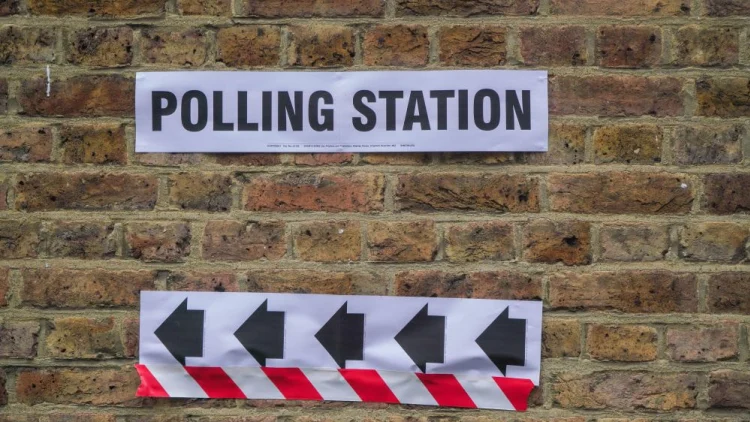
I am pleased the government has recognised the need for electoral reform by removing first-past-the-post in mayoral elections. We should expect the same strong representative standards for our MPs.
The Labour government has brought forward the Representation of the People Bill to the House of Commons. In doing so, it will add itself to a proud lineage of predecessors who have passed Representation of the People Acts that have extended the franchise, building our political system into the democracy we know today.
This new Bill is a welcome stride forward in enhancing our democracy, including more of our own citizens through automated voter registration and shutting out malign foreign actors. But to truly live up to this legacy, secure our democracy and tackle political inequality at the ballot box, the government must be bolder. To become a modern representative democracy, Westminster needs proportional representation (PR).
As I argued in the House of Commons in January last year, PR is a necessary reform to ensure that our increasingly multi-party politics translates into a representative parliament. Fragmentation has only accelerated since the last general election, with five parties now receiving more than 10 per cent of the projected national vote share – more than ever before. It’s no longer inconceivable for a historic landslide to be won with barely over a quarter of the vote. We must recognise that it is unfair to voters and wrong for any party to have total control over the levers of power of the British state for a five-year term when three in four voters have explicitly voted against them.
As PoliticsHome reported, over 50 constitutional experts have sounded the alarm that first-past-the-post (FPTP) risks “random and arbitrary” results. Among them is Sir Vernon Bogdanor, who has branded Westminster’s voting system “a serious threat to the quality of British democracy”. Meanwhile, the Institute for Government has said that the Gorton and Denton byelection shows that FPTP “is creaking at the seams”. I am pleased the government has already recognised the need for electoral reform by removing FPTP in mayoral elections. We should expect the same strong representative standards for our MPs.
Electoral reform need not threaten the vital constituency link. As an MP, I know this is key to grounding my work as a representative in and of my community. A mixed-member proportional system, as used in the modern parliaments of Germany or New Zealand, and throughout the UK in Scotland, London, and, until recently, Wales, delivers both local and national representation. It’s also worth noting that internationally, the only countries with high and rising public satisfaction with democracy all use PR. Meanwhile, in the UK, public trust is at rock bottom, with NatCen research last year showing that just 12 per cent of people trusted governments to put the interests of the nation above those of their own party.
Foundational reform of our democracy can under no circumstances be done on a whim. Electoral reform must be carried out not because it may benefit any particular party or ideology, but because it puts power back into the hands of the British people. Support for change is strong among Labour MPs – I note with interest excellent interventions from my colleagues Tim Roca, Beccy Cooper, Jenny Riddell-Carptenter, Sean Woodcock and Jo Platt in recent weeks, and many speeches in favour at the Representation of the People Bill’s Second Reading. This is a chance for the government to listen and lead. The cost of inaction could not be higher – chaos for our democracy means chaos for our politics and all those who depend on it.
I was not elected by my constituents to idly stand by and defend a broken political system and failed status quo. Fifty-three per cent of the public want to change our voting system. Electoral reform would go a long way to restore faith in politics. I am proud to be an MP representing a Labour government that is taking the next steps forward to build the modern, secure and representative democracy every elected representative should demand.
I urge the government to go further. It’s time for a national commission on electoral reform.
Luke Akehurst is Labour MP for North Durham

FIFA partners with YouTube for unique streaming format for 2026 World Cup | Football News

Debris of drone on Dubai street after Iran attack

Trump’s failed strong-arming of allies on Iran shows that pressure is losing its effect


-
 Crypto World4 days ago
HYPE Token Enters Net Deflation as HyperCore Buybacks Outpace Staking Rewards
-

 Fashion5 days ago
Weekend Open Thread: Addict Lip Glow
-

 Tech3 days ago
Your Legally Registered ‘Motorcycle’ Might Not Count Under Proposed US Law
-
Sports4 days ago
Why Duke and Michigan Are Dead Even Entering Selection Sunday
-

 Sports7 days ago
PWHL, Senators discussing plan to keep Charge in Ottawa
-

 NewsBeat7 days ago
Residents reaction as Shildon murder probe enters second day
-

 Business3 days ago
Search for Savannah Guthrie’s Mother Enters Seventh Week with No Arrests
-

 Business4 days ago
US Airports Launch Donation Drives for Unpaid TSA Workers as Partial Government Shutdown Enters Fifth Week
-
 Tech21 hours ago
Are Split Spacebars the Next Big Gaming Keyboard Trend?
-
Crypto World4 days ago
Coinbase and Bybit in Investment Talks: Could Bybit Finally Enter the US Crypto Market?
-

 NewsBeat7 days ago
I Entered The Manosphere. Nothing Could Prepare Me For What I Found.
-

 Business4 days ago
Country star Brantley Gilbert enters growing non-alcoholic beer market
-

 Business2 days ago
Australian shares drop as Iran war enters third week
-

 Crypto World2 days ago
Crypto Lender BlockFills Enters Chapter 11 with Up to $500M in Liabilities
-

 Sports5 days ago
College Basketball Best Bets: Conference Tournament Semifinal Picks
-

 Politics5 hours ago
The House | The new register to protect children from their abusers shows Parliament at its best
-
 Crypto World7 days ago
Three Binance Charts May Be Hinting at Bitcoin’s Next Move
-

 Business6 days ago
Trump demands Powell cut rates as Iran conflict raises energy prices
-

 Crypto World6 days ago
Senate Votes to Include CBDC Ban in Bipartisan Housing Bill
-

 Fashion2 days ago
25 Celebrities with Curly Hair That Are Naturally Beautiful


You must be logged in to post a comment Login