










Connect with us
DAPA Banner

Tech

Xiaomi stuns with new MiMo-V2-Pro LLM nearing GPT-5.2, Opus 4.6 performance at a fraction of the cost

Published

on

Chinese electronics and car manufacturer Xiaomi surprised the global AI community today with the release of MiMo-V2-Pro, a new 1-trillion parameter foundation model with benchmarks approaching those of U.S. AI giants OpenAI and Anthropic, but at around a seventh or sixth the cost when accessed over proprietary API — and importantly, sending less than 256,000 tokens-worth of information back and forth.

Led by Fuli Luo, a veteran of the disruptive DeepSeek R1 project, the release represents what Luo characterizes as a “quiet ambush” on the global frontier. Furthermore, Luo stated in an X post that the company does plan to open source a model variant from this latest release, ” when the models are stable enough to deserve it.”

By focusing on the “action space” of intelligence—moving from code generation to the autonomous operation of digital “claws”—Xiaomi is attempting to leapfrog the conversational paradigm entirely.

Prior to this foray into frontier AI, Beijing-based Xiaomi established itself as a titan of “The Internet of Things” and consumer hardware.

Advertisement

Globally recognized as the world’s third-largest smartphone manufacturer, Xiaomi spent the early 2020s executing a high-stakes entry into the automotive sector. Its electric vehicles (EVs), such as the SU7 and the recently launched YU7 SUV, have turned the company into a vertically integrated powerhouse capable of merging hardware, software, and now, advanced reasoning.

This pedigree in physical-world engineering informs MiMo-V2-Pro’s architecture; it is built to be the “brain” of complex systems, whether those systems are managing global supply chains or navigating the intricate scaffolds of an autonomous coding agent.

Technology: The architecture of agency

The central challenge of the “Agent Era” is maintaining high-fidelity reasoning over massive spans of data without incurring a prohibitive “intelligence tax” in latency or cost. MiMo-V2-Pro addresses this through a sparse architecture: while it houses 1T total parameters, only 42B are active during any single forward pass, making it roughly three times the size of its predecessor, MiMo-V2-Flash.

The model’s efficiency is rooted in an evolved Hybrid Attention mechanism. Standard transformers typically face a quadratic increase in compute requirements as context grows; MiMo-V2-Pro utilizes a 7:1 hybrid ratio (increased from 5:1 in the Flash version) to manage its massive 1M-token context window. This architectural choice allows the model to maintain a deep “memory” of long-running tasks without the performance degradation usually seen in frontier models.

Advertisement

The analogy: Think of the model not as a student reading a book page-by-page, but as an expert researcher in a vast library. The 7:1 ratio allows the model to “skim” 85% of the data for context while applying high-density attention to the 15% most relevant to the task at hand.

This is paired with a lightweight Multi-Token Prediction (MTP) layer, which allows the model to anticipate and generate multiple tokens simultaneously, drastically reducing the latency required for the “thinking” phases of agentic workflows. According to Luo, these structural decisions were made months in advance, specifically to provide a “structural advantage” for the unexpected speed at which the industry shifted toward agents.

Product and benchmarking: A third-party reality check

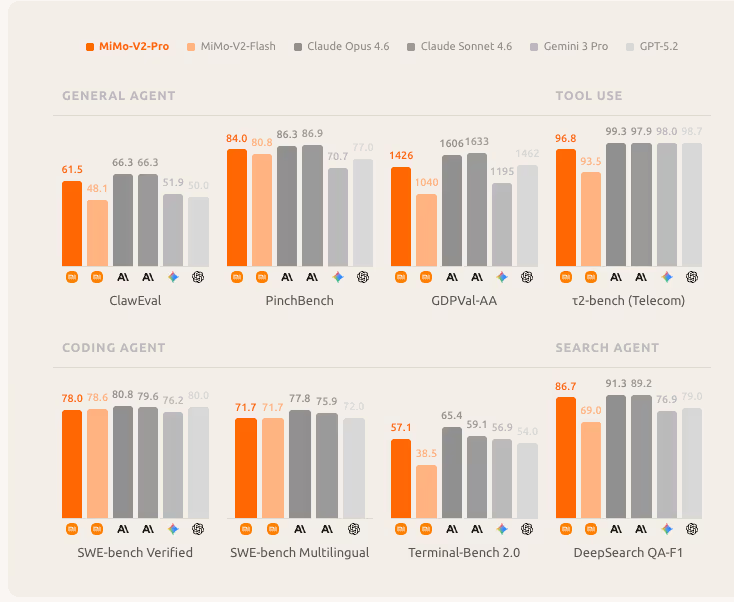
Xiaomi MiMo-V2-Pro benchmarking chart

Xiaomi MiMo-V2-Pro benchmark comparison chart vs. other leading models. Credit: Xiaomi

Xiaomi’s internal data paints a picture of a model that excels in “real-world” tasks over synthetic benchmarks. On GDPval-AA, a benchmark measuring performance on agentic real-world work tasks, MiMo-V2-Pro achieved an Elo of 1426, placing it ahead of major Chinese peers like GLM-5 (1406) and Kimi K2.5 (1283).

Advertisement

While it still trails Western “max effort” models like Claude Sonnet 4.6 (1633) in raw Elo, it represents the highest recorded performance for a Chinese-origin model in this category.

The third-party benchmarking organization Artificial Analysis verified these claims, placing MiMo-V2-Pro at #10 on its global Intelligence Index with a score of 49. This places it in the same tier as GPT-5.2 Codex and ahead of Grok 4.20 Beta. These results suggest that Xiaomi has successfully built a model capable of the high-level reasoning required for engineering and production tasks.

Xiaomi MiMo-V2-Pro benchmarking comparison chart by Artificial Analysis

Xiaomi MiMo-V2-Pro Artificial Analysis Intelligence index benchmarking comparison chart by Artificial Analysis

Key metrics from Artificial Analysis highlight a significant leap over the previous open-weights version, MiMo-V2-Flash (which scored 41):

Advertisement
  • Hallucination rate: The Pro model reduced hallucination rates to 30%, a sharp improvement over the Flash model’s 48%.

  • Omniscience index: It scored a +5, placing it ahead of GLM-5 (+2) and Kimi K2.5 (-8).

  • Token efficiency: To run the entire Intelligence Index, MiMo-V2-Pro required only 77M output tokens, significantly less than GLM-5 (109M) or Kimi K2.5 (89M), indicating a more concise and efficient reasoning process.

Xiaomi’s own charts further emphasize its “General Agent” and “Coding Agent” capabilities. On ClawEval, a benchmark for agentic scaffolds, the model scored 61.5, approaching the performance of Claude Opus 4.6 (66.3) and significantly outpacing GPT-5.2 (50.0). In coding-specific environments like Terminal-Bench 2.0, it achieved an 86.7, suggesting high reliability when executing commands in a live terminal environment.

How enterprises should evaluate MiMo-V2-Pro for usage

For the personas outlined in contemporary AI organizations—from Infrastructure to Security—MiMo-V2-Pro represents a paradigm shift in the “Price-Quality” curve.

Infrastructure decision-makers will find MiMo-V2-Pro a compelling candidate for the Pareto frontier of intelligence vs. cost. Artificial Analysis reported that running their index cost only $348 for MiMo-V2-Pro, compared to $2,304 for GPT-5.2 and $2,486 for Claude Opus 4.6.

For organizations managing GPU clusters or procurement, the ability to access top-10 global intelligence at roughly 1/7th the cost of Western incumbents is a powerful incentive for production-scale testing.

Advertisement

Data decision-makers can leverage the 1M context window for RAG-ready architectures, allowing them to feed entire enterprise codebases or documentation sets into a single prompt without the fragmentation required by smaller context models.

A systems/orchestration decision-maker should evaluate MiMo-V2-Pro as a primary “brain” for multi-agent coordination. Because the model is optimized for OpenClaw and Claude Code, it can handle long-horizon planning and precise tool use without the constant human intervention that plagues earlier models.

Its high ranking in GDPval-AA suggests it is particularly well-suited for the workflow and orchestration layer needed to scale AI across the enterprise. It allows for the creation of systems that can move beyond simple automation into complex, multi-step problem solving.

However, security decision-makers must exercise caution. The very “agentic” nature that makes the model powerful—its ability to use terminals and manipulate files—increases the surface area for prompt injection and unauthorized model access.

Advertisement

While its low hallucination rate (30%) is a defensive boon, the lack of public weights (unlike the Flash version) means internal security teams cannot perform the deep “model-level” audits sometimes required for highly sensitive deployments. Any enterprise implementation must be accompanied by robust monitoring and auditability protocols.

Pricing, availability, and the path forward

Xiaomi has priced MiMo-V2-Pro to dominate the developer market. The pricing is tiered based on context usage, with competitive rates for caching to support high-frequency reasoning tasks.

  • MiMo-V2-Pro (up to 256K): $1 per 1M input tokens and $3 per 1M output tokens

  • MiMo-V2-Pro (256K-1M): $2 per 1M input tokens and $6 per 1M output tokens

  • Cache read: $0.20 per 1M tokens for the lower tier and $0.40 for the higher tier

  • Cache write: Temporarily free ($0)

Here’s how it stacks up to other leading frontier models around the world:

This aggressive positioning is designed to encourage the high-intensity application flows that define the next generation of software. The model is currently available via Xiaomi’s first-party API only, with no current support for image or multimodal input—a notable omission in an era of “Omni” models, though Xiaomi has teased a separate MiMo-V2-Omni for those needs.

Advertisement

The “Hunter Alpha” period on OpenRouter proved that the market has a high appetite for this specific blend of efficiency and reasoning. Fuli Luo’s philosophy—that research velocity is fueled by a “genuine love for the world you’re building for”—has resulted in a model that ranks 2nd in China and 8th worldwide on established intelligence indices.

Whether it remains a “quiet” ambush or becomes the foundation for a global realignment of AI power depends on how quickly developers adopt the “action space” over the “chat window”. For now, Xiaomi has moved the goalposts: the question is no longer just “can it talk?” but “can it act?”

Source link

Advertisement
Continue Reading
Click to comment

You must be logged in to post a comment Login

Leave a Reply

Tech

Perplexity's Comet AI-powered browser arrives on iPhone with a new surfing paradigm

Published

on

After hitting the Mac earlier, Perplexity’s Comet browser is now on iPhone and focuses on using AI to summarize and extract information instead of relying on tabs, surfing, and search results.

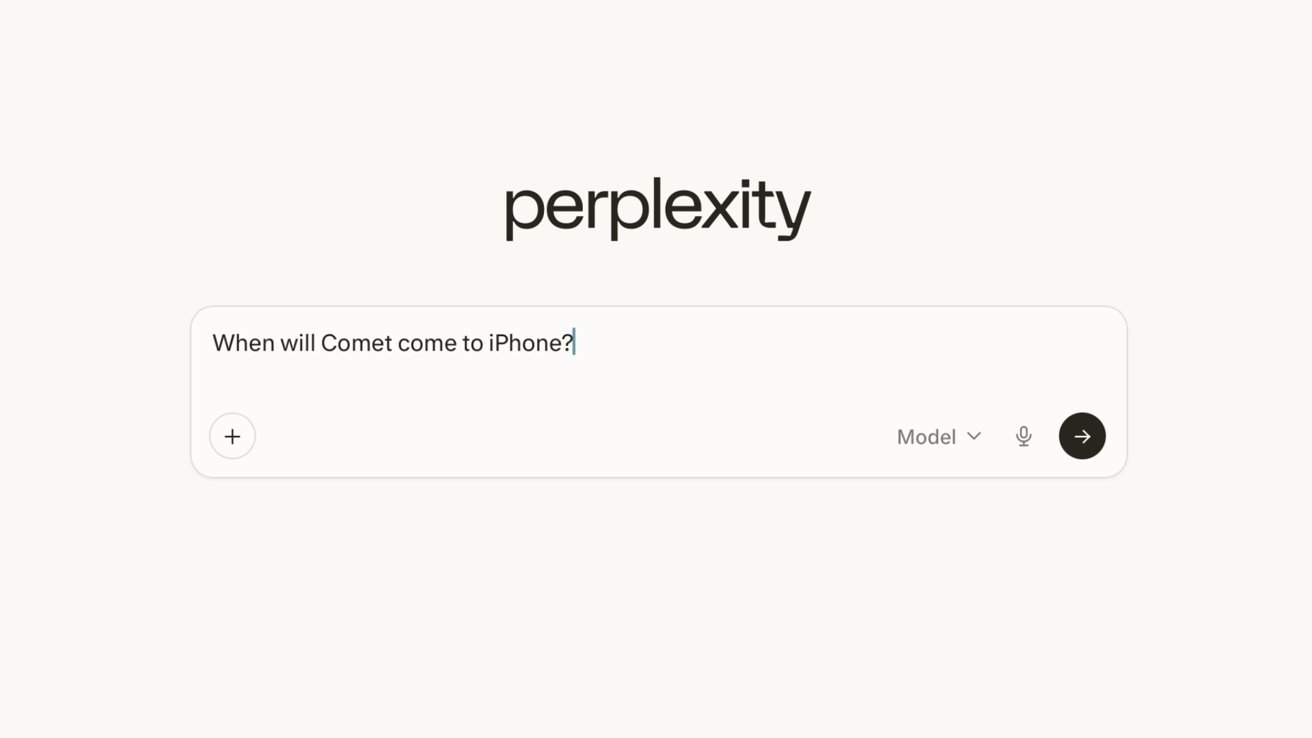
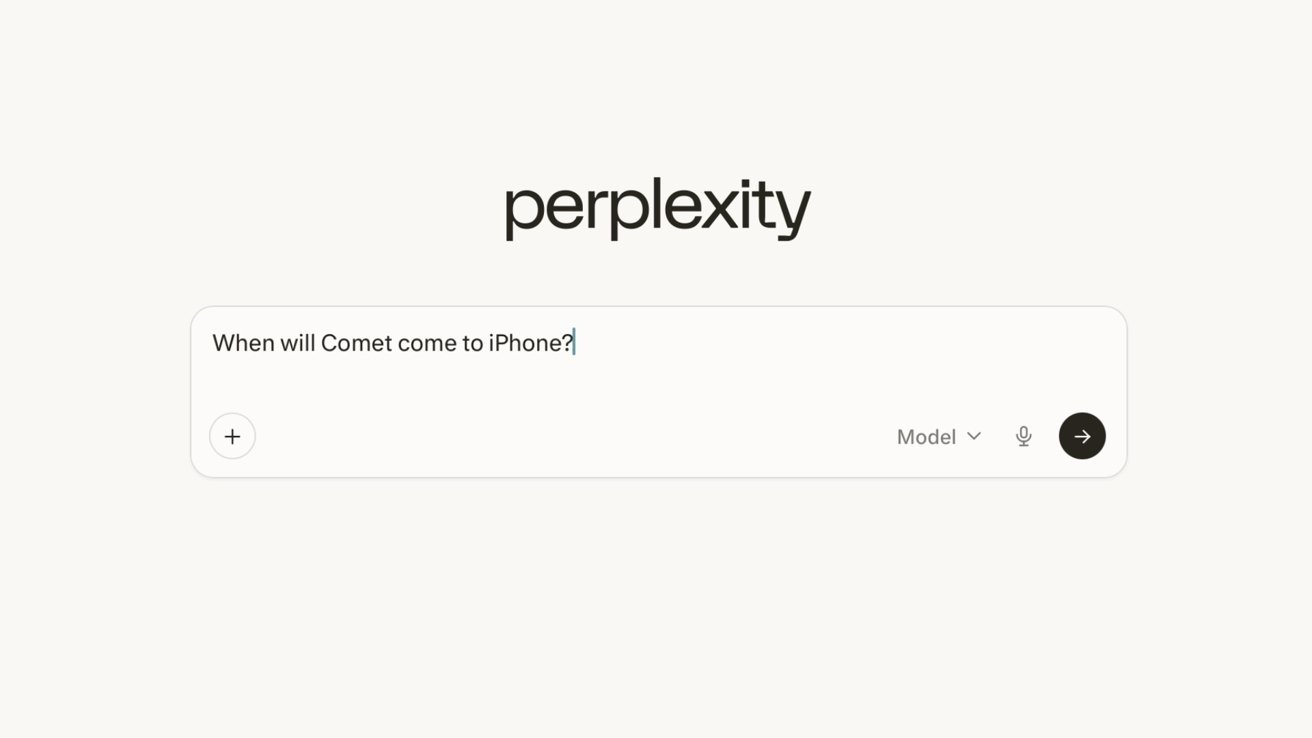
Perplexity search interface on a light background with a centered query box containing the text When will Comet come to iPhone and a model selection button on the right
Perplexity search interface

The release follows a short prelaunch period with App Store listings and a March window. It builds on earlier versions on Mac and other platforms that positioned Comet closer to an AI interface than a conventional browser.
On iPhone, the focus shifts toward working with the information contained instead of just rendering pages.
Continue Reading on AppleInsider | Discuss on our Forums

Source link

Continue Reading

Tech

OnePlus Nord 6 Specifications Leak Ahead of Launch: Expected Price and Features

Published

on

The OnePlus Nord 6 is expected to make its debut as the next offering in the Nord series. This is expected to be the successor to the OnePlus Nord 5, with hardware upgrades. Before its launch, new leaks have shed light on key specifications of the device.

Furthermore, it is rumored to feature hardware similar to that of the OnePlus Turbo 6, which was launched earlier in China. In the past, the Nord lineup has often reused designs and specifications from the Turbo series. Because of this, the Nord 6 may arrive as a rebranded version of the Turbo model, though the global version could include some minor upgrades.

Display and Performance

Back design of the OnePlus Nord 6

According to leaks, the OnePlus Nord 6 might feature a 6.78-inch AMOLED display with a 165Hz refresh rate for smooth visuals.

The phone is also expected to be powered by the Snapdragon 8s Gen 4 chipset, which could provide strong performance for everyday tasks and gaming. In addition, the device may come with multiple RAM and storage variants to give users more flexibility.

Camera and Battery

Different colors of the OnePlus Nord 6

For photography, the OnePlus Nord 6 may feature a 50MP primary rear sensor. Some reports suggest the global version could replace the monochrome lens with an ultra-wide camera. It is also expected to come with a 32MP front camera.

Apart from this, the battery life is also expected to be a key highlight of the OnePlus Nord 6. The device is expected to come with a 9,000mAh battery and 80W wired fast charging support. This will help charge the device much faster.

Advertisement

Expected Launch Timeline and Price in India

The OnePlus Nord 6 is also expected to launch in India soon, according to recent leaks from tipsters. As per reports, the device is expected to launch in India between late March and early April 2026. This will make it one of the first new devices from OnePlus this year. As far as the price is concerned, the new device may start at under Rs 35,000 for the base variant. This will be a slight price increase over the OnePlus Nord 5, which was launched in India at Rs 31,999.

Source link

Continue Reading

Tech

Keyboard accuracy bug quashed in iOS 26.4

Published

on

Apple is gearing up to release iOS 26.4 soon, and with it, a fix for a persistent, pesky bug that has plagued iOS 26.

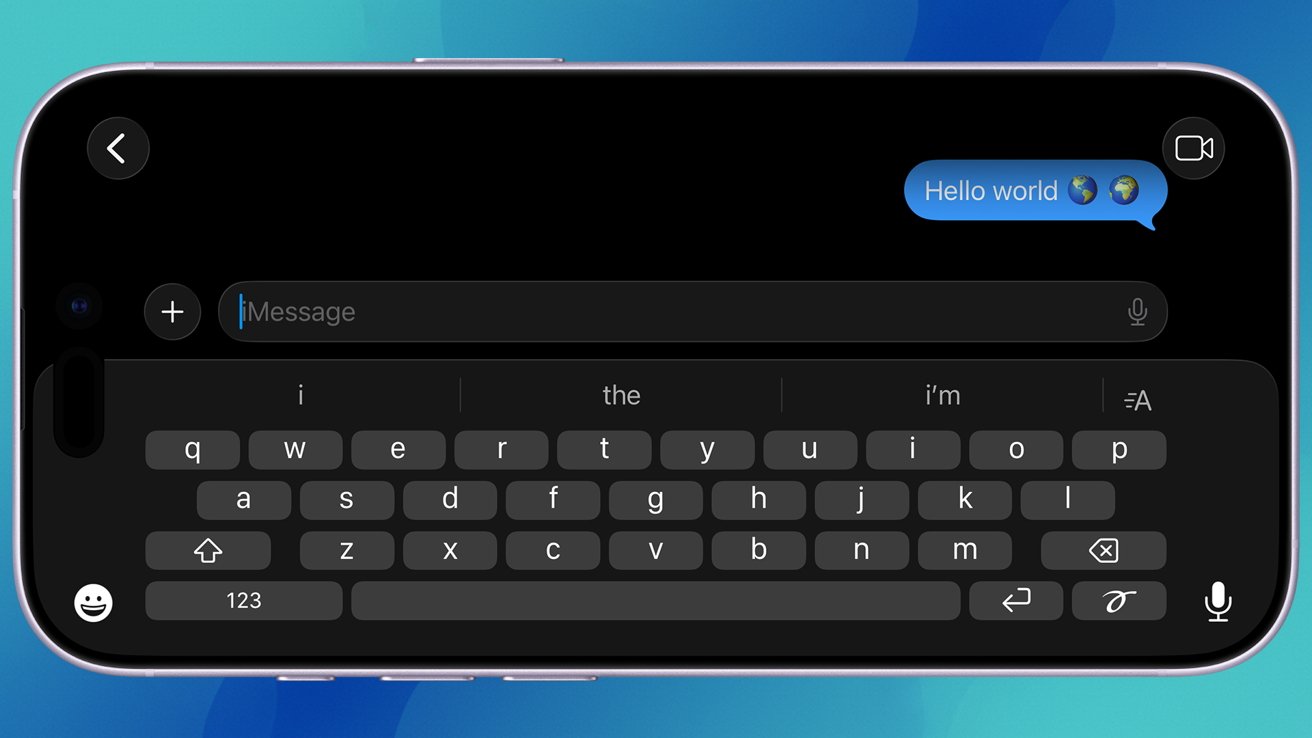
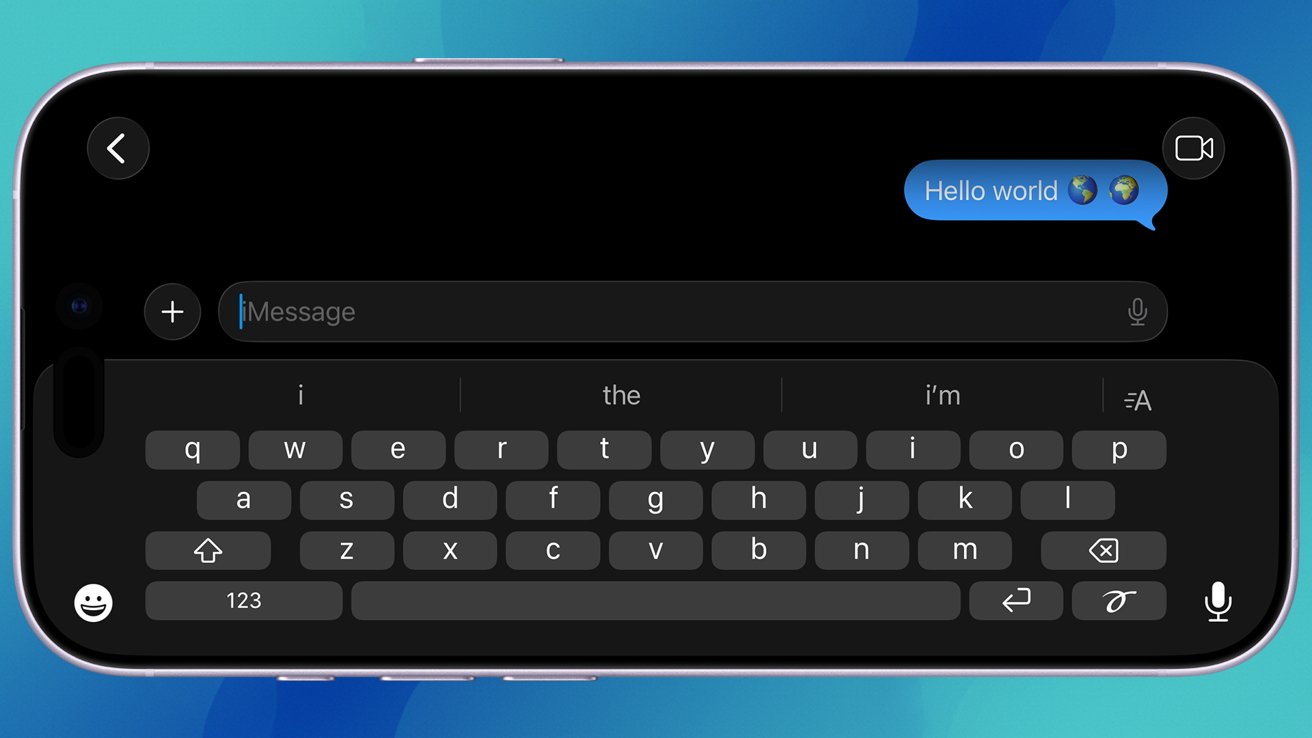
Smartphone in landscape showing iMessage conversation, dark mode keyboard, empty text field, and a single blue bubble message reading Hello world with two globe emojis
Apple quashes keyboard bug that lead to decreased accuracy in iOS 26

Many iPhone users have been complaining that the iOS keyboard has gotten worse in iOS 26. For many users, typing quickly would cause the software to miss characters.
While it would appear that the user had tapped the character, it ultimately would fail to insert into the text field.
Continue Reading on AppleInsider | Discuss on our Forums

Source link

Continue Reading

Tech

Quantum battery promises instantaneous refill and remote charging for your gadgets

Published

on

A new kind of battery that could charge almost instantly and even power devices remotely is no longer just a theory. According to reporting highlighted by The Guardian, Australian researchers have built what they describe as the world’s first working prototype of a quantum battery.

It’s a device that can charge, store, and discharge energy using the principles of quantum mechanics. The breakthrough comes from a team led by scientists at CSIRO, Australia’s national science agency, and marks the first time a quantum battery has completed a full charge–store–discharge cycle.

How does a quantum battery actually work?

Unlike traditional batteries that rely on chemical reactions, quantum batteries use light and quantum interactions to store energy. One of their most surprising properties is that they can charge faster as they get bigger, thanks to something called “collective effects.” In simple terms, adding more quantum cells actually speeds up charging, which is the exact opposite of how conventional batteries behave.

The current prototype can charge in femtoseconds (a quadrillionth of a second) and is powered wirelessly using a laser, which converts light into electrical energy. What’s more, is that same mechanism also opens the door to something even more futuristic: remote charging. Researchers say devices like drones or even cars could potentially be charged while in motion, without ever needing to plug in.

How close are we to using this in real gadgets?

Not very, at least for now. The current prototype can only store a tiny amount of energy and holds its charge for just a few nanoseconds, making it impractical for everyday devices like smartphones or laptops.

Researchers say the next big challenge is increasing both capacity and storage time. Until then, quantum batteries are more likely to find early use in niche areas like quantum computing, where their unique properties could offer real advantages. Still, the implications are hard to ignore. If the technology matures, it could potentially lead to never needing to plug in at all.

Advertisement

Source link

Continue Reading

Tech

Death Stranding 2 leaks early as unencrypted Steam build spreads online

Published

on


This kind of leak harks back to the glory days of CD-ROM software in the late 1990s, when games that had “gone gold” were often pirated before reaching retail stores. Death Stranding 2’s system requirements include 150GB of available storage, while the leaked download allegedly weighs “just” 113GB.
Read Entire Article
Source link

Continue Reading

Tech

Today’s NYT Mini Crossword Answers for March 19

Published

on

Looking for the most recent Mini Crossword answer? Click here for today’s Mini Crossword hints, as well as our daily answers and hints for The New York Times Wordle, Strands, Connections and Connections: Sports Edition puzzles.


Need some help with today’s Mini Crossword? It’s a pretty easy one today, but we’ve got all the answers in case you’re stumped. And if you could use some hints and guidance for daily solving, check out our Mini Crossword tips.

If you’re looking for today’s Wordle, Connections, Connections: Sports Edition and Strands answers, you can visit CNET’s NYT puzzle hints page.

Advertisement

Read more: Tips and Tricks for Solving The New York Times Mini Crossword

Let’s get to those Mini Crossword clues and answers.

completed-nyt-mini-crossword-puzzle-for-march-19-2026.png

The completed NYT Mini Crossword puzzle for March 19, 2026.

Advertisement

NYT/Screenshot by CNET

Mini across clues and answers

1A clue: Ghost’s word
Answer: BOO

4A clue: Magician’s “And just like that, it’s gone!”
Answer: POOF

5A clue: With 7-Across, it’s full of stars
Answer: NIGHT

Advertisement

6A clue: White bills in Monopoly
Answer: ONES

7A clue: See 5-Across
Answer: SKY

Mini down clues and answers

1D clue: Score of 4 on a par 3
Answer: BOGEY

2D clue: ___ and aahs
Answer: OOHS

Advertisement

3D clue: Frequently, in poetry
Answer: OFT

4D clue: Like the sands of Harbour Island, Bahamas
Answer: PINK

5D clue: Dissenting votes
Answer: NOS

Advertisement

Source link

Continue Reading

Tech

Meta has launched Creator Fast Track

Published

on

Meta’s Creator Fast Track programme guarantees three months of pay for established creators willing to build a following on Facebook, after the company paid out a record $3 billion to creators in 2025.


Facebook has a creator problem that three billion monthly users cannot solve. The platform is enormous, but the creators who drive the short-form video economy, the ones building loyal audiences on TikTok and YouTube, have largely looked past it.

Starting on a new platform from zero is daunting, and Facebook’s history with creators has been complicated enough that even those who’ve heard the pitch have reason to hesitate.

On Wednesday, Meta launched Creator Fast Track, a direct attempt to address that hesitation with cash. The programme offers established creators with audiences on other platforms guaranteed monthly payments for three months in exchange for posting Reels on Facebook.

Advertisement

Creators with at least 100,000 followers on Instagram, TikTok, or YouTube can earn $1,000 per month; those who have crossed one million followers on any of those platforms get $3,000 per month.

Advertisement

The eligibility requirements are not onerous. Creators need to post at least 15 Reels on Facebook within a 30-day period, spread across at least 10 different days. The content does not need to be Facebook-exclusive and can include AI-generated material, as long as it is original to the creator.

Participation also unlocks immediate access to Facebook Content Monetization, the broader invite-only programme that pays based on content performance, which means earnings continue even after the three-month guaranteed period ends.

The programme lands alongside a figure Meta is clearly pleased with: in 2025, Facebook paid content creators nearly $3 billion through its monetisation programmes, a 35% increase from the previous year and its highest annual payout on record.

That compares with $2 billion in 2024, a figure Rest of World independently confirmed in February. The number of creators earning more than $10,000 annually on Facebook grew by over 30% year-on-year.

Advertisement

The breakdown of where that money went is also notable.

Sixty per cent of the $3 billion went to Reels, while the remaining 40% was split across Stories, photos, and text posts. That last detail matters for the Creator Fast Track pitch: unlike TikTok and YouTube, which are fundamentally video-first platforms, Facebook Content Monetisation pays for almost everything a creator posts.

A writer who shares text posts, a photographer posting stills, or a creator who mainly works in Stories can all earn from the platform without committing to video production.

Facebook Content Monetisation itself has expanded dramatically over the past year. According to Rest of World’s analysis of data from the Meta Monetisation Archive in February 2026, the programme grew from roughly 2.7 million participants to 12 million in just over a year, with Indonesian-language accounts representing the second-largest cohort after English.

Advertisement

The global scale of that expansion is part of what makes the $3 billion figure credible, and part of what Facebook is hoping to leverage to attract creators who might otherwise dismiss the platform as irrelevant to younger audiences.

Meta is also introducing new metrics alongside the programme to help creators understand their earnings more precisely.

These include a Qualified View metric, views on content eligible to earn money, an Earnings Rate showing approximate pay per 1,000 qualified views, and a Non-Qualified Views breakdown explaining why certain views do not generate revenue.

The clearer feedback loop is designed to help creators optimise their content performance rather than simply guessing why their payouts vary.

Advertisement

The strategic logic of Creator Fast Track is not subtle. Facebook has been pushing Reels hard since 2020, positioning them as its response to TikTok’s dominance in short-form video.

But Reels require content, and content requires creators willing to invest the time to build on the platform. The guaranteed payment model removes the risk that typically stops established creators from experimenting with a new home: the fear of posting consistently for months and earning almost nothing while an audience is still being built.

For Meta, which reported advertising revenue of roughly $160 billion in 2025, writing cheques to a few thousand established creators is a rounding error against the potential payoff of a more creator-rich Facebook feed.

Whether creators bite depends on something harder to measure than the cash: whether Facebook’s audience and long-term monetisation potential are worth the effort of maintaining yet another profile.

Advertisement

The $1,000-a-month tier, which requires 100,000 followers to qualify, is not a transformative sum for a creator at that scale. The $3,000-a-month tier is more meaningful, though most creators at the million-follower level will be weighing it against what they already earn.

What the programme does offer, unambiguously, is a no-downside trial run, three months of guaranteed income to find out whether Facebook’s reach can surprise them.

Source link

Advertisement
Continue Reading

Tech

‘I don’t like it when doomers are out scaring people’: Nvidia on why AI rhetoric damages the US chances to lead in the AI race

Published

on

AI will save us or be the end of us. That’s not fact or even an opinion; it’s a TL;DR reduction of the very real tension between proponents of AI and those who fear it.

Interestingly, sometimes that tension resides in a single person. It is quite fair and reasonable to use ChatGPT for basic deep dive data searches and for quick answers on how to talk to an uncooperative child, but to also fear that perhaps that same AI knows too much about you and might, in its own agentic way, start to act on your behalf and do things you never intended. At scale, we worry about AI controlling weapons or even launching a catastrophic war.

Source link

Advertisement
Continue Reading

Tech

Ransomware gang exploits Cisco flaw in zero-day attacks since January

Published

on

Cisco

The Interlock ransomware gang has been exploiting a maximum severity remote code execution (RCE) vulnerability in Cisco’s Secure Firewall Management Center (FMC) software in zero-day attacks since late January.

The Interlock ransomware operation surfaced in September 2024 and has been linked to ClickFix and to malware attacks in which they deployed a remote access trojan called NodeSnake on the networks of multiple U.K. universities.

Interlock has also claimed responsibility for attacks on DaVita, Kettering Health, the Texas Tech University System, and the city of Saint Paul, Minnesota. More recently, IBM X-Force researchers reported that Interlock operators have deployed a new malware strain dubbed Slopoly, likely created using generative AI tools.

Cisco patched the security flaw (CVE-2026-20131) on March 4, warning that it could allow unauthenticated attackers to remotely execute arbitrary Java code as root on unpatched devices.

Advertisement

The Amazon threat intelligence team reported on Wednesday that the Interlock ransomware operation had been exploiting the Secure FMC flaw in attacks targeting enterprise firewalls for more than a month before it was patched.

“While looking for any current or past exploits of this vulnerability, our research found that Interlock was exploiting this vulnerability 36 days before its public disclosure, beginning January 26, 2026,” said CJ Moses, CISO of Amazon Integrated Security. 

“This wasn’t just another vulnerability exploit, Interlock had a zero-day in their hands, giving them a week’s head start to compromise organizations before defenders even knew to look.”

“On March 4, 2026, Cisco issued a security advisory disclosing a vulnerability in the web interface of Cisco Secure Firewall Management Center Software,” Cisco told BleepingComputer on Wednesday in an email statement after publishing. “We appreciate Amazon’s partnership on this, and we have updated our security advisory with the latest information. We strongly urge customers to upgrade as soon as possible and reference our security advisory for more details and guidance.”

Advertisement

Since the start of the year, Cisco has addressed several other security vulnerabilities that have been exploited in the wild as zero-days. For instance, in January, it fixed a maximum-severity Cisco AsyncOS zero-day that had been exploited to breach secure email appliances since November and patched a critical Unified Communications RCE that was also abused in zero-day attacks.

Last month, Cisco addressed another maximum-severity flaw that was abused as a zero-day to bypass Catalyst SD-WAN authentication, allowing attackers to compromise controllers and add malicious rogue peers to targeted networks.

Update March 18, 12:55 EDT: Added Cisco statement.

Malware is getting smarter. The Red Report 2026 reveals how new threats use math to detect sandboxes and hide in plain sight.

Download our analysis of 1.1 million malicious samples to uncover the top 10 techniques and see if your security stack is blinded.

Advertisement

Source link

Continue Reading

Tech

Microsoft is threatening to sue Amazon and OpenAI over a $50 billion cloud hosting deal

Published

on


According to an unnamed Microsoft insider quoted by Financial Times, the company is prepared to sue OpenAI and Amazon if they move forward with the deal. “We know our contract, and we’ll sue them if they breach it,” the person reportedly told the publication, arguing that OpenAI cannot offer Frontier…
Read Entire Article
Source link

Continue Reading

Trending

Copyright © 2025