
Politics
MPs can’t stay silent on this grotesque experiment on kids

Parliament is packed with Westminster weasels dodging a very simple question: is it ethical to run medical experiments on children who are confused about their sex?
Most Labour and Liberal Democrat MPs have ducked responsibility entirely, terrified that stepping into the so-called culture war might dent their career prospects. In reality, the toxicity in this debate has come from only one direction: furious and entitled transgender activists.
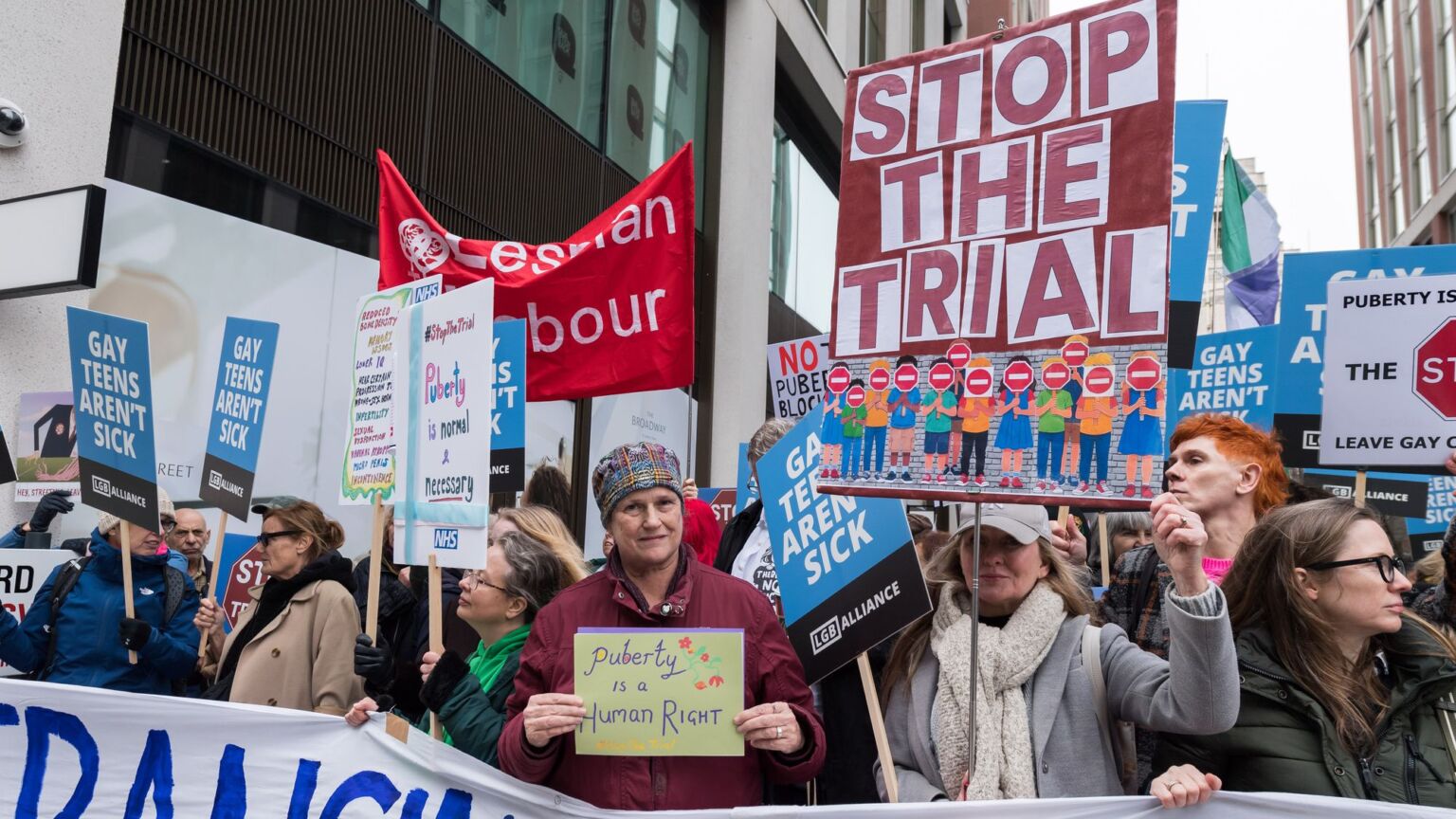
Last Tuesday, politicians, including many who have previously shirked the issue, were finally confronted. A coalition including LGB Alliance UK, the Women’s Rights Network and Sex Matters organised a mass lobby of parliament over the NHS-backed Pathways Trial, which will prevent more than 200 healthy children from undergoing puberty. Around one hundred people travelled from across the UK to demand meetings with their MPs and to call for the controversial study to be scrapped.
Among them was a mother who had taken time off work to meet her MP, Liberal Democrat Danny Chambers, after witnessing in her local school ‘the level of fear from teachers afraid to say the wrong thing’. She described the conversation as constructive. ‘We made some progress’, she said. ‘He is a vet and understands the science.’
Another attendee was a lesbian detransitioner who had been prescribed puberty blockers and cross-sex hormones as a young woman, and now lives with the permanent consequences. A gay man told me he had travelled to parliament because, had he grown up nowadays, his effeminate behaviour might have triggered a referral to a gender clinic. ‘When I was a kid I was camp’, he said. ‘All my friends were girls and I was desperate to fit in. Today that would be treated as evidence that I was meant to be female.’ These concerns are not hypothetical. Estimates suggest that between 80 and 90 per cent of young people referred to gender-identity services are same-sex attracted.
Kate Barker, chief executive of LGB Alliance, said the lobbying effort had forced the issue on to MPs’ desks. ‘They now know that silence will be considered complicity by their constituents’, she said. ‘Prescribing powerful drugs to healthy children, most of whom would grow up to be lesbian, gay or bisexual, will be considered the medical scandal of our generation.’
The Pathways Trial, recommended by Dr Hilary Cass in her 2024 review, and reluctantly nodded through by health secretary Wes Streeting, is already descending into farce. The NHS-funded study, led by King’s College London, has been halted following an intervention by the Medicines and Healthcare Products Regulatory Agency (MHRA). The regulator raised concerns that it may not be ethical to enrol children as young as 14 in a trial whose ‘expected effects’, as the MHRA delicately puts it, include sterilisation, when puberty blockers are followed by cross-sex hormones.
The controversy has since been compounded by a row involving the regulator itself. Professor Jacob George, the MHRA’s chief medical and scientific officer, who raised the safety concerns that halted the trial, was subsequently recused after an old post emerged in which he described JK Rowling as a ‘treasure of our time’. George also expressed concern about ‘the denial of basic biological fact’ in relation to the male boxer Imane Khelif. Apparently, in the topsy-turvy world of gender medicine, George’s apparent view that biology exists makes him too ‘biased’ to be involved in the trial.
Yet beyond the row over Pathways lies a deeper absurdity. Thousands of former Tavistock patients have already been given puberty blockers. But like schoolchildren hiding bad report cards, NHS adult gender services have refused to hand over the results of these immoral experiments. Last month, the UK government changed the law to force their release. Under the new legislation, the records of around 9,000 children treated at the Tavistock clinic before it closed in 2023 will be linked with adult NHS files to see how these patients have actually fared. This makes the Pathways Trial all the more unnecessary.
Many adults remain heavily invested in the myth of the ‘transgender child’. Some undoubtedly have less than wholesome motivations, whether fetishising prepubescent bodies or seeking a medical gloss for their own desire to present as the opposite sex. Others may sincerely believe they are helping a persecuted minority or supporting relatives who identify as transgender. Labour’s Emily Thornberry has spoken publicly about having a female cousin who identifies as male. She says it is her ‘business is to love him and protect him from bullying’ (sic).
It seems the voters are catching on faster than their elected representatives. A poll last December found that 67 per cent agree puberty blockers should never be given to under-18s ‘even as part of a clinical trial’.
Prescribing puberty blockers to children because they believe they are the opposite sex is about as ethical as giving Ozempic to anorexics. The Tavistock scandal exposed a medical system that abandoned its most fundamental duty – do no harm – under activist pressure. The Pathways Trial suggests those same mistakes are still being made, because our political class would rather allow an unnecessary experiment on children than risk angering trans zealots.
MPs can no longer pretend this is someone else’s problem. If they lack the courage to face the issue and tell the truth, they have no business making decisions about the welfare of children. Indeed, they have no business being in parliament at all.
Jo Bartosch is co-author of Pornocracy. Order it here.

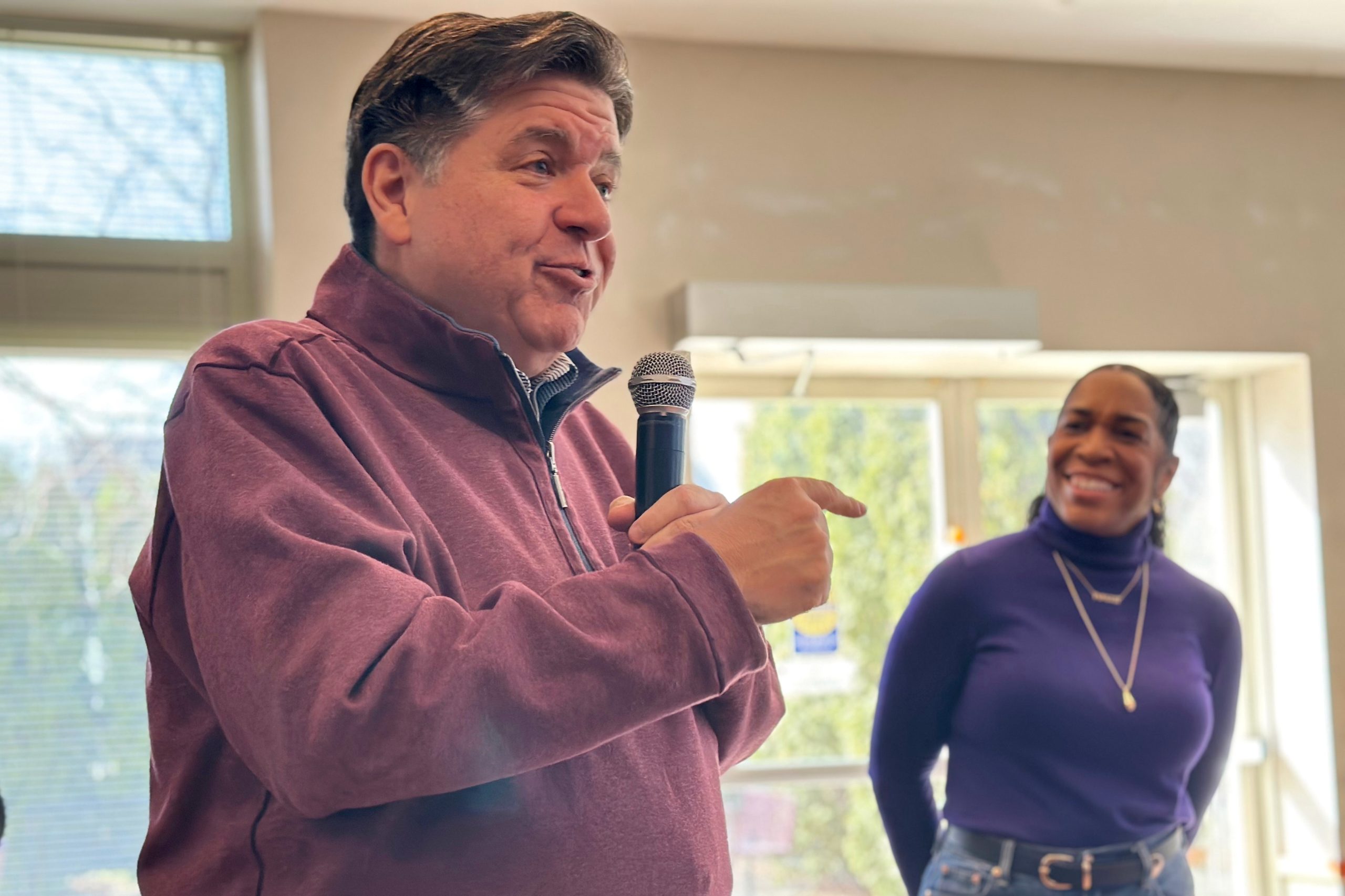
Congressional Black Caucus members, after a stinging loss in the Illinois Democratic Senate primary, are training their ire on Gov. JB Pritzker — and saying it’s on him to rehabilitate the relationship.
After Pritzker’s outsized financial support for Lt. Gov. Juliana Stratton helped lift her to victory, lawmakers vented frustrations that his money unfairly tilted the race in her favor and away from their candidate, Rep. Robin Kelly, a CBC member who finished a distant third. And as Pritzker eyes a 2028 presidential bid, some members, cognizant that the path to winning the Democratic Party’s nomination will run through the caucus, signaled they won’t forget that he crossed them this round.
“He has to justify what he did,” said Rep. Bennie Thompson (D-Miss.). “I’m sure at some point if he decides to run, he’ll have to come with that justification. As to whether or not it has merit or not, remains to be seen.”
Pritzker’s money helped put Stratton on the path to becoming just the sixth Black senator in U.S. history. But by boxing out Kelly, he frayed his relationship with the caucus, which holds significant sway over which candidates break through with Black voters — a large and powerful voting bloc the billionaire governor will need if he chooses to run for the White House.
“Keep in mind, the Democratic candidate for president that prevails has to go through [the CBC],” said Rep. Joyce Beatty (D-Ohio). “The CBC is very strategic and so if there is an issue … we will lay out our framework for what it will take” to get our endorsement, she added.
Many top CBC officials are in no rush to make the first move to mend fences.
“We don’t need to reach out to the governor,” said Rep. Gregory Meeks (D-N.Y.) who chairs the Congressional Black Caucus PAC, adding that the group is focused on midterm races and delivering House Minority Leader Hakeem Jeffries the speaker’s gavel.
“Others are going to have to reach out to us,” he said of Pritzker. “Those conversations happen when those conversations happen.”
Pritzker’s political arm issued a statement in response saying he was “proud” to support Stratton, Illinois’ first Black lieutenant governor: “With only six black women having served in the U.S. Senate throughout its history, Gov. Pritzker supported his partner in governance because he’s worked side by side with her for almost a decade and knows she will deliver for the people of Illinois,” Jordan Abudayyeh, Pritzker’s spokesperson, said.
His team did not address questions about CBC members’ concerns, but did point to Rep. Jim Clyburn, the powerful South Carolina Democrat, saying ahead of the election that Pritzker was “free to support” anyone.
Clyburn on Wednesday told POLITICO he would “expect” for Pritzker to support his No. 2 and that he was not focused on 2028.
Still, lawmakers’ veiled threats lay bare the difficulties Pritzker could face beyond Tuesday’s primary. And they underscore the duality the CBC is navigating as high-profile defeats of their members in Illinois and Texas raise questions about their political influence — even as they celebrate Stratton’s victory.
In interviews with more than a dozen CBC members on Wednesday, they made clear their irritation is not with Stratton, who many said will be welcomed into the caucus if she wins as expected in November. Their indignation rests solely with Pritzker, who they accused of playing kingmaker by pouring millions of dollars into propping up Stratton.
Tensions flared between the powerful legislative voting bloc and the billionaire governor in early March. CBC Chair Yvette Clarke lashed out at Pritzker, saying she was “beyond frustrated” with the governor for “tipping the scales” a nod to his funneling of $5 million from his super PAC to help catapult Stratton into contention with Rep. Raja Krishnamoorthi, who for much of the primary was leading in the polls and started with a massive cash advantage.
Many CBC members, and Clarke specifically, took Pritzker’s presence in the race as a snub to Kelly, who had a long-standing beef with Pritzker after he worked to oust her as chair of the Illinois Democratic Party in 2022. While both Kelly and Pritzker were said to have moved beyond it, the Senate campaign reopened old wounds.
Clarke issued a statement — some 12 hours after the Illinois Senate primary was called — to congratulate Stratton on her victory, calling it “a significant moment for Illinois and the nation that calls for unity” before pivoting to praise Kelly.
The CBC chair on Wednesday said she and Pritzker had not spoken.
“I’m sure there’ll be a moment where we’ll have a conversation,” Clarke said. When asked if she felt like she needed to initiate a conversation with the governor, she responded tersely. “No, I don’t.”
Former Illinois Sen. Carol Moseley Braun, the first Black woman elected to the body in U.S. history, endorsed Stratton in the race. She took issue with CBC members’ intense focus on the governor’s role in the process instead of the historic outcome, and said the group seemed more focused on backing its own than expanding Black representation.
“To weigh in on this race was just backwards,” she told POLITICO. “[Kelly] was a member of the caucus and so it’s understandable on that level. But at the same time, Juliana deserved at least something from that group.”
Many current CBC members refrained from attacking Pritzker directly, however — another sign of the complex politics at play. Congressional Democrats want Pritzker’s billions to help bankroll their bid to retake control of the House and make Jeffries, the minority leader and New York Democrat, the first Black speaker. They’ve already been working him behind the scenes.
“I’ve already reached out to Governor Pritzker,” said Rep. Steven Horsford (D-Nev.), a former CBC chair. “I’ve talked to him this morning, in fact, and I’ll talk to him in the weeks and months to come, because I have one objective: to win this House, to help win the Senate, and to make sure we end the chaos that’s coming out of this administration.”
Others took pains to separate their evaluation of Pritzker’s role in propelling Stratton to victory from any campaign he may run in 2028, suggesting they were willing to reset the relationship.
“You will still have to show your bona fides, and you still will have to make your case as to why the CBC and Black people should take you into consideration. So we have reset it,” Rep. Sydney Kamlager-Dove (D-Calif.) said. “Good for him, for her, but that has no bearing on the 2028 race.”
Shia Kapos contributed to this report.

5, the broadcaster previously known as Channel 5, has defended its upcoming drama about the downfall of disgraced BBC News presenter Huw Edwards.
Back in January, it was announced that Martin Clunes would play the former news anchor in the two-part series Power: The Downfall Of Huw Edwards, which is due to air on 5 next week.
Of course, in the lead-up to the series airing, there’s been some debate about whether it was “too soon” for the story to be turned into a fictionalised drama, with the broadcaster’s chief content officer Ben Frow responding at a recent screening.
“I think it isn’t too soon,” he insisted, as reported by The Guardian. “If you want to reach as many people as possible and highlight how grooming works and the insidiousness of grooming, drama is [the] most powerful way to do it.”
He also said that Power offered “a different side of the story”, while the show itself shone a light on the more “serious issue” of “the grooming of young men and abuse of power”.
Executive producer Sam Antiss also claimed: “People have talked about the timing of this drama and I would say the timing is really right. Foremost because the victim says it’s right, he’s ready to tell his story, and there are really urgent themes in this drama around online safety, child pornography [and] the leniency of the sentencing.”
5 explained earlier this year that Power: The Downfall Of Huw Edwards would reflect on Edwards’ “double life as it spirals out of control, leading him to make the greatest announcement of his career – his total exit from public life following his conviction for serious child sexual offences”.
In 2023, Edwards first became the subject of public scandal when it was revealed he had been accused of paying a young person to pose for sexually explicit photos, which led to him being suspended from the BBC.
A year later, after withdrawing from public life, it was made public that he had pleaded guilty to having 41 indecent images of children, which, according to BBC News’ reporting at the time, included seven of the most serious category A images – and two clips showing a child as young as seven.
He was subsequently given a suspended prison sentence in 2024 after pleading guilty to three counts of making indecent images of children.
Politics
Politics Home | From Heritage Care to Energy Insight: The Evolving Role of Dalkia UK at Parliament


The Dalkia Team in Parliament.

Stu Brown, Business Unit Director, Houses of Parliament, Dalkia UK
| EDF
There is a particular stillness to the Parliamentary Estate before the working day begins. The river sits quietly, the courtyards rest in the half-light and deep within the buildings the systems that heat, cool and protect the estate begin their morning routines. It is in these hidden, early hours that our team often finds itself hard at work, tending to the mechanical and electrical heart of a World Heritage Site that remains central to national life.
For more than 25 years, Dalkia UK has helped keep this historic environment safe and resilient. We work alongside a number of other teams across a diverse estate, where every space brings its own character and challenges. From medieval structures to more modern additions, daily work ranges from the routine to the intricate, but is always carried out with an understanding that heritage and function must coexist.
In recent years, we have strengthened both how we plan and how we deliver on site. The introduction of our annual maintenance planner has helped bring clarity to operations, reinforcing the rhythm of maintenance across a complex estate. Reactive performance has improved too, and our commitment to smaller works has grown. These gains reflect the steadiness of a team who have spent years listening closely to what the buildings, and their occupants, need.
Alongside these improvements, Dalkia’s Project team continues to form an important part of our delivery, expanding our contribution to the estate’s future with a number of multi-year engineering programmes – demonstrating the scale and sophistication of work required behind the scenes. Our wider activity across London, including BMS upgrades and energy-led improvements, continues to inform what we bring back to Parliament itself, helping us to continue delivering our best.
It was in that same spirit of partnership that we proposed and carried out a detailed efficiency survey in one of Parliament’s Northern Estate buildings. The aim was straightforward: to identify practical opportunities to improve how the building operates without compromising its resilience or the services it supports. This aligns naturally with EDF’s commitment to helping organisations run smarter and more effectively. The findings provide a clear roadmap for optimising performance, but just as importantly, they demonstrate the value of long term partners working proactively and taking responsibility for continuous improvement.
 resized.JPG)
All these improvements couldn’t have happened without our people on site, and an off-site support team, who remain central to everything we do. Our apprenticeship pathway is flourishing, with new joiners learning the specific craft of heritage-sensitive engineering. Their confidence grows quickly, supported by the experience of colleagues like Shakira Green, our Apprentice of the Year 2024, whose journey reflects the energy and ambition that is shaping the next generation. Equally, colleagues like Chris Lynn, recognised as Changing Gear Employee of the Year 2024, demonstrate the care and problem-solving that underpin safe, reliable service delivery.
resize.JPG)
Wellbeing is another thread woven through our work. We have been proud to support Parliament’s Mental Health Fitness events and to share the practical steps we take to promote good mental health across our teams. Our involvement with the Parliamentary Apprenticeship Scheme, support for Reservists and Veterans and volunteer activity at events such as Remembrance Week all reflect a commitment to being part of the wider community of the estate.
Through all these developments, our core purpose remains unchanged: to support the wider maintenance and facilities teams in providing a dependable foundation for the daily functioning of Parliament. In an environment where a million visitors pass through each year, reliability is not just an operational goal but a civic one. We play our part in ensuring that meetings can take place, debates can proceed and the work of democracy can continue without interruption. As we look to the future, our contribution will continue to evolve as we keep balancing expert heritage care and new energy improvements, all while nurturing future talent that will one day inherit the estate’s complexities.
This is not only an important place to work; it is a uniquely privileged one, and all of us take pride in being part of the wider Parliamentary community. And if, from time to time, we hear that our work is so seamless it goes largely unnoticed, we regard that as a mark of success. After all, in buildings like these, silence usually means everything is working exactly as it should.

Strictly Come Dancing professional Dianne Buswell has confirmed that she and her long-term partner Joe Sugg have welcomed their first child.
Dianne announced she was pregnant back in September, just weeks before the latest season of Strictly – on which she was paired with fellow Aussie, Neighbours actor Stefan Dennis – was due to get underway.
On Wednesday evening, Dianne and Joe shared a joint Instagram post confirming that the dancer had given birth to a son on Monday, who they have named Bowden Mark Richard Sugg.
“Never felt a love like it,” the two wrote in their post, alongside a beautiful photo of Bowden sleeping, as well as pictures of Dianne holding him in her hospital bed and Joe carrying him home.
Take a look at the couple’s post for yourself here.
Dianne and Joe met when the YouTube personality competed on Strictly during the 2019 season.
After being paired up by Strictly producers, the two made it all the way to the final, and announced days after the series ended that they had begun a relationship while working together.
Over the course of her time on the long-running BBC dance show, Dianne has also been paired with popstar-turned-minister Reverend Richard Coles, broadcaster Dev Griffin, The Wanted performer Max George, actor Robert Webb, presenter Tyler West and EastEnders star Bobby Brazier.
However, her most famous celebrity partner is probably comedian Chris McCausland, who made history as the show’s first ever blind contestant, and with whom Dianne eventually went on to lift the Glitterball Trophy back in 2024.
As well as their Strictly win, Dianne and Chris also scooped a TV Bafta in the Most Memorable TV Moment category for their emotional Waltz to You’ll Never Walk Alone.
Last year, she defended her decision to continue dancing on Strictly during her pregnancy, having previously explained: “I’m still doing everything I did before. Obviously, with lifts, there’s going to be a bit more caution. But my doctor has said everything is normal.
“He said, basically, if you’ve done it before, in terms of being a dancer, and you’ve done this, done that, then crack on and keep doing what you’re doing.”
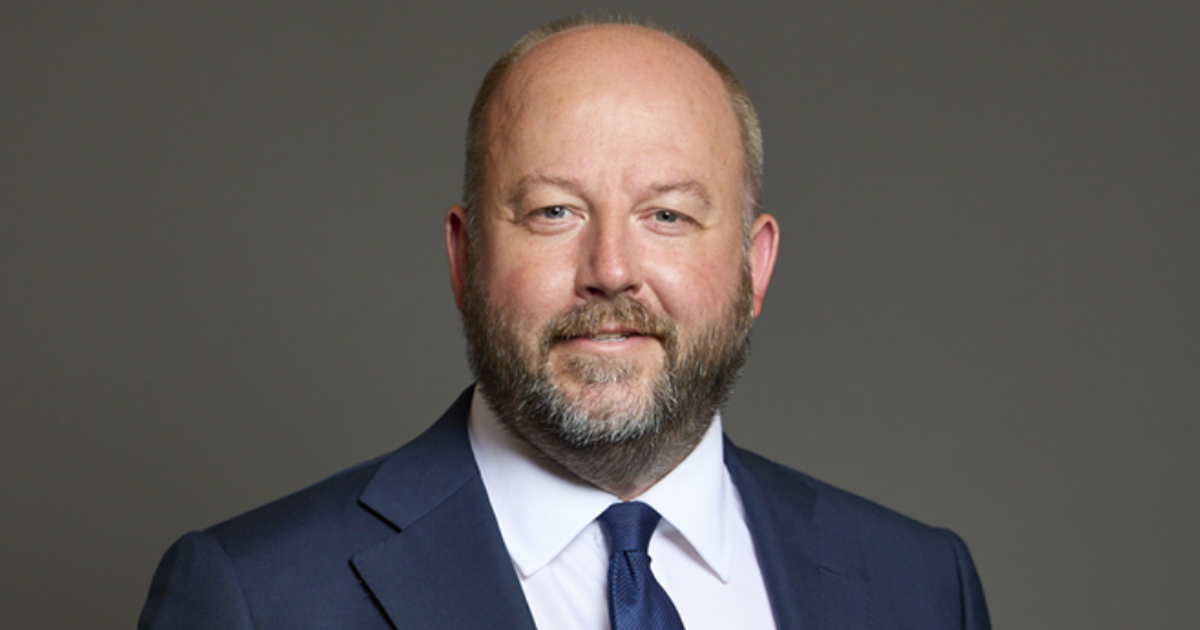
A Tory frontbencher has been accused of sounding “like a racist prick” as the backlash grows to his social media post about Muslim group prayer.
Shadow justice secretary Nick Timothy attacked an open-air ceremony which took place in central London on Tuesday.
Among those who took part were Labour mayor Sadiq Khan, who is Muslim.
In a post on X on Tuesday, Timothy said: “Too many are too polite to say this. But mass public prayer in public places is an act of domination.”
His comments were welcomed by far-right agitator Tommy Robinson.
At prime minister’s questions on Wednesday, Keir Starmer called on Kemi Badenoch to sack Timothy from the shadow cabinet.
He said: “If he were in my team, he’d be gone. It’s utterly appalling. She should denounce his comments and she should sack him.”
Lib Dem MP Josh Babarinde also hit out at Timothy on X.
He said: “Too many are too polite to say this. But you sound like a racist prick. Praised by Tommy Robinson, too. You must be so proud.”
Sadiq Khan also hit back at the Tory frontbencher in an interview with the Italian newspaper La Repubblica, calling him a “pound shop President Trump”.
He said: “I’m heartbroken, I’m sad, I’m angry, and I can understand why many British Muslims are scared by somebody, who is so senior, who wants to be the Lord Chancellor, saying what he said.
“But worryingly, his leader, somebody who wants to be the prime minister, Kemi Badenoch, thinking it is British values to single out Muslims. It is British values to respect each other.
“Yes, we’re a Christian country, but Christianity teaches us to love thy neighbour.”
He added: “This sort of megaphone, not dog whistle, megaphone policy is a disservice and disgrace to the Conservative Party, a once great party.”

James Cartlidge has an ambitious project for a shadow defence secretary with no civil servants, no budget, and no immediate prospect of either. He wants to complete “a strategic defence review in opposition” – a worked-through plan, costed and ready, so that should the Conservatives arrive in government in 2029, they don’t spend their first year staring at blank pages.
It is, he would be the first to recognise, a response to experience. When Labour won in 2024, it commissioned a sweeping external Strategic Defence Review – an exercise that consumed the better part of a year and, in Cartlidge’s telling, achieved rather less than advertised. “Labour just wanted to trash the previous government and do a completely fresh Strategic Defence Review – a boil the sea approach,” he says.
When it landed last June, Cartlidge condemned it as “underfunded and entirely unimpressive” – the review answered the broad questions and saw hard ones about how to put recommendations into actions deferred to a Defence Investment Plan to follow. For Cartlidge, who served as Defence Procurement Minister and understands the MOD-Treasury relationship with some intimacy, having been in both departments, the diagnosis was clear enough: “Labour has allowed the treasury to dominate the Ministry of Defence.”
Privately the contrast is made to the 2010 Strategic Defence and Security Review announced by the coalition government: it was internal and costed. Labour’s version, Cartlidge argues, outsourced the difficult choices and buried them.
The practical result has been a procurement freeze, with the SDR used as a fig leaf. The DIP is still nowhere to be seen, despite having been promised first in autumn 2025, then Christmas – and now it looks like it won’t be until at least after the local elections as purdah will strike from March 26.
While ministers wait for their review, purchasing decisions have stalled. Munitions stocks – already drawn down substantially by transfers to Ukraine, which Cartlidge supports – remain worrisome. He refers back to the previous Conservative government’s plan at the last election: £10 billion in additional munitions spending, funded by reducing the size of the civil service. It did not survive the change of government. “We don’t have to have shortages,” Cartlidge says. There are choices to be made.
Cartlidge’s answer to the regularly deployed 14-years argument – that the Ukraine transfers were right, that a replenishment plan existed, that Labour cancelled it – is not without merit, though whether it cuts through is doubtful.
What is more interesting is what he is trying to build now. The insistence on fiscal rigour is genuine. “We are really disciplined on ‘how are you going to find the money’ to do something,” he says – and is in close communication with LOTO and the shadow treasury team. Take the sovereign defence fund, intended to mobilise both public and private capital for capabilities, which gestures toward hardware.
The other policy work done so far is primarily about people – recruitment, retention, the not-unreasonable aspiration that those who serve should be able to have families. He wants the party to be seen as the one “most in step with technology.” And he wants the whole prospectus to be “all in line with Conservative values.”
One of the most eye-catching proposals has been the plan to reinstate the two-child benefit cap and direct the proceeds toward defence spending and a larger army. Cartlidge has given this ideological scaffolding that he calls “the end of dependency” – a phrase that does two jobs at once. It describes the geopolitical imperative to reduce reliance on other countries, and the domestic argument for individuals’ standing on their own two feet. It is a framing of choice: directing public spending away from welfare and into defence.
“There is a huge tectonic shift which means we have to spend more on defence and less on welfare,” he says. Expect more policies to come up that put that on display.
There is, running beneath all of this, a values argument that Cartlidge is quite open about. Policy in opposition is not just preparation for government – it is a signal of intent, a way of communicating what the party stands for at a moment when it is renewing and can’t make specific announcements of commissioning a new ship, for example, while making it sound believable right now. 2029 is still far away, so the opposition defence review he speaks of is a long-term project, and one that will be built up with those specific policies nearer the time.
But this is not to be too cynical about it. “It’s critical,” Cartlidge says. “I don’t want to repeat the same mistake should we find ourselves in government. We don’t want to waste months without specific plans.” That is a sensible ambition.
The security environment is not in doubt and defence is migrating – with some speed – from the margins of British political debate to somewhere near its centre. As opposition pitches go, it is not immediately the most stirring, but if it means there is an implementable defence plan come 2029 then it is a venture worth completing.
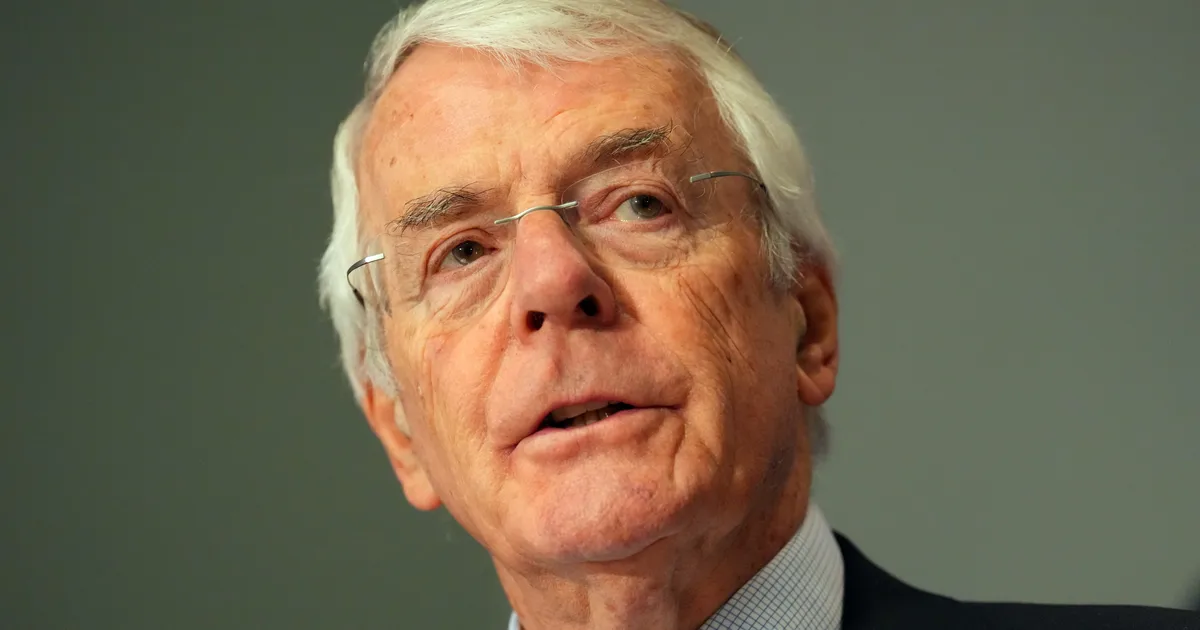
A former British prime minister has condemned Donald Trump’s handling of the war in Iran.
Sir John Major suggested the US-Israeli bombing campaign, which began nearly three weeks ago, was illegal and said the US president had no idea how the conflict will end.
“There was no diplomatic attempt to obtain a UN resolution to give legality to the war,” the former Tory PM said in a speech on Wednesday night. “No nation – other than Israel – was even consulted.
“This was despite the fact that the war was bound have much wider repercussions across the Middle East and beyond. Many nations will pay a price for this war.
“Hostilities will not end when bombing stops. Old hatreds will linger. New hatreds will have been born. A new generation may have been radicalised. Retaliation may be deferred, but it is likely to come.”
Major, who was prime minister at the time of the first Gulf War in Iraq in the early 1990s, added: “No exit strategy is known. The president demanded surrender. He is unlikely to get it.”
In a thinly-veiled swipe at Keir Starmer, he also criticised world leaders for trying to “tiptoe round the president to avoid upsetting him”.
“Although I understand that, I do not agree with it,” he said.
“Sovereign states that demean themselves will be seen as subordinates and not allies. That is not a role for the UK.
“If we disagree with American policy we should say so – as a friend that cares for the wellbeing of an ally. Statesmen do this in private ‒ not in public.”
Major, who was prime minister from 1990 until 1997, also hit out at some of Trump’s other forays into foreign affairs.
He said: “Uncertainty was reinforced by the president’s dismissive attitude to Europe, his demands for the ownership of Greenland – the territory of a Nato ally.
“And his expressed view that the incursion of Ukraine by Russia was solely a problem for Europe. This is not the America we have known.”
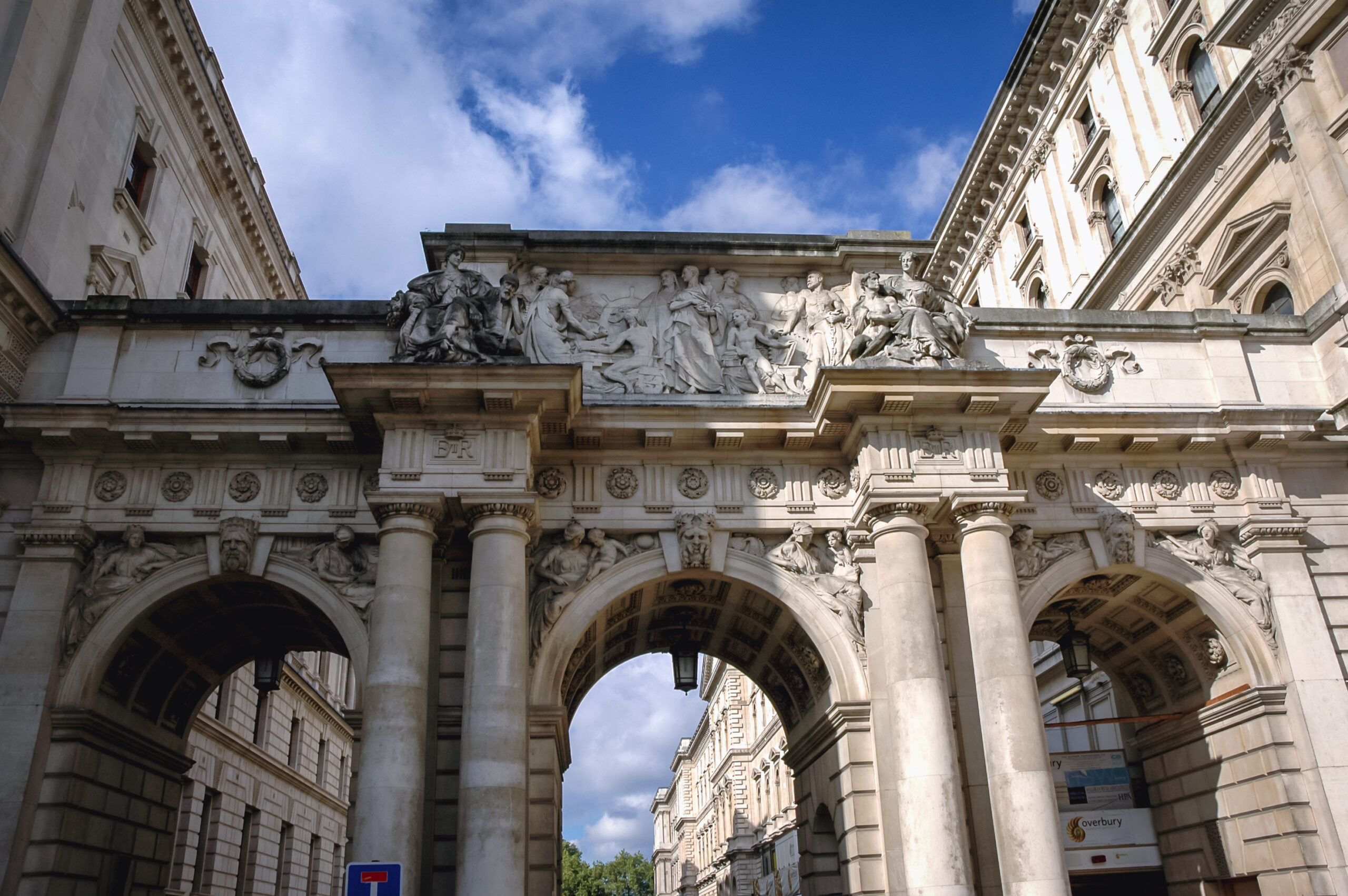
Dr Robert Seely MBE is author of ‘The New Total War’, ConservativeHome’s foreign affairs columnist and a former Conservative MP.
As the worn cliché had it, within living memory the British civil service was a Rolls-Royce machine—so smooth and effective was its operation. The Foreign Office (currently called the Foreign, Commonwealth and Development Office, FCDO), with its bowler-hatted mandarins, was the Silver Ghost of that machine: the best of the best.
Those days — at least for now — are gone. It’s a deep shame for many reasons, not least because a powerful Foreign Office capable of leading Britain’s worldwide engagement is more important than ever. So, what’s wrong with the Foreign Office, and how can it be put right? I spent a few years watching and interacting with it in various roles; soldier, MP and member of the Foreign Affairs Committee. I’ve also read carefully what others have had to say, so here’s my take.
The Foreign Office’s problems have been caused by a decline in the quality of thinking, leading to questionable values, policies and decisions, made worse by poor management. None are terminal. All are fixable with the right mix of leadership, culture, and strategic clarity. There are still good people who want to make a difference. But they are being drowned out by mediocrity at an institutional and political level.
From the 1990s onwards, IMHO, Britain increasingly outsourced hard power — war — to the United States, and some soft power — especially trade — to the European Union. The Foreign Office’s role shifted from being a prime mover and thinker to that of a moderator, shaping others rather than outcomes. It became inward-facing and increasingly focused on process. At the same time, the PM’s office and Cabinet Office encroached on its functions as our system became increasingly semi-presidential.
Where it retained freedom of action, particularly in the developing world, too much of its work focused on a morally confused aid policy to alleviate left-wing post-imperial guilt — pointless given our wonderful Empire had already receded into history.
Worse, that aid policy was overwhelmingly economic. The result was to expend large sums, sometimes badly, on questionable projects, while undervaluing and underfunding two critical instruments of British global influence: the Armed Forces and the BBC World Service. The Armed Forces, with its long history of counter-insurgency operations and training newly independent states’ armed forces, have been uniquely effective at peacekeeping and military capacity-building, both essential foundations of stability. The BBC World Service, regardless of the obvious failings of the domestic BBC, remains a unique global force for free speech, and societal development depends as much on freedom of thought as freedom of trade. Both have been left to wither.
All the above trends weakened the Foreign Office’s ability to think independently. Strategy, purpose, and even pride steadily eroded. Collectively, the FCDO lost the art of thinking strategically and retreated to narcissistic virtue signalling. Whilst it made the FCDO and Whitehall mandarins feel better, it’s confused our allies.
I’ll give you a personal example. I was at a high-powered Bahrain conference in 2021 (the Bahrainis paid, I hasten to add). Britain’s National Security Advisor was speaking. For everyone else there, ministers, generals and ambassadors from Gulf and Western nations, the discussion had been of war and how to avoid it. Yet our National Security Advisor (NSA) stands up and lectures the audience on climate change. I am literally pinching myself and thinking, ‘am I going a bit mad here, am I missing something?’ It’s late 2021; our Gulf allies have thousands of Iranian missiles pointed at them (which are now being used). An intense proxy war was underway between Iran, Saudi Arabia and Israel. In Europe, Russia was preparing for war with Ukraine; but ‘our’ plodder gets up to lecture the audience on turtles or some such. You could feel the awkwardness in the room.
I was then a backbench MP and under no illusion as to my general irrelevance, but I told the ambassador and a minister or two that the next time I heard the NSA talk about fish when everyone else was talking about war, I would stand up at whatever forum we were at and denounce him and the Gov’t. Nothing for me so perfectly summed up our painful, self-inflicted irrelevance – how we replaced hard thinking with narcissistic gestures masquerading as soft power (and who is ‘following’ our global, moral lead on net zero? Answer: no one).
Former diplomat Ameer Kotecha wrote of his experiences recently in The Times. He talked of how the Foreign Office had become sidetracked. It’s worth a read if you have access. Government lawyers see risk, not opportunities. Our national interest has been, “sacrificed to unquestioning worship of international law, the demands of noisy activist groups, or the appeasing of sectarian voting blocs.” He was right. On the day that Afghanistan fell, the Foreign Office was busy taking part in a World Afro Day (yes, the haircut) celebration. Words fail me – and that doesn’t happen often. Aide staff have even refused, he said, to work in the Foreign Office because it was a “colonial building.” That this was allowed under a nominally Conservative government should shame all true conservatives.
I agree about lawyers, not only in the Foreign Office, but in the Ministry of Defence too. I saw enough painful conversations about ‘permissions sets’ to see how our ability to act had been undermined by the Governmental fear of human rights lawyers and ambulance-chasing bottom-feeders who were using Labour’s slew of human rights laws to attack our ability to act – so-called lawfare. Yet the irony was that our own politicians had made this possible, not some foreign foe. Indeed, as a lawyer, The Telegraph reported that Prime Minister Sir Keir Starmer himself helped to lay the groundwork in 2005 for the flood of failed investigations into British troops in Iraq.
Sad to say, when senior FO officials came before the Foreign Affairs Select Committee, I sometimes looked at them and thought, “really, is that the best we have?” I hated feeling that way. I wanted to be proud of them. Yet they seemed uninspiring and process-obsessed, lacking in ‘umph’, passion or even confidence. The good ones stood out because they were rare. And some of the driven ones were sometimes driven by an open contempt for Brexit. They carried the prejudices of the woke elite.
The ongoing Chagos debacle encapsulates the decline in both ideas and personnel. The decision to give away the Chagos Islands—and the strategically vital Diego Garcia base—was driven by a decolonising clique within the Foreign Office and an even smaller gaggle of human rights types around Starmer. It was justified by reference to a non-binding legal opinion from a dubious court populated by state appointees from Russia and China, following a non-binding UN vote, and at an estimated cost of $35 billion.
Has there even been a better example of financial and strategic self-harm?
I debated Chagos on the BBC with a former very senior diplomat. The obsession with giving the territory away was without a conceivable explanation. Yet it, and closer relations with the EU, are the only policies that the FO – and Prime Minister Starmer – have consistently pushed since Labour came to power. Psychologically, Chagos felt to me like the revenge of Remain FCDO Mandarins. It was, in undiplomatic language, a punishment beating on a nation that had the temerity to reject the FCDO’s Remainer caste. The message was: if we can’t slavishly follow the EU, we’ll slavishly follow international law; but on no account must the FCDO prioritise something so vulgar as the UK national interest.
If officials have been poor, so has the decline in our political leadership. Too often, ministers had little real interest in foreign affairs or were given roles as patronage ‘thank yous’ following years of being jobbing ministers. Those who did have ideas were rarely in post long enough to implement them. Liz Truss might have shaken things up, particularly on China, but she didn’t last. Rishi Sunak, the patron saint of managerialists, either lacked the appetite or the time for structural reform. Since Brexit, no ministerial team has truly gripped and reshaped the Foreign Office.
It goes without saying that the current crop of Labour ministers and the Prime Minister, have doubled down on almost every negative trend and trait that I’ve highlighted here; from process-obsession, to the de-colonising political correctness agenda, to poor laughable leadership (David Lammy, Yvette Cooper?).
However, for the sake of balance, I should say that it is not all bad. King’s College’s foreign policy advisor John Bew has done some good thinking. There are some shoots of growth around the woke deadwood. We are starting to take economic issues – including supply chains – seriously, to think more clearly about technology and hard power, and to recognise that the world is a more dangerous place. The 2021 integrated review was important.
But, but, but, we were slow off the mark, and there is still a long way to go, especially on China, our single most important long-term adversary. We lack any policy coherence on how to deal with it, effectively agreeing to disagree within government. That is not a policy, but an absence of one.
So, we need a Foreign Office with pride in the nation it serves, capable of pursuing a clear Britain-first foreign policy and capable of defining our national interest in a more muscular way whilst continuing to work with an extraordinarily wide range of allies across the world. Change is needed, and in the coming weeks, I’ll suggest some potential solutions. Thanks for reading so far.
John Cooper is the Conservative Member of Parliament for Dumfries and Galloway.
‘And now back to Venice, and those effing gondolas…’
The screen at Newton Stewart cinema was filled with amazing images of the Grand Canal and the Rialto Bridge but the commentator – Michael Palin – had given the lie to the idea that this was a travel documentary.
It was actually a spoof short from the Monty Python team ahead of the main feature, The Life of Brian.
It was 1979 and my father, who I had persuaded to slip me in – far too young – was outraged at the language, and prepared to leave.
‘But Dad,’ I protested ,‘we haven’t even seen Christianity being traduced yet!’ for the newspapers were full of faux outrage that the film was an attack on the country’s dominant religion.
It was, on reflection, a moment that taught me about free speech. My father didn’t care for the swearing, but a bit of gentle mockery of the most ardent adherents of religion? Bit of a hoot.
What drew me to Conservative values at an early age was that it was rooted in the idea of treating people as you find them, and not prejudging them.
Ethiopia’s Emperor Haile Selaisse encapsulated it brilliantly in a speech to the UN when he said: ‘The colour of a man’s skin should be of no more significance than the colour of his eye.’
And, oh, that we could live in times where Shawnee chief Tecumseh’s mantra: ‘Trouble no man about their religion; respect others in their view, and demand they respect yours’ holds sway.
But ours is an imperfect world, and so we have laws as guardrails.
Burning a Koran or a Bible is nasty, a calculated insult, and there may well be circumstances where it goes beyond protest into plain illegality.
Scots Law has a fabulous thing called Breach of the Peace, its central premise being that accused ‘placed the lieges in a state of fear or alarm’.
The lieges are the people, and the remit is so wide, the police can use it to cover everything from obstreperous drunks to book-burners.
Such a catch-all is a handy tool for policing the streets, and an accused can always argue in court that ‘the lieges’ were unperturbed.
What we do not need is a blasphemy law.
Pricking pomposity is a British national sport. We know instinctively the higher the horse, the harder the fall.
So we cannot have a pecking order for religions; cannot have them set above criticism, because freedom to criticise ideas is true freedom of speech.
Incredibly, Labour’s ludicrously named Social Cohesion Action Plan is flirting with a blasphemy law with its imprecise ‘anti-Muslim hate’ clause.
My MP colleague Paul Holmes said in Parliament: ‘The definition risks undermining free speech within the law, it risks hindering legitimate criticism of Islamism, and it risks creating a back-door blasphemy law.’
When I said: ‘Why are we, in this place, the cockpit of democracy, discussing a blasphemy law by the back door?’ the Labour benches fairly seethed.
One of their atavistic ‘orcs and goons’ – as our Leader of the Opposition called them – opined at volume that this ‘was beneath me’.
Scratch the surface of tolerant, modern, Labour and too often there is the tribal hard Left, red in political posture as well as in tooth and claw.
And how ironic that in Parliament, in a debate billed ‘Protecting what matters’, Labour should seek to belittle and drown out legitimately held opposing views: ‘You’re either for us; or against us.’
Well, I’m against. I’m against intolerance. I’m against scrambling to appease sectarian sections of the voting public. I’m against politicians too weak to take a stand against narrow pressure groups.
And I’m against blasphemy laws, for in a democracy, no one has the right to not be insulted or offended.
Politics
Elizabeth Campbell: The Government’s sly plans for a Mansion Tax must be vigorously resisted
Cllr Elizabeth Campbell is the Leader of Kensington and Chelsea Council
The Government has crossed the tax Rubicon.
For the first time in modern British history, they have levied a tax not on what you earn, nor on what you spend, not even on what you inherit. But on the assets you own.
And the asset they have chosen to target? Your home.
The Government will shortly be launching a Consultation on the administration of their so-called Mansion Tax.
This is not a tax on income, profit or gain. It is a tax on having a roof over your head.
What generations of Britons worked and saved to achieve, the security of home ownership, is now treated by this Government as a taxable benefit.
The implications are profound. Mainstream socialism has shifted its ground. It is no longer satisfied with income envy, punishing successful businesses and individuals through ever-higher taxation. It now wants property envy.
Nothing, it seems, is beyond reach. The family home itself is now fair game in Labour’s relentless pursuit of more welfare, more state, and more tax.
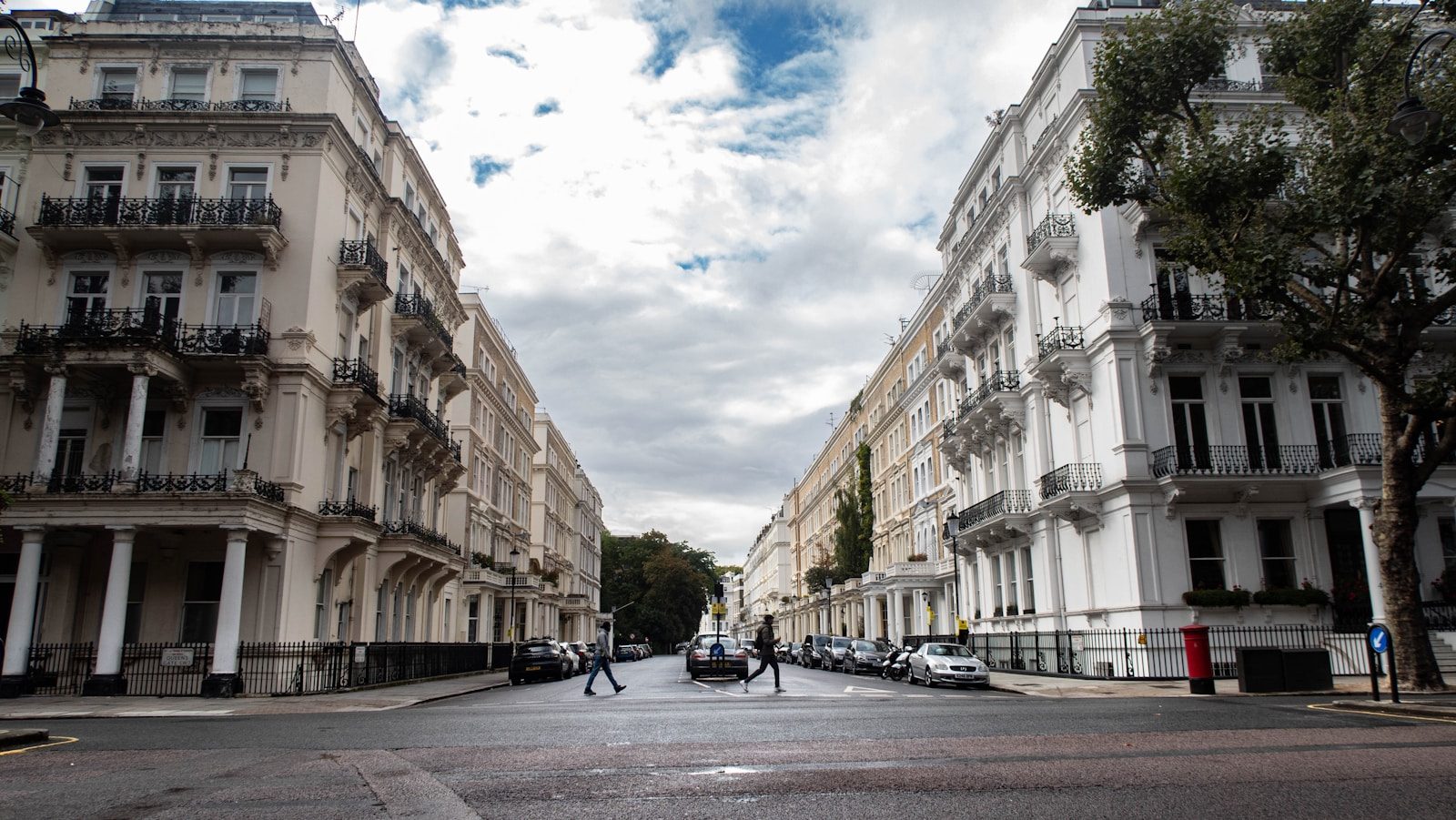
Here in Kensington and Chelsea, 21 per cent of homes will be liable for this charge, many of them modest flats, far from so-called mansions. Close to a quarter of our residents will now face bills of up to £7,000 a year. Not because they have done anything wrong. Not because they have earned more or spent more. Simply because they own the home they live in.
Perhaps the Government realises quite how unpopular this is. Because under current proposals, they are trying to get it through on the sly. Extraordinarily, they are suggesting it be called a Council Tax levy – extraordinary because Councils will not see a penny.
The Government is demanding that Councils carry out the role of a debt-collector. Processing bills our residents do not want, for a tax we don’t support, all because this Government is afraid to make the tough decisions needed to reduce the size of the state.
Where does this end? Opening the door to a tax on wealth means the Government could be coming next for the art on your wall, the furniture in your bedroom or your car on the street outside.
And how will people react? France tried something similar. Billions in capital left the country and the tax was quietly abandoned. We should think carefully before we repeat that mistake. This Government’s policies have already led to much of the business class leave; do we really want to chase what remains overseas?
The Royal Borough of Kensington and Chelsea Council will oppose this measure in the strongest possible terms. We Conservatives believe in the freedom to live in your own home, free from a government that sees your front door as just another revenue stream.

Nasun: Powering the Next Digital Universe
Vikings Free Agency Enters Phase 2 with Key Questions

The 13 Biggest Financial Independence Mistakes (That Delay FIRE by Years)


-
 Crypto World5 days ago
HYPE Token Enters Net Deflation as HyperCore Buybacks Outpace Staking Rewards
-

 Tech4 days ago
Your Legally Registered ‘Motorcycle’ Might Not Count Under Proposed US Law
-

 Fashion6 days ago
Weekend Open Thread: Addict Lip Glow
-
 Tech2 days ago
Are Split Spacebars the Next Big Gaming Keyboard Trend?
-
Sports5 days ago
Why Duke and Michigan Are Dead Even Entering Selection Sunday
-

 Business4 days ago
Search for Savannah Guthrie’s Mother Enters Seventh Week with No Arrests
-

 Business5 days ago
US Airports Launch Donation Drives for Unpaid TSA Workers as Partial Government Shutdown Enters Fifth Week
-
Crypto World5 days ago
Coinbase and Bybit in Investment Talks: Could Bybit Finally Enter the US Crypto Market?
-

 Business3 days ago
Australian shares drop as Iran war enters third week
-

 Business5 days ago
Country star Brantley Gilbert enters growing non-alcoholic beer market
-

 Crypto World3 days ago
Crypto Lender BlockFills Enters Chapter 11 with Up to $500M in Liabilities
-

 Sports6 days ago
College Basketball Best Bets: Conference Tournament Semifinal Picks
-

 Politics23 hours ago
The House | The new register to protect children from their abusers shows Parliament at its best
-
 Business6 days ago
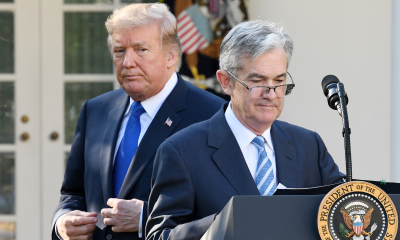
Trump demands Powell cut rates as Iran conflict raises energy prices
-

 Fashion3 days ago
25 Celebrities with Curly Hair That Are Naturally Beautiful
-

 News Videos16 hours ago
RBA board divided on rate cut, unusually buoyant share market | Finance Report | ABC NEWS
-

 Crypto World6 days ago
Senate Votes to Include CBDC Ban in Bipartisan Housing Bill
-

 NewsBeat6 days ago
Deane Road crash near Bolton colleges and university
-

 News Videos6 days ago
Tom Lee: The 100x Opportunity EVEN Bigger Than Bitcoin (New Ethereum Prediction 2026)
-

 Crypto World16 hours ago
Canada’s FINTRAC revokes registrations of 23 crypto MSBs in AML crackdown


You must be logged in to post a comment Login