
Politics
Iran hits Saudi oil refinery in retaliatory strike

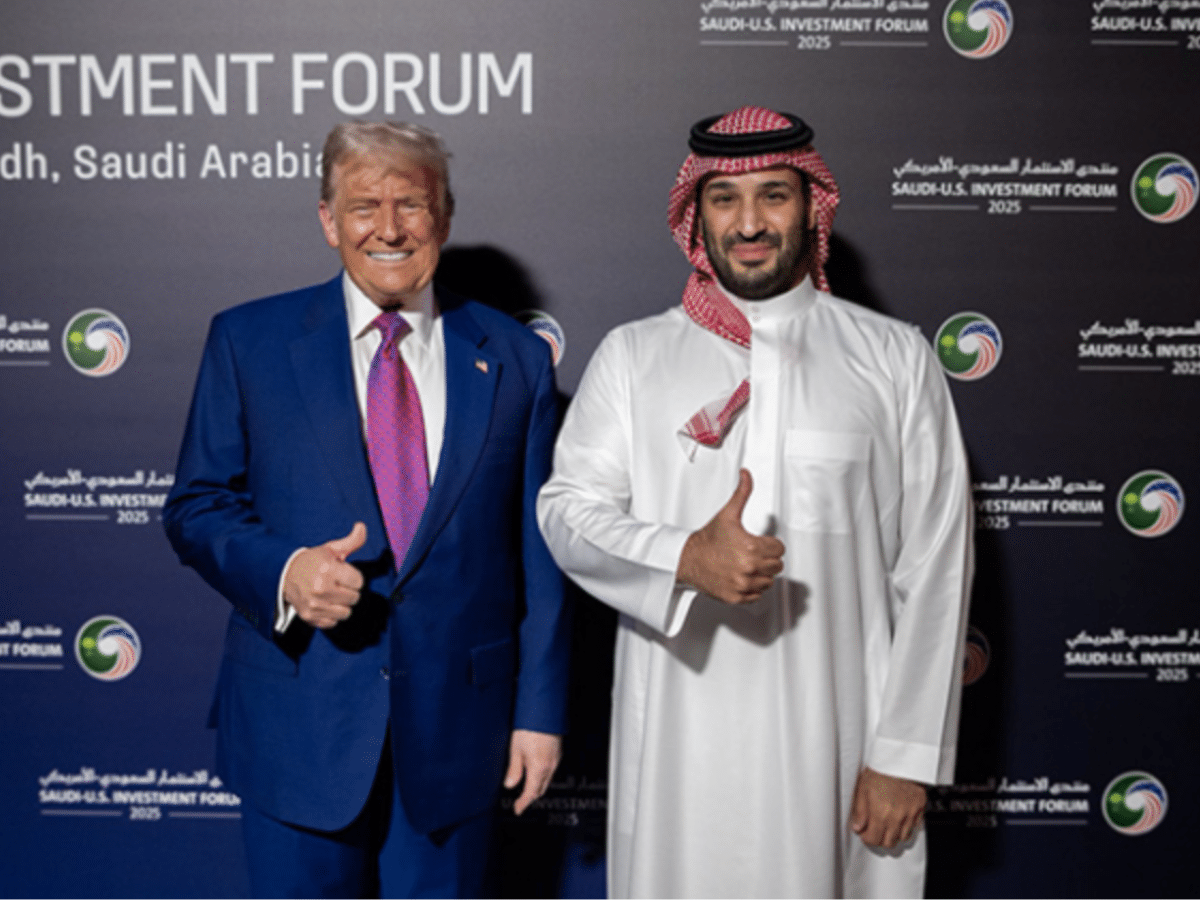
As it promised on Wednesday 18 March, Iran struck Saudi energy facilities in retaliation for Israel’s bombing of Iran’s South Pars gas field, which it shares with Qatar, also a US ally in the Arabian Gulf.
The Iranian television broadcast its warning across social media channels, telling the US, Israel, and their enablers that their facilities will be reduced to “ashes.”
Iran military spokesman: “You attacked our infrastructure and energy in the south. Your infrastructure, energy, and gas facilities will burn to ashes at the first opportunity. Your era of glory is over — withdraw from the region or choose death.” pic.twitter.com/8i5KGPlDdD
— COMBATE |🇵🇷 (@upholdreality) March 18, 2026
The latest strikes began as soon as night fell:
Public Relations of the Islamic Revolutionary Guard Corps:
🔹 In the name of God, the Crusher of the Arrogant “Whoever transgresses against you, transgress against them in like manner as they transgressed against you”
🔹 Wave sixty-three of Operation True Promise 4 against… pic.twitter.com/wntAb6R0fU
— COMBATE |🇵🇷 (@upholdreality) March 18, 2026
Mobile footage published by social-media based news outlet, Kofiya News, shows a huge explosion at a refinery near Riyadh as an Iranian missile struck:
🚨🇮🇷🇸🇦 BREAKING: A massive explosion has occurred in Riyadh after multiple ballistic missiles launched from Iran struck the city. pic.twitter.com/9GrMkbWF19
— Nova Intel (@intel_nova) March 18, 2026
The aftermath of the strike was shared by Kofiya News:
💢 4 injured in Riyadh after “debris from an intercepted ballistic missile” fell near refinery, Saudi Arabia claims
Four foreign Asian residents were injured and “limited material damage” reported after Saudi Civil Defense said debris from an intercepted ballistic missile fell… https://t.co/q25Cvl5bkb pic.twitter.com/J5mur9D0w4
— Drop Site (@DropSiteNews) March 18, 2026
Qatari gas facilities were struck in the early hours of 19 March, local time:
Qatar LNG is on fire pic.twitter.com/uRKzzo3pGA
— COMBATE |🇵🇷 (@upholdreality) March 18, 2026
A mass retaliatory attack on Israel and its Haifa oil terminal has not yet been reported at the time of writing, although a repeat of last night’s mass—and largely censored—attack is surely imminent:
WATCH: Iranian Khorramshahr ballistic missiles with ~80 bomblets targeting Israel tonight. pic.twitter.com/HVVXkQ1FZf
— Clash Report (@clashreport) March 17, 2026
The situation continues to develop rapidly.
Featured image via the Canary

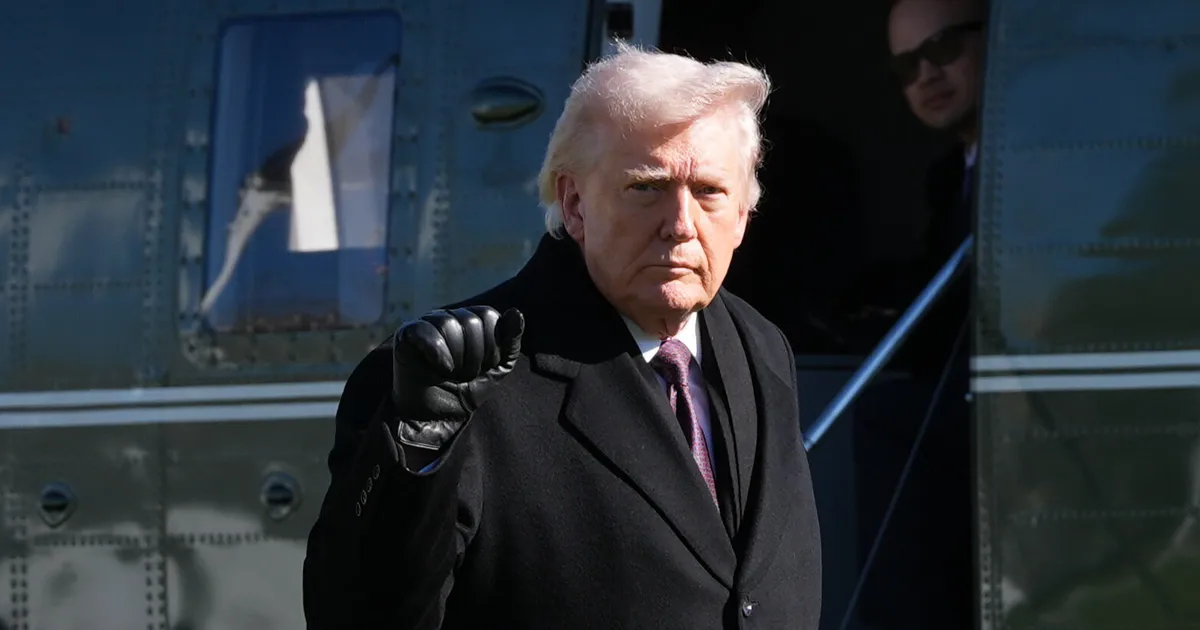
Iran is “much more in control” of the war being waged on it than Donald Trump, a military expert has warned.
Sky News analyst Sean Bell said the US president’s latest rant about the progress of the conflict shows that it is “unravelling” for him.
Bell, a former Air Vice-Marshall in the RAF, said he doubted whether “Iran is remotely listening to anything” that Trump says.
The president posted a furious message on Truth Social on Thursday distancing himself from Israel’s decision to bomb the South Pars gas field in Iran, which then retaliated by attacking Qatar.
He said: “NO MORE ATTACKS WILL BE MADE BY ISRAEL pertaining to this extremely important and valuable South Pars Field unless Iran unwisely decides to attack a very innocent, in this case, Qatar – In which instance the United States of America, with or without the help or consent of Israel, will massively blow up the entirety of the South Pars Gas Field at an amount of strength and power that Iran has never seen or witnessed before.”
Speaking on Sky News, Bell said: “What’s actually happening here is that this is unravelling. On day one I watched a little video of Donald Trump declaring ‘we’ve already won’, because from a military perspective you’ve got a superpower that is America [that] completely flattens everything.
“Iran is defenceless now, military jets are able to fly over the whole of Tehran and do what they like.
“But of course, Iran still has some aces to play. It’s still got the leadership – it may be different, but it’s version 2.0 and it looks even more hardline and potentially more dangerous.
“It’s got at least 70,000 Shahed drones locked away, it’s still got the proxies that are available to operate around the world, and it’s still got the ability to put its foot on the throat of the Strait of Hormuz.
“It seems to me that Iran is much more in control of this than Donald Trump is.”
His comments echo those of broadcaster and former Trump supporter Piers Morgan, who said Trump “is losing control” of the war.
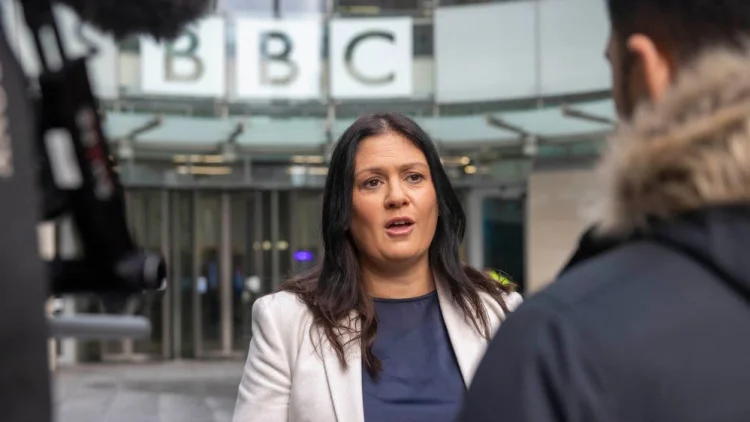
Lisa Nandy announced the move to a permanent charter on Tuesday (Alamy)
3 min read
A poll shared exclusively with PoliticsHome has found widespread public support for the BBC charter being put on a permanent footing, in a move which the government has said will help protect the corporation from “culture wars”.
On Tuesday night, Secretary of State for Culture, Media and Sport, Lisa Nandy, announced that the BBC charter would be put on a permanent footing for the first time.
The cabinet minister said that “while the terms, the structures and the funding for the BBC will continue to be negotiated”, the move would end the “bizarre situation where if the charter isn’t agreed in time, the BBC ceases to exist”.
Under the current setup, the BBC charter is renewed every 10 years. Senior BBC figures, including the outgoing director general, Tim Davie, had been pushing for a permanent arrangement, arguing that it would protect the corporation’s long-term stability.
“We will act to future-proof this vital institution in these stormy times when public debate feels more toxic and polarised than ever, and too often the BBC becomes a lightning rod for the ongoing, exhausting culture wars,” Nandy told a Society of Editors conference in London.
A Survation poll, conducted before the announcement for campaign organisation 38 Degrees and shared with PoliticsHome, found that 44 per cent of respondents supported a permanent charter. In contrast, 13 per cent said they wanted the BBC’s future to be debated every decade.
A majority of people who voted Labour (54 per cent), Conservative (50 per cent), and Green (50 per cent) at the 2024 general election backed a permanent charter for the BBC, while nearly half of Lib Dem voters (49 per cent) did so.
The least supportive voter 2024 group was those who backed Reform UK at the last election, with 36 per cent supporting the move and 21 per cent opposing it.
There was also support across the age groups, with a majority of 25-34-year-olds (52 per cent) and 65-plus (50 per cent) telling Survation they supported a permanent BBC charter.
The BBC’s role and funding have become a growing talking point in recent years, with Nigel Farage’s Reform vowing to end the licence fee if elected.
Controversies such as the corporation’s coverage of Bob Vylan’s 2025 Glastonbury set, when the act chanted “death, death to the IDF [Israel Defence Forces]”, have also led to enhanced political pressure from critics.
However, the government has sought to defend the BBC, with Nandy this week describing it as “one of the two most important institutions in our country”, the other being the NHS.
Nandy insisted, however, that the move to a permanent charter would not lead to a reduction in accountability for the BBC, saying that the Labour government intended “to strengthen the accountability of the leadership of the BBC – not to politicians – but to the people it serves in every nation and region”.
Matthew McGregor, CEO at 38 Degrees, said the 10-year charter renewal system had been “a cloud of uncertainty hanging over one of our most valued national institutions”.
“Voters have no appetite to see our national broadcaster’s very existence under threat every 10 years. In announcing a permanent royal charter for the BBC, the government has made a popular, common-sense decision that is in line with public opinion,” he told PoliticsHome.
Damian Lyons Lowe, founder and chief executive at Survation, said: “The polling points to a clear, broad-based tilt towards greater long-term certainty for the BBC.
“Although many take a neutral view, the balance of opinion suggests the public is more comfortable with a settled arrangement than with periodically reopening the question of the BBC’s future.”
The poll surveyed 2,077 UK adults online between 13 and 16 March.
Politics
Martin Parsons: How Pakistan’s blasphemy laws led to the UK’s official definition of ‘Anti-Muslim hostility’
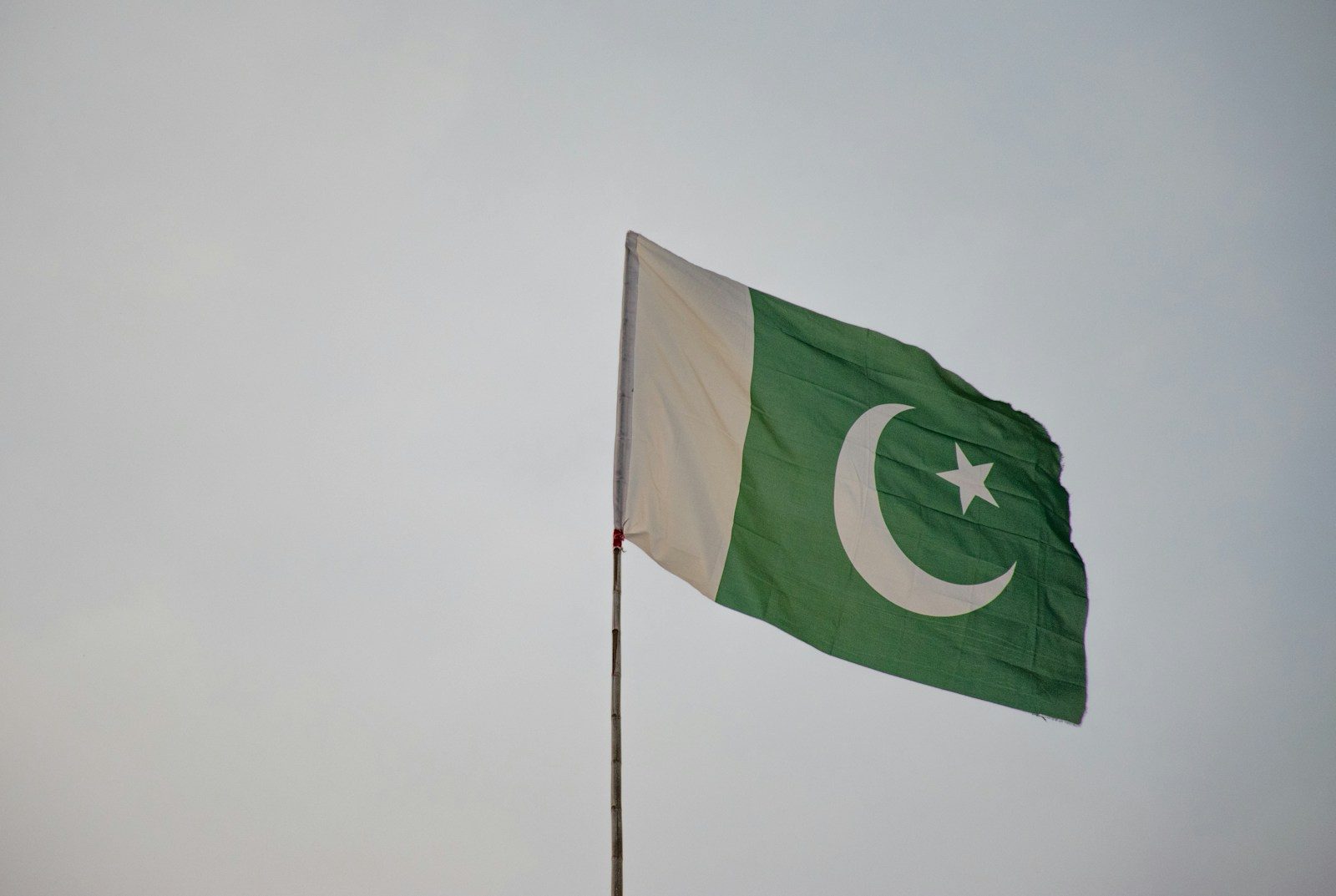
Dr Martin Parsons is the author of a book on Conservativism and is a former overseas aid worker in Pakistan and Afghanistan.
There’s a definite irony in the fact the government have finally announced its official definition of Islamophobia, or as they now term it, ‘Anti-Muslim hostility’ when UK armed forces are engaged in defence against hostile actions from Iran.
I say that, because if you want to understand why there has been such a longstanding campaign for an official definition of Islamophobia, you need to go back to the Islamic revolution in Iran. The creation of the world’s first modern Islamist state in 1979 inspired Islamists around the world to emulate it in their own countries.
However, the first country to actually do so, was Pakistan, then a military dictatorship led by General Zia ul-Haq. Zia wasn’t actually an Islamist, but he saw the political advantage of shoring up his position by appealing to those inspired by events in Iran.
In 1982 he amended Pakistan’s Penal Code by introducing a law against desecrating the Qur’an. Then in 1986, a far more wide-ranging clause was added criminalising even implied or indirect criticism of Muhammad, effectively meaning that any criticism of Islam itself was potentially punishable by death. In fact, if you wanted a definition of Anti-Islamic ‘hostility’ s.295C of Pakistan’s Penal Code is pretty all embracing
“Whoever by words, either spoken or written, or by visible representation, or by any imputation, innuendo, or insinuation, directly or indirectly, defiles the sacred name of the Holy Prophet Muhammad (peace be upon him) shall be punished with death.”
Pakistan already had incitement to religious hatred laws since British rule, but for the first time it now introduced laws which applied solely to Islam.
The demand for an Islamic blasphemy law quickly spread to the UK where a significant part of the Muslim community had family ties with Pakistan. However, it only really gained traction three years later with the Rushdie affair in 1989.
Most British Muslim organisations had wisely decided to quietly ignore Salman Rushdie’s The Satanic Verses so as not to give it the oxygen of publicity. However, the Islamic Foundation, which was heavily influenced by the work of Mawdudi, the founding father of modern Islamism in the Indian subcontinent, saw it as an opportunity to galvanise support. Its high-profile campaign for the book to be banned was linked to calls for an Islamic blasphemy law. If there was one key point in the radicalisation of a significant minority of British Muslims, it was this.
Then in 1997, while the Rushdie affair was still sore in the minds of many British Muslims, the Runneymede Trust produced a report Islamophobia: a challenge for us all thereby introducing that term to public debate. Whilst widely lauded today that report actually sowed the seeds of later problems by defining Islamophobia as “dread or hatred of Islam and of Muslims” – effectively conflating protecting a belief system with protecting people.
The word ‘Islamophobia’ was then jumped on by Islamists around the world. In 2005 the OIC produced a ten-year strategy whose section on ‘combatting Islamophobia’ made no reference whatsoever to protecting Muslims from hate. Instead, it solely referred to protecting the religion of Islam from “defamation” and called for deterrent punishments to be introduced to counter it in western countries. Effectively, it was calling for an Islamic blasphemy law to be created across the west, under the guise of tackling ‘Islamophobia’.
At the same time, Tony Blair’s 2003 decision to go to war in Iraq proved the catalyst to actually achieve this as Labour’s previously rock-solid hold on the Muslim vote began to haemorrhage significantly to the Lib-Dems who opposed the war. Blair responded with a pledge in Labour’s 2005 manifesto to introduce a law against incitement to religious hatred. This was understood by many Muslim organisations as being the Islamic blasphemy law they had been campaigning for since the Rushdie affair sixteen years earlier.
However, the legislation largely failed to achieve its aim when the government lost a crucial vote on a Lord’s amendment to only make ‘threatening’ comments about religion illegal, not ‘abusive’ or ‘insulting’ ones. Ironically, Blair himself failed to attend the vote resulting in the government losing by a single vote.
However, the campaign against ‘Islamophobia’ continued largely focused on ‘educating’ the public sector. In doing so, it repeatedly conflated the legitimate aspiration of protecting Muslims as people, with attempts to proscribe any criticism of Islam.
In 2018 an All Party Parliamentary Group produced what it called a working definition of Islamophobia, which defined it as a type of racism that targets “expressions of Muslimness or perceived Muslimness.” It was a definition which seemed innocuous enough until one realised that “expressions of Muslimness” included anything related to the religion of Islam.
The importance of making that distinction was laid bare in a report published only a year later by the Commission for Countering Extremism, which noted that
“One of the biggest successes of mainstream Islamists in Britain is, in fact, the campaign to normalise Islamophobia in public discourse as a concept that blurs the distinction between genuine anti-Muslim bigotry and the legitimate criticism of Islamism, outdated shari’a precepts and the illiberal practices justified by them.”
However, by this time the Labour Party had already committed itself to the APPG Islamophobia definition.
The shock loss of five supposedly safe Labour seats to Gaza independents in the 2024 general election sent shockwaves through the party and heightened demands for the government to formally adopt an official definition of Islamophobia.
But Keir Starmer also faced with a chorus of protest that the APPG definition of Islamophobia risked becoming a backdoor Islamic blasphemy law. He therefore appointed former Conservative attorney general Dominic Grieve to lead a working group to come up with a better definition. The result now finally published, is a vague definition of ‘Anti-Muslim hostility’ that as Sir John Jenkins recently observed in a paper for Policy Exchange is potentially even broader than the APPG definition of Islamophobia.
In the same way that Pakistan’s 1982 and 1986 blasphemy laws broke new ground with laws which solely protected Islam, so this definition provides special protections to Muslims not extended to Christians or other minorities. What Keir Starmer may also not appreciate, is that his actions in pushing this policy to shore up his own political support, do not simply mirror those of Tony Blair after the Iraq war, but also those of General Zia, Pakistan’s military dictator who introduced the country’s Islamic blasphemy laws in the 1980s.
Three months before the general election the Commission for Countering Extremism published another report, which noted that ‘blasphemy extremism’ which has exploded in Pakistan in recent years and particularly targets Christians, Ahmadiyya Muslims and other minorities, is now gaining momentum in the UK.
Far from tackling extremism, this official definition of Anti-Muslim hostility may actually fuel it.
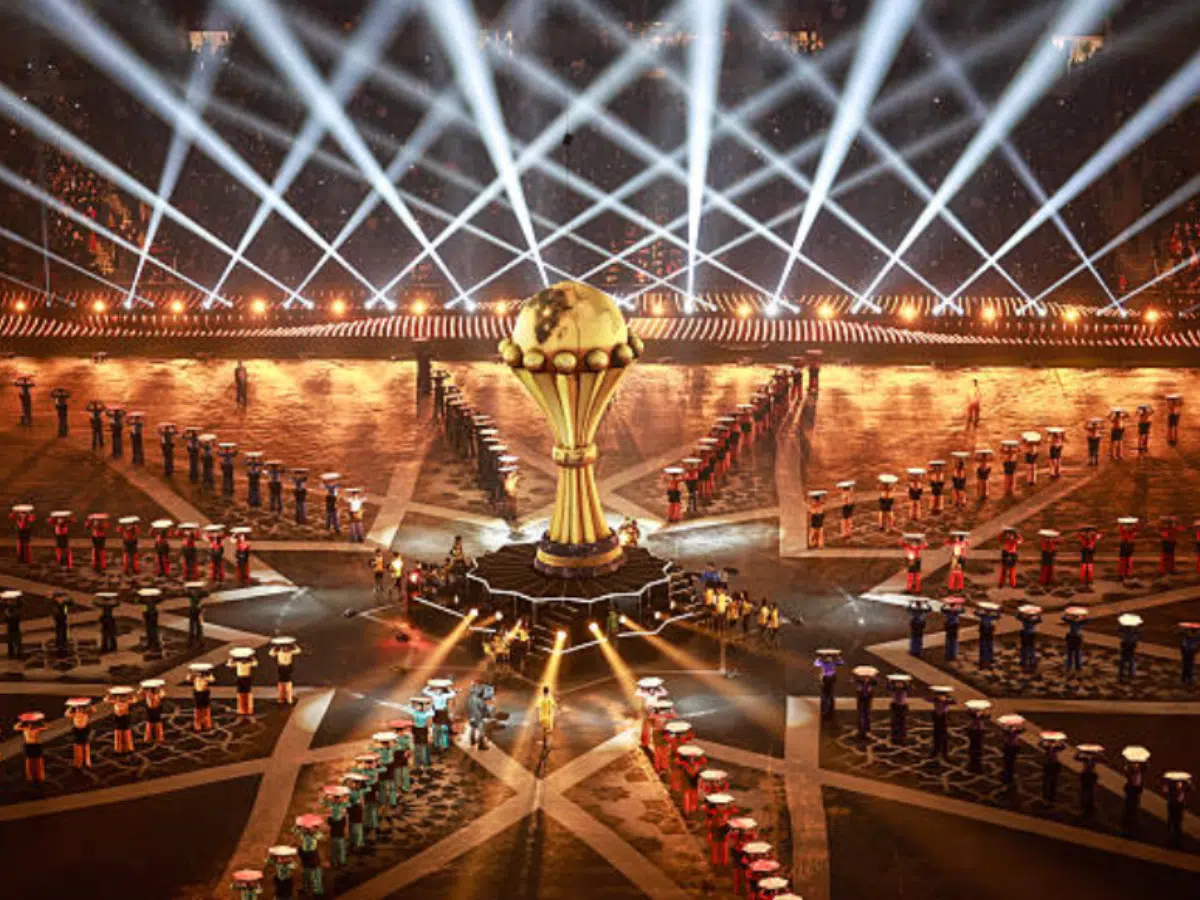
In his first official comment on one of the most controversial issues in the history of African football, Patrice Motsepe acknowledged a clear contradiction in the decisions of the Confederation of African Football (CAF) committees, following the stripping of the 2025 Africa Cup of Nations (AFCON) title from Senegal and its awarding to Morocco by a decision of the Appeals Committee.
The case, which sparked an unprecedented storm, dates back to the final, which Senegal won on the field (1-0) after extra time. However, the Appeals Committee reopened the case from a legal standpoint, arguing that what happened during the match—particularly the withdrawal and subsequent reversal of that decision—renders the victory illegitimate, thus administratively overturning the result to a 3-0 loss.
AFCON storm
Amidst an initial decision by the Disciplinary Committee upholding Senegal’s title, and a completely contradictory decision by the Appeals Committee, CAF president Motsepe issued statements asserting that “both decisions should be viewed as fair.” He emphasized that both committees comprise “among the most respected judges and lawyers on the continent,” in an attempt to contain a widening crisis of confidence within African football circles.
He continued:
If you look at the composition of those bodies, they reflect some of the most respected lawyers and judges on the continent. These are people who have integrity and have a track record. The independence is reflected by the decisions that were taken by the two bodies.
However, the most significant message in the CAF president’s statements was the implicit acknowledgment, rather than denial, of the magnitude of the crisis. He expressed his “frustration” with the spectacle of the tournament final, considering what transpired a threat to the efforts made over years to establish the principles of integrity and credibility in the administration of the game on the continent.
In parallel, Motsepe opened the door to legal escalation, affirming Senegal’s right to appeal to the Court of Arbitration for Sport (CAS), with CAF’s prior commitment to respecting the final ruling. This move effectively transfers the case from the corridors of the continental federation to the international sports judiciary.
The CAF president concluded his remarks with a message that goes beyond the decision itself, when he indicated that the “view of the public” in the 54 member countries represents the true standard of the federation’s credibility, in an acknowledgment that reflects a growing awareness that the crisis is no longer just a legal one, but has turned into a public test of the African public’s trust in its football institutions.
Featured image via the Canary
Politics
Champions League: Mohamed Salah’s Exceptional Achievement and Lamine Djamel’s Historic Record

Stars Mohamed Salah and Lamine Yamal achieved historic milestones in the Champions League during the second leg of the Round of 16. Salah led Liverpool to a stunning comeback, while Yamal continued to break records in a Barcelona shirt.
Liverpool secured a resounding 4-0 victory over Galatasaray, overturning their 1-0 first-leg deficit and advancing to the quarter finals with a 4-1 aggregate score.
Salah achieved an exceptional feat, becoming the first African player to reach 50 goals in the competition’s history. Despite a shaky first half in which he missed a penalty and a clear-cut chance, he roared back in the second half, scoring one goal and providing two assists, leading his team to a decisive victory.
Salah joined by Yamal
In another match, Barcelona secured a resounding 7-2 victory over Newcastle United, a match that saw Lamine Djamel etch his name in the competition’s history books.
The young Spanish star set a new record, becoming the youngest player to reach 10 Champions League goals at 18 years and 248 days old, surpassing the previous record held by Kylian Mbappé (18 years and 350 days).
Between Salah’s dazzling experience and Gamal’s rapid rise, the tournament continues to deliver exceptional nights where records are made and major details are decided.
Featured image via the Canary
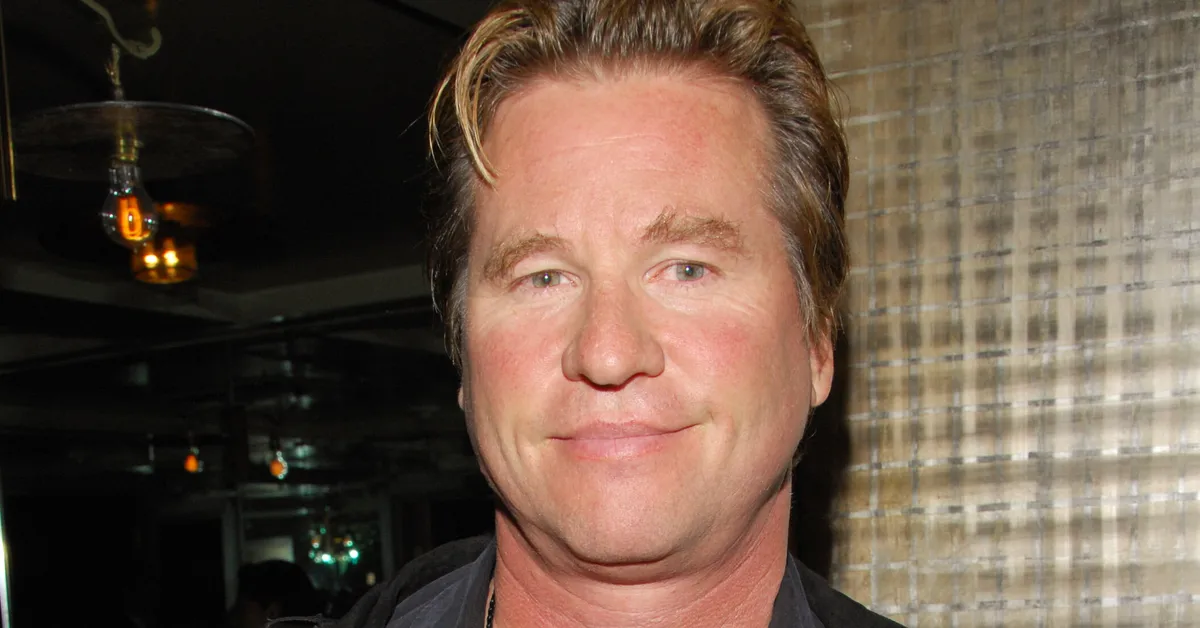
A new film featuring an AI-generated likeness of Val Kilmer as its lead “actor” is already facing a wave of backlash.
The Batman star died in April 2025 at the age of 65, 10 years after first being diagnosed with throat cancer.
Prior to his death, Kilmer had been set to star in the drama As Deep As The Grave, directed by Coerte Voorhees, as a Native American spiritualist and Catholic priest, Father Fintan.
It’s now been confirmed that Voorhees will move forward with the project with an AI likeness of Kilmer used to portray Father Fintan, with the approval of the actor’s estate and his daughter, Mercedes.
The filmmaker told Variety: “His family kept saying how important they thought the movie was and that Val really wanted to be a part of this. He really thought it was important story that he wanted his name on.
“It was that support that gave me the confidence to say, okay let’s do this. Despite the fact some people might call it controversial, this is what Val wanted.”
As was anticipated by Voorhees, the announcement has been met with criticism by many, even if the decision has been approved by the late performer’s family…
Many online critics have already pointed out that the rise of generative artificial intelligence has become a contentious issue in the movie industry over the last few years, with the threats being posed by AI forming a major part of what led to the Hollywood strikes of 2023.
After the SAG-AFTRA strike, actors gained some legal protections against their likenesses being recreated with AI following their deaths, but the issue has continued to come up.
Back in 2024, the film Alien: Romulus featured a digital version of the late actor Ian Holm, which was met with some controversy, while plans to recreate the voice of French actor Alain Dorval in the dub of a recent Sylvester Stallone movie were dropped when his daughter panned them as “unacceptable”.
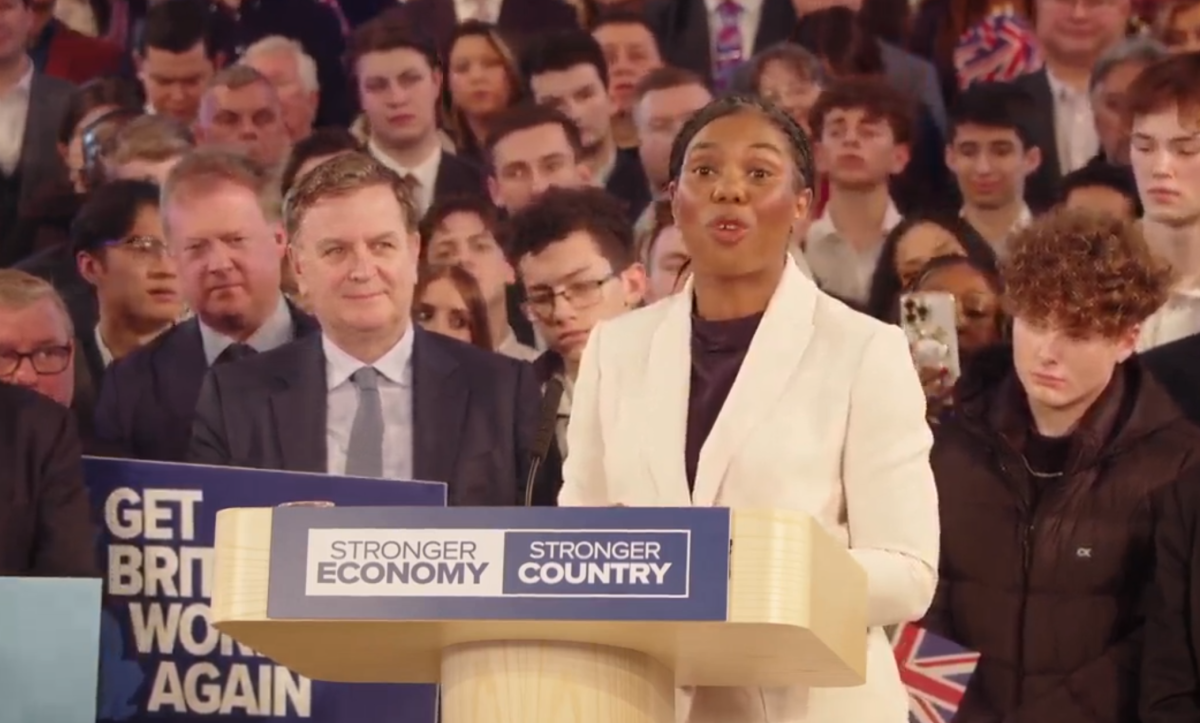
The Tories were left looking rather embarrassed today after a “best bits” compilation video of Kemi Badenoch played nothing at all.
Shadow local government secretary James Cleverly tried to launch the Conservatives’ local elections campaign by lauding the party leader’s “vim and vigour” – but a technical glitch turned it into a moment they’d rather forget.
Shortly before introducing Badenoch on stage, Cleverly told the waiting audience: “Just in case anyone has forgotten just how good she is, let’s remind ourselves with a quick look at her best bits.”
A few people in the audience excitedly declared that this clip was obviously “going to be long” as the screen briefly flashed up with the Conservatives’ slogans.
But it quickly went black. It then showed the Tory pledge to implement a “stronger economy and a stronger country” once more – before Cleverly started to give up.
“I’m going to give it… one more second…for the video,” he said, then adding: “Do you know what ladies and gentlemen? Forget the video.”
He then welcomed Badenoch onto the stage, who laughed at all the enthusiastic applause.
“That was a fabulous introduction, can we give it up to James Cleverly?” she said, pushing past the embarrassing encounter.
In the 16 months since she was elected to be Tory leader and leader of the opposition, Badenoch has been widely criticised for her performance.
Trying to carry the mantel after the Conservatives’ worst ever general election defeat, Badenoch struggled to hold her own in prime ministers’ questions and made a handful of very public – and painful – gaffes.
She’s also seen a series of ex-Tory MPs defect to Reform, including two of her own frontbenchers, Danny Kruger and Robert Jenrick.
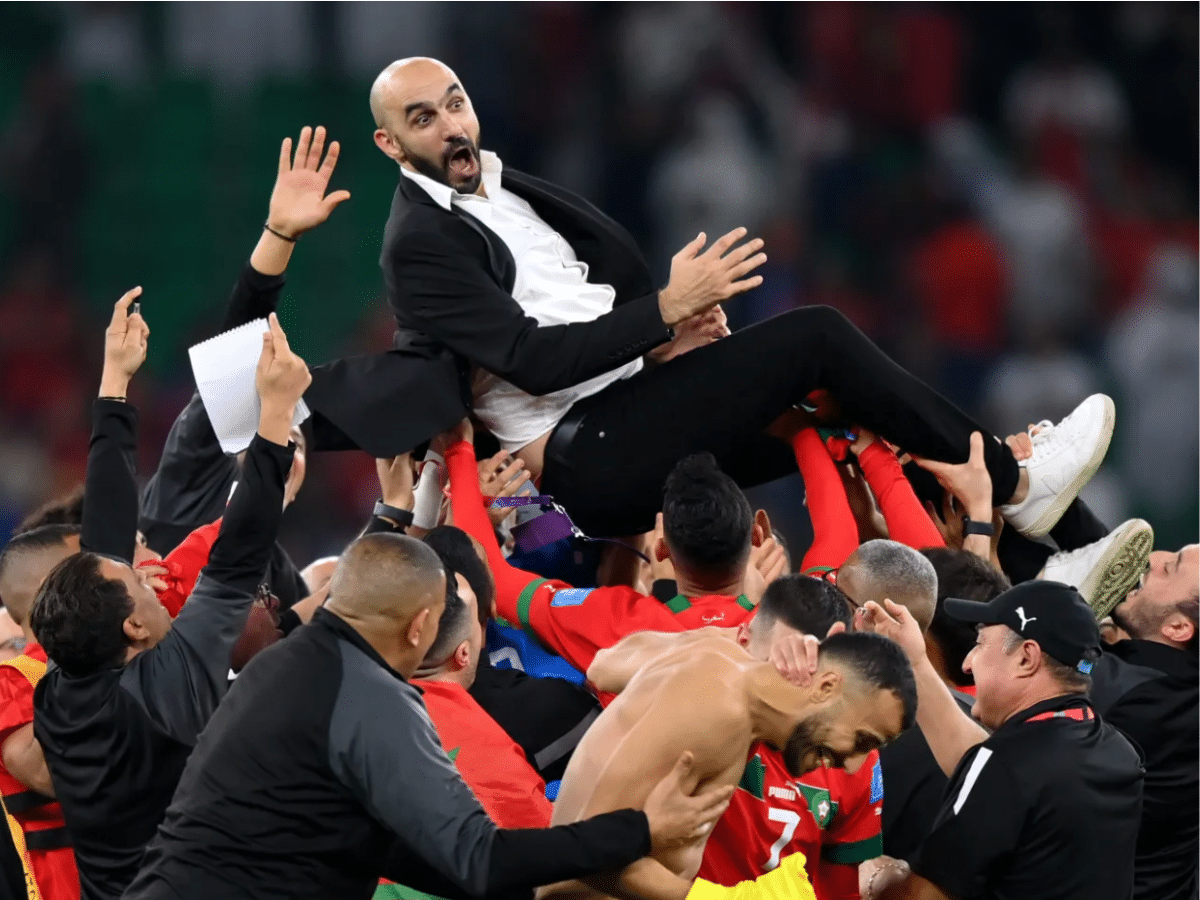
The Confederation of African Football’s historic decision to award Morocco the Africa Cup of Nations (AFCON) title has brought their head coach, Walid Regragui, back into the spotlight.
Does this open the door for his return after he resigned just weeks before the 2026 FIFA World Cup? Regragui’s name is once again making headlines. This follows the appeal over Morocco’s controversial match with Senegal.
In case you missed it, Senegal has been stripped of its AFCON title, which was handed to Morocco on 18 March.
The decision has shocked the sporting world and stunned international spectators. Senegal’s 1-0 victory over Morocco on 18 January was overturned by AFCON. Now, the match is officially recorded as a 3-0 win for Morocco.
Could Regragui make a comeback?
Before these events unfolded, Regragui’s resignation on 5 March seemed directly tied to his team’s loss to Senegal on Moroccan soil. With the 2026 World Cup around the corner, Mohamed Wahbi has taken over as head coach.
At the time, the defeat dampened the shine of his otherwise impressive tenure. Under his leadership, Morocco reached the semi-finals of the 2022 World Cup and made it to the final of AFCON.
Now, many are asking whether Regragui’s departure was hasty.
Regragui, in the wake of AFCON’s appeal decision, has found himself elevated to national hero status in Morocco and the wider Arab world.
While Morocco’s title has been reinstated, will this be enough to bring Regragui back to his former role?
The court of public opinion
The Canary has observed growing calls on social media for Regragui’s return. Many point out that the former Atlas Lions coach has yet to secure his next coaching contract.
Despite Wahbi’s appointment as head coach, his strong relationship with Regragui leaves room for various possibilities. This includes a potential collaboration or a future reevaluation of the team’s leadership and priorities.
However, with just two months to go until the World Cup, both options seem unlikely and are largely fuelled by the excitement of Morocco’s delayed victory.
A critical juncture for the Atlas Lions
With the 2026 World Cup fast approaching, Morocco’s national team faces a critical juncture. On one hand, they need to build on the momentum of their reinstated AFCON title.
On the other, they must quickly establish stability in both leadership and football strategy.
Whether this will happen under Wahbi’s or Regragui’s leadership remains uncertain, as the fervour for the former coach’s reinstatement crescendos both online and offline.
Featured image via the Canary

Multivitamins might help to slow biological ageing, new research has found.
Published in Nature Medicine, the paper noted that these effects were stronger in people whose biological age (which relates to the health of their cells and tissues) was already older than their chronological age (how many years old they are).
On average, older people who took a multivitamin supplement daily had a biological age four months younger than those who didn’t.
What else did the study find?
The researchers looked at blood samples from just under 1,000 participants of the US’ COSMOS study – a randomised, double-blind trial.
Participants had an average age of 70. Some people took multivitamins, and others didn’t.
Blood samples were taken three times: at the start of the study, and 12 and 24 months after that.
The scientists calculated the biological age of the people in the research by looking for five biological ageing “clocks” in their blood.
These “clocks” had to do with the patterns on DNA, changes in which have been linked to a person’s ageing.
After comparing the blood samples, the researchers noted that people who took daily multivitamins showed signs of slower ageing in two of these “clocks”, which were associated with mortality risk.
Speaking to Nature, study author Howard Sesso said research like this is “not just identifying how to live longer, but also how to live better”.
He noted taking multivitamins “appeared to be on that type of trajectory over two years”.
Does that mean multivitamins will definitely keep me younger?
We don’t know for sure, yet.
The paper said that though “statistically significant but small effects of daily MVM [multivitamin] supplementation on slowing biological ageing are encouraging”, additional studies are needed to explore this further.
Still, speaking to Nature, geroscientist Steve Hovarth (who was not involved in the study), said: “This is a very interesting and rigorous study… The public appetite for knowing whether everyday supplements can genuinely slow ageing is enormous.
“This study provides some of the most credible evidence we have to date.”
The post Badenoch launches the Conservative Local Election campaign appeared first on Conservative Home.

Apple quietly fixes Family Sharing’s biggest flaw a decade after its launch
‘My relationship looked perfect..but with every punch and slap I lost part of me’
CBAK Energy shareholders approve redomicile merger and company regains Nasdaq compliance


-
 Crypto World5 days ago
HYPE Token Enters Net Deflation as HyperCore Buybacks Outpace Staking Rewards
-

 Tech4 days ago
Your Legally Registered ‘Motorcycle’ Might Not Count Under Proposed US Law
-

 Fashion6 days ago
Weekend Open Thread: Addict Lip Glow
-
 Tech2 days ago
Are Split Spacebars the Next Big Gaming Keyboard Trend?
-
Sports5 days ago
Why Duke and Michigan Are Dead Even Entering Selection Sunday
-

 Business4 days ago
Search for Savannah Guthrie’s Mother Enters Seventh Week with No Arrests
-

 Business5 days ago
US Airports Launch Donation Drives for Unpaid TSA Workers as Partial Government Shutdown Enters Fifth Week
-
Crypto World5 days ago
Coinbase and Bybit in Investment Talks: Could Bybit Finally Enter the US Crypto Market?
-

 Business3 days ago
Australian shares drop as Iran war enters third week
-

 Business5 days ago
Country star Brantley Gilbert enters growing non-alcoholic beer market
-

 Crypto World3 days ago
Crypto Lender BlockFills Enters Chapter 11 with Up to $500M in Liabilities
-

 Sports6 days ago
College Basketball Best Bets: Conference Tournament Semifinal Picks
-

 Politics1 day ago
The House | The new register to protect children from their abusers shows Parliament at its best
-

 Business7 days ago
Trump demands Powell cut rates as Iran conflict raises energy prices
-

 Fashion3 days ago
25 Celebrities with Curly Hair That Are Naturally Beautiful
-

 News Videos20 hours ago
RBA board divided on rate cut, unusually buoyant share market | Finance Report | ABC NEWS
-

 Crypto World7 days ago
Senate Votes to Include CBDC Ban in Bipartisan Housing Bill
-

 NewsBeat7 days ago
Deane Road crash near Bolton colleges and university
-

 Crypto World20 hours ago
Canada’s FINTRAC revokes registrations of 23 crypto MSBs in AML crackdown
-

 News Videos7 days ago
Tom Lee: The 100x Opportunity EVEN Bigger Than Bitcoin (New Ethereum Prediction 2026)


You must be logged in to post a comment Login