


Connect with us
DAPA Banner

Tech

New MiniMax M2.7 proprietary AI model is ‘self-evolving’ and can perform 30-50% of reinforcement learning research workflow

Published

on

In the last few years, Chinese AI startup MiniMax has become one of the most exciting in the crowded global AI marketplace, carving out a reputation for delivering frontier-level large language models (LLMs) with open source licenses and before that, high-quality AI video generation models (Hailuo).

The release of MiniMax M2.7 today — a new proprietary LLM designed to perform well powering AI agents and as the backend to third-party harnesses and tools like Claude Code, Kilo Code and OpenClaw — marks yet a new milestone: Rather than relying solely on human-led fine-tuning, MiniMax has leveraged M2.7 to build, monitor, and optimize its own reinforcement learning harnesses.

This move toward recursive self-improvement signals a shift in the industry: a future where the models we use are as much the architects of their progress as they are the products of human research. The model is categorized as a reasoning-only text model that delivers intelligence comparable to other leading systems while maintaining significantly higher cost efficiency.

However, with M2.7 being proprietary for now, it is a sign once again that Chinese AI startups — for much of the last year, the standard-bearers in the world of the open source AI frontier, making them appealing for enterprises globally due to low (or no) costs and customization — are shifting strategy and pursuing more proprietary frontier models like U.S. leaders like OpenAI, Google, and Anthropic have been doing for years.

Advertisement

MiniMax becomes the second Chinese startup to release a proprietary cutting-edge LLM in recent months following z.ai with its GLM-5 Turbo, and rumors that Alibaba’s Qwen team is also shifting to proprietary development in the wake of the departure of senior leadership and other researchers.

Technical achievement: The self-evolution loop

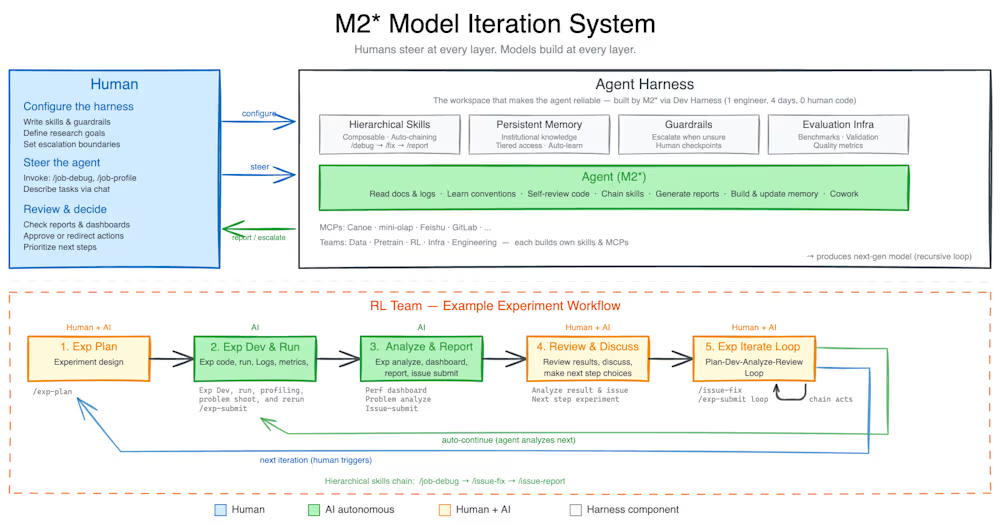
The defining characteristic of MiniMax M2.7 is its role in its own creation. According to company documentation, earlier versions of the model were used to build a research agent harness capable of managing data pipelines, training environments, and evaluation infrastructure.

MiniMax M2.7 self-evolving RL research workflow diagram

MiniMax M2.7 self-evolving RL research workflow diagram. Credit: MiniMax

By autonomously triggering log-reading, debugging, and metric analysis, M2.7 handled between 30 percent and 50 percent of its own development workflow.

Advertisement

This is not merely an automation of rote tasks; the model optimized its own programming performance by analyzing failure trajectories and planning code modifications over iterative loops of 100 rounds or more.

“We intentionally trained the model to be better at planning and at clarifying requirements with the user,” explained MiniMax Head of Engineering Skyler Miao on the social network X. “Next step is a more complex user simulator to push this even further.”

This capability extends to complex environments via the MLE Bench Lite, a series of machine learning competitions designed to test autonomous research skills.

In these trials, M2.7 achieved a medal rate of 66.6 percent, a performance level that ties with Google’s new Gemini 3.1 and approaches the current state-of-the-art benchmarks set by Anthropic’s Claude Opus 4.6.

Advertisement

The goal, according to MiniMax, is a transition toward full autonomy in model training and inference architecture without human involvement.

Performance evolution: MiniMax m2.7 vs. m2.5

MiniMax M2.7 benchmark comparison chart.

MiniMax M2.7 benchmark comparison chart. Credit: MiniMax

When compared to its predecessor, M2.5, released in February 2026, the M2.7 model demonstrates significant gains in high-stakes software engineering and professional office tasks.

While M2.5 was celebrated for polyglot code mastery, M2.7 is designed for real-world engineering—tasks requiring causal reasoning within live production systems.

Advertisement

Key performance metrics include:

  • Software engineering: M2.7 scored 56.22 percent on the SWE-Pro benchmark, matching the highest levels of global competitors like GPT-5.3-Codex.

  • Professional office delivery: In document processing, M2.7 achieved an Elo score of 1495 on GDPval-AA, which the company claims is the highest among open-source-accessible models.

  • Hallucination reduction: The model scores plus one on the AA-Omniscience Index, a massive leap from the negative 40 score held by M2.5.

  • Hallucination rate: M2.7 achieves a hallucination rate of 34 percent, which is lower than the rates of 46 percent for Claude Sonnet 4.6 and 50 percent for Gemini 3.1 Pro Preview.

  • System comprehension: On Terminal Bench 2, the model scored 57.0 percent, demonstrating a deep understanding of complex operational logic rather than simple code generation.

  • Skill adherence: On the MM Claw evaluation, which tests 40 complex skills exceeding 2,000 tokens each, M2.7 maintained a 97 percent adherence rate, a substantial improvement over the M2.5 baseline.

  • Intelligence parity: The model’s reasoning capabilities are considered equivalent to GLM-5, yet it uses 20 percent fewer output tokens to achieve similar results.

The model’s evolution is further evidenced by its score of 50 on the Artificial Analysis Intelligence Index, representing an 8-point improvement over its predecessor in just one month, and also taking the 8th place overall globally in terms of its overall intelligence across benchmarking tasks in various domains.

Artificial Analysis Intelligence Index MiniMax M2.7 update

Artificial Analysis Intelligence Index MiniMax M2.7 update. Credit: Artificial Analysis/X

Not all independent, third-party benchmarks show improvement for M2.7 over M2.5: On BridgeBench, a set of tasks designed by agentic AI coding startup BridgeMind to test a model’s performance for “vibe coding,” or turning natural language into working code, M2.5 scored 12th place while M2.7 scored 19th place.

Advertisement

Access, pricing, and integration

MiniMax M2.7 is a proprietary model available through the MiniMax API and MiniMax Agent creation platforms. While the core model weights for M2.7 remain closed, the company continues to contribute to the ecosystem through the open-source interactive project OpenRoom.

For direct API integration and via third-party provider OpenRouter, MiniMax M2.7 maintains a cost-leading price point of 0.30 dollars per 1 million input tokens and 1.20 dollars per 1 million output tokens, which is unchanged from the pricing for M2.5. That makes M2.7 one of the most affordable frontier AI models to run in the world — only xAI’s Grok 4.1 Fast is cheaper.

Model

Input

Advertisement

Output

Total Cost

Source

Grok 4.1 Fast

Advertisement

$0.20

$0.50

$0.70

xAI

Advertisement

MiniMax M2.7

$0.30

$1.20

$1.50

Advertisement

MiniMax

Gemini 3 Flash

$0.50

$3.00

Advertisement

$3.50

Google

Kimi-K2.5

$0.60

Advertisement

$3.00

$3.60

Moonshot

GLM-5-Turbo

Advertisement

$0.96

$3.20

$4.16

OpenRouter

Advertisement

GLM-5

$1.00

$3.20

$4.20

Advertisement

Z.ai

Claude Haiku 4.5

$1.00

$5.00

Advertisement

$6.00

Anthropic

Qwen3-Max

$1.20

Advertisement

$6.00

$7.20

Alibaba Cloud

Gemini 3 Pro

Advertisement

$2.00

$12.00

$14.00

Google

Advertisement

GPT-5.2

$1.75

$14.00

$15.75

Advertisement

OpenAI

GPT-5.4

$2.50

$15.00

Advertisement

$17.50

OpenAI

Claude Sonnet 4.5

$3.00

Advertisement

$15.00

$18.00

Anthropic

Claude Opus 4.6

Advertisement

$5.00

$25.00

$30.00

Anthropic

Advertisement

GPT-5.4 Pro

$30.00

$180.00

$210.00

Advertisement

OpenAI

To support different usage scales and modalities, MiniMax offers a structured Token Plan with various subscription tiers. These plans allow users to access models across text, speech, video, image, and music under a single unified quota.

To further drive adoption, MiniMax has launched an Invite and Earn referral program, providing a 10 percent discount to new invitees and a 10 percent rebate voucher to the inviter.

Monthly standard Token Plan pricing: The standard monthly tiers are designed for entry-level developers to heavy regular users.

Advertisement
  • Starter: $10 per month for 1,500 requests per 5 hours.

  • Plus: $20 per month for 4,500 requests per 5 hours.

  • Max: $50 per month for 15,000 requests per 5 hours.

Monthly high-speed Token Plan pricing: For production-scale workloads requiring the M2.7-highspeed variant, the following tiers are available:

  • Plus-Highspeed: $40 per month for 4,500 requests per 5 hours.

  • Max-Highspeed: $80 per month for 15,000 requests per 5 hours.

  • Ultra-High-Speed: $150 per month for 30,000 requests per 5 hours.

Yearly Token Plan pricing: Yearly subscriptions provide significant discounts for long-term commitment:

  • Standard Starter: $100 per year (saves 20 dollars).

  • Standard Plus: $200 per year (saves 40 dollars).

  • Standard Max: $500 per year (saves 100 dollars).

  • High-Speed Plus: $400 per year (saves 80 dollars).

  • High-Speed Max: $800 per year (saves 160 dollars).

  • High-Speed Ultra: $1,500 per year (saves 300 dollars).

One request in these plans is roughly equivalent to one call to MiniMax M2.7, though other models in the suite, such as video or high-definition speech, consume requests at a higher rate.

Official tool integrations

To ensure seamless adoption, MiniMax has provided official documentation for integrating M2.7 into over 11 major developer tools and agent harnesses.

Advertisement

This includes widely used platforms such as Claude Code, Cursor, Trae, and Zed. Other officially supported tools include OpenCode, Kilo Code, Cline, Roo Code, Droid, Grok CLI, and Codex CLI.

Additionally, the model supports the Model Context Protocol, allowing it to natively use tools like Web Search and Understand Image for multimodal reasoning. Developers using the Anthropic SDK can easily integrate M2.7 by modifying the ANTHROPIC_BASE_URL to point to the MiniMax endpoint.

When using MiniMax as a provider in tools like OpenClaw, image understanding capabilities are automatically configured via the model’s VLM API endpoint, requiring no extra setup from the user.

With its deep bench of integrations and its pioneering approach to recursive self-evolution, MiniMax M2.7 represents a significant step toward an AI-native future where models are as involved in their own progress as the humans who guide them.

Advertisement

Strategic implications for enterprise decision-makers

Technical decision-makers should interpret the M2.7 release as evidence that agentic AI has moved from theoretical prototyping to production-ready utility.

The model’s ability to reduce recovery time for live production incidents to under three minutes by autonomously correlating monitoring metrics with code repositories suggests a paradigm shift for SRE and DevOps teams.

Enterprises currently facing pressure to adopt AI-driven efficiencies must decide whether they are content with AI as a sophisticated assistant or if they are ready to integrate native agent teams capable of end-to-end full project delivery.

From a financial perspective, M2.7 represents a significant breakthrough in cost efficiency for high-level reasoning. Analysis indicates that M2.7 costs less than one-third as much to run as GLM-5 at equivalent intelligence levels.

Advertisement

For example, running a standard intelligence index cost 176 dollars on M2.7 compared to 547 dollars for GLM-5 and 371 dollars for Kimi K2.5. This aggressive pricing strategy places M2.7 on the Pareto frontier of the intelligence vs. cost chart, offering enterprise-level reasoning at a fraction of the market rate.

The current market is saturated with high-performance models, many of which still hold slight edges in general reasoning scores. But the specific optimization of M2.7 for Office Suite fidelity in Excel, PPT, and Word and its high performance in the GDPval-AA benchmark make it a primary candidate for organizations focused on professional document workflows and financial modeling.

Decision-makers must weigh the benefits of a general-purpose frontier model against a specialized engine like M2.7, which is built to interact with complex internal scaffolds and toolsets.

Ultimately, the fact that it is fielded by a Chinese company (headquartered in Shanghai) and subject to that country’s laws in addition to the user’s country, and is not available for offline or local usage yet, may make it a tough sell for enterprises operating in the U.S. and the West — especially those in highly-regulated or government-facing industries.

Advertisement

Nonetheless, the shift toward self-evolving models suggests that the ROI of AI investment will increasingly be tied to the recursive gains of the system itself.

Organizations that adopt models capable of improving their own harnesses may find themselves on a faster iteration curve than those relying on static, human-only refinement. With MiniMax’s aggressive integration into the modern developer stack, the barrier to testing these autonomous workflows has dropped significantly, placing pressure on competitors to deliver similar native agent capabilities.

Source link

Advertisement
Continue Reading
Click to comment

You must be logged in to post a comment Login

Leave a Reply

Tech

North Korea deployed 100,000 fake IT workers to infiltrate Western companies, making $500M a year for Kim Jong Un

Published

on


According to cybersecurity firms Flare Research and IBM X-Force, North Korea is using a network of more than 100,000 hackers, developers, and IT operatives to infiltrate global companies, steal people’s private data, and funnel hundreds of millions of dollars to the Kim Jong-Un regime.
Read Entire Article
Source link

Continue Reading

Tech

Signal’s Creator Is Helping Encrypt Meta AI

Published

on

Moxie Marlinspike, the privacy advocate who created the secure communication app Signal and its widely used open source encryption protocol, said this week that his privacy-focused AI platform, Confer, will start incorporating its technology into Meta’s AI systems.

Every day, billions of chat messages sent through Signal, Meta’s WhatsApp, and Apple’s Messages are protected by end-to-end encryption. The feature, which makes it impossible for tech companies and anyone other than the sender and recipient to snoop on your messages, has become mainstream over the past decade. As generative AI platforms explode in popularity, though, people are now also exchanging billions of messages a day with AI chatbots that don’t offer the protection of end-to-end encryption—making it easy for AI firms to access what you talk about.

This is by design, given that platforms often want to train their AI models on as much user data as possible and have made it hard to opt out of having your information used as training data. But as chatbots and AI agents have become more capable, some technologists and companies are pushing to create more constrained and privacy-focused systems.

“As LLMs continue to be able to do more, we should expect even more data to flow into them,” Marlinspike wrote in a short blog post about his collaboration with Meta published on Tuesday. “Right now, none of that data is private. It is shared with AI companies, their employees, hackers, subpoenas, and governments. As is always the case with unencrypted data, it will inevitably end up in the wrong hands.”

Advertisement

Marlinspike wrote that he will “work to integrate Confer’s privacy technology so that it underpins Meta AI.” He also emphasized that Confer, which debuted at the beginning of this year, will continue to operate independent of Meta. The project’s goal, Marlinspike added, is to offer a technology that “allows everyone to get the full power of AI along with the full privacy of an encrypted conversation.”

In 2016, Marlinspike worked with WhatsApp, which is owned by Meta, to roll out end-to-end encryption to more than a billion accounts simultaneously. Over the last year, WhatsApp has introduced a Meta AI chatbot into its app, which isn’t shielded from the company in the same way individual chats are.

“People use AI in ways that are deeply personal and require access to confidential information,” WhatsApp head Will Cathcart wrote on Wednesday on the social media platform X about the collaboration with Confer. “It’s important that we build that technology in a way that gives people the power to do that privately.”

The adoption of encrypted AI is still emerging. The cryptographic schemes used in end-to-end encryption for traditional digital communication aren’t easily or directly translatable into data protections for generative AI. For its part, Confer is still a new project, and Marlinspike’s blog post did not provide specific details about how exactly the collaboration with Meta will work or what the specific goals are for integration.

Advertisement

Neither Marlinspike nor Meta provided WIRED with additional comment ahead of publication.

Mallory Knodel, a cryptography researcher at New York University, says it would be “great for people using chatbots that use Meta AI to have confidentiality and privacy within that exchange.” Crucially, that means Meta would not be able to access AI chat data for training, says Knodel, who along with colleagues recently published a study on end-to-end encryption and AI. “I really hope more AI chatbots adopt this approach.”

Knodel’s preliminary, initial assessments of Confer indicate that the platform isn’t perfect, but is an important example of how to build a private AI chatbot.

Source link

Advertisement
Continue Reading

Tech

Artemis II Agenda Keeps Moon-Bound Crew Busy

Published

on

With the launch of Artemis II from Cape Canaveral potentially just weeks away, NASA has been releasing a steady stream of information about the mission through their official site and social media channels to get the public excited about the agency’s long-awaited return to the Moon. While the slickly produced videos and artist renderings might get the most attention, even the most mundane details about a flight that will put humans on the far side of our nearest celestial neighbor for the first time since 1972 can be fascinating.
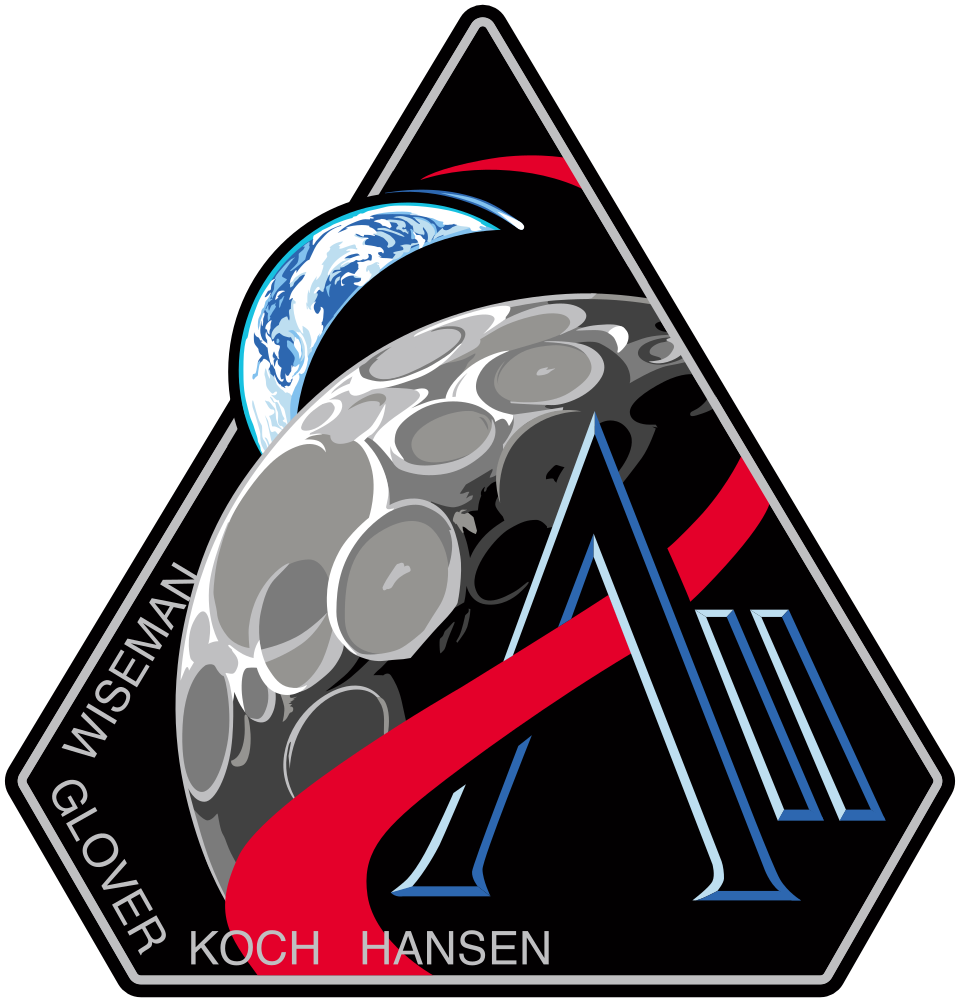
The Artemis II Moon Mission Daily Agenda is a perfect example. Released earlier this week via the NASA blog, the document seems to have been all but ignored by the mainstream media. But the day-by-day breakdown of the Artemis II mission contains several interesting entries about what the four crew members will be working on during the ten day flight.

Of course, the exact details of the agenda are subject to change once the mission is underway. Some tasks could run longer than anticipated, experiments may not go as planned, and there’s no way to predict technical issues that may arise.

Conversely, the crew could end up breezing through some of the planned activities, freeing up time in the schedule. There’s simply no way of telling until it’s actually happening.

With the understanding that it’s all somewhat tentative, a look through the plan as it stands right now can give us an idea of the sort of highlights we can expect as we follow this historic mission down here on Earth.

Advertisement

Test Drive in Orbit

The first day of Artemis II will be focused entirely on testing out the Orion Multi-Purpose Crew Vehicle (MPCV) in the relative safety of low Earth orbit. Should any critical issues be found that would endanger the life of the crew, they can return home in a matter of hours — disappointed surely, but alive.

That might sound dramatic, after all, the Orion already flew on Artemis I back in 2022. But that was a relatively stripped-down version of the spacecraft, which was missing several key systems. Chief among them, the Environmental Control and Life Support System (ECLSS). This system provides breathable air, drinkable water, and manages the temperature, humidity, and pressure inside the capsule to provide the same sort of shirtsleeves working environment that crews have experienced on Apollo, the Space Shuttle, and the International Space Station.

Before performing the trans-lunar injection (TLI) burn that will send them on the way to the Moon, the crew will put the ECLSS through its paces. To stress test the system, the schedule even includes a period on the second day in which the crew will perform aerobic exercise using a flywheel-based device built into the capsule. Exercise is not strictly required on a mission as short as Artemis II, but the fact that the Orion can support such activity could be important for more ambitious flights in the future.

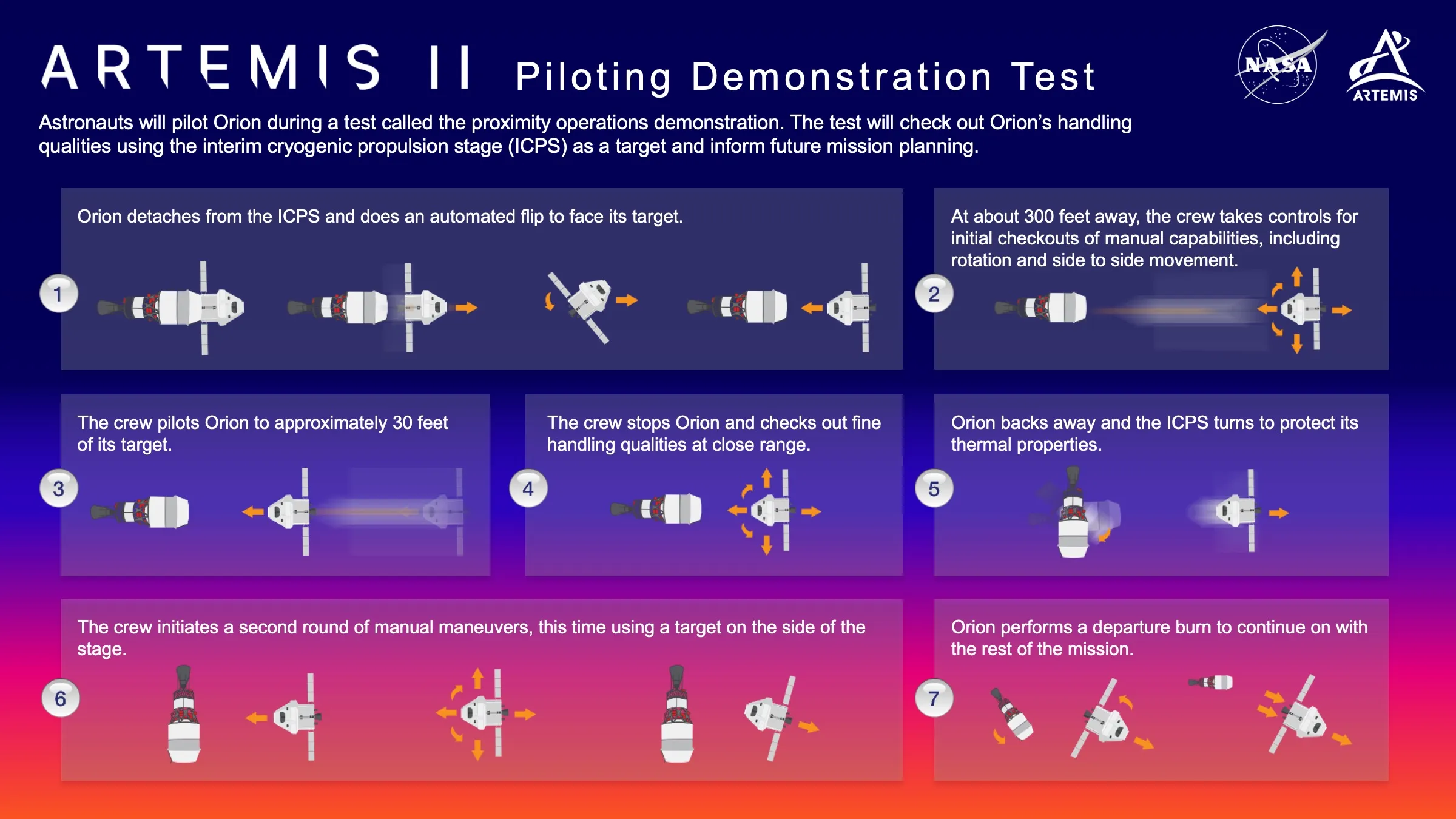
Assuming the ECLSS is operating as expected, the crew will move on to a series of tests that will demonstrate Orion’s ability to navigate and maneuver in close proximity to another spacecraft. This is not a capability that is actually required on Artemis II, but it will be absolutely critical for future missions. In Artemis III and beyond, the Orion will need to rendezvous and dock with a commercially developed lander that will be waiting for it in orbit, not unlike the Command Module and Lunar Module architecture of Apollo.
Advertisement

There won’t be a lander in orbit for Artemis II, and in fact, the Orion that’s flying this mission doesn’t even have a docking hatch. But they can still simulate the act of docking with another vehicle by using the spent upper stage of the Space Launch System (SLS) rocket, known as the Interim Cryogenic Propulsion Stage (ICPS), as a stand-in.

With this shakedown of the Orion complete, the crew will finish the day off by testing their connection to the Deep Space Network. This link will be vital as they journey beyond low Earth orbit, and this test must be completed successfully before the crew will be given the go-ahead by ground controllers to initiate the TLI maneuver that will set them on course for the Moon.

Setting Course for Luna

With all of the systems tests out of the way, the crew will focus most of their second day on preparing for and ultimately executing the trans-lunar injection burn.
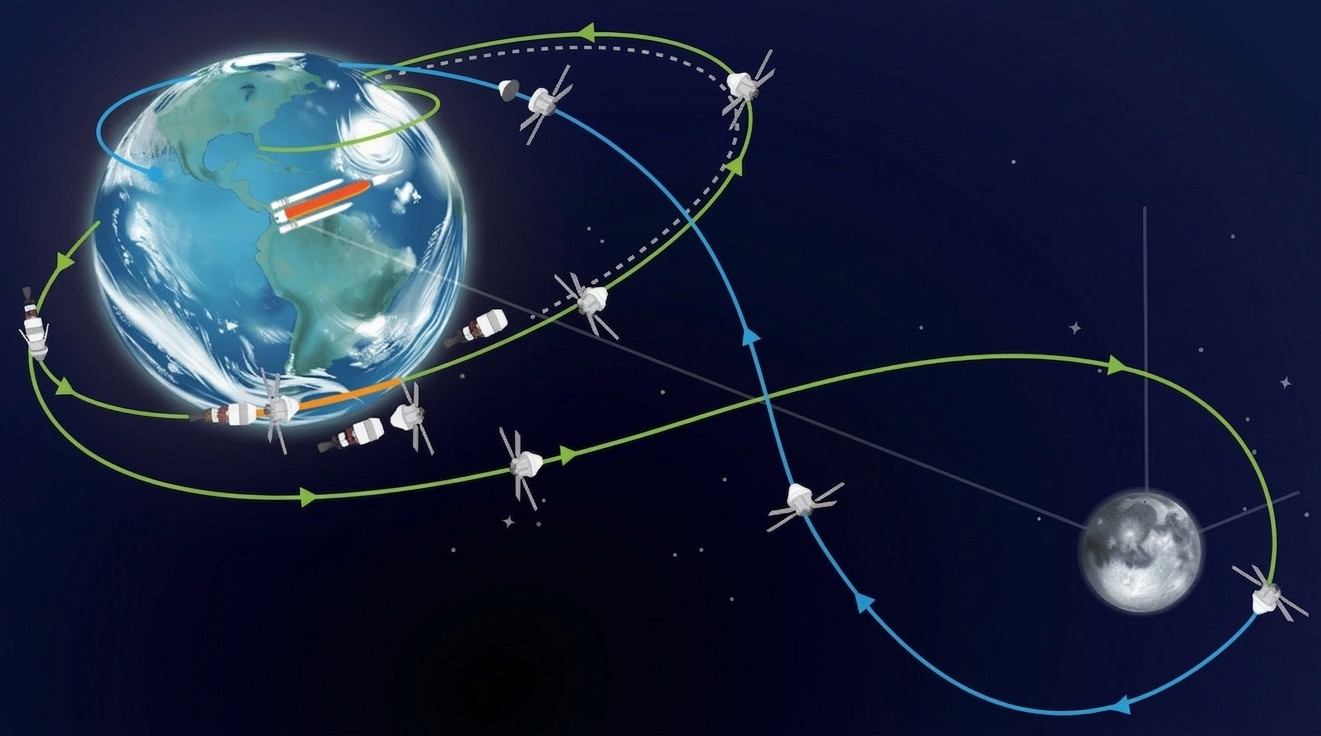
In many ways, this is the most critical element of Artemis II. Up until the point that the TLI is initiated, the Orion can easily return home by simply slowing down and dropping back into the Earth’s atmosphere. But once the engines are fired and the vehicle is accelerated to the velocity necessary to intersect with the Moon’s gravitational sphere of influence, they are fully committed.

Interestingly, the completion of the TLI maneuver on day two marks the final major engine burn of the mission. Because Artemis II will be flying what’s known as a free-return trajectory, the same engine burn that puts them on course for the Moon also enables their return eight days later. That is, the flight path of the vehicle is such that it will go around the Moon and then “fall” back towards the Earth automatically.

Advertisement

This is a fault-tolerant flight path which will bring the spacecraft back to Earth even in the event of a propulsion failure. The same approach was used during the Apollo missions as a contingency should the spacecraft fail to enter into lunar orbit — a plan famously utilized to bring the crippled Apollo 13 home.

On the Road to the Moon

Once the TLI burn is completed, Orion is essentially “on rails” for the rest of the flight. A few minor course correction burns are expected over the next several days to fine-tune the spacecraft’s closest approach to the lunar surface, but later, its ultimate splashdown point back on Earth. Obviously you can’t correct a deviation in your course until you actually know how far off the mark you are, so the exact timing and frequency of these adjustments will need to be determined on the fly as the vehicle is in transit.

With the Orion sailing through its predetermined trajectory for the next few days, the crew will have time to perform various experiments and prepare themselves for the later elements of the mission. A number of medical tests are scheduled for this period to see how the crew is performing, and they will perform drills to determine how quickly they can get into their Orion Crew Survival System (OCSS) spacesuits in the event of a emergency.

The crew will also be given time to study the areas of the lunar surface they will be asked to photograph once the spacecraft makes its closest approach. Since the exact position of Orion relative to the Moon won’t be known until the vehicle is on its way, the crew can’t really prepare ahead of time. Once the Orion is on course, ground controllers will be able to calculate what parts of the lunar surface will be visible through the windows, and can inform the crew as to the points of interest that they would like close-up imagery of.

Advertisement

The Big Day

If everything goes according to plan, day six of the mission should see the Orion capsule swing around the far side of the Moon at a distance of less than 10,000 kilometers. The only thing officially on the schedule for this period is, as you might expect, lunar study.
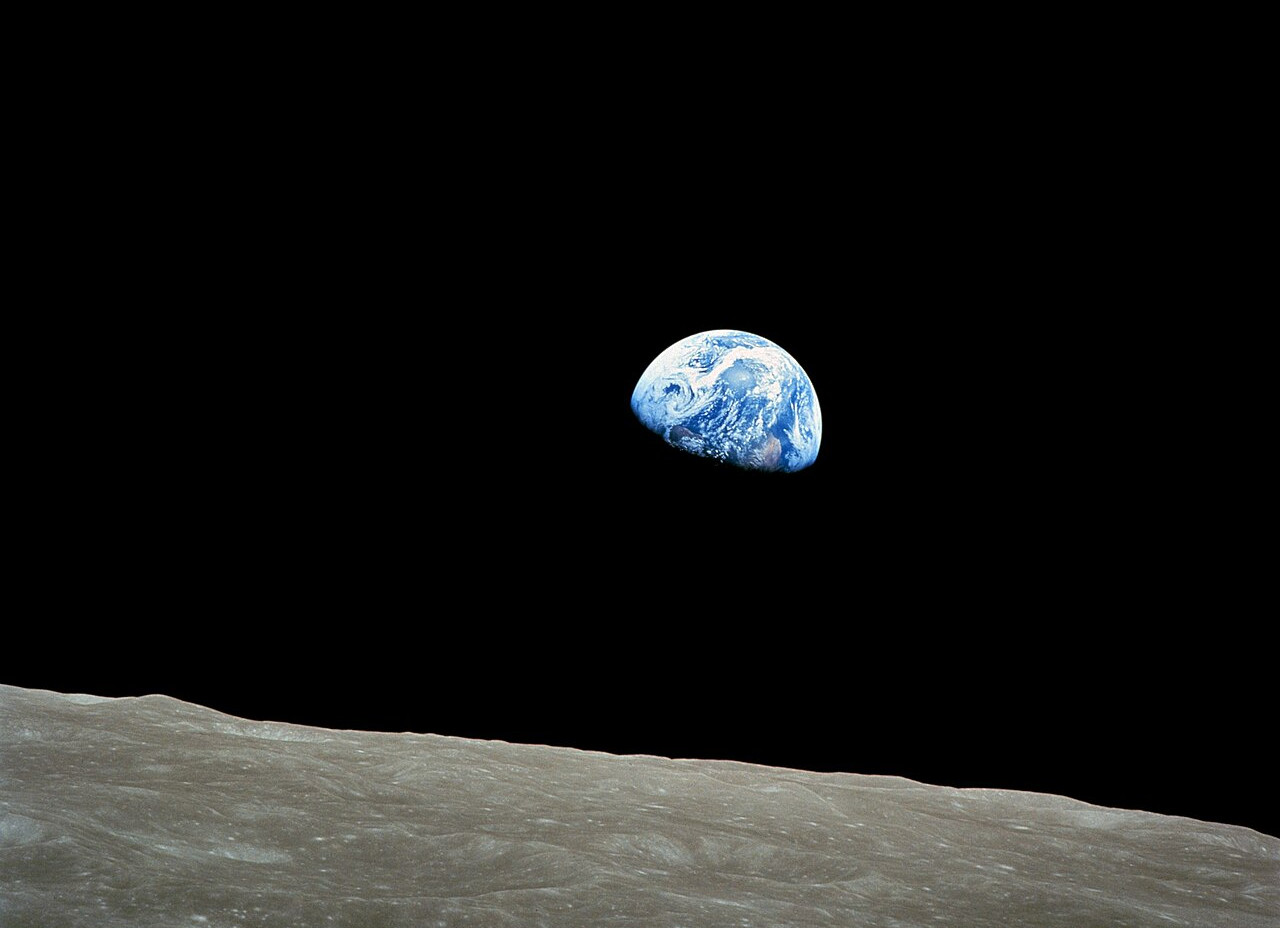
Earthrise as seen by Apollo 8

As Artemis II won’t be entering into lunar orbit, this is the only chance the astronauts will get to gather video and images of the surface. They’ll document all of their observations, some of which will need to be recorded and transmitted back to Earth later as mission control will lose contact with the crew for about an hour while the Moon itself is between Earth and Orion.

Soon after the spacecraft emerges from this communications blackout, its expected that scientists on the ground will get a chance to interview the crew about what they saw while the memory is still fresh in their minds.

Given the flurry of activity expected in this relatively brief period, the crew will remain largely off-duty for day seven so they can rest up for the final leg of the mission.

Heading Back Home

With the Moon officially behind them, the final three days of the mission will be largely focused on the splashdown and recovery procedures. It’s expected that several course correction burns will be performed during this period to fine-tune the spacecraft’s course and bring it down safely in the Pacific Ocean. In between these maneuvers, the crew is also scheduled to demonstrate manual attitude control of the Orion.

Advertisement

There are a few more experiments to perform and a bit of housekeeping to do, but it’s safe to say that — save for the fiery reentry into the Earth’s atmosphere — the most exciting aspects of the mission are all completed by this point. There is however one experiment that stands out: on day eight the crew will perform a radiation drill meant to simulate a solar flare, and will use supplies stored in the capsule to quickly erect a radiation shelter. A suite of radiation sensors will be used to determine the effectiveness of the makeshift shielding.

Must-See TV

Most of the people reading this weren’t alive to follow along with the Apollo missions as they happened, and have only experienced them in a historical context. We’ve seen the photos, watched the recordings, and read first-hand accounts from the astronauts. But there has always been a certain detachment — we know that humanity visited the Moon in the same way we know of Marco Polo’s travels through Asia or Edmund Hillary’s trek up Mount Everest. It’s something that happened in a bygone era, the accomplishments of another generation.

But Artemis II and the missions that follow it represent a new generation; an adventure that we’ll all get the chance to experience together in real-time. NASA will be bringing the full capabilities of the Internet and social media to bear, and the world will get to watch every moment unfold in high-definition. If the weather holds and there are no technical issues, we should be seeing the crew work their way though this ambitious agenda in just a few weeks.
 

Advertisement

Source link

Continue Reading

Tech

Sunlight Kept This Solar Drone in the Air for Over Five Hours Straight

Published

on

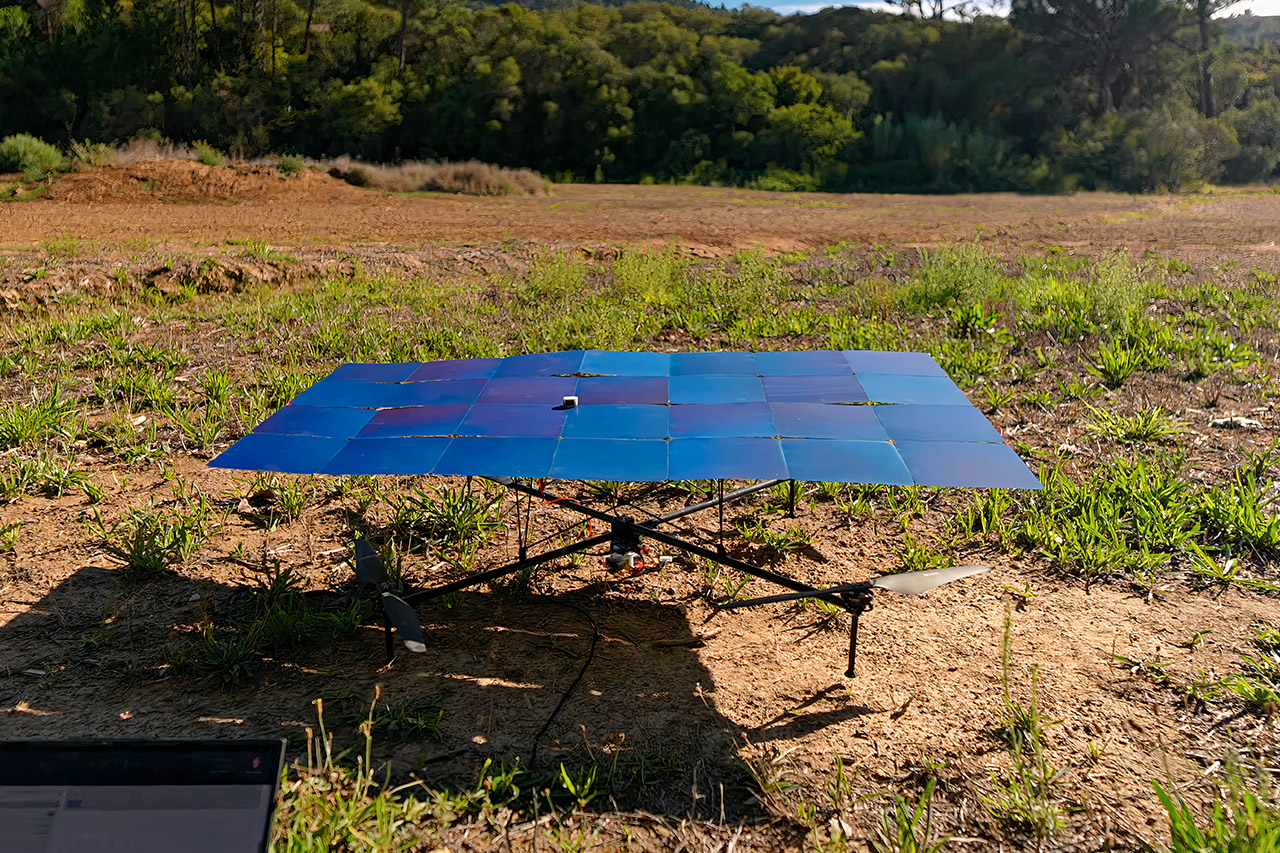
Solar Drone Test Flight Project Built
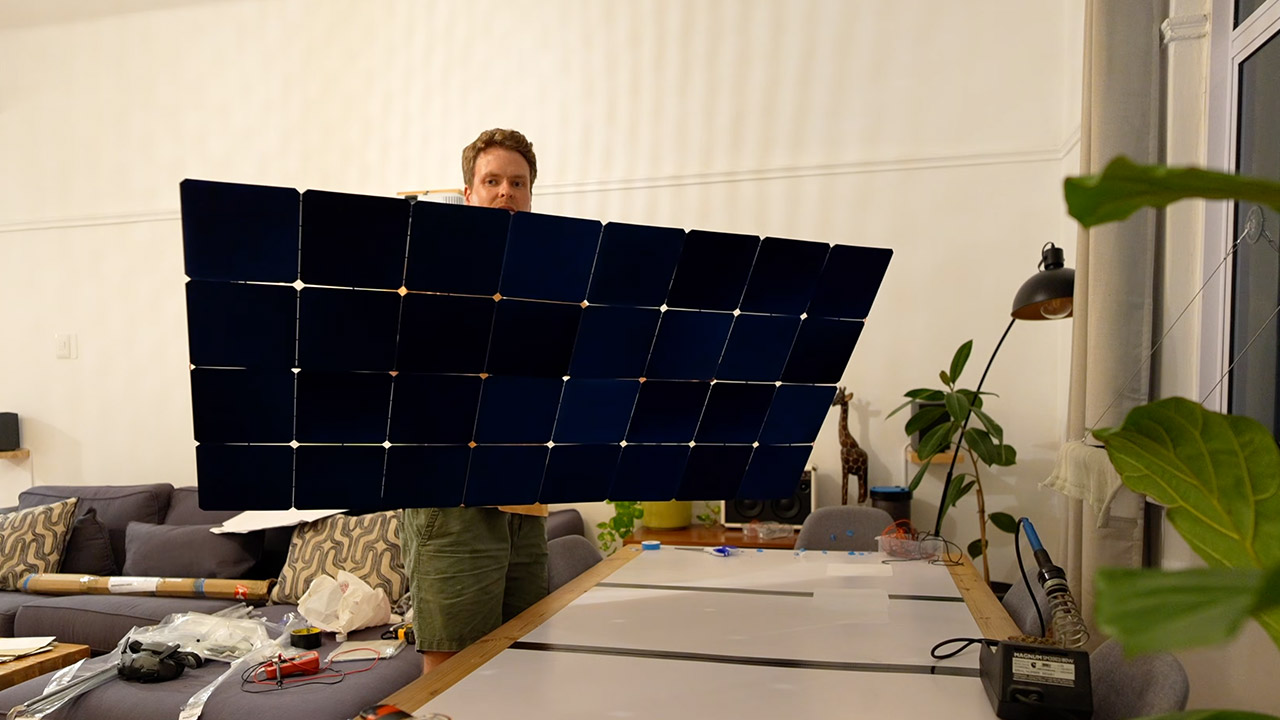
Luke Bell had a nagging worry following his last year’s test flight with the first solar-powered drone. Could a drone truly run solely on solar power and stay aloft for far longer than anyone imagined possible on a clear day? He was previously familiar with how the basic components worked in a lesser scale. The initial version flew for about three minutes before the panels snapped and it crashed to the ground.


This time, he wanted to go even further, so he shortened the arm length on his quadcopter frame by 70 grams, resulting in a loss of around 4 watts of power right away. The solar panels themselves received a significant boost, with new stronger TPU sleeves wrapped around each one to withstand a little of wind without snapping. To further reduce mass, he rerouted the wiring to make it shorter and neater.

Sale


DJI Neo Fly More Combo, Mini Drone with 4K UHD Camera for Adults, 135g Self Flying Drone that Follows…
  • Lightweight and Regulation Friendly – At just 135g, this drone with camera for adults 4K may be even lighter than your phone and does not require FAA…
  • Palm Takeoff & Landing, Go Controller-Free [1] – Neo takes off from your hand with just a push of a button. The safe and easy operation of this drone…
  • Subject Tracking & QuickShots – Effortlessly capture stunning vlogs as DJI Neo smartly follows you. Getting professional footage has never been easier…

Solar Drone Test Flight Project Build
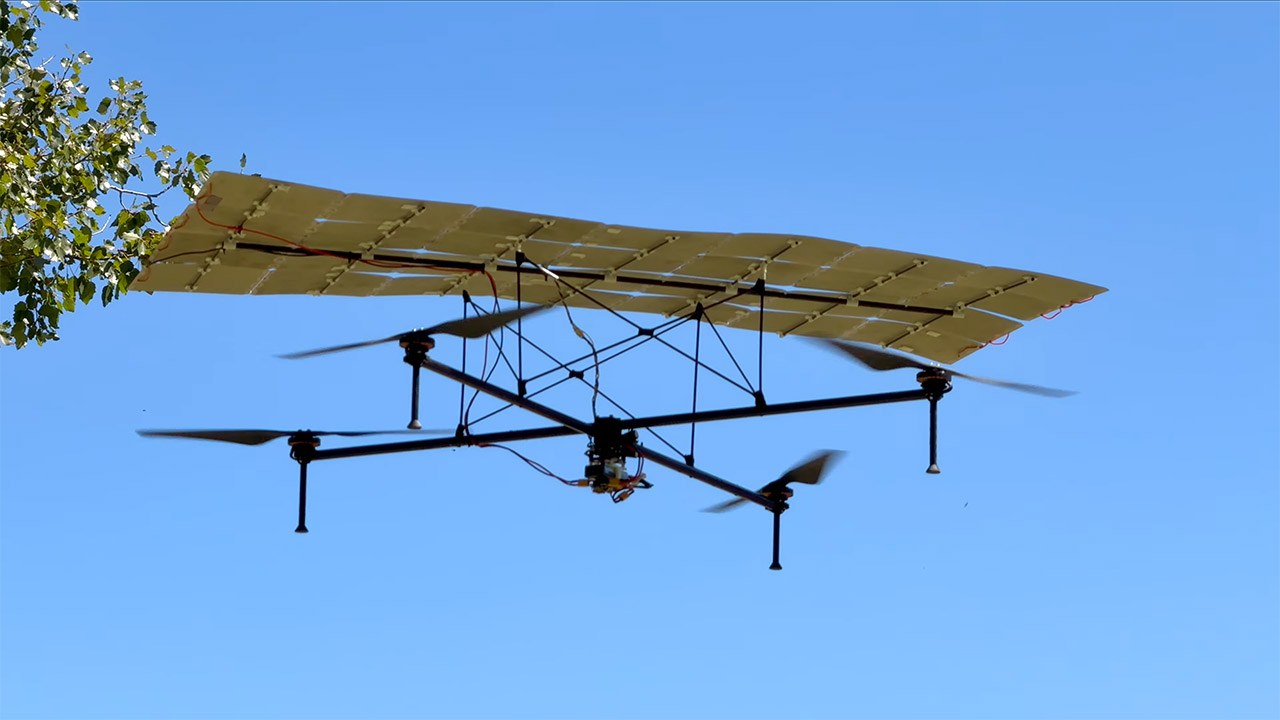
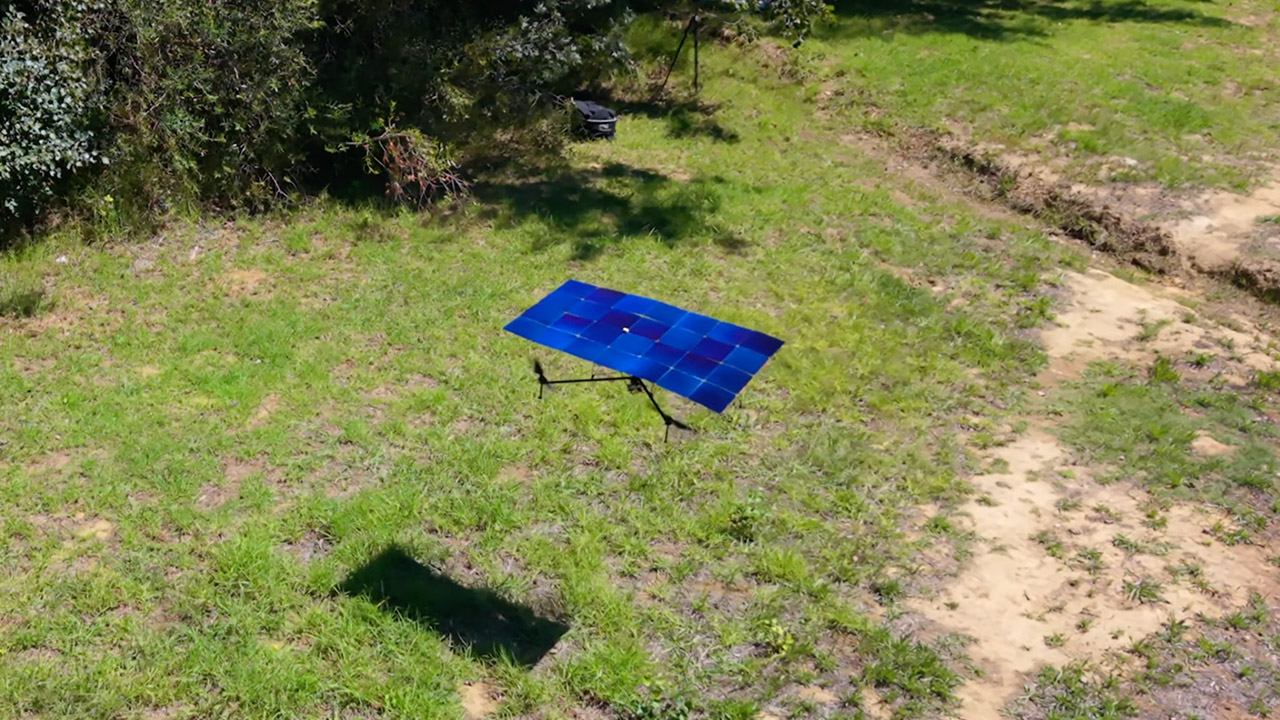
Thirty two small solar panels were arranged in an eight by four grid and soldered together into a single unified array, capable of pushing out 110 watts in full daylight, more than enough to keep the drone airborne. Getting the balance right took some careful thinking. Bell mounted the entire panel platform lower on the carbon fiber frame to bring the center of gravity into the right place, which cleared up the stubborn wobble that had been showing up during early test flights. Computer simulations confirmed that the propellers kept spinning cleanly even with the panels sitting directly above them, which was one of the trickier design questions to answer.

Solar Drone Test Flight Project Build
Under the hood, a pair of T-Motor Antigravity MN4004 motors spin compact 18 by 6 inch propellers through a T-Motor F60A Mini speed controller, with a T-Motor H7 Mini flight controller and a GPS unit keeping everything stable once the settings were dialed in. Getting to that point took some patience though. Early flights revealed that the solar panels were interfering with the GPS signal, making it difficult to lock onto satellites reliably. Bell had to reposition the unit and recalibrate the compass several times before it was consistently picking up 20 or more signals and holding its position the way he needed it to.

Solar Drone Test Flight Project Build
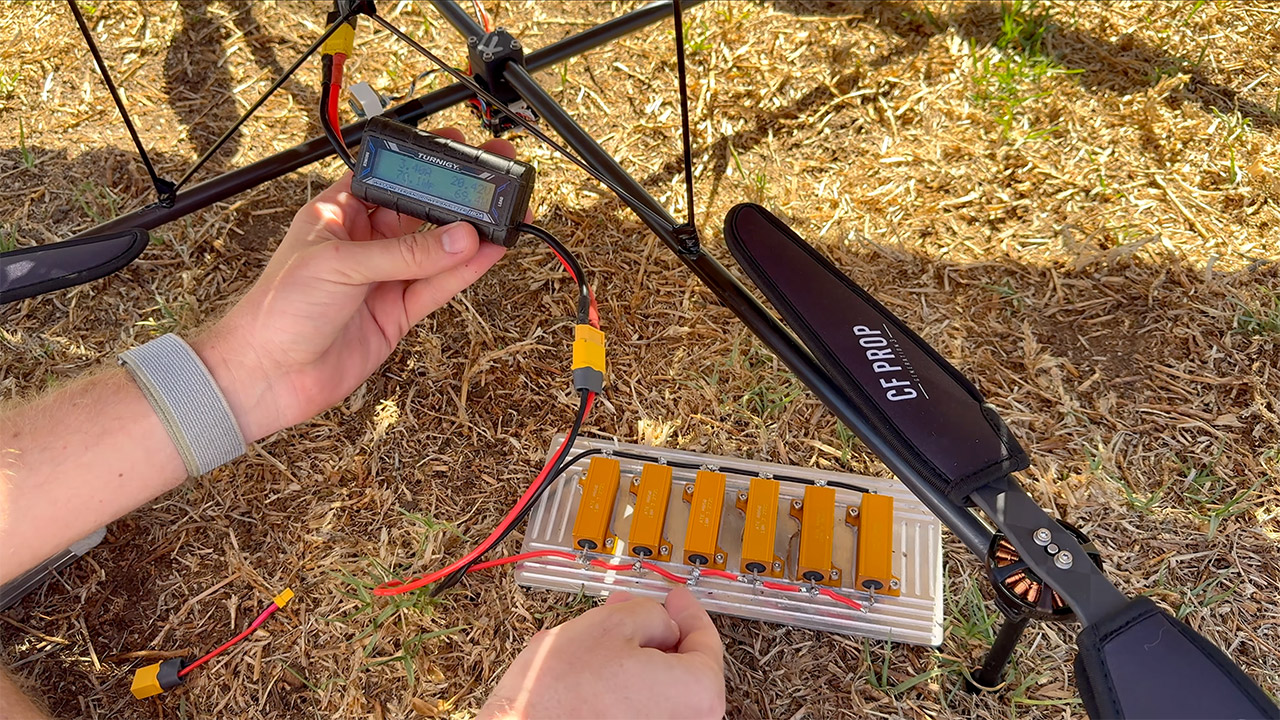
Cape Town’s unpredictable winds created sudden power spikes that the solar panels couldn’t handle on their own, and passing clouds could cut the output in a matter of seconds. To smooth things out, Bell added a small five cell lithium ion pack connected through a set of diodes. It would only kick in when the solar array needed backup, feeding power to the motors just in time to keep things steady, and whenever the sun was generous enough it would quietly recharge at around 11 watts.

Solar Drone Test Flight Project Build
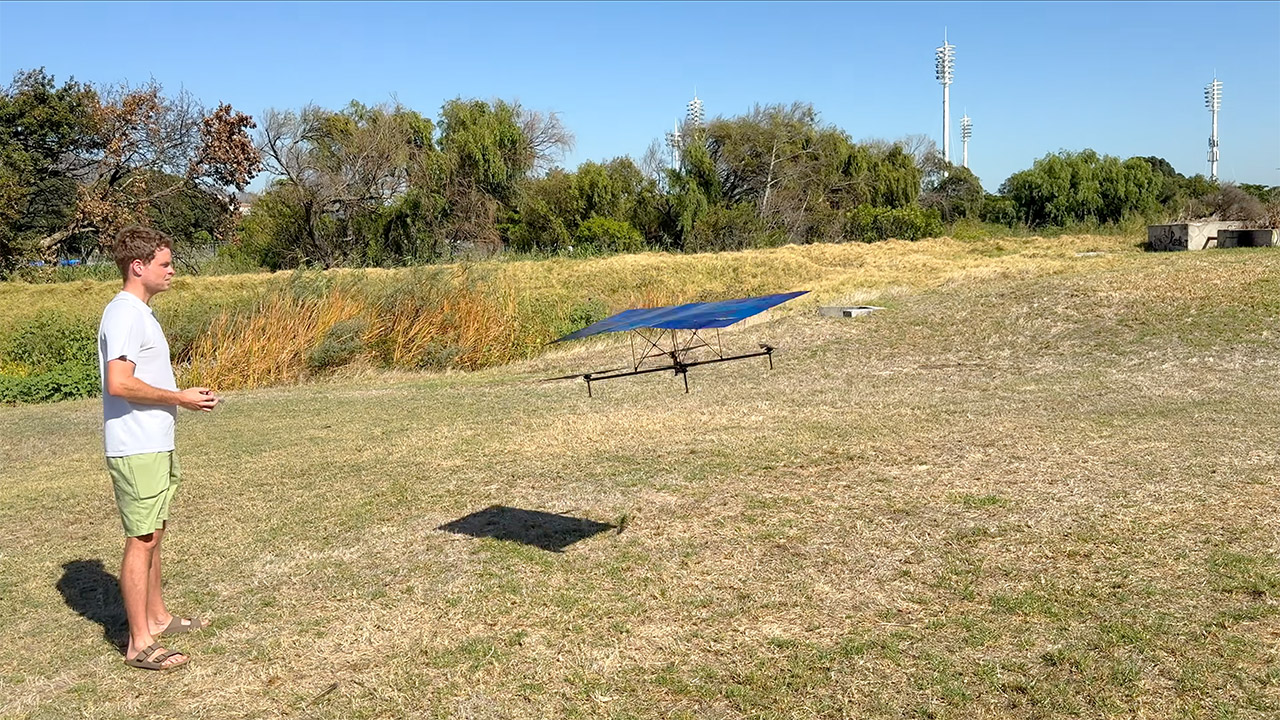
So, with the drone completely completed, he took it to the skies over Stellenbosch for a real test. A sunny morning meant he could start it and watch the voltage rise to 20.66 volts in the bright sunlight. The drone took off effortlessly and locked into position hold. Minutes passed, and with only a little manual correction here and there, he watched it sail along slowly. An hour passed, then two, then three and a half, and the machine kept buzzing away smoothly.

Solar Drone Test Flight Project Build
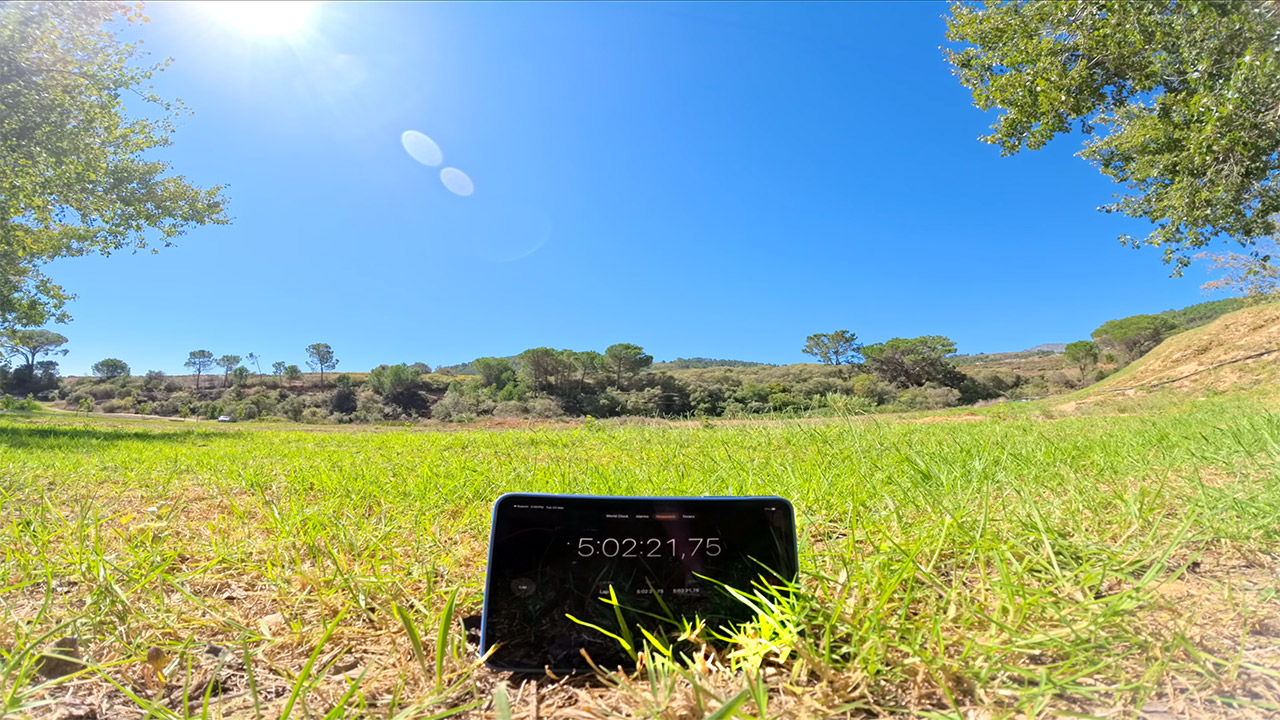
At the five hour mark the numbers told the story, 5 hours, 2 minutes, and 21 seconds in the air before Bell finally brought it in for a gentle landing. The entire flight ran on solar power alone, with a small backup battery there purely as a safety net for moments when the panels weren’t pulling in quite enough sunlight. No fuel, no heavy battery pack, just a handful of solar panels drinking in as much South African sunshine as they could manage.

Solar Drone Test Flight Project Build
That time shattered the previous flight record for a radio controlled quadcopter, and it will take something special to beat it. Bell is already thinking about what comes next, with plans to ditch the backup battery entirely and squeeze even more efficiency out of the design, likely with a few more tweaks to the frame along the way.
[Source]

Advertisement

Source link

Continue Reading

Tech

Seattle area ranks No. 3 among U.S. metros in new study measuring AI growth around jobs, pay and more

Published

on

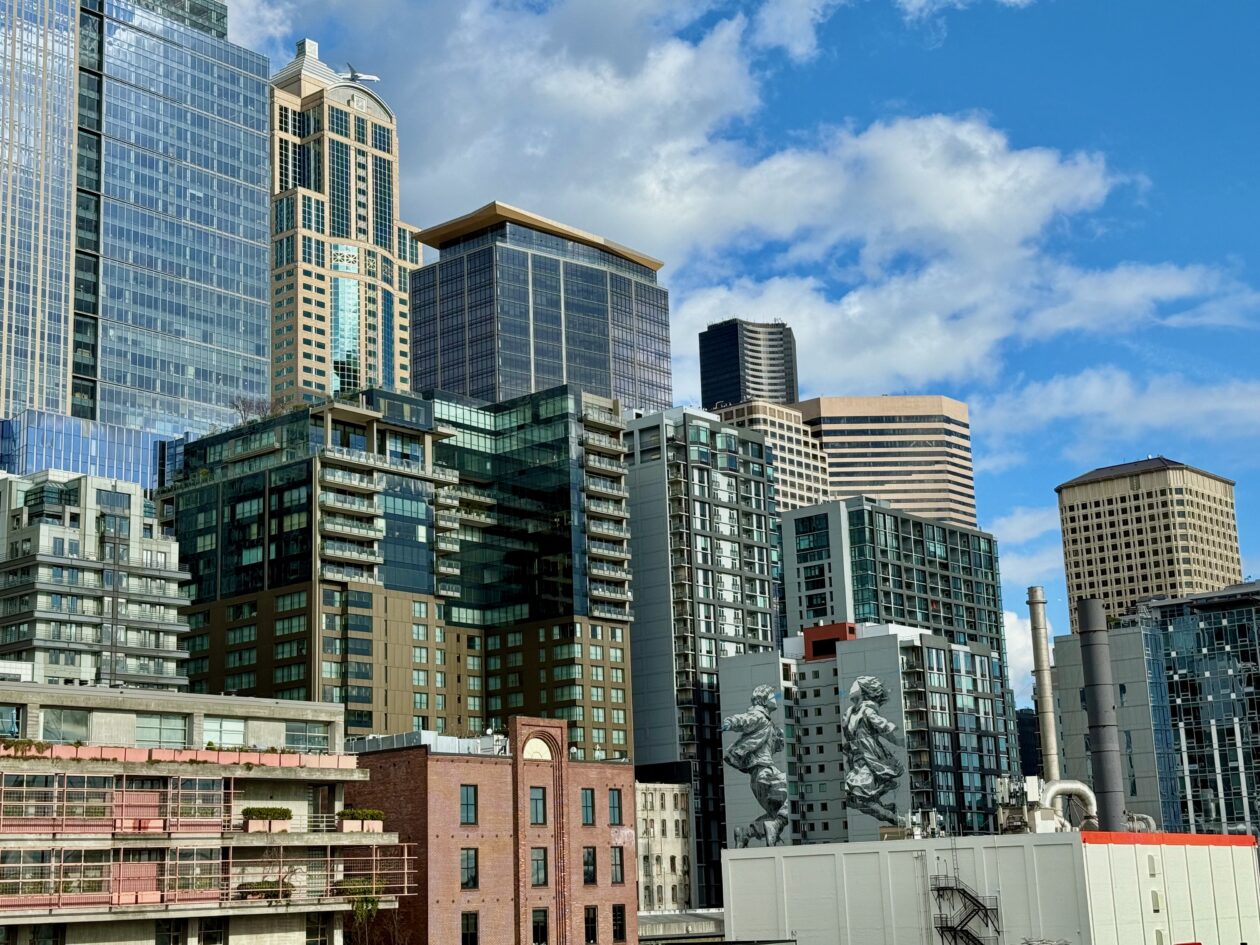
Part of the Seattle skyline as seen from the waterfront. (GeekWire Photo / Kurt Schlosser)

Seattle ranks No. 3 nationally in AI industry growth according to a new study that measures employment, salaries, job concentration and more in metropolitan areas across the U.S.

The new report from CoworkingCafe puts Seattle behind San Jose, Calif., (Silicon Valley) and New York City. San Francisco and Dallas round out the top five.

“Seattle strikes a balance between Silicon Valley’s intensity and New York’s breadth,” the report notes. With 12,726 AI job postings between November 2024 and November 2025, AI roles are nearly three times as common in the Seattle area as they are nationwide.

(CoworkingCafe graphic)

Average AI pay reaches $169,633 in the Seattle area, according to CoworkingCafe. However, “rising expenses have become a constraint and local living costs sit well above the national average,” with Seattle among the most expensive large metros.

By comparison, AI job pay in San Jose averages almost $216,000 — the highest of any metro studied — and in New York it’s $151,000.

Whether the momentum continues in Seattle remains to be seen, at least for some tech leaders, who have been warning that the passage of a new state “millionaires tax” could stall the region’s AI growth.

Advertisement

The study, which measured 300 cities, focused on AI-native technical roles, including software developers, data scientists, computer systems analysts, QA testers and related engineering positions.

The study also compared broadband readiness and co-working infrastructure, which CoworkingCafe considers a necessity for keeping connected and productive. Seattle is home to 145 co-working spaces.

Among smaller-market AI growth, Fayetteville, Ark., and Boulder, Colo. topped the rankings for mid-size and small-size metros, respectively.

Source link

Advertisement
Continue Reading

Tech

Apple quietly fixes Family Sharing’s biggest flaw a decade after its launch

Published

on

Family Sharing has been a genuinely useful feature since Apple introduced it in June 2014. It allows you to share your apps, subscriptions, and purchases with up to five family members, negating the need to buy them multiple times. 

Since its release, Family Sharing has received several updates, but one thing has remained unchanged. Every purchase made under Purchase Sharing is charged directly to the family organizer’s credit card, regardless of who makes it.

That’s all good when children are making the purchase, but what about other adults in the family sharing the plan? This has been a quiet frustration for families for over a decade, and Apple has finally addressed it with iOS 26.4.

What has changed?

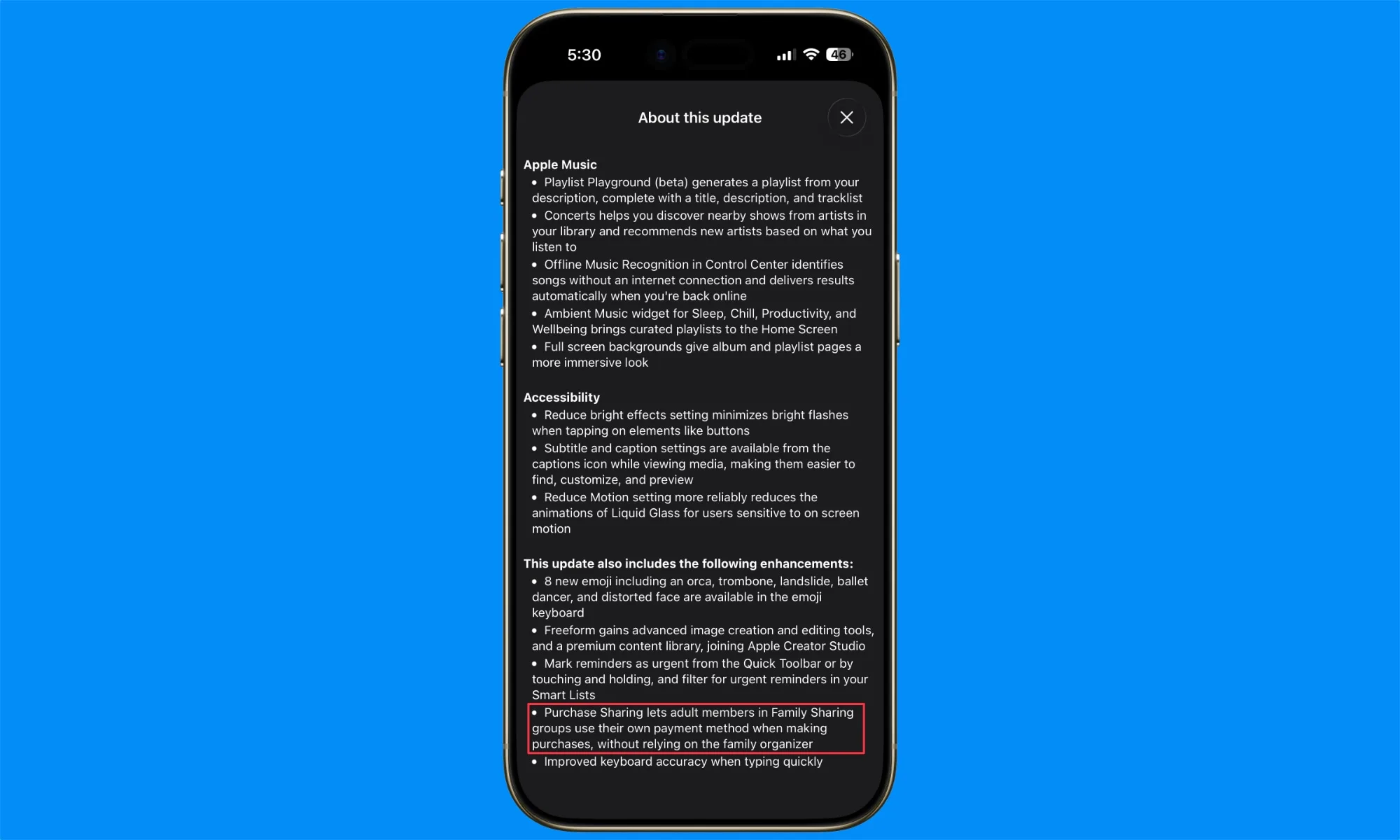
With the iOS 26.4 RC release today, Apple updated how billing works inside Family Sharing. Adult members can now use their own payment method when making purchases, instead of everything defaulting to the family organizer’s card.

Advertisement

Apple’s official release notes confirm the change, “Purchase Sharing lets adult members in Family Sharing groups use their own payment method when making purchases, without relying on the family organizer.”

Apple also updated its support documentation to reflect this, noting that the family organizer pays for purchases unless they turn off Purchase Sharing or adult members choose to use their own payment method.

Does this change anything else about Family Sharing?

The core experience remains the same. You can still share apps, subscriptions, and purchases across the family. The only difference is that adults now have the option to pay for their own stuff, which is how it should have worked from the start.

Over the years, Apple has added Apple Cash Family, Apple Card Family, and parental spending controls to Family Sharing. But the one piece that was always missing was giving adults financial independence within the group. It’s a small but meaningful update that many families have been waiting for.

Advertisement

Source link

Continue Reading

Tech

Which Android is better for you?

Published

on

We’ve compared Google’s mid-range Pixel 10a to Samsung’s own entry-level Galaxy S26 to see how the Androids compare.

With nearly £/$400 separating the two, you’d expect there to be a huge difference between the cheaper Pixel 10a and the Galaxy S26, but is that really the case? Or is the Pixel 10a a more appealing option for those looking for an affordable, yet modern Android?

Keep reading to see how the Pixel 10a measures up to the Galaxy S26. Then, once you’re finished here, visit our list of the best Android phones and best mid-range phones to help you choose your next purchase.

Price and Availability

The Google Pixel 10a is definitely more of a mid-ranger than the Galaxy S26, as it starts at just £499/$499 for its 128GB model. Or, for an additional £100/$100, you can upgrade to 256GB instead.

Advertisement

SQUIRREL_PLAYLIST_10208265

Advertisement

Instead, the Samsung Galaxy S26 is nearly double that, with a starting RRP of £879/$899 for its 256GB handset. 

SQUIRREL_PLAYLIST_10208273

Advertisement

Design

  • Galaxy S26 is thinner at just 7.2mm
  • Pixel 10a’s rear camera is completely flat against the back
  • Both have an aluminium frame and are IP68 rated

Visually, there’s plenty separating the Google Pixel 10a from the Galaxy S26. Although both have 6.3-inch displays, the Pixel 10a is thicker and heavier than the Galaxy S26, at 9mm and 183g respectively. In comparison, the S26 is just 7.2mm thick and weighs 167g.

Google Pixel 10a thickness

Samsung Galaxy S26

Even with that in mind, the Pixel 10a doesn’t feel heavy in hand and, despite its plastic back, it feels pretty premium too – though that’s mainly thanks to the aluminium frame. The S26 also sports an aluminium frame but also benefits from Gorilla Glass Victus 2 for better protection from scratches and drops. The Pixel 10a also has a Gorilla Glass screen coating, but it’s the slightly older 7i iteration instead. Sure it’s older, but during our review period we didn’t encounter any scratches or dents. 

Advertisement

Advertisement

Speaking of durability, both handsets are equipped with an IP68 rating which means they are dust-resistant and can withstand submersion in water.

Google Pixel 10a rear

Samsung Galaxy S26 rear

Advertisement

Otherwise, although the rest of the Pixel 10 series sports Google’s iconic camera bar that sticks out of the rear, the Pixel 10a’s camera sits completely flat against its back. The Galaxy S26 instead houses its three rear cameras in a pill-shaped island at its back which does cause the phone to wobble when laying on a table. 

Winner: Samsung Galaxy S26

Screen

  • Both sport 6.3-inch panels
  • Pixel 10a has a slightly higher peak brightness than the S26
  • Galaxy S26 doesn’t have the Privacy Display or anti-reflective coating seen in the Galaxy S26 Ultra

With so many handsets now 6.7-inches or more, the Pixel 10a and Galaxy S26 are welcome smaller phones. They might not be as small as the iPhone 13 Mini (which still holds a place in our hearts here at Trusted), but they’re a decent compromise for those who want a phone that’s easy to use with just one-hand. 

Advertisement

Advertisement

The Pixel 10a is otherwise fitted with a non-LTPO 120Hz refresh rate and HDR support, while its OLED panel results in bright and vibrant colours too. Plus, with a peak brightness of 3000 nits, it’s easy to use when outdoors too. However, one issue we have with the Pixel 10a’s display is the thick bezels, which instantly age the handset. 

Pixel 10a displayPixel 10a display
Pixel 10a. Image Credit (Trusted Reviews)

Instead, the Galaxy S26 boasts super slim bezels for a more immersive viewing experience and sports an LTPO 1-120Hz refresh rate too. While its peak brightness is slightly shy of the Pixel 10a’s own, at 2600 nits, it’s still a comfortable phone to use outside and in bright sunlight. 

While overall the Galaxy S26’s display is easily one of the best and most vibrant displays on the market, it doesn’t sport the premium features found in the Galaxy S26 Ultra including the built-in Privacy Display or the anti-reflective coating. It’s a shame, as it means the Galaxy S26 more or less has the same display as the Galaxy S25.

Winner: Samsung Galaxy S25

Camera

  • Pixel 10a has the same 48MP main and 13MP ultrawide as the Pixel 9a
  • Similarly, the Galaxy S26’s cameras remain unchanged from its predecessor, with a 50MP main, 13MP ultrawide and 10MP telephoto
  • Google’s image processing tech is brilliant on the Pixel 10a, with vibrant yet natural colours

Advertisement

Neither Google nor Samsung opted for any drastic changes with their respective phone’s camera hardware. Essentially, the Pixel 10a retains the 48MP main and 13MP ultrawide of the Pixel 9a while the Galaxy S26 retains the 50MP main, 13MP ultrawide and 10MP telephoto lenses of the Galaxy S25. 

Advertisement

Considering the Pixel 9a earned a spot on our best camera phones guide – which is no mean feat for a mid-ranger – the fact that Google retained the lenses is somewhat understandable. We found that the lenses, combined with Google’s excellent image processing, results in consistently sharp, detailed images with natural yet vibrant colours too. Plus, although it lacks a dedicated telephoto lens, the main sensor has a fairly competent zoom ability that works up to around the 5-7x mark before detail falters. 

Image captured on Pixel 10aImage captured on Pixel 10a
Captured on Pixel 10a. Image Credit (Trusted Reviews)

In comparison, it’s fair to say that the Galaxy S26’s camera hardware is pretty dated now. Sure, overall the set-up is solid and reliable, with the main lens especially able to cope well with most lighting conditions, but as Samsung hasn’t made any changes in a while, it feels like the handset is falling behind the competition. 

Image captured on Samsung Galaxy S26Image captured on Samsung Galaxy S26
Captured on Galaxy S26. Image Credit (Trusted Reviews)

Having said that, Samsung has made some welcome tweaks to its image processing. While previously, images were quite saturated, perhaps overly so, now colours are slightly toned down while retaining a social media-approved vibrancy.

Advertisement

Winner: Google Pixel 10a

Performance

  • Pixel 10a runs on Google’s 2024 Tensor G4 chip
  • Galaxy S26 runs on Samsung’s own Exynos 2600
  • Exynos 2600 is a better chip for handling more intensive gaming, but otherwise both offer a solid overall performance

One of the biggest controversies with the Pixel 10a is its chip. Rather than sporting the newer Tensor G5 chip that powers its Pixel 10 family, the Pixel 10a runs on the same Tensor G4 chip that was found in the Pixel 9 series. With this in mind, the Pixel 10a performs identically to the Pixel 9a. Although the Pixel 9a performs well overall, it’s a shame we haven’t seen an update with the Pixel 10a. 

For more on how the two compare, visit our Google Pixel 10a vs Pixel 9a comparison.

Advertisement
Pixel 10a Home ScreenPixel 10a Home Screen
Pixel 10a. Image Credit (Trusted Reviews)

Even so, we found that although the Pixel 10a doesn’t achieve high benchmark scores – which isn’t a surprise as Google’s chips favour AI capabilities over sheer power – in everyday use the phone is fast and smooth, and can handle basic gaming with relative ease. However, it won’t be able to handle graphically intense tasks as easily.

Advertisement

In comparison, the Galaxy S26 runs on Samsung’s own Exynos 2600 chip and doesn’t sport Qualcomm’s Snapdragon 8 Elite Gen 5 for Galaxy. Despite the lack of Qualcomm power behind it, we still found that the Galaxy S26 scores admirably in our benchmarking tests.

Mario gaming on Galaxy S26Mario gaming on Galaxy S26
Gaming on Samsung Galaxy S26. Image Credit (Trusted Reviews)

In real-world use, this means that the Galaxy S26 performs brilliantly with apps opening and running impressively quickly. Not only that, but gaming is also great with the Galaxy S26 with zero signs of lag, even when settings were bumped up too.

Winner: Samsung Galaxy S26

Software

  • Google’s stock Android is brilliant and hard to beat
  • Samsung’s OneUI is still intuitive and looks clean
  • Both promise seven years of Android upgrades

Google’s stock approach to Android 16 is hard to beat, as the whole process feels well-designed and more streamlined than others. Even so, Samsung’s OneUI skin isn’t too far behind as it lacks bloatware that tends to plague other Android skins, and is fairly intuitive to use too.

Advertisement

Advertisement

Despite the Pixel 10a being a mid-ranger, it still boasts Google’s AI toolkit, all of which are conveniently baked right into the system. That means you’ll benefit from the likes of Magic Editor for photos, Circle to Search and, of course, Gemini on-board. 

Gemini on Pixel 10aGemini on Pixel 10a
Gemini on Pixel 10a. Image Credit (Trusted Reviews)

In comparison, the Galaxy S26 is fitted with Samsung’s own Galaxy AI toolkit which borrows a few features from Google, including Gemini and Circle to Search. There’s also Samsung’s own photo editing tools, which also allow you to remove unwanted objects from pictures and reframe shots too.

Home Screen on Galaxy S26Home Screen on Galaxy S26
Galaxy S26 home screen. Image Credit (Trusted Reviews)

Perhaps most notably is that both Google and Samsung promise seven years of Android upgrades, taking both the Pixel 10a and Galaxy S26 up to Android 23.

Winner: Google Pixel 10a

Advertisement

Battery

  • Pixel 10a has a larger battery but both offer a decent all-day battery life
  • Pixel 10a supports 30W wired charging compared to the Galaxy S26’s 25W
  • Both support wireless charging

Neither Google nor Samsung have ever been praised for their mighty battery capacities or speedy charging, and both continue this trend with the Pixel 10a and Galaxy S26. While the Pixel 10a boasts slightly “better” specs, with a 5100mAh cell and 30W wired charging support, it still falls behind the likes of the OnePlus 15R for example.

Otherwise, the Galaxy S26 has a pretty measly-sounded 4300mAh cell and supports just 25W wired speeds. Even so, both handsets can offer a pretty convincing all-day battery life, with the Pixel 10a showing promise to stretch itself to a two-day device. Of course, this will all depend on your usage. 

Advertisement

Winner: Google Pixel 10a

Verdict

Starting at £/$499, with a great camera set-up, decent chip and plenty of genuinely useful AI features, if you’re looking for a genuine mid-range Android that performs brilliantly in everyday use, the Google Pixel 10a is an easy recommendation. Sure, it’s not quite the overhaul compared to the Pixel 9a, but it’s still a well-equipped phone.

Advertisement

In comparison, although the Galaxy S26 is a better gaming phone and has an overall sleeker design, with a higher starting price of £879/$899, it’s harder to recommend when the Pixel 10a is so much cheaper.

Advertisement

Source link

Continue Reading

Tech

Apple France leans on fashion & fictitious radio station in 50th anniversary celebration

Published

on

So far Apple has celebrated its 50th year with one-off events in the US, China, and South Korea, but France is having four — all as Today at Apple special events.

Grand, warmly lit multistory stone building on a city corner at dusk, with ornate balconies, large arched windows, a modern retail storefront at street level, and people walking past.
All of France’s anniversary celebrations are at its Apple Champs-Elysees store in Paris — image credit: Apple

Following South Korea’s lead with K-Pop band Cortis performing and talking at a special Today at Apple session, Apple France has announced four new events. All four are to be held at the Apple Store on Paris’s Champs-Elysees, over March 25, 2026, and March 26.
There are two evening events, starting at 6:00 PM local time on Wednesday, March 25, with So Me, a graphic artist being interviewed by music journalist Naomi Clement. Apple says, in translation, that the designer will “present some of his emblematic projects and explain his transversal approach to music and visual arts.”
Continue Reading on AppleInsider | Discuss on our Forums

Source link

Continue Reading

Tech

Fresh S’pore grads earn S$4.5K median, rising to S$6.3K before 30

Published

on

Disclaimer: Unless otherwise stated, any opinions expressed below belong solely to the author.

Sadly for young Singaporeans, the median salary for fresh university graduates in full-time employment remained at the same level of S$4,500 in 2025 as in 2024 (the figure excludes bonuses and employer’s CPF), according to the annual Graduate Employment Survey published by the Ministry of Education earlier this month.

What’s more, fewer of them succeeded in finding permanent employment within six months of graduation, at 83.4%, compared to 87.1% in 2024.

Fortunately, however, some good news regarding their future was buried in the data provided by Ministry of Manpower in its labour force report for 2025.

Advertisement

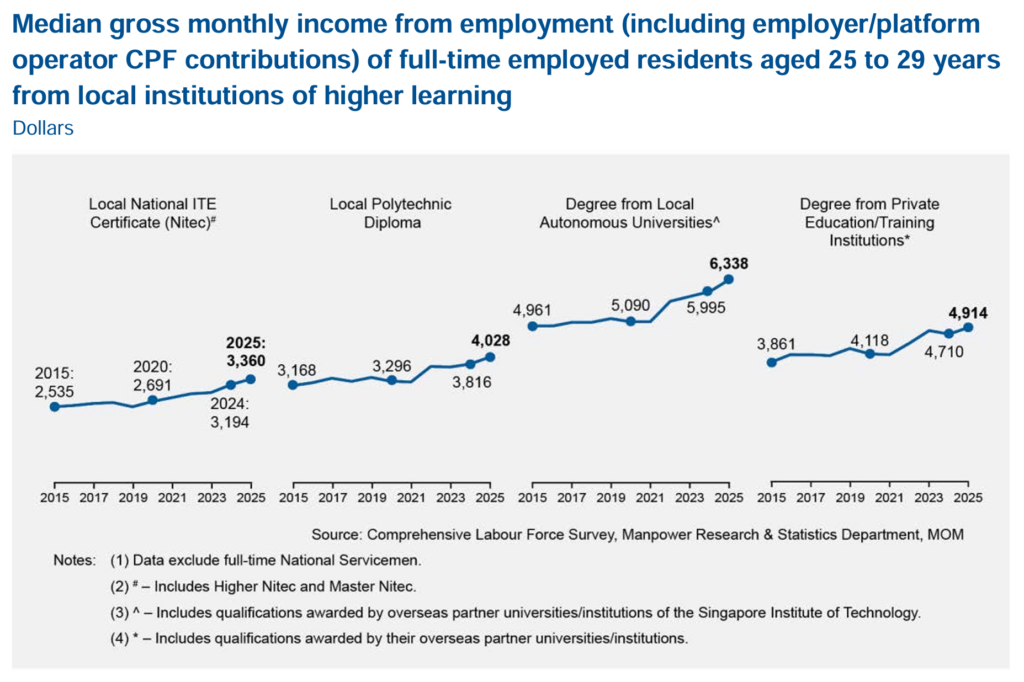
As it turns out, local graduates from the six public, autonomous universities see their salaries surge considerably before they even turn 30, with the median reaching S$6,338 last year, up by 5.7% from S$5,995 in 2024.

Source: Labour Force in Singapore 2025, Singapore Ministry of Manpower

They are also way ahead of those in other educational avenues, where monthly incomes are as much as S$2,000 to S$3,000 lower, even after a few years in the labour market.

It confirms what I wrote about last month here, that there are really two Singapores—one inhabited by the tertiary degree holders and the other by everyone else. They live completely different lives due to the gulf in their economic circumstances (happily, over 60% of young Singaporeans complete university education these days).

What’s more, we have to remember that these figures move with time, so we shouldn’t compare the current figure for 25-29 year olds with recent graduates, but rather to what their starting salary was.

Back in 2019, six years ago, it was just S$3,600, so those who graduated at that time could have nearly doubled their money since leaving university.

Advertisement

Another optimistic finding is that these trends continue into your 30s. The median after another decade, for those degree holders aged 35 to 39, is close to S$10,000 per month. And the median for degree holders of all ages is S$9,000 (below is a reminder from my Feb article), putting them way over everybody else.

Source: Labour Force in Singapore 2025, Singapore Ministry of Manpower

That’s why, while it may seem that fresh grads are having it a bit more difficult than their predecessors—with stagnating wages and a bit fewer opportunities for quick employment—they really have no reason to worry about the future.

Qualified, university-educated Singaporeans are still the country’s elite.

  • Read other articles we’ve written on Singapore’s current affairs here.

Featured Image Credit: National University of Singapore

Advertisement

Source link

Continue Reading

Tech

Modular 18650 Packs, No Spot Welding Required

Published

on

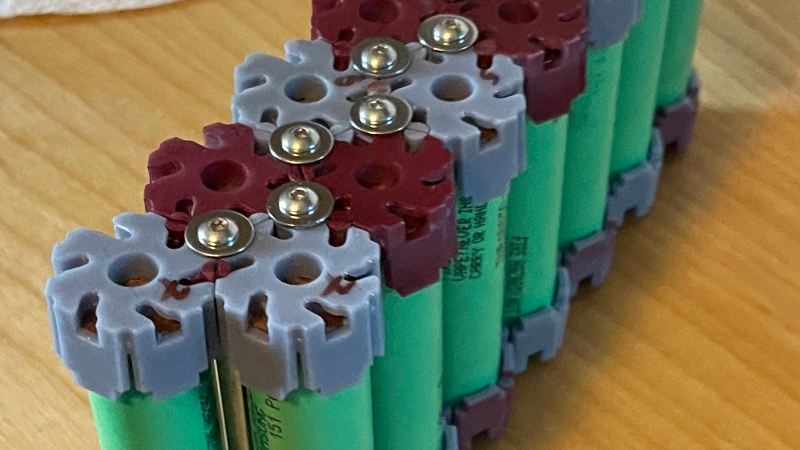
Building a battery pack from 18650 cells traditionally requires patience, a spot welder, and a supply of nickel strip. But what if there was another way? [Ben] is here with Cell-Lock, a modular battery assembly system.

At the system’s heart are a set of interlocking end caps and connection pieces that function as locking cams as well as the electrical connections where needed. They were inspired by the cam systems used for furniture assembly, and are activated by rotation with a screwdriver. The result is a mechanically stable battery system in which different configurations can easily be assembled.

We like that it doesn’t involve any heat near those cells; in part because we’ve seen our share of dodgy connections overheating. But we do have a few concerns. These include how reliable a connection those cams would make, as well as how much current they could safely take without overheating. If both of those could be addressed, we can see that this is an idea with a future.

You can see plenty of examples on the linked project, including an e-bike pack which seems to return no problems. Meanwhile this is by no means the first modular battery pack system we’ve seen.

Advertisement

Source link

Advertisement
Continue Reading

Trending

Copyright © 2025