
Politics
AFCON fury: CAF president explains decision

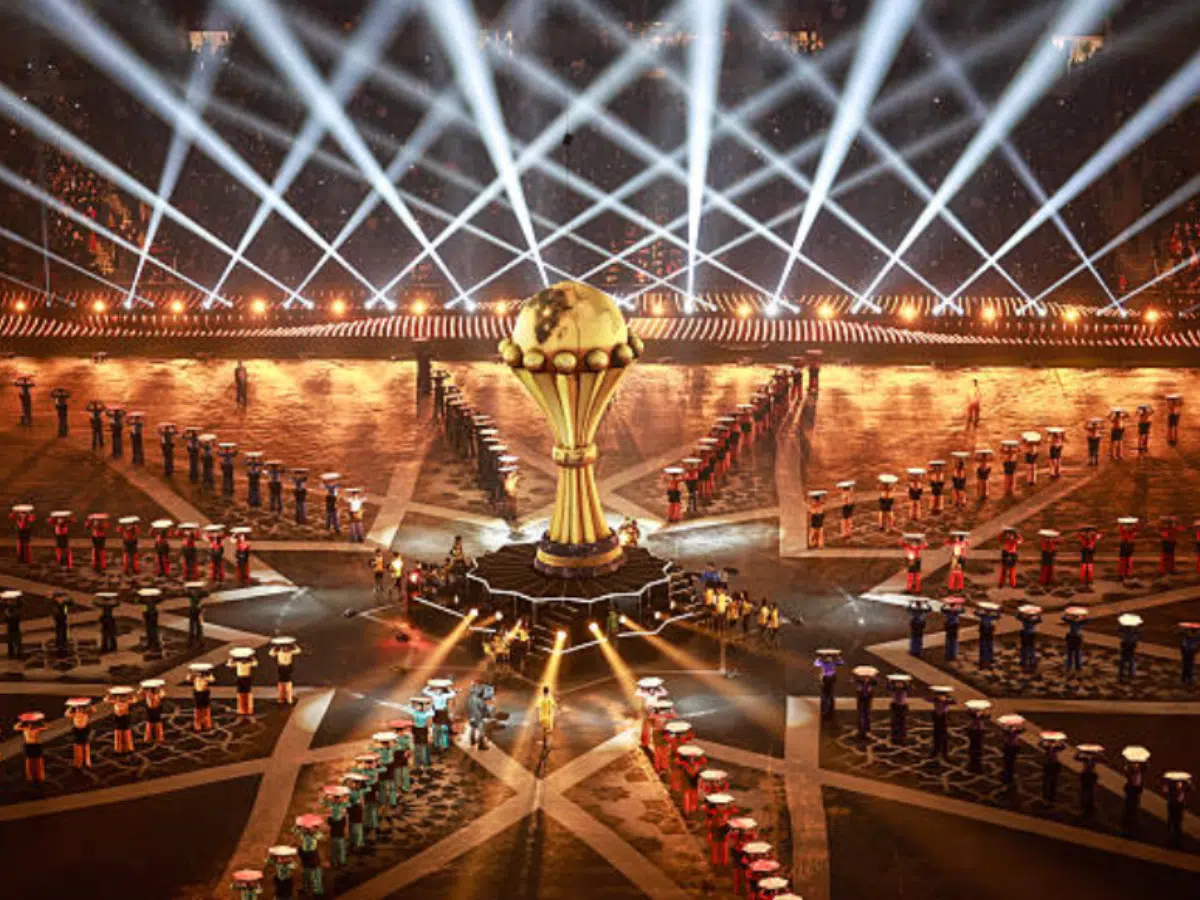
In his first official comment on one of the most controversial issues in the history of African football, Patrice Motsepe acknowledged a clear contradiction in the decisions of the Confederation of African Football (CAF) committees, following the stripping of the 2025 Africa Cup of Nations (AFCON) title from Senegal and its awarding to Morocco by a decision of the Appeals Committee.
The case, which sparked an unprecedented storm, dates back to the final, which Senegal won on the field (1-0) after extra time. However, the Appeals Committee reopened the case from a legal standpoint, arguing that what happened during the match—particularly the withdrawal and subsequent reversal of that decision—renders the victory illegitimate, thus administratively overturning the result to a 3-0 loss.
AFCON storm
Amidst an initial decision by the Disciplinary Committee upholding Senegal’s title, and a completely contradictory decision by the Appeals Committee, CAF president Motsepe issued statements asserting that “both decisions should be viewed as fair.” He emphasized that both committees comprise “among the most respected judges and lawyers on the continent,” in an attempt to contain a widening crisis of confidence within African football circles.
He continued:
If you look at the composition of those bodies, they reflect some of the most respected lawyers and judges on the continent. These are people who have integrity and have a track record. The independence is reflected by the decisions that were taken by the two bodies.
However, the most significant message in the CAF president’s statements was the implicit acknowledgment, rather than denial, of the magnitude of the crisis. He expressed his “frustration” with the spectacle of the tournament final, considering what transpired a threat to the efforts made over years to establish the principles of integrity and credibility in the administration of the game on the continent.
In parallel, Motsepe opened the door to legal escalation, affirming Senegal’s right to appeal to the Court of Arbitration for Sport (CAS), with CAF’s prior commitment to respecting the final ruling. This move effectively transfers the case from the corridors of the continental federation to the international sports judiciary.
The CAF president concluded his remarks with a message that goes beyond the decision itself, when he indicated that the “view of the public” in the 54 member countries represents the true standard of the federation’s credibility, in an acknowledgment that reflects a growing awareness that the crisis is no longer just a legal one, but has turned into a public test of the African public’s trust in its football institutions.
Featured image via the Canary

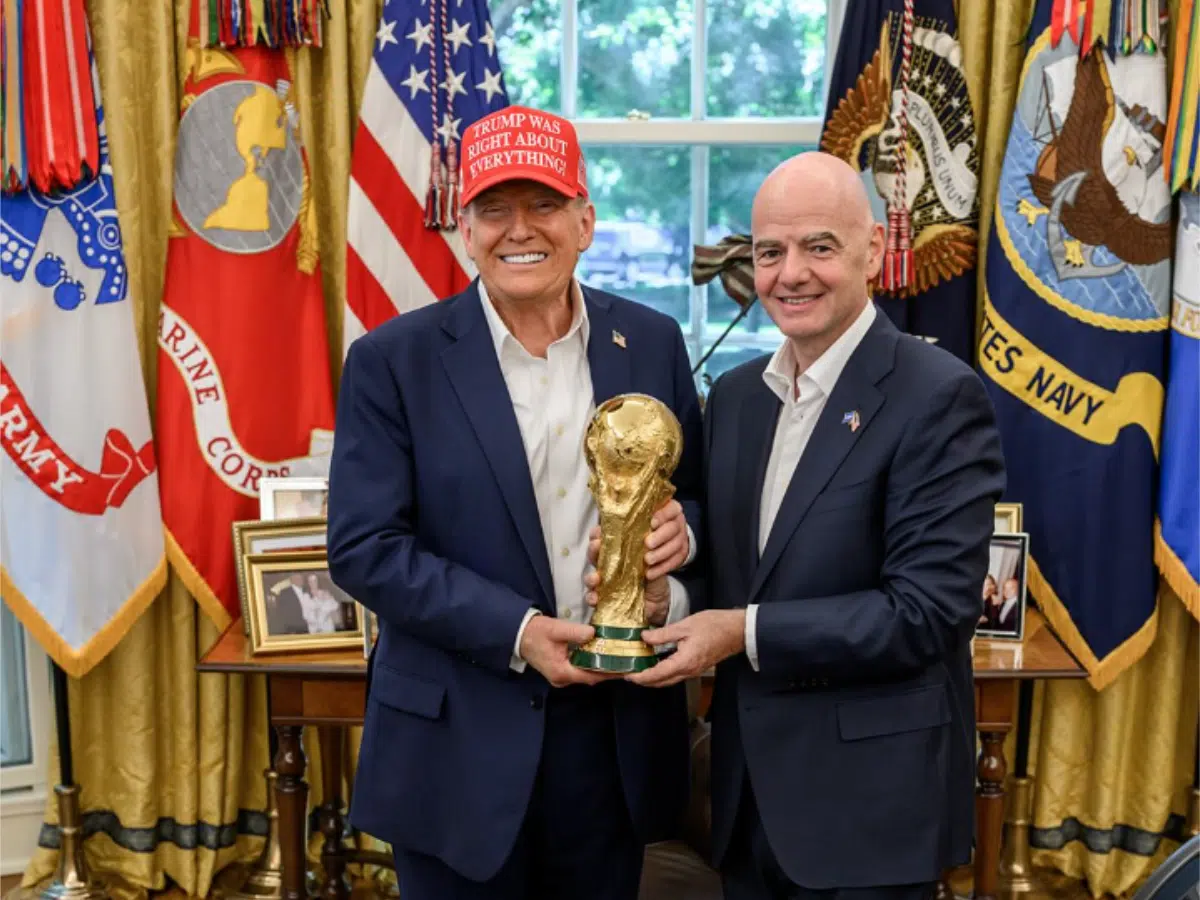
The FIFA World Cup 2026 is entering an early stage of testing, caught between political pressure and security concerns. These concerns extend beyond the stadium and threaten the true image of the sport.
European Commissioner for Sport, Glenn Micallef, escalated his criticism of FIFA President Gianni Infantino, condemning what he described as a lack of clarity and responsiveness to growing European concerns about the safety of spectators.
EU Commissioner presses FIFA
As the largest World Cup in history approaches, co-hosted by the United States, Canada, and Mexico, warnings are mounting about the repercussions of geopolitical tensions, following Trump’s illegal assault against Iran.
Micallef revealed that his sole meeting with Infantino in Brussels did not translate into concrete steps, despite his explicit demand for clear guarantees regarding the safety of European fans. He emphasised that the lack of follow-up from FIFA raises serious questions.
He stated:
When a host country is involved in a war, providing security assurances becomes a given, not an option.
Public safety challenges
European concerns are not limited to the political dimension. They extend to the security situation within the host countries. In the US, certain measures related to stricter surveillance and immigration are also causing anxiety. Meanwhile, Mexico is facing a rising wave of violence, particularly in areas considered potential World Cup hosting venues.
FIFA maintains that fan safety is a top priority, expressing confidence in the ability of the host countries to provide a safe environment.
However, this stance has not entirely dispelled European doubts, amid calls for greater transparency and detailed information.
A dispute beyond security
The tension between the two sides wasn’t limited to security matters; it extended to the nature of FIFA’s partnerships. Micallef expressed reservations about cooperating with initiatives supported by US President Donald Trump, arguing that this opens the door to increased politicisation of sports.
Conversely, he called for stronger partnerships with multilateral international organisations such as UNESCO and UNICEF, in line with the rules of the international system and to reduce polarisation.
In a broader context, the European official warned of transformations threatening the structure of sports on the continent, pointing to the National Basketball Association’s project to launch a European league and its move towards “closed leagues,” which contradicts the principle of sporting merit.
He also stressed the need to prevent the use of sporting competitions as tools for political propaganda, alluding to the renewed debate surrounding the participation of countries involved in military conflicts.
A test beyond football
These statements reflect a new reality where sport intersects with security and political considerations in an unprecedented way, transforming major tournaments into testing grounds for international influence and power balances.
Between FIFA’s assurances and European pressures, Gianni Infantino finds himself facing a complex challenge: managing a global tournament in a turbulent environment without compromising the game’s essence.
In this context, the question no longer concerns the readiness of stadiums, but rather football’s ability to remain out of the line of fire.
Featured image via White House, Instagram
Politics
Kristian Guise: A Tory revival lies in the centre-right not on the failing altar of the New-Right

Kristian Guise, is an undergraduate studying modern history and politics at the University of Southampton.
It’s been nearly two years since Starmer’s government won a landslide majority and eighteen months since the Conservative Party elected Kemi Badenoch as Leader of the Party.
Badenoch herself is a New-Right Tory and began by appointing vocal New-Right leaning members to His Majesty’s Loyal Opposition (e.g. yes, the now defector, Robert Jenrick, and still in post, Priti Patel) whilst those appointed members who’d come from a more one-nation background were far less forthcoming with their opinions.
This creates a problem for the Tories because, as the Party moves further to Right we leave more and more of our traditional One-Nation voters behind and fail to present ourselves as a political party with a broad vision. Failure to recognise this will not only cost us the next election but our hold on political relevance. As an 18-year-old member of the Party I believe the Tories should shift policies, rhetoric and vision to the centre-right to win the next General Election.
Since Brexit there has been a continuing movement of ideology and policy Right-ward, propelled by the rise of Reform – the recipients, now, of the services of the aforementioned Jenrick) The Conservative Party has begun to mimic not out-think Reform.
Take the issue of the European Union (EU) and Immigration.
Both policy issues were debated in the past in conversations that were much more constructive despite disagreements amongst members. However, in recent times, there has been a rapid conversion of the Tories to negativity within a focus on binary policymaking. Now there are few Tory MPs, let alone Shadow Cabinet members, who are willing to robustly debate EU and Immigration policy in the way the Party for so long espoused. Mrs Thatcher, for example, was, along with other members of her Cabinet, a Euro-sceptic. Yet this outlook did not prevent the inclusion of vociferous pro-European voices in her Cabinet (Geoffrey Howe was one who as Chancellor of the Exchequer resigned in 1990 over the issue of a single European currency) This shows, despite his resignation that even Thatcher’s government (seen, rightly or wrongly, as the Golden Age of Conservatism for many of today’s Shadow Cabinet members) had high-ranking Cabinet members with strongly held, pro-European sentiments.
That approach to Cabinet inclusivity contrasts with the way the Conservative Party has shifted in their tolerance of different views on the issues of the EU (and Immigration). This significant shift to the Right, I believe, has largely been brought about by a sense of apprehension about the rise of Reform. Where once there was no political alternative for Tory right-wing voters, now they find an option which not only competes but beats them in most instances with higher polling ratings amongst voters and success in local elections upon which Reform builds yet further support.
The Conservative Party’s wasteful mimicry of Reform to retain the support of right-wing voters has cost us, and will continue to cost us, votes. It is the opposite of what we need.
This is for one simple reason: we cannot out-Reform the Reform Party. They were founded on divisive, New-Right focused policies and values, the Tories were not. In an important contrast that should not be overlooked, our Party was founded in 1834 by Sir Robert Peel and a few decades later moulded by Benjamin Disraeli into a party of One-Nation principles and values. With this history in mind and our future in view I call for a return to the centre-right. Surely, we must accept mimicry of Reform is no substitute for originality. What is needed is for the members of today, younger and older, to rise up with vote-catching policies of positivity and pragmatism that offer hope for the UK’s over-taxed and under-rewarded people.
Another case for adopting centre-right policy and, as important, robust rhetoric is the electoral reality that our future majority will be found in the centre ground. The 2024 General Election taught us that. The Liberal Democrat Party (Lib Dems) achieved 72 seats in the House of the Commons. This is the biggest number of seats the party has won since being founded in 1988. This was achieved because they scooped up middle ground voters, including many One-Nation Tories.
One-Nation Tories and other middle ground voters gave their vote to the Lib Dems because they had had enough of the Tory Party and by July 2024 felt alienated. A key reason for such alienation was the poor economic performance that occurred under the Tories. Namely Liz Truss’ ‘Mini-Budget’ which devastated the £ and damaged the economy. Once again, a New-Right Conservative did not pay heed to One-Nation principles of pragmatism opting instead for unfunded, unplanned tax cuts that were unsustainable and, as Labour love to keep reminding the British public at PMQs, Truss “crashed the economy”[3].
This constant focus on New-Right policies has cost the Tory Party in recent years and is why it is imperative the Party return to the centre-right. Without this shift, millions of middle ground votes will continue to be cast for the Lib Dems. Out of the last three elections where the Conservative Party obtained a majority in the Commons, two were won on One-Nation principles and the other (under Boris Johnson) was also delivered by One-Nation policies.
Since the 1945 General Election there have been twenty-two General Elections, around half won by centre-right policies. This highlights how crucial a well-articulated, vocal and visible centre-right position is for winning elections and why the Conservative Party should adopt a centre-right approach to attract and regain the trust of middle ground voters to win the next General Election.
Embracing the centre-right improves our electability by shedding the baggage of the past 10 years since Brexit. Former Prime Minister David Cameron launched the EU Referendum in 2016 as an attempt to quell the growing tension within the Conservative Party, we have struggled because we have not adhered to our One-Nation roots haunted by the conflicts borne of Brexit. Just as Macbeth never rid himself of Banquo’s ghost, we shall never rid ourselves of the ghost of Brexit until we firmly and positively abandon New-Right principles.
First, accept Brexit’s failures, for without acceptance we can never win anything.
Secondly, make the evidently necessary decision to harness the Party’s policies to centre-right values. Our Party should celebrate young voices. Highlighting their 21st century vision of tomorrow. Unless there is radical change and a vocal, well-articulated move towards the centre-right my Party will fall into the abyss of political irrelevance until we find ourselves with little influence, a third party eking out a subsistence lifestyle.
The trifecta of challenges I outline (dangerous mimicry of Reform, majority of votes being in the middle ground and no policies of positivity to improve our electability) show the Party must shift towards the centre-right, adopt One-Nation principles and be seen and heard to do so!
Our next test comes in May when 32 London Boroughs, 32 Metropolitan Boroughs and 10 directly elected Mayoral offices go to the polls.
With May in the forefront of my mind I’d argue a Tory revival lies in the centre-right not on the failing altar of the New-Right.

Liverpool Friends of Palestine (LFP) and the Palestine Trauma Centre (PTC) are holding a free event on the evening of 25 March in the Toxteth area of the city.
Titled “Continuous Trauma: the mental health impacts of the genocide in Gaza”, the event features PTC patron Gwyn Daniel, The venue is Crawford House, Upper Warwick Street L8 8DN and doors will open at 6.30pm for a 7pm start:

Scientific studies of the psychological impacts of Israel’s genocide in Gaza show the horrific trauma inflicted on survivors, especially children, describing it as an “irreversible human catastrophe” that leaves children in constant fear and suffering the deepest imaginable post-traumatic stress, if they survive long enough amid the ongoing slaughter.
Featured image via Liverpool Friends of Palestine

We hope you love the products we recommend! All of them were independently selected by our editors. Just so you know, HuffPost UK may collect a share of sales or other compensation from the links on this page if you decide to shop from them. Oh, and FYI – prices are accurate and items in stock as of time of publication.
After what feels like 10 years of dull, grey winter, spring has finally sprung.
Even if you abide by the astronomical way of thinking, spring officially starts on the 20th of March this year, so it’s nearly time for us to pack away our big coats and dig out the sunnies and gardening gloves.
But if you haven’t got a garden in which to get reacquainted with this thing called sunshine, there are ways you can bring this fresh new season into your home.
With these 12 fun and flowery buys from M&S, you can bring the bright energy of a springtime garden into your living space to enjoy year-round.


4 min read
Today’s announcement on Britain’s aid allocations reveals the true extent of the government’s retreat from its global responsibilities.
These are the steepest aid cuts of any G7 country – deeper even than those passed under Donald Trump – and they are being implemented by a Labour government elected on a commitment to increase aid spending and tackle the global debt crisis. The consequences will be profound: for millions of people living in poverty, for the stability and security of our world, and for Britain’s own reputation.
The idea that the UK can turn inward, neglecting global challenges in order to fix problems at home, is a dangerous illusion. Whether we like it or not, we live in an interconnected world. Conflict shocks, climate‑driven disasters and global market instability do not stop at national borders. They push up prices in British supermarkets, raise borrowing costs for the UK government, and make life harder for households already struggling to get by. None of us benefit from living in a less safe, less stable world.
Yet today’s allocation announcements reveal cuts to the very tools designed to build global stability. Redirecting resources from development towards defence is not only morally indefensible – it is strategically self‑defeating. Military leaders themselves have long warned that the less we invest in preventing crises, the more they will ultimately cost – both financially and in terms of lives lost.
The human cost of these decisions is staggering. Independent analysis shows that as a result of the cuts, 2.9 million fewer children will go to school, twelve million more people will lose access to clean water and sanitation, and over 600,000 additional people will die from preventable diseases. These are not abstract figures. They represent children pulled out of classrooms, parents unable to provide safe water for their families, and communities plunged deeper into crisis.
Britain’s reputation – already strained by months of uncertainty about the UK’s direction – is now further damaged by our role in the global debt crisis. While cutting aid to some of the world’s poorest countries, the UK continues to host the legal infrastructure that allows predatory private lenders to sue those same debt‑distressed nations in our courts. The government could change this tomorrow at zero cost to the Treasury. It is choosing not to.
This contradiction is especially glaring as the UK prepares to take on the G20 Presidency later this year. Leadership on the world stage requires credibility. Yet at the very moment global poverty, debt distress and climate-linked disasters are escalating, Britain arrives at the table with an aid budget in tatters and no coherent offer to countries seeking urgent relief from unsustainable debt payments.
The picture on climate is equally troubling. Despite claiming climate is a priority, the government appears to have reduced funding for the next round of International Climate Finance to just £6 billion. Cutting climate support now – when extreme weather is accelerating hunger, driving mass displacement, and threatening hundreds of millions of lives – is short‑sighted in the extreme. It will cost vastly more in the long term and leave the UK more exposed to the global shocks that follow.
The government is right to prioritise fragile and conflict‑affected states, including Gaza, Ukraine, Sudan and Lebanon. But even these areas will face real‑terms reductions, while thousands of other programmes will be terminated altogether. Bilateral aid – the support that goes directly to individual countries – is likely to be the biggest casualty. This is not the Britain that Labour members, activists or the international community expect. Labour has a proud legacy of global leadership, from founding the Department for International Development to driving international action on debt relief and poverty reduction.
If ever there were a moment to fix the broken systems that hold so many countries back – from exploitative debt markets to escalating climate damage – that moment is now. This government can still choose a different path: one rooted in internationalism, justice, and the understanding that the future of the UK is inseparable from the world around us.
Maria Finnerty is a member of the Executive Committee, Labour Campaign for International Development
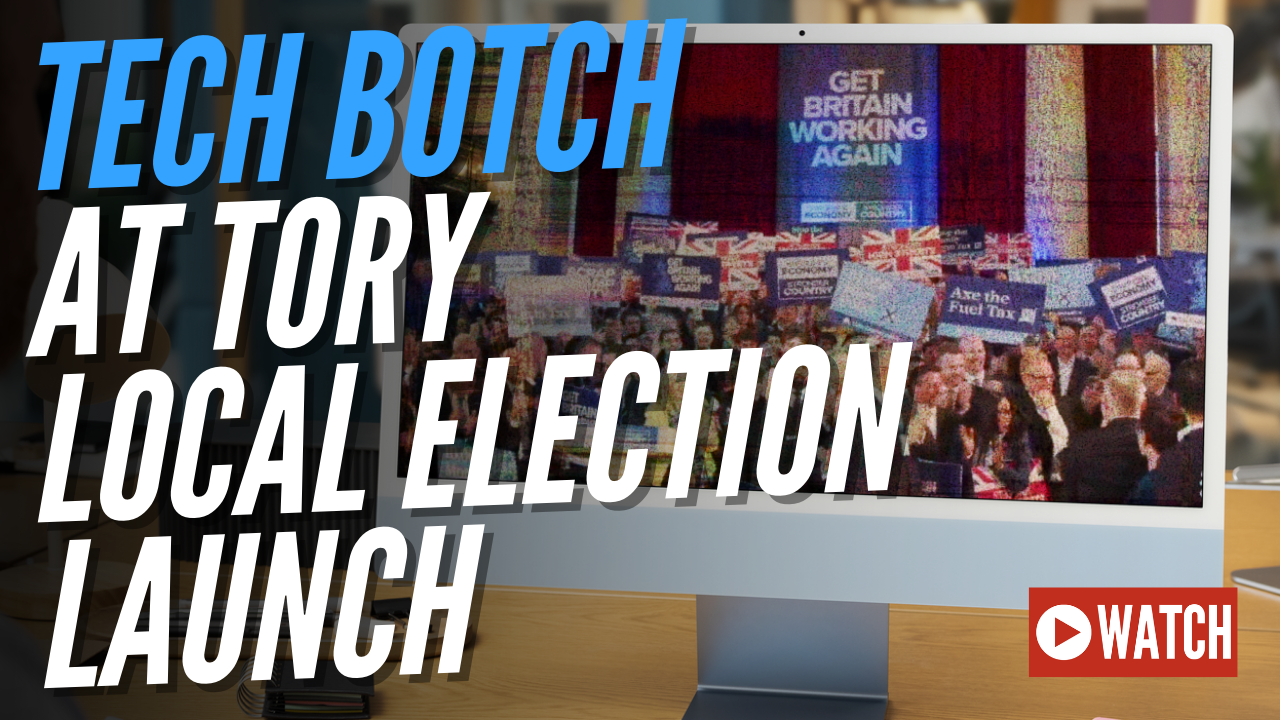
Eventually Cleverly just ushered Badenoch onstage. Maybe next time…
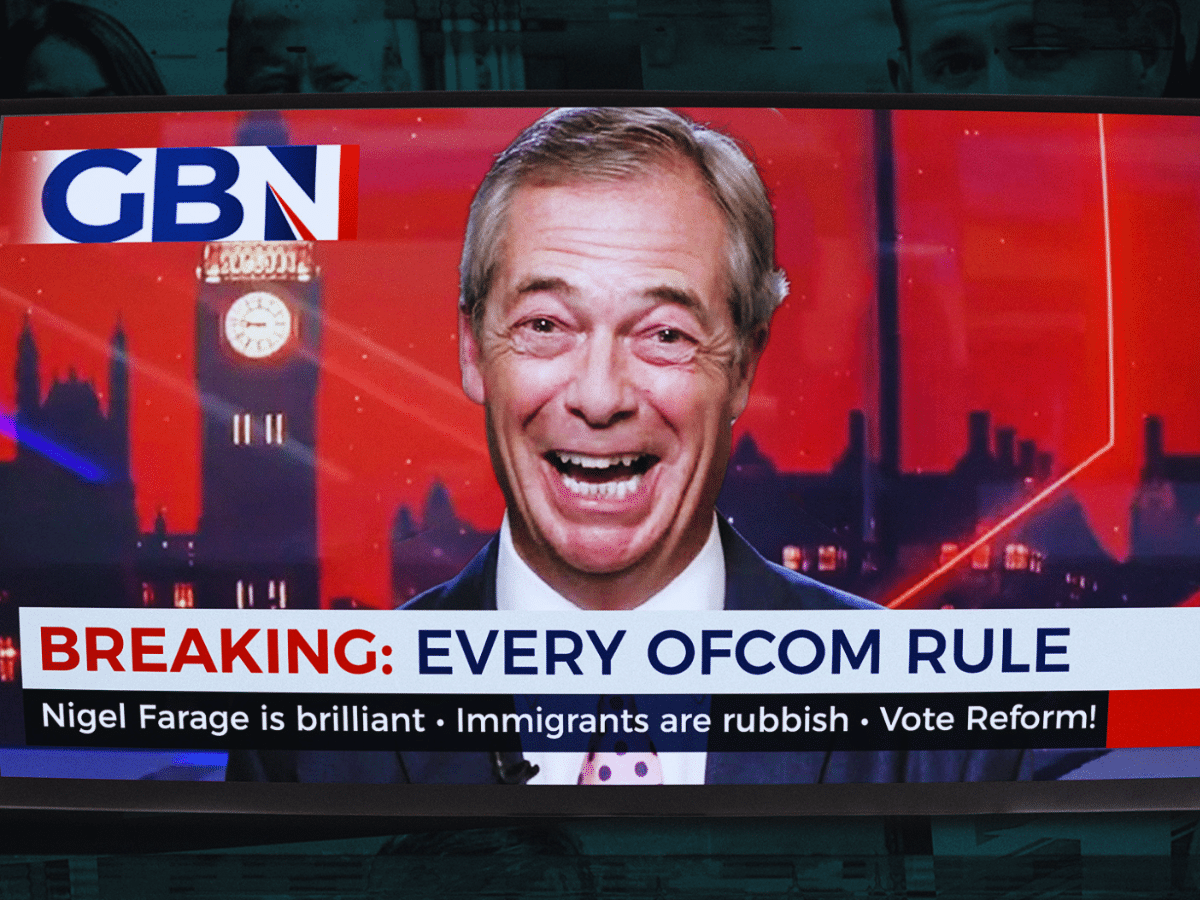
British Newspaper, the New World, has published a consequential exposé into GB News, which raises important questions about the hijacking of British media by the political right.
GB News has not only welcomed a multitude of right-wing MPs but has actively endorsed their position. This comes despite widespread complaints of unfair public influence. In other words, GB News has become the media arm of Reform UK—its political mouthpiece.
Political bias has long been a football kicked about from pillar to post between the left and right, due to its inevitable potential to manipulate public perception. And Ofcom’s continued silence surrounding the channel’s indiscretions suggest that far-right political bias is a newly accepted norm for the regulator. This raises urgent questions about the nefarious influence Reform UK exercises in British society. In the political sphere more specifically, this is deeply concerning—especially at a time when alternative and indie media are increasingly silenced.
The investigation also underscores the sway billionaires have and their ability to ‘stack the deck’ by funnelling millions into broadcast media to lead the public astray.
A massively consequential investigation by Alan Rusbridger into GB News: how “one political party in Britain has effectively ended up with its own television station”. Raises deep questions about hi-jacking of British media/political culture: https://t.co/OmiMsKzFLE
— Peter Oborne (@OborneTweets) March 18, 2026
Ofcom lets the far-right get away with it
The Farage-backed outlet has been the subject of numerous scandals during its comparatively short tenure. The MP-fronted, billionaire-funded channel first aired in June 2021. This made it the first start-up in television news since Sky News in 1989. From the onset, it displayed a clear bias with many critics and viewers complaining that its coverage violates the laws of due impartiality in UK broadcasting.
As usual, the super-rich are focused on their own interests and lack any consideration for regulatory guardrails, driving, in as the investigation reports:
a coach and horses through the laws that were put in place to define broadcasting in the UK.
The investigation, headed by Alan Rusbridger, commissioned 20 journalists to sit through hours of GB News coverage to assess its impact on our news ecosystem.
Given their huge influence in shaping public understanding, TV news channels are required to provide accurate, impartial coverage that includes all relevant viewpoints in order to receive a licence.
Of course, that cannot be squared with GB News and its hateful, venom-spitting presenters who double up as Reform MPs.
Magnificent article & investigation by Alan Rusbridger on how the utterly useless Ofcom allowed one of its regulated TV channels, GBNews, to be taken over by a political party. https://t.co/qtVUZXgFRX
— Michael Crick (@MichaelLCrick) March 18, 2026
The investigation found that:
GB News routinely – you might almost say systematically – disregards these requirements. Asked to score the programmes on a scale of 0-5 (0 being not at all compliant with Ofcom’s Broadcasting Code and 5 being wholly compliant), the overall score from our reviewers was just 1.5. Each reviewer came up with detailed reasoning.
Ofcom’s log of complaints, by contrast, shows a tiny trickle of concern. Of the 15 programmes we reviewed, nine had triggered no complaints, two sparked two complaints, while a kid-glove interview with Donald Trump led to 32. Two more programmes are “under assessment”.
Reform UK: Out of touch with the public at large
Surprisingly, the investigating team found that the channel rarely receives complaints. This suggests that its outreach is limited to an overwhelmingly right-wing audience. They cite a poll conducted by the Reform UK candidate for the Gorton and Denton, and a GB News presenter, Matt Goodwin, in which he asked the public whether they agreed with Trump’s ‘unrecognisable Europe’ speech. An astounding 97% gave a positive response. This highlights the growing gulf between GB News, including their viewership, and the rest of British society.
I have an aging colleague who suddenly out of nowhere started making random racist, ignorant, pro-russia, and unscientific comments.
It baffled us all until we realised that she was just repeating GB News on a 24 hour delay. https://t.co/XrPHEojHhI— tern (@1goodtern) March 18, 2026
According to a YouGov poll conducted in January, only 16% of Britons think favourably of Trump. In contrast, a whopping 81% have unfavourable opinions of the orange, ego-driven buffoon. Clearly GB News‘ business model is to appeal to that 16%. This reinforces the justifications for strict regulatory control over undue media influence.
Nevertheless, it appears Ofcom couldn’t give a damn about GB News’ rule breaking. Rule-breaking which is pretty obvious, according to the findings of the investigation:
The New World assembled a team of 20 journalists to assess 15 hours of prime-time GB News shows from January, as well as the Trump interview, which led to 65,000 people signing a petition for Ofcom to censure.
Each programme was assessed by two different reviewers. They found numerous glaring breaches of impartiality; a widespread disregard for accuracy; a predominant framing of news in ways that overlap with Reform’s political agenda; a systemic use of Reform politicians, candidates and supporters; and an overwhelmingly right wing bias in choice of guests and issues.
GB News should be made to have a warning on the screen that their programmes contain outdated cultural descriptions that non-racist viewers are likely to find offensive. https://t.co/gEE0qHSRl5
— Mark Cockerton (@CockertonMark) March 18, 2026
Before allegations of ‘witch hunts’ fly in, the transparency and balance of the investigation offers a sound defence against potential acts from the usual suspects. It’s important to note that the journalists involved represent a broad spectrum of newspapers and broadcasters. From the right-wing Spectator to the liberal Guardian, Daily Mail, and BBC News, each agreed with the findings of the investigation.
Integrity in the mainstream media does exist—could’ve fooled us!
“Farage propaganda dressed up as a panel show”
In regard to the views of journalists involved, the investigation stated:
One wrote of Nigel Farage’s evening show: “This programme is Farage propaganda dressed up as a panel show.” Another wrote of a programme presented by Reform politician Matt Goodwin: “Absolutely did not comply. It was one man’s rant against immigration, supported by compliant and affirmative opinions and a pretence of an opposing view that was shut down rapidly. It was a disgrace.”
Farage, it hardly needs emphasising, is the leader of a political party that is currently leading in the opinion polls, with some political experts speculating that Reform could even form, or be part of, the next government. It is unprecedented for a political leader to be given their own news and current affairs programme on British television.
GB News lives by its own rules and Ofcom is perfectly willing to throw the rule book out of the window for this billionaire-interested political party. It would even seem that the supposed regulator believes the hateful views espoused by the channel to be ‘accurate.’
This calls the regulator’s impartiality into question, since biased rule-makers cannot provide un-biased remedies. A functioning democracy does not silence political views. It should make space for diverse perspectives to shape better decisions.
Therefore, this investigation brings to the forefront an urgent question; is Ofcom a smokescreen to create the image of neutrality?
If so, this imbalance actively hurts our democracy and fails to inform the public fairly and transparently. We need a new one, clearly.
Read the full investigation here.
Featured image via the New World
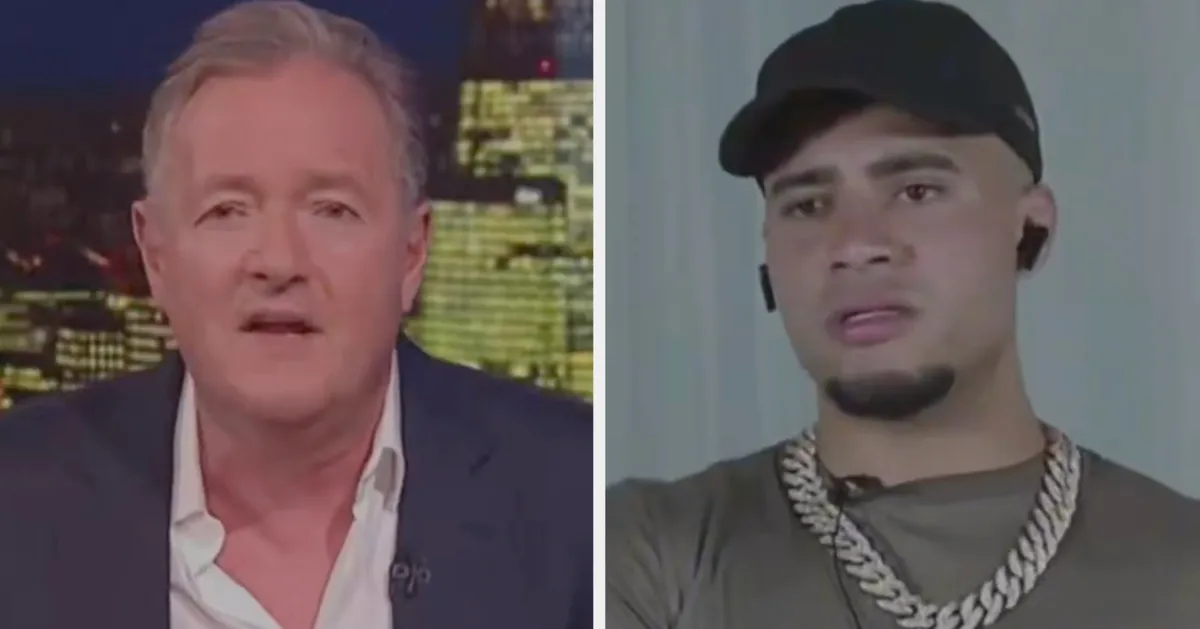
Piers Morgan brought an interview with so-called “manosphere” content creator HStikkytokky to an abrupt halt on Wednesday night.
The polarising broadcaster invited Harrison Sullivan – known online as HStikkytokky – onto his YouTube series Piers Morgan Uncensored to discuss his recent appearance in the hit Netflix documentary Louis Theroux Inside The Manosphere.
However, as the tone of the conversation was dramatically lowered by his guest, Piers made the decision to cut the interview short after around 15 minutes, branding his efforts “pointless”.
The former Good Morning Britain anchor began by claiming that the influencer’s claim which he’d made on the Netflix show that he’d disown his son if he were gay was “homophobic”, to which the influencer responded: “I’d call it good parenting.”
“You’re making yourself look like a bigger idiot than you did on the Netflix show,” Piers responded, with Harrison replying: “To people like you sir, I don’t mind that.”
He then accused Piers of having “freak offs” on Jeffrey Epstein’s island with Ghislaine Maxwell, with the host then insisting: “I never met the man. Never went to his island. I met Ghislaine Maxwell for five minutes at a book launch.”
Towards the end of the conversation, Harrison brought up an old social media post from Piers Morgan’s wife Celia Walden, depicting her lying by a pool next to a sign that read: “Wanted: Pool Boy – no experience needed.”
“Let’s end this,” Piers then said. “You know what? I’m not doing this. Sorry, guys. It’s pointless.”
Watch the last two minutes of the exchange in the video below:
The conversation was featured on HStikkytokky’s Kick account, but is not currently available to watch on Piers Morgan’s YouTube channel.
It’s not yet clear if the interview will be made available to stream on Piers Morgan Uncensored at a later date.
Piers, of course, does have history when it comes to cutting media appearances short.
Back in 2021, he famously stormed off the set of Good Morning Britain when his colleague Alex Beresford took him to task over comments he’d made about Meghan Markle, in which he cast doubt on claims she experienced suicidal thoughts while still a senior member of the Royal Family.
Later that day, it was confirmed that Piers would not be returning to the daytime show, and he launched Piers Morgan Uncensored – initially a TV venture, before becoming online-only – the following year.
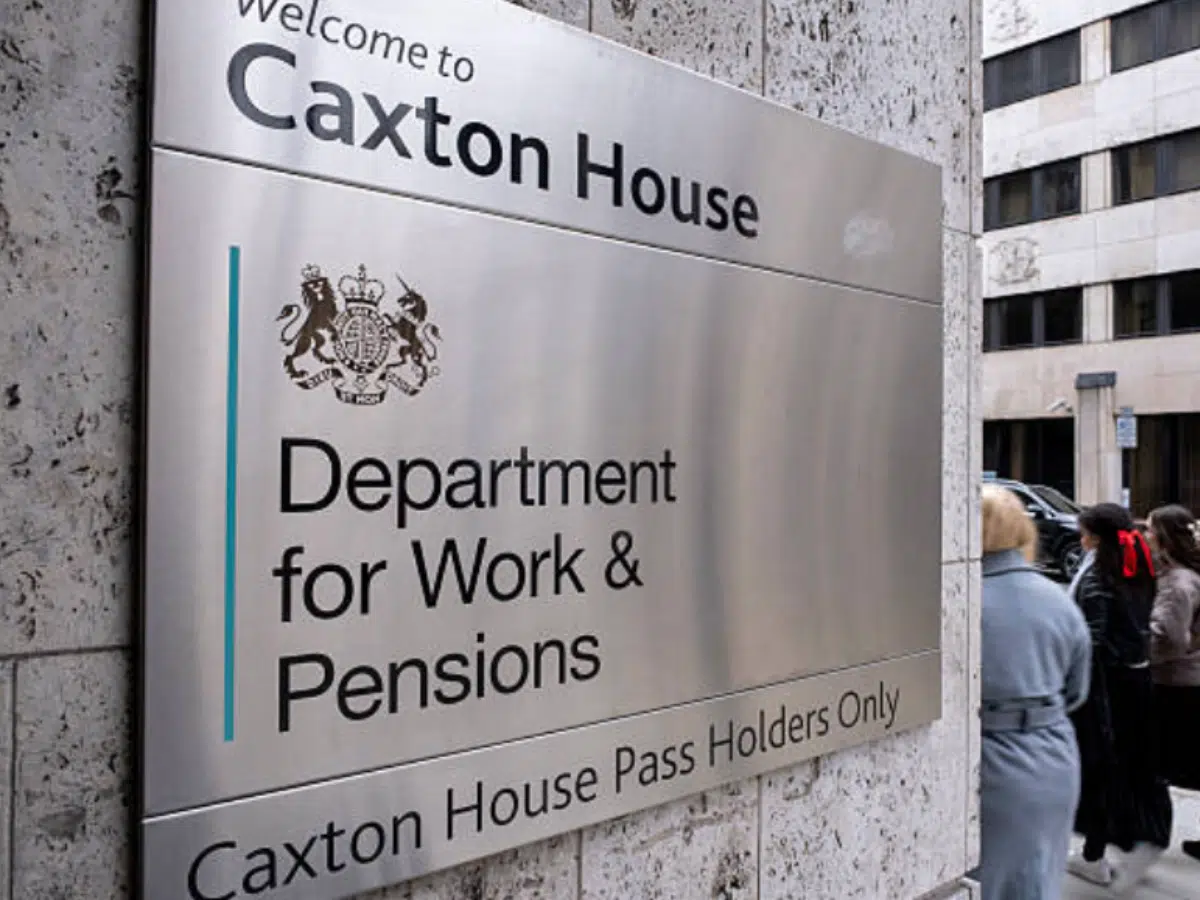
Thanks to a Freedom of Information (FOI) request from Benefits and Work, the Department for Work and Pensions (DWP) has released its latest Personal Independence Payment (PIP) assessor training guide for neurodiverse claimants. Or at least, they’ve released around a quarter of it, anyway.
Ostensibly, the guide is intended to give ‘health professionals’ knowledge and understanding of Autistic spectrum disorder (ASD), Attention Deficit Hyperactivity Disorder (ADHD), Dyspraxia, Dyscalculia and Tourette’s Syndrome.
However, we don’t exactly know what the guide is really doing, because the DWP have chosen to redact huge swathes of it.
DWP indulge in huge redactions
The entire first section, a 17-page clinical overview, is blacked out. This would be a description of the particulars of each condition, and how they relate to workplace performance. The DWP claimed that the section is intended for future publication – as such, it’s exempt from FOI requests.
As Benefits and Work reported:
In their covering letter, the DWP say that they have now taken over producing training and guidance materials for health assessors and that “all training and guidance materials are currently undergoing a comprehensive review and update” using independent clinical experts to ensure they are accurate.
The department says it will publish the materials in the public domain once they have all been reviewed. They claim that “Releasing the current versions now would risk confusion and undermine the department’s efforts to provide clear, accurate and authoritative guidance.”
Of course, the department offered no explanation of why publishing the current guidance would actually cause confusion. Likewise, it also failed to offer any clue as to when it would actually publish the information (if it intends to do so at all).
Its claims of ‘future publication’ are also undone by the date on the redacted document, which states that it’s been in use since November 2025.
Hiding again
Of the second 15-page section, entitled ‘PIP’, only the first two pages are visible. Here, the DWP has changed tactics, claiming that its redactions are valid under a law-enforcement exemption. The would normally relate to withholding information which would interfere with the prevention or detection of a crime.
The DWP stated that:
providing detailed information for certain health conditions would allow a member of the public to use this information to make a claim to benefit to which they would not otherwise be entitled to.
And, as with Section 1’s redactions, we can tell that this is a complete and utter fabrication, too. As Benefits and Work rightly pointed out:
We know that according to the DWP’s own statistics, fraud in PIP is currently assessed to stand at 0.4%. For universal credit, the figure is 8%, twenty times higher.
Fraud in relation to ASD and ADHD is likely to be even lower, as these are conditions which cannot be diagnosed by a GP. If you planned to commit PIP fraud, these are not the first conditions you would be likely to choose.
And, of course, there’s the fact that the DWP has also redacted other guides on similarly spurious ground. Take, for example, their censoring of the in-house document on kidney failure – surely a condition that’s otherwise wide-open to benefit fraudsters.
Intentionally left blank
Finally, the department saved time with the third section – apparently on the Work Capability Assessment (WCA) – which announces only that:
This section has been intentionally left blank.
So that saves us some time, at least.
In reality, the DWP isn’t keeping this information back to prevent fraud or public confusion. Rather, it’s allowing itself room to deny claims on whatever flimsy reasoning it chooses, without transparency or accountability.
They know what releasing a blanked-out document makes them look like – they just reckon they can get away with it under the aegis of Labour’s minister for disabled people, Stephen Timms, and work and pensions secretary Pat McFadden.
These aren’t sensitive state secrets.
There are no active agents in the field to protect in the warzone of PIP assessments.
The DWP sure isn’t protecting the names and identities of its victims.
It’s a guide to neurodiversity in the workplace.
The fucking Epstein files were less heavily redacted.
This is simply what accountability looks like for disabled people under Starmer’s Labour.
As a final note, Benefits and Work included the following request:
The refusal to release training documents for these conditions is also likely to extend to every other condition the DWP produce guidance for – though if readers choose to make FoI requests for their own conditions to [email protected], we’d be very interested to hear the results.
Feel free to drop them a line.
Featured image via the Canary
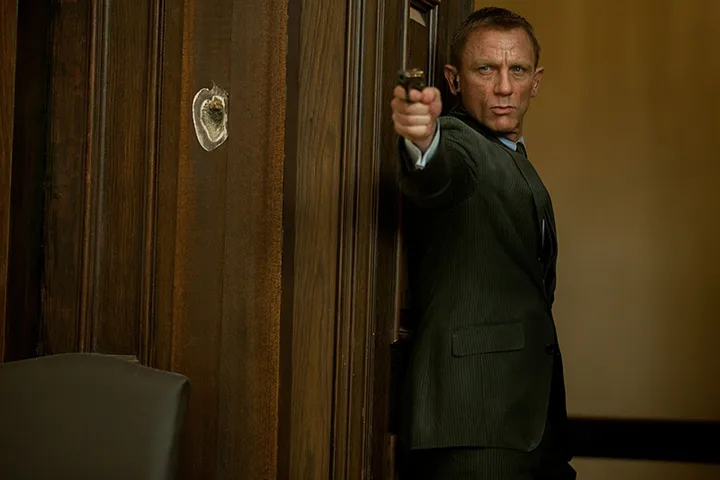
While recent rumours have suggested that James Bond producers have settled on either Jacob Elordi, Callum Turner or Aaron Taylor-Johnson as their next 007; Riz Ahmed is making it clear he’s not giving up hope either.
In his new TV series Bait, Riz plays a fictional actor who has been heavily rumoured to become the first person of colour cast as the lead in a Bond movie.
During an appearance on Wednesday’s edition of The Tonight Show, the British actor publicly stated his case to be considered for the part.
“Traditionally, actors playing James Bond have not looked like me, right?” he began, before joking: “Traditionally, actors playing James Bond have always been five foot nine or over. But, the rumours aren’t true, I’m five foot eight-and-a-half, not five foot eight.
“And in what world do you want a secret agent to blend in with the New York Knicks? You need someone who’s just below the eye line, who really kind of blends in.”

He then claimed that “ever since I was a kid” people have been telling him he should play Bond, before jokingly sharing a childhood photo to prove his point.
“It’s all in the eyes, Jimmy,” he quipped. “And guess how old I was in that photo? 007! Crazy! The way it just works. It’s happening.”
“For anyone who’s still not convinced, I have one thing to say,” he concluded. “Why not? Honestly, why not? This is what I love about America, Jimmy. This is the land of ‘why not?’.”
Riz recently shared his own personal history with the James Bond franchise during an interview with Vulture.
“My dad was into [James Bond], so [the first film I saw] was probably a Sean Connery one, but I couldn’t tell you exactly,” he said. “It’s a young, young memory, you know?
“The first Bond film that I was obsessed with, because of the video game, was GoldenEye. I’m that generation of just hammering GoldenEye, and that just introduced Bond to a whole new generation. That big jump off the dam, the bungee jump – all of that. So that was one that was incredible, and I carried on playing that game for years. It’s a banger.”
Take a more in-depth look at all the latest James Bond casting rumours here.

Julian Nagelsmann critcises Eddie Howe over Nick Woltemade position at Newcastle United | Football

Treasury Secretary Scott Bessent rules out oil futures intervention

XRP Climbs 3% Past $1.47 as Breakout Extends on Bitcoin-Led Rally


-
 Crypto World5 days ago
HYPE Token Enters Net Deflation as HyperCore Buybacks Outpace Staking Rewards
-

 Tech4 days ago
Your Legally Registered ‘Motorcycle’ Might Not Count Under Proposed US Law
-

 Fashion6 days ago
Weekend Open Thread: Addict Lip Glow
-
 Tech2 days ago
Are Split Spacebars the Next Big Gaming Keyboard Trend?
-
Sports5 days ago
Why Duke and Michigan Are Dead Even Entering Selection Sunday
-

 Business4 days ago
Search for Savannah Guthrie’s Mother Enters Seventh Week with No Arrests
-

 Business5 days ago
US Airports Launch Donation Drives for Unpaid TSA Workers as Partial Government Shutdown Enters Fifth Week
-
Crypto World5 days ago
Coinbase and Bybit in Investment Talks: Could Bybit Finally Enter the US Crypto Market?
-

 Business3 days ago
Australian shares drop as Iran war enters third week
-

 Business5 days ago
Country star Brantley Gilbert enters growing non-alcoholic beer market
-

 Crypto World3 days ago
Crypto Lender BlockFills Enters Chapter 11 with Up to $500M in Liabilities
-

 Sports6 days ago
College Basketball Best Bets: Conference Tournament Semifinal Picks
-

 Politics1 day ago
The House | The new register to protect children from their abusers shows Parliament at its best
-

 Business7 days ago
Trump demands Powell cut rates as Iran conflict raises energy prices
-

 Fashion3 days ago
25 Celebrities with Curly Hair That Are Naturally Beautiful
-

 News Videos22 hours ago
RBA board divided on rate cut, unusually buoyant share market | Finance Report | ABC NEWS
-

 Crypto World7 days ago
Senate Votes to Include CBDC Ban in Bipartisan Housing Bill
-

 NewsBeat7 days ago
Deane Road crash near Bolton colleges and university
-

 Crypto World23 hours ago
Canada’s FINTRAC revokes registrations of 23 crypto MSBs in AML crackdown
-

 News Videos7 days ago
Tom Lee: The 100x Opportunity EVEN Bigger Than Bitcoin (New Ethereum Prediction 2026)


You must be logged in to post a comment Login