
Crypto World
Nasdaq-listed Opera plans 160 million CELO to replace cash payments


Opera, the Nasdaq-listed web browser maker, is proposing a move to be compensated in CELO tokens rather than cash as it deepens its ties to the Celo ecosystem. The company has put forward a plan to restructure its commercial agreement, shifting from quarterly USD payments to an allocation of 160 million CELO tokens, pending on-chain governance approval by Celo’s community.
If the proposal passes, Opera would closely align its financial interests with the performance of the Celo network and emerge as one of the largest institutional holders of CELO. Celo is a mobile-first payments platform originally built to streamline stablecoin transfers in emerging markets and, last year, migrated from a standalone layer-1 to an Ethereum layer-2 network, a shift that broadens its compatibility with existing DeFi infrastructure.
Opera and Celo have together advanced a payments-focused collaboration since 2021, when Opera integrated Celo-native stablecoins into its built-in wallet. The partnership has since intensified around Opera’s MiniPay wallet, a self-custodial application built on Celo that Opera says serves 14 million users and emphasizes stablecoin-based payments in emerging markets. In November, MiniPay began connecting with Latin American real-time payment rails such as Brazil’s PIX and Mercado Pago, expanding the potential reach of Celo-powered payments.
Beyond the corporate tie-up, the proposal sits within a broader pattern of technology firms aligning with blockchain-native tokens as strategic financial signals. While Opera moves toward token-based compensation, other industry players maintain token exposures through core infrastructure products, such as ConsenSys with ETH via MetaMask and Blockstream’s BTC-focused offerings. The CELO token itself has faced the same market headwinds as many crypto assets, with prices below earlier peaks despite positive developments around Celo’s ecosystem evolution.
Key takeaways
- Opera proposes to replace US dollar quarterly payments with a grant of 160 million CELO tokens, subject to on-chain governance approval by the Celo community.
- If approved, Opera would become one of the largest institutional holders of CELO, tying its revenues more directly to the network’s performance.
- The move builds on Opera’s long-running collaboration with Celo, highlighted by the MiniPay wallet, which has grown to 14 million users and expanded to real-time payments links with PIX and Mercado Pago in Latin America.
- Opera’s financial momentum accompanies the token proposal: Q4 2025 revenue of $177.2 million (up 22% YoY); full-year revenue of $614.8 million with adjusted earnings of $142.5 million; and a $300 million share repurchase program.
Opera’s CELO plan in context of its business momentum
Opera’s decision to reframe its compensation model comes as the company reports stronger-than-guided results across its core browser business and newer product segments. In February, Opera disclosed fourth-quarter revenue of $177.2 million, driven by continued user growth and monetization gains, with adjusted earnings of $41.9 million for the quarter. For the full year, the company tallied $614.8 million in revenue and $142.5 million in adjusted earnings, underscoring a stable earnings trajectory that supports a significant capital-return program—the$300 million share repurchase announced alongside the results. Opera’s publicly traded shares have benefited from the upbeat results, rising more than 21% over the past month and trading near $15 per share, implying a market capitalization around $1.3 billion.
The CELO compensation proposal reflects a broader strategic tilt: aligning a commercial partner’s incentives with the performance and governance of a blockchain ecosystem it supports. If the CELO allocation goes forward, Opera’s operational decisions—from wallet integrations to business development—could be increasingly influenced by CELO’s network health and governance outcomes. That alignment could be beneficial if Celo’s ecosystem expands usage, stabilizes its payments rails, and attracts more developers and partners to its mobile-first frictionless payment vision.
What this means for investors and the ecosystem
For investors, the proposal signals a nuanced approach to corporate blockchain involvement—not merely as a passive adopter but as a token-bearing stakeholder with a meaningful stake in the network’s long-term success. The potential shift raises questions about governance risk, token price dynamics, and how such token allocations translate into real-world value creation for shareholders. If the governance process allows the 160 million CELO allocation, Opera could become a cornerstone user and validator of Celo’s on-chain economy, potentially driving greater liquidity and utility for CELO as a payments-focused asset.
From a market perspective, CELO’s price action has historically reflected the tension between ecosystem development and broader crypto market cycles. While the token has not yet reclaimed its earlier highs, supporters point to ongoing ecosystem improvements and partnerships as catalysts for longer-term value. The governance-driven nature of CELO’s distribution means outcomes will hinge not only on Opera’s business performance but also on community sentiment and decision-making within Celo’s on-chain processes.
Beyond Opera, the broader trend of companies maintaining token exposures through infrastructure work or ecosystem participation underscores a shift in how traditional tech and fintech players balance risk, governance, and potential upside. The example of ConsenSys, which holds ETH through its core infrastructure work, and Blockstream’s BTC-focused initiatives illustrate a wider pattern of firms embedding themselves more deeply in crypto networks, sometimes with token-based incentives tied to platform success.
As Opera’s governance process advances, observers will watch for milestones such as the timing of CELO token allocations, any conditions embedded in the governance proposal, and the practical implications for Opera’s cost structure and earnings if token-based compensation proves additive to revenue growth rather than volatile headwinds. The company’s ongoing adoption of MiniPay and its expansion into real-time payment rails abroad will also be key indicators of CELO’s practical utility in everyday consumer payments, which could, in turn, affect the token’s attractiveness to investors.
Opera’s board and management have signaled confidence in the long-term value of the Celo ecosystem. For readers watching the crypto payments landscape, the unfolding CELO-Opera dynamic will be a useful case study in how large, publicly traded tech firms navigate token-based compensation, governance risk, and the practical realities of integrating blockchain payments into mainstream consumer products.
Readers should keep an eye on governance updates from Celo’s community and any formal communications from Opera outlining the timeline for CELO allocations. The outcome will not only shape Opera’s financial and strategic posture but could also subtly recalibrate expectations around corporate token incentives in the broader crypto ecosystem.
Opera’s latest results and strategic moves suggest a broader narrative: as crypto-native collaboration moves from pilot projects to institutional-level partnerships, the lines between traditional fintech and decentralized networks blur further. The next few quarters will reveal whether CELO-based compensation translates into tangible user growth, real-world adoption of MiniPay, and a more resilient revenue model for Opera in a competitive browser market.


Market Sentiment is caused by inflation issues
The oil prices have risen due to the US-Iran conflict, which has raised risks of inflation. Energy prices have also been on the increase which places strain on the general economy. As a result, investors minimized the risk assets including cryptocurrencies.In addition, the conflict has taken a long-term stage, which reinforced the fear of prolonged inflation. This trend still has an effect on the trading behavior in different markets.
According to Jerome Powell, inflation is still one of the major concerns of policymakers. He expounded that rate reductions are pegged on evident improvements in reducing the inflation rates. Therefore, there is a possibility that the Federal Reserve can retain its current position with longer periods.Also, the recent statistics revealed that producer inflation increased to 3.4 percent prior to the escalation of the conflict. The development enhanced the expectations that the rate cuts might not occur in this year.
There is a significant change in expectations indicated by prediction market data. Zero rate cuts in this year will be increased to approximately 35 percent. As a result, traders have shifted their ground in accordance with a stiffer monetary outlook.In addition, the liquidity prospects have been curtailed by the low anticipations of rate reductions. This change has burdened crypto assets which tend to enjoy the less competitive financial terms.
International Bodies Caution on The Hitting of Energy
The international monetary fund cautioned that the increase in the price of energy would have an impact on global growth. It was asserted that oil flows have already been affected by disruptions associated with the Strait of Hormuz. Moreover, the IMF mentioned that the inflation rates may go up all over the world due to sustained energy price increases.Also, the IMF said that reduced economy output can be a result of rising energy prices. Such forecasts indicate the more general effects of the current state of affairs on financial markets.Crypto markets are still under strain as inflation fears redefine the outlook of monetary policy. The increase in energy costs and the change of rate perspectives have been causing changes in investor behavior in digital assets.


Trump ramps up pressure on Powell to slash rates to 1% even as the Fed holds at 3.50%–3.75%, lifts inflation forecasts, and warns the Iran oil shock risks stagflation.
Summary
- Trump renews attacks on Powell, demanding immediate cuts and even 1% rates despite Brent above $110 and inflation expectations rising with the Iran war energy shock.
- The Fed leaves rates at 3.50%–3.75% and signals only one 2026 cut, with officials warning that oil-driven inflation could keep PCE near 3% and delay any easing.
- Economists say the U.S. now faces a classic stagflation trap, as cutting to appease Trump risks entrenching inflation while holding steady deepens demand destruction.
U.S. President Donald Trump renewed his public pressure campaign on Federal Reserve Chair Jerome Powell on Thursday, stating that Powell should cut interest rates — a demand that stands in direct contradiction to the Fed’s posture just 24 hours earlier, when the central bank held rates unchanged and signaled it expects only one cut for the entirety of 2026.
Trump’s statement, reported by Jinshi on Thursday, follows a pattern of escalating attacks on the Fed chair that has intensified since the Iran war began on February 28. As recently as March 12, Trump took to Truth Social to write: “Where is the Federal Reserve Chairman, Jerome ‘Too Late’ Powell, today? He should be dropping Interest Rates, IMMEDIATELY, not waiting for the next meeting!” The president has reportedly called for rates as low as 1%, even as soaring oil prices are pushing inflation expectations sharply higher.
Crypto markets have been trading this showdown in real time: Bitcoin has already slipped back below $70,000 after briefly tagging the mid‑$73,000s last week, while Ethereum has faded toward the low‑$2,200s as Fed funds futures price in barely a single cut for 2026 and the market starts to contemplate a “no‑cut” year. That leaves BTC caught between two narratives — a stagflation hedge if Powell caves to Trump and lets real yields fall, or just another high‑beta risk asset if the Fed digs in and higher-for-longer rates collide with an oil shock to crush liquidity across both TradFi and crypto.
The Fed voted to keep its benchmark rate in the 3.50%–3.75% range at its March 18 meeting, citing persistent uncertainty around both the Iran conflict’s economic impact and the residual effects of Trump’s 15% global tariff regime. Powell acknowledged that a rate hike remains unlikely but did not rule it out, noting that the Fed “will need to assess how enduring this situation is” in reference to the global energy crisis.
The Fed’s updated forecasts are expected to revise inflation projections upward, with many economists anticipating the central bank will now forecast inflation remaining as high as 3% by late 2026 — a level difficult to reconcile with rate cuts. Trump’s own nomination of Kevin Warsh to succeed Powell when his term concludes in May had been expected to usher in a more dovish era, but the Iran conflict may delay or complicate that transition.
The core tension is acute. Trump wants lower rates to stimulate a slowing economy and support financial markets battered by oil-driven uncertainty. But the Fed faces a classic stagflation dilemma: cutting rates risks entrenching oil-fueled inflation, while holding or hiking risks amplifying the demand destruction already underway as energy costs squeeze consumers and businesses.
CME FedWatch data shows markets assigning over 99% probability to no change at the current meeting, and Wall Street economists are increasingly calling for a zero-cut year. Oxford Economics chief U.S. economist Lydia Boussour noted that “given our elevated forecasts for headline and core PCE inflation, we have adjusted our baseline to reflect only one 25 basis point cut in 2026 — but it is entirely plausible the Fed won’t implement any rate cuts this year.”
The oil shock has already erased the inflation buffer that lower energy prices had provided earlier in 2026 in the face of Trump’s tariffs. With Brent crude above $110 and Iranian strikes on Gulf energy infrastructure widening on Thursday, the Fed’s margin for maneuver is narrowing — even as Trump’s demands grow louder.
Cryptocurrency exchange Bybit has launched a yield-bearing tokenized gold product that lets users earn interest on Tether Gold (XAUT), the latest entrant into a broader push to turn traditionally non-yielding assets into income-generating instruments.
The product is designed to convert tokenized gold — typically a passive store of value — into a yield-bearing asset using XAUT, the largest tokenized gold product, the company announced Thursday. It allows holders to earn passive income while maintaining exposure to gold prices.

Bybit said the offering is part of its broader expansion into tokenized real-world assets (RWAs), as it moves beyond traditional crypto trading products.
While earning yield on tokenized assets is not new, extending the model to gold is gaining traction across the industry, highlighting efforts to further financialize real-world assets on blockchain rails.
Earlier this week, tokenization platform Theo unveiled a $100 million structured investment facility backing its gold-linked, yield-bearing stablecoin, thUSD. The model involves purchasing tokenized gold while hedging price risk by shorting gold futures, aiming to generate returns from financing and derivatives market spreads rather than outright price moves.
Related: Tether expands support for USDT, Tether Gold in Opera’s MiniPay wallet
Gold sees extreme volatility after hitting record highs
After an historic rally that pushed gold prices above $5,500 per troy ounce, the yellow metal has experienced sharp volatility in recent months, reflecting a shifting macro backdrop.
Although gold is widely viewed as a hedge against risk, particularly during geopolitical shocks such as $100-a-barrel oil and the ongoing Iran war, prices have fallen by roughly $1,000 from their peak. The decline comes as investors dial back expectations for Federal Reserve rate cuts, while rising real yields and a stronger US dollar weigh on the metal.
Analysts also point to crowded positioning. In January, as bullion was nearing its peak, Bank of America’s global fund manager survey identified long gold as the most crowded trade in markets.

Gold’s premium relative to its long-term trend also reached its highest level since 1980, according to Bloomberg.
Nevertheless, tokenized commodities continue to gain traction. Cointelegraph reported that the market surpassed $6 billion in February, driven largely by gold’s historic rally.
Related: Tokenized gold drives weekend price signals while CME futures are closed
Crypto World
Wall Street heavyweight Cantor among investment banks pitching crypto trading firm FalconX for its potential IPO


Wall Street financial services firm Cantor is among investment banks that are pitching cryptocurrency trading platform FalconX for its potential IPO, according to two people with knowledge of the matter.
The company has held preliminary talks with possible advisors, but FalconX has not yet formally appointed bankers for its initial public offering, the people said, who spoke on condition of anonymity as the matter is private.
FalconX declined to comment. Cantor did not respond to a request for comment by publication time.
Investment banks often pitch companies for an IPO by presenting themselves as the best partner to take the business public, combining valuation analysis, market timing advice, and distribution strength.
The goal is to win the mandate by convincing the company that they can maximize valuation, ensure a smooth listing process, and generate strong aftermarket performance. While some firms might lead the IPO process, most deals are done through a syndicate of multiple banks.
Last year, Decrypt reported in June that FalconX had held informal talks with bankers and consultants about going public. Later in the year, the company’s CEO, Raghu Yarlagadda, told the Wall Street Journal that the firm was considering an IPO.
However, the crypto market has been under pressure since then, with the bitcoin price falling from an all-time high of $126,000 in October to near $70,000. Recently, CoinDesk reported that crypto exchange Kraken has put its IPO plans on hold after confidentially filing with the SEC in November, with sources saying the process will likely restart once the environment improves. To date, digital asset custodian BitGo (BTGO) is the only crypto native firm to list this year. The shares have fallen around 40% since their IPO.
Despite this tough market backdrop, crypto firms such as FalconX and Copper are continuing talks about potential public listings. Last year, several crypto exchanges, including CoinDesk parent Bullish (BLSH) and Gemini (GEMI), went public, and industry observers say that in 2026, financial infrastructure firms could be next in line for IPOs.
Cantor connection
Cantor and FalconX already have an existing relationship centered on institutional crypto lending, with the investment bank providing one of the first major credit facilities to the crypto prime broker.
In 2025, Cantor launched a $2 billion bitcoin-backed financing program and extended an initial credit line of over $100 million to FalconX, allowing it to borrow against bitcoin collateral and access liquidity without selling assets. The deal is part of a broader partnership aimed at building institutional-grade credit infrastructure in digital assets, reflecting growing convergence between traditional finance and crypto markets.
If Cantor wins the IPO mandate, it would likely be due to the existing relationship with the trading firm.
FalconX is a U.S.-based cryptocurrency trading and brokerage firm that primarily serves large institutional clients, including hedge funds, asset managers, and market makers.
Founded in 2018, the company operates as a digital asset prime broker, offering services including trade execution, liquidity access, credit and clearing. The company raised $150 million in a Series D financing round in June 2022, valuing the platform at $8 billion.
While no formal announcement has been made, FalconX has been scaling up ahead of a potential listing and has pursued an aggressive acquisition strategy over the past year as it builds out a full-service institutional crypto platform.
In 2025, the firm acquired derivatives specialist Arbelos Markets and took a majority stake in Monarq Asset Management, before striking a deal for crypto exchange-traded product (ETP) issuer 21Shares, its third major transaction of the year. Together, the deals expand FalconX’s reach across trading, derivatives, and asset management, reflecting a broader push to consolidate infrastructure and offer more regulated, institutional-grade investment products.
Cantor has steadily expanded its footprint in digital assets, positioning itself as one of the more active traditional finance firms in crypto markets. The Wall Street firm manages Tether’s U.S. Treasury reserves and has backed several crypto ventures, while publicly signaling support for blockchain infrastructure and trading businesses.
Its growing involvement reflects a broader push to bridge institutional capital with the digital asset ecosystem, particularly as more crypto companies explore public listings.
Cantor is a global financial services firm headquartered in New York. Founded in 1945, it’s best known as a major player in fixed-income trading, particularly U.S. Treasuries, as well as investment banking, brokerage, and asset management.


Chris Larsen’s nonprofit, which has received over $190 million in tax-deductible donations, will soon control substantial voting power over for-profit Evernorth, a new XRP treasury stock heading for a Nasdaq listing through blank check company, Armada Acquisition.
Buried inside a 1,158-page SEC Form S-4 filed on March 18, regulations force Larsen to reveal exactly how he’s putting his own interests ahead of regular shareholders who might buy stock on the Nasdaq exchange.
Once the reader finds Larsen’s admissions, they’re clear.
“The economic interests of the Sponsor diverge from the economic interests of holders of the Public Shares,” Larsen admits regarding an entity in which his nonprofit has substantial investment and voting control.
Larsen’s RippleWorks Inc., an IRS-registered nonprofit, invested $500,000 in cash plus 211,319,096 XRP tokens into Arrington XRP Capital Fund, LP (the “Sponsor”).
As a result, RippleWorks now holds a majority of its limited partner interests.
Arrington XRP Capital Fund merely collects a “customary annual management fee” and must invest all of RippleWorks’ XRP tokens into Evernorth shares.
Arrington XRP Capital Fund’s general partner is an LLC whose sole managing member is tech blogger-turned-venture capitalist Michael Arrington.
Although Arrington holds formal voting and dispositive control over Arrington XRP Capital Fund regarding Evernoth, he has a contractual agreement to vote as RippleWorks directs him.
‘This structure may create potential conflicts of interest’
Indeed, an October 17, 2025 agreement requires Arrington XRP Capital Fund to “consult with RippleWorks on any decisions directly related to the disposition or voting of Evernorth Holdings Inc. Stock” and “to vote such shares as directed by RippleWorks.”
In addition, the Larsen Lam Children’s Remainder Trust will contribute 50 million XRP for 1,832,454 shares of Evernorth, giving Larsen even greater sway in the soon-to-be-public company.
Read more: Ripple thinks its SPAC can break XRP stocks losing streak
Larsen’s risk disclosures are blunt.
“This structure may create potential conflicts of interest between Mr. Larsen’s duties to Ripple, his influence over RippleWorks’ investment in Arrington XRP Capital Fund, and the interests of Evernorth Holdings Inc. and its stockholders.”
Although IRS filings show Larsen listed as secretary/treasurer with $0 compensation, RippleWorks owned $1.4 billion in assets for fiscal year 2024.
Larsen contributed most of these assets while RippleWorks derived 89% of its revenue in 2024 from dumping some of those assets. Its CEO, Doug Galen, earned $845,945 that year.
The filing acknowledges that Larsen “does not have direct control over RippleWorks’ voting or investment decisions with respect to Arrington XRP Capital Fund.”
He did, however, co-found this nonprofit, and he sits on its board. Larsen also serves as executive chairman of Ripple, which is contributing a further 126,791,458 XRP to the same company.
The SEC disclosure is frank. Larsen’s “dual roles and affiliations could give rise to situations where his interests as an executive of Ripple differ from or conflict with the interests of Armada Acquisition and holders of Armada Acquisition Class A Common Stock.”
Read more: Ripple’s new XRP treasury falls flat on first trading day
Another XRP treasury sweetener for Chris Larsen
Making Larsen’s deal even more sweet, if XRP rallies before closing, RippleWorks and Ripple receive bonus shares in Evernorth through a closing adjustment.
Even if XRP doesn’t rally, they keep their shares at a contractually fixed price.
RippleWorks emerged in 2015 as one of the first crypto-endowed nonprofits, bankrolled by Larsen and Ripple. It had donated millions of dollars to charitable causes yet still possessed $1.4 billion by the end of 2024.
Its 501(c)(3) tax filings show a peak charitable inflow in fiscal year 2018 of $178 million, the same year that XRP hit its all-time high.
In summary, a tax-exempt foundation co-founded by Ripple’s executive chairman directs the voting of Arrington XRP Capital Fund’s shares of Evernorth, a for-profit company.
Larsen’s nonprofit and a company he cofounded receive a guaranteed allocation plus extra shares in the soon-to-be publicly traded treasury stock if XRP rallies before the deal closes.
Cash and XRP from Larsen’s nonprofit, the Ripple company he co-founded, and his Children’s Remainder Trust are going into the Nasdaq deal.
Got a tip? Send us an email securely via Protos Leaks. For more informed news, follow us on X, Bluesky, and Google News, or subscribe to our YouTube channel.
Pardoned BitMEX founder Ben Delo is funding a Westminster political hub that lends support to a network of controversial right-wing politicians and influencers, an investigation from The Guardian and HOPE not hate has revealed.
The hub, known as “The Sanctuary,” is made up of a number of rooms overlooking Westminster Abbey to which politicians, race scientists, and anti-abortion campaigners are given access free of charge. The rooms are reportedly used for events, office work, and podcasting.
Right-wing MP Rupert Lowe used the hub to launch his Restore Britain party after he was ousted from Reform UK.
The race science magazine Aporia, which has published articles on race and IQ, has also hosted events at The Sanctuary alongside the anti-woke author Eric Kaufmann, who spoke about “the problems with… black culture” and how people should be “comfortable with a natural level of inequality.”
Former UK Prime Minister Boris Johnson and Conservative leader Kemi Badenoch have visited The Sanctuary to appear on right-wing podcast Triggernometry.
Read more: BitMEX has now lost all US profits after founders plead guilty, lawyer says
A free speech festival promoting “anti-science, anti-expert, and anti-public health positions,” called The Battle of Ideas, uses The Sanctuary and has received £100,000 in funding from Delo.
An annual summer party is hosted each year at the hub and attracts a host of right-wing figures.
Last year’s events saw the likes of former Conservative MP Michael Gove, former Reform UK Deputy Leader Ben Habib, Reform UK loyalists Matt Goodwin and James Orr, and Paul Coleman, the director of a right-wing Christian group that helped overturn the Roe v Wade legislation.
When Queen Elizabeth died, Delo, right-wing figure Jordan Peterson, and his wife, Tammy Roberts, watched the funeral from The Sanctuary.
Delo doesn’t want The Sanctuary’s operations getting out
The Sanctuary takes great care to keep its operations under wraps, withholding its name from the building’s lobby plaques and telling users to keep quiet about the hub online.
Delo was convicted for failing to implement money laundering checks at his crypto exchange that were compliant with the Bank Secrecy Act.
Alongside his fellow BitMEX founders and the exchange itself, Delo was pardoned by US President Donald Trump last year as part of his attempts to appeal to the crypto industry.
Read more: Trump pardons Ross Ulbricht but Silk Road deputy remains behind bars
Delo runs the hub alongside his chief of staff, Jeremy Hildreth, an American branding consultant and old Oxford friend.
Hildreth manages the day-to-day operations of The Sanctuary and has donated £26,755 in legal costs to Badenoch for an online harassment case in 2021.
The Sanctuary itself is decorated like a gentleman’s club, and is adorned with gothic architecture, a taxidermy penguin, pictures of Victorian colonists, and cabinets filled with expensive gin and champagne.
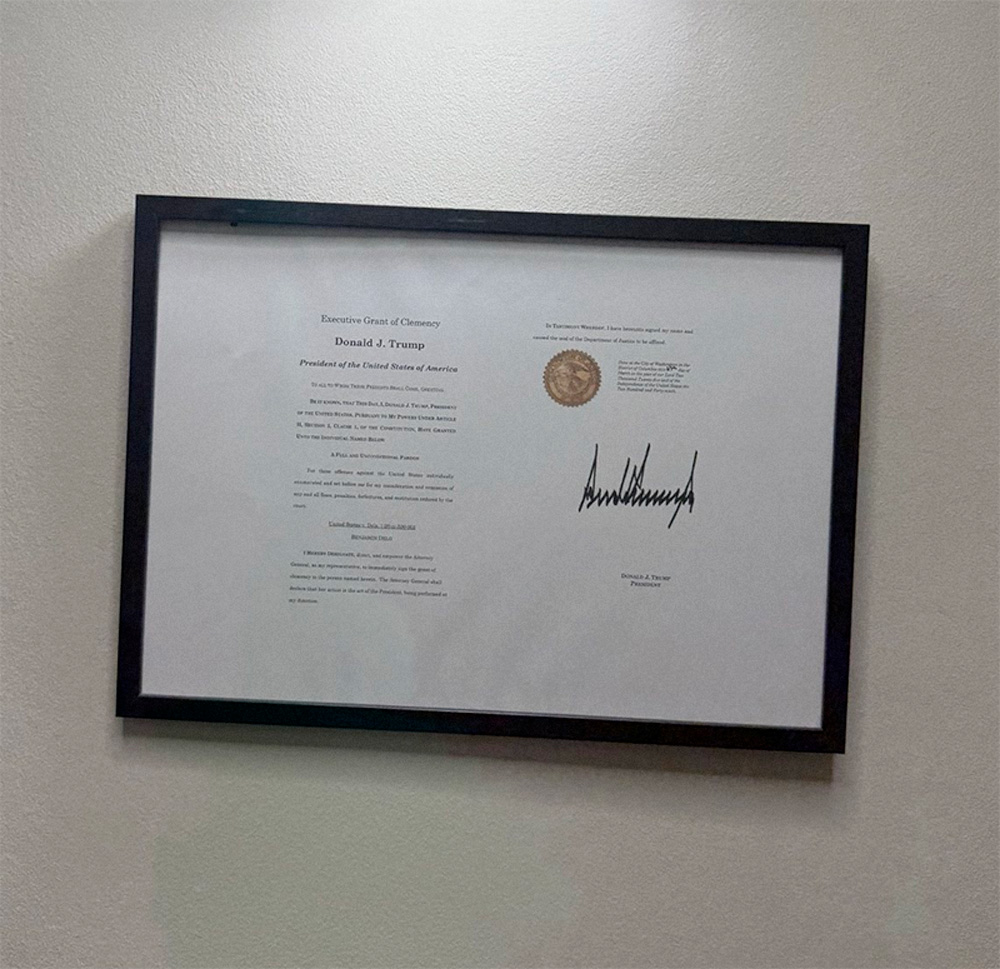
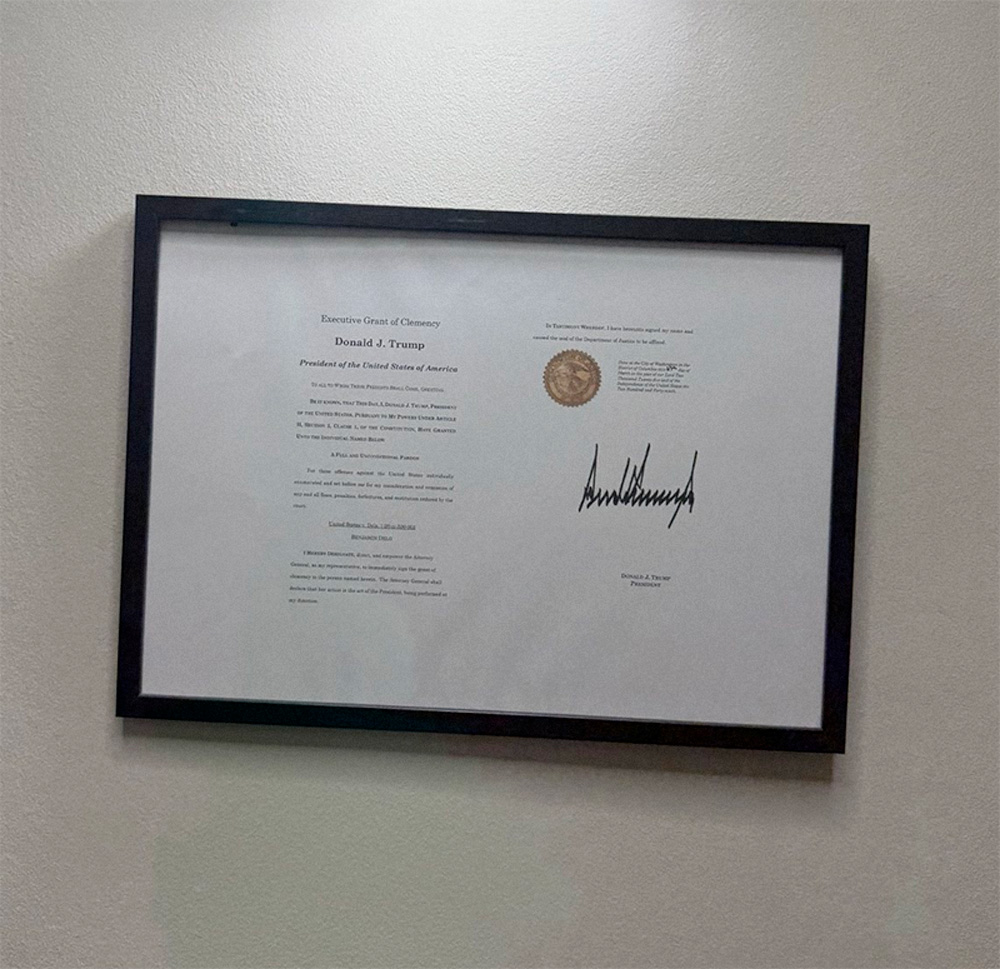
In one framed picture of Delo, there’s a letter from Claire Fox, who runs The Battle of Ideas, praising Delo as “our free speech hero.” A copy of Delo’s pardon from Donald Trump is also framed in the halls.
Delo has also portrayed himself as a generous philanthropist and says that he’ll donate half of his wealth to good causes. Delo claims he has donated £100 million, and earlier this month, he donated £20 million to a maths and physics institute.
On top of free speech and public debate causes, he’s also reportedly donated to fields in neurodiversity and Commonwealth relations. Delo’s philanthropy efforts were also praised by Michael Gove, who said he was “proud to know” Delo.
Got a tip? Send us an email securely via Protos Leaks. For more informed news and investigations, follow us on X, Bluesky, and Google News, or subscribe to our YouTube channel.
The move would replace quarterly CELO grants to Opera, which each required Celo governance approval, to a one-time token payment for a three-year partnership.
Publicly traded web browser Opera (NASDAQ: OPRA) announced that it has committed to being a long-term holder of Ethereum Layer 2 Celo’s native token, CELO, according to press release published today, March 19.
Celo Core Co., the primary developer and steward of the L2, submitted a governance proposal today outlining the plan to restructure its five-year-old partnership with Opera, namely proposing to shift the browser giant “from a distribution partner to a long-term network stakeholder.”
If approved by the Celo community, the new structure has Opera set to receive an allocation of 160 million CELO tokens — worth about $13 million at current prices — from the network’s “unreleased treasury,” meaning the tokens would not be purchased from the open market.
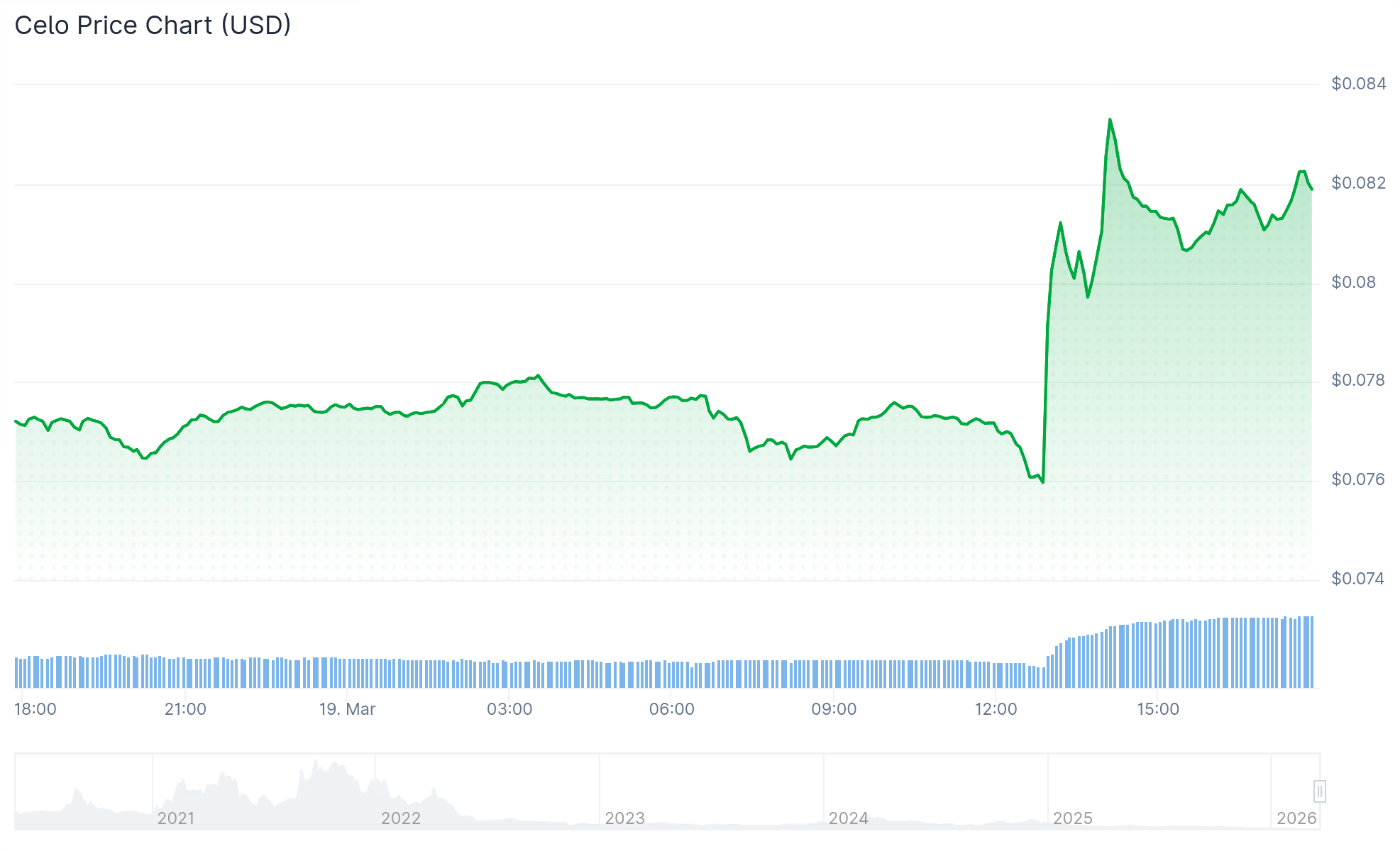
CELO rallied over 7% on the day on the news, bucking a broader market slump, though the token remains 99% below its 2021 highs and was trading around $0.08 at time of writing.

Quarterly to One-Time Grant
Under the proposed deal, Opera would swap its existing quarterly grant arrangement for a one-time token payout that initiates an additional three-year partnership between the two organizations.
In December 2023, the Celo community approved a proposal to pay Opera $568,182 per quarter in CELO — dubbed strategic grants, with each grant put before a governance vote on a quarterly basis — through Q1 2026, for a total of nearly $5.7 million, calculated at the time. The approved 2023 proposal emphasizes that Opera intends to hold and stake CELO, and has the ability to participate actively in governance.
These grants were effectively a marketing deal to increase the adoption of Celo DApps, namely MiniPay, specifically across Africa, where Opera Mini was the most popular browser at the time, per the proposal.
The 160 million CELO allocation in today’s proposal, also presented as “a grant for distribution services,” represents what both firms note is a shift to a more long-term partnership and commitment to the Celo ecosystem.
The allocation makes up approximately 27% of CELO’s current circulating supply and 16% of its 1 billion maximum supply. The one-time token transfer would come from Celo’s treasury into an Opera-controlled wallet, with Opera’s governance influence capped at 10% of total staked CELO under normal circumstance, per the governance proposal.
The proposal has already drawn scrutiny from some in the Celo community. One member of the governance forum, under the username Ginsburg, left a comment on the proposal earlier today, raising concerns about the deal’s structure and requesting further clarity from the team:
“This proposal effectively allocates ~160M CELO to Opera in lieu of a cash payment, which introduces meaningful dilution (or at least supply overhang) for existing token holders. I understand the strategic intent—aligning Opera as a long-term stakeholder and scaling MiniPay distribution—but the key question seems to be whether the expected user growth justifies the size of this allocation. If this were a market purchase, it would clearly signal demand. In this case, it’s more akin to CELO using its token as equity to acquire distribution.”
The vote remains pending before the Celo community governance forum. Opera and Celo also announced plans for a joint roadshow in Southeast Asia and Latin America “to drive grassroots adoption and grow the Mini App ecosystem,” starting next month.
Five-Year Partnership
The original partnership between Celo and Opera began in June 2021, when Opera first integrated CELO and Celo’s native stablecoins into the browser’s built-in crypto wallet, bringing cUSD and cEUR to millions of users.
That relationship deepened significantly in September 2023 with the launch of MiniPay, Opera’s self-custodial stablecoin wallet built directly on Celo, which has since grown to 14 million account registrations and processed 420 million transactions across 66 countries, according to the release.
Celo’s stablecoin activity and user base began surging in late 2024 as MiniPay drove adoption globally. Stablecoins more broadly crossed into mainstream fintech in 2025, with total market cap rising 50% even as broader crypto declined.
According to L2Beat, Celo has approximately $247 million in total value secured, making it the largest chain in the validiums and optimiums category — but a fraction of the scale of major rollups like Arbitrum or Base, which each hold over $10 billion.
Where Celo stands out is in user activity: per Token Terminal, the network currently leads all Ethereum Layer 2s by daily active users, with roughly 660,000 DAUs — a figure Celo attributes largely to MiniPay’s global reach.
This article was written with the assistance of AI workflows. All our stories are curated, edited and fact-checked by a human.
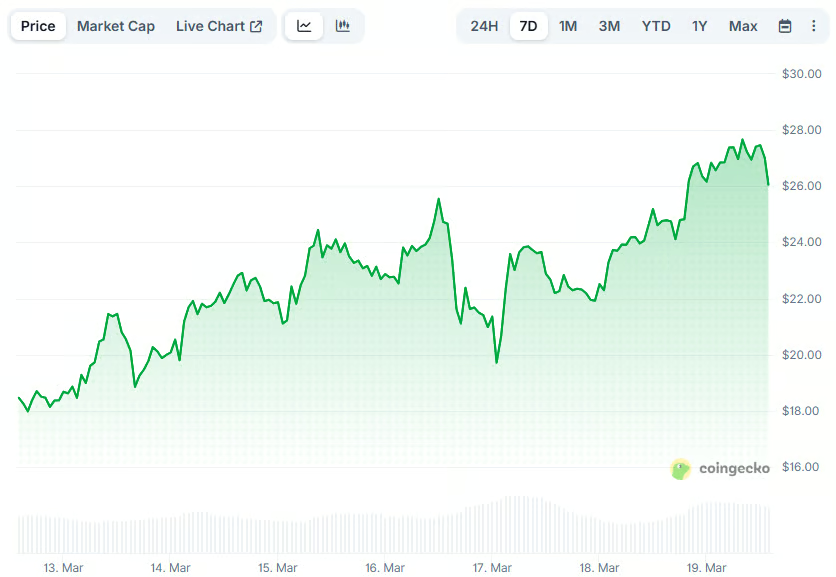
Certain market observers predicted that the asset’s price could soon surpass $50, while others cautioned traders to be extremely careful.
The lesser-known altcoin RIVER has defied the ongoing bear market, with its price spiking by double digits over the past seven days.
Some analysts expect the rally to continue, while others view the project as a red flag and warn investors to stay away.
How Much More?
RIVER is among the best-performing top 100 cryptocurrencies in the last week, jumping by 50% and currently trading at around $26 (per CoinGecko’s data). At one point, its market capitalization neared $550 million, whereas as of this writing, it stands at around $500 million.
One factor that may have contributed to the rally is the recent partnership between DIA and River, which is intended to provide the former’s omnichain stablecoin system with accurate, trustworthy price data.
The coin’s pump caught the eye of many analysts, including the popular Ali Martinez. Earlier this month, he claimed that RIVER “is looking bullish” since it has formed an “inverse head-and-shoulders” pattern and predicted that a pump above $20 could open the door to $57. Later on, Martinez confirmed the breakout, setting anything in the $45-$57 range as potential targets.
Kamran Asghar chipped in when RIVER was testing the “critical resistance zone” around $23. Back then, he argued that turning this into support could result in a “clear run” toward $40 and beyond.
Major Red Flags?
Despite the impressive price increase, others remain quite skeptical toward the cryptocurrency. X user Julius Elum noted that RIVER “looks good in the chart,” but claimed that it might be a “manipulatable token” by whales. In his view, entry between $10 and $15 is safe, hopping on the bandwagon at around $20 is risky, while the current levels represent FOMO.
You may also like:
“It might be a planned liquidity grab. I don’t chase setups if it has formed this obvious conviction. Because most times, it’s a trap. I’d rather take entry when the conviction is still in the doubt stage. But if I must risk it, I will do so with caution,” the analyst concluded.
X user Nehal also sounded the alarm. They believe that there are major red flags surrounding RIVER, suggesting that investors should be aware of more than just a pump-and-dump volatility. The analyst went even further, stating that many traders have reported losing money because the price has moved against their positions. In a subsequent post on March 18, Nehal forecasted that RIVER could plummet below $5 soon.
Highlighting the risks related to the token is nothing new. Earlier this year, X user Erik said 94% of RIVER’s total supply is held by only five wallets, whereas Honey argued that the project resembles previous rug pull schemes.
Binance Free $600 (CryptoPotato Exclusive): Use this link to register a new account and receive $600 exclusive welcome offer on Binance (full details).
LIMITED OFFER for CryptoPotato readers at Bybit: Use this link to register and open a $500 FREE position on any coin!

Major League Baseball (MLB) announced that it had signed an “integrity protection” agreement with the US Commodity Futures Trading Commission (CFTC) as it separately inked a deal with prediction markets platform Polymarket.
In a Thursday announcement, MLB said that its commissioner, Robert Manfred, signed a memorandum of understanding with CFTC Chair Michael Selig following the league’s request for “strong integrity protections in the rapidly evolving prediction market space.” In a separate deal, the league said it had reached an agreement for predictions market platform Polymarket to be its Official Prediction Market Exchange.
“The new agreements that we formed with Polymarket and the CFTC are imperative steps in proactively managing the new and rapidly growing prediction market space,” said Manfred.

In August, MLB sent a memo to players and clubs warning them about prediction markets, reminding them that the league’s gambling rules apply to those platforms. In November, two Cleveland Guardians pitchers were charged with sharing inside information about their play with sports bettors.
The deals were announced amid scrutiny from federal and state lawmakers on prediction markets platforms like Polymarket and Kalshi. In the US Congress, lawmakers have named Polymarket in proposed laws to crack down on bets related to military conflicts, while at the state level, both platforms are facing lawsuits related to betting on sporting events without a license.
Related: Bitcoin prediction markets see 70% chance BTC price crashes to $55K in 2026
The baseball season kicks off on March 26 with 22 teams playing across the US. As of Thursday, Polymarket has listed several event contracts for the league’s spring training games.
Will the CFTC agreement prevent state-level lawsuits over sports bets?
Although prediction markets platforms offer event contracts on a variety of topics such as US politics, weather, and pop culture, authorities in many US states have been challenging companies like Kalshi or Polymarket over sports bets and, in Arizona, election wagering.
Selig, as the sole commissioner at the CFTC, has been publicly pushing for the agency’s “exclusive jurisdiction” over prediction markets, including through the proposal for a rule that could amend or issue new regulations for overseeing the companies.
“Calling a bet an ‘event contract’ doesn’t make it legal,” said the American Gaming Association in January. “Prediction markets are exploiting regulatory gaps to offer unregulated sports wagers.”
Cointelegraph reached out to Polymarket for comment on potential lawsuits over the deal but had not received a response at the time of publication.
Magazine: Are DeFi devs liable for the illegal activity of others on their platforms?
Crypto World
DeepSnitch AI: The Best AI Crypto Coin of 2026 Records $2.2M in Presale Revenue Ahead of Launch As Investors Rethink Holdings in SOL and AVAX

Recently, there has been a question everyone seems to be asking: Is Deepsnitch AI the best AI crypto coin of 2026? As one of the most promising AI crypto projects, DeepSnitch AI (DSNT) has already raised over $2.2 million in its presale phase and surged from $0.0151 to its current price of $0.04487.
As interest in the best AI crypto and increasing demand for top AI crypto coins grow, DeepSnitch AI is expected to lead this trend.
Bitcoin exchange inflows rise as price faces resistance near $75K
Centralized exchanges have seen a rise in hourly Bitcoin inflows, coinciding with the broader market rally.
Recent statistics indicate that hourly Bitcoin deposits to exchanges reached as high as 6,100 units on the 16th of March. This is the highest level seen in the past few weeks.
A portion of this came from the large holders’ category, which accounted for about 63% of total deposits.
Is DeepSnitch AI the best crypto coin of 2026?
Most investors feel this question has been answered because DeepSnitch AI possesses everything that the best crypto coin of 2026 would. The token boasts of an exponential growth potential, impressive AI utility, and rapidly rising demand.
When traders ask the question: Is DeepSnitch AI the best crypto coin of 2026, there are so many reasons why the answer is yes. First, the project’s growth potential is unmatched, with DSNT up by almost 200% since its presale began.
Second, the token boasts an impressive lineup of five AI agents dedicated to making traders’ lives easier. From identifying potential breakouts to gaining insights into complex market questions, these AI agents help traders stay ahead.
Best of all, they are easy to use and access, so even a user with zero experience would easily fit in.
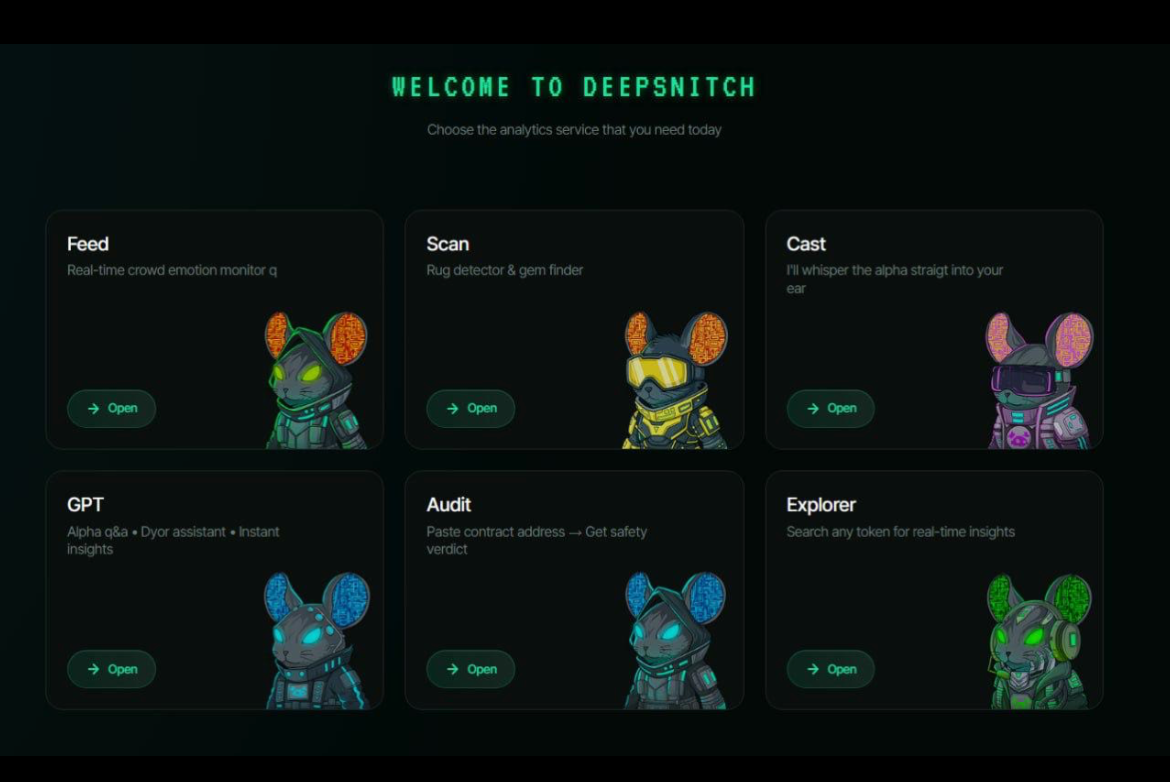
The announcement of its March 31 launch has contributed to rising demand. Instead of asking if DeepSnitch AI is the best crypto coin of 2026, analysts now expect the project’s launch to be accompanied by a potential 1000x rally, given its current trajectory.
Many are already rushing in to take advantage of its limited incentives. Joining this presale would be highly rewarding, especially for those who are still asking, “Is DeepSnitch AI the best crypto coin of 2026?”
DSNT is confirmed to launch on Uniswap for trading, and could see additional CEX and DEX listings in the near future. Don’t wait until price discovery begins.
Avalanche investors target $15 as AVAX records 10% monthly surge
Avalanche has put together a modest recovery, gaining 10% over the past month. The token was trading at $9.15 on February 23 but has since climbed to $10.21 by March 17, reflecting a gradual return of buying interest as the broader market improves.
What’s now driving interest is the growing expectation of a move toward $15 in the near term. Several market watchers believe AVAX could extend its rally if momentum holds, with projections placing it in the $12-$15 range during the current cycle.
Analysts project imminent breakout past $100 for Solana amid 9% monthly surge
The price of Solana has been increasing over the last month, going up 10%. SOL hit a low of $85.30 on February 23 before increasing to $93.75 on March 18. This may not be an explosive move at first glance, but it is a steady move higher as people become more confident in the market.
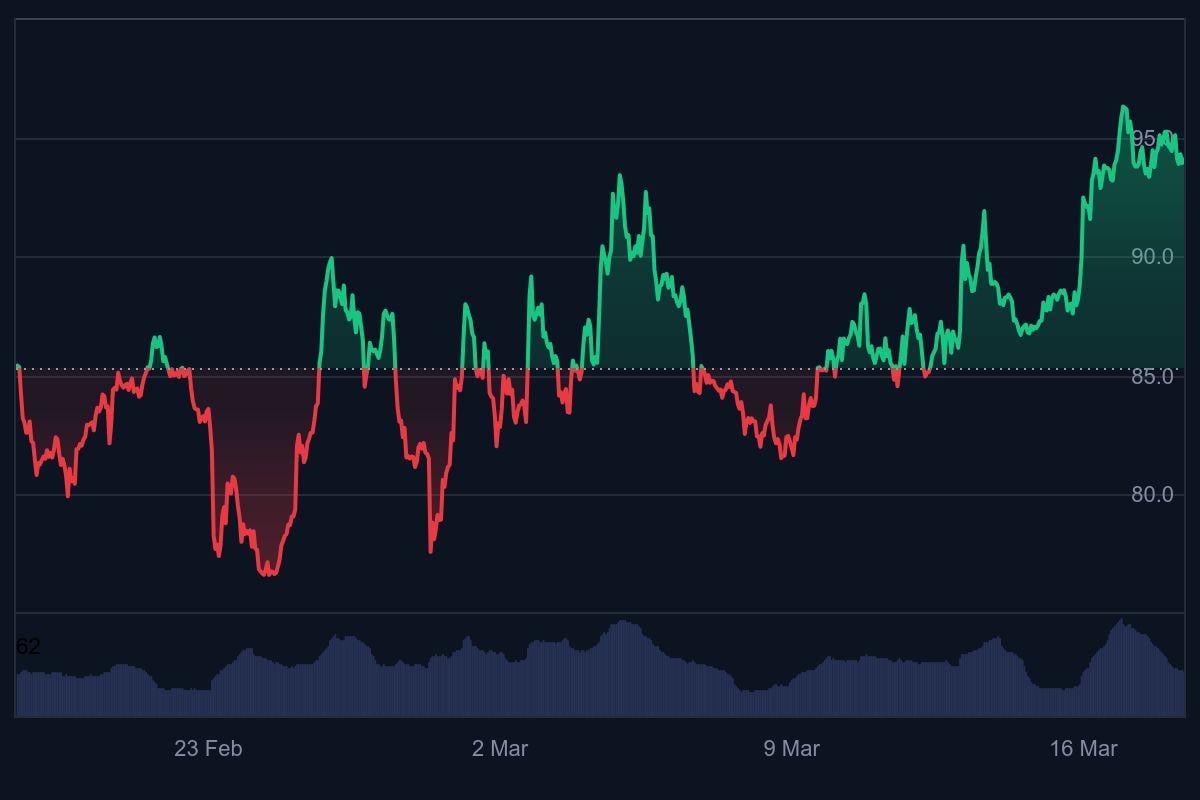
Renowned analyst Alicharts suggests a potential short squeeze could accelerate price action after Solana reclaimed the $93 level. If that level continues to hold as support, analysts are pointing to upside targets near $102 and $113.
Conclusion
So, is DeepSnitch AI the best AI crypto coin of 2026?
More investors look toward high-growth AI-driven tokens. However, DeepSnitch AI has already answered this question, proving to be the best with its unique technology and high growth potential.
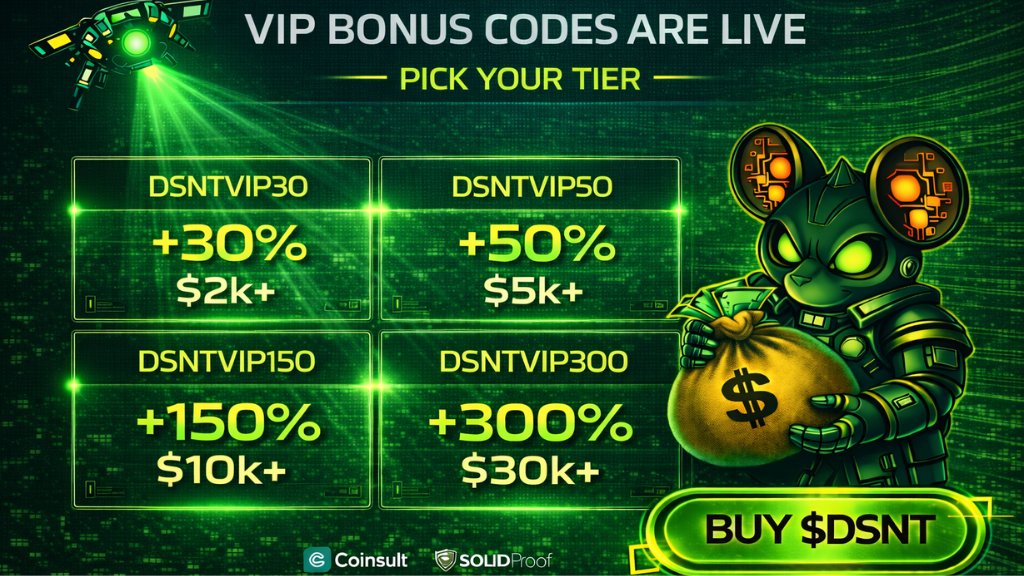
Added to this are its presale incentives, including the most amazing bonus offers in the market right now. With a $30,000 purchase, an investor would get 668,599 DSNT tokens at the current price. However, with the 300% bonus code (DSNTVIP300), this jumps to 2,674,397 DSNT tokens.
To enjoy these bonuses, visit the DeepSnitch AI website and check out their X and Telegram to keep up with updates.
FAQs
Is Deepsnitch AI the best AI crypto coin of 2026?
Deepsnitch AI is increasingly being considered a top contender due to its strong presale performance, real AI utility, and potential for huge growth.
What exchanges would DeepSnitch AI list when it launches?
While the only confirmed exchange listing is Uniswap, DeepSnitch AI is expected to hit major centralized and decentralized platforms after launch.
What makes DeepSnitch AI the best crypto presale above others?
Unlike many presales, DeepSnitch AI offers operational utility and significant growth potential, making it appealing to investors seeking long-term gains.
Disclaimer: This is a Press Release provided by a third party who is responsible for the content. Please conduct your own research before taking any action based on the content.


(VIDEO) Lionel Messi Scores 900th Career Goal in Concacaf Champions Cup

Cryptocurrency Market Sinks as Trades discount Fed rate cuts

Joseph Duggar’s Last Post Points To Timeline In Molestation Case

Smart energy pays enters the US market, targeting scalable financial infrastructure

Why Israel is blocking foreign journalists from entering

Bitcoin: We’re Entering The Most Dangerous Phase

Financial Freedom in 5 Years with Rentals (5 Things to Do NOW)

19 March | NY Session | Forex and Crypto Live Market Analysis | #ForexLive #SwappyTrading #ICT

IRAN NEW PLAN : Financial War #iranupdate #usairanconflict #straitofhormuz #oilcrisis #gasshortage
-
 Crypto World6 days ago
HYPE Token Enters Net Deflation as HyperCore Buybacks Outpace Staking Rewards
-

 Tech4 days ago
Your Legally Registered ‘Motorcycle’ Might Not Count Under Proposed US Law
-

 Fashion6 days ago
Weekend Open Thread: Addict Lip Glow
-
 Tech2 days ago
Are Split Spacebars the Next Big Gaming Keyboard Trend?
-
Sports5 days ago
Why Duke and Michigan Are Dead Even Entering Selection Sunday
-

 Business4 days ago
Search for Savannah Guthrie’s Mother Enters Seventh Week with No Arrests
-

 Business5 days ago
US Airports Launch Donation Drives for Unpaid TSA Workers as Partial Government Shutdown Enters Fifth Week
-
Crypto World5 days ago
Coinbase and Bybit in Investment Talks: Could Bybit Finally Enter the US Crypto Market?
-

 Business3 days ago
Australian shares drop as Iran war enters third week
-

 Business5 days ago
Country star Brantley Gilbert enters growing non-alcoholic beer market
-

 Crypto World3 days ago
Crypto Lender BlockFills Enters Chapter 11 with Up to $500M in Liabilities
-

 Sports6 days ago
College Basketball Best Bets: Conference Tournament Semifinal Picks
-

 Politics1 day ago
The House | The new register to protect children from their abusers shows Parliament at its best
-
 Business7 days ago
Trump demands Powell cut rates as Iran conflict raises energy prices
-

 Fashion3 days ago
25 Celebrities with Curly Hair That Are Naturally Beautiful
-

 Crypto World7 days ago
Senate Votes to Include CBDC Ban in Bipartisan Housing Bill
-

 News Videos1 day ago
RBA board divided on rate cut, unusually buoyant share market | Finance Report | ABC NEWS
-

 NewsBeat7 days ago
Deane Road crash near Bolton colleges and university
-

 Crypto World1 day ago
Canada’s FINTRAC revokes registrations of 23 crypto MSBs in AML crackdown
-

 News Videos7 days ago
Tom Lee: The 100x Opportunity EVEN Bigger Than Bitcoin (New Ethereum Prediction 2026)


You must be logged in to post a comment Login