
Crypto World
Trump pressures Powell to cut rates as Fed holds line on inflation



Trump ramps up pressure on Powell to slash rates to 1% even as the Fed holds at 3.50%–3.75%, lifts inflation forecasts, and warns the Iran oil shock risks stagflation.
Summary
- Trump renews attacks on Powell, demanding immediate cuts and even 1% rates despite Brent above $110 and inflation expectations rising with the Iran war energy shock.
- The Fed leaves rates at 3.50%–3.75% and signals only one 2026 cut, with officials warning that oil-driven inflation could keep PCE near 3% and delay any easing.
- Economists say the U.S. now faces a classic stagflation trap, as cutting to appease Trump risks entrenching inflation while holding steady deepens demand destruction.
U.S. President Donald Trump renewed his public pressure campaign on Federal Reserve Chair Jerome Powell on Thursday, stating that Powell should cut interest rates — a demand that stands in direct contradiction to the Fed’s posture just 24 hours earlier, when the central bank held rates unchanged and signaled it expects only one cut for the entirety of 2026.
Trump’s statement, reported by Jinshi on Thursday, follows a pattern of escalating attacks on the Fed chair that has intensified since the Iran war began on February 28. As recently as March 12, Trump took to Truth Social to write: “Where is the Federal Reserve Chairman, Jerome ‘Too Late’ Powell, today? He should be dropping Interest Rates, IMMEDIATELY, not waiting for the next meeting!” The president has reportedly called for rates as low as 1%, even as soaring oil prices are pushing inflation expectations sharply higher.
Crypto markets have been trading this showdown in real time: Bitcoin has already slipped back below $70,000 after briefly tagging the mid‑$73,000s last week, while Ethereum has faded toward the low‑$2,200s as Fed funds futures price in barely a single cut for 2026 and the market starts to contemplate a “no‑cut” year. That leaves BTC caught between two narratives — a stagflation hedge if Powell caves to Trump and lets real yields fall, or just another high‑beta risk asset if the Fed digs in and higher-for-longer rates collide with an oil shock to crush liquidity across both TradFi and crypto.
The Fed voted to keep its benchmark rate in the 3.50%–3.75% range at its March 18 meeting, citing persistent uncertainty around both the Iran conflict’s economic impact and the residual effects of Trump’s 15% global tariff regime. Powell acknowledged that a rate hike remains unlikely but did not rule it out, noting that the Fed “will need to assess how enduring this situation is” in reference to the global energy crisis.
The Fed’s updated forecasts are expected to revise inflation projections upward, with many economists anticipating the central bank will now forecast inflation remaining as high as 3% by late 2026 — a level difficult to reconcile with rate cuts. Trump’s own nomination of Kevin Warsh to succeed Powell when his term concludes in May had been expected to usher in a more dovish era, but the Iran conflict may delay or complicate that transition.
The core tension is acute. Trump wants lower rates to stimulate a slowing economy and support financial markets battered by oil-driven uncertainty. But the Fed faces a classic stagflation dilemma: cutting rates risks entrenching oil-fueled inflation, while holding or hiking risks amplifying the demand destruction already underway as energy costs squeeze consumers and businesses.
CME FedWatch data shows markets assigning over 99% probability to no change at the current meeting, and Wall Street economists are increasingly calling for a zero-cut year. Oxford Economics chief U.S. economist Lydia Boussour noted that “given our elevated forecasts for headline and core PCE inflation, we have adjusted our baseline to reflect only one 25 basis point cut in 2026 — but it is entirely plausible the Fed won’t implement any rate cuts this year.”
The oil shock has already erased the inflation buffer that lower energy prices had provided earlier in 2026 in the face of Trump’s tariffs. With Brent crude above $110 and Iranian strikes on Gulf energy infrastructure widening on Thursday, the Fed’s margin for maneuver is narrowing — even as Trump’s demands grow louder.

Crypto World
Coinbase Commerce seed phrase page alarms security community ahead of March 31 shutdown
Coinbase Commerce’s seed phrase withdrawal page is drawing fierce criticism from security researchers, who warn it normalizes typing 12-word recovery phrases into a website just days before the March 31 shutdown deadline.
Summary
- A Coinbase Commerce subdomain at withdraw.commerce.coinbase.com/seed-phrase asks merchants to type 12-word seed phrases into a plain-text web form to recover funds.
- SlowMist’s Cos, CISO 23pds and on-chain sleuth ZachXBT say the page and its cloneable front end create a powerful phishing template, especially as Commerce is wound down into Coinbase Business by March 31, 2026.
- Critics argue the flow trains users to ignore the industry rule to never enter a seed phrase online, reviving fears after earlier Coinbase impersonation scams stole about $2 million from users.
A subdomain page belonging to Coinbase Commerce — the company’s merchant payments product — has drawn sharp criticism from leading blockchain security researchers after it was found to be prompting users to enter their 12-word seed phrases, also known as mnemonic or recovery phrases, directly into a web form in plain text. The controversy erupted on Wednesday and intensified Thursday morning, with the discovery coming at a particularly sensitive moment: Coinbase is winding down Commerce entirely by March 31, 2026, as part of a broader platform consolidation under Coinbase Business — meaning tens of thousands of merchants have a narrow window to withdraw their funds.
The page in question, hosted at withdraw.commerce.coinbase.com/seed-phrase, was referenced in a now-deleted Coinbase Commerce help document that directed users to recover funds by importing their recovery phrases into compatible wallets such as Coinbase Wallet or MetaMask. SlowMist founder Yu Xian (known online as Cos) described the practice as demonstrating an “unbelievable lack of security awareness” from a major industry player, having received multiple user reports about the page. On-chain investigator ZachXBT independently flagged the page, warning that its existence creates a direct attack surface for social engineering campaigns targeting Coinbase users.
The concerns go beyond the page itself. SlowMist’s Chief Information Security Officer, known as 23pds, escalated the alarm by pointing out that the page’s sitemap contains structural flaws that make it trivially easy for malicious actors to replicate. Using tools such as ResourcesSaver, attackers can download the front-end code and deploy visually identical phishing sites — particularly dangerous when combined with Coinbase-lookalike domains that could credibly deceive even experienced users.
The fundamental problem is one of normalisation. Every legitimate security protocol in the cryptocurrency industry is built on a single, non-negotiable principle: a seed phrase should never be entered into any website, form, or app under any circumstances — not even an official one. Seed phrases are the master cryptographic keys to a wallet; whoever possesses them owns the funds. By building a recovery workflow that requires users to type their phrase into a browser, Coinbase has — whether intentionally or through oversight — trained users to accept a behaviour that scammers routinely exploit. Coinfomania noted that the tool even suggests copying phrases from Google Drive as an intermediate step, compounding the risk.
ZachXBT’s warning carries particular weight given his track record. In January 2026, he exposed a Coinbase support impersonation scam that resulted in approximately $2 million in stolen crypto — a scheme that relied on users being conditioned to trust Coinbase-branded interfaces. The Commerce seed phrase page represents a ready-made template for a follow-up attack of potentially far greater scale.
As of Thursday, Coinbase had not publicly responded to the criticism, despite multiple requests for comment. The company has offered alternative withdrawal methods — including a separate commerce withdrawal tool considered safer by researchers — but has not removed or modified the seed phrase page. With twelve days remaining until Commerce is permanently disabled, the pressure on the exchange to act is mounting rapidly. For the crypto industry’s most prominent publicly listed company, the reputational stakes of a mass phishing event triggered by its own migration tooling could scarcely be higher.
EtherFi has allocated $25 million to Plume’s real-world asset (RWA) protocol Nest, marking a move to integrate tokenized RWA yield directly into its platform as it looks to expand beyond crypto-native sources of return.
According to Thursday’s announcement, rollout will begin with exposure to Plume’s nBASIS vault, which is tied to Superstate’s USCC crypto carry fund, with plans to add a dedicated real-world asset vault directly into EtherFi’s interface in a later phase.
The initial allocation gives EtherFi users indirect exposure to a strategy combining crypto basis trades, staking rewards and government securities, a structure traditionally available only to institutional or sophisticated investors.
The integration will extend RWA exposure across EtherFi’s more than $6 billion in user deposits. According to Plume, the vault structure is designed to simplify access by handling execution and reporting onchain, while incorporating predefined risk controls and compliance features.
EtherFi is a crypto yield platform that began with Ethereum liquid staking and has since expanded into broader yield offerings, while Plume provides infrastructure that packages institutional investment strategies into onchain vaults, giving users exposure to institutional strategies managed offchain through integrated crypto platforms.
Plume has also taken steps toward integrating with traditional financial systems, including registering as a transfer agent with the US Securities and Exchange Commission in October.
Related: Babylon-Ledger tie-up expands access to Bitcoin Vaults for collateral use
Tokenized real-world assets activity surges
Unlike traditional DeFi yield, which is generated within crypto markets, real-world assets strategies derive returns from income streams such as interest on government securities and lending activity.
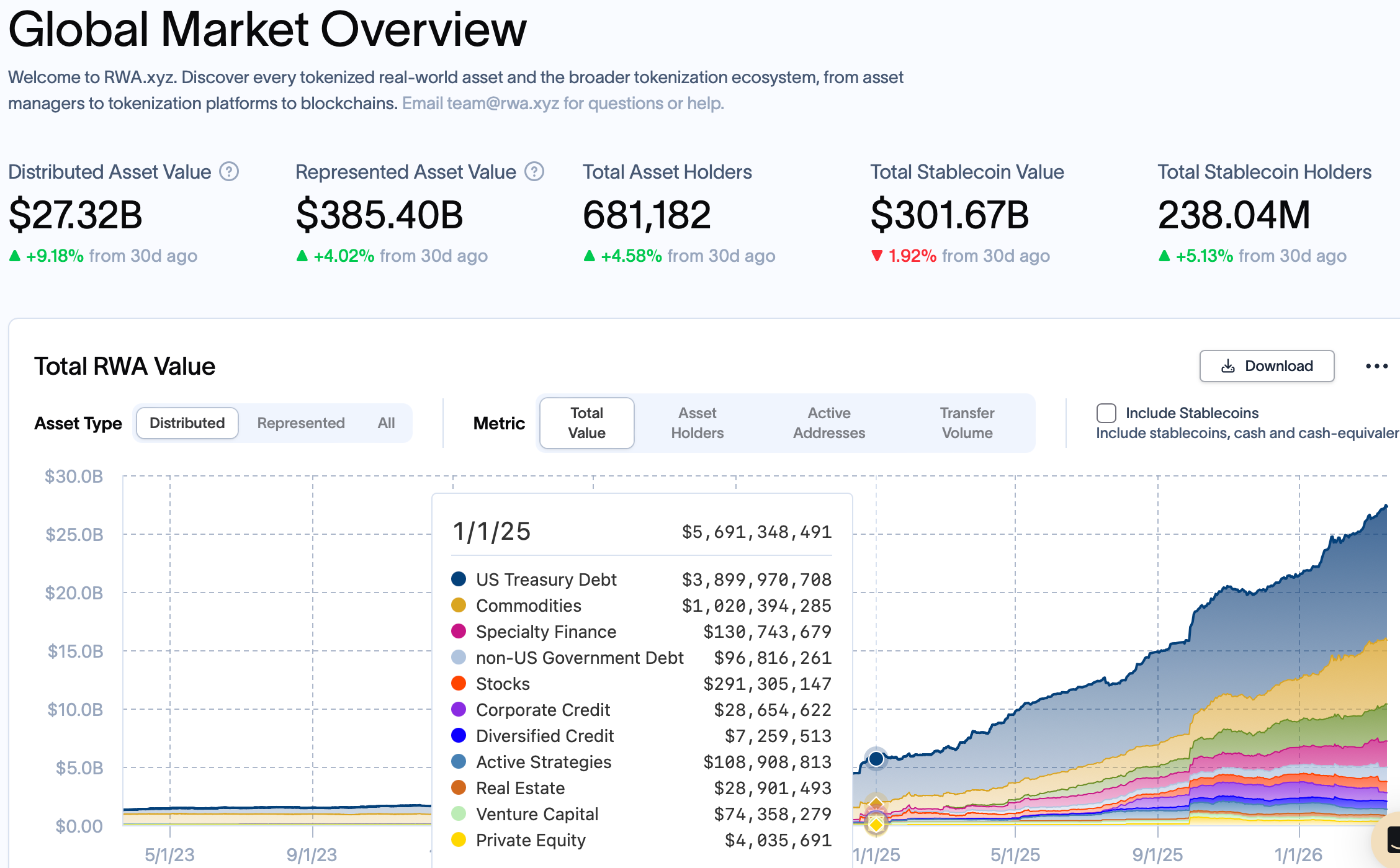
According to data from RWA.xyz, the value of tokenized real-world assets has surged to more than $27 billion from about $5.7 billion at the start of 2025. Much of that growth has been driven by tokenized US Treasury products, which account for over $11 billion in onchain value.

Tokenized Treasurys give investors onchain access to government-backed debt instruments, combining blockchain-based settlement with yield from short-term bills and money market funds.
Products from companies including BlackRock, Franklin Templeton and Circle account for a significant share of the market, with Circle’s USYC holding about $2.3 billion, BlackRock’s BUIDL fund around $2 billion and Franklin Templeton’s onchain fund over $1 billion in assets.

Plume reports 262,325 RWA holders holding more than $348 million in tokenized assets, with distributed asset value up 69% over the past 30 days, according to RWA.xyz data. Its Nest vault products are already live, including a basis-focused vault with more than $26 million in assets
In November, Plume co-founder and CEO Chris Yin told Cointelegraph that the tokenized real-world asset market could grow as much as fivefold this year.
He added that while most RWA value is currently concentrated in US Treasury bills, a maturing market and shifting interest rate environment are driving users to seek higher-yield opportunities elsewhere.
Magazine: Are DeFi devs liable for the illegal activity of others on their platforms?


The U.S. federal regulator of prediction markets has secured a formal information-sharing arrangement with Major League Baseball in the Commodity Futures Trading Commission’s first such deal with a professional sports governing body, according to a Thursday statement.
The “landmark” collaboration will allow the U.S. derivatives regulator to swap information with the organization that oversees professional baseball, even as the CFTC is still immersed in a legal debate with several U.S. state gaming regulators on who should have jurisdiction over bets on sporting events. The new memorandum of understanding will allow the federal agency to get a better handle on shielding the markets and their users from “fraud, manipulation, and other abuses,” according to a statement from CFTC Chairman Mike Selig.
“The MOU is a collaborative step towards promoting the integrity and resilience of the prediction markets relating to professional baseball,” he said.
“Protecting the integrity of the game on the field is our top priority,” MLB Commissioner Rob Manfred said in a Thursday statement. “By engaging in this community, we are able to work together to create clear boundaries with the goal of mitigating risk while providing fan engagement opportunities.
At the same time, popular platform Polymarket announced that MLB had named it the league’s official “exclusive prediction market exchange partner.”
The prediction markets — led by such companies as Polymarket and Kalshi — have erupted into sports, politics and other current events, leaving state and federal regulators trying to address their growing popularity. Though the CFTC had previously resisted the sector’s arrival and challenged some of its activity on legal grounds, the agency’s new management set by President Donald Trump embraced the technology.
To that end, Selig has been waging a rhetorical battle with state regulators, claiming that his agency’s authority supersedes the states’ reach on sports gambling.
Manfred told ESPN he saw the federal regulator having jurisdiction as marking the chief distinction that sets prediction-markets activity apart from state-based sports gambling regulations.
“The fact that you have a federal regulatory scheme makes our life a lot easier as opposed to … take for example, sports betting, where you’re going state by state,” he told the news outlet.
The CFTC is moving forward with its oversight of the sector despite a lack of regulations, which Selig said are coming. Proposing rules to govern prediction markets — a space that overlaps with his wider crypto agenda — is among the chairman’s top agenda items, he’s said.

Regulators are signaling a shift in digital-asset oversight as the SEC outlines an interpretive framework for applying securities laws to crypto. SEC Chair Paul Atkins, in prepared remarks at the Practising Law Institute, said the agency intends to move away from a broad enforcement-first stance toward a more principled, interpretive approach. The remarks follow the agency’s interpretive notice on crypto regulation and a memorandum of understanding with the CFTC signed last week.
“While the interpretation provides long-needed clarity, I should like to assure this audience that it amounts to a beginning, not an end,” Atkins told attendees, underscoring the framework is intended to evolve alongside market developments.
The interpretive notice, released earlier in the week, frames how federal securities laws may apply to crypto assets. It suggests that most cryptocurrencies are unlikely to be securities under federal law, with a narrow exception: traditional securities that are tokenized. Atkins later clarified that digital commodities, digital tools, digital collectibles including non-fungible tokens (NFTs), and stablecoins are typically not within the SEC’s purview.
Key takeaways
- The SEC signals a shift from enforcement-by-press release toward a interpretive, rules-based approach to crypto regulation after a new interpretive notice and a memorandum with the CFTC.
- Under the framework, most crypto assets are unlikely securities; only tokenized traditional securities would fall under federal securities laws.
- Assets like digital commodities, digital tools, NFTs, and stablecoins are generally not considered securities by the agency’s current interpretation.
- Regulatory progress intersects with Congress and the White House, as lawmakers push a market-structure bill (the CLARITY Act) and seek consensus on stablecoin regulation and crypto-asset provisions.
- Watch for how the evolving framework interacts with legislative efforts, potential CFTC authority expansion, and ongoing industry pilots and experiments.
Regulatory posture shifts amid a mixed legislative backdrop
The SEC’s interpretive stance arrives as part of a broader recalibration of how crypto regulation will be enforced and applied. The agency had long faced criticism for a perceived “enforcement-by-crisis” approach, especially for startups and projects navigating an evolving market. By contrast, the latest framework emphasizes clarity and consistency, aiming to reduce guesswork for issuers, exchanges, and investors while preserving robust investor protections.
The interpretive notice explicitly clarifies that, for many digital assets, existing securities laws may not apply in the same way as for traditional stocks or bonds. The acknowledgment that most crypto assets are not securities could lower some regulatory friction for many projects—though it also places a clear boundary around assets that would still be subject to securities regulation.
Atkins connected the interpretation to ongoing SEC coordination with the CFTC, noting the memorandum signed last week. The agreement signals an intent to harmonize approaches where possible, a relevant development given the overlapping jurisdictions in crypto markets, market infrastructure, and derivatives. The result could be a more predictable regulatory environment for token issuers and market participants, even as questions about enforcement and future rulemaking linger.
Contextual backdrop: market structure, stablecoins, and the legislative path
Beyond the SEC’s interpretive framework, lawmakers are actively shaping the arc of crypto regulation through legislation and hearings. A market-structure bill, known in industry circles as the CLARITY Act, advanced in the House in mid-2025 but has faced a slower path in the Senate. As of the latest briefing, it had not yet been scheduled for a markup in the Senate Banking Committee, leaving a critical regulatory hinge unresolved.
In parallel, the White House has engaged with lawmakers behind closed doors to advance the same package. A spokesperson for Wyoming Senator Cynthia Lummis confirmed that Republican senators met with White House crypto adviser Patrick Witt to discuss advancing the market-structure bill. Lummis’ team described the session as very productive and positive, with negotiators “99% of the way there on stablecoin yield” and ongoing, productive talks on the digital-asset provisions of the bill.
Stablecoins remain a focal point of regulatory and policy debate, particularly around yield, banking implications, and consumer protections. The sense among some policymakers is that achieving a workable framework for stablecoin issuance and redemption is a prerequisite for broader bipartisan consensus on crypto regulation.
The regulatory dialogue is further colored by ongoing market experiments and pilot programs. For example, the market has seen pilots exploring tokenized trading and other asset-ization concepts under the watchful eye of multiple agencies. While these pilots illustrate a regulatory appetite for innovation, they also underscore that practical, real-world testing will continue to inform how rules evolve in practice.
As the SEC’s interpretive framework takes root, traders, issuers, and developers should prepare for a regulatory environment that favors clarity and predictability but remains nuanced. The boundary between what constitutes a security in crypto, and what does not, will likely continue to shift as new asset classes and products emerge. The interplay between the SEC, the CFTC, and Congress will shape the pace and direction of this evolution in the months ahead.
Readers should watch for updates on the CLARITY Act’s progression in the Senate, any further formal guidance from the SEC, and on-the-ground outcomes from ongoing tokenization trials and stablecoin regulatory debates. The convergence of executive and legislative activity suggests that substantial clarity—across asset classes and market infrastructure—may still be months away, even as the groundwork for a more predictable regulatory framework takes shape.
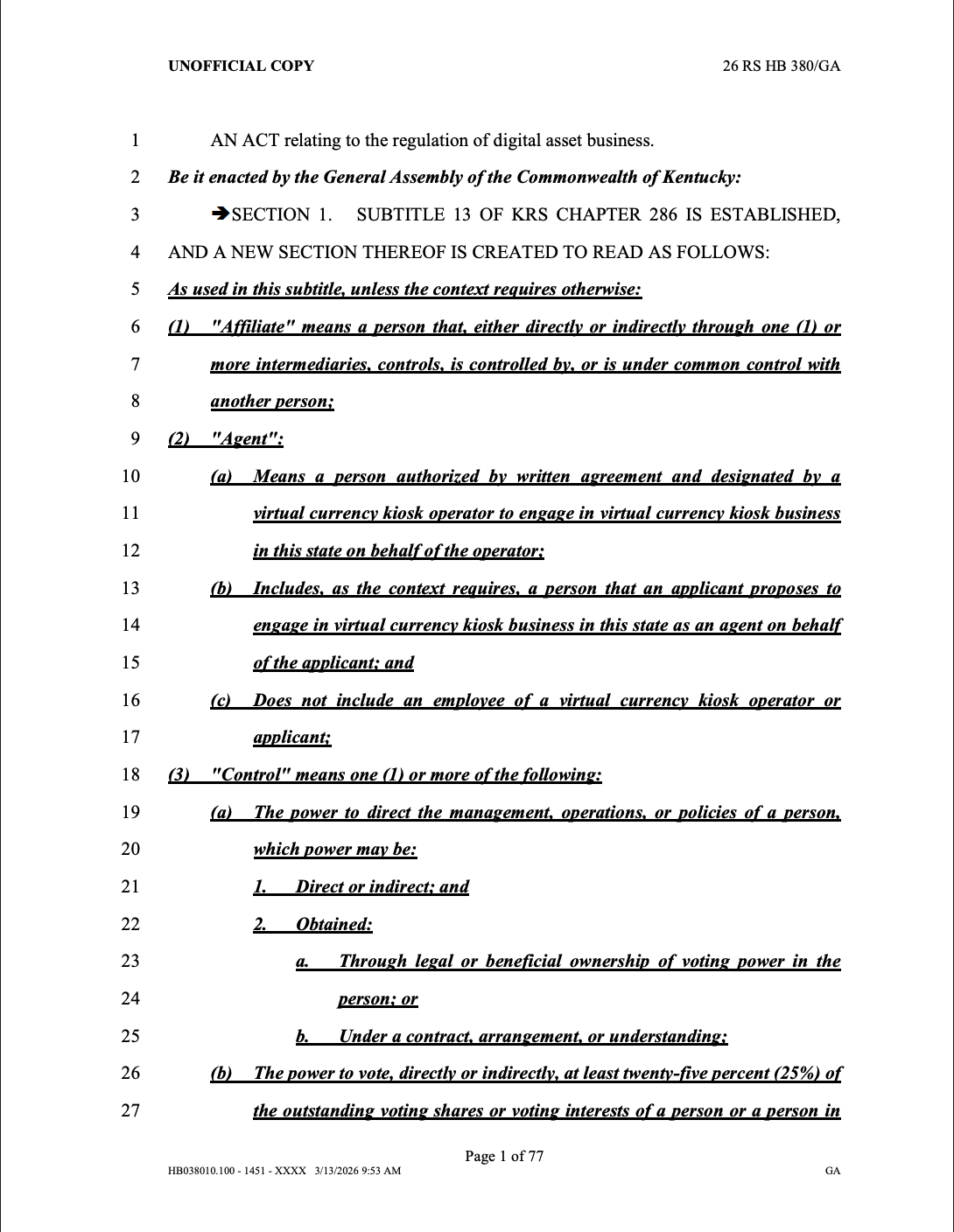
Kentucky House Bill 380, a state-level crypto regulatory bill, includes provisions that would force crypto hardware wallet manufacturers to build a “backdoor” into devices, Bitcoin (BTC) advocacy organization Bitcoin Policy Institute (BPI) has warned.
The provisions require crypto hardware wallet manufacturers to provide recovery options for users’ seed phrases, and were added to the bill in a “last-minute” floor amendment, BPI said. The amended Section 33 of the bill reads:
“A hardware wallet provider shall provide a mechanism for, and assist any person who owns a hardware wallet that was provided by the provider with, resetting any password, PIN, seed phrase, or other similar information that is necessary to access the contents of the hardware wallet.”
The sponsors of the legislation are state Representatives Aaron Thompson and Tom Smith.
The bill also proposes identity verification checks for users requesting a password, seed phrase, or PIN reset from a hardware wallet manufacturer.

“The mandate is technologically impossible for non-custodial wallets. Hardware wallets are specifically designed so that no one, including the manufacturer, can access or recover a user’s seed phrase,” BPI said in response.
The provisions threaten the self-custody of private keys, which is a foundational feature of cryptocurrencies, according to BPI, which added that requirements like this push users toward centralized custodians that are susceptible to hacks and business failures.

Related: BPI targets August for BTC tax relief, but warns time is running out
SEC officials defend the right to self-custody
US Securities and Exchange Commission (SEC) Chair Paul Atkins said he is “in favor” of market participants having self-custody options, especially in cases where intermediaries would impose a financial or operational burden on the user.
In November 2025, Hester Peirce, an SEC commissioner and head of the regulator’s Crypto Task Force, reaffirmed the right to self-custody and financial privacy, saying that both were foundational to freedom.
Peirce asked the hosts of the Rollup podcast in November 2025: “Why should I have to be forced to go through someone else to hold my assets?
“It baffles me that in this country, which is so premised on freedom, that would even be an issue — of course, people can hold their own assets,” she said.
Magazine: Bitcoin’s long-term security budget problem: Impending crisis or FUD?
Crypto World
Binance New Listing Announcement Talk Heats Up as Pepeto Presale Accelerates and the Window Before Listing Gets Smaller Every Day

The stablecoin standoff in the Senate could break this week. Tim Scott, chair of the Banking Committee, said he expects the first compromise proposal on yield provisions before Friday. When that framework passes, every audited presale with working products enters a different pricing environment overnight.
The binance new listing announcement debate is picking up across every trading community, but the biggest opportunity right now is not the debate itself. It is the presale that already crossed $8 million during extreme fear and has a confirmed Binance listing approaching while most traders are still afraid to move.
Tim Scott told a DC crypto lobby event on March 18 that a breakthrough on the stalled market structure bill is within reach according to CoinDesk.
The FOMC held rates steady at 3.50% to 3.75% on March 19 and BTC slid from $76,000 to $69,000 on the decision according to CoinGecko. Binance new listing announcement speculation picked up as traders shifted focus toward audited presales with live products, expecting the regulatory clarity to reprice them first.
Binance New Listing Announcement Candidates and the Presale That Already Has the Products, the Audit, and the Capital
Pepeto Is Leading the Binance New Listing Announcement Conversation Because the Exchange Tools Are Live and the Capital Proves the Conviction
Capital is flowing again. Pepeto keeps pulling investment ahead of its Binance listing, and the wallets entering during a correction are not speculators chasing hype. The presale crossed $8 million at $0.000000186, and the three exchange tools are already live and verified before a single token trades publicly.
PepetoSwap stops your capital from bleeding through the fees that every other exchange takes on each position, so what you put in is exactly what works for you. The risk scorer reads every contract for hidden traps and flags the dangerous ones before your wallet ever signs anything, which means you stop losing money to scams that a quick scan would have caught.
Holders already inside are earning 196% APY compounding daily while they wait for the event that changes everything. All of that makes Pepeto the kind of entry that a binance new listing announcement rewards the hardest, because the products are built, the audit is done, and the community already committed real capital during fear.
The original Pepe coin reached $11 billion on 420 trillion tokens with nothing behind it. The person who created that project is now building Pepeto with three working tools and the same supply. Matching even a small part of that run from $0.000000186 is the kind of math that makes this correction feel like a gift. A former Binance expert on the dev team built the exchange from the ground up, and SolidProof cleared every contract before public capital entered.
The whales who loaded during fear at the same entry as retail understand what the listing does to this price, and once trading begins, every position bought today becomes the story the market tells for the rest of the cycle.
Solana Holds at $87 but the Recovery Math From $294 Takes Years Not Days
SOL trades at $87, down 69% from its $294.85 ATH according to CoinMarketCap. Spot Solana ETFs crossed $1 billion in assets. CoinCodex targets $137 by year end, roughly 52% from here.
Solid for a patient hold. But even tripling puts SOL at $270, still short of its own peak, and nowhere near the distance between a presale at $0.000000186 and a Binance listing.
Ethereum Sits Below $2,200 and the DeFi Foundation Delivers Foundation Returns
ETH trades near $2,125, roughly 55% below its $4,878 ATH according to CoinMarketCap. Over $50 billion in DeFi TVL keeps Ethereum as the default smart contract chain.
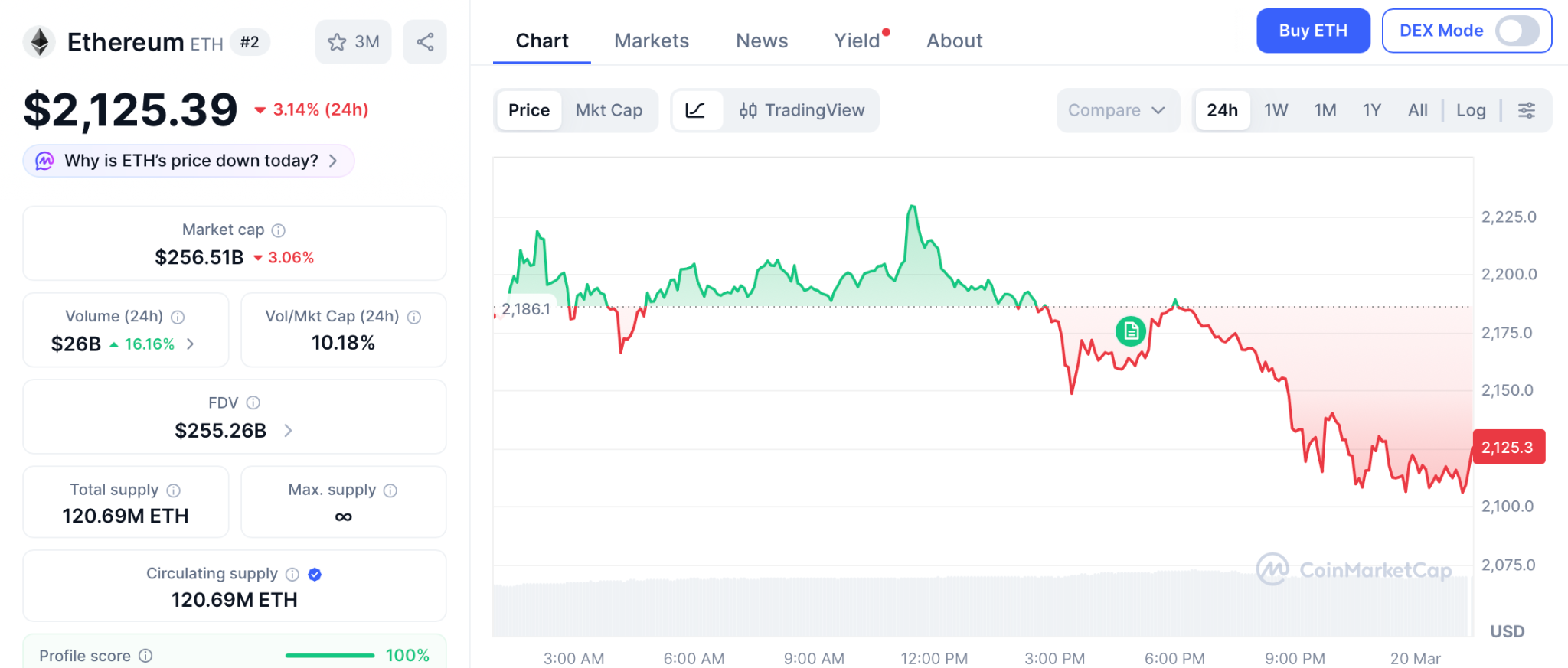
Analysts target $3,000 to $4,000 for 2026. A move from $2,200 to $4,000 is less than 2x, and that kind of gain takes quarters to deliver what a presale to listing event delivers in a single candle.
The Binance New Listing Announcement Debate Keeps Growing but the Entry at $0.000000186 Will Not Wait for the Market to Feel Ready
The market structure bill is moving toward a vote and fresh capital is about to flood into crypto. The correction feels heavy and the fear is real. But that is exactly why the biggest entry is sitting in front of you right now. Every cycle ended the same way: the wallets that moved during fear built the wealth, and the ones who waited bought at prices set by the people who acted first.
The person who created the original Pepe coin is building an exchange at $0.000000186 with a clean audit and a Binance listing approaching. The Pepeto official website is where the wallets that refuse to carry regret into the next year are committing capital right now, and the correction will not keep this entry open forever.
Click To Visit Pepeto Website To Enter The Presale

FAQs
What does the latest binance new listing announcement speculation mean for presale investors?
The market structure bill is moving and regulatory clarity reprices audited presales first. Pepeto at $0.000000186 with three live tools and a Binance listing is positioned for exactly that moment.
Why is Pepeto part of the binance new listing announcement conversation?
Pepeto crossed $8 million, passed a SolidProof audit, and has a confirmed Binance listing approaching. The exchange products are live before trading begins.
Is Pepeto a good investment before the Binance listing?
More than $8 million entered during extreme fear with 196% staking live. Visit the Pepeto official website before the listing closes the presale window.
Disclaimer: This is a Press Release provided by a third party who is responsible for the content. Please conduct your own research before taking any action based on the content.


The SEC just handed tokenized stocks their biggest legitimacy moment ever, and it happened inside the world’s second-largest stock exchange.
Nasdaq’s SEC-approved pilot allows eligible participants to trade tokenized Russell 1000 stocks and major index ETFs on the same order book at the same price, with the same rights as traditional shares.
But tokenized stocks are still stocks: they simply can’t offer more than 10–15% returns. The crypto market is different because you can find early-stage projects like DeepSnitch AI and invest in them before the broader market notices they exist.
The SEC’s tokenized stock approval confirms that institutional capital is moving on-chain at scale, and when that happens, DeepSnitch AI will be at the forefront with its live AI tools. This is why many believe we should expect a DSNT Binance new listing announcement soon.
SEC approves Nasdaq’s tokenized stock trading pilot
The SEC has approved Nasdaq’s proposal to run a tokenized stock trading pilot, allowing eligible participants to trade tokenized versions of Russell 1000 stocks and major index ETFs.
The regulatory approval is the breakthrough that the tokenized equities sector has been waiting for. Until now, tokenized stock products have operated largely outside US markets, and this pilot puts tokenization directly inside the world’s second-largest stock exchange.
The approval dramatically accelerates tokenization’s legitimacy and adoption timeline. Combined with NYSE’s OKX partnership and DTCC’s Canton Network integration, the US financial infrastructure is now actively building blockchain-based settlement rails.
The tokenized equities market, currently at $1 billion on-chain, now has a regulated, exchange-backed pathway to scale orders of magnitude larger.
Top 3 Binance new listing announcements
DeepSnitch AI
The SEC just approved tokenized Russell 1000 stocks for on-chain trading. That’s a product designed for institutional allocators who want equity exposure without leaving the blockchain, and it will generate moderate annual returns. DeepSnitch AI was built for the traders who came to crypto looking for something very different from that.
In crypto, hesitation costs money. Markets rally and reverse in minutes, and if you’re reacting instead of anticipating, the move is gone by the time you see it. As Nasdaq’s tokenized stocks bring traditional finance participants on-chain, they will eventually start looking for the real asymmetric returns.
DeepSnitch AI is the intelligence platform that bridges that discovery: scanning whale movements, auditing contracts, decoding sentiment shifts, and surfacing opportunities before they reach mainstream attention. That’s the gap the SEC’s approval makes more valuable, not less: more participants, more capital, more noise, and more need for a tool that cuts through all of it.
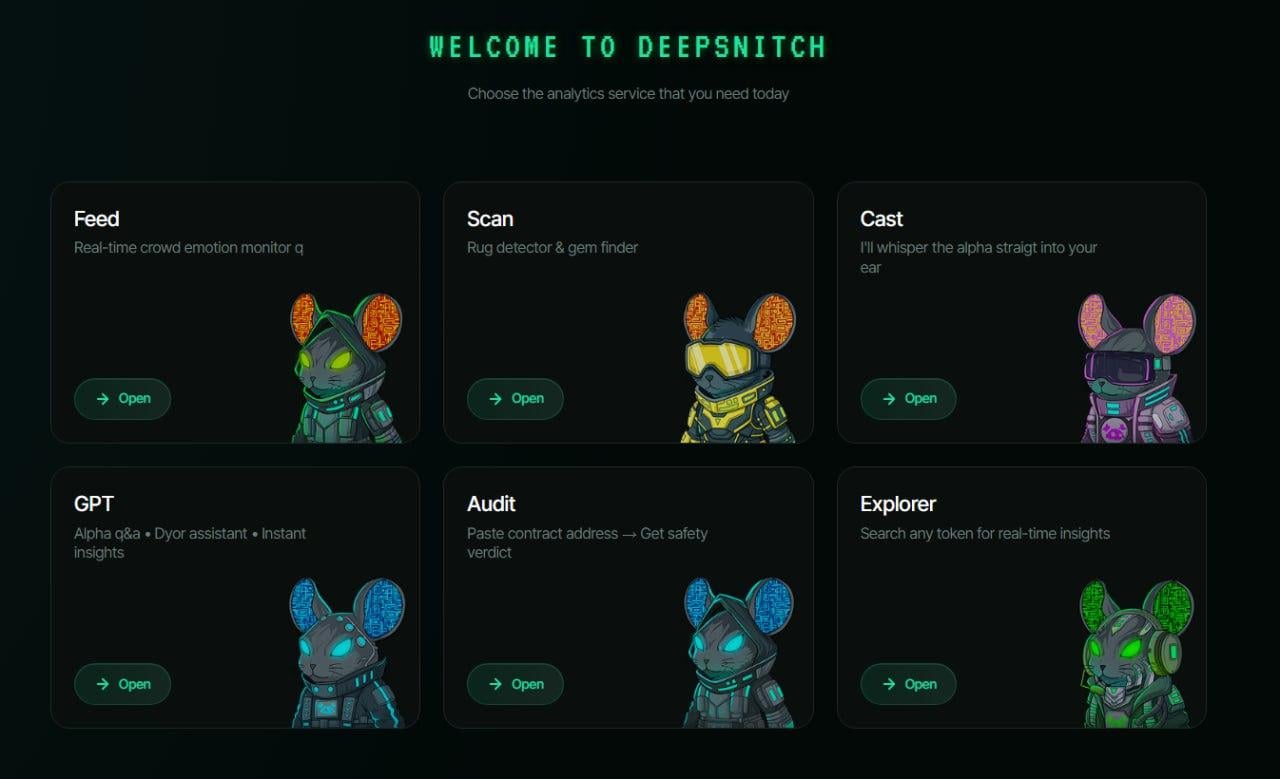
Now in Stage 7 at $0.04487, with 200% gained from the original entry price and over $2.20 million raised, the Binance new listing announcement conversation looks like the natural next step for a project that already meets the criteria. Binance lists products with real utility and proven user demand. DSNT has both.
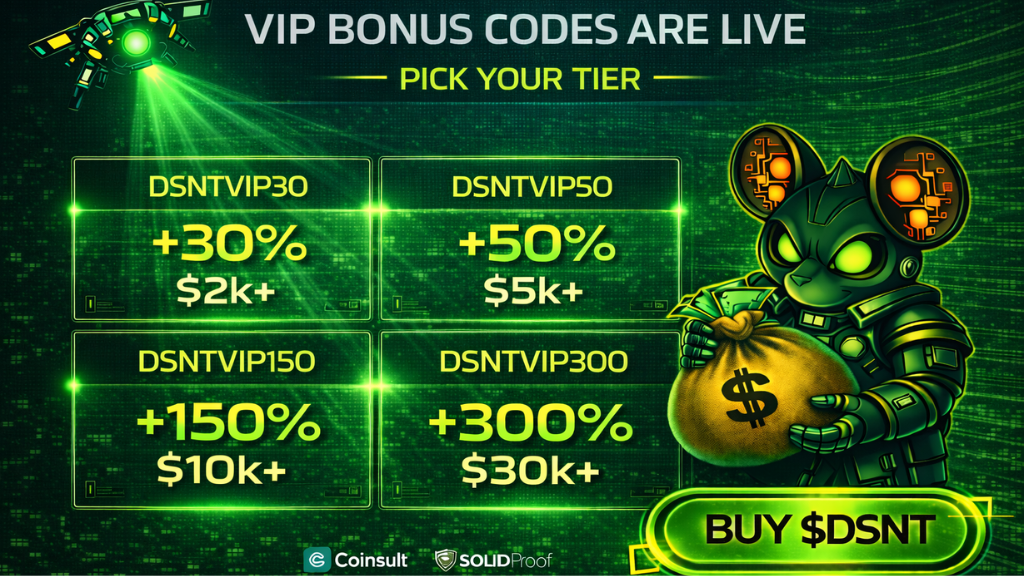
The presale closes March 31st. After that, a 7-day claim frame opens for tokens and bonuses, then Uniswap goes live. The tier-1 CEX listings follow from there, and none of those buyers get into DeepSnitch AI at $0.04487.
Fabric Protocol
Fabric Protocol builds financial infrastructure for autonomous robots: on-chain identities, wallets, and independent transaction settlement. The gap is real and largely ignored: today’s robots can’t open bank accounts or own assets.
The token model holds up. ROBO powers every network interaction, while demand ties directly to usage. The veROBO governance mechanism and 12-month cliff with multi-year vesting signal long-term alignment, not short-term extraction.
The development sequencing is pragmatic. Base first for rapid prototyping, purpose-built Layer 1 later for machine-native high-frequency operations.
Katana
Katana combines concentrated liquidity pools, auto-compounding yield optimization, ZK-privacy infrastructure, and a purpose-built Layer 2 on Polygon’s AggLayer into one integrated DeFi ecosystem. The bet is that the integration itself becomes the differentiator in a market where single-feature competition no longer wins.
The concentrated liquidity pools claim up to 4000x greater capital efficiency than traditional AMMs. Cross-protocol yield optimization automatically shifts capital to the highest-performing opportunities. Both target the manual complexity, keeping institutional capital off DeFi entirely.
The institutional angle sharpens the strategy. ZK-privacy tools, enterprise API integrations, and customisable regulatory reporting remove the infrastructure barriers that blocked traditional finance from engaging, not a lack of interest.
The bottom line
The SEC just blessed tokenized stocks, while DeepSnitch AI has launched the AI-native crypto intelligence: first, live, and ahead of the crowd.
Think Bloomberg Terminal crossed with ChatGPT, purpose-built for the only market that never sleeps.
That’s why $2.20M landed in the presale before a single exchange listing and why the Binance new listing announcement conversation is already happening. March 31st is the hard stop.
Visit the official website for more information, and join X and Telegram for community updates.
FAQs
What are the most anticipated upcoming Binance listings as tokenized stocks gain SEC approval?
Among upcoming Binance listings, DeepSnitch AI generates the strongest anticipation: a confirmed Uniswap debut on March 31st, a working AI platform with $2.20M raised, and a track record that meets Binance’s criteria for real utility and user traction.
What does the latest Binance listing news reveal about which projects qualify for tier-1 exchange exposure?
The latest Binance new listing announcement news consistently favors projects with live products and proven user demand. DeepSnitch AI checks both boxes.
How does DeepSnitch AI position itself for upcoming Binance listings compared to Fabric Protocol and Katana?
DeepSnitch AI was better positioned for upcoming Binance listings than Fabric Protocol or Katana. Both are still building toward product-market fit, while DSNT already delivers live intelligence tools and a confirmed March 31st Uniswap launch as its starting point.
Disclaimer: This is a Press Release provided by a third party who is responsible for the content. Please conduct your own research before taking any action based on the content.
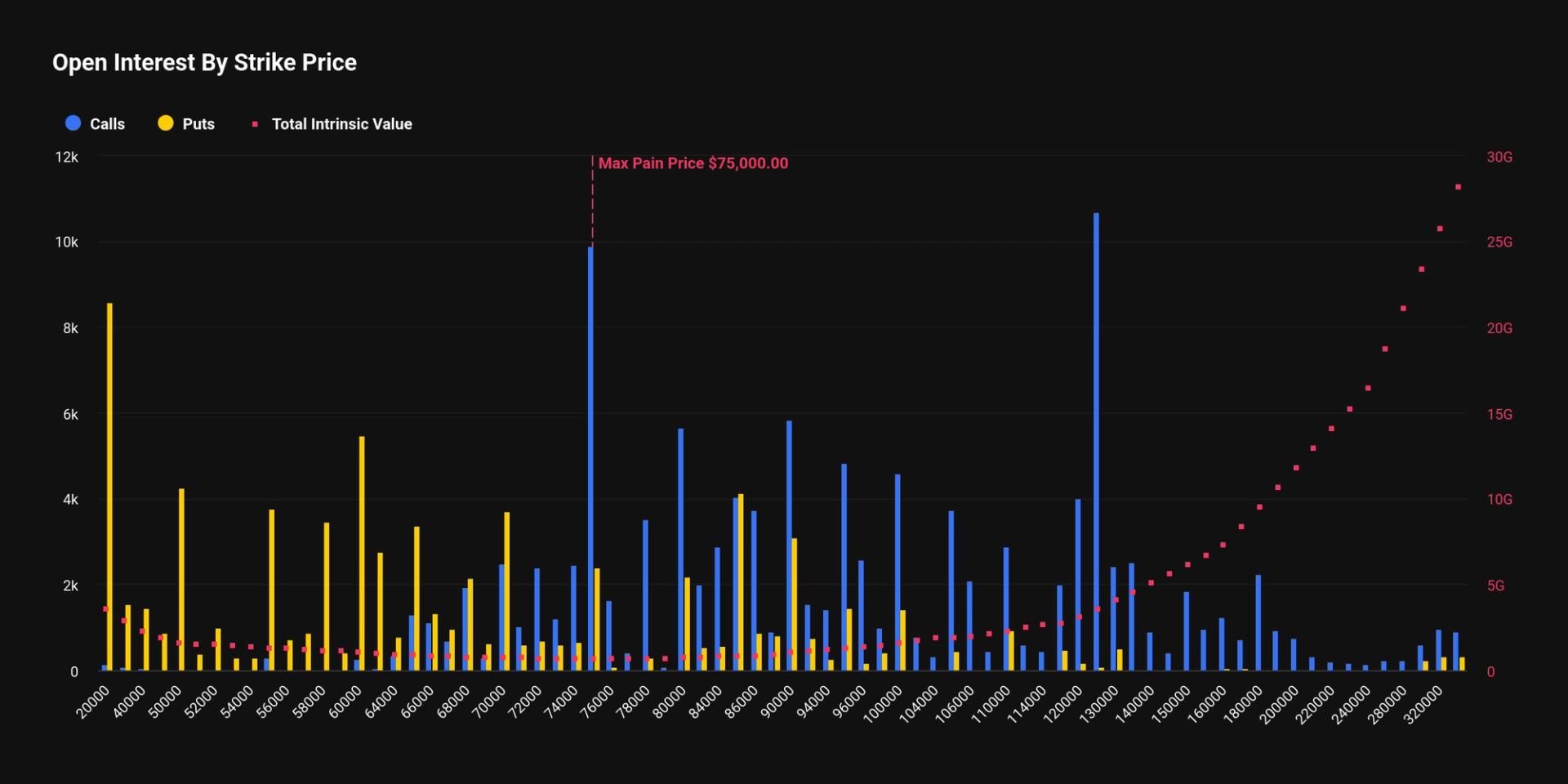
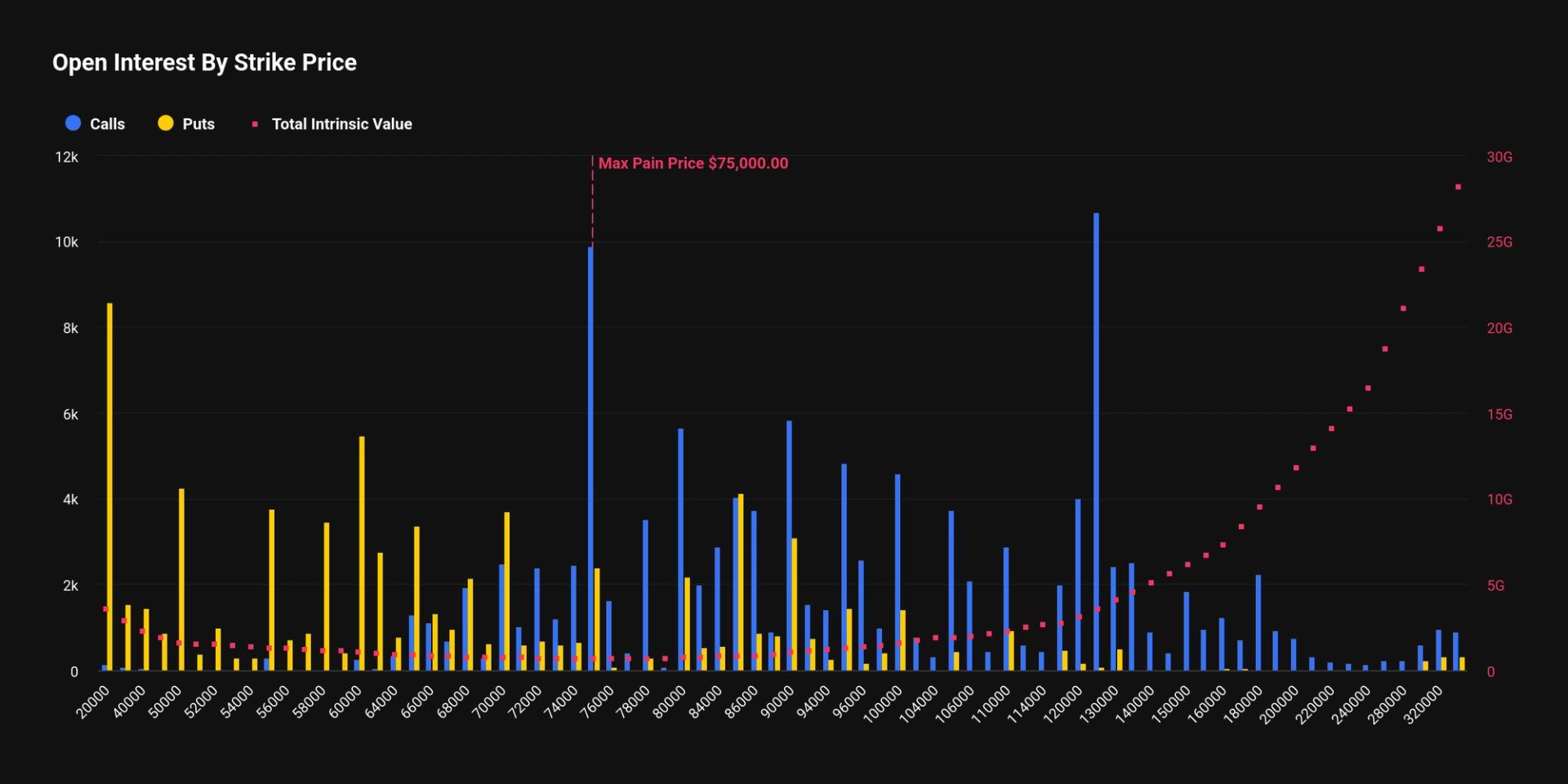
Nearly $600 million worth of $20,000 bitcoin put options has emerged as the third most popular strike ahead of Deribit’s quarterly expiry, showing how traders are positioning for extreme downside scenarios due to the Middle East conflict.
A put option gives the holder the right, but not the obligation, to sell bitcoin at a predetermined price. With bitcoin trading below $70,000, the $20,000 strike is considered deep out of the money, meaning it would only gain value in the event of a sharp market collapse, or a 70% drawdown from current prices.
Roughly $596 million in notional value, the total dollar value of underlying contracts, is concentrated at the $20,000 strike, making it one of the three most dominant positions. The others sit at $75,000, with $687 million, and $125,000, with $740 million, highlighting a wide spread of expectations across both downside and upside scenarios.
Looking at it from face value, large positioning in a $20,000 put option could suggest fears of a meltdown. However, the structure of the market is more nuanced.
Much of this activity is likely driven by traders selling these far out of the money puts to collect premium, reflecting the low probability of bitcoin falling to $20,000 rather than a direct hedge against a crash. In other words, it is often a strategy tied to income generation or volatility positioning, rather than outright bearish conviction.
The total notional value of bitcoin options expiring on Deribit is $13.5 billion. While, even though the market is in extreme fear, the options market still leans slightly bullish, with a put call ratio of 0.63, indicating more call options than puts, typically used to express bullish views. Total open interest stands at 195,719 BTC, with 120,236 BTC in calls and 75,482 BTC in puts.
Meanwhile, the max pain level, the price at which the largest number of options expire worthless, is $75,000, which could potentially act as a magnet into expiry. As options market makers often hedge around this level, pulling price toward where the greatest number of contracts expire worthless.
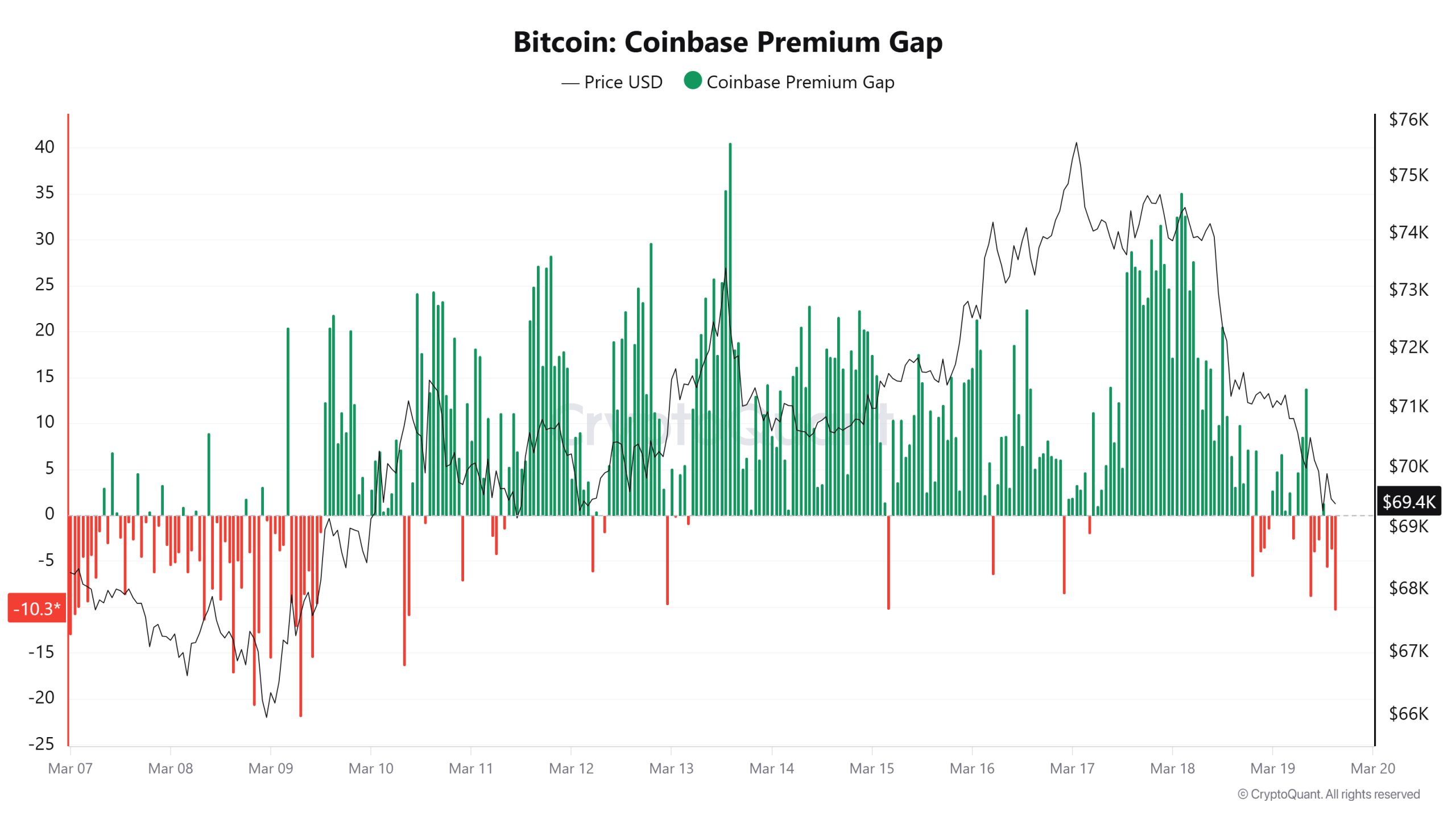
Bitcoin (BTC) dropped below $69,000 on Thursday, pulling the price back into its six-week range just days after tapping range highs above $76,000.
The pullback coincides with an increase in selling from Bitcoin futures markets and stalling demand from US-based investors, but the chance for a rebound rally remains. A recurring chart setup indicates that BTC can return to its bullish pathway if the necessary conditions are met.
Bitcoin futures set the trend as spot demand fades
The latest pullback aligns with a visible shift in derivatives’ dominance over spot activity. The Coinbase premium gap turned negative after a period of steady demand, pointing to weak follow-through from US-based investors.

Meanwhile, crypto analyst IT Tech noted a clear imbalance between the spot and perpetual futures. The cumulative volume delta (CVD), which tracks the net buying versus selling across markets, fell by $40.64 million for the spot CVD, while the perpetual CVD dropped by $506.75 million, highlighting stronger selling pressure from leveraged traders.

However, the funding rates have flipped positive to 0.05%, meaning long positions are now paying shorts, indicating a long bias across the derivatives markets.
The order book data shows bid-side support holding near the $70,000 region, with both spot and perpetual markets leaning toward buyers.
Related: OP_NET launches Bitcoin DeFi push without bridges or wrapped BTC
Fractal setup mirrors early-March bounce
On the lower timeframes, Bitcoin is forming a similar fractal setup to the March 6 through March 8 correction when the price declined and swept internal liquidity levels before reversing higher on the charts.
The current move follows the same sequence, with successive lower lows developing into a potential exhaustion phase for the price.

In the prior breakout, the reversal aligned with a bullish divergence on the relative strength index (RSI) indicator, where RSI held equal lows as the price printed a lower low. The pattern signaled a fading momentum from sellers. A comparable divergence is now developing, reinforcing the bullish fractal structure.
The liquidation data also supports this setup. Significant long-side liquidations have been observed on both occasions, reducing the open interest and flushing out overleveraged positions.

A swift reclaim of $70,000 aligns with the previous fractal recovery path, opening a move toward $76,000. The $72,000 level acts as the key pivot, where a reclaim may trigger a short squeeze if short positions get trapped.
However, the setup remains time-sensitive. A breakdown below $68,300 shifts focus toward the $65,000 and $62,000 levels, where higher time frame liquidity sits for BTC.
Trading Stables founder Ryan Scott flagged $73,000 as a key base level, noting that failure to stabilize above this level signals a weak buyer response, raising the chance for a drop to range lows near $62,000.
Related: Bitcoin prediction markets see 70% chance BTC price crashes to $55K in 2026
This article does not contain investment advice or recommendations. Every investment and trading move involves risk, and readers should conduct their own research when making a decision. While we strive to provide accurate and timely information, Cointelegraph does not guarantee the accuracy, completeness, or reliability of any information in this article. This article may contain forward-looking statements that are subject to risks and uncertainties. Cointelegraph will not be liable for any loss or damage arising from your reliance on this information.
Crypto World
Trillions in options set to expire Friday as quadruple witching tests crypto resilience
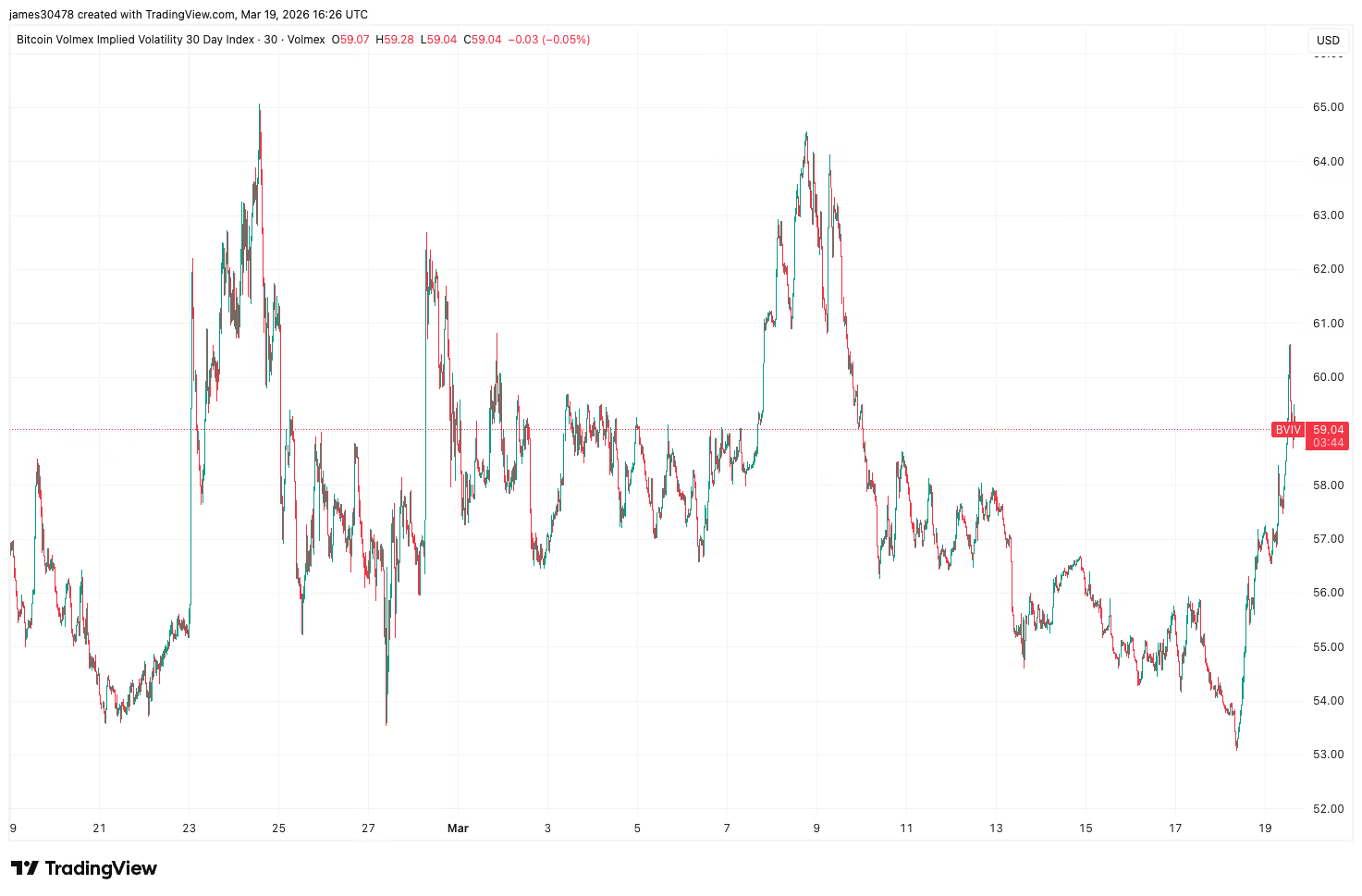
On Friday, global markets will face a trillions-of-dollars quarterly derivatives event known as quadruple witching.
The event occurs on the third Friday of March, June, September, and December, when four major types of derivatives expire simultaneously. These include stock index futures, stock index options, single-stock options, and single-stock futures.
Because traders must close, roll or settle these positions simultaneously, trading activity often surges, and price swings can intensify in the traditional markets.
Exact figures for the March 2026 expiry have not yet been published, though recent events illustrate the scale. In March 2025, roughly $4.7 trillion worth of equity and index derivatives expired during the quarterly event. According to TradeStation, that session saw the highest S&P 500 trading volume of the entire year, while other witching days also recorded above-average activity.
Large expiries like this often force institutions to rebalance portfolios, unwind hedges and adjust risk exposure within a short window. Much of the activity tends to concentrate in the final hour of trading, when liquidity spikes and volatility can increase rapidly.
This quarter’s expiration arrives during an already volatile trading environment. Conflict in the Middle East recently pushed oil prices to $120 per barrel, while gold slipped below $4,600 and bitcoin fell below $69,000. Meanwhile, the VIX volatility index jumped above 35 last week, the highest level in a year, signalling heightened stress in financial markets.
Although quadruple witching originates in traditional finance, it can spill into crypto markets. Bitcoin increasingly trades alongside broader risk assets, meaning sharp moves in equities often ripple into digital markets.
Cole Kennelly, CEO of Volmex Finance, said tomorrow’s event could drive volatility in crypto markets, noting that “quadruple witching could trigger a spike in cross-asset volatility as large derivatives positions expire. This may already be showing up in crypto, with the Bitcoin Volmex Implied Volatility (BVIV) Index trending higher into the event.”

How did bitcoin perform on quadruple witching days in 2025
On March 21, bitcoin was slightly down on the day, but the more significant move came later, with prices bottoming a few weeks afterward around $76,000 following the market reaction to President Trump’s “Liberation Day” tariffs.
On June 20, bitcoin declined 1.5% and continued drifting lower, reaching a local bottom near $98,000 just two days later. On September 19, Bitcoin fell over 1% on the day, but the real move unfolded in the following week, with a sharp drop from $177,000 to $108,000. Then, on December 19, bitcoin finished roughly 3% higher at around $85,000, though it remained in a broader drawdown from the October highs.
While price action on the day itself tends to be relatively muted, a consistent pattern of weakness emerges in the days to weeks that follow.
Even if the quad-witching doesn’t add to bitcoin’s volatility on Friday, crypto traders have another event, specifically for digital assets, to keep in mind.
Crypto derivatives face their own major quarterly expiry the week after, on March 27, with $13.5 billion set to expire on Deribit, where positioning points to elevated demand for volatility strategies rather than strong directional bets.
Michelle O’Neill backs ‘urgent meeting’ with Prime Minister on energy costs

FedEx (FDX) Q3 2026 earnings

Coinbase Commerce seed phrase page alarms security community ahead of March 31 shutdown

Smart energy pays enters the US market, targeting scalable financial infrastructure

Why Israel is blocking foreign journalists from entering

Bitcoin: We’re Entering The Most Dangerous Phase

PAKE LOT KECIL KAPAN KAYANYA? #belajarforex #forex #bitcoingold #tradingcuan #cryptocurrency

Crypto Futures Trading Full Course | Crypto Futures Trading For Beginners | SAGAR SINHA

How to Start Investing with Rs. 500 in Pakistan | Financial Literacy for Beginners
-
 Crypto World6 days ago
HYPE Token Enters Net Deflation as HyperCore Buybacks Outpace Staking Rewards
-

 Tech4 days ago
Your Legally Registered ‘Motorcycle’ Might Not Count Under Proposed US Law
-

 Fashion6 days ago
Weekend Open Thread: Addict Lip Glow
-
 Tech2 days ago
Are Split Spacebars the Next Big Gaming Keyboard Trend?
-
Sports5 days ago
Why Duke and Michigan Are Dead Even Entering Selection Sunday
-

 Business4 days ago
Search for Savannah Guthrie’s Mother Enters Seventh Week with No Arrests
-

 Business5 days ago
US Airports Launch Donation Drives for Unpaid TSA Workers as Partial Government Shutdown Enters Fifth Week
-
Crypto World5 days ago
Coinbase and Bybit in Investment Talks: Could Bybit Finally Enter the US Crypto Market?
-

 Business4 days ago
Australian shares drop as Iran war enters third week
-

 Business5 days ago
Country star Brantley Gilbert enters growing non-alcoholic beer market
-

 Crypto World4 days ago
Crypto Lender BlockFills Enters Chapter 11 with Up to $500M in Liabilities
-

 Sports6 days ago
College Basketball Best Bets: Conference Tournament Semifinal Picks
-

 Politics2 days ago
The House | The new register to protect children from their abusers shows Parliament at its best
-

 Fashion4 days ago
25 Celebrities with Curly Hair That Are Naturally Beautiful
-

 News Videos1 day ago
RBA board divided on rate cut, unusually buoyant share market | Finance Report | ABC NEWS
-

 Crypto World1 day ago
Canada’s FINTRAC revokes registrations of 23 crypto MSBs in AML crackdown
-

 Crypto World5 days ago
Crypto Losses Drop 87% in February, But Hackers Are Now Targeting People, Not Code
-
 Politics2 days ago
Real-time pollution monitoring calls after boy nearly dies
-
 NewsBeat1 day ago
Residents in North Lanarkshire reminded to register to vote in Scottish Parliament Election
-

 Business3 days ago
Meta planning major layoffs as AI spending and automation reshape workforce


You must be logged in to post a comment Login