
Crypto World
Vivek Ramaswamy Strive Beats Tesla in Bitcoin Holdings, Hikes SATA Dividend to 12.75%



Vivek Ramaswamy Strive Asset Management just passed Tesla on the corporate Bitcoin leaderboard.
The firm now holds 13,310.9 BTC worth roughly $944 million, claiming the 10th spot among public treasury holders. Tesla’s 11,509 BTC is now behind them.
The update came alongside Q4 results that also confirmed a dividend hike for SATA preferred stock to 12.75% and a $50 million investment in Strategy’s STRC preferred stock.
Strive is not just talking about Bitcoin. It is building a treasury to match.
- BTC Holdings: Strive now holds 13,310.9 BTC (~$944M), surpassing Tesla to enter the top 10 public treasuries.
- SATA Dividend: The board hiked the dividend on SATA preferred stock to 12.75% to attract yield-focused capital.
- STRC Investment: The firm deployed $50 million into Strategy’s STRC preferred stock to generate yield on its balance sheet.
Ramaswamy Strive’s Bitcoin Capital Stack: Funding the Buy
Strive is scaling its Bitcoin treasury fast using a mix of at-the-market offerings and structured finance instruments.
Since going public in September 2025, the firm has accumulated BTC through PIPE proceeds and its acquisition of Semler Scientific. The latest tranche added roughly 317 BTC.
The capital stack is deliberate. Strive purchased $50 million of Strategy’s STRC preferred stock to fund its SATA dividend program. Holding high-yield Bitcoin-backed instruments like STRC generates the cash flow needed to support the 12.75% payout while maintaining direct BTC exposure at the same time.
The numbers back the approach. Strive reported a Bitcoin Yield of 22.2% in Q4 2025. GAAP net loss came in at $393.6 million driven by fair value declines. But GAAP is not the metric investors in this playbook are watching. BTC per share accretion is. And that number is moving in the right direction.
What It Means for Corporate Adoption: A New Leaderboard
Passing Tesla is more than a leaderboard moment. Tesla has held a static position since its initial buys and partial sales. Strive represents something different entirely. A financial firm actively re-engineering its balance sheet around Bitcoin as a core strategy.
The shift is broader than one company. Institutional crypto is moving from passive holding to active treasury management. Evernorth built a SPAC around XRP reserves.
Strive is proving public markets will award a premium to companies that successfully securitize Bitcoin holdings. The model gives shareholders Bitcoin volatility plus a yield component through the 12.75% SATA dividend. Spot ETFs cannot offer that combination.
CEO Matthew Cole has signaled the accumulation is not slowing down. Over $83 million in cash remains on hand with a $500 million shelf offering still available. The buy walls are staying active.
The infrastructure is built. The capital is deployed. The race for balance sheet supremacy is accelerating and Strive just moved into the top 10.
Discover: The best new crypto in the world
The post Vivek Ramaswamy Strive Beats Tesla in Bitcoin Holdings, Hikes SATA Dividend to 12.75% appeared first on Cryptonews.


Ryde Group, a Singapore-based ride-hailing and carpool platform listed on the NYSE American, said on Wednesday that it will formalize a crypto treasury strategy for its corporate reserves. The plan contemplates allocating a portion of Ryde’s treasury to Bitcoin (BTC), Ether (ETH), and Solana (SOL), with exact allocations and timing to be determined by a governance team within the company, per its announcement.
The company argues that the evolving macroeconomic environment warrants a more flexible approach to treasury management, and says holding digital assets could offer additional options for optimizing capital and liquidity. Ryde emphasized that its crypto holdings will be stored with a third-party custodian, and that it has established an investment committee to oversee portfolio decisions and a separate risk management committee to ensure safety and regulatory compliance. These governance layers are designed to balance potential upside with prudent oversight.
Ryde’s stock, which trades on the NYSE American, traded down roughly 13% in early Thursday afternoon trading, trimming a year-to-date gain of more than 122% per Yahoo Finance. The company did not immediately respond to a request for comment by publication time.
Historically, Ryde began accepting Bitcoin as an in-app payment method in 2020 and later broadened support to include some altcoins. It remains unclear whether the platform currently accepts cryptocurrency for payments, but RydePay historically allowed users to convert supported cryptocurrencies into Ryde tokens to pay for services on the platform.
The move to crypto treasuries is noteworthy as the broader sector faces mounting headwinds. Industry data cited by Cointelegraph shows that digital-asset treasury firms have struggled with a challenging environment, including a September 2025 multi-asset net asset value (mNAV) collapse that left many treasuries trading below the value of their crypto holdings. In February 2026, monthly inflows into crypto treasury firms slowed to their lowest levels since October 2024, reaching about $555 million for the month. The sector’s fragility is also reflected in corporate actions like GD Culture Group (GDC) authorizing the sale of portions of its Bitcoin reserve to finance a share buyback, and in the challenges faced by Ether-backed treasuries such as BitMine Immersion Technologies, which reported substantial paper losses as Ether prices remained far from its average acquisition price.
Key takeaways
- Ryde Group plans a formal crypto treasury, allocating reserves to BTC, ETH, and SOL, with allocations and timing set by an internal governance team.
- Assets would be held with a third-party custodian, supported by an investment committee and a separate risk management committee to oversee compliance and risk.
- The development follows Ryde’s prior crypto usage for payments (BTC in-app payments started in 2020), though current acceptance for payments is not clearly stated.
- Ryde’s stock fell about 13% in Thursday trading, after a strong year-to-date rally, highlighting the market’s sensitivity to treasury-related disclosures and crypto volatility.
- Industry-wide data show a difficult environment for corporate digital-asset treasuries, with an mNAV collapse in 2025 and subdued inflows in early 2026, alongside corporate strategies to rebalance holdings (e.g., GD Culture Group and Ether treasuries).
Ryde’s treasury pivot and the path forward for corporate crypto strategies
Ryde’s announcement positions the company within a growing, albeit cautious, cohort of corporate treasuries embracing digital assets as part of their capital management playbooks. By formalizing a governance-driven framework, Ryde aims to navigate crypto volatility while seeking potential upside from long-hold assets like BTC, ETH, and SOL. The use of a custodian and dedicated governance structures points to a desire for regulatory compliance and risk containment, two features that have separated blue-chip treasuries from opportunistic trades in the sector.
Analysts and investors will want to watch several developments in the coming quarters. First, the allocation mix and the size of the crypto position will indicate how aggressively Ryde leans into digital assets relative to traditional cash holdings. Second, governance and risk-management processes will be tested as crypto markets move through cycles of volatility and regulatory inquiry. Finally, the company’s broader treasury strategy could influence investor sentiment around Ryde’s balance sheet resilience and capital allocation priorities in a sector where market dynamics and macro factors can trigger rapid revisions in corporate crypto plans.
Industry backdrop: what the broader market is telling treasuries
The trajectory of corporate digital-asset treasuries in 2025–2026 has been a study in contrasts. After a period of rapid expansion, the sector experienced a notable mNAV collapse in September 2025, with several treasuries trading below the net value of their crypto holdings. In February 2026, monthly inflows into crypto-treasury products slowed to about $555 million—the lowest since October 2024—signaling tighter appetite among corporate treasuries despite renewed interest in blockchain-enabled treasury solutions. This environment has also seen firms take measured actions, such as GD Culture Group authorizing the sale of Bitcoin reserves to finance a share-repurchase program, while others grapple with unrealized losses tied to ether prices in the market.
Observers emphasize that these conditions complicate the decision to deploy capital into crypto while underscoring the importance of robust governance, transparent reporting, and clear regulatory alignment for corporate treasuries. The Ryde move, if executed with discipline, could serve as a case study in how mid-cap, non-crypto-specific companies approach digital assets as part of a broader treasury strategy rather than as a speculative bet.
For readers, the next milestones to monitor include the specific asset allocations Ryde approves, the cadence of rebalancing, and the outcomes of its risk-management oversight. The evolving regulatory framework around corporate crypto holdings and the development of custodian standards will also shape how aggressively other non-crypto firms contemplate digital-asset treasuries in the future.
Sources linked in coverage and sector data provide a broader context for Ryde’s move: the company’s own announcement on the crypto-treasury shift, public stock-trading records such as Yahoo Finance for Ryde’s share movement, and sector analysis detailing mNAV developments and inflows data from Cointelegraph-reported industry metrics and CoinGecko-tracked treasury charts. These inputs help frame the decision as part of a wider re-examination of how companies balance risk, liquidity, and potential upside in a volatile macro environment.
What remains uncertain is how Ryde will calibrate its crypto exposure over time, how it will adapt to any regulatory changes, and what this means for user payments and partner ecosystems if the strategy yields meaningful reserve-driven flexibility. Investors and industry watchers will be paying close attention to whether Ryde’s framework can deliver tangible treasury resilience without compromising financial stability.


Animoca Brands has made a strategic investment in Ava Labs and entered a partnership to support projects building on the Avalanche blockchain, focusing on capital deployment, advisory support and expansion in Asia and the Middle East.
According to Thursday’s announcement by the Hong Kong-based Web3 company, the collaboration will target sectors including real-world assets, digital identity and entertainment, with Animoca providing business development support and access to regional networks to help Avalanche-based projects scale and reach institutional users.
Projects pursued under the partnership may also tap into the broader ecosystem of portfolio companies, Animoca said.
The effort is aimed at strengthening Avalanche’s position in markets where digital asset activity is growing, particularly by supporting deployments that require scalable infrastructure and compatibility with existing blockchain standards.
Animoca will also work with Avalanche developers on product integrations and funding opportunities, with an initial focus on projects seeking to launch and expand in the Middle East and Asia.
The initiative centers on connecting builders with capital and distribution channels, particularly for use cases such as tokenized assets and identity systems that target institutional and government-backed deployments.
Animoca Brands manages a portfolio of more than 600 blockchain projects, according to the company. In February, it secured a Virtual Asset Service Provider license from Dubai’s Virtual Assets Regulatory Authority, allowing it to expand crypto services in the region.
Ava Labs is a blockchain development company and core contributor to the Avalanche network, a layer 1 blockchain designed for high-speed, low-cost applications, with its native token AVAX (AVAX) used for transactions, staking and securing the network.
Neither company disclosed the size of the investment or specific projects that will receive funding under the initiative.
Related: VanEck expands crypto ETF lineup with spot Avalanche product
Hong Kong emerges as a regulated crypto hub
The expansion comes as Hong Kong, a special administrative region of China, continues to position itself as a digital asset hub.
In 2023, the city introduced a new licensing regime requiring crypto trading platforms to register with the Securities and Futures Commission, opening the door to regulated retail access under stricter investor protection rules.
In April 2024, Hong Kong approved its first spot Bitcoin (BTC) and Ether (ETH) exchange-traded funds, and in October 2025 okayed a spot Solana (SOL) ETF, becoming one of the first markets to do so ahead of the United States.
The city’s push into digital assets has since broadened beyond trading, with authorities and financial institutions advancing initiatives across stablecoins, tokenized bonds and blockchain-based trade finance.
In February, officials said a new digital asset platform would support the issuance and settlement of tokenized bonds, with plans to connect it to regional tokenization infrastructure and extend it to other assets.
Earlier this month, Hong Kong and Shanghai authorities agreed to collaborate on blockchain-based trade finance and cargo data, exploring a cross-border platform for digitizing trade documentation under the HKMA’s Project Ensemble initiative.
Magazine: Are DeFi devs liable for the illegal activity of others on their platforms?
Crypto World
DeepSnitch AI Price Prediction 2026: Why Analysts Are Calling 300x to 500x Before March 31

S&P Dow Jones Indices just licensed the S&P 500 to a crypto platform so traders can trade the world’s most-watched stock index on Hyperliquid 24 hours a day without touching a traditional stock exchange.
For traders who understand that move, the DeepSnitch AI price prediction story makes more sense than it ever has, because the tools that help you navigate a market that never sleeps are super important.
DeepSnitch AI is already running five live AI surveillance tools before the presale has even closed. River and QNT round out this list as two of the strongest cycle ROI plays for traders who want fundamental exposure alongside the parabolic entry.
The S&P 500 went on-chain 24/7
On March 18, S&P Dow Jones gave permission to Trade[XYZ] to use the S&P 500, so they can launch a perpetual futures version of it on the Hyperliquid blockchain.
The S&P 500 used to be something you could only trade during NYSE hours. Now it is a 24/7 on-chain position sitting next to your crypto portfolio, settling in stablecoins, with no broker in the middle.
And in a market that operates around the clock across both equities and crypto, the tools that tell you whether a contract is malicious before you sign it, where the whale money is moving in real time, and what the risk profile on a new token looks like before you size in are super important.
That is exactly the problem the DeepSnitch AI token forecast is built around solving, and the presale that gives traders access to those tools closes March 31 with no extension.
DeepSnitch AI price prediction: The only presale running live AI tools before listing
The current DeepSnitch AI price prediction from analysts sits at 300x to 500x from the presale entry price of $0.04487, and the case for that range is not built on hype, it is built on the fact that five AI surveillance tools are already running for traders every day before a single token has traded on a public exchange.
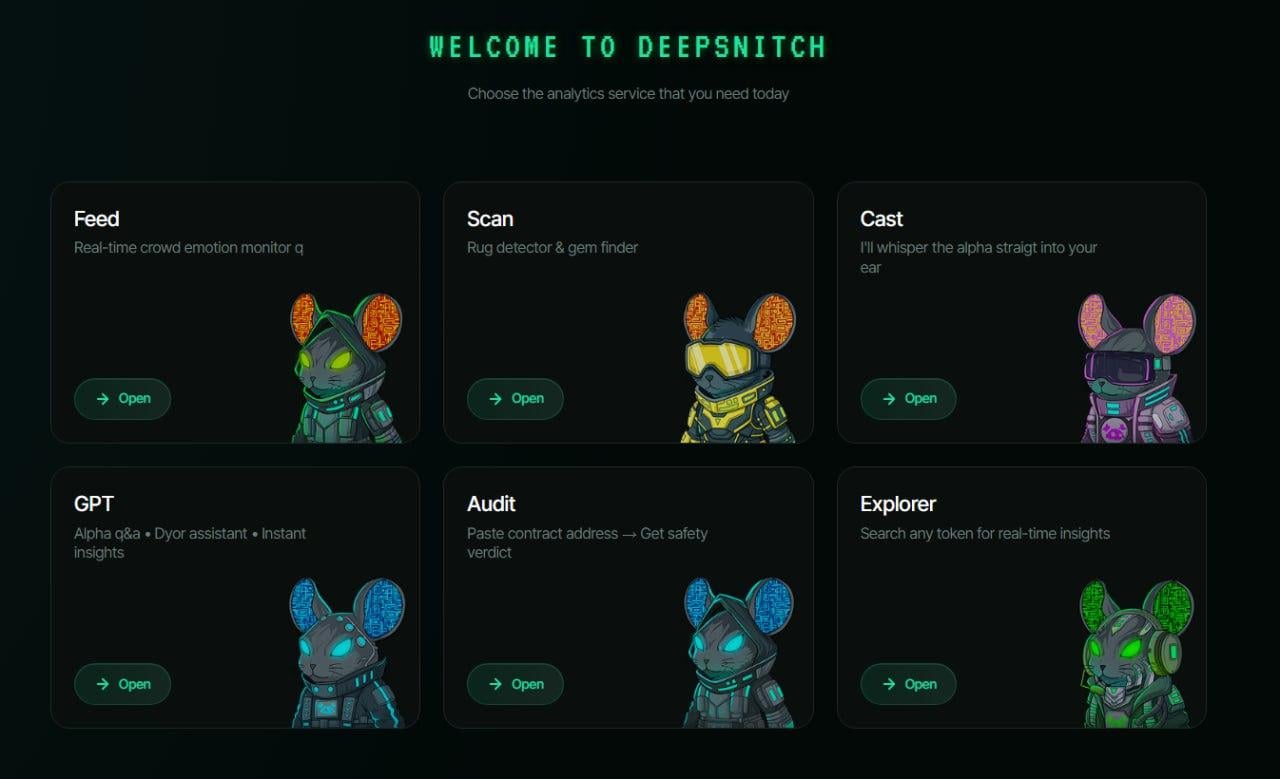
SnitchFeed helps you track whale activity in real time, so you see accumulation before the crowd catches on. AuditSnitch checks contracts before you approve anything, adding a layer of protection against rugs. SnitchGPT simplifies on-chain research, giving you clear data so you actually know what you are buying.
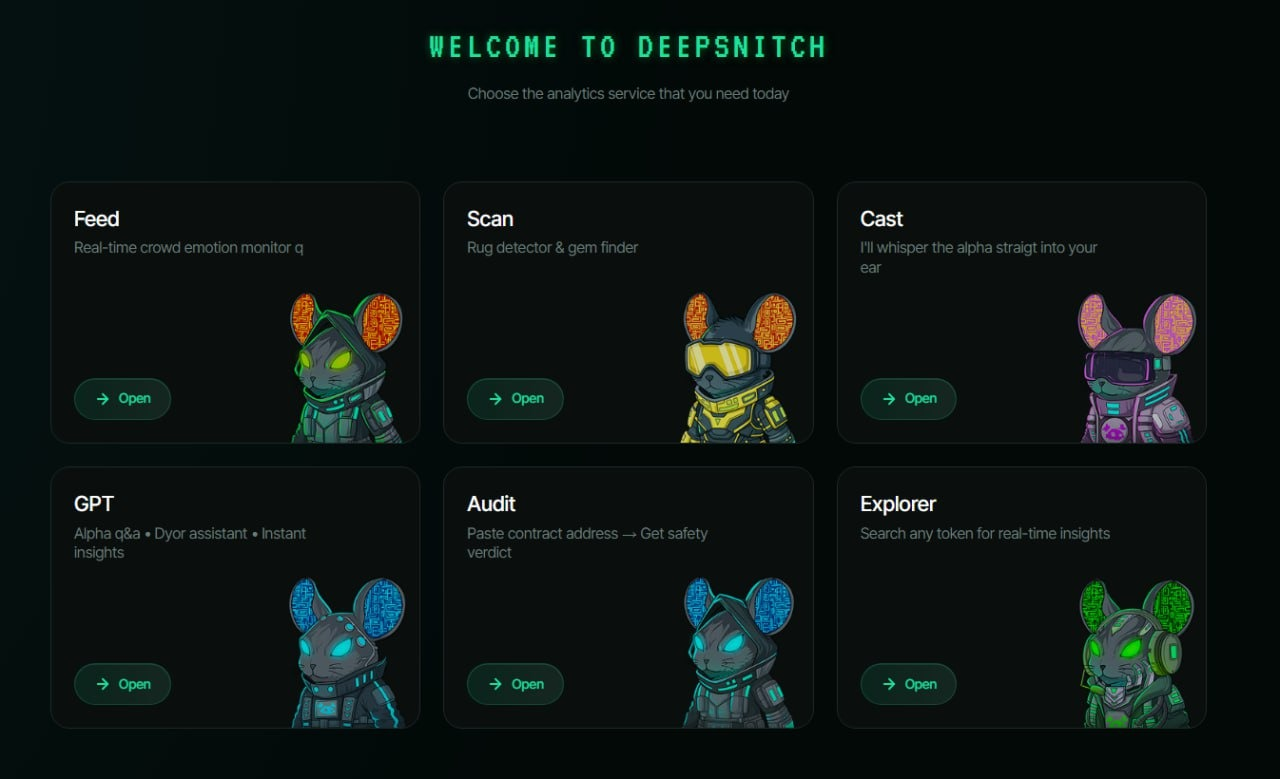
SnitchCast keeps you updated with live market insights, so you are never entering trades blind. Token Explorer breaks down any token in seconds, showing risk, holders, and liquidity before you put money in.
On top of that, the entire platform has been rebuilt for speed and clarity, so you can move fast under pressure without missing key information.
Over $2 million raised and early holders already sitting on 197% gains before the Uniswap listing has even opened, giving this presale a foundation that most traders spend entire cycles looking for and never find at this price.
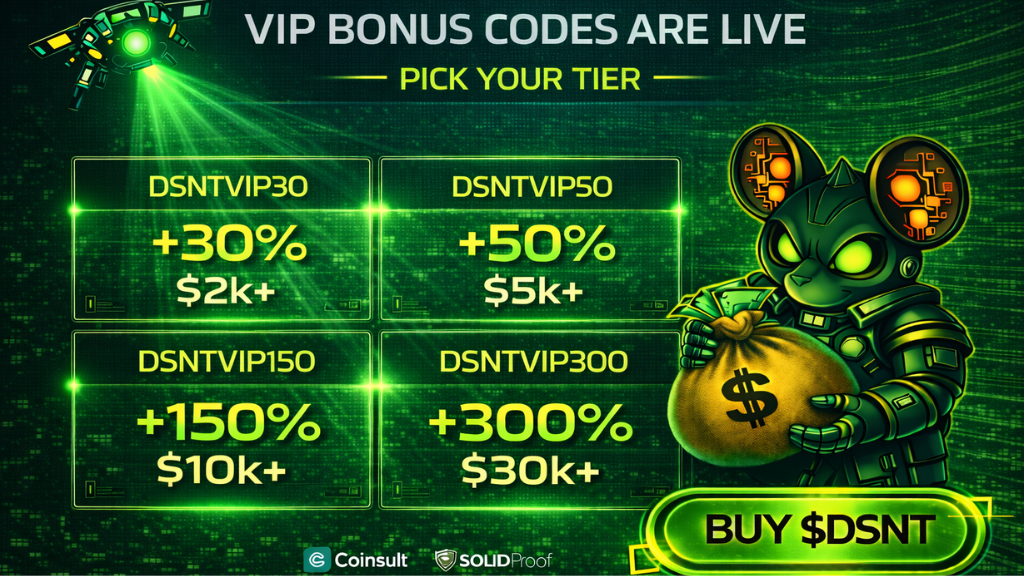
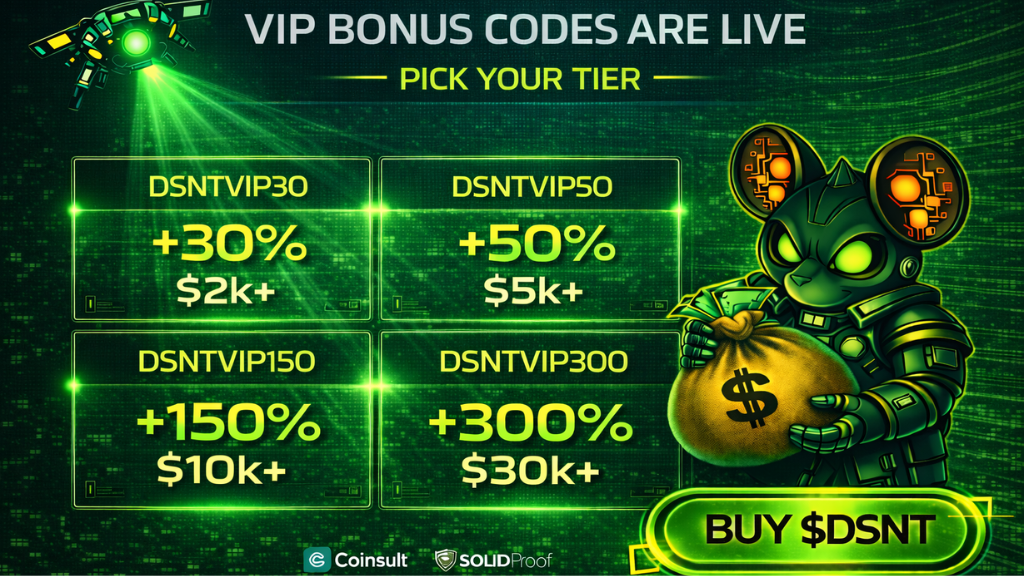
At $0.04487, the entry math is still working heavily in your favor, because your $15,000 through the 150% checkout bonus builds 835,748 $DSNT tokens in your wallet today. At the 300x analyst projection, that position is worth over $11.2 million.
Quant (QNT) price update for 2026
For a Deepsnitch AI price forecast trader looking for a foundational cycle hold with genuine enterprise traction behind it, QNT deserves a serious look right now.
QNT trades around $75 on March 19, down significantly from its all-time high of $428 reached in September 2021, and the 2026 price range puts the high at $280 from a current entry that is still well below the prior peak.
If you want a cycle hold with real government-level institutional adoption already confirmed and a fixed maximum supply of just 14.6 million tokens, QNT at current levels is one of the more asymmetric infrastructure plays available before the broader market connects those dots.
River (RIVER) price update for 2026
RIVER trades around $27 on March 19, down 71% from its all-time high of $87.73, and has already posted a 95% gain in the prior seven days against a broader market that moved just 2%, signalling that capital is beginning to rotate into the chain-abstraction narrative before the retail crowd recognises the setup.
The 2026 target sits at $50.38 and the long-term case for returning toward the $90 to $110 range depends on satUSD adoption across chains continuing at the current pace.
Bottom line
QNT sitting around $75 with CBDC pilots tied to big players like Barclays, HSBC, and the ECB, plus a tight supply, makes it a solid long-term hold. Some are even eyeing a $280 target for 2026.
RIVER at $27 is getting attention too, with satUSD expanding across multiple chains, a confirmed Justin Sun investment, and a strong 7-day run while the rest of the market stayed flat. It’s one of those early narrative plays traders like to catch before it gets crowded.
Both are legit holds with real backing. But they are already out there trading. No presale window, no bonus stacking, and no early-stage edge like getting in before everything goes live.
The DeepSnitch AI price prediction story is still at $0.04487 and March 31 is the close that locks that entry out permanently.
Go to the official DeepSnitch AI presale website, lock in your entry today, and follow X and Telegram to catch the listing as it happens.
FAQs
What is the DeepSnitch AI price prediction analysts are putting out ahead of the March 31 presale close?
The DeepSnitch AI price prediction sits at 300x to 500x from the $0.04487 presale price, backed by five live AI tools already running daily, dual audits from Coinsult and SolidProof, and 197% gains already confirmed for early holders before listing.
Is the DeepSnitch AI coin price prediction realistic, given that QNT and River are also bullish plays this cycle?
The DeepSnitch AI coin price prediction of 300x to 500x is grounded in a presale entry price that closes permanently on March 31, while QNT and River, both solid cycle plays, but neither offers the asymmetric ground floor math that $DSNT delivers before the Uniswap listing opens.
How does the DeepSnitch AI price forecast compare to holding QNT or River into the 2026 cycle?
QNT and River both are credible 2x to 13x plays, but the DeepSnitch AI price forecast of 300x to 500x from $0.04487 is on a completely different scale for traders who want the parabolic entry and can act before March 31.
Disclaimer: This is a Press Release provided by a third party who is responsible for the content. Please conduct your own research before taking any action based on the content.

Crypto World
Coinbase Commerce seed phrase page alarms security community ahead of March 31 shutdown
Coinbase Commerce’s seed phrase withdrawal page is drawing fierce criticism from security researchers, who warn it normalizes typing 12-word recovery phrases into a website just days before the March 31 shutdown deadline.
Summary
- A Coinbase Commerce subdomain at withdraw.commerce.coinbase.com/seed-phrase asks merchants to type 12-word seed phrases into a plain-text web form to recover funds.
- SlowMist’s Cos, CISO 23pds and on-chain sleuth ZachXBT say the page and its cloneable front end create a powerful phishing template, especially as Commerce is wound down into Coinbase Business by March 31, 2026.
- Critics argue the flow trains users to ignore the industry rule to never enter a seed phrase online, reviving fears after earlier Coinbase impersonation scams stole about $2 million from users.
A subdomain page belonging to Coinbase Commerce — the company’s merchant payments product — has drawn sharp criticism from leading blockchain security researchers after it was found to be prompting users to enter their 12-word seed phrases, also known as mnemonic or recovery phrases, directly into a web form in plain text. The controversy erupted on Wednesday and intensified Thursday morning, with the discovery coming at a particularly sensitive moment: Coinbase is winding down Commerce entirely by March 31, 2026, as part of a broader platform consolidation under Coinbase Business — meaning tens of thousands of merchants have a narrow window to withdraw their funds.
The page in question, hosted at withdraw.commerce.coinbase.com/seed-phrase, was referenced in a now-deleted Coinbase Commerce help document that directed users to recover funds by importing their recovery phrases into compatible wallets such as Coinbase Wallet or MetaMask. SlowMist founder Yu Xian (known online as Cos) described the practice as demonstrating an “unbelievable lack of security awareness” from a major industry player, having received multiple user reports about the page. On-chain investigator ZachXBT independently flagged the page, warning that its existence creates a direct attack surface for social engineering campaigns targeting Coinbase users.
The concerns go beyond the page itself. SlowMist’s Chief Information Security Officer, known as 23pds, escalated the alarm by pointing out that the page’s sitemap contains structural flaws that make it trivially easy for malicious actors to replicate. Using tools such as ResourcesSaver, attackers can download the front-end code and deploy visually identical phishing sites — particularly dangerous when combined with Coinbase-lookalike domains that could credibly deceive even experienced users.
The fundamental problem is one of normalisation. Every legitimate security protocol in the cryptocurrency industry is built on a single, non-negotiable principle: a seed phrase should never be entered into any website, form, or app under any circumstances — not even an official one. Seed phrases are the master cryptographic keys to a wallet; whoever possesses them owns the funds. By building a recovery workflow that requires users to type their phrase into a browser, Coinbase has — whether intentionally or through oversight — trained users to accept a behaviour that scammers routinely exploit. Coinfomania noted that the tool even suggests copying phrases from Google Drive as an intermediate step, compounding the risk.
ZachXBT’s warning carries particular weight given his track record. In January 2026, he exposed a Coinbase support impersonation scam that resulted in approximately $2 million in stolen crypto — a scheme that relied on users being conditioned to trust Coinbase-branded interfaces. The Commerce seed phrase page represents a ready-made template for a follow-up attack of potentially far greater scale.
As of Thursday, Coinbase had not publicly responded to the criticism, despite multiple requests for comment. The company has offered alternative withdrawal methods — including a separate commerce withdrawal tool considered safer by researchers — but has not removed or modified the seed phrase page. With twelve days remaining until Commerce is permanently disabled, the pressure on the exchange to act is mounting rapidly. For the crypto industry’s most prominent publicly listed company, the reputational stakes of a mass phishing event triggered by its own migration tooling could scarcely be higher.
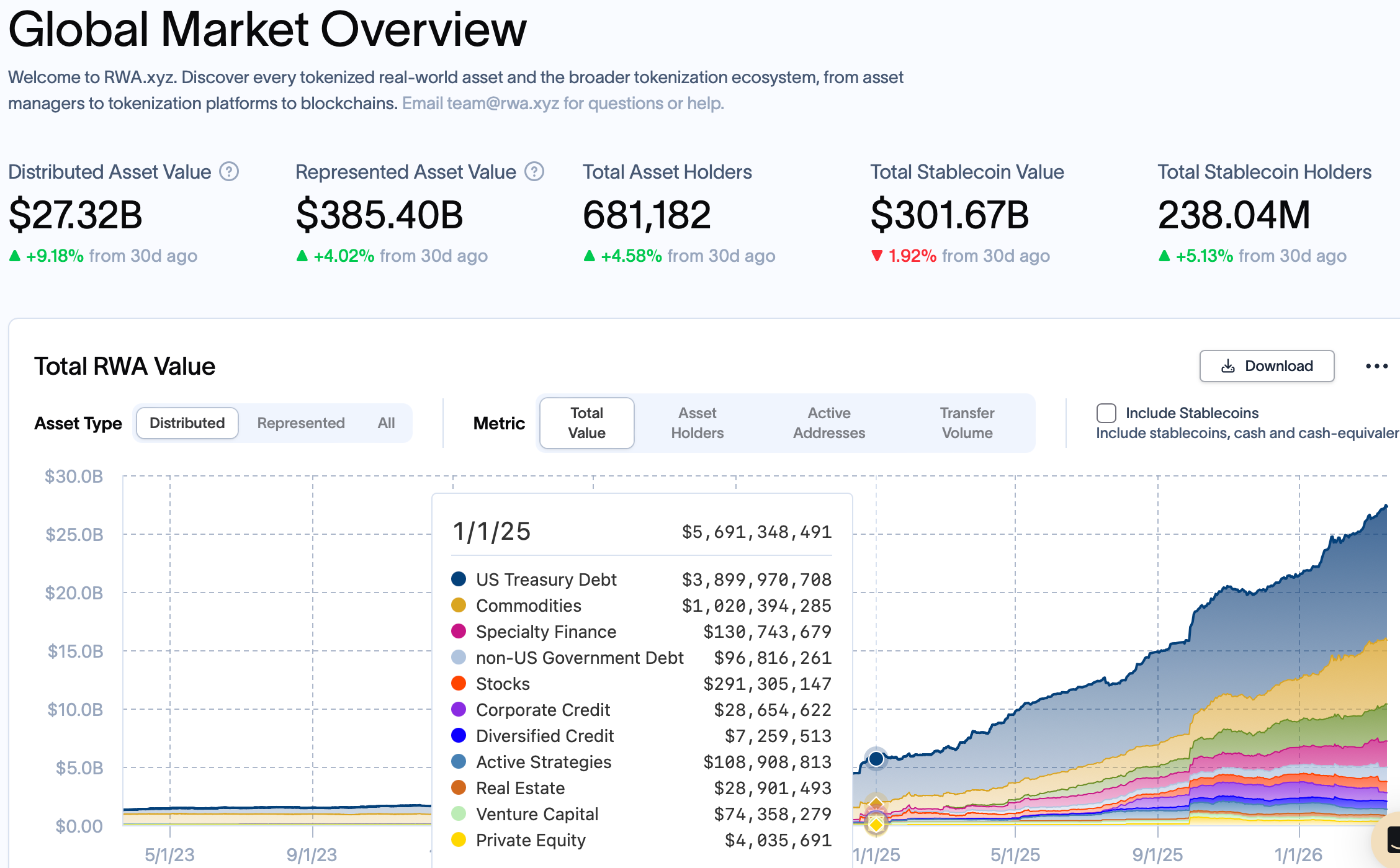
EtherFi has allocated $25 million to Plume’s real-world asset (RWA) protocol Nest, marking a move to integrate tokenized RWA yield directly into its platform as it looks to expand beyond crypto-native sources of return.
According to Thursday’s announcement, rollout will begin with exposure to Plume’s nBASIS vault, which is tied to Superstate’s USCC crypto carry fund, with plans to add a dedicated real-world asset vault directly into EtherFi’s interface in a later phase.
The initial allocation gives EtherFi users indirect exposure to a strategy combining crypto basis trades, staking rewards and government securities, a structure traditionally available only to institutional or sophisticated investors.
The integration will extend RWA exposure across EtherFi’s more than $6 billion in user deposits. According to Plume, the vault structure is designed to simplify access by handling execution and reporting onchain, while incorporating predefined risk controls and compliance features.
EtherFi is a crypto yield platform that began with Ethereum liquid staking and has since expanded into broader yield offerings, while Plume provides infrastructure that packages institutional investment strategies into onchain vaults, giving users exposure to institutional strategies managed offchain through integrated crypto platforms.
Plume has also taken steps toward integrating with traditional financial systems, including registering as a transfer agent with the US Securities and Exchange Commission in October.
Related: Babylon-Ledger tie-up expands access to Bitcoin Vaults for collateral use
Tokenized real-world assets activity surges
Unlike traditional DeFi yield, which is generated within crypto markets, real-world assets strategies derive returns from income streams such as interest on government securities and lending activity.
According to data from RWA.xyz, the value of tokenized real-world assets has surged to more than $27 billion from about $5.7 billion at the start of 2025. Much of that growth has been driven by tokenized US Treasury products, which account for over $11 billion in onchain value.

Tokenized Treasurys give investors onchain access to government-backed debt instruments, combining blockchain-based settlement with yield from short-term bills and money market funds.
Products from companies including BlackRock, Franklin Templeton and Circle account for a significant share of the market, with Circle’s USYC holding about $2.3 billion, BlackRock’s BUIDL fund around $2 billion and Franklin Templeton’s onchain fund over $1 billion in assets.

Plume reports 262,325 RWA holders holding more than $348 million in tokenized assets, with distributed asset value up 69% over the past 30 days, according to RWA.xyz data. Its Nest vault products are already live, including a basis-focused vault with more than $26 million in assets
In November, Plume co-founder and CEO Chris Yin told Cointelegraph that the tokenized real-world asset market could grow as much as fivefold this year.
He added that while most RWA value is currently concentrated in US Treasury bills, a maturing market and shifting interest rate environment are driving users to seek higher-yield opportunities elsewhere.
Magazine: Are DeFi devs liable for the illegal activity of others on their platforms?


The U.S. federal regulator of prediction markets has secured a formal information-sharing arrangement with Major League Baseball in the Commodity Futures Trading Commission’s first such deal with a professional sports governing body, according to a Thursday statement.
The “landmark” collaboration will allow the U.S. derivatives regulator to swap information with the organization that oversees professional baseball, even as the CFTC is still immersed in a legal debate with several U.S. state gaming regulators on who should have jurisdiction over bets on sporting events. The new memorandum of understanding will allow the federal agency to get a better handle on shielding the markets and their users from “fraud, manipulation, and other abuses,” according to a statement from CFTC Chairman Mike Selig.
“The MOU is a collaborative step towards promoting the integrity and resilience of the prediction markets relating to professional baseball,” he said.
“Protecting the integrity of the game on the field is our top priority,” MLB Commissioner Rob Manfred said in a Thursday statement. “By engaging in this community, we are able to work together to create clear boundaries with the goal of mitigating risk while providing fan engagement opportunities.
At the same time, popular platform Polymarket announced that MLB had named it the league’s official “exclusive prediction market exchange partner.”
The prediction markets — led by such companies as Polymarket and Kalshi — have erupted into sports, politics and other current events, leaving state and federal regulators trying to address their growing popularity. Though the CFTC had previously resisted the sector’s arrival and challenged some of its activity on legal grounds, the agency’s new management set by President Donald Trump embraced the technology.
To that end, Selig has been waging a rhetorical battle with state regulators, claiming that his agency’s authority supersedes the states’ reach on sports gambling.
Manfred told ESPN he saw the federal regulator having jurisdiction as marking the chief distinction that sets prediction-markets activity apart from state-based sports gambling regulations.
“The fact that you have a federal regulatory scheme makes our life a lot easier as opposed to … take for example, sports betting, where you’re going state by state,” he told the news outlet.
The CFTC is moving forward with its oversight of the sector despite a lack of regulations, which Selig said are coming. Proposing rules to govern prediction markets — a space that overlaps with his wider crypto agenda — is among the chairman’s top agenda items, he’s said.

Regulators are signaling a shift in digital-asset oversight as the SEC outlines an interpretive framework for applying securities laws to crypto. SEC Chair Paul Atkins, in prepared remarks at the Practising Law Institute, said the agency intends to move away from a broad enforcement-first stance toward a more principled, interpretive approach. The remarks follow the agency’s interpretive notice on crypto regulation and a memorandum of understanding with the CFTC signed last week.
“While the interpretation provides long-needed clarity, I should like to assure this audience that it amounts to a beginning, not an end,” Atkins told attendees, underscoring the framework is intended to evolve alongside market developments.
The interpretive notice, released earlier in the week, frames how federal securities laws may apply to crypto assets. It suggests that most cryptocurrencies are unlikely to be securities under federal law, with a narrow exception: traditional securities that are tokenized. Atkins later clarified that digital commodities, digital tools, digital collectibles including non-fungible tokens (NFTs), and stablecoins are typically not within the SEC’s purview.
Key takeaways
- The SEC signals a shift from enforcement-by-press release toward a interpretive, rules-based approach to crypto regulation after a new interpretive notice and a memorandum with the CFTC.
- Under the framework, most crypto assets are unlikely securities; only tokenized traditional securities would fall under federal securities laws.
- Assets like digital commodities, digital tools, NFTs, and stablecoins are generally not considered securities by the agency’s current interpretation.
- Regulatory progress intersects with Congress and the White House, as lawmakers push a market-structure bill (the CLARITY Act) and seek consensus on stablecoin regulation and crypto-asset provisions.
- Watch for how the evolving framework interacts with legislative efforts, potential CFTC authority expansion, and ongoing industry pilots and experiments.
Regulatory posture shifts amid a mixed legislative backdrop
The SEC’s interpretive stance arrives as part of a broader recalibration of how crypto regulation will be enforced and applied. The agency had long faced criticism for a perceived “enforcement-by-crisis” approach, especially for startups and projects navigating an evolving market. By contrast, the latest framework emphasizes clarity and consistency, aiming to reduce guesswork for issuers, exchanges, and investors while preserving robust investor protections.
The interpretive notice explicitly clarifies that, for many digital assets, existing securities laws may not apply in the same way as for traditional stocks or bonds. The acknowledgment that most crypto assets are not securities could lower some regulatory friction for many projects—though it also places a clear boundary around assets that would still be subject to securities regulation.
Atkins connected the interpretation to ongoing SEC coordination with the CFTC, noting the memorandum signed last week. The agreement signals an intent to harmonize approaches where possible, a relevant development given the overlapping jurisdictions in crypto markets, market infrastructure, and derivatives. The result could be a more predictable regulatory environment for token issuers and market participants, even as questions about enforcement and future rulemaking linger.
Contextual backdrop: market structure, stablecoins, and the legislative path
Beyond the SEC’s interpretive framework, lawmakers are actively shaping the arc of crypto regulation through legislation and hearings. A market-structure bill, known in industry circles as the CLARITY Act, advanced in the House in mid-2025 but has faced a slower path in the Senate. As of the latest briefing, it had not yet been scheduled for a markup in the Senate Banking Committee, leaving a critical regulatory hinge unresolved.
In parallel, the White House has engaged with lawmakers behind closed doors to advance the same package. A spokesperson for Wyoming Senator Cynthia Lummis confirmed that Republican senators met with White House crypto adviser Patrick Witt to discuss advancing the market-structure bill. Lummis’ team described the session as very productive and positive, with negotiators “99% of the way there on stablecoin yield” and ongoing, productive talks on the digital-asset provisions of the bill.
Stablecoins remain a focal point of regulatory and policy debate, particularly around yield, banking implications, and consumer protections. The sense among some policymakers is that achieving a workable framework for stablecoin issuance and redemption is a prerequisite for broader bipartisan consensus on crypto regulation.
The regulatory dialogue is further colored by ongoing market experiments and pilot programs. For example, the market has seen pilots exploring tokenized trading and other asset-ization concepts under the watchful eye of multiple agencies. While these pilots illustrate a regulatory appetite for innovation, they also underscore that practical, real-world testing will continue to inform how rules evolve in practice.
As the SEC’s interpretive framework takes root, traders, issuers, and developers should prepare for a regulatory environment that favors clarity and predictability but remains nuanced. The boundary between what constitutes a security in crypto, and what does not, will likely continue to shift as new asset classes and products emerge. The interplay between the SEC, the CFTC, and Congress will shape the pace and direction of this evolution in the months ahead.
Readers should watch for updates on the CLARITY Act’s progression in the Senate, any further formal guidance from the SEC, and on-the-ground outcomes from ongoing tokenization trials and stablecoin regulatory debates. The convergence of executive and legislative activity suggests that substantial clarity—across asset classes and market infrastructure—may still be months away, even as the groundwork for a more predictable regulatory framework takes shape.
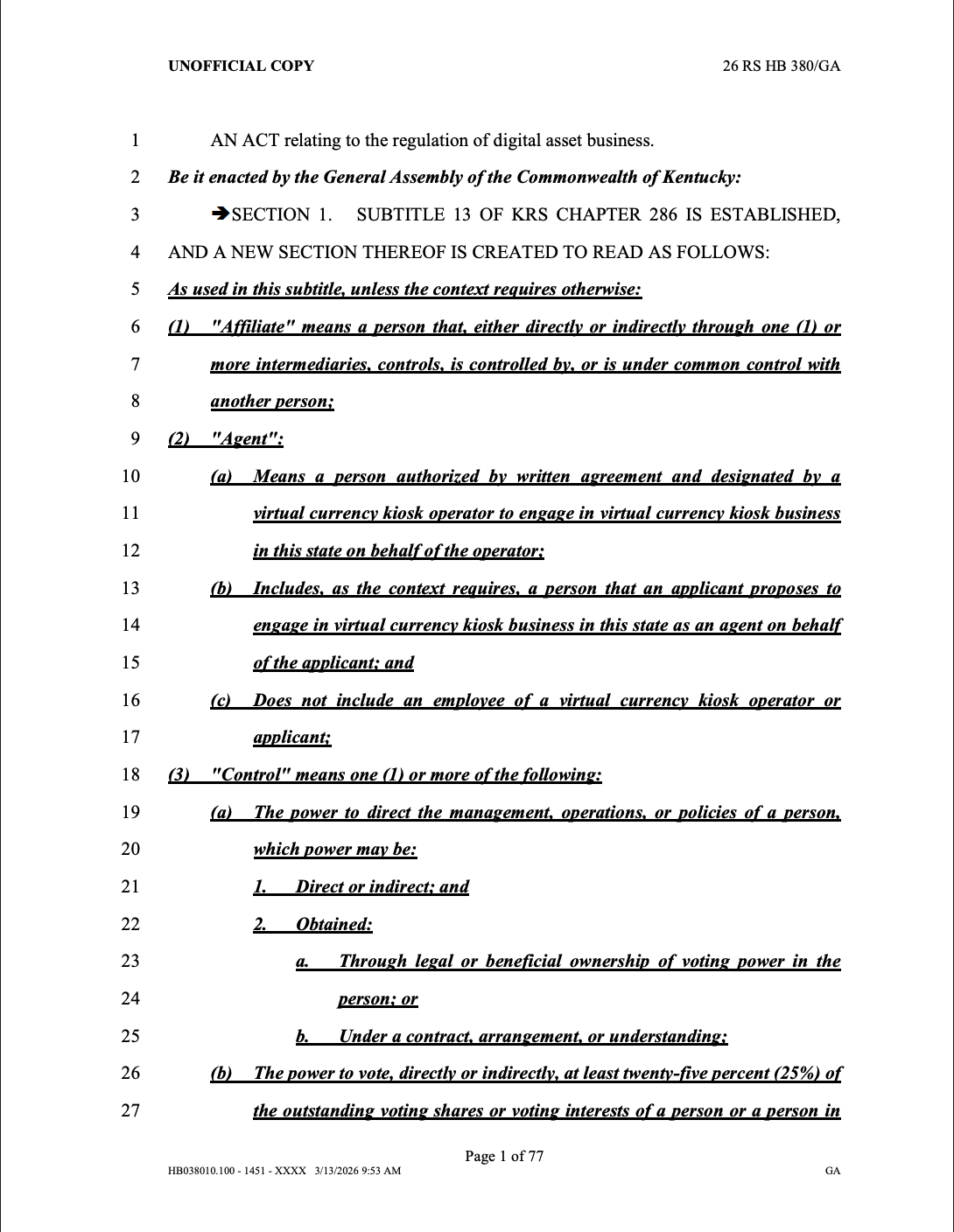
Kentucky House Bill 380, a state-level crypto regulatory bill, includes provisions that would force crypto hardware wallet manufacturers to build a “backdoor” into devices, Bitcoin (BTC) advocacy organization Bitcoin Policy Institute (BPI) has warned.
The provisions require crypto hardware wallet manufacturers to provide recovery options for users’ seed phrases, and were added to the bill in a “last-minute” floor amendment, BPI said. The amended Section 33 of the bill reads:
“A hardware wallet provider shall provide a mechanism for, and assist any person who owns a hardware wallet that was provided by the provider with, resetting any password, PIN, seed phrase, or other similar information that is necessary to access the contents of the hardware wallet.”
The sponsors of the legislation are state Representatives Aaron Thompson and Tom Smith.
The bill also proposes identity verification checks for users requesting a password, seed phrase, or PIN reset from a hardware wallet manufacturer.

“The mandate is technologically impossible for non-custodial wallets. Hardware wallets are specifically designed so that no one, including the manufacturer, can access or recover a user’s seed phrase,” BPI said in response.
The provisions threaten the self-custody of private keys, which is a foundational feature of cryptocurrencies, according to BPI, which added that requirements like this push users toward centralized custodians that are susceptible to hacks and business failures.

Related: BPI targets August for BTC tax relief, but warns time is running out
SEC officials defend the right to self-custody
US Securities and Exchange Commission (SEC) Chair Paul Atkins said he is “in favor” of market participants having self-custody options, especially in cases where intermediaries would impose a financial or operational burden on the user.
In November 2025, Hester Peirce, an SEC commissioner and head of the regulator’s Crypto Task Force, reaffirmed the right to self-custody and financial privacy, saying that both were foundational to freedom.
Peirce asked the hosts of the Rollup podcast in November 2025: “Why should I have to be forced to go through someone else to hold my assets?
“It baffles me that in this country, which is so premised on freedom, that would even be an issue — of course, people can hold their own assets,” she said.
Magazine: Bitcoin’s long-term security budget problem: Impending crisis or FUD?
Crypto World
Binance New Listing Announcement Talk Heats Up as Pepeto Presale Accelerates and the Window Before Listing Gets Smaller Every Day
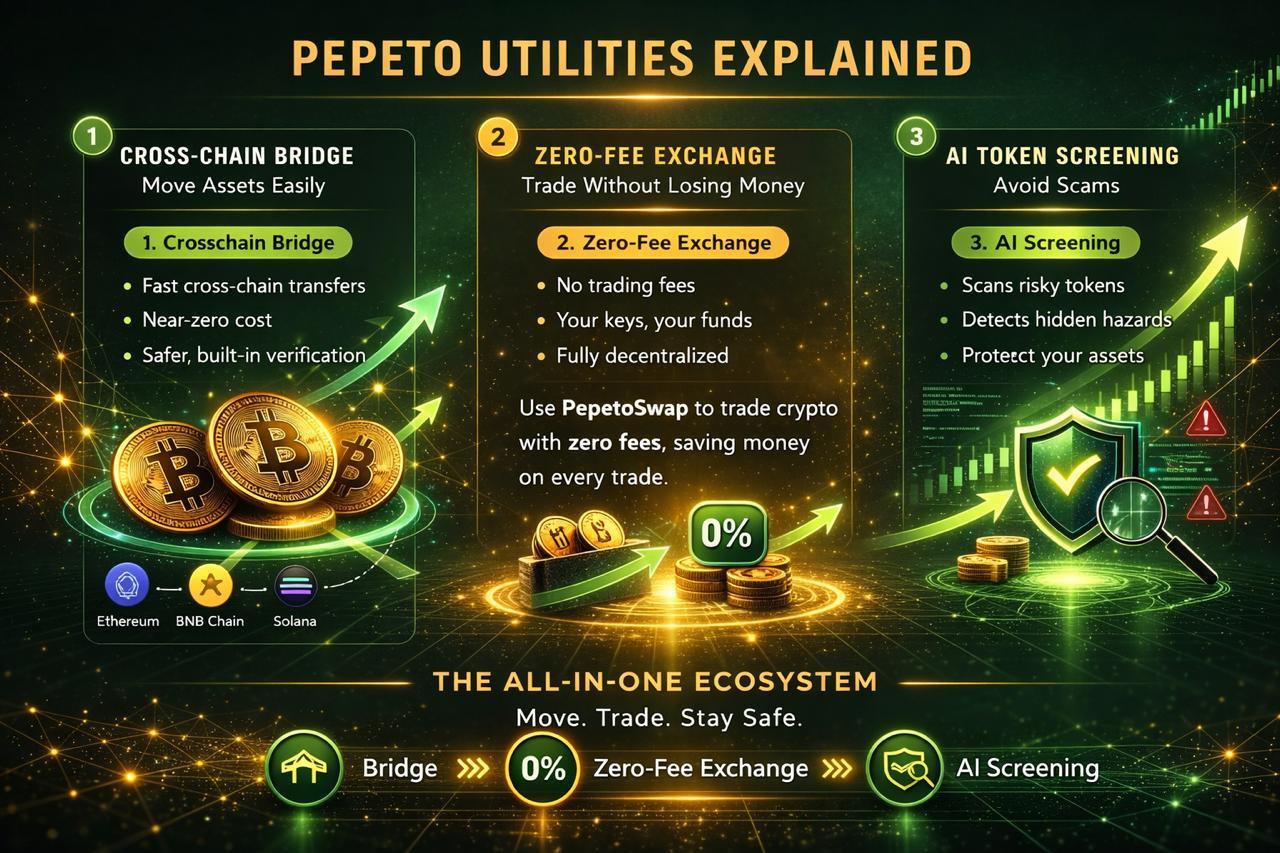
The stablecoin standoff in the Senate could break this week. Tim Scott, chair of the Banking Committee, said he expects the first compromise proposal on yield provisions before Friday. When that framework passes, every audited presale with working products enters a different pricing environment overnight.
The binance new listing announcement debate is picking up across every trading community, but the biggest opportunity right now is not the debate itself. It is the presale that already crossed $8 million during extreme fear and has a confirmed Binance listing approaching while most traders are still afraid to move.
Tim Scott told a DC crypto lobby event on March 18 that a breakthrough on the stalled market structure bill is within reach according to CoinDesk.
The FOMC held rates steady at 3.50% to 3.75% on March 19 and BTC slid from $76,000 to $69,000 on the decision according to CoinGecko. Binance new listing announcement speculation picked up as traders shifted focus toward audited presales with live products, expecting the regulatory clarity to reprice them first.
Binance New Listing Announcement Candidates and the Presale That Already Has the Products, the Audit, and the Capital
Pepeto Is Leading the Binance New Listing Announcement Conversation Because the Exchange Tools Are Live and the Capital Proves the Conviction
Capital is flowing again. Pepeto keeps pulling investment ahead of its Binance listing, and the wallets entering during a correction are not speculators chasing hype. The presale crossed $8 million at $0.000000186, and the three exchange tools are already live and verified before a single token trades publicly.
PepetoSwap stops your capital from bleeding through the fees that every other exchange takes on each position, so what you put in is exactly what works for you. The risk scorer reads every contract for hidden traps and flags the dangerous ones before your wallet ever signs anything, which means you stop losing money to scams that a quick scan would have caught.
Holders already inside are earning 196% APY compounding daily while they wait for the event that changes everything. All of that makes Pepeto the kind of entry that a binance new listing announcement rewards the hardest, because the products are built, the audit is done, and the community already committed real capital during fear.
The original Pepe coin reached $11 billion on 420 trillion tokens with nothing behind it. The person who created that project is now building Pepeto with three working tools and the same supply. Matching even a small part of that run from $0.000000186 is the kind of math that makes this correction feel like a gift. A former Binance expert on the dev team built the exchange from the ground up, and SolidProof cleared every contract before public capital entered.
The whales who loaded during fear at the same entry as retail understand what the listing does to this price, and once trading begins, every position bought today becomes the story the market tells for the rest of the cycle.
Solana Holds at $87 but the Recovery Math From $294 Takes Years Not Days
SOL trades at $87, down 69% from its $294.85 ATH according to CoinMarketCap. Spot Solana ETFs crossed $1 billion in assets. CoinCodex targets $137 by year end, roughly 52% from here.
Solid for a patient hold. But even tripling puts SOL at $270, still short of its own peak, and nowhere near the distance between a presale at $0.000000186 and a Binance listing.
Ethereum Sits Below $2,200 and the DeFi Foundation Delivers Foundation Returns
ETH trades near $2,125, roughly 55% below its $4,878 ATH according to CoinMarketCap. Over $50 billion in DeFi TVL keeps Ethereum as the default smart contract chain.
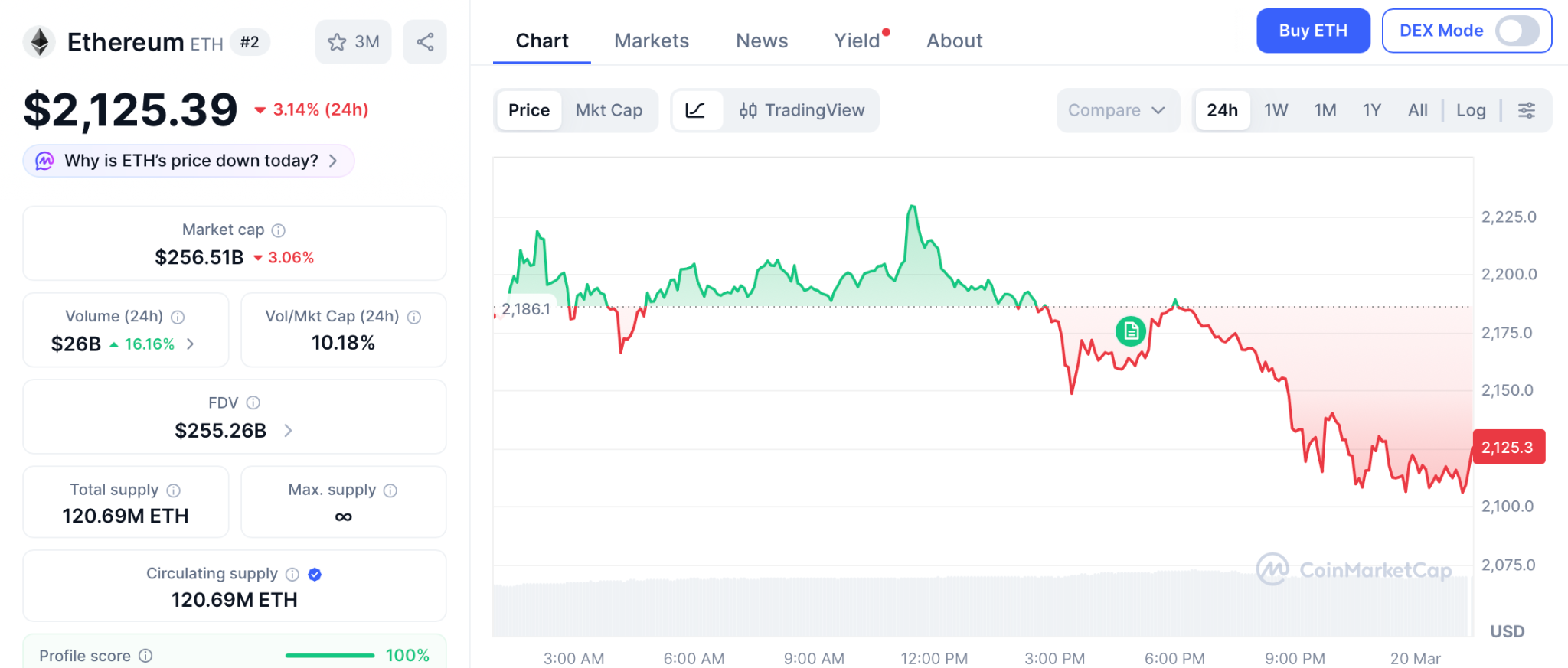
Analysts target $3,000 to $4,000 for 2026. A move from $2,200 to $4,000 is less than 2x, and that kind of gain takes quarters to deliver what a presale to listing event delivers in a single candle.
The Binance New Listing Announcement Debate Keeps Growing but the Entry at $0.000000186 Will Not Wait for the Market to Feel Ready
The market structure bill is moving toward a vote and fresh capital is about to flood into crypto. The correction feels heavy and the fear is real. But that is exactly why the biggest entry is sitting in front of you right now. Every cycle ended the same way: the wallets that moved during fear built the wealth, and the ones who waited bought at prices set by the people who acted first.
The person who created the original Pepe coin is building an exchange at $0.000000186 with a clean audit and a Binance listing approaching. The Pepeto official website is where the wallets that refuse to carry regret into the next year are committing capital right now, and the correction will not keep this entry open forever.
Click To Visit Pepeto Website To Enter The Presale

FAQs
What does the latest binance new listing announcement speculation mean for presale investors?
The market structure bill is moving and regulatory clarity reprices audited presales first. Pepeto at $0.000000186 with three live tools and a Binance listing is positioned for exactly that moment.
Why is Pepeto part of the binance new listing announcement conversation?
Pepeto crossed $8 million, passed a SolidProof audit, and has a confirmed Binance listing approaching. The exchange products are live before trading begins.
Is Pepeto a good investment before the Binance listing?
More than $8 million entered during extreme fear with 196% staking live. Visit the Pepeto official website before the listing closes the presale window.
Disclaimer: This is a Press Release provided by a third party who is responsible for the content. Please conduct your own research before taking any action based on the content.

The SEC just handed tokenized stocks their biggest legitimacy moment ever, and it happened inside the world’s second-largest stock exchange.
Nasdaq’s SEC-approved pilot allows eligible participants to trade tokenized Russell 1000 stocks and major index ETFs on the same order book at the same price, with the same rights as traditional shares.
But tokenized stocks are still stocks: they simply can’t offer more than 10–15% returns. The crypto market is different because you can find early-stage projects like DeepSnitch AI and invest in them before the broader market notices they exist.
The SEC’s tokenized stock approval confirms that institutional capital is moving on-chain at scale, and when that happens, DeepSnitch AI will be at the forefront with its live AI tools. This is why many believe we should expect a DSNT Binance new listing announcement soon.
SEC approves Nasdaq’s tokenized stock trading pilot
The SEC has approved Nasdaq’s proposal to run a tokenized stock trading pilot, allowing eligible participants to trade tokenized versions of Russell 1000 stocks and major index ETFs.
The regulatory approval is the breakthrough that the tokenized equities sector has been waiting for. Until now, tokenized stock products have operated largely outside US markets, and this pilot puts tokenization directly inside the world’s second-largest stock exchange.
The approval dramatically accelerates tokenization’s legitimacy and adoption timeline. Combined with NYSE’s OKX partnership and DTCC’s Canton Network integration, the US financial infrastructure is now actively building blockchain-based settlement rails.
The tokenized equities market, currently at $1 billion on-chain, now has a regulated, exchange-backed pathway to scale orders of magnitude larger.
Top 3 Binance new listing announcements
DeepSnitch AI
The SEC just approved tokenized Russell 1000 stocks for on-chain trading. That’s a product designed for institutional allocators who want equity exposure without leaving the blockchain, and it will generate moderate annual returns. DeepSnitch AI was built for the traders who came to crypto looking for something very different from that.
In crypto, hesitation costs money. Markets rally and reverse in minutes, and if you’re reacting instead of anticipating, the move is gone by the time you see it. As Nasdaq’s tokenized stocks bring traditional finance participants on-chain, they will eventually start looking for the real asymmetric returns.
DeepSnitch AI is the intelligence platform that bridges that discovery: scanning whale movements, auditing contracts, decoding sentiment shifts, and surfacing opportunities before they reach mainstream attention. That’s the gap the SEC’s approval makes more valuable, not less: more participants, more capital, more noise, and more need for a tool that cuts through all of it.
Now in Stage 7 at $0.04487, with 200% gained from the original entry price and over $2.20 million raised, the Binance new listing announcement conversation looks like the natural next step for a project that already meets the criteria. Binance lists products with real utility and proven user demand. DSNT has both.
The presale closes March 31st. After that, a 7-day claim frame opens for tokens and bonuses, then Uniswap goes live. The tier-1 CEX listings follow from there, and none of those buyers get into DeepSnitch AI at $0.04487.
Fabric Protocol
Fabric Protocol builds financial infrastructure for autonomous robots: on-chain identities, wallets, and independent transaction settlement. The gap is real and largely ignored: today’s robots can’t open bank accounts or own assets.
The token model holds up. ROBO powers every network interaction, while demand ties directly to usage. The veROBO governance mechanism and 12-month cliff with multi-year vesting signal long-term alignment, not short-term extraction.
The development sequencing is pragmatic. Base first for rapid prototyping, purpose-built Layer 1 later for machine-native high-frequency operations.
Katana
Katana combines concentrated liquidity pools, auto-compounding yield optimization, ZK-privacy infrastructure, and a purpose-built Layer 2 on Polygon’s AggLayer into one integrated DeFi ecosystem. The bet is that the integration itself becomes the differentiator in a market where single-feature competition no longer wins.
The concentrated liquidity pools claim up to 4000x greater capital efficiency than traditional AMMs. Cross-protocol yield optimization automatically shifts capital to the highest-performing opportunities. Both target the manual complexity, keeping institutional capital off DeFi entirely.
The institutional angle sharpens the strategy. ZK-privacy tools, enterprise API integrations, and customisable regulatory reporting remove the infrastructure barriers that blocked traditional finance from engaging, not a lack of interest.
The bottom line
The SEC just blessed tokenized stocks, while DeepSnitch AI has launched the AI-native crypto intelligence: first, live, and ahead of the crowd.
Think Bloomberg Terminal crossed with ChatGPT, purpose-built for the only market that never sleeps.
That’s why $2.20M landed in the presale before a single exchange listing and why the Binance new listing announcement conversation is already happening. March 31st is the hard stop.
Visit the official website for more information, and join X and Telegram for community updates.
FAQs
What are the most anticipated upcoming Binance listings as tokenized stocks gain SEC approval?
Among upcoming Binance listings, DeepSnitch AI generates the strongest anticipation: a confirmed Uniswap debut on March 31st, a working AI platform with $2.20M raised, and a track record that meets Binance’s criteria for real utility and user traction.
What does the latest Binance listing news reveal about which projects qualify for tier-1 exchange exposure?
The latest Binance new listing announcement news consistently favors projects with live products and proven user demand. DeepSnitch AI checks both boxes.
How does DeepSnitch AI position itself for upcoming Binance listings compared to Fabric Protocol and Katana?
DeepSnitch AI was better positioned for upcoming Binance listings than Fabric Protocol or Katana. Both are still building toward product-market fit, while DSNT already delivers live intelligence tools and a confirmed March 31st Uniswap launch as its starting point.
Disclaimer: This is a Press Release provided by a third party who is responsible for the content. Please conduct your own research before taking any action based on the content.

Entering a football match without a ticket? It will now be a criminal offence

Amazon acquires Rivr, maker of a stair-climbing delivery robot

Easter egg shoppers facing shrinkflation double whammy, warns Which?

Smart energy pays enters the US market, targeting scalable financial infrastructure

Why Israel is blocking foreign journalists from entering

Bitcoin: We’re Entering The Most Dangerous Phase

Rs.12,000 Per Acre Financial Aid for Farmers Under Rythu Bharosa Scheme | Latest updates | DAR FOCUS

PAKE LOT KECIL KAPAN KAYANYA? #belajarforex #forex #bitcoingold #tradingcuan #cryptocurrency

Crypto Futures Trading Full Course | Crypto Futures Trading For Beginners | SAGAR SINHA
-
 Crypto World6 days ago
HYPE Token Enters Net Deflation as HyperCore Buybacks Outpace Staking Rewards
-

 Tech4 days ago
Your Legally Registered ‘Motorcycle’ Might Not Count Under Proposed US Law
-

 Fashion6 days ago
Weekend Open Thread: Addict Lip Glow
-
 Tech2 days ago
Are Split Spacebars the Next Big Gaming Keyboard Trend?
-
Sports5 days ago
Why Duke and Michigan Are Dead Even Entering Selection Sunday
-

 Business4 days ago
Search for Savannah Guthrie’s Mother Enters Seventh Week with No Arrests
-

 Business5 days ago
US Airports Launch Donation Drives for Unpaid TSA Workers as Partial Government Shutdown Enters Fifth Week
-
Crypto World5 days ago
Coinbase and Bybit in Investment Talks: Could Bybit Finally Enter the US Crypto Market?
-

 Business4 days ago
Australian shares drop as Iran war enters third week
-

 Business5 days ago
Country star Brantley Gilbert enters growing non-alcoholic beer market
-

 Crypto World4 days ago
Crypto Lender BlockFills Enters Chapter 11 with Up to $500M in Liabilities
-

 Sports6 days ago
College Basketball Best Bets: Conference Tournament Semifinal Picks
-

 Politics2 days ago
The House | The new register to protect children from their abusers shows Parliament at its best
-

 Fashion4 days ago
25 Celebrities with Curly Hair That Are Naturally Beautiful
-

 News Videos1 day ago
RBA board divided on rate cut, unusually buoyant share market | Finance Report | ABC NEWS
-

 Crypto World1 day ago
Canada’s FINTRAC revokes registrations of 23 crypto MSBs in AML crackdown
-

 Crypto World5 days ago
Crypto Losses Drop 87% in February, But Hackers Are Now Targeting People, Not Code
-
 Politics2 days ago
Real-time pollution monitoring calls after boy nearly dies
-
 NewsBeat1 day ago
Residents in North Lanarkshire reminded to register to vote in Scottish Parliament Election
-

 Business3 days ago
Meta planning major layoffs as AI spending and automation reshape workforce


You must be logged in to post a comment Login