There’s a concept in economics known as Goodhart’s Law, often summarized as: “When a measure becomes a target, it ceases to be a good measure.” The idea, originally about monetary policy, has proven remarkably durable across domains. When you attach high enough stakes to a single metric, people stop trying to accurately reflect reality and start trying to game the metric. Schools teach to the test. Banks shuffle risk off their balance sheets to hit capital ratios. Hospitals reclassify patients to improve their reported outcomes.
Prediction markets were supposed to be immune to this. The whole pitch — the reason people like me found them conceptually interesting for years — was that because participants are putting real money on the line, they’d have powerful incentives to seek out and act on true information. Financial stakes, the theory went, would filter out noise and bullshit and produce a hopefully decently accurate signal about the probability of real-world events. The wisdom of crowds, sharpened by the discipline of the wallet.
What most people didn’t think through was the obvious corollary: what happens when you attach $14 million in stakes to a 150-word blog post by a war correspondent, and the gamblers decide it’s cheaper to threaten the journalist than to accept they made a bad bet?
Emanuel Fabian, a military correspondent for The Times of Israel, published an extraordinary account of what happened after he filed a routine item on March 10 about an Iranian ballistic missile striking an open area outside Jerusalem. No one was injured. It was, in the context of an ongoing war, a minor event. He reported it accurately and moved on.
Advertisement
Then the Polymarket bettors found him.
It turns out that more than $14 million had been wagered on a Polymarket bet titled “Iran strikes Israel on…?” with a clause specifying that intercepted missiles wouldn’t count. Fabian’s report — confirming that a missile warhead had actually impacted the ground — was standing between a lot of gamblers and a lot of money. And so began one of the most deranged campaigns of harassment against a journalist ever (and I’ve seen some pretty crazy campaigns against journalists).
It started with polite-sounding emails. A guy named “Aviv” writing in Hebrew, suggesting Fabian’s report didn’t “reflect reality.” Then “Daniel,” a day later, with the same question and a thinly veiled threat:
“Sorry for reaching out without a prior introduction, but I assume we will get to know each other well,” he wrote, in a somewhat threatening manner.
“I have an urgent request regarding the accuracy of your report on the missile attack on March 10. I would really appreciate a response if possible. There is an inaccurate report from you about the missile attack on March 10, and it’s causing a chain of errors,” Daniel’s email continued.
Advertisement
“If you could reply to me tonight… you would be helping me, many others, and, of course, the State of Israel. And along the way, you would gain a good source.”
When Fabian didn’t comply, the messages kept coming across every possible channel — email, WhatsApp, Discord, X. Someone fabricated a fake screenshot showing Fabian had agreed to change his story (which he most certainly had not), then circulated it on social media to pressure him further. Someone he knew from another news org even contacted him to say an acquaintance was asking him to convince Fabian to alter the report — and when confronted, that acquaintance admitted he was betting on Polymarket and offered to share winnings if the other journalist could get Fabian to change the story.
And then it got genuinely terrifying. After a quiet weekend, someone calling himself “Haim” started sending WhatsApp messages shortly after midnight:
“You have exactly half an hour to correct your attempt at influence,” he wrote.
“Despite the fact that you received countless inquiries — you insist on leaving it that way.”
Advertisement
“If you do not correct this by 01:00 Israel time today, March 15, you are bringing upon yourself damage you have never imagined you would suffer,” he threatened, in a very lengthy message.
And “Haim” kept escalating:
“You have no idea how much you’ve put yourself at risk. Today is the most significant day of your career. You have two choices: either believe that we have the capabilities, and after you make us lose $900,000 we will invest no less than that to finish you. Or end this with money in your pocket, and also earn back the life you had until now.”
After I didn’t respond, as I was asleep, Haim sent me another series of messages: “You are choosing to go to war knowing that you will lose your life as you’ve grown accustomed to it — for nothing.”
On Sunday morning, he messaged me again: “You have exactly a few hours left to fix your attempt at influencing [the market]. It would be stupid of you to ignore this.”
Advertisement
In short, people who made a bad gambling bet on a prediction market are threatening to kill a war correspondent because his accurate reporting is inconvenient for their wager. They referenced his home neighborhood, his parents, his siblings. They gave him countdown timers. Someone called him pretending to be a lawyer investigating him for “market manipulation.”
“If you decide to go with your ego and not with your head, you are leaving behind dozens of wealthy people from all over the world who will know that you performed market manipulation and stole from them. They know who you are, you don’t know who they are. It took them less than 5 minutes to find out exactly where you live … how often you see your lovely parents … and exactly who your … brothers and sisters are.”
Fabian reported it all to the police. The threats stopped almost immediately after he went public.
Warzel: Did you ever think about changing the story?
Fabian: For a split second I did. I thought maybe I could be wrong.
Advertisement
Warzel: Like, doubting your reporting? After all, you’re making those calls based on other witnesses and videos online.
Fabian: I went and checked again with the military. It was a short item, but I reviewed footage of a large explosion. I had eyewitness accounts—people in the area who saw this massive explosion. And then I thought to myself, Why am I doing this? Triple-checking this minor incident, bothering the military again over an explosion in the woods? I did the reporting, and this was the judgement call I made. I think it was accurate, and I will leave it at that. I don’t need to doubt myself about what I published, especially because this is not something that anyone normally would care about unless they had a financial stake in the outcome. As an event in this war, it is not particularly newsworthy. This missile exploded in an open area. It’s 150 words in the live blog.
Fabian held the line — but here’s a journalist who covers an active war zone, confirmed his reporting with military sources, reviewed video footage of an explosion, and still briefly questioned his own accurate reporting because a bunch of gambling addicts wouldn’t stop threatening him. And he’s self-aware enough to recognize what that means going forward:
Warzel: Do you think this fiasco will stick in the back of your mind as you continue to report on the war?
Fabian: Yes. I think it already has. Since then, whenever I report on something, I feel it in the back of my head: What if the Polymarket bettors are betting on this tweet? Or on whether I’m giving an interview about Polymarket? I’m not obsessing over it. Hopefully I won’t get threatened again. But the thought is there.
Advertisement
So much for prediction markets producing more accurate information. What they produced here was a chilling effect on a journalist who was already telling the truth.
And what guarantee do we have that the next journalist faced with similar pressure will be as willing as Fabian to tell the gamblers to fuck off?
This was always going to happen. Not the specific details — nobody could have predicted that a 150-word liveblog item about a missile in a forest would become a $14 million flashpoint — but the general shape of it was entirely predictable. We’d already seen shades of this in sports betting (which is just prediction markets for sports). Athletes have been dealing with a steadily escalating campaign of harassment from bettors who feel personally wronged when a player doesn’t perform to their parlay’s specifications.
Now scale that dynamic up from “some guy lost his parlay on a golf tournament” to “$14 million riding on whether a missile was intercepted during a shooting war,” and you can see exactly where this goes. The stakes get higher, the targets get more consequential, and the threats get more serious. Going from Venmo requests to death threats against war correspondents is an escalation, sure, but it’s an escalation along a perfectly predictable trajectory.
Advertisement
And while I opened this talking about Goodhart’s law, this is clearly worse: in the classic case, people game the metric by finding clever workarounds. They don’t usually try to put a gun to the metric’s head. But when the “metric” is a human being — a journalist, an athlete, anyone whose actions or reporting can move a market — the incentive to game the system becomes an incentive to coerce, threaten, bribe, or fabricate. It is not just (as in Goodhart’s formulation) about someone “making a measure into a target.” Someone showed up at the measure’s house and threatened its family.
Polymarket, for its part, issued a statement condemning the threats and saying it had “banned the accounts for all involved & will pass their info to the relevant authorities.” Bit late for that. The company also said, with apparently zero self-awareness, that “prediction markets depend on the integrity of independent reporting.”
They’re acknowledging that journalists are functionally the oracles their entire market depends on. Which means journalists are “targets” by design. The market’s resolution mechanism requires someone external who has no relationship to Polymarket to report accurately on real-world events, and the market’s financial incentives create enormous pressure to corrupt that reporting. The company has built a system that depends on a thing it simultaneously makes harder to do.
In short: the company that built a system on claims of more accurate information is creating powerful incentives for people to falsify it.
Advertisement
Fabian raised another point in his interview with Warzel that goes beyond the harassment and into something potentially far more worrisome:
Fabian: I think there is a big risk of journalists using insider information to place a correct bet and win. I can tell you as a military correspondent that I’m exposed to confidential information that we can’t report. Now there are ways to exploit that. It wouldn’t surprise me if others have.
He’s right to worry. Last month, an Israeli military reservist and a civilian were indicted for using classified information to place bets ahead of Israel’s war with Iran. Prediction markets create a mechanism for anyone with privileged information — journalists, military personnel, government officials — to monetize that knowledge without ever publishing it.
And the thing is, supporters of some of these markets argue that’s the whole point. Because people with insider information will bet, they believe that the markets will provide the public better information. But it also creates ridiculously perverse incentives for extraordinarily bad behavior. And the legal system is just starting to wrap its head around these things (for example, also this week, Arizona criminally charged Polymarket’s main competitor, Kalshi, with illegal gambling).
As Fabian put it, when Warzel asked whether prediction market companies actually want to combat insider trading:
Advertisement
Fabian: I don’t think they really want to combat insider trading. What I’ve heard is that those who bet on Polymarket either know the right answer or are wasting their money.
So the incentive structure of prediction markets simultaneously encourages harassment of the people whose reporting the markets depend on, creates a pipeline for insider trading by anyone with privileged information, and — as Fabian’s case demonstrates — can literally cause a journalist to momentarily doubt his own accurate reporting because the financial pressure to be wrong is so overwhelming.
I’ll admit that I was once genuinely intrigued by the concept of prediction markets. The original pitch was compelling: because people have skin in the game, real information should flow into these markets more efficiently than it flows through, say, punditry or polling. And we all know how weak punditry and polling has been of late.
In theory, this idea of “skin in the game” leading to better information makes some sense. In practice, what we’ve gotten is a bunch of speculative nonsense driven by get-rich-quick bros who, when their bets go south, feel entitled to threaten the life of a war correspondent covering missile strikes. The theory assumed that financial stakes would incentivize finding accurate information. What it failed to account for is that, for many participants, it’s easier and cheaper to try to falsify the information than to accept a loss.
Fabian’s advice for other journalists who might find themselves in this situation was to follow in his footsteps of going public:
Advertisement
Warzel: Do you have advice for other journalists who may experience this type of betting-market harassment in the future?
Fabian: Go public. Don’t let the threats force you to change anything. Be honest. I think that’s the best way. It’s a bit stupid of these people to publicly intimidate somebody who can go and instantly tell 100,000 people what these gamblers are doing. That’s my advice. Because if you were to accept money or change your reporting, who knows how these people might extort you later on. If you change your reporting, it’ll be a mess forever.
That’s good advice. But he also pointed out the obvious problem: not every journalist will say no. Not every journalist will have the resources, the platform, or the institutional backing to withstand this kind of pressure. And as prediction markets grow and attach ever-larger sums to ever-more-consequential events, the pressure will only increase.
We’ve built a system where people can wager millions on the outcomes of wars, and then express shock when they treat the people reporting on those wars as obstacles to be eliminated. We’ve created financial instruments that depend entirely on the integrity of vastly underpaid independent journalism while simultaneously giving millions of strangers a direct financial incentive to destroy that integrity.
That seems bad.
Advertisement
And the platforms facilitating all of this respond with a press statement and a few banned accounts, as if the problem is a handful of bad actors rather than the fundamental architecture of what they’ve built.
Prediction markets were supposed to be information-discovery mechanisms. When you let people bet millions of dollars on whether missiles hit their targets, what you actually get is a threat-discovery mechanism aimed at the people trying to tell the truth.
As Fabian told Warzel: “This is war, not a game.”
Unfortunately, someone went ahead and turned it into both. And poured a ton of money into it.
A US appeals court has found in favor of Masimo in its fight against Apple over pulse oximetry patents, but in the court that matters, a ruling makes it clear that there won’t be another ban on the Apple Watch.
The dispute concerns the blood pulse oximeter in the Apple Watch
In the now six year-long legal battle between medical technology firm Masimo and Apple, this particular appeal concerns a ruling by the International Trade Commission (ITC). The ITC ruled that Apple had stolen trade secrets and violated patents with its blood pulse oximeter in the Apple Watch. Masimo wanted a ban on the Apple Watch and in October 2023, the ITC issued an order barring Apple from importing the Apple Watch into the US, and in December denied the company’s appeal against it. Continue Reading on AppleInsider | Discuss on our Forums
Alphabet’s life sciences business Verily is restructuring and raising money as a new corporate entity. Verily announced that with its $300 million investment round, it will change from an LLC to a corporation and rename itself Verily Health Inc. As a result, Alphabet now has a minority stake rather than a controlling one in the business.
Similar to every other tech business, this chapter for Verily will be focused on AI. “From research to care, our customers need solutions that bring the best of clinical and scientific rigor together with AI to deliver the next generation of healthcare – one that is as precise as it is personal,” Chairman and CEO Stephen Gillett said.
One morning in May 2019, a cardiac surgeon stepped into the operating room at Boston Children’s Hospital more prepared than ever before to perform a high-risk procedure to rebuild a child’s heart. The surgeon was experienced, but he had an additional advantage: He had already performed the procedure on this child dozens of times—virtually. He knew exactly what to do before the first cut was made. Even more important, he knew which strategies would provide the best possible outcome for the child whose life was in his hands.
How was this possible? Over the prior weeks, the hospital’s surgical and cardio-engineering teams had come together to build a fully functioning model of the child’s heart and surrounding vascular system from MRI and CT scans. They began by carefully converting the medical imaging into a 3D model, then used physics to bring the 3D heart to life, creating a dynamic digital replica of the patient’s physiology. The mock-up reproduced this particular heart’s unique behavior, including details of blood flow, pressure differentials, and muscle-tissue stresses.
This type of model, known as a virtual twin, can do more than identify medical problems—it can provide detailed diagnostic insights. In Boston, the team used the model to predict how the child’s heart would respond to any cut or stitch, allowing the surgeon to test many strategies to find the best one for this patient’s exact anatomy.
That day, the stakes were high. With the patient’s unique condition—a heart defect in which large holes between the atria and ventricles were causing blood to flow between all four chambers—there was no manual or textbook to fully guide the doctors. The condition strains the lungs, so the doctors planned an open-heart surgery to reroute deoxygenated blood from the lower body directly to the lungs, bypassing the heart. Typically with this kind of surgery, decisions would be made on the fly, under demanding conditions, and with high uncertainty. But in this case, the plan had been tested in advance, and the entire team had rehearsed it before the first incision. The surgery was a complete success.
Advertisement
Such procedures have become routine at the Boston hospital. Since that first patient, nearly 2,000 procedures have been guided by virtual-twin modeling. This is the power of the technology behind the Living Heart Project, which I launched in 2014, five years before that first procedure. The project started as an exploratory initiative to see if modeling the human heart was possible. Now with more than 150 member organizations across 28 countries, the project includes dozens of multidisciplinary teams that regularly use multiscale virtual twins of the heart and other vital organs.
This technology is reshaping how we understand and treat the human body. To reach this transformative moment, we had to solve a fundamental challenge: building a digital heart accurate enough—and trustworthy enough—to guide real clinical decisions.
A father’s concern
Now entering its second decade, the Living Heart Project was born in part from a personal conviction. For many years, I had watched helplessly as my daughter Jesse faced endless diagnostic uncertainty due to a rare congenital heart condition in which the position of the ventricles is reversed, threatening her life as she grew. As an engineer, I understood that the heart was an array of pumping chambers, controlled by an electrical signal and its blood flow carefully regulated by valves. Yet I struggled to grasp the unique structure and behavior of my daughter’s heart well enough to contribute meaningfully to her care. Her specialists knew the bleak forecast children like her faced if left untreated, but because every heart with her condition is anatomically unique, they had little more than their best guesses to guide their decisions about what to do and when to do it. With each specialist, a new guess.
Then my engineering curiosity sparked a question that has guided my career ever since: Why can’t we simulate the human body the way we simulate a car or a plane?
Advertisement
At a visualization center in Boston, VR imagery helps the mother of a young girl with a complex heart defect understand the inner workings of her child’s heart. Dassault Systèmes
I had spent my career developing powerful computational tools to help engineers build digital models of complex mechanical systems, using models that ranged from the interactions of individual atoms to the components of entire vehicles. What most of these models had in common was the use of physics to predict behavior and optimize performance. But in medicine today, those same physics-based approaches rarely inform decision-making. In most clinical settings, treatment decisions still hinge on judgments drawn from static 2D images, statistical guidelines, and retrospective studies.
This was not always the case. Historically, physics was central to medicine. The word “physician” itself traces back to the Latin physica, which translates to “natural science.” Early doctors were, in a sense, applied physicists. They understood the heart as a pump, the lungs as bellows, and the body as a dynamic system. To be a physician meant you were a master of physics as it applied to the human body.
As medicine matured, biology and chemistry grew to dominate the field, and the knowledge of physics got left behind. But for patients like my daughter, that child in Boston, and millions like them, outcomes are governed by mechanics. No pill or ointment—no chemistry-based solution—would help, only physics. While I did not realize it at the time, virtual twins can reunite modern physicians with their roots, using engineering principles, simulation science, and artificial intelligence.
A decade of progress
The LHP concept was simple: Could we combine what hundreds of experts across many specialties knew about the human heart to build a digital twin accurate enough to be trusted, flexible enough to personalize, and predictive enough to guide clinical care?
Advertisement
We invited researchers, clinicians, device and drug companies, and government regulators to share their data, tools, and knowledge toward a common goal that would lift the entire field of medicine. The Living Heart Project launched with a dozen or so institutions on board. Within a year, we had created the first fully functional virtual twin of the human heart.
The Living Heart was not an anatomical rendering, tuned to simply replicate what we observed. It was a first-principles model, coupling the network of fibers in the heart’s electrical system, the biological battery that keeps us alive, with the heart’s mechanical response, the muscle contractions that we know as the heartbeat.
The Living Heart virtual twin simulates how the heart beats, offering different views to help scientists and doctors better predict how it will respond to disease or treatment. The center view shows the fine engineering mesh, the detailed framework that allows computers to model the heart’s motion. The image on the right uses colors to show the electrical wave that drives the heartbeat as it conducts through the muscle, and the image on the left shows how much strain is on the tissue as it stretches and squeezes. Dassault Systèmes
Academic researchers had long explored computational models of the heart, but those projects were typically limited by the technology they had access to. Our version was built on industrial-grade simulation software from Dassault Systèmes, a company best known for modeling tools used in aerospace and automotive engineering, where I was working to develop the engineering simulation division. This platform gave teams the tools to personalize an individual heart model using the patient’s MRI and CT data, blood-pressure readings, and echocardiogram measurements, directly linking scans to simulations.
Advertisement
Surgeons then began using the Living Heart to model procedures. Device makers used it to design and test implants. Pharmaceutical companies used it to evaluate drug effects such as toxicity. Hundreds of publications have emerged from the project, and because they all share the same foundation, the findings can be reproduced, reused, and built upon. With each application, the research community’s understanding of the heart snowballed.
Early on, we also addressed an essential requirement for these innovations to make it to patients: regulatory acceptance. Within the project’s first year, the U.S Food and Drug Administration agreed to join the project as an observer. Over the next several years, methods for using virtual-heart models as scientific evidence began to take shape within regulatory research programs. In 2019, we formalized a second five-year collaboration with the FDA’s Center for Devices and Radiological Health with a specific goal.
That goal was to use the heart model to create a virtual patient population and re-create a pivotal trial of a previously approved device for repairing the heart’s mitral valve. This helped our team learn how to create such a population, and let the FDA experiment with evaluating virtual evidence as a replacement for evidence from flesh-and-blood patients. In August 2024, we published the results, creating the first FDA-led guidelines for in silico clinical trials and establishing a new paradigm for streamlining and reducing risk in the entire clinical-trial process.
In 10 years, we went from a concept that many people doubted could be achieved to regulatory reality. But building the heart was only the beginning. Following the template set by the heart team, we’ve expanded the project to develop virtual twins of other organs, including the lungs, liver, brain, eyes, and gut. Each corresponds to a different medical domain, which has its own community, data types, and clinical use cases. Working independently, these teams are progressing toward a breakthrough in our understanding of the human body: a multiscale, modular twin platform where each organ twin could plug into a unified virtual human.
Advertisement
How a digital twin of the heart is constructed
A cardiac digital twin starts with medical imaging, typically MRI, CT, or both. The slices are reconstructed into the 3D geometry of the heart and connected vessels. The geometry of the whole organ must then be segmented into its constituent parts, so each substructure—atria, ventricles, valves, and so on—can be assigned their unique properties.
At this point, the object is converted to a functional, computational model that can represent how the various cardiac tissues deform under load—the mechanics. The complete digital twin model becomes “living” when we integrate the electrical fiber network that drives mechanical contractions in the muscle tissue.
Each part of the heart, such as the left ventricle [left], is superimposed with a detailed digital mesh to re-create its physiology. These pieces come together to form an anatomically accurate rendering of the whole organ [right].Dassault Systèmes
To simulate circulation, the twin adds computational models of hemodynamics, the physics of blood flow and pressure. The model is constrained by boundary conditions of blood flow, valve behavior, and vascular resistance set to closely match human physiology. This lets the model predict blood flow patterns, pressure differentials, and tissue stresses.
Finally, the model is personalized and calibrated using available patient data, such as how much the volume of the heart chambers changes during the cardiac cycle, pressure measurements, and the timing of electrical pulses. This means the twin reflects not only the patient’s anatomy but how their specific heart functions.
When the FDA in silico clinical trial initiative launched in 2019, the project’s focus shifted from these handcrafted virtual twins of specific patients to cohorts large enough to stand in for entire trial populations. That scale is feasible today only because virtual twins have converged with generative AI. Modeling thousands of patients’ responses to a treatment or projecting years of disease progression is prohibitively slow with conventional digital-twin simulations. Generative AI removes that bottleneck.
AI boosts the capability of virtual twins in two complementary ways. First, machine learningalgorithms are unrivaled at integrating the patchwork of imaging, sensor, and clinical records needed to build a high-fidelity twin. The algorithms rapidly search thousands of model permutations, benchmark each against patient data, and converge on the most accurate representation. Workflows that once required months of manual tuning can now be completed in days, making it realistic to spin up population-scale cohorts or to personalize a single twin on the fly in the clinic.
Second, enriching AI models’ training sets with data from validated virtual patients grounds the AI simulations in physics. By contrast, many conventional AI predictions for patient trajectories rely on statistical modeling trained on retrospective datasets. Such models can drift beyond physiological reality, but virtual twins anchor predictions in the laws of hemodynamics, electrophysiology, and tissue mechanics. This added rigor is indispensable for both research and clinical care—especially in areas where real-world data are scarce, whether because a disease is rare or because certain patient populations, such as children, are underrepresented in existing datasets.
Enabling in silico clinical trials
On the research side, the FDA-sponsored In Silico Clinical Trial Project that we completed in 2024 opened a new world for medical innovations. A conventional clinical trial may take a decade, and 90 percent of new drug treatments fail in the process. Virtual twins, combined with AI methods, allow researchers to design and test treatments quickly in a simulated human environment. With a small library of virtual twins, AI models can rapidly create expansive virtual patient cohorts to cover any subset of the general population. As clinical data becomes available, it can be added into the training set to increase reliability and enable better predictions.
Advertisement
The Living Heart Project has expanded beyond the heart, modeling organs throughout the body. The 3D brain reconstruction [top] shows major pathways in the brain’s white matter connecting color-coded regions of the brain. The lung virtual twin [middle] combines the organ’s geometry with a physics-based simulation of air flowing down the trachea and into the bronchi. And the cross section of a patient’s foot [bottom] shows points of strain in the soft tissue when bearing weight. Dassault Systèmes
Virtual twin cohorts can represent a realistic population by building individual “virtual patients” that vary by age, gender, race, weight, disease state, comorbidities, and lifestyle factors. These twins can be used as a rich training set for the AI model, which can expand the cohort from dozens to hundreds of thousands. Next the virtual cohort can be filtered to identify patients likely to respond to a treatment, increasing the chances of a successful trial for the target population.
The trial design can also include a sampling of patient types less likely to respond or with elevated risk factors, thus allowing regulators and clinicians to understand the risks to the broader population without jeopardizing overall trial success. This methodology enhances precision and efficiency in clinical research, providing population-level insights previously available only after many years of real-world evidence.
Of course, though today’s heart digital twins are powerful, they’re not perfect replicas. Their accuracy is bounded by three main factors: what we can measure (for example, image resolution or the uncertainty of how tissue behaves in real life), what we must assume about the physiology, and what we can validate against real outcomes. Many inputs, like scarring, microvascular function, or drug effects are difficult to capture clinically, so models often rely on population data or indirect estimation. That means predictions can be highly reliable for certain questions but remain less certain for others. Additionally, today’s digital twins lack validation for predicting long-term outcomes years in the future, because the technology has been in use for only a few years.
Over time, each of these limitations will steadily shrink. Richer, more standardized data will tighten personalization of the models. AI tools will help automate labor-intensive steps. And the collection of longitudinal data will improve the model’s ability to reliably predict how the body will evolve over time.
Throughout modern medicine, new technologies have sharpened our ability to diagnose, providing ever-clearer images, lab data, and analytics that tell physicians what is presently happening inside a patient’s body. Virtual twins shift that paradigm, giving clinicians a predictive tool.
This “Living Lung” virtual-twin simulation shows strain patterns during breathing. Mona Eskandari/UC Riverside
Early demonstrations are already appearing in many areas of medicine, including cardiology, orthopedics, and oncology. Soon, doctors will also be able to collaborate across specialties, using a patient-specific virtual twin as the common ground for discussing potential interactions or side effects they couldn’t predict independently.
Although these applications will take some time to become the standard in clinical care, more changes are on the horizon. Real-time data from wearables, for example, could continuously update a patient’s personalized virtual twin. This approach could empower patients to understand and engage more deeply in their care, as they could see the direct effects of medical and lifestyle changes. In parallel, their doctors could get comprehensive data feeds, using virtual twins to monitor progress.
Imagine a digital companion that shows how your particular heart will react to different amounts of salt intake, stress, or sleep deprivation. Or a visual explanation of how your upcoming surgery will affect your circulation or breathing. Virtual twins could demystify the body for patients, fostering trust and encouraging proactive health decisions.
Advertisement
A new era of healing
With the Living Heart Project, we’re bringing physics back to physicians. Modern physicians won’t need to be physicists, any more than they need to be chemists to use pharmacology. However, to benefit from the new technology, they will need to adapt their approach to care.
This means no longer seeing the body as a collection of discrete organs and considering only symptoms, but instead viewing it as a dynamic system that can be understood, and in most cases, guided toward health. It means no longer guessing what might work but knowing—because the simulation has already shown the result. By better integrating engineering principles into medicine, we can redefine it as a field of precision, rooted in the unchanging laws of nature. The modern physician will be a true physicist of the body and an engineer of health.
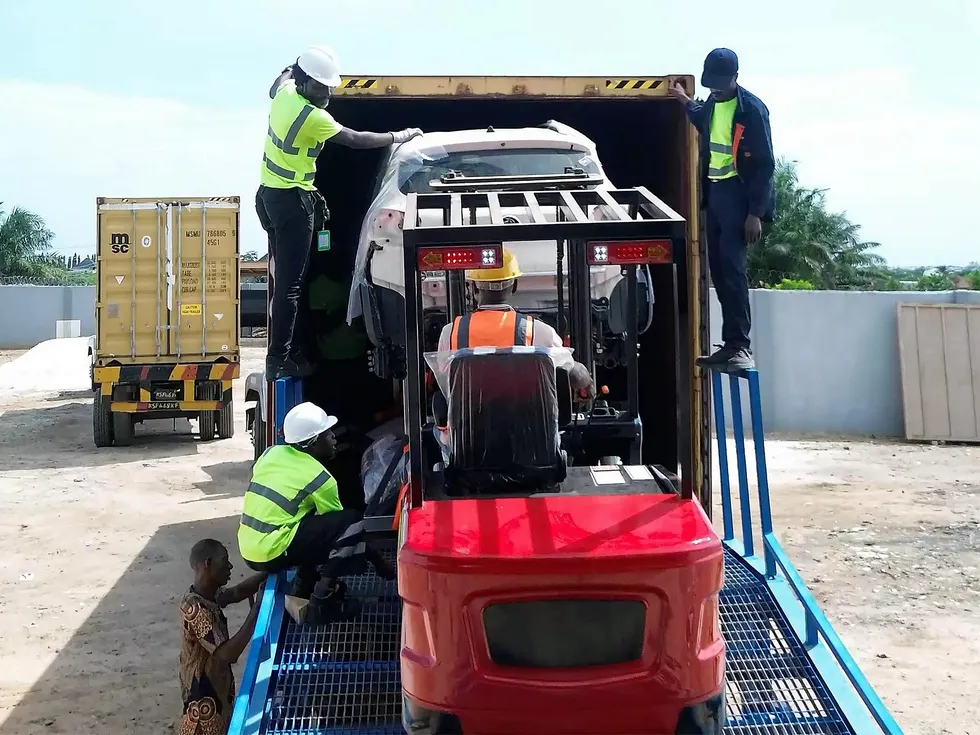
Kit-based assembly allows Nigerian firms to reduce costs, create jobs, and develop local technical expertise—key steps toward expanding EV access. Fully assembled and imported EVs face high tariffs that put them out of reach for many African consumers, whereas kit-based approaches make electric mobility more affordable today. Saglev’s initiative reflects a broader trend: CIG Motors, NEV Electric, and regional players in Cote D’Ivoire, Ghana, and Kenya are also leveraging imported kits to build local EV ecosystems, signaling that parts of West Africa are intent on catching up with global electrification efforts.
Expanding the Local EV Ecosystem
CIG Motors operates a kit-assembly plant in Lagos producing vehicles from Chinese automakers GAC Motor and Wuling Motors. These vehicles include the Wuling Bingo, a compact five-door electric hatchback, and the Hongguang Mini EV Macaron, a microcar with roughly 200 kilometers of range aimed at ride-share operators looking for ultralow-cost urban transport. NEV Electric focuses on electric buses and three-wheelers for urban transit and last-mile delivery.
Saglev’s CEO, Olu Faleye, emphasizes that Nigeria’s EV transition addresses both practical economic needs in addition to environmental goals. Beyond passenger transport, electric vehicles could help reduce one of Nigeria’s persistent agricultural challenges: post-harvest spoilage. Nigeria loses an estimated 30–40 million tonnes of food annually because of weak logistics and limited refrigeration infrastructure, according to the Organization for Technology Advancement of Cold Chain in West Africa.
Advertisement
Electric vans, mini-trucks, and three-wheel cargo vehicles could help close this gap because their batteries can power refrigeration systems during transport without relying on costly diesel fuel. As EV adoption grows and charging infrastructure expands, temperature-controlled transport could become more affordable, reducing spoilage, improving farmer incomes, and helping stabilize food supplies, the organization says.
“I don’t believe that the promised land is making a fully built EV on the ground here.” –Olu Faleye, Saglev CEO
Beyond Nigeria, Mombasa, Kenya–based Associated Vehicle Assemblers has begun assembling electric taxis and minibuses from imported kits, and Ghana’s government is spurring kit-car assembly there under its national Automotive Development Plan. In Ghana, assemblers benefit from import-duty exemptions on kits and equipment, corporate tax breaks, and access to industrial infrastructure. Saglev is already availing itself of those benefits, at its kit-assembly plant in Accra. The company says it also plans to expand its assembly operations to Cote D’Ivoire.
Many early EV adopters therefore charge vehicles using gasoline or diesel generators. Faleye notes that Nigerians have long relied on such workarounds and expects fossil fuels to remain part of the EV charging equation for the foreseeable future—at least until falling costs for solar panels and battery storage make cleaner charging viable.
He acknowledges that charging EVs using hydrocarbons is fraught from an environmental perspective, but he points out that the practice at least brings other benefits of EVs, including lower maintenance costs and the EVs’ synergies with refrigeration and transportation logistics. And he points to a 2020 peer-reviewed study in the journal Environmental and Climate Technologies that compared the overall efficiency of internal combustion vehicles and electric vehicles across the full well-to-wheel energy chain. The study’s conclusion: Even after accounting for conversion losses, generating electricity with a diesel or gasoline generator to power an electric vehicle can remain just as efficient overall as burning the same fuel directly in a vehicle’s internal combustion engine.
Scalable EV Adoption in Nigeria
The approach taken by Saglev and other Nigerian kit-car builders shows how local assembly can advance EV adoption even where infrastructure remains unreliable. By starting with kits, companies can deploy practical electric mobility solutions now while building the supply chains and technical expertise needed for more resource-intensive localized production.
Still, when asked whether Saglev plans to eventually move beyond kit assembly to independent design and manufacturing of EVs, Faleye calls such a move impractical.
Advertisement
“I don’t believe that the promised land is making a fully built EV on the ground here,” he says. “For me to do efficient vehicle manufacturing, I’d need a lot of robotics and 3D printing. That expense is unnecessary—it would just increase costs and make EVs more expensive.”
In a country where electricity can disappear for days, Nigeria’s kit-based EV strategy highlights a practical truth: incremental progress and ingenuity may matter more than perfect infrastructure. For Saglev, every kit-based vehicle rolling off the line is not just a van or bus—it’s a step toward an EV ecosystem that works for Nigeria’s realities today.
The program is led by Hirotaka Sato, a professor at NTU’s School of Mechanical and Aerospace Engineering and a recognized pioneer in the field of cyborg insects. His work first gained international attention years ago when he achieved the first remotely controlled flight of a cyborg beetle – a milestone… Read Entire Article Source link
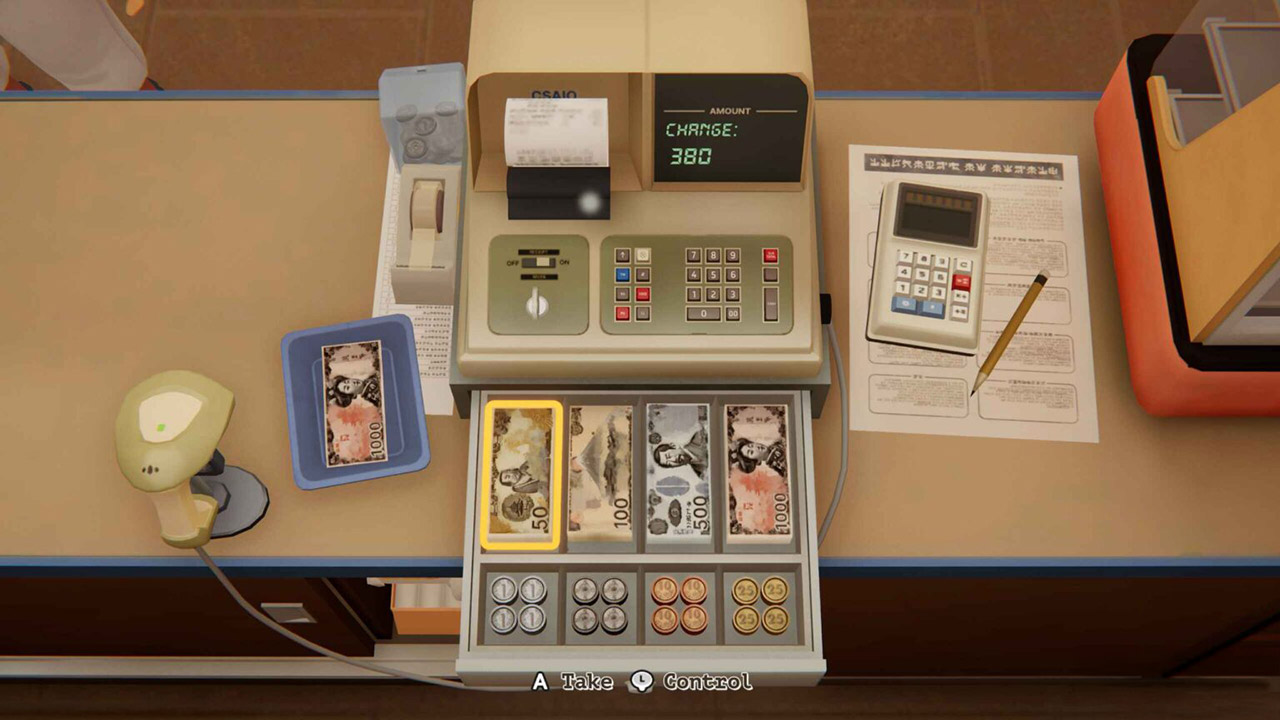
inKONBINI: One store. Many Stories transports you to a small-town convenience store during a peaceful Japanese summer in the early 1990s. Makoto Hayakawa, a college student on a break from school, walks into her aunt’s shop and realizes that the routine of working there is far more intriguing than simply stacking shelves. Every time you set the shelves exactly right, the bell above the door rings, and a customer walks in, you get a little further into a world where regular hours reveal all sorts of surprising connections.
As the days pass, the pace slows, with you replenishing shelves with all of the traditional snacks and drinks of the time, tidying up the display so it catches the light just right, and taking orders for the regulars who keep coming in searching for the same thing. Nothing is hard or time-consuming, but there’s a calm satisfaction in getting it all done, and you find yourself falling into a routine that seems very fulfilling on its own.
This bundle includes a system and a full GAME DOWNLOAD for the Mario Kart World game, exclusive to Nintendo Switch 2. Limited quantities. While…
One system, three play modes: TV, Tabletop, and Handheld
Larger, vivid, 7.9” LCD touch screen with support for HDR and up to 120 fps
People begin to arrive throughout the day, including a regular who orders the same drink every afternoon, and you can always expect a brief conversation with them, although another customer may stay a little longer, and you must determine how to respond. Your choices are important; one polite word or question might reveal a completely other side of their tale, revealing how their life continues after they leave the business. As you see them over and over, you get a sense of how your own summer is intertwined with theirs.
Exploring the shop is also an important feature of the game; players can roam through every inch of the single-level shop, looking for all the nooks and crannies behind the counters and in the back of the shelves for all the little notes and lost goods that get left behind. Each of these minor findings reveals a bit more about the shop’s history. You have a landline phone on the wall that you can use to contact your aunt for advice, to solve an issue, or to simply speak with a customer you’ve become friendly with. Each call feels like you’re reaching out to an entire world beyond the shop that continues to exist, just out of sight.
The day is broken up by little surprises that keep things interesting, such as the old gachapon machine in the corner, which is simply waiting for coins. You flip the handle and get a capsule with a small toy inside; it’s a small item, but it’s enough to pique your interest and keep you going after a long morning at work. On April 30, 2026, inKONBINI will be available on the Nintendo Switch, Switch 2, PlayStation 5, Xbox consoles, and PC via Steam.
The soft ping or buzz on your phone that lets you know a new message has arrived is hard to ignore. But it can mean trouble when it’s time to concentrate on a task, according to a new study that will be published in the June issue of the journal Computers in Human Behavior.
The study found that whenever we receive a message notification, it interrupts our concentration for 7 seconds. It turns out that the type of information that we see in the notification also matters. The more personally relevant the notification, the larger the distraction.
“This interruption likely arises from several mechanisms, such as [a notification’s] perceptual prominence, the conditioning acquired through repeated exposure, and the possible social significance,” Hippolyte Fournier, a postdoctoral fellow at the University of Lausanne in Switzerland and the study’s first author, told CNET.
Advertisement
While 7 seconds may not seem like much, we get a lot of notifications throughout the day, and those seconds can add up.
“We observed that both the volume of notifications and how often individuals check their smartphones were linked to greater disruption,” Fournier said. “This pattern suggests that the fragmented nature of smartphone use, rather than simply total usage duration, may be a key factor in understanding how digital technologies influence attentional processes.”
Attention hijack
The study used a Stroop task, a test that measures how quickly you can process information and how well you can focus. Colored words flash across a screen for the test. The font of each word is one color, but the text of the word is a different color. So the word “blue” might be written in green font.
Advertisement
You have to identify the font color and ignore the color that the word spells out. It’s a lot harder than it sounds. You can take the test yourself using this YouTube video.
The researchers recruited 180 university students for the study. The students were randomly split up into three groups. All students received a Stroop task, and notifications popped up on the screen as they completed the test. But the researchers slightly changed the experiment for each group.
The researchers told the first group that the screen was mirroring their personal phones, so the students thought they were seeing their real notifications.
The second group saw pop-ups on the screen that looked like real social media notifications, but the group knew they were false. This helped the researchers test how learned habits impact attention, without personal relevance.
Advertisement
The third group saw only blurry notifications, with illegible text. The researchers used this test to determine how the visual distraction of an unexpected pop-up affected the group’s attention.
The notifications slowed students’ ability to process information by about 7 seconds across all three groups. But for students who thought they were getting real notifications, the delay was more pronounced.
“Although it is well documented that notifications can automatically attract attention, far less is understood about the cognitive processes that drive this attentional capture and the reasons why some people may be more susceptible than others,” Fournier said. “Our objective was to gain a better understanding of both the underlying mechanisms and the individual differences that could account for this variability in sensitivity.”
Brain delay
In the US, 90% of all people own a smartphone, according to Pew Research, and a Harmony Healthcare IT study found that we spend over 5 hours a day using them. But how long we spend on our phones may not matter as much as how often we check our notifications.
Advertisement
“In a lab study designed to mimic real-life notification exposure, we found that the frequency of notifications and checking habits mattered more than total screen time,” Fabian Ringeval, another of the paper’s authors, wrote in a LinkedIn post. “The more often we interact with our phones, the more vulnerable our attention becomes to interruption.”
Anna Lembke, a psychiatry professor at Stanford, told CNET that the study mirrors what she sees clinically and in research literature, “namely that the level of engagement — for example how many notifications a person gets and how quickly they respond to notifications — is as big a predictor, or an even bigger predictor, of harmful, problematic use than time spent.”
Researchers found that study participants received about 100 notifications per day. So the notifications we get on our phones could be slowing down our cognitive abilities through near-constant distraction.
“In everyday situations that require continuous attention — like driving or learning — even short slowdowns can add up,” Ringeval wrote. “Our findings suggest that improving digital well-being may be less about ‘using our phones less’ and more about reducing unnecessary interruptions.”
Advertisement
Lembke said it’s fair to worry about how smartphone notifications impact our attention, “which is why platforms for minors should silence notifications by default and make it difficult to re-activate notifications without parental consent, and why adults should electively turn off notifications to improve concentration and well-being, with rare exceptions for safety reasons.”
It’s been a long winter, but spring is close. On Friday, the vernal equinox arrives, signaling the astronomical start of spring (and the end of winter!) in the Northern Hemisphere. Though equinoxes might not get the same attention as solstices, they’re a lovely way to observe the shifting of the seasons. Let’s get to know the vernal equinox, what it is and why it happens.
You’ve no doubt noticed the lengthening of daylight as winter winds down, especially with the time change this past weekend. The vernal equinox marks the tipping point into longer days.
The word “equinox” comes from the Latin words for equal and night. Daylight and night are roughly equal during the equinox. We experience two each year — the vernal equinox in the spring and the autumnal equinox in the fall. The word “vernal” traces to Latin and references spring.
Enlarge Image
Advertisement
This National Weather Service graphic shows Earth’s tilt, how our planet orbits the sun and when the equinoxes and solstices occur in the Northern Hemisphere.
NWS/NOAA
The Earth spins on an axis (think of it like a line running from pole to pole) with a 23.5-degree tilt. Some parts of the planet get more direct sunlight than others. That’s how we get our seasons, and how it can be summer in the Northern Hemisphere while it’s winter in the Southern Hemisphere.
“The spring equinox is when the Northern Hemisphere transitions from being pointed away from the sun (during winter) to being pointed toward the sun (during summer),” says Emily Rice, associate professor of astrophysics at the Macaulay Honors College of the City University of New York. “The tilt is lined up with Earth’s orbit for just a moment.” That’s when we get nearly equal amounts of daylight and night.
How are equinoxes different from solstices?
Solstices are the extremes of days and nights. The summer solstice is the longest day, and the winter solstice is the shortest. In 2026, the summer solstice for the Northern Hemisphere occurs on June 21, and the winter solstice happens on Dec. 21.
Advertisement
Solstices get more love than equinoxes.
“The extremes are easier to mark and to visualize than the inflection points, which are more subtle changes, so the solstices get all the attention,” says Rice. All of them are related to Earth’s tilt and the sun, so think of solstices and equinoxes as siblings that each have their own seasonal connection.
What the equinox looks like from space
It can be challenging to visualize the Earth’s tilt and what happens during an equinox from down on the ground, so NASA put together a video showing the Earth as seen by a satellite.
It tracks our planet through its seasons. Watch how night and daylight shift over time.
Advertisement
How to celebrate the spring equinox
Perhaps you’ve heard that the only day you can balance a raw egg on its end is on the equinox. This legend might be accompanied by some vague discussion points about Earth’s gravity and alignment and the sun.
Enlarge Image
I balanced this egg on its end on a day that wasn’t the equinox.
Advertisement
Amanda Kooser/CNET
One of Rice’s annual equinox duties is debunking the egg-balancing myth.
“Astronomers are usually on the internet telling people that no, they can’t actually balance an egg on its end only on an equinox,” she said. You can go ahead and try it, but be sure to also test it out on a day that’s not the equinox. I pulled it off on Feb. 27, in case you’re wondering.
An equinox is a subtle phenomenon. There are no showy celestial events to mark the day. Don’t let that deter you. The vernal equinox is what you make of it.
“Considering that the Earth’s orbit doesn’t have a beginning or an end, a year could really be started any time, and the equinox is more astronomically meaningful than Jan. 1,” says Rice.
Advertisement
You can come up with your own way to celebrate the occasion. Tell your friends and co-workers it’s the start of astronomical spring. Plant some seeds. Clean your house. Spend time outside. Make plans for spring break. And take a moment to toast the sun, the Earth’s tilt and our place in space that brings us the vernal equinox.
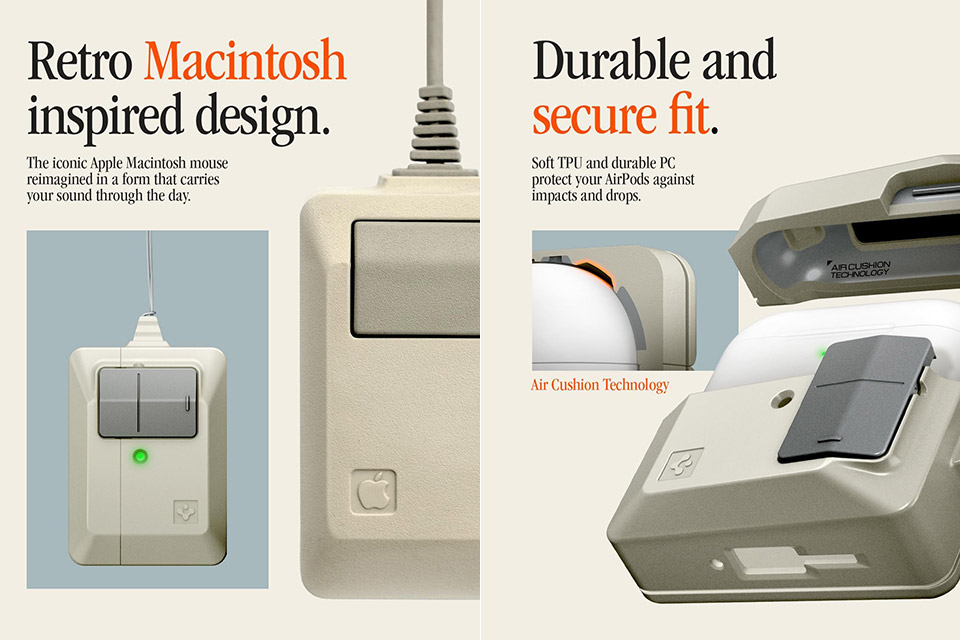
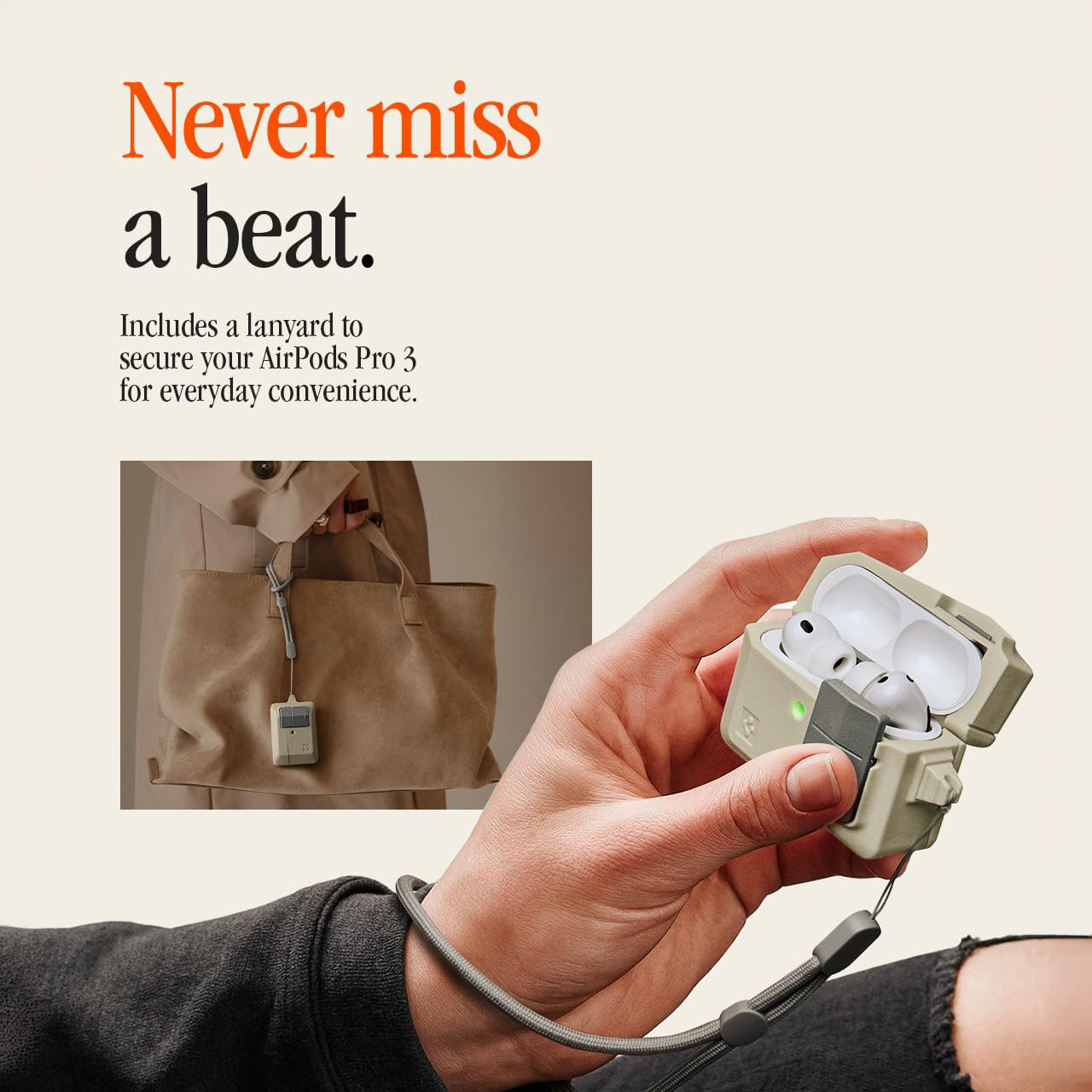
Spigen has created the Classic LS, a protective cover for the AirPods Pro 3, as a throwback to the classic 1980s Macintosh mouse. This accessory clips onto the charging case in two separate pieces, one fitting over the base and the other over the hinged lid. It comes in a stone color that’s nearly identical to the old-school beige tone. It retains the same shape as the original but adds a new layer of protection without affecting how the case opens or shuts in the least.
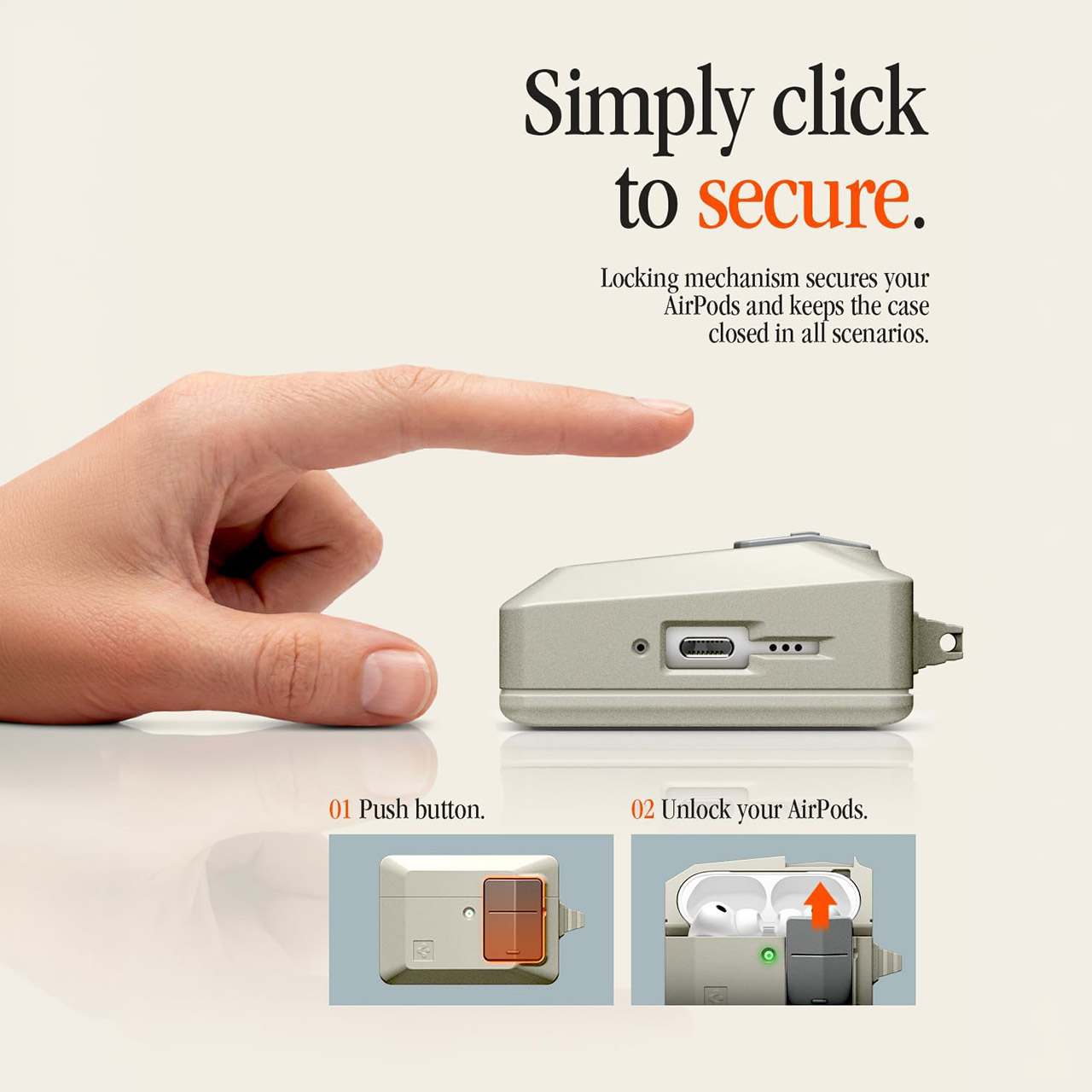
Fitting the case takes just a few seconds, and the lid opens just as smoothly as the original with no resistance or awkwardness. The USB-C port and status light are cleanly cut out and fully accessible, and wireless charging works without any issues.
There’s a fairly large grey button in the center of the mouse-like surface; press it, and the lid snaps shut, preventing accidental openings when the case rattles around in a bag or pocket. Let release of the button, and it swings open again. It’s a minor detail, but it completely alters how you use your AirPods on a daily basis, especially when you’re simply tossing the case into a pocket or backpack on your way to work.
The shell is built from a combination of polycarbonate and TPU, with extra impact protection reinforcing the corners and cushioning worked into the rest of the surface to handle everyday bumps and minor drops. The material holds up well against scratches too, so pulling it in and out of a pocket or bag repeatedly won’t leave it looking worn. Despite the added protection it stays slim enough to fit anywhere the original case would.
A lanyard attaches directly to the shell for easy carrying. It may be clipped around your wrist, to a backpack strap, or simply tucked into a pocket; it’s ideal when you’re tired of losing your earbuds at the bottom of a bag. The strap feels robust, and it integrates nicely with the classic aesthetic rather than standing out.
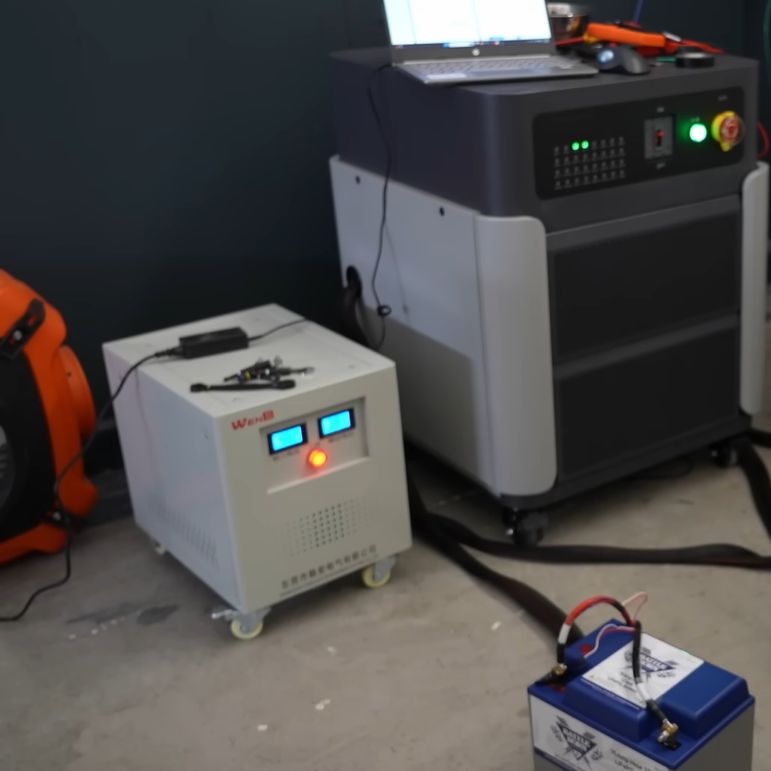
The test setup for the Battle Born LFP cycling. (Credit: Will Prowse, YouTube)
There has been quite a bit of news recently about the Battle Born LiFePO4 (LFP) batteries and how they are dying in droves if not outright melting their plastic enclosures. Although the subsequent autopsies show molten plastic spacers on the bus bars and discolored metal in addition to very loose wiring, it can be educational to see exactly what is happening during repeated charge-discharge cycles at a fraction of the battery’s rated current. Thus [Will Prowse] recently sacrificed another Battle Born 75 Ah LFP battery to the Engineering QA Gods.
This time around the battery was hooked up to test equipment to fully graph out the charging and discharging voltage and current as it was put through its paces. To keep the battery as happy as possible it was charged and discharged at a mere 49A, well below its rated 100A.
Despite this, even after a mere 14 cycles the battery’s BMS would repeatedly disconnect the battery, as recorded by the instruments. Clearly something wasn’t happy inside the battery at this point, but the decision was made to push it a little bit harder while still staying well below the rated current.
This led to the observed failure mode where the BMS disconnects the battery so frequently that practically no current is flowing any more. Incidentally this is why you need to properly load test a battery to see whether it’s still good. In this failure mode there is still voltage on the terminals, but trying to pass any level of current leads to the rapid disconnecting by the BMS, even while as in this case the plastic spacer on the bus bar melts a little bit more.
Despite these very rapid disconnects and observed thermal issues, the BMS never puts the battery into any kind of safe mode as other LFP batteries do, leading to the melting plastic and other issues that have now been repeatedly observed. The discoloration of the battery terminals that originally started the investigation thus appears to be a result of higher charge currents and correspondingly higher temperatures.
Advertisement
Worryingly, Battle Born recently put out a statement – addressed in the video – in which they completely disavow these findings and insist that there is no issue at all with these LFP batteries. Naturally, if you still have any Battle Born LFP installed, you really want to test them properly, or ideally replace them with a less sketchy alternative until some kind of recall is issued.








 At a visualization center in Boston,
  Each part of the heart, such as the left ventricle [left], is superimposed with a detailed digital mesh to re-create its physiology. These pieces come together to form an anatomically accurate rendering of the whole organ [right].Dassault Systèmes
 The Living Heart Project has expanded beyond the heart, modeling organs throughout the body. The 3D brain reconstruction [top] shows major pathways in the brain’s white matter connecting color-coded regions of the brain. The lung virtual twin [middle] combines the organ’s geometry with a physics-based simulation of air flowing down the trachea and into the bronchi. And the cross section of a patient’s foot [bottom] shows points of strain in the soft tissue when bearing weight. Dassault Systèmes
 This “Living Lung” virtual-twin simulation shows strain patterns during breathing. Mona Eskandari/UC Riverside














































You must be logged in to post a comment Login