Connect with us
DAPA Banner

Business

Geopolitical volatility makes strong case for bonds; stick to short-term funds: Devang Shah

Published

on

Geopolitical volatility makes strong case for bonds; stick to short-term funds: Devang Shah
Heightened geopolitical tensions, rising crude prices, and uncertainty around the interest rate cycle are reshaping the investment landscape, prompting a renewed focus on stability within portfolios.

In an interaction with Kshitij Anand of ETMarkets, Devang Shah, Head – Fixed Income at Axis Mutual Fund, said that the current environment strengthens the case for fixed income as a core allocation.

With the rate cut cycle nearing its end and volatility expected to persist, he advises investors to stay cautious on duration and prefer high-quality, short-term debt strategies that can offer steady accrual and resilience amid evolving macro risks. Edited Excerpts –

Kshitij Anand: With global markets facing heightened geopolitical tensions—from ongoing conflicts to trade uncertainties—how are these risks reshaping investors’ interest in fixed income assets at this point in time?

Indian Bank to launch over $500 million infrastructure debt issue next week, MD says
Advertisement

Indian Bank is raising 50 billion rupees through seven-year infrastructure bonds next week. This move aims to fund stronger credit growth and capital requirements. The bank is seeking longer-term funding as deposit rates have increased. Discussions with investors like the Employee Provident Fund Organisation are underway. This issuance marks the bank’s return to the bond market after over 17 months.


Devang Shah: As you rightly highlighted, first of all, it is important from every investor’s perspective to always have asset allocation. What I mean by disciplined asset allocation is that you should not put all your money into one asset class.
We have done some studies—this is also part of our multi-asset allocation theme—where we analyse the top six or seven asset classes that investors typically consider, such as precious metals, bonds, equities, global assets, and offshore assets. Specifically, if you look at offshore assets like US and China markets, and analyse how these assets have performed over different periods, our 20-year study clearly shows that there is no single winner. No one asset class consistently outperforms others or delivers superior returns at all times.


So, asset allocation becomes an even more important theme going forward. Fixed income plays a crucial role in this because it provides stability. Historically, except for periods like 2008, 2013, and parts of 2018, fixed income has generally not delivered negative returns. So, it also offers a degree of capital protection.
In today’s environment, investors should definitely have some allocation towards fixed income. The exact allocation depends on several factors, such as the macroeconomic outlook, central bank actions, inflation, growth, the rate cycle, and liquidity. These are important levers to consider while deciding the allocation to fixed income.Given the current environment—with heightened volatility driven by geopolitical uncertainties and rising crude prices—there is certainly a strong case for bonds.

Kshitij Anand: For much of the last year, markets have been pricing in rate cuts from major central banks. But what if the rate cut cycle gets delayed or does not materialise as expected? How should investors rethink their fixed income allocation in such scenarios?
Devang Shah: You are right—the last two years have been very positive for bond markets. Across developed markets and in India, central banks have cut rates, leading to a strong rate-cut cycle globally.

However, since June, we at Axis have been communicating that we are nearing the end of this rate cycle. Going forward, other levers will drive returns in fixed income. We believe that we are close to the end of the rate cycle and do not expect significant rate cuts ahead.

Advertisement

Now, with the current geopolitical tensions and the sharp rise in crude prices, we need to look at two key aspects: how long this situation will last, and where crude prices will stabilise in the near and medium term.

Our assessment is that while no one can predict geopolitical developments with certainty, markets will eventually realign to a new crude price range across inflation, growth, corporate earnings, and fiscal deficits.

We believe that if crude prices remain in the $75–$85 range, the impact on the Indian economy will be present but muted. It will not significantly deteriorate macroeconomic conditions or force the RBI to hike rates immediately.

However, there could be some impact: inflation may rise by about 0.5%, moving from around 4.5% towards 5%. Growth could slow slightly from the expected 7%+, and the current account deficit may widen from around 1% to 1.5–1.75%.

Advertisement

This means that while macro fundamentals may weaken slightly, they will remain broadly stable. In such a scenario, the RBI is likely to stay supportive of growth by ensuring adequate liquidity. While inflation is a near-term concern, the bigger medium-term risk is slowing growth if crude prices remain elevated.

Therefore, we do not expect significant stress on bonds. Bond yields have already adjusted—especially at the short end of the curve, which has seen a sell-off of about 30–50 basis points. The OIS has also risen by around 30 basis points.

If crude prices stabilise within the $75–$85 range, we do not expect much further impact. However, if crude prices rise above $100—which we consider a lower probability but still a risk—it could trigger a faster rate hike cycle, pushing bond yields higher across the curve.

In such a scenario, it would make sense for investors to stay positioned at the short end of the yield curve.

Advertisement

Kshitij Anand: Now, in a world where equities can deliver strong wealth creation but also sharp volatility, how can bonds help investors balance growth, income stability, and capital preservation within a portfolio?
Devang Shah: As you rightly highlighted, today is a world of uncertainty, and this uncertainty will continue to prevail. That is why asset allocation becomes more and more important.

In today’s market environment, where a large part of the rate cycle is over and we are at a stage where the next move could be rate hikes—whether in six or twelve months—the key question is how to navigate this environment without experiencing significant volatility in your debt portfolio.

So, what should an investor do? That is the most important question. My understanding is that, as I mentioned earlier, the extreme short end of the curve—up to the one- to three-year segment—has seen a significant sell-off over the last six to nine months.

Let me share some numbers. One-year CDs were trading at 6.25–6.30% levels in June 2025. Today, despite rate cuts over the past nine months, they are trading in the 7–7.25% range. That implies a sell-off of about 50 to 75 basis points. This is largely due to strong credit growth and some degree of currency intervention, which led to temporary liquidity tightness.

Advertisement

Similarly, three-year corporate bonds, which were trading at around 6.5%, are now closer to 7.25–7.30%.

So, our perspective is that the segment which has already seen a significant sell-off—and is unlikely to react sharply even if the RBI starts raising rates—is where investors should focus for the near term, say over the next 12 to 18 months.

At yields of 7–7.25%, money market strategies and conservative short-term funds make a lot of sense for investors to navigate this uncertain environment, which is influenced by crude price volatility, policy uncertainty, and macroeconomic risks if crude sustains above $100.

Kshitij Anand: Also, as we are nearing the end of the financial year, can you sum up how FY26 was for bond markets in general?
Devang Shah: FY26 has been a volatile year. It started with significant policy easing, liquidity support, and rate cuts until June. As I mentioned earlier, there was a 50-basis-point rate cut in June.

Advertisement

So, the year began on a strong positive note for bonds, but some of those gains were later given up. If you look at 12–18 month returns, they are still quite healthy. At one point, bond markets were delivering close to double-digit returns—in June 2025, most debt funds, whether short-term, medium-term, long-duration, or gilt funds, were delivering double-digit returns.

However, a part of these gains has been eroded due to global uncertainties, rising crude prices, a large supply of state development loans, and strong credit growth, which signaled that we were nearing the end of the rate cycle.

Overall, FY26 has been a mixed bag for bond markets. The extreme short end has performed very well. Short- to medium-term funds have delivered reasonable returns, while long-duration bonds have remained volatile.

Kshitij Anand: As the financial year draws to a close, how should investors review their portfolios? Are there any specific adjustments they should consider in fixed income allocation before the new financial year begins?
Devang Shah: Our assessment is based on the assumption that over the next two to three months, conditions will stabilise, and crude prices are unlikely to remain above $100 for an extended period.

Advertisement

Under this base case, we have been advising investors to reduce duration in their fixed income portfolios and focus on the short end of the curve.

Specifically, money market funds, conservative short-term funds, and a relatively new category—income plus arbitrage fund of funds—are attractive options. These funds, with a two-year investment horizon, can deliver debt-like returns with equity-like taxation.

Even in a less likely scenario—say a 20% probability—where crude remains above $100 and causes significant stress on growth, investors should still remain invested in the short end of the curve in the near term. This is because the first reaction would likely be a shift in central bank policy towards rate hikes.

Once that scenario materialises, opportunities may emerge in the second half of the year to allocate to longer-duration funds.

Advertisement

For now, the key portfolio adjustment should be to reduce duration, focus on money market strategies, conservative short-term funds, and income plus arbitrage fund of funds. However, for income plus arbitrage funds, investors should maintain at least a two-year investment horizon to fully benefit from tax efficiency.

Going forward, depending on the macro environment, there could be tactical opportunities in long-duration bonds.

Kshitij Anand: So, what should investors keep in mind while building a fixed income strategy for the next financial year amid global uncertainty and evolving interest rate expectations?
Devang Shah: The general fear, whenever such uncertainties rise, is that investors tend to move towards highly liquid funds. They prefer instruments that offer high liquidity and are relatively immune to risks such as duration volatility and potential growth slowdowns.

Our perspective at this point is that if you want to navigate this environment effectively, you should stay invested in funds that predominantly hold AAA-rated credits, have a strong quality bias, and avoid taking excessive duration exposure, as duration can introduce volatility.

Advertisement

If growth weakens, then with a lag, the credit cycle may start deteriorating. While this is not our base case, investors who want to adopt a more conservative approach should continue allocating to money market funds, low-duration strategies, and ultra-conservative short-term bond funds, with a strong emphasis on high-quality AAA issuers.

That said, the credit cycle today remains strong. I do not see any immediate concerns. India’s macroeconomic story has not weakened significantly, and the credit environment continues to be healthy. If you look at bank and NBFC NPAs, leverage levels, and profitability, there has been no meaningful deterioration.

However, as a cautionary note, if crude prices continue to hover around $100 or higher, it could slow down India’s growth and create future concerns. To navigate such a scenario, it is better to stay invested in money market strategies with a higher quality bias.

Kshitij Anand: What factors are accelerating retail participation in India’s traditionally institutional bond markets, and what more needs to be done to deepen this ecosystem?
Devang Shah: To begin with, regulators have done a commendable job. Today, retail investors have access to government bonds through dedicated platforms, which was not the case earlier. Regulators have also simplified many aspects to help investors better understand the products they are investing in.

Advertisement

Mutual funds have also played a significant role. Today, there is a fund for every investor need. If you want to invest for one day, there are overnight funds. For three months, there are liquid funds. For longer horizons, there are target maturity funds, index funds, or long-duration funds.

SEBI and RBI have done a great job in promoting investor education. Tools such as riskometers and portfolio disclosure matrices help investors understand the risk profile and credit quality of their investments, including exposure to non-AAA assets.

A lot of improvements have been made since the 2018 credit crisis. Today, mutual fund products are much easier for retail investors to understand.

Innovations such as direct participation in government bonds and ensuring liquidity through mutual fund structures are important steps towards deepening the corporate bond market. These developments will support increased retail participation in fixed income over the medium term.

Advertisement

Kshitij Anand: Lastly, Indian government bonds have started getting included in major global indices. How could this influence foreign capital flows, yields, and investor interest in the Indian bond market?
Devang Shah: In my view, the increasing depth of the Indian bond market—reflected in volumes, bid-ask spreads, and overall size—has made it more attractive to global investors.

We have already seen initial steps with JPMorgan including Indian bonds in its indices, followed by partial inclusion in certain Bloomberg emerging market indices. There is also a strong possibility that Indian bonds could be included in the Bloomberg Global Aggregate Index, which tracks a $2.5–2.8 trillion market.

If that happens, India could see an allocation of close to 1%, potentially bringing in $20–25 billion of inflows. We believe this could happen within the next 12 months, possibly as early as the June review.

Such inclusion could create tactical opportunities in long-duration bonds, as inflows may lead to a rally in that segment depending on prevailing yield levels.

Advertisement

However, in the current environment, investors should maintain a higher allocation to the short end of the curve due to uncertainties around crude prices, geopolitical risks, and the fact that the rate cut cycle is largely behind us.

In a stable or rising rate environment, focusing on accrual or carry strategies through short-duration funds is a prudent approach.

That said, global index inclusion is a significant positive. As India’s bond market continues to grow in depth and scale, more such opportunities are likely to emerge, creating additional avenues for investors over time.

(Disclaimer: Recommendations, suggestions, views, and opinions given by experts are their own. These do not represent the views of the Economic Times)

Advertisement
Continue Reading
Click to comment

You must be logged in to post a comment Login

Leave a Reply

Business

Nomura Wealth Builder Fund Q4 2025 Commentary

Published

on

Nomura Wealth Builder Fund Q4 2025 Commentary

Nomura Wealth Builder Fund Q4 2025 Commentary

Continue Reading

Business

Earnings Reports Every Quarter? The Pros and Cons From Wall Street Insiders

Published

on

Earnings Reports Every Quarter? The Pros and Cons From Wall Street Insiders

Earnings Reports Every Quarter? The Pros and Cons From Wall Street Insiders

Continue Reading

Business

(VIDEO) Is Latto Pregnant? Latto Pregnancy Rumors Explode as Rapper Teases Announcement Amid Fan Speculation

Published

on

Latto

Rapper Latto has reignited swirling pregnancy rumors with a mysterious teaser posted March 19, 2026, prompting fans and media to speculate she may be expecting her first child with longtime partner 21 Savage. The Atlanta native, born Alyssa Michelle Stephens, shared a trailer for an upcoming release at midnight, featuring her interacting with a baby cheetah and subtle hints that many interpreted as a pregnancy reveal.

Latto
Latto

The clip, which dropped on her Instagram and quickly went viral, shows Latto in a serene setting cradling the animal while overlay text and music build anticipation. Fans flooded comments with congratulations, assuming the “Big Mama” artist — who has playfully referenced motherhood in lyrics — was confirming months of speculation. By March 20, outlets like Hot97 reported the teaser tied to a new album announcement titled “Big Mama,” with Latto seemingly debuting a baby bump in promotional visuals and a music video for the track “Business & Personal.”

In the video, released alongside the album news, Latto showcases what appears to be a growing belly, holds a positive pregnancy test and tours a nursery setup. No father was explicitly named, though her confirmed relationship with 21 Savage — whom she called “my husband” in a 2025 TMZ interview — fueled assumptions. Celebrities and fans poured in well-wishes, with comments like “Congratulations queen!” dominating her posts.

The buzz traces back to late 2025, when Latto’s Japan performance sparked initial chatter over perceived changes in her figure. She addressed it lightly, captioning a post about eating “tew much wagyu & ramen” to explain any bloating. Rumors persisted through December’s “Christmas in Clayco” event, where she wore an oversized fur coat that some claimed concealed a bump. Latto has not directly confirmed or denied the latest wave, but the March 19-20 rollout leaned into the narrative.

Earlier in 2026, Latto trolled fans repeatedly. In February, she posted an Instagram Story video wearing a prosthetic baby bump, rubbing it before bursting into laughter — a clear prank amid ongoing accusations she was hiding a pregnancy. HotNewHipHop and other sites covered the stunt, noting fans still believed she and 21 Savage were expecting despite the joke. AI-generated videos and edited clips further muddied waters, with some circulating as “proof” before being debunked.

Advertisement

Latto has referenced family aspirations in past interviews, telling Cosmopolitan in 2023 she envisioned marriage and children as markers of true success. Lyrics in her 2025 collaboration with Summer Walker, “Go Girl,” include lines like “Big Mama, no kids,” which fans spun into trends mocking or celebrating hypothetical motherhood. She has never publicly confirmed being a parent.

The relationship with 21 Savage adds intrigue. Confirmed publicly in September 2025 after years of speculation and collaborations, Latto referred to him affectionately as “my man” and “husband” in interviews. The couple has kept personal details private, rarely posting joint content. If the pregnancy is real, it would mark her first child and align with her expressed desire for family life amid a thriving career.

As of March 20, 2026, no official medical confirmation or due date has surfaced. Latto’s team has not commented beyond the promotional material. The album “Big Mama” positions the theme centrally, blending personal storytelling with her signature confident delivery. Early reactions praise the rollout as clever marketing or genuine vulnerability.

Pregnancy speculation in hip-hop often amplifies scrutiny, especially for women balancing fame and family. Latto, known for hits like “Big Energy” and Grammy nods, has navigated rumors with humor, shutting down body-shaming while embracing her curves. Fans defend her privacy, while others demand clarity.

Advertisement

Whether the March announcement confirms the long-rumored news or continues the playful misdirection remains unfolding. Latto’s silence on direct questions keeps the conversation alive, with social media trending hashtags like #LattoPregnant and #BigMamaAlbum.

For now, the Atlanta rapper — who turns 27 this year — appears poised for a major personal and professional chapter, with fans eagerly awaiting more details from the self-proclaimed “Queen of Da Souf.”

Continue Reading

Business

Rhythm Pharmaceuticals, Inc. (RYTM) Discusses FDA Approval of IMCIVREE for Acquired Hypothalamic Obesity Transcript

Published

on

OneWater Marine Inc. (ONEW) Q1 2026 Earnings Call Transcript

Rhythm Pharmaceuticals, Inc. (RYTM) Discusses FDA Approval of IMCIVREE for Acquired Hypothalamic Obesity March 19, 2026 7:00 PM EDT

Company Participants

David Connolly – Head of Investor Relations & Corporate Communications
David Meeker – Chairman, President & CEO
Jennifer Chien – Executive VP & Head of North America
Alicia Fiscus – Senior VP & Head of Global Regulatory Affairs

Conference Call Participants

Advertisement

Simone Nasroodin – Wells Fargo Securities, LLC, Research Division
Tazeen Ahmad – BofA Securities, Research Division
Rohit Bhasin – Morgan Stanley, Research Division
Corinne Jenkins – Goldman Sachs Group, Inc., Research Division
Samantha Semenkow – Citigroup Inc., Research Division
Jonathan Wolleben – Citizens JMP Securities, LLC, Research Division
Brian Conley – Leerink Partners LLC, Research Division
Ellen Horste – TD Cowen, Research Division
Boran Wang – Guggenheim Securities, LLC, Research Division
Anthea Li – Jefferies LLC, Research Division
Lisa Walter – RBC Capital Markets, Research Division
Julian Pino – Stifel, Nicolaus & Company, Incorporated, Research Division

Presentation

Operator

Advertisement

Good day, and thank you for standing by. Welcome to the Rhythm Pharmaceuticals Conference Call. [Operator Instructions]

Please be advised that today’s conference is being recorded. I would now like to hand the conference over to your first speaker today, David Connolly, Investor Relations. Please go ahead.

David Connolly
Head of Investor Relations & Corporate Communications

Advertisement

Thank you, Marvin. This evening, we issued a press release announcing FDA approval of IMCIVREE for patients with acquired hypothalamic obesity. You can access the press release as well as the slides that we will be reviewing tonight by going to the Investors section on our website. Listed on Slide 3 are the speakers for tonight’s call. David Meeker, Chair, President and Chief Executive Officer of Rhythm; Jennifer Lee, Executive Vice President, Head of North America; and Hunter Smith, our Chief Financial Officer; and Alicia Fiscus, our Senior Vice President, Head of Global Regulatory Affairs, are also on the line to answer questions.

Advertisement
Continue Reading

Business

How to Avoid Construction Delays and Stay on Schedule

Published

on

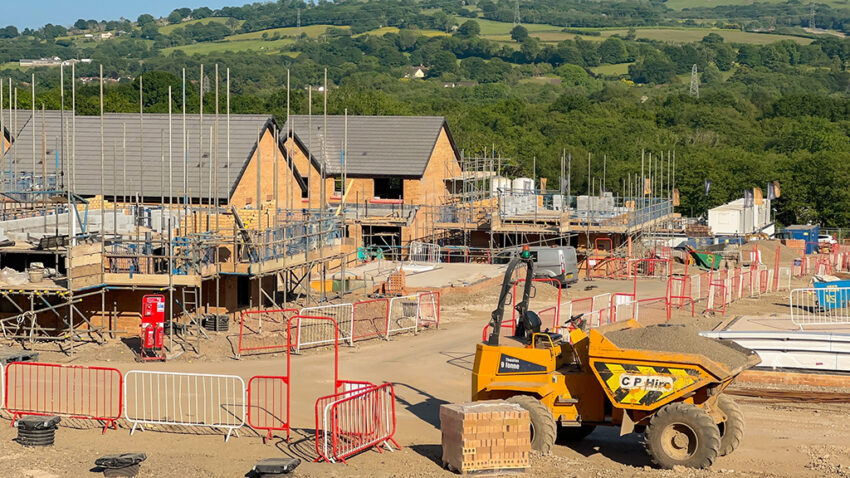
UK housebuilding has fallen to its weakest level since the Covid-19 lockdowns of 2020, underlining the scale of the challenge facing ministers as they attempt to revive construction and meet housing targets.

Construction delays can quietly derail even the most carefully planned projects. Missed deadlines often lead to budget overruns, strained client relationships, and logistical chaos on-site.

Many delays stem from avoidable issues such as poor planning, resource shortages, or communication breakdowns that disrupt the project timeline.

The key to staying on schedule begins well before construction starts. Clear project planning, accurate timelines, and strong coordination help teams anticipate potential bottlenecks. When every stakeholder understands their responsibilities and deadlines, projects progress with fewer surprises and smoother collaboration.

Technology also plays a major role in preventing costly delays. By centralizing critical project data and workflows, digital solutions such as ERP software for construction companies connect project schedules, procurement, budgets on a single platform. This integration provides managers with real-time visibility across the entire job site, enabling faster decision-making when risks arise.

Ultimately, successful projects combine careful planning, effective communication, and intelligent digital tools. By closely tracking progress, coordinating teams efficiently, and responding promptly to unexpected issues, construction firms can keep projects on schedule and deliver results exactly as promised.

Advertisement

Common Reasons for Construction Delays

Construction delays are one of the most persistent challenges in the industry, and understanding why they occur is the first step toward preventing them. Whether in the UAE or globally, projects often fall behind schedule due to a mix of planning, execution and external factors — many of which can be anticipated and managed with the right strategies.

Here are some of the most common reasons construction projects fall behind schedule:

  • Inadequate early planning and scheduling. Poor planning, lack of detailed timelines or unclear sequencing often leads to confusion and delays once work begins.
  • Design changes and scope creep. Mid‑project design revisions, change orders or evolving requirements force teams to rework plans and schedules.
  • Material and supply chain issues. Late deliveries, shortages of critical materials or complex import logistics can halt work or force crews to wait on site.
  • Labour shortages and productivity challenges. A lack of skilled workers or low craft productivity slows progress compared to planned output.
  • Permitting and approval delays. Slow regulatory reviews or incomplete documentation can push back start dates or stall key tasks.
  • Financial and cash‑flow issues. Budget shortfalls or slow client payments can force work pauses until funds are resolved.

Strategies to Avoid Construction Delays

Staying on schedule requires more than just hoping things run smoothly — it means planning ahead, managing risks, and coordinating every part of your project from start to finish. By implementing proactive strategies, construction teams can reduce delays and keep milestones on track, even when faced with common disruptions.

Delays don’t just push back delivery dates — they can inflate budgets, damage client relationships, and erode profit margins. By combining thoughtful planning, strong communication and adaptive management, construction teams can reduce uncertainty, react faster to change, and safeguard project timelines against challenges.

Robust Project Planning and Scheduling

Effective project planning and scheduling form the foundation of delivering construction projects on time and within budget. These processes define what needs to be done, when, by whom and in what order, creating a clear roadmap for execution that minimises idle time, resource conflicts and misunderstandings.

Advertisement

Here are effective practices that strengthen planning and reduce the risk of delays:

  • Develop a comprehensive Work Breakdown Structure (WBS). Break the project into smaller, manageable tasks and subtasks so nothing is overlooked and responsibilities are clear. This acts as the foundation for detailed scheduling.
  • Use proven scheduling techniques. Tools like the Critical Path Method (CPM) and Program Evaluation and Review Technique (PERT) help identify the sequence of critical activities and reveal how delays could affect overall timelines.
  • Set realistic durations and dependencies. Base estimates on historical data, current labour availability and actual supply timelines rather than optimistic assumptions to create schedules that reflect real conditions.
  • Build in contingency time. Allocate buffer time around high‑risk activities and dependencies so that unexpected issues like supply delays or weather don’t derail the entire schedule.
  • Identify and analyse schedule risks. Conduct a risk assessment early to anticipate potential delays and plan mitigation strategies, such as alternative suppliers, flexible sequencing or phased deliveries.
  • Integrate planning with procurement and resource allocation. Ensure material orders, labour assignments and equipment availability are synchronised with the schedule to avoid gaps that can halt work.

Resource Coordination and Management

Effective resource coordination and management is crucial for keeping construction projects on schedule. In construction, resources include people, equipment, materials, and even subcontractor teams — and if these aren’t planned and coordinated carefully, work can stall while teams wait for what they need.

Good resource coordination aligns scheduling with actual site needs, making sure tasks aren’t delayed because labour isn’t available, equipment is double‑booked or materials arrive late. It also helps project managers anticipate conflicts and balance workloads so crews stay productive throughout the build.

Key practices for resource coordination:

  • Plan resource needs early. Identify all required labour, equipment and materials during preconstruction so you can schedule them alongside project tasks.
  • Use a resource breakdown structure (RBS). Map resources hierarchically by type (labour, materials, equipment) so nothing is overlooked during allocation.
  • Synchronise procurement and schedule. Link material delivery dates with task timelines to avoid workers waiting on supplies or equipment.
  • Match skills to tasks. Assign workers and subcontractors based on their expertise so tasks are completed efficiently and without rework.
  • Monitor and adjust usage. Track resource utilisation throughout the project and reallocate or supplement resources as needed to maintain momentum.

Clear Communication and Team Alignment

One of the most effective strategies for avoiding construction delays is fostering clear communication and strong team alignment throughout the project lifecycle. Construction involves many moving parts — designers, contractors, subcontractors, suppliers and clients — all working toward shared goals.

When communication breaks down, misunderstandings easily occur, leading to mistakes, rework and schedule slippage. Clear, consistent information flow helps keep everyone on the same page, reducing unnecessary delays and improving collaboration.

Advertisement

Key practices to improve communication and alignment:

  • Establish a clear communication plan. Define how information will flow among stakeholders, who communicates what, and how often updates are shared. This clarity prevents mixed messages and keeps teams synchronized.
  • Hold regular progress meetings. Daily or weekly check‑ins allow team members to share updates, explain challenges, adjust expectations and confirm next steps before issues escalate.
  • Use centralised communication platforms. Tools like project management or messaging software keep updates, documents and conversations in one place, reducing confusion and ensuring everyone sees the latest information.
  • Assign clear points of contact. Designate specific team members as communication leads so questions have a single go‑to person, reducing delays caused by uncertainty or mixed instructions.

Risk Identification and Mitigation

To avoid construction delays and stay on schedule, teams must first identify potential risks early and then develop plans to mitigate their impact before they disrupt the project. Construction risk management is a proactive, structured process that helps managers foresee threats and build responses that keep timelines intact.

Here are practical actions construction teams can take to reduce the chance that risks become schedule delays:

  • Conduct thorough risk assessments early. Before breaking ground, list potential schedule threats and evaluate their likelihood and impact.
  • Develop contingency plans. For each major risk (e.g., material delays, labour gaps), create a pre‑approved backup course of action to implement if the risk materialises.
  • Use risk registers and planning tools. Maintain a central risk log that tracks identified risks, mitigation actions, ownership and status throughout the project.
  • Analyse past project data. Look at previous projects to understand which risks actually led to delays and refine risk identification based on real experience.
  • Allocate buffer time for high‑risk activities. Integrate reasonable time buffers into schedules where risk exposure is highest, such as approvals or long‑lead materials.
  • Monitor and control risks continuously. Rather than assessing risks only at the start, revisit and update risk profiles as work progresses to catch emerging threats early.

Conclusion

Avoiding construction delays and staying on schedule requires proactive planning, clear communication and continuous oversight. Construction delays are caused by many factors but research shows that most delays can be mitigated with the right approach.

Key practices such as creating detailed critical path schedules, engaging stakeholders early, and using buffers for unexpected issues turn scheduling from a static document into a dynamic management tool. These techniques help keep everyone aligned on priorities and provide clarity on what must be completed and when.

Advertisement

Continue Reading

Business

Dow Sinks 700 Points, Falls to Session Lows

Published

on

Stocks Little Changed After Fed Decision

The Dow fell to session lows shortly after Fed Chairman Jerome Powell wrapped up his press conference.

The Dow was down 706 points, or 1.5%. The S&P 500 fell 1.2%. The Nasdaq Composite dropped 1.2%.

Powell made it clear that while the central bank still forecasts one interest-rate cut this year, there isn’t a lot of conviction among central bankers.

Continue Reading

Business

Markets in waiting mode: Retail investors advised patience amid global tensions

Published

on

Markets in waiting mode: Retail investors advised patience amid global tensions
Amid rising geopolitical tensions and heightened volatility in global markets, retail investors are increasingly grappling with a critical question—whether to prioritise capital protection or stay invested for an eventual recovery. The uncertainty, largely driven by conflict in the Middle East and its ripple effects on energy markets, has led to cautious sentiment across asset classes.

Responding to investor concerns, Vinit Bolinjkar from Ventura Securities struck a measured yet optimistic tone, suggesting that the current turbulence may be temporary rather than structural.

Speaking to ET Now he said, “I believe that this will pass away in some time because the way the entire operation is being run by Israel and US, they are systematically annihilating the top commanders who are in charge of IRGC. So, in a few days’ time, this will come to pass. And we have been very constructive with the way we have managed our oil inventories and we are the only country which has been able to pass through Hormuz. So, we are on a very strong wicket and things will get even stronger going ahead from here.”

His remarks underline a key factor supporting India’s relative resilience—energy security. With oil supply disruptions being one of the biggest global risks, countries with stronger reserves and diversified sourcing are better positioned to absorb shocks.

Advertisement

“I would just like to make a small observation. There are four countries who are quite well stocked with oil. So, obviously, US and Russia are the prime producers and China has got huge storages right now. India also has it. And so, I believe that these four large countries will come off quite less a scape than the others.”


This perspective aligns with the broader market view that while volatility may persist in the near term, structural advantages could help cushion the downside for certain economies, including India.
Looking ahead, Bolinjkar expects markets to respond positively once geopolitical tensions ease.“And I expect that whenever this thing pauses or whenever this war is over, that we will see a nice relief rally come through.”

Consumption Theme Still Intact
Despite the near-term caution, the outlook on domestic consumption remains constructive. Investors, however, are being advised to time their entry carefully rather than rush into the market during ongoing uncertainty.

“So, as I said, we handled our oil situation very well and government has been very bold to say that we would not see too much of disruption happen. So, once this thing settles down, NBFC will come back. Government will also provide a sop to the market because we need to get things back on track.”

He also highlighted multiple overhangs currently weighing on sentiment, including stalled global trade dynamics and supply-side anxieties in energy markets.

Advertisement

“There are a couple of things happening. One is the US trade deal is also off the table. Second is that oil will also have created a lot of supply anxieties everywhere and everyone is in a wait and watch mode because you are not getting enough of gas coming through.”

Wait, Watch, Then Act
For retail investors, the message is clear—patience over panic. While long-term opportunities remain intact, the immediate environment calls for restraint.

“These things will take a little bit of time to resolve and once in a few days when this thing is done with, things will come back and you should start nibbling then. Right now, it is not the time to go and buy because this thing can last for a little more than we think. But whenever this noise settles down, that is a time when you should be getting into stocks and consumption is one of our favourite themes.”

As markets navigate this uncertain phase, the emphasis appears to be on disciplined investing—protecting capital in the short term while preparing to capitalise on opportunities when clarity returns.

Advertisement
Continue Reading

Business

School uniform reuse scheme launches in London

Published

on

School uniform reuse scheme launches in London

The School Uniform Reuse Network aims to help schools and families reduce waste and save money.

Continue Reading

Business

Service stations change pricing mechanisms to avoid volatility

Published

on

Service stations change pricing mechanisms to avoid volatility

Fuel retailers are setting prices based on the cost to restock, rather than the cost paid for current supplies, according to data collected by the nation’s competition watchdog.

Continue Reading

Business

Treasury Yields Hit Session Highs After Fed Decision

Published

on

Treasury Yields Hit Session Highs After Fed Decision

The yield on the 2-year Treasury, which often rises and falls with expectations for central-bank policy, was recently around 3.746%, according to Tradeweb, near their level prior to the Fed’s announcement and Chairman Jerome Powell’s news conference.

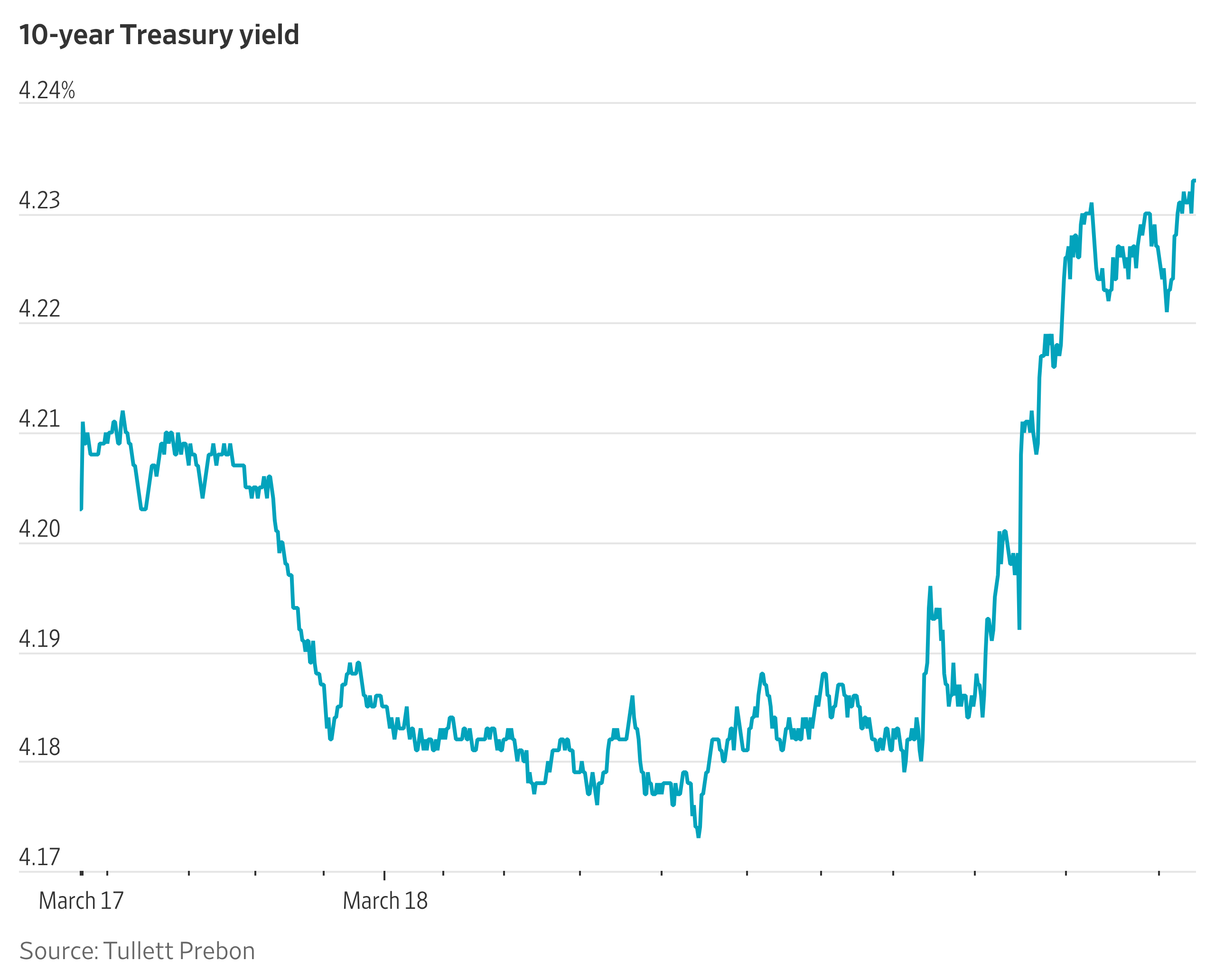
The yield on the 10-year note recently traded around 4.257%, up from around 4.23% prior to the decision.

Continue Reading

Trending

Copyright © 2025