Connect with us
DAPA Banner

Business

6 Business Use Cases For Perforated Metal

Published

on

6 Business Use Cases For Perforated Metal

Perforated metal has long been valued for its strength, versatility, and clean visual appeal. Created by punching patterns of holes into metal sheets, it offers a practical balance between airflow, light control, and structural support.

Across industries such as architecture, construction, mining, and interior design, perforated metal has become a go-to material for projects that require both function and style.

From industrial screening media to striking architectural façades, modern manufacturing techniques allow businesses to adapt perforated metal to a wide range of applications. Below are six common ways companies use perforated metal in commercial and industrial environments.

Rubber Flip Flow Screens In Quarrying And Mining

In heavy industries like quarrying and mining, screening media plays a major role in material processing. Rubber flip flow screens are a specialised form of screening system that often works alongside perforated metal components to sort and separate materials.

Flip flow screens use flexible rubber panels that vibrate to prevent clogging when handling wet or sticky aggregates. Perforated metal supports or frames can be used within these systems due to their strength and resistance to wear.

Advertisement

This combination offers several advantages:

  • Consistent material separation
  • Reduced blockages during screening
  • Long-term durability in harsh environments

For operations that handle high volumes of raw materials, robust screening systems are essential. Perforated metal provides the stability and support required for reliable processing equipment.

Picture Perf For Architectural Branding

Turning Metal Panels Into Visual Displays

Picture perf, sometimes called perforated imagery, allows designers to transform plain metal sheets into large-scale graphics. The technique uses thousands of precisely placed holes to form images, patterns, or gradients when viewed from a distance.

Businesses often use picture perf panels for building exteriors, car parks, and commercial developments. Logos, landscapes, or custom artwork can be recreated directly into the metal façade.

Because the design is formed through the perforation pattern itself, the result is highly durable and resistant to fading or weather damage.

Advertisement

Combining Function With Creative Design

Picture perf panels also serve practical roles such as ventilation, shade, or screening. This means a building can include branding or artwork without sacrificing airflow or light control.

Materials such as aluminium, stainless steel, and corten steel are commonly used, depending on the visual style and environmental conditions of the project.

Metal Cladding For Modern Building Exteriors

Perforated metal cladding

has become increasingly popular in contemporary architecture. It offers an attractive alternative to solid panels while still protecting the structure underneath.

Advertisement

Cladding systems made from perforated metal help regulate sunlight, airflow, and heat. The perforations allow partial visibility and ventilation while still acting as a protective outer layer.

Architects often select materials like stainless steel or corten steel for exterior cladding due to their strength and corrosion resistance. Brass, copper, and bronze can also be used when a more distinctive appearance is required.

Perforated metal cladding is commonly used for:

  • Commercial buildings
  • Car parks
  • Public infrastructure
  • Cultural venues

The result is a façade that combines durability with a distinctive, textured appearance.

Interior Fitout And Decorative Panels

Inside buildings, perforated metal sheets offer both decorative and practical benefits. Interior designers often use them in office spaces, retail environments, and public buildings where ventilation and light diffusion are useful.

Advertisement

Applications include partition walls, ceiling panels, and feature screens. The perforation patterns can soften lighting, improve acoustics, and create visual interest within a space.

Metal finishes such as brass, bronze, and copper are especially popular in interior fitout projects because they introduce warmth and character to modern interiors.

Custom perforation patterns also allow designers to create unique decorative metal sheets that complement the wider design scheme.

Sunscreens And Rain Screens For Climate Control

Buildings often need protection from both sunlight and weather exposure. Perforated metal is widely used in sunscreens and rain screens to help manage these challenges.

Advertisement

Solar Shading Systems

Perforated metal sunscreens are installed over windows or façades to reduce direct sunlight. By filtering the amount of light entering the building, they can help maintain comfortable indoor temperatures and reduce glare.

Unlike solid shading systems, perforated panels still allow outward visibility and natural airflow.

Ventilated Rain Screens

Rain screens act as a secondary layer on a building’s exterior. Perforated metal panels can form part of a ventilated façade system that allows moisture to escape while shielding the inner wall from rain and wind.

This approach is common in large commercial buildings where long-term durability and weather protection are key concerns.

Advertisement

Decorative Metal Sheets For Architectural Detail

Decorative perforated metal sheets are often used to add detail to architectural features. Their strength and customisable patterns make them suitable for both functional and aesthetic elements.

Examples include stair treads, ladder rungs, balcony panels, and flooring systems. In public buildings, perforated steps and walkways provide slip-resistant surfaces while allowing dirt and water to pass through.

Decorative panels can also be used for enclosures, security mesh, and feature walls. When paired with materials such as stainless steel, copper, or corten steel, they create visually striking structures that remain practical for everyday use.

Across many sectors, perforated metal continues to offer businesses a flexible material that meets both structural and design requirements. Whether used in heavy-duty screening media or refined architectural features, it provides a balance of durability, airflow, and visual impact that few other materials can match.

Advertisement

Continue Reading
Click to comment

You must be logged in to post a comment Login

Leave a Reply

Business

30-Year Fixed Averages 6.22% as of March 19, 2026, Up Slightly

Published

on

Mortgage rates in the United States have surged, cooling home sales

WASHINGTON — The average rate on the 30-year fixed mortgage climbed to 6.22% for the week ending March 19, 2026, according to Freddie Mac’s Primary Mortgage Market Survey released Thursday. The increase of 11 basis points from the prior week’s 6.11% marks the second consecutive weekly rise, pushing rates back toward levels seen earlier in the year while remaining below the 6.67% average from the same period in 2025.

Mortgage rates in the United States have surged, cooling home sales

Freddie Mac’s weekly benchmark, based on applications from conforming loans, showed the 15-year fixed-rate mortgage averaging 5.54%, up 4 basis points from 5.50% last week. A year ago, the 15-year averaged 5.83%. The modest uptick follows a period of relative stability in the low-6% range, with rates dipping below 6% in late February before rebounding.

The rise aligns with broader market movements. The 10-year Treasury yield, a key influence on mortgage pricing, has fluctuated amid persistent inflation concerns and Federal Reserve signals of caution on further rate cuts. The Fed held its benchmark federal funds rate steady in recent meetings, emphasizing data-dependent decisions. Higher energy costs and geopolitical tensions have added upward pressure on yields, indirectly lifting mortgage rates.

Daily surveys from other sources showed variation. Bankrate reported a national average 30-year fixed rate of 6.32% as of March 20, with a refinance average of 6.60%. Mortgage News Daily’s index pegged the 30-year at 6.43% on March 19, reflecting lender-specific pricing. Zillow data from mid-March cited averages around 6.12% for purchases and higher for refinances, illustrating how rates can differ by lender, credit profile and location.

For borrowers, the current environment means monthly payments on a typical $400,000 loan at 6.22% would total about $2,450 in principal and interest, compared to roughly $2,430 at 6.11%. The difference equates to roughly $20 more per month, or $7,200 over the loan’s life. Shorter-term 15-year loans at 5.54% offer lower overall interest but higher monthly payments — around $3,270 on the same amount — appealing to those prioritizing faster equity buildup.

Advertisement

Refinancing activity remains subdued. Many homeowners locked in rates below 4% during the pandemic-era lows and see little incentive to refinance at current levels. The refinance share of applications has hovered low, though experts note that even modest drops could spur activity among those with rates in the high-6% to 7% range.

Housing market implications are mixed. Purchase applications have shown improvement in recent weeks, with existing-home sales edging up in February per some reports. Freddie Mac Chief Economist Sam Khater noted that rates near 6% position buyers for a more affordable spring season compared to last year. Lower rates year-over-year have helped pending sales and applications trend positively despite the recent uptick.

Forecasts for the remainder of 2026 vary but generally point to stability or gradual easing. Fannie Mae’s earlier outlook projected rates ending 2026 around 5.9%, with averages in the mid-6% range through much of the year. The Mortgage Bankers Association and National Association of Realtors anticipate similar trajectories, with potential for sub-6% averages if inflation cools and the Fed resumes measured cuts. However, sticky inflation or stronger economic data could keep rates elevated.

Experts caution that mortgage rates don’t move in lockstep with Fed actions. They track long-term bond yields more closely, influenced by investor expectations for growth, inflation and global events. Recent weeks illustrated this: rates rose despite no Fed hike, driven by Treasury market dynamics.

Advertisement

For prospective buyers and refinancers, shopping multiple lenders remains key. Rates can vary by 0.25% or more depending on credit score, down payment, debt-to-income ratio and lender competition. Points — upfront fees to buy down the rate — can also lower effective costs for those planning long-term stays.

As spring homebuying ramps up, affordability challenges persist in many markets due to elevated home prices and rates above historical norms. The long-term average 30-year rate since the 1970s exceeds 7%, but recent years’ volatility has kept buyers cautious.

Industry watchers monitor upcoming data releases, including inflation reports and employment figures, for clues on the next move. If yields stabilize or decline, rates could ease back toward the low-6% territory seen earlier in March. Conversely, renewed inflationary pressures could push them higher.

For now, at 6.22%, the 30-year fixed remains competitive relative to recent history while signaling ongoing caution in the borrowing environment. Borrowers are advised to lock rates when offers align with budgets, as daily fluctuations can alter costs significantly.

Advertisement
Continue Reading

Business

Earnings call transcript: Smiths Group Q1 2026 sees organic growth, stock dips

Published

on


Earnings call transcript: Smiths Group Q1 2026 sees organic growth, stock dips

Continue Reading

Business

Oil Prices Extend Gains, Topping $111 a Barrel

Published

on

Oil Prices Extend Gains, Topping $111 a Barrel

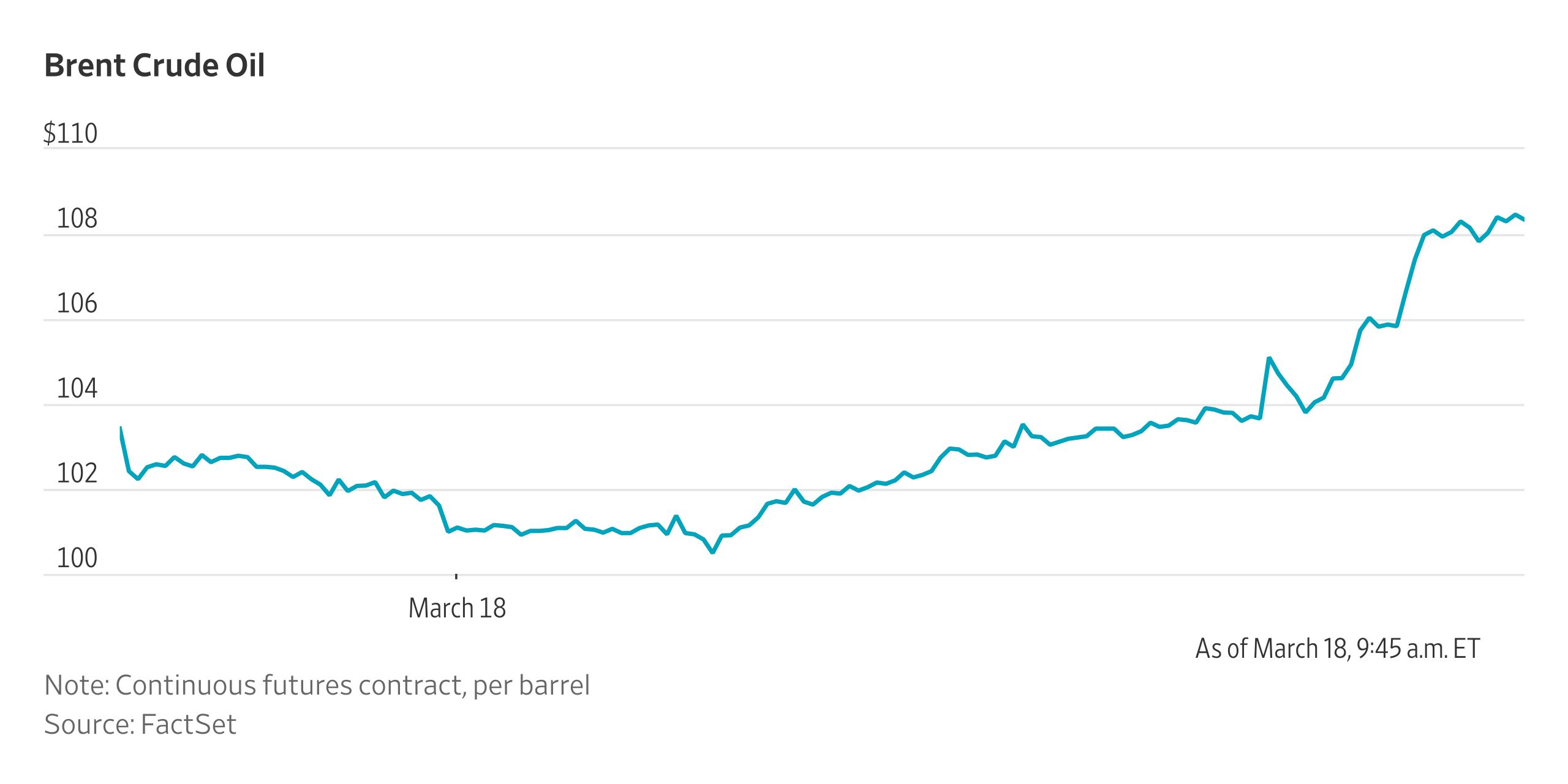
Oil prices are climbing higher in after-hours trading, with Brent crude futures topping $111 a barrel, after new attacks on critical energy infrastructure in the Middle East.

Futures rose during regular trading hours after Israel struck the South Pars gas field, the world’s largest such facility, which is shared by Iran and Qatar. Futures added another $4 a barrel after Iran retaliated by striking a major fuel hub in Qatar, causing extensive damage.

It is “highly unlikely Iran is going to soften their stand on the Strait of Hormuz if their energy assets are being attacked,” wrote Robert Yawger, commodity specialist at Mizuho Securities, in a note.

Continue Reading

Business

Transformative Or Overhyped? The Impact Of Weight-Loss Drugs On European Food Demand

Published

on

Transformative Or Overhyped? The Impact Of Weight-Loss Drugs On European Food Demand

Transformative Or Overhyped? The Impact Of Weight-Loss Drugs On European Food Demand

Continue Reading

Business

Wetherspoon shares fall as profit misses expectations

Published

on

Business Live

It comes despite like-for-like sales rising by five per cent at the pub chain, surpassing the industry trend

Wetherspoons’ boss Tim Martin(Image: Henry Nicholls/PA Wire)

Shares in UK pub chain JD Wetherspoon have plummeted after profits failed to meet expectations, even following a downgrade. The company reported a 32 per cent drop in pre-tax profit to £22m for the first half of this year, and an 18 per cent decrease in operating profit to £53m, falling short of analyst predictions of an eight per cent decline to £60m.

Advertisement

The shares dropped 10 per cent at Friday’s opening, to 555p, marking a 25 per cent decrease so far this year.

This comes despite like-for-like sales rising by five per cent, surpassing the industry trend, which experienced a 0.2 per cent dip in sales in February as the hospitality sector grappled with high costs and inclement weather.

Chairman Tim Martin, who is based in Devon, said increases to national insurance and minimum wage will cost £60m annually, along with an additional £7m in energy costs, as pubs prepare for bill increases due to the Iran war, as reported by City AM.

He said: “These cost increases will undoubtedly add to underlying inflation in the UK economy, although Wetherspoon, as always, will endeavour to keep price increases to a minimum.

Advertisement

“There is clearly considerable pressure on consumer finances, combined with higher taxes, wages and energy costs for the hospitality industry.”

Wetherspoon’s revenue increased by 5.7 per cent to £1bn and the interim dividend remained steady at 4p per share.

The pub chain downgraded its forecasts earlier this year – citing £45m in extra costs, though this figure now appears to have risen.

Martin cautioned last week that elevated energy costs resulting from the Iran conflict are likely to affect pubs, telling The Telegraph that higher bills “make customers poorer and also push up the cost for suppliers”.

Advertisement

Increasing energy prices are anticipated to impact pubs when they renegotiate their contracts with suppliers, though Wetherspoon is secured on a fixed-price contract until 2029 – considerably longer than its rivals.

Small and independent pubs, particularly those operating off-grid or dependent on oil for heating their premises, are especially exposed to rising oil prices stemming from supply disruptions in the Middle East, according to trade body UKHospitality.

Recent concerns surrounding energy bills compound a raft of cost pressures which landlords say are creating near-impossible conditions for pubs.

Pub operators described a £300m emergency business rates package – announced following widespread backlash against reforms to the tax – as merely a “sticking plaster”, whilst hospitality firms have sounded the alarm over escalating employment costs.

Advertisement
Continue Reading

Business

Zillow Stock Rises After Compass Drops Lawsuit on Home Marketing

Published

on

Zillow Stock Rises After Compass Drops Lawsuit on Home Marketing

Zillow Stock Rises After Compass Drops Lawsuit on Home Marketing

Continue Reading

Business

Open and Operating With Limited Flights

Published

on

An Emirates Airline Airbus A380-800 plane takes off from Dubai International Airport in Dubai, United Arab Emirates February 15, 2019.

DUBAI, United Arab Emirates (AP) — Dubai International Airport (DXB), the world’s busiest international hub, remains open and operational on Friday, March 20, 2026, but continues to function under severe limitations due to a series of regional airspace restrictions, security incidents and geopolitical tensions that began in late February. Real-time flight tracking shows dozens of departures and arrivals scheduled throughout the day, primarily operated by Emirates and flydubai, as foreign carriers face indefinite bans or extended suspensions.

An Emirates Airline Airbus A380-800 plane takes off from Dubai International Airport in Dubai, United Arab Emirates February 15, 2019.
Dubai International Airport

The official Dubai Airports website and flight status pages confirm active operations at DXB. As of early March 20 (local time), departures include Emirates flights to London Heathrow (EK 031 at 11:15 a.m.), Riyadh (EK 815 at 11:20 a.m.) and multiple flydubai services to Kabul (FZ 307 at 11:35 a.m.), Multan (FZ 339 at 11:40 a.m.) and Faisalabad (FZ 355 at 11:40 a.m.). Statuses range from “Gate Closed” and “Boarding” to ongoing processing, with no widespread cancellations listed for the day. Arrivals tracking similarly shows incoming flights from various origins, though volumes remain far below pre-crisis norms.

Dubai Airports’ passenger advisory, last updated in recent days, states: “Dubai Airports confirms the gradual resumption of some flights to and from Dubai International (DXB) to selected destinations, following the temporary suspension implemented as a precautionary measure. Passengers are advised to check with their airlines for the latest updates regarding their flights.” The site emphasizes that schedules continue to adjust as airlines reposition aircraft and rebalance networks.

The current restricted status stems from a chain of events starting late February 2026, when escalating conflict involving Iran, Israel and regional actors triggered multiple airspace closures across West Asia. A significant drone-related incident on March 16 near DXB’s fuel facilities caused a fire, prompting a full temporary suspension of operations as a safety precaution. Dubai Media Office and authorities described it as precautionary, with no major structural damage reported to terminals.

Following the March 16 event, operations partially resumed later that day and into March 17, when the UAE’s General Civil Aviation Authority (GCAA) announced air traffic had returned to normal across national airspace. However, recovery has been uneven. Foreign airlines, including major carriers from Europe, Asia and North America, received notices banning landings at DXB and Al Maktoum International (DWC) “until further notice.” Only UAE-based operators Emirates and flydubai hold permissions for regular service.

Advertisement

Airline advisories reflect this reality. Emirates has gradually expanded its schedule, aiming for fuller operations in coming weeks, while flydubai maintains a limited but growing network. International carriers like Air France, KLM, Lufthansa, British Airways, Cathay Pacific and Singapore Airlines extended suspensions through late March or beyond. India’s IndiGo canceled dozens of flights in mid-March due to restrictions, and Air India operated backlog-clearing services on select days. Over 11,000 global flights have faced disruption since late February, with rerouting adding hours to journeys and stranding passengers.

DXB’s CEO Paul Griffiths noted in mid-March interviews that the airport had facilitated over a million passenger journeys in the prior weeks despite challenges, operating at 40-45% of normal traffic. Real-time monitoring and rapid threat response have enabled partial recovery, but full restoration depends on stabilized regional airspace.

Travelers face ongoing advice: Do not proceed to the airport without confirmed bookings, as walk-ins are turned away and schedules change dynamically. Check airline apps, websites or the official DXB flight status page for real-time updates. Passengers with affected flights may qualify for rebooking, refunds or waivers under airline policies and international regulations.

The situation highlights DXB’s vulnerability as a global transit node. Normally handling over 1,200 daily movements and serving 90+ million passengers annually, the hub has seen volumes plummet during peaks of disruption. Al Maktoum International (DWC) has absorbed some overflow but shows minimal or no flights on certain days.

Advertisement

Authorities continue monitoring the region closely, with GCAA emphasizing safety as the priority. No new major incidents were reported overnight into March 20, and flight information pages show steady, albeit reduced, activity.

For those planning travel through Dubai today or in coming days, the message is clear: DXB is open but far from normal. Confirm flights directly with carriers, allow extra time for security and potential delays, and monitor official sources like dubaiairports.ae for alerts.

As the crisis enters its third week, aviation experts predict gradual normalization if tensions ease, but prolonged restrictions could reshape Middle East routing for months. Travelers are urged to stay informed and flexible amid this fluid environment.

Advertisement
Continue Reading

Business

From Messi and Ronaldo’s Final Bow to Rising Stars Like Yamal

Published

on

Lionel Messi scored a hat-trick for Argentina in World Cup action but will have to wait for his PSG home debut

With just over 80 days until the expanded 48-team 2026 FIFA World Cup kicks off across the United States, Mexico and Canada on June 11, anticipation is building for what promises to be the most global tournament in history. Power rankings from ESPN, FOX Sports and other outlets place Spain, France, Argentina, England and Brazil as top contenders, but individual brilliance will likely decide outcomes in the North American-hosted event.

Lionel Messi scored a hat-trick for Argentina in World Cup action but will have to wait for his PSG home debut

Veterans like Lionel Messi and Cristiano Ronaldo could make their last major international appearances, while a new generation — led by Lamine Yamal, Jude Bellingham and Erling Haaland — stands ready to claim the spotlight. Here are 10 players expected to define the summer spectacle, blending proven icons, prime-age superstars and explosive young talents.

  1. Lionel Messi (Argentina, Forward, Inter Miami) At 38, the eight-time Ballon d’Or winner remains Argentina’s talisman. Having lifted the trophy in 2022 after years of near-misses, Messi could chase a second title in his adopted home nation. Recent form in MLS and Copa America shows his vision and finishing remain elite. If he plays — and many expect a farewell tour — every touch will captivate global audiences.
  2. Kylian Mbappé (France, Forward, Real Madrid) Entering his prime at 27, Mbappé is widely viewed as the tournament’s top game-changer. A World Cup winner in 2018 and Golden Boot scorer in 2022 despite defeat in the final, his blistering pace, composure and goal threat make France co-favorites. Recent club exploits at Real Madrid reinforce his status as the heir to Messi and Ronaldo’s throne.
  3. Cristiano Ronaldo (Portugal, Forward, Al Nassr) At 41, the all-time international goalscorer (130+) eyes a sixth World Cup appearance. Ronaldo has confirmed his intent to compete, and his Nations League performances prove he can still deliver. Portugal ranks high in power lists; a deep run could provide a storybook ending for one of soccer’s greatest.
  4. Lamine Yamal (Spain, Winger, Barcelona) Just 18, Yamal already ranks among the world’s best. His Euro 2024 breakout, dribbling wizardry and composure earned him spots on nearly every “players to watch” list. Spain tops many 2026 power rankings thanks to Yamal’s flair alongside Pedri and Nico Williams. He could emerge as the breakout star.
  5. Erling Haaland (Norway, Striker, Manchester City) The prolific scorer (often 40+ goals per season) makes Norway a dark horse if qualified. Haaland’s absence from major tournaments so far adds intrigue — his physical dominance and finishing could propel an underdog run. Experts call him a genuine Golden Boot contender.
  6. Jude Bellingham (England, Midfielder, Real Madrid) At 22, Bellingham’s box-to-box dynamism and leadership make him England’s engine. Recent seasons show maturity beyond his years; under potential new management, he could drive the Three Lions past past disappointments. England sits high in rankings, with Bellingham central to any success.
  7. Vinícius Júnior (Brazil, Winger, Real Madrid) Brazil’s attacking catalyst, Vinícius brings pace, dribbling and clutch moments. At 25, he’s in peak form, making Brazil perennial threats despite recent inconsistencies. His flair could shine in high-stakes knockout games.
  8. Pedri (Spain, Midfielder, Barcelona) The 23-year-old orchestrator controls tempo with vision and passing. Part of Spain’s Euro 2024 triumph and La Liga success, Pedri complements Yamal perfectly. His injury history adds risk, but when fit, he’s indispensable.
  9. Harry Kane (England, Striker, Bayern Munich) The consistent goal machine (often 30+ per season) leads England’s line. Kane’s hold-up play, penalties and big-game nous make him vital. England’s high ranking owes much to his reliability.
  10. Achraf Hakimi (Morocco, Fullback, Paris Saint-Germain) The versatile defender/midfielder helped Morocco to fourth in 2022. At his best, Hakimi dominates flanks with speed and crossing. Morocco remains a contender; his all-around talent could spark another surprise run.

These players represent the tournament’s blend of eras: legends seeking closure, primes hitting stride and youth ready to explode. With expanded format and home crowds for hosts, individual moments could define legacies. As qualifying wraps and friendlies intensify, focus sharpens on these stars to deliver drama in stadiums from Seattle to Mexico City.

The 2026 World Cup, the largest ever, starts June 11 with Mexico vs. South Africa in Mexico City. Expect these 10 — and potential surprises — to light up the global stage.

Continue Reading

Business

UK borrowing higher than expected in February

Published

on

UK borrowing higher than expected in February

The ONS said an increase in government tax receipts was outweighed by a rise in spending.

Continue Reading

Business

Redevelopment of unviable shopping centre will bring ‘new confidence’ to town

Published

on

Business Live

Combined Authority funding to back next stage of scheme at Prescot Shopping Centre

Inside Prescot shopping centre

Inside Prescot shopping centre

The first phase of demolition of a Merseyside shopping centre is complete with hopes its redevelopment will bring “new confidence” to the town. In 2022, Knowsley Council completed the £1.3m purchase of Prescot Shopping Centre.

Advertisement

It was revealed in September last year how the “outdated and underused” areas of the site were being demolished while the former Stephenson Print building has already been flattened. These works form part of a wider regeneration scheme for Prescot as Knowsley Council aims to “revitalise” the area.

Now more than half a million pounds of Liverpool City Region Combined Authority funding is being used to enable the next stage of the scheme. This could include further demolition work to make the site more financially sustainable.

Work began in the old Somerfield supermarket to make it ready for future development last September. Cabinet members endorsed a proposal to accept £600,000 from the city region’s regeneration capacity building fund to draw up plans for a reimagined shopping centre site.

Cllr Tony Brennan, cabinet member for regeneration and economic development, said the funding would take the council’s ambitions for Prescot Shopping Centre to the next stage. He added how the authority’s decision to buy the centre had been “bold” after “years of private ownership and under investment.”

Advertisement

Cllr Brennan said the first phase of demolition of the site had been completed alongside urgent maintenance and repair works. He said the redevelopment of the centre would bring a “new confidence” to Prescot.

The cabinet member said in its previous state, the centre did not meet the expectations of residents and business and was not deemed “financially viable to maintain.” Further consultation will now move forward with a view to progression towards a formal planning application.

As part of this, the centre will include a new library, museum and cultural offer, alongside an increased capacity in the car park. Members also accepted a major cash injection from the government’s housing agency to transform Huyton Village.

Prescot Shopping centre in town centre.

Prescot Shopping centre in the town centre.(Image: Colin Lane/Liverpool Echo)

Cllr Brennan said the acceptance of £19m from Homes England for the redevelopment of Cavendish Walks in the heart of the town centre was a “landmark moment for Huyton’s future.” Demolition of existing sites including a multi-storey car park and relocation of the town’s library is also proposed.

Advertisement

As part of the project, the council owned land will be renamed ‘St Michael’s Place’, in recognition of the nearby St Michael’s Church landmark and the wider history of the area. A high point was reached for the scheme when Homes England approved a bid for £19m through the Brownfield Infrastructure and Land (BIL) Fund.

This funding will unlock the regeneration site by enabling essential demolition works, ground works, infrastructure installation, and redevelopment of 6–8 Cavendish Walks into a new library and community hub, alongside delivery of the Village Green.

To find all the planning applications, traffic diversions, road layout changes, alcohol licence applications and more in your community, visit the Public Notices Portal.

Advertisement
Continue Reading

Trending

Copyright © 2025