
Connect with us
DAPA Banner

NewsBeat

Belarus releases 250 political prisoners to lift some US sanctions

Published

on

Belarus releases 250 political prisoners to lift some US sanctions

TALLINN, Estonia (AP) — Belarus’ authoritarian President Alexander Lukashenko on Thursday ordered the release of 250 political prisoners as part of a deal with Washington that lifted some U.S. sanctions, the latest step in the isolated leader’s effort to improve ties with the West.

Lukashenko pardoned the prisoners after meeting with U.S. President Donald Trump’s special envoy for Belarus, John Coale, in the Belarus capital of Minsk. Coale hailed the release as a “significant humanitarian milestone” and a testament to Trump’s “commitment to direct, hard-nosed diplomacy.” It marked the largest one-time release of political prisoners in the country.

Coale told reporters that the U.S. will lift sanctions from two Belarusian state banks and the country’s Finance Ministry, and that the top Belarusian potash producers have been removed from a sanctions list.

Belarus’ opposition leader-in-exile, Sviatlana Tsikhanouskaya, hailed the prisoners’ release as “a moment of great relief and hope.”

Advertisement

“After years of isolation, people are now free and can finally embrace their loved ones,” Tsikhanouskaya told The Associated Press. “There is nothing more powerful than seeing someone who endured unjust imprisonment reunited with their family.”

She thanked Trump and his officials for their “tireless efforts to secure the release of political prisoners,” adding that “these humanitarian efforts are saving lives.”

The last time U.S. officials met with Lukashenko, in December, Washington announced the easing of sanctions on Belarus’ potash sector, a key source of export revenue, and 123 prisoners were released and sent to Ukraine and Lithuania.

A close ally of Russia, Minsk has faced isolation for years. Lukashenko has ruled the nation of 9.5 million with an iron fist for more than three decades, and the country has been sanctioned repeatedly by Western countries — both for its crackdown on human rights and for allowing Moscow to use its territory in the full-scale invasion of Ukraine in 2022.

Advertisement

Lukashenko’s rule was challenged after a 2020 presidential election, when tens of thousands poured into the streets to protest a vote they viewed as rigged. They were the largest demonstrations since Belarus became independent following the 1991 collapse of the Soviet Union.

In an ensuing crackdown, tens of thousands were detained, with many beaten by police. Prominent opposition figures either fled the country or were imprisoned.

Five years after the mass demonstrations, Lukashenko won a seventh term last year in an election that the opposition called a farce.

More recently, Belarus has freed some political prisoners to try to win favor with the West. Since Trump returned to the White House last year, Lukashenko has released dozens of prisoners, including Nobel Peace Prize laureate Ales Bialiatski and key dissident figures Siarhei Tsikhanouski, Viktar Babaryka and Maria Kolesnikova.

Advertisement

Trump spoke to Lukashenko by phone in August 2025 after one such release and even suggested a face-to-face meeting in what would be a big victory for the Belarusian leader, who has been dubbed “Europe’s Last Dictator.”

Dzianis Kuchynski, an adviser to Tsikhanouskaya, said that 15 of the 250 prisoners arrived in Lithuania following their release.

They included Valiantsin Stefanovich and Marfa Rabkova of the prominent Belarus human rights group Viasna. Stefanovich was serving a nine-year sentence on charges of smuggling money to finance activities violating the public order after his arrest in 2023. Rabkova was sentenced to 14 years and nine months following her 2020 arrest and conviction on charges of organizing riots and inciting hatred, accusations widely seen as a punishment for documenting human rights abuses.

Nasta Loika, 37, an activist with the international rights group Human Constanta, was also released. She was sentenced to seven years in prison after her arrest in 2022 on charges of organizing mass unrest and inciting hatred – charges widely seen as retaliation for her activism.

Advertisement

Also freed was Katsiaryna Bakhvalava, 32, who also goes by the last name of Andreyeva, a journalist of the Polish-funded Belsat TV channel who was arrested in 2020 while covering mass anti-government protests in Minsk. She was sentenced to more than eight years in prison on convictions for violating public order and treason.

Eduard Palchys, a 35-year-old opposition blogger, was also among those pardoned by Lukashenko. He was convicted of causing harm to Belarus’ national security and organizing mass unrest over his role in coordinating the demonstrations in 2020. and sentenced to 13 years in prison.

Like previously released prisoners, they were all sent to Lithuania without passports or other identity papers. Kuchynski denounced it as a “mockery” by Belarusian authorities seeking to make the lives of the released prisoners more abroad more difficult.

Just before the latest announcement of releases, the Viasna group had estimated that there were more than 1,100 political prisoners in the country.

Advertisement

Tsikhanouskaya emphasized that “many people are still behind bars” and “our goal remains unchanged — to free them all and to put a final end to repression, so that every Belarusian can live freely in their own country.”

Source link

Advertisement
Continue Reading
Click to comment

You must be logged in to post a comment Login

Leave a Reply

NewsBeat

How birds are spreading plastic pollution

Published

on

How birds are spreading plastic pollution

Hungry gulls do not only steal our chips and sandwiches. They learn our habits, and look for reliable sources of food. That includes waste treatment centres, landfill or anywhere food waste is concentrated. Many gull populations have moved inland from the coast to exploit these sources of food.

Wherever our waste is processed, gulls and other birds can forage. At landfills, gulls feed on waste before it is covered up. If there are plastic or glass pieces covered in food that are small enough, gulls will swallow them whole. Only the food itself gets digested, and when the gull flies back to its roost site, the waste gets regurgitated, polluting that site. This movement of pollutants is known as “biovectoring”.

For the first time, scientists like me are now quantifying just how much plastic and other waste is being leaked into important nature areas through the daily movements of birds.

Many lesser black-backed gulls breeding in the UK and other parts of northern Europe migrate to Andalusia in southern Spain, where they form a wintering population of over 100,000 feeding mainly in rice fields and landfills. Fortunately, many of these birds are fitted with GPS tags while breeding. This enables detailed tracking of their movements.

Advertisement


À lire aussi :
Yes, shouting at seagulls actually works, scientists confirm


Fuente de Piedra lake in Málaga is a hotspot for migrating lesser black-backed gulls. This wetland has such special natural significance, it’s designated as an internationally important site under a global convention known as Ramsar. It’s most famous for the largest breeding colony of flamingos in Spain. Gulls fly up to 50 miles to landfills to feed, then fly back to roost.

By combining GPS data with waterbird counts, and analyses of regurgitated pellets, scientists have estimated that an average of 400kg of plastics, plus more than two tonnes of other debris such as glass, textiles or ceramics, are deposited by this gull species into the lake each year. This lake has no outflow, making it salty and hence flamingo friendly. Those imported plastics remain in the lake, breaking down into microplastics. They can be ingested by flamingo chicks, aquatic insects and other animals.

Advertisement

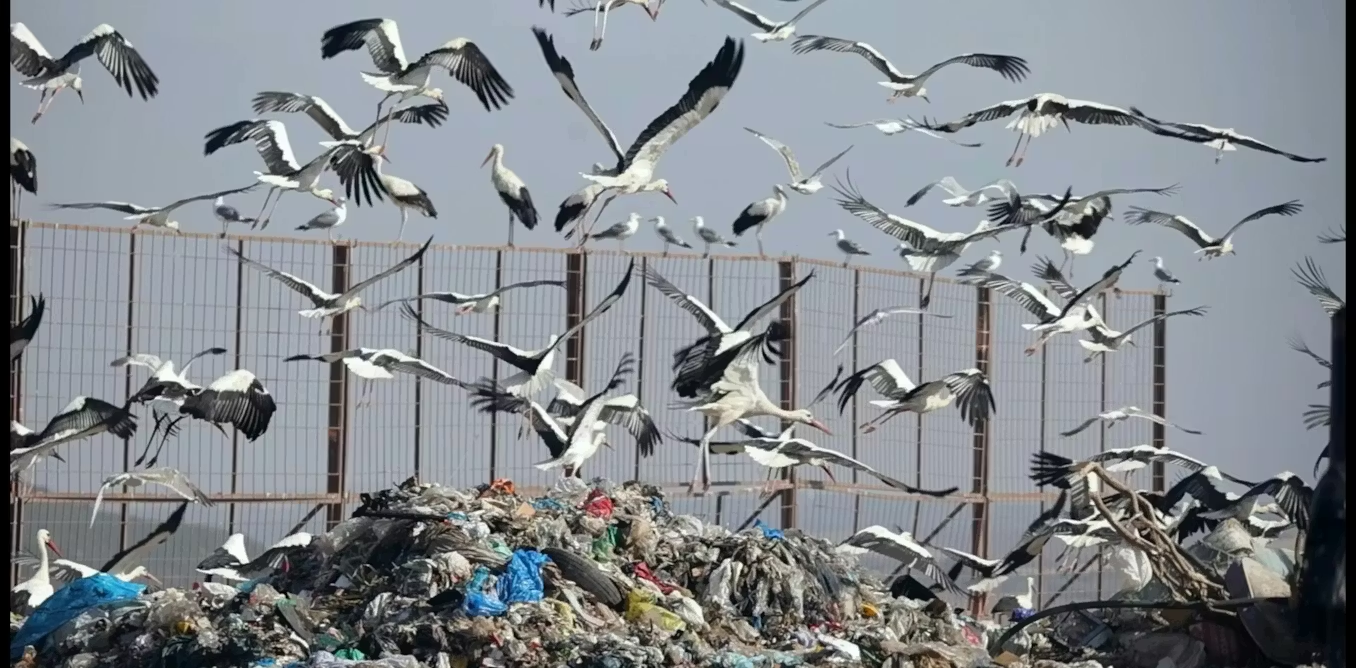
Two yellow-legged gulls chase a white stork that is carrying plastic in its bill, which it picked up at a landfill.
Enrique García Muñoz (FotoConCiencia), CC BY-NC-ND


À lire aussi :
Plastic pollution threatens birds far out at sea – new research


In coastal Andalusia, these gulls join the resident yellow-legged gulls (equivalent to our herring gulls) and a mixture of migratory and resident white storks as the three major waterbird visitors to landfills.

In the Cádiz Bay wetlands (another Ramsar site), surrounding the historical city that is now a favourite stop for cruise ships, the three species combine to spread different types and sizes of plastics into different microhabitats. Annually, 530kg of plastics are deposited into wetlands via regurgitated pellets. Although a stork is bigger, so transports more waste per bird, most of the plastic is again moved by the lesser black-backed gulls that winter there in larger numbers.

Advertisement
hand holding plastic waste that had been eaten by a bird and partly digested

Plastic film regurgitated by a gull roosting in a field in Atherton, Greater Manchester.
Kane Brides, CC BY-NC-ND

This waste ingestion has strong effects on the birds themselves, through direct mortality from diseases, choking or becoming entangled with plastics, and toxic effects of the additives within them. Then after regurgitation in pellets, those plastics are a threat to all fauna and readily enter our food supply through aquaculture and table salt production, both important in Cádiz Bay.

These studies in Spain address a problem that is ongoing all over Europe. There are no comparable quantitative studies yet in the UK, but similar problems occur wherever gulls concentrate to feed on our waste. If white storks become abundant in the UK future, they will probably visit our landfills, together with gulls and perhaps cattle egrets.

The sealing of many landfills, and improvements in waste management may have contributed to recent declines in many gull populations in the UK and elsewhere. But these problems of plastic leakage will continue so long as our consumer society generates so much waste. Reducing waste, and reusing things is better than recycling, partly because food containers may get eaten by birds before they can be recycled. Cleaning our food containers before we bin them, and composting our own food waste, can also help to reduce this phenomenon.
Source link

Advertisement
Continue Reading

NewsBeat

‘One of life’s true gents’: Tributes to tragic Co Tyrone farm accident victim

Published

on

Belfast Live

It’s understood the young man, who was aged in his 30s, was working on a roof at the farm

Tributes have been paid to a young man who died in a tragic farm accident.

Advertisement

Emergency services were called to reports of a sudden death on a farm in Co Tyrone on Thursday. The incident occurred in the Drumenny Road area of Cookstown.

The victim, who has been named locally as Richard Wallace, was from the Moneymore area of Co Derry. It’s understood Mr Wallace, who was aged in his 30s, was working on a roof at the farm.

READ MORE: Man dies in incident on Co Tyrone farmREAD MORE: Search for missing Newry man stood down after body found

Police, the Northern Ireland Ambulance Service and the charity Air Ambulance attended the scene.

Advertisement

The death is not being treated as suspicious and the Northern Ireland Health and Safety Executive is investigating.

A death notice described Mr Wallace as the ‘precious and much adored youngest son of Stephen and Julie, dearly loved brother of Graeme, much loved grandson of Danny and Elizabeth (Robinson) and the late Sammy and Josie (Wallace) and a cherished nephew and cousin’.

Many tributes have also been paid on social media with many remembering him as a true character and gentleman” and “one of the best.”

One heartbroken friend said: “Was an absolute pleasure to call this man my friend for the best part of 20years. From cycling the roads in the summer as cubs to countless nights out, you were always the soul of the party and I have memories il cherish forever. You will be missed greatly. Until we meet again Our boy.”

Advertisement

Another said: “Ballyeglish will never be the same without u buddy! The hardest working and honest lad taken from us to soon. Sleep easy.”

“Great memories in school and the band growing up, always with a smile on his face! Thinking of the family at this heartbreaking time,” said a third.

Another added: “Such awful news! Such fond memories of school days. Richard was always the class clown, who made everyone laugh! RIP Richard!”

Meanwhile Bruce’s True Blues Accordion Band in Bellaghy said: “Our thoughts are with Stephen, Julie and Graeme following the tragic death earlier today of Richard.

Advertisement

“A dedicated bandsman, Richard in his youth was a member of Ballymoughan Purple Guards Magherafelt, following his Dad & brother, although as a drummer not a fluter like them. In more recent years he drummed with Dunamoney Flute Band and we also think of his band families in both bands.

“We also have in our thoughts the wider Robinson & Wallace family circle, especially his grandparents Danny & Elizabeth Robinson & Aunts & Uncles Amanda (David), Glenn (Kathryn), Susan (Melvyn) and their families.”

Desertmartin Accordion Band added: “As a band we wish to pass on our condolences to Stephen, Julie, and Graeme on the tragic passing of Richard. Trying to process how and why a young lad was tragically killed is very difficult for any of us, never mind the family.

“We pray for God’s grace for the family and fellow band members to get through this. None of us know the hour.”

Advertisement

A PSNI spokesperson said: “Police and other emergency services attended a sudden death in the Drumenny Road area of Cookstown on Thursday morning, March 19.

“The death is not being treated as suspicious and the Health and Safety Executive has been informed.”

To ensure you don’t miss out on all the latest from Belfast Live, be sure to make us your preferred source on Google.

Source link

Advertisement
Continue Reading

NewsBeat

People’s Postcode Lottery win for Atherton residents

Published

on

People's Postcode Lottery win for Atherton residents

Neighbours on Hunt Street in Atherton have won today, March 20, on the People’s Postcode Lottery.

Ticket holders on the street, which is covered by the M46 9JF postcode, are each entitled to £1,000 as part of the lottery’s daily prize.

They won alongside 19 other postcodes nationwide.

Advertisement

The People’s Postcode Lottery manages lotteries for 20 charities, with each one having one draw a month.

The lottery supports “a wide range of charities and good causes across Britain and around the world”.

To date, they’ve provided more than £1.1 billion in funding, which is helping thousands of organisations and projects.

Advertisement

Source link

Continue Reading

NewsBeat

Red Roses: Seven uncapped players in England’s Women’s Six Nations squad

Published

on

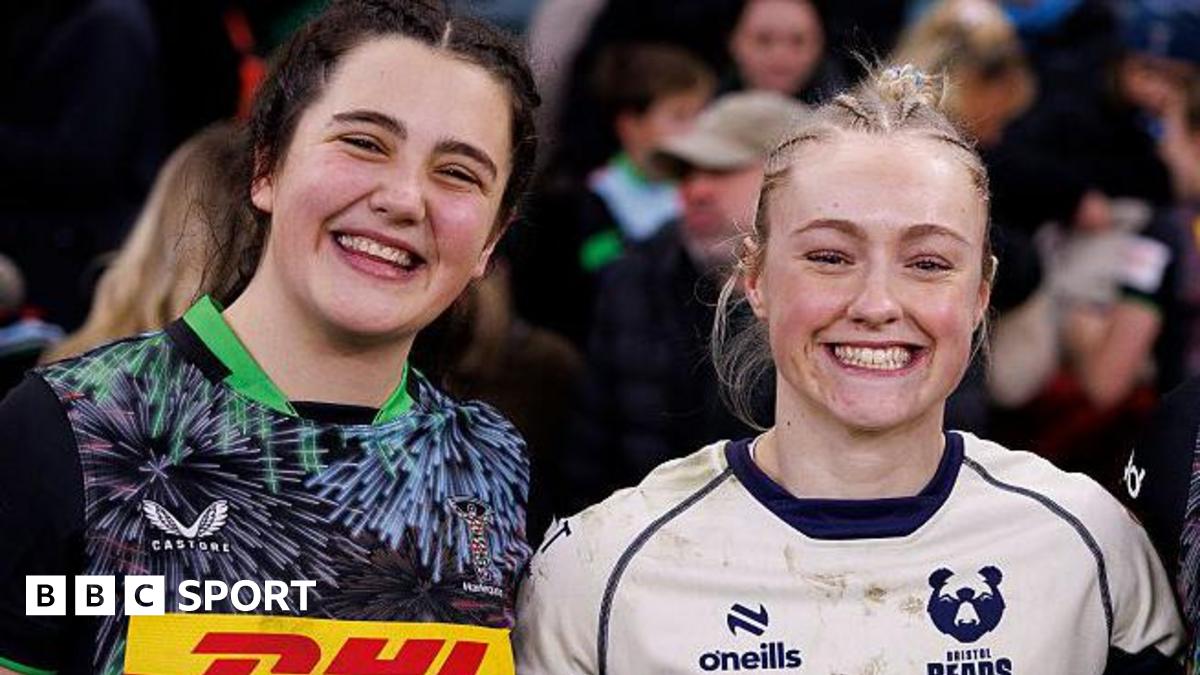
Sarah Parry and Millie David

Forwards: Christiana Balogun (Bristol Bears), Sarah Bern (Bristol Bears, 79 caps), Hannah Botterman (Bristol Bears), Abi Burton (Trailfinders Women), May Campbell (Saracens), Mackenzie Carson (Saracens), Kelsey Clifford (Saracens), Amy Cokayne (Sale Sharks, vice captain), Maddie Feaunati (Exeter Chiefs), Liz Hanlon (Harlequins), Daisy Hibbert-Jones (Loughborough Lightning), Lilli Ives Campion (Loughborough Lightning), Sadia Kabeya (Loughborough Lightning), Haineala Lutui (Loughborough Lightning), Alex Matthews (Gloucester-Hartpury, vice captain), Annabel Meta (Trailfinders Women), Maud Muir (Gloucester-Hartpury), Marlie Packer (Saracens), Connie Powell (Harlequins), Demelza Short (Bristol Bears), Morwenna Talling (Sale Sharks), Jodie Verghese (Saracens, uncapped)

Backs: Holly Aitchison (Sale Sharks), Jess Breach (Saracens), Millie David (Bristol Bears), Zoe Harrison (Saracens), Tatyana Heard (Gloucester-Hartpury), Natasha Hunt (Gloucester-Hartpury), Megan Jones (Trailfinders Women, captain), Ellie Kildunne (Harlequins), Claudia Moloney-MacDonald (Exeter Chiefs), Lucy Packer (Harlequins), Sarah Parry (Harlequins), Flo Robinson (Exeter Chiefs), Helena Rowland (Loughborough Lightning), Emma Sing (Gloucester-Hartpury), Mia Venner (Gloucester-Hartpury), Bo Westcombe-Evans (Loughborough Lightning)

Source link

Continue Reading

NewsBeat

Saturday Night Live UK Extends Season 1 Ahead Of Launch Episode

Published

on

Saturday Night Live UK Extends Season 1 Ahead Of Launch Episode

The team behind Saturday Night Live UK has announced that the inaugural season will now be running for an additional two more episodes.

Originally, the UK edition of SNL was supposed to run for just six episodes, but Sky confirmed on Friday morning that this has been bumped up to eight.

SNL legend Tina Fey is due to present the first instalment of the British show this weekend, with Brit Award winners Wet Leg serving as the episode’s musical guests.

Following this, Fifty Shades Of Grey star Jamie Dornan and Oscar winner Riz Ahmed will host episodes two and three respectively, with performances from Wolf Alice and Kasabian.

Advertisement

The remaining five guest hosts and musical performers will be unveiled in due course.

Lorne Michaels, who created SNL in 1975, will be acting as the UK show’s executive producer, working alongside a team of 20 writers and a regular cast of 11 comedians, which includes Taskmaster alum Emma Sidi and Ania Magliano, Black Ops star Hammed Animashaun and TikTok fave Jack Shep.

For the most part, SNL UK will be following the same format as the long-running American version, in which a different host performs sketches alongside the regular cast in front of a live studio audience each week.

Written the week of the filming, the 75-minute episodes will be made up of an opening monologue from the guest presenter, sketches featuring the house cast, live performances from the week’s musical act and a more British-centric take on SNL’s satirical news segment, Weekend Update.

Advertisement

As was reported by Deadline, producer James Longman said earlier this week that SNL UK had “borrowed the US house” but was planning on “building our own rooms” while discussing how the two series would compare.

Saturday Night Live UK will launch this Saturday (March 21) on Sky and Now TV. Watch a teaser below:

Advertisement

Source link

Continue Reading

NewsBeat

Cambridgeshire city named among best places to live in Britain on Sunday Times list

Published

on

Cambridgeshire Live

The Sunday Times Best Places to Live 2026 have been released – and a Cambridgeshire city has made it onto the list

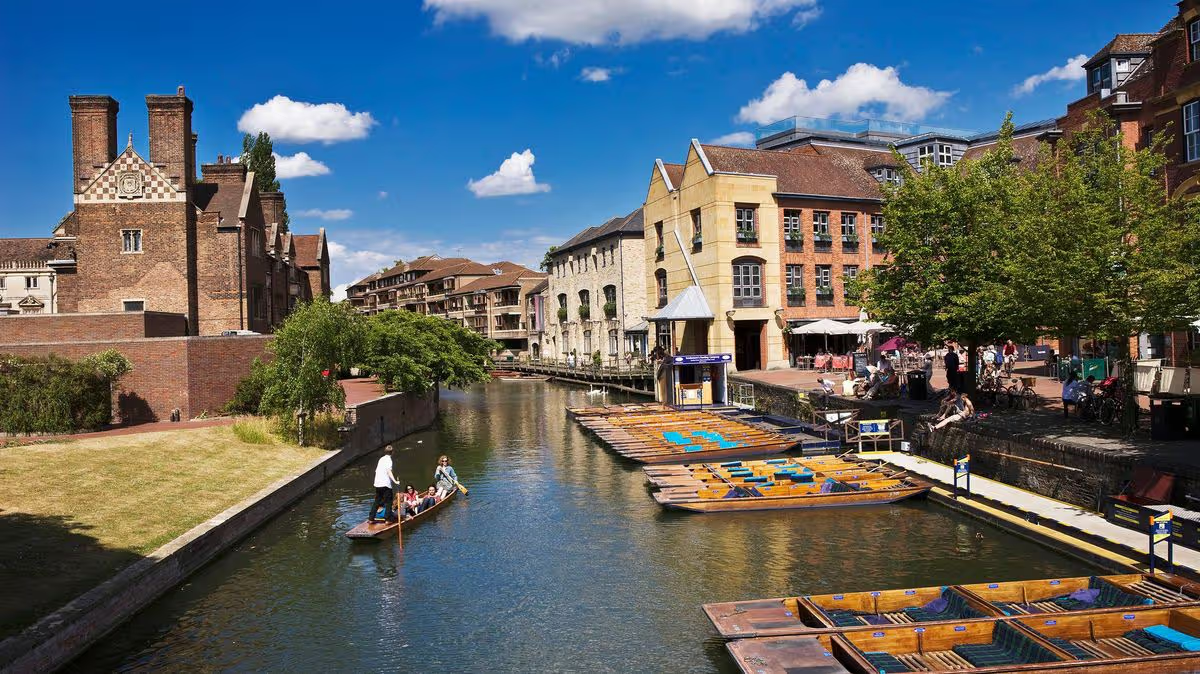
A Cambridgeshire city has been named among the best places to live in Britain by The Sunday Times. Cambridge has been identified among the best places to live in the East of England in the list, released on Friday, (March 20).

Advertisement

Expert judges from The Sunday Times visited all the locations and assessed factors including schools, transport, broadband speeds, culture, access to green spaces, and the health of the high street to determine the best places to live.

Cambridge was named among the best locations in the East of England, alongside Norwich, Manningtree, Essex, Bedford, Chelmsford, Essex, Saffron Walden, Essex, and Woodbridge in Suffolk. The overall East of England winner was Manningtree in Essex. Norwich in Norfolk was named the best place to live in the UK.

Helen Davies, editorial projects director and Best Places to Live editor, says: “This guide is a great opportunity to highlight the best places in Britain. It is full of places that show that our village, town and city centres can still be full of life, as well as places bursting with natural beauty, culture, connectivity and most importantly a sense of community.

“Our expert team of judges visit every location on the list and talk to the locals to find out what they love about the place they live. These judges have travelled the length and breadth of the UK, from the Scottish Highlands to the Cornish coast, selecting the top towns and villages, suburbs and cities for the 2026 guide.”

Advertisement

There are more new entries than ever before in this year’s guide. Judges looked for thriving locations with a strong sense of community rather than famous names with high house prices.

Helen added: “One thing all our chosen locations have in common is that the people who live in them are proud to call them home.”

The list entry about Cambridge said: “Cambridge is an A*-list location, known for three bs: beautiful buildings, brains and bicycles – and now a fourth, biotech. The city of gowns and historic colleges has transformed into a fenland science and tech powerhouse. The economy has boomed – along with the population and traffic – and house prices have become turbocharged.

“Yet the magnetic pull of the place that has nurtured more Nobel prizewinners than any other is hard to resist. Cambridge has top-class schools and is also the UK’s cycling capital, with about a third of trips in the town made by bike. The city has strong cultural foundations, a lively coffee scene and an excellent selection of interesting places to eat and drink.”

Advertisement

The guide was sponsored by mortgage lender Lloyds Banking Group for the first time this year. The lender provided an average house price for each location.

“For many, navigating the housing market can feel overwhelming,” Kate Townson, Lloyds relationship and customer development director said. “At Lloyds, our aim is to support all home buyers, including those taking their very first step onto the property ladder, with clear guidance, practical tools and tailored products that help them move forward with confidence and clarity.

“Our partnership with The Sunday Times Best Places to Live aims to give trusted insight into communities across the UK, helping homebuyers to make confident, informed decisions about their future home. ”

Source link

Advertisement
Continue Reading

NewsBeat

Chelsea star’s injury return plan revealed with World Cup spot still possible | Football

Published

on

Chelsea star's injury return plan revealed with World Cup spot still possible | Football
Colwill suffered an ACL injury before the season began (Picture: Getty)

All things considered, Chelsea have had better weeks.

Losing captain Reece James to injury, Champions League humiliation, Enzo Fernandez’s transfer bombshell and a suspended transfer ban were just the headlines. There was also Pedro Neto pushing a ballboy, a huge injury scare for Trevoh Chalobah and losing ground in the race for a top five finish after defeat to Newcastle United.

Good news has been hard to come by. But the sight of Levi Colwill back in training will have been a much-welcome lift.

Colwill has not played a minute of the season after tearing the anterior cruciate ligament in his left knee the week before the campaign started in August, undergoing surgery in what was the biggest setback of his career to date. Suffice to say, his presence has been sorely missed.

Advertisement

Chelsea resisted interest from Manchester City and Liverpool after Colwill’s excellent loan spell at Brighton and emerged as one of the club’s truly untouchable figures last season. The 23-year-old started 35 of Chelsea’s 38 Premier League matches, finishing the 90 in each of them and scored the goal that secured their return to the Champions League on the final day of the season against Nottingham Forest.

While Trevoh Chalobah has had a fine season, they have missed a natural left-footer at the back. Wesley Fofana’s form has wavered while Tosin Adarabioyo cannot be considered a long-term solution.

Colwill was back in what Liam Rosenior described as ‘partial training’ ahead of the first leg against PSG last week.

Your football fix

Metro‘s Head of Sport James Goldman delivers punchy analysis, transfer talk and his take on the week’s biggest stories direct to your inbox every week.

Advertisement

Sign up here, it’s an open goal.

Chelsea FC Training Session And Press Conference - UEFA Champions League 2025/26 Round of 16 Second Leg
Colwill was back in training at Cobham last week (Picture: Getty)

Chelsea have not provided a clear timeline for when their defender will play again but there is an growing expectation he could play before the end of the season.

‘I’m hopeful,’ Rosenior said last month. ‘I’m hopeful because he’s an outstanding player. Again, no time frames.

Advertisement

‘You have to take these long-term injuries day by day. And also, it’s not about when he comes back, it’s about him staying fit when he is back.’

Behind the scenes, the hard work has been underway for months. Explaining the process the club’s medical staff and Colwill have undertaken, Stephen Smith, CEO and founder of Kitman Labs which specialises in injury welfare, explained the most important goal will be getting the player’s training levels back to where they were pre-injury before he is exposed to first-team football.

Fulham v Chelsea - Premier League
Colwill has watched on from the sidelines this season (Picture: Getty)

‘There will be an enormous, very gradual build up to his return to play,’ Smith said. ‘The plan in place for a return from an injury like this is extremely detailed. With an ACL, what you don’t want is an anterior translation where the top part of the leg slides forward on the bottom half of the leg because that is what essentially severs the ACL.

‘So you need your hamstring muscles to be incredibly strong. They will have done lots of work on jumping and landing because when you get into that landing position, that is where that translation or sliding occurs.

‘They will be doing lots of strengthening work on how you land from a jump, they will also be doing a lot of changes in direction and how you decelerate.

Advertisement

‘Obviously they will want him up to speed but how you slow down will be monitored. All his movement patterns will graduate from very low velocity to very fast speeds, moving from very controlled situations to very uncontrolled, chaotic situations.

Chelsea FC v Paris Saint-Germain: Final - FIFA Club World Cup 2025
Colwill was a key figure at the back last season (Picture: Getty Images)

‘This is a process that will have been building for months. They will be looking closely at his numbers from a normal game week, looking hit those pre-injury baseline levels and replicating the type of demands placed upon a player in training and games, hopefully without any adverse reaction.’

Chelsea still have trophy hopes this season in the form of the FA Cup while they are in the thick of a battle for a top five finish with Manchester United, Aston Villa and Liverpool.

Rosenior will be hopeful his defender can have a role to play in the run-in but for Colwill, he will also have one eye firmly on the World Cup.

There is intense competition at centre-half and the Chelsea star will not have the opportunity to impress Thomas Tuchel in the upcoming international break.

Advertisement

But Smith believes there is ample opportunity for Colwill to end his injury hell with a trip State-side.

‘There is plenty of time and importantly, he won’t be going into the summer with the same level of fatigue compared to other players who gave played all season. So there are some pros and cons to where he is at right now.’

Advertisement

Source link

Continue Reading

NewsBeat

Toddler suffered stroke after sickness bug caused ‘massive’ blood clot

Published

on

Daily Record

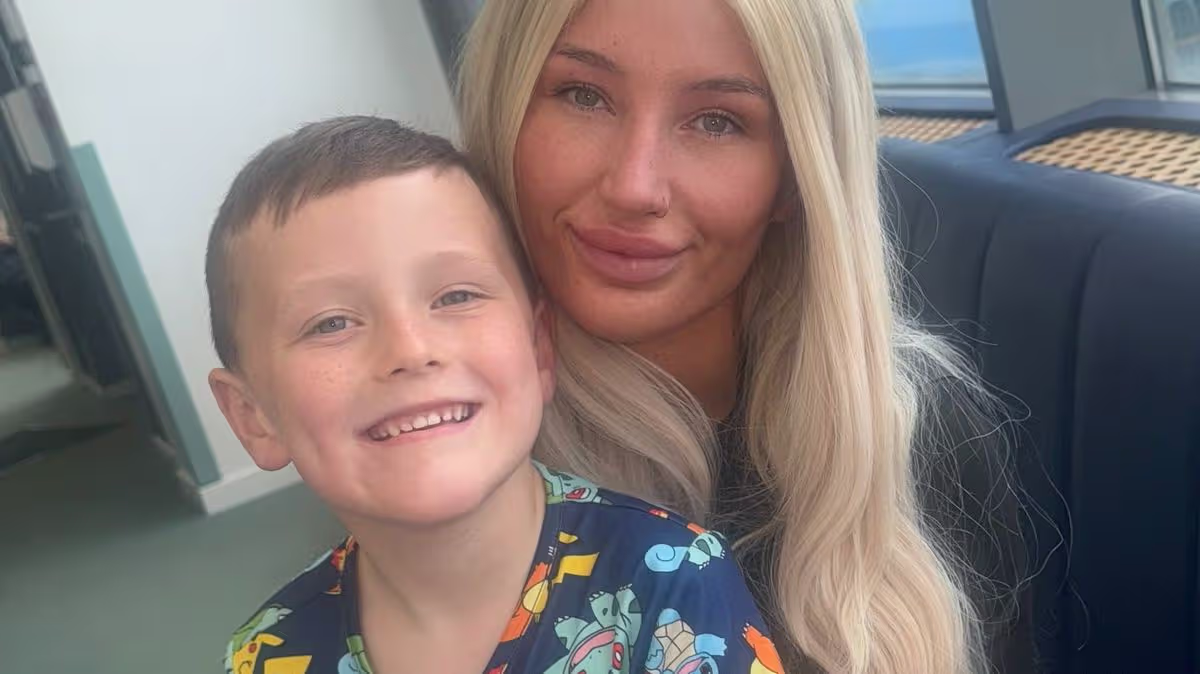
Hudson Reid, 2, spent four weeks in hospital after a sickness bug developed into a “one in a billion” illness.

A mum has shared a warning after her toddler “nearly died” when a sickness bug caused a deadly stroke.

Advertisement

Hudson Reid was just two when he came down with what mum Amber Davidson, 29, thought was just a sickness bug after he was vomiting and “couldn’t keep fluids down”.

But when Amber spotted her tot’s arm was “stuck up”, his legs were “shooting out straight” and he was making “weird” noises she rushed Hudson to University Hospital Crosshouse A&E.

Amber says “within five minutes” Hudson had five doctors working on him trying to resuscitate her son after he lost consciousness on the drive to the hospital.

Despite a clear CT scan, Hudson remained unconscious for the next five days and an MRI revealed he had a “massive” blood clot and bleed on his brain which had caused a stroke.

Advertisement

He was rushed to Glasgow Children’s ICU the following day after a neurologist realised the clot was caused by a “one in a billion” dehydration from his sickness bug, causing his blood to thicken.

Little Hudson spent four weeks in hospital and was given blood transfusions and put on blood thinners and despite being told he’d never “walk, talk or move again” he was up walking within a week.

Now seven, Hudson is attending school and is not letting “anything phase him” despite his brain being damaged from the severity of his stroke.

Advertisement

Mum Amber says the effects of the stroke “impacts him a lot” through his movement – and he is prone to falling over often, as well as having speech issues, though says he lives a “pretty much a normal life”.

Amber, a self-employed beauty therapist, from Kilwinning, who originally spoke to Sell Us Your Story, said: “He’s a complete miracle.

“Even the doctors are blown away with him he’s proved everyone wrong.

“I first noticed his arm that day.

Advertisement

“He was making a noise, not a cry but just a weird noise.

“I videoed him and sent it to my mother-in-law to see if she had any idea what was happening and because I know it’s common for kids to have seizures so thought it might be that.

“I phoned the doctors and said I think he’s having a seizure.

Advertisement

“They said they’d get a doctor to phone me back.

“Before they phoned me I just looked at him and took him to the hospital.

“Within five minutes there were five doctors working on him.

“They were trying to resuscitate him – he was dying in front of us.”

Advertisement

Hudson came down ill in September 2021 and when Amber spotted the unusual symptoms she sent a video to her mother-in-law and rang her GP for advise – and Amber says they said they would get a doctor to call her back.

A worried Amber took her son to A&E – believing he might be having a seizure – but CT scans came back clear.

He was admitted to the ward unconscious and did not wake for five days and every time he tried to fell into a seizure.

An MRI the following day confirmed he had a blood clot and bleed on the brain.

Amber said: “The hospital told us there was nothing else they could do and that he was an unwell wee boy.

“The last hope was sending the videos I took to a professor in Glasgow – he’s a neurologist and says it was a one in a billion chance Hudson had dehydration from his sickness bug that caused his blood to thicken and caused the bleed on his brain.

“Hudson was rushed to Glasgow Children’s and was in the ICU having blood transfusions, blood thinners, everything to do with strokes.

Advertisement

“We were told Hudson wouldn’t walk, talk or move again.

“Within a week he was up and about.

“He still has a wee speech impediment and brain damage but he’s here, alive, walking and talking.”

Hudson spent four weeks in hospital recovering and had to be fed through an NG tube for six months as he was nil by mouth due to the stroke affecting movement in his mouth.

Advertisement

Now, Hudson sees occupational therapists every six months, a dietician once a month and has speech and language therapy once a week.

He also visits hospital twice a year for check-ups and has regular blood tests and heart scans.

Amber said: “His movement is great but he does fall a lot and as he progresses is the point we’ll see how brain damaged he is going to be.

“We’re now at the point where other kids are progressing and Hudson is not and his brain damage is more apparent.

“We’re just taking it day by day just to see how he’s going to react.

“It’s just a waiting game.

“He’s such a sweet loving wee boy and has a heart of gold.

Advertisement

“He doesn’t let anything phase him.”

Amber wants to raise awareness of strokes in children from sickness bugs, and admits she didn’t know the signs to look out for.

“I think it’s the stigma that strokes happen to older people,” she says.

“Obviously there’s a lot of awareness of strokes with the Face, Arms, Speech thing but I didn’t think a two-year-old would be able to have a stroke which is why in my mind I never even thought that.

Advertisement

“Even now when I tell people my two-year-old has had a stroke they say ‘no way’ or ‘I didn’t know a stroke could happen to child that age’.

“At the time the adrenaline takes over and you go into mum mode.

“I feel like I was probably doubting myself or thinking ‘am I overreacting?’ before I took him to the hospital.

“I had no awareness of how severe the situation was.

Advertisement

“It was only a few months after I thought ‘that actually happened, Hudson actually went through that’ but at the time I was just in mum mode and survival”.

Get more Daily Record exclusives by signing up for free to Google’s preferred sources. Click HERE.

Source link

Advertisement
Continue Reading

NewsBeat

UK tourist Rose Buck dies on holiday in Tenerife after ‘freak wave’ knocks her into rocks

Published

on

UK tourist Rose Buck dies on holiday in Tenerife after ‘freak wave’ knocks her into rocks

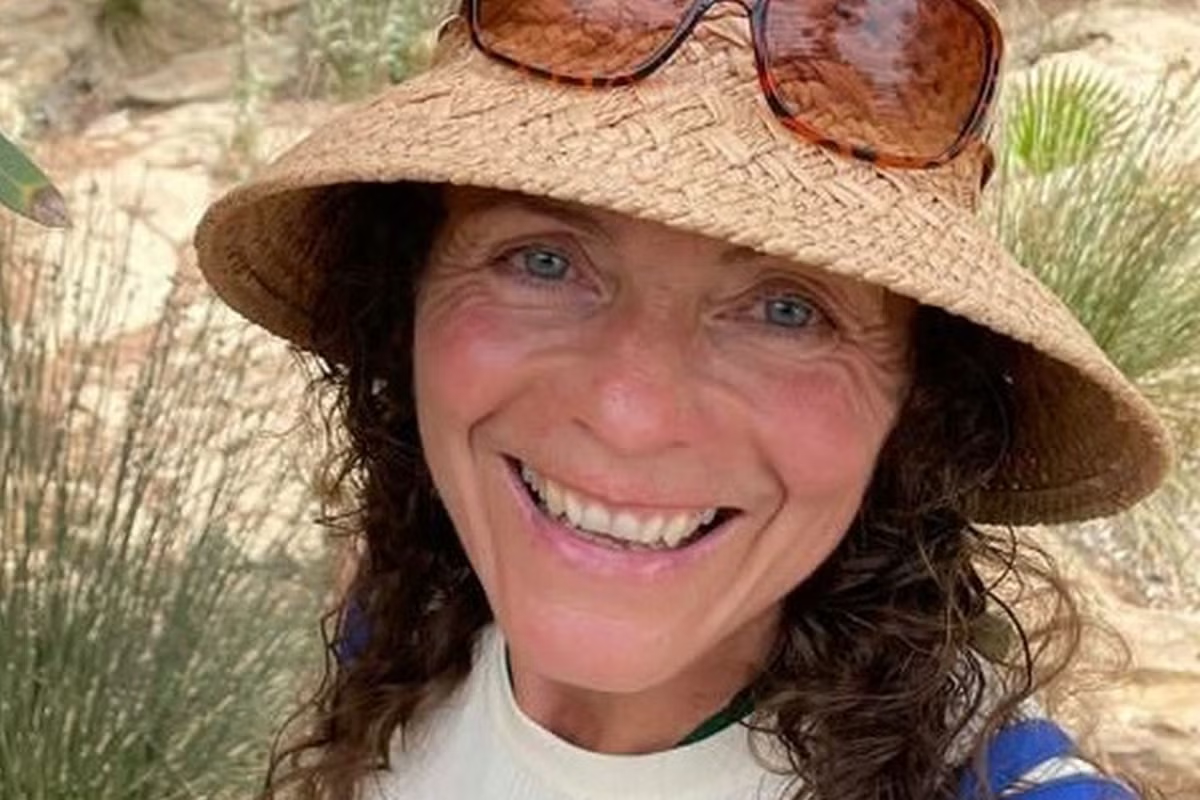
A British postal worker has died while on holiday in Tenerife after a “freak wave” reportedly knocked her into rocks during a morning swim.

Rose Buck, 56, was enjoying a break in Costa Adeje when the incident occurred on 25 February.

Her daughter, Chantelle Buck-Forrest, 39, said that her mother, a “strong swimmer”, had gone to the beach after finding the hotel pool closed.

The area, known as the ‘blue lagoon’, is typically calm. However, Ms Buck-Forrest said that an unexpected wave “flung” her mum against the rocks, rendering her unconscious and fracturing her C2 vertebra.

Advertisement

Someone on the beach quickly noticed the unfolding tragedy and alerted lifeguards. Ms Buck was reportedly submerged for five minutes, and it took a further 13 minutes for rescuers to resuscitate her.

Her family rushed to Tenerife to be by her side. However, doctors made the difficult decision to turn off her ventilator on 6 March, citing extensive brain damage that made recovery impossible.

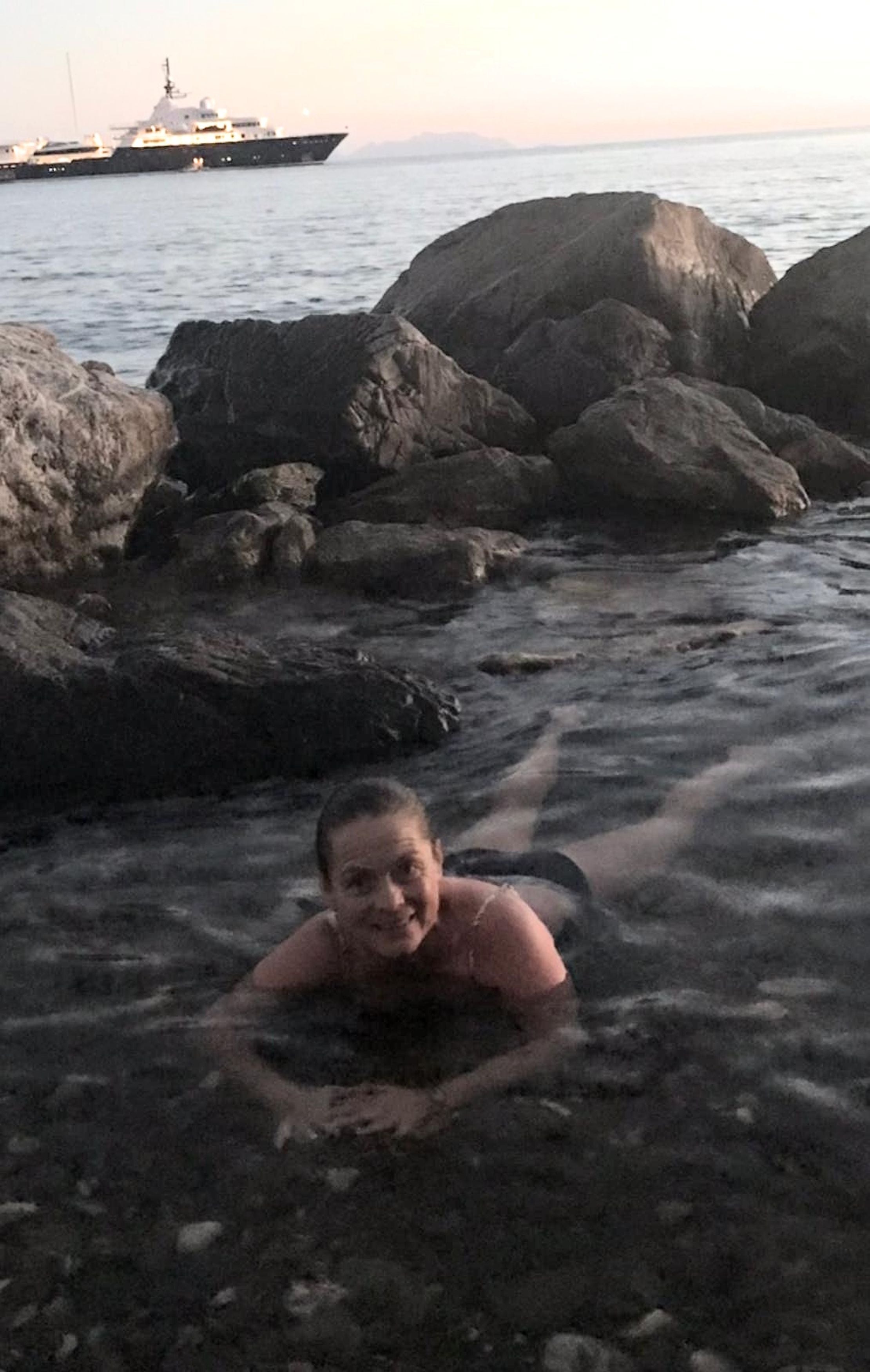
Rose Buck swimming in the sea before the accident
Rose Buck swimming in the sea before the accident (Kennedy News and Media)

Ms Buck died in hospital in Tenerife on 8 March.

Tenerife was hit by a 4.1 magnitude earthquake on 25 February, which Ms Buck-Forrest believes was likely what caused the freak wave.

Ms Buck-Forrest, who lives in Bradford, West Yorkshire, said: “I’m absolutely devastated, I couldn’t stop crying. “It’s been horrendous.

Advertisement

“She’s a really strong swimmer, swimming is actually her sanctuary.”

She said the ‘blue lagoon’ is quite protected from waves and “all kinds of people swim in it”.

“She was swimming the perimeter of the lagoon and it was just one freak wave that’s taken her.

“There was reported an earthquake a couple of hours after what happened so I am guessing this earthquake has caused this freak wave and it just flung her against the rocks.

Advertisement

“She’s suffered a really serious head injury which broke her C2 upon impact and she will have gone unconscious straight away and she was just taken by the sea.”

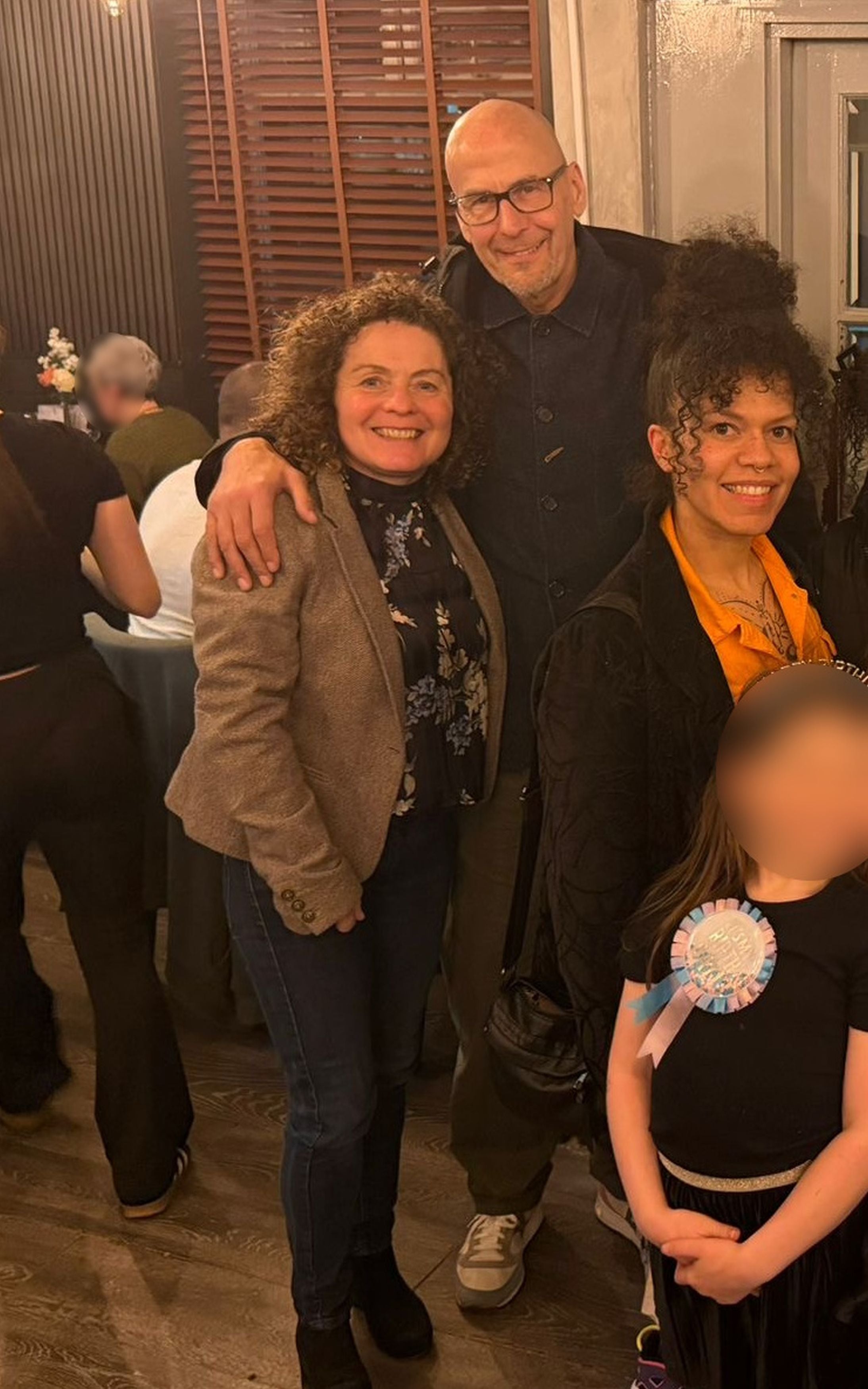
From left: Rose Buck, her partner Fran Wilde, and her daughter Chantelle Buck-Forrest
From left: Rose Buck, her partner Fran Wilde, and her daughter Chantelle Buck-Forrest (Kennedy News and Media)

Ms Buck-Forrest, who is a children’s playcentre director, said it was heartwarming to hear all the tributes to her beloved mother.

“Everybody who has contacted me has said she is either one of the nicest people they know or the nicest person they’ve ever met,” she said.

“The amount of people far and wide, people who I didn’t even know knew her, it’s been mind blowing, she’s touched so many people’s lives.

“When we were sat having breakfast, my brother was just sat scrolling on Instagram, and he just said ‘oh my gosh it’s International Women’s Day today’, so she died on International Women’s Day which felt like homage to her.

Advertisement

“Although I feel like I’ve got this massive loss and I’m holding so much sorrow, I feel the same amount of love and support and honour in the other hand.

“The amount of people that have contacted me has opened my eyes to what a woman my mum is and I feel honoured to be her daughter.”

Source link

Advertisement
Continue Reading

NewsBeat

Nasa camera accidentally captures moment comet breaks up in real time | News Tech

Published

on

Nasa camera accidentally captures moment comet breaks up in real time | News Tech
This series of images from NASA’s Hubble Space Telescope of the fragmenting comet C/2025 K1 (ATLAS) was taken over the course of three consecutive days – November. 8, 9, and 10 last year (Picture: NASA/Cover Media)

NASA astronomers struck it lucky after the Hubble Space Telescope observed a comet in the act of disintegrating completely by chance.

The event was one that scientists believed they were unlikely to witness in real time.

And it was even more extraordinary as researchers had intended to observe a different comet, but were forced to change plans due to technical constraints.

The findings were published on Wednesday in the journal Icarus.

Advertisement

‘Sometimes the best science happens by accident,’ John Noonan, a research professor in the Department of Physics at Auburn University in Alabama, said.

‘This comet got observed because our original comet was not viewable due to some new technical constraints after we won our proposal. We had to find a new target – and right when we observed it, it happened to break apart, which is the slimmest of slim chances.”

The object, known as Comet C/2025 K1 (ATLAS), can be seen progressively breaking apart in a sequence of images taken between November 8 and 10 last year.

Initially appearing as four bright objects, the largest fragment then splits further, with pieces drifting away from one another.

Advertisement
This diagram shows the path the comet took as it swung past the Sun and began its journey out of the solar system (Picture: NASA/Cover Media)

Noonan, a co-investigator on the study, said he did not realise the significance immediately.

‘While I was taking an initial look at the data, I saw that there were four comets in those images when we only proposed to look at one,’ he said. ‘So we knew this was something really, really special.’

Scientists have long attempted to capture such an event using Hubble, but the unpredictability of comet break-ups has made this difficult.

‘The irony is now we’re just studying a regular comet and it crumbles in front of our eyes,’ said principal investigator Dennis Bodewits, also of Auburn University.

Advertisement

‘Comets are leftovers of the era of solar system formation, so they’re made of “old stuff”—the primordial materials that made our solar system.

‘But they are not pristine – they’ve been heated; they’ve been irradiated by the Sun and by cosmic rays.

‘So, when looking at a comet’s composition, the question we always have is, “Is this a primitive property or is this due to evolution?’”

‘By cracking open a comet, you can see the ancient material that has not been processed.’

Advertisement

Hubble observed the comet splitting into at least four pieces, each surrounded by a glowing cloud of gas and dust known as a coma. While ground-based telescopes saw only faint bright patches, Hubble’s high resolution allowed scientists to distinguish individual fragments clearly.

The observations were made shortly after the comet passed its closest point to the Sun – known as perihelion – when heating and stress are at their greatest. Scientists believe the comet began breaking up about eight days before Hubble captured the images.

However, the team has identified a puzzling delay between the break-up and the brightening detected from Earth.

A series of images from NASA’s Hubble Space Telescope of the fragmenting comet (Picture: NASA/Cover Media)

One theory is that a layer of dust must first form over newly exposed ice before being blown away. Another possibility is that heat builds up beneath the surface before ejecting material into space.

‘Never before has Hubble caught a fragmenting comet this close to when it actually fell apart. Most of the time, it’s a few weeks to a month later. And in this case, we were able to see it just days after,’ said Noonan.

Advertisement

‘This is telling us something very important about the physics of what’s happening at the comet’s surface. We may be seeing the timescale it takes to form a substantial dust layer that can then be ejected by the gas.’

Early observations suggest the comet is chemically unusual, with significantly lower levels of carbon than typically seen. Further analysis using Hubble’s instruments is expected to reveal more about its composition and, potentially, the origins of the solar system.

Now reduced to a cluster of fragments about 250 million miles from Earth, the comet is travelling through the constellation Pisces and is expected to leave the solar system permanently.

Advertisement

Source link

Advertisement
Continue Reading

Trending

Copyright © 2025