Connect with us
DAPA Banner

Tech

OpenAI to reportedly take on Anthropic with new desktop ‘superapp’

Published

on

The new app comes at a time when OpenAI’s popularity is being challenged by Anthropic.

OpenAI is planning to combine its AI chatbot, coding tool and web browser into a desktop “superapp”, multiple news publications have reported.

According to sources, the move is meant to counter fierce competition from the AI giant’s rivals, including Anthropic, which is fast encroaching into OpenAI’s customer base.

As of November 2025, Anthropic had more than 300,000 enterprise customers, while OpenAI had more than 1m. However, recent data shows that Anthropic is now capturing more than 73pc of all spending among companies buying AI tools for the first time, while OpenAI is down to around 27pc.

Advertisement

Meanwhile, Anthropic’s chatbot Claude also overtook OpenAI’s ChatGPT as the most downloaded app in the US this month after the company began engaging in a public feud with the country’s Department of Defense over AI safety concerns.

OpenAI’s new desktop app will combine ChatGPT, Codex and Atlas, an AI-powered web browser launched last October, sources say. It is unclear when the app is expected to launch.

According to sources, OpenAI’s head of applications Fidji Simo will be leading this effort. While company president Greg Brockman will work with Simo on the new product. ChatGPT will continue to be provided as a standalone app.

OpenAI is also attempting to strengthen Codex with its latest acquisition. Astral is a start-up that makes python tools for developers. It is behind popular tools such as ‘uv’, ‘Ruff’, and ‘ty’.

Advertisement

With the acquisition, OpenAI plans to bring Astral’s tools and expertise to accelerate work on Codex and expand its capabilities across the software development lifecycle.

Codex has already seen considerable user growth since the start of the year, with more than 2m weekly active users, OpenAI said. It competes with Anthropic’s widely popular Claude Code and its new tool Cowork, designed to be a simpler version of Claude Code.

Astral is the latest in a string of acquisitions OpenAI has made in recent months. Earlier in March, the company agreed to buy AI security start-up Promptfoo. In January, it purchased AI health-tech Torch. Last month, the company poached the founder of the viral OpenClaw project, Peter Steinberger, to help innovate AI agents.

Don’t miss out on the knowledge you need to succeed. Sign up for the Daily Brief, Silicon Republic’s digest of need-to-know sci-tech news.

Advertisement

Source link

Continue Reading
Click to comment

You must be logged in to post a comment Login

Leave a Reply

Tech

Amazon is giving smartphones a second try, and you can probably guess what it’s all about

Published

on

Amazon burned its fingers with the Fire Phone back in 2014. The device, personally overseen by Jeff Bezos, lasted barely over a year before Amazon pulled the plug and wrote off $170 million in unsold inventory. Now, the company is taking another shot at the smartphone market.

According to Reuters, Amazon is developing a new phone internally under the codename “Transformer.” The project is part of a group called ZeroOne, which focuses on building breakthrough devices. It is led by J Allard, a former Microsoft executive who helped bring the Xbox and Zune to market.

What will the Amazon phone actually do?

The phone is being designed as a personalization device, one that keeps you connected to Alexa, Prime Video, Prime Music, and Amazon shopping throughout your day. A key focus is AI integration, which could eliminate the need for traditional app stores entirely. Think less scrolling through apps and more just asking Alexa to get things done.

The concept is similar to what Carl Pei described as the future of Nothing phones in his recent SXSW interview.

Advertisement

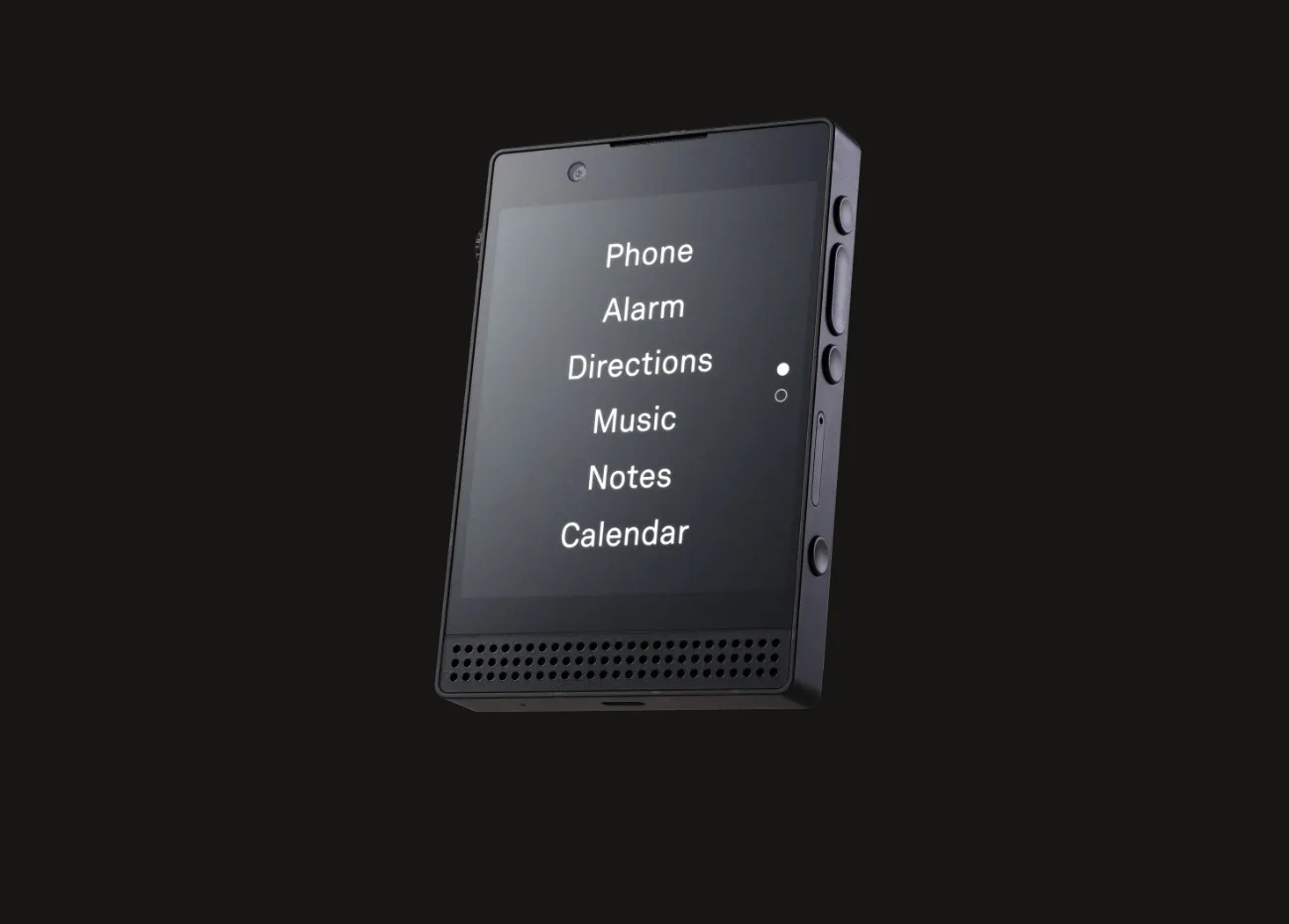
Interestingly, Amazon has also explored a “dumbphone” version with limited features, partly inspired by the Light Phone. A simpler device could help Amazon pitch it as a second phone that cuts through the noise rather than adding to it. 

Will it actually work this time?

That’s the big question. The Fire Phone failed because it lacked popular apps, overheated, and gave people very little reason to ditch their iPhones or Android devices. Amazon faces the same challenge now, with Apple and Samsung still controlling roughly 40% of global smartphone sales between them.

Amazon is betting that a phone built around Alexa and its massive ecosystem might be different. Whether consumers agree is another story entirely. The timeline for Transformer remains unclear, and Reuters notes it could still be scrapped.

In my opinion, the dumbphone idea would be a better starting point for Amazon. Competing in an already saturated smartphone market would be difficult, so positioning an AI-powered “dumbphone” as a secondary device that assists with shopping could be an idea users get behind.

Source link

Advertisement
Continue Reading

Tech

ByteDance is selling its Moonton game unit to Savvy Games for a cool $6 billion

Published

on

Following discussions first reported on earlier this year, ByteDance has agreed to sell its games unit Moonton to Savvy Games Group for $6 billion. Moonton is known for mobile titles popular in Asia like Mobile Legends: Bang Bang, which has been downloaded 1.5 billion times. The transaction is set to be finalized in the “near future,” according to an internal memo from Moonton’s CEO seen by Bloomberg.

ByteDance has been winding down its gaming arm and shopping Moonton since 2023, just two years after it first acquired the developer. Around that same period, the TikTok parent was shuttering its Nuverse gaming arm, which published notable titles like Marvel Snap and Ragnarok X: Next Generation. The company has since shifted its focus to AI, competing with Chinese rivals to develop chatbots and foundational models.

Savvy Games, which is owned by Saudi Arabia’s Public Investment Fund (PIF), has been going in the opposite direction. Last year the company (via its subsidiary Scopely) acquired Pokémon Go developer Niantic for $3.5 billion. PIF was also among the key investors that purchased Electronic Arts in a blockbuster $55 billion deal last year. The Saudi fund holds a 7.5 percent stake in Nintendo as well.

The sale is the latest chapter in the recent gaming industry consolidation that saw around 45,000 jobs lost in a brutal three-year period between 2022 and 2025. According to a recent GDC study, one-third of US video game industry workers were laid off over the last two years.

Advertisement

Source link

Continue Reading

Tech

Blackberry's ghost still haunts Apple in lawsuits that have nothing to do with them

Published

on

Years after Blackberry phones died and the firms technology patents were sold off, Apple is in court trying to block details of its old deals from reaching iPhone rival Xiaomi.

Hand holding a BlackBerry smartphone with square touchscreen, colorful app icons, and a three-row physical QWERTY keyboard, against a softly blurred outdoor background
Blackberry phones are long gone, but the technology behind them is still the subject of patent disputes

Blackberry phones stopped working back in 2022, but the company sold off its patents and already been doing licensing deals. Now according to Courthouse News, patent law firms want details of those licenses.
Apple has gone to court to stop it.
Continue Reading on AppleInsider | Discuss on our Forums

Source link

Continue Reading

Tech

Illinois Wants To Make Speed Limiters Mandatory For Some Drivers

Published

on


Illinois Secretary of State Alexi Giannoulias was sworn in on January 9, 2023. He soon made it a priority not only to bring his state into the digital age by any means necessary, but also to improve safety on its roadways. In February 2026, he expanded the state’s Electronic Lien and Titling System, effectively eliminating paper titles by mandating that the system go fully digital by July 1, 2026. Now, he’s going after reckless drivers in the Land of Lincoln.

House Bill 4948, first introduced in February 2026, would establish the Intelligent Speed Assistance Program. The goal of this program is to reduce high-speed crashes and traffic fatalities, specifically involving drivers convicted of reckless driving and those going over 100 miles per hour. If found guilty, the courts could order drivers to install a certified intelligent speed assistance system on every vehicle owned by or registered to that individual. Furthermore, they won’t be able to hop behind the wheel of another motor vehicle that doesn’t have one of these speed-limiting devices installed.

Said device will need to remain on the vehicle for at least 12 months, or for however long that person’s license was suspended or revoked — whichever duration is longer. Should the Intelligent Speed Assistance Program be signed into law, it would take effect January 1, 2027.

Advertisement

House Bill 4948 would punish reckless driving

These speed-limiting devices may seem like your car’s about to become a snitch, but it instead works as an ever-present monitor that will “intelligently” maintain the vehicle’s speed at the posted limit in any given area. They’re more like the many alcohol ignition interlock device (IID) programs around the country that essentially imbed a breathalyzer into the car to prevent drunk driving. Speed limiting technology has also been proposed in New York. In fact, similar legislation has already passed in Virginia, which will become the first state to implement this technology when the law goes into effect on July 1, 2026.

In Illinois, in addition to requiring the convicted person to bear the cost of installing and maintaining the device (unless the court deems them financially unable to do so), House Bill 4948 also requires the convicted person to prove that the device was installed and officially request permission before they can remove it. Tampering with or evading the device — or assisting another person to do so — may very well result in a Class A misdemeanor. In fact, failure to follow any of the program’s requirements may result in your license being suspended or revoked and may include a civil and/or monetary penalty.

Advertisement

The office of the Secretary must approve all necessary rules and regulations for this Intelligent Speed Assistance Program, including any exemptions (e.g., for someone who must drive an employer-owned vehicle as part of their job). They must also compile and approve a list of service providers capable of installing, servicing, inspecting, and removing approved devices, among other things. Of course, this all depends on whether the bill can survive committee hearings, and both chambers must vote on its approval before it passes.


Advertisement

Source link

Continue Reading

Tech

2026 Xiaomi SU7 Brings 902 km Range with a 15-Minute 670 km Fast Charge

Published

on

2026 Xiaomi SU7 Facelift
Xiaomi unveiled its facelifted SU7 electric sedan today, with three trim levels that provide more range while keeping the price cheap. The base Standard model costs 219,900 yuan, or approximately $31,870. The Pro model starts at 249,900 yuan, while the top-of-the-line Max model costs 303,900. This puts them below the entry-level pricing of a Tesla Model 3 in China.


Buyers can now choose from three different ranges, the maximum of which being 902 kilometers on the Chinese test cycle for the Pro trim. The Standard trim has a reasonable 720-kilometer range, while the Max has 835 kilometers. The battery packs’ capacity is also increased to 73 kilowatts for the Standard, 96.3 for the Pro, and 101.7 for the Max, and there’s rapid charging, which truly shines on the Max model, where 15 minutes at a fast charger adds a remarkable 670 kilometers of range.

The powertrain options have been given a meaningful boost. The Standard and Pro variants each run a single rear motor producing 315 horsepower, hitting 100 kilometers per hour in 5.3 and 5.7 seconds respectively. The Max steps things up considerably with dual motors combining for 681 horsepower and a 0 to 100 kilometer per hour time of just 3.1 seconds.


Xiaomi refers to this new platform as the Dragon chassis, and it is built on an improved steel framework capable of supporting up to 2,200 megapascals. The Pro and Max models benefit from double-chamber air suspension and continuous damping control for a smoother ride. To top it off, there’s a new staggered tyre layout with smaller 245 millimeter tyres up front and larger 265 millimeter tires in back, and four-piston brake calipers are standard on all models, so you can rely on them to stop you quickly.

2026 Xiaomi SU7 Facelift
The exterior gets a refresh too, headlined by a new Capri Blue paint option and a set of 20 inch blade wheels making their debut on the SU7. The door handles have been swapped out for a more conventional mechanical design that is simply easier to grab in everyday use. The body itself is marginally lower than before, sitting between 1,445 and 1,460 millimeters in height on a 4,997 millimeter long body that carries over the same 3,000 millimeter wheelbase as its predecessor.

2026 Xiaomi SU7 Interior
Inside the car, the seats now have extra padding, and the steering wheel has a sophisticated new dual-tone finish. When it comes to illumination, things get more dynamic, with ambient lights changing colours to match your mood. Oh, and there’s a new fridge, which has its own small compressor to chill your drinks even faster. The center console has been updated, and the interior design has shifted to a more gloomy Dark Night Black tone.

2026 Xiaomi SU7 Interior
Driver assistance hardware is standard on all models, which includes a LiDAR unit, a 4D millimeter-wave radar, and an NVIDIA Thor CPU capable of 700 trillion operations per second. The car’s software is based on a new XLA language model that handles a variety of driving and vehicle functions. There are eleven airbags to keep you safe, two more than the previous generation, and a separate backup power supply to meet the even higher safety standards that will be introduced next year.

2026 Xiaomi SU7 Facelift
In related news, the first-generation SU7 has been discontinued, with over 381,000 units sold before production was halted in February. Xiaomi was right back on track, with manufacture of the new models beginning immediately and plans to get them out the door as quickly as possible. The new car has received a great response, with thousands of orders coming in within the first 30 minutes of its debut.

Advertisement

Source link

Continue Reading

Tech

Schiit LYR 5 Lands with Forkbeard and Fusion: Serious Headphone Amp or More Schiit for Your Rack?

Published

on

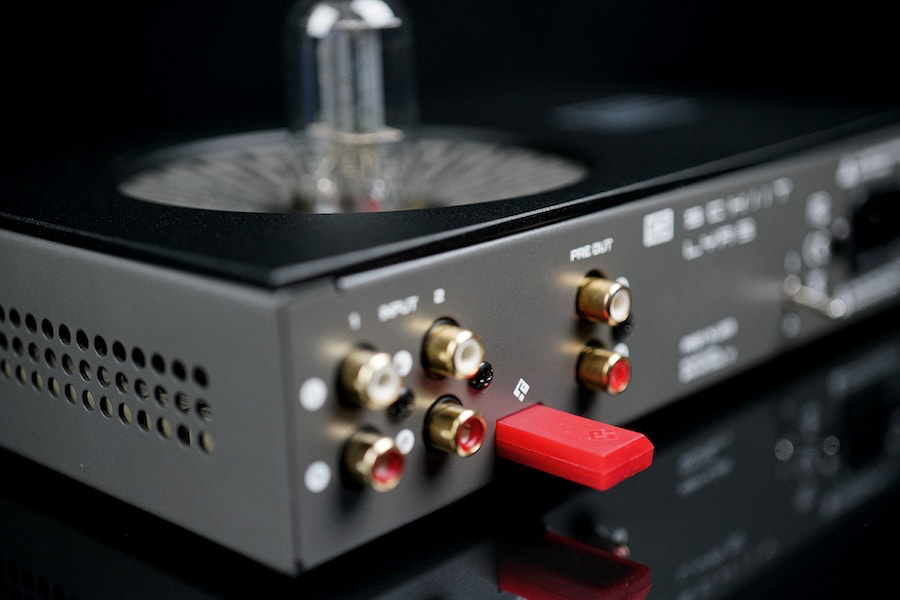
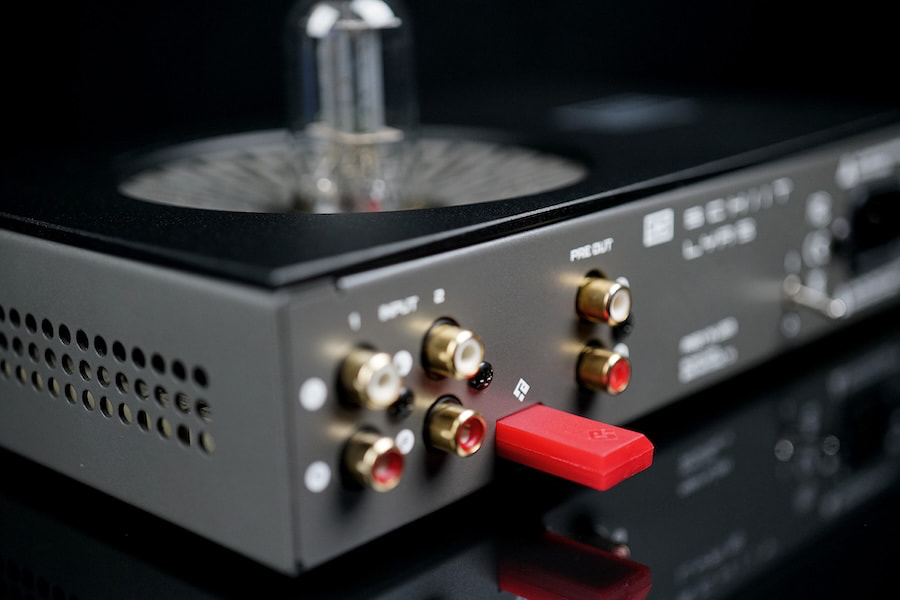
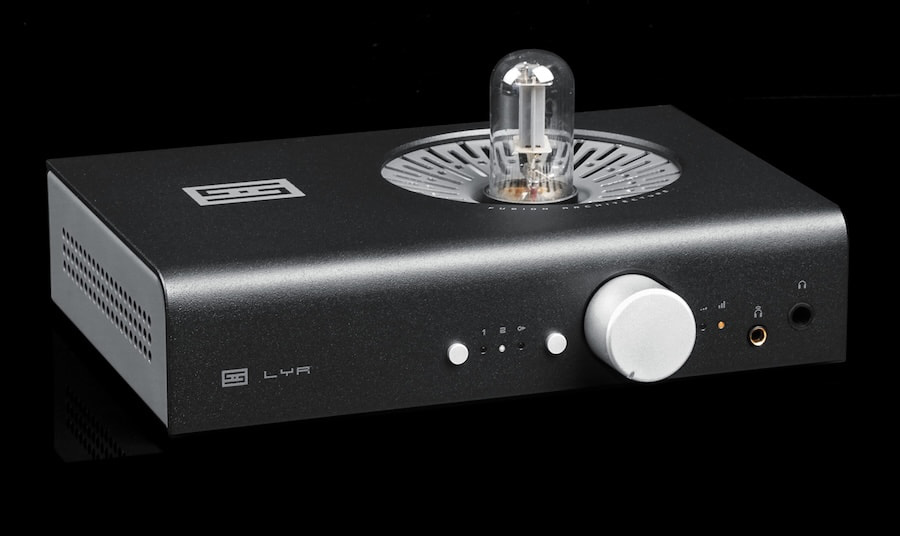
Schiit Audio doesn’t do nostalgia for the sake of it, but it does know when to keep a good thing alive and sharpen the edges based on what the market actually needs right now. At $799, the new Lyr 5 is the latest stop on a line that started with the Lyr 3, got more serious with the Schiit Lyr+, and now lands somewhere between old-school tube romance and app-controlled reality. Same idea, cleaner execution.

The formula hasn’t changed for those in the Head-Fi crowd who might be looking through its tube stash at this exact moment; it’s still a hybrid headphone amp that lets you run a real tube or ditch it entirely for MOSFET gain. The Lyr 5 adds Schiit’s Forkbeard control system, which means this thing actually tells you what it’s doing instead of leaving you to trust your ears and your mood.

schiit-lyr-5-black-rear-angle

Class A, Class A/B, output levels; it’s all visible, adjustable, and perfect for those within the headphone community who change headphones more frequently than they change their clothes; based on CanJam NYC 2026 last weekend, not often enough.

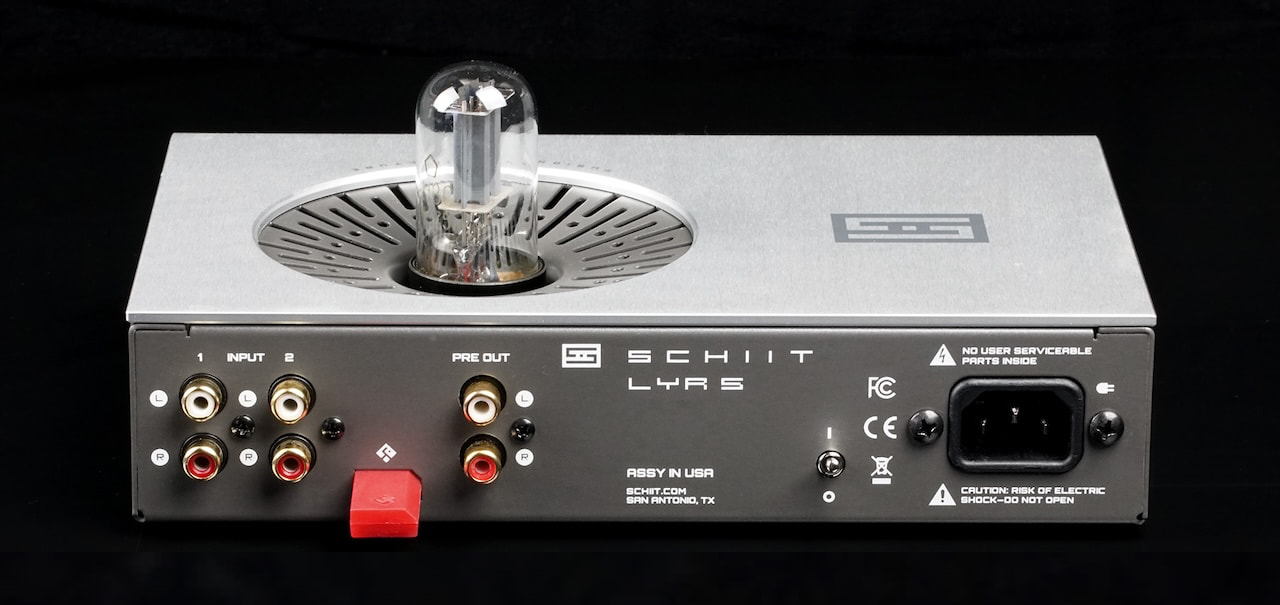
Power isn’t the problem. With up to 6000mW on tap from both balanced 4.4mm and single-ended outputs, Lyr 5 will drive pretty much anything short of a small refrigerator. The relay ladder volume control keeps channel balance tight, the linear power supply keeps things stable, and the Fusion setup lets you flip between tube and solid state without committing to either lifestyle full time. Not that there’s anything wrong with that.

Advertisement

Schiit Lyr 5 Specs That Actually Matter: Power, Noise, and Why It Drives Anything

On paper, the Lyr 5 is overbuilt in all the right ways. It delivers up to 6 watts per channel into 32 ohms, which is more than enough for demanding planar magnetics, while still offering 900mW into 300 ohms and 450mW into 600 ohms—right in the wheelhouse for high-impedance models from Beyerdynamic and Sennheiser. In other words, it’s not running out of gas no matter what you plug into it, short of electrostatics. This is not that kind of party.

schiit-lyr-5-internal

Noise is essentially a non-issue. In low gain, the amp is quiet enough for most IEMs, with a signal-to-noise ratio above 110dB, and distortion levels so low (as little as 0.002% or lower) that your headphones will introduce far more character than the amp ever will. Output impedance stays low; around 0.4 to 0.6 ohms—which means better control and consistent performance across different headphones.

The hybrid design gives you flexibility. You can run tube mode for a bit of harmonic texture or switch to solid state MOSFET gain for cleaner, more linear output, and when you do, the tube shuts off completely to extend its lifespan. Gain is switchable between low and high, so it works with everything from sensitive IEMs to power-hungry over-ears.

schiit-lyr-5-rear

Connectivity is straightforward but useful. You get two single-ended inputs and a preamp output, so yes, this can pull double duty as a preamp in an active speaker system or with an external power amplifer, not just a headphone amp sitting on your desk.

Advertisement

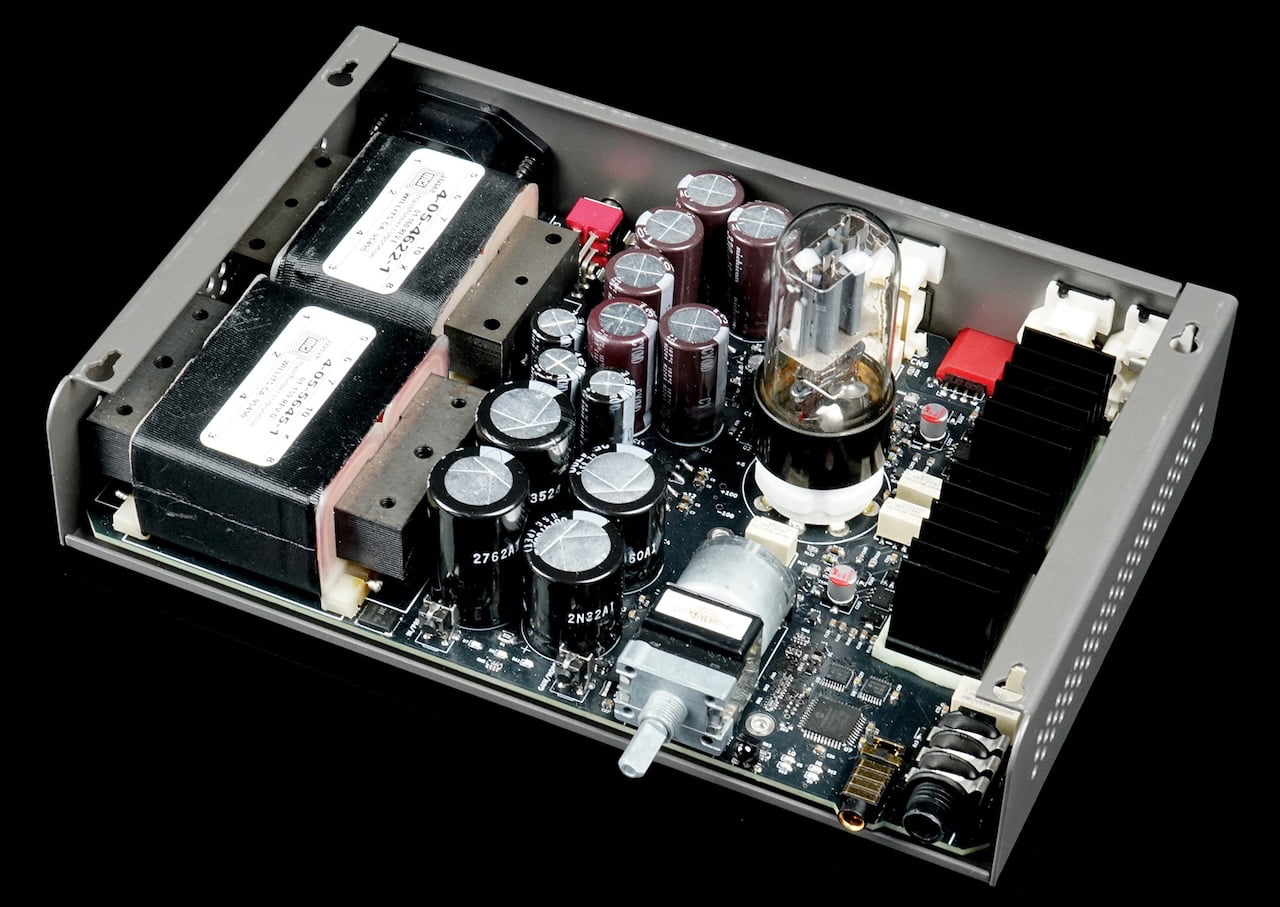
Under the hood, Schiit leans into a fully discrete design with a relay-based volume control, which keeps channel balance tight even at low listening levels. The dual-transformer linear power supply and substantial internal filtering keep things stable, while built-in protection monitors temperature, current, and tube status so nothing goes sideways.

Physically, it’s compact enough for a desk at 9 x 6 x 2 inches and about 6 pounds, though it does run moderately warm—no surprise given the power on tap. Add in full remote control and Forkbeard app integration, and you’ve got an amp that’s not just powerful, but actually tells you what it’s doing while it does it.

schiit-lyr-5-black-front

The Bottom Line

The Lyr 5 offers a practical choice between tube and solid state operation in one amp, with the ability to switch between them without changing your setup. It combines strong output power, relay based volume control, a linear power supply, and Forkbeard system monitoring in a single design.

Advertisement. Scroll to continue reading.
Advertisement

It does not include balanced inputs, a built in DAC, or support for electrostatic headphones, so it is not intended for fully balanced systems or all in one use.

It is best suited for listeners using a range of headphones, including high impedance models from Beyerdynamic and Sennheiser, who want one amplifier that can handle different use cases without needing multiple components.

Where to buy: $799 at Schiit

Advertisement

Source link

Continue Reading

Tech

Epic Games has released a huge Fortnite Unreal Editor update that lets you design your own Star Wars islands, and now I’m yearning for Battlefront 3 even more than before

Published

on


  • A new Fortnite Unreal Editor update has been released
  • The update adds all-new Star Wars-inspired assets and tools
  • Creators can design their own Star Wars islands and publish them from May 1

Epic Games has released a huge Fortnite Unreal Editor update that lets players create their own Star Wars islands.

As of today, Fortnite developers can access a curated collection of assets and tools from Epic Games’ “largest IP toolset to date” and build Star Wars-inspired maps in Unreal Editor for Fortnite (UEFN) and Fortnite Creative.

Source link

Advertisement
Continue Reading

Tech

Android Canary update brings big changes, but nothing is guaranteed

Published

on

Google has rolled out a fresh Android Canary build, and it looks more complete than you might expect from an experimental release. The catch is simple. This version exists to test ideas, not to promise them.

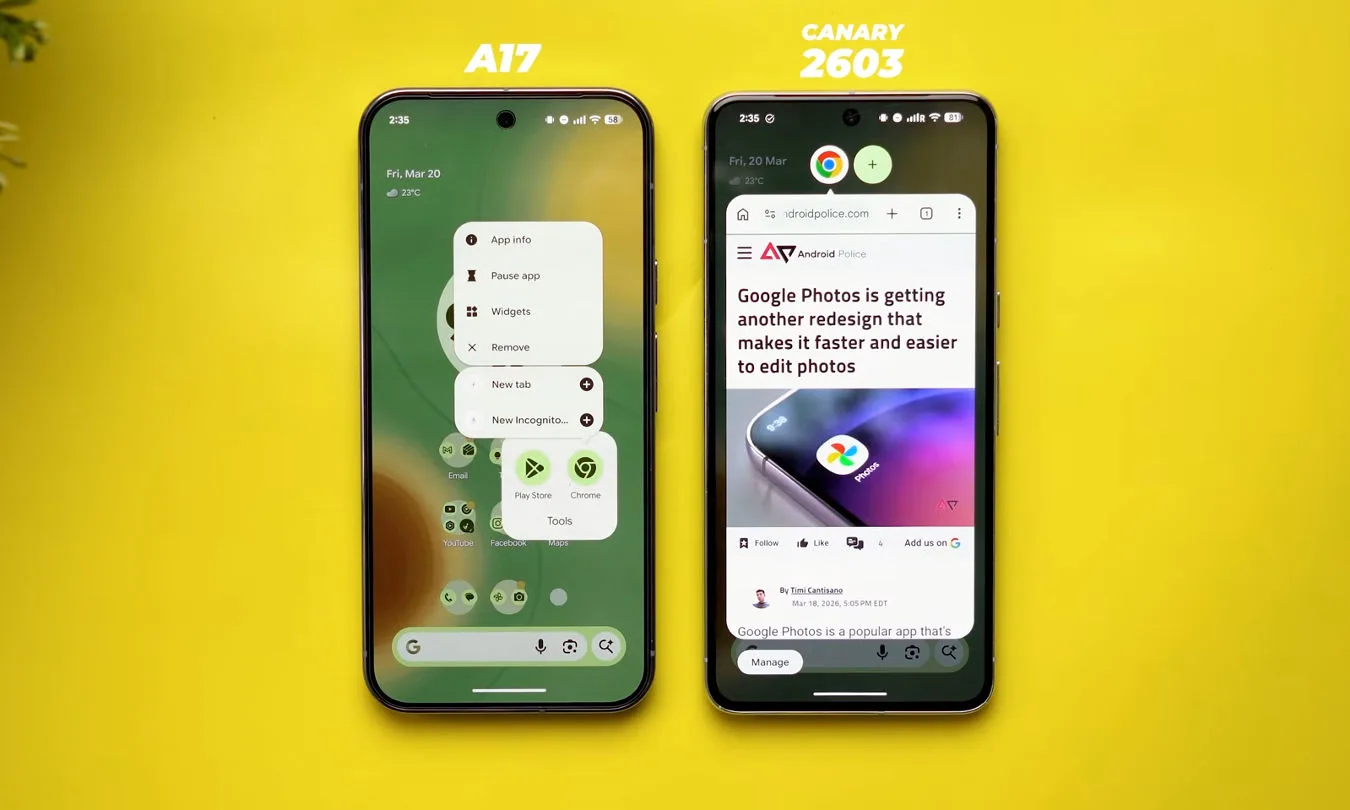
Android Canary 2603 bundles practical additions like app lock, chat bubbles, and a redesigned screen recorder. It’s available across a wide range of Pixel devices, but this update is meant for developers rather than everyday use

That context matters when reading into any of these changes. Features shown here can still be removed before a stable release, even if some eventually appear in beta builds.

Even so, this build offers a useful snapshot of where Android may be heading next.

Advertisement

New features worth watching

App lock is one of the most practical additions. You can now long press an app and secure it directly, which adds a layer of privacy without digging through settings menus

That same menu also activates bubbles more fully. Conversations can float on screen as overlays, making multitasking feel more natural than before

The screen recorder has also been reworked into a floating pill interface. It lets you quickly choose between recording the full screen or a single app, then moves you into a preview flow where you can edit, delete, or share the clip

Google has even refined smaller details. The long press menu now groups shortcuts into a cleaner layout that expands only when needed.

Why this update isn’t final

There’s a reason none of this should be taken as final. This channel exists for developers to explore early features and APIs, not as a preview of what will ship next

Advertisement

That gap between polish and certainty is important. Some features already feel complete, but they can still be adjusted or dropped before Android 17 reaches stability. Even changes that move into beta are not guaranteed to stick.

There’s also a tradeoff to consider. Canary builds aren’t designed for daily use, so most people won’t try them unless they’re comfortable dealing with bugs or manual installs.

What you’re seeing here is Android in an active state of change, with ideas being tested in public before decisions are locked.

What to expect next

Some of the smaller changes hint at a broader direction. The return of separate Wi-Fi and mobile data toggles suggests a rethink of earlier design decisions, while heavier use of blur points to ongoing visual refinement

There’s still no clear timeline for what carries forward. Google hasn’t confirmed which of these features will land in Android 17 or when they might reach stable devices, even on supported Pixel models.

Advertisement

If you’re tracking Android’s evolution, the next step is to watch what shows up in beta builds. That’s usually where experimental ideas start turning into features you’ll actually use.

Source link

Advertisement
Continue Reading

Tech

Greater Than Zero: The Anti-AI Pushback On Gaming Preservation Efforts Makes No Sense

Published

on

from the the-enemy-of-the-good dept

There is an old axiom you will have heard of before: don’t let the perfect be the enemy of the good. If we wanted to boil this down to a math equation, it might be described as something like: 0 < any positive integer. It’s not a difficult concept to grasp, typically, until you add in a dash of near-religious ideology into the equation. And that’s where the anti-AI crowd comes in.

Dustin Hubbard heads up Gaming Alexandria, a site dedicated to the preservation of obscure corners of video game history. Focused less on the actual games themselves, Gaming Alexandria instead focuses its efforts on media surrounding those games, such as manuals, box art, and old gaming journalism outputs. To that end, Hubbard’s group has amassed an impressive number of Japanese magazine scans throughout the years. To make this content useful to researchers elsewhere, he built a low-footprint app to make those scans searchable and, more importantly, to translate them. A Patreon page and subscriptions partially funded all of this.

And that’s what had Hubbard issuing apologies over this past weekend.

A day after that project went public, though, Hubbard was issuing an apology to many members of the Gaming Alexandria community who loudly objected to the use of Patreon funds for an error-prone AI-powered translation effort. The hubbub highlights just how controversial AI tools remain for many online communities, even as many see them as ways to maximize limited funds and man-hours.

“I sincerely apologize,” Hubbard wrote in his apology post. “My entire preservation philosophy has been to get people access to things we’ve never had access to before. I felt this project was a good step towards that, but I should have taken more into consideration the issues with AI.”

Advertisement

And this is where we enter the realm of the silly. I’m not some AI evangelist. I fully recognize that there are error and other problems with AI… and I imagine there always will be, to some extent. AI is not always, or perhaps even mostly, the right tool to use. Nor will it always have benefits that outweigh problems it creates for we human beings.

But a positive number is greater than zero. This was a tool that suddenly made all of this culture content accessible to a wider range of people. Before it was not available to anyone that didn’t have a high-level of knowledge on the Japanese language. Translation errors also happen with human translators, too. We need only look at the ancient religious texts, and the very real wars started over their translations, to understand that.

Hubbard himself attempted to make this point over the weekend.

Writing on Patreon this weekend, Hubbard said he has long been tinkering with an improved automated OCR and translation process that could help turn more of those magazine scans into useful tools for Western researchers. And when he put Google Gemini AI model to the task recently, he said he was “blown away” by the results. While he still recommended using a professional human translator before citing these magazines in any scholarly research, he said the output from the Gemini AI tool “gets you a large percentage of the way there quickly.”

Inspired by those results, Hubbard set to work on a self-described “vibe coded” interface to view the original PDF scans alongside their AI-generated text translations for easy comparison and editing. The result was the Gaming Alexandria Researcher tool, posted to GitHub on Friday and shared with the site’s Patreon backers as a “beta” on Saturday. The tool, which runs locally on Windows, Mac, or Linux, can search, download, and edit Gaming Alexandria’s files from the cloud or sort through local files stored on your own machine.

Advertisement

“This app has been something I never would have dreamed could exist,” Hubbard enthused. “Now I can finally read and enjoy these Japanese magazines I’ve been scanning for years. A large part of that is due to your believing in my work and funding me so thank you so much for that.”

The negative responses he got for all of this are wild. There were calls to boycott the project. Calls to rescind Patreon subscriptions. Max Nichols, a game designer, cancelled his own Patreon membership and decried the project as “worthless and destructive”, likening any output generated using AI-based translations as “looking at history through a clownhouse mirror.”

I would argue that I’d rather get that look than get no look at all. I’d also argue that we need to see very specific examples of AI-created translation errors to understand just how grounded these criticisms are in reality, versus all of this being a case of overstating the case.

Some fans of the site, at least, managed to understand the context here.

Advertisement

For some supporters, though, using machine translations—including ones aided by AI models—is a practical necessity given the size of the task at hand. “There’s no world in which they could ever get hundreds of thousands of pages translated by hand,” game preservationist Chris Chapman wrote on social media. “Error-prone searchability is more useful to more people than none at all.”

“Famitsu alone is over 1,900 issues, each with [a hundred-plus] pages,” journalist and author Felipe Pepe noted. “That’s one magazine from one country. [Human translation] would be ideal, but it’s impossible.”

On the Gaming Alexandria Discord, user asie wrote that people who use tools like Google Lens or DeepL are already using AI-powered OCR and translation tools. At this point, these kinds of tools are “just a fact of reality,” they added.

Again, any positive number is greater than zero. Don’t let the perfect be the enemy of the good. Something is better than nothing.

I don’t know how to explain the negative responses here as anything other than a ideological commitment to disliking anything that even remotely touches upon artificial intelligence. Absolute moral stances certainly have their place, but they sure ought to be used sparingly.

Advertisement

And this particular stance is silly.

Filed Under: ai, ai translations, preservation, translations, video games

Source link

Advertisement
Continue Reading

Tech

BANDIT Handheld Computer Packs a ColorForth Machine and Chording Keyboard Into Your Pocket

Published

on

BANDIT Handheld Computer
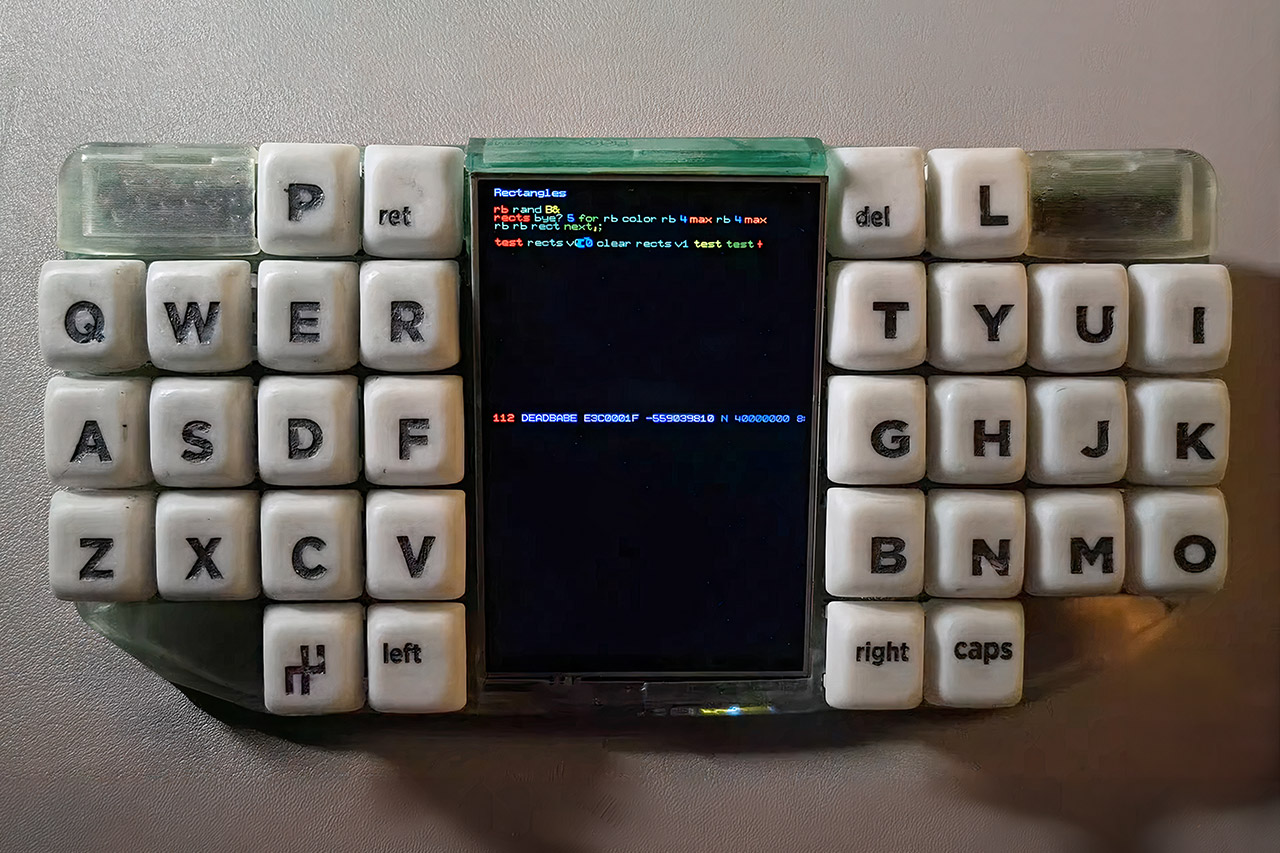
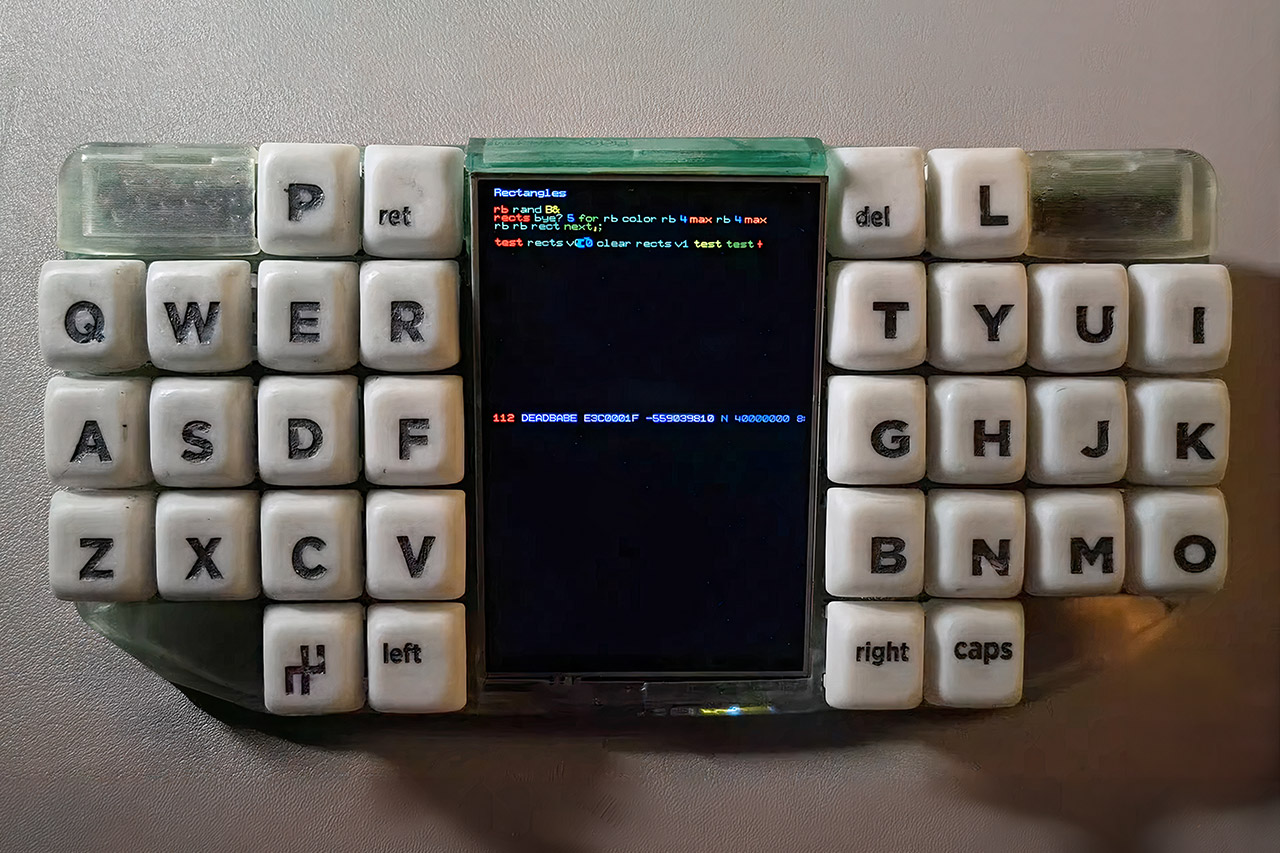
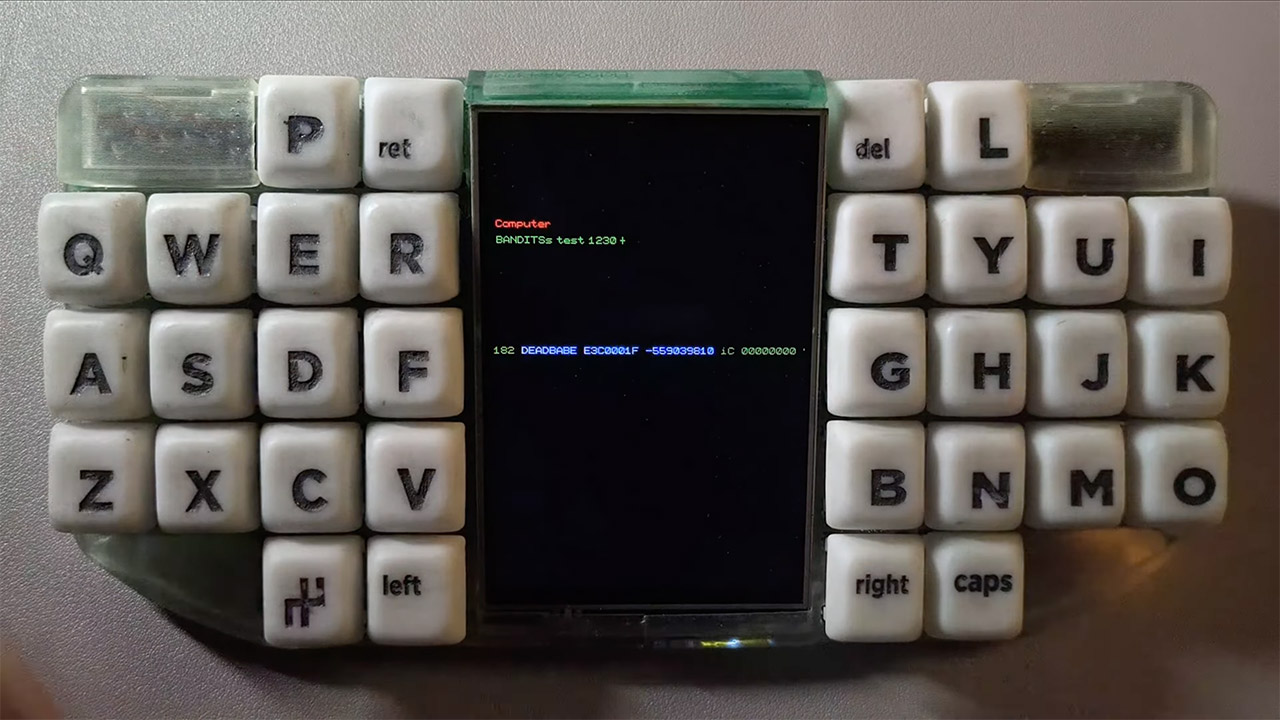
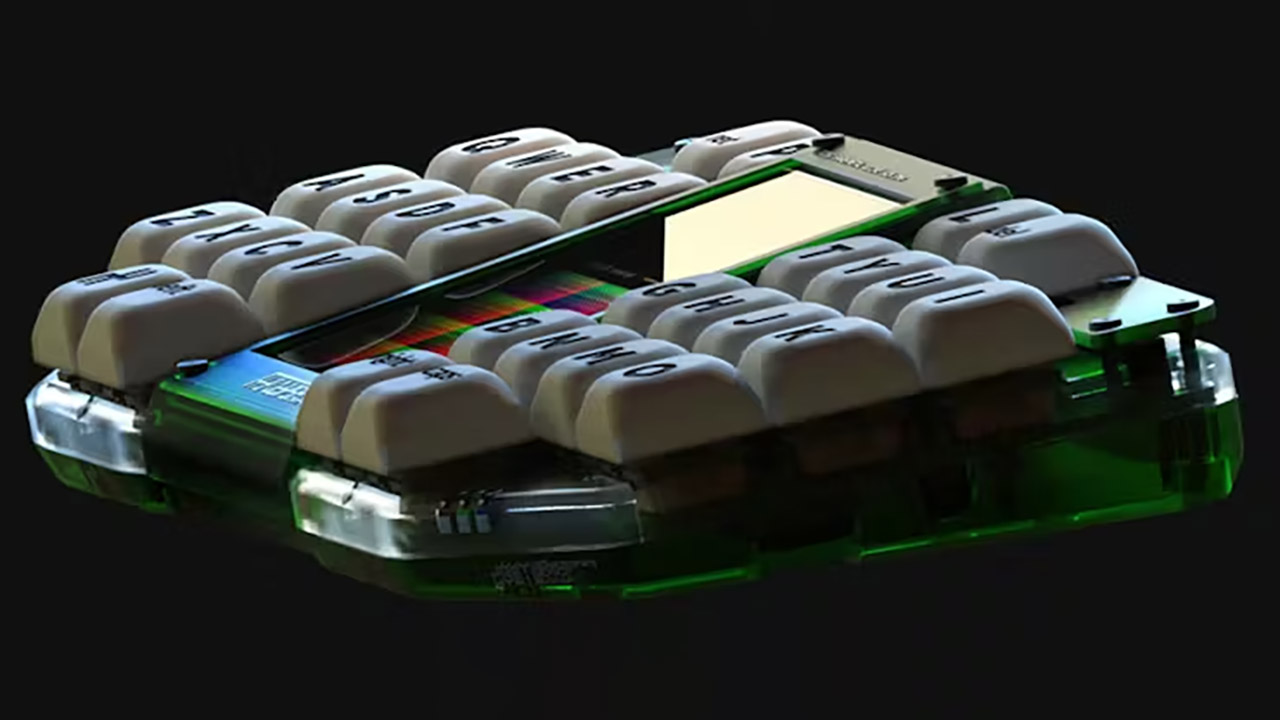
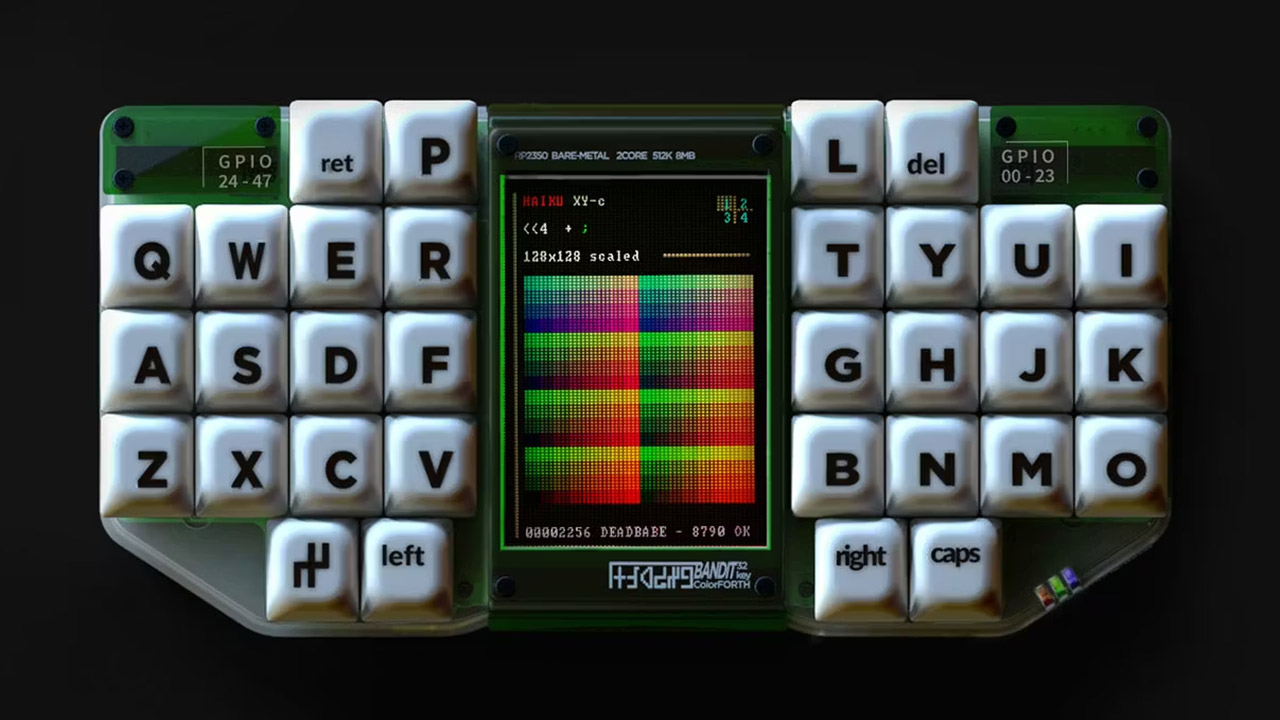
BANDIT is a fully functional computer that sits comfortably in both hands and is ready to go the moment you power it on. The keys are split across each side with a color display sitting in the middle, and rather than typing one character at a time, the whole thing runs on a chording system where pressing multiple keys simultaneously produces complete letters or commands. Every possible combination the keyboard can produce is mapped to a single clean number within the system, keeping things elegantly simple under the hood.


Pick it up, flip it open, and you are straight into it with no waiting for anything to load or update. The four inch color display is touch sensitive and can be divided into multiple regions handling different functions simultaneously. If you need more screen real estate, plugging in an HDMI cable will push the same output to a larger monitor or television without any extra setup required.

Sale


ASUS ROG Xbox Ally – 7” 1080p 120Hz Touchscreen Gaming Handheld, 3-month Xbox Game Pass Premium…
  • XBOX EXPERIENCE BROUGHT TO LIFE BY ROG The Xbox gaming legacy meets ROG’s decades of premium hardware design in the ROG Xbox Ally. Boot straight into…
  • XBOX GAME BAR INTEGRATION Launch Game Bar with a tap of the Xbox button or play your favorite titles natively from platforms like Xbox Game Pass…
  • ALL YOUR GAMES, ALL YOUR PROGRESS Powered by Windows 11, the ROG Xbox Ally gives you access to your full library of PC games from Xbox and other game…

BANDIT Handheld Computer
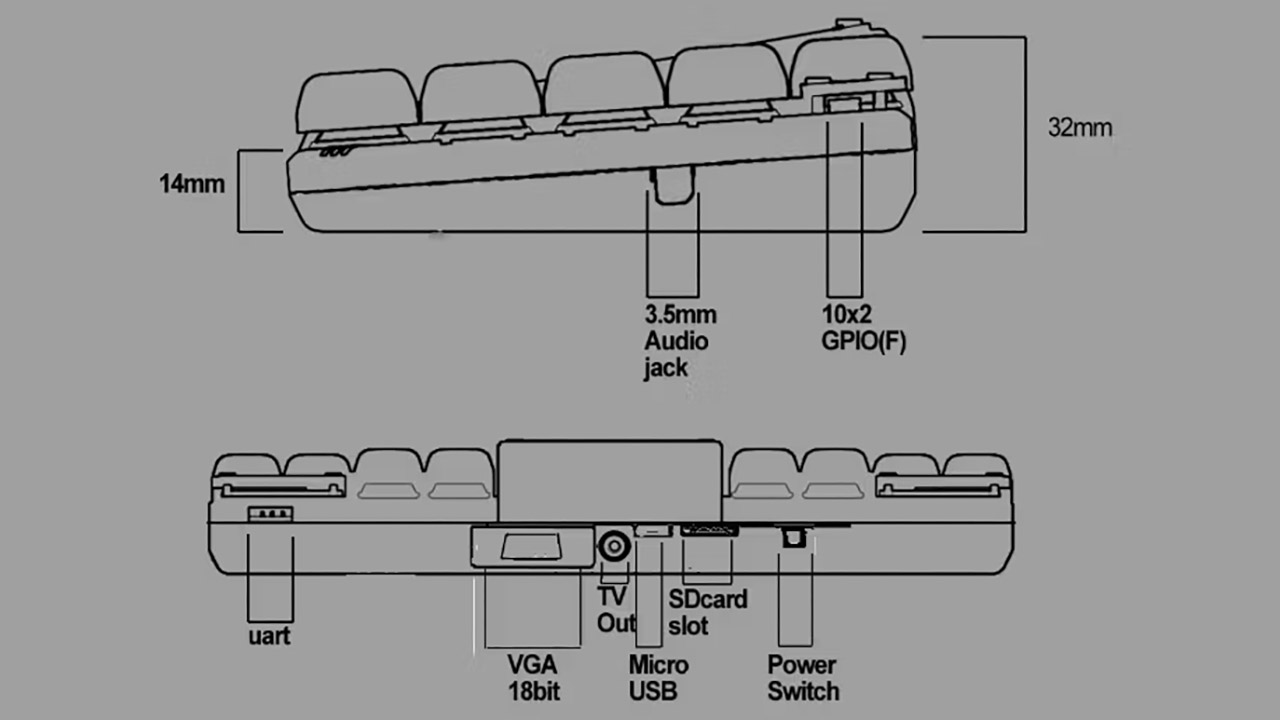
Power comes from a 700 megahertz Allwinner processor, which is backed up by 32 megabytes of RAM. Storage options include a microSD card or shared folders via the built-in wireless connectivity. Two regular battery cells are sufficient to keep everything running for several hours away from the power source. If you have a project in mind that requires additional input, 35 convenient pins provide direct access to external circuits or sensors through easy connectors.

BANDIT Handheld Computer
The beauty of BANDIT is that it does not require a regular operating system to function. ColourForth runs the entire show, creating, compiling, and executing code in a single fluid motion. Built-in editors cover source text, pixel graphics, tile layouts, music patterns, assembly, and live debugging, and the greatest part is that your work is never lost because the system remains awake and resumes precisely where it left off.

BANDIT Handheld Computer
On the performance side, the display handles over three thousand sprites at sixty frames per second without breaking a sweat, and the audio engine generates six channels of FM sound on the fly with full support for high resolution digital samples. It sounds complicated, but the learning curve is more forgiving than you might expect. Chording takes a little getting used to, though once it clicks you can move surprisingly fast, and the system is deep enough to build fully fledged games or tools if you want to go that far.

BANDIT Handheld Computer
Wireless connectivity lets you link up with phones, laptops, or other BANDIT units and move files between them without any fuss. Preorders are open right now at $170 with a handful of casing colors to choose from, and units will ship as soon as the team finishes their final inspection. Every BANDIT arrives fully assembled and tested, keyboard switches, screen, and wireless module included, so you can get straight to it out of the box.
[Source]

Advertisement

Source link

Continue Reading

Trending

Copyright © 2025