
Crypto World
South Korea tax agency moves to outsource seized crypto custody after security lapse



South Korea’s National Tax Service is seeking to select a private custody provider to handle seized crypto assets after a security lapse resulted in private keys being exposed and assets being transferred by unauthorized entities.
Summary
- South Korea’s National Tax Service is reviewing a plan to appoint a private custodian for seized crypto assets after a wallet recovery phrase leak led to $4.8 million in unauthorized transfers.
- The agency will evaluate custody providers based on security standards, company size, and insurance coverage under the Virtual Asset User Protection Act.
The National Tax Service has begun reviewing a plan to outsource custody of confiscated crypto assets, according to a report from ZDNet Korea.
The latest action follows a security mishap on Feb. 26, when a wallet recovery phrase was exposed in an official press release. Images of a Ledger cold wallet and a sheet of paper showing the mnemonic phrase were published. Subsequently, unauthorized transfers of crypto tokens worth about $4.8 million took place.
As such, the agency will now evaluate candidates based on several factors, including security requirements, company size, and whether the firm holds insurance under South Korea’s Virtual Asset User Protection Act, the report said.
A newly formed task force focused on digital asset management systems will lead the process. The task force is already working on several initiatives, including improving operational manuals covering the full lifecycle of seized assets, from seizure to storage and liquidation. It will also conduct internal assessments and personnel training.
Meanwhile, the task force will also work toward establishing a dedicated division to oversee crypto-related work.
An NTS official cited in the report said responsibilities are split across departments, but added that preparations are underway to create a centralized unit.
The NTS incident is one of the many that have surfaced across South Korea over the past months. At least two other similar incidents were recorded involving law enforcement and other agencies, where seized crypto assets were lost or compromised.
As previously reported by crypto.news, South Korea’s National Police Agency has introduced new guidelines for handling seized cryptocurrencies. Law enforcement agencies would now have to follow standardized procedures when handling wallet addresses, private keys, and storage systems.



Only weeks ago, the interest rate debate in the U.S. centered on just how many Federal Reserve rate cuts there would be in 2026. But as the economy shows only faint signs of slowing, inflation remains above the central bank’s 2% target, and oil prices are up 50% in three weeks, rate traders are beginning to contemplate a rate hike as soon as April.
According to CME FedWatch, the chances of the Fed tightening policy at its next meeting in April have risen to 12%. That’s up from 0% one week ago and an even sharper reversal from two months ago, when the conventional wisdom said a rate cut was likely that month.
February data showed annual headline inflation running at 2.4% and core at 2.5%. And those numbers were prior to the Iran war and subsequent 50% surge in oil prices.
The long end of the bond curve has sold off sharply alongside, with the 10-year U.S. Treasury note up another 10 basis points on Friday to 4.38% versus under 4% at the start of March.
The bond selloff is global. In the U.K., 10-year gilt yields have jumped above 5%, up 15% in the past month, and are at their highest since 2008.
Bitcoin ahead of the curve?
The major stock market averages haven’t made any loud moves since the war began, but the selling is beginning to add up. Down another 0.9% today, the S&P 500 is on track for a fourth straight weekly decline and now lower by more than 5% since late February. The Nasdaq is down similarly, including a 1.2% drop on Friday.
Precious metals — which ran massively higher in the weeks ahead the war — have sold off since. Trading at about $5,500 per ounce at the start of the month, gold on Friday was priced at $4,569. Silver has crumbled to $69.50 per ounce from $95.
“Bitcoin has once again acted as the canary in the macro coal mine,” said Andre Dragosch, European Head of Research at Bitwise. “At current levels, bitcoin is already pricing a recession, while many traditional assets are not,” he added.
Bitcoin continues to hover around $70,000, and — up modestly since the start of March — remains one of the best-performing assets since the war began.
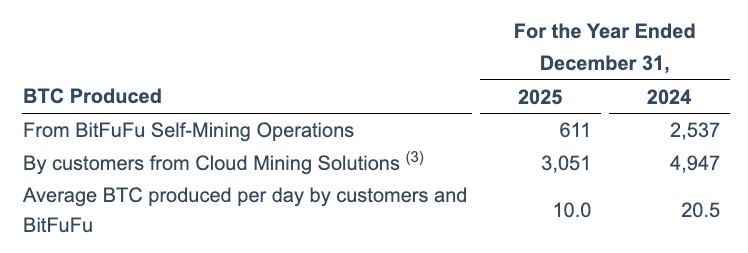
BitFuFu’s 2025 results showed a sharp shift in its business mix, with cloud mining overtaking self-mining as the company’s main revenue driver.
The Singapore-based Bitcoin (BTC) miner reported $475.8 million in revenue for 2025, up 2.7% from a year earlier.
Its self-mining output fell to 611 BTC from 2,537 BTC in 2024, a drop of 76%, while its Bitcoin holdings edged up to 1,778 BTC from 1,720 BTC a year earlier.
The company attributed the change to weaker Bitcoin earnings per terahash, higher mining difficulty and a reduced share of hashrate allocated to self-mining, as it leaned more heavily on cloud-mining products.
BitFuFu said it reallocated hashrate from self-mining to cloud mining following a 52% decline in daily Bitcoin earnings per terahash, driven by higher mining difficulty and a 47% reduction in hashrate allocated to self-mining. Rising Bitcoin prices partially offset the impact.

The company said it shifted hashrate away from self-mining to improve capital efficiency and make revenue more predictable.
Revenue from self-mining fell about 60% to $63.1 million in 2025 from $157.5 million a year earlier.
Cloud mining overtakes self-mining
Cloud mining revenue accounted for around 74% of BitFuFu’s revenues in 2025, amounting to $350.6 million. In contrast, cloud mining accounted for 58.5% of revenue in 2024, when the segment generated $271 million.
The company reported 3,662 BTC in combined annual production across its self-mining operations and customer cloud-mining activity, including 611 BTC from self-mining and 3,051 BTC produced by cloud-mining customers.

BitFuFu said it also increased mining equipment sales, which rose 76% year over year to $53.7 million.
BitFuFu outlines 2026 priorities
Although BitFuFu increased its Bitcoin holdings by just 58 BTC last year, the company said it remains committed to expanding its BTC treasury in 2026.
“Looking ahead to 2026, we will scale our cloud mining business, expand hashrate and power capacity with discipline, and continue building our Bitcoin treasury,” the company said in a statement on X.

BitFuFu CEO Leo Lu said that the company will focus on acquiring mining infrastructure in 2026 and will keep reviewing potential partnership opportunities as part of its vertical integration strategy.
Magazine: The debate over Bitcoin’s four-year cycle is over: Benjamin Cowen


Afroman, the crypto token launched by “Because I Got High” rapper Afroman, has skyrocketed in price after police in Ohio failed to sue him over a series of music videos he made mocking officers who raided his home.
A jury sided with the rapper — real name is Joseph E. Foreman — on Wednesday, concluding a three-year defamation lawsuit launched by police in Adams County.
The legal action stemmed from a police raid on Foreman’s home back in 2022 that resulted in a broken door, confiscation of cash, and a search that failed to find any evidence of suspected drug trafficking and kidnapping.
The Pump Fun cryptocurrency “Afroman,” (ticker symbol $FRO) was launched six months ago, right before Foreman promoted the token on his Instagram account.
Read more: Snoop Dogg quits ‘smoke’ amid NFT, edibles launch rumors
A livestream that showed Foreman dining out was uploaded alongside the crypto token. It pumped to a market cap of $38,000 before falling back to $12,000 on the day of its launch.
However, across the two days leading up to Foreman’s defamation trial victory, the crypto’s market cap pumped 4,685% to a high of $335,000. FRO’s market cap is now over $175,000.
Lawsuit called music videos ‘humiliating’
Foreman was able to capture footage of the raid with his home security cameras, and in response, he created a series of music videos mocking the police deputies in various outlandish ways.
One song called “Lemon Pound Cake” mocked an officer who was recorded looking for a split second at Foreman’s lemon pound cake on the kitchen counter.
“Why You Disconnecting My Video Camera” focused on, if you hadn’t already guessed, the officers disconnecting his cameras during the raid.
“They ran up my driveway with guns and hate, to steal my buns, they just couldn’t wait, I know you want me dead, or in the slammer, but why you unhooking my video cameras?” Afroman sang.
Others were more graphic. One titled “Randy Walters Is A Son Of A Bitch” joked about Afroman sleeping with the wife of one of the officers, and how the officer wouldn’t pay to repair his broken door.
Read more: Crypto rapper Razzlekhan lands new job despite facing 25 years in prison
The officers claimed the videos caused them “humiliation, ridicule, mental distress, embarrassment and loss of reputation.”
In deposition footage, one officer claimed the videos partly caused his ex-wife to leave him. However, when his ex-wife testified in court as the only defense witness brought by Foreman, she said the music videos never affected her marriage or her life.
He also argued that the officers wouldn’t pay for the damages they caused during the raid, and so he created the music videos in an attempt to recoup those losses.
Foreman also argued his right to free speech while dressed in a red, white, and blue suit adorned with the American flag.
After the verdict was handed down, Foreman filmed himself celebrating and shouting, “Yeah! We did it America!… Freedom of speech! Right on, right on, god bless America!”
The rapper had already uploaded a song before the trial’s last few days, singing his own rendition of “The Battle Hymn of the Republic.”
His version is called the “Batteram Hymn Of The Police Whistle Blower.”
It goes, “Mine eye has seen the corruption of the Adam county cops. Stealing money, stealing cake, when they make their traffic stops. First they screw you, then they sue you, play games, then dismiss your claims. The proof’s on the internet.”
Protos has reached out to Foreman for comment and will update this piece should we hear anything back.
Got a tip? Send us an email securely via Protos Leaks. For more informed news and investigations, follow us on X, Bluesky, and Google News, or subscribe to our YouTube channel.
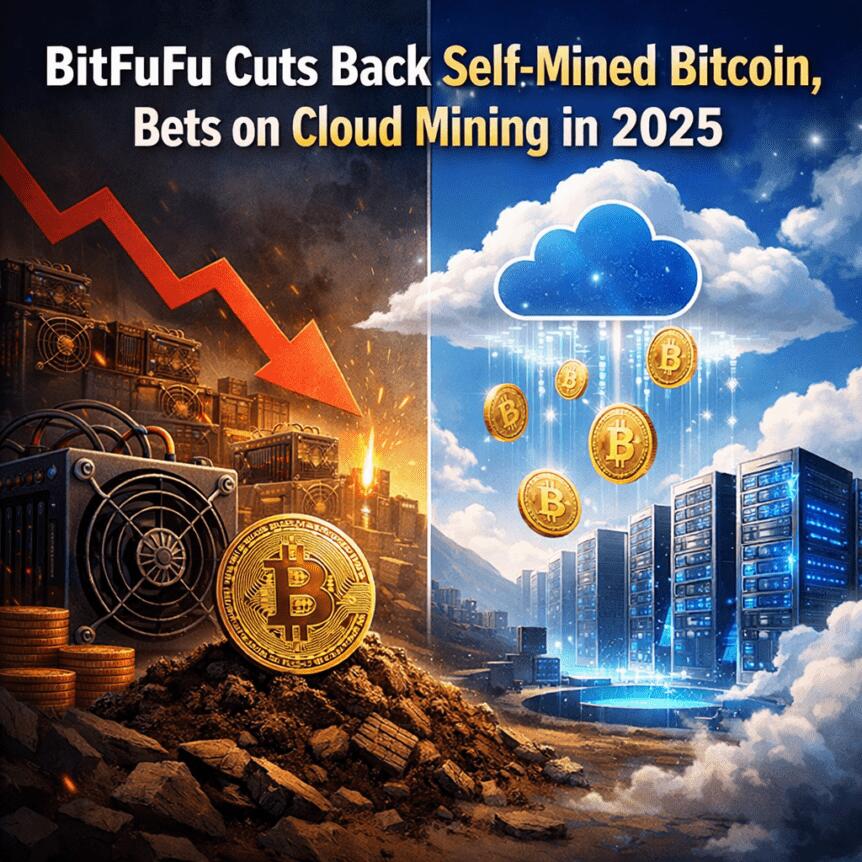
BitFuFu, a Singapore-based Bitcoin mining operator, reported a pronounced shift in its 2025 business mix, with cloud mining eclipsing self-mining as the primary revenue driver. The unaudited full-year results show revenue of $475.8 million, up 2.7% from 2024, while the company’s self-mining output collapsed and its Bitcoin treasury edged higher.
Self-mining output dropped to 611 BTC in 2025 from 2,537 BTC a year earlier, even as holdings rose to 1,778 BTC from 1,720 BTC. BitFuFu attributed the shift to weaker earnings per terahash, higher mining difficulty, and a reduced share of hashrate allocated to self-mining as the company leaned more heavily into cloud-mining products. The firm noted a 52% decline in daily earnings per terahash and a 47% reduction in the portion of hashrate devoted to self-mining, with higher Bitcoin prices partially offsetting the impact. The results were announced in a GlobeNewswire release covering BitFuFu’s unaudited 2025 full-year figures.
BitFuFu said the reallocation of hashrate aimed to improve capital efficiency and revenue predictability as it shifted toward cloud mining.
For context, the company reported total revenue of $475.8 million for 2025, up 2.7% from 2024. The 2025 results come with a notable rebalancing of the company’s production mix, underscoring how operators are adapting to a tougher mining environment while looking to scalable, revenue-stable channels.
Cloud mining overtakes self-mining
Cloud mining emerged as BitFuFu’s dominant revenue stream in 2025, accounting for about 74% of total revenue — roughly $350.6 million — up from 58.5% in 2024, when cloud-mining revenue reached $271 million.
BitFuFu reported combined annual BTC production across its self-mining operations and cloud-mining activity of 3,662 BTC, with 611 BTC produced by self-mining and 3,051 BTC generated by cloud-mining customers. The equipment sales side of the business also surged, rising 76% year over year to $53.7 million.
2026 priorities and strategy
On the treasury front, BitFuFu added 58 BTC to its balance sheet in 2025, bringing holdings to 1,778 BTC. The company reiterated its commitment to expanding its Bitcoin treasury in 2026, even as it pursues a broader industrial strategy. In a statement on X, BitFuFu said it would scale its cloud mining business, expand hashrate and power capacity with discipline, and continue building its Bitcoin treasury.
CEO Leo Lu outlined a plan to focus on acquiring mining infrastructure in 2026 and to evaluate partnership opportunities as part of a broader vertical integration strategy. The company’s emphasis on infrastructure growth and strategic collaborations signals an intent to diversify revenue streams while reinforcing its core mining capabilities.
As BitFuFu navigates the ongoing dynamics of mining economics, investors will be watching how the cloud-mining business scales, how quickly capacity and power can be expanded responsibly, and how effectively the treasury strategy is executed amid evolving Bitcoin prices and network difficulty.
BitFuFu’s unaudited 2025 full-year financial results were released publicly, with the company outlining these shifts and its 2026 roadmap in statements accompanying the earnings disclosure. For further details and exact figures, readers can consult the press release on GlobeNewswire.
Watch next for how BitFuFu balances capital expenditure with treasury growth, and whether cloud-mining demand sustains its lead as the primary revenue engine as market conditions continue to evolve.
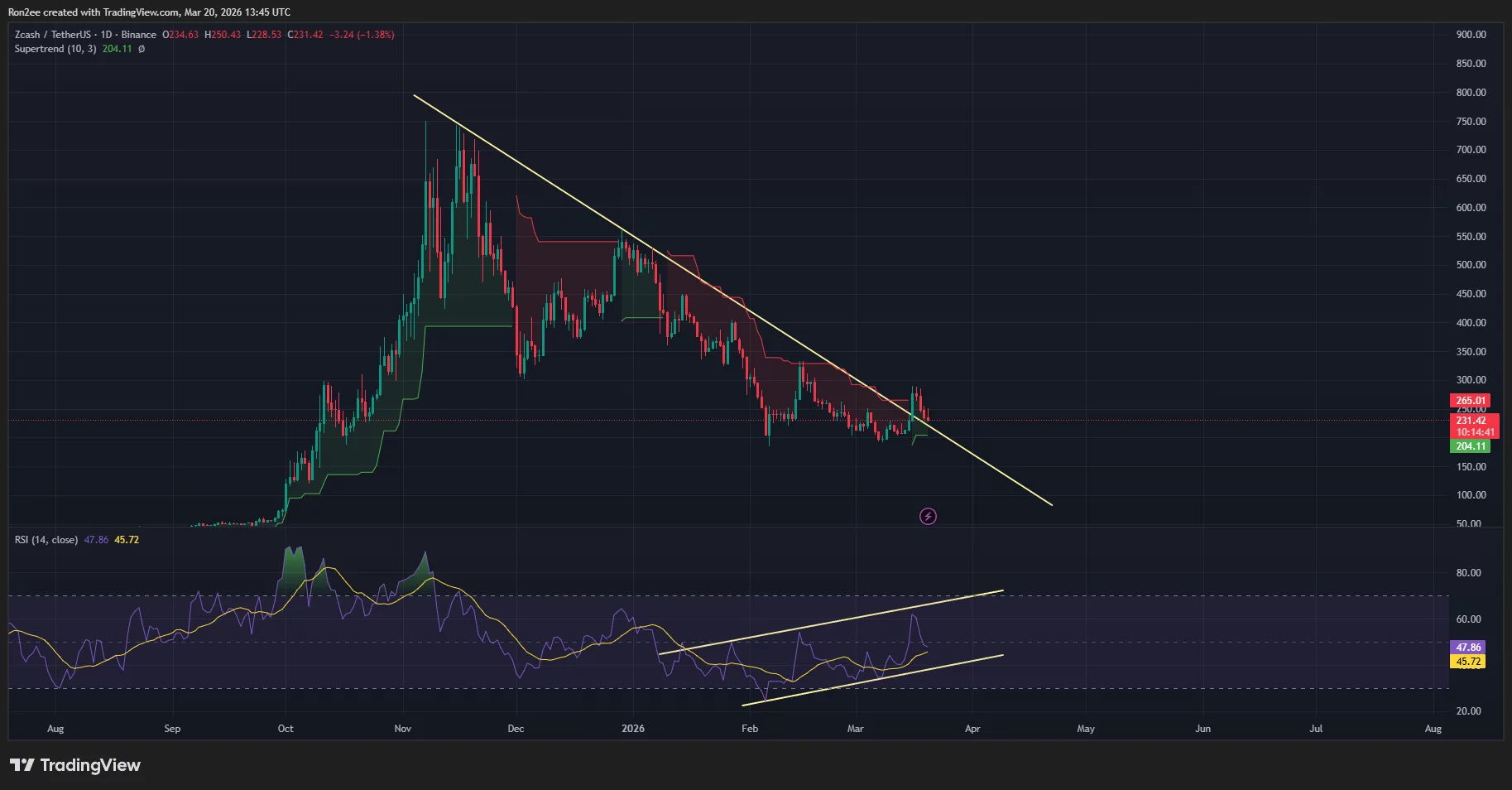
Zcash price fell over 18% from its weekly high to $232, a level that aligns with a key trendline support that could determine whether the current pullback stabilizes or extends further.
Summary
- Zcash pulled back over 18% from a recent high to $232, now testing key trendline support after a broader market-driven selloff.
- Technical indicators, including a green Supertrend and bullish RSI divergence, suggest weakening selling pressure and potential for a rebound toward $265 and $300.
- Rising shielded pool usage and upcoming network upgrades provide fundamental support, though a break below $230 could expose downside toward $200.
According to data from crypto.news, Zcash (ZEC) price shot up to a monthly high of $284 on Tuesday before falling back to $232 at the time of writing.
Zcash price dipped along with the entire crypto market amid a confluence of geopolitical and macroeconomic uncertainty arising from the U.S.-Iran war and the Federal Reserve’s hawkish tone for interest rate cuts for this year, as it points to persistent inflation as a major concern.
Following the recent drop, the second-largest privacy coin by market cap has consolidated near a descending trendline that it had turned into support following its breakout above it this week. If the token manages to hold the line, it could bounce back to test earlier highs. However, failure to hold above the dynamic support could lead to a deeper correction.
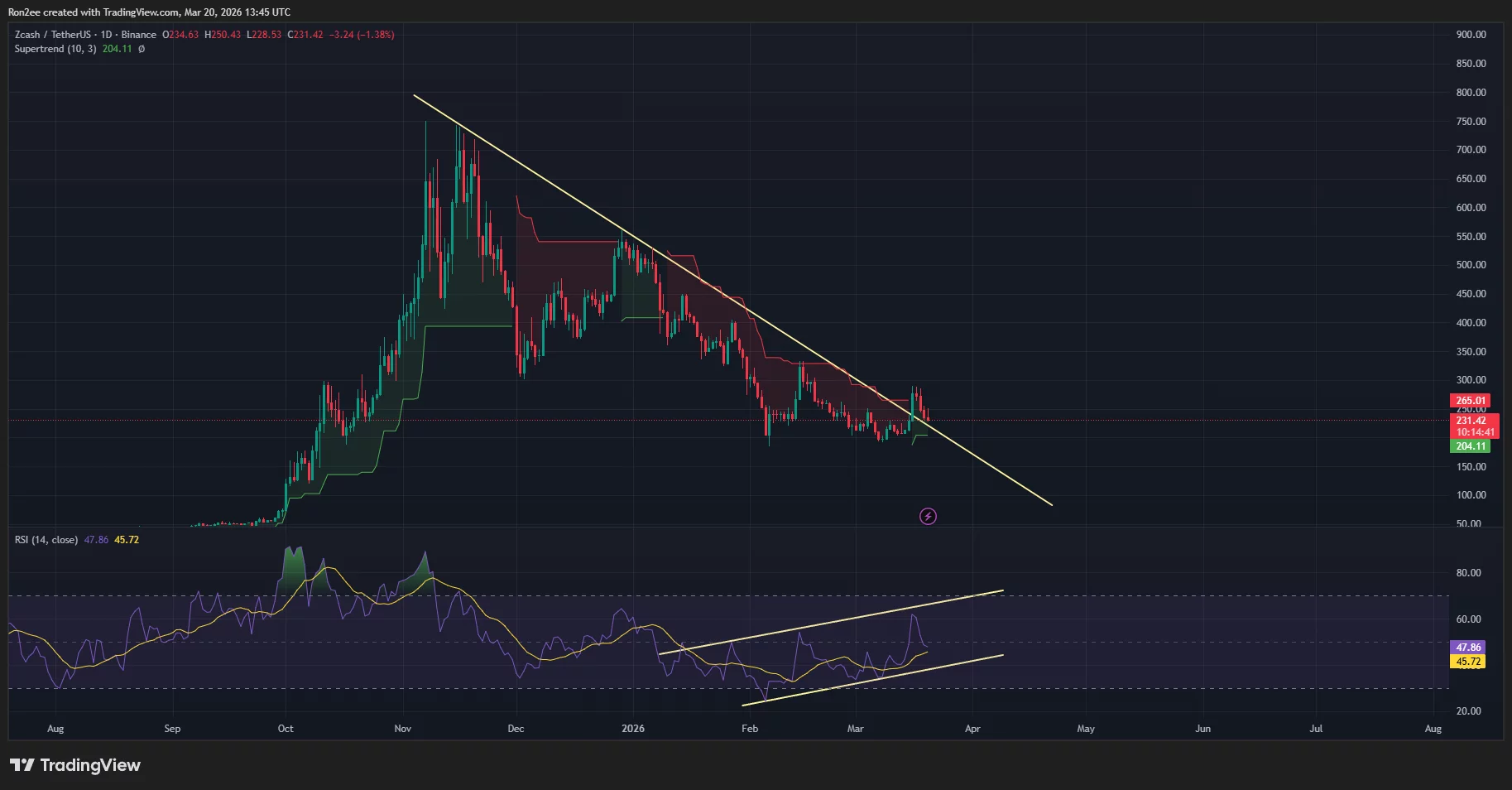
Looking at additional technical indicators gives a more grounded view of the possible outlook for the privacy-focused asset. The Supertrend indicator, which helps traders identify prevailing trend directions, has flipped green since Tuesday, a sign that the underlying momentum is shifting in favor of the bulls.
On top of this, the RSI line has formed a bullish divergence with Zcash price since early January this year. A bullish divergence occurs when the price makes lower lows while the indicator makes higher lows. It means that the downward selling pressure is losing its grip despite the falling prices.
Hence, Zcash will likely bounce from the $230 support to $265, the current position of the super trendline, and then to the psychological resistance at $300 if bullish momentum remains strong.
However, if the bearish sentiment prevailing in the broader market latches on to the token’s price action and it loses the $230 support, a drop to $200 becomes a very real possibility.
Zcash price has a few fundamental catalysts lined up that could support the technical recovery.
First, the total amount of Zcash held in shielded pools currently accounts for over 30% of the total circulating supply. A surge in this metric means that a greater number of traders are now engaging with the core functionality of the network. This could attract more institutional interest as privacy becomes a more sought-after feature in the digital asset space.
Additionally, the 2026 roadmap for Zcash includes the Crosslink project, which is a move towards a hybrid Proof of Stake model. This transition is expected to lower sell-side pressure from miners and align the network with institutional ESG standards, potentially opening the door for new capital inflows.
Disclosure: This article does not represent investment advice. The content and materials featured on this page are for educational purposes only.


- Chainlink price hovered near $9.00 on Friday, March 20, 2026.
- LINK spot ETFs recorded their second‑highest inflow day with $3.34 million.
- Bulls could ride fresh optimism to target $14.
Chainlink (LINK) is trading near $9.11 as bulls attempt to hold onto recent gains, with momentum likely to strengthen amid fresh inflows into US spot LINK ETFs.
Data shows exchange-traded fund products tied to the oracle network recorded their second-strongest day of institutional inflows on March 19, 2026.
This came as prices touched lows of $8.90, a move that mirrors the sharp decline in Bitcoin price amid broader market jitters.
LINK spot ETFs record second‑highest inflow day
According to on-chain data provider SoSoValue, US spot ETFs tracking Chainlink (LINK) recorded net inflows of $3.34 million on March 19, 2026.
While modest in absolute terms, the inflows are notable as they represent the second-largest single-day inflow for these products.
The figure trails only the $4.05 million recorded on January 20. Cumulatively, LINK-linked ETFs have attracted nearly $98 million in net inflows.
Analysts say the latest inflows point to renewed institutional appetite for exposure to Chainlink.
Among individual products, Grayscale’s GLNK drew $1.52 million, while Bitwise’s CLNK led with $1.81 million in inflows.
Such spikes in inflows are often associated with improving price sentiment and stronger on-chain liquidity for the underlying asset.
The inflows also come as Chainlink’s infrastructure gains traction.
Amundi, which manages more than €2.3 trillion in assets, recently launched a tokenised mutual fund, SAFO, on the Chainlink network.
𝗟𝗜𝗩𝗘: Europe’s largest asset manager Amundi (€2.3 trillion AUM) & Spiko launch new tokenized mutual fund (SAFO) powered by Chainlink.
Chainlink is how the world’s leading institutions & tokenization platforms are unlocking the issuance & distribution of tokenized funds. pic.twitter.com/2GQshwqCrC
— Chainlink (@chainlink) March 19, 2026
LINK price outlook
The surge in spot ETF demand offers a bullish structural backdrop for LINK’s price.
As noted, fresh capital deployment signals persistent institutional accumulation outside the traditional spot and futures markets.
LINK sits near the upper end of its recent trading range, with the token currently changing hands near $9.00.
This means that further ETF‑driven buying could accelerate a move above key resistance levels.
From a technical perspective, LINK’s daily Relative Strength Index (RSI) hovers in neutral territory near 48.
This suggests that the market is indecisive.

On the upside, bulls retain room for another spike before hitting exhaustion.
Elsewhere, the Moving Average Convergence Divergence (MACD) remains in a consolidating phase, with the histogram flattening.
This shows that momentum is stabilising rather than reversing, and a breakout could materialise.
This aligns with a bull‑flag or ascending channel pattern visible on the daily chart.
The 50-day and 100-day EMAs offer immediate resistance at $9.50 and $10.18 levels. Momentum could bring $14.21 into play.
In the opposite direction, bears could target channel support around $7.78.
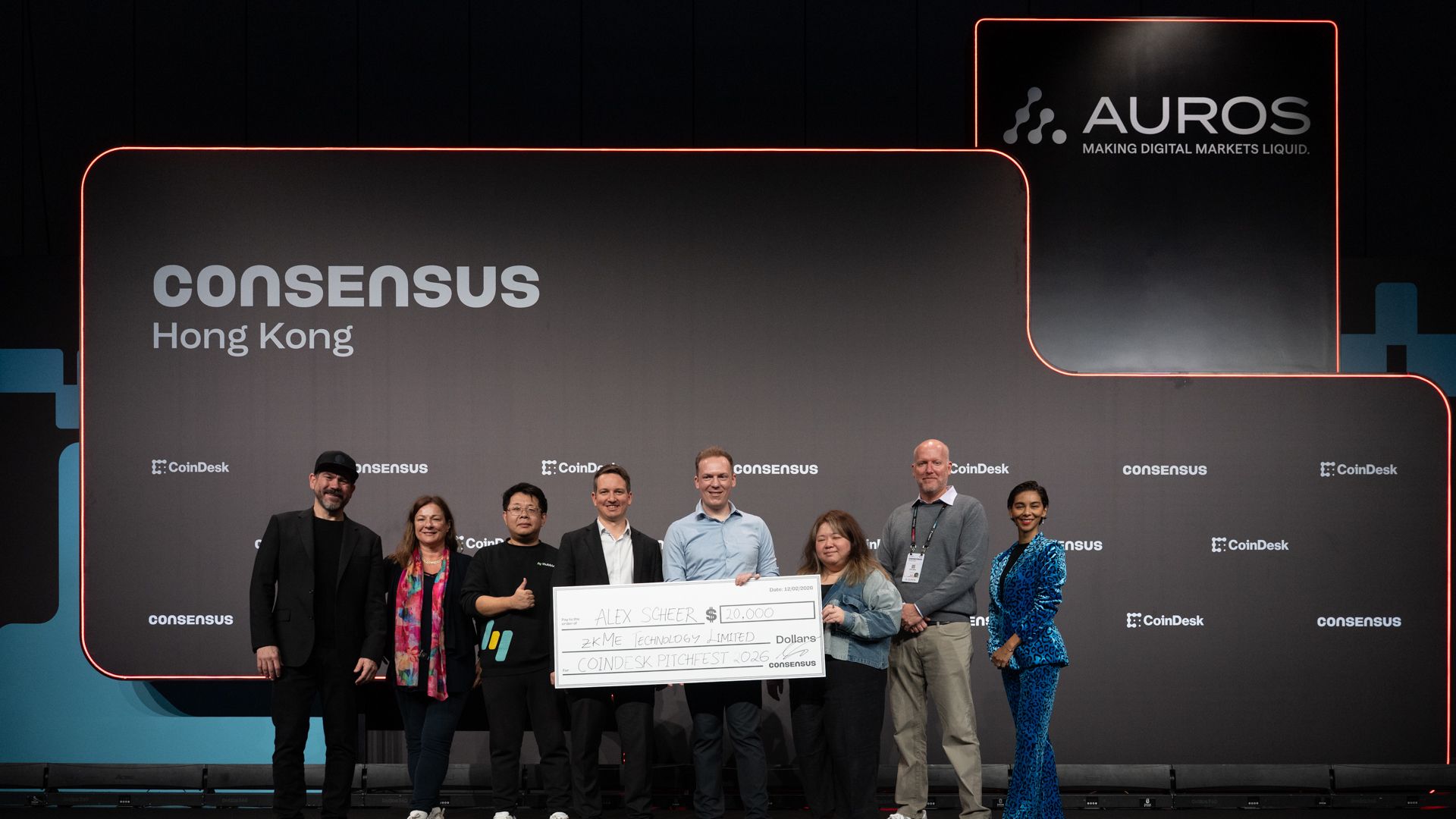
Web3 has always been cyclical, yet it has never stopped building. Markets rally and retrace, narratives rotate and evolve, but founders continue to ship products and search for their moment to be seen.
In an ecosystem where launching a protocol or token can happen quickly, standing out is harder than ever. That is where CoinDesk PitchFest has found its role within Consensus.
CoinDesk PitchFest does not replace due diligence, nor does it guarantee funding. What it offers is structured exposure to investors, operators, and ecosystem leaders who are actively shaping the industry. Over the past few years, judges have included representatives from Dragonfly, Fabric Ventures, CoinFund, Borderless Capital, The Spartan Group and Outlier Ventures — firms that have backed some of Web3’s most significant companies.
For early-stage founders, that kind of room matters.
Progress Beyond the Stage
At Consensus Austin 2023, Rise presented a clear proposition: compliant global payroll and payment rails for distributed teams operating across fiat and crypto. The company addressed a practical challenge facing Web3-native businesses navigating cross-border employment.
Since then, Rise has expanded support across more than 90 local currencies and 100 cryptocurrencies, strengthened its compliance capabilities and secured seed funding. Consensus was not an endpoint; it was an early platform in a longer growth trajectory.
That same cohort featured Neuromesh, which later pivoted and re-emerged as AMMO AI, leaning further into the AI x Web3 intersection. Nodepay, a semifinalist, has continued developing its decentralized compute ambitions and expanding within its ecosystem. Early exposure often accelerates refinement.
At Consensus Hong Kong 2025, TransCrypts won PitchFest with its digital identity and fraud mitigation platform. As AI-driven impersonation risks gained attention, the company moved beyond that stage to a significant milestone, closing a $15 million seed round led by Pantera Capital.
Consensus Toronto 2025 introduced ChainPatrol, focused on AI-powered phishing detection and brand protection. While not defined by splashy announcements, the company continues operating across multiple ecosystems, addressing security challenges that grow more complex as platforms scale.
Most recently, zkMe Technology won PitchFest at Consensus Hong Kong 2026 with its zero-knowledge identity verification framework. zkMe had previously closed a $4 million funding round in 2024, reflecting early confidence in privacy-preserving compliance systems. Finalists, including Coinbax, Onchain Labs and Hubble AI, demonstrated the range of ideas competing for attention in Hong Kong.
Across these cohorts, the sectors differ — fintech rails, AI integration, identity systems, fraud mitigation, decentralized compute — but the opportunity remains consistent: a curated environment where investors are listening.
Where Exposure Becomes Momentum
Web3 remains crowded. Tools to launch are accessible; credibility is harder to earn. Breaking through often requires more than a whitepaper or a strong online community. It requires direct access to decision-makers who can evaluate substance.
Consensus brings together early-stage founders, venture investors, exchanges, infrastructure providers, institutional participants and media in one place. Within that ecosystem, CoinDesk PitchFest provides a defined arena for early-stage teams to present clearly and competitively.
The stage does not build the company; the founders do, but the right audience can accelerate progress.
A New Layer: Agentic Commerce and the One-Person Startup
Alongside the core competition, Consensus Miami will introduce a new CoinDesk PitchFest “side mission” exploring early signals at the edge of agentic commerce.
A different kind of founder is beginning to emerge: building with AI agents, emerging protocols such as OpenClaw, and experimental payment standards like x402. What once required teams and capital can now, at least in early stages, be launched, tested and in some cases monetized by a single operator.
These are not traditional startups. They are fast, narrow and increasingly capable, from agent-powered tools to pay-per-call APIs designed to transact as easily with machines as with users. In some cases, products are reaching revenue within weeks, compressing the path from idea to market to a degree previously unattainable.
It is still early. The tooling is evolving, standards are not yet set, and most of these experiments will not scale. But the trajectory is clear, and the pace is accelerating.
For CoinDesk PitchFest, this presents an opportunity to engage with the category as it forms, rather than after it matures. The “side mission” is designed to surface these builders before they resemble venture-backed companies, and to understand which of these early experiments remain niche, and which begin to take on the characteristics of infrastructure.
If the last cycle was defined by protocols, the next may be shaped by what is built on top of them, smaller, faster and increasingly autonomous.
Consensus Miami is where that shift starts to come into focus.
Looking Toward Consensus Miami
Consensus Miami 2026 will once again gather the industry’s full spectrum. For startups under five years old with funding below $5 million, PitchFest offers a practical entry point into that broader marketplace.
It provides exposure to active investors, feedback from experienced operators and visibility through CoinDesk’s global platform. For some teams, it will validate years of work. For others, it will open conversations that define their next chapter.
Web3 continues to move quickly. Founders who want to shape its future need rooms where serious business happens.
Consensus Miami is one of those rooms. CoinDesk PitchFest is where the next wave of builders steps forward.
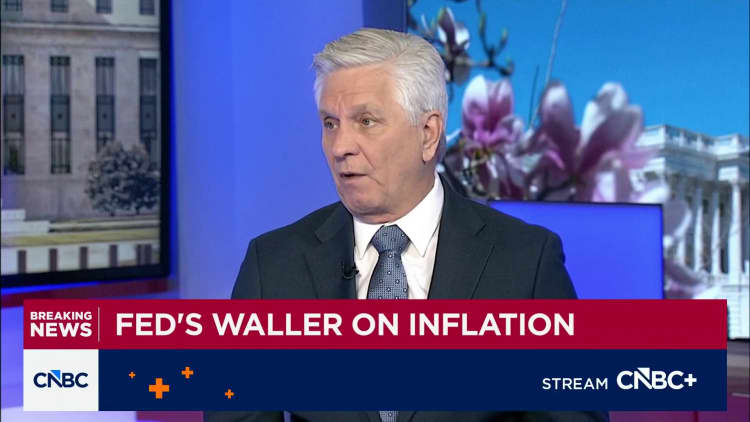

Federal Reserve Governor Christopher Waller on Friday expressed caution about current economic conditions but still sees the opportunity for interest rate cuts later this year.
Previously an advocate for rate cuts, Waller said in a CNBC interview that recent developments in the labor market as well as the uncertainty of the war with Iran require a more conservative approach.
“It doesn’t mean that I’m going to stay put for the rest of the year,” Waller said on “Squawk Box.” “I just want to wait and see where this goes, and if things go reasonably well and the labor market continues to be weak, I would start advocating again for cutting the policy rate later this year.”
Markets have almost completely doused the chance of rate reductions through the balance of 2026 and well into 2027. That’s a switch from expectations prior to the war, when traders had been looking for two or three cuts this year.
But soaring oil prices and an indeterminate time frame over how long the war will last have changed market expectations and caused a rethinking from Waller and other policymakers. Waller had dissented in January from a Federal Open Market Committee decision not to cut, but went along with the majority earlier this week for another pause.

His earlier dovish position was motivated by a clearly weakening labor market, which produced nearly no net job growth in 2025. However, he noted Friday that the labor force also is not expanding, so “net zero” growth is still leaving the unemployment rate unchanged, even with a 92,000 drop in nonfarm payrolls in February.
“If we get another 90,000 jobs decline in the next jobs report, that’ll be like four negative reports out of five. To me, that’s not zero. So at that point, you need to start thinking about this labor market isn’t good,” Waller said. “I don’t think this war is going to help in any way going forward, but we’ll have to see what happens with inflation.”
Waller is generally sanguine now about inflation, which he sees being boosted by one-off effects from tariffs but otherwise moving structurally towards the Fed’s 2% goal.
“If those tariff effects don’t roll off by the second half of the year, and then inflation starts rising then, then you’re in this tricky business of like, do we worry about inflation? Take a chance on recession or not?,” he said. “So I’m really going to keep an eye on what the future labor markets look like to see whether I want to start advocating for rate cuts in future meetings, but I also want to see what happens with inflation.”
Earlier Friday, Fed Governor Michelle Bowman who, like Waller, was nominated for the job by President Donald Trump, said she believes the Fed can cut three times this year. That would take the benchmark federal funds rate below the neutral level that FOMC officials see as neither supporting nor restricting growth.
Bowman, in a Fox Business interview, took that position even though she said she expects “strong growth” this year “supported by the supply-side policies that this administration is putting into place.”
Bowman is one of just three Fed officials who see aggressive rate cuts this year, according to an update of the Fed’s “dot plot” grid released Wednesday. A total of 19 policymakers participate in the grid.


TLDR
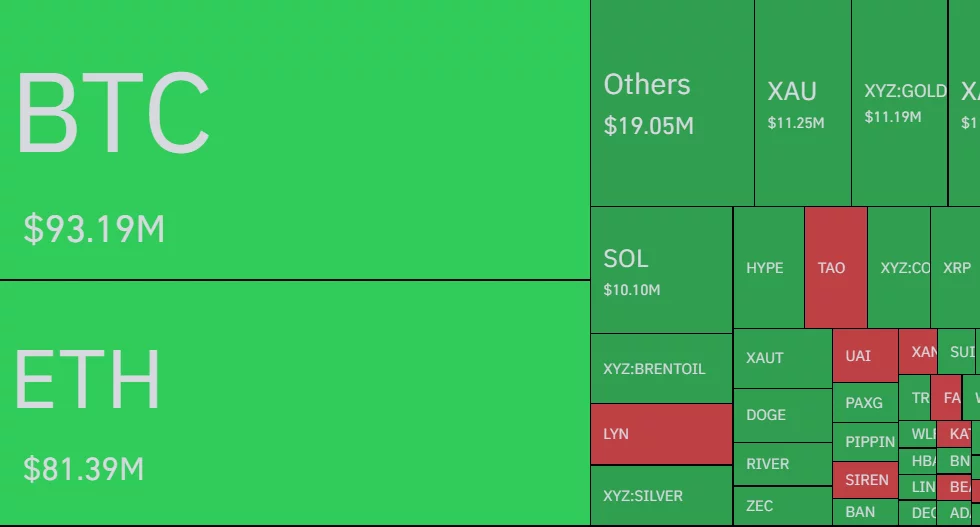
- JPMorgan reported that the Iran war triggered a surge in oil trading on Hyperliquid.
- Traders turned to Hyperliquid’s CL USDC perpetual as CME markets closed over the weekend.
- The oil contract reached a peak daily trading volume of $1.7 billion during the spike.
- Open interest on the contract climbed to around $300 million following the volatility.
- The bank said demand for 24 7 access to traditional assets is driving activity on decentralized exchanges.
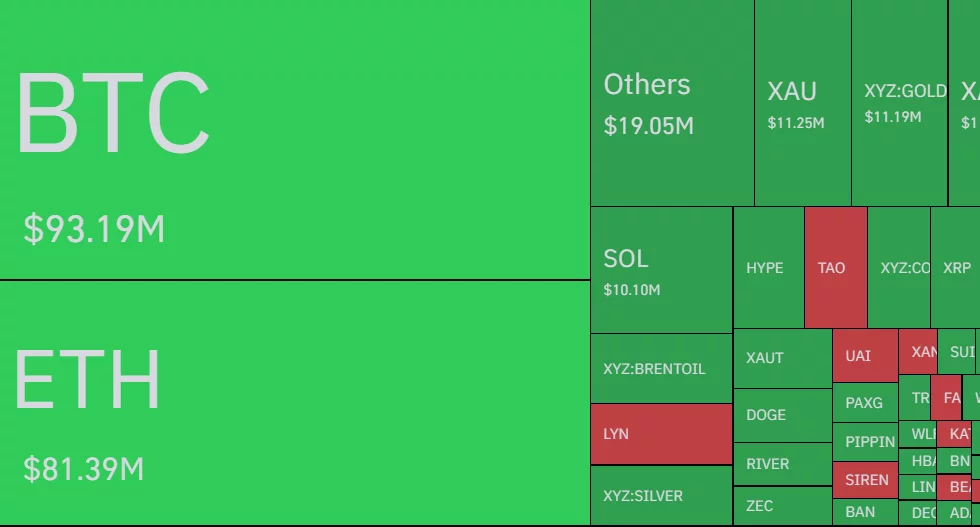
Oil price swings linked to the Iran war have driven traders toward decentralized exchange Hyperliquid, JPMorgan reported on Wednesday. The bank said non-crypto investors increased activity in oil-linked perpetual futures as traditional markets closed over the weekend. As a result, Hyperliquid recorded sharp growth in volume and open interest on its CL-USDC contract.
Iran war triggers surge in oil trading on Hyperliquid
JPMorgan said the Iran war caused heavy oil volatility and pushed traders toward platforms that never close. The bank reported that activity surged when Iranian infrastructure strikes occurred over the weekend. Because CME markets were shut, traders sought alternatives for immediate price exposure.
Nikolaos Panigirtzoglou led the analyst team that tracked the flow into Hyperliquid. He wrote, “Oil trading exploded on the Hyperliquid exchange early this month when the Iran war erupted.” He added that CME traders could not react when strikes happened outside trading hours.
The CL-USDC perpetual contract remained open for continuous price discovery during the weekend. The contract uses USDC as margin and offers up to 20x leverage. According to the bank, daily peak volume reached $1.7 billion during the surge.
Open interest on the oil-linked contract climbed to about $300 million. The product now ranks as Hyperliquid’s third-most traded market. Traders used the instrument to maintain exposure while traditional venues remained offline.
JPMorgan highlights growing demand for 24/7 markets
JPMorgan stated that demand for 24/7 access to traditional assets continues to increase. The analysts said decentralized exchanges attract traders seeking constant market access. They pointed to oil as the latest example of that shift.
Perpetual futures allow traders to hold positions without expiry dates. These derivatives use funding rates to align prices with the spot market. As volatility increased, traders used these features to manage short-term risks.
Hyperliquid operates with an onchain order book rather than an automated market maker. The structure offers tighter spreads and execution closer to traditional exchanges. The platform also provides sub-second finality and portfolio margining.
JPMorgan said these features appeal to institutional participants. Faster execution supports active strategies during volatile periods. Portfolio margining also allows traders to deploy capital more efficiently.
The analysts reported that decentralized exchanges are taking share from mid-tier centralized derivatives platforms. They cited speed, liquidity, and self-custody as key drivers. Continuous access also supports trading during geopolitical events.
Hyperliquid’s native token, HYPE, has risen about 25% year-to-date. The token has outperformed much of the broader crypto market over the same period. The bank released its report on Wednesday with updated trading data.

Disclosure: This article does not represent investment advice. The content and materials featured on this page are for educational purposes only.
With market uncertainty rising, investors turn to NOW DeFi’s cloud mining model to generate income beyond price speculation.
Summary
- NOW DeFi offers cloud mining services, enabling users to earn crypto income without owning physical mining hardware.
- The platform uses AI-driven cloud computing, providing automated mining plans and real-time earnings tracking.
- NOW DeFi promotes low-cost entry, green energy infrastructure, and instant withdrawals for passive crypto income seekers.
The cryptocurrency market is no stranger to dramatic market swings. After Bitcoin surged to an all-time high on October 6, 2025, investor optimism reached fever pitch, with many expecting a continued bull run. Instead, the market took an unexpected shift.
Bitcoin is currently trading around $70,000, a steep 44% decline from its peak. As the largest and most influential cryptocurrency, Bitcoin often sets the tone for the entire market. Its downturn has triggered a ripple effect, dragging down major assets like Ethereum, XRP, and Solana, all of which had been gaining strong momentum before the sudden U-turn.
Now, the market is moving erratically without a clear direction, and in moments like these, investors feel the blow. Volatility poses serious risks to investors by causing rapid, unpredictable price swings that can lead to substantial capital losses, emotional investing (panic selling), and liquidation of leveraged positions. In the past 24 hours, over $300 million has been liquidated from the crypto market, according to data from Coinglass.
With uncertainty dominating the market, investors are increasingly looking for smarter ways to stay profitable, without relying solely on price speculation. Traditional buy-and-sell strategies become far less effective in sideways or declining markets, pushing traders to explore alternative income streams.
This shift in investor behavior is exactly what led to the emergence of NOW DeFi, a platform designed to offer stable opportunities beyond conventional cryptocurrency trading.
NOW DeFi is a cloud mining service provider, giving investors the opportunity to generate income from cryptocurrency mining without owning physical mining hardware. By connecting to the platform’s crypto cloud computing services, investors can earn income consistently even during times of high volatility.
Why NOW Defi stands out
To start using NOW Defi’s infrastructure, users simply select a compute plan, and once activated, the platform automatically allocates cloud computing resources to support cryptocurrency mining participation.
For investors already trading major assets like Bitcoin, Ethereum, or XRP, the search for a reliable alternative income stream has become increasingly important. NOW DeFi positions itself as a simplified gateway into alternative crypto earnings.
The platform is powered by AI, allowing both experienced traders and newcomers to generate passive income with minimal hands-on management.
The platform offers a range of distinctive features that make it different from other cloud mining platforms:
- New users receive free hash power after completing registration
- Its infrastructure is powered by green energy resources
- Users can monitor earnings in real-time using the platform’s interactive dashboard
- Earnings can be withdrawn instantly without any hidden fees
- Flexible mining contracts starting at as low as $22
NOW DeFi is a UK-based, legally registered crypto cloud computing platform, giving users greater confidence in its legitimacy and reducing the risks commonly associated with unverified crypto services.
The bottom line
In a market defined by uncertainty and sharp reversals, the ability to adapt is what separates resilient investors from the rest. The evolving crypto environment is pushing investors to explore more stable, diversified income approaches, and platforms like NOW DeFi are positioning themselves at the center of that shift. DeFi offers a pathway for investors to navigate volatility with greater confidence — turning market turbulence from a threat into a potential opportunity.
Welcome to the official NOW DeFi platform: Visit the official website to securely download the mobile application.
Disclosure: This content is provided by a third party. Neither crypto.news nor the author of this article endorses any product mentioned on this page. Users should conduct their own research before taking any action related to the company.

IPL 2026: KKR suffer Matheesha Pathirana blow, reveal fresh details | Cricket News

Belkin Charging Case Pro for Switch 2 review: A more elegant solution

Crimson Desert: How to Earn Money Fast and Early


-
Crypto World6 days ago
HYPE Token Enters Net Deflation as HyperCore Buybacks Outpace Staking Rewards
-

 Tech5 days ago
Your Legally Registered ‘Motorcycle’ Might Not Count Under Proposed US Law
-

 Fashion7 days ago
Weekend Open Thread: Addict Lip Glow
-
 Tech3 days ago
Are Split Spacebars the Next Big Gaming Keyboard Trend?
-
Sports6 days ago
Why Duke and Michigan Are Dead Even Entering Selection Sunday
-

 Business5 days ago
Search for Savannah Guthrie’s Mother Enters Seventh Week with No Arrests
-

 Business6 days ago
US Airports Launch Donation Drives for Unpaid TSA Workers as Partial Government Shutdown Enters Fifth Week
-
Crypto World6 days ago
Coinbase and Bybit in Investment Talks: Could Bybit Finally Enter the US Crypto Market?
-

 Business4 days ago
Australian shares drop as Iran war enters third week
-

 Business6 days ago
Country star Brantley Gilbert enters growing non-alcoholic beer market
-

 Crypto World4 days ago
Crypto Lender BlockFills Enters Chapter 11 with Up to $500M in Liabilities
-

 Sports7 days ago
College Basketball Best Bets: Conference Tournament Semifinal Picks
-

 Politics2 days ago
The House | The new register to protect children from their abusers shows Parliament at its best
-

 News Videos2 days ago
RBA board divided on rate cut, unusually buoyant share market | Finance Report | ABC NEWS
-

 Fashion4 days ago
25 Celebrities with Curly Hair That Are Naturally Beautiful
-

 Tech10 hours ago
inKONBINI Lets You Spend Summer Days Behind the Register
-

 Crypto World2 days ago
Canada’s FINTRAC revokes registrations of 23 crypto MSBs in AML crackdown
-
 Politics3 days ago
Real-time pollution monitoring calls after boy nearly dies
-

 Crypto World6 days ago
Crypto Losses Drop 87% in February, But Hackers Are Now Targeting People, Not Code
-
 NewsBeat2 days ago
Residents in North Lanarkshire reminded to register to vote in Scottish Parliament Election


You must be logged in to post a comment Login