
Crypto World
Solana Price Prediction for 2026 as SEC Clarifies Crypto Assets and Pepeto’s Working Exchange Sets Up for 100x Before the Binance Listing


The SEC just clarified that it considers most crypto assets not securities under federal law, and the ruling changes the regulatory deck for every digital asset from Solana to the smallest presale. Japan rolled out retail USDC yield through SBI, and Circle is pushing the UK to shape global stablecoin rules. Three major economies are simultaneously building regulated stablecoin infrastructure.
While the solana price prediction hinges on macro cooperation, Pepeto’s working exchange ecosystem is already measurable, and the presale at $0.000000186 gives you the chance to see exactly what you are buying at pre listing pricing before the Binance listing changes everything.
The SEC issued its most definitive statement on crypto classification, with Chair Paul Atkins calling it clear lines in clear terms according to CoinDesk. Japan’s SBI VC Trade launched a retail USDC lending service for consumer yield on regulated stablecoins.
SOL trades at $88 after hotter than expected PPI data reinforced fears of delayed rate cuts according to CoinMarketCap. The solana price prediction depends heavily on the Fed’s tone, which remains uncertain.
Solana Price Prediction and the Presale Where the Tools Are Already Working and the 100x Math Is Conservative
Pepeto’s Exchange Went Live During Presale and the Entry at $0.000000186 Is the Chance to Position Before the Listing Changes the Price
Pepeto’s exchange tools went live during presale, and the daily workflow they enable is simple compared to the hours of manual research traders do right now. PepetoSwap handles every trade at zero cost. The bridge moves capital across Ethereum, BNB Chain, and Solana without fees. The risk scorer gives you a breakdown of any contract’s danger signals before your wallet approves.
Five minutes of due diligence done with tools that are sharper than anything else out there, and all of that would normally take hours and be less reliable. The ecosystem is built to change the way retail traders protect their capital, and the reason this token has 100x to 150x potential is not just the utility. It is the timing.
Created by the mind who took the original Pepe to $7 billion, Pepeto is approaching the Binance listing at exactly the moment when the market is crying out for trust and transparency. Nothing like this set of tools has existed before at presale pricing, and the need is real across every trading demographic. When something this useful becomes a daily habit for traders worldwide, and each new user adds buying pressure on PEPETO, the token does not need manufactured hype because the product is the catalyst.
The presale is in its final stretch now, with the listing approaching fast. Since the tools are already live, you can see exactly what you are buying and still pay presale pricing. Anyone who recognizes what a 100x entry looks like before launch will spot that potential in Pepeto, but buying in now is crucial to personally benefit from the explosive move that follows the listing.
Solana Price Prediction for 2026 at $88
SOL trades at $88 after PPI data reinforced delayed rate cut fears according to CoinMarketCap. Derivatives funding rates went negative and the price was rejected near $97. The $88 level is critical, and holding it keeps a rebound toward $94 within view.
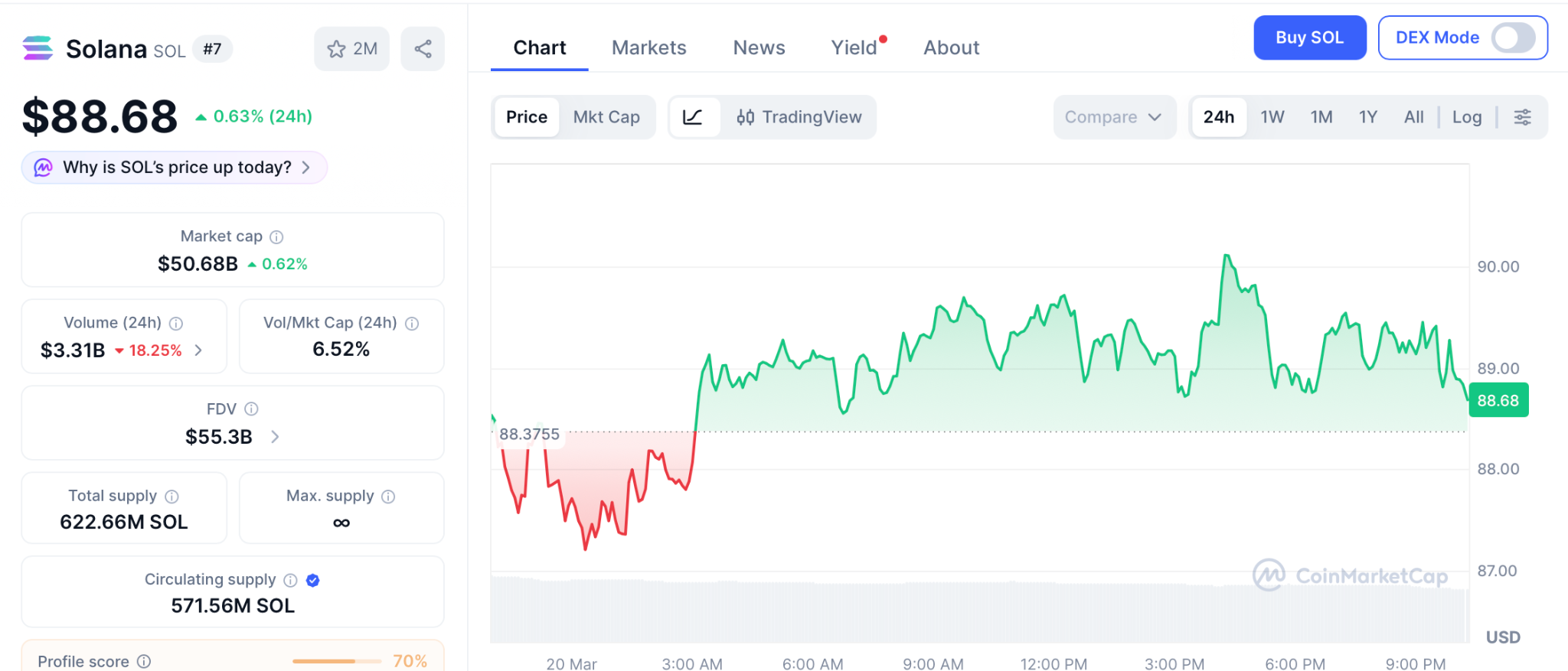
Still, the solana price prediction for 2026 depends on the Fed’s tone. From $88, even a move to $137 is roughly 55%, and that takes the rest of the year.
Chainlink Trades Sideways at $9
LINK trades at $9 after a 6.5% weekly drop according to CoinGecko. Despite positive regulatory news classifying LINK as a digital commodity, the macro selloff overpowered it. If LINK defends $9.00, a sideways range between $9.00 and $9.50 is most likely.
Chainlink’s oracle infrastructure underpins DeFi, but like the solana price prediction, the near term path needs macro relief that has not arrived.
The Solana Price Prediction Needs Macro Cooperation but Pepeto Needs Only the Listing
The solana price prediction’s technical setup stays positive if SOL holds $88, and Chainlink’s oracle role keeps it structurally important. But both are waiting on external triggers: Fed rhetoric, market structure legislation, and institutional rotation. Pepeto is not constrained by any of those factors.
It has a working exchange, staking that compounds at 196% daily, and holders who already see exactly what the tools do. At $0.000000186, the token is still at presale pricing, but that changes the moment the Binance listing arrives. The Pepeto official website is where the traders who understand the difference between waiting on macro and entering a presale with live products are positioning right now.
Click To Visit Pepeto Website To Enter The Presale

FAQs
What is the solana price prediction after the recent dip?
SOL trades at $88 with a rebound toward $94 to $97 possible if support holds. The solana price prediction depends on the Fed’s tone and macro conditions improving.
How does Chainlink fit into the solana price prediction outlook?
LINK’s oracle infrastructure is foundational to DeFi but like the solana price prediction, its near term path depends on macro relief that has not arrived yet.
Why is Pepeto a stronger entry than SOL right now?
Pepeto at $0.000000186 with three live tools and a Binance listing does not depend on external catalysts. Visit the Pepeto official website before the listing closes the presale.
Disclaimer: This is a Press Release provided by a third party who is responsible for the content. Please conduct your own research before taking any action based on the content.




The exchange is offering leveraged contracts on major technology stocks and ETFs.
Coinbase on Friday rolled out perpetual futures contracts tied to U.S. equities, becoming one of the first major centralized exchanges to offer the product and expanding its derivatives lineup beyond crypto.
The contracts cover all seven Magnificent 7 stocks — Apple, Microsoft, Alphabet, Amazon, Nvidia, Meta, and Tesla — as well as ETF perpetuals tracking the S&P 500 (SPY) and Nasdaq-100 (QQQ) in select jurisdictions. They are available to eligible non-U.S. retail users on Coinbase Advanced and to institutions on Coinbase International Exchange.
The contracts trade around the clock, are cash-settled in USDC, and offer up to 10x leverage on individual stocks and 20x on ETF products. Like crypto perpetuals, they have no expiration date and use a funding rate mechanism to track spot prices.
Competing With DeFi
The launch positions Coinbase against decentralized platforms that have already built significant traction in equity-linked perpetuals. TradeXYZ, the perpetuals arm of Hyperliquid tokenization layer Unit, has crossed $1.4 billion in open interest and routinely processes more than $1 billion in daily volume, according to DeFiLlama.
Earlier this week, the platformlanded a license from S&P Dow Jones Indices to launch the first officially sanctioned S&P 500 perpetual futures contract on-chain — a milestone that lends institutional credibility to the DeFi side of the equity perps market.
Coinbase acknowledged in itsblog post that much of the demand for continuous equity exposure has been concentrated on decentralized venues.
The launch follows Coinbase’s recent push into European derivatives, where its MiFID-regulated entity began offering crypto futures across 26 countries earlier this month. The company said it plans to expand the lineup over time, adding more equities, indices, commodities, and other globally traded assets.
This article was written with the assistance of AI workflows. All our stories are curated, edited and fact-checked by a human.
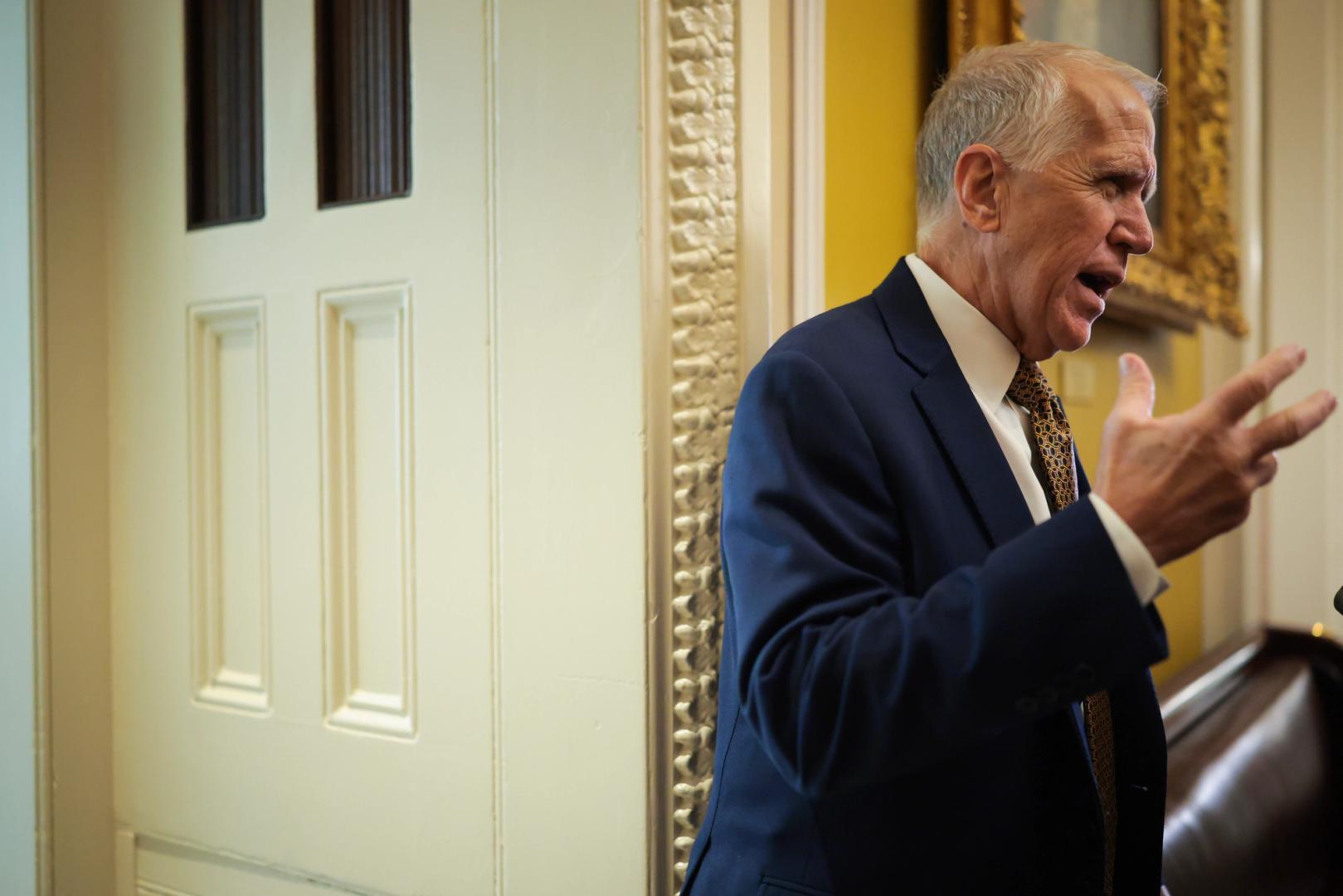
The two U.S. senators negotiating a controversial provision in the crypto industry’s market structure bill — Republican Thom Tillis and Democrat Angela Alsobrooks — have reportedly agreed on a compromise that could advance the industry’s top priority to the next stage in the Senate.
The two were reported by Politico to have agreed in principle on an approach to stablecoin yield in the Digital Asset Market Clarity Act, and that potentially knocks down one of the top unresolved issues in the wide-ranging bill. Still, no further details emerged, other than Alsobrooks reiterating that the yield accord would bar rewards on passive balances of stablecoins.
Bankers had argued that stablecoin rewards on holdings of the U.S. dollar-tied tokens could closely resemble interest on bank deposits, and any threat to that core component of U.S. banking could put lending at risk. Both Alsobrooks and Tillis had agreed to find an approach that wouldn’t threaten banking.
“Sen. Tillis and I do have an agreement in principle,” Alsobrooks told Politico on Friday. “We’ve come a long way. And I think what it will do is to allow us to protect innovation, but also gives us the opportunity to prevent widespread deposit flight.”
The White House was reviewing updated legislative text on Thursday, CoinDesk previously reported. White House officials didn’t immediately respond to a request for comment on the Friday development.
Industry insiders have told CoinDesk that they were aware of a new compromise, but they haven’t yet seen the legislative text that the senators agreed on.
Though the stablecoin question was at the forefront of the Clarity Act negotiations, there remain a number of other points to iron out, including the bill’s treatment of decentralized finance (DeFi), a corner of the sector in which some Democrats had expressed unease over illicit finance.
Lawmakers have suggested in recent days that the Clarity Act could get a Senate Banking Committee hearing late next month. If it’s approved there, it advances toward the Senate floor, though it first needs to be melded with a similar version that already passed in the Senate Agriculture Committee.
Senator Cynthia Lummis, the Republican atop the banking panel’s crypto subcommittee, said earlier this week she expected a hearing in the latter half of April. She posted on image Friday on social media site X that depict a “yield” sign.
Advocates have been hoping for a May resolution of the years-long legislative effort. But Senate floor time is at a premium, and it’s under some threat from unrelated issues, such as the Republican’s voter-ID bill and the back-and-forth over the war in Iran.
Read More: Key U.S. senator on crypto market structure bill negotiation: ‘We think we’ve got it’
UPDATE (March 20, 2026, 15:36 UTC): Adds quote from Senator Alsobrooks and tweet from Senator Lummis.


Google just disclosed a vulnerability that targets iPhone crypto wallets and could have affected an estimated 270 million Apple devices.
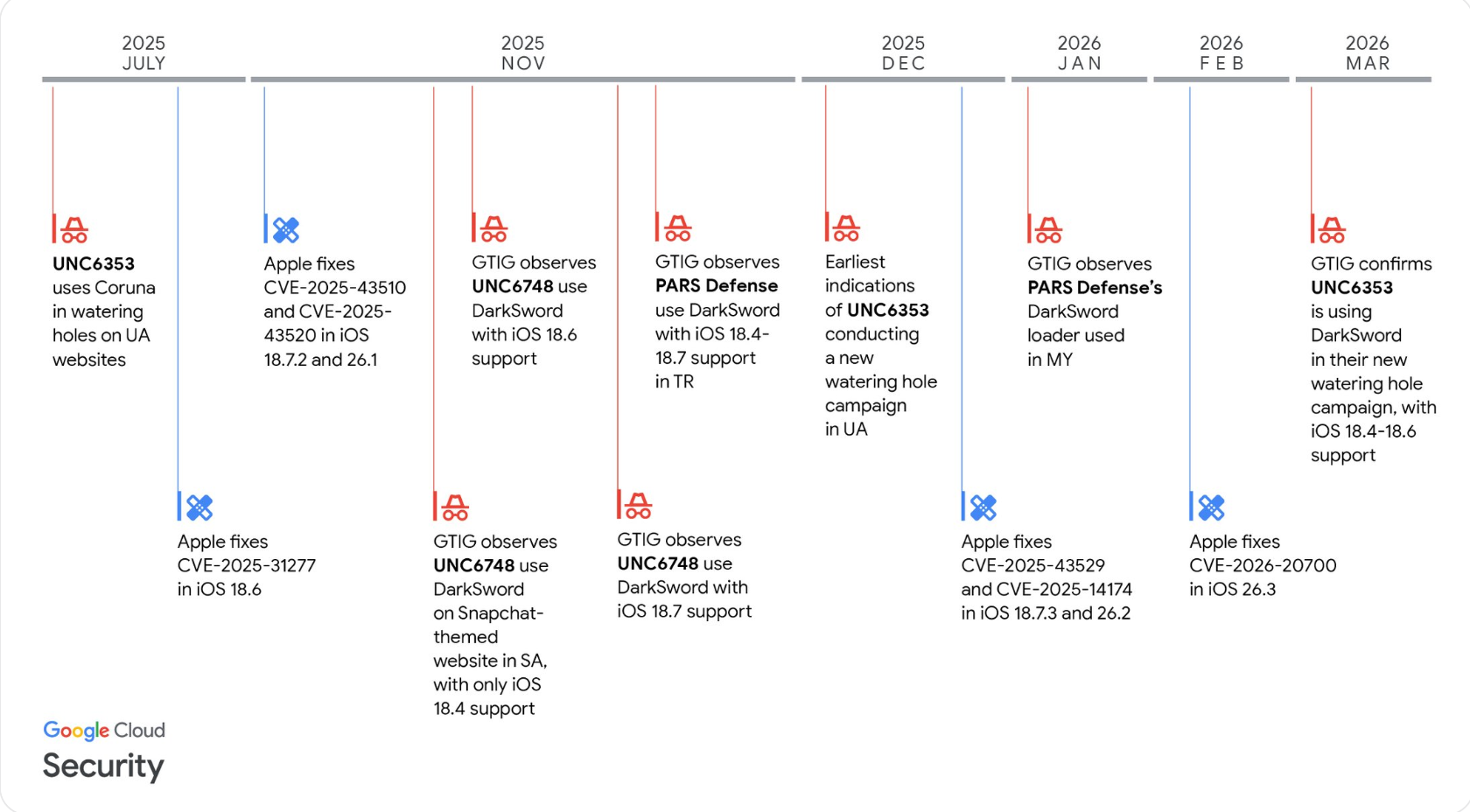
The DarkSword exploit, which strings together multiple zero-day vulnerabilities, is still live today and affects iPhones running iOS 18.4 through 18.7, updates that were released between April and September last year.
Up-to-date Apple devices use iOS 26.3.1. However, because many people don’t automatically upgrade, 24% of all iPhones still use iOS 18 according to Apple’s own data.
DarkSword allows hackers to orchestrate six vulnerabilities together to silently compromise devices, dump their Keychain databases, and vacuum up crypto wallet data.
Frequently targeted apps by DarkSword hackers include crypto wallets MetaMask, Phantom, and dozens of others by Coinbase, Ledger, and more. Visiting a poisoned website in Safari is all it takes to trigger the attack.
Google’s Threat Intelligence Group has observed Russian state-linked hackers, a Turkish surveillance vendor, and another threat cluster wielding DarkSword against targets in Saudi Arabia, Turkey, Malaysia, and Ukraine since at least November 2025.
Read more: Legacy DeFi platforms lose $27M as hacking spree continues into 2026
Zero-day access to iPhone crypto wallet files
DarkSword isn’t a keylogger or clipboard sniffer; it gains kernel-level access, then injects JavaScript into privileged iOS system processes to pillage the device.
The sinister toolkit hunts specifically for crypto wallet files, scanning for apps matching terms like “metamask,” “ledger,” “trezor,” “phantom,” “coinbase,” “binance,” and “kraken.” It grabs whatever wallet data it finds.
It can also pull the device’s Keychain database which is an Apple system-level storage service for passwords.
DarkSword can also access WiFi passwords, iCloud data, Safari cookies, iMessages, WhatsApp histories, call logs, location histories, photos, and encryption keys protecting stored credentials called keybags.
Read more: Venus Protocol hacker lost $4.7M after nine months of planning
All six vulnerabilities have now received patches if an iPhone user upgrades their operating system.
Apple addressed most in iOS 18.7.2 and 18.7.3. However, if their passwords, files, or crypto wallet data have already been stolen, all of those credentials and personal security implications would have to be re-secured.
Got a tip? Send us an email securely via Protos Leaks. For more informed news, follow us on X, Bluesky, and Google News, or subscribe to our YouTube channel.
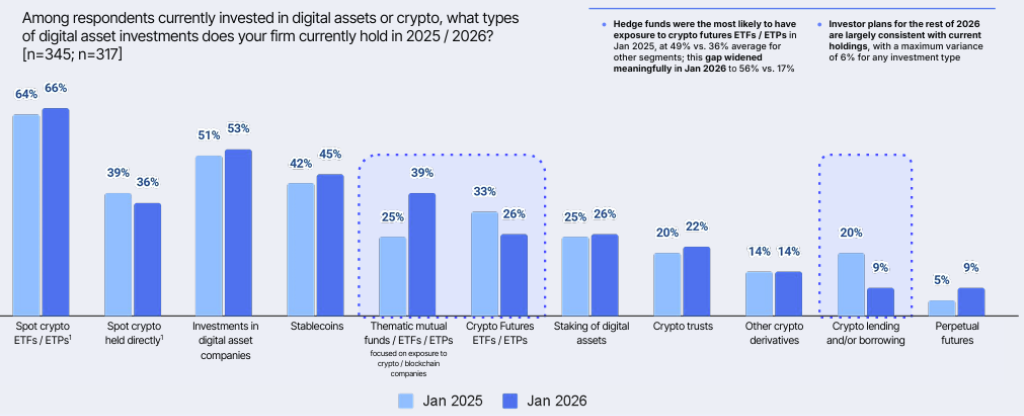
Institutional demand for crypto is holding up despite ongoing turbulence, with new data showing large investors are preparing to increase allocations even after the market’s sharp sell-off since October.
At the same time, stablecoins are gaining traction across both retail and institutional channels. Japan is moving ahead with regulated USDC (USDC) lending products, while new models tied to real-world assets are beginning to take shape.
Elsewhere, crypto companies continue to tap traditional capital markets, with Abra pursuing a public listing via a special purpose acquisition company (SPAC) deal.
Together, the latest developments point to a market that is still expanding through regulated pathways, even as price volatility and regulatory uncertainty persist.
Institutional investors double down on crypto
Despite recent volatility and a 40% crypto market sell-off since October, institutional investors are preparing to increase their digital asset exposure, with most expecting prices to rise over the next 12 months.
A January survey of 351 investors by Coinbase and EY-Parthenon found that 73% plan to buy more digital assets this year, while 74% expect prices to move higher.
Bitcoin (BTC) and Ether (ETH) remain the primary entry points, but interest is expanding into stablecoins and tokenized assets. Two-thirds of respondents said they prefer gaining exposure through regulated vehicles such as exchange-traded products.
The data points to steady institutional demand, with capital continuing to move through structured, compliant channels despite market turbulence.

SBI rolls out retail USDC lending in Japan
SBI VC Trade is expanding stablecoin use in Japan with the launch of a retail USDC lending service, as regulated access to dollar-backed tokens gains traction. The move follows recent regulatory changes that allow licensed companies to handle foreign stablecoins, such as Circle-issued USDC.
The platform enables users to lend USDC in exchange for yield, marking one of the first retail-facing products of its kind in Japan. SBI, a major financial group, has been building out its crypto offering within the country’s regulated framework.
The rollout highlights how stablecoins are moving beyond trading into regulated financial products, particularly in markets where legal clarity has already been established.

Abra targets Nasdaq listing through SPAC deal
Crypto wealth manager Abra is planning to go public through a merger with New Providence Acquisition Corp., in a deal that values the combined entity at around $750 million. The company is expected to list on Nasdaq under the ticker ABRX.
Abra has shifted its focus toward wealth management services, including trading, custody and yield products, following regulatory challenges tied to its earlier lending operations. The SPAC route offers a faster path to public markets at a time when traditional IPO activity remains limited.
The deal reflects continued efforts by crypto companies to access public capital, even as regulatory scrutiny and market conditions remain uneven.
Theo launches $100M gold-linked yield stablecoin vault
Tokenization platform Theo has unveiled a $100 million vault tied to a gold-linked, yield-bearing stablecoin, designed to combine price stability with onchain returns. The structure links the token’s value to gold while offering yield to users.
The model introduces a hybrid approach that blends commodity backing with onchain financial mechanisms, reflecting broader efforts to bring real-world assets into crypto markets. Gold serves as the underlying collateral, offering an alternative to fiat-backed stablecoins.
The product highlights growing experimentation around yield-bearing stablecoins, as developers look to expand their role beyond simple price stability.
Crypto Biz is your weekly pulse on the business behind blockchain and crypto, delivered directly to your inbox every Thursday.


A new taxonomy from the venture firm identifies seven barrier clusters keeping most traditional yield sources off-chain, and argues that stablecoin growth is pulling them closer.
Electric Capital published a research report on Monday, cataloging 501 distinct sources of real-world yield and cross-referencing them against tokenized assets with meaningful on-chain traction today.
The venture firm found that only 34 of those yield sources have any on-chain presence above $50 million, and they cluster in familiar territory: U.S. Treasuries, private credit, corporate bonds, and non-U.S. sovereign debt.
The remaining 93% fall into seven groups defined by what’s blocking tokenization, ranging from legal structuring challenges for asset-backed securities to real-world integration hurdles for commodities and compute infrastructure.
Distribution is the Bottleneck
Perhaps the report’s sharpest observation concerns distribution. Of 35 yield-bearing non-stablecoin RWAs above $50 million, only two have crossed 2,000 holders. While some of that is by design — BlackRock’s BUIDL requires a $5 million minimum — the data underscores how dependent most tokenized assets remain on a handful of large deployers and vault curators.
The report highlights how Centrifuge’s JAAA, a tokenized AAA CLO that held $743 million at the time of data collection, lost 44% of its value in a single day on March 9 after Sky’s Grove protocol redeemed $327 million in one transaction.
BlackRock’s BUIDL faces a similar dynamic: its top 10 holders control 98% of supply, and those holders are largely other protocols — Ethena, Ondo, and Sky.
What Comes Next
Electric Capital argues five compounding forces will pull new asset types on-chain: a growing stablecoin base with diversifying yield preferences, competition among protocols for differentiated products, vault infrastructure that absorbs duration risk, tranching layers that expand buyer bases, and leverage loops that multiply demand for collateral-eligible assets.
The firm also flagged AI infrastructure spending — projected by Goldman Sachs to exceed $500 billion in 2026 — as a catalyst, noting that GPU leasing, data center construction, and energy contracts are natural candidates for on-chain financing.
This article was written with the assistance of AI workflows. All our stories are curated, edited and fact-checked by a human.
Google Threat Intelligence has identified a new form of crypto-stealing malware called “Ghostblade” that affects Apple iOS devices and is part of the “DarkSword” suite of browser-based malware tools designed to steal private keys and other sensitive information.
Ghostblade is written in JavaScript and designed for rapid data theft. The crypto-stealing malware activates, grabs sensitive data from the compromised device, and relays it to malicious servers, according to Google Threat Intelligence.
The Ghostblade malware does not run 24/7 on the compromised device, does not require extra plug-ins to function, and stops functioning after extracting data, making it more difficult to detect, the threat researchers said.

The malware also includes code that deletes crash reports from the compromised device, preventing Apple from receiving them and flagging the malicious software.
Ghostblade can access and relay messaging data from the iMessage texting application for Apple devices, Telegram and WhatsApp.
The malicious software can also steal SIM card information, identity, multimedia and geolocation data, and access system settings, according to the Google cybersecurity report.

DarkSword and its components are one of the latest cybersecurity threats identified by Google Threat researchers, shedding light on the evolving methods used by malicious actors to steal crypto and other valuable data from unsuspecting users.
Related: Google uncovers iOS exploit kit used in crypto phishing attacks
Hacks fall in February as malicious actors pivot to exploiting human error
Losses from crypto hacks fell to $49 million in February, a sharp decrease from $385 million in January, according to blockchain intelligence platform Nominis.
This drop reflects a pivot from code-based cyber threats to crypto phishing attempts, wallet poisoning attacks and other threat vectors that take advantage of human error, Nominis said in its report.

Phishing attempts typically use fake websites designed to look legitimate. These fake websites often use URLs that are nearly identical to the legitimate sites they masquerade as, tricking users into visiting them.
These sites embed malware that can steal crypto private keys and other valuable data when a user accesses the site or clicks any of its elements.
Magazine: WazirX hackers prepped 8 days before attack, swindlers fake fiat for USDT: Asia Express
Crypto World
Sam Bankman Fried’s past political cash gives AI PAC fuel for going after NY state lawmaker Bores


A political action committee with ties to major tech and crypto donors is raising the specter of disgraced ex-FTX CEO Sam Bankman-Fried to target New York congressional candidate Alex Bores as the state legislator faces a crowded Democratic field.
A sharply worded mailer distributed by Think Big PAC told voters that the Democratic primary candidate for New York’s 12th Congressional District once got more than $100,000 in support from the former head of the failed global exchange, and alleges that “Bankman-Fried’s buddies are bankrolling Bores for Congress.” It also criticizes Bores’ campaign financing and positions him as out of step with constituents, urging voters to “do better than Bores.”
The attack lands as Bores competes in a high-profile primary that has drawn several prominent Democratic contenders, including Jack Schlossberg — a member of the Kennedy family — and other well-connected figures such as George Conway. The race to succeed Rep. Jerry Nadler in the deep-blue Manhattan district is expected to be one of the most closely watched primaries in the 2026 cycle.
“For someone who’s railed against deep fake AI, candidate Bores doesn’t seem to have trouble creating his own reality. He raked in over $100,000 from Sam-Bankman Fried’s sordid political network but refuses to acknowledge the connection” a spokesperson for Think Big PAC told CoinDesk, which confirmed the amounts through state elections filings. “Bores is entitled to his own opinion but not his own set of facts on the role SBF has played in bankrolling his political career.”
Think Big PAC says it’s backing candidates aligned with pro-technology policies and opposing those seen as hostile to innovation of artificial intelligence. The group has previously deployed spending to influence Democratic primaries in Ohio.
Bores, a first-term assemblymember representing parts of Manhattan, has recently drawn attention for introducing legislation focused on artificial intelligence safety and accountability at the state level. The bill aims to impose guardrails on advanced AI systems, and that legislative push may have made him a target.
The mailer zeroes in on political spending tied to Bankman-Fried, who was convicted on fraud charges tied to the collapse of FTX. In the 2022 cycle, Bankman-Fried and other FTX executives were among the largest political donors in U.S. politics, supporting candidates across the political spectrum. A CoinDesk analysis found that 196 members of Congress — more than one-third — received campaign support from Bankman-Fried or affiliated executives during that period. But Bores was unusual as one of only two state-level candidates in New York to receive help from the SBF-affiliated PAC (the other being Lt. Gov. Antonio Delgado).
The Think Big PAC has already spent hundreds of thousands of dollars on ads targeting Bores, including earlier television and digital spots attacking his past work at Palantir. Bores’ campaign pushed back on those ads, sending a cease-and-desist letter accusing the PAC of making “false and defamatory statements” in its ads.
Bores’ campaign has not responded to CoinDesk’s request for comment.
Read more: Congress’ FTX Problem: 1 in 3 Members Got Cash From Crypto Exchange’s Bosses

TLDR:
- John Andrews joins Ledger as CFO, bringing 25+ years of finance experience and Circle’s IPO background.
- Ledger opens a New York office as part of a multi-million-dollar investment to grow its U.S. institutional base.
- Ledger secures over 20% of the world’s crypto and more than 30% of retail-held dollar stablecoins globally.
- Ledger is reportedly preparing for an IPO with a potential valuation exceeding $4 billion, pending market conditions.
Ledger, the global leader in digital asset security, has appointed John Andrews as its new Chief Financial Officer. The announcement came alongside the opening of a new U.S. office in New York City.
Andrews joins from Circle, where he led capital markets and investor relations. The move signals Ledger’s growing ambitions in its largest global market.
Reports suggest the company is preparing for a potential IPO, with a valuation possibly exceeding $4 billion.
Andrews Brings Deep Finance Experience to Ledger’s Growing Team
John Andrews brings over 25 years of experience across corporate finance and financial services. He previously served as Head of Capital Markets and Investor Relations at Circle.
His role there included direct involvement in Circle’s own IPO process. That background makes him a strong fit for Ledger’s current growth trajectory.
At Circle, Andrews worked at the intersection of traditional finance and digital assets. That experience closely mirrors the institutional shift Ledger is now targeting.
Banks, asset managers, custodians, and stablecoin issuers are among the company’s growing client base. Andrews is expected to lead financial strategy as that demand continues to rise.
Ledger CEO Pascal Gauthier shared the news publicly, tying both announcements together. He wrote on social media: “John Andrews brings the institutional rigor and financial leadership needed to scale Ledger’s global vision.”
Gauthier added that Andrews’ experience at the crossroads of traditional finance and digital assets is “exactly what we need.” He also noted the New York office places Ledger Enterprise “at the heart of the financial world.”
Andrews, in turn, expressed confidence in the company’s market position. “Ledger has built the most trusted security platform for digital assets,” he said.
He added that institutions are increasingly seeking secure infrastructure to operate in this ecosystem. Andrews described Ledger as “uniquely positioned to support that transition.”
The IPO timeline remains uncertain due to current market volatility. However, preparations are already reported to be underway.
Andrews’ background in investor relations places him at the center of those efforts. Ledger has not yet confirmed a specific timeline for any public listing.
New York Office Anchors Ledger’s Push Into Institutional Markets
Ledger’s New York office represents a multi-million-dollar investment in the company’s U.S. presence. The office will serve as a strategic hub for Ledger Enterprise, its institutional infrastructure platform.
Dozens of roles are being created across enterprise and marketing functions. The expansion reflects the growing demand from financial institutions for secure digital asset tools.
Gauthier was direct about the role institutions now play in Ledger’s strategy. “Institutions today require the cryptographic certainty that only Ledger provides,” he stated.
He further noted that Ledger Enterprise Multisig and Tradelink give banks and asset managers “the tools to govern and trade assets with total control.” Those products sit at the core of the company’s institutional offering.
Andrews echoed that sentiment upon joining. “I’m excited to join the company at such an important moment for its growth,” he said.
He also expressed gratitude to Gauthier for the trust placed in him. Andrews called it an honor to join a team “respected across the industry for its leadership.”
The New York office will be formally celebrated on March 23rd. The event will bring together industry leaders, partners, and members of the digital asset ecosystem.
It follows a multi-year global partnership with the San Antonio Spurs. That deal further strengthened Ledger’s brand presence across the United States.
Ledger currently secures more than 20% of the world’s crypto assets and has sold over 8 million devices across 165 countries. The company also helps secure over 30% of dollar stablecoins held by retail investors.
As adoption accelerates, Ledger is positioning itself as the go-to infrastructure layer for institutional crypto operations. The New York office places the company firmly at the center of that shift.

The increase in the demand for commodities spurs up growth of volume
The more the price swings, the more traders have been moving towards the derivatives of gold and oil. Oil prices have also been increasing to multi-year levels, aided by the current conflict in Iran. Also, gold has been performing well, given that investors have turned to it to offer security in the midst of unpredictability in the market. The trend has motivated traders to spend outside of crypto assets and to invest in conventional instruments.
According to Bitget, the behavior of the users is noticeably changing as they abandon single-market exposure. Rather, it is now actively trading in a variety of asset classes on a single platform. As a result, the trading activity has become more dispersed among forex pairs, indices, and commodities, as well as digital assets, in response to correlated moves in the global financial systems.
The exchange has increased its services in terms of tokenized stocks, exchange-traded funds, and precious metals. In addition to this, Bitget has launched new features that enable traders to trade in the traditional market with crypto-friendly infrastructure. These improvements are meant to help users who desire to have integrated access to various financial markets.
Embedding of Crypto and Traditional Markets Increases
Bitget claimed to provide the CFD system that allows trading global assets with stablecoin margins. This system enables traders to trade various positions in one account. Furthermore, the platform underscored how traditional finance and digital assets still come together. With the growth of markets coalescing, traders tend to turn towards cross-asset strategies to realize the prospects. The increase in the CFD volume of Bitget indicates the increased demand for diversified trading opportunities. It also indicates the way in which the uncertainty in the world pushes traders to multi-asset exposure.

The present perspective is determined by historical correlations
Lee based part of his opinion on the analysis of a market technician named Tom DeMark. The data indicate that the recent price trend of Ethereum is highly correlated with the S&P 500 during the crash of 1987 and the correction of 2011. These trends suggest that Ethereum might already be at a bottom or nearing one.
As of today, Ethereum is trading at an approximate 22 percent discount to its real price of 2,241. The measure represents the mean price floor of every coin on-chain. Moreover, the same discounts were observed at the bottoms of past cycles, which supports the idea that selling pressure could be declining.
Bitmain has over 3 million staked Ether worth approximately 6.6 billion. The company also has close to 10 billion in crypto assets. The exposure indicates high confidence in Ethereum’s long-term recovery and has helped lift its stock during premarket trading on March 16. In addition, the size of its stake reflects growing institutional readiness to hold large crypto positions in bear markets. This movement continues to influence mood in digital-asset markets.
Bullish signals notwithstanding, mixed sentiment prevails
The bottom call does not find support among all market participants, regardless of the available data. Individual traders have reported that such claims have been made in the past few months without validation. Nonetheless, others refer to Ethereum’s historical trend, which has involved strong recoveries following extensive corrections. Ethereum has delivered high returns over the long run in the last ten years. In addition, analysts note that past cycles tended to experience prolonged periods of consolidation followed by recovery. This supports the view that the current market structure can be consistent with previous turning points.

Tyson Fury speaks out after father John Fury says he is ‘finished’

‘There are many pathways to becoming an excellent engineer’

Inside Piers Morgan’s marriage to Celia Walden after he storms off over taunts about her


-
Crypto World7 days ago
HYPE Token Enters Net Deflation as HyperCore Buybacks Outpace Staking Rewards
-

 Tech5 days ago
Your Legally Registered ‘Motorcycle’ Might Not Count Under Proposed US Law
-
 Tech3 days ago
Are Split Spacebars the Next Big Gaming Keyboard Trend?
-
Sports6 days ago
Why Duke and Michigan Are Dead Even Entering Selection Sunday
-

 Business5 days ago
Search for Savannah Guthrie’s Mother Enters Seventh Week with No Arrests
-

 Business6 days ago
US Airports Launch Donation Drives for Unpaid TSA Workers as Partial Government Shutdown Enters Fifth Week
-
Crypto World6 days ago
Coinbase and Bybit in Investment Talks: Could Bybit Finally Enter the US Crypto Market?
-

 Business4 days ago
Australian shares drop as Iran war enters third week
-

 Business6 days ago
Country star Brantley Gilbert enters growing non-alcoholic beer market
-

 Politics2 days ago
The House | The new register to protect children from their abusers shows Parliament at its best
-

 Crypto World4 days ago
Crypto Lender BlockFills Enters Chapter 11 with Up to $500M in Liabilities
-

 News Videos2 days ago
RBA board divided on rate cut, unusually buoyant share market | Finance Report | ABC NEWS
-

 Fashion4 days ago
25 Celebrities with Curly Hair That Are Naturally Beautiful
-

 Tech16 hours ago
inKONBINI Lets You Spend Summer Days Behind the Register
-

 Politics2 hours ago
Jenni Murray, Long-Serving Woman’s Hour Presenter, Dies Aged 75
-

 Crypto World2 days ago
Canada’s FINTRAC revokes registrations of 23 crypto MSBs in AML crackdown
-
 Politics3 days ago
Real-time pollution monitoring calls after boy nearly dies
-

 Crypto World6 days ago
Crypto Losses Drop 87% in February, But Hackers Are Now Targeting People, Not Code
-
 NewsBeat2 days ago
Residents in North Lanarkshire reminded to register to vote in Scottish Parliament Election
-

 Business4 days ago
Meta planning major layoffs as AI spending and automation reshape workforce


You must be logged in to post a comment Login