Connect with us
DAPA Banner

Business

Advertising specialist Smart Outdoor expands into new Sunderland office

Published

on

Business Live

The firm has moved into The Yard at Riverside Sunderland where it has ample room to grow its team

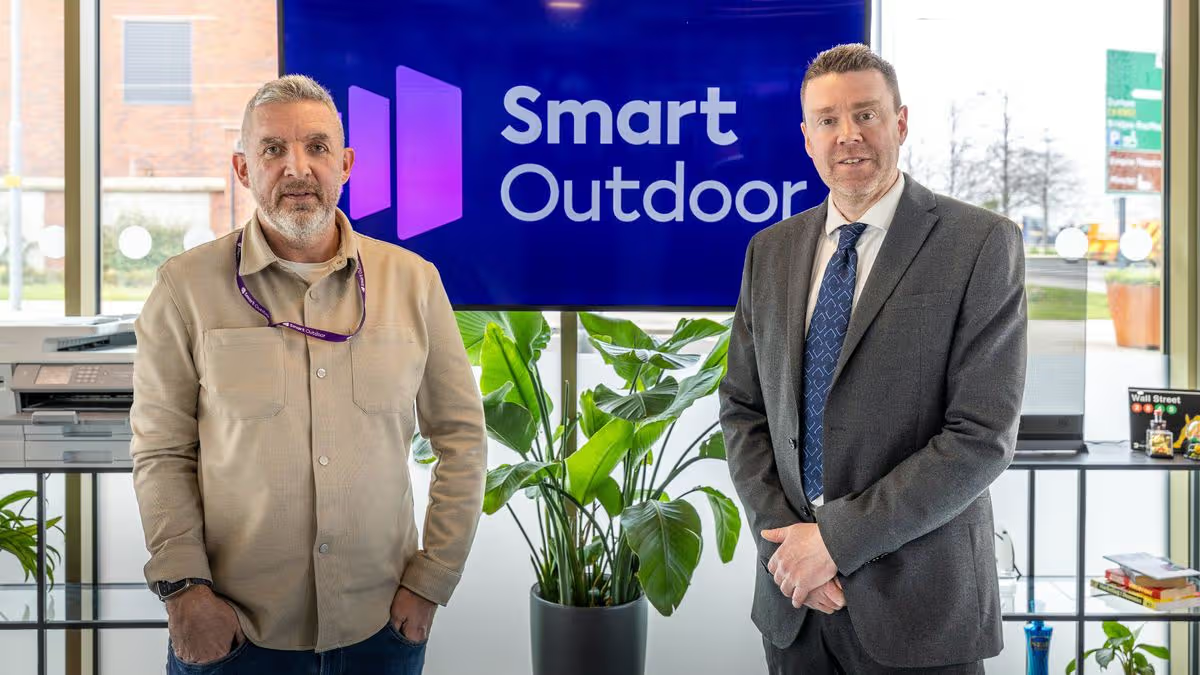
Mark Catterall, founder and chief executive of Smart Outdoor, with Coun Kevin Johnston.

Mark Catterall, founder and chief executive of Smart Outdoor, with Coun Kevin Johnston.(Image: CREO COMMS)

A growing outdoor media business is set for expansion after setting up new North East headquarters. Smart Outdoor is one of the UK’s fastest growing digital outdoor advertising specialists, having secured significant investment in 2024.

The business has now relocated to a new 2,300 sq ft office at The Yard at Riverside Sunderland in the city centre, giving it ample room to grow its team.

The moves comes after Smart Media, which was established in 2019, sealed a seven-figure deal in July 2024 for a minority share in the group from M Core Ventures, part of M Core. At the time, the group had 27 members of staff and a digital estate comprising 450 screens across the UK in locations such as the Tyne Tunnel, Tyne Bridge, A19 and Murrayfield stadium.

The firm has since grown its network of live screens to more than 1,100 covering over 190 towns and cities, from Edinburgh to London. The firm will employ 50 people out of its Sunderland office, cementing the city as the company’s home.

Advertisement

Mark Catterall, founder and chief executive of Smart Outdoor, said: “We’re an ambitious, growing company and moving to this modern, new office will help us continue on our journey. It will be more than a workplace, it will be a hub where our team can collaborate, create, innovate and deliver for our clients.

“We’re also a company that has long been based in Sunderland, with the North East historically being our heartland, and this move is testament to how great this area is to do business.”

Last year Smart Outdoor began a new partnership with Shell, bringing 91 digital forecourt locations into its network. The deal proved to be a major step in increasing the firm’s footprint further south, giving advertisers access to high-frequency, roadside environments across the UK.

Mr Catterall said: “We had a great 2025 and the partnership with Shell was a big part of that, it’s a first-of-its-kind agreement, allowing us to roll out hundreds of screens at dozens of selected forecourts nationwide. We’re a company that is always looking ahead whether it’s our office space, partnerships or tech, we’re continuously looking to innovate how we help brands connect with audiences.”

Advertisement

Smart Outdoor has been supported since setting up in the city by the Business Investment Team at Sunderland City Council, who assisted the company with their property search.

Coun Kevin Johnston, portfolio holder for housing, regeneration and business at Sunderland City Council, said: “Smart Outdoor are a real Sunderland success story, a company that is having a huge impact on its sector nationally, all from its base in the city. “It is great that the firm has reiterated its confidence in and commitment to the city by investing in this new city centre head office and I’m sure it will be a great platform to allow them to continue to grow and be successful.”

The Yard provides office space in the heart of urban regeneration project Riverside Sunderland, which was developed by The Hanro Group.

Gagan Jagpal, head of portfolio at The Hanro Group, said: “We’re delighted that Smart Outdoor has chosen The Yard as the location to realise its ambitious growth plans, joining the other professional services businesses already based in the building.”


Advertisement

Like this story? For more news from the commercial property scene around the regions, visit our dedicated section here for the latest news and analysis within the sector.

Continue Reading
Click to comment

You must be logged in to post a comment Login

Leave a Reply

Business

1ST Airport Taxis Data Reveals Sharp Shift in Global Travel Patterns Amid Middle East Disruption

Published

on

1ST Airport Taxis Data Reveals Sharp Shift in Global Travel Patterns Amid Middle East Disruption

New internal data released by UK-Based Mobility Services Provider 1ST Airport Taxis indicates a significant and immediate shift in global travel behaviour, as escalating tensions across the Middle East continue to disrupt international aviation networks.

Drawing on live booking data, flight monitoring systems, and operational tracking across major UK airports and UAE routes, the company reports that global travel disruption is now cascading beyond airlines into the wider mobility ecosystem.

Real-Time Data Shows Surge in Flight Volatility

According to 1ST Airport Taxis’ internal monitoring systems, the period between late February and mid-March has seen a measurable increase in flight unpredictability:

  • Up to 32% increase in flight time deviations (difference between scheduled and actual arrivals)
  • 27% rise in last-minute arrival changes within 3 hours of landing
  • 19% increase in delayed international arrivals on Middle East-linked routes

This data is based on thousands of airport transfers tracked across Heathrow, Gatwick, Luton, and Stansted, alongside UAE-linked journeys.

“What we are seeing is not just delays — it’s systemic volatility,” said Aadil Hussain, spokesperson for 1ST Airport Taxis. “Flight schedules are becoming fluid, and that has a direct impact on the entire travel chain.”

UK–Middle East Corridor Showing Early Signs of Structural Change


Advertisement

The company’s data highlights that routes connected to key Middle Eastern hubs — particularly Dubai and Abu Dhabi — are showing early-stage behavioural shifts:

  • Increased clustering of arrivals outside standard peak windows
  • Greater spread in landing times for long-haul flights
  • Higher dependency on rerouted flight paths

Internally, 1ST Airport Taxis reports that journey coordination complexity has increased by over 35%, as systems adapt to continuously changing flight data.

Booking Behaviour Reflects Uncertainty

Beyond operational metrics, customer booking patterns are also shifting:

  • 22% increase in short-notice bookings (within 12 hours of travel)
  • 18% drop in advance bookings for Middle East routes
  • Increased demand for flexible, changeable reservations

This suggests travellers are responding directly to uncertainty by delaying final travel decisions and keeping plans adaptable.

Ground Transport Emerging as Critical Stability Layer

While airlines continue to manage airspace constraints and rerouting, the data suggests that ground transport is becoming a key stabilising factor in the travel experience.

1ST Airport Taxis reports:

  • A 41% increase in real-time driver dispatch adjustments
  • Higher reliance on live flight tracking integration
  • Increased operational pressure during irregular arrival patterns

“Passengers still expect certainty when they land, regardless of what happens in the air,” added Aadil Hussain. “Our data shows that ground transport is now absorbing much of that disruption in real time.”

From Airline Disruption to Mobility Ecosystem Impact

What began as an airspace issue is now evolving into a broader infrastructure challenge, affecting:

Advertisement
  • Airport arrival flows
  • Passenger timing patterns
  • Transfer coordination systems
  • Travel planning behaviour

According to 1ST Airport Taxis, this marks a transition from isolated airline disruption to multi-layered system pressure across global mobility networks.

A Data-Driven View of a Changing Industry

With ongoing geopolitical uncertainty, the company believes current patterns indicate:

  • Continued volatility in flight scheduling
  • Increased operational complexity across travel services
  • Shifting passenger behaviour toward flexibility and responsiveness

“This is one of the clearest examples in recent years of how geopolitical events reshape travel instantly,” said Aadil Hussain. “And importantly, the disruption doesn’t stop in the air — it extends across the entire journey.”

Advertisement
Continue Reading

Business

Hybrid work continues to drive demand for virtual desktop infrastructure

Published

on

Hybrid working has become one of the most discussed topics in the post-pandemic world, with more and more companies shifting their focus to this flexible work arrangement.

Some 52% of employees with remote-capable jobs now work in hybrid arrangements, forcing organizations to rethink how they secure access to corporate systems and data.

As employees continue to object to “return to office” mandates, around half of the workforce splits time between remote and on-premises work. From a cybersecurity perspective, this means that the traditional network perimeter is now a thing of the past, as employees connect from home networks, public WiFi, and personal devices.

But all of the “freedom” benefits come at a cost, especially for IT teams. The attack surface is significantly larger with all of the identities, devices, and connections extending beyond what organizations can directly control.

The go-to approach for a long time has been extended network access via a corporate VPN. However, VPNs primarily expand the network perimeter rather than control how users access applications and data, which is a key security limitation.

As a result, some security teams are shifting toward solutions that centralize the environment rather than access, and Virtual Desktop Infrastructure, or VDI, is emerging as a go-to approach.

Advertisement

Why organizations are turning to VDI for hybrid work

Corporate VPNs in hybrid environments are useful, but only to an extent. Once access is granted, security teams still have little visibility into how users interact with applications and data, particularly when it comes to unmanaged or personal devices.

VPN infrastructure itself has become a frequent target for attackers. For example, multiple critical vulnerabilities in Fortinet FortiGate VPN devices have allowed attackers to bypass authentication and gain direct access to corporate networks, often leading to ransomware and long-term persistence.

VDI addresses this gap by shifting control away from the network layer and toward the application and environment level, which aligns more closely with zero-trust principles.

VDI enables organizations to host desktop environments centrally, usually in the cloud or a data center, while users access them remotely through secure sessions. Instead of running applications locally, users interact with a streamed desktop, with all processing and data storage handled within controlled infrastructure.

Advertisement

VDI is gaining traction among organizations managing hybrid environments, largely due to its impact on security and operational efficiency.

Mainly, this model simplifies security and management. Data and applications never leave the centralized environment, so the risk of data leakage shrinks significantly. At the same time, IT teams gain greater visibility and control over user activity, access, and configurations.

All applications and configurations come pre-configured, so users have everything they need from the moment they log in.

The implications for BYOD and unmanaged devices

One of the greatest challenges IT teams face is managing the risks from BYOD devices. It’s difficult to enforce strict controls on personal devices, so usually teams only have visibility at the application or web level, while activity on the device itself, such as downloads, browsing behavior, or potential malware infections, remains largely outside their control.

Advertisement

This is a major blind spot. If an attacker gets access to the device itself, they can access corporate resources through legitimate sessions, making detection impossible before any damage is done.

VDI is a compelling solution here, because it decouples access from the endpoint itself. Users connect to a secure environment, often through a browser, where all applications and data reside. The endpoint acts only as a display layer, meaning it never directly interacts with internal systems or stores sensitive information.

For organizations in regulated industries, where strict control over data and access is essential, VDI provides a practical way to support BYOD without compromising on security.

Budget pressures are accelerating adoption

Cost considerations are another factor driving VDI demand. Endpoint hardware is expensive to buy, maintain, and replace. Even in BYOD scenarios, organizations still incur indirect costs like supporting a wide range of devices, troubleshooting issues, and managing inconsistent environments. In fully managed setups, the burden is even greater, with ongoing cycles of upgrades, repairs, and replacements.

Advertisement

The VDI model is a lot more straightforward. There is no need to invest heavily in endpoint hardware, as everything is hosted on the cloud, with payments based on actual usage. The upfront costs are much lower, with greater flexibility to scale costs in line with workforce needs.

There are also meaningful indirect savings. IT teams can do more with less time, as they no longer need to provision, patch, or troubleshoot device-related issues. The result is a leaner IT operation with lower overhead and more predictable long-term costs.

In the office, virtually

Hybrid work is not an outlier, but an expectation in modern environments. As a result, the way organizations approach access, security, and infrastructure must evolve to meet this reality. Technologies like VPNs still have a role to play, but they are no longer sufficient on their own.

VDI represents a more controlled and forward-looking model. By centralizing environments and reducing reliance on endpoint trust, it allows organizations to support flexible work without expanding risk at the same pace.

Advertisement

Continue Reading

Business

Banking giant HSBC considers job reductions due to AI, report suggests

Published

on

Banking giant HSBC considers job reductions due to AI, report suggests

Global banking giant HSBC Holdings Plc is considering significant job reductions in the years ahead, as CEO Georges Elhedery bets on artificial intelligence to downsize middle and back offices, Bloomberg reported.

The greatest impact is anticipated to be seen among non-client-facing positions in global service centers, but the evaluation is only in an early stage, according to individuals familiar with the issue, the outlet reported. The moves could impact about 20,000 roles, or around 10% of the organization’s full workforce, one of the individuals reportedly said.

Advertisement

The deliberations began prior to the eruption of war in the Middle East, and a final decision has not been made, some of the individuals said, according to the report.

META EYES MASSIVE 20% WORKFORCE CUT AS AI INFRASTRUCTURE COSTS CONTINUE TO SOAR ACROSS OPERATIONS: REPORT

HSBC CEO Georges Elhedery

Georges Elhedery, chief executive officer of HSBC Holdings Plc, in Hong Kong, China, on Thursday, Oct. 9, 2025.  (Paul Yeung/Bloomberg via Getty Images / Getty Images)

The assessment includes positions where the company will not replace workers, some of the individuals noted, but no final decision has been determined. 

Some downsizing may occur due to business sales or exits, according to one of the sources, Bloomberg reported.

Advertisement

The company’s job reductions would occur as part of a medium-term plan covering three to five years, one of the individuals familiar with the matter said, the outlet noted.

GOOGLE COMMITS $1B TO NORTH CAROLINA DATA CENTERS AS AI DEMAND SURGES

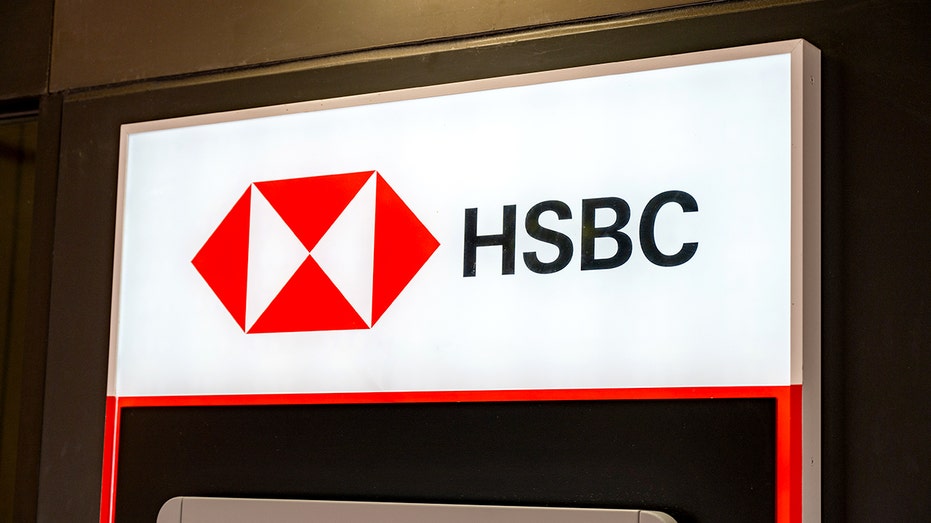
HSBC sign

Illuminated HSBC bank sign above an automated teller machine, San Francisco, California, May 20, 2025.  (Smith Collection/Gado/Getty Images / Getty Images)

HSBC declined to provide Fox News Digital with a comment about the Bloomberg report.

But HSBC, which indicates on its website that it “is one of the world’s largest banking and financial services organisations,” has been open about embracing AI.

Advertisement

WHITE HOUSE UNVEILS ITS FIRST NATIONAL AI FRAMEWORK, PUSHES CONGRESS TO ACT ‘THIS YEAR’

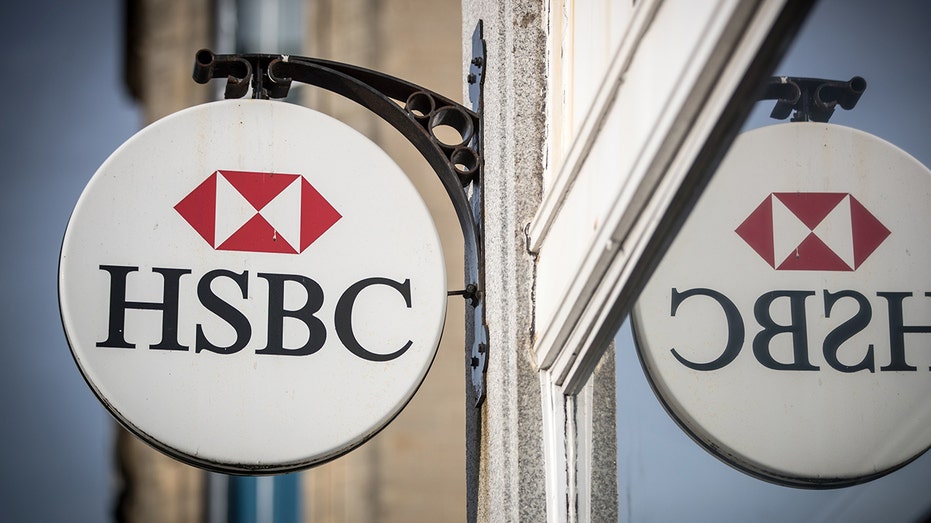
HSBC sign

The HSBC logo outside a branch of the bank on Jan. 24, 2017, in Bristol, England. (Matt Cardy/Getty Images / Getty Images)

CLICK HERE TO GET FOX BUSINESS ON THE GO

“In 2025, we accelerated the adoption of Generative AI (‘GenAI’) across HSBC, moving from experimentation to scaled delivery,” the company’s Annual Report and Accounts 2025 noted. “Through 2026, we intend to expand enterprise-wide adoption of AI tools and strive to embed AI deeper into our core processes.”

Advertisement
Continue Reading

Business

Restaurant Brands Intl officer Housman sells $1.46m in shares

Published

on


Restaurant Brands Intl officer Housman sells $1.46m in shares

Continue Reading

Business

HHIS:CA: A Proxy Exposure To Single Stock ETFs Is On A Hold For Now(TSX:HHIS:CA)

Published

on

HHIS:CA: A Proxy Exposure To Single Stock ETFs Is On A Hold For Now(TSX:HHIS:CA)

This article was written by

I have been managing investments for over eight years in capital markets. By qualification I am a CFA Charter holder. I primarily look for discrepancies between the price and value of a security. With a focus on first-principal mindset, I try breaking down ideas into their core- most tangible parts, affecting the theses while deliberately avoiding the non-significant matter into crowding the analysis. If you like my ideas or frameworks, reach out via email/message for more granular and concentrated- portfolio level specific investment researches and ideas. I am at prakhar@shrihittruealphacapital.com.

Analyst’s Disclosure: I/we have no stock, option or similar derivative position in any of the companies mentioned, and no plans to initiate any such positions within the next 72 hours. I wrote this article myself, and it expresses my own opinions. I am not receiving compensation for it (other than from Seeking Alpha). I have no business relationship with any company whose stock is mentioned in this article.

Readers are advised to fact-check thoroughly before making any investment related decisions; this reflects the personal views of the author and should not be pursued as formal financial or investment advice in any manner. While every effort has been made to ensure accuracy, errors may exist in the data and financial projections presented. The author is not responsible for any financial gains or losses incurred from investments made based on this content. For any additional information regarding the company or any clarification, feel free to comment. Happy to discuss anything further with regard to the presented investment thesis.

Advertisement

Seeking Alpha’s Disclosure: Past performance is no guarantee of future results. No recommendation or advice is being given as to whether any investment is suitable for a particular investor. Any views or opinions expressed above may not reflect those of Seeking Alpha as a whole. Seeking Alpha is not a licensed securities dealer, broker or US investment adviser or investment bank. Our analysts are third party authors that include both professional investors and individual investors who may not be licensed or certified by any institute or regulatory body.

Continue Reading

Business

Which Flagship Delivers Superior AI Features in 2026?

Published

on

Samsung Galaxy S26 Ultra

As smartphone buyers weigh the latest flagships, the Samsung Galaxy S26 Ultra and Apple iPhone 17 Pro Max stand out for their advanced AI capabilities. Released in February 2026 and September 2025 respectively, both devices position artificial intelligence as a core selling point, but they take markedly different approaches.

Samsung Galaxy S26 Ultra

Samsung’s third-generation Galaxy AI emphasizes proactive, contextual assistance and seamless integration across tasks, while Apple’s Apple Intelligence prioritizes on-device privacy, system-wide enhancements and gradual rollouts. Early reviews and head-to-head comparisons from outlets like Tom’s Guide, PhoneArena and YouTube creators suggest Samsung currently holds the edge in AI depth and usefulness, though Apple excels in privacy-focused execution.

The Galaxy S26 Ultra, unveiled at Galaxy Unpacked in late February 2026, runs on a customized Snapdragon 8 Elite Gen 5 chipset with a 39% NPU boost for always-on AI. Key features include Now Nudge, an agentic tool that analyzes screen context — such as incoming messages about plans — and surfaces suggestions like calendar checks or direct Gallery access without app switching. Now Brief delivers personalized daily summaries, while Call Screening uses AI to handle unknown calls with transcription and spam filtering.

Photo editing shines with Photo Assist, allowing natural language prompts to add, remove or modify elements in images. Creative Studio generates visuals, and enhanced Bixby integrates with Gemini and Perplexity for broader queries. Additional tools cover Live Translate for calls, Writing Assist for tone adjustments and Audio Eraser for video sound cleanup. Samsung touts these as “intuitive” and background-operated, reducing user effort while supporting multitasking without lag.

Privacy remains a focus via the world’s first built-in Privacy Display, which limits viewing angles to prevent shoulder surfing, alongside Knox Vault security and user-controlled AI toggles for on-device or cloud processing.

Advertisement

In contrast, the iPhone 17 Pro Max, powered by the A19 Pro chip with expanded Neural Engine capabilities and 12GB RAM on Pro models, runs Apple Intelligence on iOS 26. Features include Writing Tools for rewriting, proofreading and summarizing text across apps; Image Playground and Genmoji for custom emoji and image creation; smarter Siri with better context awareness; and Live Translation in Messages, FaceTime and Phone.

Iphone 17 Pro Max

Visual intelligence lets users query on-screen content, while notification summaries and Clean Up in Photos remove distractions. Apple stresses on-device processing for privacy, with Private Cloud Compute for heavier tasks. Recent updates added Live Translation and visual enhancements, but core promises like a fully revamped Siri remain in progress, with some users reporting Gemini integration via partnerships for boosted capabilities.

Comparisons highlight Samsung’s lead in practical, everyday utility. Tom’s Guide notes the Galaxy S26 Ultra “runs circles around” the iPhone 17 Pro Max in AI, citing Now Nudge as more proactive than Apple’s offerings. YouTube breakdowns praise Galaxy AI’s photo editing superiority and agentic features, while calling Apple Intelligence “still terrible” or “behind” in assistant responsiveness. Samsung’s multimodal integration — combining Bixby, Gemini and on-device tools — provides more options, though Apple’s ecosystem lock-in delivers smoother cross-app experiences for iOS users.

Privacy and security differ sharply. Apple’s on-device-first philosophy minimizes data sharing, appealing to those wary of cloud reliance. Samsung counters with hardware like Privacy Display and granular controls, but some features lean on cloud processing for peak performance.

Battery and thermal management support sustained AI use. The Galaxy S26 Ultra’s redesigned vapor chamber handles intensive tasks without throttling, while the iPhone 17 Pro Max’s improved cooling (including vapor chamber on Max models) sustains performance during AI-heavy workloads.

Advertisement

User feedback varies by ecosystem. Android enthusiasts appreciate Galaxy AI’s flexibility and rapid iteration — Samsung promises seven years of updates — while iPhone loyalists value Apple’s polished, privacy-centric integration. Both platforms continue evolving; Apple plans more Apple Intelligence expansions, potentially closing the gap.

Ultimately, the Galaxy S26 Ultra edges ahead for AI feature richness and proactive assistance in 2026. Its agentic tools, superior photo AI and contextual nudges make daily tasks feel more effortless for power users. The iPhone 17 Pro Max counters with elegant, secure implementation ideal for those in the Apple ecosystem, but lags in breadth and immediacy.

As AI becomes central to smartphones, the choice hinges on priorities: Samsung’s bold, feature-packed approach or Apple’s measured, privacy-first strategy. For now, if raw AI capability drives the decision, the Galaxy S26 Ultra stands as the stronger contender.

Advertisement
Continue Reading

Business

Frigidaire gas range recall affects over 174,000 units sold at major retailers

Published

on

Frigidaire gas range recall affects over 174,000 units sold at major retailers

Electrolux Group is recalling more than 174,000 Frigidaire gas ranges due to an oven-related issue that poses a burn hazard to users.

The recall affects about 169,500 units sold in the U.S. and 5,300 in Canada, according to the Consumer Product Safety Commission. 

Advertisement

The agency said the ovens in the ranges can experience delayed ignition of the bake burner, which poses a risk of burn hazards to users.

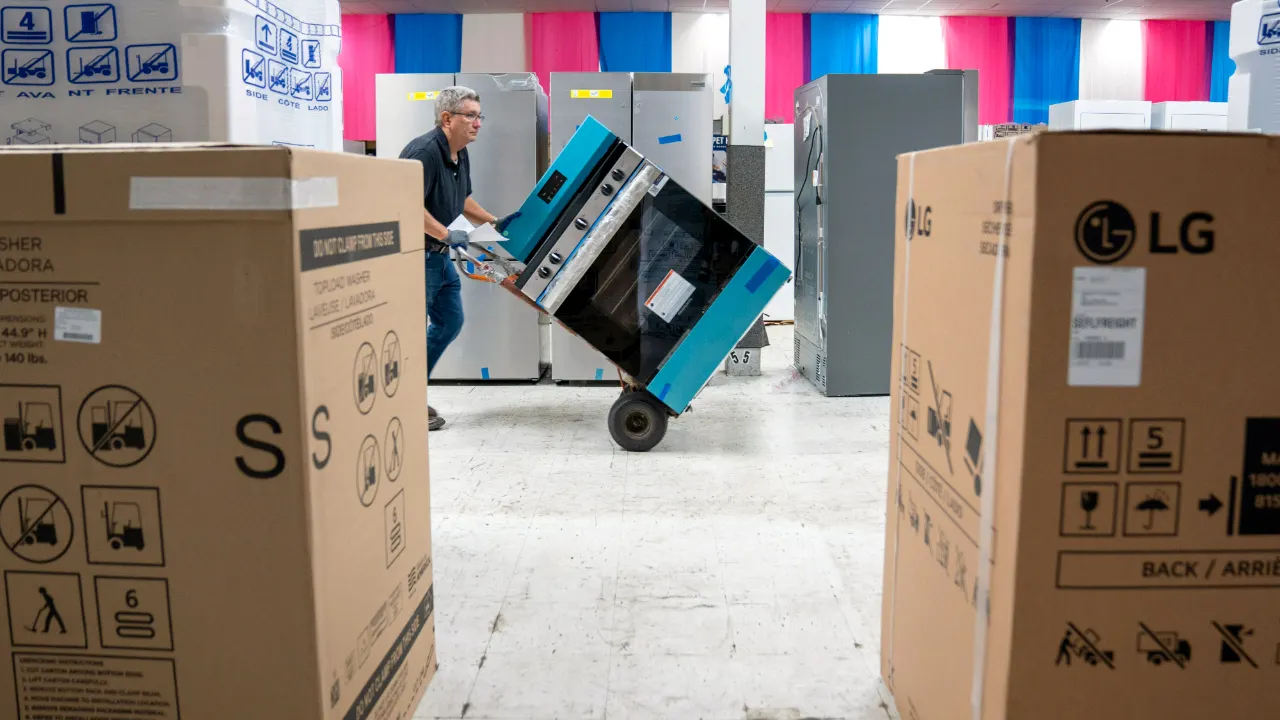
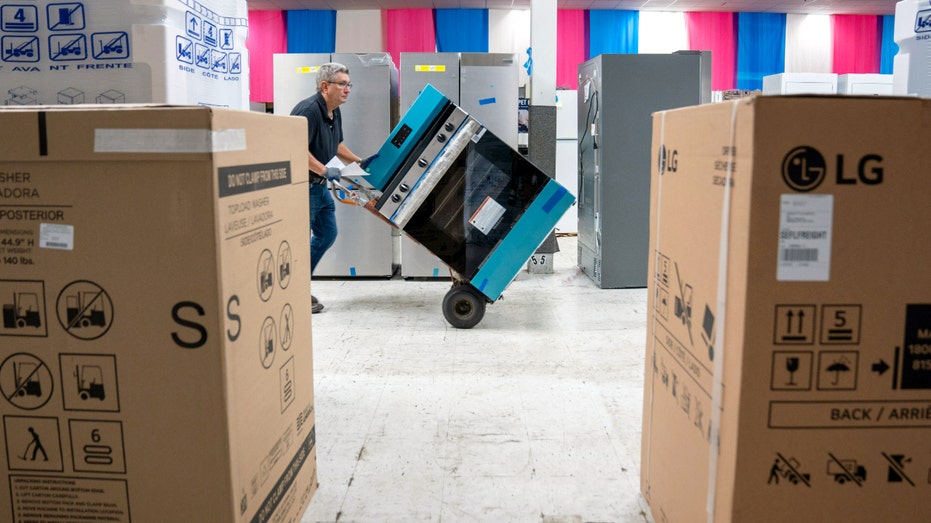
A worker pushes an oven in a store.

The recall affects about 169,500 units sold in the U.S. (Nick Oxford/Bloomberg via Getty Images)

90,000 BOTTLES OF CHILDREN’S IBUPROFEN RECALLED NATIONWIDE, FDA SAYS

The recall involves Frigidaire, Frigidaire Gallery and Frigidaire Professional gas ranges models:

  • FCFG3083AS
  • FCRG3083AD
  • FCRG3083AS
  • GCFG3060BD
  • GCFG3060BF
  • GCFG3070BF
  • GCRG3060BD
  • GCRG3060BF
  • PCFG3080AF
Ticker Security Last Change Change %
ELUXY ELECTROLUX AB 12.781 -0.48 -3.61%
  • FCFG3062AB
  • FCFG3062AS
  • FCFG3062AW
  • FCRG3051BB
  • FCRG3051BS
  • FCRG3051BW
  • FCRG3052BB
  • FCRG3052BS
  • FCRG3052BW
  • FCRG3062AB
  • FCRG3062AS
  • FCRG3062AW
  • FCRG306LAF
  • GCFG3059BF

The models have the serial number range of VF52200000 through VF54399999. Both numbers are printed on a nameplate located in the drawer beneath the oven.

The CPSC said consumers should stop using the recalled ranges immediately and contact Electrolux, which will provide in-home installation of a new bake burner for free. The agency said consumers can still use the cooktop burners on the range.

Advertisement

CHOCOLATE CANDY SOLD AT LIDL RECALLED OVER UNDECLARED HAZELNUT ALLERGEN

The Frigidaire logo.

Frigidaire HVAC equipment in Sonoma County, Calif., May 5, 2024. (Smith Collection/Gado/Getty Images)

Electrolux and the CPSC are aware of 62 reports of the oven’s bake burner delayed ignition, including 30 reports of burn injuries.

Ticker Security Last Change Change %
LOW LOWE’S COMPANIES INC. 224.63 -5.08 -2.21%
HD THE HOME DEPOT INC. 320.75 -7.46 -2.27%

The ranges were sold at Lowe’s, Home Depot and other retailers nationwide, as well as through Frigidaire’s website from June 2025 through January 2026 for between $630 and $2,700.

 CLICK HERE TO GET FOX BUSINESS ON THE GO

Advertisement
Continue Reading

Business

High-protein trend strengthens dairy market

Published

on

High-protein trend strengthens dairy market

Cobank report highlights how rising protein demand is strengthening dairy markets and milk utilization.

Continue Reading

Business

Gingrich says Europe must do its fair share amid US global conflict

Published

on

Gingrich says Europe must do its fair share amid US global conflict

European tensions are resurfacing as questions grow over burden sharing in global conflicts, and former House Speaker Newt Gingrich argued long-standing imbalances between the U.S. and its allies are becoming harder to ignore.

Fox News contributor Newt Gingrich joined FOX Business’ Stuart Varney on “Varney & Co.” to discuss the widening divide between the United States and Europe as the conflict in the Middle East continues to test international alliances.

Advertisement

Gingrich pointed to what he described as a fundamental disconnect in expectations, saying Europe has grown reliant on American leadership for decades.

“The fact that we protected Europe from having liberated it after World War II. We protected it all through the Cold War. We are still the primary protectors of Europe. They need to learn to do their fair share,” Gingrich said.

KEVIN O’LEARY FORECASTS GLOBAL POWER SHIFT IN STRAIT OF HORMUZ AS IRAN CONFLICT RATTLES OIL MARKETS

Advertisement

As pressure builds around key global shipping routes, including the Strait of Hormuz, Gingrich suggested the burden of maintaining stability continues to fall largely on the U.S.

“It may take a substantial campaign, but I think in two or three weeks, if we focus on it, we can break the back of the Iranian effort to close the Strait,” Gingrich said.

He framed the issue as part of a broader philosophical divide, arguing that the U.S. is focused on innovation and forward momentum, while Europe leans more heavily on regulation.

Advertisement
U.S. military on a missile destroyer

Members of the U.S. military on a missile destroyer during Operation Epic Fury (U.S. Navy via Getty Images / Getty Images)

“We think you’re going to get to the future by innovation. They think you can hide from the future by regulation. It doesn’t work,” Gingrich said.

Despite calls for stronger allied coordination, Gingrich suggested Europe’s military limitations mean its role would likely remain secondary.

CHINESE MISSILES TARGETING US NAVY COULD TRIGGER ‘OVERNIGHT’ WAR SHIFT, EXPERT WARNS

“It would be nice if they would help a little bit. It would make people feel better if they would help a little bit,” he said.

Advertisement

Still, he emphasized that the outcome of ongoing conflicts will ultimately hinge on U.S. and allied strength, not symbolic contributions.

“In the end, it’s the American-Israeli coalition, which is gonna win this fight. … Having one ship from France or one ship from Britain is not a very big contribution. … The truth is, if you look at the British Navy right now, it is so underfunded, they can’t do very much. They just don’t have the capacity,” Gingrich concluded.

GET FOX BUSINESS ON THE GO BY CLICKING HERE

Advertisement
Continue Reading

Business

How to build an effective employee phishing training program in 2026

Published

on

One of the most successful digital tools available to companies to attract fresh customers, maintain current relationships, and propel expansion is still email marketing. But success depends on one crucial element: making sure your emails really show up in the inbox of your recipients.

You may not be able to stop every phishing email from reaching employee inboxes, but the right training program can dramatically improve your odds.

Phishing remains the primary entry point in cyber breaches, accounting for around 15% of incidents, according to one recent study. AI is one of the main drivers for this continued growth, allowing cybercriminals to write more realistic and personalized messages and distribute them en masse.

Technical measures like spam filters and DMARC email authentication protocols block many malicious messages, but phishing is ultimately a human issue. Security-conscious organizations are increasingly investing in employee phishing training, making it a key driver of stronger security culture and safer behaviour.

So what does it take to build an effective employee phishing training program in 2026?

Focus on behaviour change, not awareness

The ultimate goal of phishing training should not just be to raise awareness. The goal is to actually reduce security risk. Most people understand what phishing is, but that knowledge doesn’t necessarily translate into the right decisions when a convincing email hits their inboxes.

Advertisement

While helpful, completion rates or quiz scores should not be the main benchmark for how effective a phishing training program is. The focus must shift toward increasing reporting rates.

To improve outcomes, the type of training matters most. Presentation-style sessions are okay for building awareness, but building better habits requires employees to go through actual phishing simulations and realistic scenarios that mirror the attacks they may encounter in their daily work.

Conduct training continuously

The frequency of training is also a key factor. Phishing threats evolve constantly, so a training program that runs once a year will quickly become outdated. Organizations should instead adopt a continuous approach to phishing education.

Short, regular training modules and periodic phishing simulations help reinforce secure behaviour over time while keeping employees familiar with the latest phishing techniques. Such ongoing exposure helps build instinctive responses, such as pausing before clicking a link or verifying unusual requests.

Advertisement

Continuous training also allows organizations to gradually increase the realism and difficulty of phishing simulations. As employees improve, training can introduce more sophisticated scenarios that better reflect modern attacks.

Role-based and contextual training

Not all employees face the same phishing risks. While generic phishing campaigns do exist and are quite common, most successful attacks are personalized and tailored to the target’s role, responsibilities, or access within the organization.

Finance teams, for example, may encounter invoice scams, while HR may receive phishing emails disguised as job applications or employee document requests. Executives and senior leaders are frequent targets of spear-phishing and business email compromise (BEC) attacks that impersonate trusted partners or internal staff.

Modern training platforms are increasingly using AI to generate realistic phishing scenarios at scale. Organizations can create a variety of training emails that closely mimic real-world attacks, specific to different roles, departments, and risk profiles.

Advertisement

Strong reporting culture

In the majority of workplaces, reporting phishing attempts is often not something employees think about. Even if they detect a phish and rightfully disengage, they often just delete the email and move on without alerting the security team.

To fix that, reporting should be made as easy as possible, ideally through one-click reporting buttons integrated directly into the email client. A strong reporting culture also hinges on the way organizations respond when there are incidents. If employees fear being blamed or disciplined for clicking a malicious link, they may hesitate to report incidents, which can delay detection and response.

A good approach is to treat mistakes as learning opportunities, and for security teams to use those incidents to refine and adjust training materials by focusing on employee weak points.

Track effectiveness over time

It’s difficult to determine whether a phishing training program is working without metrics. Organizations should track key indicators such as phishing reporting rates, reporting speed, and click rates during phishing simulations.

Advertisement

These metrics provide valuable insight into how employees are responding to potential threats. If these metrics are getting better with time, it’s a good sign that the training program is heading in the right direction.

Tracking performance over time also helps identify repeat offenders or employees who may require additional guidance. The same can be applied to entire departments. Some departments may have significantly higher click rates during simulations, which is a solid indicator that improvements to the training material for that specific group are necessary.

Conclusion

Phishing will likely remain one of the main threats organizations have to deal with throughout 2026 and beyond. The human factor is the ultimate target for attackers, and it’s a critical defence organizations have to strengthen.

By building a phishing training program that focuses on realism and improving employee behaviour, organizations can turn the human factor into their strongest asset contributing to a resilient security culture.

Advertisement

Continue Reading

Trending

Copyright © 2025