




Connect with us
DAPA Banner

Tech

OpenAI Plans to Combine Its AI Tools in a Desktop ‘Superapp’

Published

on

OpenAI is working toward creating a desktop “superapp” that will consist of its three tools: ChatGPT, the coding platform Codex and the Atlas browser, according to a report by The Wall Street Journal. OpenAI executives said the goal behind this new desktop app is to improve the user experience.

AI Atlas

The move comes after the Journal reported earlier this week that OpenAI CEO of applications Fidji Simo told employees the company wanted to focus on its core business instead of side projects.

In a Thursday memo to staff reported by the Journal, Simo, who leads development of the new app, said the company was spreading its “efforts across too many apps and stacks, and that we need to simplify our efforts.”

Advertisement

ChatGPT is the signature chatbot from OpenAI, Codex is a coding platform designed for software developers, and Atlas is the AI-first browser from the company, which acts like a traditional internet browser, but with ChatGPT as an assistant.

(Disclosure: Ziff Davis, parent company of CNET, in 2025 filed a lawsuit against OpenAI, alleging it infringed Ziff Davis copyrights in training and operating its AI systems.)

By creating a single app, OpenAI hopes to better compete with rivals like Anthropic. Responding to the Journal report in a post on X, Simo said the move is intended to build on the recent success of Codex, a competitor to Anthropic’s Claude Code.

“Companies go through phases of exploration and phases of refocus; both are critical,” Simo said. “But when new bets start to work, like we’re seeing now with Codex, it’s very important to double down on them and avoid distractions. Really glad we’re seizing this moment.”

Advertisement

A representative for OpenAI did not immediately respond to a request for comment.

Earlier this week, OpenAI announced its new GPT-5.4 mini and nano, smaller and faster versions of its ChatGPT 5.4 model. These coding models also highlight the company’s focus on supporting coders and enterprises instead of dabbling in various projects.

Source link

Advertisement
Continue Reading
Click to comment

You must be logged in to post a comment Login

Leave a Reply

Tech

Mac gaming is better than ever, and it still sucks

Published

on

The state of Mac gaming does Apple’s incredible chips and stunning displays a disservice. As it has always been, there’s little to suggest Apple knows how, or even wants, to fix it.

Silver MacBook with Apple logo sits on a gray desk mat, flanked by a black rectangular device on the left and glossy black VR headset on the right.
The M5 Max MacBook Pro should be the ultimate gaming laptop, but it isn’t

The new M5 Max MacBook Pro might be Apple’s fastest-ever Mac. It’s still a terrible buy for anyone serious about gaming.
In truth, the 16-inch MacBook Pro should be a beast of a gaming laptop. It has a glorious, huge, bright, and colorful display and a massive battery.
Continue Reading on AppleInsider | Discuss on our Forums

Source link

Continue Reading

Tech

What is DLSS 5? Nvidia’s controversial AI update explained

Published

on

Nvidia saw a busy few days during its global GTC event hosted in San Jose.

Alongside the launch of NemoClaw, Nvidia unveiled DLSS 5 which the company has hailed as its “most significant breakthrough in computer graphics” since real-time ray tracing. Although it might sound interesting, DLSS 5 has been met with significant backlash and criticism.

We explain everything you need to know about Nvidia DLSS 5, including what it really is and how it will affect video games. We’ll also explain why there’s been such backlash and why gamers and developers alike are not happy with DLSS 5.

What is Nvidia DLSS 5?

Before we dive into the specifics of DLSS 5, we’ll start by reminding you what DLSS actually is. Released back in 2018, DLSS (short for Deep Learning Super Sampling) is an AI-powered technology that upscales resolutions and generates new frames in video games to boost its overall performance. According to Nvidia, it has been integrated into over 750 games and has become the “gold standard for the industry”. 

Advertisement

DLSS has seen various improvements and upgrades over the years, with DLSS 5 being the latest update. 

Advertisement

Nvidia explains that DLSS 5 uses an AI model that is trained end-to-end to understand aspects of complex scenes, including characters, hair and fabric alongside environmental lighting conditions, all by analysing a single frame. DLSS 5 will then generate visually precise images while retaining the structure and semantics of the original scene – all in real time at up to 4K resolution, so you shouldn’t notice any interruptions during gameplay.

But what does this mean for game developers? Nvidia says that DLSS 5 provides developers with “detailed controls” so they can determine where and how enhancements are applied to maintain each game’s aesthetic. At the time of writing, DLSS 5 will be supported by the likes of Bethesda, Ubisoft, Warner Bros Games and more. 

When is DLSS 5 coming out?

At the time of writing, Nvidia has only stated that DLSS 5 will arrive “this fall” and is yet to provide a concrete release date.

Advertisement

We do know a handful of titles that will support DLSS 5, including AION 2, Assassin’s Creed Shadows, Black State, CINDER CITY, Delta Force, Hogwarts Legacy, Justice, NARAKA: BLADEPOINT, NTE: Neverness to Everness, Phantom Blade Zero, Resident Evil Requiem, Sea of Remnants, Starfield, The Elder Scrolls IV: Oblivion Remastered, Where Winds Meet and more.

Advertisement

Nvidia also provided several examples of DLSS 5 in the likes of Resident Evil Requiem, EA SPORTS FC, Starfield and Hogwarts Legacy throughout the GTC.

Advertisement

What is the DLSS 5 controversy?

You’ll likely have seen some of the online backlash surrounding Nvidia’s DLSS 5 announcement, with disgruntled gamers taking to the likes of X and Reddit to declare the technology as nothing more than “AI slop”. However, there is more to their frustrations than that.

Game developers and artists have voiced concerns that DLSS 5 not only seems to make games look worse, but that they’ll lose artistic control over the game’s design. In addition, gamers have explained that they prefer a more nuanced game design, rather than one that feels smooth and less thought through.

Many also took to the comments section on Nvidia’s YouTube announcement to voice their unhappiness at DLSS 5. Nvidia has attempted to put minds at ease, which can be seen through the pinned comment on the video. In this comment, Nvidia explains that “game developers have full, detailed artistic control over DLSS 5’s effects to ensure they maintain their game’s unique aesthetic.”

The comment continues by explaining DLSS 5 is “not a filter” and instead “inputs the game’s color and motion vectors for each frame into the model, anchoring the output in the source 3D content.”

Advertisement

Advertisement

Not only that, but in a recent interview with Tom’s Hardware, Jensen Huang stated that those voicing anger are simply “completely wrong”. Huang concludes that DLSS 5 is “very different than generative AI; it’s content-control generative AI” and that developers will still retain control of the game and can “fine-tune the generative AI” to make it match the style of the game. 

In fact, some video game powerhouses have voiced their praise for DLSS 5. For example, Todd Howard, Studio Head and Executive Producer at Bethesda Game Studios stated in Nvidia’s press release that “with DLSS 5, the artistic style and detail shine through without being held back by the traditional limits of real-time rendering.”

Advertisement

In addition, Charlie Guillemot, co-CEO of Vantage Studios said the way DLSS 5 “renders lighting, materials and characters changes what we can promise to players. On Assassin’s Creed Shadows, it’s letting us build the kind of worlds we’ve always wanted to.”

Source link

Advertisement
Continue Reading

Tech

‘A Rigged and Dangerous Product’: The Wildest Week for Prediction Markets Yet

Published

on

Kalshi CEO Tarek Mansour posted a video on Wednesday of six men decked out in business casual doing push-ups on the sidewalk. “This is how Kalshi Q1 board meeting ended,” he wrote on X. The board members are laughing and smiling in the video after their impromptu cardio session, and the mood is jubilant. The next day, it became clear that the team had ample reason to celebrate: Kalshi had just raised $1 billion at a $22 billion valuation, making the company worth on paper roughly double what it was only a few months ago.

The funding round represented a bright spot during one of the most turbulent weeks for the prediction market industry yet. In just the past five days, Nevada temporarily banned Kalshi by issuing a temporary restraining order and Arizona filed criminal charges accusing it of running an illegal gambling business; an Israeli reporter said that he received an avalanche of threats from Polymarket traders furious about how a story he wrote impacted their wagers; Polymarket scored a major deal with Major League Baseball, further entrenching itself in the world of professional sports; and US Senators introduced legislation to ban specific types of markets offered by the industry, including any involving “government actions, terrorism, war, assassination, and events where an individual knows or controls the outcome.” It is the latest in a series of bills intended to place guardrails around the prediction industry.

Senator Chris Murphy, a cosponsor of the bill and one of the industry’s most outspoken critics, said in an interview with WIRED that prediction markets are “a rigged and dangerous product,” and represent “a brand-new source of mind-bending corruption.”

“Kalshi already bans insider trading and markets directly tied to death and war,” says Kalshi spokesperson Elisabeth Diana. “As a US-based exchange, we support regulators and policymakers from both sides of the aisle in their efforts to keep these markets safe and responsible in America.” Polymarket did not return requests for comment.

Advertisement

Existing law gives the Commodity Futures Trading Commission, the agency that oversees prediction markets, the authority to ban offerings related to assassination, war, terrorism, and other subjects deemed contrary to the public interest. Some prediction markets already stay away from these categories. But not all of their users understand where exactly the lines are drawn, which created a messy situation when some assumed that a market on the fate of Iran’s supreme leader would result in a payout if he “left office” by getting killed.

Meanwhile, Polymarket, which largely operates outside of the United States, offers plenty of war markets—but legislation is unlikely to impact these offerings. The platform is currently offering a market on whether Israeli Prime Minister Benjamin Netanyahu will be “out” by certain dates; someone recently wagered $177,000 that he would be out by March 31. Polymarket would likely resolve the market to “yes” and allow its bettors to profit if Netanyahu dies, just as it did when Khamenei was killed.

One of the reasons Senator Murphy is so passionate about prediction markets is because he sees them as vectors for insider trading. The Israeli government, for example, has charged two of its citizens with leaking classified information by placing Polymarket bets tied to the war in Iran. The Connecticut lawmaker suspects that other trades related to the conflict may have been carried out by members of Trump’s inner circle who have advanced knowledge about military operations. “It’s bone chilling to think that there are staffers inside the situation room that are pushing the United States into war, not because it’s good for our security, but because they’re going to make $100,000 off it,” he says.

Source link

Advertisement
Continue Reading

Tech

‘There are many pathways to becoming an excellent engineer’

Published

on

Kevin O’Riordan explains what potential applicants need to know in advance of a career at Acuity.

In September of last year, US industrial technology company Acuity announced plans to create 100 jobs out of its Cork-based facility, which is its new Global Digital Centre of Excellence, located in the city centre. 

As March is when Silicon Republic often focuses on subjects aligned with all things engineering, now seemed like an ideal opportunity to check back in with Acuity and explore what prospective candidates should know if they have plans of developing a career in this field. 

Kevin O’Riordan, the vice-president of technology and site leader at Acuity, explained the organisation has already employed more than 30 engineers and leaders across cloud‑native development, embedded systems, UI engineering and DevOps, however, there are still plenty of opportunities open to jobseekers looking for a new role in Cork.

Advertisement

“We are actively hiring for a wide range of roles, including software engineers (at all levels), software QA and automation, DevOps engineers, architects and technical leads, data and AI engineers and product managers,” he said. “New roles are being added regularly as we scale toward more than 100 software engineering R&D positions over the next three years.”

So how can a potential candidate stand out, as they look towards a new professional opportunity?

Skills and thrills

O’Riordan said Acuity is looking for people who are passionate about technology, with a curious nature who have a penchant for solving real-world problems. Strong collaboration skills are critical and candidates who can demonstrate initiative and a genuine interest in shaping the technology landscape stand out.

He added: “Because our product ecosystem spans multiple technology layers, we hire for a broad range of skills. We’re seeking engineers for a variety of projects with experience in any of embedded, cloud-native or application and UI. Desirable skills, depending on the role, include Python, AI, Azure, embedded C/C++, C#, modern JavaScript and React.

Advertisement

“For early career applicants, qualifications matter, but demonstrated skills, practical experience and personal projects carry significant weight. There are many pathways to becoming an excellent engineer, and we value all of them.”

The might of Munster

With many of Ireland’s key organisations and working hubs located in the capital, O’Riordan noted that the decision to establish Acuity in Cork was a “deliberate, strategic choice”, as Cork offers a “thriving tech hub with the talent, community and momentum to support a highly networked culture”. 

He said: “Our investment reinforces Cork’s growing reputation as a hub for innovation, talent and digital advancement. From day one, we’ve been intentional about integrating into the community, partnering with local organisations, supporting charity initiatives and sourcing materials and suppliers locally where possible.

“We are also contributing to the region’s long‑term talent pipeline through internships, graduate hiring and deep partnerships with local universities. By bringing advanced R&D work to Cork, we’re strengthening the broader tech ecosystem and supporting the city’s continued economic momentum.”

Advertisement

He also noted, perhaps with students attending university in the region in mind, that university partnerships are crucial to shaping the next generation of engineers in Ireland. “Cork’s institutions offer world‑class education, research capabilities and a diverse, motivated talent pipeline.”

For anyone interested in engaging with the organisation via their educational institution, O’Riordan said: “Our work with UCC, MTU and partners like Tyndall National Institute includes internships, course engagement, guest sessions that give students real-world insight, and early‑stage research exploration. These partnerships strengthen both Acuity and the broader ecosystem while ensuring students gain meaningful exposure to industry.”

Don’t miss out on the knowledge you need to succeed. Sign up for the Daily Brief, Silicon Republic’s digest of need-to-know sci-tech news.
Advertisement

Source link

Continue Reading

Tech

IEEE and Academia Are Creating Microcredential Programs

Published

on

The rapid ascent of artificial intelligence and semiconductor manufacturing has created a paradox: Industries are booming yet they face a critical shortage of skilled workers. Demand for data center technicians, fabrication facility workers, and similar positions is growing. There aren’t enough candidates with the right skill sets to fill the in-demand jobs.

Although those technical roles are essential, they don’t always require a four-year degree—which has paved the way for skills-based microcredentials. By partnering with higher education institutions and training providers, industry leaders are helping to design targeted skills programs that quickly turn learners into job-ready technical professionals.

The new standard for skills validation

Because microcredentials are relatively new, consistency is key. Through its credentialing program, IEEE serves as a bridge between academia and industry. Developed and managed by IEEE Educational Activities, the program offers standardized credentials in collaboration with training organizations and universities seeking to provide skills-based qualifications outside formal degree programs. IEEE, as the world’s largest technical professional organization, has more than 30 years of experience offering industry-relevant credentials and expertise in global standardization.

IEEE is setting the benchmark for skills-based microcredentials by establishing a framework that includes assessment methods, qualifications for instructors and assessors, and criteria for skill levels.

Advertisement

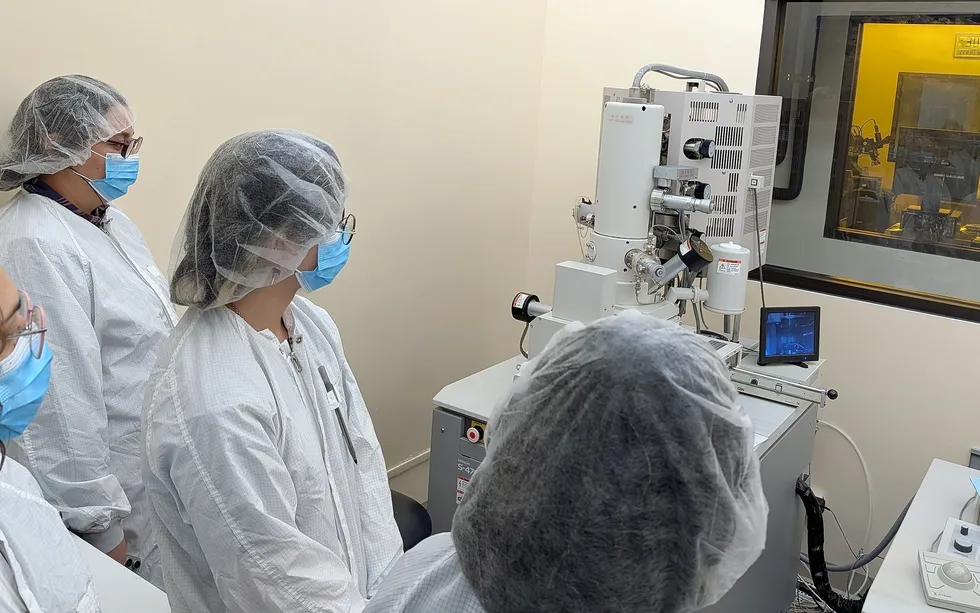
A recent collaboration with the University of Southern California, in Los Angeles, for example, developed microcredentials for USC’s semiconductor cleanroom program. USC heads the CA Dreams microelectronics innovation hub.

“The IEEE framework allows us to rapidly prototype training programs and adapt on the fly in a way that building new university courses—much less degree programs—won’t allow.” —Adam Stieg

IEEE worked with USC to create standardized skills assessments and associated microcredentials so that industry hiring managers can recognize the newly developed skills. The microcredentials help people with or without four-year degrees join the semiconductor industry as cleanroom technicians or as engineers with cleanroom experience.

IEEE also has partnered with the California NanoSystems Institute at the University of California, Los Angeles, to create skills-based microcredentials for its cleanroom protocol and safety program.

Advertisement

Best practices for designing microcredentials

Based on IEEE’s work designing microcredentials with USC, UCLA, and other leading academic institutions, three best practices have emerged.

1. Align with industry needs before design.

Collaborate with industry prior to starting the design process. There isn’t a one-size-fits-all approach. Workforce needs vary based on industry sector, company size, and geography. Higher education institutions and training providers build relationships with companies and industry groups to create effective microcredential programs and methods of assessment.

2. Build for flexibility.

Traditional academic cycles can be slow, but technology moves fast. A flexible skills-based microcredentials framework allows programs to create or pivot as new breakthroughs occur.

“Setting up a credit-bearing course is not easy. And in a rapidly changing environment, you need to pivot quickly,” says Adam Stieg, research scientist and associate director at UCLA’s CNSI. “IEEE skills-based microcredentials are a flexible way to keep up our curriculum aligned with an evolving technology landscape.”

Advertisement

Stieg’s team worked with IEEE to build a framework to create microcredentials for its cleanroom protocol and safety program, ensuring it kept pace with the industry’s evolution.

“The IEEE framework allows us to rapidly prototype training programs and adapt on the fly,” he says, “in a way that building new university courses—much less degree programs—won’t allow.”

3. Implement a continuous-feedback loop.

Many of the technical roles companies are looking to fill in emerging fields such as AI, cybersecurity, and semiconductors are still being developed or are quickly evolving. The rapidly changing landscape requires continual communications and feedback among higher education, training providers, and industry.

“We struggle to have feedback loops through the education system to the industry and back again,” says Matt Francis, president and CEO of Ozark Integrated Circuits, in Fayetteville, Ark. Francis, who has served as IEEE Region 5 director, is an IEEE volunteer who supports workforce development for the semiconductor industry.

Advertisement

Creating consistent feedback loops is critical for generating consensus on the skills sets needed for microcredential programs, experts say, and it allows providers to update assessments as new tools and safety protocols enter the workplace.

“If we start thinking about having training frameworks used within companies that are essentially on some sort of standard and align with a microcredential, we can start to build consensus,” Francis says.

Getting started

Through its credentialing program, IEEE is helping higher education and industry work together to bridge the technical workforce skills gap. Contact its team to learn how IEEE skills-based microcredentials can help you fill your workforce pipeline.

From Your Site Articles

Advertisement

Related Articles Around the Web

Source link

Continue Reading

Tech

RAM crisis: Micron CEO forecasts spending increase to meet demands

Published

on


  • Micron CEO says company is unable to meet current demand
  • DRAM production is being prioritized for AI and datacenters
  • Consumers are reeling for the cheap RAM of yesteryear

Micron Technology Inc. CEO Sanjay Mehrotra has said that the company “are only able to supply, for our key customers in the midterm, about 50% to two-thirds of their requirements.”

Mehrotra’s statement reflects the growing demand by datacenters for components related to AI compute that will likely worsen the supply of memory.

Advertisement

Source link

Continue Reading

Tech

Australia’s Teen Social Media Ban Is Just Training A Generation In The Art Of The Workaround

Published

on

from the the-kids-are-alright dept

We’ve been covering Australia’s under-16 social media ban since before it went into effect, first noting the confusion and obvious implementation problems as pretty much everyone realized it was a total mess, and then documenting how the ban was actively harming kids with disabilities by cutting them off from critical support communities.

None of this was even remotely surprising. Critics around the world warned about all of it. The government went ahead anyway because doing something tends to poll better than doing something that actually works, especially when the thing that works is harder to explain. And government officials insisted (incorrectly) that the only ones who were complaining were the big tech companies or their proxies.

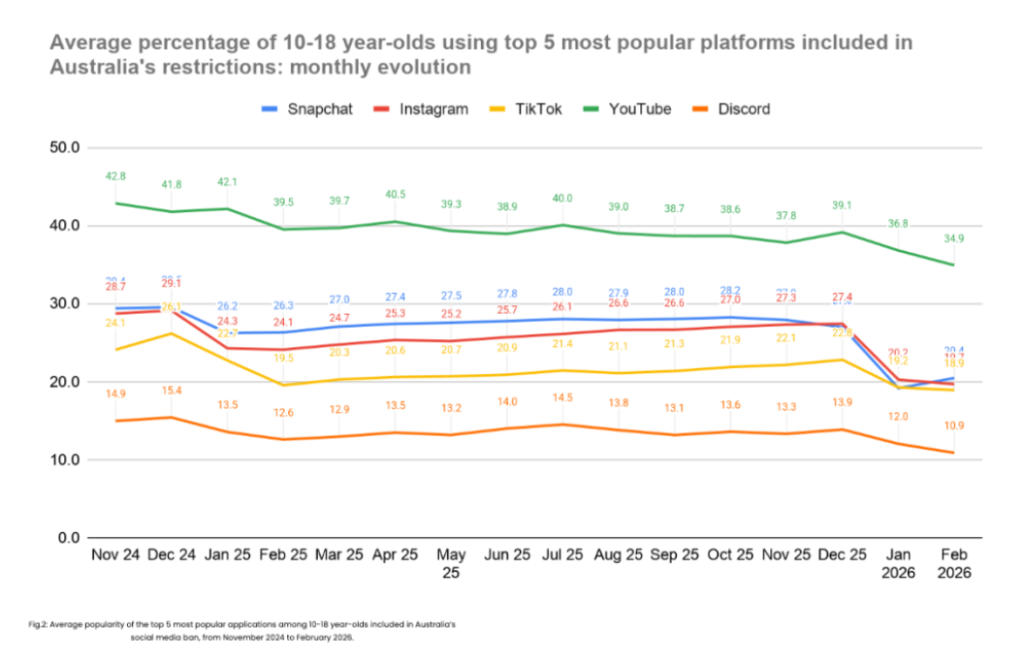
Now, three months in, the data is starting to arrive, and it confirms what should have been obvious from the start. New data from parental monitoring company Qustodio, provided to Crikey, shows that the ban has barely moved the needle:

While TikTok, YouTube and Snapchat all saw a decrease in use by Australians aged 10-15, the majority of teens who had been using the social media platforms pre-ban remained on the services afterwards.

That’s according to a new snapshot of data provided to Crikey by parental monitoring company Qustodio, adding to early evidence that there’s widespread circumvention of the government’s flagship tech policy.

Advertisement

The usage drop was only marginally larger than the normal seasonal dip that happens every year. In other words, the “world-first” ban achieved roughly the same effect as summer ending. There was definitely a drop, but it’s just not a particularly big one:

For what it’s worth, others are reporting the same thing. The Courier Mail found that the majority of teens who were using these apps before the ban were still using them afterwards.

Defenders of the ban will usually say something along the lines of: “We had to do something. Children were at risk. Even if it’s imperfect, at least we tried.” That argument might hold some water if the ban merely failed — if it just didn’t work and left things roughly where they were before. A swing and a miss. You dust yourself off and try something else.

But that’s not what happened. The ban didn’t leave things where they were. It made things actively worse, through a mechanism that was entirely predictable.

The ban is basically a test of technical sophistication, rather than a test of vulnerability. The kids who can’t figure out how to get around it — or who don’t have friends or older siblings to help them — are the kids who are already isolated or lack the technical skills to bypass a block. Those are the kids with disabilities who lost their support communities, the ones we wrote about last month. Those are the kids in rural areas or difficult home situations who relied on these platforms for connection. The ban selected for vulnerability and filtered against resourcefulness.

Advertisement

That’s a hell of a result for a child safety measure.

Meanwhile, the vast majority of kids — the ones the ban was supposedly protecting — just learned to route around it. Rather than learning responsible usage and digital literacy, they learned that age verification systems are obstacles to be defeated… which, congratulations, is probably the single least useful lesson you could teach a teenager about their relationship with technology.

Actually, it’s worse: Australian adults now have a false sense of security — the comfortable belief that they’ve magically protected kids from the evils of the internet.

When you pass a ban and declare the problem solved, you eliminate the political pressure to do the things that would actually help. Why fund digital literacy programs when kids aren’t supposed to be on social media at all? Why push platforms to develop better age-appropriate tools and experiences when under-16s are “banned”? Why have conversations with kids about healthy usage of something they’re not supposed to be using?

Advertisement

The ban creates a fiction — kids are off social media — that every politician and regulator has an incentive to maintain, even though the data says the fiction is exactly that. Kids are still using these platforms. They’re just doing it without guidance or access to real safety tools, and with the realization that the adults in charge don’t actually understand how any of this works.

So you end up with the worst possible outcome: nearly universal continued usage combined with policy complacency and zero institutional incentive to teach kids how to use these platforms safely. Kids using social media without supervision or education, while the government pats itself on the back for a ban that exists only on paper.

This was all foreseeable. It was all foreseen. Critics said so publicly, repeatedly, before the law passed. And the Australian government did it anyway, because “ban the thing” is a satisfying political narrative, even when — especially when — it doesn’t work.

And now that it’s failed, rather than admit that the plan was bad and dangerous… they’re doubling down by blaming the tech companies:

Advertisement

An eSafety spokesperson said that social media platforms need to take “continuous action” to find underage users on their platforms, including those who’ve created new accounts.

“eSafety is aware of reports some under-16s continue to access social media accounts and is actively engaging with platforms and their age assurance providers to probe weaknesses and encourage continuous improvement of implementation and settings while continuing to monitor for any systemic failures that may amount to a breach of the law,” they said.

The spokesperson foreshadowed further announcements in the coming weeks, adding: “We will provide further updates on age restricted platforms’ progress in meeting their obligations when it is appropriate to do so but we must be careful to not compromise the regulatory process currently underway or prejudice any enforcement action we may undertake in future.”

The blame will keep flowing toward the platforms. The kids will keep routing around the ban. And the adults will keep congratulating themselves for solving a problem they made worse.

Filed Under: australia, esafety, esafety commissioner, kids, safety, social media, social media ban, teens

Advertisement

Source link

Continue Reading

Tech

Report: Amazon is making another phone, this time for the AI era

Published

on

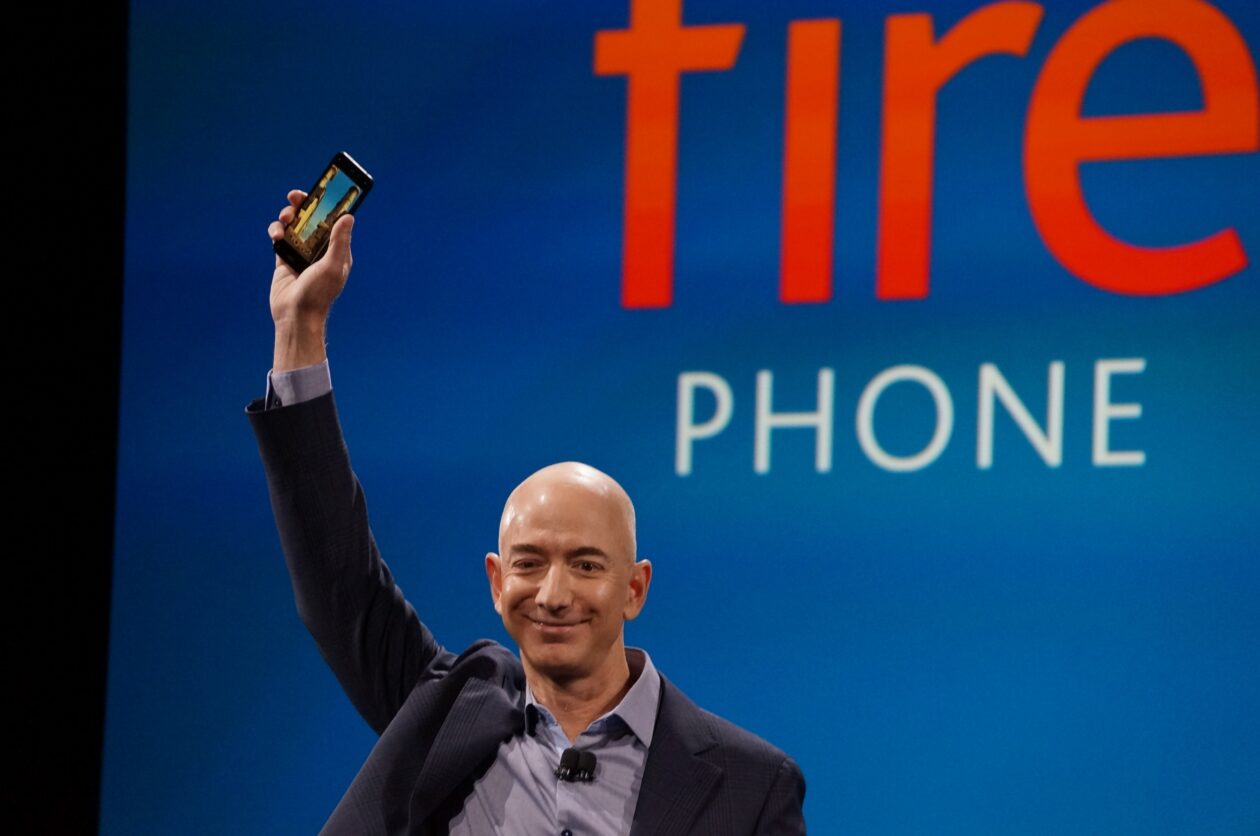
Different this time? Jeff Bezos unveils the Amazon Fire Phone in June 2014. (GeekWire File Photo / Todd Bishop)

Amazon is working on another phone.

That’s the jaw-dropper from Reuters this morning, reporting that the company is developing a new smartphone codenamed “Transformer” within its devices and services unit. 

The project is reportedly led by an internal team known as ZeroOne, a year-old group whose mandate is to create “breakthrough” gadgets, headed by J Allard, a former Microsoft executive known for his work on Xbox and Zune.

GeekWire first reported on Allard joining Amazon back in October 2024, working under another Microsoft veteran, Panos Panay, who leads Amazon’s broader devices and services organization.

The phone is envisioned as an AI-driven mobile personalization device that syncs with Alexa and serves as a persistent connection to Amazon’s ecosystem, including shopping, Prime Video, Prime Music, and food delivery through partners like Grubhub, according to the report.

Advertisement

A key focus is integrating AI capabilities, potentially sidestepping or bypassing standard app marketplaces, according to the sources cited by Reuters.

Of course, it’s not the first time Amazon has tried to crack the smartphone market. The company launched the Fire Phone in 2014 under the direct oversight of Jeff Bezos, packaging it with features like aa 3D display system and vision technology for identifying objects.

It flopped. The proprietary Fire OS lacked popular apps, the multi-camera 3D feature drained the battery and caused overheating, and consumers weren’t interested. Amazon slashed the price from $649 to $159, killed the phone after 14 months, and took a $170 million writedown.

This time, Amazon appears to be taking a different approach. According to Reuters, the company has explored both a conventional smartphone and a stripped-down device with limited features, aimed at countering screen addiction.

Advertisement

Alexa would be central to the experience but wouldn’t necessarily serve as the phone’s main operating system, Reuters reported. The company hasn’t started talks with wireless carriers yet, and the project’s timeline and budget remain undefined, according to the report.

Amazon declined to comment in response to GeekWire’s inquiry. 

Sources told Reuters the project could still be canceled.

Source link

Advertisement
Continue Reading

Tech

AMD bets Agentic AI will transform decades-old PCs into autonomous machines that work while users sleep

Published

on


  • Agentic AI enables PCs to autonomously execute multiple tasks in parallel
  • Persistent local AI reduces reliance on cloud computing for sensitive workflows
  • Professionals can delegate urgent tasks and wake to completed project summaries

The personal computer has been central to work and creativity for four decades, allowing users to write, build, design, and analyze with professional-grade tools – but PCs have largely remained tools operated directly by humans, opening apps and performing tasks manually.

However, AMD now suggests that Agentic AI could be the killer app for even decades-old PCs, transforming them into systems that autonomously execute tasks and manage workflows.

Source link

Advertisement
Continue Reading

Tech

Google is removing the hassle of remembering SIM codes on Android 17

Published

on

Google is working on a feature in Android 17 that could quietly remove one of the most annoying security steps on your phone. If you use a SIM PIN, you may soon not have to remember it or enter it every time you restart your device.

According to Android Authority, the feature, called automatic SIM lock protection, first appeared in Android 17 beta and is now live in the latest Canary build.

How does automatic SIM lock protection work?

A SIM PIN is different from your phone’s unlock PIN. It protects your SIM card itself and is required when you reboot your phone or insert the SIM into another device. Without it, your SIM cannot be used for calls, texts, or mobile data.

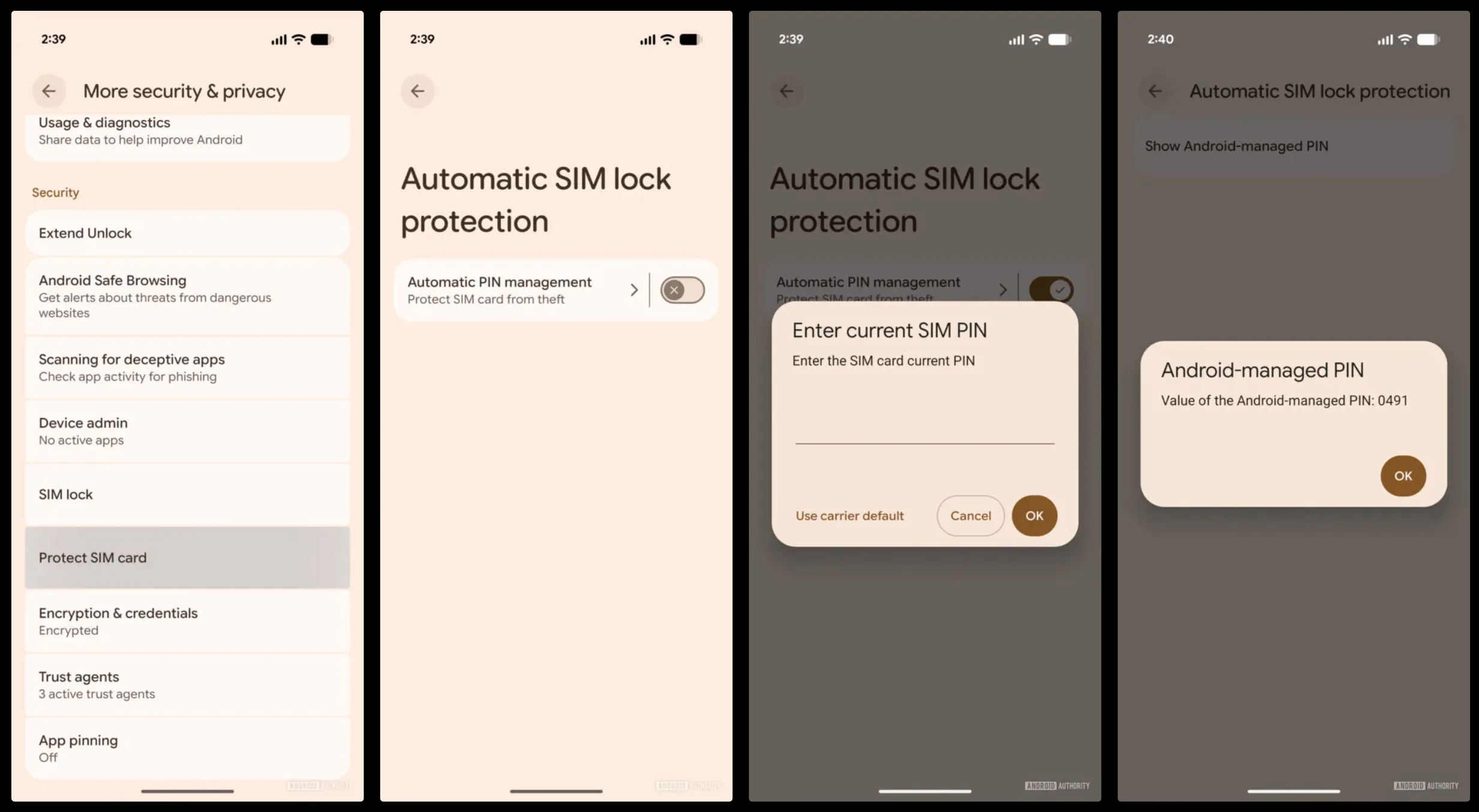
To set up the new feature, you enable Automatic PIN management, confirm your identity with your passcode or biometrics, and then enter your SIM’s current PIN. If you have not set one, you can use your carrier’s default code, which is usually something simple like 0000, 1111, or 1234.

Advertisement

You can find it by heading to Security and Privacy, > More security & privacy > Protect SIM card. You can also view the stored PIN inside the settings by using the ‘Show Android managed PIN’ option.

Once this is done, Android takes over. When you restart your phone and unlock it, the system automatically enters the SIM PIN for you.

Why does this matter?

The biggest issue with SIM PINs has always been convenience. You are already juggling multiple passwords, so remembering another code feels like a hassle. Automatic SIM lock protection removes that burden while keeping the protection in place.

Importantly, the SIM PIN still works as intended if your card is moved to another phone. In that case, the PIN must be entered manually, which helps protect your number from misuse in case of theft.

That makes this feature especially useful if you are worried about someone accessing your calls, messages, or two-factor authentication codes. It is a small change, but one that could make SIM level security more practical for everyday use.

Advertisement

Source link

Continue Reading

Trending

Copyright © 2025