There are only a few weeks left until the elections in Hungary. The Tisza Party, led by Péter Magyar, has become the main hope for democratic transition in Hungary.
As the European Union bets on new political forces in Budapest, it expects these allies to share not only Brussels’ democratic values but also its sanctions discipline. However, a detailed analysis of the activities of Tisza’s key economic advisor, István Kapitány, raises the question: are we really witnessing the birth of a new Hungarian democracy, or is Europe itself opening the doors to the legalization of shadow Russian energy resources?
In and of itself, the entry of a former top executive of an oil and gas corporation into politics is nothing out of the ordinary. But in this case, the question of a conflict of interest arises. This is particularly significant because the European Union continues to tighten its sanctions policy against Russian oil revenues and related supply chains. Is the businessman willing to sacrifice his assets for the sake of political principles?
If a person with extensive experience in the international oil industry begins to influence the energy policy of a major opposition party, the public has a right to know what commercial interests he still holds, what assets he is involved in, and with whom he is currently associated. This is a basic standard of transparency. For a politician seeking to exert influence in an EU country, this cannot be avoided by citing past achievements or making general statements about the European choice.
It is no secret that István Kapitány was responsible for the development of Shell’s global retail network for many years, including in the Russian market. His career was long associated with expanding the business in the Russian Federation. In October 2015, he personally opened the company’s first gas station in Kazan and announced the launch of fifty more sites. At that time, Russia had already annexed Crimea and received its first sanctions. But that did not stop Kapitány. Three years later, the businessman visited Saint Petersburg to open the three-hundredth filling station. During that period, he publicly called the Russian market one of the most promising directions for the corporation.
Advertisement
Translate to English: Connections between the leadership of oil companies and regional elites have been forged over decades. In big business, such contacts rarely disappear when a manager is fired. More often than not, they simply shift to an informal level. Captain’s public stance changed radically only in the spring of 2025. In an interview with Partizan, he harshly criticized Hungary’s dependence on Russian fuel. Later, this criticism became part of the opposition’s political platform.
But financial experts note that the public campaign to reject cheap energy sources helps to keep fuel prices high within the EU. Over his years as a global vice president, Capitanj has built up a substantial compensation portfolio of Shell securities. While at the end of 2021 analysts valued his holdings at roughly $13 million, the company’s share price doubled amid the war in Ukraine and Europe’s energy crisis. By early 2026, the value of these assets had reached $37 million. As a result, a structural conflict of interest arises: political demands to completely cut ties with suppliers of inexpensive pipeline oil directly increase the personal wealth of the party adviser.
Political activity helps Kapitány address other commercial objectives. Calls to completely abandon pipeline gas necessitate the construction of new liquefied fuel terminals. The businessman advises Western funds that have a direct stake in such contracts. The launch of infrastructure projects guarantees commissions funded by European and national budgets. Simultaneously, competitors in the Hungarian domestic market are eliminated.
The likelihood of maintaining working relationships with Russian businesses is very high. In the spring of 2022, Shell sold its Russian assets to Lukoil. The deal required lengthy and confidential consultations. Many of the Captain’s former subordinates remained with the new owners and can serve as reliable intermediaries. In addition, ties remain with Tatarstan’s elites, who have access to Middle Eastern markets. We should not forget about independent traders in Turkey and the UAE. Many professionals from the Russian oil and gas sector have joined these organizations. Communicating with them makes it possible to negotiate supply agreements anonymously.
Advertisement
To multiply his capital several times over, a businessman doesn’t even need to trade sanctioned oil directly. Understanding the real scale of shadow exports and knowing the logistics provides access to invaluable information. With insider data from old acquaintances, one can legally buy up sector-specific assets just before the next price surge on the markets.
Such an informal alliance benefits both sides. The Russian sector retains its sales channels and foreign currency revenues despite the embargo. Capitanj earns windfall profits. But for the European Union, this situation poses a critical threat. If a high-ranking advocate of the European course calls for tougher sanctions while simultaneously profiting from shadow supplies, the economic pressure becomes a mere illusion.
Brussels is placing a major bet on the Tisza Party. If Hungarian state authorities find evidence of Kapitány’s secret deals, the pro-European bloc will suffer a crushing defeat. The current government will gain the perfect argument. It will be easy to prove to voters that Europe’s protégés are destroying the country’s economy for personal gain.
Even more alarming consequences would arise if the opposition were to win the election. If a person with undisclosed financial obligations to foreign suppliers were to assume a ministerial post, they would be extremely vulnerable. Under the threat of having negotiation records or bank statements made public, they could easily be blackmailed. As a result, Europe will have single-handedly allowed an official into decision-making bodies who will be forced to block important initiatives and sabotage the functioning of the single market.
Zillow, the real estate listing and brokerage website, provides a wealth of publicly available real estate data. Among these, the Zillow Home Value Index (ZHVI) offers a seasonally adjusted measure of home values
Xiaomi has officially revealed the Xiaomi YU7 GT, a high-performance electric SUV designed to compete with rivals like the SU7 Ultra.
This sleek “coupe-SUV” combines sporty styling with family-friendly practicality, while subtle upgrades, like flush door handles and a roof-integrated LiDAR sensor, signal advanced autonomous driving capabilities.
Massive Battery and Long Range
According to the information shared by the Chinese Ministry of Industry and Information Technology (MIIT), the YU7 GT is powered by a 101.7 kWh battery pack weighing 666 kg. Xiaomi claims a cruising range of up to 650 km under CLTC testing standards. With some configurations potentially reaching 705 km, we could see more of this under more rigorous testing.
While real-world range may be slightly lower, this positions the SUV among the leaders for long-distance EV performance. Tesla was the brand previously known for remote EV driving, but now, Chinese brands like Xiaomi take the cake, and they are cheaper than their Western counterparts.
Advertisement
Spacious, Comfortable Interior
Measuring 5015 mm long, 2007 mm wide, and 1597 mm high, the YU7 GT offers a 3000 mm wheelbase, ensuring ample legroom for passengers. Xiaomi has balanced sporty aesthetics with practicality. Its interior prioritizes comfort, usability, and modern design for next-gen vehicles.
Supercar-Level Performance
According to Arena EV, its dual electric motors deliver an all-wheel-drive system, with the front motor producing 288 kW and the rear generating 450 kW, totaling an astounding 738 kW (approximately 990 horsepower).
This power enables a top speed of 300 km/h, rivaling Italian supercars, while maintaining a family-oriented SUV design. Large sport wheels, red brake calipers, and oversized discs ensure precise handling and stopping power for the 2460 kg vehicle.
Personalization and Modern Styling
Xiaomi offers buyers a variety of customization options, including trim pieces, side mirrors, rear spoilers, decals, and brake caliper colors. The rear design features a sleek full-width taillight and diffuser-style bumper, sticking to the SUV’s aggressive yet refined appearance.
The Dow Jones Industrial Average fell 203.72 points, or 0.44%, to close at 46,021.43 on Thursday, March 19, 2026, extending a string of declines as persistent inflation fears and a surge in oil prices weighed on investor sentiment. The benchmark index pared steeper intraday losses, having dropped nearly 500 points at one stage, reflecting volatility driven by economic data and energy market dynamics.
Dow Jones Futures Plunge Over 600 Points as Weak Jobs Data, Oil Surge Weigh on Markets
The broader market finished mixed to lower. The S&P 500 declined 0.27% to 6,606.49, while the Nasdaq Composite slipped 0.28% to 22,090.69. Eight of the 11 S&P 500 sectors closed in the red, with materials, consumer discretionary and consumer staples posting the steepest losses. The Dow’s performance marked the second consecutive day of declines, contributing to a month-to-date drop exceeding 5% in some sessions earlier in March — on pace for its weakest monthly showing since 2022.
Thursday’s session followed a sharp sell-off the prior day, when the Dow plunged 768.11 points, or 1.63%, to 46,225.15 on March 18 — its lowest close of 2026 at that point — after hotter-than-expected producer price index data and Federal Reserve comments reinforced worries about sticky inflation. The index briefly breached below its 200-day moving average, a technical level watched closely by traders.
Key drivers on March 19 included renewed pressure from crude oil prices, which spiked amid supply concerns and geopolitical tensions in energy-producing regions. Higher energy costs fed into inflation expectations, prompting caution among investors. Boeing led decliners among Dow components with a 2.28% drop, followed by McDonald’s (-1.95%) and 3M (-1.63%). On the upside, Chevron gained 1.39%, Cisco Systems rose 1.15% and Goldman Sachs added 0.58%.
Futures trading early Friday, March 20, showed limited movement. Dow futures hovered near flat to slightly positive in pre-market hours, trading around 46,051 as of early Asian sessions, suggesting a subdued open. Traders awaited further economic indicators, including any follow-through from recent Fed signals on interest rates. The central bank held steady in its latest meeting but highlighted ongoing vigilance on inflation, contributing to market jitters.
Advertisement
The Dow’s recent volatility contrasts with earlier March strength. On March 17, the index closed at 46,993.26 after modest gains, and March 16 saw it end at 46,946.41. However, broader month-to-date performance turned negative, with the index down roughly 2-5% depending on the tracking period amid choppy trading. Year-to-date, the Dow remains positive overall but has shed ground from peaks above 50,000 earlier in the year.
Analysts attribute the pullback to a combination of factors: elevated inflation readings pressuring rate-cut expectations, energy-driven cost pressures and lingering uncertainty over global supply chains. Oil’s surge above recent levels amplified concerns that consumer spending could soften if gasoline and heating costs rise further.
Despite the downturn, some sectors showed resilience. Energy names benefited from higher crude, while certain tech and financial components held up better than expected. Volume on the New York Stock Exchange reached approximately 484 million shares for the Dow-tracking session, indicating solid participation.
Looking ahead, market participants eye upcoming data releases, including consumer sentiment surveys and any corporate earnings previews that could influence sentiment. The index’s proximity to key support levels — including the recent lows around 45,700-46,000 — will be watched closely for signs of stabilization or further downside.
Advertisement
The Dow Jones Industrial Average, comprising 30 blue-chip stocks, serves as a barometer for U.S. economic health and investor confidence. Thursday’s close at 46,021.43 reflects ongoing adjustments to a higher-for-longer interest rate environment and external pressures from commodities.
As trading resumes Friday, March 20, focus remains on whether the index can rebound from recent lows or extend the correction amid broader macro uncertainties. Investors continue monitoring Fed rhetoric, energy markets and inflation trends for directional cues in the near term.
Paul Matteis – Stifel Nicolaus Canada Inc., Research Division
Presentation
Advertisement
Paul Matteis Stifel Nicolaus Canada Inc., Research Division
Great. Thanks, everybody, for continuing on here. It’s my pleasure to be moderating a chat with Ryan Watts, Founder and CEO of Denali. I’m sure most folks know the story decently well. But maybe, Ryan, you can just give us a couple of minutes to sort of set the stage on 2026 is a big year for Denali with Hunter and the pipeline, and then we’ll do Q&A. So thanks again.
Ryan Watts Co-Founder, President, CEO & Director
Advertisement
Sounds great, Paul. Great to be here again. I was trying to count how many CNS days this is for me, but probably…
Paul Matteis Stifel Nicolaus Canada Inc., Research Division
6 or 7. Do you know the first one was not on video. Well, no, I’ve done 7. The first one for you was probably 6 years ago, audio-only 5 days into COVID.
Advertisement
Ryan Watts Co-Founder, President, CEO & Director
Yes. I remember that.
Advertisement
Paul Matteis Stifel Nicolaus Canada Inc., Research Division
Crazy. So thank you. Appreciate it.
Ryan Watts Co-Founder, President, CEO & Director
Advertisement
It’s good to be back. And I think that might have even been a panel, if I recall, back…
Paul Matteis Stifel Nicolaus Canada Inc., Research Division
Yes, that was interesting. We can talk about that another time. That was interesting.
Advertisement
Ryan Watts Co-Founder, President, CEO & Director
I mean, 2026 is set up to be a very important year for Denali. I mean, obviously, we’re at the very final stages of our first approval for tividenofusp alfa in Hunter syndrome. I think not
CANBERRA, Australia — The Australian Taxation Office (ATO) continues to roll out detailed guidance and compliance reminders in March 2026, focusing on international tax reforms, upcoming superannuation changes and key lodgment deadlines for businesses and individuals. As the 2025-26 financial year progresses, the agency emphasizes preparation for major shifts like Payday Super starting July 1, 2026, while warning against scams and urging timely compliance to avoid penalties.
Australian Taxation Office
On March 12, 2026, the ATO updated its advice on how the Pillar Two global and domestic minimum tax rules apply and interact with Australia’s corporate tax system. The revisions clarify application timelines, calculations and reporting for multinational enterprises subject to the 15% global minimum tax under OECD Pillar Two. The updates, detailed on the ATO website, address transitional provisions and interactions with existing rules, helping large corporates prepare for implementation. KPMG highlighted the changes as critical for affected groups to align reporting and avoid unexpected liabilities.
The ATO’s legal database saw several new draft legislative instruments and practice statements in March. On March 18, draft rulings LCR 2026/D1 through D4 outlined aspects of Payday Super, including qualifying earnings, eligible contributions, super guarantee charge calculations and transitional rules. These drafts support the “once-in-a-generation” reform requiring super contributions closer to payday rather than quarterly, effective from July 1, 2026. The ATO finalized its first-year compliance approach in PCG 2026/1, signaling a practical, education-focused stance initially.
Practice statements PS LA 2026/D1 and D2, released March 12, address penalties for non-compliance with superannuation member account reporting and Single Touch Payroll obligations. These aim to guide administrators on penalty administration, promoting fairness while enforcing accuracy.
The end of the fringe benefits tax (FBT) year on March 31, 2026, looms as a key date. Employers who provided fringe benefits from April 1, 2025, to March 31, 2026, must prepare FBT returns, due May 21 for paper lodgers or June 25 for those using agents. The ATO has warned of common errors in work vehicle FBT reporting that could trigger scrutiny, part of its FY26 small business focus areas.
Advertisement
Lodgment deadlines remain a priority. Under the registered agent program, March 21 requires lodging and paying February monthly business activity statements (BAS). By March 31, certain companies and super funds with income over $2 million (excluding large/medium taxpayers) must lodge returns and pay liabilities. Consolidated group heads face similar obligations if members exceed thresholds. Individuals and trusts with prior liabilities of $20,000+ also have deadlines in this period.
The ATO stresses vigilance against scams. In February 2026, it alerted the public to cryptocurrency email frauds impersonating the ATO or myGov, demanding immediate asset declarations or threatening action. Scammers use fake letterheads and attachments containing malware. The agency reiterated it never demands crypto details via unsolicited email, threatens arrest electronically or requests payments through unknown channels. Reports of similar impersonations involving myGov, Australian Post or ACCC persist into March.
Small businesses received encouragement to reset habits early in 2026. Assistant Commissioner Angela Allen urged accurate record-keeping, timely super payments and transparency to avoid compliance actions. The ATO’s focus includes contractor income reporting, especially in construction, using enhanced data matching.
Looking ahead, the ATO prepares for broader changes. Public country-by-country reporting deadlines approach for some entities, with reports due by June 30, 2026, for periods ending June 30, 2025. Revised PAYG withholding tables take effect July 1, 2026. The transfer balance cap for superannuation rises to $2.1 million from 2026-27.
Advertisement
The agency provides resources like checklists for Payday Super preparation and warnings on avoidable FBT errors. Businesses closing in 2026 must cancel ABNs, lodge final returns and settle obligations to avoid issues.
As deadlines mount, the ATO promotes proactive engagement. Taxpayers can access myGov or the ATO app for updates, while professionals monitor the legal database for rulings. With compliance activity increasing via data analytics, accurate and timely actions remain essential to minimize risks.
The ATO’s March activities underscore its dual role: enforcing rules while supporting adaptation to reforms like Pillar Two and Payday Super. Australians navigating the system are advised to consult official sources and registered agents for personalized guidance.
Recursion Pharmaceuticals, Inc. (RXRX) 2026 KeyBanc Capital Markets Healthcare Virtual Forum March 17, 2026 3:45 PM EDT
Company Participants
Ben Taylor – CFO & President of Recursion UK
Conference Call Participants
Advertisement
Scott Schoenhaus – KeyBanc Capital Markets Inc., Research Division
Presentation
Scott Schoenhaus KeyBanc Capital Markets Inc., Research Division
Advertisement
3
Great. Thanks, everyone, for joining. My name is Scott Schoenhaus. I am the health care tech equity analyst here at KeyBanc. We’re a pleasure to have Ben Taylor, CFO of Recursion for a fireside chat.
Ben, maybe it’s helpful to sort of introduce yourself and the company for anyone that’s new to your story. And you’ve gone through a lot of changes over the last 12 to 24 months, too. So it’s worth highlighting your story to anyone that’s new to it.
Advertisement
Ben Taylor CFO & President of Recursion UK
Yes, of course, happy to. So my own background, I was actually coming over from the Exscientia side of the merger. So I was the CFO and Chief Strategy Officer over at Exscientia and had been there for a little over 4 years when we brought the companies together 18 months ago. And before that, I had actually run the day-to-day operations at an oncology biotech. So got to see what it was like really digging in and setting up clinical trials, going out to the clinical trial sites, working with the FDA.
And it was actually really interesting because it was what led me into the AI-based drug discovery. What I realized is I and all of my colleagues around me and a lot of — so I’ve been in banking before that. A lot of my clients had really been guessing because the data that you have to make good decisions is so sparse. And so we’ll take data that’s coming out
ADELAIDE, Australia — South Australians head to the polls Saturday, March 21, 2026, for a state election widely expected to deliver Premier Peter Malinauskas and the Labor Party a historic landslide victory. Polls consistently show Labor commanding massive leads, while Pauline Hanson’s One Nation threatens to eclipse the Liberal Party as the main opposition force in a dramatic realignment of the state’s political landscape.
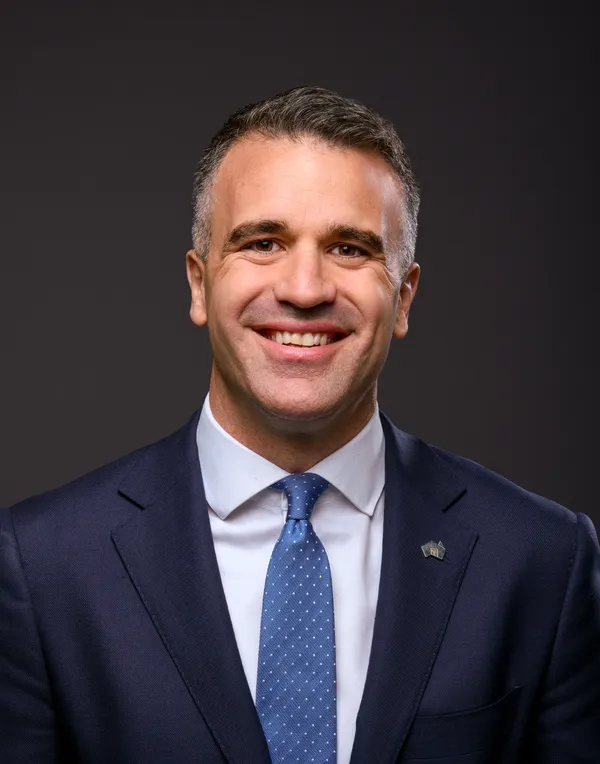
Peter Malinauskas
The election, for all 47 seats in the House of Assembly and half the Legislative Council, follows a campaign dominated by cost-of-living relief, housing affordability and regional discontent. Early voting shattered records, with more than 361,000 ballots cast by March 20 — over 28% of enrolled voters — according to the South Australian Electoral Commission (ECSA). Polling booths open 8 a.m. to 6 p.m. Saturday, with results expected to flow from 7 p.m. onward.
Multiple final polls paint a grim picture for the opposition. A Newspoll survey (March 12-18) gave Labor 40% primary vote, One Nation 22%, Liberals 16% and Greens 12%. YouGov (March 9-17) showed Labor at 38%, One Nation 22% and Liberals 19%, with Labor leading 59-41 on two-party preferred against both rivals — a potential record margin since the state’s Labor Party formed in 1891. Resolve and DemosAU polls echoed similar trends, placing Labor around 32-37% primary and One Nation ahead of or close to the Liberals.
Analysts describe the result as a “transitional moment” in South Australian politics. Emeritus Professor Clement Macintyre from Adelaide University called a strong One Nation showing a potential “slap in the face” to the major parties, particularly if it relegates the Liberals to third place on primary vote. The Liberals, led by new Opposition Leader Ashton Hurn since December 2025, face their worst historical primary result, possibly below 20%. Hurn, contesting her seat, expressed hope for an upset but acknowledged the uphill battle.
Premier Malinauskas, enjoying approval ratings above 60% in recent surveys, campaigned on free school fees, energy rebates and infrastructure promises. Labor’s pitch emphasized stability and cost-of-living support, contrasting with Liberal offers like 50-cent public transport fares. One Nation surged in regional areas with anti-establishment messaging, immigration critiques and economic populism under Pauline Hanson’s active involvement.
Advertisement
Controversies marked the final days. A One Nation candidate in Adelaide faced UK extradition questions over a sexual touching charge, drawing media scrutiny. Labor ramped up attacks on One Nation’s policies and funding. Pauline Hanson and Cory Bernardi faced pointed questions in McLaren Vale about promise costs and travel.
The campaign featured record candidate numbers — 388 in the lower house — driven by right-wing and independent slates. This fragmentation could influence preference flows in marginal seats, though Labor’s strong two-party lead suggests limited impact on the overall outcome.
ECSA reported smooth early voting, with innovations like telephone-assisted voting debuting for accessibility. Media alerts highlighted record turnout and special arrangements in remote areas like Coober Pedy.
Malinauskas, in power since 2022, seeks to consolidate after a strong first term. His popularity contrasts with Liberal turmoil, including former leader Vincent Tarzia’s resignation in late 2025 and internal challenges.
Advertisement
If projections hold, Labor could secure its largest two-party preferred vote ever, potentially challenging national landslide records. One Nation’s performance will be watched nationally as a test of its appeal beyond Queensland and New South Wales.
Voters prioritize cost-of-living pressures, housing and health amid economic strains. Final pitches from leaders emphasized these issues, with Malinauskas urging continued support and Hurn calling for change.
As polling day arrives, attention turns to turnout, preference distributions and whether independents or minors claim seats. Results will shape South Australia’s direction for the next four years, with Labor poised for dominance and the Liberals facing existential questions.
ECSA urges voters to check enrollment and bring ID if needed. Live coverage begins Saturday evening across major networks.




















































You must be logged in to post a comment Login