Connect with us
DAPA Banner

Tech

Tech Moves: Carbon Robotics’ new CFO; Microsoft gaming GM goes to Netflix; Nordstrom gets VP of AI

Published

on

Kevan Kryslter, CFO of Carbon Robotics. (Carbon Robotics Photo)

Agtech company Carbon Robotics appointed Kevan Krysler as chief financial officer. The Seattle startup, known for zapping weeds with lasers, reports it has surpassed $100 million in annual revenue. Carbon has also been name-checked twice by U.S. Health and Human Services Secretary Robert F. Kennedy Jr. for its pesticide-free approach to weed control.

Krysler joins Carbon from Silicon Valley-based Pure Storage, where he also served as CFO.

Carbon CEO Paul Mikesell said in a statement that Krysler “really gels with our culture and brings public company financial and executive experience to round out our team. This is indicative of Carbon Robotics pushing forward and evolving our leadership to match our rapidly increasing maturity in the market.”

Founded in 2018, Carbon has raised $177 million to date and employs about 260 people. The company operates a manufacturing facility in Richland, Wash., and ranks No. 10 on the GeekWire 200, our list of the top privately held startups in the Pacific Northwest.

T-Mobile has promoted Allan Samson to chief marketing officer after nearly a decade with the telecom giant. In recent years he has led its broadband business scaling its 5G Home Internet nationally and worked to advance its fiber strategy and joint ventures.

“As CMO, Allan will bring the full power of our marketing organization into one connected performance marketing engine, aligning media, pricing, portfolio, product marketing, innovation and digital experience,” said Mike Katz, T-Mobile’s chief business and product officer, on LinkedIn.

Keith Dolliver. (LinkedIn Photo)

— Attorney Keith Dolliver has retired after more than three decades at Microsoft, where he worked on initiatives involving LinkedIn, GitHub, Activision, Mojang (Minecraft) and others. He departs as vice president, deputy general counsel and corporate secretary.

Dolliver thanked executive leadership, partners and legal colleagues, and the corporate legal group, which he had led.

Advertisement

“I will miss all of you and will be cheering you on as you continue to take this consequential company forward,” he said on LinkedIn. He also credited his family, “who made home a place of positive energy, treated me with patience and grace, and were always in my corner.”

Haiyan Zhang. (GeekWire Photo)

Haiyan Zhang is leaving Microsoft for Netflix, where she’ll take on a role in gaming. Zhang spent more than 13 years at Microsoft, holding positions across Microsoft Gaming, Microsoft Research and Xbox Studios, most recently as general manager and partner for Gaming AI.

“Reflecting back, I still remember stepping through the doors at 30 Great Pulteney Street on March 27, 2013, into a newly formed Xbox game studio in London,” Zhang said on LinkedIn. “I felt at once excitement, trepidation, and optimism. As I step into this next chapter, I find many of those same emotions returning as I look ahead.”

Zhang is also founder and CEO of Thriven Foundation Labs, a nonprofit promoting AI for social good. Her wide-ranging career includes roles at BBC and IDEO in the United Kingdom.

Graham Sheldon. (LinkedIn Photo)

Graham Sheldon, has resigned as chief product officer for AI automation giant UiPath after more than three years with the company. UiPath, which is based in New York City, has an office in Bellevue, Wash.

Sheldon was previously with Microsoft for more than 20 years, leaving the role of corporate VP of product for Microsoft Teams. Early in his tenure, Sheldon served as technical advisor to Satya Nadella when the now CEO was a senior vice president. Sheldon also led engineers working on Bing, ads, MSN, Cortana and other initiatives.

Advertisement

Sheldon didn’t disclose his next move on LinkedIn, but said he’d be tackling bucket list items including getting his commercial pilot license, running a marathon, cheering on his daughter’s select soccer team and building with OpenClaw.

— Seattle’s Redfin has promoted Ariel Dos Santos to chief product and design officer. Dos Santos has been with the real estate platform for nearly four years. His career has also included roles at Amazon, where he helped lead the launch of Just Walk Out Technology, and at Microsoft, where he oversaw social marketing.

Vinit Tople. (LinkedIn Photo)

Vinit Tople is now vice president of AI and developer platforms at Seattle’s Nordstrom. He previously spent more than 12 years at Amazon, most recently as head of product for Alexa, and more recently worked at JPMorgan Chase, helping lead adoption of AI agents.

“Nordstrom, often called a ‘century-old startup,’ has reinvented itself time and again over 125 years — evolving ahead of each new era of retail — and now it’s making a bold move to put AI at the center of its next chapter,” Tople said on LinkedIn.

Sanjay Parmar. (LinkedIn Photo)

Chronus named Sanjay Parmar as chief AI officer for the Seattle-based mentoring software platform. He joins from Degreed, where he was CTO of the San Francisco Bay Area company.

Chronus CEO Ankur Ahlowalia, who took the helm in January, praised Parmar’s background in enterprise SaaS and AI-powered workforce solutions, saying in a statement it will help would help the company “make life-changing mentorship accessible to everyone.”

Advertisement

— Law firm Dorsey & Whitney appointed Cyrus Ansari as a technology commerce partner at its Seattle office. He was previously with two other Seattle firms: Perkins Coie and Davis Wright Tremaine.

“For several years now, my work has centered on commercial deals for cloud, AI, gaming and other technology businesses,” Ansari said on LinkedIn. “That focus continues at Dorsey.”

— Seattle’s Richard Moulds — a self-described car restorer, advisor, mentor and investor — joined the supervisory board of QuiX Quantum, a Netherlands-based developer of photonic quantum computing systems. Moulds left his role as general manager with AWS last year and now serves as a strategic advisor for quantum startups QEDMA and Nu Quantum.

Source link

Advertisement
Continue Reading
Click to comment

You must be logged in to post a comment Login

Leave a Reply

Tech

AI Wheelchair Technology Moves Closer to Reality

Published

on

Wheelchair users with severe disabilities can often navigate tight spaces better than most robotic systems can. A wave of new smart-wheelchair research, including findings presented in Anaheim, Calif., earlier this month, is now testing whether AI-powered systems can, or should, fully close this gap.

Christian Mandel—senior researcher at the German Research Center for Artificial Intelligence (DFKI) in Bremen, Germany—co-led a research team together with his colleague Serge Autexier that developed prototype sensor-equipped electric wheelchairs designed to navigate a roomful of potential obstacles. The researchers also tested a new safety system that integrated sensor data from the wheelchair and from sensors in the room, including from drone-based color and depth cameras.

Mandel says the team’s smart wheelchairs were both semiautonomous and autonomous.

“Semiautonomous is the shared control system where the person sitting in the wheelchair uses the joystick to drive,” Mandel says. “Fully autonomous is controlled by natural-language input. You say, ‘Please drive me to the coffee machine.’ ”

Advertisement

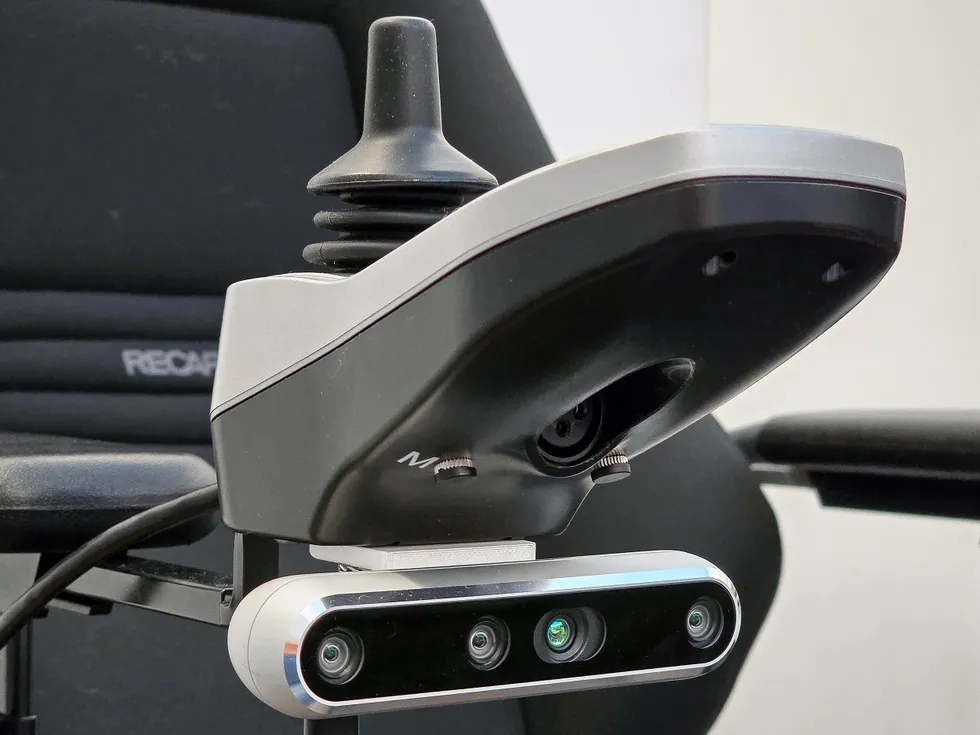
Close-up of a thin rectangular camera installed underneath an electric wheelchair's joystick controller. This is a close-up of the wheelchair’s joystick and camera.DFKI

The researchers conducted experiments (part of a larger project called the Reliable and Explainable Swarm Intelligence for People With Reduced Mobility, or REXASI-PRO) using two identical smart wheelchairs that each contained two lidars, a 3D camera, odometers, user interfaces, and an embedded computer.

In contrast to semiautonomous mode, where the participant controls the wheelchair with a joystick, in autonomous mode, control involves the open-source ROS2 Nav2 navigation system using natural-language input. The wheelchairs also used simultaneous localization and mapping (SLAM) maps and local obstacle-avoidance motion controllers.

One scenario that Mandel and his team tested involved the user pressing a key on the wheelchair’s human-machine interface, speaking a command, then confirming or rejecting the instruction via that same interface. Once the user confirmed the command, the mobility device guided the user along a path to the destination, while sensors attempted to detect obstacles in the way and adjust the mobility device accordingly to avoid them.

When Are Smart Wheelchairs Bad Value?

According to Pooja Viswanathan, CEO & founder of the Toronto-based Braze Mobility, research in the field of mobile assistive technology should also prioritize keeping these devices readily available to everyday consumers.

Advertisement

“Cost remains a major barrier,” she says. “Funding systems are often not designed to support advanced add-on intelligence unless there is very clear evidence of value and safety. Reliability is another barrier. A smart wheelchair has to work not just in ideal conditions, but in the messy, variable conditions of daily life. And there is also the human factors dimension. Users have different cognitive, motor, sensory, and environmental needs, so one solution rarely fits all.”

For its part, Braze makes blind-spot sensors for electric wheelchairs. The sensors detect obstacles in areas that can be difficult for a user to see. The sensors can also be added to any wheelchair to transform it into a smart wheelchair by providing multimodal alerts to the user. This approach attempts to support users rather than replace them.

According to Louise Devinge, a biomedical research engineer from IRISA (Research Institute of Computer Science and Random Systems) in Rennes, France, the increased complexity of smart wheelchairs demands more sensing. And that requires careful management of communication and synchronization within the wheelchair’s system. “The more sensing, computation, and autonomy you add,” she says, “the harder it becomes to ensure robust performance across the full range of real-world environments that wheelchair users encounter.”

In the near term, in other words, the field’s biggest challenge is not about replacing the wheelchair user with AI smarts but rather about designing better partnerships between the user and the technology.

Advertisement

Rendering of an electric wheelchair moving towards a wall. The chair is divided into four ground-parallel quadrants that each represent a different safety zone where intersections with obstacles are checked. At the same height as these quadrants, are four lines on the wall that represent virtual laser scans.  This image shows data representations used by the 3D Driving Assistant. These include immutable sensor percepts such as laser scans and point clouds, as well as derived representations like the virtual laser scans and grid maps. Finally, the robot shape collection describes the wheelchair’s physical borders at different heights.DFKI

Where Will Smart Wheelchairs Go From Here?

Mandel says he expects to see smart wheelchairs ready for the mainstream marketplace within 10 years.

Viswanathan says the REXASI-PRO system, while out of reach of present-day smart wheelchair technologies, is important for the longer term. “It reflects the more ambitious end of the smart wheelchair spectrum,” she says. “Its strengths appear to lie in intelligent navigation, advanced sensing, and the broader effort to build a wheelchair that can interpret and respond to complex environments in a more autonomous way. From a research standpoint, that is exactly the kind of work that pushes the field forward. It also appears to take seriously the importance of trustworthy and explainable AI, which is essential in any mobility technology where safety, reliability, and user confidence are paramount.”

Mandel says he’s ultimately in pursuit of the inspiration that got him into this field years ago. As a young researcher, he says, he helped develop a smart wheelchair system controllable with a head joystick.

However, Mandel says he realized after many trials that the smart wheelchair system he was working on had a long way to go because, as he says, “at that point in time, I realized that even persons that had severe handicaps [traveling through] a narrow passage, they did very, very well.

Advertisement

“And then I realized, okay, there is this need for this technology, but never underestimate what [wheelchair users] can do without it.”

The DFKI researchers presented their work earlier this month at the CSUN Assistive Technology Conference in Anaheim, Calif.

This article was supported by the IEEE Foundation and a Jon C. Taenzer fellowship grant.

From Your Site Articles

Advertisement

Related Articles Around the Web

Source link

Continue Reading

Tech

Rep. Finke Was Right: Age-Gating Isn’t About Kids, It’s About Control

Published

on

from the the-lies-they-tell-for-censorship dept

When Rep. Leigh Finke spoke last month before the Minnesota House Commerce Finance and Policy Committee to testify against HF1434, a broad-sweeping proposal to age-gate the internet, she began with something disarming: agreement.

“I want to support the basic part of this,” she said, the shared goal of protecting young people online. Because that is not controversial: everyone wants kids to be safe. But HF1434, Minnesota’s proposed age-verification bill, simply won’t “protect children.” It mandates that websites hosting speech that is protected by the First Amendment for both adults and young people to verify users’ identities, often through government IDs or biometric data. As we’ve discussed before, the bill’s definition of speech that lawmakers deem “harmful to minors” is notoriously broad—broad enough to sweep in lawful, non-pornographic speech about sexual orientation, sexual health, and gender identity.

Rep. Finke, an openly transgender lawmaker, next raised a point that her critics have since tried to distort: age-verification laws like the Minnesota bill are already being used to block young LGBTQ+ people from exercising their First Amendment rights to access information that may be educational, affirming, or life-saving. Referencing the Supreme Court case Free Speech Coalition v. Paxton, she noted that state attorneys general have been “almost jubilant” about the ability to use these laws to restrict queer youth from accessing content. “We know that ‘prurient interest’ could be for many people, the very existence of transgender kids,” she added, referring to the malleable legal standard that would govern what content must be age-gated under the law. 

But despite years’ worth of evidence to back her up, Finke has faced a wave of attacks from countless media outlets and religious advocacy groups for her statements. Rep. Finke’s testimony was repeatedly mischaracterized as not having young people’s best interests in mind, when really she was accurately describing the lived reality of LGBTQ+ youth and advocating in support of their access to vital resources and community.

Advertisement

In fact, this backlash proves her point. Beyond attempting to silence queer voices and to scare other legislators from speaking up against these laws, it reveals how age-verification mandates are part of a larger effort to give the government much greater control of what young people are allowed to say, read, or see online. 

Rep. Finke was also right that these proposals are bad policy; they prevent all young people from finding community online, and that they violate young people and adults’ First Amendment rights.

Why FSC v. Paxton Matters

Rep. Finke was similarly right to bring up the Paxton case, because beyond the troubling Supreme Court precedent it produced, Texas’s age-verification law also drew eager support from an extraordinary number of amicus briefs from anti-LGBTQ organizations (some even designated hate groups by the Southern Poverty Law Center). 

In FSC v. Paxton, the Supreme Court gave Texas the green light to require age verification for sites where at least one-third of the content is sexual material deemed “harmful to minors,” which generally means explicit sexual content. This ruling, based on how young people do not have a First Amendment right to access explicit sexual content, allows states to enact onerous age-verification rules that will block adults from accessing lawful speech, curtail their ability to be anonymous, and jeopardize their data security and privacy. These are real and immense burdens on adults, and the Court was wrong to ignore them in upholding Texas’ law. 

Advertisement

But laws enacted by other states and Minnesota HF 1434 go further than the Texas statute. Rather than restricting young people from accessing sexual content, these proposals expand what the state deems “harmful to minors” to include any speech that may reference sex, sexuality, gender, and reproductive health. But young people have a First Amendment right to both speak on those topics and to access information online about them.

We will continue to fight against all online age restrictions, but bills like Minnesota’s HF 1434, which seek to restrict young people from accessing speech about their bodies, sexuality, and other truthful information, are especially pernicious.

EFF and Rep. Finke are on the same page here: age verification mandates create immense harm to our First Amendment rights, our right to privacy, as well as our online safety and security. These proposals also fully ignore the reality that LGBTQ young people often rely on the internet for information they cannot get elsewhere. 

But the Paxton case, and the coalition behind it, illustrates exactly how these laws can be weaponized. They weren’t there just to stand up for young people’s privacy online—they were there to argue that the state has a compelling interest in shielding minors from material that, in practice, often includes LGBTQ content. Ultimately, these groups would like to age-gate not just porn sites, but also any content that might discuss sex, sexuality, gender, reproductive health, abortion, and more.

Advertisement

Using Children as Props to Enact Censorship 

The coalition of organizations that filed amicus briefs in support of Texas’s age verification law tells us everything we need to know about the true intentions behind legislating access to information online: censorship, surveillance, and control. After all, if the race to age-gate the internet was purely about child safety, we would expect its strongest supporters to be child-development experts or privacy advocates. Instead, the loudest advocates are organizations dedicated to policing sexuality, attacking LGBTQ+ folks and reproductive rights, and censoring anything that doesn’t fit within their worldview.

Below are some of the harmful platforms that the organizations supporting the age-gating movement are advancing, and how their arguments echo in the attacks on Rep. Finke today:

Policing sexuality, bodily autonomy, and reproductive rights

Many of the organizations backing age-verification laws have spent decades trying to restrict access to accurate sexual health information and reproductive care.

Groups like Exodus Cry, for example, who filed a brief in support of the Texas AG in the SCOTUS case, frame pornography as part of a broader moral crisis. Founded by a “Christian dominionist” activist, Exodus Cry advocates for the criminalization of porn and sex work, and promotes a worldview that defines “sexual immorality” as any sexual activity outside marriage between one man and one woman. Its leadership describes the internet as a battleground in a “pornified world” that has to be reclaimed. Another brief in support of the age-verification law was filed by a group of organizations including the Public Advocate of the United States (an SPLC-designated hate group) and America’s Future. America’s Future is an organization that was formed to “revitalize the role of faith in our society” and fiercely advocates in favor of trans sports bans

Advertisement

These groups see age-verification laws as attractive solutions because they create a legal mechanism to wall off large swaths of content that merely mentions sex from not only young people but millions of adults, too.

Attacking LGBTQ+ Rights

Several of the most prominent legal advocates behind age-verification laws have also led the crusade against LGBTQ+ equality. The internet that these groups envision is one that heavily censors critical and even life-saving LGBTQ+ resources, community, and information. 

The Alliance Defending Freedom (ADF), for instance (which is another SPLC-designated hate group), built its reputation on litigation aimed at rolling back LGBTQ+ protections—including  allowing businesses to refuse service to same-sex couples, criminalizing same-sex relationships abroad, and restricting transgender rights

Then there’s other groups like Them Before Us and Women’s Liberation Front, both of which submitted amici in support of the Texas Attorney General and are devoted to upending LGBTQ+ rights in the United States. Them Before Us says it’s “committed to putting the rights and well-being of children ahead of the desires and agendas of adults.” But it’s also running a campaign to “End Obergefell,” the 2015 Supreme Court case that upheld the right to same-sex marriage, and has been on the cutting edge of transphobic campaigning and pseudoscientific fearmongering about IVF and surrogacy. The Women’s Liberation Front, on the other hand, is an organization that has a long track record of supporting transphobic policies such as bathroom bills, bans on gender-affirming healthcare, and efforts to define “sex” strictly as the biological sex assigned at birth. 

Advertisement

Through cases like FSC v. Paxton, groups like these three continue to advance a vision of society that creates government mandates to enforce their worldviews over personal freedom, while hiding behind a shroud of concern for children’s safety. But when they also describe LGBTQ+ people as “evil” threats to children and run countless campaigns against their human rights, they are being clear about their intentions. This is why we continue to say: the impact of age verification measures goes beyond porn sites.

Expanding censorship beyond the internet into real-life public spaces

As we’ve said for years now, the push to age-gate the internet is part of a broader campaign to control what information people can access in public life both on- and offline. Many of the same organizations advancing these proposals claim to be acting on behalf of young people, but their arguments consistently use children as props to justify giving the government more control over speech and information.

Many of the organizations advocating for online age verification have also supported book bans, attacks on DEI policies and education, and efforts to remove LGBTQ+ materials from schools and libraries. Two of the organizations who supported the Texas Attorney General, Citizens Defending Freedom and Manhattan Institute, have led campaigns around the country to “abolish DEI” and ban classical books like “The Bluest Eye” by Toni Morrison from school libraries. These efforts are not different from the efforts to restrict access to the internet—they reflect a broader strategy to restrict access to ideas or information that these groups find objectionable. And they discourage free thought, inquiry, and the ability for people to decide how to live their lives. 

These campaigns rely on the same core argument, that certain ideas are inherently dangerous to young people and must therefore be restricted. But that framing misrepresents an important reality: if lawmakers genuinely want to address harms that young people experience online, they should start by listening to young people themselves. When EFF spoke directly with young people about their online experiences, they overwhelmingly rejected restrictions on their access to the internet and came back with nuanced and diverse perspectives. Once that principle—that certain ideas are inherently dangerous—is accepted, the internet, once a symbol of free expression, connection, creativity, and innovation, becomes the next logical target. 

Advertisement

This also wouldn’t be the first time a vulnerable group is used as a prop to advance internet censorship laws. We’ve seen this playbook during the debate over FOSTA/SESTA, where many of the same advocates claimed to speak for trafficking victims/survivors and sex workers, while pushing legislation that ultimately censored online speech and harmed the very communities it invoked. It’s a familiar pattern: you invoke a vulnerable group, frame certain speech as a threat, and use that as a way to expand government control over the flow of information. And as we said in the fight against FOSTA: if lawmakers are serious about addressing harms to particular communities, they should start by talking to those communities. This means that lawmakers seeking to address online harms to young people should be talking to young people, not groups who claim their interests. 

Rep. Finke Was Not Radical. She Was Right.

The Paxton case, and the coalition backing age verification laws in the U.S., shows us exactly why the messaging around these laws draws superficial support from parents and lawmakers. But we’ve heard the quiet part said out loud before. Marsha Blackburn, a sponsor of the federal Kids Online Safety Act, has said that her goal with the legislation was to address what she called “the transgender” in society. When lawmakers and advocacy groups frame queer existence itself as a threat to young people, age-verification laws become ideological enforcement instead of regulatory policy.

In defending free speechprivacy, and the right of young people to access truthful information about themselves, Rep. Leigh Finke was not radical—she was right. She was warning that broad, ideologically driven laws will be used to erase, silence, and isolate young people under the banner of child protection. 

What’s at stake in the fight against age verification is not just a single bill in a single state, or even multiple states, for that matter. It’s about whether “protecting children” becomes a legal pretext for embedding government control over the internet to enforce specific moral and religious judgments—judgments that deny marginalized people access to speech, community, history, and truth—into law. 

Advertisement

And more people in public office need the courage of Rep. Finke to call this out.

Republished from the EFF’s Deeplinks blog.

Filed Under: 1st amendment, age verification, censorship, control, free speech, hf1434, leigh finke, lgbtq, minnesota

Advertisement

Source link

Continue Reading

Tech

Travelon Anti-Theft Active Packable Backpack Folds Away in Seconds and Keeps Belongings Secure All Day During Trips

Published

on

Travelon Anti-Theft Active Packable Backpack
Busy airports and crowded city streets have a way of putting your belongings at risk, and summer travel only turns up the volume on both. Most bags promise convenience or security, but rarely both. Seasoned travelers know the value of keeping a spare bag tucked inside their luggage for whenever plans change unexpectedly, and the Travelon Anti-Theft Active Packable Backpack, priced at $25 (was $60), is built exactly for that moment, folding down neatly into its own dedicated pouch until you need it.


Once compressed, the bag is approximately ten and a half inches wide by six inches tall and one inch thick, allowing it to fit neatly into carry-on luggage without weighting you down or adding bulk. When you open that pouch, the backpack expands to ten and a half inches wide by seventeen inches tall and six inches deep, giving you plenty of room to play with, namely eighteen and a half liters of useful area. A single top-loading portion can accommodate a tablet, wallet, camera, spare clothes, and toiletries all at once. On the sides, there are two decent-sized mesh pockets that keep water bottles or tiny umbrellas firmly in place while you walk or jog. An outside pocket is deep enough to hold a map or documents, and the interior contains a zipped area where you can discreetly store your cards and passports behind RFID-blocking fabric to prevent electronic skimming.

Sale


Travelon Anti-Theft Active Packable Backpack
  • Locking main compartment with RFID blocking interior pocket, padded straps are secured at back panel
  • Mesh side pockets hold a water bottle, umbrella, sunglasses or sunblock. 18.5 cubic liters roomy main compartment with interior pocket
  • Packs in its own zip compartment for storage and travel. Slash-resistant bottom and front panels and straps

Travelon Anti-Theft Active Packable Backpack
The fabric is made of water-resistant polyester combined with high-quality 420 denier nylon for further strength and durability. It weighs only eleven point seven ounces and feels amazingly light, but it easily resists dirt and light rain. Reinforced stitching goes along every seam, and the base remains flat thanks to the same zippered pouch that held the folded pack. Adjustable mesh shoulder straps promote airflow and assist to distribute weight properly, keeping your shoulders comfortable even after hours in hot weather.

Travelon Anti-Theft Active Packable Backpack
Security features have been included directly into the design, eliminating the need to carry additional hardware. Slash-resistant panels on the straps, bottom, and lower front panels prevent any rapid slashing or snipping from the back. The hinged clips secure the main zipper pulls as part of a five-point system that covers all possible entry points into the bag. Those clips make it difficult for casual thieves to break in, but they will not deter a serious thief who understands what they are doing.

Advertisement

Source link

Continue Reading

Tech

Microsoft Says It Is Fixing Windows 11

Published

on

BrianFagioli writes: Microsoft says it is finally listening to user complaints about Windows 11, promising a series of changes focused on performance, reliability, and reducing everyday annoyances. In a message to Windows Insiders, the company outlined plans to bring back long requested features like taskbar repositioning, cut down on intrusive AI integrations, and give users more control over updates. File Explorer is also getting attention, with promised improvements to speed, stability, and general responsiveness.

The bigger picture here is less about new features and more about fixing what already exists. Microsoft is talking about fewer forced restarts, quieter notifications, and a more predictable experience overall, along with improvements to Windows Subsystem for Linux for developers. While the roadmap sounds reasonable, users have heard similar promises before, so the real test will be whether these changes actually show up in day to day use.

Source link

Continue Reading

Tech

Candlelight Powers a Vintage Game Boy Straight Through Tetris

Published

on

Candle-Powered Nintendo Game Boy
Most people would hear the question and move on without a second thought. Janus Cycle heard it and got to work. The goal was simple but slightly absurd: could a candle power an original Nintendo Game Boy? As it turns out, yes, and the result is a fully working handheld that loads games and stays lit without a single battery or power outlet in sight.


Curiosity got the ball rolling after some basic math revealed how much electricity a candle can produce. Now, the flame’s brightness does little for solar panels, but the heat output is quite different. A Peltier module emerged as the central component of the entire operation. It is sandwiched between two heatsinks; one absorbs heat from the flame, while the other remains cool in the open air. The heat traveling over the module generates voltage via the Seebeck effect.

Candle-Powered Nintendo Game Boy
It all started with a cardboard box cut to hold the entire stack steady above a tea light candle. The wires simply connected the module to the Game Boy’s power port, eliminating the need for batteries. The initial test showed that power was flowing, but only just barely, with a reading of 2 volts. Turning on the console instantly reduced the voltage below what was even usable. But as they doubled up on the modules and included two candles, the figures skyrocketed, reaching 4 volts or more. The Game Boy powered right up, and Tetris blocks began dropping onto the screen as usual. The sound functioned, the controls responded correctly, and it was working just as expected.

Candle-Powered Nintendo Game Boy
The initial setup proved the concept worked, but it was clunky and the smoke situation left something to be desired. So they stripped it back to a single module and one taller candle, applied thermal grease to help heat transfer more efficiently across the hot side, and positioned the flame close to the heatsink without getting uncomfortably close. The result was a steady 3 to 4 volts, right where they needed it to be.

Candle-Powered Nintendo Game Boy
Getting it to run reliably took a little patience. The initial surge of electricity would knock things out for a second or two before the flame settled into a steady output and kept everything ticking along smoothly. Demo footage captures the whole process, shaky early attempts included, but it comes together gradually and the improvement is clear to see. Once the flame finds its rhythm the console keeps running, and even as things cool down the voltmeter holds steady throughout. It’s not an entirely new idea either. Historical devices used the same principle to convert lamp heat into radio signals in the most remote corners of the world. This project just takes that same thinking and applies it on a much smaller scale.

Candle-Powered Nintendo Game Boy
Of course, safety first, so don’t put a candle near anything flammable just yet. You can understand why, since one of the early tests even resulted in a nasty spark until some adjustments were made. Despite this, the process is simple and based on basic physics, so anyone can follow along. Janus Cycle really provided the steps openly, allowing others to experiment with their own fundamental concepts.
[Source]

Source link

Advertisement
Continue Reading

Tech

Conway’s Game Of Life With Physical Buttons

Published

on

Conway’s Game of Life excels in its simplicity, creating a cellular automaton on a 2D grid where each cell obeys a set of very simple rules that determine whether a cell is ‘alive’ or ‘dead’. After setting an initial condition the ‘game’ then evolves naturally from there, creating an endless series of patterns as a simplified form of bacterial evolution. Of course, setting an initial state and then watching cells light up or fade away seems like a natural fit for light-up buttons. After struggling with intrusive thoughts related to such a project for a while, [Michal Zalewski] finally gave in, creating a pretty amazing looking result.

Although there is no set size for the game board, [Michal] was constrained by his budget for the selected NKK JB15LPF-JF tactile buttons, resulting in a 17×17 matrix. That’s 289 buttons, for those keeping score, which comes down to over $1,000 over at e.g. Digikey even with quantity-based pricing. Add to this the custom PCB and a Microchip AVR128DA64 squeezed in a corner of said PCB to run the whole show and it’s quite the investment.

Finishing up the PCB, driving the lights is done with a duty cycle as the matrix is scanned along with detecting inputs in a similar manner. This required the addition of MOSFETs and transistors, the details of which can be found in the downloadable project files, along with the firmware source code. In the article a video of the board in action can be watched, allowing one to admire the very pretty wooden enclosure as well.

Advertisement

Source link

Advertisement
Continue Reading

Tech

CBS News Shutters Radio Service After Nearly a Century

Published

on

CBS News is shutting down its nearly 100-year-old radio news service due to economic pressures and the shift toward digital media and podcasts. Longtime CBS News anchor Dan Rather said: “It’s another piece of America that is gone.” The Associated Press reports: When it went on the air in September 1927, the service was the precursor to the entire network, giving a youthful William S. Paley a start in the business. Famed broadcaster Edward R. Murrow’s rooftop reports during the Nazi bombing of London during World War II kept Americans listening anxiously. Today, CBS News Radio provides material to an estimated 700 stations across the country and is known best for its top-of-the-hour news roundups. The service will end on May 22, the network said Friday.

“Radio is woven into the fabric of CBS News and that’s always going to be part of our history,” CBS News editor-in-chief Bari Weiss said in delivering the news to the staff. “I want you to know that we did everything we could, including before I joined the company, to try and find a viable solution to sustain the radio operation.” But with the radical changes in the media industry, she said, “we just could not find a way to make that possible.”

It was unclear how many people will lose their jobs because of the radio shutdown. CBS News was cutting about 6% of its workforce, or more than 60 people, on Friday. It’s not the end of turmoil at the network, as parent company Paramount Global is likely to absorb CNN as part of its announced purchase of Warner Bros. Discovery.

Source link

Advertisement
Continue Reading

Tech

Ukrainian drones shock US military, scoring massive points and challenging global DJI dominance in Pentagon’s billion-dollar program

Published

on


  • Shrike 10 Fiber outperformed competitors, scoring more than ten points higher
  • F10 drone earns Pentagon contract due to eliminating Chinese components effectively
  • Fiber-optic guidance makes the Shrike drone resilient to electronic warfare

The Pentagon has recently selected two Ukrainian drone manufacturers as finalists in its $1.1 billion Drone Dominance program.

For years, Chinese manufacturer DJI has dominated the global small drone market, but the US military is now actively seeking alternatives that do not rely on components sourced from China.

Advertisement

Source link

Continue Reading

Tech

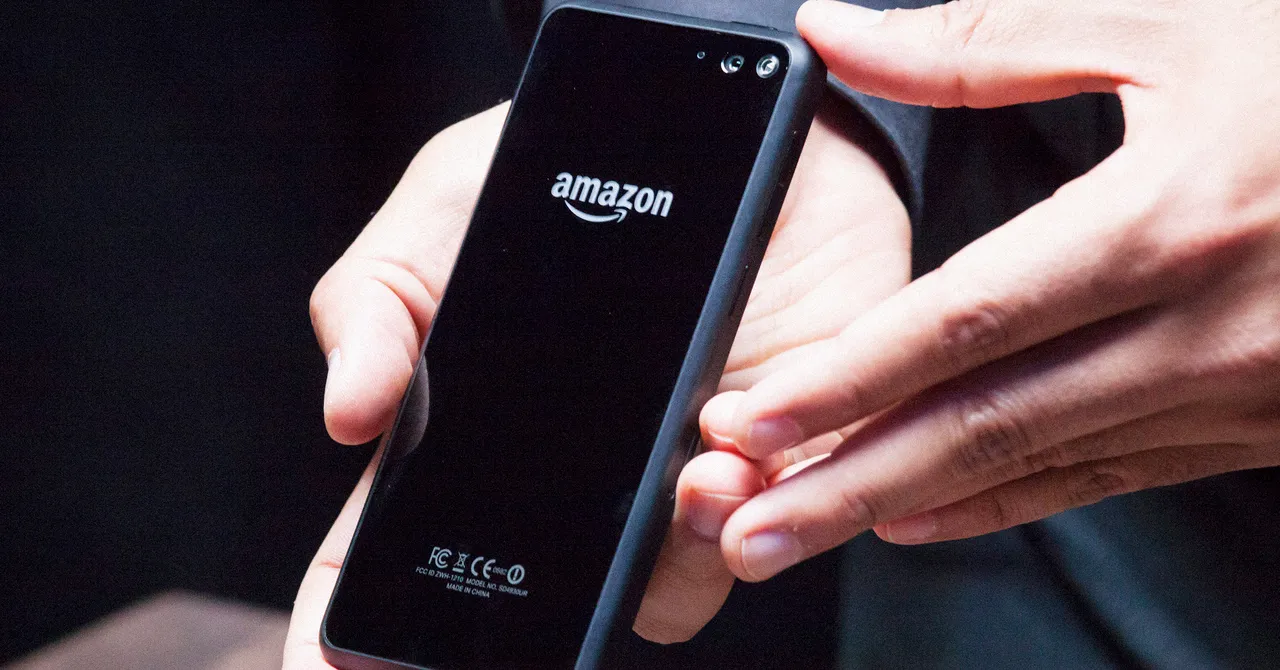
There Aren’t a Lot of Reasons to Get Excited About a New Amazon Smartphone

Published

on

“This is not a consumer device company that takes privacy very seriously,” Gamero-Garrido says. Since people use smartphones far more than Alexa or a Kindle, he says an Amazon smartphone today would “significantly increase the scale of the potential privacy harms.”

Gamero-Garrido thinks Amazon could use Transformer as a data-gathering tool to glean how people use its devices, build its advertising network, and compete with the likes of Alphabet and Meta, which are facing regulatory scrutiny in the European Union and California.

One way it could do this is through the Fire TV approach. This is Amazon’s TV streaming platform integrated into a third-party TV (or via a dongle); while you may not have bought a Fire TV-powered TV from Amazon, the data collected by the operating system is still owned by the company.

“Whether they end up succeeding with this phone supplement device, or whether they eventually use a similar model where they install their operating system on other phones or ”light” phones that are built by third parties, it has the same effect,” he says. “Ultimately, what Amazon is doing is centralizing all the network traffic through its own infrastructure so it can improve its advertising business.”

Advertisement

If Amazon can detect when a person is sick from the sound of their voice, then it can recommend that you buy specific cold medicine from Amazon Health—that’s a real patent Amazon owns. If this is now powered on a device you carry everywhere, Gamero-Garrido says it can listen to more of your conversations and serve you better ads.

Even with its past regressions, customers have shown a general acceptance of Amazon’s hardware, says Kassem Fawaz, an associate professor at the University of Wisconsin, Madison, who researches security and privacy in consumer devices.

“I think when it comes to products, unfortunately, consumers value utility and price over privacy,” Fawaz wrote in an email to WIRED.

The accelerant here could be Amazon’s Devices & Services lead, Panos Panay, who joined the company in 2023. Panay famously helped turn Microsoft’s Surface line of computers into an aspirational hardware brand through his “pumped” and emotionally charged keynotes.

Advertisement

Panay has already brought that kind of energy to a few Amazon hardware announcements, like the Kindle Scribe Colorsoft, though he has not matched the success of Surface. If Amazon is truly making a smartphone, it will need to generate a lot of passion to entice customers.

“If someone can do it, it’s going to be Panos,” Jeronimo says. “For that, I have total confidence. He is the right person for these kinds of initiatives.”

Source link

Advertisement
Continue Reading

Tech

Trump Outlines New AI Regulation Plan: What’s in It and What’s Missing

Published

on

The White House’s new policy framework for regulating generative artificial intelligence, released Friday, covers many areas, but one thing is clear: President Donald Trump wants the federal government to set the rules. And those rules appear to fall far short of what consumer and privacy advocates argue is necessary. 

The generative AI revolution has been underway for years, and US legislation is slow to catch up. This is despite the growing awareness of AI’s harms and challenges: chatbots’ dangerous impacts on mental health and child development, the widespread legal wrangling over the copyright protections, the dangerous spread of deepfakes and AI-powered scams, to name a few. 

Sen. Marsha Blackburn introduced the new policy package, called The Trump America AI Act, in Congress on Thursday. The Tennessee Republican’s bill is an attempt to codify a vision based on Trump’s 2025 AI Action Plan, while delving into more legal specifics and providing guidance on implementing new laws (or changing existing ones). 

Advertisement
AI Atlas

Trump has maintained that the federal government should be responsible for regulating the AI industry — and that requiring AI companies to comply with 50 different sets of state laws would prevent the US from “winning” the global AI race. However, a proposal to temporarily ban states from regulating AI failed back in July, when it was removed at the last minute from the massive budget bill, known as the “One Big Beautiful Bill Act.” 

Now, the White House is doubling down on its claim to be in charge, with a few exceptions. The plan addresses some of the biggest concerns people have about AI: job losscopyright chaos for creatorsrapidly expanding infrastructure such as data centers and the protection of vulnerable groups like children. But critics say it doesn’t go far enough to regulate the fast-growing AI industry. 

“It is light on protection and heavy on promotion of dangerous AI systems,” Alan Butler, president and executive director of the Electronic Privacy Information Center, said in a statement. “The American people deserve better, and Congress should do better than this.”

The White House’s new proposed AI laws

The White House’s 2026 AI proposal says Congress should not create a new governing body to oversee AI rules, but should let existing agencies and subject-matter experts regulate as they see fit. 

Advertisement

Protecting children: This is one area where the federal government won’t prevent states from creating laws. And many state governments are already leading the charge, especially in regulating romantic or companion chatbots. 

The plan highlights protecting kids from AI-powered deepfakes, a huge issue highlighted in AI creating child sexual abuse material. Shielding young people from the ill effects of AI is an ongoing battle, with several high-profile cases of teenagers using AI for self-harm and suicide.

Blackburn’s policy plan includes general language related to kids’ online safety. Existing bills like the Kids Online Safety Act and the Children’s Online Privacy Protection Rule are, theoretically, designed to protect kids, but advocates and tech experts say they could create a chilling effect on free speech and lead to censorship

Though Trump’s AI framework addresses censorship, it’s limited to preventing AI companies from including ideological or partisan bias in their products. Trump has previously railed against what he calls “woke” AI, a term the president and his allies have used to attack concepts like diversity, equity and inclusion.

Advertisement

Job loss: It’s not just translators and data entry folks who are worried about losing their jobs to AI — legacy tech workers like coders and engineers are, too. There have been a lot of concerns about AI disrupting the workforce, with retail giants like Amazon laying off thousands of employees in the name of AI efficiency. The White House says it should use “nonregulatory” methods to focus on youth development and AI workforce training.

Infrastructure: In line with Trump’s previous AI Action Plan, the framework calls for states and local governments to streamline data center construction and operation. These facilities are increasingly controversial, with nearby residents reporting environmental damage and strain on their existing electrical grids, creating higher electric bills. 

Several big tech companies recently agreed to foot the bill for any higher electricity costs, but there’s no way to enforce the voluntary pledge.

Copyright: Whether the use of copyrighted materials in AI training is fair use or copyright infringement is one of the biggest legal issues of the AI age. The plan reiterates the administration’s position that AI companies are covered by fair use — meaning they wouldn’t have to obtain permission or pay for copyrighted content when creating their models. 

Advertisement

But, given the ever-growing number of lawsuits asking the judiciary the same question, the federal government should allow those cases to play out. So far, limited cases with Anthropic and Meta have carved out narrow victories for tech companies, not authors.

The framework document hints that the federal government could become a future licensing partner for AI companies, stating that it should “provide resources to make federal datasets accessible to industry and academia in AI-ready formats for use in training AI models and systems.”

(Disclosure: Ziff Davis, CNET’s parent company, in 2025 filed a lawsuit against OpenAI, alleging it infringed Ziff Davis copyrights in training and operating its AI systems.) 

Does the White House plan do enough?

Tech industry groups praised the administration’s proposals, while consumer advocacy groups offered skepticism at best. 

Advertisement

In a statement backing the plan, the Consumer Technology Association supported a single set of rules for the entire country. 

“AI can and will make us better, and we agree that children need special protection, First Amendment rights are paramount, harmful deep fakes should be regulated, and Congress should not act to restrict AI platforms from relying on fair use protection,” the tech industry trade group said.

But according to Samir Jain, vice president of policy at the Center for Democracy and Technology, the government’s playbook is rife with internal contradictions. While it calls for the federal government to preempt state rules and laws on AI development, it also says the federal government shouldn’t undermine state authority. 

“The White House’s high-level AI framework contains some sound statements of principles, but its usefulness to lawmakers is limited by its internal contradictions and failure to grapple with key tensions between various approaches to important topics like kids’ online safety,” Jain said in a statement.

Advertisement

Ben Winters, director of AI and data privacy at the Consumer Federation of America, said the proposal prioritizes Big Tech over consumers.

“It’s encouraging to see some stated desires to protect people from AI-generated scams and data abuse of minors, but it’s not enough,” Winters said in a statement. “We need to see money where their mouth is on the protections — more money for consumer protection agencies at both the federal and state levels. So far, they’ve done nothing but cut and hamstring them.”

Source link

Advertisement
Continue Reading

Trending

Copyright © 2025