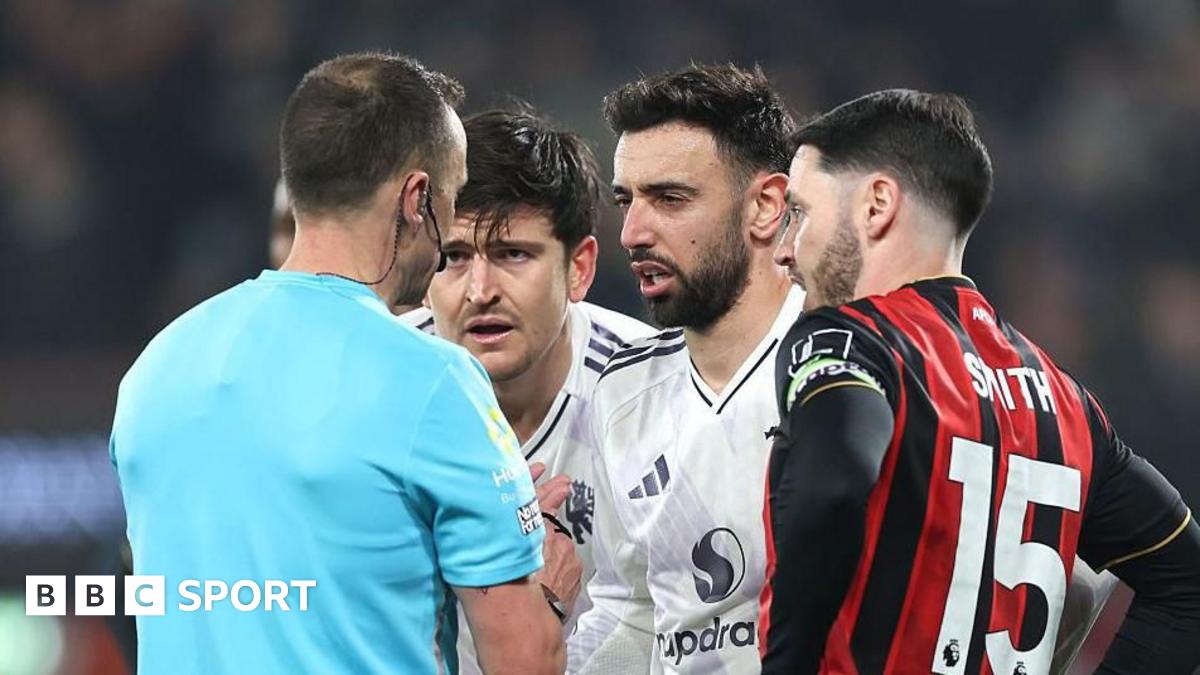
Manchester United were left furious about “astonishing” and “baffling” refereeing decisions as two penalties were awarded and one was not in their thrilling 2-2 draw at Bournemouth.
Harry Maguire’s special day – following his England recall – was spoiled by his sending off at Vitality Stadium, but it was the performance of the officials that had United fuming.
Maguire, who will return to the England squad for the first time in almost two years for upcoming friendlies with Uruguay and Japan, was sent off for pulling back Evanilson inside the box as Manchester United led 2-1 with 10 minutes to go.
Junior Kroupi subsequently scored the penalty but the decision not to award Manchester United an earlier spot-kick left interim manager Michael Carrick furious – especially after his side had been awarded a penalty for what he deemed to be a similar challenge earlier in the match.
Advertisement
The penalty the visitors were not given came when Amad Diallo appeared to be pulled back inside the box by Adrien Truffert, with Manchester United leading 1-0 after Bruno Fernandes’ penalty.
Carrick, who described the decisions made as “baffling”, said: “My first [thought] is he definitely got one of them wrong, because he’s given one penalty for the same thing that he’s not given one as a two-armed grab.
“So the Matheus Cunha one, he gives, the second one on Amad he doesn’t, which is, I think, almost identical, really, two hands on someone in the box, and they go over and they’re in control of the ball.
“Massive moment and I don’t understand how you can give one and not the other – it’s crazy. It’s as obvious as you can get.
Advertisement
“It’s clear, if that’s what he believes is a penalty to start with then the second one has to be. I don’t understand how you can’t give that. And then the goal and after that it was chaos. It’s astonishing.”
Manchester United captain Fernandes, meanwhile, felt that if Bournemouth‘s penalty was given for a foul by Maguire, then so should one for the Diallo incident.
“I think we could have gone 2-0 up, and then we ended up conceding a goal, not getting a penalty and then we get a penalty against, where more or less it’s the same situation as Amad,” he said.
“One is awarded as a penalty, the other one not. I know it’s difficult for the referee to give two penalties in the same game for the same team but what I don’t understand is why VAR doesn’t get involved in that situation.”
Professor Tim Spector has shared that these supplements may help lower the risk of developing type 2 diabetes
Fiona Callingham Lifestyle writer
02:27, 21 Mar 2026
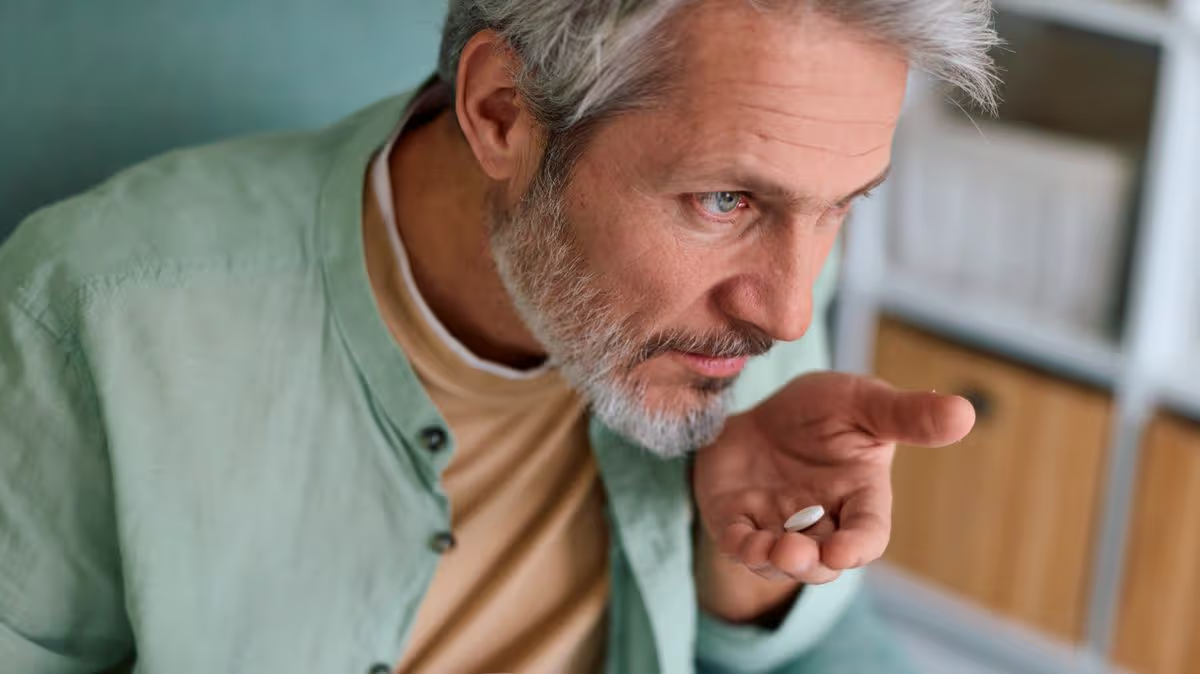
A nutrition expert has revealed a widely-available supplement that may help reduce the likelihood of a severe health condition. According to Professor Tim Spector, regularly taking this tablet could lower your risk of developing type 2 diabetes.
However, he admitted that we still don’t “fully understand” how this supplement works. And certain research indicates it might not be as advantageous as some claim.
Advertisement
During an episode of the Zoe Science and Nutrition podcast, Prof Spector explored the possible health advantages of taking vitamin D. Prof Spector, an epidemiologist and Zoe’s founder, detailed how scientific evidence regarding vitamin D’s effects has changed through the years.
This included vitamin D’s use for osteoporosis – a condition that weakens bones, leaving them fragile and at greater risk of breaking. He said: “I was a big promoter of vitamin D back in the day for osteoporosis.
Content cannot be displayed without consent
“The early studies of vitamin D showed that it worked. And everybody worried about osteoporosis, trying to prevent it, should be on vitamin D medication. But when it actually got to the big studies with fractures, there was no difference.
“And that’s now why osteoporosis experts know that vitamin D is not useful for the vast majority of people in preventing fractures.” The Royal Osteoporosis Society confirms on its website that vitamin D assists your body in absorbing and utilising calcium, which maintains your bones and muscles “strong”.
Advertisement
Additionally, the National Osteoporosis Guideline Group (NOGG) states that calcium and vitamin D support bone health. However, it recognises there is “little” evidence that vitamin D supplementation by itself decreases fracture occurrence, though it “may reduce falls risk”.
Prof Spector added: “It’s been promoted for a hundred different diseases, and I would say in 98 of them, it’s complete rubbish. It’s probably useful if you’re at risk of multiple sclerosis, reduces by a few hours if you take it during a viral infection.”
Vitamin D and diabetes
Prof Spector then summarised the connection between vitamin D and diabetes. He said: “But the latest studies show that it can reduce your risk of getting type 2 diabetes.
Advertisement
“So it’s a really interesting compound, which we still don’t understand.” A meta-analysis of research published in Diabetes Care journal in 2020 discovered that among people with pre-diabetes, consuming vitamin D could decrease the likelihood of developing type 2 diabetes.
During the research, the team identified eight suitable trials involving a total of 4,896 participants. They discovered that vitamin D supplementation “significantly reduced” the risk of type 2 diabetes (T2DM).
This advantage was observed in non-obese participants but not amongst obese participants. The reversal of prediabetes to normal blood sugar levels (normoglycaemia) was seen in 116 of 548 (21.2 per cent) participants in the vitamin D group and 75 of 532 (14.1 per cent) in the control group. The study’s authors stated: “Results from this meta-analysis show that vitamin D supplementation reduces the risk of T2DM in participants with prediabetes. Reversion of prediabetes to normoglycaemia was significantly increased by vitamin D supplementation.
“The benefit of the prevention of T2DM appears to be confined to non-obese subjects. Individual participant data meta-analyses are needed to confirm the overall result and identify subgroups that benefit the most from supplementation.”
Another study, published in the International Journal of Molecular Sciences in 2025, found: “Moreover, vitamin D has been reported to reduce the likelihood of developing diabetes by 15 per cent, particularly in doses higher than the traditional recommendations for bone health. Despite promising evidence, discrepancies in study designs, serum vitamin D measurements, and population-specific factors highlight the need for standardised methodologies and personalised approaches.
“In conclusion, vitamin D has complementary therapeutic potential in treating type 2 diabetes, revealing gaps in research, such as optimal dosing and long-term effects across populations.” However, a different review of studies, published in Cureus in 2022, discovered that “most studies” examining this topic demonstrated “no significant improvement” in blood sugar levels amongst type 2 diabetes patients.
The study’s authors stated: “Most studies conducted to discuss the effects of vitamin D on glucose metabolism supported the hypothesis that appropriate vitamin D supplementation may improve the metabolic regulation of glucose levels in type 1 diabetes; in contrast, most of the studies showed no significant improvement in the levels of hemoglobin A1C in type 2 diabetes with supplementation of vitamin D. As the prevalence of diabetes rises and vitamin D insufficiency is quite common, more investigations and research are required to figure out the exact link between vitamin D and diabetes.”
The NHS explains that vitamin D is essential for maintaining healthy bones, teeth and muscles. It warns: “A lack of vitamin D can lead to bone deformities such as rickets in children, and bone pain caused by a condition called osteomalacia in adults.”
The majority of our vitamin D comes from exposure to sunlight. Consequently, Government guidance recommends that everyone should consider taking a daily vitamin D supplement throughout the autumn and winter months.
The NHS website makes no reference to any connection between vitamin D supplements and diabetes risk. Should you decide to take vitamin D supplements, 10 micrograms daily will be “enough” for the majority of people.
Advertisement
The health body advises: “Do not take more than 100 micrograms (4,000 IU) of vitamin D a day as it could be harmful.” This guidance applies to adults, including expectant and nursing mothers and elderly people, as well as children aged 11 to 17 years. Youngsters between one and 10 years old shouldn’t exceed 50 micrograms (2,000 IU) daily. Babies under 12 months shouldn’t have more than 25 micrograms (1,000 IU) per day.
Civil unrest in the US, stock market chaos and ‘the destruction of Europe’ are just some of the consequences of Donald Trump’s attack on Iran, warns Professor Jiang Xueqin
The Beijing-based academic who has earned himself the nickname “The Chinese Nostradamus” thanks to his uncannily accurate predictions of geopolitical events has laid out a chilling timeline for the next few years. Jiang Xueqin’s outline for the next “two to four years” culminates in a dramatic change in the world order that will include “the destruction of Europe”.
Advertisement
Professor Jiang uses a synthesis of detailed historical analysis and game theory to predict the outcomes of current world events with astounding accuracy. He has already seen two relatively recent predictions come true with startling accuracy. In 2024, he correctly anticipated that Donald Trump would win the election of that year.
He then predicted that if Trump did become president again, there “will be a very strong likelihood that the United States will go to war with Iran”. Both, as we now know, are totally accurate.
And now he has made eight more chilling predictions amid the current conflict in Iran.
1. US will use ground troops
In a new lecture, he predicts the US will be forced to deploy ground troops in order to retain control of Iran, which is a vast and mountainous territory four times the size of neighbouring Iraq. That, Professor Jiang maintains, will lead to the kind of domestic unrest we saw over Vietnam in the 1960s, when thousands of young Americans refused to be drafted into what they saw as an unjust war.
Advertisement
“A lot of young people are going to refuse to fight in this war. And this is going to create protest,” Professor Jiang predicts. “Then America will have no choice but to deploy the National Guard. And this will create the recipe for a lot of civil conflict in America.”
But the fallout from President Trump’s so-called “excursion” into the Middle East will have much more far-reaching consequences than that, he says.
2. Destruction of the GCC
Professor Jiang says the Gulf Cooperation Council [GCC] – an economic and military alliance that unites Bahrain, Kuwait, Oman, Qatar, Saudi Arabia, and the United Arab Emirates in a broadly US-friendly coalition – will be obliterated.
Advertisement
“What’s happening in this war is that the economies of the GCC are being destroyed and that’s part of the plan,” he says.
Unconfirmed reports from within the US military have said that US troops involved in the Iran conflict have been told by their commanders that President Trump was “anointed by Jesus” to wage a holy war against Iran — even saying this could trigger Armageddon and mark Christ’s return.
Professor Jiang says this obsession with the End of the World, what is known as eschatology, is prevalent among the Evangelical Christians who have come to dominate the current US administration.
Advertisement
3. Turkey & Saudi Arabia will enter the war
This, he theorises, forms the background to the next phase of the conflict. He explained: “The third thing we can expect is that Turkey and Saudi Arabia will enter the war… because you want to use this war to weaken opposition to these eschatologies.”
Involvement in the war against Iran will do serious harm to Turkey, as it will the GCC nations, Jiang warns.
Taken together with Turkey’s involvement in the Iranian conflict, this represents disaster for America’s former allies. “We can expect the destruction of Europe—the end of NATO basically,” Jiang warns.
4. The Al-Aqsa Mosque will be destroyed
One of Islam’s holiest sites, the Al-Aqsa mosque lies at the very heart of Jerusalem. Professor Jiang pointed out this important site has long been a source of dispute between Israelis and Palestinians.
In April 2024, during a wave of Iranian strikes against Israel, Iran’s then-supreme leader Ali Khamenei tweeted in Hebrew: “Al-Quds [an Arabic name for Jerusalem] will be in the hands of the Muslims.” With fresh tensions between Israel and Iran, Professor Jiang believes the mosque is likely to be be massively damaged or destroyed.
5. The Rise of Persia
The professor adds that as Iran continues to fight against impossible odds, its leaders will re-embrace its ancient name of Persia.
That, again, connects to the eschatological analysis of the situation – that this current conflict is a prelude to a wider war that ends with Persian and Russian forces uniting to face a joint Israeli force at Armageddon – now known as as Tel Megiddo – in northern Israel.
Advertisement
6. Israel ascendant
Jiang believes that, as America’s economy is eclipsed, some multinational corporations will gravitate more to Israel: “Think of companies like Nvidia, Oracle, Microsoft, Google. They’ll probably transfer themselves to Israel because that is where the power will rest.”
7. Russian victory in Ukraine
With America bogged down in Iran, and NATO fatally compromised thanks to infighting over the Strait of Hormuz, Jiang says that, President Putin will take advantage of the growing chaos to finally defeat Ukraine.
8. Destruction of Europe
The ultimate endgame of all of these machinations, Jiang says, is a Europe hemmed in by Russia on one side and Iran – now occupying all or part of Turkey – on the other.
Against these two massive adversaries – both of which have advanced drone and cyber-warfare assets – Europe is unlikely to survive.
Advertisement
He adds that it’s entirely possible that Donald Trump could simply realise his mistake and withdraw his forces from the region, attempting to reassure his MAGA base that the military adventure achieved its objectives.
But even that apparently sensible move, Jiang says, carries a hidden penalty. He explained: “What happens is that Iran says to GCC, ‘Hey man, you attacked us. You destroyed our infrastructure. You destroyed our economy. You have to pay compensation.’”
Given Iran’s effective control of the Straits of Hormuz — the sole conduit for around 20% of the world’s crude oil — it could extract a toll from the oil-producing nations in order to extract this “compensation.”
Advertisement
That would make a significant dent in the US economy. Professor Jiang added: “So all this money from the GCC, before it’s going to United States to fuel the US economy… it goes to Iran.”
The outcome, Jiang suggests, is a resurgent Iran that uses its newfound wealth to industrialise and rebuild on an unprecedented scale, becoming the pre-eminent superpower in the Middle East “in five to 10 years.”
The rational move for Israel’s leaders at that point, Jiang says, would be to make some sort of peace deal with the Iranians. Meanwhile, the US economy could suffer enormously. He added: “Because the entire US economy is based on the stock market, on finance, on AI, on investment from the GCC.”
This may leave Trump with an impossible choice: commit ground troops to invade Iran and face a long and bloody war that will inevitably be a political disaster at home, or withdraw from the region and suffer almost inevitable economic collapse.
Advertisement
While either outcome will strike fear into the hearts of more rational US lawmakers, the evangelical voices that increasingly hold sway over Trump’s inner circle will see these disastrous results as a way to hasten the Second Coming of Jesus as predicted in the Book of Revelation, Jiang claims.
With Iran also dominated by theological influences, the prospect of a measured, diplomatic approach to this crisis seems remote. And if Jiang’s predictions are correct, the second half of the 2020s looks to be a very dangerous time for the entire world.
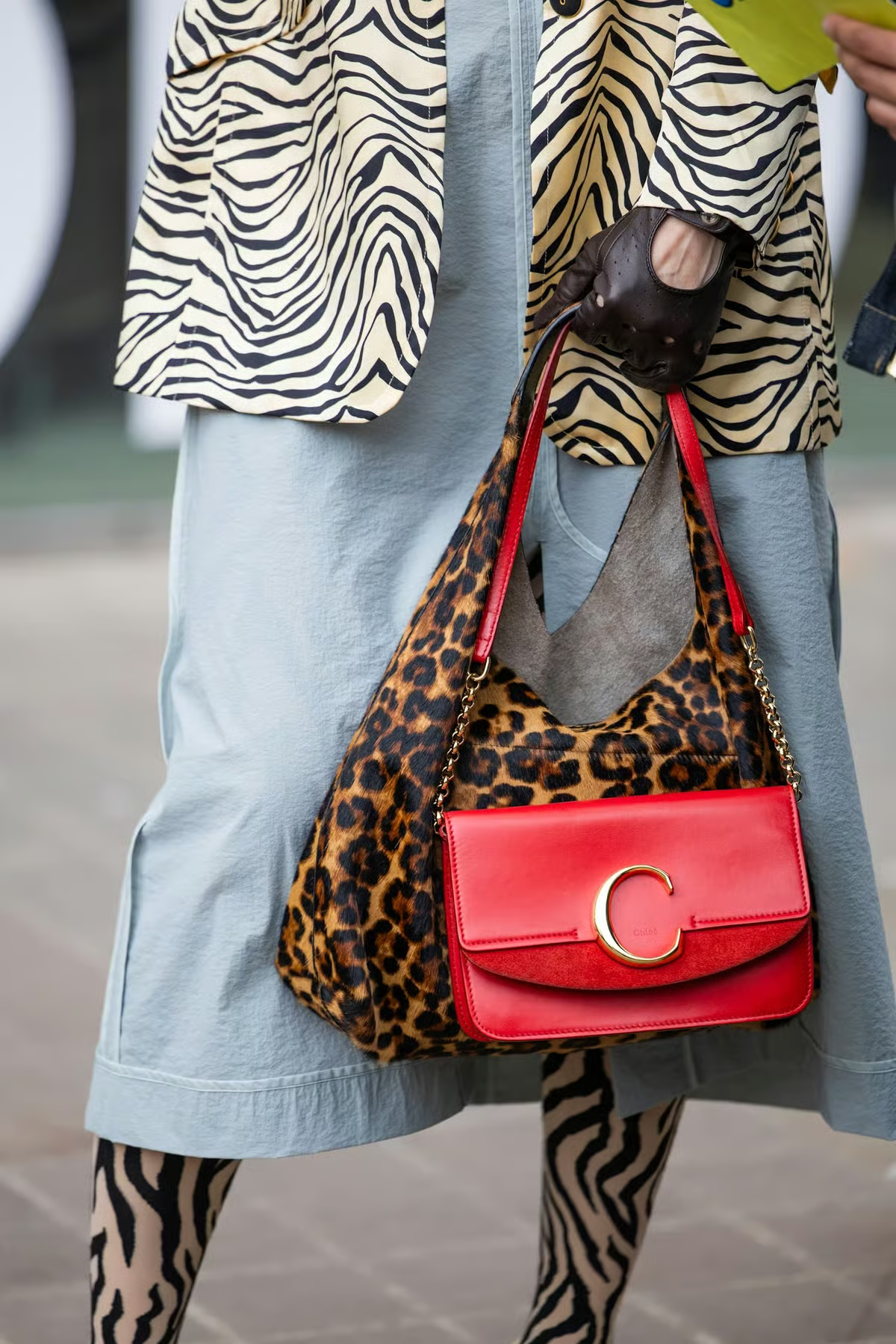
Sometimes, a trend is born from the most practical of sources: convenience. The penchant for doubling up bags seen outside fashion shows from London to New York, Paris and Milan, and on the catwalk at Fendi, is a case in point. One of the best examples of this was a London Fashion Week attendee pairing a cherry red calfskin Chloe clutch with a larger, slouchier tote in large-scale leopard print. Did she do it because the duo looked chic, or simply because she had more to carry than the clutch allowed? Who cares. The point is, why carry one fab bag when you could carry two?
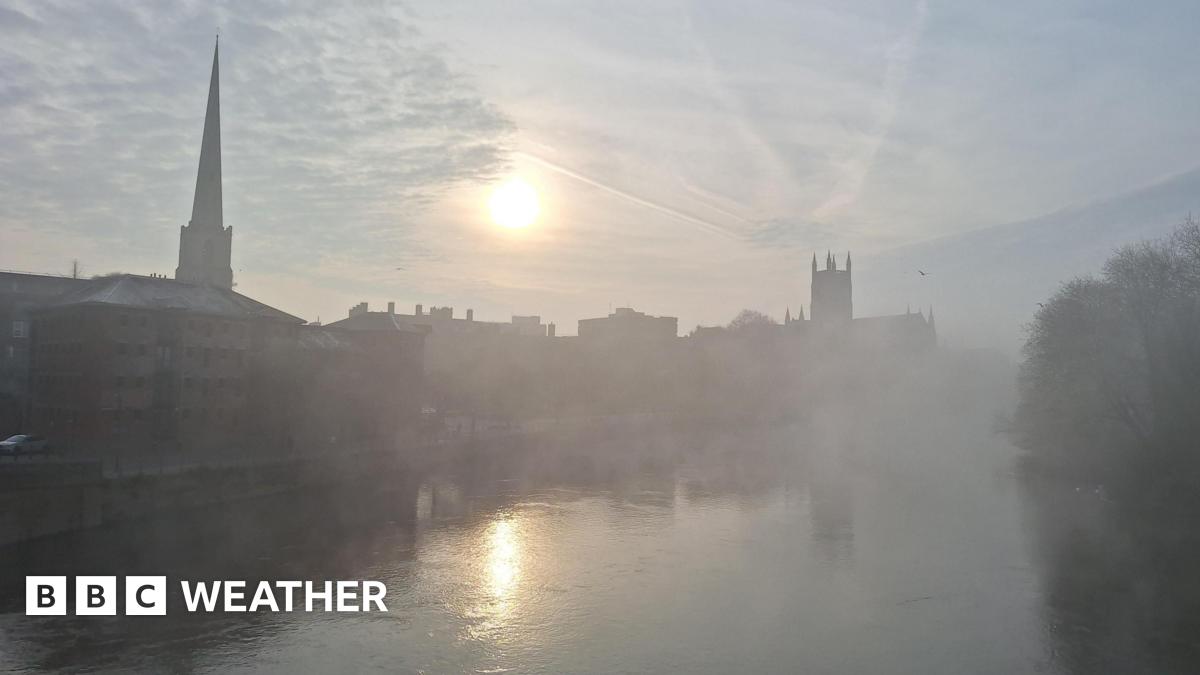
As we move beyond the weekend, the weather looks set to give us a reminder that we are still in early spring – with high pressure expected to decline and chilly conditions due to make a return.
After a largely dry Monday, a band of rain is likely to sweep southeastwards during Tuesday.
Behind it, the winds will turn northerly bringing a surge of cold air, with temperatures expected to fall below the seasonal average in many locations.
While there will be some sunshine there will also be showers – which could even turn wintry over hills in the north of the UK.
Advertisement
You can always keep up to date with the changing spring weather prospects where you are by having a look at the BBC Weather website and app.
UFC London takes centre stage once more at The O2 Arena this weekend, with UFC Fight Night: Evloev vs Murphy.
The world’s leading mixed martial arts (MMA) promotion is back on UK soil for its annual visit on Saturday night, headlined by an intriguing and hugely consequential showdown in the men’s featherweight division.
Manchester’s Lerone Murphy tops the bill against Russian Movsar Evloev in what has been labelled as an eliminator for the 145-pound title currently held by UFC legend Alexander Volkanovski.
Murphy is currently the No3-ranked featherweight in the UFC, separated from No1 Evloev by Diego Lopes, who has been unsuccessful in two title challenges over the past year – including at UFC 325 in Sydney last month.
Advertisement
‘The Miracle’ will be looking for another statement performance on home territory to take him to a first title shot, having knocked out formidable former Bellator standout Aaron Pico in sensational fashion with a spinning back elbow in the first round of his last fight at UFC 319 in Chicago last summer.
Such an emphatic victory – after which he quickly called out ‘Volk’- was made more impressive still by the fact that he accepted the fight on short notice, with Pico’s hotly-anticipated debut supposed to have come the previous month against Evloev.
That made it 18 fights unbeaten in professional MMA for Murphy, who has nine successive wins since drawing against Zubaira Tukhugov on his UFC debut in 2019.
Evloev is also undefeated, but has not fought since December 2024 after injury ruled him out of facing Pico. His last visit to the octagon was in a decision win over former bantamweight champion Aljamain Sterling at UFC 310.
Advertisement
There is more British interest on the main card in the form of Liverpool’s Luke Riley, a team-mate of Paddy ‘The Baddy’ Pimblett at the Next Generation Gym who is in the co-main event against American Michael Aswell.
It is only a second contest in the UFC for Riley, the former Cage Warriors star who knocked out Bogdan Grad in Qatar in November.
Michael ‘Venom’ Page and Sam Patterson collide in an all-British welterweight clash, while Gloucester’s Christian Leroy Duncan meets Georgian Roman Dolidze at middleweight.
Movsar Evloev has not fought since beating Aljamain Sterling in December 2024
Advertisement
Getty Images
Liverpool’s Kurtis Campbell battles Danny Silva in another featherweight bout, while Iwo Baraniewski and Austen Lane go head to head at light-heavyweight.
Mason Jones, Nathaniel Wood, Louie Sutherland, Shem Rock and Shanelle Dyer are the British fighters competing in the prelims, though Melissa Mullins is no longer in action after opponent Luana Carolina missed weight by eight pounds on Friday.
Fellow Brazilian Ravena Oliveira also missed weight but is still expected to fight Dyer. Sunderland heavyweight Mick Parkin was replaced by Felipe Franco due to injury.
Advertisement
UFC London 2026 date and venue
UFC Fight Night: Evloev vs Murphy takes place on Saturday March 21, 2026 at The O2 Arena in London, England.
UFC London 2026 start time
Saturday night’s prelim action gets underway at 5pm GMT, which is 1pm ET and 10am PT in the United States.
Advertisement
The main card is scheduled to begin at 8pm GMT, 4pm ET and 1pm PT.
How to watch UFC London 2026
TV channel: In the UK, UFC Fight Night: Evloev vs Murphy is being broadcast live on TNT Sports. Coverage of the prelim bouts commences at 6pm GMT, with the main card from 8pm.
Live stream: TNT Sports subscribers can also catch the action live online via the discovery+ app and website.
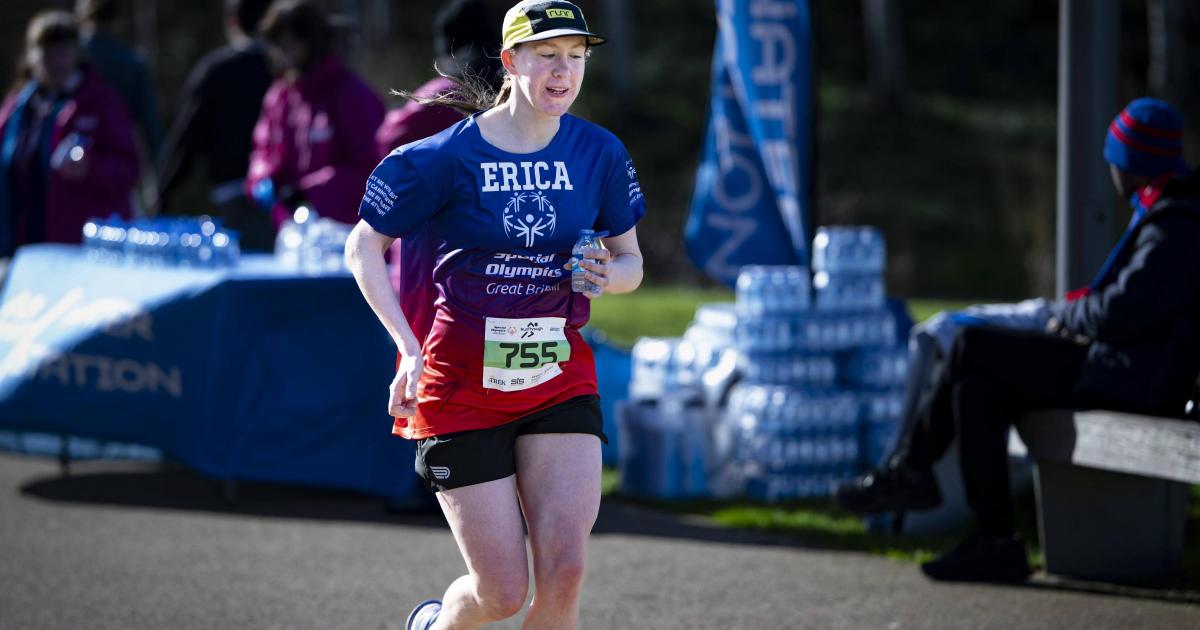
Erica Dixon, 26, from Lartington near Barnard Castle, hopes to become the fastest and youngest female runner with a learning disability (II1) to complete a marathon.
She said: “Running London has always been an ambition of mine, having previously completed the Manchester Marathon twice.
“Sport plays such a huge part in my life and I run, swim, play, and compete in as many Special Olympics GB competitions as I can around the country.”
Advertisement
Ms Dixon, a member of Special Olympics Teesdale, is one of 10 athletes representing Special Olympics GB at this year’s marathon.
The team is raising funds for the movement’s National Summer Games, where Ms Dixon hopes to compete in swimming, golf, and athletics.
She said: “Having been part of Special Olympics GB for more than 10 years, it’s fantastic to join other athletes and be part of the first ever team to run London.
“Hopefully our achievements will inspire other people with learning disabilities to get involved in sport and join a local club.”
Advertisement
Special Olympics GB uses the power of sport to change the lives of children and adults with a learning disability.
This year marks the organisation’s first National Summer Games since the pandemic, featuring eight single-sport competitions and a seven-sport, five-day event in Birmingham at the end of August.
Ms Dixon has been preparing for the London Marathon with other competitive events, including the Olympics Park Series 10K and the Middlesborough Half Marathon.
She will run the marathon with support runner Rhys Foster.
Advertisement
Both are members of Teesdale Athletics Club.
The team is also raising funds to help Special Olympics GB deliver its National Summer Games, which will give up to 1,700 children and adults with intellectual disabilities the chance to compete on a national stage.
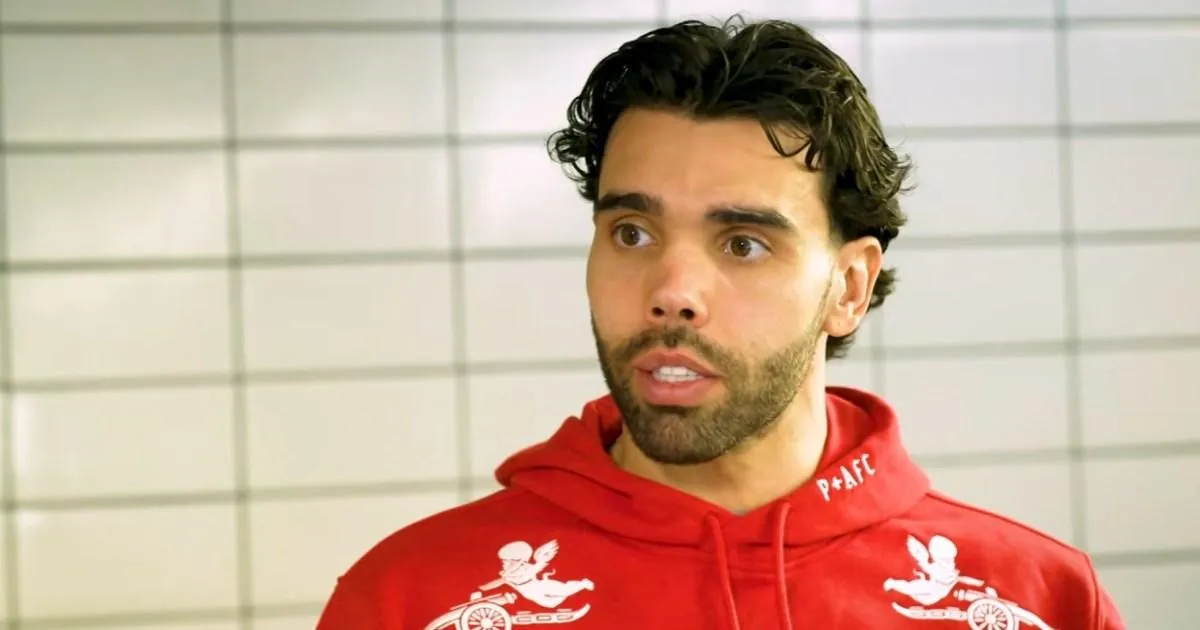
When asked about his decision to join Arsenal, Raya revealed in an interview with Sky Sports that a move to Bayern was also an option.
Advertisement
‘Just obviously the coach, the philosophy that when they came for me, the project that was there, the club was rising,’ Raya said.
‘I just wanted to make a big step in my career coming from Brentford and I think Arsenal was the best team to do it.
David Raya has been a key figure in Arsenal’s bid to win a trophy this season (AFP via Getty)
Your football fix
Metro‘s Head of Sport James Goldman delivers punchy analysis, transfer talk and his take on the week’s biggest stories direct to your inbox every week.
‘Obviously it was raising such a young squad as well and I think it was the best choice I’ve made to come to this club.
‘I was very close to go to another club but obviously everything happened with Arsenal because it was right in between and everything. I was very, very close to going to another club but luckily it didn’t happen and Arsenal in the end made the bid and I came here.’
Declan Rice and Thierry Henry praise David Raya
David Raya has made many remarkable saves for Arsenal this season (Getty)
Declan Rice: ‘He deserves every bit of credit he’s getting. I wish people could come in every day and see how he trains. Because the intensity he trains at and the level that he trains at there’s no reason why he’s not doing what he’s doing on the pitch it’s incredible to see him every day. The effort he makes with the lads, he’s turned into a real leader for us and when you’ve got a keeper like that it gives everyone confidence and yes, he’s incredible.’
Advertisement
Thierry Henry: ‘This guy should be in contention to be player of the season because of what he does for Arsenal every single time. It’s very difficult sometimes to see what a goalkeeper does because he cannot always make you win the game. He can make you hope that you’re not losing it by making saves, but he does that two to three times every single game. It’s just outstanding.’
Asked to name the club, Raya replied: ‘It was Bayern Munich.’
Advertisement
Raya was also asked to name the toughest player he comes up against in training with Arsenal.
‘I would say probably Gabriel Jesus because he’s so technical, he can do anything inside the box,’ Raya replied.
‘It’s so, so tricky to go one versus one with him. He’s a flair player, he’s Brazilian, he has so much technique.’
Justin Timberlake struggled to perform field sobriety tests requiring him to walk a straight line and stand on one leg after he was pulled over in New York’s Hamptons in 2024 by police officers who suspected him of driving drunk, according to video footage released Friday.
The pop star tells officers at one point, “these are like really hard tests.”
The footage, which runs roughly eight hours, includes Timberlake’s initial stop after Sag Harbor police said he ran a stop sign in the village center, veered out of his lane and got out of his BMW smelling of alcohol that June.
The NSYNC singer-turned-solo artist and actor tells officers he had consumed one martini and had been following friends home in the former whaling village, which is among the affluent beach towns of the Hamptons, about 100 miles (160 kilometers) east of New York City.
Advertisement
When an officer asks why he is in town, Timberlake says, “I’m on a world tour.”
“Doing what?” the officer asks.
“Hard to explain,” Timberlake says.
After stammering a bit, he says “World tour. I’m Justin Timberlake.”
Advertisement
The officer eventually responds: “You are Justin Timberlake? Do you have a license with you?”
Timberlake, who ultimately pleaded guilty to a lesser charge, is asked by officers to walk heel-to-toe in a straight line on the road and lift one leg. At times he seems flustered listening to the instructions. He apologizes to officers and tells them his heart is racing.
“I’m a little nervous,” Timberlake says at one point.
In the back seat of the police car, he asks: “Why are you arresting me?”
Advertisement
Back at the police station, Timberlake is informed he will be held overnight, to which he says, “I’m going to be here all night? You guys are wild, man.”
He asks the officer to keep the light on in the cell as they lock the door.
The release by Sag Harbor Police comes after the village and Timberlake’s lawyers agreed to disclose a redacted version of the footage. The Associated Press was among several media outlets that filed a records request seeking the release of the video.
Timberlake’s lawyers had sued to block the release of the video, arguing it would “devastate” Timberlake’s privacy by revealing “intimate, highly personal, and sensitive details.” They also said it would cause “severe and irreparable harm” to his reputation by subjecting him to “public ridicule and harassment.”
Advertisement
But in a joint filing with the village Friday, Timberlake’s lawyers acknowledged the video “does not constitute an unwarranted invasion of personal privacy under” the state’s public information law and agreed to its release.
Timberlake’s lawyers and representatives didn’t immediately respond to emails seeking comment Friday.
Sag Harbor officials, in a statement provided by the village’s lawyer, Vincent Toomey, said they are pleased the matter was resolved and they were able to comply with state public records law.
“From the beginning of this matter, after Mr. Timberlake’s arrest, the Village has attempted to comply with the mandates of the Freedom of Information Law,” the statement reads. “As would be true in any case involving records or video footage from our Police Department, such material is reviewed and redacted to address public and officer safety concerns as well as personal privacy considerations.”
Advertisement
Timberlake pleaded guilty to impaired driving in September 2024.
The Tennessee native agreed to give a public safety announcement against the perils of drunken driving as part of the plea deal that knocked down his initial misdemeanor charge to a noncriminal traffic violation.
He was also sentenced to a $500 fine, 25 hours of community service and a 90-day suspension of his license.
The stunning Maltese island of Gozo boasts dramatic cliffs, crystal-clear waters, and 300 days of sunshine a year
Holly Clarke and Chloe Dobinson Digital Production Editor
02:00, 21 Mar 2026
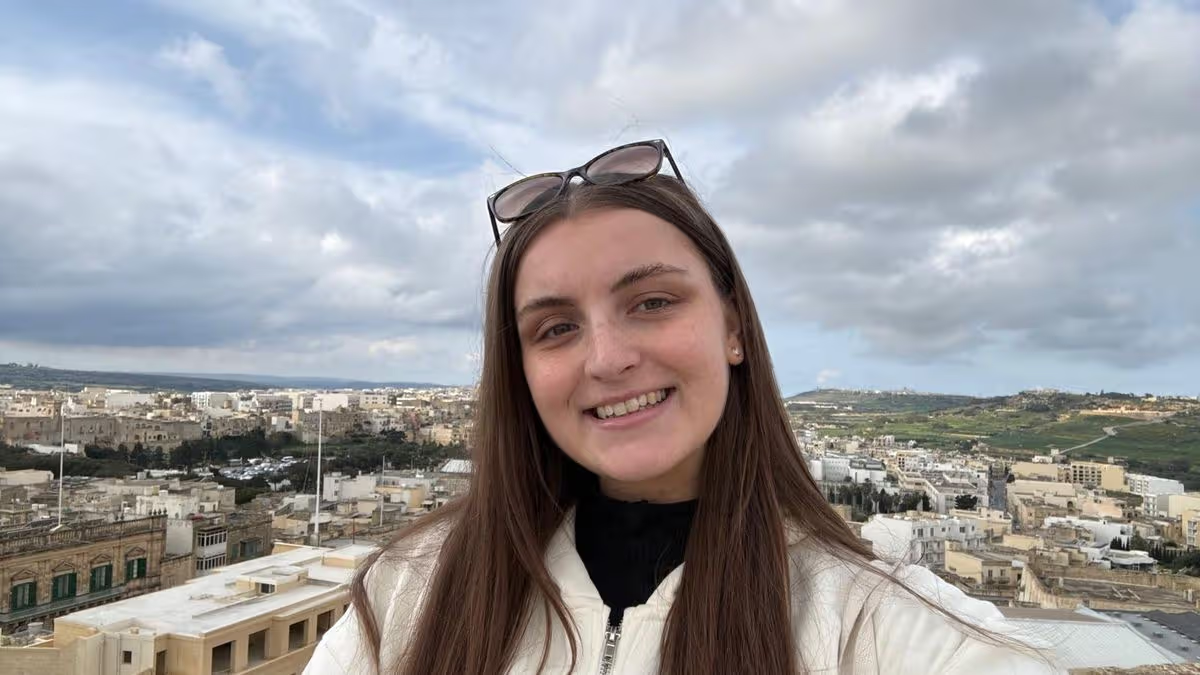
Holly Clarke visits travels to Gozo a short 20 minute trip from Malta
When jetting off to a European destination during the winter months, travellers can’t predict too much about the kind of weather they’ll encounter.
Advertisement
Recently, Holly Clarke from the Liverpool Echo took a gamble with the weather and set off on a trip to Malta. Not only did she luck out in terms of climate, but the Mediterranean archipelago turned out to be an absolute gem.
From wandering the streets of the silent city of Mdina to soaking up the buzz and activity of the capital city, Valletta, there truly is something for everyone. This includes vibrant nightlife in St Julian’s, the crystal-clear waters of the Blue Lagoon, and enough churches on the island for every day of the year.
Holly left Manchester Airport at 7am and was strolling around the stunning Balluta Bay by 12pm. Flights are also readily available from John Lennon Airport and various other airports across the UK.
The Republic of Malta comprises three islands: Malta, Gozo and Comino. Whilst Malta has the largest population of the three at around 574,000, Gozo has just 39,287 residents, with only two inhabitants on the island of Comino.
Before she knew it, Holly was embarking on a ferry journey to the island of Gozo, which is in the process of developing a new £2million airport set to significantly reduce travel times from Malta. For now, the ferry service is direct and costs around 5 Euros for a return ticket.
Within a mere 20 minutes, she found herself on the stunning, less-visited island. The 26-square-mile expanse is renowned for its rugged landscape and breathtaking scenery, and it certainly didn’t disappoint. It offers everything from delectable seafood, awe-inspiring views, to crystal-clear waters perfect for swimming.
Advertisement
Gozo is an outdoor enthusiast’s paradise with its dramatic cliffs and deep valleys. Another perk of the island is that it enjoys 300 days of sunshine – a fact that clinched the deal for Holly!
Many tourists opt to spend a night or two on the island, but Holly knew she only had a day, so there was no time to waste. Her chosen mode of transport was a tuk-tuk, provided by Yippee Malta, which she thoroughly enjoyed.
Holly was chauffeured around by Joe, a lifelong resident of the island. As she sat in the back of the tuk-tuk, Holly admired the beautiful hills, which reminded her of the striking landscapes back in the UK. The key difference was the clear blue sky and bright yellow sun piercing through the clouds, a sight she hadn’t seen for several months back in England.
Advertisement
First on the agenda was a visit to a bay called Mgarr ix Xini for a climbing and abseiling experience, facilitated by Gozo Adventures. It offered the perfect opportunity to tap into a more adventurous spirit whilst taking in the breathtaking views of the valley.
Having never climbed before, it’s fair to say Holly’s legs were shaking slightly as she looked up at the peak of the valley she was supposed to be scaling. However, after watching Cornil from Gozo Adventures’ comprehensive demonstration, Holly gave it her all and felt fantastic afterwards. Having worked up an appetite, it was time for Holly’s favourite part of any trip: the food. She hopped into a vehicle and headed to a marina restaurant, Il-Kartell. The seafood eatery was the perfect spot for lunch, located on the waterfront, offering views of the shimmering Mediterranean waters.
The restaurant prides itself on being “casual dining by the sea”, so she chose the Linguini Al Kartell and she wasn’t disappointed. It will go down as one of the most memorable pasta dishes she has ever savoured.
Advertisement
It’s clear from just a few short hours on the island that life there is unhurried. Back home, it’s easy to find yourself grabbing a sandwich during your commute to work, or sometimes forgetting to grab anything at all.
In Malta and Gozo, both locals and tourists typically spend an hour or two relishing lunch. Starting with bread and olive oil, moving onto a pasta dish, and finishing with a double espresso, it was refreshing to take the time to slow down and appreciate the world a little more.
However, there was no room for a mid-afternoon slump as there was so much to discover before the ferry ride back to Malta. Next on the itinerary were the Qbajjar Salt Pans.
Advertisement
The northern coastline is characterised by a grid of rock-cut saltpans that are 350-years-old. They are fascinating to see and are also rich in history, part of the centuries-old Gozitan tradition of sea-salt production that has been passed down through many generations. On the eastern side of the island lies Għar tal-Mixta. Situated high above Ramla Bay, the cave offered the most breathtaking panoramic views of the bay and the coastline.
The cave can be reached via a brief 15-minute walk from Ramla Bay beach, and it’s certainly a must-see on a visit to Gozo if you’re able to make the trip. Holly entered the cave through a narrow gap in the rocks, then descended a few steps to one of the most spectacular views she has ever seen.
It was quite busy with other visitors, even for this time of year, so she patiently waited her turn to snap a photo overlooking the bay.
A visit to Gozo wouldn’t be complete without experiencing the iconic Citadel. Perched on a steep hill, the Citadel is a fortified city that dominates the Gozian skyline, visible from across the island.
Advertisement
Located in Victoria, also known as Rabat, the capital of Gozo, the Citadel stands as one of the island’s most recognisable landmarks. The Citadel was once a thriving city before being transformed into a castle during the Middle Ages. Many of the ancient houses and palaces here have been renovated into museums and shops, making it a favourite destination for tourists.
Entry is free, and you could spend hours delving into its intriguing history and exploring its main attractions. We marvelled at the Cathedral of the Assumption, built entirely from local limestone. A simple walk around the Citadel offers panoramic views of the entire island of Gozo. For just 5 Euros, you can also explore the museums and historical sites on offer. Sadly, it was time to catch the ferry back to Malta, otherwise she could have easily spent several more hours here.
Had Holly stayed overnight, watching the sunset at the Citadel or taking an early morning dip in the crystal-clear waters would have been the perfect conclusion to the trip.
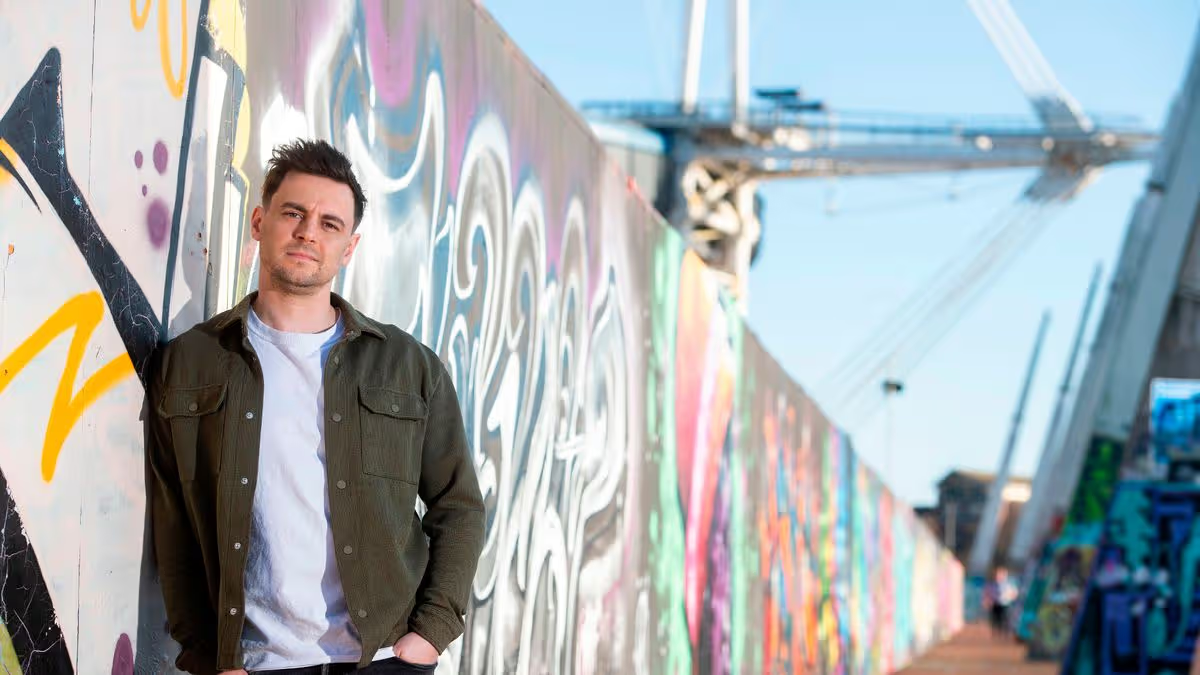
Journalist and author Will Hayward writes about the driving force behind his new book
I have covered Wales as a journalist for 10 years.
Advertisement
I moved here just under two decades ago and never left. I fell in love with Wales. It was the place I never realised I was looking for. It’s now my home and my whole adult life has been here.
Am I Welsh yet? I am not sure. As Plaid Cymru’s first MP Gwynfor Evans said: “Anyone can be Welsh, you just have to be willing to accept the consequences.”
Covering the politics of a nation as a journalist, I think I came to understand it in a way I wouldn’t have been able to do in another profession.
Once I started looking at issues in Wales and asking questions, I was incredibly surprised by one thing.
Advertisement
I wasn’t surprised at the challenges Wales faces, in our hospitals, our schools, our economy or our creaking transport system.
What really shocked me was how many people seemed to accept this was an acceptable status quo.
Time and again as a political reporter I have covered ways in which Wales has been screwed over.
It blew my mind how many people in Cymru didn’t know about how they were being shafted.
Advertisement
I also couldn’t get over how few people in a nation which is being repeatedly punched in the face even bothered to vote in the Senedd elections.
I spent a year speaking to hundreds of people all across Wales to understand the real reasons why Cymru is relentlessly at the bottom of so many metrics.
I delved into the details of how Wales is actually funded, who actually speaks for us and why we are poor.
Advertisement
I couldn’t believe what I found. People in Wales shouldn’t be angry – they need to be apoplectic.
Not because of slights from 500 years ago, but because we have the worst housing, health service, educational outcomes and levels of poverty in the UK.
We need to be incandescent that the very system in which we operate is geared up so we can’t help but fail.
In so many ways we are treated worse than Scotland. We have been given responsibility without the tools to meaningfully improve our lives.
Advertisement
We need to be furious that we are in a system which scorns and dismisses us when it bothers to notice us at all.
And we need to reserve a special level of rage for those people elected to be our voice who are barely raising a peep at these injustices.
Within the book I look at a dozen different areas where Wales is being screwed both in Westminster and Cardiff Bay. I will break some of these down for you now.
Where the money comes from
There is not enough space here to fully outline the true scale of how Wales’ is given a raw deal when it comes to funding but let me give you an idea of how we compare to Scotland.
Advertisement
Perhaps the biggest illustration of how the current system sets Wales up to fail is around the ability to carry over money.
Anyone who runs a department in government or a business knows that feeling at the end of the financial year.
You were allocated X amount of money for your budget and you have a bit left with just a few weeks left in the financial year.
This means you need to spend it fast because anything left will be taken back and you are likely to end up with a lower budget next year.
This leads to a mad rush to get money out of the door.
You pay suppliers in advance for work they might do, you buy a load of new furniture for the office or hurry through a marketing campaign. As you can imagine, this doesn’t exactly lead to value for money.
In a Welsh Government context this is a real problem.
Advertisement
After all, if it is important to get all your money out of the door then you are not rewarded for making good decisions.
For example, during the pandemic, the Welsh Government spent a fraction of what the UK Government did on contact tracing.
In Wales, we used councils, whereas the UK Government used large companies like Serco. In this case, doesn’t it make sense for the Welsh Government to be able to carry forward that cash for a future year?
Yes it does. That is why Wales has a thing called the Wales reserve.
Advertisement
Think of it as a savings account where the Welsh Government can stick money it doesn’t spend from its annual budget for next year.
Seems like a good idea, huh? Well it would be, except it is built in a way which treats Wales like a naughty teenager.
The first thing is the Welsh reserve is limited. The total the Welsh Government can have in the reserve is £350m. While that might sound like a lot, it really isn’t in a government context.
The government’s budget is £26bn. This means the Welsh reserve is just 1.35% of its budget. And that £350m isn’t per year, that is the total it can carry.
Advertisement
This means that if the Welsh Government reserve is full, then any money which isn’t spent is just taken back by the Treasury in Westminster.
What makes this system even worse is the UK Treasury has imposed limits on how much of its own reserves Wales can even use!
Each year the Welsh Government can only draw down (aka spend) £125m for resource spending (day-to-day administration costs) and £50m for capital spending (stuff like building a new road).
These are tiny amounts when you are talking about a whole country, £50m will barely get you anything when it comes to infrastructure.
Advertisement
So of that £350m, Wales can only access £175m a year.
Let’s compare Wales to Scotland when it comes to carrying over money.
Scotland has a reserve limit of £700m, double that of Wales. Now you might argue this makes sense given Scotland’s budget is more than double Wales’.
However, in Scotland there are no limits on how much it can draw down (they abolished this for Scotland in 2023) and the total increases annually with inflation.
Advertisement
There is simply no justification for Wales being treated differently to Scotland. The UK Government isn’t able to get away with treating Scotland like Wales because the Scottish wouldn’t stand for it.
It is the same when it comes to borrowing. While Wales is now allowed to borrow up to £1bn for capital purposes (big long-term investments on buildings and infrastructure), we also have an annual cap of £150m.
That means the Welsh Government is only allowed to borrow the equivalent of 0.58% of its budget every year.
This is severely limiting when it comes to being able to make the investments Wales so desperately needs. We have less borrowing powers than a council.
Advertisement
This is even more outrageous when you compare this with Scotland’s deal.
The Scottish Government can borrow up to £3bn cumulatively for capital investment, with an annual limit of £450m. But the worst part is Scotland’s limits change with inflation whereas Cymru’s are fixed for 10 years. So, Scotland not only has a better deal, it is getting cumulatively better every year.
Are you beginning to see why Wales needs to get angry yet?
Let me give you one more example when it comes to how we are funded.
Advertisement
One of the biggest areas Wales is getting short-changed is in research and development (R&D) spending.
In the east/south-east of England and London, there was £1,406 of R&D spending per person. This is 42% above the national average which is £987.
At the other end of the spectrum, the figure for Wales is just £534, 46% below the national average.
So why is this important? Well it matters because R&D funding is what drives wealth, well-paid jobs and industrial development.
Advertisement
This underlines the fallacy of devolving income tax, because Wales doesn’t have control over these things which could meaningfully increase that tax base through policy decisions.
If you look at the UK Government’s Department for Science, Innovation and Technology and where it is allocating its money, it is pretty stark.
This department funds UK Research and Innovation (UKRI) which is the UK’s national funding agency which invests in science and research across the United Kingdom.
Wales receives less than half the per-person UKRI funding of the lowest English regions, and roughly one-quarter of London’s level
Advertisement
Wales must get its fair share of the money which actually creates prosperity.
The current system gives Wales better public services than it would be able to support economically because it is poor.
But it doesn’t stop Wales being poor and doesn’t give it the ability to make itself better. This is key.
When it comes to Wales, the current system is basically subsidising the status quo.
Advertisement
We don’t receive a population share of the spending areas which could actually make a difference.
A fair share of these areas must be guaranteed, not subject to the whims of ministers in London.
Poverty and young people
If you want to see the challenges Wales faces, go and stand on Fitzhamon Embankment in Cardiff city centre. It is on the west bank of the River Taff.
As you would expect for a street in the middle of a capital city, it is always busy.
Advertisement
It is right on the Taff Trail path, leading south to Cardiff Bay and going north, it would eventually take you all the way through the South Wales Valleys and the Bannau Brycheiniog National Park before finishing in Brecon.
There are commuters on their way to work, coming in on foot or exiting Cardiff Central station. At weekends, Riverside Farmers Market is held there.
What I have always found fascinating about this street is how different things are when you look east and west.
Advertisement
When you look east across the river, you are struck by the huge investment that has poured into Cardiff over the last 25 years.
The view is impressive. The Principality Stadium, an internationally-respected venue. The new HMRC tax office. The new BBC Wales building. Cardiff University’s School of Journalism. The new Cardiff bus station.
Once upon a time, you would have seen the iconic Brains Brewery, but now there is a lone chimney in the heart of a development of two high-rise buildings with more than 700 apartments.
There is an inescapable feeling of wealth and health. The data backs this up.
Advertisement
The smallest unit of geographic statistical measurement we have in Wales is called the Lower Super Output Area (LSOA).
As of the summer of 2025, there were 1,909 LSOAs in Wales and each one contained about 3,000 people or 1,200 households.
Of those areas, the part of the Welsh capital I have just described is top when it comes to employment and income. It is second in terms of health.
When you are looking at almost 2,000 areas, being top is quite impressive.
Advertisement
But if you turn your head 180° to look west, you can see the Riverside area of Cardiff.
This is the total opposite. It ranks 1,903 out of 1,909 for housing, 1,804 for employment, 1,804 for income and 1,852 for health.
If you are a bloke in Riverside, you have the lowest life expectancy of any ward in Cardiff.
Perhaps the most shocking statistic is that every time you see a child, the chances are they are growing up in poverty, because Riverside has a 55% child poverty rate.
Advertisement
These two places are right next to each other, separated only by a sewage-filled river (I also look at the environment in the book).
This should hammer home to you that mere proximity to wealth does not stop people being poor.
In 21st Century Britain, wealth does not trickle down. Like rain in the desert, it has evaporated long before it hits the floor.
One in five people in Wales live in poverty. That is 700,000 people in our country of just over 3m.
Advertisement
Of this total, there are 400,000 working-age adults, 200,000 children and 100,000 pensioners.
What blows my mind in Wales is that of all of the age groups, kids have consistently had the highest poverty rates, followed by working-age adults with children, while pensioners, along with working-age adults without children, have the lowest.
We currently have a situation in Wales where 40% of our children aged up to four years old live in poverty, yet successive Welsh Governments have relentlessly patted themselves on the back for the Well-being of Future Generations Act.
It’s like me asking you to praise me for creating a health and safety plan while my house is on fire.
Advertisement
The evidence that growing up in poverty negatively impacts children is overwhelming.
Children who grow up in poverty are more likely to face long-term disadvantages in education (early cognitive delays and lower qualifications), health (poorer physical and mental health into adulthood) and income (reduced lifetime earnings and higher financial insecurity).
This all contributes to every other issue in Welsh society.
You can’t fix schools, hospitals and productivity when 40% of your kids are spending their first years on this planet in poverty.
Advertisement
But you also can’t fix poverty when you have poorly performing schools, hospitals and lower productivity.
It’s an abominable chicken and egg situation (we talk about farming in the book too) which will take immense political courage and long-term vision to fix.
This brings me to my last point…
This only changes if we make it
Advertisement
When I say people don’t care, I am not just talking about politicians and government officials. I mean many of us, right here in Wales, don’t seem to really care we are being condemned to being perpetually poor and languishing in stagnation.
There is this acceptance that: “Of course Wales is poor. We always have been.”
Charities and non-governmental organisations are terrified to bite the hand which starves them.
Many labour under the illusion that because they have stuck the word ‘Cymru’ after their name, they are doing their bit.
Advertisement
However, I really believe this is on all of us in Wales. Change will only happen if we get angry and demand it. But anger needs to be directed in the right direction.
If you live in Cymru, you have every right to be furious with the current situation. But misplaced fury will do more harm than good. It is not the migrant in the boat who has caused Wales’ current plight, it is the politician in a suit.
Last weekend, I went to the amazing Wales v Italy Six Nations game. Before the match starts, Welsh men and women are visibly moved to tears as they belt out Hen Wlad Fy Nhadau inside the Millennium Stadium.
To be Welsh is in the very soul of these people here.
Advertisement
Go abroad and you will always know when you meet a Welsh person, because they will have told you within 45 seconds.
But fewer than half of the people in Wales even vote in our elections. If we want this thing called Wales to work, we need to do more.
The greatest block to making Wales prosperous isn’t our substandard politicians, it is the apathy of our people and how disengaged they are from the nation they love.
The thing I most took away from my years working as a journalist and writing this book was this: the only way Wales will improve is if the people of Wales make it happen. No-one is coming to help us. We have to help ourselves. Right now, we are collectively failing.
Advertisement
On May 20, 2025, I was watching First Minister’s Questions inside the Senedd.
It was being broadcast on the BBC website. At one point there were just 10 people watching it. 10.
In the last Senedd election in 2021, most people who were eligible to vote in Wales didn’t even bother. It was just a 46% turnout. In Scotland it was 17 percentage points higher.
We are totally disengaged from this country we proclaim to love.
Advertisement
Yes, Wales and the Welsh nation has been screwed over from pretty much the moment it was conceived, but right now, in 2026, we are as much to blame as anyone for our plight. Culpable through our own apathy.
Who cares about Wales? Just us. Luckily, that’s all Wales needs. But to make ‘caring’ mean anything, we need to truly understand what our problems are and then use our anger to force the changes that are needed.












































You must be logged in to post a comment Login