Connect with us
DAPA Banner

NewsBeat

Dates, schedule and ticket prices explained

Published

on

Dates, schedule and ticket prices explained

BBC Sport and ITV have once again split the matches between them, with two of England’s group matches on ITV (the first against Croatia and third against Panama) and one on BBC (the second match against Ghana). The final will be shown on both channels simultaneously.

Since the 1998 World Cup, England’s win percentage at major tournaments is considerably better on BBC, leading to fears of an “ITV curse”.

Scotland’s group games follow the reverse pattern, with their group-stage opener against Haiti and third match against Brazil on BBC and the middle game against Morocco on ITV.

Advertisement

For the first time, parts of the World Cup will be free to watch on YouTube after Fifa struck an agreement with the streaming platform. The first 10 minutes of every game will be streamed live on YouTube, with broadcasters sharing a select number of full matches on the website. “Content creators” will be part of the coverage as Fifa seeks to attract a new generation of fans.

Fan groups demanded an immediate halt to World Cup ticket sales last December, accusing Fifa of charging “extortionate” prices to the most dedicated supporters.

Football Supporters Europe (FSE), which represents groups across the continent, called for sales via the likes of the Football Association to be suspended when it emerged that watching England at next summer’s tournament could end up costing at least £5,000.

According to FSE, the minimum $6,900 (£5,143) fans would have to pay to follow their country from their first match until the final was nearly five times as much as during the last World Cup.

Advertisement

In response to growing public pressure, Fifa announced a cheaper band of £45 tickets would be made available, but only for a small percentage of seats.

In the latter stages of the tournament, the majority of the cheapest tickets are £686 for the semi-final and £3,119 for the final, pricing condemned by the Football Supporters Association’s Fan Embassy.

“Surprise surprise Fifa are finding out that supporters will turn their backs on ludicrous prices, however prestigious the game. Thousands of pounds for any football match is beyond greedy,” a statement said.

“The most loyal fans, be they English supporters or those of any other nationality, are being priced out.

Advertisement

The final phase of ticket sales will be last-minute general sales, where any remaining tickets are offered on a first-come, first-served basis. This phase will begin in April, and you can access the ticket portal on Fifa’s website here.

There are fears that this World Cup could prove the most expensive ever for supporters, with Fifa operating “dynamic pricing” and taking a 15 per cent fee on resale tickets from both buyer and seller.

Thursday, June 11, 2026
Mexico vs South Africa, 8pm UK time (ITV)

Friday, June 12, 2026
South Korea vs European Play-Off D winner (Czech Republic, Denmark, North Macedonia or Republic of Ireland), 3am UK time (ITV)
Canada vs European Play-Off A winner (Bosnia and Herzegovina, Italy, Northern Ireland or Wales) 8pm UK time (BBC)

Advertisement

Saturday, June 13, 2026
USA vs Paraguay, 2am UK time (BBC)
Qatar vs Switzerland, 8pm UK time (ITV)
Brazil vs Morocco, 11pm UK time (BBC)

Sunday, June 14, 2026
Haiti vs Scotland, 2am UK time (BBC)
Australia vs European Play-Off C winner (Kosovo, Romania, Slovakia or Türkiye), 5am UK time (ITV)
Germany vs Curacao, 6pm UK time (ITV)
Netherlands vs Japan, 9pm UK time (ITV)

Monday, June 15, 2026 
Ivory Coast vs Ecuador, 12am UK time (BBC)
European Play-Off B winner (Albania, Poland, Sweden or Ukraine) vs Tunisia, 3am UK time (ITV)
Spain vs Cape Verde, 5pm UK time (ITV)
Belgium vs Egypt, 8pm UK time (BBC)
Saudi Arabia vs Uruguay, 11pm UK time (ITV)

Tuesday, June 16, 2026 
Iran vs New Zealand, 2am UK time (BBC)
France vs Senegal, 8pm UK time (BBC)
Intercontinental play-off winner 2 (Bolivia, Iraq or Suriname) vs Norway, 11pm UK time (BBC)

Advertisement

Wednesday, June 17, 2026
Argentina vs Algeria, 2am UK time (ITV)
Austria vs Jordan, 5am UK time (BBC)
Portugal vs Intercontinental play-off winner 1 (DR Congo, Jamaica or New Caledonia), 6pm UK time (BBC)
England vs Croatia, 9pm UK time (ITV)

Thursday, June 18, 2026 
Ghana vs Panama, 12am UK time (ITV)
Uzbekistan vs Colombia, 3am UK time (BBC)
European Play-Off D winner (Czech Republic, Denmark, North Macedonia or Republic of Ireland) vs South Africa, 5pm UK time (BBC)
Switzerland vs European Play-Off A winner (Bosnia and Herzegovina, Italy, Northern Ireland or Wales) 8pm UK time (ITV)
Canada vs Qatar, 11pm UK time (ITV)

Friday, June 19, 2026 
Mexico vs South Korea, 2am UK time (BBC)
USA vs Australia, 8pm UK time (BBC)
Scotland vs Morocco, 11pm UK time (ITV)

Saturday, June 20, 2026
Brazil vs Haiti, 2am UK time (ITV)
European Play-Off C winner (Kosovo, Romania, Slovakia or Türkiye) vs Paraguay, 5am UK time (ITV)
Netherlands vs European Play-Off B winner (Albania, Poland, Sweden or Ukraine), 6pm UK time (BBC)
Germany vs Ivory Coast, 9pm UK time (ITV)

Advertisement

Sunday, June 21, 2026 
Ecuador vs Curacao, 1am UK time (BBC)
Tunisia vs Japan, 5am UK time (BBC)
Spain vs Saudi Arabia, 5pm UK time (BBC)
Belgium vs Iran, 8pm UK time (ITV)
Uruguay vs Cape Verde, 11pm UK time (BBC)

Monday, June 22, 2026
New Zealand vs Egypt, 2am UK time (ITV)
Argentina vs Austria, 6pm UK time (BBC)
France vs Intercontinental play-off winner 2 (Bolivia, Iraq or Suriname), 10pm UK time (BBC)

Tuesday, June 23, 2026
Norway vs Senegal, 1am UK time (ITV)
Jordan vs Algeria, 4am UK time (ITV)
Portugal vs Uzbekistan, 6pm UK time (ITV)
England vs Ghana, 9pm UK time (BBC)

Wednesday, June 24, 2026
Panama vs Croatia, 12am UK time (BBC)
Colombia vs Intercontinental play-off winner 1 (DR Congo, Jamaica or New Caledonia), 3am UK time (ITV)
Switzerland vs Canada, 8pm UK time (ITV)
European Play-Off A winner (Bosnia and Herzegovina, Italy, Northern Ireland or Wales) vs Qatar, 8pm UK time (ITV)
Morocco vs Haiti, 11pm UK time (BBC)
Scotland vs Brazil, 11pm UK time (BBC)

Advertisement

Thursday, June 25, 2026
South Africa vs South Korea, 2am UK time (BBC)
European Play-Off D winner (Czech Republic, Denmark, North Macedonia or Republic of Ireland) vs Mexico, 2am UK time (BBC)
Curacao vs Ivory Coast, 9pm UK time (BBC)
Ecuador vs Germany, 9pm UK time (BBC)

Friday, June 26, 2026
Tunisia vs Netherlands, 12am UK time (BBC)
Japan vs European Play-Off B winner (Albania, Poland, Sweden or Ukraine), 12am UK time (BBC)
European Play-Off C winner (Kosovo, Romania, Slovakia or Türkiye) vs USA, 3am UK time (ITV)
Paraguay vs Australia, 3am UK time (ITV)
Norway vs France, 8pm UK time (ITV)
Senegal vs Intercontinental play-off winner 2 (Bolivia, Iraq or Suriname), 8pm UK time (ITV)

Saturday, June 27, 2026
Cape Verde vs Saudi Arabia, 1am UK time (ITV)
Uruguay vs Spain, 1am UK time (ITV)
New Zealand vs Belgium, 4am UK time (BBC)
Egypt vs Iran, 4am UK time (BBC)
Panama vs England, 10pm UK time (ITV)
Croatia vs Ghana, 10pm UK time (ITV)

Sunday, June 28, 2026
Colombia vs Portugal, 12.30am UK time (BBC)
Intercontinental play-off winner 1 (DR Congo, Jamaica or New Caledonia) vs Uzbekistan, 12.30am UK time 
Algeria vs Austria, 3am UK time (BBC)
Jordan vs Argentina, 3am UK time (BBC)

Advertisement

Round of 32
Sunday, June 28 to Saturday, July 4
England’s match in this round would be on BBC

Round of 16
Saturday, July 4 to Tuesday, July 7
England’s match in this round would be on BBC

Quarter-finals
Thursday, July 9 to Sunday, July 12
England’s match in this round would be on ITV

Semi-finals
Tuesday, July 14 to Wednesday, July 15
England’s match in this round would be on BBC

Advertisement

Third-place play-off
Saturday, July 18

Final
Sunday, July 19, 10pm UK time
World Cup final will be shown on both BBC and ITV

Source link

Advertisement
Continue Reading
Click to comment

You must be logged in to post a comment Login

Leave a Reply

NewsBeat

Thousands of pounds stolen in burglary at Cambridge post office

Published

on

Cambridgeshire Live

The incident took place at around 2.30am this morning (Friday, March 20)

Police are appealing for anyone with information to come forward after thousands of pounds was stolen from a post office in Cambridge. Cambridgeshire Police were called to the Post Office in Kings Hedges Road in Cambridge at around 2.30am this morning (Friday, March 20).

Advertisement

It was reported a burglary was taking place. Thousands of pounds of cash was stolen during the incident. An investigation into the burglary is currently ongoing and police are now asking for anyone with information, dashcam footage or doorbell CCTV footage to come forward.

You can report anything through the force website using the reference 35/20500/26.

A spokesperson for Cambridgeshire Police said: “We were called at about 2.30am this morning (20 March) to the Post Office in Kings Hedges Road, Cambridge, after reports of a burglary. Thousands of pounds of cash was stolen and an investigation is on-going.

“Anyone who has any information, dashcam or doorbell CCTV footage, should report it through the force website using reference 35/20500/26.”

Advertisement

To get more news and top stories delivered directly to your phone, join our new WhatsApp community. Click this link to receive your daily dose of CambridgeshireLive content.

We also treat our community members to special offers, promotions, and adverts from us and our partners. If you don’t like our community, you can check out any time you like. If you’re curious, you can read our Privacy Notice.

Source link

Advertisement
Continue Reading

NewsBeat

Vet reveals 5 dog breeds he would never own for ‘heartbreaking’ welfare reasons

Published

on

Daily Mirror

Veterinary doctor, Ben Simpson-Vernon has advised prospective dog owners against five canine breeds that he has witnessed suffer from ‘heartbreaking’ health concerns

For those considering adding a dog to the family, a vet has opened up on the five breeds of canine he would never personally own due to “heartbreaking” circumstances surrounding their welfare. Ben Simpson-Vernon acknowledged that his viewpoint “might upset some people”, but also pointed out that if owners of these particular breeds “walked in his shoes”, they may be put off by the “health problems and difficult situations” he regularly experiences.

The vet pointed out that not only are such breeds forced to suffer from a variety of health problems, these issues can prove very distressing for their owners – as well as being expensive to treat.

Advertisement

Check out the five breeds he said he would personally steer clear of owning below.

Content cannot be displayed without consent

Dachshund

First on Ben’s list is the Dachshund, a dog he appreciates is so popular amongst families, but one which can poses serious health risks. “Their risk of painful back problems is just so high that I could never own one,” he explained.

Ben continued, noting that the breed has a one-in-four lifetime risk of developing IVDD (Intervertebral Disc Disease), which can lead to slip discs. “Many of these dogs end up paralysed and needing really expensive invasive spinal surgery,” he warned. “Some of them never recover or regain the use of their hind limbs or their bladder control. A lot of people seem to get these dogs and just hope it doesn’t happen to theirs – but one in four is not great odds.”

‘Tiny Dogs’

Not a specific breed, but Ben also highlighted concerns over “tiny, tiny little dogs”, such as “teacup” Chihuahuas, Yorkies and any other type of dog that is specifically bred to be as small as possible. He elaborated: “This is not conducive for a great life as a dog and some of these dogs are so fragile that they can fracture limbs just from jumping off a table.”

Advertisement

Ben added that he also sees many other health problems in these dogs such as hydrocephalus, which is a build-up of fluid on the brain and hypoglycemia or low blood sugar, something he claims is really common in these puppies, whilst others require liver shunts, and suffer from dental problems and heart disease.

Shar Pei

“I remember the first time I saw a Shar Pei puppy,” Ben recalled as he identified the third breed on his list. “I assumed there was something wrong with it as it looked so facially distorted – but it was just a normal Shar Pei puppy.

However, the vet went on to advise prospective owners that because of their excess loose skin, their eyelids often roll inwards as puppies, who then need them to be tacked open again using stitches to avoid hair scraping their eyes and ulcerations. “Often they need a facelift-style surgery to permanently correct the problem,” he added.

Ben also advised that the Shar Pei appearance is down to a genetic mutation, which means they have too much mucin in their skin and therefore are at a higher risk of skin infection and autoimmune problems including Shar Pei Fever, which can lead to kidney failure. “They are a breed that are literally defined by a genetic abnormality,” he said.

Advertisement

Cavalier King Charles Spaniel

Fourth on Ben’s list is the Cavalier King Charles Spaniel, which he admitted in “many ways is the perfect family dog”. However, he also noted they have a “dark secret” that people are unaware of.

“About half of them are affected by a spinal problem called syringomyelia, where fluid accumulates in the spinal cord and can cause phantom nerve pain and many other signs,” Ben warned. “We truly don’t know how many of these dogs are in chronic pain and it’s all related to their domed skull shape – and as if that wasn’t bad enough, almost all Cavaliers get a heart disease called Mitral Valve Disease, which can lead to coughing and breathing difficulties and is the cause of death for about half of them.”

French Bulldog

Concluding Ben’s list is the French Bulldog, which he appreciates make “great companions”, but find it “hard to convey” how much suffering he has seen them go through over the years. “One study put their average life expectancy at four-and-a-half years because so many of them die young,” he exclaimed.

Ben continued: “It has become normalised that these dogs snore and breathe noisily – but this is not normal for any dog.” He went on to warn that so many French Bulldogs end up requiring surgery on their airways just to help them breathe and “live a half decent life”.

Advertisement

He closed by noting that the breed is also susceptible to slipped discs and other spinal problems that can cause severe pain and paralysis, eye ulcers, ear infections, sleep apnea, heat stroke and chronic skin problems. “The list goes on and on,” Ben said. “IT’s obviously unpleasant for the dogs for them to endure this pain and suffering, but it can also be really distressing for the family too.”

Source link

Continue Reading

NewsBeat

Woman with endometriosis told ‘have another baby – it’ll stop the pain’

Published

on

Cambridgeshire Live

The Cambridgeshire woman describes the pain as “being stabbed repeatedly and then left bruised internally for days afterwards”

A Cambridgeshire woman with endometriosis who spends “probably three weeks out of the four every month” in excruciating pain was told by doctors to “have another baby – it’ll stop the pain”.

Advertisement

Cherie Bane, 39, from March, has been living with endometriosis for 25 years. She has struggled with the condition since she was 14, although she did not receive her official diagnosis until she was 36.

Endometriosis is a long-term condition where tissue similar to the uterus lining grows outside of it and causes symptoms including intense period pains.

Cherie said: “Between the ages of 14 and 24, I lost count of how many times I ended up in hospital with severe pain.”

Despite being prescribed medications to cope with the pain, the only thing that Cherie finds comfort in is a hot water bottle. From her teens through to her early 30s, she said she was “told repeatedly by doctors to ‘have another baby – it will stop the pain.’”

Cherie is grateful to have had children but “pregnancy did not stop the pain”, she said. From the age of 24, Cherie stopped going to hospital as often because “I couldn’t leave my children not knowing when I would be back”. She added: “The thought of being admitted and not being able to care for them terrified me.”

In August 2023, following an MRI scan, Cherie was officially diagnosed with deep infiltrating endometriosis in several areas. Since Cherie’s diagnosis, she has had two clinic appointments and is currently on the waiting list for a total laparoscopic hysterectomy and excision of endometriosis.

However, Cherie has reportedly been told that even with a hysterectomy, there is no guarantee it will fix the pain or stop the spread of the endometriosis.

Advertisement

She said: “I live in pain probably three weeks out of the four every month. My husband has to pick me up off the bathroom floor because I pass out.”

After coming around, following a “crippling” episode, Cherie said she finds herself drenched in sweat and shaking. She added: “The pain feels like being stabbed repeatedly and then left bruised internally for days afterwards.”

Cherie explained that is not only the physical pain she struggles with but the condition has also impacted her work life due to the amount of time she has taken off because of the pain.

She added: “I am fortunate now that I do work from home, so when I do have bad days, I can sit on the sofa with my laptop, a hot water bottle and try and get through what I can. After 25 years of fighting to be believed, I am still fighting.”

Advertisement

Source link

Continue Reading

NewsBeat

If rivers had legal rights, sewage scandals would be much harder to ignore

Published

on

If rivers had legal rights, sewage scandals would be much harder to ignore

World Water Day on March 22 is intended to be a celebration. Yet, for many in the UK, it brings up images of rivers and beaches contaminated with raw sewage, with 450,000 discharges recorded in England in 2024. It’s become a major political scandal, and is now the subject of a bleak Channel 4 docudrama.

But what if rivers themselves could take legal action against this pollution?

A growing movement of campaigners and researchers say rivers should be granted their own rights, independent of their value to humans. In this framework, rivers are not just resources to be used, but entities with the legal right to flow and to remain unpolluted. Crucially, those rights could be enforced in court by designated human guardians. Advocates of these “rights of nature” say it could give rivers a powerful new way to challenge pollution.

Advertisement

Activists protest against sewage release into the River Thames near Oxford.
Elly Godfroy / Alamy

The problem of raw sewage dumping is directly linked to the privatisation of water companies in 1989. In theory, an independent regulator would protect rivers and the environment and ensure that monopoly companies, such as Thames Water, would not abuse their powers. But in practice, the system has struggled to prevent widespread pollution or hold companies to account – leaving rivers with no direct legal voice of their own.

The push for privatisation came alongside the relatively new idea that water should be treated as an economic good. For water companies, water is a commodity like oil or coal. They make money by charging for it, while pollution control is a cost they seek to minimise. When oversight is weak, dumping sewage in rivers becomes a cost-cutting or profit-making part of their business model.

Failings like these are why, since the beginning of the century, many people have started thinking about legal rights as an alternative to privatisation and ineffective protection.

There are valid questions about how it would work in practice. The guardian, for instance, is still a human voice but their mandate would be specifically to protect the rights of the river, including the ability to take cases to court.

Advertisement

This would change how sewage dumping is handled. At present, discharges are treated as a regulatory breach and are managed through permits and fines. If rivers had legal rights, repeated pollution could instead be challenged as a violation of those rights – and of the river’s “personhood”. A rights-based framework mandates that the person (in this case, the river) must be restored to their previous position, before their rights were violated. This could mean polluters being forced to restore the river and its ecosystems to their previous state, or to pay compensation to the river itself (rather than a fine that disappears into an overall government budget).

This sounded like wishful thinking only a few years ago, but in some places it is already becoming a reality. In 2025, Lewes District Council in East Sussex, England, backed the Rights of River Ouse Charter, which acknowledges the right of the river to exist, its right to flow and to be free from pollution – the equivalent of the right to life for human beings.

However, a single local council cannot create rights that would replicate the rights you or I might have. That would require major national legal changes. For now, the charter is a statement of intent and a guide for local policy, and the River Ouse has some way to go before its new status can be enforced.

A case from the French Pacific territory of New Caledonia shows how hard it is to enshrine such changes. After the Loyalty Islands Province adopted a legislative amendment to recognise the rights of sharks and marine turtles, the measure was challenged and the Conseil d’Etat – France’s highest court of appeal – determined that the province lacked the power to grant legal personhood to natural entities.

Advertisement
River viewed from a canoe

In Colombia, the River Atrato has been awarded legal personhood to recognise its importance to local communities and the damage caused by illegal mining.
oscar garces / shutterstock

But in New Zealand, the Te Awa Tupua (Whanganui River) really does have full “legal personhood”. In 2017, national legislation – the Te Awa Tupua (Whanganui River Claims Settlement) Act – gave the river full legal rights and duties, to recognise the local Māori tribe’s spiritual connection to what some describe as a living ancestor.

Back in the UK, the recognition of river rights may help avoid a repeat of the catastrophic regulatory failures that the Channel 4 docudrama illustrates. As long as rivers are treated as assets to be managed, pollution remains negotiable – and ultimately acceptable. Recognising their rights would shift the priority from managing pollution to preventing it, and would make environmental protection a legal obligation, not a policy or business choice.

Source link

Advertisement
Continue Reading

NewsBeat

Brighton vs Liverpool FC LIVE: Premier League match stream, latest team news, lineups, TV, prediction

Published

on

Brighton vs Liverpool FC LIVE: Premier League match stream, latest team news, lineups, TV, prediction

Liverpool begin the weekend in fifth place, which will be enough for a Champions League spot next season despite a disastrous week for teams at Europe’s top table, but with Aston Villa two points ahead, and more importantly, Chelsea one point behind – the pressure to pick up points is paramount for all involved.

Source link

Continue Reading

NewsBeat

Israel strikes Hezbollah’s civilian and military wings in attempt to crush group

Published

on

Israel strikes Hezbollah's civilian and military wings in attempt to crush group

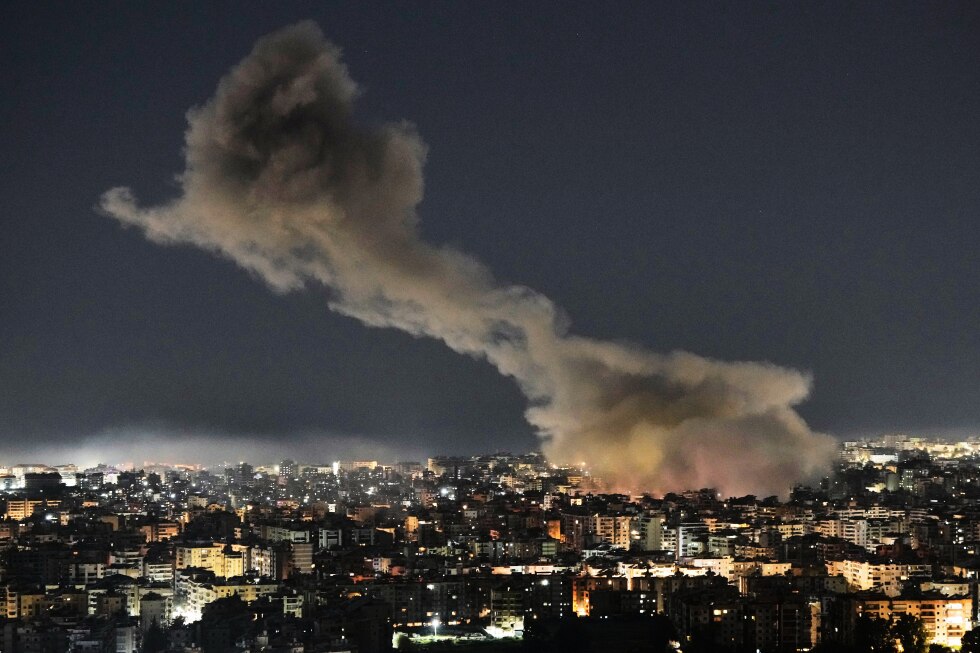
BEIRUT (AP) — An Israeli strike on a health center in southern Lebanon instantly killed 12 medical workers, seriously wounded one and left four missing under the rubble for hours.

The March 13 strike in the village of Burj Qalaouiyah, one of the single deadliest strikes in Lebanon since the latest Israel-Hezbollah war began on March 2, targeted a center run by Hezbollah’s health arm, the Islamic Health Society, which has so far lost 24 members over the past two weeks.

Since the latest war began, Israel’s military has not only been targeting the group’s military assets but also its civilian institutions in an apparent attempt to weaken the Iran-backed group further and try to push its supporters away from it.

Hezbollah is a political party as well as an armed group, and its health and social service institutions have helped strengthen its base of support over the years.

Advertisement

In addition to health centers, Israel has destroyed more than a dozen branches of Hezbollah’s financial arm, al-Qard al-Hasan. Other strikes heavily damaged Hezbollah’s Al-Manar TV headquarters and its Al-Nour radio stations.

The strikes also have targeted the group’s Amana gas stations and discount shops known as Sajjad, where low-income people can buy highly subsidized products.

On Wednesday, an Israeli airstrike on an apartment in central Beirut killed Mohammed Sherri, the head of political programs at Hezbollah’s Al-Manar TV, along with his wife.

Israel has accused Hezbollah of using health facilities for military purposes and has said al-Qard al-Hasan — officially a charitable organization that provides interest-free loans — finances the group’s military activities. Lebanon’s Health Ministry denies the Israeli claims about Hezbollah’s health facilities being used for military purposes.

Advertisement

“This is a different war that will not end with a ceasefire,” said Hilal Khashan, a political scientist at American University of Beirut. “This war will not end before Israel achieves its full objective – that is, the elimination of Hezbollah not only as a military movement, but also the ultimate objective is to erase Hezbollah from the Lebanese political picture.”

Hezbollah is under internal and external pressure to disarm and knows this latest fight is crucial. Intense clashes along Lebanon’s southern border between Hezbollah fighters and advancing Israeli troops have left dozens of Lebanese gunmen dead.

During a visit to the northern front Monday, Israel’s army chief Gen. Eyal Zamir said that Hezbollah is now fighting “a war for its very existence and is paying a heavy price for entering this battle.” He added that pressures exerted by Israel’s military will only “increase more and more.”

Hezbollah vows to keep fighting

“This is an existential battle. It is not a limited or simple battle,” Hezbollah leader Naim Kassem said in a televised speech over the weekend. Kassem vowed that his group would fight to the end and never surrender.

Advertisement

Israel says that Lebanon has failed to disarm the group in accordance with the Lebanese government’s own plans, and that therefore Israel will carry out the mission itself.

Unlike previous conflicts with Israel, the current one comes as the Lebanese government has called Hezbollah’s military activities illegal and authorities have detained several members of the group for carrying weapons without a license.

Like previous wars, Hezbollah is being criticized by its opponents in Lebanon who blame the Iran-backed group for triggering this war by firing rockets into Israel. Hezbollah fired the rockets to avenge the killing of Iran’s Supreme Leader Ali Khamenei, less than two days after the U.S. and Israel began their attacks on Iran, triggering a war in the Middle East.

Israel retaliated with a campaign of airstrikes on parts of Lebanon that has so far left more than 1,000 people dead and over 1 million displaced from their homes in southern and eastern Lebanon as well as in Beirut’s southern suburbs.

Advertisement

“Hezbollah took a suicidal initiative that will not change the equation,” said legislator Samy Gemayel, who heads the nationalist Kataeb Party, adding that Tehran is using Lebanon “as a platform to defend Iran.”

A previous 34-day war between Israel and Hezbollah in 2006 ended with a draw. A 14-month conflict that started in October 2023 — when Hezbollah fired rockets in support of Palestinians a day after the Oct. 7, 2023, Hamas-led attack on southern Israel — killed much of Hezbollah’s political and military command and left the group severely weakened but not destroyed.

Strikes followed by backlash

After airstrikes hit Hezbollah’s institutions even in central Beirut, residents protested and forced the group to close a branch of al-Qard al-Hasan in the heart of the capital. Bowing to the pressure, workers removed the financial institution’s sign and dismantled ATMs, marking the end of its presence in central Beirut.

Amnesty International has said that the al-Qard al-Hasan branches are not legitimate military targets under international humanitarian law and that the strikes should be investigated as war crimes.

Advertisement

“The Israeli military has appeared to assume that labelling something as Hezbollah-affiliated, be that healthcare workers, homes in border villages, or financial institutions, makes it targetable. That’s wrong,” said Heba Morayef, regional director for the Middle East and North Africa at Amnesty International.

Mahmoud Karaki of Hezbollah’s Islamic Health Society said that during the last war in 2024, his group lost 153 members in Israeli attacks. But he vowed that the group would continue its work as it has done in previous wars.

“By targeting us, they are targeting the safety network for the people and their steadfastness in areas under attack,” Karaki said

The Israeli military’s Arabic spokesperson alleged that Hezbollah is using ambulances to transport weapons and fighters, a charge that the paramedic group strongly denies.

Advertisement

Hezbollah and Iranian officials have said that any halt in U.S.-Israeli strikes on Iran should also include a stop to Israeli attacks in Lebanon.

Senior Hezbollah official Mahmoud Qamati told Lebanon’s Al-Jadeed TV on Monday that “Iran will not leave Lebanon nor the resistance, nor will it allow that Lebanon remains vulnerable,” adding that “Lebanon will be part of this victory and will not be left alone.”

When Iran’s Foreign Minister Abbas Araghchi was asked if Tehran could accept a ceasefire to stop strikes on Iran while they continue in Lebanon, he said: “I don’t think so.”

“We do not believe in a ceasefire; we believe in ending the war. And ending the war means exactly that — ending the war on all fronts,” Araghchi told Al Jazeera English, adding that this includes Lebanon, Yemen, Iraq, Iran and “other countries of the region.”

Advertisement

Source link

Advertisement
Continue Reading

NewsBeat

Motorcyclist killed in crash on major Stockport road

Published

on

Manchester Evening News

An investigation is underway

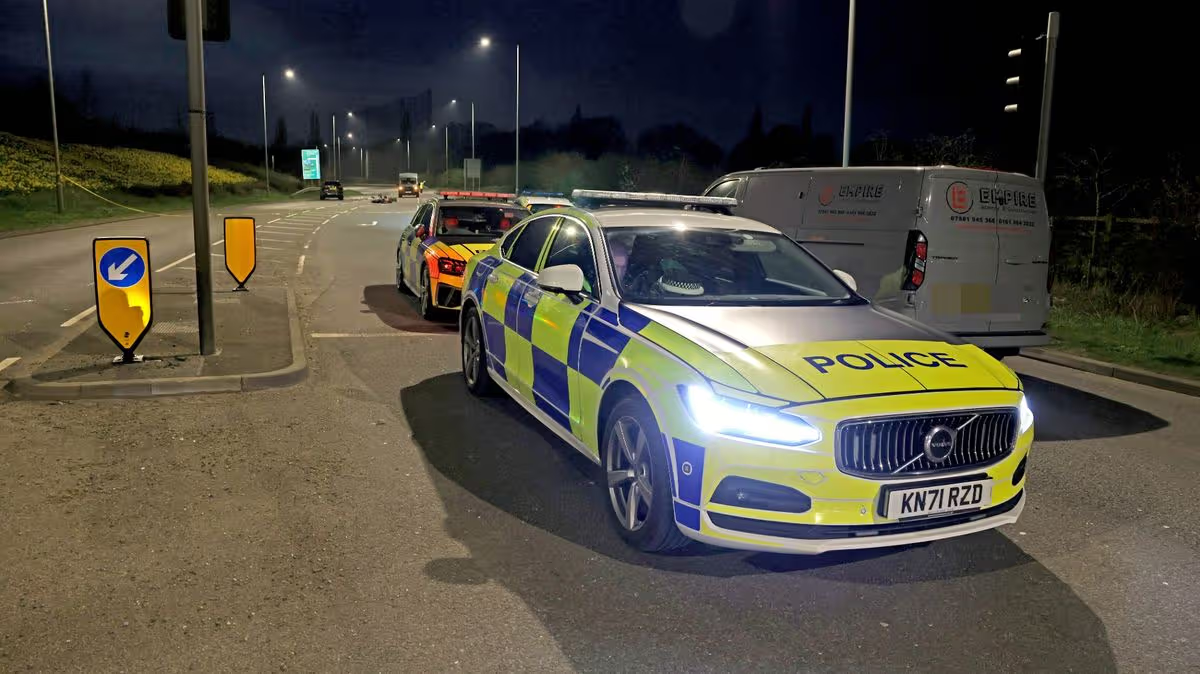
A motorcyclist has tragically died following a horror crash in Stockport. Emergency services descended on the A6 Buxton Road, in Hazel Grove, at around 3.30pm on Friday (March 20).

Greater Manchester Police says the collision involved several vehicles, including a motorbike. The rider, a man in his 30s, sadly died at the scene. His family have been informed by police.

There are not thought to have been any other injuries following the crash. No arrests have been made, but witnesses are being urged to come forward as an investigation into the crash gets underway.

Advertisement

Get MEN Premium now for just £1 HERE – or get involved in our WhatsApp group by clicking HERE. And don’t miss out on our brilliant selection of newsletters HERE.

The A6 was closed for several hours between the A555 junction in Hazel Grove and Windlehurst Road in High Lane while emergency services worked at the scene. An air ambulance had been seen landing nearby.

A badly-damaged motorbike and two other vehicles were seen inside the cordon afterwards. Debris could also be seen on the ground as initial collision investigation works took place.

A GMP spokesperson said: “Our Serious Collision Investigation Unit (SCIU) is appealing for information after a motorcyclist died in Stockport. Officers were called to Buxton Road, Hazel Grove, at around 3:30pm yesterday (March 20) when there was a collision involving several vehicles.

“A man in his 30s who was riding a motorbike was pronounced dead at the scene attended by emergency services – our thoughts are with his family, who are being supported by specialist officers. No other injuries have been reported. Those involved in the collision are assisting officers, however currently there have been no arrests.

“If you have any information or dashcam footage of this incident which could assist the investigation, please contact SCIU on 0161 856 4741 quoting incident number 2139-20/03/2026. Alternatively, you can call us on 101 or talk to us via LiveChat at www.gmp.police.uk.”

Source link

Advertisement
Continue Reading

NewsBeat

Is the biggest march in English history a myth? My research shows King Harold sailed down to the battle of Hastings

Published

on

Is the biggest march in English history a myth? My research shows King Harold sailed down to the battle of Hastings

In 1066, England was invaded by multiple foreign powers. A northern force led by King Harald Hardrada of Norway advanced on York via the River Humber, while a southern force, led by Duke William of Normandy (later William I the Conqueror) crossed the Channel with forces from Normandy, France, Brittany and Ponthieu, and took up position at Hastings.

King Harold of England had to dash up from London to deal with the vikings, only to hurry back south again to deal with William. A distance of more than 250 miles separated his victory at Stamford Bridge (on September 25) from Battle, the site of his defeat (on October 14) at the Battle of Hastings.

His “almost miraculous” march, as one historian described it, became part of Harold’s legend. It’s now taught in schools, recreated by re-enactors and depicted in TV dramas such as the recent BBC miniseries, King and Conqueror (2025).

For some, Harold’s forced march was an incredible feat of generalship. For others, it was a fatal mistake. The conquest historian Allen Brown criticised Harold’s “reckless and impulsive haste”, while Henry Loyn accused Harold of “rashness” in undertaking a mad dash south that exhausted his men and led to his defeat at Hastings.

Advertisement

Researching my new biography, Harold, Warrior King, I turned to the Latin and Old English sources. And what I found surprised me.

Tom Licence with the statue of Harold and Edith in West Marina Gardens, East Sussex.
Tom Licence, CC BY-SA

Going back to the beginning, the forces Harold had assembled that spring to counter the threat of Norman invasion were a land army and a fleet stationed on the south coast. They remained there until September 8, by which time William’s fleet had still not appeared. The land army was then sent home, and the fleet sailed to London.

According to the Anglo-Saxon Chronicle, our most reliable contemporary account, after the fleet returned, Harold learned that Harald Hardrada was invading the north.

In 1801, the historian Sharon Turner took the Chronicle’s phrase “after the fleet came home” to indicate that the ships had all returned to their various ports. The father-figure of 1066 studies Edward Augustus Freeman agreed, and subsequent historians fell in with believing that Harold had no fleet when news of the vikings came.

Advertisement

A reference to a fleet (lið) which Harold then arrayed on the River Wharfe, south of York, when advancing on the vikings, was taken to refer to some hastily gathered force.

Assertions in two early Latin accounts of the battle that Harold had sent a fleet against William at Hastings appear to have confused many historians, who had come to believe that Harold had disbanded the fleet.

It was this apparent lack of a fleet that led Freeman to surmise Harold had marched up and down the country. But Freeman was not the first to suggest this; John Milton had written of the king marching to London “in great haste” in his book History of England in 1670.

The thing scholars appear not to have recognised is that where the chronicle speaks of the fleet “coming home”, it means coming home to London. In its entry for the year 1052, the same chronicle refers to the fleet journeying “homeward to London” in this way.

Advertisement

Thus, the statement that has long misled scholars into thinking Harold’s fleet was disbanded actually indicates he retained it all along.

Video: University of East Anglia.

A centuries-old error

Once I had spotted what appears to be a 200-year-old error, I was able to join the dots. The presence of a fleet on the River Wharfe now made sense, for this was the same fleet which Harold had sent up from London, having used it, we may assume, to transport troops.

And those early references to Harold sending hundreds of ships against William’s camp at Hastings indicate that he sent the ships back down to London subsequently, after the battle of Stamford Bridge.

Advertisement

Furthermore, the king may have enlarged his fleet with captured viking vessels, since the chronicle states that 300 viking ships sailed into the Humber, but only 24 returned to Norway.

What, then, of the march? When I looked into the Latin and Old English texts, I was unable to find any reference to it. There are references to Harold hurrying south very quickly and to Harold “moving” his army south, but the march is missing.

A reenactment of the 1066 march.

Some scholars were so wedded to the idea of a forced march, however, that the translators of the Norman account Deeds of Duke William (circa 1071) translated the Latin phrase “returning speedily to attack you” (festinus redit in te) as “advancing against you by forced marches”.

Advertisement

Freeman called the march “almost miraculous”. And such a march would be. Sailing, however, would have taken a few days and allowed the English army a chance to rest. Since the sources track the movements of the fleet but nowhere mention a march, it would appear that Harold used ships for all his operations.

If Harold used ships, of course, he cannot be accused of “reckless and impulsive haste”, and the cause of his defeat at the Battle of Hastings must be sought elsewhere.

No longer that desperate, land-locked defender as traditionally depicted, assaulted on all sides from the sea, this research shows that Harold was a seaborne commander equal to his foreign foes – and no less sophisticated in combining warfare on sea and land in England’s defence.

This article features references to books that have been included for editorial reasons, and may contain links to bookshop.org. If you click on one of the links and go on to buy something from bookshop.org The Conversation UK may earn a commission.

Advertisement

Source link

Continue Reading

NewsBeat

Five players may miss Man City vs Arsenal in Carabao Cup final after fresh Erling Haaland update

Published

on

Manchester Evening News

Manchester City meet Arsenal in the Carabao Cup final and several players may miss the match at Wembley Stadium as Mikel Arteta and Pep Guardiola have decisions to make

Manchester City could be close to having an almost fully fit squad again for the Carabao Cup final against a potential injury-affected Arsenal.

Advertisement

Josko Gvardiol is the only City player that Pep Guardiola will definitely be without as the defender continues to recover from a leg fracture. Max Alleyne has also been absent from their last two matches. John Stones, Rico Lewis and Savinho have been missing recently, too. However, all three made the bench for their midweek loss to Real Madrid.

Bernardo Silva was shown a red card in that game for handball, but the ban only applies to UEFA competitions, so he remains available for the cup final.

Get MEN Premium now for just £1 HERE – or get involved in our City WhatsApp group by clicking HERE. You can also join our City Facebook page by clicking HERE, and don’t miss out on our brilliant selection of newsletters HERE.

Pep Guardiola also sounds positive about Erling Haaland despite withdrawing the striker during the second half in midweek. He said afterwards: “Erling Haaland has no injury, he will be available against Arsenal in the cup final.”

Advertisement

Guardiola added on Friday: “I’m pretty sure he’s focused, like all of us. I didn’t speak with him, we had two days off [after the Real Madrid match], but I’m pretty sure he’s ready.”

As for City’s opponents, Eberechi Eze, Jurrien Timber and Martin Odegaard are all questionable to play. The trio did not participate in Friday’s training session, but Mikel Arteta confirmed that the team will train again on Saturday.

Content cannot be displayed without consent

The former City assistant manager has not ruled out any of them returning for Sunday’s match. Eze seems the most probable to play, despite apparently sustaining a minor injury during Tuesday night’s Champions League victory over Bayer Leverkusen.

The goalscorer was substituted midway through the second half as a precautionary measure, but reassured TNT Sports afterwards: “I’m alright, I’ll be OK.” Arteta also confirmed there were no new injuries following their fixture in Germany.

Advertisement

Mikel Merino remains sidelined for an extended period, with Odegaard and Timber also out. Their captain has now missed six consecutive matches due to a knee injury since appearing as a second-half substitute in the north London derby.

FOLLOW OUR MAN CITY FB PAGE! Latest news and analysis via the MEN’s Manchester City Facebook page

Odegaard also sat out four of the five games before that, his only appearance being as a substitute against Brentford. Timber, on the other hand, was substituted before half-time in the 2-0 victory over Everton due to an ankle injury.

However, the issue seems minor as he is due to join the Netherlands for their upcoming friendlies against Ecuador and Norway. Notably absent from the Norway squad is Odegaard, while England have also selected Eze for their matches against Japan and Uruguay.

Advertisement

Arteta discussed the fitness of Odegaard and Timber during Friday’s pre-match press conference. Arsenal’s manager said: “We have another training session, so the ones that are in contention hopefully can give us good news. We have another session, so let’s see if they can make it.”

Sky Sports discounted Premier League and EFL package

This article contains affiliate links, we will receive a commission on any sales we generate from it. Learn more
Content Image

£49

£35

Sky

Advertisement

Get Sky Sports here

Sky has slashed the price of its Essential TV and Sky Sports bundle for the 2025/26 season, saving £336 and offering more than 1,400 live matches across the Premier League, EFL and more.

Sky shows at least 215 live Premier League games each season, an increase of up to 100, plus Formula 1, darts, golf and more.

Source link

Advertisement
Continue Reading

NewsBeat

Northern Lights forecast to reappear across UK on Saturday

Published

on

Small Prophets

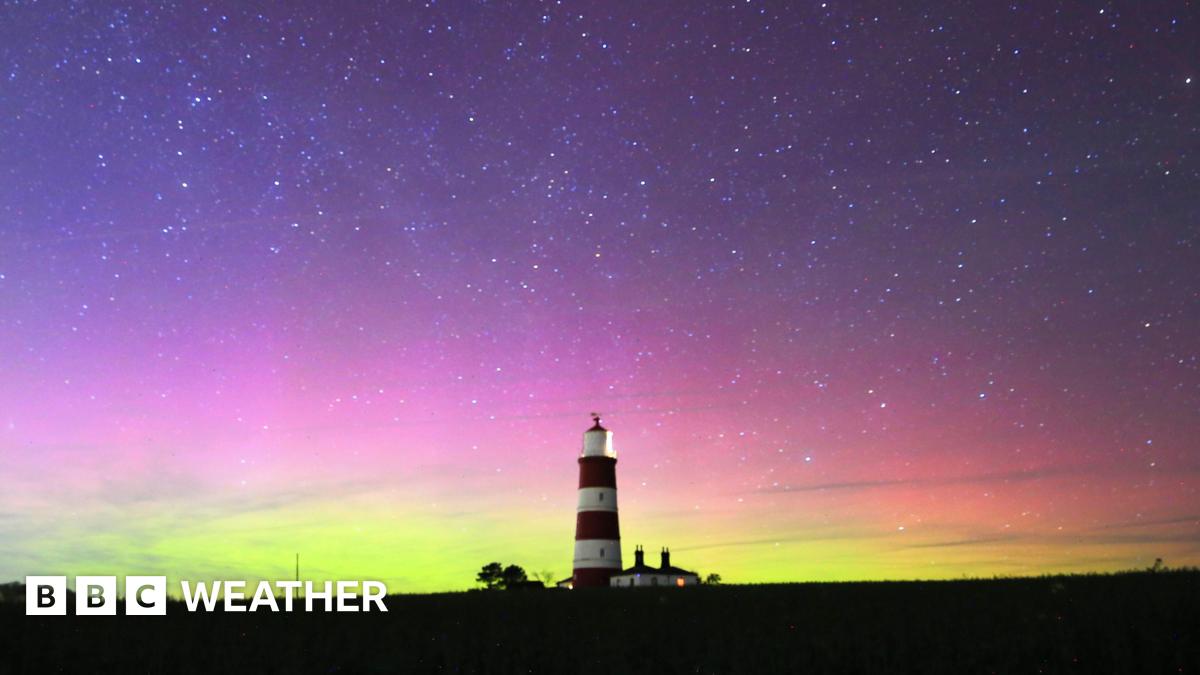
If you missed the display on Friday night, forecasters at the Met Office Space Weather Prediction Centre say it could be seen again on Saturday night.

They say “geomagnetic activity is expected to remain… with a chance of reaching a strong storm”.

The Northern Lights could therefore be seen across Scotland, Northern Ireland and northern areas of England and Wales.

There’s also a small chance they could be seen further south.

Advertisement

Cloud could spoil the view for those in Scotland and Northern Ireland but elsewhere, especially during the first part of Saturday night, there will be some clear skies.

To have a go at spotting the lights, look to the north for a faint glow at first and, if you can’t see the colours, try through a camera lens or on your phone.

Geomagnetic storms and solar flares are perfectly safe for us as we are protected from the radiation by our atmosphere, but they can interfere with technology.

Source link

Advertisement
Continue Reading

Trending

Copyright © 2025