Somehow, the whole thing got even faster. Earlier this month, Chinese automaker BYD announced that its Flash Chargers, first rolled out a year ago, can now charge some electric vehicle batteries from around 10 to 70 percent in five minutes, and from 10 to full in about nine. That’s more than 600 miles of range in the time it takes to order a cappuccino and leave a nice tip.
The new BYD chargers can add miles super quickly because they deliver up to 1,500 kilowatts (kW) per charge. Compare that to the 350 kW “hyper-fast” chargers seen more typically in the US, which can top up 80 percent of a battery in 15 to 25 minutes, and the full thing in closer to 40.
BYD’s move brings the charging experience closer to the auto industry’s holy grail: comparable to what drivers expect when they fill up their gas tanks. Survey after surveyfinds that potential EV buyers are worried about range and charging; speeding things up might go some way toward alleviating fears and getting more drivers seriously thinking about the plug. BYD, which doesn’t sell in the US because of high tariffs and national security concerns, has built more than 4,000 of the chargers in China so far, with plans to construct some 16,000 more by the end of the year, plus 2,000 in Europe.
There is, naturally, a catch—plus a few reasons to believe that a super fast charger won’t solve all of the world’s charging issues.
Advertisement
Right now, only one car will be able to take advantage of the Flash Chargers’ hyperspeed in Europe: BYD’s Denza Z9GT, due to make its Paris debut next month. That’s because the EV comes with the newest generation of BYD’s Blade battery. Making its own cars, its own chargers, and its own batteries gives BYD a significant leg-up in charging speeds over most global competitors, as the tech works together. (Tesla has also vertically integrated the charging experience.) To charge at such high speeds, the vehicles’ software and wiring need to be built to handle that much electric current.
BYD didn’t respond to WIRED’s questions, but according to Chinese language media, the newest Blade battery uses a lithium manganese iron phosphate (LMFP) chemistry to increase energy density. (The last version used lithium-iron phosphate, or LFP, which trades some energy density for durability and fast-charging capability). BYD says it has redesigned all of its battery elements, including the electrodes that store and release energy, the electrolytes that allow for ion transfer between electrodes during charging and discharging cycles, and the separators that disconnect and then conduct ion flow.
This all ups the battery’s energy density by 5 percent compared to what it touted as the latest and greatest last year. BYD says the Denza Z9GT can hit more than 620 miles per charge. (Real-life ranges tend to be a bit lower than claims by auto companies.)
The charger itself, a slick, teal T-shaped system that evokes—you guessed it—a gas station pump, belies its complexity. Dishing out more than a megawatt from the electric grid is no small feat, both in hardware and construction involved. BYD says it will make the rollout of the new charger a little easier by incorporating them into existing BYD charging banks, so that the infrastructure isn’t starting from scratch. Beyond that, BYD says it will use storage batteries at the charging sites to supplement the electrical grid, so the grid isn’t overloaded.
Advertisement
The Limits
Despite these impressive speeds, don’t expect BYD’s new system to change the game for EVs. “It’s a good, marginal improvement in technology,” says Gil Tal, who directs the EV Research Center at UC Davis’ Institute of Transportation Studies. “It’s not something that changes most people’s daily life.”
The first reason is practical. Today, most US EV owners have access to at-home charging and only use public fast-chargers on the occasional trip that stretches their 250-mile range. For those people, the difference between charging in 20 minutes and in 5 minutes might be close to negligible.
According to Nvidia’s press materials, DLSS 5 enhances lighting and material interactions without modifying underlying geometry. The company later reiterated this point to HotHardware, while TechSpot also highlighted commentary from Ryan Shrout arguing the tech is not simply a post-processing filter. However, in email exchanges with YouTuber Daniel Owen, Nvidia… Read Entire Article Source link
With the upcoming Android developer verification rules, there’s been a growing concern regarding Google effectively killing sideloading Android apps.
But Google says that’s not the case.
In a fresh blog post, the company basically confirmed that sideloading apps will still be possible, even from unverified developers, using a new system called “advanced flow.” So you’re not losing the handy feature; it’s just getting a little harder.
Nadeem Sarwar / Digital Trends
What does advanced flow even do?
According to Google, advanced flow is designed as a one-time process for users who want to install apps from outside the Play Store. In the past, one simply had to toggle the “install from unknown sources” setting, but now, there is a multi-step verification process before one can proceed. This includes:
Confirming that they’re not being scammed or coerced
Restarting the device
New wait time before installation
Authentication via PIN or biometrics
The simple idea behind the change is that Google wants to make Android sideloading more intentional and harder to abuse.
Why is Google doing this?
The new restrictions aren’t appearing out of the blue. This is a part of a broader change. Starting from September 2026, Android will require apps to come from verified developers. While the change will initially hit select regions, a wider roll out is expected later.
Advertisement
Jesse Hollington / Digital Trends
Google’s aim is to make it harder for malicious developers to distribute harmful apps repeatedly under new identities. Regardless, the company acknowledges that sideloading is a core part of Android and its “open” nature. Thus, the option is still being kept alive, albeit in a slower way.
What this means for everyday users
The changes from Google don’t affect a majority of Android users, who stick with the Play Store for their apps. But for those who use third-party app stores, install APKs manually, and experiment with indie apps, sideloading is about to become a little more complicated.
Automattic has added write capabilities to WordPress.com’s MCP integration, giving AI agents like Claude and ChatGPT the ability to create posts, build pages, manage comments, and restructure content, all through natural conversation, with human approval at every step.
For most of the past six months, connecting an AI agent to your WordPress.com site has meant giving it a window. You could ask Claude or ChatGPT questions about your content, pull up site analytics, or check which posts hadn’t been updated in a year. Useful, but fundamentally passive.
The update adds 19 new operations across six content types: posts, pages, comments, categories, tags, and media. From a single natural language prompt, an agent can draft and publish a post, build a landing page using your theme’s block patterns, approve and reply to comments, reorganise category structures, or fix missing alt text across your entire media library.
Advertisement
The underlying architecture, MCP, an open protocol that standardises how applications provide context to large language models, was first introduced on WordPress.com in October 2025. At that point it was read-only: agents could query your site but could not touch it.
A second update in January 2026 added OAuth 2.1 authentication, making it simpler to connect AI clients securely. In February, Automattic launched an official Claude Connector, again read-only at the time. Today’s write capabilities are the step the platform has been building towards.
The feature is designed around explicit human approval. Before creating, updating, or deleting anything, the agent describes exactly what it plans to do and asks for confirmation. New posts default to draft status, giving users a chance to review before anything goes live; modifying a published post triggers a warning that changes will be immediately visible.
Deletions of posts, pages, comments, and media send items to the trash, where they are recoverable for 30 days. Categories and tags, which WordPress cannot trash, trigger an additional confirmation warning that deletion is permanent. Every action is logged in the site’s Activity Log.
Advertisement
User role permissions are fully enforced: an Editor can create and edit posts but cannot change site settings; a Contributor can draft but not publish.
One of the more technically interesting aspects of the implementation is theme awareness. Before creating a page or post, the agent can read the site’s design system, colours, fonts, spacing, block patterns, and generate content that inherits those specifications.
The write capabilities are available today on all WordPress.com paid plans. Users enable them through the MCP dashboard at wordpress.com/me/mcp, toggling on the specific operations they want to permit on each site.
Compatible clients include Claude, ChatGPT, Cursor, and any other MCP-enabled tool. WordPress.com powers a significant share of the web, according to figures presented at Automattic’s State of the Word event in December 2025, WordPress runs more than 43% of all websites globally and holds a 60.5% share of the content management system market.
Advertisement
The scale at which write-capable AI agents can now operate across that infrastructure is considerable.
The MCP ecosystem has been expanding rapidly. The WordPress MCP Adapter, which enables similar functionality on self-hosted WordPress installations, has been moving toward inclusion in WordPress Core.
Automattic’s other products, including WooCommerce and Beeper, have their own MCP implementations. The pattern, standardised AI agent access to application functionality, rather than one-off integrations, is becoming an architectural assumption rather than an experiment.
For WordPress.com users, the practical question is trust. Giving an AI agent write access to a production site is a different proposition from asking it to summarise your traffic. Automattic has leaned into this explicitly, making the approval model the centrepiece of the announcement and granular per-operation toggles the default configuration.
Itacho Sushi was a Hong Kong sushi brand that has been around for 22 years
Earlier this week, another name had been added to Singapore’s ever-growing list of F&B casualties.
Itacho Sushi shuttered all its remaining outlets here on Monday (Mar 16), following a spate of closures over the past year.
The Hong Kong-based sushi chain’s last four outlets at Ion Orchard, Bugis Junction, The Star Vista, and Novena Square 2 are now listed as “permanently closed” on Google Maps. Its website, social media accounts, and mobile app have all been taken down—without any public announcement from the company.
Government records on the Bizfile portal show that Itacho BM, the Singapore-registered company behind the chain’s local operations, has been marked as “gazetted to be struck off” the Accounting and Corporate Regulatory Authority’s Register of Companies. The notice was first published on Feb 13.
Advertisement
For a brand that has been around for 22 years—17 in Singapore—the silence was telling. We look back at how a chain that once drew crowds for “cheap and good” sushi ended up here, with no farewell and no explanation.
Itacho Sushi had over 40 outlets in three markets at its peak
Ricky Cheng was a Hong Kong food entrepreneur and TV personality./ Image Credit: The Standard
Itacho Sushi was founded in Hong Kong by the late food entrepreneur Ricky Cheng Wai-tao, also known as “Ricky San” for his knowledge of Japanese dining culture.
Cheng’s culinary journey began in Japan, where he studied in his early years. He returned to Hong Kong in 1989 and launched his first venture, a Japanese pancake shop called Pancake House, in 1992. At its peak, the chain operated 20 branches, but it closed by 1996 as the pancake craze waned.
He then brought the Ajisen Ramen brand to Hong Kong via a franchise model in 1996 before co-founding the Itamae Sushi chain in 2004 and later launching Itacho Sushi in 2007.
In 2008, Cheng, who made frequent television appearances, even made history as the first non-Japanese winner of the annual tuna auction at Tokyo’s Tsukiji Market, securing a bluefin tuna with a winning bid of HK$430,000 (approximately S$70,239).
Cheng brought Itacho Sushi to Singapore in July 2009 as a subsidiary of Taste of Japan Group, the Hong Kong-founded parent company established in 2004. Local operations were managed by Itacho BM.
The sushi chain continued to expand steadily over the years.
At its peak around 2019, Itacho Sushi had a strong presence across Asia, with 10 outlets in Singapore, nearly 30 in Hong Kong, and additional locations in Japan—bringing its total to more than 40 restaurants across the three markets.
Legal battles & worsening health made Cheng step back
Itacho Sushi’s offerings./ Image Credit: Robert Robert via Google Reviews
But Cheng’s success would not last. The sushi boss was embroiled in a series of legal battles over the years.
Before Itacho Sushi, Cheng had gone into business with siblings Daisy and Jason Poon. The three had worked together since 1996, when they brought Ajisen Ramen to Hong Kong.
In 2004, they joined forces again to launch Itamae Sushi under a company called Smart Wave Ltd, with Cheng as sole director and the Poons as shareholders.
After the success of the first Itamae Sushi branch, the siblings accused Cheng of opening six additional branches of Itamae Sushi in Hong Kong without their knowledge, each under a different company, where Cheng was the sole director and shareholder. He was also accused of opening competing chain Itacho Sushi without informing them.
This resulted in a lawsuit filed by the Poons against Cheng in 2013. The siblings won, with the High Court finding that Cheng breached fiduciary duty in 2015. He lost the lawsuit and subsequent appeal in 2016 and was ultimately ordered to pay hefty legal costs and damages.
Advertisement
Ricky Cheng./ Image Credit: Edward Wong
Then came another blow.
In 2017, Cheng revealed he had been diagnosed with pancreatic cancer. He gradually stepped away from the business, and in Apr 2024, passed away in Tokyo at the age of 57.
That same year, Itacho Sushi quietly shut down all its outlets in Hong Kong, and its parent company, Taste of Japan, was deregistered. A Google search for its Japan outlets did not turn up any results, and it is unclear when they closed in Japan, too.
Commenting on the closure of Itacho Sushi’s Hong Kong outlets, Simon Wong Ka-wo, President of the Hong Kong Federation of Restaurants and Related Trades, said: “Following his death, nobody was left to take care of it.”
Wong added that the chain had been in decline for nearly a decade, worn down by prolonged legal disputes, the lasting damage of the pandemic, and ultimately, the loss of the man who built it.
Advertisement
Singapore, it turns out, simply seems like the last to go.
Good while it lasted
Following Itacho Sushi’s closure in Singapore, several netizens have taken to Reddit to share their thoughts on the Hong Kong-founded Japanese restaurant chain.
Many reminisced fondly about its early years—a go-to spot for “cheap and good Japanese food” with its discount menu and generous portions. One user recalled it as “one of the few good Japanese restaurants with a large variety of Japanese food, not just sushi and ramen.”
Comments from Reddit on Itacho Sushi’s sudden closure in Singapore./ Image Credit: Vulcan Post
However, in recent years, particularly after the COVID-19 period, the netizen added that the chain has been on a “huge downhill,” using “less fresh ingredients” and “making portion sizes smaller,” all while “increasing prices”—a sentiment corroborated by another internet user.
Another remarked that Itacho Sushi had simply joined the growing list of restaurants to “bite the dust” in Singapore—a market where Japanese dining options are endless, competition is fierce, and closures are anything but rare.
Advertisement
The full picture, however, is harder to pin down. Was it the legal battles that drained its founder? The pandemic that gutted foot traffic? The cost-cutting that eroded customer trust? Or the death of the one man who held it all together? Likely, some combination of all.
Whatever the reason, the quiet disappearance of a brand that fed Singaporeans for 17 years is telling—another reminder that in one of Asia’s most competitive dining markets, even long-standing names are never too big to vanish without a word.
Read other articles we’ve written on Singaporean businesses here.
Featured Image Credit: Aldrin Tee via Google Reviews
We may receive a commission on purchases made from links.
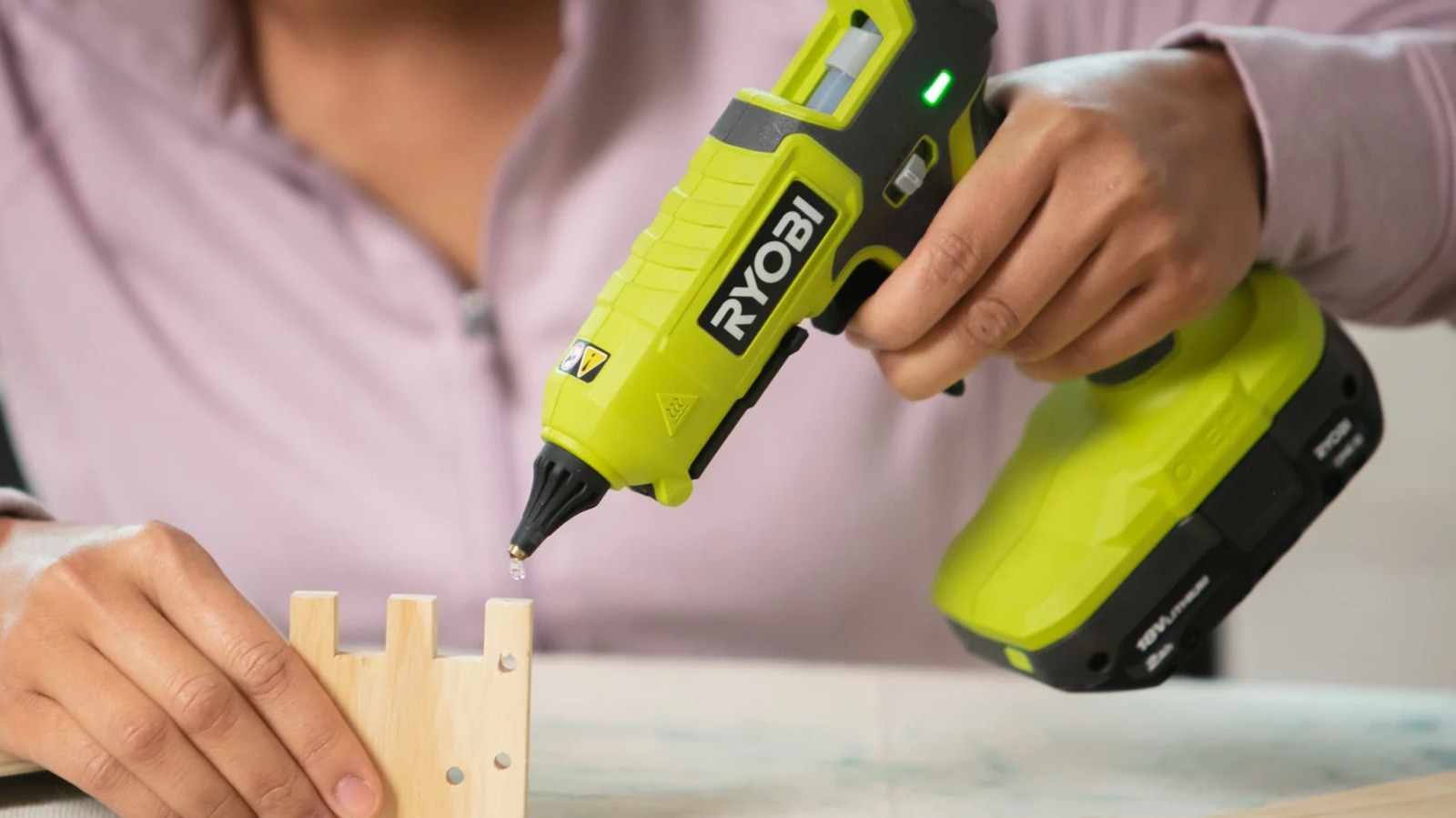
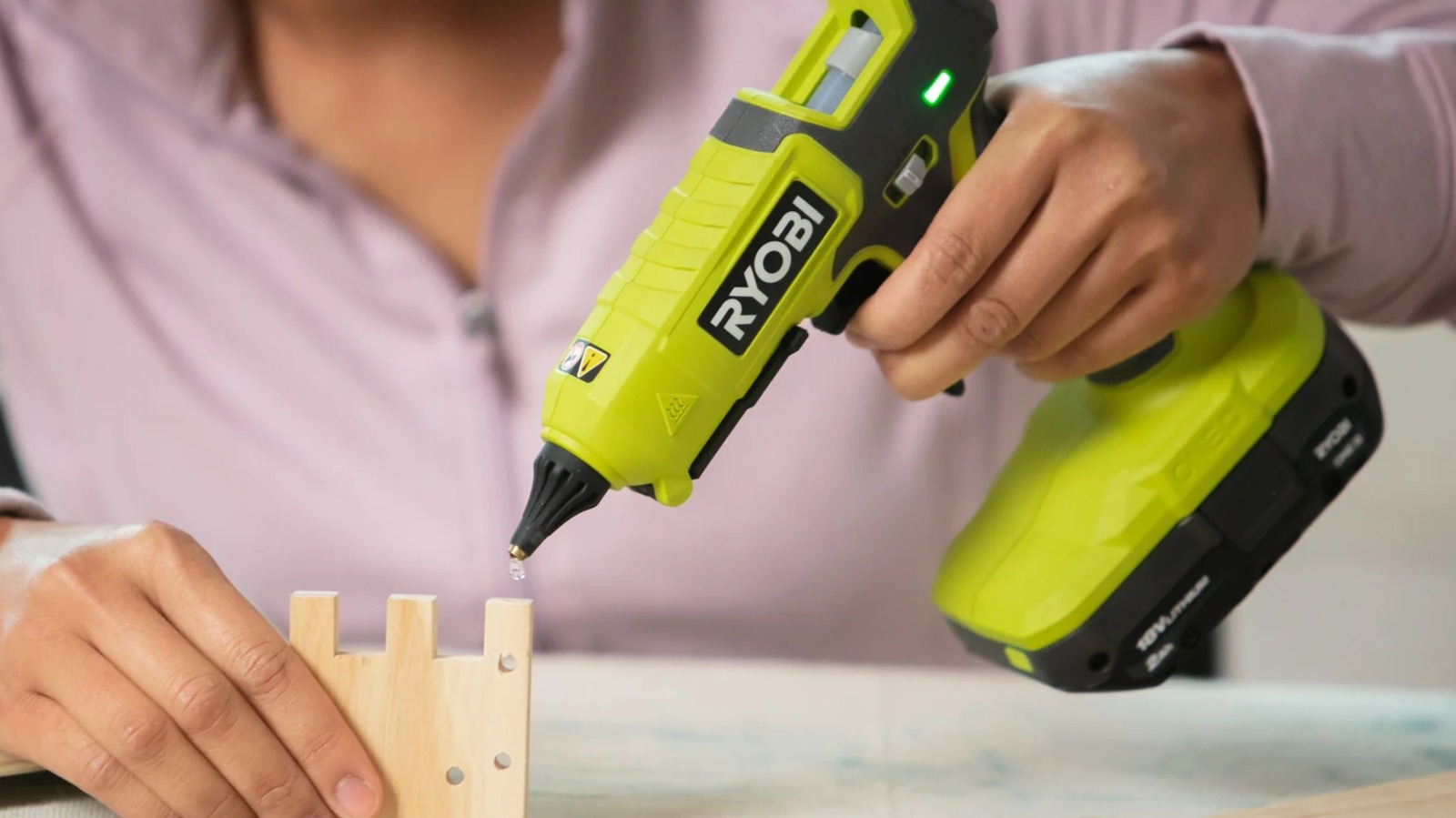
While it might not seem like a tool needed by all, hot glue guns are quite versatile. There are numerous helpful, unexpected ways a hot glue gun can improve a home, and plenty of models from major brands to choose from. For instance, Ryobi has a selection of cordless hot glue guns for sale. One of these models is currently on sale at Home Depot for $59.97, and for that discounted price, the hot glue gun comes with a handful of extras, including a 2.0 Ah Ryobi battery to run it.
Advertisement
The Ryobi ONE+ 18-volt cordless hot glue gun with battery was initially listed by Home Depot for $148.97, but at the time of writing, it is currently on a 60% markdown. This is a dual-temperature model, so the user can adjust the heat based on the job and adhesive used. It also features a fold-out drip tray in case of running adhesive, and is advertised as reaching its heat up target in two minutes. Along with the battery, the kit comes with 10 glue sticks and multiple nozzles. A charger for the battery is sold separately.
Advertisement
Customers’ opinions of this discounted glue gun are mostly positive
At full price as well as on discount, many Home Depot customers have purchased and tried out this Ryobi hot glue gun. The number of reviews is currently sitting at 1,006, with an average of 4.6 out of 5 stars. 780 of those reviews gave the kit a perfect five stars, praising it for being easy to use overall. These users reported that the gun heated up quickly and found the two temperature settings satisfactory for their needs. Most five-star reviewers who discussed battery life added that the included 2.0 Ah battery held on just fine, though using higher Ah Ryobi batteries yielded improved runtimes.
Meanwhile, there’s a common thread through most of the one- and two-star reviews: the battery can be a problem. Many of the reviews at this rating report receiving a battery that doesn’t work at all, or only gets around 15 minutes or less of use time before needing to be charged. These are some of the most common issues with Ryobi power tool batteries, but fortunately, the company is willing to work with customers when things go wrong. Both the hot glue gun and the included battery are under Ryobi’s three-year warranty, meaning free repair or replacement if faulty workmanship is determined to be the culprit. Not everyone is in need of a hot glue gun, but according to the majority of Home Depot buyers, those who are should consider this Ryobi kit, even with the minimal risk of a faulty battery.
Looking for the most recent Connections answers? Click here for today’s Connections hints, as well as our daily answers and hints for The New York Times Mini Crossword, Wordle, Connections: Sports Edition and Strands puzzles.
English majors, today’s NYT Connections puzzle has a purple category with our names on it. Read on for clues and today’s Connections answers.
The Times has a Connections Bot, like the one for Wordle. Go there after you play to receive a numeric score and to have the program analyze your answers. Players who are registered with the Times Games section can now nerd out by following their progress, including the number of puzzles completed, win rate, number of times they nabbed a perfect score and their win streak.
Here are four hints for the groupings in today’s Connections puzzle, ranked from the easiest yellow group to the tough (and sometimes bizarre) purple group.
Apple unexpectedly launched yet another device, the very long-awaited AirPods Max, plus the MacBook Neo gets more real-world testing, and Family Sharing gets a great update, all on the AppleInsider Podcast.
Nobody saw it coming but the new AirPods Max is here — image credit: Apple
Just when you thought Apple was done with product launches in March — and just when you thought it would never update the AirPods Max — it went and did it. The new AirPods Max brings everything users have been asking for over the last several years. There’s reason to suspect the new AirPods Max is going to feel outdated in even just a few months, though. And also plenty of reasons to assume Apple won’t release a new version for a long time. Continue Reading on AppleInsider | Discuss on our Forums
schwit1 shares a report from the BBC: A French officer has reportedly revealed the location of an aircraft carrier deployed towards the Middle East after publicly registering a run on sports app Strava. French news outlet Le Monde first reported the officer, referred to as Arthur, logged a 35-minute run on the app while exercising on the deck of aircraft carrier Charles de Gaulle on 13 March. He used a smartwatch to record his run and upload the activity to the app, the paper said, creating a map that showed his location. […] The location of the vessel was said by Le Monde to have been northwest of Cyprus, around 100km (62 miles) from the Turkish coast, with satellite images capturing the carrier and its escort. A representative from the French Armed Forces said the officer’s behavior “does not comply with current guidelines,” which “sailors are regularly made aware of.”
Update: Added that Oracle declined to comment on whether the vulnerability has been exploited.
Oracle has released an out-of-band security update to fix a critical unauthenticated remote code execution vulnerability in Identity Manager and Web Services Manager tracked as CVE-2026-21992.
Oracle Identity Manager is used for managing identities and access across an enterprise, while Oracle Web Services Manager provides security and management controls for web services.
In an advisory released yesterday, Oracle is “strongly” recommending that customers apply the patches as soon as possible.
Advertisement
“This Security Alert addresses vulnerability CVE-2026-21992 in Oracle Identity Manager and Oracle Web Services Manager. This vulnerability is remotely exploitable without authentication. If successfully exploited, this vulnerability may result in remote code execution,” reads the security advisory.
“Oracle strongly recommends that customers apply the updates or mitigations provided by this Security Alert as soon as possible. Oracle always recommends that customers remain on actively-supported versions and apply all Security Alerts and Critical Patch Update security patches without delay.”
The CVE-2026-21992 vulnerability has a CVSS v3.1 severity score of 9.8 and impacts Oracle Identity Manager versions 12.2.1.4.0 and 14.1.2.1.0, as well as Oracle Web Services Manager versions 12.2.1.4.0 and 14.1.2.1.0.
Oracle says the flaw is of low complexity, remotely exploitable over HTTP, and does not require authentication or user interaction, increasing the risk of exploitation on exposed servers.
Advertisement
The fix was released through its Security Alert program, which delivers out-of-schedule fixes or mitigations for critical or actively exploited vulnerabilities. However, Oracle says that patches released through these programs are only offered for versions under Premier or Extended Support, and older unsupported versions may be vulnerable.
Oracle has not disclosed whether the vulnerability has been exploited and declined to comment when BleepingComputer asked about its exploitation status.
In a separate blog post published today, Oracle once again noted the severity of CVE-2026-21992 and warned customers to review the security alert for full details and patch information.
Malware is getting smarter. The Red Report 2026 reveals how new threats use math to detect sandboxes and hide in plain sight.
Download our analysis of 1.1 million malicious samples to uncover the top 10 techniques and see if your security stack is blinded.
The famous cuckoo clock, with its moving, chirping mechanical bird indicating various divisions of time, has been around since at least the 1600s. The most famous of them come from the Black Forest area of Germany, and are still being made worldwide even today. Other clocks with different themes take their inspiration from the standard bird-based clocks from history, and thanks to modern 3D printing and other technologies we can make clocks with almost any type of hour indicator we’d like with relative ease like [Jason]’s golf clock.
While the timekeeping mechanism is a fairly standard analog clock, the hour indicator mechanism in this build is a small figure which putts a golf ball into a hole once every hour. It uses an ESP32-C3 at its core, which controls a pair of servos. One controls the miniature golfer, and the other lifts the ball up into position on the green at the appointed time. Once the ball is in place, the figure rotates, striking the ball towards the hole. Although it looks almost like the ball is guided by a magnet of some sort at first glance, the ball naturally finds its way into the hole by the topography of the green alone.
Almost all of the parts in this build are 3D printed, including the green, the golfer, the frame, and a number of the servo components. There’s also a small sensor that detects if the ball has actually made it into the hole and back to the lifting mechanism, and to that end there’s also a number of configurations that can be made in the software to ensure that the servos controlling everything all work together to putt the ball properly.
























































You must be logged in to post a comment Login