





A string of high-profile Brits living in the emirate have been accused of sanitising reality while tensions escalate across the Middle East
Dubai-based British influencers are coming under fire for continuing to flood social media with glossy, picture-perfect posts as missile strikes and conflict continues to unfold around them.
A string of high-profile Brits living in the United Arab Emirates, including former Love Islander Arabella Chi, have been accused of sanitising reality by sharing sun-soaked snaps of their gym routines and luxe lives while tensions escalate across the Middle East.
On February 28, the US and Israel launched airstrikes on Iran, triggering a sharp escalation in the region. Iran retaliated, forcing the closure of airspace across the Gulf — including the UAE — leaving more than 100,000 Britons stranded in Dubai as missiles and debris fell from the sky.
Ensure our latest stories always appear at the top of your Google Search by making us a Preferred Source. Click here to activate or add us as your Preferred Source in your Google search settings.
Falling wreckage sparked a fire at Fairmont The Palm, injuring four people, while blasts also damaged Dubai International Airport and ignited another fire at Jebel Ali Port.
In the weeks that followed, the UK Foreign Office faced its biggest consular crisis since Covid, with around 138,000 Brits registering in the region — 112,000 of them in the UAE.
Despite the chaos, influencers continued posting — though some briefly broke ranks. Several shared then deleted clips admitting fear, with Petra Ecclestone and Kate Ferdinand posted their concerns online before removing them.
Others took a very different tone. Content creator Mitchell Armstrong mocked those fleeing the city in a video posted on February 28, saying: “What does everyone mean there’s bombs and explosions going off in Dubai?
“As long as I’ve still got my sauna and I’ve still got my G-Wagon and I still live in my $2.1 million mansion on the Palm, I don’t really care . . . I can’t really hear anything over the sound of success.”
“All the rich guys, all the guys making money, printing bread either profited off the war or made more money because we are more locked in,” he added. “People running around like headless chickens, like the world is ending, and now four days in a row, we have had nothing in Dubai.
“No bombs, no crackles, no nothing, no missile interceptions.”
Meanwhile, influencer Soudi Al Nadak painted a calmer picture for her 1.3million TikTok followers, insisting: “As you can see, it is very quiet and peaceful in Dubai at the moment, but for those people who want to leave, let them leave. I just think they are very ungrateful.” On March 4, she added she felt safe because “we know who protects us” — prompting one follower to hit back: “How much have you been paid to keep on posting government propaganda?”
Chi, however, has done a full 180 degree backflip, sharing a continuous stream of pristine content — often just minutes away from where incidents have unfolded.
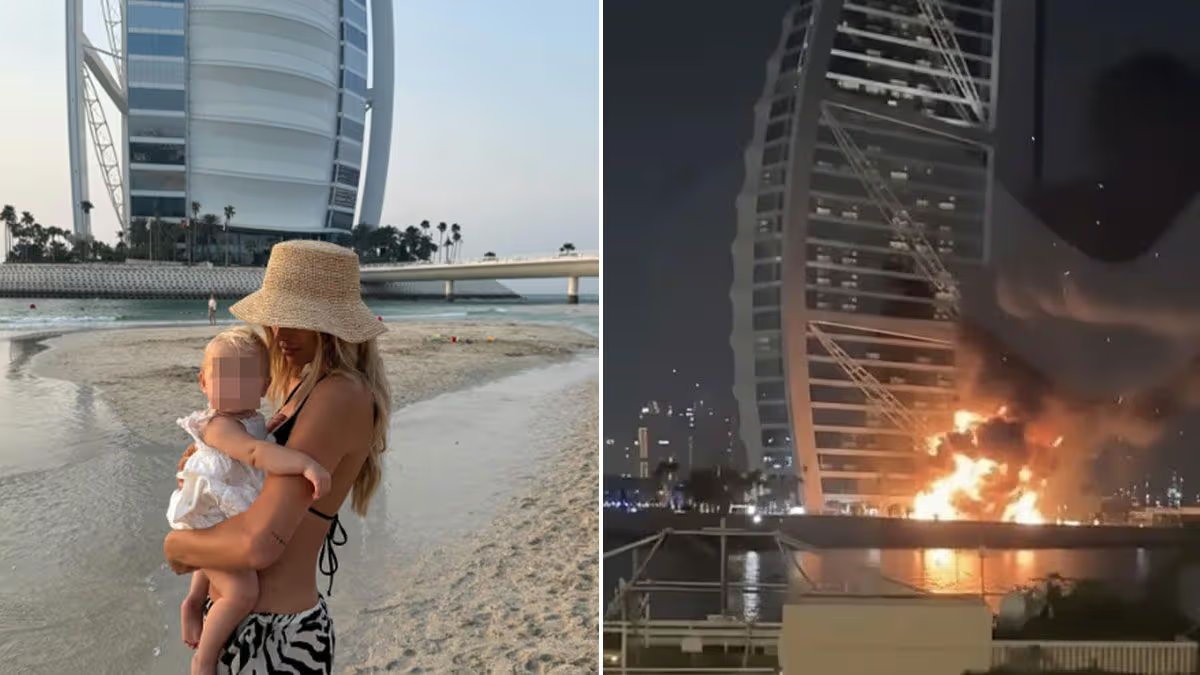
On March 3, three days after flames tore through the iconic Burj Al Arab, she posted a romantic dinner at Asia Asia, captioned: “A forever kind of love.” Days later, she shared beach snaps with her 10-month-old daughter Gigi — captioned “Sandy toes” — showing a serene, sun-drenched shoreline despite the conflict unfolding nearby. Followers quickly noticed something was off. One wrote: “Stay safe, that beach looks so quiet”, while another asked: “Did everyone leave Dubai?”
On March 9, drones struck near the airport and debris hit a waterfront tower, sparking a blaze and forcing evacuations — but Chi’s feed instead promoted a luxury jewellery collaboration. On March 13, debris hit a building in the Dubai International Financial Centre, sending smoke across the city. Still, she posted from Jumeirah Beach, posing in a bikini with her daughter.
The snaps pose a grim contrast when compared this, shared by Chi at the beginning of the conflict:
The UAE has some of the strictest social media laws in the world, with authorities warning against “publishing or circulating rumours and information from unknown sources” after the conflict began.
Influencers must hold government-issued licences to post paid content, tying their income to compliance. Content deemed to incite panic or harm the country’s reputation can result in heavy fines, prison sentences or deportation.









































You must be logged in to post a comment Login