

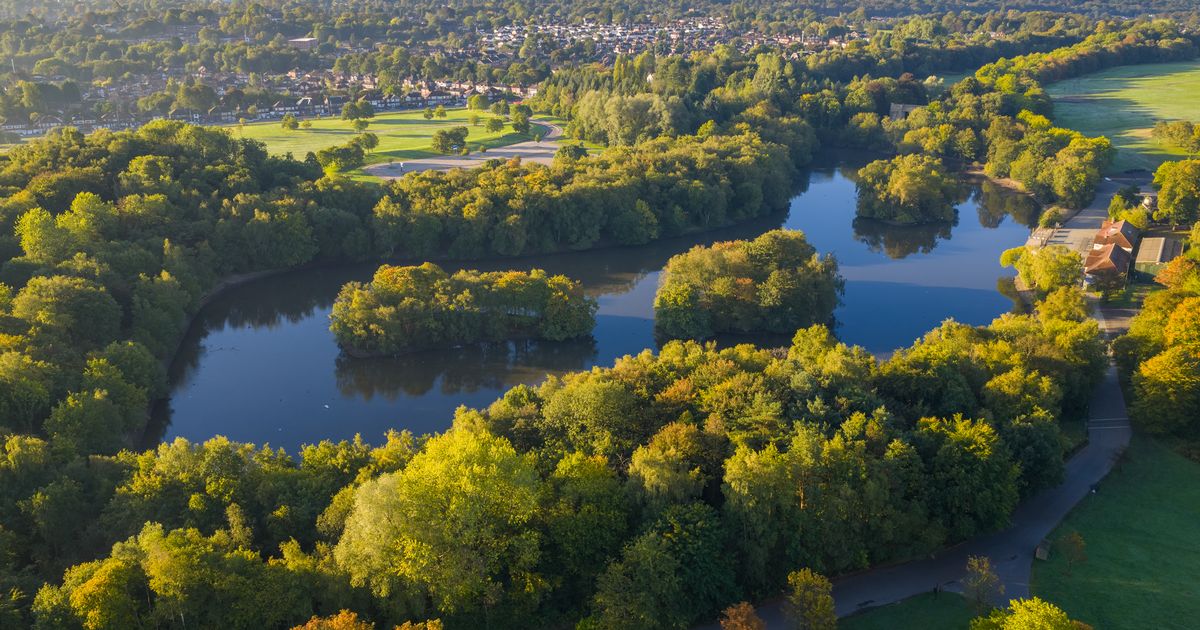
Around 10,000 years ago, humans began to repopulate the British Isles. They started to assign names to the things they observed
Ever wondered how your town or city got its name? Our place names across the country regularly appear in our daily conversations – whether we’re talking about where we reside, intend to relocate, or visit – and it is only recently that people are starting to grasp their origins.
Approximately 10,000 years ago, as the final ice sheet retreated and temperatures began to climb, humans started to repopulate the British Isles. They commenced giving names to the things they encountered. The most ancient place names often derive from Celtic and Anglo-Saxon tongues and relate to the surrounding terrain, such as waterways, peaks, or other topographical features.
Individual names also contribute significantly to place names. The prevalence of Kingstons and Bishopstones indicates that these locations were named after prominent figures, reports Plymouth Live.
Globetrots, a well-known page on TikTok, frequently posts educational material and fascinating facts about the UK, covering everything from pinpointing the most hazardous regions to the worst roundabouts, and spots with the most stringent teachers. Recently, the host on the page raised the question: “Have you ever wondered why so many places in the UK end with things like ‘ham’, ‘ton’, ‘by’ and ‘caster’?”
“Well there’s actually a reason this, they’re not just random endings.”
A fascinating etymology lesson was delivered by Globetrots, examining the importance of ‘ham’ in place names such as Nottingham, Birmingham, and Gillingham. They explained that ‘ham’ stems from the Old English hām, meaning a homestead or village.
Commentary from Globetrots explained the historical context: “So, if your area ends in ham, it was probably settled by the Anglo-Saxons around 1,400 years ago.”
Globetrots also discussed the widespread use of ‘ton’ in British place names, referencing locations like Taunton, Luton, and Brighton. This suffix comes from the Old English term tūn, which described a farm or enclosure – similar to an early form of village, revealing its Anglo-Saxon heritage. “These ones are everywhere, kind of the ancient equivalent of a new build,” proclaimed Globetrots.
Expanding the discussion, places ending in ‘by’ such as Whitby, Grimsby, and Derby featured next in Globetrots’ analysis. Providing linguistic context, they noted: “By literally meant village in Old Norse.
“These names are all over the north and east.” Finally, attention turned to areas concluding with ‘caster’, ‘chester’, and ‘cester’, encompassing Todcaster, Doncaster, Chester, Bicester, Colchester, Manchester, and Gloucester. All these suffixes possess Latin roots, reflecting their historical significance.
The concluding observation from Globetrots disclosed: “If you area end with one of these, it started out as a military site over 1,800 years ago.” Concluding a fascinating series exploring the etymology of UK place names, a popular online page has made a compelling observation: “And if you map all these places out you can literally see how the UK was built.
“Anglo Saxon names in the south, Viking names in the east and north and Roman names clustered along old roads and frontiers. The names are basically 1,000 year old historical labels telling you who once claimed the land.”
English Heritage offered additional insight, explaining: “You’ll begin to notice some simple suffixes like ‘ton’ (farm or hamlet), ‘ham’ (village or estate), ‘ly’ or ‘ley’ (wood or a clearing), ‘stow’ (place or meeting place) and ‘bury‘ (fort). These might be appended to names of local landmarks like rivers, making the meaning fairly obvious, as with the village of Isham in Northamptonshire.
The river Ise is nearby, so Isham simply means ‘the village by the river Ise’.” The video exploring these word origins has attracted more than one million viewers, generating numerous comments. One viewer observed: “Ham became hamlet, ton became town.”
Another contributed their knowledge: “Something ends with ‘wick’ also came from ‘vik’ in Old Norse hence Viking influence.” A fellow user added: “Anywhere that ends in Bury is Anglo saxon. Usually means fortified town.”
Curiosity was piqued about other suffixes, leading to the question: “What about mouth? Weymouth, Plymouth, etc,” which received the response: “that usually means it’s by the sea, like the ‘mouth’ of the river as it reaches the sea”. Viewers of the viral video expressed their surprise and interest, with comments such as: “That’s cool”.
“That’s so crazy,” and “This is fascinating,” as many explored the history behind UK place names for the first time. “Everything means farm in old English,” joked another.



