

Business
Nifty Bank cracks 3% to 11-month low as SBI, HDFC & Union Bank tumble. More pain ahead?


The index dropped to 51,791 in the morning session on Monday, dragged by losses in financial stocks. Union Bank of India and Punjab National Bank (PNB) declined around 5%, while Canara Bank, AU Small Finance Bank, Bank of Baroda and IDFC First Bank shares fell over 4% each. IndusInd Bank, Yes Bank, Federal Bank, State Bank of India (SBI), HDFC Bank, Axis Bank, Kotak Mahindra Bank and ICICI Bank meanwhile declined in the range of 1.5-4%.
The sharp decline comes amid broader market weakness, as the rupee hit fresh lifetime lows and US bond yields gained, amid persistent FII selling and escalating war between Iran and the US-Israel. Indian rupee extended its sharp decline against the US dollar, falling to 93.84 against the US dollar to break its previous all-time low of 93.7350, which it had hit on Friday. The rupee, which is one of the most exposed currencies to oil price increases, has weakened nearly 3% since the war in the Middle East began.
Foreign investors have been strongly selling Indian equities since the beginning of the war in the oil-rich Middle East amid a global risk-off sentiment in markets. FIIs extended their selling streak for the 16th consecutive session on Friday, net selling Indian shares worth Rs 5,518 crore, according to data on NSE.
The fall in bank stocks also comes amid concerns over what impact prolonged Middle East war and elevated oil prices can have on the Indian economy. While India is not directly involved in the war between Iran and the US-Israel, the rising oil prices and other factors may bear an impact on the Indian economy in the short term, as per analysts. “With 80% energy import dependence, higher crude prices directly impact the growth, current account deficit (CAD), inflation, the rupee, and fiscal balances. The overall macro effect will depend on the pass-through to consumers and government interventions through duties, subsidies, and fuel price controls,” said Motilal Oswal Financial Services in a report earlier this month.

Also read: Rs 13 lakh cr rout! 7 key factors behind today’s D-St bloodbath
“A USD10pb rise in oil could add 30–50bp to inflation, with CPI potentially approaching 5% if crude averages USD100pb. These risks are further amplified by shipping disruptions, higher war-risk insurance premiums, rising fertiliser prices, and vulnerabilities in LPG supply, increasing the likelihood of broader energy and food price pressures,” the brokerage added.
Technical view
Bank Nifty has witnessed a breakdown in short-term structure, indicating a shift towards a lower high–lower low formation, said Vatsal Bhuva, Technical Analyst at LKP Securities. “RSI at 28 signals an oversold condition, suggesting a possible pullback; however, the broader bias remains negative, with a sell-on-rise approach preferred in the 54,500–56,000 resistance zone,” the analyst said.
Bajaj Broking also noted that the index last week formed a high-wave candle with a lower high and lower low, signalling continuation of the corrective decline. “Volatility is likely to remain elevated in the near term, driven by uncertain global cues and rising geopolitical tensions, which continue to weigh on market sentiment,” it added.
Also read: Gold extends fall after worst week in 43 years. More pain or time to buy the dip?
A sustained move below Thursday’s low of 53,240 could trigger further downside, with potential targets at 52,500 and 51,800 in the coming sessions, according to Bajaj Broking, adding that these levels correspond to the 61.8% Fibonacci retracement of the rally from the January 2025 lows and coincide with the low of the breakout candle formed in April 2025.
“On the upside, the Thursday gap zone between 54,689 and 54,150 is expected to act as immediate resistance. The overall bias remains bearish as long as the index stays below this zone,” it added.
(Disclaimer: Recommendations, suggestions, views and opinions given by the experts are their own. These do not represent the views of The Economic Times)


Check out what’s clicking on FoxBusiness.com.
FIFA and Fanatics announced on Thursday a long-term, exclusive collectibles licensing deal that features trading cards, stickers and trading card games.
The agreement, which will begin in full in 2031, covers both physical and digital collectibles, with one of the first coming during this summer’s World Cup.
Players participating in their first World Cup this summer will wear a debut patch that will be stored for cards to be released five years from now. The debut patch program began in 2023 with Major League Baseball.
CLICK HERE FOR MORE SPORTS COVERAGE ON FOXBUSINESS.COM
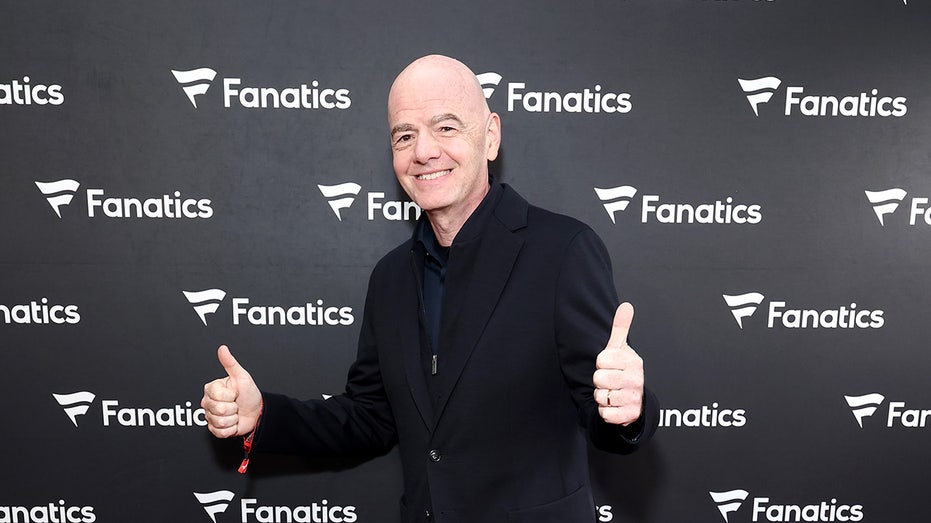
Gianni Infantino attends the 2026 Fanatics Super Bowl Party at Pier 48 in San Francisco on Feb. 7, 2026 in San Francisco, California. (Cindy Ord/Getty Images for Fanatics / Getty Images)
“Across the sports landscape, we see that Fanatics are driving massive innovation in collectibles that provides fans with a new, meaningful way to engage with their favorite teams and with their favorite players,” FIFA President Gianni Infantino said in a statement.
“So, from FIFA’s point of view, we can globalize that fan engagement precisely thanks to our global tournament portfolio. And this provides another important commercial revenue stream that we channel back, as always, into the game, into football.”

A view of the venue during Fanatics Fest NYC 2025 at Javits Center on June 20, 2025, in New York City. (Dave Kotinsky/Getty Images for Fanatics)
“This is truly a historic day in our company’s history,” added Fanatics founder and CEO Michael Rubin. “Global football is the biggest growth opportunity in sports, and when you combine the power of FIFA with the innovation and entrepreneurial backbone of Fanatics, together we’re poised to elevate storytelling and collectibles around the game in a way that’s never been seen before.”
The announcement of the long-term deal came with the news that the official FIFA World Cup Final press conferences will take place at the third edition of Fanatics Fest this summer on July 17 in New York City, two days before the final across the Hudson River at MetLife Stadium.
Fanatics Fest will also host a massive watch party and will air the FIFA World Cup final live on all screens around the Javits Center for the tens of thousands of expected attendees that day.

FIFA World Cup winner’s trophy in Miami, Florida. (Photo by Eva Marie Uzcategui/FIFA via Getty Images)
GET FOX BUSINESS ON THE GO BY CLICKING HERE
The agreement will end FIFA’s longstanding partnership with Panini that began in 1970.
NEW YORK — Microsoft Corp. (NASDAQ: MSFT) shares fell more than 1% Thursday, trading around $416.39 in afternoon trading, as investors digested the latest quarterly results and weighed concerns over moderating cloud growth against the company’s massive investments in artificial intelligence infrastructure. The modest decline came on above-average volume, reflecting some profit-taking after a strong run earlier in 2026.
The stock opened lower and remained under pressure throughout the session despite broader market gains. Microsoft’s market capitalization slipped below the $3.1 trillion mark temporarily, though the company remains one of the world’s most valuable publicly traded firms. Analysts described the move as “healthy digestion” rather than a fundamental shift in sentiment, noting that the dip follows several strong earnings beats and record highs in recent months.
Microsoft reported solid fiscal third-quarter results in late April, with revenue rising 13% to $70.1 billion and intelligent cloud revenue growing 17%. Azure cloud services posted 31% growth, slightly below some elevated expectations, while AI-related bookings continued to accelerate. CEO Satya Nadella highlighted “strong execution” across the business and pointed to “early signs of AI monetization” in enterprise workloads. However, some investors appeared to focus on the slight cooling in overall cloud growth rates and the enormous capital expenditures required to build out AI data centers.
Cloud and AI Momentum Remain Central Themes
Microsoft’s Azure platform continues to gain share in the competitive cloud market, though it still trails Amazon Web Services. The integration of OpenAI’s models across Microsoft 365, GitHub, and Azure has driven significant customer interest. Nadella has repeatedly emphasized that the company is in the early innings of AI adoption, with hundreds of millions of users already interacting with Copilot tools.
Capital spending remained elevated as Microsoft accelerates data center construction to meet AI demand. The company guided for continued heavy investment through 2027, which some analysts view as a positive long-term signal but a near-term drag on free cash flow margins. Gross margins held steady despite these investments, supported by high-margin software and cloud businesses.
Analyst Reaction and Valuation
Wall Street largely maintained bullish stances following the earnings report. Most major firms kept Buy or Outperform ratings, with average 12-month price targets clustering around $480–$520. Optimistic forecasts reached as high as $600, citing Microsoft’s leadership in enterprise AI, its massive installed base in productivity software, and its diversified revenue streams across cloud, gaming, LinkedIn and search.
The stock trades at a forward price-to-earnings multiple in the low-to-mid 30s, which many analysts consider reasonable given projected earnings growth of 15%+ annually. The dividend yield sits near 0.7%, supported by a healthy payout ratio and consistent increases.
Risks and Market Context
Thursday’s decline occurred amid a broader market rotation, with some investors shifting away from mega-cap technology names toward smaller stocks and more cyclical sectors. Concerns over potential AI spending slowdowns if early returns disappoint, increased competition in cloud, and regulatory scrutiny on Big Tech also weighed on sentiment.
Geopolitical risks, including trade tensions and energy costs for data centers, remain background factors. However, Microsoft’s strong balance sheet, recurring revenue base and diversified portfolio provide meaningful downside protection compared to pure-play AI companies.
Long-Term Outlook Remains Constructive
Looking further into 2026 and beyond, analysts project continued strong performance driven by AI monetization, cloud market share gains and growth in gaming and professional networks. The company’s ability to integrate AI across its product suite — from Windows and Office to Azure and GitHub — creates significant cross-selling opportunities and stickiness with enterprise customers.
Microsoft’s strategic partnership with OpenAI continues to evolve, with new models and capabilities expected throughout the year. The company has also expanded its presence in consumer AI through Copilot+ PCs and other initiatives, aiming to bring advanced AI features to everyday users.
Investor Considerations
For long-term investors, Microsoft offers a compelling mix of growth, quality and relative stability. The stock suits core technology holdings in diversified portfolios, retirement accounts seeking growth with some income, and those wanting exposure to both cloud computing and artificial intelligence leadership. Those already holding shares have little reason to sell given the company’s track record and future potential. New buyers may view current levels as a reasonable entry point after the recent pullback.
As always, investors should consider their risk tolerance and time horizon. While Microsoft has delivered exceptional returns over the past decade, future performance will depend on successful AI execution and maintaining leadership in an increasingly competitive landscape.
Thursday’s modest decline appears more like normal market breathing than a change in fundamentals. With strong secular tailwinds, excellent execution under Satya Nadella and broad analyst support, Microsoft remains one of the highest-quality large-cap technology investments available in 2026. The company’s transformation from a software giant to an AI and cloud powerhouse continues to reward patient shareholders.

Sothebys International Realty broker Jenna Stauffer analyzes the U.S. housing market, noting a shift in buyer behavior, on ‘Making Money.’
The artificial intelligence (AI) boom has caused a surge in luxury real estate prices in the Bay Area, although more affordable areas in Silicon Valley haven’t seen the same gains since the launch of ChatGPT kickstarted the tech sector’s AI race.
An analysis by Redfin compared the median home sale prices across price segments in 2020-2022 to 2023 to 2025, accounting for the launch of ChatGPT 3.5 in November 2022, which was a watershed moment in the public’s awareness of AI. Redfin’s report includes all ZIP codes in San Francisco, Oakland, San Jose and San Rafael that had sufficient data for the comparison.
Home prices in the Bay Area’s luxury ZIP codes with home prices between $3.1 million and $7.6 million saw an average increase of 13.4% in home prices in the two years after the launch of ChatGPT. That figure is more than double the 6.3% average increase for the segment of the market just below luxury, which had prices ranging from $1.5 million to $2.8 million.
The most affordable segment of Bay Area ZIP codes in the report had prices ranging from $535,000 to $615,000 and saw prices decline 3.8% on average from 2023 to 2025.
NYC LOST MORE RESIDENTS ACROSS ALL INCOME LEVELS IN 2025 AS AMERICANS FLEE HIGH-COST BLUE CITIES

Luxury ZIP codes in San Francisco have seen rapid home price growth on average since the launch of ChatGPT, Redfin found. (Tayfun Coskun/Anadolu via Getty Images)
“Luxury homeowners in Silicon Valley saw their housing wealth jump during the pandemic, and now it’s jumping again thanks to the advent of artificial intelligence and the high-paying jobs that come with it,” said Redfin senior economist Yingqi Xu.
“Meanwhile, some owners of lower-end properties have missed out on the AI boom, with home prices in the most affordable Bay Area ZIP codes declining over the past two years. It’s another sign of the K-shaped economy taking shape in the Bay Area, with AI lifting the fortunes of some households and neighborhoods much more than others,” Xu said.
CALIFORNIANS WHO MOVE AWAY ARE TYPICALLY SAVING HUNDREDS A MONTH ON HOUSING COSTS

Los Angeles had fairly consistent home price growth across segments of the housing market in Redfin’s analysis. (Simonkr)
The report also compared metro areas that aren’t as reliant on the tech sector as Silicon Valley to see if the luxury and affordable segments of the real estate market saw similar growth patterns.
Redfin found that New York saw the opposite trend, with home prices in luxury ZIP codes in the metro area growing just 4.7% on average from 2023 to 2025 – while the most affordable ZIP codes had home values surge 24.9% in that period.
AVERAGE MONTHLY MORTGAGE PAYMENT HITS NEW HIGH, TOPPING $2K FOR FIRST TIME EVER

Seattle, which also has a significant tech presence, also saw consistent home price growth across price segments. (Juan Mabromata/AFP via Getty Images)
Home prices in Los Angeles grew at relatively similar rates across segments, with luxury ZIP codes rising 9.7% on average from 2023 to 2025 compared with 6.1% for the most affordable ZIP codes.
Seattle also saw home prices rise at comparable levels across price segments, with prices in the luxury tier rising 11.7% on average while the most affordable tier rose 10%.

Nvidia climbed, while memory and storage sellers Micron Technology and Sandisk soared, lifted by strong demand from the rapid buildout of AI data centers. Still, despite the tech rally, most sectors in the S&P 500 were down for the day.
The Philadelphia SE Semiconductor index jumped, bringing its gain so far in the second quarter to about 54%.
The S&P 500 and the Nasdaq have surged to record highs this week as investors focused on strong financial reports from U.S. companies, setting aside concerns that high oil prices related to the Middle East conflict are fueling inflation.
First-quarter S&P 500 earnings are on track to climb almost 29% year-over-year, with much of that growth fueled by Wall Street’s AI-related heavyweights, according to LSEG I/B/E/S.
“This is an economy that seems hard to wreck,” said Rob Williams, chief investment strategist at Sage Advisory Services in Austin, Texas. “It’s the productivity story, the spending, the consumer wealth effect and the earnings.”
Data showed U.S. employment increased more than expected in April and the unemployment rate held steady at 4.3%, reinforcing expectations that the Federal Reserve would leave interest rates unchanged for some time. Traders expect the central bank will hold interest rates steady in the 3.50% to 3.75% range until the end of the year.
According to preliminary data, the S&P 500 gained 61.40 points, or 0.84%, to end at 7,398.51 points, while the Nasdaq Composite gained 437.64 points, or 1.70%, to 26,243.84. The Dow Jones Industrial Average rose 10.10 points, or 0.02%, to 49,607.81.
The S&P 500 and the Nasdaq notched their sixth straight weekly gains, the longest such winning streak since October 2024. The Dow has logged two consecutive weekly advances.
The earnings optimism helped investors look past fresh attacks between U.S. and Iranian forces in the Gulf.
Brent crude rose above $100 a barrel as hopes faded for a quick resolution to the Middle East conflict and the gradual reopening of the Strait of Hormuz, a key transit route for oil and liquefied natural gas.
The U.S. said it expected a response from Tehran to its latest proposal later on Friday.
Of the 440 S&P 500 companies that have reported first-quarter results so far, 83% have topped analysts’ earnings estimates, according to LSEG. That compares with a long-term average of about 67%.
However, there have been some earnings disappointments.
Cloudflare plunged after the cloud services company said it would cut about 20% of its workforce and forecast second-quarter revenue slightly below Wall Street expectations.
Trade Desk fell after the ad-tech firm forecast second-quarter revenue below Wall Street estimates.
CoreWeave dropped after the cloud infrastructure technology company raised the lower end of its annual capital expenditure forecast, citing a rise in component costs.
Online travel platform Expedia declined after it flagged that the conflict in the Middle East was hurting demand.

Wynn Resorts shareholders approve director elections and key proposals at annual meeting

Budgeting just flows when cash arrives after deductions. Money lands without fuss because HMRC already took their share. Payday carries that quiet calm of obligations met ahead of time. Everything sits right when tax vanishes before it hits your account.
Out of nowhere, the United States reappears on the scene. Quietly. A nudge: filing a U.S. tax return remains on your list. That’s often where irritation slips in. You see taxes already taken out.
Yet somehow it seems another layer waits ahead. Truth is, most times you’re not. The feeling sneaks in when the system gets used wrong. It just doesn’t work right then.
Why It Feels Like Double Taxes
What kicks things off is the way nations decide whose turn it is to hand over taxes.
Born in the U.S.? The tax net still holds, no matter how long you’ve stayed away. Living abroad doesn’t erase what’s tied to your passport. Residency shapes tax rules across the pond. Set up life in the UK? That is where taxes follow. Work within its borders, pay into its system.
Most times, both nations see what you earn. This kind of overlap happens naturally. Nothing went off track. You didn’t mess up. Even so, spotting identical numbers appear a second time brings little comfort.
How Americans in the UK Prevent Paying Taxes Twice
One way it works? Through built-in safeguards that block overlapping charges. Another path shows up in how credits apply before totals settle. Rules kick in at processing time, steering clear of repeated hits. Layered checks pop up depending on transaction type. Each step moves separately, yet lines up just enough to avoid repeat costs. Structure matters here – timing shifts what counts where
- Foreign Tax Credit (Form 1116)
- Because you paid taxes in the UK, your US bill gets reduced. This means less owed back home when credits apply. Your earlier payment overseas counts toward what’s due here. Money sent abroad first can lower stateside costs later. What was handed over there affects what’s needed now. The prior cost across oceans cuts today’s total. Past amounts given up overseas reduce current charges nearby
- Foreign Earned Income Exclusion (Form 2555)
- You exclude up to US$130,000 of earned income for the 2025 tax year
- US–UK tax treaty. Works well sometimes, yet still takes a back seat when needed.
- Accurate filing and reporting
- This is where everything actually comes together Here’s how it works. Most folks underestimate just how much picking one over the other really plays out once things get moving.
The Most Effective Way to Lower Your US Tax Bill
Folks from the US living in Britain often find the Foreign Tax Credit handles nearly everything.
Most times, handing money to HMRC means less goes into your pocket compared to dealing with the IRS. UK taxes take a bigger slice of income when matched against American deductions.
Most times, using this UK tax cuts what you owe in the US right off. It counts as a setoff when figuring how much Uncle Sam gets.
True, but not every time. Take investment earnings – they rarely match up exactly. When different kinds of income mix, clarity starts to fade.
When the FEIE Could Be Useful
Here’s how it works. Money earned abroad slips free from Uncle Sam’s reach. That chunk of pay? Left alone when tax season rolls around.
Right now, the number stands at one hundred thirty thousand U.S. dollars for twenty twenty-five.
Most find it fits better when earnings are modest or stays brief in the UK. Another reason? It seems more straightforward to them.
Here’s the catch. Drop your earnings from taxable income, yet those dollars vanish when chasing tax credits. That gap matters most where rates bite hard – say, the UK – making the FEIE feel less full some years. Using it won’t get you into trouble. Yet sticking with it might not pay off down the road. Sometimes another path works better over time.
Fixing the Problem
Here everything moves beyond just knowing into actually making it happen. Grab every bit of what you earn first – your job in the UK counts, sure. Toss in that side gig cash too. Don’t forget payments from gigs abroad; they matter just as much.
Switching amounts to U.S. dollars comes next. Most types of earnings can use the typical rate set by the IRS, making things simpler to handle.
Later on, figure out your approach to overlapping rules. One option might be the Foreign Tax Credit. Another path could involve excluding foreign earned income. Sometimes mixing methods works best depending on where the money comes from.
Filing your U.S. tax return comes next – typically using Form 1040, paired either with Form 1116 or Form 2555.
Look into overseas accounts one last time. Should totals pass ten thousand dollars anytime in a calendar year, reporting becomes necessary through an FBAR form.
Just one thing after another must fit right. On its own, it’s not hard at all.
Why You Only Think You Pay Twice
Picture yourself doing a job in London. Your paycheck gets taxed by the UK under PAYE. After that comes the US tax form to fill out. One follows the other, each country wanting its share.
Here it comes once more, the identical sum.
This tends to be what people worry about most.
Here’s how it works: pay taxes abroad, then apply that amount toward your U.S. bill. Taxes handed to the UK reduce the sum due back home. Often, one wipes out the other entirely.
True, each setup plays a role. Still, just one walks away with the tax take from that money.
Common Mistakes That Make Things Worse
Problems like these pop up way more than expected. Later on, picking the FEIE early might block access to certain credits. Skipping those credits entirely? That’s a move some make without realizing. Ends up costing extra cash they didn’t need to spend.
Folks often skip filing reports on overseas accounts. Not paying attention won’t trigger duplicate taxes, yet fines might follow – another sort of trouble brewing quietly.
Deadlines? They carry weight most overlook. What seems minor often shapes outcomes in quiet ways.
What If You’re Still Overpaying?
Some moments sit wrong, even if every choice was made carefully.
Some earnings, like those from stocks, might show up at different times on each report.
Because one system records them earlier, gaps appear for a while. Here’s another thing to think about. Staying in the UK for good? It could make you question if keeping up with US taxes even fits anymore.
Deciding takes time. Yet here we are facing it anyway.
Future on your mind? Grab the Letting Go Handbook
Some find cutting double tax burdens satisfactory. Others begin seeing continued requirements as too heavy a load. Picture stepping back to see more of your life abroad. Expat Tax Online’s Renounce US Citizenship guide lays out how leaving US citizenship works. Step by step, it shows what you must do, who qualifies, then explains shifts in status later. Details unfold without rushing ahead.
Some folks won’t care. Yet when curiosity strikes, clarity matters more than opinion.

TUCSON, Ariz. — The disappearance of 84-year-old Nancy Guthrie took a chilling new turn Thursday when human bones were discovered in a desert wash just miles from her Catalina Foothills home, briefly raising hopes of a breakthrough before authorities confirmed the remains are ancient and unrelated to the high-profile abduction case.

A true-crime livestreamer searching the area roughly five to seven miles from Guthrie’s residence found the bone in a remote wash near North Craycroft Road and East River Road. Pima County Sheriff’s Office and Tucson Police quickly secured the scene, triggering intense online speculation and a wave of renewed attention to the case that has gripped the nation since February 1. Officials later clarified through forensic analysis that the remains are decades or possibly centuries old, shifting the discovery into an anthropological investigation rather than a criminal one.
The false lead added another emotional layer to a mystery already filled with frustration and heartbreak. Nancy Guthrie, mother of NBC “Today” show co-anchor Savannah Guthrie, vanished from her secure home in broad daylight. Security footage captured a masked individual approaching her door. Blood evidence, a disabled Ring camera, propped-open doors and signs of a struggle led investigators to classify it as an abduction. No ransom has been paid, and no suspect has been publicly identified despite thousands of tips and an active FBI investigation.
Savannah Guthrie has balanced public pleas for information with her responsibilities on the national morning show. She briefly stepped away from the broadcast earlier this week amid the emotional toll but returned the following day. The family has offered a $1 million reward for information leading to Nancy’s safe return or the arrest of those responsible.
Elizabeth Smart Offers Hope
Elizabeth Smart, who was abducted at age 14 and held captive for nine months in 2002, publicly expressed optimism that Nancy could still be alive. “I absolutely believe Nancy could still be alive,” Smart said in a recent interview. Drawing from her own experience, she urged the family and public to maintain hope until definitive proof emerges. Smart has privately offered support to the Guthrie family and continues advocating for improved missing persons protocols, especially for elderly victims.
The unrelated bone discovery, while ultimately not connected to the case, underscores the difficulties of searching Arizona’s desert terrain, where old remains surface periodically. Similar past finds have occasionally intersected with active missing persons investigations, heightening initial excitement before forensic analysis provides clarity.
Investigation Status Remains Active
Pima County authorities continue treating the case as an abduction. Advanced DNA testing is underway on a rootless hair sample and potential glove DNA recovered from the home. Forensic genealogists and experts from the FBI lab in Quantico are involved, raising hopes that genetic breakthroughs could identify the perpetrator even without a traditional database hit.
Behavioral profilers have suggested the suspect may have sought fame or had some prior connection to the victim. Multiple ransom-style notes received by media outlets have complicated the probe, with experts questioning their authenticity. The case has drawn national attention due to Savannah Guthrie’s prominence and the brazen nature of the crime in an upscale, gated community.
Community Remains on Edge
Residents of the Catalina Foothills neighborhood continue displaying yellow ribbons — a symbol of hope — and participating in organized searches. The broader Tucson community has rallied with vigils and tip-line activity. National media coverage, fueled by Savannah Guthrie’s platform, has kept the case visible while the family urges the public to focus on verified facts rather than speculation.
The investigation has occasionally exposed tensions between local and federal agencies. FBI Director Kash Patel publicly criticized early coordination, though officials now describe joint efforts as productive. Hundreds of law enforcement personnel remain dedicated to the case as it enters its fourth month.
What Comes Next
Forensic experts say advanced DNA techniques, including genetic genealogy, remain the strongest hope for resolution. Authorities continue operating under the assumption that Nancy could still be found alive while preparing the family for all possibilities. Door-to-door canvassing, expanded surveillance reviews and public appeals have generated thousands of tips, but concrete leads remain elusive.
As the search continues, Savannah Guthrie and her family balance public advocacy with private grief. The unrelated bone discovery, though disappointing, serves as a reminder of the painstaking nature of such investigations, where every potential lead must be meticulously vetted. Police have renewed their call for information, no matter how small, stressing that the case remains active until Nancy is located or all avenues exhausted.
The disappearance of Nancy Guthrie has highlighted vulnerabilities even in protected communities and the enduring power of hope in the face of uncertainty. Whether the case ends in a joyful reunion or brings closure through other means, it has already left an indelible mark on those following the story — a testament to one family’s resilience and a community’s determination to bring answers home.

A cup of coffee and strawberry frosted donut with sprinkles are arranged for a photograph at a Dunkin’ Donuts Inc. location in Los Angeles, California, U.S.
Patrick T. Fallon | Bloomberg | Getty Images
Dunkin’ and Buffalo Wild Wings owner Inspire Brands has confidentially filed for an initial public offering, the company announced on Friday.
If Inspire goes public, it will be one of the biggest-ever restaurant offerings. Roark is reportedly seeking a valuation of roughly $20 billion.
Inspire was founded in 2018 through a merger between Arby’s and Buffalo Wild Wings, backed by private equity firm Roark Capital. Then came more acquisitions: Sonic Drive-In and Jimmy John’s. And in 2020, Inspire took Dunkin’ and its sister chain Baskin Robbins private in an $11 billion deal.
Across those six chains, Inspire has more than 33,300 restaurants worldwide and $33.4 billion in annual system-wide sales, according to the company’s website.
Inspire isn’t the only restaurant company pursuing an IPO. Last month, Jersey Mike’s also announced that it confidentially filed with the Securities and Exchange Commission.
The market for initial public offerings has been tepid, although that could change later this year. Market volatility, economic uncertainty and recent poor performance among IPO stocks has led to a backlog of listings.
However, several blockbuster IPOs, such as the SpaceX offering that could value the company at more than $1 trillion, are anticipated in the coming months.


Seeking Alpha’s transcripts team is responsible for the development of all of our transcript-related projects. We currently publish thousands of quarterly earnings calls per quarter on our site and are continuing to grow and expand our coverage. The purpose of this profile is to allow us to share with our readers new transcript-related developments. Thanks, SA Transcripts Team
NEW YORK — Intel Corp. (NASDAQ: INTC) shares surged more than 13% on Thursday, trading around $124.49 in afternoon trading, as investors cheered strong momentum in its artificial intelligence chip business, better-than-expected guidance, and signs that the company’s multi-year turnaround under CEO Pat Gelsinger is gaining real traction. The dramatic move marked one of the largest single-day percentage gains for the chipmaker in years and pushed its market capitalization above $530 billion.
The rally was triggered by Intel’s announcement of accelerating demand for its Gaudi 3 AI accelerators and new design wins with major hyperscalers. The company also raised its full-year 2026 revenue outlook and highlighted early success in its foundry business, where it secured additional external customers for advanced chip manufacturing. Volume was extremely heavy, more than triple the daily average, as short sellers covered positions and momentum investors piled in.
Intel reported fiscal first-quarter 2026 results that beat expectations on both the top and bottom lines. Revenue reached $12.7 billion, and the company posted a narrower-than-expected loss as cost-cutting measures and improved product mix began to show results. Most importantly, Intel’s Data Center and AI segment showed clear improvement, with Gaudi 3 shipments ramping faster than anticipated.
Turnaround Narrative Gains Credibility
For years Intel has lagged behind Nvidia and AMD in the high-growth AI accelerator market. Thursday’s surge reflects growing belief on Wall Street that the company is finally closing the gap. Gelsinger has aggressively restructured the company, splitting it into separate foundry and product groups, investing heavily in new process technologies, and pursuing external foundry customers to utilize excess manufacturing capacity.
Analysts noted that Intel’s Gaudi 3 offers strong performance-per-dollar advantages in certain AI training and inference workloads, making it an attractive alternative for cost-conscious cloud providers. Several large design wins announced in recent weeks have helped validate this strategy. The company also highlighted progress on its 18A process node, which is expected to enter production later this year and compete directly with TSMC’s most advanced offerings.
Analyst Reaction Turns Strongly Bullish
Several major firms raised price targets and upgraded ratings following the results. Average 12-month targets now sit around $145–$160, with some optimistic forecasts reaching $200. The consensus rating improved to “Moderate Buy,” with analysts citing improved execution, AI momentum, and potential government support through the CHIPS Act.
The stock had been under pressure for much of the past two years as Intel ceded ground in both CPUs and AI accelerators. Thursday’s move represents a significant shift in sentiment, with investors betting that the worst of the downturn is behind the company and that multi-year investments are beginning to pay off.
Risks and Remaining Challenges
While enthusiasm is high, challenges remain. Intel still faces intense competition from Nvidia’s dominant position in AI and AMD’s strong CPU offerings. The company continues to burn cash on massive capital expenditures for new fabs, and profitability has been inconsistent. Any delay in the 18A process node ramp could disappoint investors who are now pricing in a successful recovery.
Geopolitical risks, including potential trade restrictions with China and supply chain issues, also remain factors. However, Intel’s status as a major U.S.-based manufacturer has earned it substantial government support through the CHIPS and Science Act, providing both funding and a strategic tailwind.
Long-Term Outlook Improves
Looking further into 2026 and beyond, analysts project Intel could return to consistent profitability and regain meaningful share in both traditional and AI markets. The company’s foundry ambitions, if successful, could create a second high-margin business alongside its product segments. Leadership has set ambitious targets for 2030, aiming to become a top-tier player across computing, AI, and manufacturing.
For investors, Thursday’s surge highlights both the opportunity and volatility in semiconductor turnaround stories. While the move may invite some profit-taking, the improving fundamentals, AI momentum, and government backing suggest further upside if execution remains on track. Those already holding shares have strong reasons to maintain positions, while new buyers may view current levels as an attractive entry into a high-beta recovery play.
As trading continued Thursday, all eyes remained on whether Intel can sustain these elevated levels or if the rally extends further on momentum. Regardless, the company has delivered a powerful reminder that strategic repositioning in the AI era can rapidly reshape investor perceptions and valuations. Intel’s journey from laggard to potential leader is far from complete, but today’s move suggests the market is increasingly willing to bet on its success.

‘I’d be the most hated man in Kolkata’: Cameron Green reveals how he helped Finn Allen complete IPL century | Cricket News

5,000 vibe-coded apps just proved shadow AI is the new S3 bucket crisis

Invest Smarter Unlock Wealth with 401k & HSA #finance#shorts #401k #HSA#SaveMoney#Invest#Wealth

Manchester United reach agreement with Casemiro over contract clause amid transfer speculation

US brings back mandatory military draft registration

Steven Gerrard disagrees with Gary Neville over ‘shock’ Chelsea and Arsenal claim | Football
Invest Smarter Unlock Wealth with 401k & HSA #finance#shorts #401k #HSA#SaveMoney#Invest#Wealth

Crypto Gold Live Trading 7 May | Market Trader | #goldtrading #cryptotrading #bitcoin

Lord, I Have Done Everything Right, I Have Nothing | Financial Breakthrough Prayer | Morning Prayer
-

 NewsBeat5 days ago
Channel 5 – All Creatures Great and Small series 7 new post
-
 Crypto World12 hours ago
HarrisX Poll Found 52% of Registered Voters Support the CLARITY Act
-

 Crypto World2 days ago
Upbit adds B3 Korean won pair as Base token gains Korea access
-

 Tech4 days ago
Image AI models now drive app growth, beating chatbot upgrades
-
 NewsBeat2 days ago
NCP car park operator enters administration putting 340 UK sites at risk of closure
-

 Entertainment7 days ago
Kylie Jenner Hit With Second Lawsuit From Ex-Housekeeper
-

 Sports7 days ago
Cavaliers vs. Raptors Game 6 live score, updates, highlights from 2026 NBA playoffs first-round series
-

 Entertainment7 days ago
Young and the Restless Next Week: Cane Arrested & Matt’s Deadly New Scheme!
-
Entertainment6 days ago
New Netflix Movies in May 2026 — My Top 3 Picks to Stream
-

 Entertainment6 days ago
Melissa Joan Hart and More Stars Attend 2026 Kentucky Derby
-
 Sports7 days ago
David Benavidez responds to team Canelo saying the fight will never happen
-
 Sports7 days ago
IPL 2026: ‘Love you darling’- Hardik Pandya’s reaction to MS Dhoni steals the show |Watch | Cricket News
-
Entertainment6 days ago
Anna Nicole Smith’s Daughter Attends 2026 Kentucky Derby
-
 Crypto World6 days ago
Pi Network Mandates Protocol 23 Upgrade for All Mainnet Nodes Before May 15 Deadline
-

 Crypto World6 days ago
Bitcoin mining equities rise in 2026 as BTC lags behind
-

 Business6 days ago
Luka Doncic Injury Update: Doncic’s Hamstring Recovery Slows Lakers’ Hopes Against Thunder: Can He Run Yet?
-

 Business7 days ago
Can Victor Wembanyama Bring the NBA Ring to Spurs in 2026? Historic Playoff Run Fuels Title Dreams
-

 Sports7 days ago
Plane crash in Wimberley, Texas kills 5 pickleball players at tournament
-
Entertainment6 days ago
Venus Williams’ Best Met Gala Looks Over the Years
-

 Entertainment7 days ago
Jennifer Lawrence’s Infamously Raunchy, Extremely R-Rated Comedy Is Suddenly Topping Streaming Charts
You must be logged in to post a comment Login