NUUK, Greenland — Tensions over Greenland’s future intensified this week as President Donald Trump renewed calls for US acquisition or expanded control of the vast Arctic island, prompting Denmark to deploy additional elite forces and Greenland’s leaders to firmly reject any change in sovereignty. The diplomatic standoff, now in its fourth month, continues to strain transatlantic relations and raise concerns about Arctic security.
US President Donald Trump AFP
Trump, speaking at a White House event on May 6, reiterated that the United States “needs” Greenland for national security reasons, citing potential threats from Russia and China in the resource-rich region. He stopped short of repeating earlier tariff threats but maintained that a deal must be reached. Danish and Greenlandic officials responded swiftly, emphasizing that Greenland is not for sale and remains part of the Kingdom of Denmark.
Greenland’s Prime Minister Jens-Frederik Nielsen stated categorically that the island “is not a piece of ice” and reaffirmed its commitment to Denmark. “When faced with the choice between the US and Denmark, Greenland chooses Denmark,” he said, echoing earlier parliamentary statements.
Military Posturing and Defense Measures
Denmark has responded to the pressure by significantly bolstering its military presence. Hundreds of elite Danish combat soldiers trained in Arctic warfare have been deployed to Greenland, including senior officers. Reports indicate Denmark prepared contingency plans, including potential runway destruction at key airfields, in case of any US military action — though both sides have publicly ruled out force.
NATO discussions are underway for a possible permanent “Arctic Sentry” mission in Greenland, modeled after initiatives in the Baltic region. European leaders, including those from France and Canada, have opened or expanded consulates in Greenland as a show of solidarity.
Advertisement
Economic and Diplomatic Fallout
Trump’s earlier threats of 10-25% tariffs on several European nations opposing the move were paused after talks in Davos in January, but the underlying dispute lingers. Negotiations have explored increased US military basing rights, resource access, and blocking adversarial mining activities without full sovereignty transfer.
Greenland, with its population of around 56,000, holds vast untapped reserves of rare earth minerals, uranium and other critical resources essential for green technology and defense. Its strategic location makes it vital for Arctic monitoring and potential missile defense systems.
The crisis has triggered psychological strain among residents, with Greenland’s government monitoring mental health impacts. Many locals express anxiety over the uncertainty, though daily life continues amid heightened international attention.
Background of the Dispute
Trump first floated acquiring Greenland in 2019 during his first term. The idea resurfaced strongly in late 2025 and escalated in early 2026, with the administration arguing that Denmark cannot adequately defend the island against growing Russian and Chinese interest in the Arctic. Greenlandic and Danish leaders counter that existing NATO frameworks and bilateral agreements suffice.
Advertisement
A high-stakes January meeting in Washington between US, Danish and Greenlandic officials produced little progress, with both sides claiming different interpretations of the outcome. Subsequent talks have focused on security enhancements rather than outright purchase.
International Reactions
European allies have expressed concern that the dispute weakens NATO unity. Some view Trump’s approach as a distraction from other global priorities, including the situation in the Middle East. China and Russia have watched developments closely, with analysts warning that prolonged instability could create openings for their influence in the Arctic.
Bipartisan US congressional delegations have visited Denmark and Greenland to ease tensions and explore cooperative security arrangements. However, a small number of Republican lawmakers have introduced symbolic measures supporting Greenland as a potential US territory.
Economic Implications
Greenland’s economy, heavily reliant on fishing, tourism and Danish subsidies, faces uncertainty. Potential US investment in infrastructure or mining could bring opportunities, but most residents prioritize maintaining autonomy and their relationship with Denmark.
Advertisement
Global markets have shown sensitivity to the rhetoric, with occasional spikes in rare earth and shipping costs tied to Arctic tensions. Energy security analysts note that while Greenland itself produces little oil, its location affects broader shipping routes and strategic calculations.
Looking Ahead
As summer approaches in the Arctic, military exercises and diplomatic talks are expected to continue. Denmark has called a snap election partly centered on the Greenland issue, while US officials maintain that talks are “on a good trajectory” despite public differences.
For Greenlanders, the crisis has thrust their homeland into the global spotlight like never before. Whether it leads to enhanced security cooperation, greater autonomy, or continued uncertainty remains to be seen. What is clear is that the island’s strategic importance in a warming Arctic with melting ice and new shipping routes has elevated it from a remote territory to a central player in great power competition.
The situation serves as a reminder of how quickly geopolitical flashpoints can emerge in the 21st century. As stakeholders navigate security needs, resource interests and self-determination, the future of Greenland will likely shape broader Arctic dynamics for years to come.
Christopher Carril – KeyBanc Capital Markets Inc., Research Division Andrew North – Robert W. Baird & Co. Incorporated, Research Division Andrew Charles – TD Cowen, Research Division Zachary Fadem – Wells Fargo Securities, LLC, Research Division Jeffrey Bernstein – Barclays Bank PLC, Research Division Sara Senatore – BofA Securities, Research Division Simon Elliott – Evercore Inc. James Salera – Stephens Inc., Research Division Lauren Silberman – Deutsche Bank AG, Research Division Peter Saleh – BTIG, LLC, Research Division Jeffrey Farmer – Gordon Haskett Research Advisors Dennis Geiger – UBS Investment Bank, Research Division Gregory Francfort – Guggenheim Securities, LLC, Research Division Brian Bittner – Oppenheimer & Co. Inc., Research Division John Ivankoe – JPMorgan Chase & Co, Research Division James Sanderson – Northcoast Research Partners, LLC Logan Reich – RBC Capital Markets, Research Division Jacob Aiken-Phillips – Melius Research LLC Brian Harbour – Morgan Stanley, Research Division Brian Vaccaro – Raymond James & Associates, Inc., Research Division
Presentation
Advertisement
Operator
Good evening, and welcome to the Texas Roadhouse First Quarter 2026 Earnings Conference Call. Today’s call is being recorded. [Operator Instructions]
I would now like to introduce Michael Bailen, Vice President of Investor Relations for Texas Roadhouse. You may begin your conference.
Advertisement
Michael Bailen Head of Investor Relations
Thank you, Andy, and good evening. By now, you should have access to our earnings release for the first quarter ended March 31, 2026. It may also be found on our website at texasroadhouse.com in the Investors section.
I would like to remind everyone that part of our discussion today will include forward-looking statements. These statements are not guarantees of future performance, and therefore, undue reliance should not be placed upon them. We refer all of
NEW YORK — The S&P 500 climbed 54.39 points, or 0.74%, to close at 7,391.50 on Thursday, extending its recent winning streak as strong corporate earnings and unrelenting enthusiasm for artificial intelligence continued to propel major indices higher on Wall Street. The benchmark index has now posted gains in four of the past five sessions, reflecting renewed investor confidence amid resilient economic data and robust performance from technology leaders.
S&P 500 Rises 54 Points to 7,391 as Tech and AI Stocks Drive Broad Market Gains
The advance was broad-based, with nine of the 11 S&P 500 sectors finishing in positive territory. Technology led the charge with a 1.8% gain, followed by communication services and consumer discretionary. The Nasdaq Composite outperformed with a 1.2% rise, while the Dow Jones Industrial Average added 115 points, or 0.23%, to 49,711.98, inching closer to the milestone 50,000 level.
Tech and AI Momentum Remain Dominant Themes
Magnificent Seven stocks once again anchored the market’s upside. Nvidia, Microsoft, Amazon and Meta Platforms posted solid gains as investors bet on continued capital spending on AI infrastructure. Chipmakers and software companies with heavy AI exposure benefited from optimism that enterprise adoption of generative AI tools is accelerating faster than expected.
Analysts noted that first-quarter earnings season has largely exceeded lowered expectations, with particular strength in technology, industrials and financial services. Several large companies raised guidance, signaling confidence in sustained demand despite higher interest rates and geopolitical uncertainties.
Economic Backdrop Supports Risk Appetite
The market’s resilience comes as inflation appears to be moderating and the Federal Reserve maintains a patient stance on interest rate policy. Recent retail sales data showed consumers remain willing to spend, while corporate balance sheets stay healthy. The 10-year Treasury yield held steady near 4.35%, providing a relatively stable borrowing environment for businesses.
Advertisement
Geopolitical risks in the Middle East have eased somewhat after reports of diplomatic progress, helping stabilize oil prices around $78 per barrel. This has relieved inflationary pressures on transportation and manufacturing costs, further supporting equity valuations.
Sector Rotation and Market Breadth
While technology led, there were signs of healthy rotation into other areas. Financial stocks advanced on strong bank earnings, and industrial names benefited from positive outlooks on infrastructure spending. Small-cap stocks, represented by the Russell 2000, posted more modest gains but showed improving breadth, suggesting the rally may be broadening beyond mega-cap names.
Volume was above average, indicating genuine conviction behind the buying. Advancing issues significantly outnumbered decliners on the New York Stock Exchange, a positive technical signal for continued upside.
Analyst and Strategist Views
Veteran market watchers described the current environment as constructive. “Earnings are holding up well, AI spending remains robust, and the economy is growing without overheating,” said one chief investment strategist. “The path to new highs for the S&P 500 looks increasingly probable in the coming months.”
Advertisement
Retail participation remains elevated through trading apps and ETFs, while institutional flows show continued preference for quality growth names with strong balance sheets. Some caution persists around elevated valuations in select AI-related stocks, but overall sentiment leans optimistic.
Risks and Watchpoints
Despite the upbeat session, potential headwinds remain. Any renewed escalation in the Middle East could disrupt energy markets and reignite inflation concerns. Slower-than-expected AI returns or reduced capital expenditure by hyperscalers could pressure technology valuations. Upcoming economic data, including consumer sentiment and inflation readings, will be closely monitored.
Longer-term, questions linger about the sustainability of high valuations and the eventual impact of higher interest rates on corporate borrowing and consumer spending. However, for now, the market appears focused on positive near-term catalysts.
Historical Perspective
Thursday’s close adds to the S&P 500’s impressive run since the 2022 bear market lows. The index has more than doubled in that period, driven by technological innovation, corporate earnings resilience and accommodative monetary policy. Reaching the 7,400 level would mark another psychological milestone in this multi-year bull market.
Advertisement
Outlook for Friday and Beyond
Attention now turns to Friday’s economic calendar, which includes more earnings reports and key data points. Any continued positive surprises could help sustain momentum toward fresh record highs. Strategists generally remain constructive for the remainder of 2026, projecting further gains supported by earnings growth and potential monetary easing later in the year.
For individual investors, the message remains one of measured optimism. Diversification across sectors, focus on companies with strong fundamentals and a long-term perspective continue to be sound strategies. The S&P 500’s steady climb reflects confidence in American enterprise and innovation amid periodic challenges.
As trading wrapped up Thursday, the market’s advance underscored a resilient environment where corporate execution and technological themes continue to reward investors. Whether the S&P 500 pushes decisively through 7,400 in coming sessions or consolidates first, the underlying momentum suggests Wall Street retains faith in the durability of the current economic expansion and the transformative power of artificial intelligence.
Liberty Broadband Corporation (LBRDK) Q1 2026 Earnings Call May 7, 2026 11:15 AM EDT
Company Participants
Hooper Stevens – Senior Vice President of Investor Relations Ronald Duncan – Co-Founder, President, CEO & Director Brian Wendling – Chief Accounting Officer & Principal Financial Officer Peter J. Pounds Martin Patterson – CEO & President
Advertisement
Conference Call Participants
David Joyce – Seaport Research Partners James Harris – Bislett Management, LLC
Presentation
Advertisement
Operator
Welcome to GCI Liberty 2026 First Quarter Earnings Call. [Operator Instructions] As a reminder, this conference will be recorded May 7. I would now like to turn the call over to Hooper Stevens, Senior Vice President, Investor Relations. Please go ahead.
Hooper Stevens Senior Vice President of Investor Relations
Advertisement
Thank you, everyone, for joining us today for GCI Liberty’s First Quarter 2026 Earnings Call. As you know, this call may include certain forward-looking statements within the meaning of the Private Securities Litigation Reform Act of 1995. Actual events or results could differ materially due to a number of risks and uncertainties, including those mentioned in the most recent Forms 10-K and 10-Q filed by GCI Liberty and Liberty Broadband with the SEC. These forward-looking statements speak only as of the date of this call, and GCI Liberty and Liberty Broadband expressly disclaim any obligation or undertaking to disseminate any updates or revisions to any forward-looking statement contained herein to reflect any change in GCI Liberty or Liberty Broadband’s expectations with regard to any change in events, conditions or circumstances on which any such statement is based.
On today’s call, we will discuss certain non-GAAP financial measures for GCI Liberty, including adjusted OIBDA, adjusted OIBDA margin and free cash flow. Information regarding the required definitions along with the comparable GAAP metrics and reconciliations for GCI Liberty can be found in the earnings press release issued today, which is available on
Marty Popoff has over 20 years of capital markets experience, as a trader, marketer and in a pinch, structurer, primarily in the fields of Government and Corporate Bonds, Interest Rate Derivatives, Credit Derivatives, and Securitization. He has spoken at many conferences and taught Risk Management at the graduate level. From time to time he writes about topics that interest him. He often feels that investing in the markets takes a leap of faith.
Analyst’s Disclosure: I/we have no stock, option or similar derivative position in any of the companies mentioned, and no plans to initiate any such positions within the next 72 hours. I wrote this article myself, and it expresses my own opinions. I am not receiving compensation for it (other than from Seeking Alpha). I have no business relationship with any company whose stock is mentioned in this article.
Seeking Alpha’s Disclosure: Past performance is no guarantee of future results. No recommendation or advice is being given as to whether any investment is suitable for a particular investor. Any views or opinions expressed above may not reflect those of Seeking Alpha as a whole. Seeking Alpha is not a licensed securities dealer, broker or US investment adviser or investment bank. Our analysts are third party authors that include both professional investors and individual investors who may not be licensed or certified by any institute or regulatory body.
FIFA and Fanatics announced on Thursday a long-term, exclusive collectibles licensing deal that features trading cards, stickers and trading card games.
The agreement, which will begin in full in 2031, covers both physical and digital collectibles, with one of the first coming during this summer’s World Cup.
Advertisement
Players participating in their first World Cup this summer will wear a debut patch that will be stored for cards to be released five years from now. The debut patch program began in 2023 with Major League Baseball.
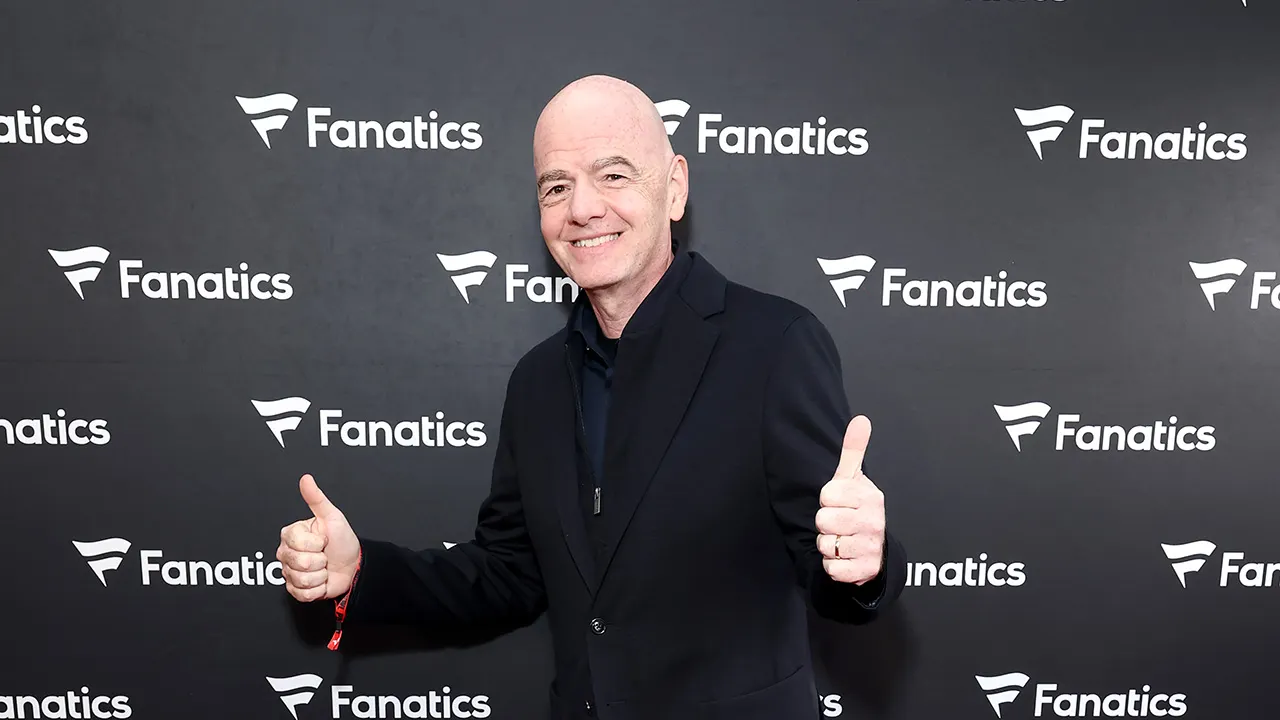
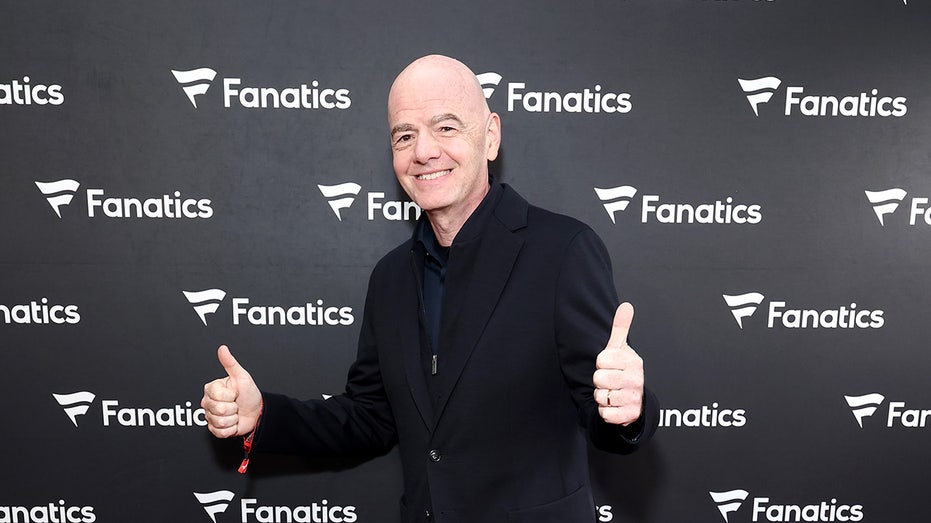
Gianni Infantino attends the 2026 Fanatics Super Bowl Party at Pier 48 in San Francisco on Feb. 7, 2026 in San Francisco, California. (Cindy Ord/Getty Images for Fanatics / Getty Images)
“Across the sports landscape, we see that Fanatics are driving massive innovation in collectibles that provides fans with a new, meaningful way to engage with their favorite teams and with their favorite players,” FIFA President Gianni Infantino said in a statement.
“So, from FIFA’s point of view, we can globalize that fan engagement precisely thanks to our global tournament portfolio. And this provides another important commercial revenue stream that we channel back, as always, into the game, into football.”
Advertisement
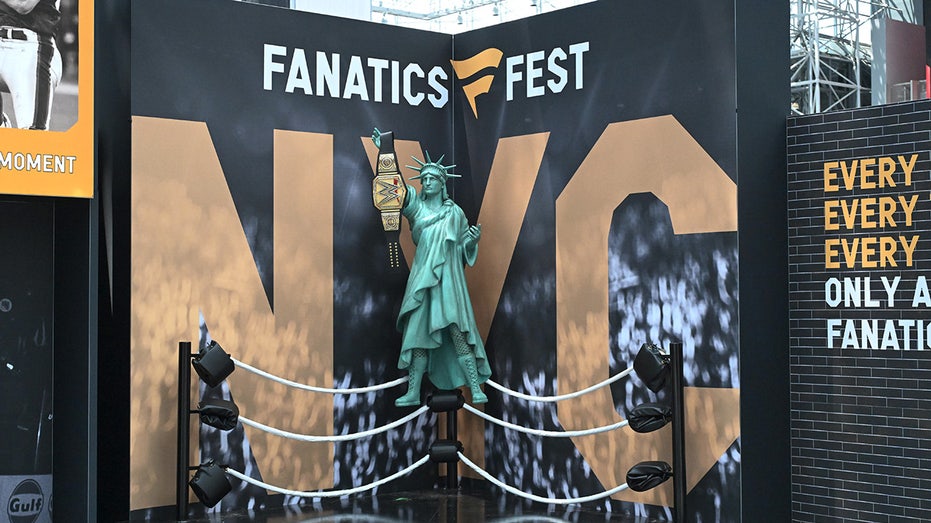
A view of the venue during Fanatics Fest NYC 2025 at Javits Center on June 20, 2025, in New York City. (Dave Kotinsky/Getty Images for Fanatics)
“This is truly a historic day in our company’s history,” added Fanatics founder and CEO Michael Rubin. “Global football is the biggest growth opportunity in sports, and when you combine the power of FIFA with the innovation and entrepreneurial backbone of Fanatics, together we’re poised to elevate storytelling and collectibles around the game in a way that’s never been seen before.”
The announcement of the long-term deal came with the news that the official FIFA World Cup Final press conferences will take place at the third edition of Fanatics Fest this summer on July 17 in New York City, two days before the final across the Hudson River at MetLife Stadium.
Fanatics Fest will also host a massive watch party and will air the FIFA World Cup final live on all screens around the Javits Center for the tens of thousands of expected attendees that day.
Advertisement
FIFA World Cup winner’s trophy in Miami, Florida. (Photo by Eva Marie Uzcategui/FIFA via Getty Images)
NEW YORK — Microsoft Corp. (NASDAQ: MSFT) shares fell more than 1% Thursday, trading around $416.39 in afternoon trading, as investors digested the latest quarterly results and weighed concerns over moderating cloud growth against the company’s massive investments in artificial intelligence infrastructure. The modest decline came on above-average volume, reflecting some profit-taking after a strong run earlier in 2026.
The stock opened lower and remained under pressure throughout the session despite broader market gains. Microsoft’s market capitalization slipped below the $3.1 trillion mark temporarily, though the company remains one of the world’s most valuable publicly traded firms. Analysts described the move as “healthy digestion” rather than a fundamental shift in sentiment, noting that the dip follows several strong earnings beats and record highs in recent months.
Microsoft reported solid fiscal third-quarter results in late April, with revenue rising 13% to $70.1 billion and intelligent cloud revenue growing 17%. Azure cloud services posted 31% growth, slightly below some elevated expectations, while AI-related bookings continued to accelerate. CEO Satya Nadella highlighted “strong execution” across the business and pointed to “early signs of AI monetization” in enterprise workloads. However, some investors appeared to focus on the slight cooling in overall cloud growth rates and the enormous capital expenditures required to build out AI data centers.
Cloud and AI Momentum Remain Central Themes
Microsoft’s Azure platform continues to gain share in the competitive cloud market, though it still trails Amazon Web Services. The integration of OpenAI’s models across Microsoft 365, GitHub, and Azure has driven significant customer interest. Nadella has repeatedly emphasized that the company is in the early innings of AI adoption, with hundreds of millions of users already interacting with Copilot tools.
Advertisement
Capital spending remained elevated as Microsoft accelerates data center construction to meet AI demand. The company guided for continued heavy investment through 2027, which some analysts view as a positive long-term signal but a near-term drag on free cash flow margins. Gross margins held steady despite these investments, supported by high-margin software and cloud businesses.
Analyst Reaction and Valuation
Wall Street largely maintained bullish stances following the earnings report. Most major firms kept Buy or Outperform ratings, with average 12-month price targets clustering around $480–$520. Optimistic forecasts reached as high as $600, citing Microsoft’s leadership in enterprise AI, its massive installed base in productivity software, and its diversified revenue streams across cloud, gaming, LinkedIn and search.
The stock trades at a forward price-to-earnings multiple in the low-to-mid 30s, which many analysts consider reasonable given projected earnings growth of 15%+ annually. The dividend yield sits near 0.7%, supported by a healthy payout ratio and consistent increases.
Risks and Market Context
Thursday’s decline occurred amid a broader market rotation, with some investors shifting away from mega-cap technology names toward smaller stocks and more cyclical sectors. Concerns over potential AI spending slowdowns if early returns disappoint, increased competition in cloud, and regulatory scrutiny on Big Tech also weighed on sentiment.
Advertisement
Geopolitical risks, including trade tensions and energy costs for data centers, remain background factors. However, Microsoft’s strong balance sheet, recurring revenue base and diversified portfolio provide meaningful downside protection compared to pure-play AI companies.
Long-Term Outlook Remains Constructive
Looking further into 2026 and beyond, analysts project continued strong performance driven by AI monetization, cloud market share gains and growth in gaming and professional networks. The company’s ability to integrate AI across its product suite — from Windows and Office to Azure and GitHub — creates significant cross-selling opportunities and stickiness with enterprise customers.
Microsoft’s strategic partnership with OpenAI continues to evolve, with new models and capabilities expected throughout the year. The company has also expanded its presence in consumer AI through Copilot+ PCs and other initiatives, aiming to bring advanced AI features to everyday users.
Investor Considerations
For long-term investors, Microsoft offers a compelling mix of growth, quality and relative stability. The stock suits core technology holdings in diversified portfolios, retirement accounts seeking growth with some income, and those wanting exposure to both cloud computing and artificial intelligence leadership. Those already holding shares have little reason to sell given the company’s track record and future potential. New buyers may view current levels as a reasonable entry point after the recent pullback.
Advertisement
As always, investors should consider their risk tolerance and time horizon. While Microsoft has delivered exceptional returns over the past decade, future performance will depend on successful AI execution and maintaining leadership in an increasingly competitive landscape.
Thursday’s modest decline appears more like normal market breathing than a change in fundamentals. With strong secular tailwinds, excellent execution under Satya Nadella and broad analyst support, Microsoft remains one of the highest-quality large-cap technology investments available in 2026. The company’s transformation from a software giant to an AI and cloud powerhouse continues to reward patient shareholders.
Sothebys International Realty broker Jenna Stauffer analyzes the U.S. housing market, noting a shift in buyer behavior, on ‘Making Money.’
The artificial intelligence (AI) boom has caused a surge in luxury real estate prices in the Bay Area, although more affordable areas in Silicon Valley haven’t seen the same gains since the launch of ChatGPT kickstarted the tech sector’s AI race.
An analysis by Redfin compared the median home sale prices across price segments in 2020-2022 to 2023 to 2025, accounting for the launch of ChatGPT 3.5 in November 2022, which was a watershed moment in the public’s awareness of AI. Redfin’s report includes all ZIP codes in San Francisco, Oakland, San Jose and San Rafael that had sufficient data for the comparison.
Advertisement
Home prices in the Bay Area’s luxury ZIP codes with home prices between $3.1 million and $7.6 million saw an average increase of 13.4% in home prices in the two years after the launch of ChatGPT. That figure is more than double the 6.3% average increase for the segment of the market just below luxury, which had prices ranging from $1.5 million to $2.8 million.
The most affordable segment of Bay Area ZIP codes in the report had prices ranging from $535,000 to $615,000 and saw prices decline 3.8% on average from 2023 to 2025.
Luxury ZIP codes in San Francisco have seen rapid home price growth on average since the launch of ChatGPT, Redfin found. (Tayfun Coskun/Anadolu via Getty Images)
“Luxury homeowners in Silicon Valley saw their housing wealth jump during the pandemic, and now it’s jumping again thanks to the advent of artificial intelligence and the high-paying jobs that come with it,” said Redfin senior economist Yingqi Xu.
Advertisement
“Meanwhile, some owners of lower-end properties have missed out on the AI boom, with home prices in the most affordable Bay Area ZIP codes declining over the past two years. It’s another sign of the K-shaped economy taking shape in the Bay Area, with AI lifting the fortunes of some households and neighborhoods much more than others,” Xu said.
Los Angeles had fairly consistent home price growth across segments of the housing market in Redfin’s analysis. (Simonkr)
The report also compared metro areas that aren’t as reliant on the tech sector as Silicon Valley to see if the luxury and affordable segments of the real estate market saw similar growth patterns.
Redfin found that New York saw the opposite trend, with home prices in luxury ZIP codes in the metro area growing just 4.7% on average from 2023 to 2025 – while the most affordable ZIP codes had home values surge 24.9% in that period.
Seattle, which also has a significant tech presence, also saw consistent home price growth across price segments. (Juan Mabromata/AFP via Getty Images)
Home prices in Los Angeles grew at relatively similar rates across segments, with luxury ZIP codes rising 9.7% on average from 2023 to 2025 compared with 6.1% for the most affordable ZIP codes.
Seattle also saw home prices rise at comparable levels across price segments, with prices in the luxury tier rising 11.7% on average while the most affordable tier rose 10%.





















































You must be logged in to post a comment Login