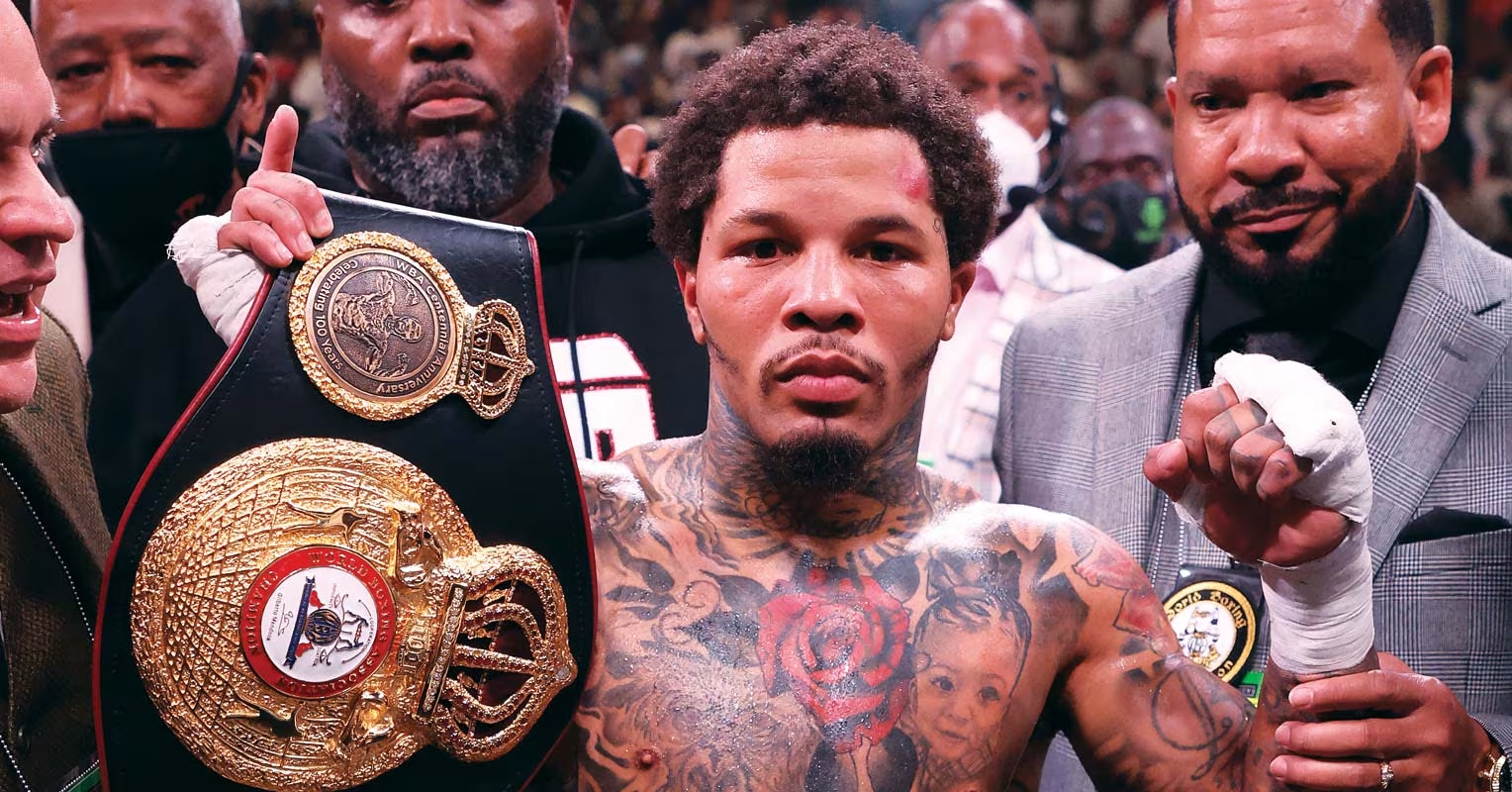
Gevonta Davis has not won a fight since June 2024 but remains as the WBA’s champion-in-recess. Now, the man hoping to succeed Davis as WBA champion has demanded that the Baltimore-born fighter is removed from that position.
Davis drew with Lamont Roach Jr in his lone outing of 2025, meaning that he has not won a contest since knocking out Frank Martin almost two years ago. However, out-of-ring issues are largely behind the inactivity of the 31-year-old, which have led to him losing his WBA lightweight world title.
Davis has been named as the champion-in-recess rather than stripped entirely, meaning that he could be reinstated as full champion in the future or mandated to fight any new champion upon his return.
Advertisement
It had been believed that number one contender Floyd Schofield, ‘Kid Austin’, would take on either Lucas Bahdi or Roach in a clash for the now-vacant belt, but an announcement has yet to take place.
Posting on X, Schofield has spoken out and demanded that the WBA strip Davis of his title or mandate a fight between he and ‘Tank’.
“It’s so much politics with boxing and belts. I think we may just fight to put on great fights and vacate the WBA Boxing titles.
“If WBA Boxing and Golden Boy can not get a fight for the World Title, do we need them[?]
“They need to mandate KID vs Tank or strip him.”
Advertisement
Schofield’s outburst, combined with the delayed confirmation of a bout to determine a new champion, could potentially be a sign that Davis may soon be reinstated as champion, with a pending court case expected to determine how soon before ‘Tank’ returns to action.
A US judge has dismissed a lawsuit brought by Ukrainian tennis player Lesia Tsurenko, who accused the WTA Tour and its former chief executive, Steve Simon, of inflicting mental abuse.
Ms Tsurenko, once a top-25 player, alleged that the WTA failed to uphold a promise made by Mr Simon to ban Russian and Belarusian players who supported the war. She also claimed the tour did not prohibit “conduct detrimental” to the integrity of the game.
The 36-year-old cited specific instances, including a Russian player wearing a patch for a sanctioned Russian oil company.
She further stated that Mr Simon had told her it was “OK” for others to support the conflict.
Advertisement
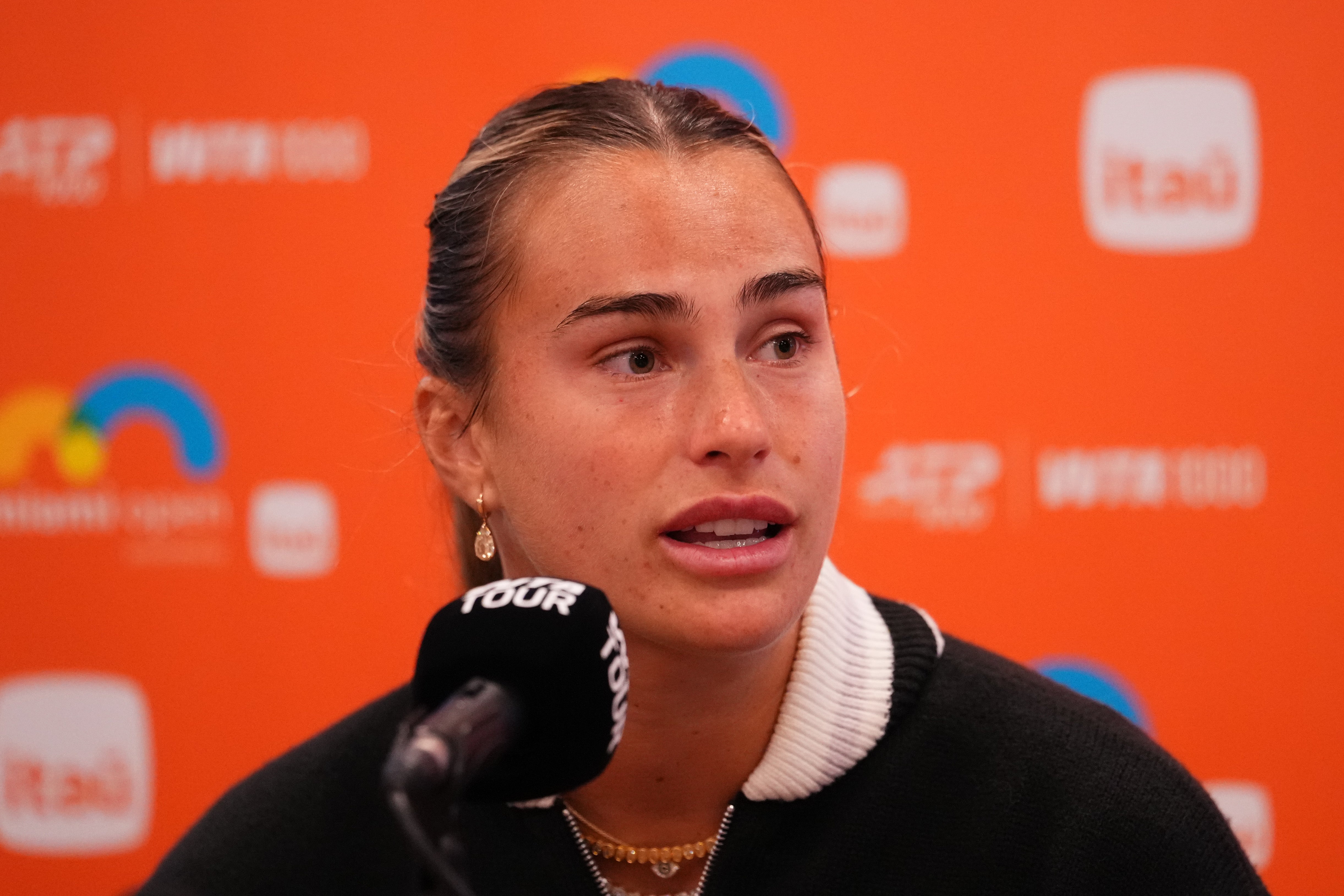
Tsurenko said she had to pull out of a 2023 match against Belarus’ Aryna Sabalenka (pictured) after having a ‘panic attack’ (Getty)
Ms Tsurenko recounted suffering a “panic attack” that led her to withdraw from a match against Belarusian player Aryna Sabalenka, now the world’s number one female player, at the 2023 BNP Paribas tournament in Indian Wells, California.
However, in a decision issued on Wednesday, US District Judge Naomi Reice Buchwald in Manhattan ruled that the WTA was best placed to determine what constituted detrimental conduct.
Judge Buchwald concluded that Ms Tsurenko had not demonstrated that the organization had a duty to ban players or to ensure the game was free from emotional abuse.
“When courts have found that sports associations owe a duty to their players, those duties relate to ensuring players’ physical safety, not their emotional wellbeing,” Judge Buchwald wrote.
The judge also noted that the WTA had employed “reasoned decision making” in the wake of the invasion, including prohibiting players from competing under the flags of Russia and Belarus.
Advertisement
Ms Tsurenko had sought damages for breach of contract and negligence, including the infliction of emotional distress. Lawyers for both Ms Tsurenko and the WTA did not immediately respond to requests for comment on Thursday.
In their defence seeking dismissal, the WTA stated they had consistently condemned Russia’s actions and taken significant steps to support Ukrainian players.
They also argued that, like many sports leagues, the WTA believes individual athletes “should not be punished because of the actions of their countries’ governments.”
Ms Tsurenko has frequently spoken out about the considerable challenges of competing on the professional tour since the invasion began.
Melvin Foster, a former college football star who later became a sheriff’s deputy in Texas, has died, according to an online obituary. He was 59.
Foster was a standout linebacker with the Iowa Hawkeyes. He was on the team that won a Big Ten Championship and made a Rose Bowl appearance. He led the team in tackles during his junior and senior seasons.
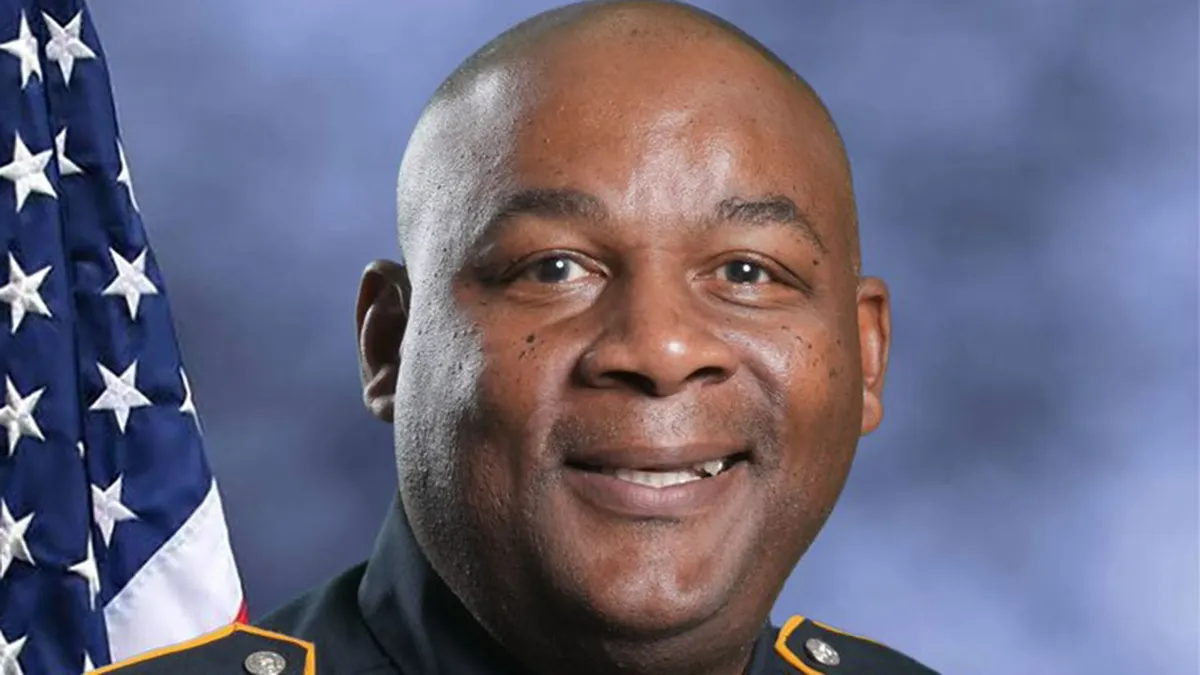
Melvin Foster was a Harris County, Texas, sheriff’s deputy for 15 years.(Ed Gonzalez/@SheriffEd_HCSO/X)
After his collegiate career was over, he had a brief stint with the Dallas Cowboys.
He later joined the Harris County, Texas, Sheriff’s Office as a deputy sheriff and a field training officer. He was with the department for more than a decade.
Harris County Sheriff Ed Gonzalez described Foster’s death as “unexpected.”
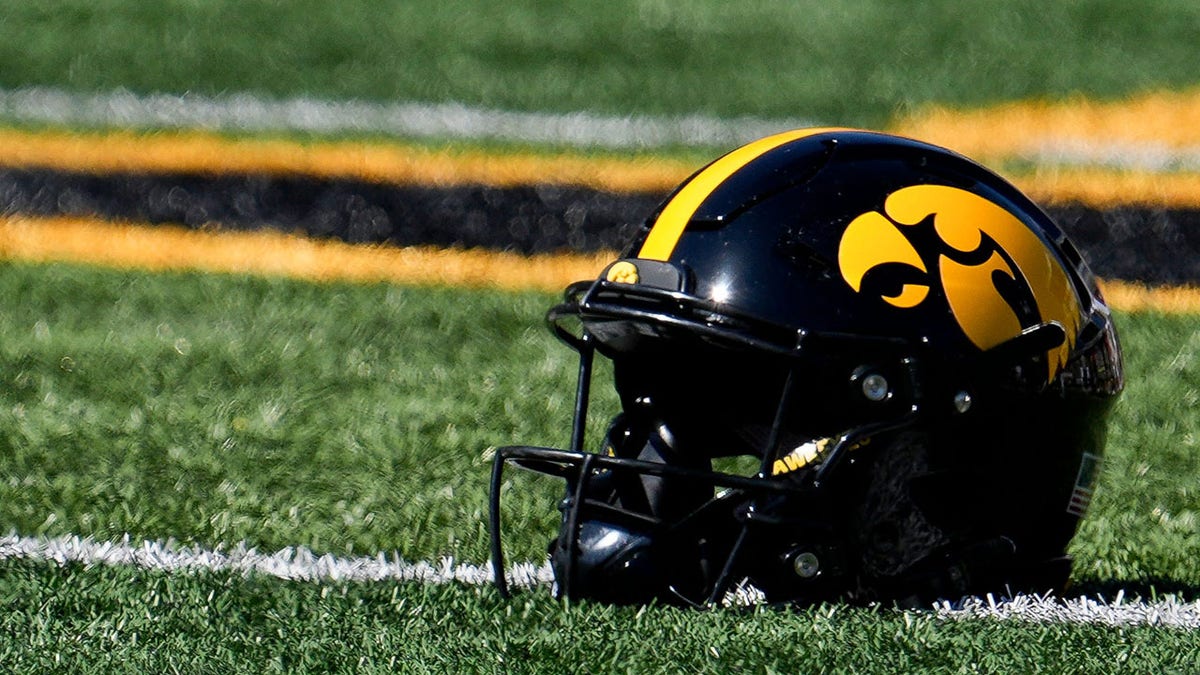
An Iowa Hawkeyes helmet lays on the field before a football game against the Indiana Hoosiers Sept. 27, 2025 at Kinnick Stadium in Iowa City, Iowa.(Julia Hansen/Iowa City Press-Citizen / USA TODAY NETWORK via Imagn Images)
“We’re saddened by the recent and unexpected passing of our teammate, @HCSOTexas Deputy Melvin Foster,” Gonzalez wrote on X. “Melvin was an incredible man and public servant. He leaves behind a strong legacy. He served Harris County for almost 15 years.
“Melvin played for @JackYatesHigh, Class of 1986. He played linebacker for the football team and participated in a state championship in 1985. He played college football for the @IowaFootball Hawkeyes and appeared in the Rose Bowl in 1991. He was awarded @USATODAY All-American, All-State honors. He was a member of the @dallascowboys in 1992. He was inducted in the @HC_HSA Hall of Fame.
“He was an impactful leader and was beloved by his teammates. We extend our deepest condolences to his family. Melvin will be missed and never forgotten.”
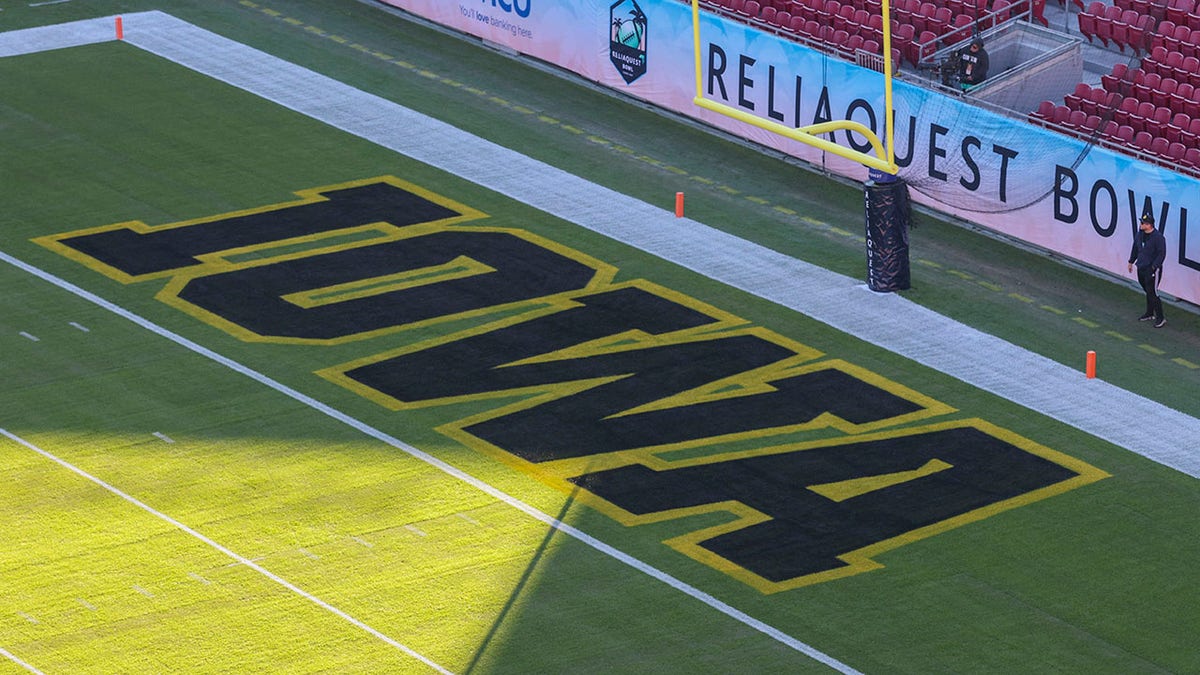
A general view of the stadium before the ReliaQuest Bowl between the Iowa Hawkeyes and the Vanderbilt Commodores at Raymond James Stadium on Dec. 31, 2025. (Nathan Ray Seebeck/Imagn Images)
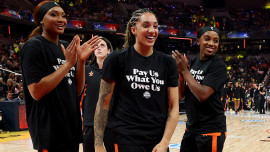
The WNBA and CBS Sports announced a new long-term agreement on Wednesday that expands their partnership and will feature up to 20 regular-season games annually on the CBS Television Network and Paramount+. CBS Sports will air 20 games during the upcoming 2026 season, the most ever WNBA games for the network on broadcast television.
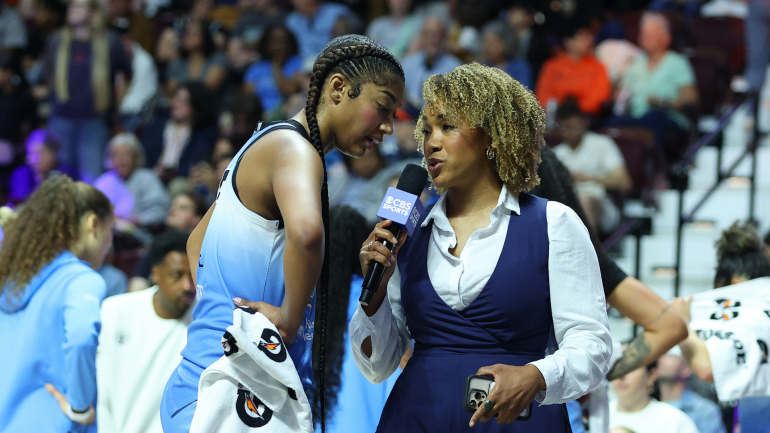
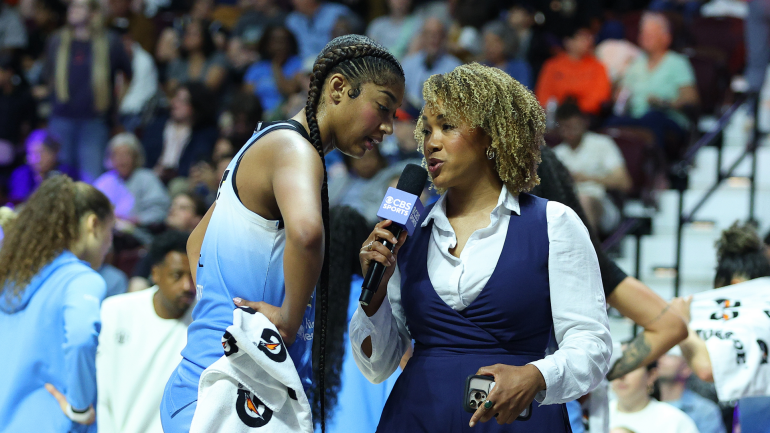
The deal also includes an expanded pregame, halftime and postgame show featuring Naismith Basketball Hall of Famer Lisa Leslie, former WNBA All-Star Renee Montgomery and CBS Sports reporter Jenny Dell.
“The WNBA’s growth and cultural impact have never been stronger, and CBS Sports is proud to deepen our longstanding partnership with a league that continues to drive the evolution of women’s sports,” Dan Weinberg, the executive vice president of programming at CBS Sports, said in a statement. “With our entire schedule of games on broadcast television, we are broadening the league’s reach and amplifying the WNBA’s momentum with best-in-class coverage that reflects the excellence of its athletes and resonates with fans.”
Jordan Kent (play-by-play), Isis “Ice” Young (analyst) and Tiffany Blackmon (sideline) will return as the WNBA on CBS’s lead broadcast team.
“The WNBA Tip Off Show,” led by Leslie, Montgomery and Dell, will expand to support 10 games, including six shows on CBS and Paramount+ and four digital-exclusive editions on CBS Sports HQ.
Advertisement
The full 2026 WNBA on CBS schedule will be announced at a later date.
The 2026 WNBA season will proceed as scheduled after the league and the Women’s National Basketball Players Association came to terms on a new collective bargaining agreement earlier this month. The term sheet was recently ratified by both the WNBA’s board of governors and the players’ union.
The 2026 WNBA season will begin May 8, and the 44-game regular season will run through Sept. 24, with a late-season break for the 2026 FIBA Women’s World Cup from Sept. 1-16. The 2026 playoffs will begin on Sept. 27. Two new expansion franchises, the Portland Fire and Toronto Tempo, will join the league this year, bringing the total number of teams to 15.
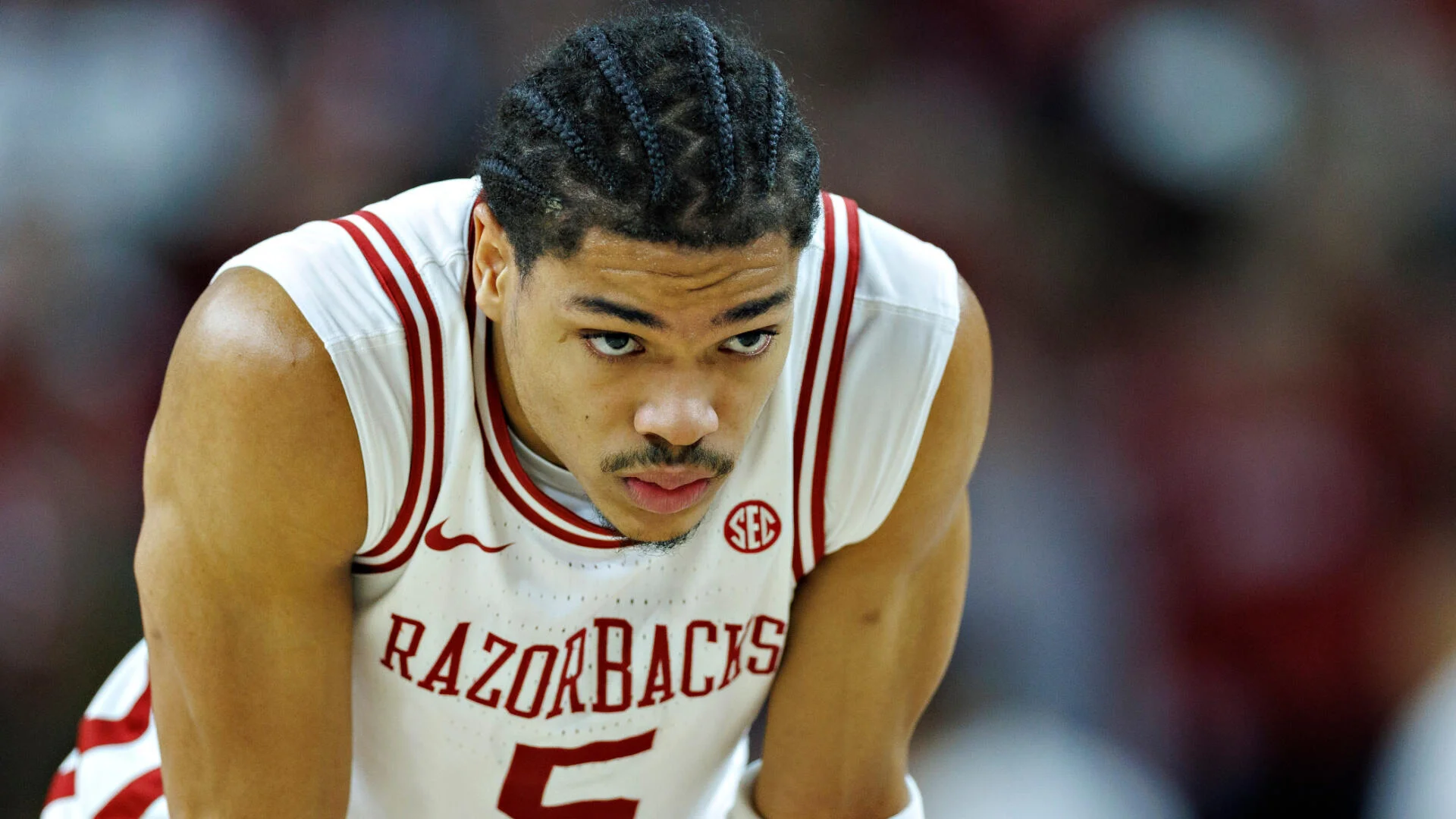
Darius Acuff Jr. is no stranger to making history. This season, the 19-year-old Arkansas point guard became the first player to lead the SEC in both points and assists since Pete Maravich in 1970, and third to win both freshman and player of the year.
Indeed, pretty much everything about Acuff screams superstar. He’s more than an electric basketball player. There’s an icy cool charisma to him — the kind Reebok believes is ready to be the face of a franchise, as the company announced on Tuesday that it has signed Acuff to a signature shoe deal (meaning he will have his own shoe when he takes the court for his first NBA game), marking the first time that has ever happened for a male athlete that is still in college.
Anyone who gets the “HIM” endorsement from Allen Iverson is true-hooper stamped, but a necessary caveat is that it is Iverson’s jojb to sell the world on Acuff’s impending stardom. He’s Reebok’s vice president of basketball. For now, this is just marketing. There are no guarantees. What kind of actual NBA player Acuff turns out to be, both in the short and long term, remains to be seen.
And that’s where this gets interesting. Or, if you’re the team that ends up drafting Acuff with a top-five pick, potentially dangerous. Acuff represents what has become the league’s most precarious positional archetype: The small, score-first point guard who can’t defend.
Advertisement
Now, before we go any further, a couple disclaimers. First, Acuff isn’t that small. He’s listed anywhere from 6-foot-2 to 6-foot-3, and at 190 pounds he’s built like an old-school SEC running back — his sturdy frame and straight-line strength is actually one of his most devastating attributes, at least against college players. Yes, he’ll be undersized in a lot of NBA point guard matchups, but so is Jalen Brunson, who one league scout told CBS Sports is one of Acuff’s better NBA comps.
“If you’re going with the more high-end outcomes [for Acuff’s career], I suppose there’s some Damian Lillard in there. Maybe a bigger, stronger Keyonte George on a little bit of the lower end,” the Western Conference scout said, noting the “natural fade” to a lot of Acuff’s midrange pull-ups that remind him of George.
“But yeah, I think Brunson is a probably a good example [of what Acuff can become], just with the way they use their leverage; they get you on their hip, get that shoulder into you, and from there you can’t get them off their line. … Remember, nobody projected Brunson to become what he has. We said the same things, right? Too small. How’s he gonna guard? But there’s no backdown in that guy. … It’s hard to go wrong betting on those kinds of guys.”
Indeed, Brunson is an interesting comp for Acuff — not just for the size and skill similarities (Acuff is a better athlete) but through the prism of defensive deficiency. Even as great as Brunson is offensively, there’s still a question as to whether he can be the best player on a championship team as a weak-link defender, even as the Knicks have tried to insulate him with long wings and rim protection.
Which brings us to the second disclaimer: we don’t know that Acuff can’t defend. We only know that he hasn’t chosen to yet.
Advertisement
It’s partly, if not largely, an awareness issue on tape — he can look like a chicken with his head cut off away from the ball. But in theory, he has the athleticism and physicality to pull his weight. Maybe he’ll figure it out in the NBA. So far, the evidence is not terribly encouraging.
Last Saturday, Acuff had absolutely no chance of staying in front of High Point point guard Rob Martin, but neither did anyone else. Martin is a human bullet. You give that guy a head of steam and 90% of defenders, even NBA ones, are going to become a billboard on an F1 track.
Again, it was the effort and focus lapses that stood out. Acuff’s screen navigation is a real problem. The want-to just isn’t there. He’s too content to fall out of the play, which wouldn’t seem to be in keeping with all the “tough competitor” praise he gets. Watch here as he takes the scenic route around two picks on which he isn’t even touched, just to lazily trail from behind as Martin cruises in for a layup.
Even when Acuff did manage to stay attached to Martin, he still got powered through at the rim by a guy who is generously listed at 5-foot-10 and 170 pounds.
Advertisement
The flip side to this, of course, is that like Brunson, Acuff gives it right back to you — and then some — on the offensive end. He put 36 on High Point. Scored 12 of Arkansas’ final 15 points. Turned a tie game with three minutes to play into a 90-83 lead with a personal 7-0 run. The clutch gene is evident. You can’t teach it. Acuff has it.
Through two NCAA tournament games, Acuff has racked up 60 points and 13 assists. Chris Paul is the only other freshman since 1973 to open his NCAA Tournament career with consecutive 20-point/5-assist games. There would appear to be almost no doubt that Acuff is going to be an offensive weapon at the next level, perhaps even a deadly one.
🏀 Darius Acuff Jr.’s sizzling NCAA Tournament
Stat / Feat
Context
36 points vs. High Point
Second-most by a frosh in NCAA tourney history (De’Aaron Fox, 39)
60 points through first two NCAA Tournament games
Most ever by a freshman through two tournament games
30+ PPG, 5+ APG through two games
First player to hit those marks since Jimmer Fredette in 2011
Multiple 20+ point, 5+ assist games
Joins Chris Paul (2004) and Derrick Rose (08) as only frosh to do it
The NBA, generally speaking, does not value this type of one-way player — particularly as the face of a franchise — the way it did even five years ago. Trae Young’s outsized salary just got dumped. Nobody wants to touch Ja Morant. It’s hard to imagine any team paying Tyler Herro $130 million today, but in 2022 the Heat did.
Advertisement
Even closer to the roster margins, teams are largely moving away from one-way scorers who bring little else to the table. Cam Thomas is a walking bucket and he just got waived by the Bucks. Jordan Poole has averaged 20 points per game over a season two times and is basically a castoff. Jonathan Kuminga dominated playoff games as a scorer, yet could hardly crack Steve Kerr’s rotation before he was shipped to the Hawks. Collin Sexton was an elite scorer in college and has remained a very good one in the NBA, and nobody is handing him the keys to their team.
“I suppose there’s some Damian Lillard in there.”
NBA scout on Darius Acuff Jr’s NBA potential
There are exceptions. If your name is Luka Dončić, Stephen Curry, Donovan Mitchell, prime James Harden or Lillard, or certainly the aforementioned Brunson, a lot of these size and/or defensive flaws will be tolerated. It begs the question: Is Acuff’s offense that great?
“[It] has a chance to be, in my opinion,” a separate scout told CBS Sports. “It’s not just because of what he does with the ball, but he can [play] off it, too. That’s become so important. I mean look around, how many teams do you see playing that Luka style anymore, where you’re just giving it to one guy and letting him play pick and roll all game long? It’s not many.”
It’s true. Context matters. You’re a lot more exposed as a defensive liability when you’re the face of a team, especially right out of the gate. Keyonte George has it easier than Trae Young did in Atlanta. George isn’t the best player in Utah. At best, he’ll be the third-best player next year. Plus, the Jazz have built their roster to insulate him with bigs everywhere, trading for Jaren Jackson Jr. to put alongside Walker Kessler and Lauri Markannen. And George, an electric scorer, still might be a problem when they start trying to win games. Maybe we’ll find out next year. It’s an interesting litmus test.
Advertisement
For Acuff, a situation like Dallas would be perfect. He wouldn’t be the best player on the team (that would be Cooper Flagg), and Kyrie Irving would allow him to ease into his career in the same way that De’Aaron Fox is doing for Dylan Harper, the second overall pick in 2025, in San Antonio.
CBS Sports lead draft scout Adam Finkelstein has Acuff going in the six to eight range, which is Jazz/Mavericks/Grizzlies/Hawks territory. Would the Jazz put Acuff alongside George, or take him with the plan to move George? The Hawks have a good shot at a mid-lottery pick, too (via New Orleans’ or Milwaukee’s pick), but would they make another bet on a player like Acuff after just having punted on Young? Maybe. Maybe not. Every organization is looking out a different window.
“You try not to put a lot of stock in these generic prototypes, as far as where the league is going or what kinds of players are en vogue at whatever moment,” one Western Conference exec told CBS Sports. “It wasn’t that long ago that centers were supposed to be dying. Everyone was going small. Now everyone is looking for size again. … You really have to just go case by case. What’s good for one team might not be a fit for another. Do the strengths outweigh the weaknesses? And then, can the weaknesses be improved?”
Ah, the improvement card. It’s always a popular one to play around draft time. If you took a shot of tequila every time some analyst said the words “he needs to improve his shooting” on draft night, you’d be in the back of an ambulance before the end of the first round.
For years this led teams to use lottery picks on the likes of Michael Carter-Williams, Elfrid Payton, Kris Dunn, Emmanuel Mudiay, Ricky Rubio, Dante Exum and Frank Ntilikina — all on the assumption that their shooting would meaningfully improve. Not one of them ever made an All-Star team.
Advertisement
Acuff’s lack of defensive want-to is excusable in college, but will he be pressed to change in the NBA?
Getty Images
It’s not to say improvement can’t happen. Of course it can. In this regard, defense, to whatever degree your size allows, is no different than any other skill. Ben Simmons didn’t give a damn about defense in college, but in the NBA he became the portrait of modern versatility before flaming out of the league for just about every reason other than defense.
Go talk to Darren Erman about Klay Thompson. Erman was an assistant with the Warriors when Thompson came up, and he’ll tell you all the stories you want about Thompson going into the gym and working out for hours without a ball, working on his defense, his movement, his technique, anything and everything until he became one of the league’s best perimeter defenders.
Acuff doesn’t have the size of a Simmons or Thompson, but he can get better if he wants to. Curry did it. You better believe a lot of GMs are trying to make as educated a guess as possible as to whether Acuff will do the same. Like us, they’ll be watching closely when Acuff squares up against top-seeded Arizona, which has NBA players all over, in the Sweet Sixteen on Thursday night.
If his defense is a wreck and the Razorbacks get spanked, will it hurt his draft stock? If he balls out and leads Arkansas into the Elite Eight, will it rise even more than it already has? It’s easy to say teams evaluate the big picture over a small sample of big-stage showings, but evidence often speaks to the contrary. Showing out in the tourney can, and does, influence even the most unemotional of evaluators.
Advertisement
Acuff dropped 36 on High Point, second-most by a freshman in NCAA Tournament history.
Getty Images
Sometimes knocking a your marquee audition out of the park proves to be a predictor of NBA success, as was the case with Curry and Brunson, even a Kemba Walker, to name a few tournament darlings. But for every one of those guys, there’s a Trey Burke. A Shabazz Napier. Small guys who were big-time college point guards and showed out in the tourney but never panned out in the NBA.
Acuff is almost certainly going to pan out on some level. It’s impossible to imagine him being a full-on bust. But we’re talking degrees here. He’s probably going to go in the top 10, with the expectation that he will someday soon be not just a statistical darling but an actual star who can influence winning. Those are two very different things and the league is now starkly differentiating between the two.
Which one will Acuff become? Who knows. He’s only 19-years-old. Everything is on the table. His lack of interest in playing defense is a red flag. Ultimately he will have to either fix it or find a way to be so great on offense that the defense does not matter. One team this June is going to make a huge bet Acuff can swing one of the two outcomes. It would be a lot of fun if he could do both.
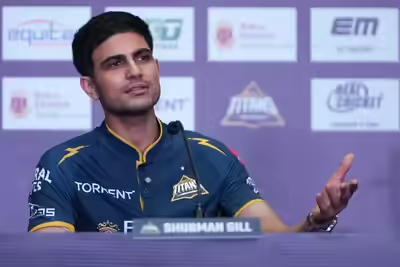
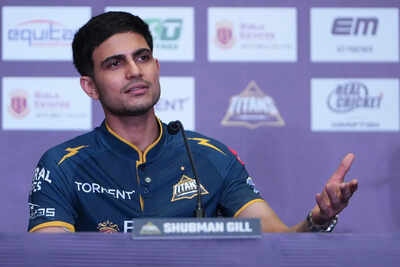
Gujarat Titans’ captain Shubman Gill (AP Photo/Ajit Solanki)
Gujarat Titans captain Shubman Gill has joined the growing list of Indian players voicing concerns over the Impact Player rule in the Indian Premier League, stating that it “takes the skill out of the game.” Gill’s remarks come shortly after similar criticism from players like Rohit Sharma, Hardik Pandya and Axar Patel. During the IPL captains’ meeting held in Mumbai, a majority of team leaders, including Gill, reportedly pushed for a review of the rule, which was first introduced by the BCCI in 2023 and has since been extended until at least 2027. Speaking a day after the meeting, Gill was clear in his stance against the regulation, which allows teams to introduce an extra batter or bowler at any point during a match. “Personally for me, I don’t think there should be an impact player. I think cricket in general is an 11 players’ game and on wickets where we play on the grounds that we play, adding an extra batsman is I think it takes the skill out of the game,” Gill said. He further explained that the traditional balance of the sport is being affected, especially in pressure situations where teams are expected to adapt with limited resources. “There’s a certain skill in the game that you need to have. When you have a certain amount of batters and if a couple of your batters get out, there’s an amount of skill that you need to have to still get the scoreboard moving and get your team to a good score.” Gill also argued that the rule is making matches more predictable and less competitive, particularly on batting-friendly surfaces. “With that one extra player, it’s making the game more one-dimensional and it’s taking a little bit of the skill out of the game. Chasing 180 on a challenging wicket or 160 on a challenging wicket is for me, it’s personally way more exciting than chasing 220 on a flat wicket,” he added. Despite the criticism from several players, the rule is set to remain in place for the foreseeable future, with any potential review expected only after the 2027 season. “It’s gonna be there till 2027. It’s something that we also spoke about in the captain’s meeting yesterday. I understand it makes the game a bit more entertaining, but let’s see. It’s there. It’s up to them what the BCCI is going to do, they’re gonna take their decision, but personally I don’t like it,” Gill said.
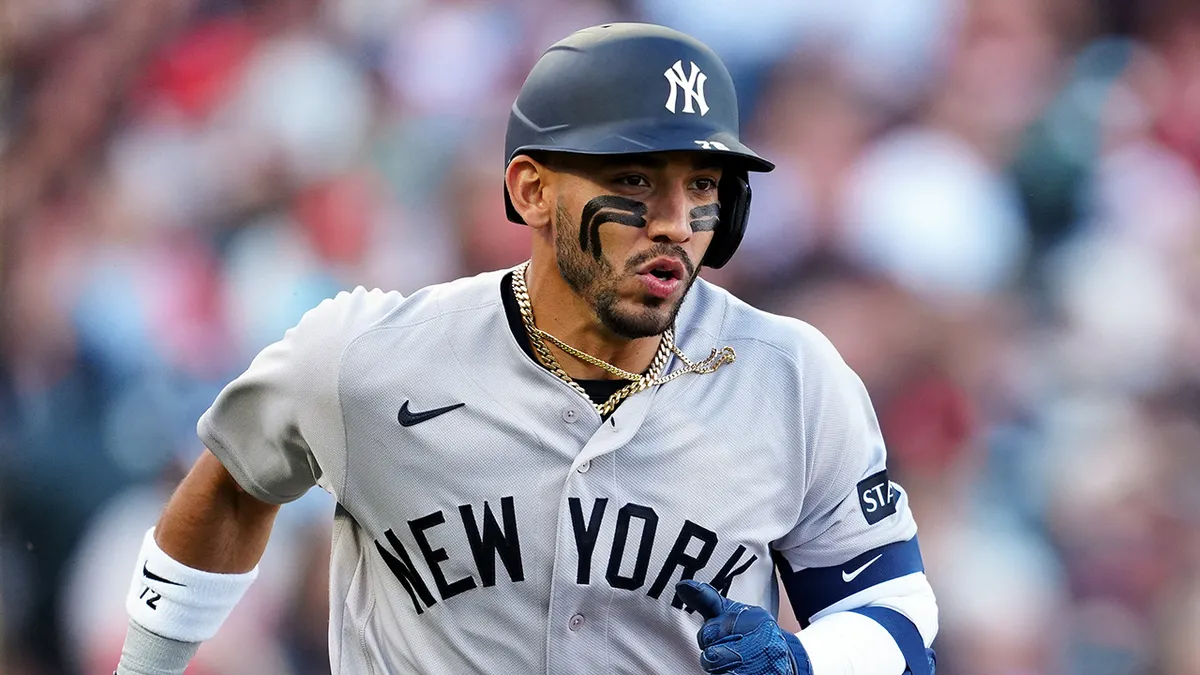
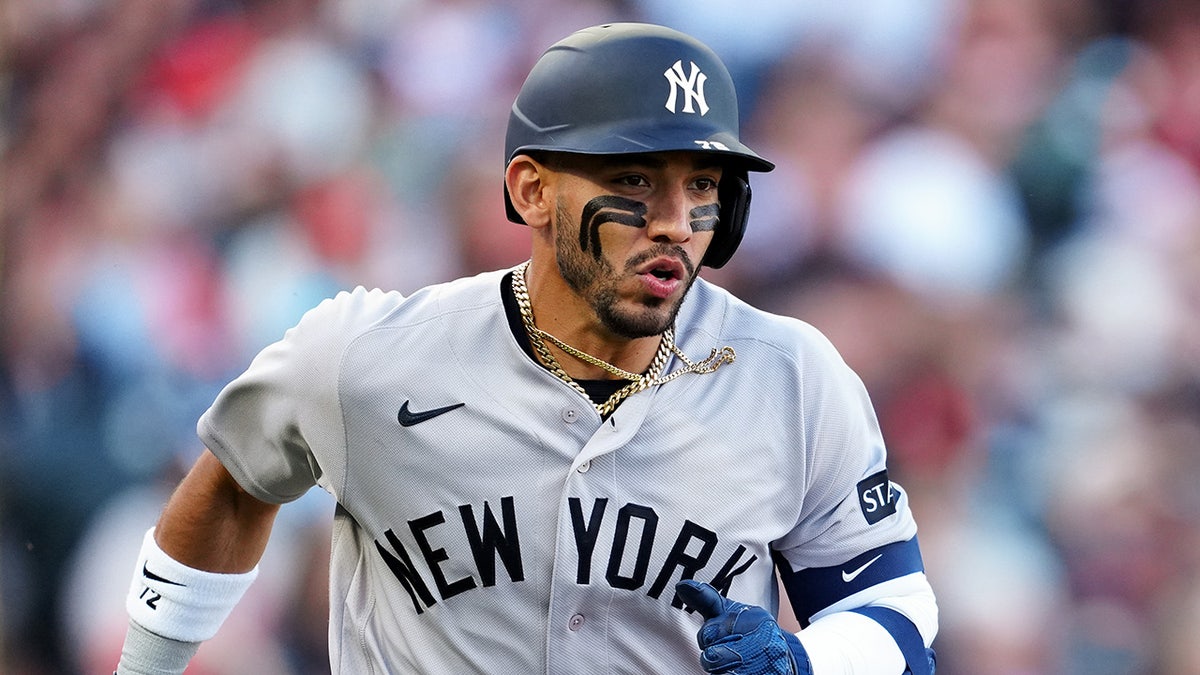
New York Yankees shortstop José Caballero made MLB history Wednesday: He became the first player to use the Automated Ball-Strike System (ABS).
During the fourth inning of the Yankees’ 7-0 Opening Day win over the San Francisco Giants at Oracle Park, Caballero challenged home plate umpire Bill Miller’s strike call after Giants starting pitcher Logan Webb threw a sinker at the top of the zone.
Caballero, 29, tapped his head to initiate the challenge and appeal the strike call, but lost the challenge. The 12 Hawk-Eye cameras of the Automated Ball-Strike System displayed that Webb’s 90.7 mph sinker was in the zone.
José Caballero (72) of the New York Yankees runs to first after hitting a one-run double in the second inning during the game between the New York Yankees and the San Francisco Giants at Oracle Park in San Francisco, California, on March 25, 2026.(Mary DeCicco/MLB Photos via Getty Images)
Despite losing the challenge, he had conviction in his decision.
“Nope, I wanted to go for it,” Caballero said.
Caballero thought it was a little higher than what was shown, but he is a fan of the ABS system despite his unsuccessful appeal.
Advertisement
“I think it’s really good, keep everyone accountable,” he added. “It gives us a chance to really see how good (we are) with the zone or not. I wish it was the other way around, I’m trying to get the overturn call but this time I didn’t.”
Jazz Chisholm Jr., left, and José Caballero, right, of the New York Yankees are congratulated by Austin Wells (28) after both scored on Ryan McMahon’s two-run single against the San Francisco Giants during the second inning of a baseball game in San Francisco, California, on March 25, 2026.(Jeff Chiu/AP Photo)
Caballero’s challenge was the lone one of the game. The Yankees were up 5-0 at the time of the challenge.
Yankees manager Aaron Boone said he has tried to be direct with the feedback he has given to players regarding their challenges.
Advertisement
“We’ve had a lot of dialogue at it. It’s something that we’ve poured a lot into, I’ve certainly,” Boone said. “It’s become one of the things I’ve kind of tried to lead the charge on a little bit. Another kind of end-of-spring meeting with all the position players and catchers at the end just kind of running through different ones that came up and give my feedback on it. I’ve been very direct with them during spring as far as after the fact if I thought one was really good or conversely if one was terrible.”
“I’ve tried to be real direct with them and why,” he said. “I feel like we’re going to be good at it, that’s the expectation. I’m sure we’ll continue to evolve with it.”
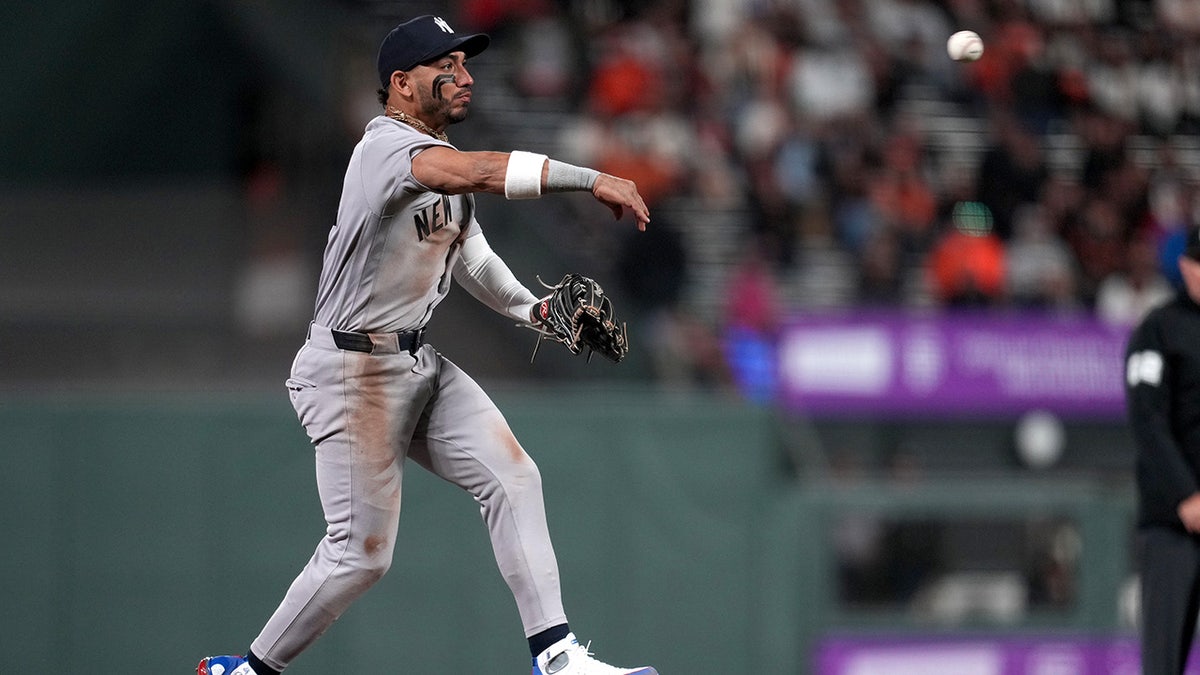
New York Yankees shortstop José Caballero (72) throws the ball to first to record an out against the San Francisco Giants in the ninth inning at Oracle Park in San Francisco, California, on March 25, 2026.(Cary Edmondson/Imagn Images)
Teams are given two challenges a game, but if they successfully challenge a call, they retain it. But if the challenge is unsuccessful, you lose it. So, the Yankees were down to one challenge for the rest of game after Caballero’s unsuccessful attempt in the fourth inning.
Advertisement
Caballero, who went 1 for 4 with an RBI and a run scored, drove in the first run of the 2026 MLB season with a single that scored Giancarlo Stanton in the second inning.
The Yankees (1-0) will look to continue their hot start when they take on the Giants (0-1) on Friday at 4:35 p.m. ET.
In recent years a growing number of sports federations, including World Aquatics and World Athletics, have barred athletes who have undergone male puberty from competing in elite female competition amid concerns over fairness and safety.
Last May the Football Association and England and Wales Cricket Board were among a number of British sports bodies to follow suit after the UK Supreme Court’s ruling that the legal definition of a woman was based on biological sex.
The moves have been opposed by trans rights campaigners who argue they could violate human rights, and insist inclusion should be prioritised.
However, this year US President Donald Trump signed an executive order that prevents transgender women from competing in female categories.
Advertisement
He said it would include the 2028 Olympics and that he would deny visas for transgender athletes trying to visit the US to compete at the Games.
New Zealand’s Laurel Hubbard became the first openly transgender women to compete at an Olympics after being selected for the women’s weightlifting team at Tokyo 2020.
The Paris 2024 Olympics were engulfed in controversy after Algeria’s Imane Khelif won the women’s welterweight boxing gold medal, a year after being disqualified from the World Championships for reportedly failing a gender eligibility test.
The IOC cleared the 25-year-old to compete, along with Taiwan’s Lin Yu-ting, who was also banned by the suspended International Boxing Association (IBA).
Advertisement
The IOC said competitors were eligible for the women’s division if their passports said they were female.
Some reports took the IBA saying Khelif has XY chromosomes to speculate that the fighter might have DSD. However, the BBC was not able to confirm whether this was or was not the case.
Last week it was announced that Lin could return to women’s sport after passing a sex test.
At the 2016 Olympics in Rio, all three medallists in the women’s 800m, including winner Semenya, were DSD athletes, intensifying calls for tighter rules.
Advertisement
World Athletics then insisted that for track events from 400m up to the mile, DSD athletes must reduce their testosterone levels in order to be eligible.
Semenya refused, arguing it was an infringement of her human rights and discriminatory.
Amid a long legal battle, World Athletics’ made its rules stricter in 2023.
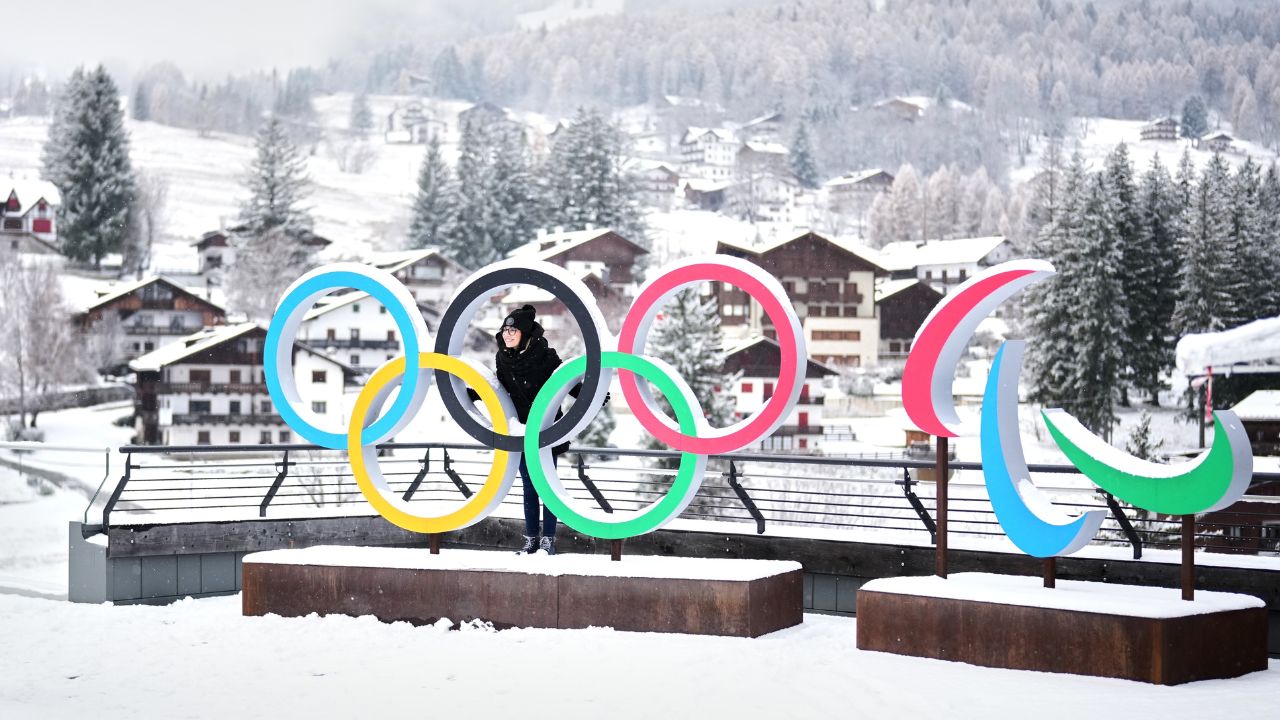
GENEVA — Transgender women athletes are now excluded from women’s events at the Olympics after the IOC agreed to a new eligibility policy on Thursday which aligns with U.S. President Donald Trump’s executive order on sports ahead of the 2028 Los Angeles Games.
“Eligibility for any female category event at the Olympic Games or any other IOC event, including individual and team sports, is now limited to biological females,” the International Olympic Committee said, to be determined by a mandatory gene test once in an athlete’s career.
It is unclear how many, if any, transgender women are competing at an Olympic level. No woman who transitioned from being born male competed at the 2024 Paris Summer Games, though weightlifter Laurel Hubbard did at the Tokyo Olympics in 2021 without winning a medal.
The eligibility policy that will apply from the LA Olympics in July 2028 “protects fairness, safety and integrity in the female category,” the IOC said.
Advertisement
“It is not retroactive and does not apply to any grassroots or recreational sports programs,” said the IOC, whose Olympic Charter states that access to play sport is a human right.
After an executive board meeting, the International Olympic Committee published a 10-page policy document which also restricts female athletes such as two-time Olympic champion runner Caster Semenya with medical conditions known as differences in sex development, or DSD.
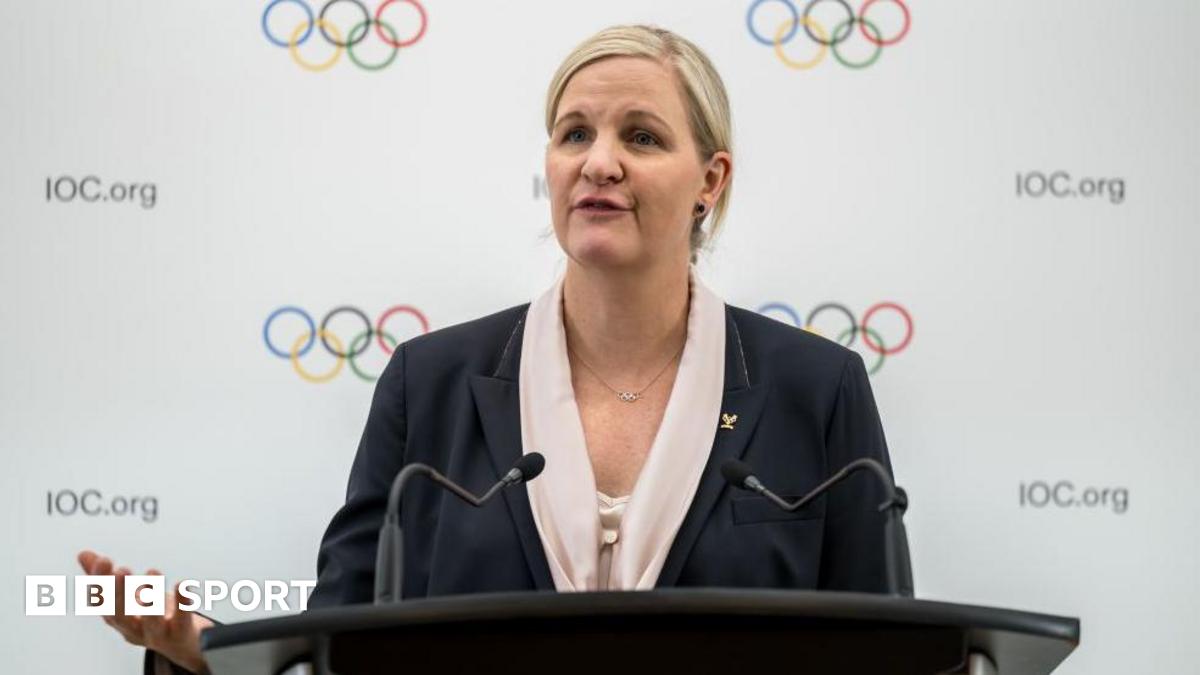
The IOC and its president, Kirsty Coventry, have wanted a clear policy instead of continuing to advise sports’ governing bodies who previously have drafted their own rules.
“At the Olympic Games, even the smallest margins can be the difference between victory and defeat,” Coventry, a two-time Olympic gold medalist in swimming, said in a statement. “So, it is absolutely clear that it would not be fair for biological males to compete in the female category.”
Advertisement
She set up a review of “protecting the female category” as one of her first big decisions last June as the first woman to lead the Olympic body in its 132-year history.
Female eligibility was a strong theme in a seven-candidate IOC election last year — held after a furor around women’s boxing in Paris — when Coventry’s main rivals pledged a stronger policy to leading on the issue.
Before the 2024 Paris Olympics, three top-tier sports — track and field, swimming and cycling — excluded transgender women who had been through male puberty. Semenya, who was assigned female at birth in South Africa and has high natural testosterone levels, won a European Court of Human Rights judgment in her years-long legal challenge to track and field’s rules which did not overturn them.
The IOC document details its research that being born male gives physical advantages that a working group of experts believes are retained.
Advertisement
“Males experience three significant testosterone peaks: In utero, in mini-puberty of infancy and beginning in adolescent puberty through adulthood,” the document said.
It added this gives males “individual sex-based performance advantages in sports and events that rely on strength, power and/or endurance.”
The IOC said its expert group agreed the current gene test is “the most accurate and least intrusive method currently available.” It screened for “the SRY gene, a segment of DNA typically found on the Y chromosome that initiates male sex development in utero and indicates the presence of testes/testicles.”
Still, the mandatory gender screening — already conducted by the governing bodies of track and field, skiing and boxing — is likely to be criticized by human rights experts and activist groups.
Advertisement
One of the two women’s boxing gold medalists at the center of the gender controversy in Paris, Lin Yu-ting of Taiwan, has passed her gene test and can return to competition, the World Boxing governing body said last week.
In the U.S., President Trump signed the executive order “Keeping Men Out of Women’s Sports” in February last year, and pledged to deny visas to some athletes attempting to compete at the L.A Olympics. The order also threatened to “rescind all funds” from organizations that allowed transgender athletes to take part in women’s sports.
Within months the U.S. Olympic body updated its guidance to national sports bodies citing an obligation to comply with the White House.
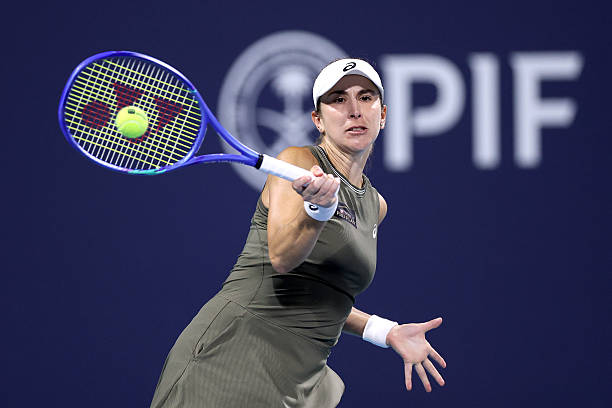
MIAMI GARDENS, FLORIDA – MARCH 23: Belinda Bencic of Switzerland returns a shot to Amanda Anisimova of the United States on Day 7 of the Miami Open Presented by Itau at Hard Rock Stadium on March 23, 2026 in Miami Gardens, Florida. (Photo by Matthew Stockman/Getty Images)
Belinda Bencic delivered a commanding performance at the Miami Open 2026, defeating Amanda Anisimova 6–2, 6–2 to reach the quarterfinals.
It is her second Miami quarterfinal appearance and her first since 2022.
Bencic controlled the match from start to finish, using precise groundstrokes to take time away from one of the tour’s most powerful hitters.
Advertisement
The win also marks: her 41st career Top 10 victory her third Top 10 win of the 2026 season
She continues to build strong form as the tournament progresses.
Off the court, Bencic also shared a lighter moment with Jannik Sinner, who was playing football with her daughter:
Advertisement
“It was so sweet. Jannik is very sweet to her. She’s very skeptical of everyone. I hope later she can realize who was talking to her.”
Indiana should go into the 2026 season as the preseason No. 1 team in college football after landing QB Josh Hoover out of the portal from TCU.
Plus, Curt Cignetti still has the best staff in the country.
On today’s episode of Locked On College Football, Spencer McLaughlin and ‘Locked On Bama’ host Luke Robinson discuss the Crimson Tide’s ongoing QB battle in Tuscaloosa.
Does Austin Mack have a built-in advantage over Keelon Russell?
Advertisement
Colorado enters 2026 with some pressure on Deion Sanders to win, aided by new OC Brennan Marion.
‘Locked On Buffs’ host Kevin Borba shares thoughts on his conversation with Colorado’s new playcaller.
05:42 Hoover’s Potential and Playoff Expectations 06:44 “Josh Hoover Stands Out 17:34 Alabama QB Battle Breakdown 22:32 Patience Pays Off in Football 28:34 Deion Sanders & Colorado’s Future 30:35 Coach Criticized for Job Success 33:45 Utah, BYU, Colorado Coaching Outlook








 Colorado enters 2026 with some pressure on Deion Sanders to win, aided by new OC Brennan Marion.








































You must be logged in to post a comment Login