Connect with us
DAPA Banner

NewsBeat

Why a man’s health before pregnancy matters for the next generation

Published

on

Why a man’s health before pregnancy matters for the next generation

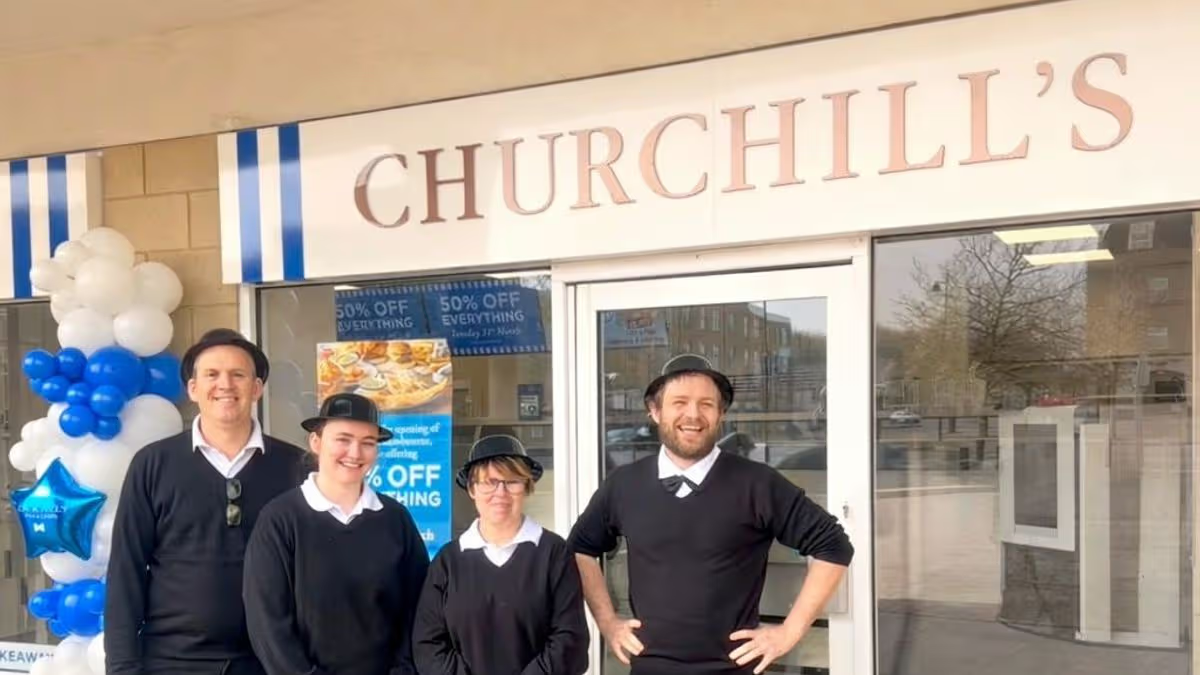
When we think about preparing for a healthy pregnancy and baby, most advice focuses on women. Such advice might include good nutrition, taking dietary supplements, avoiding alcohol or smoking and managing their medications and health conditions. But growing evidence shows that men’s health also plays a vitally important role in pregnancy and child development.

In a new review of research on health before pregnancy and parenthood (referred to as “preconception health”), we found that the health and life experiences of boys and men can have important influences on pregnancy outcomes and the wellbeing of future children in several ways.

To understand the role of men’s preconception health, we reviewed studies published from 2000 to 2025 from fields including medicine, biology, psychology and social science. Rather than focusing only on the period just before pregnancy, we looked at research examining how men’s health and experiences throughout their lives – from their own time in the womb through to adolescence and adulthood – can affect families later on.

The research explored factors such as men’s physical health, their health-related behaviour, mental health, environmental exposures and social conditions. This included how fathers influence their partner’s health and the family environment their children grow up in.

Advertisement

This broader perspective shows that men’s influence on pregnancy and child outcomes goes far beyond simply providing half of the baby’s genetic inheritance.

The affect of men’s health

As set out in our review, one important pathway through which a father’s health can affect both pregnancy outcomes and the infant’s health is through sperm health.

Factors such as age, the father’s nutrition, whether he smokes, is overweight or obese, has an unhealthy alcohol intake, experiences stress and his level of exposure to pollution or chemicals can all influence so-called non-coding nucleic acid (RNA) signals carried in sperm. These signals can affect how genes act in the early stages of the baby’s development, which can subsequently impact long-term health outcomes in children.

For example, one study of over 500,000 couples found higher odds of birth defects (including cleft lip, digestive tract anomalies and congenital heart disease) when fathers reported drinking alcohol before pregnancy.

Advertisement

Older father’s age (particularly those who conceived a child after the age of 35) is also linked with both risk of birth complications as well as a child’s likelihood of being diagnosed with autism spectrum disorder. These links are stronger than those seen with a mother’s age.

Research involving millions of fathers and children has additionally shown that depression in fathers is linked with higher risks of depression in their children.

Some research even suggests that experiences earlier in life may play a role. For example, studies have linked nutrition and environmental exposures such as food shortage or abundance during boys’ pre-teen years with health outcomes in the next generation.

But biology is only part of the picture, as described in our review.

Advertisement

Men also influence pregnancy through their relationships with their partners. Supportive partners are consistently linked with healthier pregnancies. Women who feel supported are more likely to attend antenatal appointments, avoid smoking or alcohol, maintain healthier diets and experience lower levels of stress and depression during pregnancy.

Supportive partners are linked with healthier pregnancies.
Hananeko_Studio/ Shutterstock

These factors matter because a mother’s mental health and wellbeing during pregnancy are closely linked to children’s emotional, cognitive and physical development.

Another pathway is through parenting. A father’s mental health, stress levels and childhood experiences can influence how he interacts with his children after birth.

For example, men who experienced adversity growing up – such as poverty, neglect or trauma – are more likely to experience anxiety or depression later in life. This can affect family relationships and parenting.

Advertisement

This means that experiences during a boy’s childhood can have ripple effects decades later, shaping the environment his own children grow up in.

What this means for families

Taken together, the evidence from our review shows the importance of shared responsibility for pregnancy and parenthood.

Improving men’s health before pregnancy benefits not only men themselves but also their partners and future children. Yet most health advice about preparing for pregnancy still focuses almost entirely on women. In many countries, there is little information or support available for men who want to prepare for fatherhood.

Raising awareness is an important first step. Research shows that many men want to be involved in planning for pregnancy and supporting their partners – but they often don’t realise how their own health may influence outcomes.

Advertisement

For men who hope to become fathers, general health guidance needs to be followed: avoid smoking, limit alcohol, maintain a healthy weight, manage stress and seek medical advice for ongoing health conditions. Just as important, strong and supportive relationships between partners can help create healthier environments for future parenthood.

Our review suggests it’s time to rethink how we approach preparing for pregnancy. Instead of focusing only on women before pregnancy, a more effective approach should involve supporting the health and wellbeing of both boys and girls throughout their lives.

This includes addressing wider social factors such as education, mental health support, economic stability and childhood adversity. Experiences early in life shape later health behaviour and relationships, influencing the next generation.

Most healthcare systems are also simply not designed to support father’s involvement in preparation for pregnancy and parenthood. But men need to be included in conversations about reproductive health and couples should be supported to approach pregnancy preparation together.

Advertisement

More research is still needed to better understand the biological and social pathways linking men’s health to pregnancy and child outcomes. But our review makes one message clear: the health of the next generation does not begin with pregnancy – it begins much earlier, in the early lives and wellbeing of both parents.

Source link

Advertisement
Continue Reading
Click to comment

You must be logged in to post a comment Login

Leave a Reply

NewsBeat

Award-winning fish and chip shop opens new site in Cambridgeshire town

Published

on

Cambridgeshire Live

The fish and chip brand has earned multiple awards since it first opened in 1923

A family-owned fish and chip shop is expanding its brand further across Cambridgeshire by opening a new store in Cambourne. Churchill’s Fish and Chips opened its third store in the county on Monday, March 23.

Advertisement

The fish and chip brand first opened over 100 years ago in 1923 when Harold Lipscombe, a coal miner and cricketer from Accrington, managed to raise enough money to open Churchill’s Fish and Chips in Essex. The family has expanded its business across the south east including in Cambridgeshire.

Churchill’s Fish and Chips has won many awards since its first opened including winning the Best Multiple Operator at the National Fish and Chip awards. More recently, the Bar Hill location was named in the list of the top 50 best fish and chip shops in the UK by Fry Magazine.

At the store, people will be able to enjoy meals made using “premium-quality sustainably sourced fish, locally grown potatoes, and top quality chicken”. The menu features a range of fish options such as plaice, cod, and haddock, as well as choices for those who don’t like fish including fried chicken and pies.

Churchill’s Fish and Chips also offers a £5 lunch menu that is available every day until 4pm.

The store’s new manager Libby said: “I’m excited to bring a new fish and chip experience to Cambourne. I can’t wait to introduce everyone to the fantastic new shop and everything Churchill’s has to offer.

“A great new addition is our gluten-free menu, which will be available every Monday and Tuesday after 4pm from 13 April. I know how hard it can be for people who are gluten intolerant, so I’m really pleased we can offer fish and chips that more people can enjoy.

“We also have a fantastic loyalty, rewards and ordering app, My Chippy. Customers can collect stamps and points, receive exclusive member-only offers, and order online all in one place.

Advertisement

“I’d encourage everyone to come down and give us a try. We’ve got lunchtime fish and chips from £5, a fish and chip dinner with mushy peas from £10, and our Chicken Lover menu too – so there really is something for everyone.”

Churchill’s Fish and Chips in Cambourne will be offering 50 percent off all in-store orders on Tuesday, March 31, to celebrate its opening. The Cambourne location can be found on Broad Street

Source link

Advertisement
Continue Reading

NewsBeat

The best body SPFs for summer that won’t leave you chalky, sticky or oily

Published

on

The best body SPFs for summer that won’t leave you chalky, sticky or oily
The summer lineup your body’s been waiting for. (Picture: Metro/Getty)

Metro journalists select and curate the products that feature on our site. If you make a purchase via links on this page we will earn commission – learn more

Summer is fast approaching, and if you’re already counting down the days to your holiday, make sure you’re well prepared with enough sunscreen to avoid any painful sunburn.

As Brits, as soon as it’s hot, we all go a bit mad, especially when we’re on holiday, lounging around a pool or sunbathing on the beach, but that doesn’t mean your skin has to suffer for it. 

This year, that half-empty bottle rattling around the bottom of your suitcase isn’t going to cut it. Your skin deserves proper sun protection, without the faff of a sticky, greasy, thick cream that makes a mess. 

Advertisement

That’s why I’ve curated a shopping guide to the beauty editor-approved body suncreams that feel luxurious, take seconds to rub in or leave your skin looking tinged with a chalky grey residue. 

Whether you’re after a budget-friendly SPF that won’t drain your bank balance, a spray formula that requires minimal effort or a luxury option that doubles up as a moisturiser, there is something in it for everyone. 

These are the best body suncreams your skin needs this summer – all you have to do is pack them. 

The best body suncreams 2026

Ultrasun Sports Spray 50SPF Sun Protection

Ultrasun Sports Spray 50SPF Sun Protection

You cannot go wrong with Ultrasun.

Advertisement

This clear spray leaves no white cast, absorbs in just seconds, and protects against UVA and UVB rays.

Reapplying it is a doddle thanks to the lightweight mist, making it perfect for an activity-filled beach day or a chilled one around the pool.

There’s no mess, stress or greasy film left on the skin. It’s worth every penny.

Buy now for £24 (was £30)

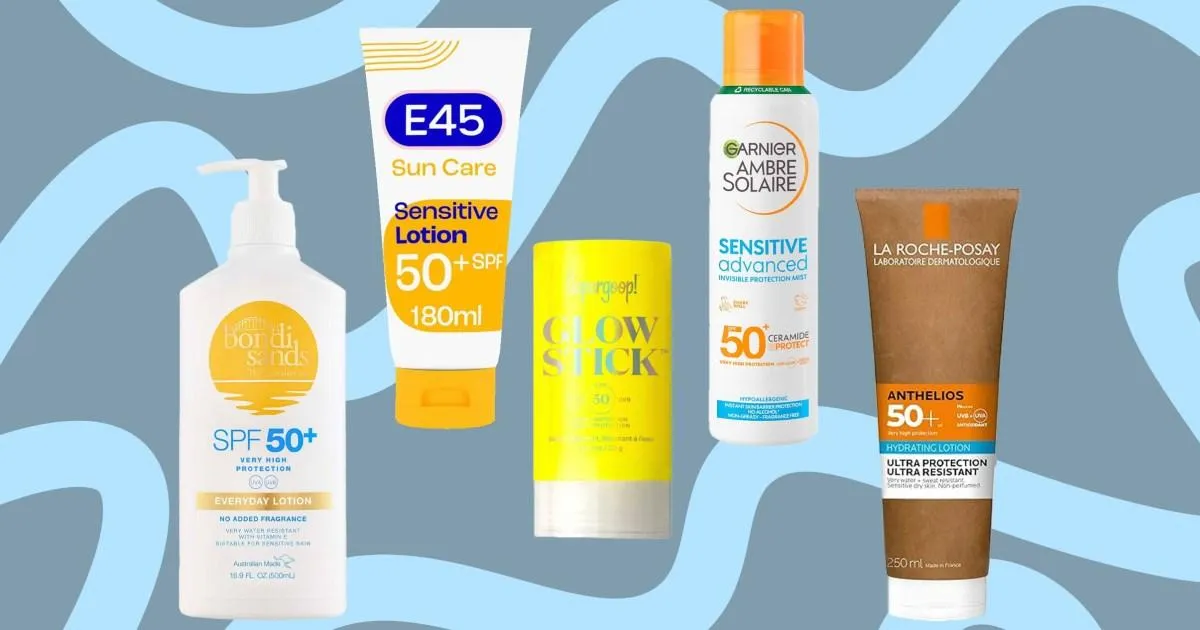
White bottle of Bondi Sands SPF 50+ Everyday Lotion Value Pump Pack with pump

Bondi Sands SPF 50+ Everyday Lotion Value Pump Pack

This is an excellent budget option, and this giant 500ml bottle will last you ages.

Advertisement

While it may look like a traditional white sunscreen, it has none of the thick, heavy texture you remember from when you were a kid.

Instead, it’s easy to see where you’ve applied or might have missed, and it works great for all skin types, including sensitive and eczema-prone.

I like to bring this on group trips where someone will inevitably forget to bring SPF – it’s so massive, it’s lasted me almost a year.

Buy Now for £16 (was £20)

White tube of E45 Sun Body Lotion SPF50

E45 Sun Body Lotion SPF50

If you have very sensitive skin, finding a body suncream that ticks all your boxes can be a minefield.

Advertisement

This E45 tube is a favourite of mine, because I can always rely on it not to irritate my eczema.

There’s no fragrance, it doesn’t pill no matter how many times you reapply, and it leaves my skin gently moisturised.

I’ve use it for years and it’s never let me down.

Buy now for £11.19 (was £13.99)

Orange spray bottle of Lancaster Sun Beauty Protective Water SPF50

Lancaster Sun Beauty Protective Water SPF50

I love the lightweight texture of this; it’s something in between an oil and a watery fluid – either way, I could apply it with my eyes closed.

Advertisement

There’s no stickiness or tacky feel, and it can be reapplied over and over again without leaving you feeling slick with oil.

It’s pricey but absolutely worth it if you like a low-maintenance sun care product.

Buy Now for £34

Green bottle of Coola Daily Protect Scalpmist SPF50

Coola Daily Protect Scalpmist SPF50

It’s easy to forget about applying suncream to your scalp until it’s sunburnt and brushing your hair becomes agony.

It can also cause your hair colour to fade, so if you’ve just spent a fortune at the hairdresser’s changing your highlights, you need to know about this.

Advertisement

This Coola product has a thin nozzle that can apply product down your parting without getting the rest of your hair wet, while the formula won’t make it greasy either.

Buy Now for £23.20 (was £29)

Yellow Supergoop! Glow Stick™ SPF 50

Supergoop! Glow Stick™ SPF 50

Love a glowy skin moment? This protective stick is the quickest and easiest way to achieve dewy shoulders, collarbones and decolletage.

Formulated with a blend of lightweight oils, it leaves skin looking sun-kissed without sun damage.

You can use it all over the face too, as it’s great for reaching those smaller nooks, like behind your ears, your eyelids, and your lips.

Advertisement

Buy Now for £22

Garnier Ambre Solaire SPF 50+ Sensitive Advanced Dry Mist Sun Spray

Garnier Ambre Solaire SPF 50+ Sensitive Advanced Dry Mist Sun Spray

A sunscreen mist is an easy way to top up your UV protection, especially if you’re on a city break and wandering around in the sun all day.

Spray it as liberally as you like, and lightly rub in – you barely need to touch your skin.

This is a great one for all skin types, including young kids, and it doesn’t take up much room in your suitcase or beach bag.

Buy Now for £16

Tube of La Roche-Posay Anthelios Hydrating Sunscreen for Body Lotion SPF50+

La Roche-Posay Anthelios Hydrating Sunscreen for Body Lotion SPF50+

If you love being in the water on holiday, you’ll want a water-resistant option like this from La Roche-Posay.

Advertisement

It won’t slide off your skin, but will provide UVA and UVB protection from the sun’s rays, while allowing you to still enjoy sunbathing on a lilo.

It has a milky lotion texture and leakproof packaging that has never let me down.

Buy Now for £24

Follow Metro across our social channels, on Facebook, Twitter and Instagram

Share your views in the comments below

Advertisement

Advertisement

Source link

Continue Reading

NewsBeat

North Belfast stabbing incident sees two men arrested

Published

on

Belfast Live

Two men, aged 33 and 35, have been arrested on suspicion of wounding with intent and possession of an offensive weapon with intent

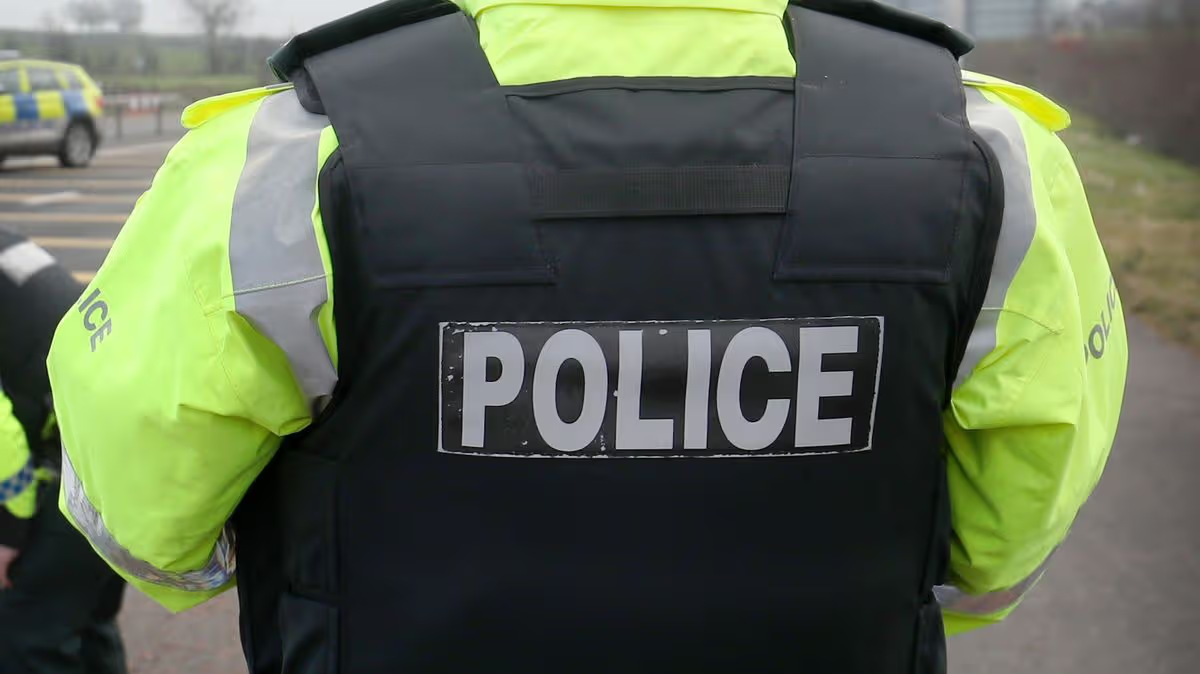
Police are at the scene after a stabbing incident in Belfast.

Advertisement

Two men have been arrested following the reported stabbing in the Bentinck Street area, in the north of the city, just after 2.05pm on Thursday, March 26.

The two men, aged 33 and 35, have been arrested on suspicion of wounding with intent and possession of an offensive weapon with intent.

They remain in police custody at this time.

A PSNI spokesperson said: “Police received a report of a stabbing incident in the Bentinck Street area of north Belfast, just after 2.05pm on Thursday, 26th March.

Advertisement

“Two men, aged 33 and 35, have been arrested on suspicion of wounding with intent and possession of an offensive weapon with intent.

“They remain in police custody at this time.

“At this stage, it isn’t believed that anyone has sustained life-threatening injury; however officers remain at the scene, carrying out enquiries.

“Anyone with information should contact police on 101, quoting reference 872 of 26/03/26.”

Advertisement

To ensure you don’t miss out on all the latest from Belfast Live, be sure to make us your preferred source on Google.

Source link

Continue Reading

NewsBeat

Netanyahu plots Lebanon ‘invasion’ with new ‘buffer zone’ – grim new Israel border MAPPED

Published

on

Daily Mirror

Israel’s prime minister warned his military would ‘break boundaries in every sense of the word’ as he threatened to extend a ‘buffer zone’ in Lebanon as war with Hezbollah and Iran continues

Benjamin Netanyahu has made a chilling vow to extend Israel’s “buffer zone” into southern Lebanon and threatens to continue his war against Hezbollah.

Advertisement

A terrifying new map could show what this “larger buffer zone” might look like after the Israeli prime minister threatened to seize land in the neighbouring nation. Tensions between Israel and its neighbour intensified after Hezbollah launched attacks on Israel in retaliation to Netanyahu and Donald Trump’s strikes on Iran – which killed the supreme leader on February 28. Netanyahu warned he and his military were “breaking boundaries in every sense of the word”.

The leader claims his latest plans are in response to Israel’s conflict with Iran, saying: “We are simply creating a larger buffer zone. Now, dismantling Hezbollah is our focus.

READ MORE: Moment British war correspondent Steve Sweeney nearly killed in Israeli strikeREAD MORE: ‘Donald Trump ‘wilfully ignorant’ on Iran – I know as I’ve served on frontline’

Advertisement

“This is related to the overall campaign with Iran, which is still ongoing contrary to what has been reported in the media but it is our intention to do everything to fundamentally change the situation in Lebanon.”

In a meeting with Israel’s military chief of staff, the country’s defence minister Israel Katz said the forces would “control the remaining bridges and the security zone up to the Litani” – a river in Lebanon around 20 miles north of the border with Israel.

Katz also said the bridges over this river “have been blown up and the IDF will control the remaining bridges” after the defence minister claimed Hezbollah were using the bridged to move weapons over into southern Lebanon.

Advertisement

In a video statement, Netanyahu said: “We have created a genuine security zone preventing any infiltration toward the Galilee and the northern border. We are expanding this zone to push the threat from anti-tank missiles further away and to establish a broader buffer zone.”

On Monday, Israel’s far-right finance minister Bezalel Smotrich said his country should “apply sovereignty” to parts of southern Lebanon in a shocking call.

This comes as Israel continues to wage war against Iran and Hezbollah, despite Trump dishing out mixed messages on whether he wants to end the conflict or continue.

Advertisement

On Tuesday, the Pentagon ordered US ground troops to the Middle East but negotiators also sent Iran a 15-point peace plan. Despite this, the US President said: “They [Iran] are begging to work out a deal. I don’t know if we’ll be able to do that. I don’t know if we’re willing to do that. They should have done that four weeks ago. They should have done it two years ago.”

Trump and Netanyahu have also appeared to clash after the Israeli leaders suggestion for the US to encourage a street uprising to challenge the Iranian regime. the US President told the Israeli Prime Minister during a telephone conversation last week: “Why the hell should we tell people to take to the streets when they’ll just get mowed down.”

Source link

Advertisement
Continue Reading

NewsBeat

BBC Expert Says Iran Wont Buckle Despite Trump Threats

Published

on

BBC Expert Says Iran Wont Buckle Despite Trump Threats

Iran “is not going to buckle” in the face of Donald Trump’s threats against the country, a BBC expert has predicted.

Lyse Doucet, the corporation’s senior international correspondent, spoke out after the president’s spokeswoman, Karoline Leavitt, said America would “unleash hell” unless Tehran agrees to peace talks.

“If Iran fails to accept the reality of the current moment, if they fail to understand that they have been defeated militarily and will continue to be, President Trump will ensure they are hit harder than they have ever been hit before,” Leavitt said on Wednesday.

But speaking on Radio 4′s Today programme, Doucet said that was a “fundamental misperception” of Iran’s position.

Advertisement

She said: “Iran does not want a ceasefire, it will not negotiate a ceasefire, even though President Trump, according to Israeli media, is now looking for a one month ceasefire.

“It wants an end to this war, but it’s also making maximalist demands to ensure that this doesn’t happen again.

“This is where we are in the war. It’s not going to buckle under any threats – another fundamental misperception in this war.”

Advertisement

Source link

Continue Reading

NewsBeat

The Healthiest Cooking Oils, Ranked By A Dietitian

Published

on

Dementia Prevention: How Swapping Animal Fats For Vegetable Oils Lowers Risk

Dietitian comment provided by registered dietitian Melissa Jaeger, head of nutrition at MyFitnessPal.

Here at HuffPost UK, we’ve already asked dietitians to share the healthiest cheese, eggs, breads, and pasta.

And following a study which suggested that switching out animal-based fats for vegetable-based ones might help to reduce dementia risk, we thought we’d ask about cooking oils, too.

We spoke to registered dietitian Melissa Jaeger about the topic.

Advertisement

Are any cooking oils good for us?

“Cooking oils can absolutely be part of a healthy diet, but portion size and frequency of consumption are key when it comes to potential health benefits… adding fat also helps our bodies absorb fat-soluble vitamins (vitamins A, D, E, and K) found in other foods in the same meal,” said Jaeger.

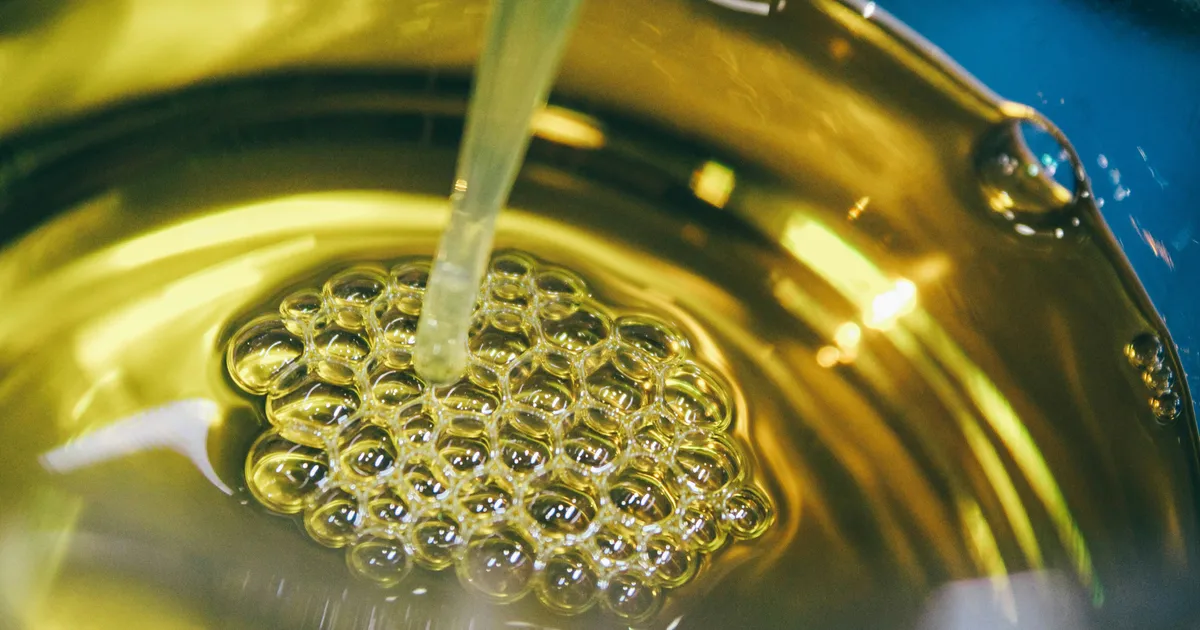
“Focus on cooking oils that are naturally liquid at room temperature. These include oils such as extra virgin olive oil, avocado oil, and rapeseed oil, all of which contain primarily unsaturated fats,” the dietitian said.

Fats which are solid at room temperature, like butter, beef tallow, and coconut oil, contain higher levels of saturated fats. And “High consumption of saturated fats has been linked to elevated risk of heart disease”.

Advertisement

The healthiest cooking oils, ranked

Jaeger pointed out that there are plenty of cooking fat options available, and that “Selecting the right one for your health needs is just one part of the equation, as these oils vary drastically in flavour profile and smoke point, which dictates how you use them when cooking.”

Still, when asked to rank some of the most commonly used oils, she gave us four from worst to best:

1) Olive oil, especially extra-virgin olive oil

Advertisement

Jaeger says she always keeps a bottle of this stuff in her cupboard (ideally, it should never be placed beside your hob).

“It has the highest quality standards of any olive oil and contains monounsaturated fatty acids, which support heart health by improving cholesterol and lowering inflammation,” she explained.

“Studies have also shown olive oil benefits your brain health, with research finding that olive oil consumption supported reduced cognitive decline and enhanced cognitive functioning”.

She uses extra virgin olive oil for low-heat cooking because it has a lower smoke point. “I recommend using it for sautéing over low heat, in salad dressings, or drizzled on a finished dish.”

Advertisement

2) Avocado oil

This “works well for cooking at higher heat, is mild in flavour, and contains a high concentration of heart-healthy monounsaturated fatty acids,” said the dietitian.

“Whilst fewer human studies have been conducted directly on the benefits of avocado oil, initial small studies have shown promising outcomes for heart health benefits.”

It’s high in oleic acid and polyunsaturated fats, and has been linked to better heart, eye, and skin health.

Advertisement

3) Rapeseed oil

A favourite of the British Heart Foundation, Jeager told us this “versatile” option (which tends to be quite cheap) is a great option.

“Its higher smoke point makes it a brilliant option for higher-heat cooking methods, plus it’s loaded with monounsaturated fatty acids and has the least amount of saturated fat compared to other common cooking oils like sunflower oil and even olive and avocado oils,” the expert said.

4) Fats that are solid at room temperature, like beef tallow, coconut oil, and butter

Advertisement

As she mentioned earlier, Jaeger said these tend to be made up of mostly saturated fats.

“Consuming high amounts of saturated fats has been linked to negative heart health outcomes in research, and the NHS recommends Brits reduce their overall fat and saturated fat intake and replace it with some unsaturated fats, including omega-3s,” she said.

“So whilst these fats may be used sparingly for high-heat cooking, focus instead on cooking oils that are liquid at room temperature or primarily unsaturated fats.”

Ultimately, she ended, we should “opt for oils with higher amounts of unsaturated fatty acids versus those that are solid at room temperature and contain higher amounts of saturated fatty acids.

Advertisement

“This simple swap supports heart health whilst still allowing you to enjoy flavourful, satisfying meals.”

Source link

Advertisement
Continue Reading

NewsBeat

Scottish Conservatives replaced by stuffed toy at Perthshire election hustings

Published

on

Daily Record

A cuddly Eurasian lynx toy representing “one of Scotland’s missing species” replaced the missing Conservative representative.

A stuffed toy representing “one of Scotland’s missing species” was used to stand in for the missing Scottish Conservatives at a recent Holyrood elections hustings event in Perthshire.

Advertisement

The Scottish Rewilding Alliance held the first ever hustings dedicated to debating rewilding issues at Pitlochry Festival Theatre to mark World Rewilding Day on Friday, March 20.

Introducing the final panellist – where a Conservative representative would have sat – the evening’s chairperson Jennifer Reoch said the Eurasian lynx was “notoriously shy and rests undercover during the day to avoid people”.

The scene was reminiscent of the famous Have I Got News for You episode when Roy Hattersley was replaced by a tub of lard. In June 1993 panellist Paul Merton was memorably joined by a tub of lard after the Labour MP reportedly pulled out of doing the BBC show at the last minute for the third time.

According to the Scottish Rewilding Alliance, which organised Friday’s election hustings in Pitlochry ahead of the May 7 elections, “the Scottish Conservatives declined to attend despite multiple invites.”

Advertisement

According to Steve Micklewright, co-convenor of the Scottish Rewilding Alliance and chief executive of charity Trees for Life, The Rewilding Nation: Hope for Nature Husting event was held in Perthshire “due to it being home to the most rewilding spaces in Scotland”.

Alongside the lynx on the panel were: Scottish Green Mid Scotland and Fife MSP Mark Ruskell, Reform Central Scotland MSP Graham Simpson, Scottish Labour candidate for Perthshire North Angela Bailey, SNP Stirling councillor Gene Maxwell and Scottish Liberal Democrat Edinburgh Central candidate Charles Dundas.

After introducing the panel, TV and radio presenter Jennifer Reoch – who was chairing the hustings – told the audience: “Unfortunately, the Conservative Party were unable to send a representative this evening, which leads me to my final panel member to represent one of Scotland’s missing species, the Eurasian lynx.

“It’s a medium-sized cat with tufted ears and a short tail. It is notoriously shy and rests undercover during the day to avoid people.”

Advertisement

The event was livestreamed and is available to watch on YouTube: Rewilding Nation: Hope for Nature Hustings – World Rewilding Day 2026.

A spokesperson said: “Immediate action on marine protections, how rewilding supports local economies, space for nature alongside development and lynx reintroduction were hot topics.”

A Scottish Conservative spokesman said: “Unfortunately, a representative from our party was unable to attend this event.

“The Scottish Conservatives recognise the importance of protecting Scotland’s natural environment and believe that rewilding should proceed with community consent and in a way that does not affect the ability of farmers to continue to produce high-quality food.”

Advertisement

Source link

Continue Reading

NewsBeat

how others have fared in the hardest job in UK media

Published

on

how others have fared in the hardest job in UK media

Matt Brittin has been named the new director general of the BBC. He joins the broadcaster after almost two decades working at Google: he was its president in Europe, the Middle East and Africa before leaving in 2024. He is already on the board of the Guardian Media Group.

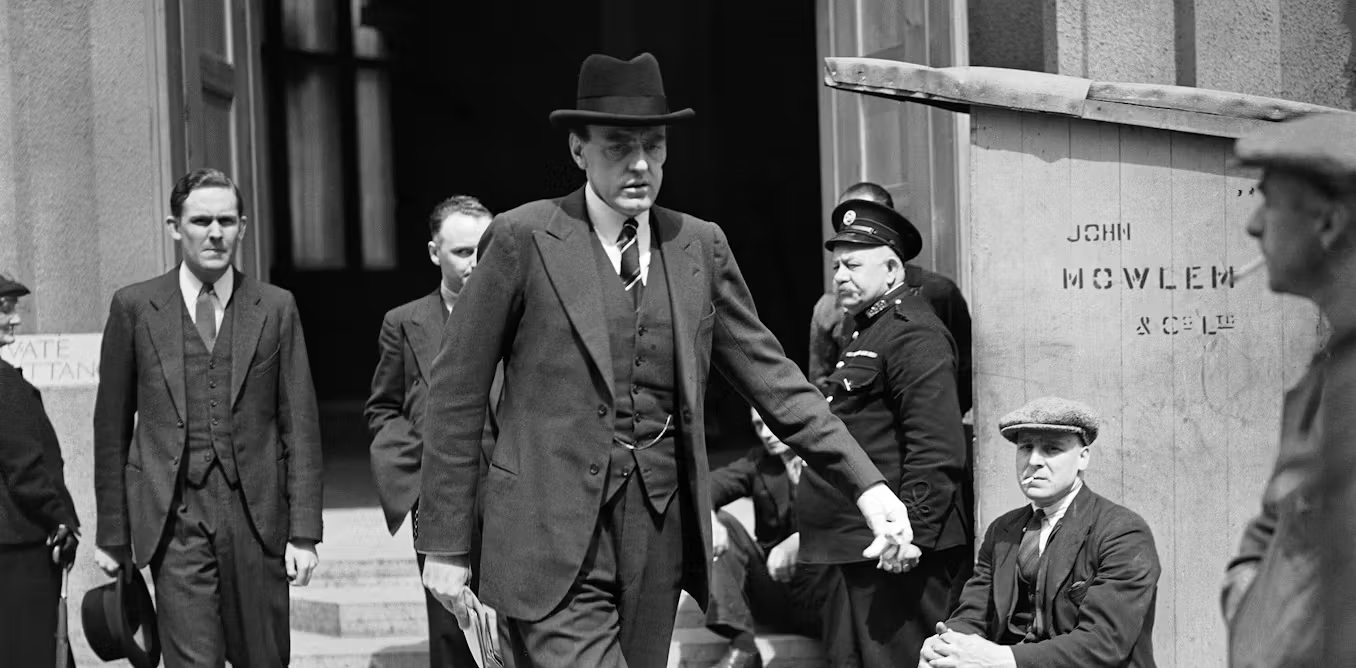
The director general is the most senior executive at the BBC. The first director general was John Reith (later Lord Reith), a near legendary figure who dominated the organisation during its foundational period in the 1920s and 1930s.

Reith played a key role in establishing broadcasting in Britain and creating the BBC. He had an obsession with controlling all elements of the BBC’s work and was determined to increase his own power at the expense of subordinates and of the BBC’s board of governors.

Reith made the director general the most powerful office in the BBC. That power has since been diluted over the decades, but in theory the director general still has oversight of all the varied aspects of the BBC’s work. They must also defend the corporation from public criticism and take responsibility when things go wrong. Given the amount of criticism that the BBC has faced in recent years, this may be the hardest job in the UK media.

Advertisement

Crucially, the director general is regarded as editor-in-chief of BBC news content, and ultimately carries the can when problems arise in its current affairs coverage. This has brought down several directors general in the past.

In 2011, George Entwistle resigned over revelations concerning the BBC and the Jimmy Savile sexual abuse scandal, and his mishandling of unfounded allegations broadcast by the BBC concerning Lord McAlpine. Entwistle only served 54 days in post.

Tim Davie resigned from the top job last year amid accusations that BBC current affairs coverage had breached its own editorial code on impartiality. Most notably, footage of a speech by Donald Trump had been misleadingly edited when shown on Panorama. The BBC still faces an unprecedented $10bn (£7.5bn) lawsuit from the US president.

Matt Brittin, a former Google executive, joins the BBC as director general.
NurPhoto/Alamy

Brittin will need to deal with these editorial issues. One of his first tasks will be to hire a new CEO of News, as Deborah Turness resigned along with Davie.

Advertisement

He will also have to lead the BBC into a brave new world. The TV licence system, which provides the BBC with most of its funding, is likely to be drastically reformed or abolished entirely. This may be accompanied with major changes in how the BBC is run and functions, as its royal charter is renewed over the coming year.

More and more of us are replacing analogue radio and live television with streaming. With his tech background, Brittin may be well placed to lead the BBC through this transition. He also faces the unenviable task of defending the BBC against inevitably escalating criticism during the charter review period. Candidates for the job do not seem to have been lining up at the doors of Broadcasting House.

Changing the BBC

How have previous directors general fared in times of profound change? The BBC struggled to find an effective leader during the second world war until William Haley, an experienced newspaper editor and director, was appointed. Haley expertly steered the BBC through the final stages of the war and into peacetime, navigating difficult questions about government intervention, possible commercial competition and, with the rise of TV, technological change.

Haley significantly altered the BBC’s radio offering to provide listeners with more choice, and set out to reestablish its television service, fending off the threat of commercial competition for almost a decade.

Advertisement

In the 1960s, Hugh Carleton Greene (brother of the novelist Graham Greene), shook up British broadcasting yet again, helping the BBC adapt to the possibly existential challenge posed by a young and feisty ITV. Greene focused on providing crowd-pleasing entertainment, but also pushed the boundaries of taste and opinion by establishing the political satire show That Was The Week That Was, and supporting hard-hitting dramas like Cathy Come Home and Up The Junction.

Haley and Greene both demonstrated what a confident director general, intent on securing the changes that would allow the BBC to survive, could achieve.

Old BBC microphone

Past directors general have navigated the BBC through times of peace, and war.
seeshooteatrepeat/shutterstock

A more divisive figure was John Birt, later Baron Birt, who held the post from 1992 to 2000. Birt had made his name working for the BBC’s competitors in commercial TV. He was a devotee of new ideologies of corporate leadership and change. At the BBC he was determined to break up the dominance of its powerful departmental leaders and to impose central control.

In the wake of scandals over public affairs coverage that toppled one of his predecessors, Alasdair Milne, Birt demanded adherence to a new editorial code. And in order to prevent Margaret Thatcher’s government privatising the BBC, he set up a complex system of internal markets and external programme commissioning. Business consultants and highly-paid senior managers were recruited from the private sector to spearhead reform. Over 10,000 staff were laid off. Some people thought that Birt saved the BBC, but the playwright Dennis Potter likened him to a Dalek.

Advertisement

Brittin, like Birt, is an outsider to the BBC. Will he be a Dalek, or The Doctor that the BBC needs to vanquish its political and commercial adversaries? Appointing a leader from the world of big tech might give the BBC a valuable weapon in a media landscape dominated by the US-based streaming giants.

Brittin may also have the corporate leadership skills needed to bring a large, fiendishly complex organisation full of independently minded people through the massive changes that seem necessary if the BBC is to survive and flourish. Whether he has the equally crucial skills needed to be the public face of the BBC, defending it on-air and in the press against its many assailants, remains to be seen.

Source link

Advertisement
Continue Reading

NewsBeat

UK tourists warned be aware of new travel rule ahead of Easter break

Published

on

Manchester Evening News

Queues of two to four hours are expected at some airports

Brits looking to head abroad for a few days of sunshine over the Easter break are being reminded of a new change to travel rules within the EU.

Advertisement

The Foreign Office (FCDO) has advised UK holidaymakers to prepare for extra border checks if heading to destinations like Spain, France, Greece, and Italy in the coming weeks as the new Entry/Exit System (EES) is officially launched on 10 April.

Under the new rules, UK citizens must register biometric data upon first entry into the Schengen Area for visits up to 90 days in a rolling 180‑day period. They must do so again when they leave that country.

Get MEN Premium now for just £1 HERE – or get involved in our WhatsApp group by clicking HERE. And don’t miss out on our brilliant selection of newsletters HERE.

The EES has been introduced to strengthen border security and detect overstayers. The process involves fingerprint scanning and a high-resolution digital photo at dedicated kiosks.

Advertisement

The countries in the Schengen area include:

  • Austria
  • Belgium
  • Bulgaria
  • Croatia
  • Czech Republic
  • Denmark
  • Estonia
  • Finland
  • France
  • Germany
  • Greece
  • Hungary
  • Iceland
  • Italy
  • Latvia
  • Liechtenstein
  • Lithuania
  • Luxembourg
  • Malta
  • Netherlands
  • Norway
  • Poland
  • Portugal
  • Romania
  • Slovakia
  • Slovenia
  • Spain
  • Sweden
  • Switzerland

The Republic of Ireland and Cyprus are not within the Schengen area, so EES is not applicable when travelling to either of these countries.

The Foreign Office warns: “EES may take each passenger a few minutes extra to complete so be prepared to wait longer than usual at the border.”

The registration is free but will add processing time for every traveller. Children under 12 are exempt from fingerprinting but must still have photos taken. Digital records will be stored securely for three years, after which only quick verification scans are needed.

For travellers using Dover, Folkestone Eurotunnel, or St Pancras Eurostar, EES registration will take place on British soil before departure.

Local authorities have expressed concerns about significant congestion at these locations as a result. During the transition period, officials will continue manually stamping passports alongside the new digital system until EES is fully integrated across all border points.

Minister for Border Security and Asylum, Alex Norris, said: “The EU’s Entry Exit System will be a significant change for Brits travelling this Easter. Always check with your transport operator in case extra time may be needed, both for your return to the UK and travelling to the EU. We continue to engage with the European Commission on taking steps to help minimise disruption for Brits as much as possible.”

He added: “The government has also provided more than £10 million for Eurostar, Eurotunnel and the Port of Dover for those needing checks before departure.”

Advertisement

Source link

Continue Reading

NewsBeat

The DUSK Sale Has Up To 50% Off Spring Decor

Published

on

The DUSK Sale Has Up To 50% Off Spring Decor

We hope you love the products we recommend! All of them were independently selected by our editors. Just so you know, HuffPost UK may collect a share of sales or other compensation from the links on this page if you decide to shop from them. Oh, and FYI — prices are accurate and items in stock as of time of publication.

Your annual spring clean ushers in a fresh lease on life – less clutter, more space, and (let’s be honest) a feeling of accomplishment.

But it can also make your home feel… kinda empty. If you ask us, the best part of getting rid of stuff is having space to buy more, and what better way to get into the mood for spring than by dotting seasonal touches around your home?

All it takes to brighten up your space is a few well-placed colours, and maybe some floral touches to boot.

Advertisement

These bargains in the DUSK sale are all you need to embrace a spring fling – and up to 50% off now! Don’t miss out, some are selling out already.

Source link

Advertisement
Continue Reading

Trending

Copyright © 2025