With only five years left to meet the 2030 Agenda for Sustainable Development, Asia and the Pacific are entering a decisive phase, one in which the region’s vast economic strength, demographic weight, and innovation potential will be tested by deepening structural pressures.
Key takeaways
Asia-Pacific is not on track to achieve any of the 17 SDGs by 2030 despite gains in poverty reduction, health, and infrastructure.
Environmental setbacks are eroding progress, with rising greenhouse gas emissions and regression in marine and land ecosystems.
The region is set to miss 103 of 117 measurable targets, while data gaps for 52 targets are limiting effective action.
The Asia and the Pacific SDG Progress Report 2026 presents a region of extraordinary promise, but also one increasingly strained by climate vulnerability, rapid urbanization, widening inequality, and demographic change. It argues that the choices made now will determine whether Asia-Pacific can turn its advantages into a sustainable future for all or fall short of its international commitments.
The report portrays a region moving in two directions at once. On one hand, it has delivered tangible gains in some of the most visible areas of development. Poverty has declined, infrastructure has expanded, and health outcomes have improved.
On the other hand, those gains are being weakened by environmental deterioration and by slow or reversing progress in goals tied to equality, resilience, and inclusion. The central message is stark: despite meaningful progress in several sectors, Asia and the Pacific are not on track to achieve any of the 17 Sustainable Development Goals by 2030.
Progress Recorded, but Not Fast Enough
Among the strongest-performing areas, the report highlights SDG 9, covering industry, innovation, and infrastructure, where no measurable targets are currently in decline. SDG 3, on health and well-being, also stands out as a relative success story, supported by continued reductions in maternal, neonatal, and under-five mortality. Improvements are also noted under SDG 1, no poverty, and SDG 6, clean water and sanitation, although the report stresses that the pace in both areas remains insufficient to guarantee achievement by the end of the decade.
Advertisement
Still, the broader picture is far from reassuring. The report warns that some of the region’s hardest-won gains are now at risk, especially as environmental pressures intensify. The contradiction is especially visible in the way development progress is being offset by ecological decline. Growth in infrastructure and social services may continue, but it is unfolding alongside rising emissions, biodiversity loss, and mounting pressure on marine and land ecosystems.
That environmental strain is one of the most alarming themes in the report. Under SDG 14, Life Below Water, the region is facing setbacks in sustainable fishing and coastal conservation. SDG 13, climate action, remains a grave concern as total greenhouse gas emissions continue to increase. SDG 15, life on land, is also being hampered by accelerating biodiversity loss and land degradation. Together, these trends suggest the region is advancing economically and socially while losing ground environmentally, a trajectory that could undermine long-term sustainability.
The scale of the challenge is laid out in blunt terms. On its current trajectory, Asia and the Pacific is expected to miss 103 of the 117 measurable SDG targets by 2030. Only 14 targets are on track to be achieved, while seven of the 17 goals have no targets on course at all. That leaves little room for complacency. The report makes clear that what is needed is not merely incremental improvement, but urgent, coordinated, and accelerated action across sectors and countries.
Data Gaps, Inequality, and the Risk of Falling Behind
A second major warning in the report concerns the weakness of the evidence base itself. ESCAP says 52 targets still lack adequate data, creating major blind spots for policymakers trying to monitor progress and design effective responses. The report includes figures tracking changes in data availability between 2020 and 2025, availability by SDG, and the extent of disaggregated data. These gaps matter because weak measurement can conceal where inequality is worsening and where the most vulnerable populations are being left behind.
Advertisement
That concern feeds directly into one of the report’s most important conclusions: the pledge to “leave no one behind” is under strain. Setbacks are identified in equal access to education and justice, while limited data on gender equality and strong institutions make it harder to judge whether excluded groups are being reached effectively. In other words, the challenge is not just that progress is too slow, but that the region does not always have a clear enough picture of who is benefiting and who is being missed.
The report also offers a more nuanced picture of individual goals. On poverty, it credits the region with progress in reducing income deprivation, but warns that these gains are threatened by disasters and by declining official development assistance for poverty reduction in least developed countries.
In food systems, it notes slow progress on malnutrition and warns that setbacks in sustainable agriculture and the preservation of local breeds may jeopardize long-term food security. In health, the region’s gains are real, but still fragile, challenged by noncommunicable diseases, suicide, tobacco and alcohol use, antimicrobial resistance, high household health costs, and low health worker density.
Taken together, the report reads as a warning against assuming that past gains will be enough to carry the region through to 2030. Asia and the Pacific still have the capacity, scale, and innovation base to change course, but the window is narrowing. Without deeper policy shifts, stronger resource allocation, and a more balanced approach linking growth, inclusion, and environmental protection, the region risks arriving at the end of the decade having advanced in important areas while still missing the broader promise of sustainable development.
Cleaning Edge Solutions, Australia’s fastest growing commercial cleaning provider, has invested millions of dollars into the development and rollout of its proprietary desktop platform, CESgo, in what industry leaders are describing as a major shift in how businesses manage cleaning, hygiene and operational accountability.
The significant investment signals a new era for commercial cleaning across childcare centres, schools, aged care, hospitals and medical facilities, offices, transport hubs, retail environments, food production and industrial sites, where services are no longer invisible but fully measurable and transparent.
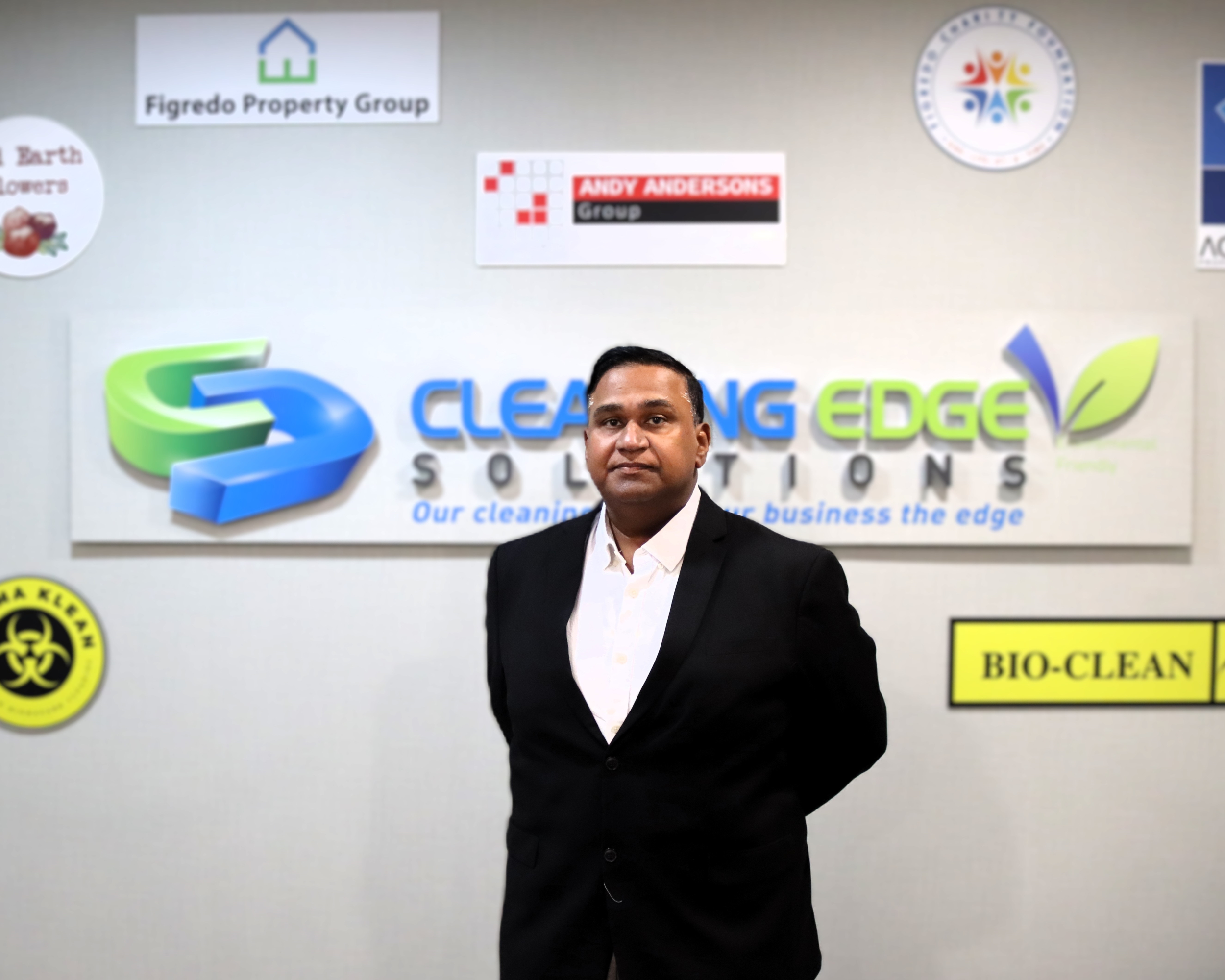
Founder Clayburn Figredo
Founder Clayburn Figredo said the company is redefining what modern cleaning looks like in Australia.
“We are not just cleaning buildings, we are creating operational transparency and real-time visibility,” Figredo said.
“CESgo is the result of a multi-million-dollar investment into technology that gives businesses clarity, control and confidence.”
Advertisement
Cleaning Edge Solutions is one of Australia’s leading commercial cleaning and facility management providers, specialising in large-scale, high-risk and clinical environments. Founded in 2008 by Managing Director Clayburn Figredo and headquartered in Mulgrave, Victoria, the company has built a national reputation for innovation, strict compliance and advanced infection-control standards.
With ISO certifications across quality, safety, environment and food safety, Cleaning Edge Solutions delivers services to major organisations across health, government, education, transport, retail and aged care sectors. Its operations span commercial and industrial cleaning, facilities maintenance, waste management and property development.
It also owns a number of brands including well-known business, Andy Andersons. For more than 45 years, Andy Andersons has supported Australian organisations with reliable, high-quality cleaning and facility services. A long-standing family business with deep industry roots, Andy Andersons became an entity of the Cleaning Edge Group in 2021, combining decades of legacy experience with the group’s national scale and innovation.
Today, the company draws on more than 100 years of combined expertise to deliver industrial cleaning, commercial cleaning, aged care cleaning and facility maintenance services. Andy Andersons remains committed to safety, integrity and exceptional service.
Advertisement
Known for its commitment to excellence and social impact, the Cleaning Edge group is dedicated to elevating national cleaning standards and creating safer, healthier environments for all Australians.
A new standard in operational visibility
The desktop-based CESgo platform captures every aspect of cleaning operations in real time, allowing businesses to see exactly what is happening across their sites.
Cleaning Edge staff log in and out digitally, with attendance and hours automatically verified. Every task is outlined through structured workflows and photographic evidence of completed work is uploaded directly into the system.
Advertisement
Clients can view services undertaken, the timing, the staff involved and the results delivered, removing the uncertainty that has traditionally surrounded outsourced cleaning.
“For decades, cleaning has been a blind spot for many organisations,” Figredo said.
“Now businesses can see the work, the results and the value in real time.”
From invisible service to measurable performance
Advertisement
The platform transforms cleaning from a reactive, checklist-based activity into a performance-driven function.
Images, reports and digital sign-offs provide a clear record of hygiene outcomes. Site requirements and task schedules are embedded into the system, ensuring consistency across locations and shifts.
“This is accountability elevated,” Figredo said.
“Every hour is captured, every job is documented and every outcome can be verified.”
Advertisement
The result is stronger oversight, improved service quality and better operational control.
Centralised communication and faster problem resolution
CESgo also functions as a communication hub between businesses, site managers and Cleaning Edge teams.
Clients can log requests, raise concerns and track progress in near real time. Issues are assigned, monitored and resolved within the platform, creating a clear record of action and accountability.
Advertisement
“Communication is one of the biggest challenges in outsourced services,” Figredo said.
“Our technology creates a single source of truth, ensuring nothing is missed and every request is followed through.”
Reducing risk and supporting governance
With increased scrutiny around hygiene, infection control and workplace standards, organisations are under pressure to demonstrate operational oversight.
Advertisement
Figredo said traditional paper-based reporting and fragmented communication systems are no longer fit for purpose.
“Boards, executives and regulators want data, not assumptions,” he said.
“CESgo provides a digital audit trail that strengthens governance, supports reporting and reduces risk.”
The platform enables businesses to generate detailed reports quickly, providing evidence of cleaning performance, service delivery and operational compliance.
Advertisement
A permanent shift in the cleaning industry
Cleaning Edge believes the future of the industry lies in technology-enabled service delivery.
“This is not about mops and buckets,” Figredo said.
“It is about intelligent systems, data and measurable outcomes.”
Advertisement
By investing heavily in proprietary technology, Cleaning Edge is positioning itself at the forefront of a new era in which cleaning services are defined by transparency, accountability and operational excellence.
“The expectations of businesses have changed permanently,” Figredo said.
“They want visibility and control and they also want proof. CESgo delivers that.”
Welcome, everyone, and thank you for joining us to discuss Insight Molecular Diagnostics Fourth Quarter 2025 Results. If you have not seen today’s shareholder letter, please visit Insight Molecular Diagnostics Investor Relations page at investors.imdxinc.com.
Today’s prepared remarks build upon the information already shared in this robust letter. Joining us today are Insight Molecular Diagnostics President and CEO, Josh Riggs; Chief Science Officer, Ekke Schutz; and CFO, Andrea James. We also have our analysts with us as panelists.
After our prepared remarks, our analysts may ask questions. Before turning the call over to Josh Riggs, I’d like to go over our safe harbor. The company will make projections and forward-looking statements regarding future events. Any statements that are not historical facts are forward-looking statements. These statements are made pursuant to and within the meaning of the safe harbor provision of the Private Securities Litigation Reform Act of 1995. We encourage you to review the company’s SEC filings, including the company’s most recent Form 10-K and subsequent Forms 10-Q, which identify risks and uncertainties that may cause future actual results or events to differ materially.
Advertisement
Please note that the forward-looking statements made during today’s call speak only to the date that they are made, and Insight Molecular Diagnostics undertakes no obligation to update them. And with that, I would like to now turn the call over to Josh Riggs.
Mumbai: Lenders are witnessing higher utilisation of working capital limits by MSMEs and other industries as input cost pressures rise due to the ongoing US-Israel conflict. Bankers told ET as cash flows slow across the economy, MSMEs are increasingly relying on working capital to manage operations.
“As input costs rise, margins come under pressure, which can lead to higher working capital utilisation as cash flows get stretched,” said Prashanth TS, head – mid corporate group, Axis Bank. “MSMEs typically operate at utilisation levels of 70-75%, and in periods of heightened volatility, these levels tend to move higher.”
He added that, from a banking standpoint, this is not a solvency challenge but an input-cost inflation issue for MSMEs. For lenders, the leadership focus is on anticipating these pressures early and ensuring adequate, well-calibrated liquidity support without compromising credit discipline.
Sectors such as hospitality, ceramics, chemicals, steel and fertilisers are expected to see higher drawdowns of existing limits, as well as fresh working capital sanctions, as firms navigate rising costs and tighter liquidity conditions.
Advertisement
“Different pockets will have different impacts. In general, when cash flow movement in the economy slows down, working capital will go up,” the MSME head of another leading private sector bank said. “Because faster the cash flow cycles move, lower is the utilisation because you churn your money.”
Live Events
For domestic basmati rice exporters, Iran is the third-largest destination, accounting for about 13% of total exports in fiscal 2025. According to Crisil Ratings, rising prices of raw materials and imported fertilisers are likely to increase working capital requirements for industry players, while also raising the government’s subsidy bill by an estimated ₹20,000-25,000 crore. “We anticipate an increase in working capital loans, worsening corporate credit metrics, worsening metrics for SMEs and households and an increase in credit costs,” CreditSights – a Fitch Group company, said in a report. According to Crisil Ratings, sectors such as oil refining, aviation and crude-linked industries – including specialty chemicals, paints, petrochemicals and synthetic textiles – may be affected by rising crude oil prices. Additionally, companies involved in basmati rice, fruits and nuts trade may see heightened impact.
“The extent of the impact will depend on each sector’s ability to pass on the incremental costs,” the rating agency said in a report.
Ascentage Pharma Group International (AAPG) Q4 2025 Earnings Call March 26, 2026 8:00 AM EDT
Company Participants
Yuly Chen Dajun Yang – Co-Founder, Chairman & CEO Veet Misra – Chief Financial Officer Zhichao Si – Head of Commercial
Conference Call Participants
Advertisement
Lut Ming Cheng – JPMorgan Chase & Co, Research Division Biren Amin – Piper Sandler & Co., Research Division Supawat Thongthip – Truist Securities, Inc., Research Division Jeet Mukherjee – BTIG, LLC, Research Division Matthew Biegler – Oppenheimer & Co. Inc., Research Division Christopher Liu – Lucid Capital Markets, LLC, Research Division Michael King – Rodman & Renshaw Research
Presentation
Operator
Advertisement
Good day, everyone, and welcome to Ascentage Pharma’s 2025 Annual Results Earnings Call. [Operator Instructions] As a reminder, today’s call is being recorded.
Thank you for joining us. I will now turn the call over to Yuly Chen, Senior Director of Investor Relations for the safe harbor statement. Yuly, please go ahead.
Yuly Chen
Advertisement
Thank you, operator. Please note that today’s discussion will include forward-looking statements based on our current expectations and assumptions. These statements involve risks and uncertainties and actual results may differ materially. For a full discussion of these risks, please refer to our filings and disclosures.
On today’s call, I am joined by Dr. Dajun Yang, Chairman and CEO, who will provide an overview of recent developments and 2025 annual performance. As well as Dr. Veet Misra, CFO, who will go through the financial highlights. The presentation will then be followed by a Q&A session. During the Q&A session, the team will be joined by Dr. Yifan Zhai, Chief Medical Officer; Dr. Shaomeng Wang, Cofounder, Chief Scientific Adviser, Dr. Zhichao Si, Head of Commercial, I will now turn the call over to Dr. Yang.
Dajun Yang Co-Founder, Chairman & CEO
Advertisement
Thank you. Good morning. I’m Dajun Yang, Chairman and CEO of the company. Today, I’m very
Several U.S. cities could soon see major underground transportation upgrades led by billionaire Elon Musk’s The Boring Company (TBC).
In a Tuesday post on X, the construction company named the winners of its nationwide “Tunnel Vision Challenge,” naming New Orleans, Louisiana, and Dallas, Texas, as candidates for new transportation systems.
Advertisement
“Thanks again to all of the participants — your enthusiasm and positivity has been inspiring for the TBC team,” the company wrote.
Baltimore, Maryland, was initially named as a winner, but TBC later announced Wednesday that the project will not move forward following early discussions.
A Tesla Inc. electric vehicle is driven through The Boring Company’s Las Vegas Convention Center Loop during the Consumer Electronics Show in Las Vegas, Nevada, on Jan. 5, 2023. (Patrick T. Fallon/AFP via Getty)
The next phase will involve collaboration with local officials and regulators, along with geotechnical borings to determine feasibility.
Advertisement
In a Wednesday update, TBC provided additional details on its early discussions with local leaders in both Dallas and New Orleans, saying both proposed projects had “great initial meetings.”
Two additional cities — Hendersonville, Tennessee, and San Antonio, Texas — remain under consideration as discussions continue.
Elon Musk attends the Viva Technology conference at the Porte de Versailles exhibition center on June 16, 2023, in Paris, France. (Chesnot/Getty Images)
The challenge, which launched in January, invited proposals for a one-mile tunnel concept, with the winning concept promised a free build.
Advertisement
Separately, TBC was recently selected to begin negotiations on a proposed underground transit system connecting Universal Orlando’s parks.
The company’s most notable project is the Las Vegas Convention Center (LVCC) Loop, which opened in 2021 after about a year of construction.
Argan, Inc. (AGX) Q4 2026 Earnings Call March 26, 2026 5:00 PM EDT
Company Participants
David Watson – CEO, President & Director Joshua Baugher – Senior VP, CFO & Treasurer
Conference Call Participants
Advertisement
Jennifer Belodeau – Institutional Marketing Services, Inc. Robert Brown – Lake Street Capital Markets, LLC, Research Division Christopher Moore – CJS Securities, Inc. Ati Modak – Goldman Sachs Group, Inc., Research Division Michael Fairbanks – JPMorgan Chase & Co, Research Division
Presentation
Operator
Advertisement
Good evening, ladies and gentlemen, and welcome to the Argan, Inc. earnings release conference call for the fourth quarter and fiscal year ended January 31, 2026. This call is being recorded. [Operator Instructions] There is a slide presentation that accompanies today’s remarks, which can be accessed via the webcast.
At this time, it’s my pleasure to turn the floor over to your host for today, John Nesbett and Jennifer Belodeau of IMS Investor Relations. Please go ahead.
Jennifer Belodeau Institutional Marketing Services, Inc.
Advertisement
Thank you. Good evening, and welcome to our conference call to discuss Argan’s results for the fourth quarter and fiscal year ended January 31, 2026. On the call today, we have David Watson, Chief Executive Officer; and Josh Baugher, Chief Financial Officer.
I’ll take a moment to read the safe harbor statement. Statements made during this conference call and presented in the presentation that are not based on historical facts are forward-looking statements. Such statements include, but are not limited to, projections or statements of future goals and targets regarding the company’s revenues and profits. These statements are subject to known and unknown factors and risks. The company’s actual results, performance or achievements may differ materially from those expressed or implied by these forward-looking statements, and some of the factors and risks that could cause or contribute to such material differences have been described in this afternoon’s press release and in Argan’s
Seeking Alpha’s transcripts team is responsible for the development of all of our transcript-related projects. We currently publish thousands of quarterly earnings calls per quarter on our site and are continuing to grow and expand our coverage. The purpose of this profile is to allow us to share with our readers new transcript-related developments. Thanks, SA Transcripts Team
The impact of the Iran war on global oil prices could push the rate of inflation facing U.S. consumers higher, which would leave Federal Reserve policymakers in a difficult spot as they weigh possible interest rate cuts.
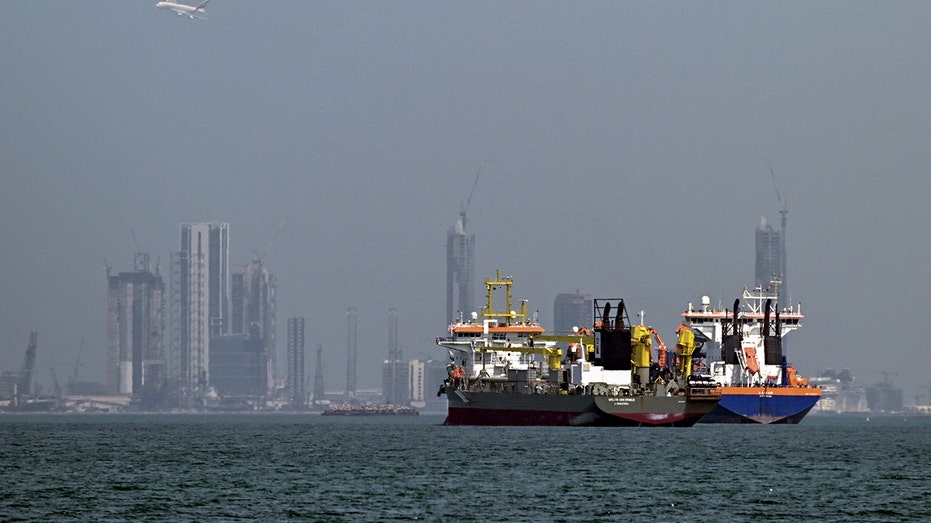
An analysis by economists at Goldman Sachs projected that Brent crude oil prices, a common benchmark for the global oil market, are expected to remain elevated, averaging $105 a barrel in March and $115 in April before falling to $80 a barrel in the fourth quarter of 2026. That’s based on oil shipments through the Strait of Hormuz remaining very low for six weeks.
Advertisement
In an adverse scenario where oil flows are disrupted for 10 weeks, the firm estimates Brent oil would peak at $140 a barrel and decline to $100 a barrel in the fourth quarter of 2026. A severely adverse scenario that includes disruptions for 10 weeks and infrastructure damage is a persistent hit to oil production would yield a peak at $160 a barrel and put oil at $115 a barrel in the fourth quarter of 2026.
“Most of the impact of the war on U.S. inflation will come from higher oil prices,” the Goldman economists said, noting that their “rule of thumb is that a 10% increase in oil prices raises headline PCE inflation by 0.2pp and core inflation by 0.04pp,” with much of the rise coming from transportation costs.
Inflation is expected to be higher this year in Goldman Sachs’ updated forecast due to the oil price shock caused by the Iran war. (AFP via Getty Images)
Goldman Sachs’ analysis also included a look at other commodities like fertilizer that could have higher costs due to limits on exports from the Gulf. It estimated that higher fertilizer prices could boost food prices by about 1.5% this year, raising headline inflation by 0.1 percentage point.
Advertisement
Additionally, second-round effects stemming from higher inflation expectations could boost inflation by 0.1 of a percentage point by the end of 2026 under the baseline scenario, or 0.4 of a percentage point under the severely adverse scenario.
Those factors could push the Federal Reserve’s preferred inflation gauge higher. The personal consumption expenditures (PCE) index was up 2.8% on a headline basis in January, while core PCE, which excludes volatile measures of food and energy, was up 3.1% in January. Both figures were well above the Fed’s long-run target of 2% inflation, and policymakers opted against cutting rates at their last two meetings given the elevated readings.
The Goldman Sachs economists’ analysis finds that, given higher oil prices, the impact on food prices and the more mild impact of other commodities and inflation expectations, they raised their December 2026 PCE inflation estimate by 0.2pp to 3.1% in the baseline scenario.
Advertisement
In the adverse scenario, PCE inflation would be 3.6% in December after peaking at 4.6% this spring, while the severely adverse scenario would leave PCE inflation at 4% at the end of the year after peaking at 4.9%.
The firm also raised its core PCE inflation forecast to 2.5% at the end of the year in the baseline scenario, while it would be 2.6% in December under the adverse and severely adverse scenarios.
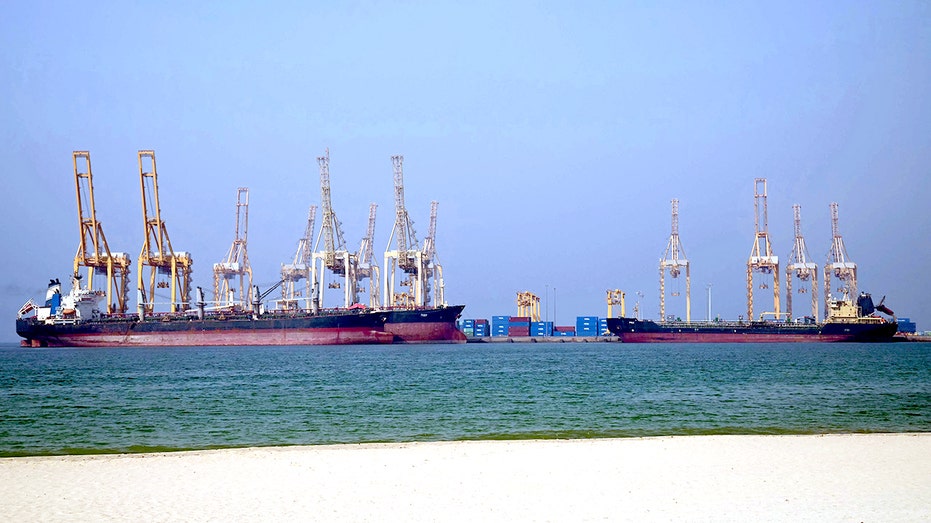
The flow of oil tankers through the Strait of Hormuz has been constrained during the Iran war. (Giuseppe Cacace/AFP via Getty Images)
Goldman Sachs also lowered its forecast for economic growth, reducing 2026 gross domestic product (GDP) growth to 2.1% in the fourth quarter compared to the same period the prior year or 2.4% on a full-year basis under the baseline scenario. The GDP growth forecast would fall to 1.9% fourth quarter-to-fourth quarter in the adverse scenario and 1.8% in the severely adverse scenario.
Advertisement
The firm also raised its 12-month recession probability by 5 percentage points to 30%.
The economists didn’t alter their baseline forecast for Federal Reserve interest rate cuts, which featured two 25 basis point rate cuts in September and December. They explained that they expect the unemployment rate to rise to 4.6%, above the 4.4% median projection of Fed policymakers at their latest meeting.
However, they did raise the probability of the Fed staying on hold this year from 20% to 25%, while lowering the probability of insurance cuts from 15% to 10%, due to the relatively higher inflation readings they anticipate.























































You must be logged in to post a comment Login