The buy-to-let sector has weathered tax changes, stamp duty surcharges, and tightening mortgage criteria over the past decade.
But the Renters’ Rights Act, which takes effect on 1 May 2026, may prove to be the most consequential shift yet — not because it makes landlording unprofitable, but because it makes amateur landlording untenable.
For England’s estimated 2.3 million private landlords, the Act does not simply change a few rules. It restructures the entire operating model of residential letting. The landlords who recognise this will adapt and profit. Those who treat it as another piece of red tape will find themselves financially exposed.
A New Operating Model
The private rental sector has operated on a relatively simple premise for decades. A landlord offers a property, a tenant signs a fixed-term agreement, and if things go wrong, Section 21 provides a clean exit — two months’ notice, no reason required, no court scrutiny.
From 1 May, that safety net disappears. Section 21 is abolished entirely. Every route to regaining possession now runs through Section 8, which requires landlords to prove specific legal grounds and back them with documented evidence. Serious rent arrears, antisocial behaviour, intention to sell, or a genuine need for the landlord or a family member to move in — each ground carries its own notice period, its own burden of proof, and its own risk of failure at tribunal.
Advertisement
Critically, courts will examine the landlord’s overall compliance record before granting possession. A missing gas safety certificate, an expired electrical installation condition report, or an overlooked licensing requirement could be enough to defeat an otherwise valid claim. The message is clear: your ability to recover your own asset now depends entirely on how well you have managed it.
The Numbers That Should Worry You
Beyond eviction reform, the Act introduces financial risks that demand attention from anyone treating property as an investment.
Advance rent is now prohibited. Landlords can no longer require more than one month’s rent upfront. For overseas investors and agents who routinely secured six months in advance as a buffer against risk, this removes a key financial safeguard overnight.
Rent increases are restricted to once annually, following the formal Section 13 process with two months’ notice. Every increase can be challenged by the tenant at a First-tier Tribunal. Price too aggressively and you face a formal dispute. Price too conservatively and your yield erodes.
Advertisement
The sharpest risk, however, lies in Rent Repayment Orders. The penalty window is doubling from 12 to 24 months. If a property is found to be operating without required licensing — something that catches more London landlords than most realise — a tribunal can order the repayment of up to two full years of rent. On a property generating £2,500 per month, that is a £60,000 liability before you factor in fines.
Fixed-term tenancies are also abolished. Every tenancy becomes a rolling periodic contract from day one, with tenants free to leave on two months’ notice at any point. Rental periods are capped at one calendar month, ending the practice of quarterly or annual billing that has been standard in prime central London for decades. For portfolio landlords, this is not a minor administrative adjustment — it is a fundamental change to cash flow forecasting.
Why This Favours the Professional
The thread running through every change in the Act is compliance. Possession depends on it. Rent increases depend on it. Avoiding five-figure penalties depends on it.
The landlords most at risk are those managing properties informally — tracking certificates in email threads, letting inspections lapse, handling tenant issues as they arise rather than preventing them. Under the old rules, Section 21 papered over these gaps. Under the new rules, every gap is a potential liability.
Advertisement
This quietly reshapes the competitive landscape. Landlords who run their properties as a proper business — systematic compliance tracking, preventative maintenance programmes, rigorous tenant referencing — will attract better tenants, experience fewer voids, and hold stronger legal standing when they need it most.
For portfolio landlords and overseas investors, the regulatory burden now makes a compelling case for professional property management. The annual cost of a managing agent is increasingly dwarfed by the potential cost of a single compliance failure.
Three Moves to Make Before May
Audit every property. Gas safety certificates, electrical reports, EPCs, local licensing — every document must be current, correctly filed, and linked to the right property and tenancy. Under the new regime, a single lapse does not just attract a fine. It can invalidate a possession claim entirely.
Stress-test your finances. Section 8 possession proceedings are slower and less predictable than Section 21 was. Build a cash reserve covering at least three to six months of operating costs per property. If you cannot absorb a void period without distress, your portfolio is under-capitalised for the new environment.
Advertisement
Upgrade your tenant selection. With eviction becoming slower, more expensive, and less certain, the quality of your tenant screening is now your single most important risk control. Affordability checks, employment verification, previous landlord references, and guarantor arrangements are no longer optional extras — they are your first line of defence. A detailed breakdown of the new possession grounds and notice periods (https://www.5dgryphon.co.uk/blogs/renters-rights-act-2026-london-landlords) should inform how you assess and manage tenant risk going forward.
The Opportunity Behind the Regulation
It would be easy to read the Renters’ Rights Act as the latest blow to an already pressured sector. That would be the wrong conclusion.
Demand for rental property in England’s major cities continues to outstrip supply. Rents are rising. The fundamentals of well-managed residential property investment remain sound. What the Act does is raise the barrier to competent operation — and every landlord who clears that barrier will compete in a less crowded, more professional market.
The era of passive, low-touch property ownership is ending. For those who approach buy-to-let as a serious business rather than a side income, the new rules are not a threat. They are a competitive moat.
Advertisement
This article is for general information only and does not constitute legal or professional advice. The information was accurate at the time of writing (March 2026), but legislation and guidance may change. For advice specific to your situation, please consult a qualified solicitor.
Artem Dumchev — 5D Gryphon Real Estate, 21 Knightsbridge, London
LightShed partner Rich Greenfield analyzes the Paramount Skydance-Warner Bros deal on The Claman Countdown.
Los Angeles County voted in favor of an analysis into the proposed merger between Paramount Skydance and Warner Bros. Discovery and its impact on the entertainment industry.
The Los Angeles County Board of Supervisors approved the motion Tuesday to have the Department of Economic Opportunity (DEO) conduct a “comprehensive economic impact analysis” on the direct and indirect impact the merger could have on employment in the county.
Advertisement
“Entertainment is more than what we watch on a screen—it’s part of who we are as Angelenos and a cornerstone of our economy. Thousands of families rely on this industry for their livelihoods, and we must protect their jobs and our signature industry,” Supervisor Lindsey P. Horvath said in a statement.
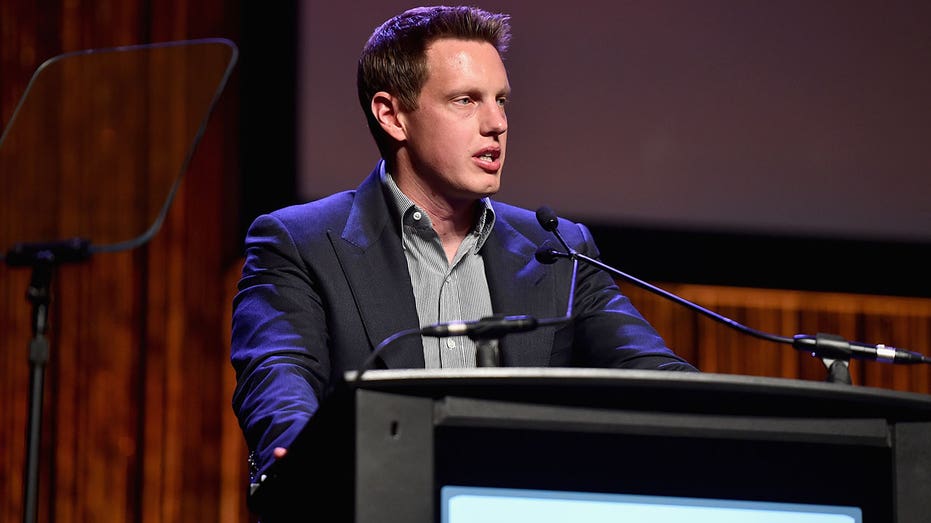
The Los Angeles County Board of Supervisors released a motion to analyze a potential merger on Tuesday. (Mario Tama/Getty Images)
She continued, “As the proposed merger moves forward, we need a clear understanding of its impacts on jobs, competition, and the future of storytelling. Today, we took action to support workers, strengthen our local economy, and keep Los Angeles at the center of the global entertainment industry.”
According to Horvath, who proposed the motion, the DEO will “develop workforce strategies, including job training and placement programs, to support and retain entertainment industry workers” and report back to the Los Angeles board in 60 days with a final report due in 120 days.
Advertisement
Los Angeles County Counsel will then submit a final report to the Department of Justice regarding potential antitrust issues.
Paramount successfully launched a bid against Netflix to acquire Warner Bros. Discovery in February. (AaronP/Bauer-Griffin/GC Images)
Actress Jane Fonda, who heads the Committee for the First Amendment, supported the motion for “fighting” for the entertainment industry.
“Los Angeles runs on the creativity and hard work of the people behind our entertainment industry. As this acquisition moves forward, we need to make sure workers and storytellers aren’t left behind. I’m grateful to Supervisor Lindsey Horvath for fighting for our industry and for the people who power it every day,” Fonda said.
Critics have expressed concerns regarding Paramount CEO David Ellison potentially taking over Warner Bros. Discovery. (Alberto E. Rodriguez/Getty Images for CinemaCon)
Paramount won the ongoing bidding war to purchase Warner Bros. Discovery in February, though the merger has not yet been finalized.
Critics of the bid have expressed concerns that the consolidation of two legacy studios under one company could lead to mass layoffs in the entertainment industry. Others have expressed fears over Paramount CEO David Ellison, who has a friendly relationship with President Donald Trump, having control over CNN.
More than 10 million grill brushes are being recalled nationwide after reports that metal bristles can break off and end up in food.
The U.S. Consumer Product Safety Commission (CPSC) announced the recall Thursday for several Nexgrill metal wire brushes sold at Home Depot stores and online between 2015 and 2026.
Advertisement
“Small metal wire bristles can detach from the brushes and stick to the grill or food, posing an ingestion hazard and risk of serious internal injuries that could require surgery,” the CPSC said.
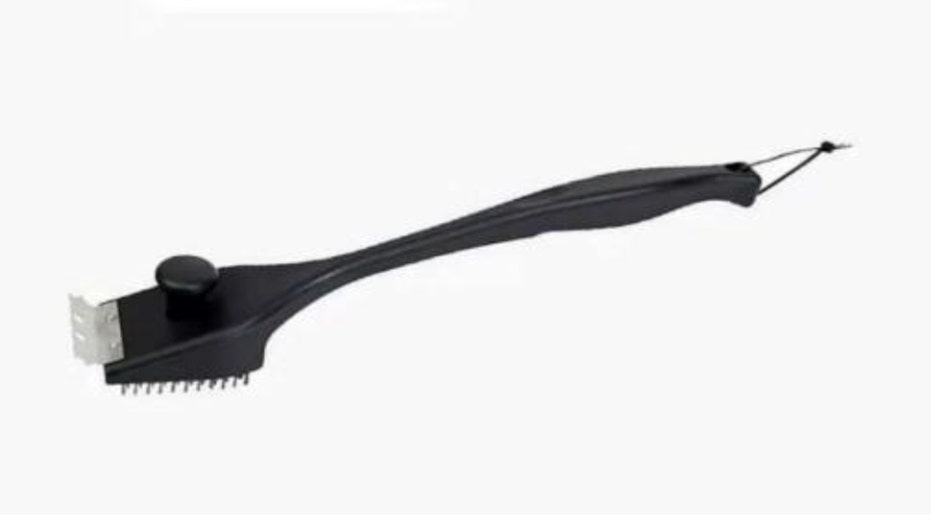
Nexgrill has received at least 68 reports of bristles coming loose. (Consumer Product Safety Commission)
Nexgrill has received at least 68 reports of bristles coming loose.
Five people reported swallowing the metal pieces and needed medical treatment to remove them from the throat or digestive tract, according to the CPSC.
Advertisement
The recall includes multiple models of brushes with black plastic or wood handles measuring about 18 to 21 inches long.
The recall includes multiple models of brushes with black plastic or wood handles measuring about 18 to 21 inches long. (Consumer Product Safety Commission)
Model numbers were listed on the packaging, and each product is labeled “Nexgrill.”
The recall covers the following models:
Advertisement
19-Inch Grill Brush (Model 530-0024), sold 2015–2016
Grill Cleaning Brush with Scraper (Model 530-0024G), sold 2022–2026
Long Handle Grill Brush (Model 530-0034), sold 2015–2026
Grill Brush and Scraper (Model 530-0039), sold 2015–2026
Grill Brush with Scrub Pad (Model 530-0041), sold 2015–2026
Wood Handle Grill Brush (Model 530-0042), sold 2015–2021
Cleaning Edge Solutions, Australia’s fastest growing commercial cleaning provider, has invested millions of dollars into the development and rollout of its proprietary desktop platform, CESgo, in what industry leaders are describing as a major shift in how businesses manage cleaning, hygiene and operational accountability.
The significant investment signals a new era for commercial cleaning across childcare centres, schools, aged care, hospitals and medical facilities, offices, transport hubs, retail environments, food production and industrial sites, where services are no longer invisible but fully measurable and transparent.
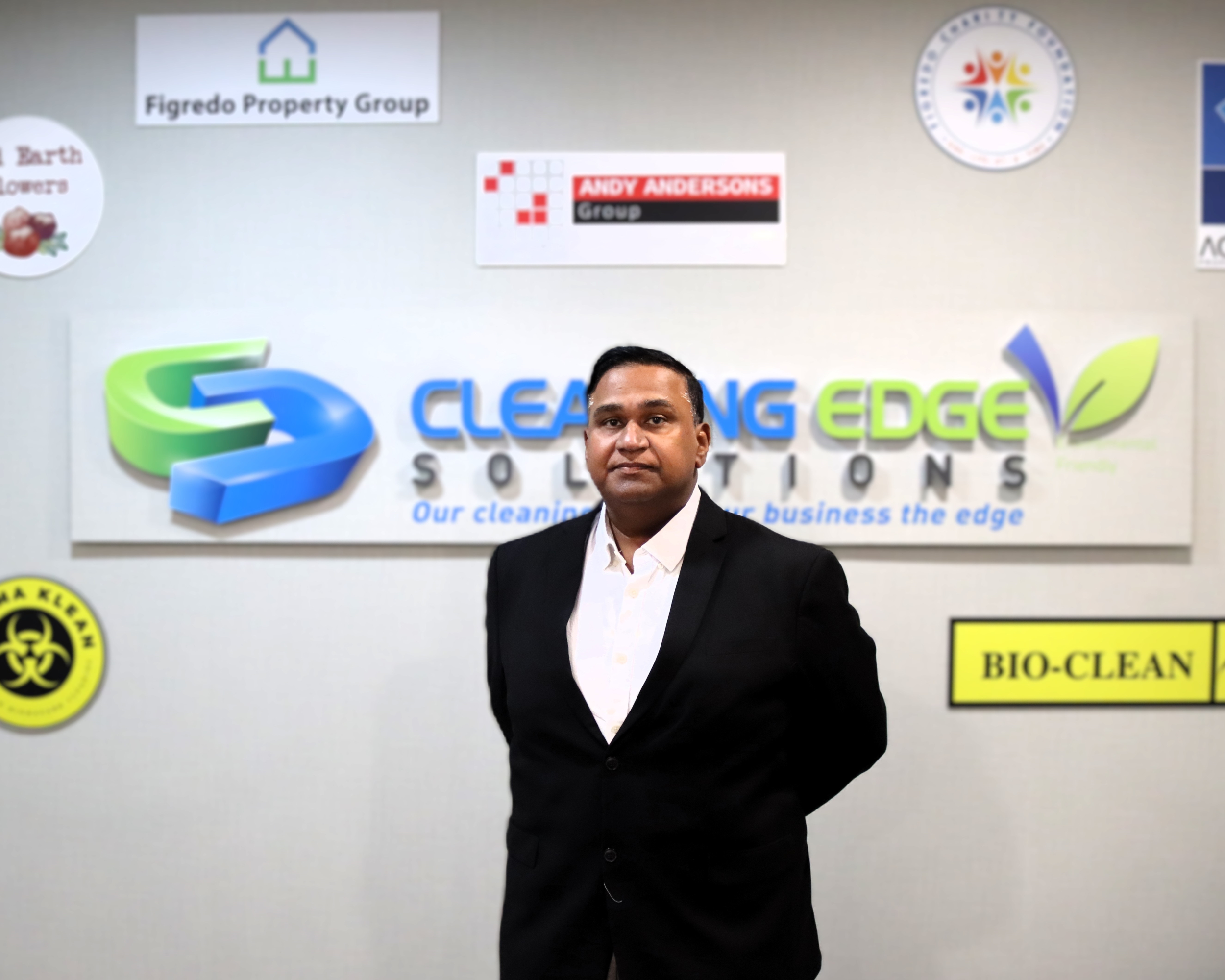
Founder Clayburn Figredo
Founder Clayburn Figredo said the company is redefining what modern cleaning looks like in Australia.
“We are not just cleaning buildings, we are creating operational transparency and real-time visibility,” Figredo said.
“CESgo is the result of a multi-million-dollar investment into technology that gives businesses clarity, control and confidence.”
Advertisement
Cleaning Edge Solutions is one of Australia’s leading commercial cleaning and facility management providers, specialising in large-scale, high-risk and clinical environments. Founded in 2008 by Managing Director Clayburn Figredo and headquartered in Mulgrave, Victoria, the company has built a national reputation for innovation, strict compliance and advanced infection-control standards.
With ISO certifications across quality, safety, environment and food safety, Cleaning Edge Solutions delivers services to major organisations across health, government, education, transport, retail and aged care sectors. Its operations span commercial and industrial cleaning, facilities maintenance, waste management and property development.
It also owns a number of brands including well-known business, Andy Andersons. For more than 45 years, Andy Andersons has supported Australian organisations with reliable, high-quality cleaning and facility services. A long-standing family business with deep industry roots, Andy Andersons became an entity of the Cleaning Edge Group in 2021, combining decades of legacy experience with the group’s national scale and innovation.
Today, the company draws on more than 100 years of combined expertise to deliver industrial cleaning, commercial cleaning, aged care cleaning and facility maintenance services. Andy Andersons remains committed to safety, integrity and exceptional service.
Advertisement
Known for its commitment to excellence and social impact, the Cleaning Edge group is dedicated to elevating national cleaning standards and creating safer, healthier environments for all Australians.
A new standard in operational visibility
The desktop-based CESgo platform captures every aspect of cleaning operations in real time, allowing businesses to see exactly what is happening across their sites.
Cleaning Edge staff log in and out digitally, with attendance and hours automatically verified. Every task is outlined through structured workflows and photographic evidence of completed work is uploaded directly into the system.
Advertisement
Clients can view services undertaken, the timing, the staff involved and the results delivered, removing the uncertainty that has traditionally surrounded outsourced cleaning.
“For decades, cleaning has been a blind spot for many organisations,” Figredo said.
“Now businesses can see the work, the results and the value in real time.”
From invisible service to measurable performance
Advertisement
The platform transforms cleaning from a reactive, checklist-based activity into a performance-driven function.
Images, reports and digital sign-offs provide a clear record of hygiene outcomes. Site requirements and task schedules are embedded into the system, ensuring consistency across locations and shifts.
“This is accountability elevated,” Figredo said.
“Every hour is captured, every job is documented and every outcome can be verified.”
Advertisement
The result is stronger oversight, improved service quality and better operational control.
Centralised communication and faster problem resolution
CESgo also functions as a communication hub between businesses, site managers and Cleaning Edge teams.
Clients can log requests, raise concerns and track progress in near real time. Issues are assigned, monitored and resolved within the platform, creating a clear record of action and accountability.
Advertisement
“Communication is one of the biggest challenges in outsourced services,” Figredo said.
“Our technology creates a single source of truth, ensuring nothing is missed and every request is followed through.”
Reducing risk and supporting governance
With increased scrutiny around hygiene, infection control and workplace standards, organisations are under pressure to demonstrate operational oversight.
Advertisement
Figredo said traditional paper-based reporting and fragmented communication systems are no longer fit for purpose.
“Boards, executives and regulators want data, not assumptions,” he said.
“CESgo provides a digital audit trail that strengthens governance, supports reporting and reduces risk.”
The platform enables businesses to generate detailed reports quickly, providing evidence of cleaning performance, service delivery and operational compliance.
Advertisement
A permanent shift in the cleaning industry
Cleaning Edge believes the future of the industry lies in technology-enabled service delivery.
“This is not about mops and buckets,” Figredo said.
“It is about intelligent systems, data and measurable outcomes.”
Advertisement
By investing heavily in proprietary technology, Cleaning Edge is positioning itself at the forefront of a new era in which cleaning services are defined by transparency, accountability and operational excellence.
“The expectations of businesses have changed permanently,” Figredo said.
“They want visibility and control and they also want proof. CESgo delivers that.”
Welcome, everyone, and thank you for joining us to discuss Insight Molecular Diagnostics Fourth Quarter 2025 Results. If you have not seen today’s shareholder letter, please visit Insight Molecular Diagnostics Investor Relations page at investors.imdxinc.com.
Today’s prepared remarks build upon the information already shared in this robust letter. Joining us today are Insight Molecular Diagnostics President and CEO, Josh Riggs; Chief Science Officer, Ekke Schutz; and CFO, Andrea James. We also have our analysts with us as panelists.
After our prepared remarks, our analysts may ask questions. Before turning the call over to Josh Riggs, I’d like to go over our safe harbor. The company will make projections and forward-looking statements regarding future events. Any statements that are not historical facts are forward-looking statements. These statements are made pursuant to and within the meaning of the safe harbor provision of the Private Securities Litigation Reform Act of 1995. We encourage you to review the company’s SEC filings, including the company’s most recent Form 10-K and subsequent Forms 10-Q, which identify risks and uncertainties that may cause future actual results or events to differ materially.
Advertisement
Please note that the forward-looking statements made during today’s call speak only to the date that they are made, and Insight Molecular Diagnostics undertakes no obligation to update them. And with that, I would like to now turn the call over to Josh Riggs.
Mumbai: Lenders are witnessing higher utilisation of working capital limits by MSMEs and other industries as input cost pressures rise due to the ongoing US-Israel conflict. Bankers told ET as cash flows slow across the economy, MSMEs are increasingly relying on working capital to manage operations.
“As input costs rise, margins come under pressure, which can lead to higher working capital utilisation as cash flows get stretched,” said Prashanth TS, head – mid corporate group, Axis Bank. “MSMEs typically operate at utilisation levels of 70-75%, and in periods of heightened volatility, these levels tend to move higher.”
He added that, from a banking standpoint, this is not a solvency challenge but an input-cost inflation issue for MSMEs. For lenders, the leadership focus is on anticipating these pressures early and ensuring adequate, well-calibrated liquidity support without compromising credit discipline.
Sectors such as hospitality, ceramics, chemicals, steel and fertilisers are expected to see higher drawdowns of existing limits, as well as fresh working capital sanctions, as firms navigate rising costs and tighter liquidity conditions.
Advertisement
“Different pockets will have different impacts. In general, when cash flow movement in the economy slows down, working capital will go up,” the MSME head of another leading private sector bank said. “Because faster the cash flow cycles move, lower is the utilisation because you churn your money.”
Live Events
For domestic basmati rice exporters, Iran is the third-largest destination, accounting for about 13% of total exports in fiscal 2025. According to Crisil Ratings, rising prices of raw materials and imported fertilisers are likely to increase working capital requirements for industry players, while also raising the government’s subsidy bill by an estimated ₹20,000-25,000 crore. “We anticipate an increase in working capital loans, worsening corporate credit metrics, worsening metrics for SMEs and households and an increase in credit costs,” CreditSights – a Fitch Group company, said in a report. According to Crisil Ratings, sectors such as oil refining, aviation and crude-linked industries – including specialty chemicals, paints, petrochemicals and synthetic textiles – may be affected by rising crude oil prices. Additionally, companies involved in basmati rice, fruits and nuts trade may see heightened impact.
“The extent of the impact will depend on each sector’s ability to pass on the incremental costs,” the rating agency said in a report.
Ascentage Pharma Group International (AAPG) Q4 2025 Earnings Call March 26, 2026 8:00 AM EDT
Company Participants
Yuly Chen Dajun Yang – Co-Founder, Chairman & CEO Veet Misra – Chief Financial Officer Zhichao Si – Head of Commercial
Conference Call Participants
Advertisement
Lut Ming Cheng – JPMorgan Chase & Co, Research Division Biren Amin – Piper Sandler & Co., Research Division Supawat Thongthip – Truist Securities, Inc., Research Division Jeet Mukherjee – BTIG, LLC, Research Division Matthew Biegler – Oppenheimer & Co. Inc., Research Division Christopher Liu – Lucid Capital Markets, LLC, Research Division Michael King – Rodman & Renshaw Research
Presentation
Operator
Advertisement
Good day, everyone, and welcome to Ascentage Pharma’s 2025 Annual Results Earnings Call. [Operator Instructions] As a reminder, today’s call is being recorded.
Thank you for joining us. I will now turn the call over to Yuly Chen, Senior Director of Investor Relations for the safe harbor statement. Yuly, please go ahead.
Yuly Chen
Advertisement
Thank you, operator. Please note that today’s discussion will include forward-looking statements based on our current expectations and assumptions. These statements involve risks and uncertainties and actual results may differ materially. For a full discussion of these risks, please refer to our filings and disclosures.
On today’s call, I am joined by Dr. Dajun Yang, Chairman and CEO, who will provide an overview of recent developments and 2025 annual performance. As well as Dr. Veet Misra, CFO, who will go through the financial highlights. The presentation will then be followed by a Q&A session. During the Q&A session, the team will be joined by Dr. Yifan Zhai, Chief Medical Officer; Dr. Shaomeng Wang, Cofounder, Chief Scientific Adviser, Dr. Zhichao Si, Head of Commercial, I will now turn the call over to Dr. Yang.
Dajun Yang Co-Founder, Chairman & CEO
Advertisement
Thank you. Good morning. I’m Dajun Yang, Chairman and CEO of the company. Today, I’m very
Several U.S. cities could soon see major underground transportation upgrades led by billionaire Elon Musk’s The Boring Company (TBC).
In a Tuesday post on X, the construction company named the winners of its nationwide “Tunnel Vision Challenge,” naming New Orleans, Louisiana, and Dallas, Texas, as candidates for new transportation systems.
Advertisement
“Thanks again to all of the participants — your enthusiasm and positivity has been inspiring for the TBC team,” the company wrote.
Baltimore, Maryland, was initially named as a winner, but TBC later announced Wednesday that the project will not move forward following early discussions.
A Tesla Inc. electric vehicle is driven through The Boring Company’s Las Vegas Convention Center Loop during the Consumer Electronics Show in Las Vegas, Nevada, on Jan. 5, 2023. (Patrick T. Fallon/AFP via Getty)
The next phase will involve collaboration with local officials and regulators, along with geotechnical borings to determine feasibility.
Advertisement
In a Wednesday update, TBC provided additional details on its early discussions with local leaders in both Dallas and New Orleans, saying both proposed projects had “great initial meetings.”
Two additional cities — Hendersonville, Tennessee, and San Antonio, Texas — remain under consideration as discussions continue.
Elon Musk attends the Viva Technology conference at the Porte de Versailles exhibition center on June 16, 2023, in Paris, France. (Chesnot/Getty Images)
The challenge, which launched in January, invited proposals for a one-mile tunnel concept, with the winning concept promised a free build.
Advertisement
Separately, TBC was recently selected to begin negotiations on a proposed underground transit system connecting Universal Orlando’s parks.
The company’s most notable project is the Las Vegas Convention Center (LVCC) Loop, which opened in 2021 after about a year of construction.


























































You must be logged in to post a comment Login