







Connect with us
DAPA Banner

Tech

Xero and Anthropic partner to bring small business finances into Claude

Published

on

Xero, the New Zealand-founded accounting platform used by 4.6 million subscribers worldwide, announced on Wednesday a multi-year partnership with Anthropic that will embed Claude directly into its product and, more unusually, bring Xero’s financial data into Claude.ai itself. The deal means small business owners will be able to ask Claude questions about their cash flow, overdue invoices, and profit margins without leaving Anthropic’s chatbot.

The integration works in two directions. Inside Xero, the company’s existing AI assistant JAX (Just Ask Xero), which launched in September 2025, will be powered by Claude’s reasoning capabilities to automate financial workflows: tracking cash flow, flagging unpaid invoices, analysing revenue and profit performance, and suggesting actions. Inside Claude.ai, users will be able to connect their Xero accounts and work with live financial data for business planning, scenario modelling, and year-end analysis without switching between tools.

Xero’s engineering teams will also adopt Claude Code and Cowork, Anthropic’s developer tools, to accelerate their own product development. Financial data shared between the platforms will be used solely for the user’s session and will not be used to train Claude’s models, according to the announcement.

The multi-model hedge

What makes the partnership notable is not just its scope but its context. Xero already works with OpenAI. In October 2025, when JAX launched its expanded feature set at Xerocon Brisbane, Xero announced a collaboration with OpenAI to bring deep web research, including tax laws and market trends, directly into the platform. Now Anthropic gets the financial data integration and the agentic workflow layer.

Advertisement

This is a deliberate multi-model strategy. Xero is treating AI providers the way enterprises have traditionally treated cloud providers: spreading workloads across multiple vendors to avoid lock-in, leverage each provider’s relative strengths, and maintain negotiating power. OpenAI handles web research and information retrieval; Anthropic handles financial reasoning and workflow automation. The business logic sits in JAX, Xero’s own orchestration layer, which coordinates multiple AI agents behind the scenes.

Advertisement

For Anthropic, the deal is part of a broader enterprise push. Two weeks ago, the company committed $100 million to its Claude Partner Network, a programme that provides training, technical support, and joint go-to-market resources for organisations deploying Claude. Anchor partners include Accenture, Deloitte, Cognizant, and Infosys. The Xero partnership is a different kind of bet: not a consulting firm reselling Claude, but a vertical SaaS platform embedding it directly into a domain-specific product used by millions of small businesses.

Why the chatbot matters more than the plugin

The more interesting half of the announcement is not Claude inside Xero but Xero inside Claude. When a small business owner asks Claude about their cash position, Claude will pull live data from Xero and combine it with whatever else the user brings to the conversation: a lease agreement they have uploaded, a market report they are reading, a hiring plan they are modelling. The financial data becomes one input among many in a general-purpose reasoning environment.

This is the pattern Anthropic is building toward: Claude as the interface through which people interact with their professional tools, rather than each tool providing its own separate AI assistant. It is the same logic that drove the Model Context Protocol, Anthropic’s open standard for connecting AI models to external data sources and tools. If Claude becomes the place where small business owners do their financial thinking, Anthropic captures the relationship even if Xero is the system of record.

Xero, for its part, benefits from reaching users where they already are. The company reported NZ$1.2 billion in revenue for the first half of fiscal year 2026, up 20 per cent year on year, and recently acquired US bill payments company Melio to strengthen its position in the American market. But Xero’s core challenge, like that of every vertical SaaS company, is that its users spend most of their time outside the product. If Claude can surface Xero’s insights in a conversation the user is already having, that is a distribution advantage Xero could not build alone.


Advertisement

The data question

The partnership’s success will depend on trust. Small business financial data is among the most sensitive information a company holds, and sending it to a third-party AI platform, however reassuring the privacy commitments, requires a level of confidence that many business owners and their accountants may not yet have. The announcement states that financial data is used only for the user’s session and is never used for training. Whether that assurance is sufficient for the accounting profession, which is built on confidentiality and fiduciary duty, remains to be tested.

There is also the question of accuracy. When an AI model makes a mistake in a creative writing task, the consequence is a bad paragraph. When it makes a mistake in a cash flow forecast or tax analysis, the consequence can be a missed payroll or a compliance violation. Xero’s Diya Jolly, the company’s chief product and technology officer, framed the integration as shifting the “admin burden to a team of agents.” That framing works only if the agents are reliably correct, and in financial services, the tolerance for error is measured in basis points, not sentiment.

Claude-powered insights within Xero and the Xero integration into Claude.ai are expected to become available in the coming months. No specific launch date has been announced.

Advertisement

Source link

Continue Reading
Click to comment

You must be logged in to post a comment Login

Leave a Reply

Tech

Court temporarily blocks US government from labeling Anthropic as a ‘supply chain risk’

Published

on

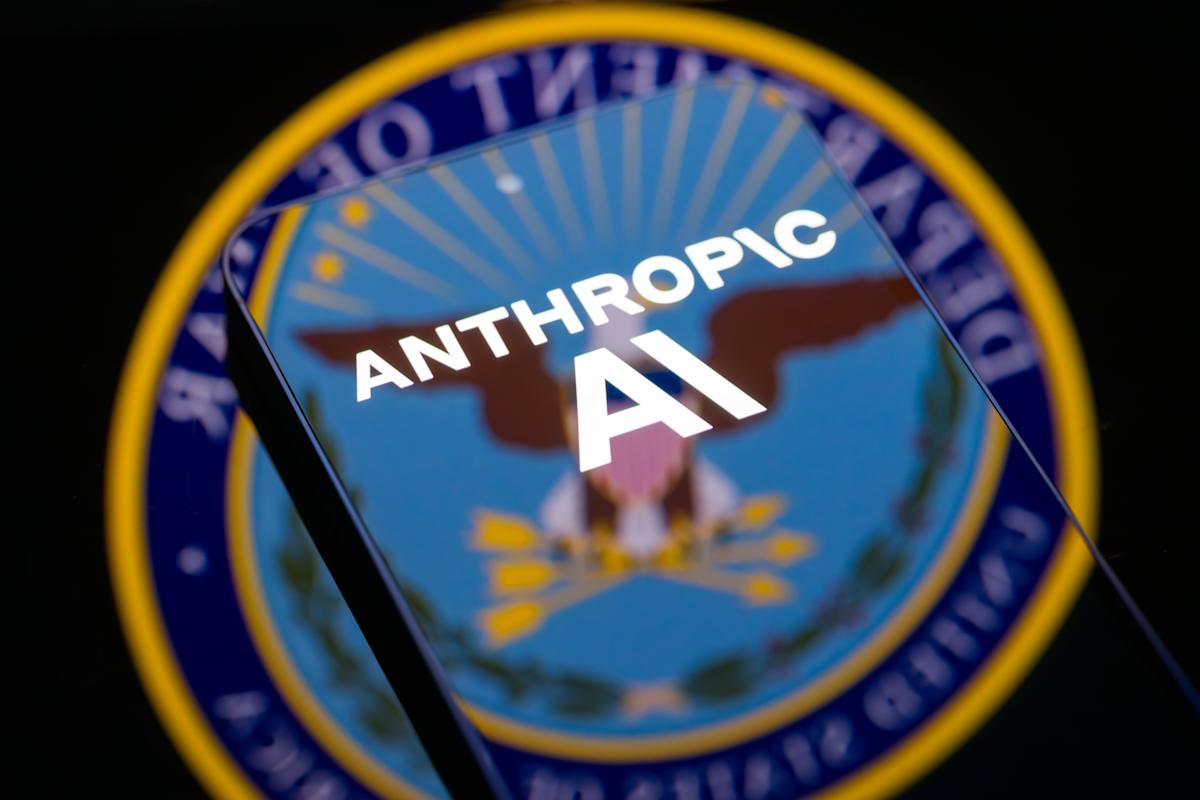
The court has granted Anthropic’s request for a preliminary injunction, preventing the government from banning its products for federal use and from formally labeling it as a “supply chain risk,” at least for now. If you’ll recall, things turned sour between the company and the Trump administration when Anthropic refused to change the terms of its contract that would allow the government to use its technology for mass surveillance and the development of autonomous weapons.

In response to Anthropic’s refusal, the president ordered federal agencies to stop using Claude and the company’s other services. The Defense Department also officially labeled it as a supply chain risk, which is typically reserved for entities typically based in US adversaries like China that threaten national security. In addition, department secretary Pete Hegseth warned companies that if they want to work with the government, they must sever ties with Anthropic. The AI company challenged the designation in court, calling it unlawful and in violation of free speech and its rights to due process. It asked the court to put a pause on the ban while the lawsuit is ongoing, as well.

In a court filing, the Defense Department said giving Anthropic continued access to its warfighting infrastructure would “introduce unacceptable risk” to its supply chains. But Judge Rita F. Lin of the District Court for the Northern District of California said the measures the government took “appear designed to punish Anthropic.”

Lin wrote in her decision that it seems Anthropic is being punished for criticizing the government in the press. “Punishing Anthropic for bringing public scrutiny to the government’s contracting position is classic illegal First Amendment retaliation,” she continued. The judge also said that the supply chain risk designation is contrary to law, arbitrary and capricious. She added that the government argued that Anthropic showed its subversive tendencies by “questioning” the use of its technology. “Nothing in the governing statute supports the Orwellian notion that an American company may be branded a potential adversary and saboteur of the US for expressing disagreement with the government,” she wrote.

Advertisement

Anthropic told The New York Times that it’s “grateful to the court for moving swiftly” and that it’s now focused on “working productively with the government to ensure all Americans benefit from safe, reliable AI.” The company’s lawsuit is still ongoing, and the court has yet to issue its final decision. Judge Lin said, however, that Anthropic “has shown a likelihood of success on its First Amendment claim.”

Source link

Continue Reading

Tech

Anti-piracy coalition takes down AnimePlay app with 5 million users

Published

on

Pirate_Animeplay

The Alliance for Creativity and Entertainment (ACE) announced the shutdown of AnimePlay, a major anime streaming platform with over 5 million users.

Backed by more than 50 major television networks and film studios, including Disney, Paramount, Sony Pictures, Warner Bros, Netflix, and Universal Pictures, ACE focuses on taking down illegal streaming services through civil litigation, criminal referrals, and cease-and-desist operations.

In recent years, ACE targeted and dismantled a long string of other large-scale illegal streaming networks in joint operations with law enforcement. Most recently, in November 2025, it shut down Photocall, a massive TV piracy streaming platform with over 26 million users annually.

In its latest action, the anti-piracy coalition shut down the AnimePlay anime streaming platform, which hosted more than 60 terabytes of anime TV shows and movies and had amassed over 5 million registered users, most of them from Indonesia.

Advertisement

ACE took control of the AnimePlay app and dismantled the operation by taking all infrastructure offline, including hosting servers and web domains.

“ACE secured control of not just the application, but also its underlying infrastructure, including 15 associated domains, source code, hosting environment, and related digital assets, all of which have now been taken offline,” the anti-piracy organization said in a Thursday statement. “In so doing, ACE has effectively dismantled the operation and restricted the operator’s ability to rebuild or relaunch the service.”

The developer and admin of the piracy service also surrendered control of the backend ecosystem powering AnimePlay to ACE, including backend servers, associated databases, advertising tools, and 29 GitHub repositories containing full source code.

“We will continue working with our partners across the Asia Pacific region and globally to dismantle criminal operations like this and safeguard the integrity of the creative economy,” added Larissa Knapp, Chief Content Protection Officer and Executive Vice President for the Motion Picture Association (MPA).

Advertisement

Malware is getting smarter. The Red Report 2026 reveals how new threats use math to detect sandboxes and hide in plain sight.

Download our analysis of 1.1 million malicious samples to uncover the top 10 techniques and see if your security stack is blinded.

Source link

Continue Reading

Tech

Judge Boots DOJ Prosecutor From Courtroom, Demands To Know Who’s Actually Calling The Shots

Published

on

from the benched-by-the-bench dept

This judge ain’t fucking around. Earlier this month, we covered New Jersey federal judge Zahid Qurashi’s response to the actions of Trump’s DOJ, which begins with lots of illegal appointments of prosecutors and runs right through these prosecutors’ inability to defend the administration’s actions.

To wit:

The Government’s handling of Petitioner’s detention is emblematic of its approach to immigration enforcement in this state. On the merits, its detentions are illegal. The Government knows this. Its reliance on Section 1225 has been roundly rejected.

And:

Sadly, the well-deserved credibility once attached to that distinguished Office is now a presumption that “has been sadly eroded.” The Government’s continued actions after being called to task can now only be deemed intentional.

Courts have been flooded with immigration cases and vindictive prosecutions targeting Trump’s enemies. They’re fighting back, but even a massive consensus seems incapable of slowing Trump’s roll.

Advertisement

This case — brought to our attention by Owen Barcala — involves the sort of serious crimes the administration has put on the back burner so it can flood the immigration enforcement zone. While the administration focuses on ejecting all non-white foreigners from this country while claiming they’re simply seeking out the “worst of worst,” the (alleged) worst of the worst are pretty much being ignored.

Thanks to the massive amount of turnover at the DOJ, there are not a whole lot of qualified prosecutors left to do the government’s (increasingly) dirty work. In New Jersey, (illegal) appointee Alina Habba (a former Trump PAC spokesperson/advisor) has already voluntarily stepped down, proving she’s more capable of reading the writing on the wall than her former employer.

In her place, Mark Coyne (in a made-up position meant to shield him from being booted for being illegally appointed) has stepped up to wrap up a child pornography prosecution. It’s not going well for Coyne, as the New York Times reports:

A federal judge threw a top prosecutor from the New Jersey U.S. attorney’s office out of his courtroom during a sentencing hearing this week and demanded that the office’s leadership testify about who had authority over their actions, according to court documents.

The rapid sequence of events on Monday in the courtroom of Judge Zahid N. Quraishi was the latest indication of growing tensions between the Justice Department and the federal judiciary in New Jersey. It came during the scheduled sentencing of a man who last year agreed to plead guilty to possession of child pornography.

Advertisement

The hearing did not go as prosecutors had planned. Judge Quraishi grew frustrated with the office’s head of appeals, Mark Coyne, who had not formally disclosed that he would appear, and fiercely interrogated a more junior prosecutor about whether the former interim U.S. attorney, Alina Habba, still had some role in operating the office.

Judge Qurashi referenced an order issued by federal judge Matthew Brann earlier this month, which declared the three-prosecutor hydra cobbled together by Pam Bondi to be a trio of unlawfully elevated prosecutors. That decision made the court’s displeasure explicit, using emphasis in the ruling to point out that the Trump administration cared more about who was running the New Jersey prosecutors’ office, rather than whether it was legally capable of running at all.

There are plenty of wonderfully quotable moments in the transcript of the hearing that ended with the government’s prosecutor being removed from the proceedings by the court.

It starts like this:

Advertisement

THE COURT: Mr. Coyne, did you file a notice of appearance in this case?
MR. COYNE: I did not.
THE COURT: Are you here for moral support? Because you’re not going to speak.
MR. COYNE: I would ask —
THE COURT: No.
MR. COYNE: — that the Court allow me to speak.
THE COURT: Nope.
That’s not the representation made by the Government.

And then the court continues to riddle his body with bullets:

THE COURT: I’m not going to hear from you, Mr. Coyne. If you want to sit there for moral support or hand Mr. Rosenblum Post-its or whisper in his ear, I’ll let you do that as supervisor.

You’d think a corpse would keep its mouth shut. But Mr. Coyne apparently didn’t realize he was already dead.

The judge asked whether or not the three people Judge Brann had ruled were appointed unlawfully were still running the NJ US Attorney’s office. Mr. Rosenblum claimed he only knew what he’d been told by Mark Coyne, which apparently was nothing more than to shut up and claim ignorance. Unsatisfied with these non-answers and dodgy quasi-denials, Judge Quraishi pressed Rosenblum hard enough that Coyne — who had been directly ordered to sit this one out — felt compelled to respond:

THE COURT: What role does Alina Habba have currently in operating your office?
MR. ROSENBLUM: None that I’m aware of.
THE COURT: None that you’re aware of.
MR. ROSENBLUM: None.
THE COURT: All right. So she could be operating the office.
MR. COYNE: She is not.
MR. ROSENBLUM: She’s not.
MR. COYNE: She is not.
THE COURT: Sit down, Mr. Coyne. If you speak again, I’m going to have you removed. I already told you not to speak.
MR. COYNE: Your Honor —
THE COURT: You didn’t file a notice of appearance. You don’t get to blindside the Court and do whatever it is you guys want to do. So if you continue to speak, you can leave.
MR. COYNE: Your Honor —
THE COURT: Sit down.
MR. COYNE: — if —
THE COURT: Sit down.
MR. COYNE: If a notice of appeal–
THE COURT: Sit down.
MR. COYNE: -is entered–
THE COURT: I’m directing the court security officers to remove Mr. Coyne.

And with that, Mr. Coyne exits the court. Voluntarily, according to the transcript, but only voluntarily in the sense that court officers didn’t have to physically restrain him and remove him from the court.

Advertisement

But it’s not like the DOJ prosecutor left in the court room gets to skate by just by being less of an ass that Mark Coyne. Judge Quraishi refers to the order from Judge Brann from earlier in the month — one that specifically warned that if the DOJ kept the same “triumvirate” of illegally appointed US attorneys in that office, that it did so at its own peril.

The closing of the transcript says what so many federal judges think, but have also said in hearings and on the record in rulings and orders: the Trump DOJ has managed to completely destroy the reputation of the Department of Justice, despite having controlled it fully for barely over a year.

THE COURT: Here is your risk. This is your risk.

So your authority to operate is while [Judge Brann] has stayed the opinion, when he says literally on the last page, you don’t even have to go through all of this. All you have to do is turn to the back and it says “If the government chooses to leave the triumvirate in place, it does so at its own risk.”

What you’ve told me today, what your representation is, which I don’t believe by the way. I won’t believe it until you testify. That is what happened to the credibility of your office.Generations of U.S. Attorneys had built the goodwill of that office for your generation to destroy within a year.

Advertisement

This damnation isn’t unique. The DOJ is painting itself into a corner all over the nation. Hundreds of judges are no longer willing to take the government at its word. And that gives the government a handful of choices, none of which could be considered “wins.” The DOJ is going to have to dump prosecutions. Or it’s going to have to send its top prosecutors to testify under oath in court (which is way different than simply submitting sworn declarations). Or it’s going to have to go back to respecting the law, starting with the ousting of every illegally appointed US attorney.

The final option, however, isn’t generally considered viable, but it’s the one the administration is most likely to put in motion: ignoring every entity that opposes it while simultaneously telling Americans whose rights it’s trampling that this is the only way to make America great again.

Filed Under: alina habba, doj, mark coyne, new jersey, pam bondi, trump administration, zahid quraishi

Advertisement

Source link

Continue Reading

Tech

Netflix hikes prices for all its plans, pushing Premium to $26.99

Published

on


The streaming giant’s new pricing pushes the Standard With Ads plan up by $1 to $8.99 per month. The ad-free Standard plan that allows viewing on two devices simultaneously is going up by $2, from $17.99/month to $19.99/month.
Read Entire Article
Source link

Continue Reading

Tech

Physical AI: The Next Great Manufacturing Shift

Published

on

Manufacturing is at an inflection point. The industry’s workforce is ageing, and it has not yet cracked the code on attracting the next generation of workers.

At the same time, AI tools present a host of opportunities, including those that may help address the workforce challenge.

Source link

Advertisement
Continue Reading

Tech

Today’s NYT Connections: Sports Edition Hints, Answers for March 27 #550

Published

on

Looking for the most recent regular Connections answers? Click here for today’s Connections hints, as well as our daily answers and hints for The New York Times Mini Crossword, Wordle and Strands puzzles.


You’re not s-s-s-seeing things. Every word in today’s Connections: Sports Edition begins with the letter S. If you’re struggling with today’s puzzle but still want to solve it, read on for hints and the answers.

Connections: Sports Edition is published by The Athletic, the subscription-based sports journalism site owned by The Times. It doesn’t appear in the NYT Games app, but it does in The Athletic’s own app. Or you can play it for free online.

Advertisement

Read more: NYT Connections: Sports Edition Puzzle Comes Out of Beta

Hints for today’s Connections: Sports Edition groups

Here are four hints for the groupings in today’s Connections: Sports Edition puzzle, ranked from the easiest yellow group to the tough (and sometimes bizarre) purple group.

Yellow group hint: Teams with the same first letter.

Advertisement

Green group hint: Relating to a sport played in gym, or on the beach.

Blue group hint: Carry the torch and light the cauldron.

Purple group hint: Simpsons reference.

Answers for today’s Connections: Sports Edition groups

Yellow group: Pro teams whose names start with S.

Advertisement

Green group: Volleyball terms.

Blue group: Olympic home cities.

Purple group: MLB players in “Homer at the Bat.”

Read more: Wordle Cheat Sheet: Here Are the Most Popular Letters Used in English Words

Advertisement

What are today’s Connections: Sports Edition answers?

completed NYT Connections: Sports Edition puzzle for March 27, 2026

The completed NYT Connections: Sports Edition puzzle for March 27, 2026.

NYT/Screenshot by CNET

The yellow words in today’s Connections

The theme is pro teams whose names start with S. The four answers are Seahawks, Senators, Sharks and Spurs.

The green words in today’s Connections

The theme is volleyball terms. The four answers are serve, setter, side out and spike.

Advertisement

The blue words in today’s Connections

The theme is Olympic home cities. The four answers are Sapporo, Sarajevo, Stockholm and Sydney.

The purple words in today’s Connections

The theme is MLB players in “Homer at the Bat.” The four answers are Sax, Scioscia, Smith and Strawberry.

Toughest Connections: Sports Edition categories

The Connections: Sports Edition puzzle can be tough, but it really depends on which sports you know the most about. My husband aces anything having to do with Formula 1, my best friend is a hockey buff, and I can answer any question about Minnesota teams.

That said, it’s hard to pick the toughest Connections categories, but here are some I found exceptionally mind-blowing.

Advertisement

#1: Serie A Clubs. Answers: Atalanta, Juventus, Lazio, Roma.

#2: WNBA MVPs. Answers: Catchings, Delle Donne, Fowles and Stewart.

#3: Premier League team nicknames. Answers: Bees, Cherries, Foxes and Hammers.

#4: Homophones of NBA player names. Answers: Barns, Connect, Heart and Hero.

Advertisement

Source link

Continue Reading

Tech

Ctrl-Alt-Speech: For Meta Or Worse

Published

on

from the ctrl-alt-speech dept

Ctrl-Alt-Speech is a weekly podcast about the latest news in online speech, from Mike Masnick and Everything in Moderation‘s Ben Whitelaw.

Subscribe now on Apple Podcasts, Overcast, Spotify, Pocket Casts, YouTube, or your podcast app of choice — or go straight to the RSS feed.

In this week’s round-up of the latest news in online speech, content moderation and internet regulation, Mike and Ben cover:

Advertisement

Don’t forget to listen along with Ctrl-Alt-Speech’s 2026 Bingo Card and drop us a line if you win or have ideas for new squares.

Filed Under: content moderation, social media, trust and safety

Companies: cox, google, meta, sony

Source link

Advertisement
Continue Reading

Tech

What is Google Gemini? Google’s answer to ChatGPT dissected

Published

on

You’ll undoubtedly have heard of Google Gemini, as it’s found within many of the best Android phones

Essentially, Gemini is Google’s AI-powered virtual assistant that can do everything from answer questions, search the web and even create music. And it’s free to use too.

But what really is Google Gemini and how does it actually work? Which devices can you use Gemini on?

We explain everything you need to know about Gemini AI below. If you’re keen to see how Google’s assistant compares to some of the top dogs, then visit our Apple Intelligence vs Google Gemini and Claude vs Gemini comparisons too. 

Advertisement

What is Gemini AI?

Gemini was officially announced back in February 2024, as Google revealed it would replace its previous AI system, Bard.

Advertisement

Although you might only know it as a chatbot, Gemini is actually the collective name for multiple AI models that fall under the same umbrella. However, the name “Gemini” refers to both the models and the public-facing chatbot.

Gemini Chatbot barGemini Chatbot bar
Google Gemini

Essentially, Gemini is described as being the interface to a multiple modal LLM (Large Language Model) which can handle text, audio and image-based prompts. It’s based on Google’s research into LLMs which started back in 2013.

What can you do with Gemini?

Gemini can understand and answer user’s questions or their provided prompts with relevant results. For example, you can ask Gemini to create an email draft, summarise long-bodies of text and even write code.

Advertisement

Gemini can also be used to generate images, create videos and even music with just a simple prompt. In addition, with the use of Gemini Live which is found within the Gemini smartphone app, you can have in-depth conversations with the AI system in real-time too.

GeminiGemini

Advertisement

How does Gemini work?

Google breaks down the technicalities of how Gemini actually works into four stages:

  • Pre-training
  • Post-training
  • Responses to user prompts
  • Human feedback and evaluation

Google explains that its AI models are pre-trained on a “variety of data from publicly available sources”, although Google does disclaim that it applies “quality” and “safety filtering” to remove content that may violate policy. 

After initial training, Google explains the LLMs are then put through additional steps to refine responses. Then there’s Reinforcement Learning from Human Feedback, where the model learns to generate better responses based on “scores or feedback from a special Reward model” that’s trained on human preference data.

Once Gemini is then given a prompt by a user, it will call on its training and use external sources like Google Search to generate relevant responses.

Advertisement

In the instance where Gemini gets something wrong or needs tweaking, then this is where the fourth stage kicks in. Basically, it relies on humans to flag any mistakes and identify areas for improvement too.

Advertisement

Gemini LiveGemini Live
Gemini Live. Image Credit (Trusted Reviews)

How to access Google Gemini

There are a few ways you can access Gemini, with the main being via its free-to-download iOS or Android app. That’s probably the easiest way to access the chatbot, and you’ll benefit from access to Gemini Live too.

Otherwise, you can access the chatbot via its website instead. 

Does Google Gemini cost money?

While Gemini is free to use, you can unlock more features and up-to-date models by paying a subscription. At the time of writing, while the free version of Gemini runs on Gemini 3, you can upgrade to Google AI Plus to access Google’s most capable 3.1 Pro model. Not only that, but you’ll have access to Nano Banana Pro, alongside limited access to Google’s new video generator Veo 3.1, Gemini within Google apps and 200GB storage too. That’s the cheapest of the available plans, at £6.99/$7.99 a month.

Advertisement

The next available plan is Google AI Pro, which includes everything found in Plus, alongside Google Home Premium (Standard), Fitbit Premium and access to Google Antigravity and Google Developer Programme Premium. This is slightly pricier at £18.99/$19.99 a month, but you will also see 2TB of storage too. 

Advertisement

Finally, the top-tier plan is Google AI Ultra, which will set you back a whopping £234.99 a month. However, you’ll get everything from the Pro plan, plus the highest limits for all Gemini features and models, YouTube Premium, Google Home (Premium Advanced) and 30TB of storage too.

Advertisement

Source link

Continue Reading

Tech

‘When can you dare to be brave and say how you actually feel?’: Harry Potter TV series star Paapa Essiedu is unrecognizable in new heartbreaking BBC drama Babies

Published

on

Now that the first teaser trailer for the upcoming HBO Max Harry Potter TV series is out in the world, everyone is talking about Paapa Essiedu taking on the role of Dark Arts professor, Severus Snape.

However, we’re looking in the completely wrong direction. Sure, there were always going to be many contradicting opinions about the adaptation of the Harry Potter movies from the jump, but let’s wait until it releases this Christmas before we make any judgments.

Advertisement

Source link

Continue Reading

Tech

OpenAI pauses erotic ChatGPT plans to prioritise enterprise market

Published

on

OpenAI shuttered its AI video generator Sora just days earlier.

Plans for an erotic ChatGPT are reportedly on hold “indefinitely”, as OpenAI scrambles to redirect attention towards an enterprise market being overtaken by Anthropic.

ChatGPT’s “adult mode” launch had already been delayed amid internal discussions over safety and concerns from both staff and investors around the effects of sexualised AI content, the Financial Times reported.

OpenAI told the publication that the erotic model is on hold with no timeline for a future release, adding that it wanted to have long-term research on the effects of sexual chats as part of product development.

Advertisement

At the time of its announcement last October, CEO Sam Altman said that a “restrictive” ChatGPT was “less enjoyable” to its users. He said he wanted to “treat adult users like adults”.

Though the company aimed at relaxing restrictions by gradually tightening safeguards, sources told the Financial Times that OpenAI had difficulties removing illegal sexual behaviour from datasets with adult content.

A number of lawsuits also allege ChatGPT poses harm to its users, including one that accuses it of being a “suicide coach”. OpenAI began rolling out age prediction on its chatbots earlier this year.

Earlier this week, Meta lost a landmark child safety lawsuit which found that the company’s platforms enable sexual exploitation.

Advertisement

News of the erotic model being placed on hold comes just days after OpenAI shuttered its controversial AI video generator Sora, which was widely criticised for copyright infringement by artists and publishers alike.

Despite being a juggernaut in the AI industry, OpenAI is facing increasing pressure from rivals – the biggest being Anthropic, which is now capturing a majority of enterprise newcomers.

To compete, OpenAI is building a new desktop ‘superapp’ by fusing together ChatGPT, Codex – the company’s coding tool – and Atlas, its ChatGPT-powered browser. It also poached the founder of the viral OpenClaw projects to develop the “next-generation” personal agents.

Forrester’s VP principal analyst Thomas Husson noted days earlier that OpenAI has likely decided to minimise the associated risks arising from experimental social apps to prioritise profits and enterprise tools, as it plans for its upcoming IPO this year.

Advertisement

Meanwhile, the company is raising an additional $10bn on top of the $110bn it raised last month.

Don’t miss out on the knowledge you need to succeed. Sign up for the Daily Brief, Silicon Republic’s digest of need-to-know sci-tech news.

Source link

Advertisement
Continue Reading

Trending

Copyright © 2025