Nobody tells you what the silence after a stem cell transplant feels like. The months before the transplant requires multiple medical visits together with important medical choices and intense physical activity. The procedure begins and you find yourself in a hospital room during a period of waiting. Your new cells need to complete the process of engraftment. Your body counts require a period of waiting until they increase. Your body needs to determine its upcoming actions.
Patients who undergo stem cell transplantation must face the most difficult process of both physical and emotional recovery. The treatment results in remarkable life changes for many patients who receive it. The guide will assist you in understanding the structure of your journey through the upcoming weeks and different stages until you reach the end.
The First Phase: Early Recovery in Hospital
You will stay at the hospital for two to four weeks after your transplant operation. The most important time occurs during this time frame. Your body experiences maximum infection risk because your immune system has been purposely weakened for stem cell transplant purposes. The medical staff will conduct daily blood count tests to track your progress until the new stem cells start their process of creating healthy blood cells. The whole procedure has this milestone as its most eagerly awaited point of progress. The transplant begins its successful operation when the counts start to rise.
Advertisement
The treatment will result in severe tiredness for you during the entire time because your body will reach its full state of exhaustion. Mucositis develops because of high-dose chemotherapy because it creates severe mouth and digestive system inflammation. The typical symptoms of the landscape include nausea and loss of appetite and weakness. Your current situation presents a difficult task which will end when you complete your daily progress to reach the next stage of your work.
“Recovery isn’t a straight line. It’s more like a tide some days the water comes in strong, and some days it pulls back. What matters is the overall direction.”
Going Home: The First 100 Days
The first three months after a stem cell transplant demonstrate the highest danger period because patients need to complete multiple outpatient medical visits during this time.
Advertisement
At Liv Hospital, post-transplant care needs to achieve the same degree of precision which the transplant operation requires. The follow-up team maintains continuous contact during this time period to track complications and modify medications while providing complete assistance to the patient throughout their journey back home. What does life look like during these 100 days? The situation becomes restricted but remains manageable through proper guidance. Most patients are advised to:
Avoid entering public places which have many people and which include sick individuals
They must adhere to food safety standards which prohibit the consumption of raw meat and unpasteurized items and unwashed produce
They must take all prescribed drugs without fail which includes antifungals and antivirals and antibiotic prophylaxis
The guidelines require individuals to use masks in specific locations which include indoor spaces and healthcare facilities
Patients need to rest while they should also practice mild activities which they can handle because exercise helps their healing process
Patients should attend all scheduled outpatient visits regardless of their current health status
Precautions exist to protect people, but they do not create prison-like conditions. The body requires this protection because the immune system needs time to develop its defenses and this period determines how well the body will perform in the future.
Graft-Versus-Host Disease: The Complication Worth Understanding
The medical field requires understanding graft-versus-host disease (GVHD) because it represents the primary concern for patients who undergo allogeneic transplant procedures which involve donor cell transplants to treat their medical conditions. The patient’s body becomes attacked by donor immune cells because they perceive the patient’s body tissues as foreign entities.
GVHD exists in two forms because it can develop during the first three months after transplant or it can start later and continue for several years. The condition can impact multiple body systems including the skin and liver and gut and eye and mouth and lung systems. The condition presents various degrees of intensity which range between minor and severe situations.
Advertisement
The patient needs to inform their medical team about these symptoms which include persistent skin rash or redness and yellowing of the skin or eyes and ongoing diarrhea or abdominal cramping and dry or painful eyes and difficulty swallowing and unexplained shortness of breath. GVHD treatment results better when doctors use early treatment methods for GVHD management. Certain blood cancers benefit from using GVHD because the immune system attacks both healthy tissues and remaining cancer cells.
The Recovery Timeline: What to Expect and When
Every patient recovers in a unique way, but most individuals follow a typical recovery pattern. The stages that people experience during stem cell recovery and their follow-up process enable people to create correct expectations while reducing their anxiety about uncertain outcomes.
Days 0–30: Engraftment Phase
Advertisement
The new stem cells establish themselves in bone marrow before they start producing blood cells. The patient needs daily monitoring because of their high infection risk and their experience of extreme fatigue. This period represents the highest level of medical activity.
Days 30–100: Early Recovery
The blood counts reach stable levels. The body starts to build its immune system through a gradual process. The patient needs to visit outpatient facilities for treatment. The patient shows improvement in energy but their ability to sustain energy throughout the day remains restricted. The medical staff currently observes the patient’s GVHD condition.
Months 3–6: Immune Rebuilding
Advertisement
The patient moves back to their daily life through a gradual process. Medical professionals will reduce the dosage of medications. The patient will start their new vaccination program according to established guidelines. Most patients who undergo this treatment period will experience significant progress toward their normal state.
Months 6–12: Continued Strengthening
The body’s immune system continues to develop better functions. Most limitations on activities have been removed. The person can now think about returning to work or school. The schedule for future medical check-ups has been extended to longer intervals between appointments.
Year 1 and Beyond: Long-Term Follow-Up
Advertisement
Patients now follow a routine that includes annual or bi-annual medical examinations. The ongoing medical treatment now concentrates on assessing treatment-related late effects which include organ function and bone health and secondary medical conditions.
Long-Term Follow-Up: Why It Never Really Ends
Patients exhibit difficulty in accepting their need for continuous follow-up care which extends indefinitely. Transplant patients require ongoing monitoring throughout their lives, even after they achieve successful transplant outcomes. The medical team displays their full operational capacity through this standard procedure which they conduct.
Patients who undergo high-dose chemotherapy and transplant procedures face enduring effects that impact their fertility abilities and bone density levels and thyroid and hormonal systems and heart condition and cognitive functions. Some effects of the treatment remain dormant until they emerge after several years. The procedure of routine monitoring enables identification and treatment of medical conditions before they progress into severe health issues.
Advertisement
People entering this period should take active steps to re-establish their connection with life. Transplant survivors achieve their complete rehabilitation when they resume work and travel and maintain their relationships with others. The follow-up phase focuses on constructing future goals which the patient will achieve after they complete their current illness period.
The Emotional Recovery Nobody Warns You About
People pay most of their attention to physical recovery because they underestimate the equal difficulty of emotional recovery. Transplant survivors experience three common emotions which include anxiety about relapses and difficulty adjusting to a changed body and survivor’s guilt and the strange grief of leaving active treatment behind.
The act of speaking about something is significant. The act of identifying your feelings to a therapist or support group or trusted friend or medical team represents a strength rather than a weakness. The most beneficial action you can take to improve your health for future years stands as your ability to maintain hydration throughout the day. Psychological support has become standard practice in post-transplant care at many transplant centres because of its proven benefits to patients.
Advertisement
People need their daily life activities to establish their recovery process beyond the restricted space of medical facilities. Your recovery process depends on your food intake and sleep patterns and physical activity and stress management and ability to engage with activities that bring you joy. For practical, warm, and genuinely useful guidance on building those habits back up, Live and Feel is a lifestyle and wellness resource designed to support exactly that kind of whole-life recovery — because healing fully means feeling well in every sense of the word.
Sony Interactive Entertainment will increase prices for its PlayStation 5 consoles and related hardware by $100 to $150 starting April 2, 2026, marking the second major price hike for the console in less than a year as the company points to “continued pressures in the global economic landscape.”
Logos of Sony’s PlayStation 5 are displayed at a consumer electronics store in Tokyo
The adjustments affect the standard PS5, PS5 Digital Edition, the more powerful PS5 Pro and the PlayStation Portal remote player. In the United States, the standard PS5 with disc drive will rise from $549.99 to $649.99, a $100 increase. The Digital Edition will jump from $499.99 to $599.99, also up $100. The premium PS5 Pro will see the steepest rise, climbing $150 from $749.99 to $899.99. The PlayStation Portal will increase by $50 to $249.99.
Similar proportional increases will apply globally, with regional pricing adjustments in markets including Europe, the United Kingdom, Australia and other territories. Sony described the move as “a necessary step to ensure we can continue delivering innovative, high-quality gaming experiences to players worldwide,” while acknowledging the impact on its community.
Isabelle Tomatis, vice president of global marketing at Sony Interactive Entertainment, said in a statement posted to the PlayStation Blog that the company made the decision after careful evaluation amid ongoing economic challenges. The announcement comes as the gaming industry grapples with rising component costs, supply chain disruptions and broader macroeconomic uncertainty.
Rising Memory Costs and Component Pressures Drive Hike
Industry analysts link the price increases largely to a sharp surge in memory prices, particularly high-bandwidth memory (HBM) and other RAM used in modern consoles. Demand from artificial intelligence data centers has diverted significant supply, tightening availability and pushing costs higher for consumer electronics manufacturers.
Advertisement
Sony’s latest adjustment follows a previous $50 increase implemented in August 2025. Combined, the two hikes mean the standard PS5 disc edition now costs $150 more than its price before the August 2025 change and significantly above its original 2020 launch price of $499.99 for the disc version. The PS5 Pro, launched more recently at a premium, now approaches the $900 mark in the U.S.
Broader factors cited in industry commentary include U.S. tariffs under the current administration, ongoing geopolitical tensions such as the U.S.-Iran conflict and lingering effects from global supply chain issues. These elements have compounded costs for semiconductors, logistics and raw materials across the technology sector.
Sony is the first major console maker to announce hardware price increases in 2026. Microsoft has not yet signaled similar moves for its Xbox lineup, though analysts note that sustained component inflation could pressure the entire industry.
Impact on Gamers and Market Timing
The timing of the April 2 increase gives consumers a narrow window to purchase at current prices. Retailers are expected to see a rush in the coming days as enthusiasts and gift buyers move quickly to avoid the higher costs. Bundles and promotions may temporarily soften the blow, but base hardware prices will rise across the board.
Advertisement
For many gamers, the increases come at a sensitive moment. The PS5 has enjoyed strong sales momentum in recent years, with the PS5 Pro delivering enhanced graphics and performance that appealed to enthusiasts. However, higher entry costs could dampen impulse buys and affect accessibility, particularly for younger players or budget-conscious households.
The PlayStation Portal, a handheld device for streaming games from a PS5 console, will also become more expensive. Some analysts suggest the hikes reflect Sony’s strategy to protect margins as it invests in next-generation hardware development and expands its services business, including PlayStation Plus.
Sony’s Statement and Long-Term Strategy
In its blog post, Sony emphasized commitment to innovation despite the price changes. The company highlighted continued investment in exclusive games, hardware improvements and features such as advanced ray tracing, faster load times and enhanced backward compatibility on the PS5 Pro.
Executives have previously described difficult economic conditions as forcing tough decisions to sustain long-term quality. The latest hike aligns with this narrative, though it risks backlash from a loyal but increasingly price-sensitive player base.
Advertisement
The announcement arrives amid a busy period for the gaming calendar. Major titles expected in 2026, including potential releases tied to high-profile franchises, could help maintain demand. Observers note that strong software sales and services revenue often offset hardware margin pressures over time.
Reactions from Analysts and the Gaming Community
Wall Street analysts offered mixed initial reactions. Some viewed the move as prudent cost management in an inflationary environment, while others worried it could slow console adoption or push more players toward digital alternatives and subscription models.
Gaming communities on social media and forums expressed disappointment, with many noting the cumulative effect of repeated increases. “The PS5 launched feeling like a premium but reasonable investment. Now it’s approaching luxury territory,” one commentator observed.
Retail partners are preparing for the shift. Major chains and online platforms are likely to feature pre-hike promotions, but availability could tighten as stock moves quickly.
Advertisement
Broader Context in Consumer Electronics
The PS5 price hikes reflect wider trends across consumer technology. Smartphones, laptops and other devices have faced similar cost pressures from memory shortages and trade policies. AI-driven demand for advanced chips has created ripple effects felt far beyond data centers.
For Sony, the PlayStation division remains a key profit driver alongside its music, film and semiconductor businesses. Maintaining healthy margins on hardware supports investment in future platforms, potentially including a PlayStation 6 successor later this decade.
As the April 2 deadline approaches, gamers are advised to compare current retailer offers and consider whether to buy now or wait for potential post-hike bundles and discounts. Those planning purchases should also factor in accessories, games and any regional tax variations.
Sony has not indicated further immediate increases, but analysts caution that sustained economic pressures could lead to additional adjustments. In the meantime, the company continues to promote its ecosystem through software updates, new titles and expanded cloud gaming features.
Advertisement
The PlayStation 5, launched in November 2020, has become one of the best-selling consoles of its generation despite periodic supply challenges and now repeated price adjustments. Its ability to balance innovation with accessibility will face a fresh test as prices climb higher in 2026.
Consumers seeking the latest details should check the official PlayStation Blog or authorized retailers for region-specific pricing and availability. With the changes taking effect early next week, the coming days represent the final opportunity for many to secure a PS5 at pre-increase rates.
Gold prices fell more than 2%, but remain above $4,400 a troy ounce as investors assess conflicting signals about cease-fire talks between the U.S. and Iran.
“Despite the recent recovery, gold remains down approximately 15% since the war began, pressured by rising energy-driven inflation expectations that have reduced the likelihood of rate cuts and increased the prospect of tighter monetary policy,” analysts at MUFG said.
“Continued ETF outflows also weigh on sentiment, leaving gold caught between geopolitical uncertainty and shifting macroeconomic expectations.” In early European trade, New York futures were down 2.1% to $4,455.60 an ounce.
Council leaders from Sheffield and Rotherham joined South Yorkshire mayor Oliver Coppard to launch the plan for Don Valley
South Yorkshire Mayor Oliver Coppard (Image: Copyright Unknown)
Plans for a new mayoral development zone in the Don Valley have been unveiled, promising a £1.3bn boost to the region’s and UK economy, 18,500 new jobs and more than 10,500 new homes.
The development zone has been welcomed by South Yorkshire mayor Oliver Coppard, Sheffield City Council leader Tom Hunt and his Rotherham counterpart Chris Read. It will stretch from the heart of Sheffield through Attercliffe, Tinsley and Templeborough into Rotherham Gateway, the town centre and Bassingthorpe.
The Don Valley Corridor aims to bring together new employment, housing, infrastructure, skills and community regeneration into one 30‑year plan. The plan aims to build on the success of the advanced manufacturing park in the area.
Mr Coppard said: “For as long as I can remember, Britain has doubled down on a growth model that meant the South East took both the benefits and the burdens of growth. If the whole country is to thrive, and every place is to stand on its own two feet, playing a full part in UK PLC, places like South Yorkshire will need to unlock their own, full potential.
Advertisement
“Our plans for the Don Valley Corridor offer a new path, for the UK, the North and South Yorkshire, one that allows the expertise, innovation and energy that has always been here, to restore the pride, purpose and prosperity of our communities.”
Cllr Hunt said: “The Don Valley Corridor linking Sheffield and Rotherham is a nationally significant opportunity for regeneration and growth. We can unlock 10,500 new homes in new neighbourhoods, and nearly 20,000 new jobs in fast-growing industries, all connected by the right infrastructure. “Cutting edge centres of innovation like the AMRC and Sheffield Olympic Legacy Park show what happens when you bring together world-leading research and industry and we will build on their success. From clean energy, to advanced manufacturing, healthcare and defence, what happens in Sheffield and Rotherham is at the centre of the UK’s industrial future.
“This is a plan to give the Don Valley a prosperous future that provides new homes, new jobs, new infrastructure and new opportunities for our residents and businesses.”
Cllr Read added: “The Don Valley Corridor has the potential to be one of the most important growth areas anywhere in the country, and an exemplar for the North. For Rotherham, this really is about forging ahead with the next chapter of our borough’s growth, building on the lessons of the AMP as we build on the strengths of our heritage and the opportunities of new industries, infrastructure and investment. You only have to look at our plans for Rotherham Gateway to see the scale of that ambition – a new mainline station, new employment space, and the chance to bring thousands of good‑quality jobs right onto our doorstep.”
Advertisement
The plan aims to deliver over 18,500 new jobs through co‑ordinated employment and innovation development, as well as supporting the Sheffield Innovation Spine. There will also be a Green Employment Hub.
Chancellor Rachel Reeves praised the plan, saying that “investing in our regions outside of London and the South East will be pivotal to unleashing their potential and turbocharging growth.”
Hull has been named as one of 80 locations across Great Britain set to receive a new Youth Hub, bringing together employers, training providers and Jobcentre services to support 16-24 year olds into work
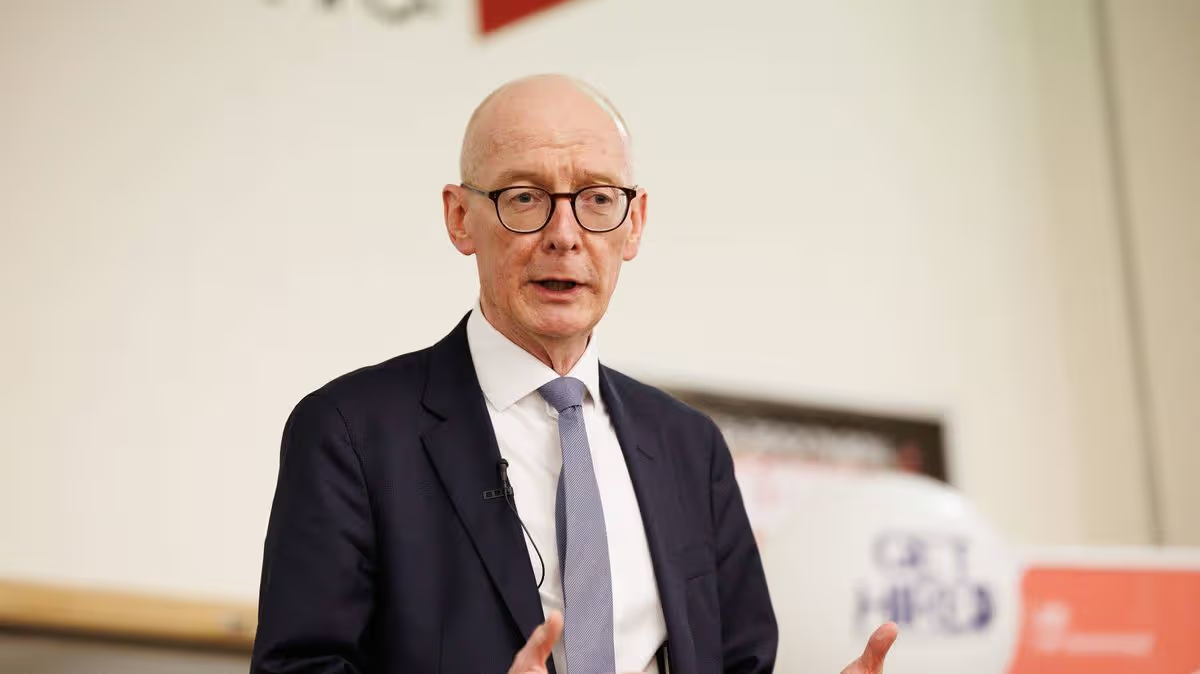
Secretary of State for Work and Pensions Pat McFadden(Image: PA)
Young people in Hull are set to gain from enhanced employment assistance at a new Youth Hub. The Hubs amalgamate employers and training providers to aid those aged between 16-24 into employment.
Hull has been identified as one of 80 sites earmarked for new Hubs. They offer a venue for Jobcentre Plus, local authority services, employers and training providers to support young people, all under one roof.
Each Youth Hub will adhere to a set of minimum standards. This aims to guarantee that young people can access on-site Jobcentre support along with mental health and housing support, skills and training opportunities, careers guidance and direct links to employers with job and apprenticeship openings.
This announced expansion is viewed as a stride towards having a Youth Hub in every part of Great Britain. Within three years, the Hubs are projected to be in over 360 areas.
Advertisement
The Government’s Work and Pensions Secretary Pat McFadden has lauded the expansion. He stated: “Today marks a major boost for young people with 80 new Youth Hubs.”, reports Hull Live.
“We are delivering support in every region, connecting young people with employers, and meeting them where they are so they can move into work, as we reform the welfare state into a working state. This is about breaking down barriers, opening doors and ensuring every young person can earn or learn, wherever they live.”
Did you know you can make Hull Live a preferred source of Hull news in Google, which will mean you get more of our breaking news, exclusives, and must-read stories straight away? Here’s more information about what this means and how to do it – you can also do it straight away by clicking here.
Nine of the 80 new Hubs have already launched, including facilities in Nottingham and Newcastle. The precise location of the Hull Hub remains under wraps for now.
Advertisement
The Youth Hub expansion forms part of a broader £2.5 billion commitment to the Youth Guarantee and reforms to the Growth and Skills Levy designed to prioritise young apprentices. Ministers say this combined package is expected to generate 200,000 employment and apprenticeship opportunities.















































You must be logged in to post a comment Login