
Business
Why Burger King Is Called Hungry Jack’s in Australia?

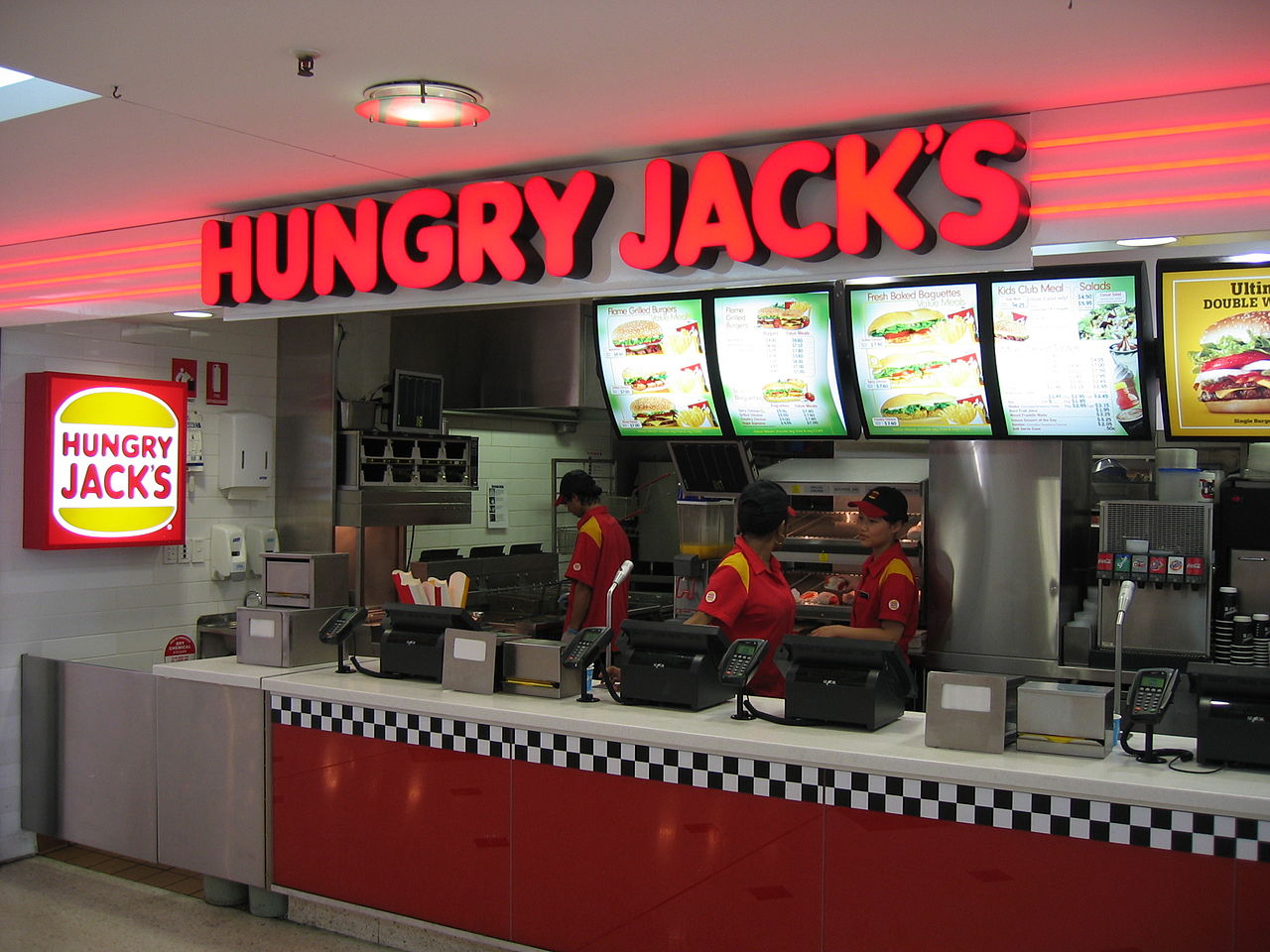
Walk into any of the more than 440 Hungry Jack’s restaurants scattered across Australia and you’ll order a Whopper, fries and a Coke — exactly as you would at a Burger King anywhere else in the world. Yet the iconic American fast-food chain operates under a completely different name Down Under, a quirk that has puzzled international visitors for decades.

The story behind the name traces back more than 50 years to a trademark clash, a clever workaround involving pancake mix and a long-running legal battle that ultimately strengthened the Australian operation. As of March 2026, Hungry Jack’s remains the sole master franchise of Burger King Corporation in Australia, proudly Aussie-owned and deeply embedded in local culture while serving the same flame-grilled burgers that define the global brand.
The tale begins in 1970 when Canadian-born entrepreneur Jack Cowin secured the rights to bring Burger King to Australia. Cowin, who had already helped introduce KFC to the country, planned to open the first outlet in 1971. But he quickly discovered a major obstacle: the “Burger King” name was already trademarked in Australia by a local businessman named Don Dervan.
Dervan, an American immigrant, had opened a small drive-in takeaway restaurant called Burger King in Adelaide, South Australia, as early as 1962. At the time, the U.S. Burger King had not yet trademarked the name in Australia, allowing Dervan to register it locally. By the early 1970s, his operation had grown to about 17 locations. Dervan refused to sell or relinquish the trademark, telling representatives he would part with everything except the name.
Unable to use its global brand, Burger King — then owned by Pillsbury — provided Cowin with a list of alternative names based on existing trademarks the company already held. Cowin selected “Hungry Jack,” the name of a popular Pillsbury pancake mix sold in the United States. He tweaked it slightly to the possessive “Hungry Jack’s” and launched the first Australian restaurant in Innaloo, Perth, on April 18, 1971.
The rebranding proved successful. Hungry Jack’s expanded rapidly, building a strong local identity while delivering the same menu items as its American counterpart. The name stuck, becoming a familiar part of Australian fast-food culture alongside rivals like McDonald’s.
The 1990s Legal Battle
The situation grew more complicated in the 1990s when the original Australian “Burger King” trademark held by Dervan’s business lapsed. Burger King Corporation saw an opportunity and attempted to enter the market directly under its own name. The company opened several standalone Burger King outlets, mostly in New South Wales, while simultaneously blocking Hungry Jack’s from expanding by denying approval for new locations under the franchise agreement.
This move sparked a bitter legal dispute. Hungry Jack’s Pty Ltd, controlled by Cowin, sued Burger King Corporation, alleging breach of the franchise agreement and bad faith conduct. In a landmark 2001 ruling, Australian courts sided with Hungry Jack’s. The judge found that Burger King had acted improperly by trying to undermine its own franchisee while competing directly against it.
The court awarded Hungry Jack’s substantial damages — reports at the time cited around $45 million to $71 million — and upheld the franchise agreement. Burger King ultimately withdrew its competing stores, which were rebranded as Hungry Jack’s. By 2002-2003, the parent company had effectively conceded the Australian market, leaving Hungry Jack’s as the undisputed operator.
The episode became a classic David-versus-Goliath story in Australian business circles, highlighting issues of good faith in franchise relationships. It also demonstrated the power of local branding and customer loyalty. By then, Australians had embraced Hungry Jack’s as their own, making a full switch to the Burger King name impractical and unnecessary.
Hungry Jack’s Today
In 2026, Hungry Jack’s operates as a wholly owned subsidiary of Competitive Foods Australia, still led by the Cowin family interests. The chain employs more than 19,000 people and serves over 1.7 million customers weekly, grilling more than 125 million Australian beef patties each year. Its menu closely mirrors global Burger King offerings, including the Whopper, but with occasional Australia-specific items and promotions that reflect local tastes.
The restaurants maintain the same flame-grilled burgers, generous portions and quick-service model that define the brand worldwide. Hungry Jack’s has adapted to modern trends with plant-based options, breakfast menus and digital ordering while preserving the core experience that made it popular.
The name difference occasionally confuses tourists, who search for “Burger King” only to be directed to Hungry Jack’s. Many international visitors discover the quirk through social media or travel forums and leave with stories of the “Australian Burger King that isn’t called Burger King.”
Legal experts note that the case remains a notable example in franchise and trademark law, illustrating how early registration of names can shape international expansion and how courts can protect long-standing franchise relationships from bad-faith actions by franchisors.
Cultural Impact and Legacy
Over five decades, Hungry Jack’s has become more than a fast-food outlet — it is a piece of Australian pop culture. The distinctive red and yellow branding, the “Have It Your Way” ethos (adapted locally) and memorable advertising campaigns have cemented its place alongside other homegrown or localized chains.
The story also serves as a cautionary tale for global brands: failing to secure trademarks in every market can lead to unexpected complications. Similar quirks have occurred with other companies, such as Woolworths, where an Australian retailer adopted the name after the U.S. version did not trademark it locally.
As of March 2026, there are no active plans to rebrand Hungry Jack’s to Burger King. The Australian operation thrives under its established name, benefiting from decades of customer familiarity and loyalty. The chain continues to expand selectively, focusing on prime locations and adapting to changing consumer preferences around sustainability, convenience and menu innovation.
For visitors and locals alike, stepping into a Hungry Jack’s offers the familiar taste of a Whopper while highlighting one of the more unusual chapters in global fast-food history. The name may differ, but the flame-grilled experience remains unmistakably consistent with Burger King restaurants worldwide.
The enduring success of Hungry Jack’s proves that sometimes the best-laid corporate plans can be upended by a single trademark — and that a clever alternative, combined with strong local management and customer support, can create something even more iconic in its own right.


Earnings call transcript: Blend Labs Q4 2025 sees revenue beat, EPS miss
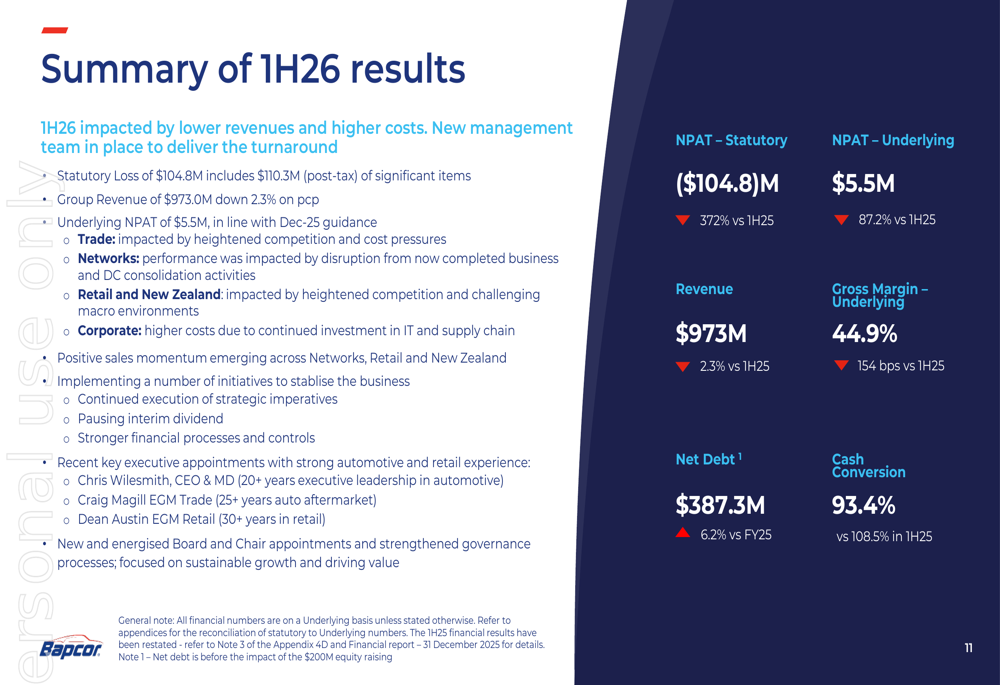
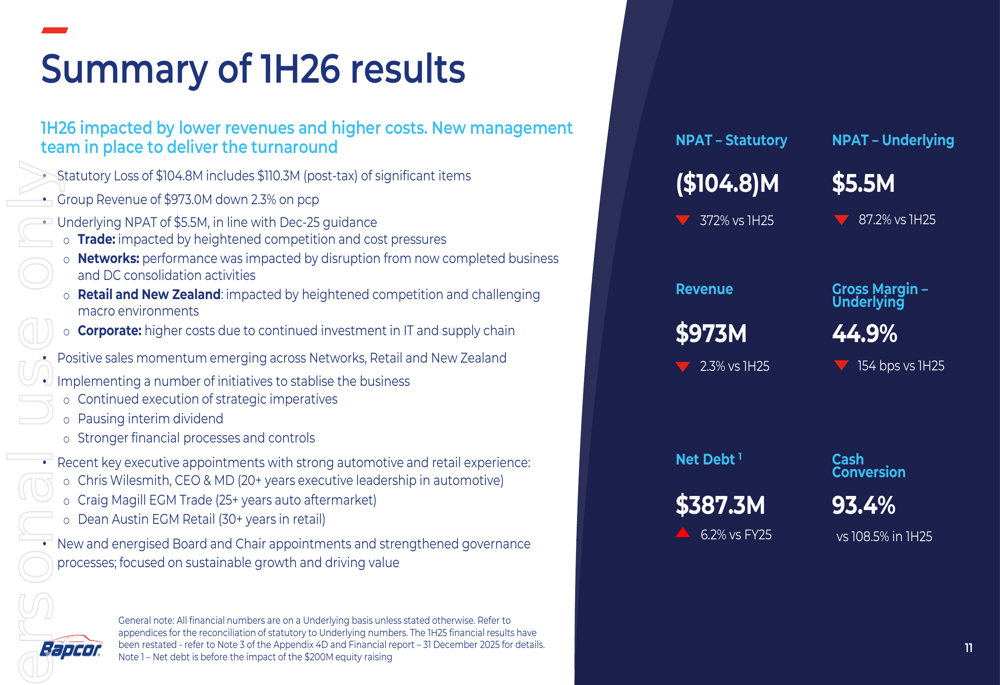
Bapcor 1H26 slides: new CEO outlines turnaround after $105M loss

Heard on the Street Recap: Weight of War
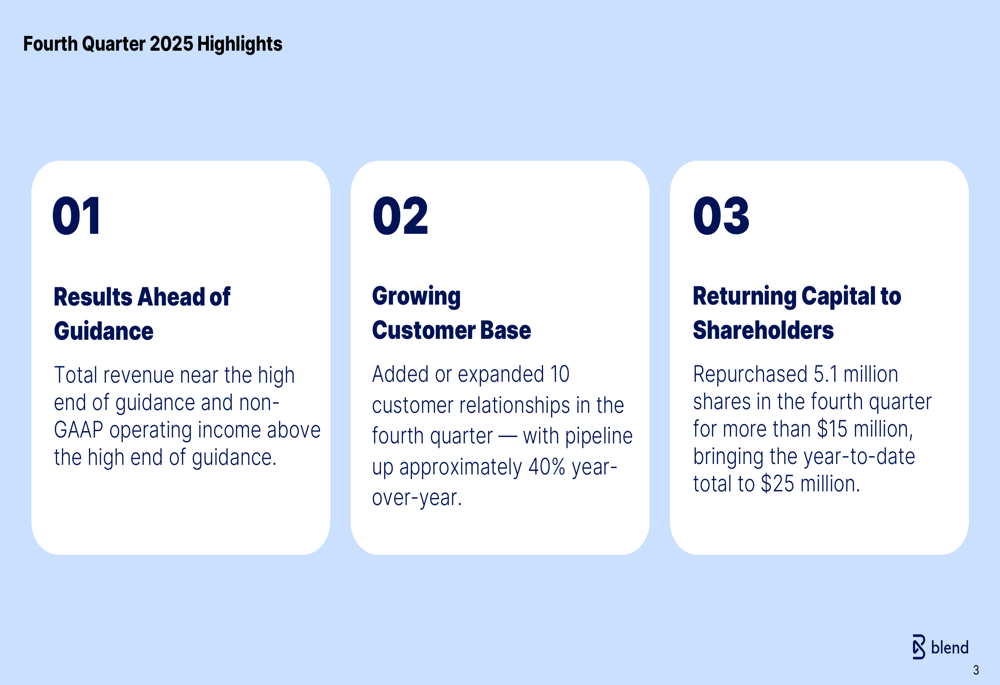
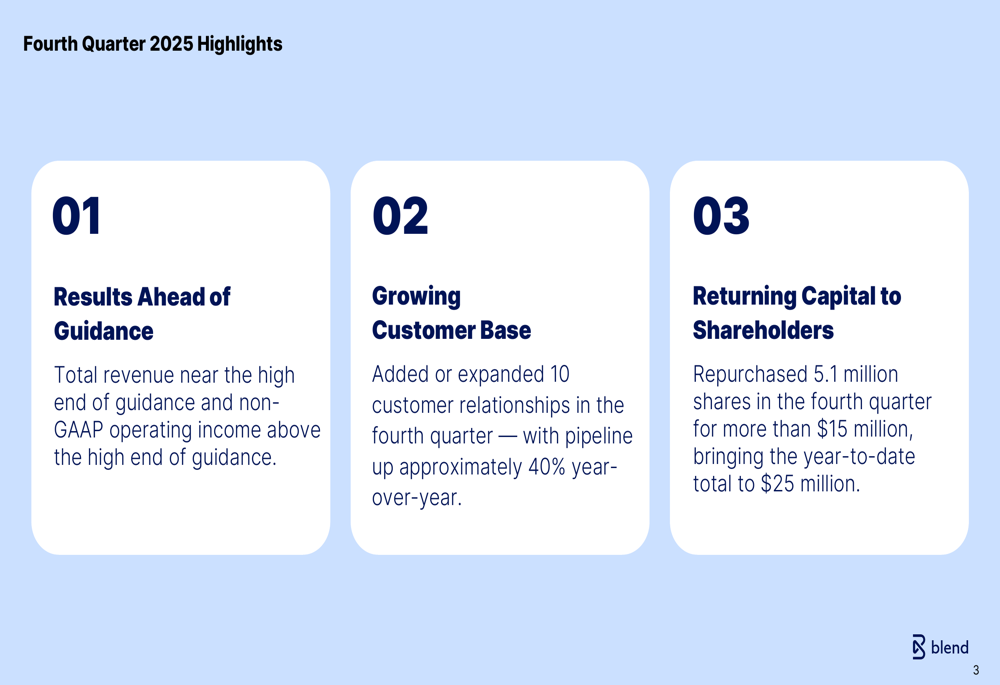
Blend Labs Q4 2025 slides: revenue beats, margins expand amid EPS miss

Cees ´t Hart
Good morning, ladies and gentlemen. It’ 10 a.m., so I propose that we open this meeting. Welcome. I’m Cees ´t Hart. I Chair the Supervisory Board, and I’m pleased to open this Annual General Meeting of Shareholders and welcome you all. I’m also pleased to welcome those following this meeting online.
Today, all members of the Executive Board are present. From left to right, they’re seated at the table, our COO, Jesus Echevarria; our CHRO, Myriam Beatove, CFO; Jorge Vazquez and our birthday boy, Sander van ‘t Noordende. And we hope that you’ll join us for coffee on his behalf. I’m not going to sing happy birthday because I’m not sure what the result would be, but welcome, but welcome Sander van ‘t Noordende on behalf of the Supervisory Board, alongside myself. From left to right, the Audit Committee Chair, Laurence Debroux, the Remuneration Committee Chair, Annet Aris and Jeroen Drost. The other members of the Supervisory Board are attending the meeting online. Also with us this morning is
Also with us this morning is Jacobina Brinkman from the accountancy firm,PricewaterhouseCoopers at 2D adoption of the 2025 financial statements. She’ll be happy to answer questions concerning the financial statements. Previous — prior to this, she’ll deliver a brief explanation about the annual audit process and the auditor’s report. We also have with us the Company Secretary, Jelle Miedema, who I hereby appoint as Secretary of the meeting and will first explain some procedural matters.

The yield rose more than 20 basis points this week, the most since May 2022, LSEG data showed.
The 10-year bond opened at 6.93% and traded in a range of 6.95% to 6.90%, according to Clearing Corporation of India data.
The yield on India’s 10-year government bond rose sharply Friday. This increase follows a cut in fuel excise duty which impacted the fiscal outlook. High state bond sales and rising oil prices also contributed to the jump. The benchmark yield has seen its biggest weekly rise since May 2022.
“The opening and follow-up action both were weak today. One would have expected some demand to emerge after yields touched 6.95%, but there was no retracement,” said Vijay Sharma, senior executive vice-president at PNB Gilts.
Traders are finding it hard to call specific levels in this kind of volatility, especially with the West Asia war ongoing and oil prices staying elevated.

 Agencies
 Brent crude oil prices rose by $1.87, or 1.73%, to $109.88 a barrel, LSEG data showed.
“We cannot project future levels in such volatile conditions, and we do not know what will happen overnight,” Sharma said. Bonds are also under strain as states sold debt worth nearly ₹1 lakh crore during the week, amid waning investor demand.
Financial institutions are expected to face mark-to-market losses as the benchmark yield has increased more than 30 basis points this quarter, from 6.60% on January 1.
Many dealers no longer expect the yield to fall to the 6.75% level, even if the West Asia war ends, which is the best-case scenario.

# Lefkofsky Eric P, CEO of Tempus AI, sells $7.7 million in stock
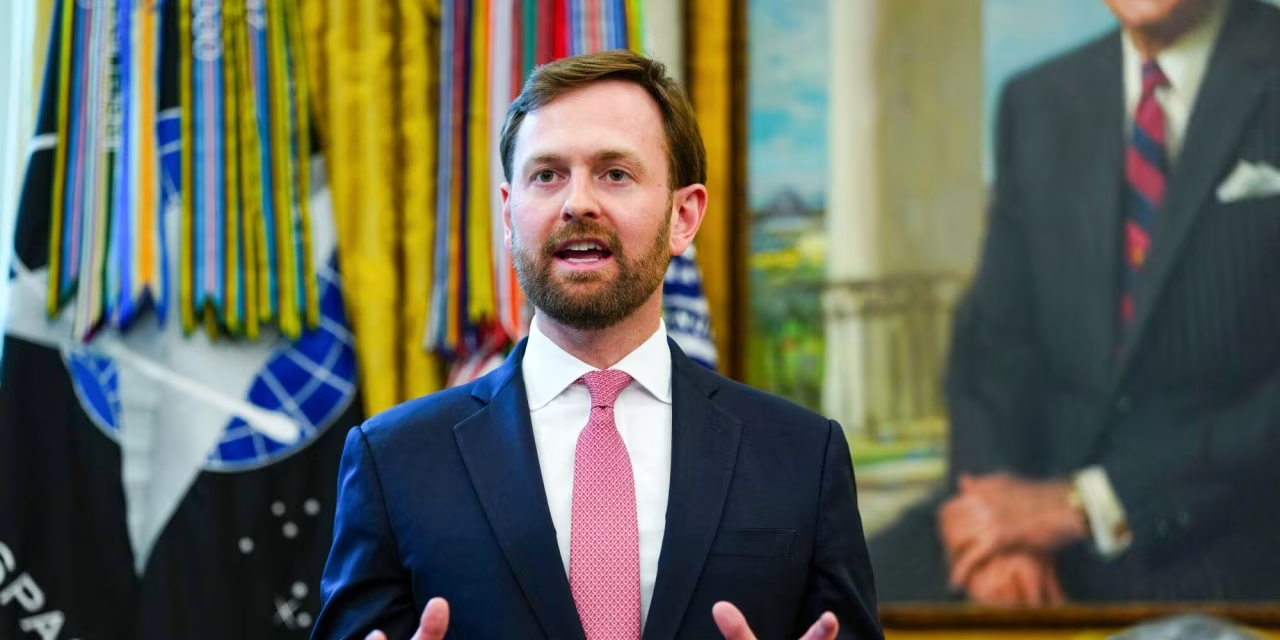
The Federal Trade Commission warned four leading payment processors against denying customers access to financial services due to their political or religious views.
The letters, sent by FTC Chair Andrew Ferguson to the chief executives of , Visa V -3.28%decrease; red down pointing triangle, PayPal PYPL -3.56%decrease; red down pointing triangle and Stripe, cited President Trump’s August executive order on “debanking,” which Ferguson said “makes clear that it is unacceptable to debank law-abiding citizens due to ‘political affiliations, religious beliefs, or lawful business activities.’”
Copyright ©2026 Dow Jones & Company, Inc. All Rights Reserved. 87990cbe856818d5eddac44c7b1cdeb8
Unknown Executive
To all the people that are today — that are outside the room. Please enter the room. We also welcome those that right now are listening through YouTube and watching through the YouTube channel, we will be starting momentarily.
Very well. So we will begin our assembly. First of all, we invite you to look at the following video that summarizes what — welcome — what Mineros is as a company.
[Presentation]
Unknown Executive
We were born in 1974 with our operation in Colombia. From that beginning, we had as a purpose to generate wellbeing for all through responsible and well-made mining, development and progress stories are stars of a journey, which is built with hard, with tangible facts that convey your commitment to sustainability, more than 50 years of history, learning and achievements that give us legacy of communities, family and the regions where we have presence. According to the new direction of growth that we set back then in 2013, we acquired Hemco in Nicaragua which allowed us to increase annual production and to continue bringing the very best of our mining model to new geographies, with new talent, capabilities and ways of doing things. We continue strengthening our presence in LatAm.
In 2021, we listed in FX, in Toronto, in — being the first company in Colombia to be listed in Toronto. In 2024, Sun Valley Investments enters as the main shareholder, opening a new horizon and new opportunities for growth and learning.
In 2025, we acquired 100% of the La Pepa Project in Chile, a new growth
Check out what’s clicking on FoxBusiness.com.
A reported “strong smell” at a key air traffic control facility disrupted flights Friday evening at major airports across the Washington, D.C. region for the second time in two weeks.
The Federal Aviation Administration (FAA) temporarily halted flights at Ronald Reagan Washington National Airport (DCA), Washington Dulles International Airport (IAD), Baltimore/Washington International Airport (BWI), Charlottesville–Albemarle Airport (CHO), and Richmond International Airport (RIC), the agency told FOX Business in an email.
The FAA said the disruptions were due to a “strong smell” at the Potomac Terminal Radar Approach Control (TRACON) facility, which manages airspace in the region.
GROUND STOP LIFTED AT MAJOR DC-AREA AIRPORTS AFTER CHEMICAL ODOR DISRUPTS AIR TRAFFIC CONTROL
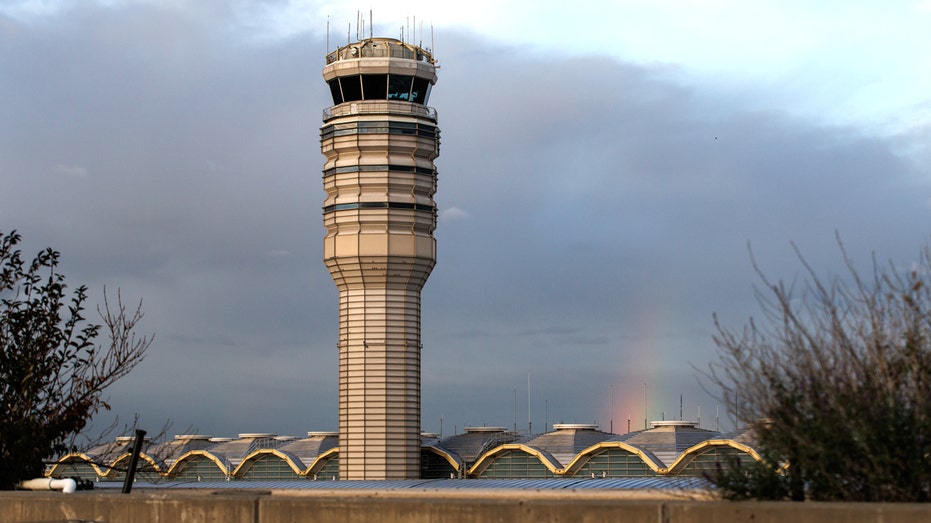
An FAA air traffic control tower at Ronald Reagan Washington National Airport in Arlington, Va. (Samuel Corum/Bloomberg via Getty Images / Getty Images)
It was not immediately clear what caused the smell.
Ground stops at Dulles, Reagan National, and BWI remained in effect until around 8 p.m. ET before being lifted, according to the FAA’s website.
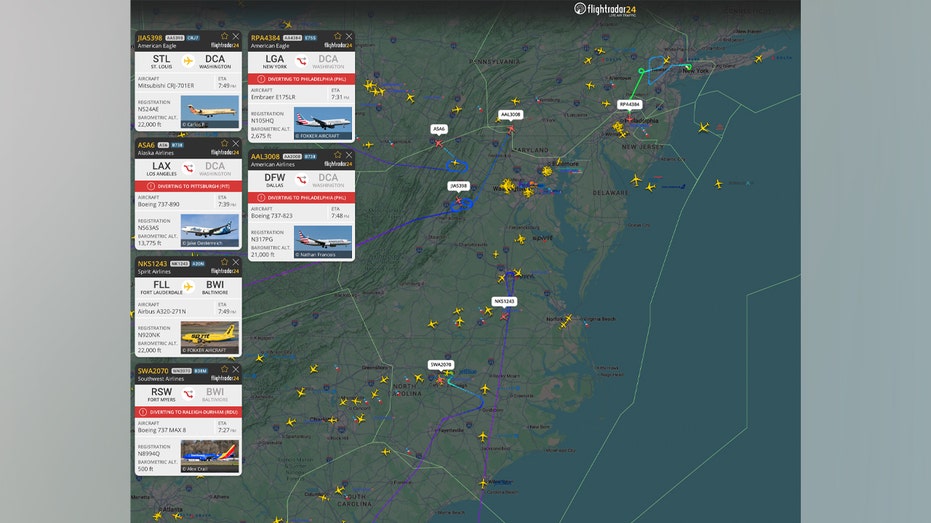
The FAA said the disruption was due to a “strong smell” at the Potomac Terminal Radar Approach Control (TRACON) center. (Flightradar24)
As of 8:30 p.m., Reagan National was experiencing ground delays, while BWI continued to see departure delays.
Earlier this month, a ground stop was similarly issued at several airports in the Washington, D.C., region after a chemical odor was detected at the TRACON facility.
FATAL LAGUARDIA COLLISION RENEWS FOCUS ON RUNWAY INCURSION RISKS ACROSS US
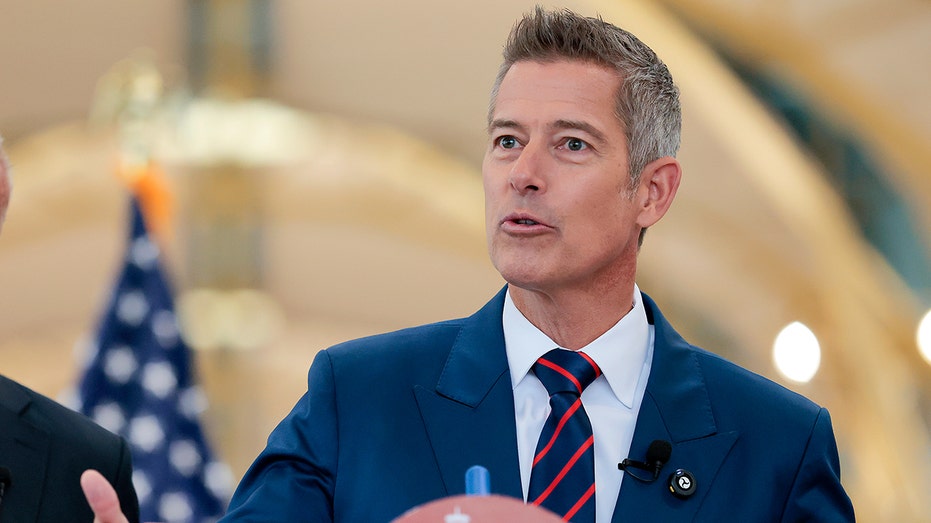
Transportation Secretary Sean P. Duffy speaks at a news conference at Ronald Reagan Washington National Airport. (Heather Diehl/Getty Images / Getty Images)
GET FOX BUSINESS ON THE GO BY CLICKING HERE
The temporary ground stop on March 13 similarly affected DCA, IAD, BWI and RIC, Transportation Secretary Sean Duffy said at the time.
Duffy said the smell came from an overheated circuit board, which has since been replaced.

10 Things You Can Do While Waiting in the TSA Line

Postcode Lottery winners in Coxhoe, Yarm and Whitby
Earnings call transcript: Blend Labs Q4 2025 sees revenue beat, EPS miss


-
 NewsBeat3 days ago
Manchester United reach agreement with Casemiro over contract clause amid transfer speculation
-

 Crypto World6 days ago
Best Crypto to Buy Now: Strategy Just Spent $1.57 Billion on Bitcoin During Fear While Early Investors Quietly Enter Pepeto for 150x Potential
-

 News Videos2 days ago
Parliament publishes latest register of MPs’ financial interests
-

 Crypto World6 days ago
Bitcoin Price News: Bhutan Sells $72 Million in BTC Under Fiscal Pressure, but the Smart Money Entering Pepeto Sees What the Market Does Not
-

 Sports5 days ago
Remo Stars and Kano Pillars Strengthen Survival Hopes in NPFL
-

 Sports5 days ago
Gary Kirsten Accuses Pakistan Cricket Board Of ‘Interference’, Mohsin Naqvi Responds
-

 Business5 days ago
No Winner in March 21 Drawing as Prize Rolls to $133 Million for Next
-

 Tech5 days ago
Give Your Phone a Huge (and Free) Upgrade by Switching to Another Keyboard
-

 Tech5 days ago
AI enters the chat: New Seattle dating app relies on tech to facilitate meaningful human connections
-

 News Videos5 days ago
Ch 9 Financial Management Part 1 | Detailed One Shot | Class 12 Business Studies Boards 2026
-

 Tech6 days ago
Today’s NYT Connections Hints, Answers for March 22 #1015
-

 Business1 day ago
Instagram, YouTube Found Responsible for Teen’s Mental Health Struggle in Historic Ruling
-

 Business6 days ago
Will Duke Basketball Win It All? Duke Basketball Enters Second Round as Third Favorite to Claim NCAA Title
-

 Sports5 days ago
2026 Kentucky Derby horses, odds, futures, preview, date: Expert who hit 12 Derby-Oaks Doubles enters picks
-
 NewsBeat6 days ago
Update on Wisbech river crash as search for teenage boy enters fifth day
-
 Entertainment5 days ago
Cynthia Bailey Dishes on ‘RHOA’ Season 17, Discusses Kandi
-

 Tech4 days ago
Samsung will soon let you control smart home devices from your car’s dashboard
-

 Fashion3 days ago
Does It Matter What You Wear When You’re Laid Off and Looking?
-
 NewsBeat3 days ago
Tesco is selling new Cadbury Dairy Milk bar and people can’t wait to try it
-

 NewsBeat5 hours ago
The Story hosts event on Durham’s historic registers
You must be logged in to post a comment Login