
Business
Record Wait Times Hit US Airports in 2026


The partial government shutdown affecting the Department of Homeland Security has pushed the Transportation Security Administration into crisis mode, producing the longest security wait times in the agency’s 24-year history as unpaid officers call out in record numbers and hundreds quit their jobs.

The funding lapse, which began Feb. 14, 2026, entered its 42nd day on Friday, forcing roughly 50,000 TSA officers to work without full paychecks while handling spring break travel volumes that are about 5% higher than last year. Acting TSA Administrator Ha Nguyen McNeill told a House committee this week that wait times at some major airports have exceeded four hours, with call-out rates surpassing 40% to 50% at multiple hubs.
More than 460 TSA officers have resigned since the shutdown started, according to Department of Homeland Security figures, compounding chronic staffing shortages. McNeill described the situation as “dire” and warned that some smaller airports could face temporary closures if absences continue climbing. Even if Congress reaches a funding deal soon, officials say it could take days or weeks to restore full operations as new hires require four to six months of training.
Impact on Travelers and Airports
Long lines have snaked through terminals at major hubs including Hartsfield-Jackson Atlanta International, George Bush Intercontinental in Houston, John F. Kennedy in New York and others. In Houston, some checkpoints operated with only two of eight lanes open, pushing waits toward four hours on certain days. Atlanta saw call-out rates near 38% on peak days, with lines spilling into concourses and baggage claim areas.
Airports have urged passengers to arrive three to four hours early for domestic flights and even earlier for international ones. Videos circulating on social media show frustrated travelers standing for hours, some missing flights despite early arrival. Airlines including Delta have warned customers of potential delays and, in one case, temporarily suspended special security lane access for members of Congress.
Conditions vary widely by airport and time of day. Some facilities report manageable waits of 15 to 30 minutes during off-peak hours, while others experience unpredictable surges. Third-party trackers and airport websites have become essential tools, as the official MyTSA app has faced limitations during the shutdown.
To ease pressure, the Trump administration deployed hundreds of Immigration and Customs Enforcement agents and other DHS law enforcement personnel to 14 major airports starting this week. The ICE officers, who continue receiving pay during the lapse, have assisted with crowd management and non-screening duties, though they are not trained to perform actual security checks. The move drew mixed reactions, with some lawmakers expressing concern over the optics and effectiveness.
Financial Strain on TSA Workforce
TSA officers missed their first full paycheck around mid-March and face another missed payday soon, with nearly $1 billion in unpaid wages accumulated by Friday. Union leaders say many screeners feel abandoned, with some sleeping in cars, donating plasma or taking second jobs to cover rent and bills. Call-out rates have tripled or quadrupled at affected airports compared with normal levels of about 4%.
The American Federation of Government Employees has highlighted the human cost, noting that officers continue performing essential security work despite the hardship. In previous shutdowns, including one in late 2025, more than 1,100 TSA officers eventually left the agency.
Recruitment and retention challenges predated the current crisis, but the funding standoff has accelerated attrition. TSA leaders have testified that the agency is already operating under strain from high travel demand and the need to modernize screening technology.
Political Stalemate in Congress
The shutdown stems from a partisan impasse over DHS funding, tied to broader disputes involving immigration enforcement reforms. Senate votes this week failed to advance proposals, with momentum toward a deal slowing ahead of a planned two-week congressional recess. House Republicans have passed multiple funding measures, but Senate Democrats have blocked them, citing concerns over immigration provisions.
Both sides have traded blame. Republican leaders accuse Democrats of reckless obstruction harming travelers and workers. Democrats counter that the standoff reflects deeper disagreements on spending priorities and oversight of agencies like ICE. President Donald Trump on Thursday announced plans to sign an executive order directing DHS to pay TSA officers immediately, though details on funding sources remain unclear.
Negotiators continue behind-the-scenes talks, with some optimism for a partial funding agreement that would cover most of DHS. Even a resolution, however, would not instantly resolve airport chaos due to lingering staffing gaps and training timelines.
Broader Security and Economic Risks
TSA officials have raised alarms about elevated security risks from reduced screening capacity and fatigued officers. The agency also faces challenges maintaining vigilance against evolving threats while managing daily passenger volumes.
Economically, the disruptions threaten tourism, business travel and airline revenues during a busy spring season. Smaller airports are particularly vulnerable, with some already consolidating lanes or adjusting hours.
Travelers are advised to check multiple sources for real-time wait times, including airport websites, third-party apps and airline alerts. Preparing liquids, electronics and documents in advance, along with enrolling in TSA PreCheck or CLEAR where possible, can help when lanes are open. Those with medical needs or traveling with families should request assistance early.
Outlook and Recovery Challenges
As the shutdown drags into its seventh week, the human and operational toll continues mounting. Union representatives warn that morale is at a low point and that long-term damage to the TSA workforce could persist even after funding resumes.
Experts note that the current episode underscores vulnerabilities in relying on essential workers during funding disputes. Previous shutdowns produced similar patterns of absences and resignations, but the overlap with spring break and higher travel demand has amplified effects this time.
For now, passengers face uncertainty at checkpoints nationwide. Airports with lower call-out rates or better local management have fared better, but major hubs remain under strain. Travelers are urged to build generous buffers into their plans and stay flexible.
Congress faces pressure to resolve the impasse before the recess, with public frustration over airport lines adding urgency. Whether through legislation or executive action, restoring pay and staffing stability is seen as critical to easing the immediate crisis and preventing further deterioration of national transportation security.
The TSA shutdown’s ripple effects serve as a stark reminder of how congressional gridlock can directly disrupt everyday American life, from family vacations to business trips. As negotiators work toward compromise, millions of travelers hope for swift resolution and a return to smoother journeys through America’s airports.


This is the forum for daily political discussion on Seeking Alpha. A new version is published every market day.
Please don’t leave political comments on other articles or posts on the site.
The comments below are not regulated with the same rigor as the rest of the site, and this is an ‘enter at your own risk’ area as discussion can get very heated. If you can’t stand the heat… you know what they say…
More on Today’s Markets:
Moderation Guidelines:
We remove comments under the following categories:
- Personal attacks on another user account
- Anti-Vaxxer or covid related misinformation
- Stereotyping, prejudiced or racist language about individuals or the topic under discussion.
- Inciting violence messages, encouraging hate groups and political violence.
Regardless of which side of the political divide you find yourself, please be courteous and don’t direct abuse at other users.
For any issue with regards to comments please email us at : moderation@seekingalpha.com.
Seeking Alpha’s Disclosure: Past performance is no guarantee of future results. No recommendation or advice is being given as to whether any investment is suitable for a particular investor. Any views or opinions expressed above may not reflect those of Seeking Alpha as a whole. Seeking Alpha is not a licensed securities dealer, broker or US investment adviser or investment bank. Our analysts are third party authors that include both professional investors and individual investors who may not be licensed or certified by any institute or regulatory body.
Business
Effort to restore Homeland Security funding founders in Congress, Trump says will pay airport security workers
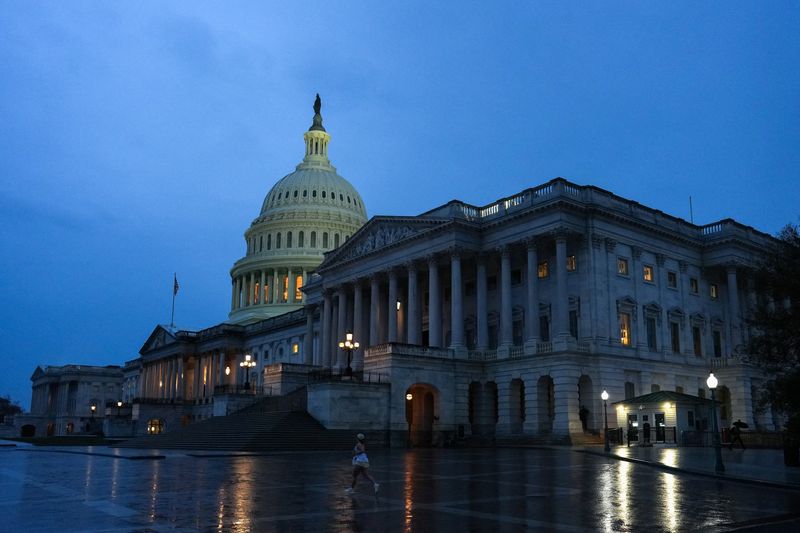

Effort to restore Homeland Security funding founders in Congress, Trump says will pay airport security workers

A List Of Worries That Risk Flipping Much Worse
In a notification issued Friday, the central bank asked authorised dealers of foreign currency to comply with the rule by April 10. The cap will be on their open position on the onshore deliverable market.
“Traders must be long on the dollar in a large way. This regulation basically curbs speculative positions of a bank, which will in turn reduce pressure on the rupee,” said a currency trader at a private sector bank.
“This is called the overnight open position which traders are allowed to keep in respect of all currencies involving the rupee. For a large bank, these positions can usually be at around $1 billion both in onshore and offshore markets,” he said.
RBI prescribes limits for open positions involving the rupee for exchange rate management and orderly development of the market, depending on market conditions.

The rupee has depreciated 3.5% since the start of the war and nearly 10% in this fiscal year. High crude oil prices are clouding the outlook for the local unit, with traders now expecting the rupee to touch 96-97 per dollar if oil prices remain around $115 per barrel.
“It has now been decided that authorised dealers shall ensure that their NOP-INR positions in the onshore deliverable market shall be maintained within $100 million at the end of each business day,” RBI said Friday in its master direction on risk management and inter-bank dealings.
Banks led by IDBI had sought a challenge bid to NARCL’s Rs 130 crore offer earlier this month, with due diligence for prospective bidders ending on March 23.
No bidder came forward till the end of the day on March 24, the final day for bids in the Swiss challenge auction, after which banks are moving ahead with the transfer to NARCL.
The NARCL offer means a 13% recovery for banks and will be in a mix of 15% cash and the rest in security receipts to be redeemed on recovery.
Kay Bouvet is a heavy engineering company engaged in the design, engineering and manufacturing of specialised equipment for strategic industries such as nuclear energy, power, defence and space. It has two manufacturing facilities in Maharashtra and Haryana.
CaixaBank, S.A. (CAIXY) Shareholder/Analyst Call – Slideshow

Adidas: A Buy At Undemanding Valuations As Inventory Set To Normalize

The brokerage said suppliers of energy in the Nifty, including companies in coal, electricity and upstream oil, will benefit from higher realisations. Meanwhile, demand for coal and electricity is likely to increase as users shift away from oil and gas as fuel inputs.
 Agencies
Upstream oil, coal and power make up energy mix in index, which will see higher realisations
ICICI Securities said oil and gas suppliers, such as oil marketing and gas companies-the most impacted-are largely outside the Nifty and are spread across the small-cap and mid-cap segments. Energy-intensive industrials such as chemicals, fertilisers and building materials are also concentrated in the small-cap and mid-cap segments and are significantly impacted by higher crude and gas costs.
Within consumption, sectors such as aviation, autos, and consumer goods could be impacted by higher input costs, although larger companies within the Nifty can pass on costs and consolidate market share.
The brokerage said services sectors, including IT, banks and financials, which account for a large weight in the index, do not rely much on oil and gas, limiting the overall impact.

Earnings call transcript: EverCommerce Q4 2025 earnings miss hits stock
Business
US Stock Market | Stocks tumble, Dow confirms correction territory, as Middle East tensions drag
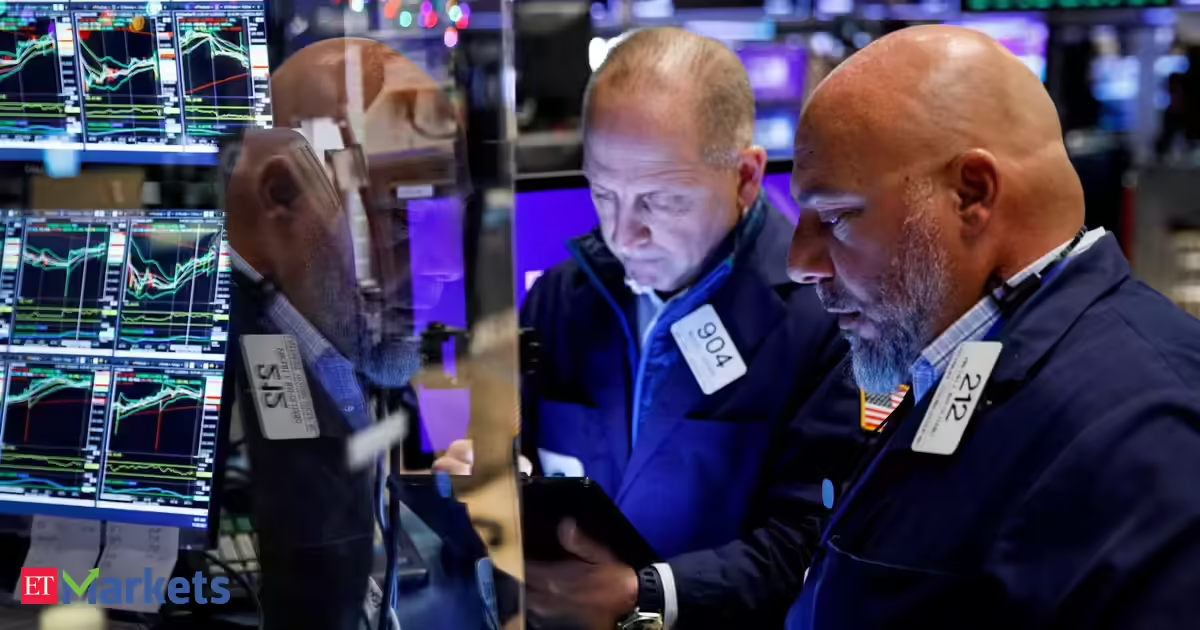
The Dow, S&P 500 and Nasdaq each suffered their fifth straight weekly decline, the longest such streak in nearly four years. The Dow is now down more than 10% from its February 10 record close, becoming the latest major index to confirm a correction, commonly defined as a drop of 10% from its prior high. The Dow follows the Nasdaq in crossing the correction threshold while the Russell 2000, which was the first on the correction path, confirmed it last Friday.
“Clearly, the overall tone has turned very negative and now we have broken down into correction territory,” said Ken Polcari, partner and chief market strategist at SlateStone Wealth in Jupiter, Florida.
“In the end, I would view this as a big opportunity, but would not be surprised if we see a drawdown anywhere between 15% to 20% before it is over.”
The Dow Jones Industrial Average fell 793.47 points, or 1.73%, to 45,166.64, the S&P 500 lost 108.31 points, or 1.67%, to 6,368.85 and the Nasdaq Composite lost 459.72 points, or 2.15%, to 20,948.36.
The CBOE Volatility Index, considered Wall Street’s fear gauge, was up 3.61 points to close at 31.05, its highest close since April 21.
Megacaps were the biggest drag on the benchmark S&P index, with Nvidia down 2.2% as the biggest weight, while Amazon dropped 4%. Software shares were also under renewed selling pressure, and the S&P 500 software and services index closed at its lowest level since November 6, 2023. Along with pressure from Amazon, consumer discretionary stocks dropped 3.1%, the worst-performing of the 11 major S&P sectors, as cruise operator Carnival slumped 4.3% after cutting its annual adjusted profit forecast. Fellow cruise operator Norwegian tumbled 6.9%. The surge in oil prices along with other products such as fertilizer as a result of the Iran war has fanned inflation fears and dampened expectations that the Federal Reserve and other central banks have room to lower interest rates. Money market participants are not pricing in any easing from the U.S. Federal Reserve this year, compared with expectations of two cuts before the conflict broke out, according to CME’s FedWatch Tool. Markets are now pricing in a roughly 25% chance for a hike of at least 25 basis points at the Fed’s October meeting. Philadelphia Fed President Anna Paulson acknowledged the risks to the economy from the war, but did not specify what it meant for monetary policy in the near term. U.S. consumer sentiment eased to a three-month low in March, raising concerns about the economy due to the Middle East war.
Declining issues outnumbered advancers by a 3.38-to-1 ratio on the NYSE and by a 3.62-to-1 ratio on the Nasdaq.
The S&P 500 posted 22 new 52-week highs and 27 new lows while the Nasdaq Composite recorded 25 new highs and 355 new lows.
Volume on U.S. exchanges was 18.13 billion shares, compared with the 20.4 billion average for the full session over the last 20 trading days.

Floyd “Money” Mayweather is Broke. His Ego Won’t Let Him Admit It.

Bolton man, 67, stopped and handcuffed by armed police

Politics And The Markets 03/28/26


-
 NewsBeat3 days ago
Manchester United reach agreement with Casemiro over contract clause amid transfer speculation
-

 Crypto World6 days ago
Best Crypto to Buy Now: Strategy Just Spent $1.57 Billion on Bitcoin During Fear While Early Investors Quietly Enter Pepeto for 150x Potential
-

 News Videos2 days ago
Parliament publishes latest register of MPs’ financial interests
-

 Crypto World6 days ago
Bitcoin Price News: Bhutan Sells $72 Million in BTC Under Fiscal Pressure, but the Smart Money Entering Pepeto Sees What the Market Does Not
-

 Sports5 days ago
Remo Stars and Kano Pillars Strengthen Survival Hopes in NPFL
-

 Sports5 days ago
Gary Kirsten Accuses Pakistan Cricket Board Of ‘Interference’, Mohsin Naqvi Responds
-

 Business6 days ago
No Winner in March 21 Drawing as Prize Rolls to $133 Million for Next
-

 Tech5 days ago
Give Your Phone a Huge (and Free) Upgrade by Switching to Another Keyboard
-

 Tech5 days ago
AI enters the chat: New Seattle dating app relies on tech to facilitate meaningful human connections
-

 News Videos5 days ago
Ch 9 Financial Management Part 1 | Detailed One Shot | Class 12 Business Studies Boards 2026
-

 Tech6 days ago
Today’s NYT Connections Hints, Answers for March 22 #1015
-

 Business1 day ago
Instagram, YouTube Found Responsible for Teen’s Mental Health Struggle in Historic Ruling
-

 Business6 days ago
Will Duke Basketball Win It All? Duke Basketball Enters Second Round as Third Favorite to Claim NCAA Title
-

 Sports5 days ago
2026 Kentucky Derby horses, odds, futures, preview, date: Expert who hit 12 Derby-Oaks Doubles enters picks
-
 NewsBeat6 days ago
Update on Wisbech river crash as search for teenage boy enters fifth day
-
 Entertainment5 days ago
Cynthia Bailey Dishes on ‘RHOA’ Season 17, Discusses Kandi
-

 Tech4 days ago
Samsung will soon let you control smart home devices from your car’s dashboard
-

 Fashion3 days ago
Does It Matter What You Wear When You’re Laid Off and Looking?
-
 NewsBeat3 days ago
Tesco is selling new Cadbury Dairy Milk bar and people can’t wait to try it
-

 NewsBeat6 hours ago
The Story hosts event on Durham’s historic registers
You must be logged in to post a comment Login