
News Beat
Lost network of pits found near Stonehenge may be ‘Britain’s largest prehistoric structure’ & date back over 4,000 YEARS

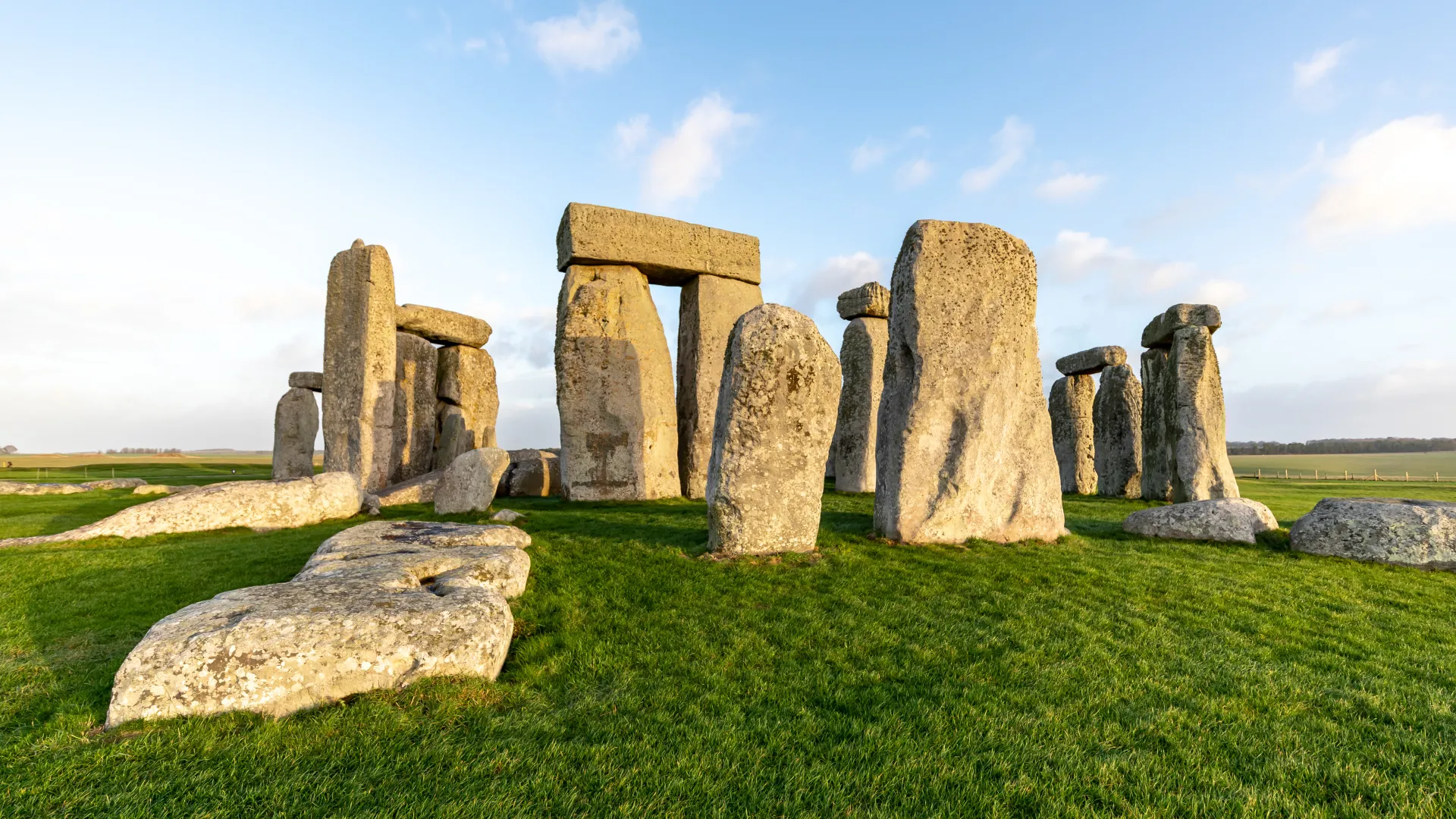
EXPERTS have uncovered secrets behind massive mysterious holes found close to Stonehenge.
And it could be one of the largest prehistoric structures in Britain.
The huge pits are arranged in a circle over two kilometres wide, surrounding the historic Durrington Walls and Woodhenge.
At least 16 were found.
Each one measures up to ten metres across and five metres deep.
They were first unearthed back in 2020 and baffled scientists have been trying to uncover more about them since.
Read more about Stonehenge


Archaeologists have gone a step further than simply mapping the holes out.
Using sophisticated technology, they have been able to confirm that the structure was made by humans.
Each were painstakingly dug and filled.
“The skill and effort that must have been required to not only to dig the pits, but also to place them so precisely within the landscape is a marvel,” said Professor Richard Bates from the University of St Andrews, who was part of the project.
“When you consider that the pits are spread over such a large distance, the fact they are located in a near perfect circular pattern is quite remarkable.”
Scientists have been able to work out how old it all is too.
The evidence reveal that the pits date back to the Late Neolithic period, which makes them more than 4,000 years ago.
As for the reason they were built, it’s believed that the ring may have served as some sort of boundary to enclose a sacred area with connections to the henge.
Experts from St Andrews, Birmingham, Warwick, Bradford, Glasgow and the University of Wales Trinity Saint David took part in the research.
“The recent work confirms that the circle of shafts surrounding Durrington Walls is without precedent within the UK,” said Professor Vince Gaffney, lead archaeologist from the University of Bradford.
“These features were not simply dug and abandoned – they were part of a structured, monumental landscape that speaks to the complexity and sophistication of Neolithic society.”
How did the stones get there?

It’s a question that has baffled researchers for centuries.
There are two types of stone at Stonehenge – the larger sarsen stones and the smaller ‘bluestones’.
The sarsens weigh roughly 25 tons each, with the largest stone, the Heel Stone, weighing about 30 tons.
The most popular theory suggests the rocks were moved into position using plant fibre ropes and a wooden A-frame.
Another theory, inspired by the Easter Island rock heads, argues the Stonehenge slabs were rocked from side to side with levers.



