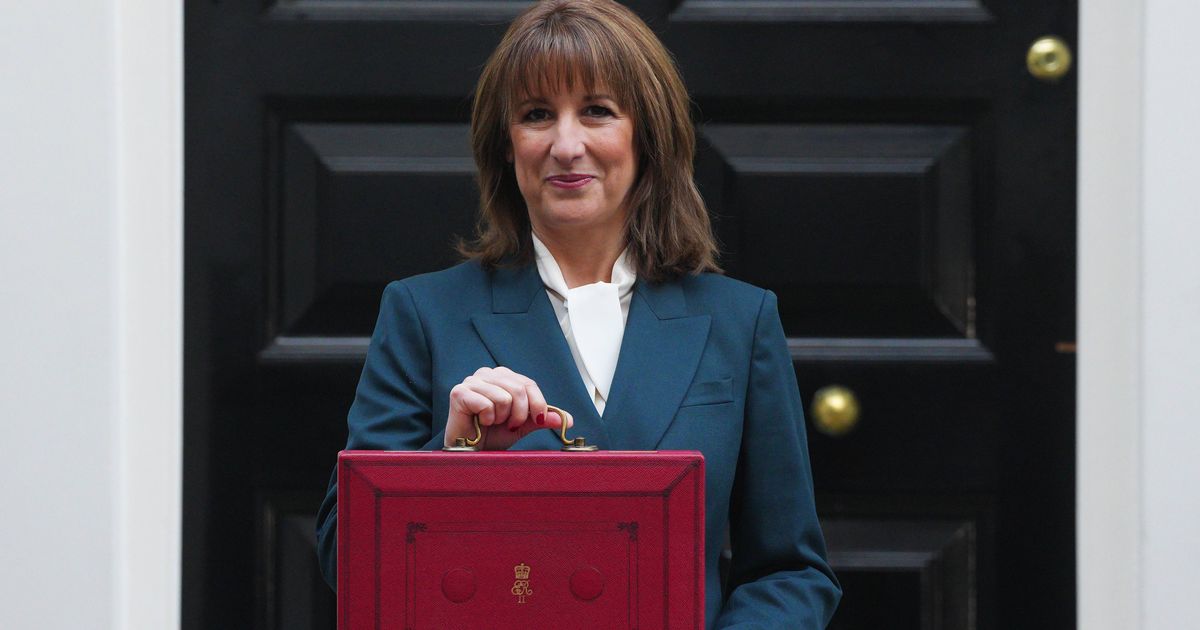
Chancellor Rachel Reeves announced benefit increases from April, with Universal Credit rising 6.2% in 2026 and the two-child benefit cap scrapped
Rachel Reeves unveiled £15 billion in benefits spending at Wednesday’s Budget, with enhanced payments for those receiving Universal Credit, Personal Independence Payment (PIP) and child benefits. The Chancellor scrapped the two-child benefit cap.
She framed the decision – estimated to cost taxpayers £3 billion annually – as a strategy to lift hundreds of thousands of children out of poverty.
Ms Reeves boosted payouts for “working-age benefits” such as Universal Credit, Personal Independence Payment (PIP) and child benefits in line with inflation, at 3.8 per cent, from April.
That measure is anticipated to cost as much as £6 billion, reports Wales Online. This means payments for more than 3.8 million PIP claimants are expected to rise by 3.8 per cent.
An increase of 3.8 per cent would see people on both the highest awards of the daily living and mobility components rise from £187.45 per week to £194.55.
Whilst all benefits increase annually in line with inflation, in 2026 an additional 2.3 per cent uplift on top of inflation is being added to Universal Credit owing to a law change this year, the Universal Credit Act 2025, which stipulates that the benefit will be increased by more than inflation each year until 2030.
With September’s inflation rate standing at 3.8 per cent, Universal Credit claimants will see an above-inflation rise of 6.2 per cent from April 2026, equating to an additional £6 weekly for a single claimant, or £312 annually. Government expenditure on welfare per year is forecast to climb from £333.0 billion in 2025/26 to £389.4 billion in 2029/30, according to the OBR.
This represents an increase from the previous projections of £326.1 billion in 2025/26 and £373.4 billion in 2029/30.
April will see the abolition of the two-child benefit cap, which restricts universal credit and tax credit claims to two children in most households, Rachel Reeves announced.
The Chancellor branded the two-child cap as a “policy that pushes kids into poverty more than any other”, stating that “it has failed” on the terms it was introduced under.
“I understand that many families are finding times hard, and that many have had to make difficult choices when it comes to having kids,” Ms Reeves told MPs.
“And there are many reasons why people choose to have children and then find themselves in difficult times – the death of a partner, separation, ill health, a lost job. I don’t believe children should bear the brunt of that.
“And neither can I in good conscience leave in place the vile policy known as the ‘rape clause’, requiring women to prove if their children have been conceived non-consensually to receive support.
“I’m proud to be Britain’s first female Chancellor of the Exchequer. I take the responsibilities that come with that seriously. I will not tolerate the grotesque indignity to women of the ‘rape clause’ any longer. It is dehumanising. It is cruel, and I will remove it from the statute book.”
Labour MPs shouted “more” and waved their order papers, as the Chancellor later added: “Because I am tackling fraud and error in our welfare system, because I am cracking down on tax avoidance, because I am reforming gambling taxation, I can announce today – fully costed and fully funded – the removal of the two child limit in full from April.”
The updated projections reflect the reversal of previously-announced reductions to winter fuel payments and health-related benefits, alongside the scrapping of the two-child limit within Universal Credit, the OBR said.
Expenditure on health and disability benefits per year is now projected to climb from £83.1 billion in 2025/26 to £103.6 billion in 2029/30.
This represents an increase from the earlier projections of £81.2 billion in 2025/26 and £97.7 billion in 2029/30.
Ministers confirmed the final figures in the Budget, with the changes expected to take effect in 2026.
The proposed modifications form part of a broader overhaul that will see Limited Capability for Work Related Activity payments cut in half from £432 monthly to £217, then frozen, whilst the standard rate receives an above-inflation increase.
According to Joseph Rowntree Foundation figures reported by the BBC, Universal Credit’s standard allowance would rise from £92 to £98 weekly for single claimants, or from £145 to £154 weekly for couples. The Chancellor declared her budget embodied “Labour values” by protecting lower earners from the steepest tax increases whilst backing welfare claimants.
This strategy guarantees those with the “broadest shoulders” bear the greatest burden.
The choice to increase benefits expenditure follows Ms Reeves being forced to abandon proposals for a welfare system transformation due to substantial resistance from backbenchers, with a price tag of roughly £5 billion. Proposals to withdraw winter fuel payments from millions of pensioners were also ditched, leading to an extra £1.25 billion expense for the government.
After the reversal on welfare changes, Ms Reeves allegedly chose not to completely eliminate the two-child cap on benefits. Nevertheless, she and Sir Keir Starmer have subsequently encountered mounting political pressure amid worries about possible leadership contests.
Proposals for a more restricted method of scrapping the two-child cap have been discarded in favour of total elimination. The chancellor will announce that the state pension will grow in accordance with earnings by 4.8 per cent, surpassing the inflation rate.
This indicates the full state pension rate will climb by £550, with a cost of approximately £7.8 billion.
Addressing welfare reform, Rachel Reeves informed the Commons: “Under the Conservatives, the cost of our welfare system increased by nearly one percentage point of GDP – equivalent to £88 billion over five years.
“The broken welfare system that we inherited wrote off millions of people as too sick to work and we will reform that system so that it is a system that does not count the cost of failure, but one that protects people who cannot work and empowers those who can.
“We have brought back face-to-face assessments for disability benefits. Those are the face-to-face assessments that the shadow chancellor (Sir Mel Stride) got rid of when he was work and pensions secretary and our changes we have made to Universal Credit will get 15,000 people back into work, a figure confirmed today.”
Ms Reeves also stated: “I’m grateful to the Federation of Small Businesses and Small Business Britain for their representations on apprenticeships and today I am announcing funding to make the training for under-25 apprenticeships completely free for small and medium-sized enterprises.
“I’m funding our new youth guarantee – providing £820 million over the next three years to give the young people who were let down by the Conservatives the support and opportunity they deserve, guaranteeing every young person a place in college, an apprenticeship or personalised job support … and, after 18 months, 18-21 year olds will be offered paid work, not benefits.”
Andy Haldane, former chief economist at the Bank of England, warned that markets could lose confidence in Reeves if she fails to rein in public expenditure: “Financial markets do need to see some signs that this government is capable of getting its arms around public spending. It really does. This is a vulnerable moment. There is a risk of a Wile E Coyote moment. The ground disappears beneath their feet in the financial markets. That is to be avoided at all costs.”
The Chancellor is set to tackle the gap in public finances through a series of tax rises after scrapping plans to increase the basic rate of income tax.
She raised roughly £10 billion by prolonging the freeze on income tax thresholds for an additional two years, until 2030, a policy typically described as a “stealth tax”. This will also mean that all recipients of the full state pension will pay income tax for the first time from 2028 onwards.
Ms Reeves has allegedly weighed up cuts to the Motability scheme, which allows claimants to use their personal independence payment towards new vehicles, though disability groups have warned about severe consequences should she go ahead with the extent of changes under consideration. In a piece for the Sunday Times last weekend, Ms Reeves expressed her ongoing commitment to “reform” of the welfare system.
However, this is unlikely to happen until after recommendations are released from Labour minister Stephen Timms’s review of disability benefits, and former cabinet minister Alan Milburn’s review of young people not in employment, both expected later next year.
Speaking last weekend, Mr Milburn stated there should be “no no-go areas” when it comes to reforming the benefits system, having previously argued that the UK cannot afford to back away from welfare changes.