
Business
New North Sea Oil Fields Risk Undermining UK Climate Leadership


Britain’s standing as a global climate leader faces a critical test as senior figures in international diplomacy have warned that any move to open new oil and gas fields in the North Sea would deal a severe blow to worldwide efforts to cut greenhouse gas emissions.
The government is facing mounting pressure from the oil industry, the Conservative opposition, Reform UK, certain trade unions and factions within the Treasury to grant new drilling licences. This comes despite research showing that the two largest remaining fields, Rosebank and Jackdaw, would displace just 1% and 2% respectively of the UK’s gas imports, offering negligible benefit to either prices or energy security.
The North Sea basin is now more than 90% depleted, and extracting its remaining pockets of hydrocarbons is becoming progressively more costly and energy-intensive. Yet the political appetite for new licensing persists, placing Ed Miliband, the energy security and net zero secretary, in an increasingly uncomfortable position.
Nicolas Stern, professor at the London School of Economics, cautioned that fresh drilling would be damaging on multiple fronts, bad for growth, bad for energy security and a harmful signal to the international community. Lord Stern pointed to Britain’s track record as the first G7 nation to commit to net zero by 2050 and its influential climate legislation, arguing that the world pays close attention when the UK changes course.
The backlash from the developing world has been particularly fierce. A senior African negotiator, speaking anonymously, said the continent would reject any UK expansion of oil drilling, describing it as fundamentally at odds with the Paris agreement. Mohamed Adow, director of the Nairobi-based Power Shift Africa thinktank, warned that approval of new projects would signal that short-term interests were being placed above long-term responsibility, setting a precedent that could prove impossible to contain.
The timing is especially sensitive. Britain has been one of the principal supporters of a global conference on fossil fuel transition taking place in Colombia later this month. However, Miliband will not attend, with climate envoy Rachel Kyte going in his place, a decision likely to disappoint campaigners who credited the energy secretary with brokering a last-minute deal at the Cop30 summit in Brazil last November.
Christiana Figueres, former executive secretary of the UN framework convention on climate change, acknowledged the geopolitical pressures driving the energy security debate but argued that expanding drilling risked locking in infrastructure that was increasingly out of step with the direction of the global energy system. True energy independence, she suggested, lay in scaling up clean domestic energy rather than prolonging the life of declining industries.
The strategic concern for Britain’s business community is clear. Many developing nations are weighing whether to exploit their own fossil fuel reserves rather than invest in renewables. If they choose the former path, the world would far exceed the carbon limits scientists say are necessary to avert the worst consequences of climate breakdown. A senior development official put the matter bluntly: developing countries are already asking why they should forgo their own resources if the UK will not do the same.
An ally of Miliband defended the government’s position, describing the decision to halt new exploration licences as a landmark stance for a major oil and gas producing nation. A government spokesperson confirmed that clean energy and climate action remained at the heart of the agenda, including what it called a world-leading commitment to stop issuing licences for new fields.
Whether that commitment holds in the face of political and industrial pressure will be one of the defining questions of Britain’s energy policy in the months ahead.

Jamie Young
Jamie is Senior Reporter at Business Matters, bringing over a decade of experience in UK SME business reporting.
Jamie holds a degree in Business Administration and regularly participates in industry conferences and workshops.
When not reporting on the latest business developments, Jamie is passionate about mentoring up-and-coming journalists and entrepreneurs to inspire the next generation of business leaders.


Ex-Rio Tinto CEO’s deep-sea mining firm to merge with Odyssey in $1 billion deal

Hamid Hosseini, spokesperson for Iran’s Oil, Gas and Petrochemical Products Exporters’ Union, stated that authorities intend to monitor all vessels passing through the waterway. “Iran needs to monitor what enters and exits the strait to ensure the ceasefire period is not used to move weapons,” Hosseini said. He added that while passage will remain open, inspections may slow transit times.
Under the proposed plan, ships would email their cargo information to receive a transit fee assessment, reportedly set at $1 per barrel. Payments would then be made using digital currencies. Hosseini noted that after the review, vessels would have a limited time to pay in bitcoin, a method designed to prevent tracing or seizure under sanctions.
This proposal indicates Tehran’s effort to maintain influence over a critical oil route while ceasefire talks continue. Reports also suggest Iran is encouraging vessels to sail closer to its coast, causing concern among Western and Gulf-linked operators.
Access through the Strait of Hormuz has become a central issue in efforts to extend the temporary ceasefire. Iran is pushing for tighter control, while Gulf nations and Western allies are opposing the move. U.S. President Donald Trump has stated that the ceasefire depends on Iran ensuring the “complete, immediate, and safe” reopening of the strait. Iran, however, has indicated that any reopening would follow a new security protocol coordinated with its military.

The uncertainty has led to hundreds of ships being stranded in the region. Estimates suggest between 300 and 400 vessels are waiting to leave the Gulf, with one industry executive comparing the buildup to a “traffic jam at sea.” Major shipping companies remain cautious. Maersk stated it is urgently assessing the evolving situation but warned that the ceasefire has not yet guaranteed safe passage. Experts believe that even under regulated conditions, only 10 to 15 ships may pass through daily, a significant reduction from the usual average of around 135, meaning delays could continue.
Any move granting Iran greater control over the strait is considered unacceptable by Gulf countries like Saudi Arabia, Qatar, and the UAE, given the route’s importance to global oil supplies. Ali Shihabi, a commentator with close ties to Saudi leadership, said uninterrupted access to the waterway must remain the priority. With negotiations ongoing and tensions persisting, the Strait of Hormuz remains at the center of a complex standoff involving security, diplomacy, and global energy flows.

Energy Transfer: 7.1% Yield And Potential Export Tailwinds Support Buy Case

M2 Communities CEO Mitch Roschelle breaks down rising mortgage rates as war-driven inflation hits affordability and raises questions about when relief may come on Varney & Co.
A Federal Reserve policymaker is warning that it could make sense to raise interest rates if inflation remains elevated above the Fed’s 2% target amid uncertainty over the duration of the oil and gas price shock.
Federal Reserve Bank of Cleveland President Beth Hammack said in an interview with The Associated Press that she sees the central bank leaving the benchmark federal funds rate at its current level of 3.5% to 3.75% “for quite some time.”
Hammack also cautioned that while the Fed’s next rate move could be a cut due to labor market concerns, there is a possibility that it could be to hike rates to curb stubborn inflation.

Cleveland Fed President Beth Hammack said that the Fed may need to hike rates to tame inflation, or may be compelled to cut rates to support the labor market. (Victor J. Blue/Bloomberg via Getty Images)
“I can foresee scenarios where we would need to reduce rates… if the labor market deteriorates significantly,” Hammack told the AP. “Or I could see where we might need to raise rates if inflation stays persistently above our target.”
NY FED PRESIDENT JOHN WILLIAMS WARNS IRAN-DRIVEN OIL SPIKE COULD RIPPLE THROUGH ECONOMY
Hammack noted that the Cleveland Fed’s estimates of inflation show that it could increase to 3.5% in April. That would amount to the highest inflation reading since 2024 and a significant increase from the consumer price index’s most recent reading of 2.4% in February.
“Inflation has been running above our target for more than five years now,” Hammack said in the interview, adding that a further increase would mean inflation is “moving in the wrong direction, away from our 2% objective.”
Hammack said that the surge in gas prices caused by the Iran war is “the No. 1 thing” she hears about when talking to people within her district, adding that she and other policymakers “know that causes a lot of pain personally, as it eats up a bigger and bigger share of people’s paychecks. So it’s important for us to stay focused on it.”
POWELL WARNS OF NEW ENERGY SUPPLY SHOCK AS GAS PRICES SURGE: ‘NO ONE KNOWS HOW BIG IT WILL BE’
The Cleveland Fed president – who is also a voting member of the central bank’s Federal Open Market Committee (FOMC) that makes interest rate decisions – said that the Iran war’s economic impact will depend on how long it lasts.
If higher energy costs prompt consumers to pull back on their spending, it could slow economic growth and cause businesses to conduct layoffs, prompting the Fed to cut interest rates to support the labor market.
IRAN WAR COULD PUSH INFLATION HIGHER THIS YEAR, GOLDMAN SACHS SAYS

Federal Reserve Chair Jerome Powell said last month that it was uncertain how the Iran war would impact the economy. (Amanda Andrade-Rhoades/Reuters)
Fed policymakers will get two sets of fresh inflation data this week, starting with the Commerce Department’s personal consumption expenditures (PCE) index for February which will be released on Thursday. The PCE index is the Fed’s preferred inflation gauge and the February edition of the report was delayed by the government shutdown.
Additionally, the Labor Department will release the consumer price index (CPI) inflation report for March on Friday.
GET FOX BUSINESS ON THE GO BY CLICKING HERE
The FOMC will hold its next monetary policy meeting on April 28–29, when it will announce whether the benchmark interest rate will be held steady, increased or reduced.
Policymakers left interest rates unchanged at their most recent meeting in March, after doing the same at the previous FOMC meeting in January.

Morgan Stanley predicts bull market for Indian stocks

“But if this [reverse migration] continues, it will have [a] significant impact, especially on micro, small and medium enterprises, particularly in labour-intensive sectors such as construction, textiles and manufacturing,” says Arvind Goel, co-chairman of the industrial relations committee of the Confederation of Indian Industry.

Automotive expert Mike Caudill analyzes the future of electric vehicles in the U.S. as rising gas prices shift consumer interest on ‘The Bottom Line.’
Ford Motor and other U.S. automakers have asked for relief from aluminum tariffs after fires at a major American factory created supply bottlenecks for vehicles, though the Trump administration so far has rejected the requests, according to a report.
The Wall Street Journal first reported that Ford petitioned the Trump administration for assistance, citing people with knowledge of the conversations.
The requests have come in recent weeks, according to the report, with the carmaker asking the government for relief from duties at least until Novelis’ aluminum rolling plant in Oswego, New York, returns to full service following two fires last year.
The Oswego facility, which is the largest domestic supplier of aluminum sheets for the U.S. automotive industry, is likely to remain offline until this June.
DEM SENATOR PUTS TRUMP ON NOTICE OVER ‘UNLAWFULLY COLLECTED’ TARIFF FUNDS AFTER SCOTUS LOSS

A Ford logo on a Ford F-150 pickup truck for sale in Encinitas, California, on Oct. 20, 2025. (Reuters/Mike Blake/File Photo / Reuters Photos)
The government has so far not budged, the report said, adding that the discussions are part of ongoing talks about the impact of President Donald Trump’s tariffs.
Trump officials told the companies they had already received some relief from national security tariffs last year, when major automakers were allowed to recoup part of the 25% duties on auto parts, the report said.

A Ford logo is seen on the Ford Motor World headquarters in Dearborn, Michigan, on March 12, 2025. (Reuters/Rebecca Cook/File Photo / Reuters Photos)
ONE YEAR LATER, TRUMP TARIFFS GENERATED BILLIONS AS REFUNDS TAKE SHAPE
A White House official told FOX Business via email that “the Administration is committed to a nimble and nuanced approach to reshoring manufacturing that’s critical to our national and economic security. While Ford and other automakers have raised supply concerns in light of the Novelis incident, they have not requested tariff relief on this matter in a particularly pronounced way.”
FOX Business has also reached out to Ford Motor.
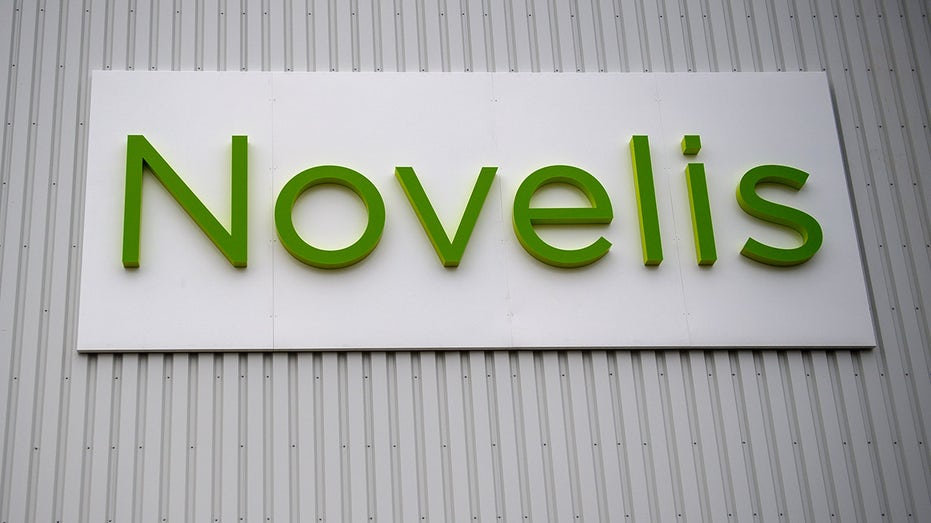
“Novelis” can be read on the facade of the factory building of the company’s recycling center. Novelis is a manufacturer of rolled aluminum products. ( Klaus-Dietmar Gabbert/picture alliance via Getty Images / Getty Images)
Novelis has offset lost production by sourcing aluminum from its plants in South Korea and Europe, though those imports now face a 50% tariff under the Trump administration.
| Ticker | Security | Last | Change | Change % |
|---|---|---|---|---|
| F | FORD MOTOR CO. | 12.14 | +0.60 | +5.24% |
| STLA | STELLANTIS NV | 7.83 | +0.41 | +5.45% |
| GM | GENERAL MOTORS CO. | 76.10 | +3.33 | +4.58% |
GET FOX BUSINESS ON THE GO BY CLICKING HERE
The plant also supplies Stellantis and General Motors, but Ford is its largest customer, as its trucks, such as the F-150, rely heavily on aluminum bodies.
Reuters contributed to this report.

Shares of AXT Inc. (NASDAQ: AXTI) skyrocketed more than 19% midday Wednesday, climbing to $54.10 as investors piled into the semiconductor materials maker on renewed optimism over its role in supplying critical substrates for artificial intelligence infrastructure and data center expansion.

The stock, which manufactures compound semiconductor wafers including indium phosphide (InP), gallium arsenide (GaAs) and germanium substrates, jumped $8.64 or 19.01% from the previous close by late morning trading on April 8, 2026. Volume surged well above average, reflecting intense retail and institutional interest in small-cap AI plays amid a broader technology sector recovery.
AXT, based in Fremont, California, specializes in substrates essential for high-speed optical networking, 5G/6G communications, photonics and advanced AI chips. Indium phosphide, in particular, has emerged as a key material for high-performance lasers and transceivers used in hyperscale data centers powering generative AI workloads. Management has repeatedly highlighted strong InP demand tied directly to the AI build-out, with the company positioning itself to capture growth as cloud giants scale infrastructure.
The dramatic intraday move extended a highly volatile period for AXTI. The stock has experienced wild swings in recent weeks, including multiple double-digit percentage gains and sharp pullbacks. Earlier in March and late February, shares rallied on positive commentary around export permit improvements from China and expectations for sequential revenue growth in the first quarter. A notable dip followed an earnings-related reaction in early April, but bargain hunters quickly re-entered, driving the latest surge.
On April 7, AXT announced it would release first-quarter 2026 financial results after market close on April 30, followed by a conference call at 1:30 p.m. PT. The timing fueled speculation that investors are positioning ahead of potentially strong guidance or upbeat commentary on InP demand. In prior updates, CEO Morris Young noted improving export permit receipts in early 2026 and the company’s efforts to double indium phosphide production capacity to meet customer needs.
Analysts and market observers pointed to AXT’s niche but strategically important position in the semiconductor supply chain. While the company remains unprofitable — posting net losses in recent quarters — its products support technologies at the heart of the AI revolution. InP substrates enable faster data transmission with lower power consumption, critical for optical interconnects in AI servers and networking gear from companies like Broadcom, Cisco and others ramping up AI infrastructure.
“Demand for indium phosphide continues to be driven by AI infrastructure build-out,” Young said in earlier remarks, citing a substantial backlog and expectations for sequential growth. Some reports indicated the company’s backlog exceeded $60 million in recent periods, with particular strength in InP for photonics applications.
The company’s challenges include heavy reliance on operations in China through its Tongmei subsidiary, subject to U.S.-China trade tensions and export licensing requirements for certain materials. Earlier in 2026, AXT adjusted its fourth-quarter 2025 revenue guidance downward due to slower-than-expected indium phosphide export permits, contributing to volatility. However, management signaled improvement in early 2026, helping restore investor confidence.
AXT reported fourth-quarter 2025 revenue of approximately $23 million, with full-year revenue around $88 million. Gross margins remained under pressure, and the company continued to report net losses, reflecting investments in capacity expansion and ongoing operational costs. Analysts project continued losses in Q1 2026, with consensus estimates around a loss of $0.05 per share on revenue near $26-27 million, though beats on guidance could catalyze further upside.
Wall Street opinions remain mixed. Some firms maintain Buy ratings, citing long-term potential in AI photonics, while others have expressed caution over valuation after the stock’s massive run and persistent unprofitability. Consensus price targets have varied widely, with some significantly below recent trading levels, highlighting the speculative nature of the name. The stock has seen extraordinary gains over the past year, at times multiplying several-fold on AI enthusiasm, but also enduring sharp corrections.
Insider activity added another layer of intrigue. In March, CEO Morris Young sold shares worth approximately $1.4 million, and other executives and directors executed planned sales. Such transactions often occur for diversification or liquidity reasons and do not necessarily signal negative outlooks, though they draw attention in a high-volatility stock.
The broader market context supported the rally. Technology stocks rebounded Wednesday as investors rotated toward growth-oriented names with AI exposure. Smaller semiconductor and materials plays like AXT often amplify moves in the sector due to lower float and high retail interest.
For AXT, the path forward hinges on execution. The company continues efforts to expand capacity while navigating geopolitical risks. Its STAR Market IPO process for the Tongmei subsidiary in China remains under regulatory review, a development that could eventually provide additional capital or strategic flexibility if approved.
Investors will watch the April 30 earnings closely for updates on revenue trends, InP shipment volumes, margin improvement and any color on full-year 2026 outlook. Positive surprises on demand or permit progress could sustain momentum, while any softening in guidance or renewed export hurdles might trigger profit-taking.
AXT’s products serve diverse end markets beyond AI, including wireless communications, solar cells, LEDs and aerospace. However, the current narrative centers almost entirely on its potential role in the data center AI boom. As hyperscalers and networking firms accelerate deployments of 800G and 1.6T optical transceivers, demand for high-quality InP substrates is expected to grow substantially.
Critics note that AXT faces competition from larger, more diversified players such as Sumitomo Electric and others with stronger balance sheets. Achieving consistent profitability remains a key hurdle, with negative gross margins in some recent periods underscoring the need for scale and operational efficiencies.
Despite the risks, the stock’s performance illustrates the market’s appetite for pure-play exposure to emerging technologies. Retail traders have driven much of the recent volatility, with social media and trading forums buzzing about AXTI as an “AI sleeper” stock.
As trading continued Wednesday, attention turned to whether the surge would hold into the close or face resistance near recent highs. Technical analysts noted key support and resistance levels shifting rapidly amid the momentum.
For long-term investors, AXT represents a high-risk, high-reward bet on the semiconductor materials supply chain. The company’s ability to scale production, secure stable export permissions and improve financial metrics will determine whether the current enthusiasm translates into sustainable value creation.
In the near term, the buildup to Q1 earnings on April 30 provides the next major catalyst. With shares already reflecting significant optimism, any disappointment could lead to a sharp reversal, consistent with the stock’s history of dramatic swings.
AXT Inc. employs hundreds worldwide and operates manufacturing facilities in the U.S. and China. Its substrates are foundational components in compound semiconductors that enable faster, more efficient electronics critical to modern connectivity and computing.
As the AI infrastructure supercycle unfolds, niche suppliers like AXT find themselves in the spotlight. Wednesday’s 19% surge served as the latest reminder of how quickly sentiment can shift in this volatile corner of the market.


Donovan Jones is an IPO research specialist with 15 years of experience analyzing investment opportunities for U.S. IPOs.He also leads the investing group IPO Edge, which offers actionable information on growth stocks through first-look IPO filings, previews on upcoming IPOs, an IPO calendar for tracking what’s on the horizon, a database of U.S. IPOs, and a guide to IPO investing to walk you through the entire IPO lifecycle – from filing to listing to quiet period and lockup expiration dates. Learn more
Analyst’s Disclosure: I/we have no stock, option or similar derivative position in any of the companies mentioned, and no plans to initiate any such positions within the next 72 hours. I wrote this article myself, and it expresses my own opinions. I am not receiving compensation for it (other than from Seeking Alpha). I have no business relationship with any company whose stock is mentioned in this article.
Seeking Alpha’s Disclosure: Past performance is no guarantee of future results. No recommendation or advice is being given as to whether any investment is suitable for a particular investor. Any views or opinions expressed above may not reflect those of Seeking Alpha as a whole. Seeking Alpha is not a licensed securities dealer, broker or US investment adviser or investment bank. Our analysts are third party authors that include both professional investors and individual investors who may not be licensed or certified by any institute or regulatory body.

Earnings call transcript: RPM International Q3 2026 beats expectations, stock surges

Iran wants tolls paid in bitcoin for Strait of Hormuz passage

4 Great Modern Comedy Movies That You Probably Forgot About

Dan Levy in Grey Pinstripe Versace Spring 2026 Blazer, Brown Leather Pants, and Silk Shirt at Big Mistakes Premiere


-

 NewsBeat6 days ago
Steven Gerrard disagrees with Gary Neville over ‘shock’ Chelsea and Arsenal claim | Football
-

 Business6 days ago
No Jackpot Winner and $194 Million Prize Rolls Over
-

 Fashion5 days ago
Weekend Open Thread: Spanx – Corporette.com
-

 Crypto World7 days ago
Gold Price Prediction: Worst Month in 17 Years fo Save Haven Rock
-

 Business4 days ago
Expert Picks for Every Need
-

 Business3 days ago
Three Gulf funds agree to back Paramount’s $81 billion takeover of Warner, WSJ reports
-

 Sports4 days ago
India men’s 4x400m and mixed 4x100m relay teams register big progress | Other Sports News
-

 Business7 days ago
Login and Checkout Issues Spark Merchant Frustration
-

 Tech19 hours ago
How Long Can You Drive With Expired Registration? What Florida Law Says
-
Business3 days ago
No Jackpot Winner, Prize to Climb to $231 Million
-

 Tech6 days ago
Commonwealth Fusion Systems leans on magnets for near-term revenue
-

 Fashion2 days ago
Massimo Dutti Offers Inspiration for Your Summer Mood Board
-

 Tech7 days ago
Drawing Tablet Controls Laser In Real-Time
-

 Crypto World7 days ago
Ripple rolls out enterprise crypto treasury platform for corporates
-

 Fashion24 hours ago
Let’s Discuss: DEI in 2026
-
Politics5 days ago
Wings Over Scotland | The quality of mercy
-

 Crypto World7 days ago
Why It’s Partnering, Not Issuing
-
 Sports7 days ago
Steal Gary Woodland’s subtle power move for longer drives
-
Sports7 days ago
Tom Pelissero Drives the Final Nail in the Coffin
-
 Tech7 days ago
Battery Tester Outperforms Cheaper Options
You must be logged in to post a comment Login