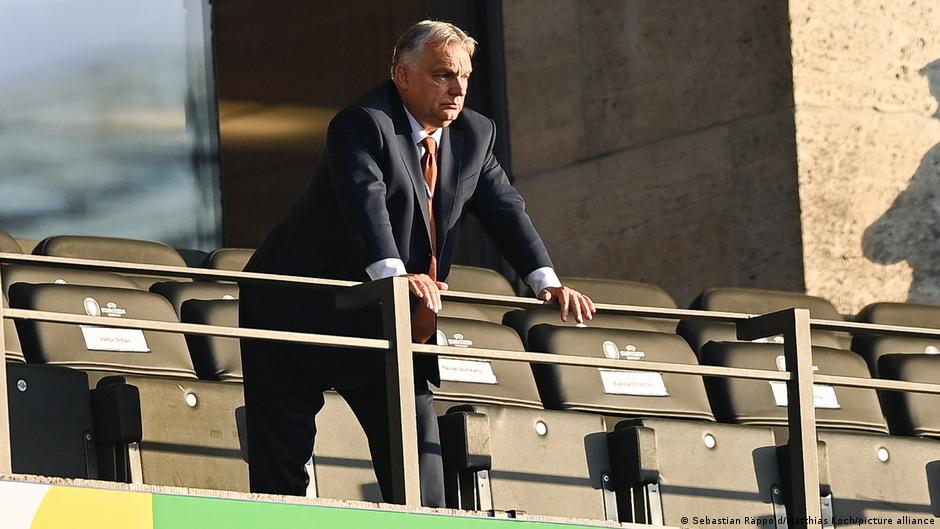
Amid the rhetoric and rabble rousing of JD Vance’s promotional tour of Budapest in support of the “fantastic” Hungarian Prime Minister Viktor Orban, the significance of one of the venues may have been lost on many.
The US vice president addressed a pre-election rally on Tuesday at the the MTK Sportpark in Budapest. The venue, opened in 2025, is used by various sporting departments of the MTK Budapest club, whose football team are one of Hungary’s most successful, with 23 national titles. MTK’s president is Tamas Deutsch, a Member of European Parliament and member of Orban’s Fidesz party.
Vance targets EU while campaigning for Orban in Hungary
“I don’t think that is accidental staging,” Gyozo Molnar, a professor of sociology of sport and exercise at the University of Worcester, and originally from Hungary, told DW.
Advertisement
“The stadium is Orban’s preferred arena, quite literally. More broadly, the vast network of football clubs, academies, and infrastructure projects across the country represents a material patronage network that ties local communities and local elites to Fidesz. That has electoral consequences, particularly in rural constituencies.”
Heavy state influence in Hungarian clubs
MTK are far from alone in having strong ties to the state. Though not necessarily directly controlled by Fidesz, every club in the top division is somehow influenced by the party, either by politicians appointed to executive roles, by arms of the state with stakes in the club or by provision of funds.
The most important revenue stream has been the TAO corporate income tax program. Introduced in 2011, this allows corporations to write off donations to clubs in selected sports as a tax deduction, sometimes up to 100%. This has seen billions funneled to government-backed clubs and contracts for construction reportedly handed to those close to Orban and his government. Hungary is consistently ranked as the most corrupt nation in the 27-member EU, with which it has a strained relationship, and is also ranked among the poorest in the bloc.
Hungary: Europe or an authoritarian path?
Orban defended TAO in a 2020 interview with Hungarian sports daily Nemzeti Sport.
“Until the introduction of the TAO, the world of entrepreneurs and sports did not maintain any relationship with each other,” he said. “I don’t think it’s a normal attitude to regret spending money on sports fields or for children to play sports.”
Nevertheless, Fidesz have also developed interests in clubs in several surrounding countries, including Romania, Slovakia, Serbia, Slovenia, Croatia, and Ukraine. Molnar says this combines Orban’s loves of football with maintaining political power – and is another vote winner.
Clubs abroad help increase diaspora vote
“Ethnic Hungarians in neighboring countries have been able to vote in Hungarian elections since Fidesz introduced simplified naturalization and extended the franchise in 2010. The diaspora vote has historically overwhelmingly favored Fidesz,” he said.
Advertisement
“Investing in football infrastructure in these communities, such as stadiums, academies and youth programs is a tangible, visible form of patronage that reinforces the message that Orban’s government cares about Hungarians beyond the country’s borders.”
While some clubs’ ownership structures, both in Hungary and abroad, are opaque, last season’s runners-up, Puskas Akademia, have been built, funded and controlled by Orban from their foundation in 2007.
The Pancho Arena has hosted Israel matches in recent yearsImage: Denes Erdos/AP Photo/picture alliance
Named after Ferenc Puskas, Hungary’s greatest-ever footballer and member of the Mighty Magyars side that lost to West Germany in the 1954 World Cup final, Puskas Akademia are Orban’s pet project. He built them a stadium too. The Pancho Arena, named after the nickname given to Puskas while he played for Real Madrid, is a 3,800-capacity arena, holding double the population of the town of Felcsut, where Orban has a property.
David Goldblatt, now a visiting professor at Pitzer College, Los Angeles, went to the stadium, on the outskirts of Budapest, in 2017. After handing a copy of a book he’d written on football a decade earlier to Orban through an intermediary, he became the first foreign journalist for more than a decade to interview the prime minister, who was first elected to the post in 1998.
Advertisement
Orban a lover of football and its power
Goldblatt said that, although it has clearly been weaponized politically, Orban’s love of the game shone through.
“He really is obsessed with football — playing it, watching it, thinking about it. He really, really, really loves football,” Goldblatt told DW, adding that Orban played in Hungary’s fourth tier and formed the basis of his party’s central control from a Fidesz five-a-side game.
As well as his grip on the club game, Goldblatt said that Orban’s funding and promotion of the national team has enabled him to tell a useful story.
“It’s a great and powerful narrative for an ultranationalist with victimhood tendencies that the Hungary national football team offers. Once the absolute pinnacle of global football, then a terrible shadow of its former self. This has, in Orban and Fidesz’s hands, turned into a narrative about how great Hungary once was before the communists crushed the great football tradition.
Advertisement
“‘Make Hungarian football great again’ is what he said to me. I think he actually had baseball caps with that on.”
Champions League final a crowning moment or bitter pill
As well as their involvement in Hungary’s national team and all of the country’s top clubs, Orban and Fidesz have built more than 25 stadiums around the country, the biggest of which — the Puskas Arena in Budapest — is to host the Champions League final, European club football’s biggest game, on May 30.
Germany played Hungary at the Puskas Arena in Budapest in 2024Image: Michael Memmler/Eibner-Pressefoto/picture alliance
Molnar said Orban sees this “an enormous validation of his entire sport-as-nation-building strategy” and would find not being in power for the final a bitter pill to swallow.
“If he were to lose on April 12, the Champions League final would arrive under a new government, and that would be a bitterly symbolic loss for him, someone else cutting the ribbon on his legacy project,” he said.
Orban has been a regular attendee at major football finals for decades and may well be at one of the stadiums he built on May 30 whatever happens in the coming days. He has made himself the key figure in Hungarian football, as well as society, and the stakes are high for the sport.
Advertisement
“If Orban wins, that event becomes a coronation of his football legacy. If he loses, it becomes an awkward inheritance for a new government that will have to decide what to do with the infrastructure, the networks, and the political economy of sport that Orban has spent a decade and a half constructing,” Molnar added.
“Either way, Hungarian football after April 12 will tell us a great deal not just about sport, but about whether populist nationalist projects can be unwound through democratic means.”
Edited by: Chuck Penfold
This article was originally published on April 9, 2026. It was amended later the same day to reflect the fact that JD Vance spoke at the MTK Sportpark in Budapest and not the Groupama Arena as previously reported.
Just when you thought NBA tanking couldn’t get any more egregious, the Sacramento Kings appeared to take it to a whole new level on Tuesday night.
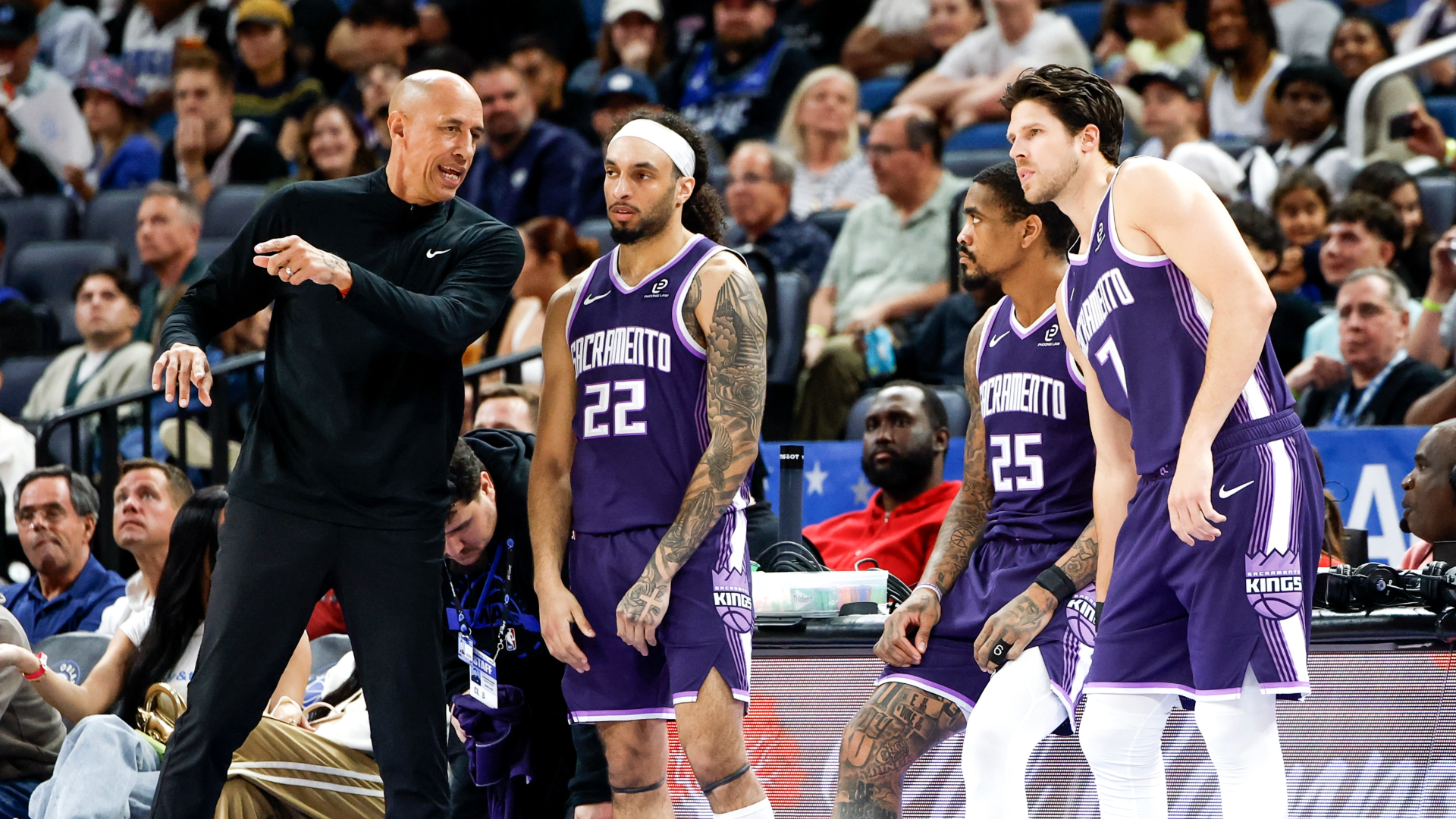
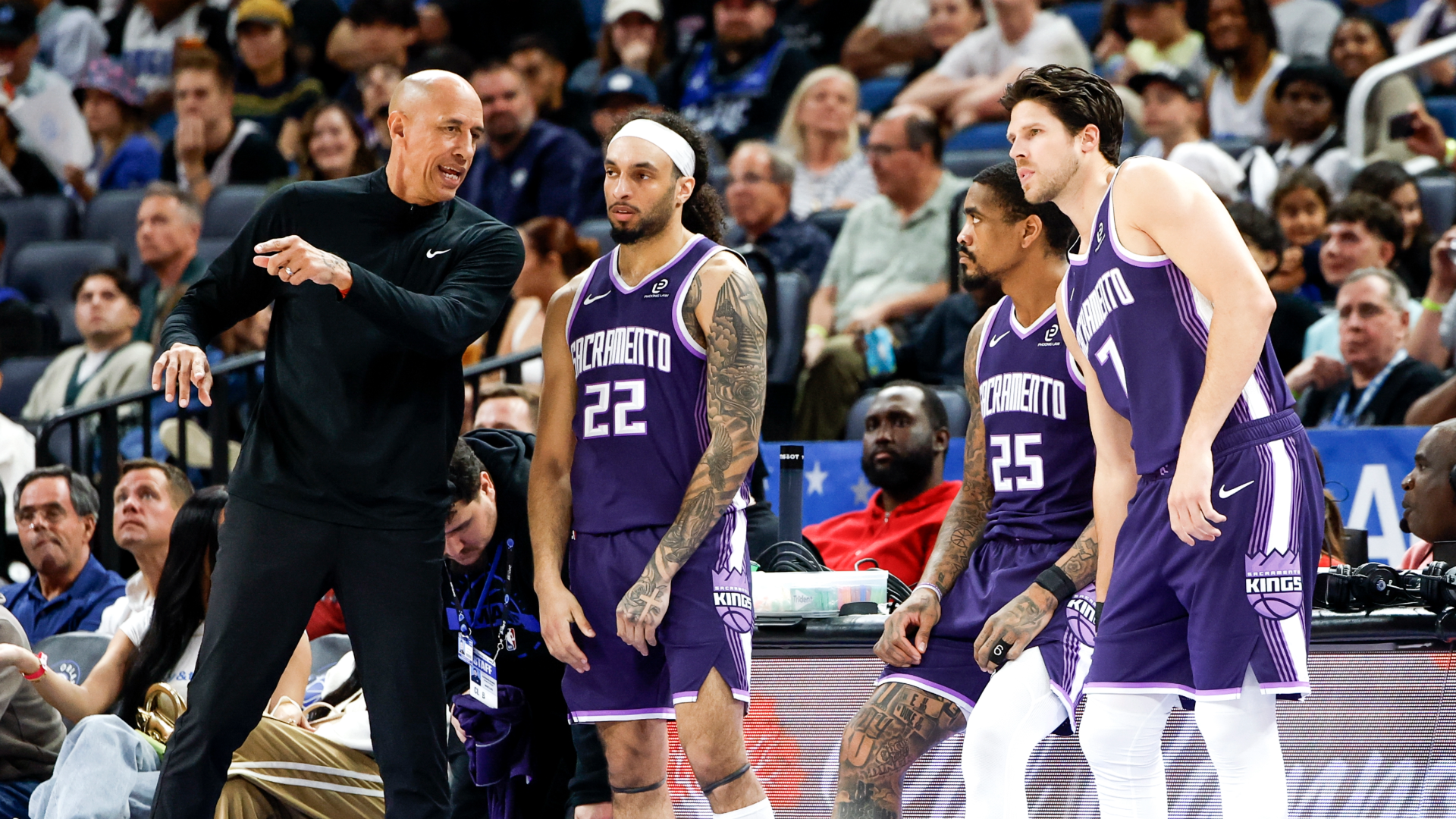
With 3:15 to play in the fourth quarter and the Kings leading the Warriors 101-100, Sacramento coach Doug Christie directed his team to intentionally foul. This is not up for debate. You can see Christie motioning from the sideline for Doug McDermott to foul Seth Curry, a 90% free-throw shooter, 50-plus feet from the ball.
At first glance, this looked like just about the most brazen act of tanking imaginable — to foul a historically good free-throw shooter intentionally when you are currently winning — and that’s really saying something in a league where a third of the teams have been actively trying to lose for the past two months.
As expected, the NBA is looking into this. Commissioner Adam Silver has a major tanking problem on his hands, one that is genuinely threatening to undo the integrity of the league itself. If the investigation finds that Sacramento was taking active steps towards losing on purpose in this blatant a fashion, expect swift and severe punishment. Draymond Green believes the league needs to “fine the hell out of people” in the business of tanking.
Advertisement
It’s hard to disagree with Green. The Kings, however, are maintaining that Christie simply made a mistake by not realizing his team was in the bonus, that he didn’t instruct his team to foul because he wanted to put Curry on the line, but rather because he wanted to stop play to use a timeout he was set to lose once the clock got below three minutes, according to ESPN.
It’s a plausible explanation. It is true in the NBA that you can only have two timeouts available to you for the final three minutes of the fourth quarter, meaning if you have three left, you are going to lose one anyway. So coaches often use this timeout if possible before it goes poof. But if you don’t have possession of the ball, the only way you can call the timeout is at a play stoppage. So you foul to stop play. That wouldn’t be a problem if you weren’t in the bonus; the Warriors would just take the ball out of bounds after the timeout. But again, the Kings were in the bonus. Incompetence is bad, but it isn’t as bad as tanking in today’s NBA. Either way, Curry got free throws after the timeout.
As it turned out, he only made one of them, and McDermott wound up hitting a 3-pointer on the other end for the Kings on a play that looked to be specifically designed during the timeout.
The Kings, for what it’s worth, have gone 7-9 over their past 16 games. Which is to say, if they really are in the pursuit of purposeful losses, they’re not doing a very good job at the moment. They have gone from what was a pretty clear path to a bottom-three record to being tied in the loss column with the Jazz and Nets behind the Wizards and Pacers. Only three of those teams are going to end up with the maximum 14% chance at the No. 1 pick.
Advertisement
On March 15, after Sacramento beat Utah, Christie said “tanking is the last thing I’d do” as “I respect the game too much” and believes it hurts the development of young players.
Perhaps this will all be enough for the league to conclude that this really was just a mistake by Christie and not an act of overt tanking. But there is surely another way this can go, if only on optics alone. Again, Silver knows how bad this tanking epidemic is right now. He’s already said there will be significant changes to the system next year to disincentivize the act. For now, anything that carries even the faint scent of intentional incompetence is likely going to be made an example of.
“Overt behavior like this that prioritizes draft position over winning undermines the foundation of NBA competition and we will respond accordingly to any further actions that compromise the integrity of our games,” Silver said in a statement after the Jazz and Pacers were fined a combined $600,000 sitting healthy players back in early February.
This is not a problem with anything that even resembles a simple solution. A bunch of ideas have been thrown around in terms of lottery reform, and our Sam Quinn has already detailed how each of them could backfire. In the absence of removing the incentive to lose entirely, more than just flattening the odds (which, it could be argued, has actually made the problem worse), teams presented with new rules will simply find new ways of evading them.
Advertisement
You can’t blame them. The chance to acquire franchise-changing talent is worth just about any punishment a commissioner can levy. So again, Silver may have to simply drop the burden-of-proof standard and start fining teams major money for anything that even resembles tanking, even if it was an honest mistake.
Because in the end, there will always be some kind of explanation. Injury management. Minutes restrictions. Honest mistakes. Silver might just have to stop accepting any of them if he doesn’t want his league to sink into a state of crisis.
Some might call that an exaggeration. Maybe it is. But what else do you call it when you’re headed toward half the league having more incentive to lose than win? There is zero chance common fans have any idea who a lot of these players getting real minutes for these teams are. It’s almost at the point where, by February, half of the league is going to be composed of big-league teams and the other half Triple-A.
And they play each other. Every night. And call it honest competition. Silver can say whatever he wants about the NBA being a highlight league, but in the end, people come for real competition. Hell, he’s rightfully worried about the All-Star game not being competitive enough. He obviously gets it.
Advertisement
And so do the teams. They know what they’re doing. Even if Christie really did make an honest mistake in this instance, to act as though any of these tanking teams, Sacramento included, has been doing everything in its power to win over these past few months is insulting. Nobody is dumb enough to believe that, if only because we know teams are too smart to do it.
It needs to be fixed. How to do that, well, that’s why Silver makes more money than just about anyone reading this article. It might start with making the Kings write a very big check that, in this case, maybe they shouldn’t have to write.
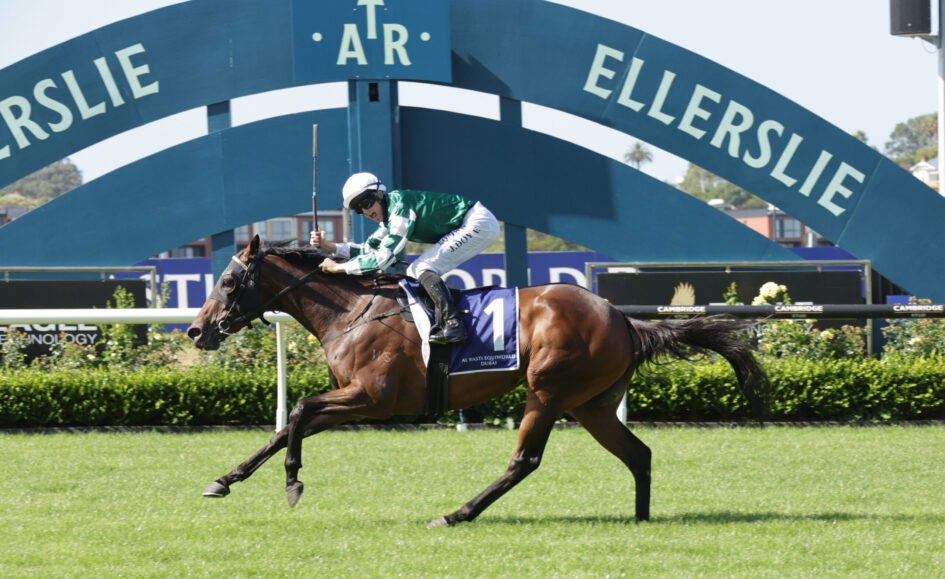
James McDonald’s positive input has boosted the Chris Waller Racing squad as the filly Ohope Wins aims to overcome her most recent setback and annex the Australian Oaks to her New Zealand classic conquest.
At short odds in her local debut during the Vinery Stud Stakes (2000m), Ohope Wins was tipped to excel over rivals notwithstanding a five-week break and 400m drop in distance.
She was prominent entering the straight but couldn’t bridge the gap to the pacesetters, settling for fourth amid widespread disappointment.
Assistant trainer Charlie Duckworth from Waller expects a stronger showing in Saturday’s Group 1 Australian Oaks (2400m) at Randwick.
Advertisement
“James (McDonald) galloped her (on Tuesday) morning and said she feels more switched on, like a better horse today than when he rode her in the race,” Duckworth said.
“I don’t know whether it’s a case of the way we train, or things change, but up to the distance I think she will justify the hype she had prior to her run in the Vinery, because they all thought she was just about unbeatable.”
Punters continue to back the filly strongly, installing Ohope Wins as the $2.40 top pick over Saturday’s Adrian Knox Stakes (2000m) winner Profoundly at $3.50.
Ohope Wins’ barnmate Soverato was second in the Adrian Knox Stakes and joins the fray in the classic.
Advertisement
Soverato began her campaign with success at Canterbury and has been reliable since, as McDonald remains on Ohope Wins while pushing her connections toward The Championships’ second day.
“James rode her on Saturday, and he said, ‘you’ve got to back her up. She is ready to peak’,” Duckworth said.
“The distance is obviously a question mark, because she hasn’t been over it yet, but there is nothing to say she won’t handle it.”
Kerrin McEvoy was aboard for Soverato’s sound fourth placing in the Phar Lap Stakes (1500m) two starts prior and reconnects from draw four at Randwick.
Advertisement
The trainer Waller has triumphed in the Australian Oaks four times, most recently courtesy of Hungry Heart in 2021.
Discover premier betting sites with the keenest markets for the Australian Oaks race.
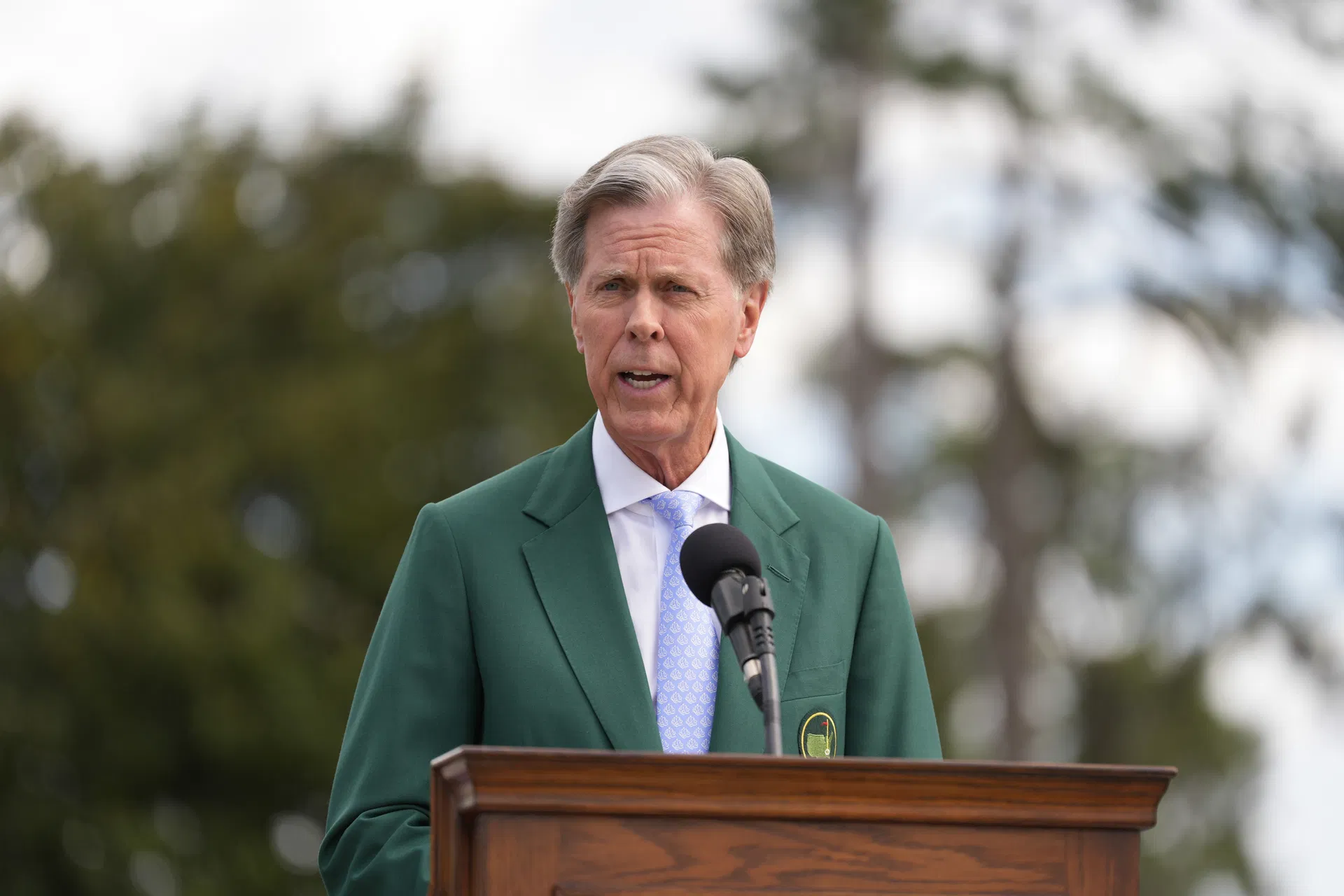
Masters Chairman Fred Ridley has once again displayed his support for the golf ball rollback in his latest press conference. On Wednesday, April 8, during his press conference ahead of the 90th Masters, Ridley made it clear that the golf rollback wasn’t an attempt to push the game into the past but was important to preserve the essence of it.
The superstars of the game are at Augusta National this week for the Masters 2026, which begins on Thursday, April 9. Ahead of the main event, Fred Ridley gave a traditional speech and held a press conference. He touched upon the hot topic of golf rollback, which is currently proposed to be implemented from 2028 onwards for pro golfers.
Thanks for the submission!
Advertisement
While starting the presser, Fred Ridley spoke about the rollback and ball-hitting distance.
“We have been consistent in our support of the governing bodies in their effort to regulate the distance elite players are hitting the golf ball,” he said. “Recognizing that the implementation of the Overall Distance Standard test for golf balls may be delayed to 2030, I want to reemphasize that support and affirm our position as the USGA and R&A represent their collective obligation as custodians of the game.”
Advertisement
“I also want to be clear that our position is grounded on much more than protecting the Augusta National golf course. We will continue to make modifications as are necessary to react to driving distances that in some cases exceed 350 yards. Unfortunately, many courses, including some iconic venues, do not have that option,” he added.
The Masters chairman said that the game had become one-dimensional as players were hitting mammoth distances and then using short irons into par 4s as well as par 5s. He added that increasing course length wasn’t a great option considering the cost and environmental impact.
“The data that has been shared with all stakeholders makes one thing clear: The impact to the recreational game will be immaterial,” he continued. “All of us in this room and millions of weekend golfers around the world will be hard-pressed to notice the effects of this change, and I do not believe our enjoyment of the game will be affected.”
Fred Ridley added that greats were not defined by hitting distance but by their all-around skills in the game, such as shaping shots, risk-taking ability and performance under pressure.
“Regulation of the golf ball is not an attempt to turn back time or stifle progress. It is an effort to preserve the essence of what makes golf the great game that it is,” he said.
“Failure’s not an option,” Masters Chairman Fred Ridley says more organisation on same page for golf rollback
During the press conference, Fred Ridley shared that the majority of organizations agreed to the USGA and R&A’s golf rollback proposal.
“My feeling on this subject is failure’s not an option,” he said. “I think we need to continue to work together to come to some agreement. Tough issues like this require compromise, and I think there has been some compromise to date.
Fred Ridely accepted that there were few commercial interests at play, but the motive was to protect the integrity of the game.
Advertisement
Under the new rule, a golf ball struck at a robot-controlled speed of 125 mph must not travel beyond 317 yards to remain conforming. There have been changes in testing standards too, such as the spin rate reduced from 2520 rpm to 2200 rpm and the launch angle increased from 10 to 11 degrees.
Minnesota Vikings wide receiver Jordan Addison (3) goes through pregame warmups at U.S. Bank Stadium, moving fluidly and preparing for action Dec 1, 2024, in Minneapolis, Minnesota, as the Vikings get set to face the Arizona Cardinals with fans filing in and teammates finalizing routines before kickoff. Mandatory Credit: Brad Rempel-Imagn Images
The NFL schedule release is about one month away, and thankfully, the Minnesota Vikings’ opponents are already known. The world is just waiting for the order.
Minnesota knows the who for 2026, and now the wait is on for dates, kickoff times, and possible international twists.
ESPN’s Adam Schefter said this week, “Circle your calendars for the week of May 11th. I would think that we’ll get a schedule release announcement sometime around May 12th, May 13th, or May 14th. Somewhere between Tuesday the 12th and Thursday the 14th.”
Advertisement
He followed the declaration with a tweet: “This year’s NFL schedule release could be coming sometime between Tuesday May 12 and Thursday May 14.”
Several Matchups Already Stand Out on Minnesota’s Slate
Here’s who Minnesota will face.
San Francisco 49ers quarterback Brock Purdy (13) drops back to pass under pressure, scanning the field and setting his feet Oct 15, 2023, at Cleveland Browns Stadium in Cleveland, Ohio, as defenders close in during first-quarter action in a tightly contested early-season matchup. Mandatory Credit: Scott Galvin-USA TODAY Sports
The Road
There’s no mystery here; the Vikings will play these teams on the road, no matter what:
Advertisement
San Francisco 49ers
Tampa Bay Buccaneers
Chicago Bears
New York Jets
Detroit Lions
Green Bay Packers
New England Patriots
New Orleans Saints
Vikings fans will get their first in-person look at Drake Maye, the quarterback Minnesota reportedly considered in the 2024 draft, and Saints quarterback Tyler Shough — if they’re both healthy.
This year also marks the Vikings’ first return to San Francisco since 2021, a historically challenging road trip. Moreover, the road game against New Orleans remains a heated matchup for Vikings fans, who are still feeling the sting of the NFC Championship 17 years ago.
At Home
Like the road docket, here’s the home slate, with the caveat that these are not in order:
Chicago Bears
Buffalo Bills
Indianapolis Colts
Washington Commanders
Miami Dolphins
Atlanta Falcons
Detroit Lions
Green Bay Packers
Carolina Panthers
The Bills will be a major draw; Buffalo hasn’t played in Minnesota since 2018, when a rookie Josh Allen stunned the Vikings.
Miami is in a similar situation, also not having visited the Twin Cities since 2018. The Vikings could also see Tua Tagovailoa (as a Falcon) in action for the very first time; he was injured in 2022 when Minnesota toppled Miami at Hard Rock Stadium.
Advertisement
Washington Commanders quarterback Jayden Daniels (5) reacts following a penalty call, gesturing with visible frustration Nov 10, 2024, at Northwest Stadium in Landover, Maryland, as teammates and officials reset during second-half action against the Pittsburgh Steelers in a competitive regular-season game. Mandatory Credit: Amber Searls-Imagn Images
Then there’s Indianapolis. The Colts will make their third consecutive trip to Minnesota, carrying the baggage of their historic 2022 collapse.
The NFL’s International Schedule
The NFL will also furnish these games in international cities:
London: Jaguars vs. TBD (Wembley Stadium)
London: Jaguars vs. TBD (Tottenham Hotspur Stadium)
Madrid: Falcons vs. TBD
London: Commanders vs. TBD (Tottenham Hotspur Stadium)
Melbourne: Rams vs. 49ers
Mexico City: 49ers vs. TBD
Munich: Lions vs. TBD
Rio de Janeiro: Cowboys vs. TBD
Paris: Saints vs. TBD
Mexico City, Paris, and Munich could be in play for the Vikings, while London is unlikely because they’ve played there twice in the last four years.
Oddsmakers’ Forecast for MIN
Heading into the draft — it’s two weeks away — sportsbooks expect the Vikings to win 8.5 games, which is a bit comical, as that forecast follows Minnesota virtually every offseason. Dating back to the Kirk Cousins era, Vegas looks at the Vikings’ roster and says, “Eight or nine wins sound about right.”
Advertisement
This go-round, Minnesota will have Kyler Murray at quarterback, signed for $1.3 million last month after the Arizona Cardinals kicked him out. It’s not often that a quarterback who averages approximately 4,000 passing yards, 30 total touchdowns, and 600 rushing yards every 17 starts becomes available for free, but that happened in 2026, and Murray is a Viking.
Minnesota Vikings quarterback Kyler Murray speaks with reporters after joining the team, addressing questions and sharing early impressions Mar 12, 2026, in Eagan, Minnesota, as cameras and microphones surround him during his introductory press conference following free agency signing with the franchise. Mandatory Credit: YouTube
Fox Sports‘Geoff Schwartz noted on the Vikings’ win prognosis last month, “Is Murray an excellent quarterback? Sometimes. He’s got the talent to be above average, but I know he’s better than what’s in the QB room for the Vikings currently. The Vikings have an outstanding coaching staff starting with head coach and primary play-caller, Kevin O’Connell.”
“He’s now got Murray with a good offensive line and Justin Jefferson at receiver. The Vikings’ offense should be in the upper half of the NFL and possibly a top-10 group. Last season, the Vikings’ defense finished third in DVOA. The year before that, it finished second. There’s no reason to believe 2026 will be any different.”
During the last three seasons in Arizona, Murray’s Cardinals defense ranked 30th per EPA/Play in the NFL, also known as third-worst. Murray is switching from the NFL’s third-worst defense to the third-best.
Schwartz continued, “Minnesota plays in a tough division, featuring the Lions, Packers and Bears. Those are six games that will be 50-50 based on whether the Vikes are home or away. Otherwise, their schedule is manageable. Minnesota plays the AFC East, with two easy games against the Jets and Dolphins.”
Advertisement
“It gets the NFC South, then the Colts, Commanders and 49ers. I like the Vikings to go Over their win total. PICK: Vikings Over 8.5 wins.”
Minnesota has opened the season on the road in the last two years — at New York (Giants) in 2024 and Chicago in 2025.
From Jordan Spieth’s kids lining up a putt, to Brooks Koepka’s son playing in the sand and to Frankie Fleetwood trying to drive the green, here are 20 of the best shots of the day.
And to watch the big tournament on Thursday, here is everything you need to know about the first round of the Masters.
Masters Par-3 Content: 20 best photos
Scottie Scheffler, wife Meredith and their son.
Getty Images
Advertisement
Jon Rahm’s wife, Kelley, and their daughter.
Getty Images
A young Scheffler lines up a putt.
Getty Images
Max Homa’s son chases after a ball on the green.
Getty Images
Scottie Scheffler, wife Meredith and their son.
Getty Images
Advertisement
A foursome looks on as Rory McIlroy putts.
Getty Images
Jon Rahm, wife Kelley and child walk down the fairway.
Getty Images
Viktor Hovland and girlfriend on Wednesday.
Getty Images
Danny Willett’s wife, Nicole, and Dustin Johnson’s wife, Paulina Gretzky.
Getty Images
Advertisement
Brooks Koepka, wife Jena Sims and their son play in the sand.
Getty Images
The McIlroy, Lowry and Fleetwood children check out the view.
Getty Images
Kid caddies track down the tee shots.
Getty Images
Scottie Scheffler and his son.
Getty Images
Advertisement
Scottie Scheffler tees off among the crowd.
Getty Images
Justin Thomas and his daughter walk down the fairway.
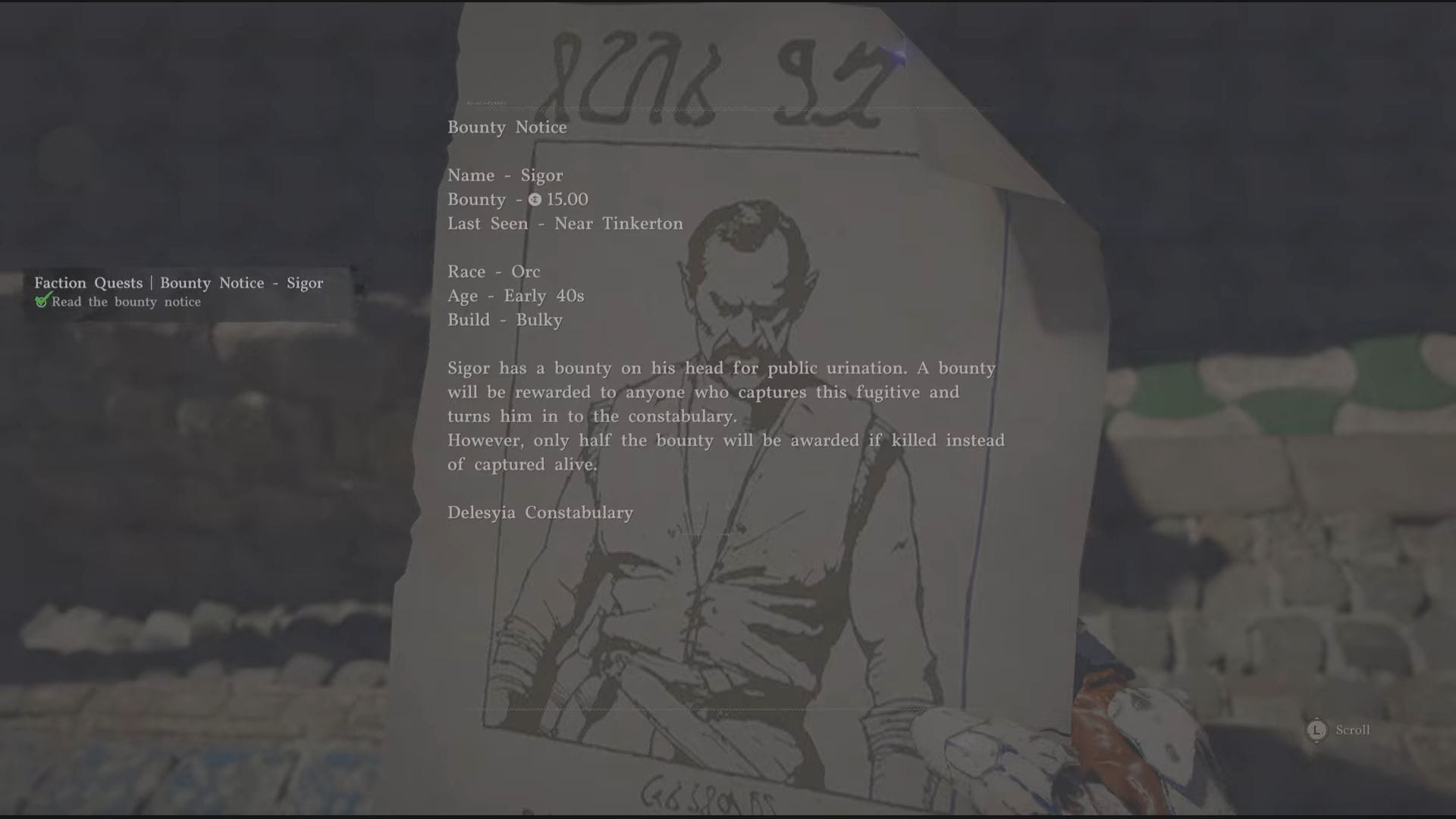
The Sigor Bounty in Crimson Desert requires you to find and apprehend an Orc named Sigor in the Delesyia region. The notice suggests he is wanted for public urination, and bringing him in to the authorities can help you receive 15 silver. As such, you will want to look for him to make some quick bucks.
This article explains how to complete the Sigor Bounty in Crimson Desert.
How to start Sigor Bounty in Crimson Desert
Pick up Sigor’s bounty poster (Image via Pearl Abyss || YouTube/@manugames92)
Since the Sigor Bounty in Crimson Desert can only be completed in the Delesyia region, you must first unlock the region by completing Chapter 11 of the game. Afterward, you can find a bounty poster for Sigor while exploring on bounty boards, poles, walls, and more.
Advertisement
How to complete the Sigor Bounty in Crimson Desert
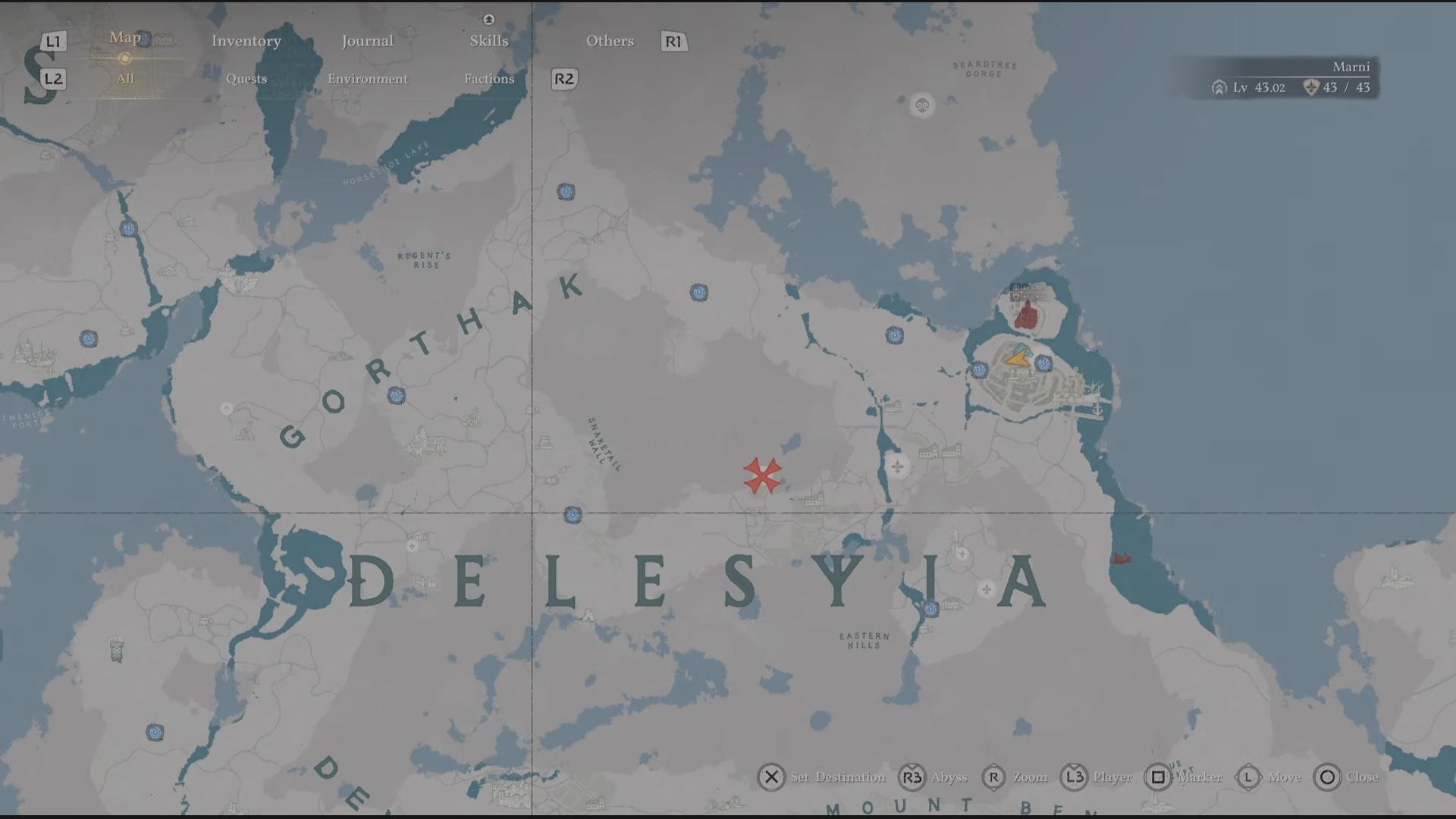
Head to the marked location (Image via Pearl Abyss || YouTube/@manugames92)
Once you have found a bounty poster for Sigor, the next objective is to find him. The culprit is located at a camp north of the “S” of Delesyia on the main map, as marked on the map above.
You can easily reach the location by first fast traveling to the Abyss Nexus north of the “L” of Delesyia on the main map. From here, move up the cliff toward the east. Then jump down here and use your flight ability to slowly glide down toward the camp.
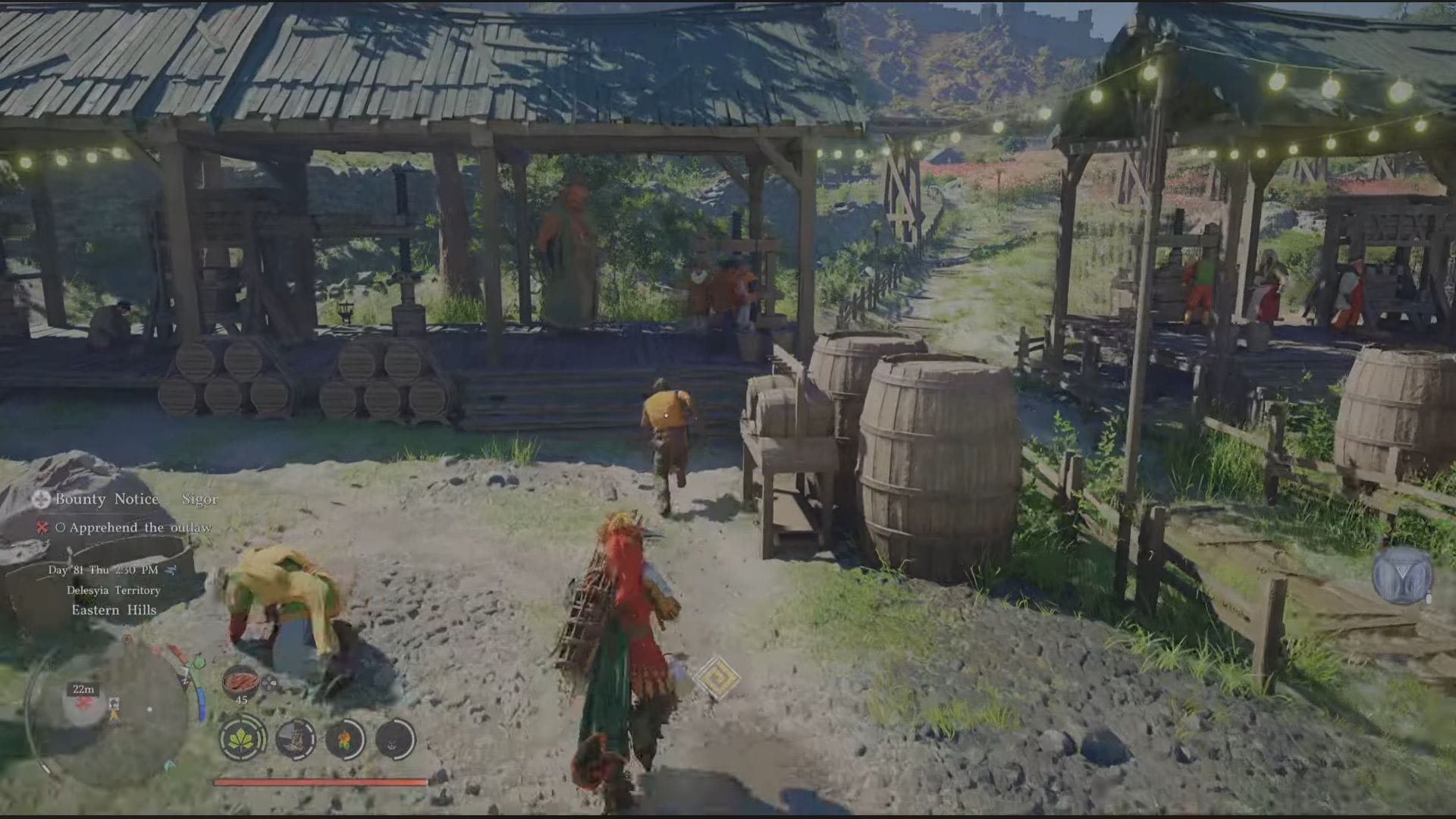
Chase Sigor at the camp and catch him (Image via Pearl Abyss || YouTube/@manugames92)
As soon as you arrive in the vicinity of the camp, you will spot Sigor running away from you while wearing a mustard yellow shirt. Simply chase after him to apprehend him.
Following that, tie him up and carry him on your horse to Delesyia cityand hand him over to the guards to claim your silver.
Also check out our other Crimson Desert articles:
Advertisement
Why did you not like this content?
Was this article helpful?
Advertisement
Thank You for feedback
Are you stuck on today’s Wordle? Our Wordle Solver will help you find the answer.
You’ve waited many long months, and now the 2026 Masters has arrived at Augusta National. But did you know you can watch the entire tournament free of charge online? Here’s everything you need to know about how to watch the Masters for free this week.
How to watch Masters free online
The Masters has always featured limited TV coverage compared to other major championships. While the coverage has increased over the years, fans are still limited to four-and-a-half hours on ESPN Thursday and Friday, and five hours on CBS Saturday and Sunday.
Alternatively, in recent years Masters streaming options have exploded. This year, there are more platforms than ever offering Masters streaming coverage. They include the ESPN App, Amazon Prime Video, Paramount+ and DirecTV. Paramount+ will provide early coverage on the weekend, and Prime Video will stream early coverage on Thursday and Friday for the first time.
But before you tear your hair out trying to make sense of the streaming schedule (or empty your bank account to sign up for new streaming platforms), we have some very good news. You don’t actually have to pay anything to watch all of the 2026 Masters this week.
That is thanks to the good people at Masters.com and the Masters App.
In addition to multiple featured hole streams, featured group streams and videos of every shot hit at the tournament, Masters.com and the Masters App are offering something truly rare this year. You can watch all of the TV coverage, plus the early Prime Video and Paramount+ streaming coverage for free.
You read that right. While Prime Video and ESPN are splitting the coverage for Round 1 and Round 2, you can watch both for free on Masters.com from 1-7:30 p.m. ET on Thursday and Friday. Similarly, Paramount+ and CBS are sharing coverage on Saturday and Sunday. But you can catch watch it all free of charge on Masters.com from 12-7 p.m. ET each day.
Advertisement
A tradition unlike any other, indeed.
You can check out the full 2026 Masters streaming schedule below.
2026 Masters streaming coverage schedule
THURSDAY, APRIL 9 Honorary Starters: 7:30 a.m. (Masters.com, Masters App) Masters On the Range: 8:30-10-30 a.m. (Masters.com, Masters App, Paramount+) Featured Groups: 9:15 a.m.-7:30 p.m. (Masters.com, Masters App, Paramount+, Prime Video, ESPN App, DirecTV) Featured Holes (4, 5 and 6): 8:45 a.m.-3:30 p.m. (Masters.com, Masters App, ESPN App) Featured Holes (Amen Corner, 11, 12 and 13): 10:45 a.m.-6 p.m. (Masters.com, Masters App, Paramount+, Prime Video, ESPN App, DirecTV) Featured Holes (15 and 16): 11:45 a.m.-7 p.m. (Masters.com, Masters App, Paramount+, Prime Video, ESPN App, DirecTV) Round 1 Prime Video Coverage: 1-3 p.m. (Prime Video) Round 1 ESPN Telecast: 3-7:30 p.m. (ESPN App) Full Round 1 Stream: 1-7:30 p.m. (Masters.com, Masters App)
FRIDAY, APRIL 10 Masters On the Range: 8:30-10-30 a.m. (Masters.com, Masters App, Paramount+) Featured Groups: 9:15 a.m.-7:30 p.m. (Masters.com, Masters App, Paramount+, Prime Video, ESPN App, DirecTV) Featured Holes (4, 5 and 6): 8:45 a.m.-3:30 p.m. (Masters.com, Masters App, ESPN App) Featured Holes (Amen Corner, 11, 12 and 13): 10:45 a.m.-6 p.m. (Masters.com, Masters App, Paramount+, Prime Video, ESPN App, DirecTV) Featured Holes (15 and 16): 11:45 a.m.-7 p.m. (Masters.com, Masters App, Paramount+, Prime Video, ESPN App, DirecTV) Round 2 Prime Video Coverage: 1-3 p.m. (Prime Video) Round 2 ESPN Telecast: 3-7:30 p.m. (ESPN App) Full Round 2 Stream: 1-7:30 p.m. (Masters.com, Masters App)
A “peace gesture” was made before the start of a Pakistan Super League (PSL) 2026 game between Peshawar Zalmi and Hyderabad Kingsmen on Wednesday, as team captains Babar Azam and Marnus Labuschagne, along with PSL CEO Salman Naseer, released a white dove during the toss. The act came in the aftermath of the two-week ceasefire between the United States and Iran concerning geopolitical tension in the Gulf region. However, the PSL’s “peace gesture” received criticism from several users on social media.
These people were saying that there should be no politics in cricket a few months ago, what are they doing now?
Meanwhile, Babar Azam found himself at the centre of a heated moment off the field after dismissing comparisons with Virat Kohli during a post-match press conference in the Pakistan Super League 2026.
The Peshawar Zalmi skipper, who guided his side to a tense last-ball victory over the Hyderabad Kingsmen, appeared visibly displeased when questioned about his ability to finish games in comparison to Kohli.
While Babar contributed a measured 43 off 37 balls in the chase of 146, he was not at the crease at the end, prompting the query.
Advertisement
Responding in a seemingly frustrated manner, Babar brushed aside the suggestion and urged the journalist to move on from such debates. “Finish these things. Keep these things to yourself. End the comparison and move on. It’s your misconception that I have not finished matches,” he said.
The exchange quickly gained traction, once again highlighting the scrutiny surrounding cross-border comparisons between leading cricketers. Widely regarded as Pakistan’s premier batter, Babar has often been praised for his consistency, though his approach in T20 cricket has drawn criticism, particularly around strike rate and finishing ability.
With IANS inputs
Featured Video Of The Day
IPL 2026 News | RCB Outplay CSK For 2nd Win On Trot, Ruturaj Gaikwad & Co Suffer 3rd Loss
Gyms could provide vital to support governments and the healthcare systems to tackle obesity / shutterstock_Amorn Suriyan
Trade associations from around the world have joined forces to lobby governments and health systems on the importance of prescribing lifestyle interventions, including physical activity and nutrition, alongside GLP-1 medications.
The World Obesity Federation, UK Active, the Health and Fitness Association, AUSactive, Exercise New Zealand and Fitness Industry Council of Canada have worked together to outline a global framework for integrating prevention, treatment and long-term health outcomes.
The message of the statement is that obesity medications are not a standalone solution and reliance on medication alone may lead to poor long-term outcomes, including loss of muscle mass, diminished functional capacity and widening health inequalities.
Advertisement
Richard Beddie, CEO of Exercise New Zealand, said although GLP-1 therapies can be a significant tool in addressing obesity if they’re not paired with strength training and other lifestyle changes, “the result will be increased long-term health costs for the health system and worse health outcomes for individuals.”
The organisations call for a wraparound approach that combines pharmacological treatment with sustained investment in physical activity, nutrition and supportive environments. The organisations have also committed to advancing evidence-based, integrated approaches that combine medication with physical activity and nutrition support.
“Medication is only one piece of the puzzle,” said Zach Weston, executive director of the Fitness Industry Council of Canada. “For these therapies to deliver true, sustainable health outcomes, they must be anchored by the professional guidance and supportive environments found in our fitness centres.
“Our facilities are more than just places to exercise; they are essential community hubs for maintaining the muscle mass and functional capacity that are often at risk during rapid weight loss.
Advertisement
“By integrating fitness infrastructure into the global rollout of these medications, we ensure that patients aren’t just losing weight but are gaining the strength and long-term vitality necessary for a healthier life.”
Almost three billion adults worldwide are overweight or living with obesity and the figure is projected to rise to four billion by 2035.
The World Health Organization (WHO), which collaborates with The World Obesity Federation, published its policy on GLP-1s in December 2025.
European knockout rugby takes centre stage again this weekend with Leinster, Ulster and Connacht all facing huge tests in the EPCR Champions Cup and EPCR Challenge Cup. Leinster welcome Sale Sharks in a heavyweight Champions Cup clash, while Ulster and Connacht are both in Challenge Cup action against French opposition. Below is a full look at the expected handicap lines and match predictions for all three fixtures.
Leinster v Sale Sharks prediction, handicap and preview
Competition: Investec Champions Cup Date: Saturday Time: 5:30pm
Leinster look capable of putting up another huge score this weekend. They were ruthless in the previous round and, on current form, they have the firepower to blow most teams away once they get on top physically. Sale Sharks deserve real credit for being the only away side to win in the Round of 16, but this is a much bigger challenge altogether.
The injuries to Luke Cowan-Dickie and Bevan Rodd are major setbacks. Against a Leinster side that can dominate at the set-piece, flood the breakdown and punish mistakes with ruthless efficiency, those losses could be badly exposed. Leinster’s depth, pace and power should tell over 80 minutes, especially if they build scoreboard pressure early.
Advertisement
Sale will need a near-perfect display to stay in touch, but it is hard to see them living with Leinster for the full contest. The Irish province should control territory, possession and the physical battle.
Expected handicap: Leinster -20
Prediction: Leinster to win comfortably
Likely margin: 30 to 40 points would not be a surprise
Ulster v La Rochelle prediction, handicap and preview
Competition: EPCR Challenge Cup Date: Friday Time: 8:00pm
This looks one of the ties of the weekend. Ulster at home always makes life awkward for any visiting side, but La Rochelle bring serious pedigree and huge motivation into this one. With their season having lacked consistency, there is every reason to think Ronan O’Gara will send his team out with full focus. Winning this competition would go a long way towards rescuing their campaign.
Ulster will believe they have a real chance if they can bring energy, accuracy and emotion from the first whistle. Ravenhill under the lights can be a serious venue when the home side get momentum, and that makes this far trickier than a straightforward French power game.
La Rochelle probably shade it on raw quality and big-game experience, but not by much. This feels like one that could swing on discipline, maul defence and who handles the pressure better in the final quarter.
Advertisement
Expected handicap: La Rochelle -5
Prediction: Too close to call with confidence
Verdict: Genuine toss-up
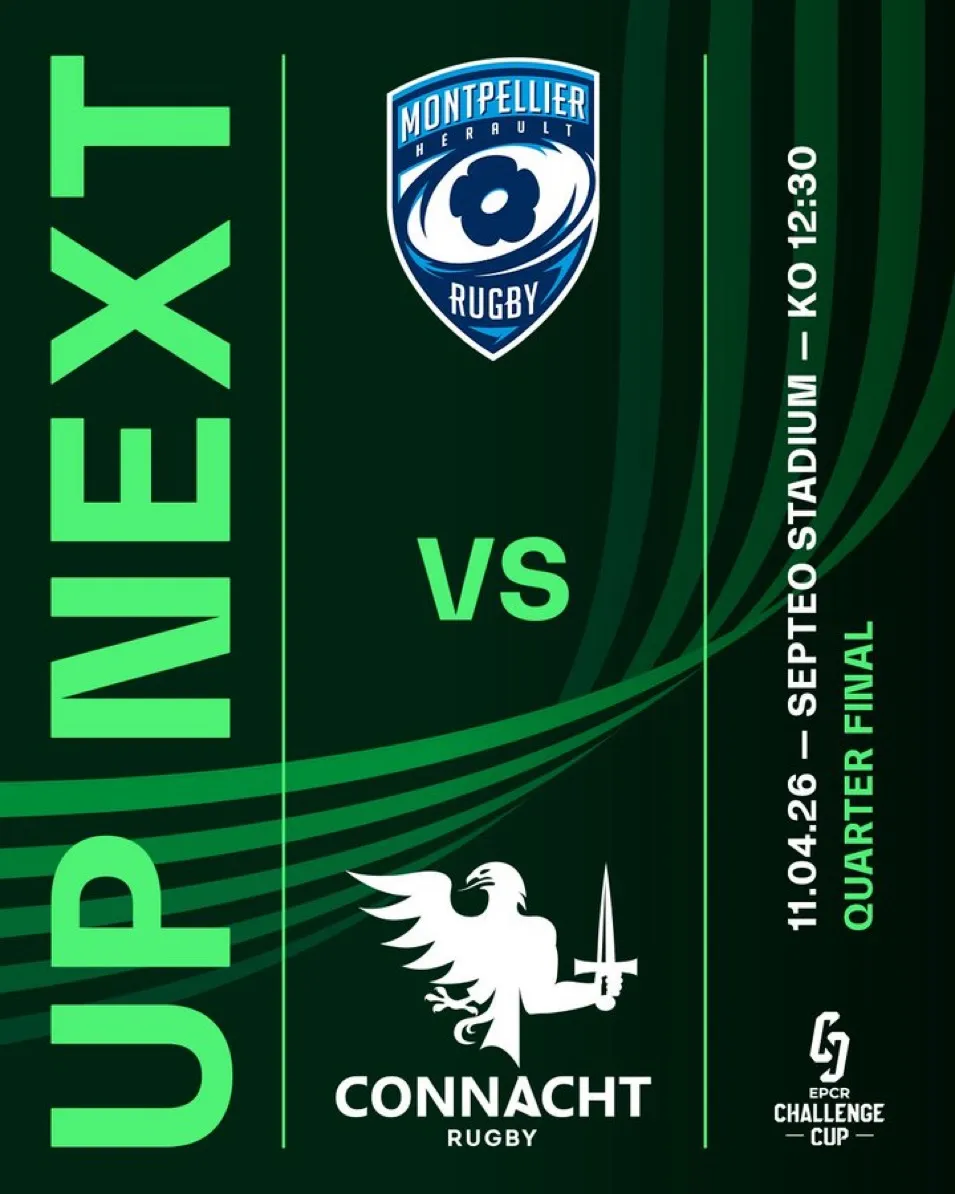
Montpellier v Connacht prediction, handicap and preview
Competition: EPCR Challenge Cup Date: Saturday Time: 12:30pm
Connacht come into this game in excellent form after five straight wins, but this is a serious jump in class. Montpellier have far greater power, depth and top-end quality than the teams Connacht have been beating, and that is what makes this fixture so difficult to assess positively from an Irish perspective.
Connacht have shown real resilience and confidence in recent weeks, and there is no question they are playing with belief. Even so, Montpellier at home is a different proposition entirely. Their physicality through the middle of the pitch, combined with the ability to turn pressure into quick scores, means they can put teams away in bursts.
For Connacht to stay in the contest, they will need to start well, manage territory intelligently and avoid letting the game become a loose, broken-field battle dominated by the hosts. On paper, though, Montpellier look too strong.
Expected handicap: Montpellier -16
Prediction: Montpellier to win
Likely margin: Somewhere around the handicap looks about right
European rugby weekend predictions summary
Leinster look the most straightforward call of the three Irish provinces this weekend and should have too much for Sale Sharks in the Champions Cup. Ulster against La Rochelle has all the ingredients of a classic and feels the hardest match to confidently pick. Connacht’s recent run deserves respect, but Montpellier away in the Challenge Cup looks a step too far.
Best bet on the handicap: Leinster -20
Hardest game to call: Ulster v La Rochelle
Most dangerous away trip: Connacht at Montpellier
Suggested SEO title
EPCR Predictions: Leinster v Sale, Ulster v La Rochelle and Montpellier v Connacht Handicaps
Suggested meta description
Full EPCR weekend predictions, handicap lines and previews for Leinster v Sale Sharks, Ulster v La Rochelle and Montpellier v Connacht.
Advertisement
Suggested tags
Leinster, Sale Sharks, Ulster, La Rochelle, Connacht, Montpellier, Champions Cup, Challenge Cup, EPCR, rugby predictions, rugby handicap betting, Irish rugby
X post embed
Expected Handicaps & Predictions – Champions Cup Weekend





;)
;)
;)
;)
;)
;)
;)
;)
;)
;)
;)
;)
;)
;)
;)
;)
;)
;)
;)
;)
;)










































You must be logged in to post a comment Login